The great Central & Western Europe mushroom guide
12 edibles to fill your basket with, 8 to recognise
The great Central & Western Europe mushroom guide

 Cep
Cep
 Chanterelle
 Horn of plenty
 Death cap
 Cep
CepFrom the oak, beech and chestnut woods of Britain, France, Germany and the Alps come the same beloved table mushrooms as the North - ceps, chanterelles, black trumpets - but with a longer, milder season. Around a dozen prized edibles share this ground with a handful of deadly traps, chief among them the death cap, the mushroom that kills more people than any other in Europe. This is a calm, honest guide: it teaches how to look, never how to be certain.
What matters most
- The safest places to begin: black trumpet, hedgehog mushroom and chanterelle have essentially no dangerous look-alikes - ideal first finds.
- The deadliest trap is the death cap (Amanita phalloides), common under oak and beech here; half a cap can kill, and its young button stage mimics edible puffballs and Agaricus.
- Learn four toxin groups before you pick: amatoxin (liver), orellanine (kidneys, weeks later), muscarine (within minutes) and gyromitrin (false morel).
- Three good edibles are poisonous raw and must be cooked thoroughly: morels, honey fungus and wood blewit.
- Names are shifting - cep, chanterelle, morel, honey fungus and others are species complexes split by DNA, though edibility rarely changes.
- Handling and storage matter: carry a rigid airy basket, use within a day or two, and always take a spore print when in doubt.
The great toxin groups
A few distinct poison families account for nearly every serious mushroom poisoning in the region. The most lethal give no warning until the damage is done - none of them are destroyed by cooking, drying or freezing.
Found in the death cap, destroying angel, deadly Galerina and some Lepiota. It blocks RNA polymerase II, killing cells and the liver. Onset is delayed 6-24 hours with vomiting and diarrhoea, then a deceptive false recovery, then liver and kidney failure. Heat-stable; it causes more than 90% of fatal mushroom poisonings worldwide.
Found in deadly webcaps (Cortinarius). A selective kidney toxin with an extremely long latency of 2 days to 3 weeks - little or only flu-like early signs, then kidney failure often needing dialysis or transplant. No specific antidote.
Found in fibrecaps (Inocybe) and the white funnel mushrooms (Clitocybe rivulosa/dealbata). Causes parasympathetic overstimulation within 15-30 minutes - salivation, sweating, tears, vomiting and a slow heartbeat. Rarely fatal with care; the specific antidote is atropine.
Found in the false morel (Gyromitra esculenta). Converted in the stomach to monomethylhydrazine, causing vomiting, dizziness, liver damage and, in severe cases, seizures. The vapours alone are toxic; sensitivity varies between people.
The edibles
 Cep
Cep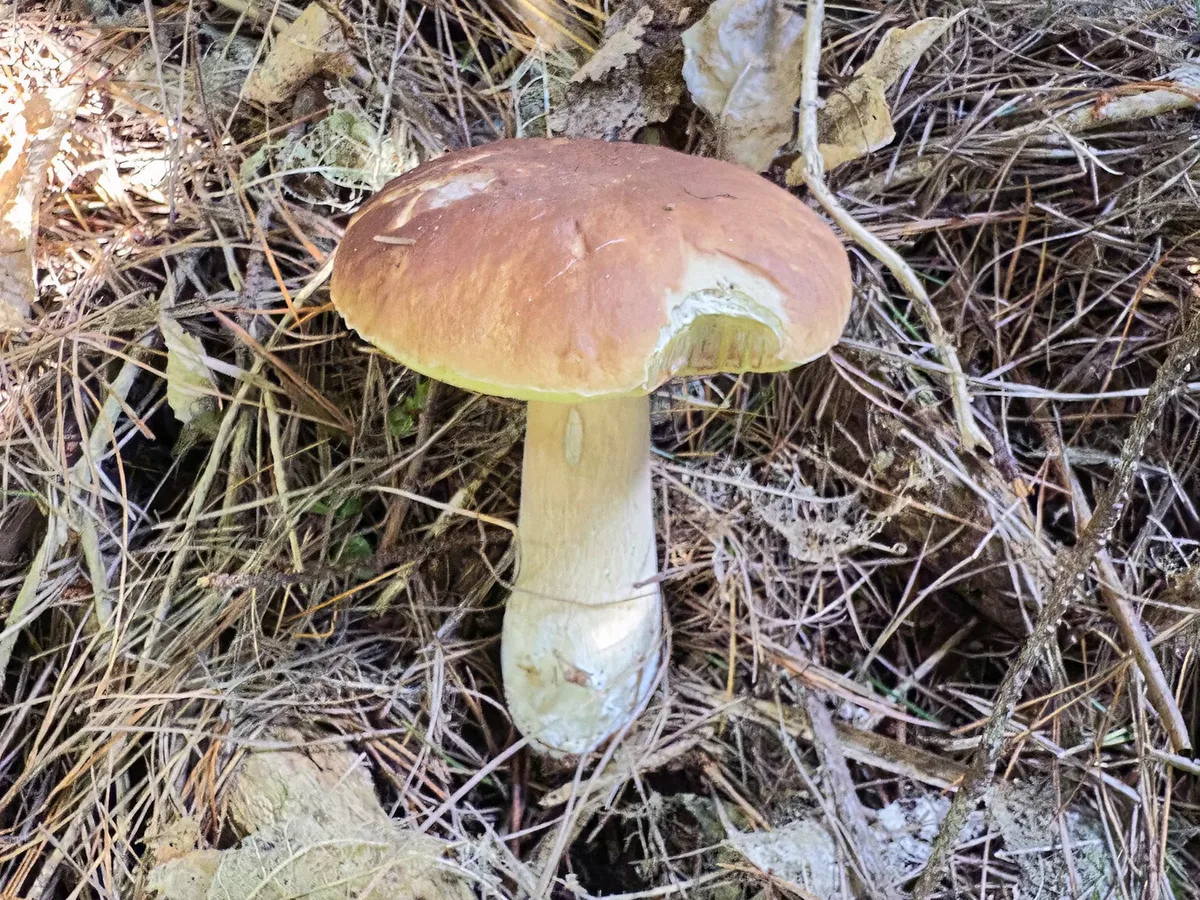 CepCepCepCep
Cep / penny bun
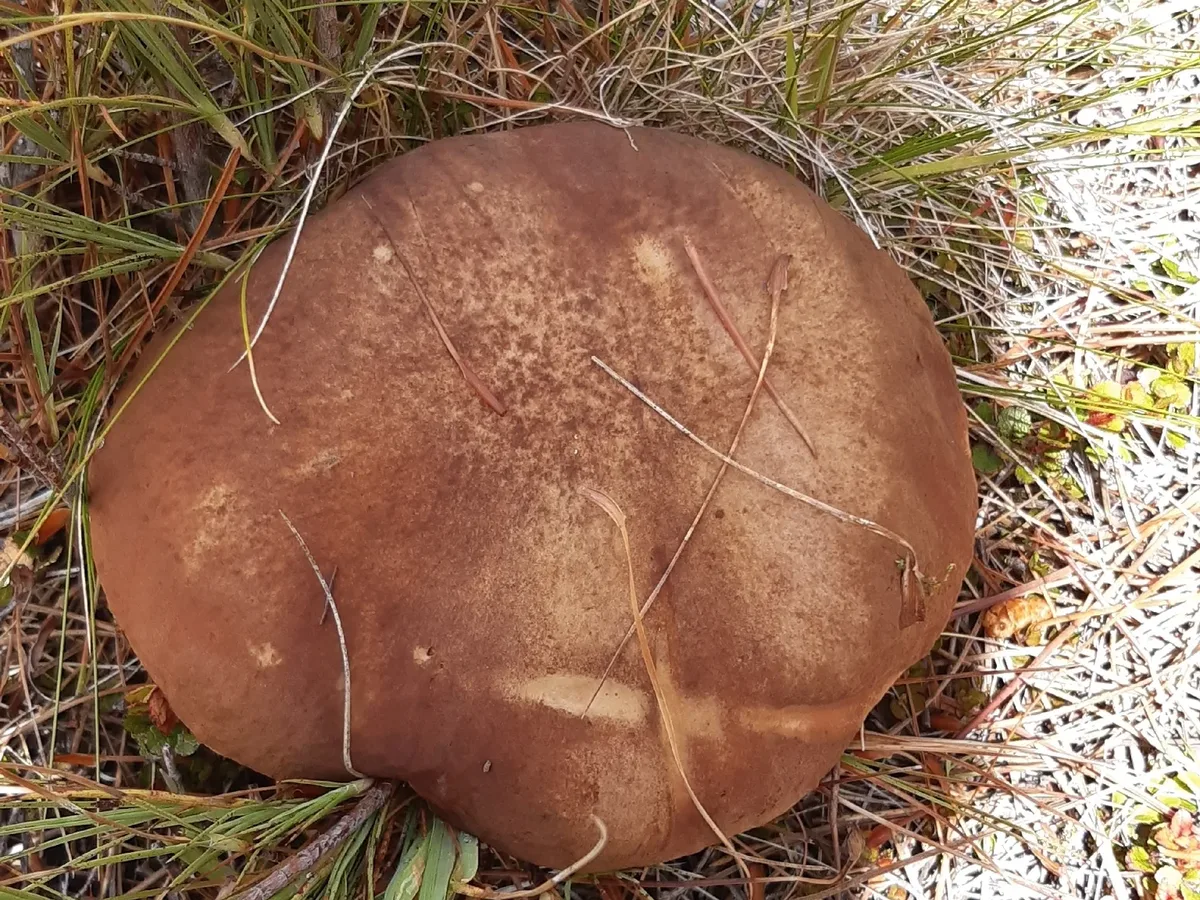
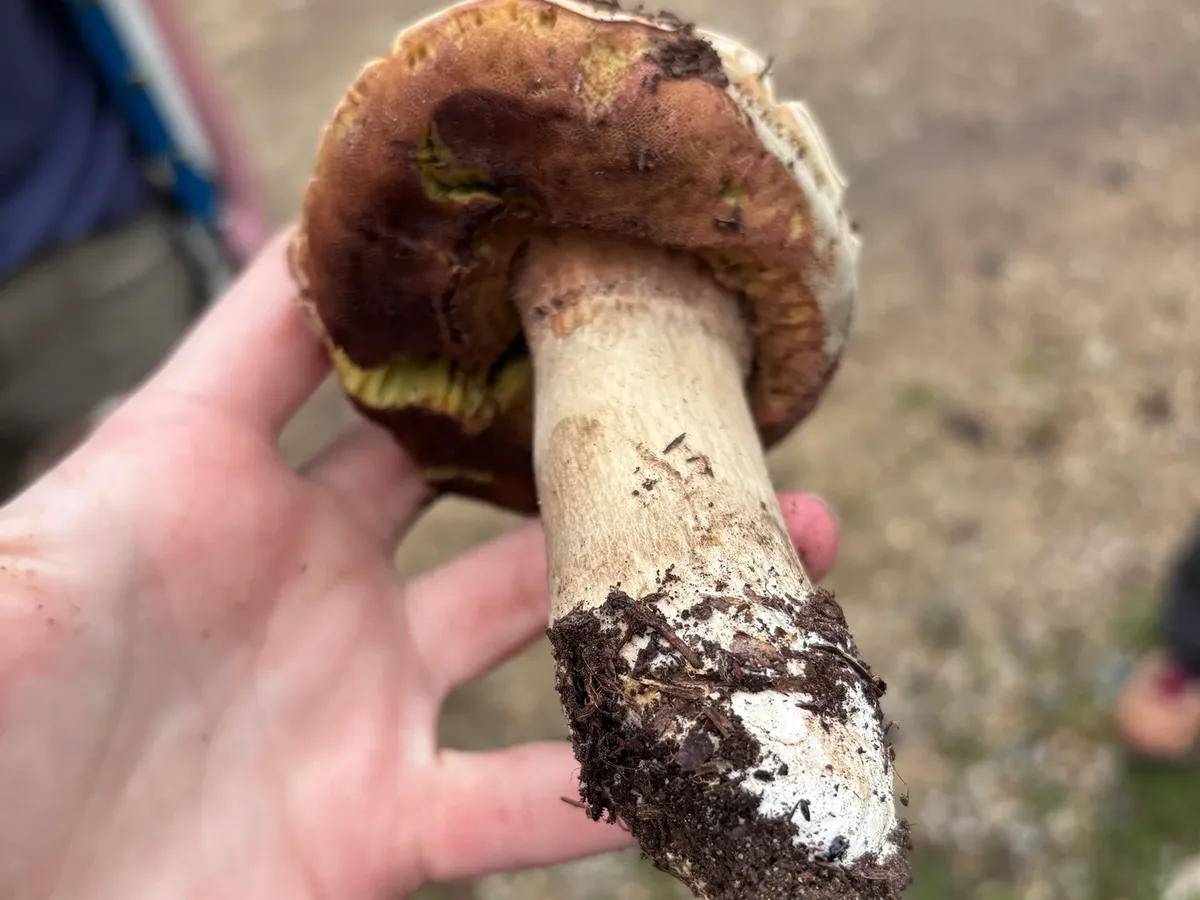
Boletus edulisOne of the safest edibles of all, with a pale net on its bulbous stem - its darker southern cousin Boletus aereus haunts warm oak and chestnut woods.
How to recognise it
Cap 7-30 cm, brown (penny-bun coloured), slightly tacky when wet, domed when young and flattening out. Instead of gills there is a tube layer (pores) under the cap: white when young, turning yellow-green with age. Stem stout, white to pale brown, club-shaped or bulbous, with a pale net pattern (reticulation) at the top - a key identifying feature. Flesh white, unchanging when cut, with a mild nutty smell and taste. Spore print olive-brown. B. aereus is darker (almost black-brown cap), firmer, and grows in warmer oak/chestnut woodland.
Where it grows
Mycorrhizal with both broadleaf and conifer trees: oak, beech, chestnut, hazel as well as spruce and pine. Thrives at forest edges and in clearings. B. aereus is bound to oak and chestnut on warm, often lime-rich ground in southern/central Europe.
Cooking
Fried in butter is classic. Excellent dried - the aroma intensifies (dry in the oven at 25-30 C for a few hours, then raise to about 50 C until crisp; store airtight). Dried cep is soaked for 15-20 minutes; save the soaking water for stock/risotto. The basis of cepes a la bordelaise and Steinpilzrisotto.
Look-alikes
Bitter taste; dark net pattern on a pale stem and pink pores (the cep has a pale net on a brownish stem with white/yellow pores). Tasting a small piece reveals its bitterness.
Red pores and red stem, bruises blue; poisonous. General rule: avoid boletes with red pores or that bruise strongly blue.
Blues immediately when cut and has red/orange pores. Porcini flesh stays white and does not change.
The white net pattern (reticulation) on the upper stalk and the non-bluing pores distinguish Boletus edulis.
Much of the commercial Chilean "porcini" export is actually Suillus and native boletes rather than true B. edulis; the trade name is applied broadly.
 Chanterelle
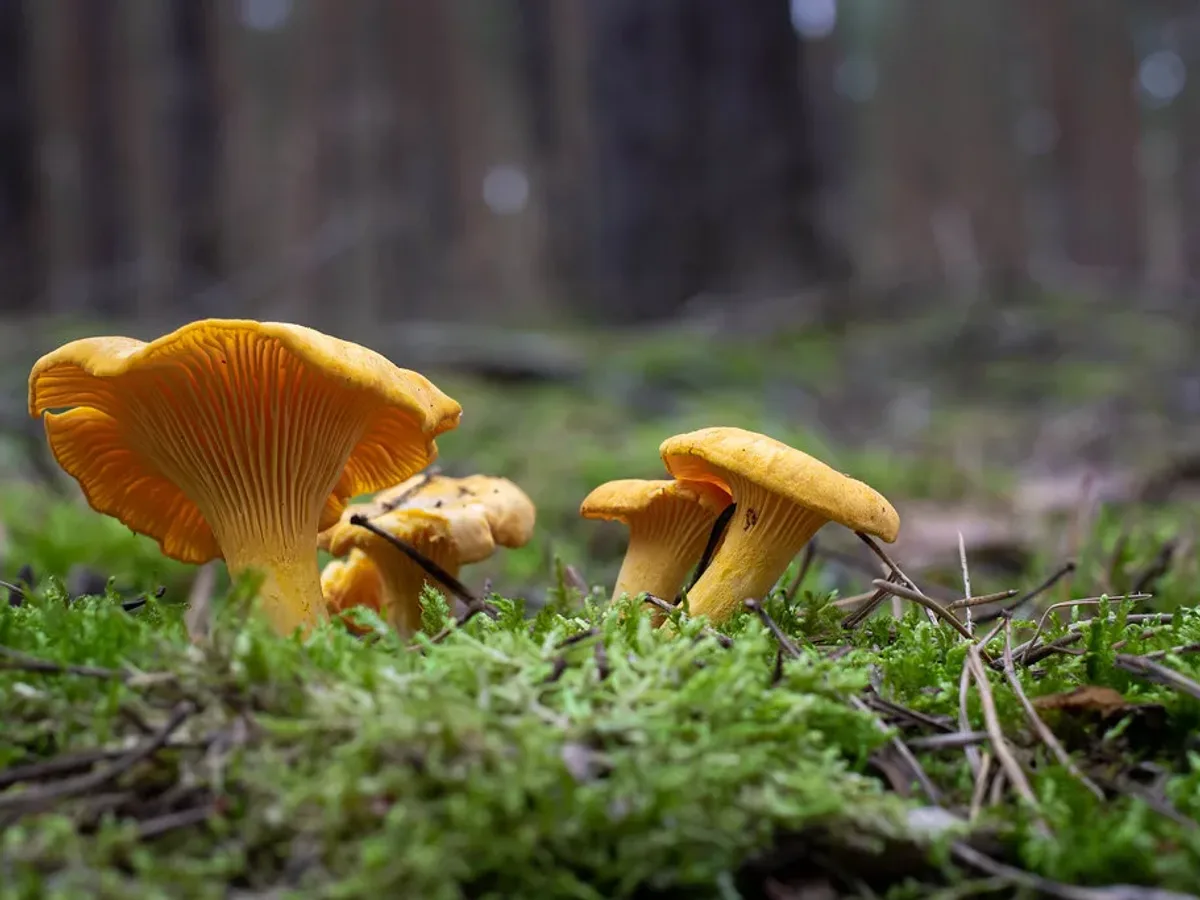 ChanterelleChanterelle
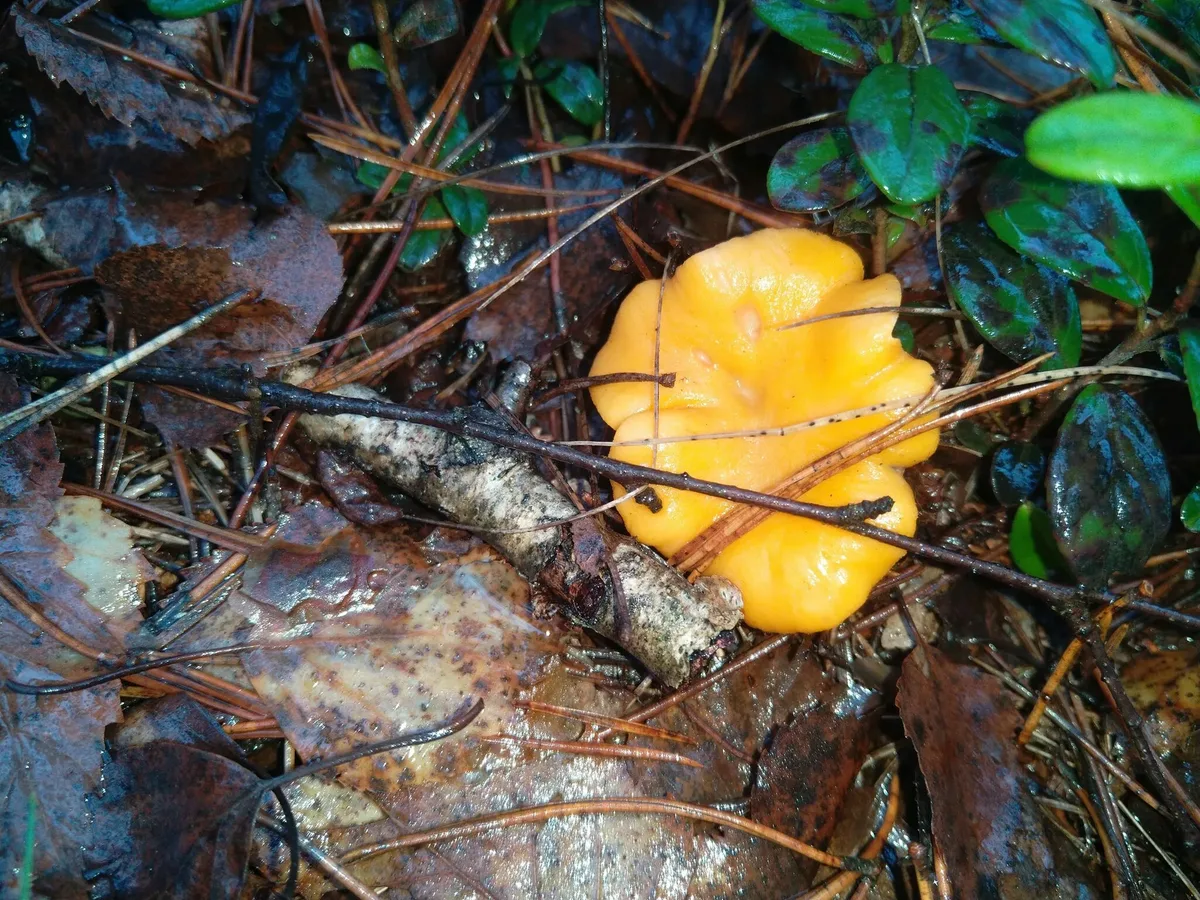 ChanterelleChanterelleChanterelle
Chanterelle
Cantharellus cibariusEgg-yellow with blunt forked ridges, not true gills - that single feature makes it easy to learn safely.
How to recognise it
3-10 cm, egg-yellow to deep yellow, the whole body glowing the same warm colour from cap edge to stem. The cap starts convex and opens into a shallow funnel with a wavy, irregular margin. The underside carries blunt, branched ridges - not true gills - that run smoothly down onto the stem; this is the single most important thing to check. The flesh is white inside (not orange), firm, and carries a fruity apricot scent. Spore print pale yellow to cream-white. Remarkably resistant to maggots.
Where it grows
Mycorrhizal with deciduous and coniferous trees; it thrives in moist moss under beech and birch, as well as under oak and pine. Look on mossy banks, along ditches, and in woodland glades.
Cooking
Fried in butter; classically with eggs (fricassée de girolles, scrambled eggs). It dries poorly (becomes tough) but can be pulverised into a seasoning. Pre-boil/dry-fry first to drive off the moisture.
Look-alikes
In Europe grows on olive trees in the Mediterranean region; has true gills, grows in clusters on wood, and glows faintly. The truly dangerous double.
Can be orange-coloured; avoid confusion. Have true gills and a cobweb-like veil rather than the chanterelle's blunt decurrent folds.
More orange, with true, thin, closely spaced gills (not folds) that are forked but gill-like. Now considered edible but can cause stomach upset.
Can superficially resemble the chanterelle but has true gills and a different colour.
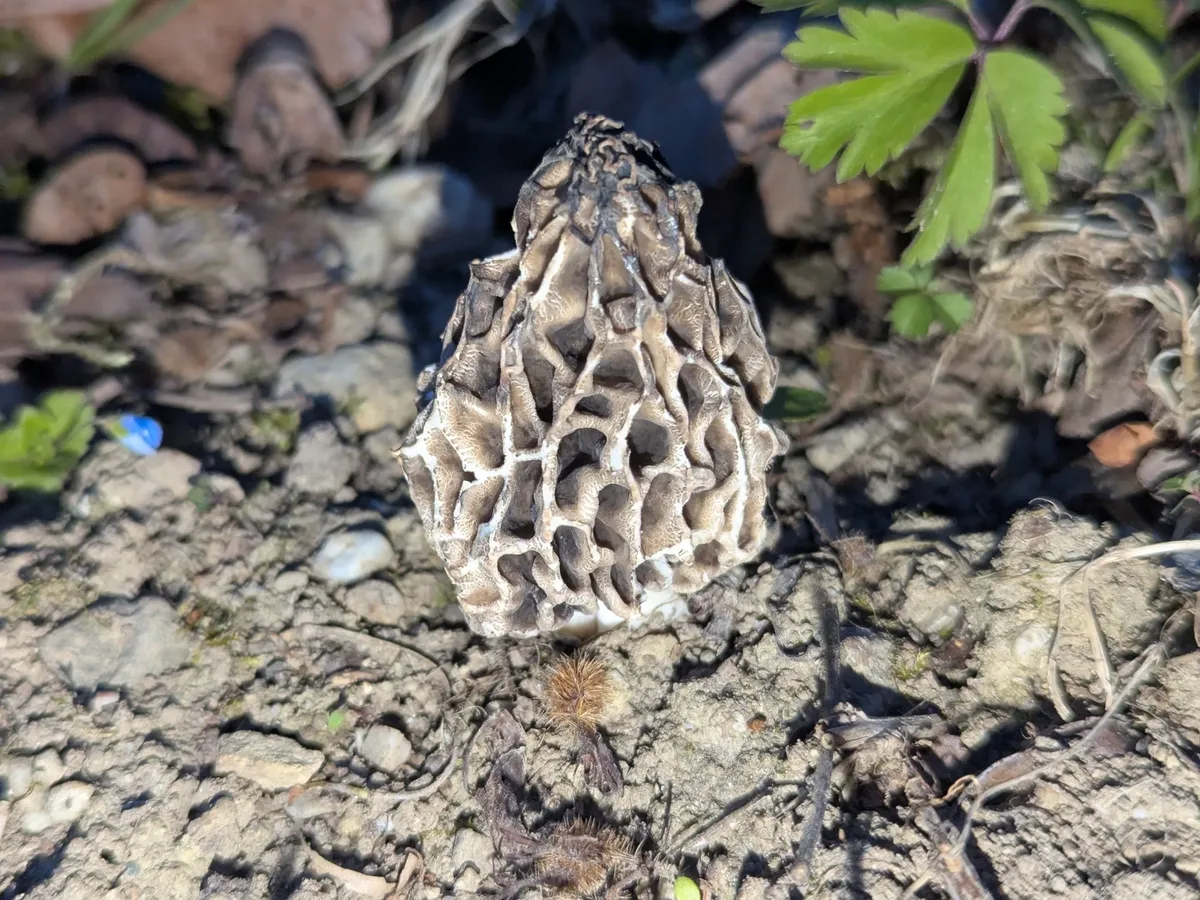 Common morel
 Common morel
 Common morel
 Common morelCommon morelCommon morel
Common morel
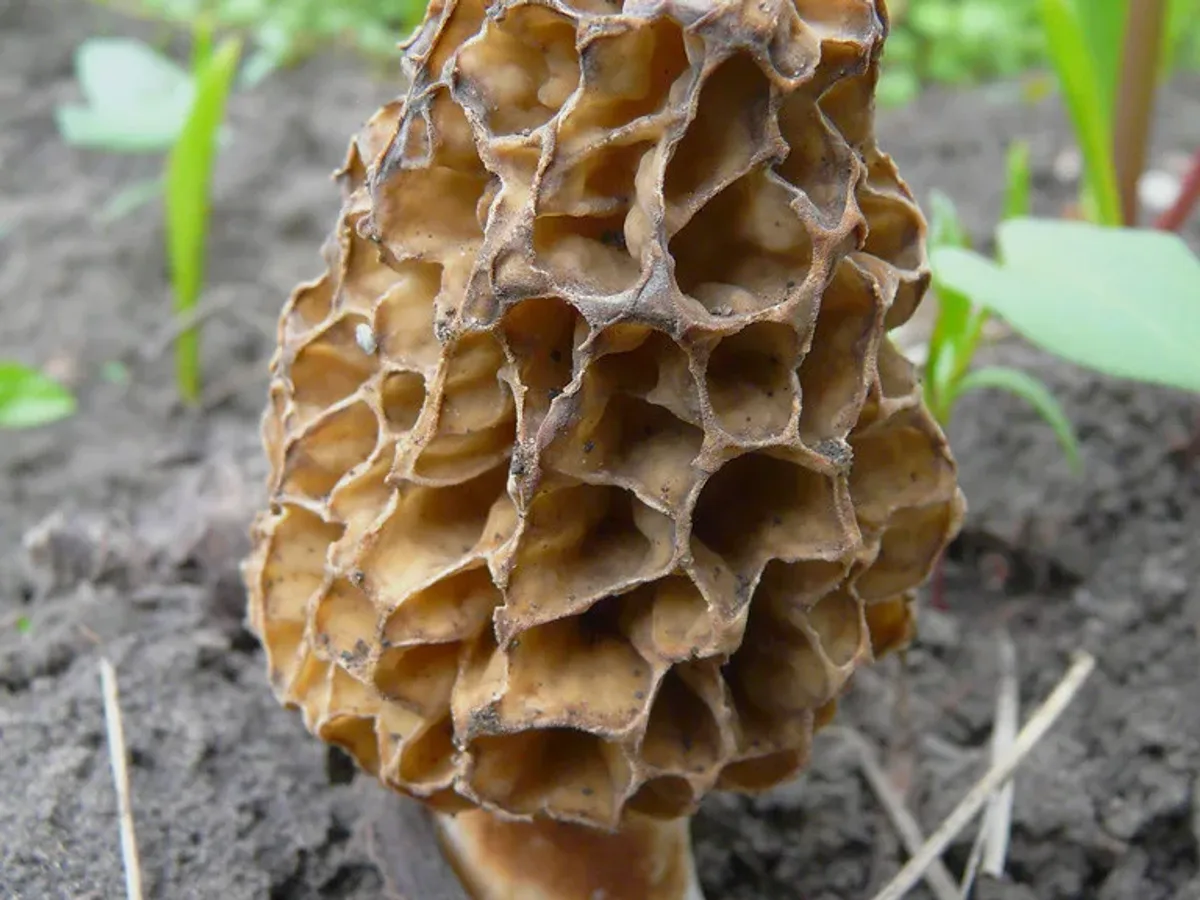
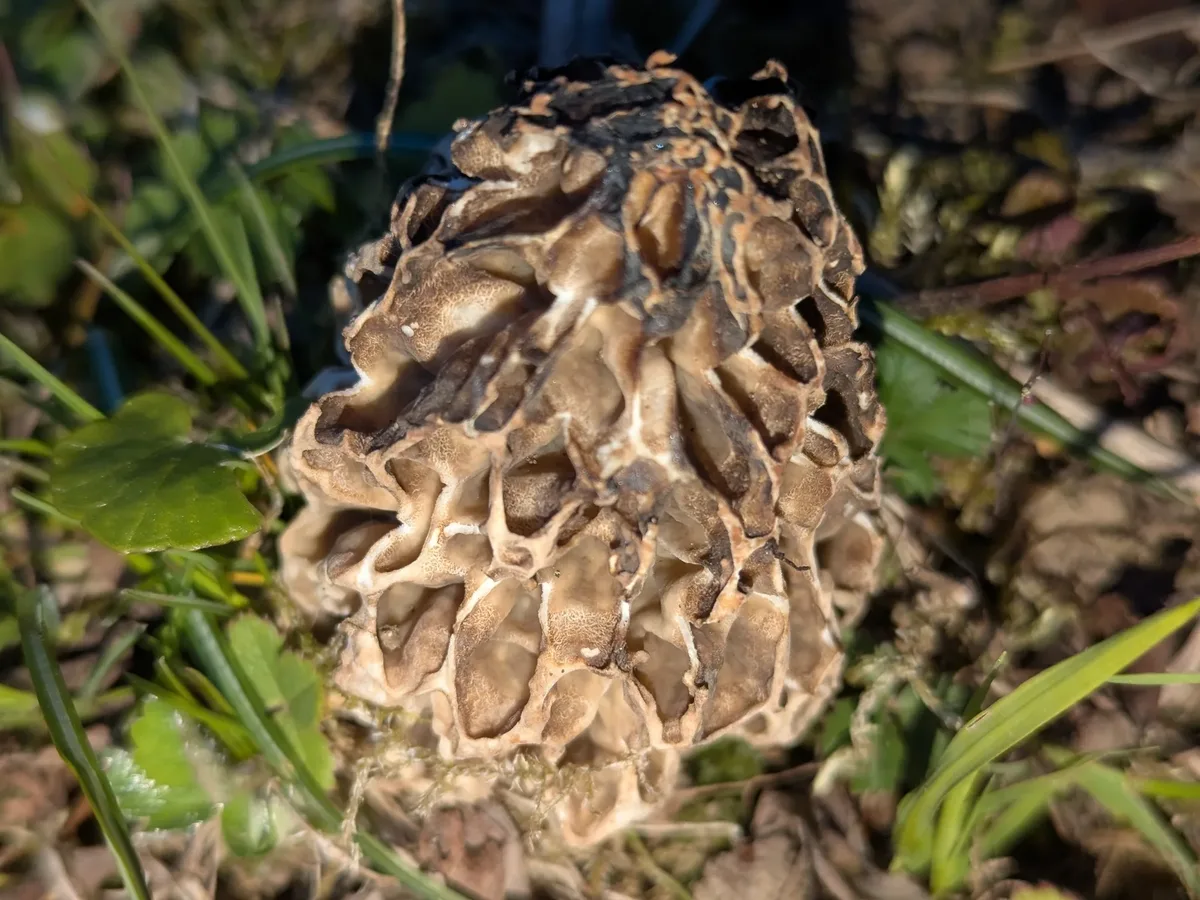
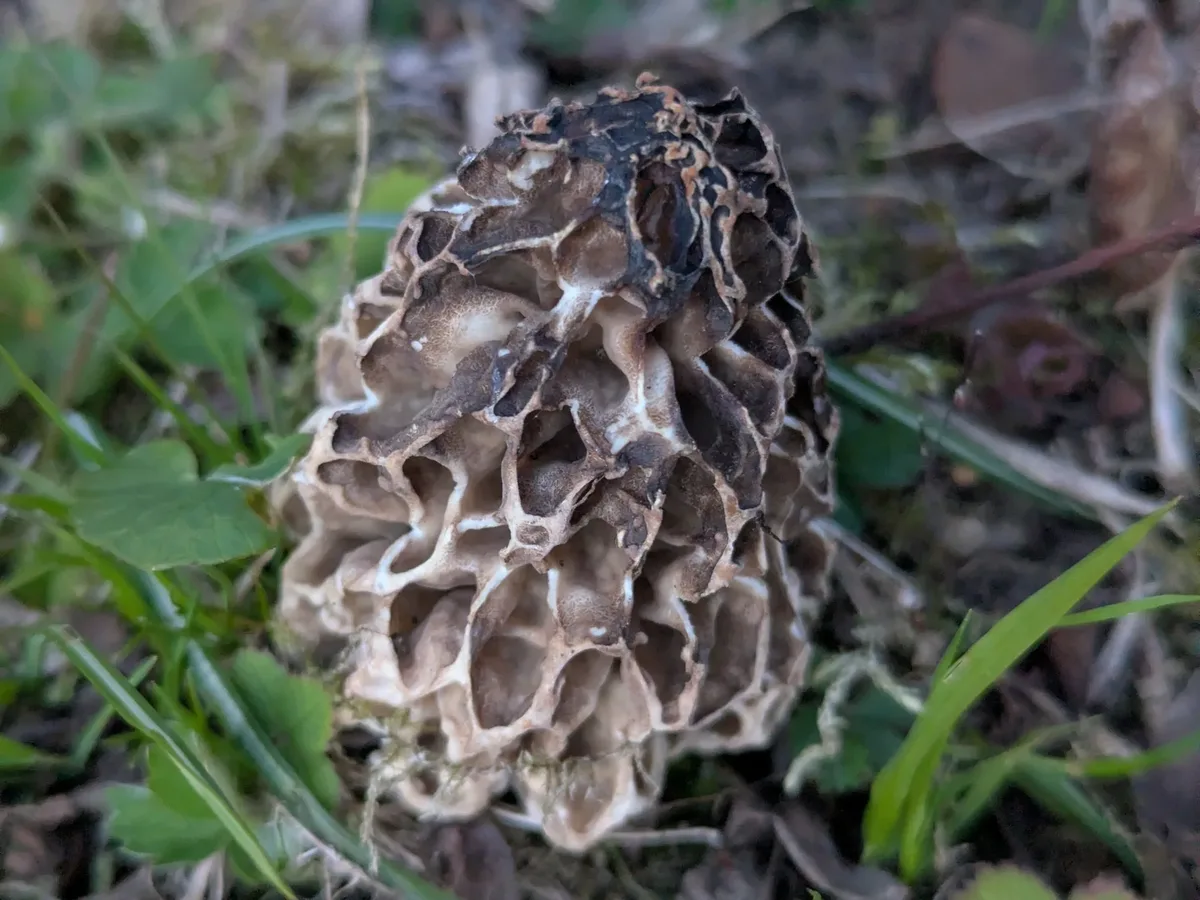
Morchella esculentaThe great spring mushroom of the Continent - hollow from cap to foot, and strictly poisonous raw.
How to recognise it
Cap 2-7 cm wide, 2-10 cm tall, yellow-brown, covered in a honeycomb of irregular pits and ridges - closer to a sponge than anything else in the forest. Cut one open: cap and stem share a single continuous hollow chamber, with no interior divisions. That clean hollow interior is the key check. Stem white to pale yellow, hollow, slightly granular. Mild odour.
Where it grows
Moist, often calcareous ground near elm, ash and apple trees - woodland edges, old orchards, burn sites and recently disturbed earth. Partly saprophytic. The morel has a well-documented fondness for post-fire ground, sometimes erupting in numbers the spring after a forest fire on a site where none grew before.
Cooking
Must be cooked through - see safety notes. Once properly cooked, the morel's earthy, nutty depth makes it one of the most prized culinary fungi: classic in cream sauces (poulet aux morilles, omelette aux morilles), or simply sautéed in butter. Dries exceptionally well - thread onto a string and the flavour concentrates further. Soak dried morels before use.
Danger
Never eat raw or lightly cooked. Cook thoroughly 15-30 minutes, avoid alcohol with the meal, and try only a small amount the first time. The most dangerous confusion is with the seriously poisonous false morel (Gyromitra esculenta), which contains gyromitrin.
Look-alikes
Brain-/walnut-like and irregularly wrinkled rather than a pitted honeycomb; not cleanly hollow but chambered/filled inside. Contains gyromitrin and is seriously poisonous.
The cap hangs free, attached to the stem only at the top. In a true morel the cap is attached to the stem along its lower edge and the whole body is hollow.
 Parasol mushroom
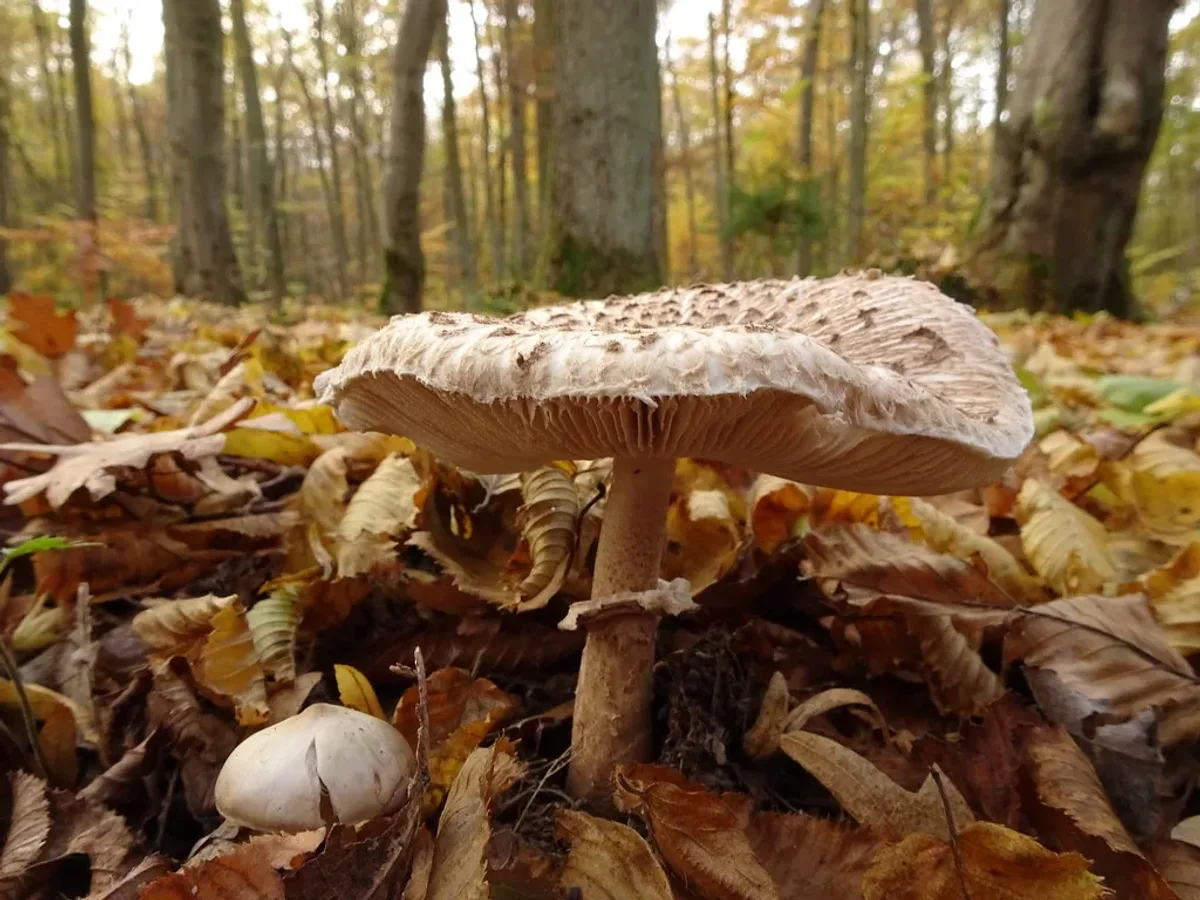 Parasol mushroom
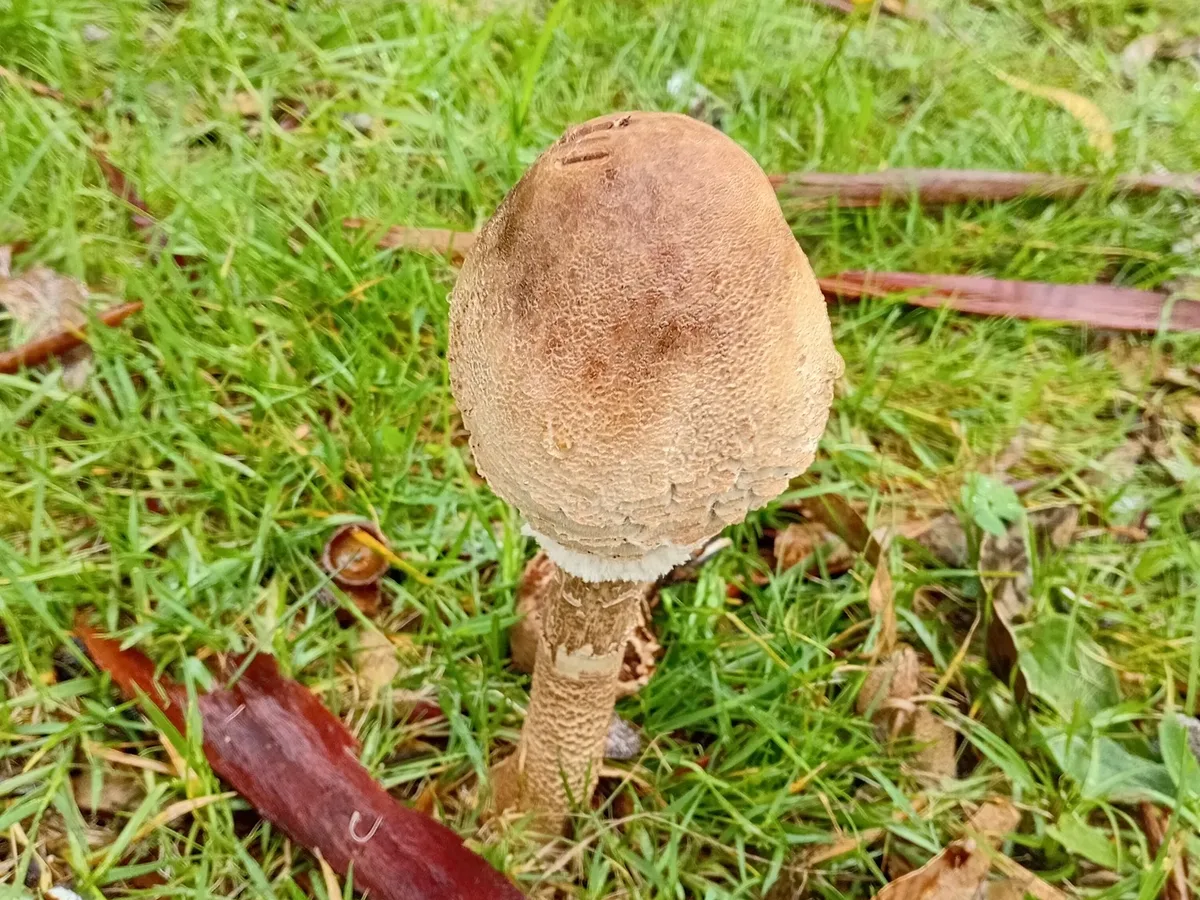 Parasol mushroom
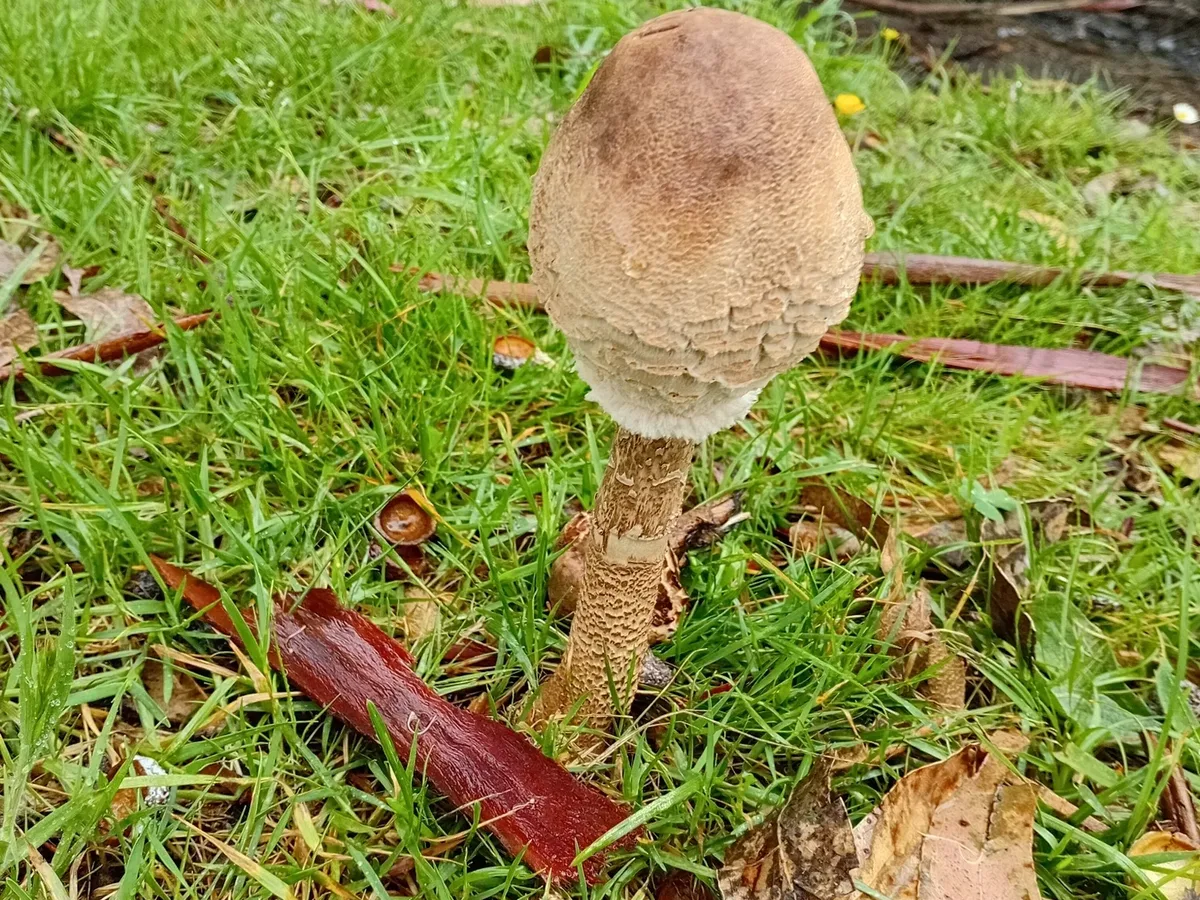 Parasol mushroomParasol mushroomParasol mushroom
Parasol mushroom
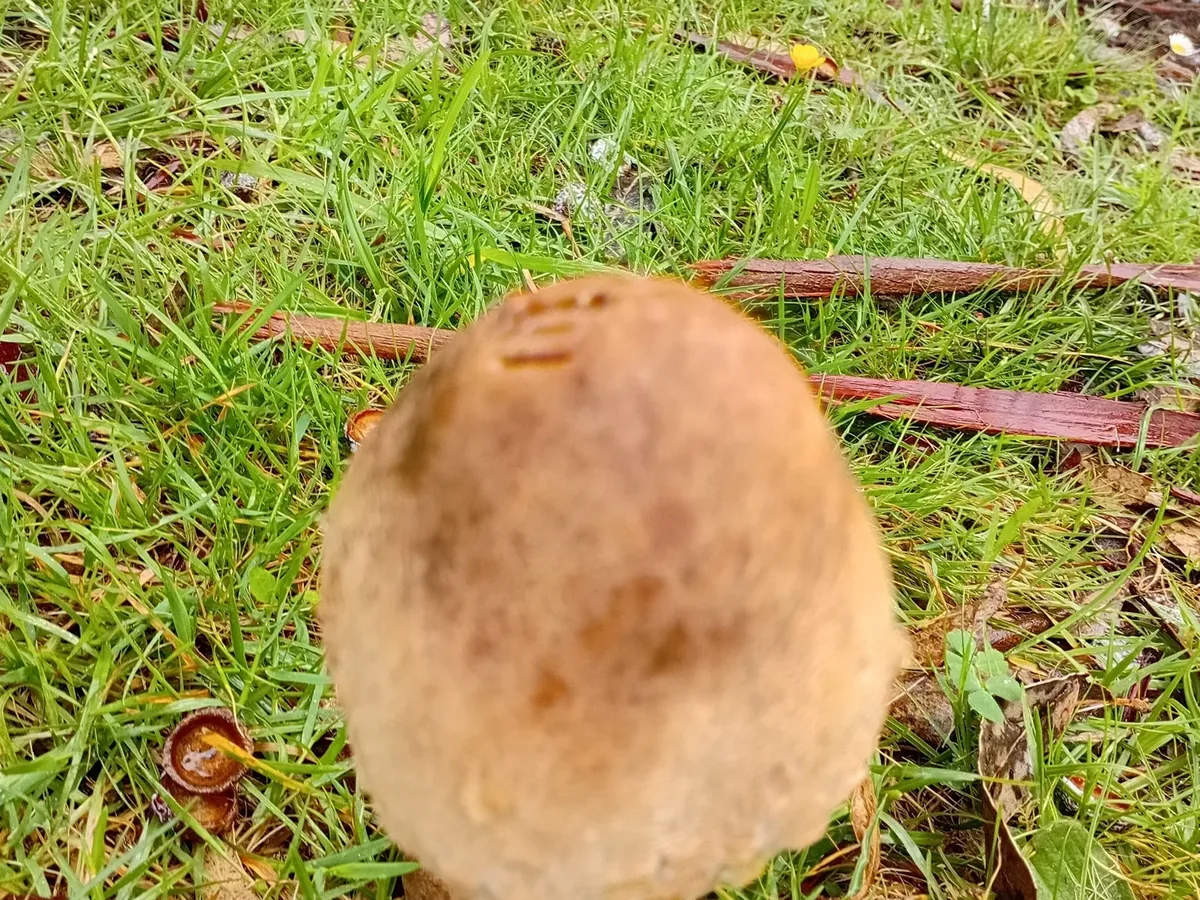
Macrolepiota proceraA giant of the grassland with a snakeskin stem - but young buttons can resemble a deadly Amanita, so pick only fully grown caps.
How to recognise it
One of Europe's most distinctive mushrooms at full size. The cap reaches 30-50 cm across, opening from a tight drumstick shape into a broad, flat parasol with a raised central knob (umbo). The surface breaks into coarse, dark brown scales on a paler tan background - shaggy and patterned. Gills are white and free from the stem. The stem is long (up to 30-40 cm), slender, and marked with fine zigzag brown bands that really do resemble snakeskin; a loose double ring sits around it and can be slid freely up and down. The base is bulbous but carries no volva. Spore print white.
Where it grows
Grasslands, pasture, roadsides, clearings, often at the edge against deciduous woodland; well-drained ground. Common in southern Britain/Ireland.
Cooking
The large cap is perfectly sized for breading and pan-frying whole like a schnitzel - a classic preparation known in German-speaking countries as gebackener Parasol or Schnitzelpilz. It can also be sliced and fried in butter. Always cook thoroughly; parasol mushroom should never be eaten raw.
Look-alikes
Young parasols can resemble young Amanita. Rule of thumb: the parasol has dark scales on a light background, while Amanita has light patches (if any) on a darker background. The parasol has a movable double ring, a snakeskin-patterned stem, and no volva. Never pick at the button stage.
Smaller poisonous Lepiota; deadly due to amatoxin. Lacks the snakeskin stem pattern and is much smaller than the parasol.
Smaller, poisonous; has greenish gills/spores and lacks the snakeskin stem pattern.
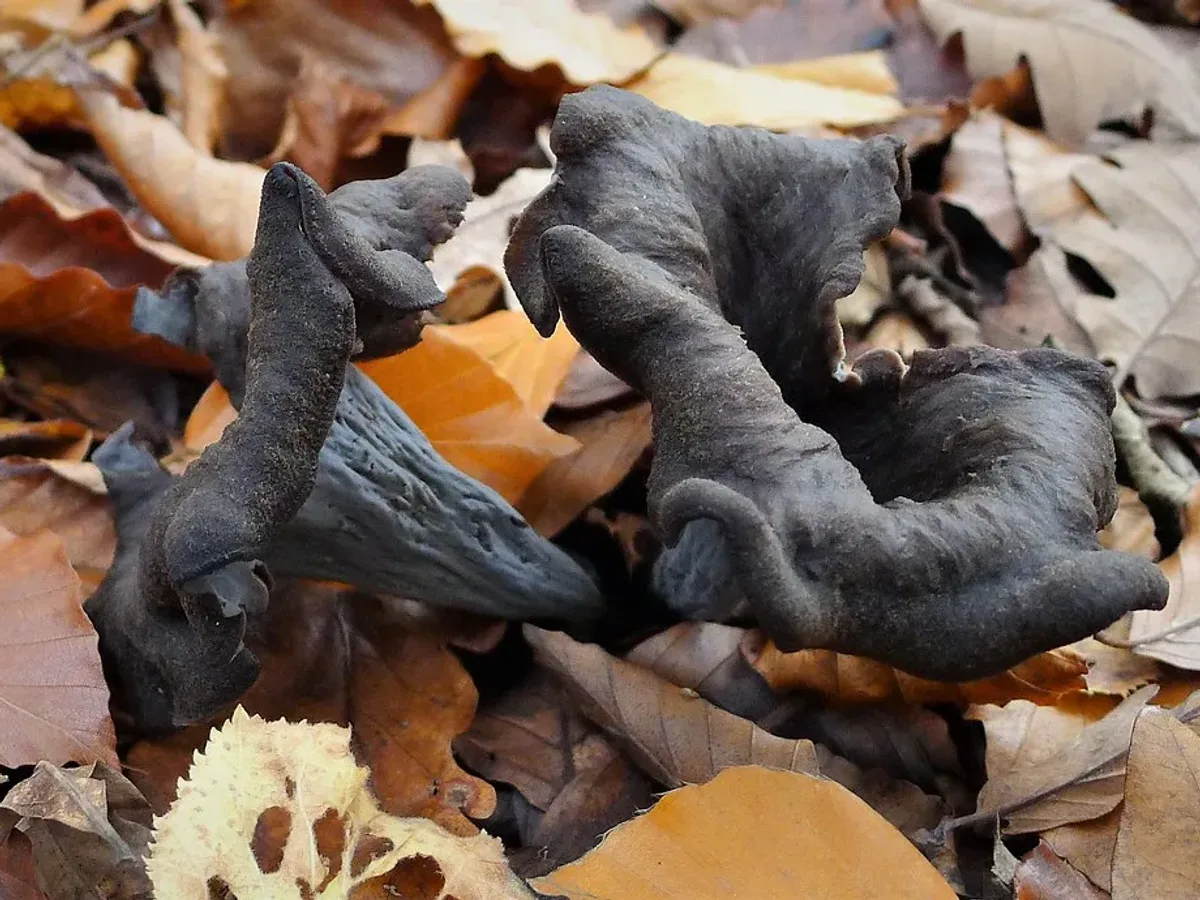 Horn of plentyHorn of plenty
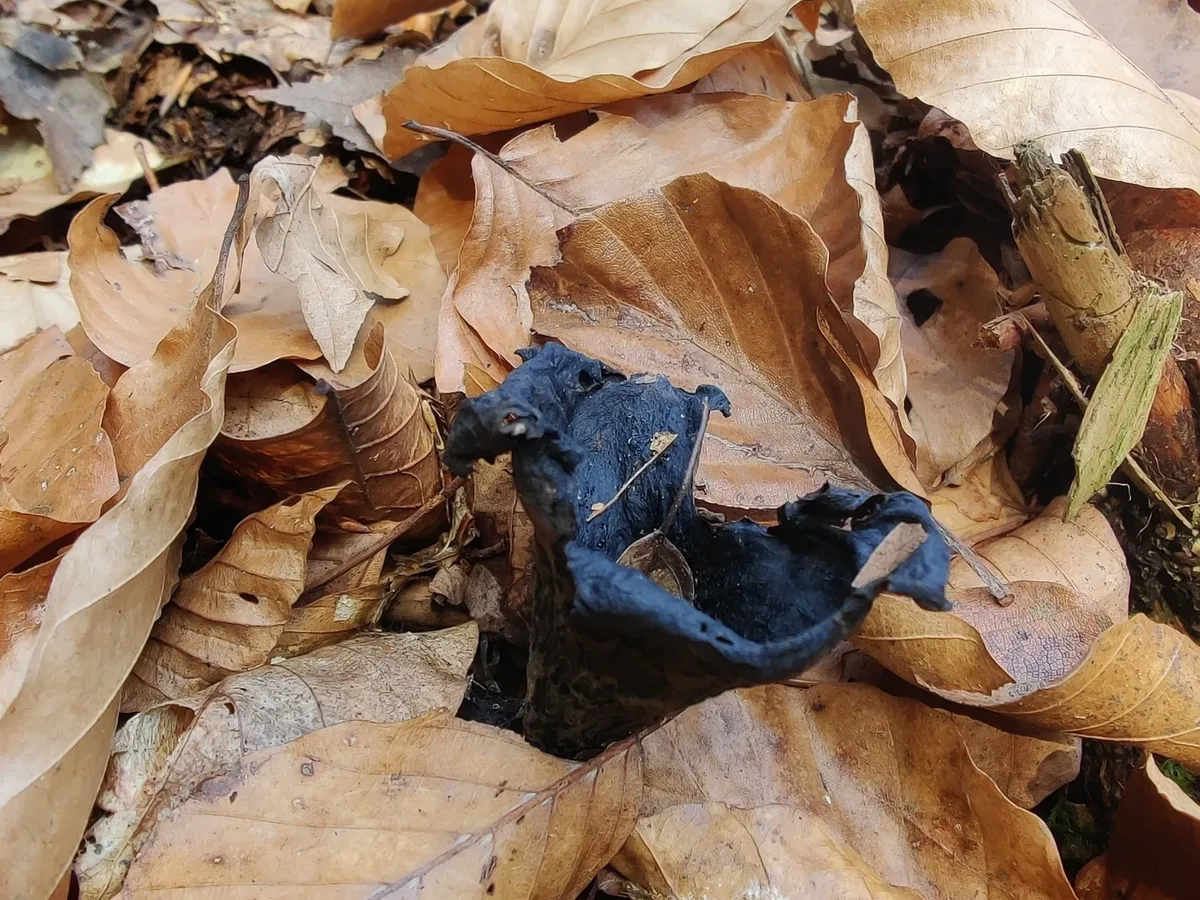 Horn of plentyHorn of plentyHorn of plenty
Horn of plenty
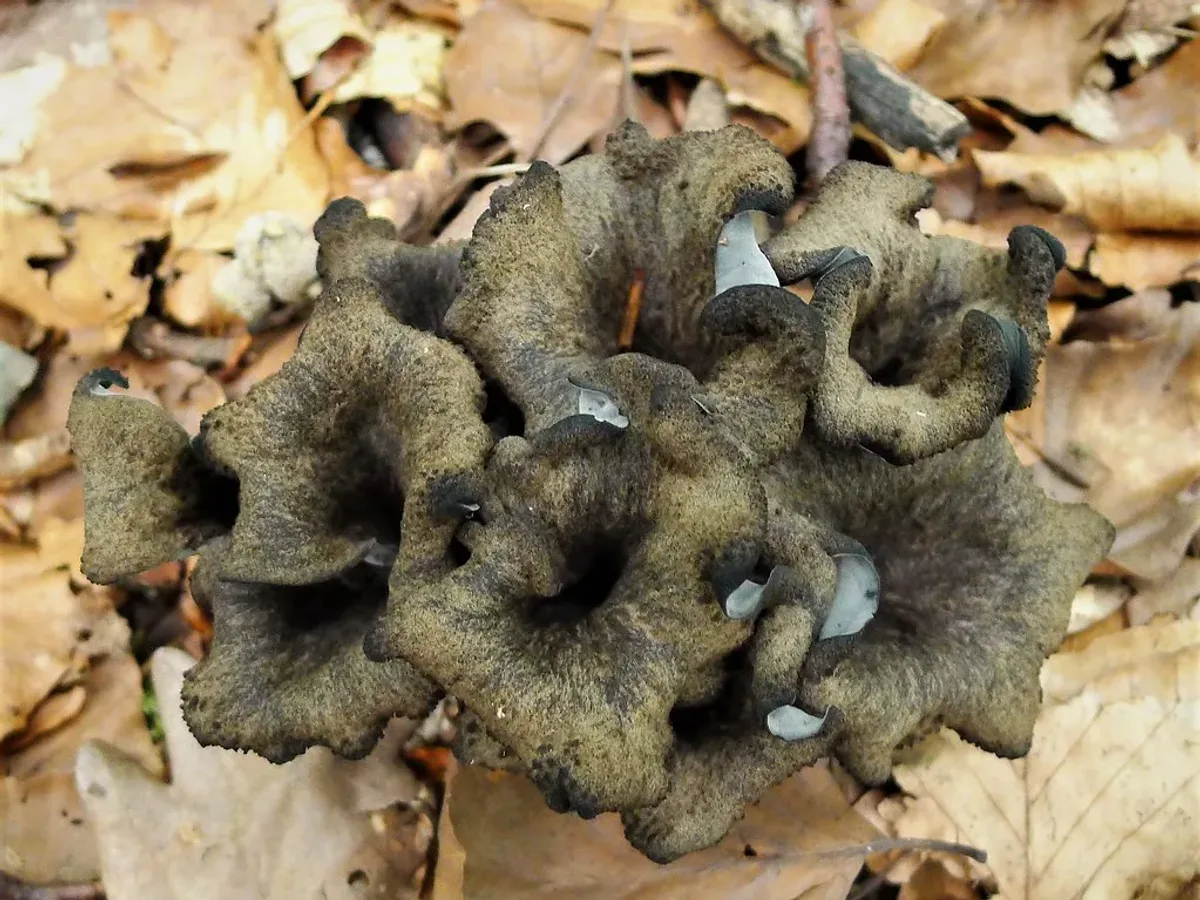
Craterellus cornucopioidesDark, smoky and easy to trust - no dangerous look-alikes, just hard to spot against the leaf litter.
How to recognise it
Trumpet- or funnel-shaped, 5-12 cm tall, completely hollow, thin-fleshed and brittle, dark grey to blackish-brown (sometimes yellowish). The outer/underside is a paler grey with faint decurrent ridges (not true gills). Spore print white/pale yellow. A rich, smoky scent, especially when dried. The name "trumpet of death" refers to its colour and late season - not to any toxicity.
Where it grows
Mycorrhizal in deciduous woodland, in leaf litter under beech, oak and especially hornbeam (Carpinus betulus), preferably in moss.
Cooking
Fried; works excellently in cream and wine sauces, with game and in pasta. Dries very well - the aroma becomes deeper; can be ground to a powder for seasoning.
Look-alikes
A darker trumpet chanterelle but with a yellow stem; edible.
Can resemble it superficially; differs in form and colour.
Edible; the only similar species.
Resembles the funnel chanterelle more than the black trumpet.
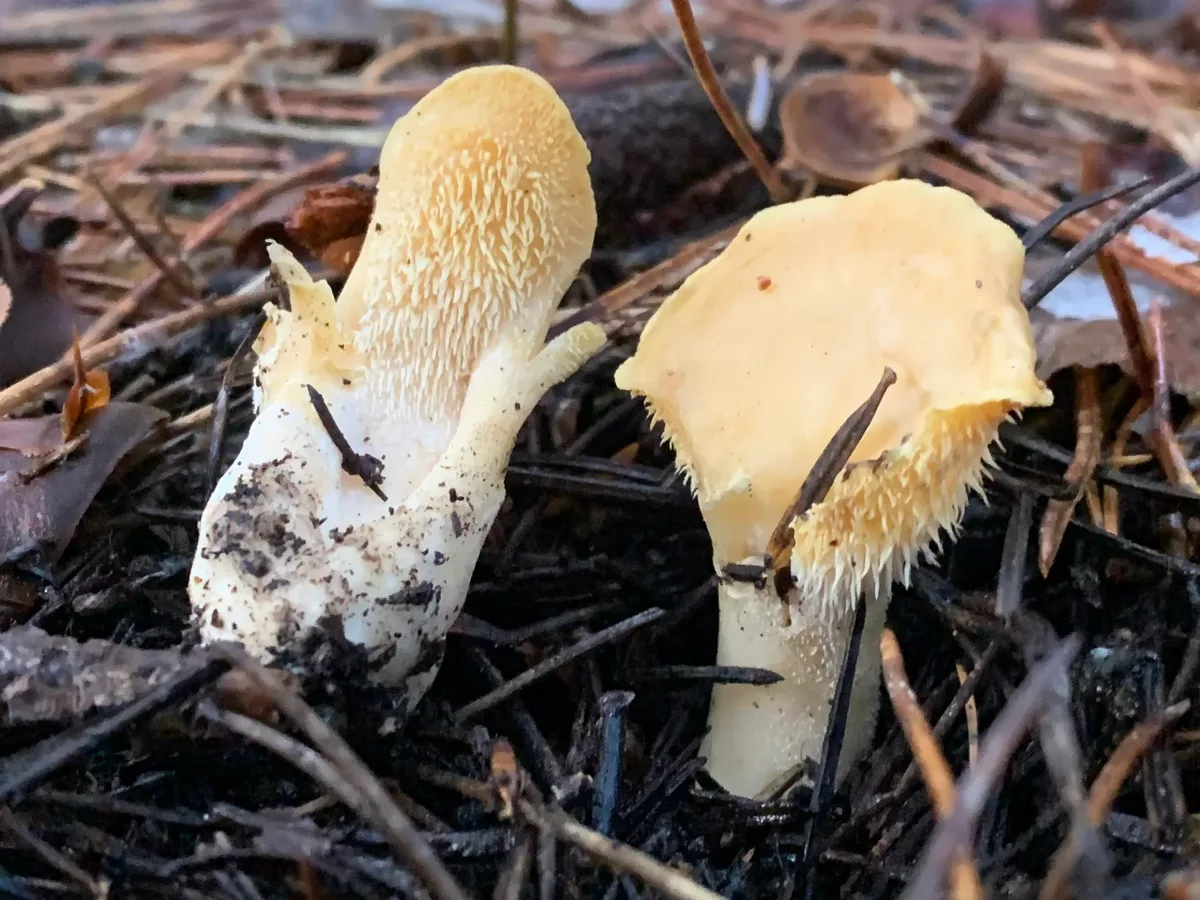 Hedgehog mushroom
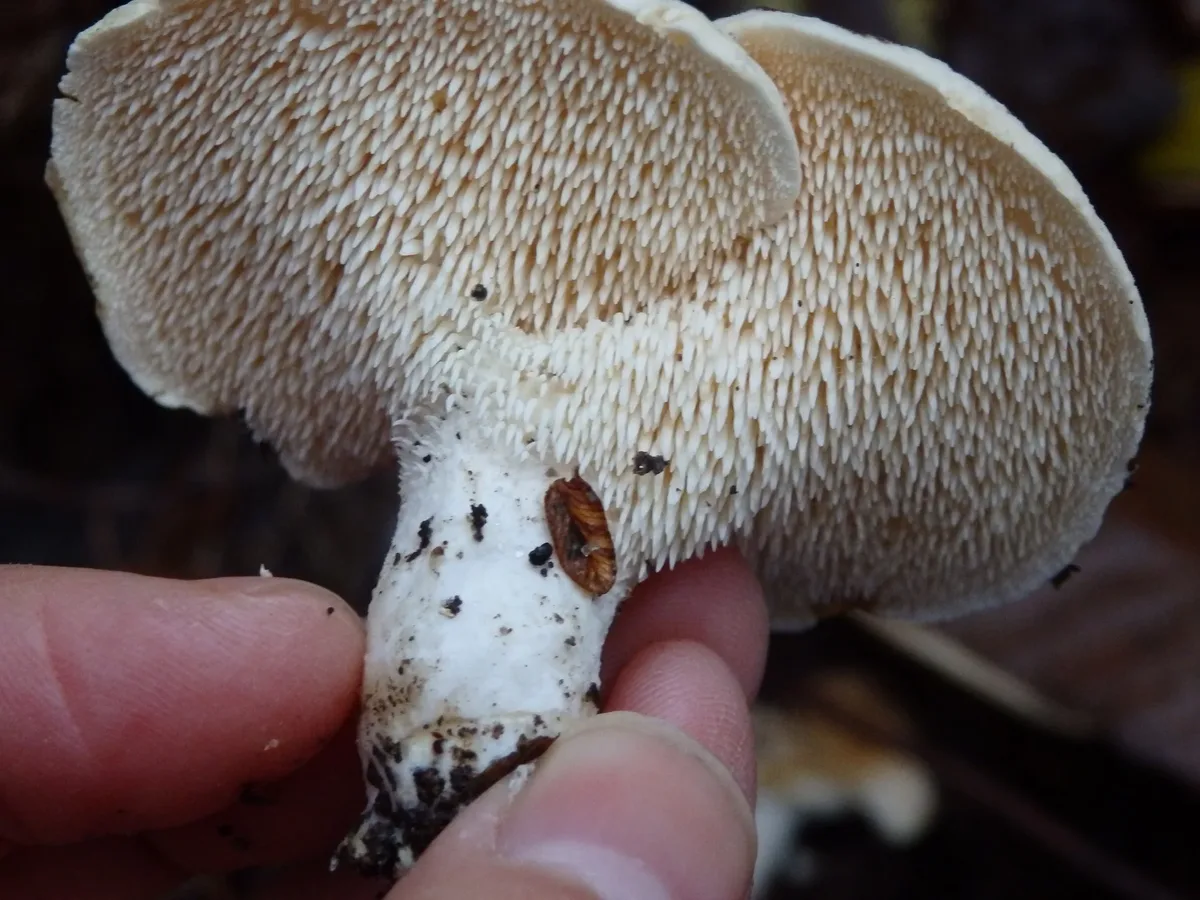 Hedgehog mushroom
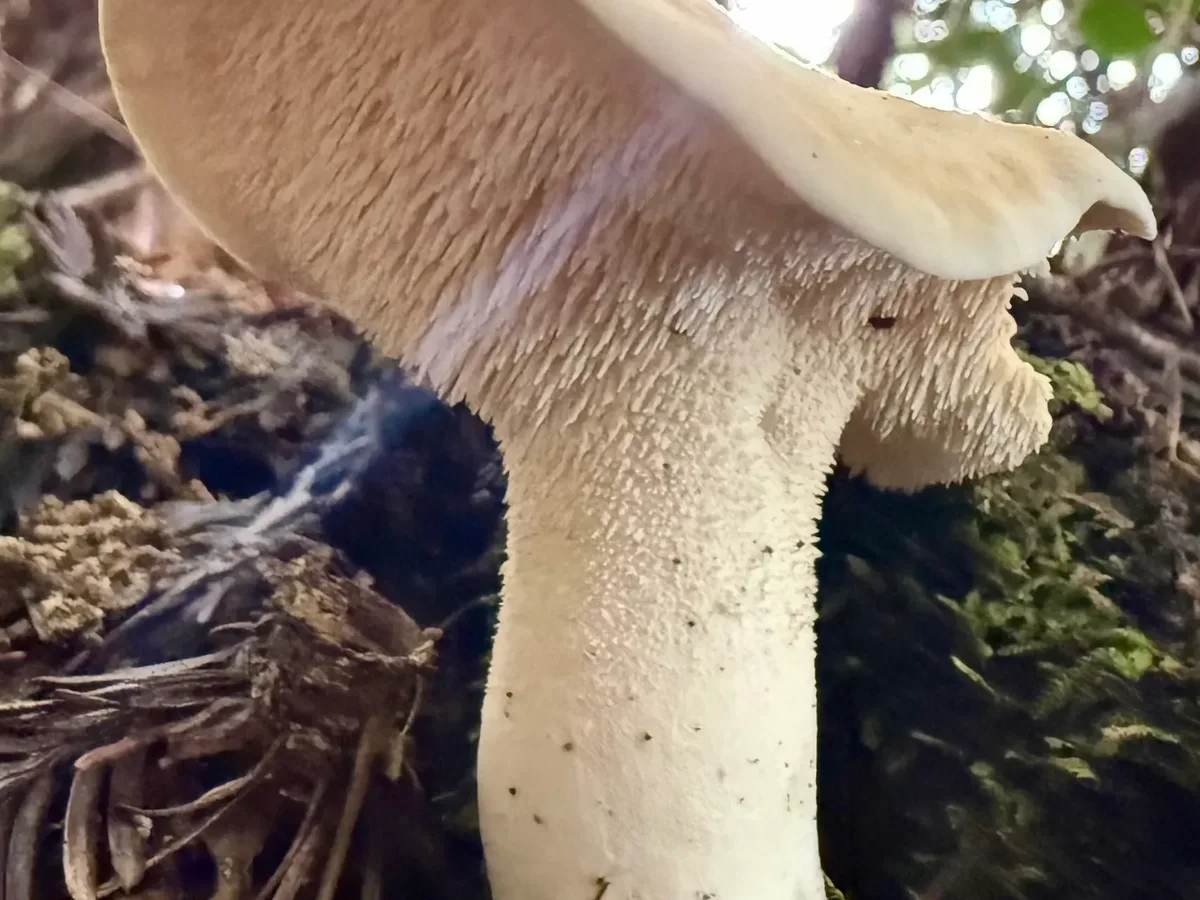 Hedgehog mushroom
 Hedgehog mushroomHedgehog mushroomHedgehog mushroom
Hedgehog mushroom
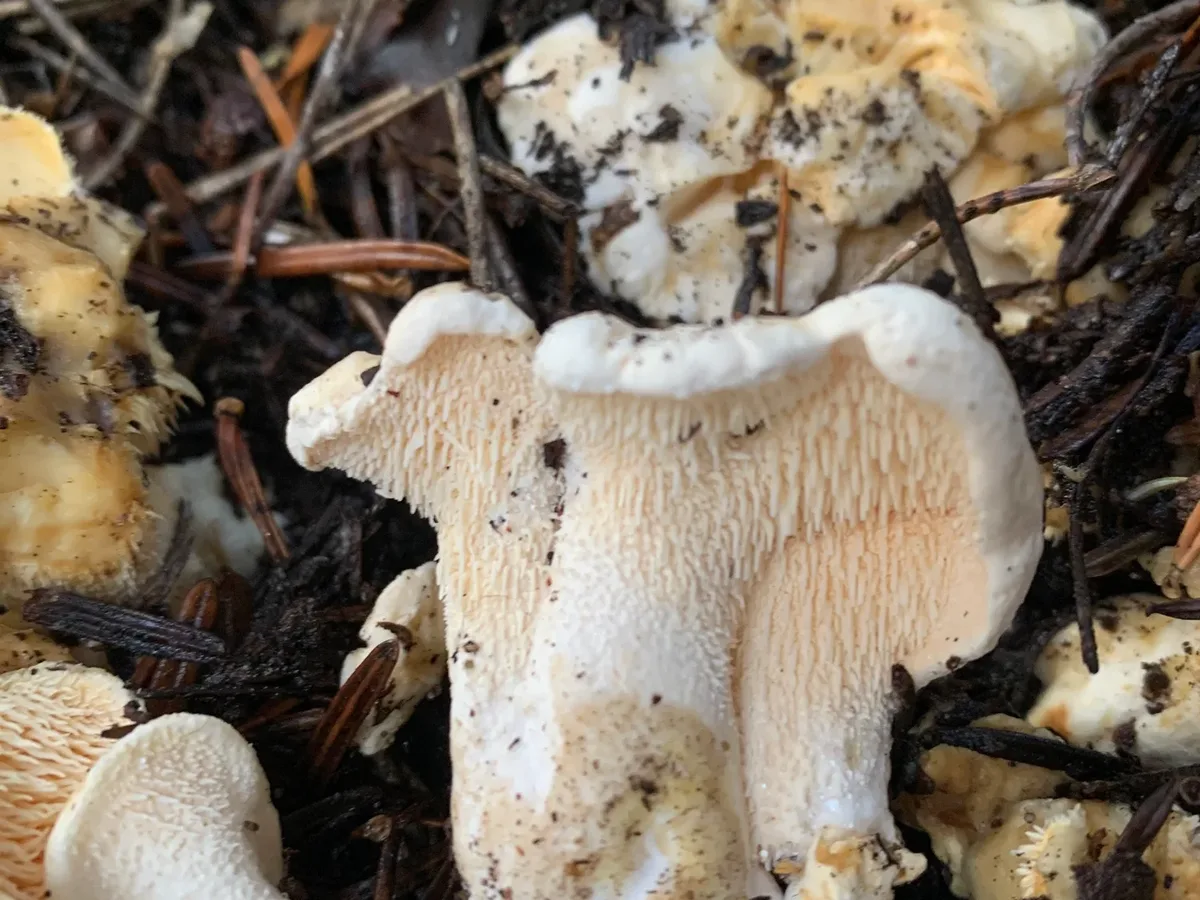
Hydnum repandumSoft spines instead of gills make it almost unmistakable - a fine beginner's mushroom sold in French and Italian markets.
How to recognise it
Cap 4-17 (-25) cm, irregular with a wavy, lobed edge, cream-white to yellow-brown or salmon-pink. The underside carries the hedgehog's calling card: soft, brittle spines or teeth (1-6 mm) that detach at a touch - no other common edible mushroom looks quite like this underneath. Stem short and stout, often off-centre, white. Flesh white and firm, yellowing or browning slightly where bruised. No milk or latex (separates it from the milkcaps). Spore print white.
Where it grows
Mycorrhizal with deciduous and coniferous trees - beech, oak, birch and spruce - in mossy, well-drained woodland. The mycelium lives for years in the soil, quietly maintaining its tree partnerships long before the fruitbodies emerge each autumn.
Cooking
Firm and meaty, it holds its shape beautifully in the pan - less prone to wilting than a chanterelle. Fry in butter, use in soups and risotto, or pair it with chanterelles in the classic French autumn market combination. The mild, nutty flavour deepens with a good sear.
Look-alikes
Smaller and more orange than H. repandum; equally edible.
Can resemble a pale chanterelle from a distance, but the spiny underside of Hydnum (versus chanterelle's blunt ridges/false gills) tells them apart. Both edible.
Resembles the hedgehog from above, but the chanterelle has blunt ridges/false gills rather than the hedgehog's spines.
Gelatinous with rubbery spines.
Scaly, darker in colour, and can be bitter.
 Saffron milk cap
 Saffron milk cap
 Saffron milk cap
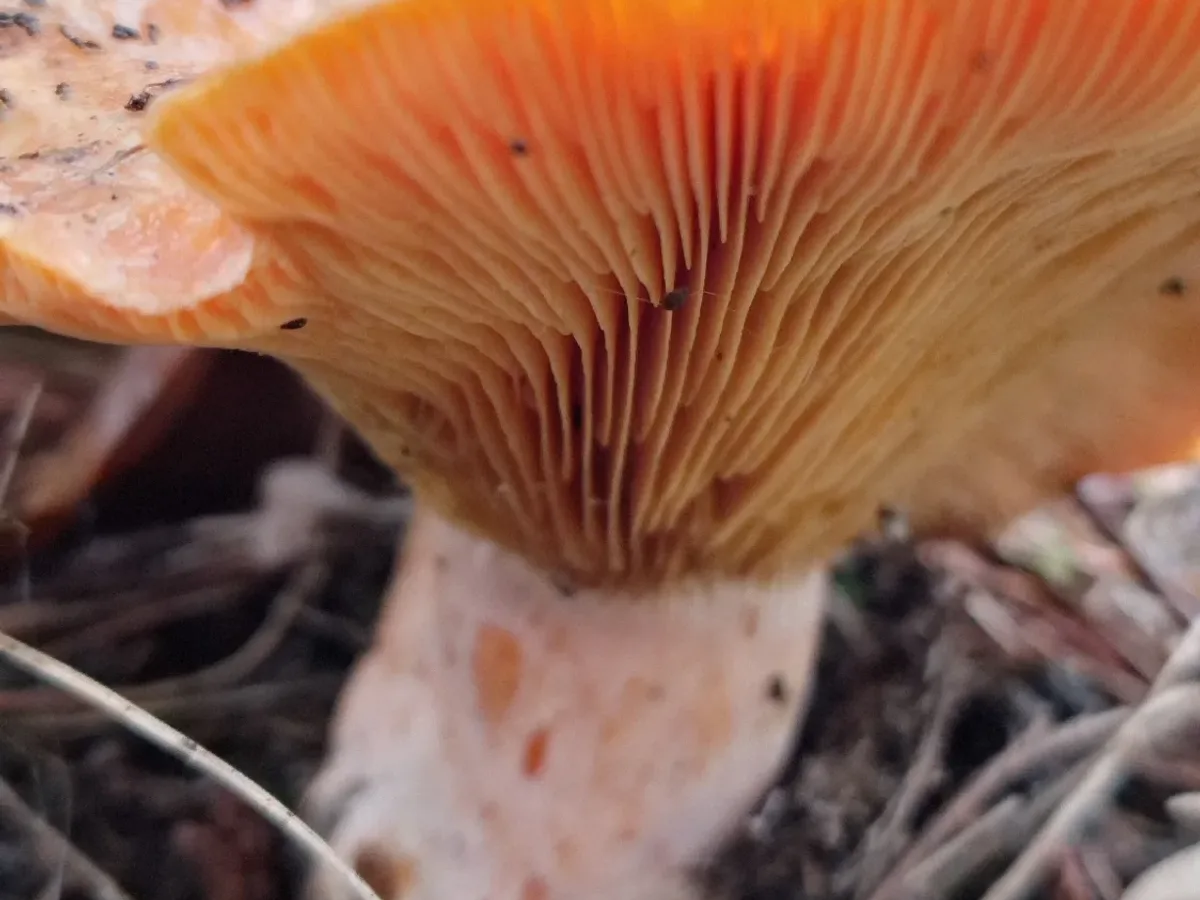 Saffron milk capSaffron milk capSaffron milk cap
Saffron milk cap
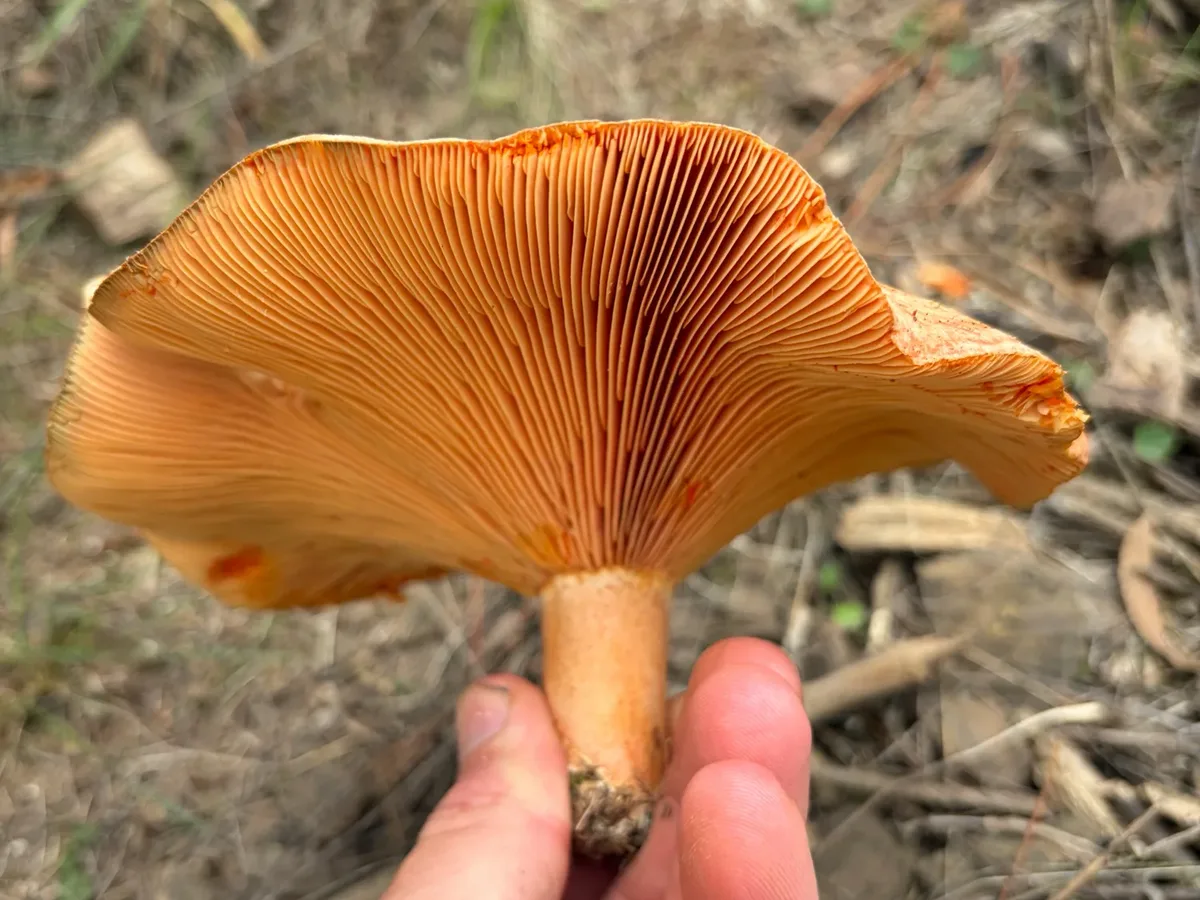
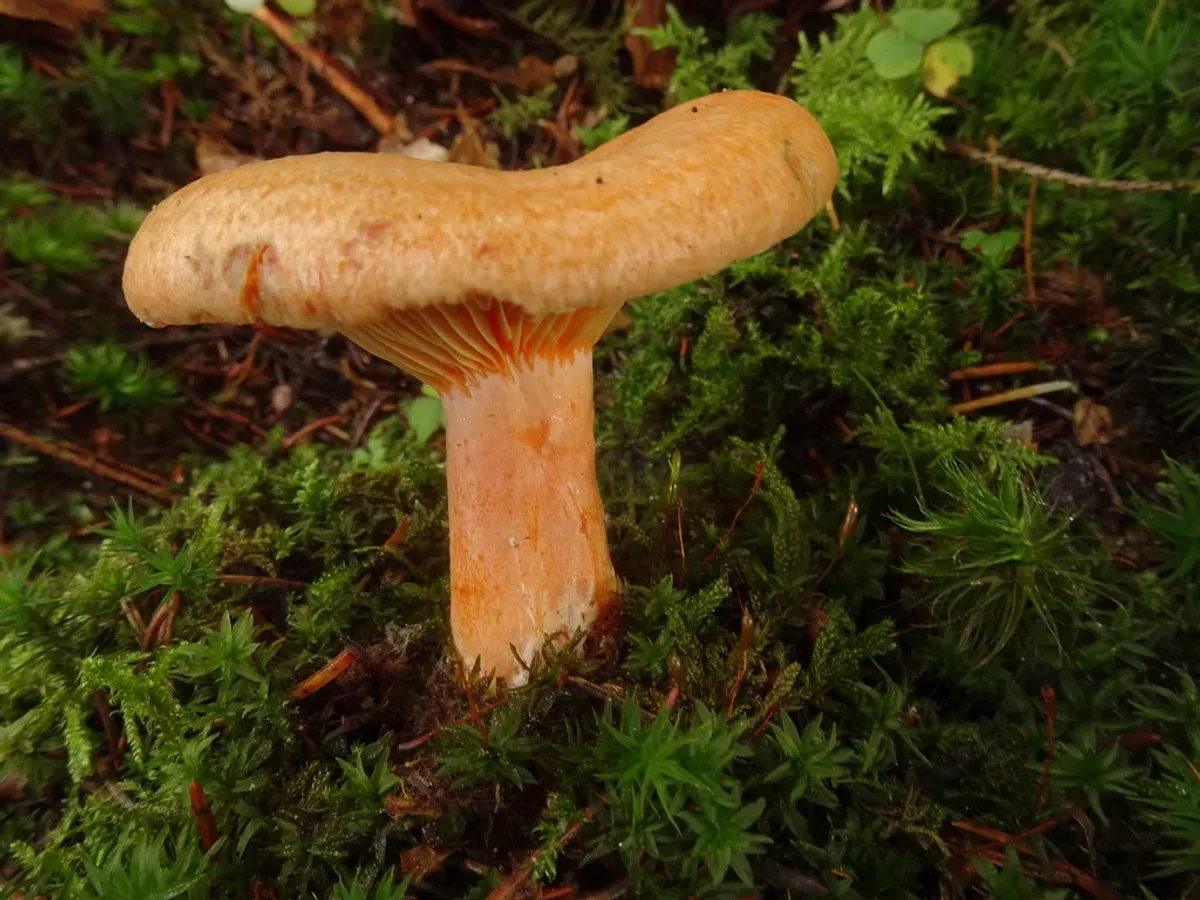
Lactarius deliciosusBleeds carrot-orange milk when cut - only milk caps with orange or red milk are safe here.
How to recognise it
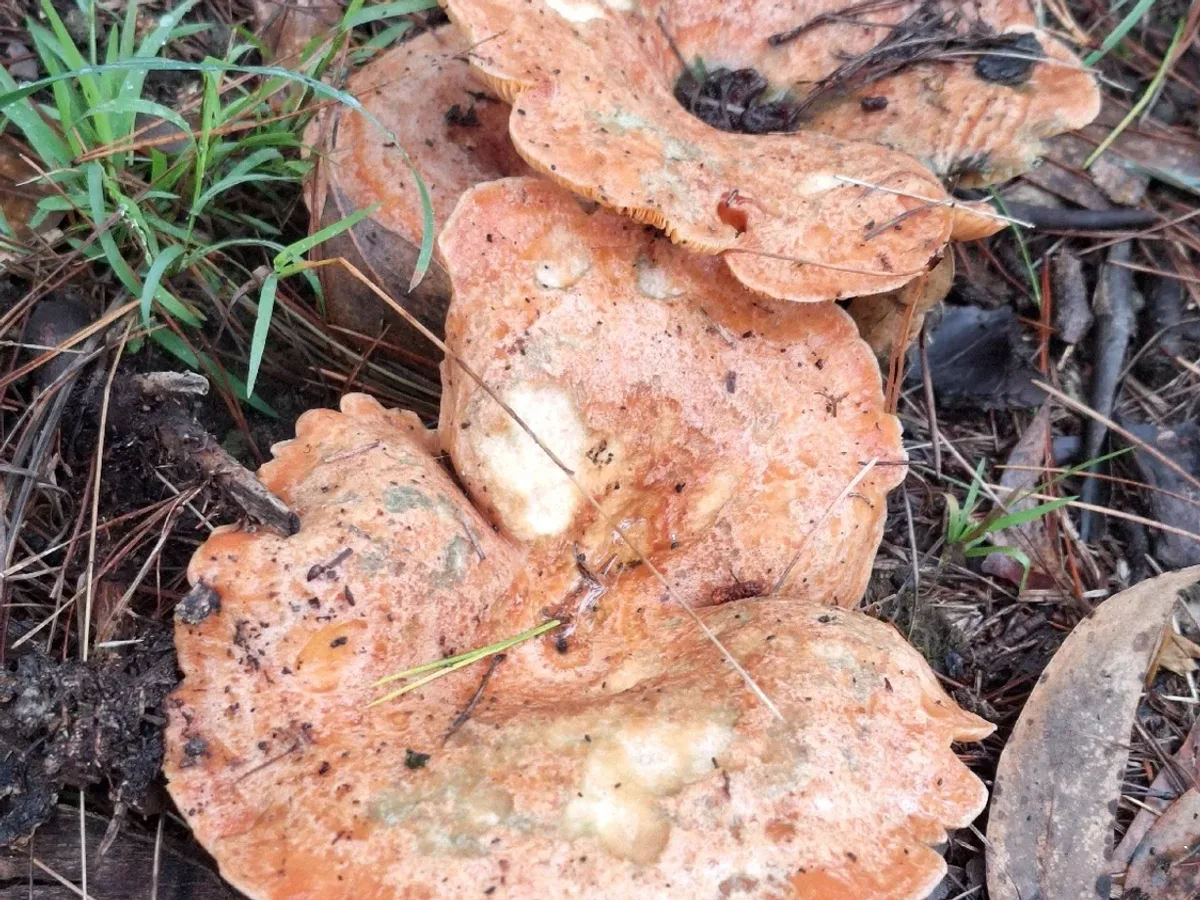
Cap 6-20 cm, bright orange-gold with darker concentric rings - striking even under the pine litter. Young specimens are convex with the margin curled under; with age the cap opens out to a funnel or vase shape. Gills are orange and densely packed. Cut the stem or break a gill and it immediately bleeds a clear, carrot-orange milk (latex) - the species' unmistakable calling card. Any bruising produces a telltale green discoloration. Stem hollow, 5-8 cm, pitted with orange dimples (scrobiculations). Mild, slightly peppery taste and a pleasant aromatic smell.
Where it grows
Found exclusively under introduced pines (Pinus radiata, P. pinea, P. halepensis) in plantations and pine plantings, on moist but well-drained ground beneath thick pine-needle litter. Key locations: NSW (Oberon, Blue Mountains/Hampton, Jenolan, Vulcan State Forest), Victoria (Macedon Ranges, Mornington Peninsula, Bright), SA (Mt Crawford/Adelaide Hills), Canberra; and in New Zealand under introduced pines. It arrived with the trees and has colonised wherever they were planted.
Cooking
Grill/fry quickly over high heat (otherwise they become "stewed"/tough). A classic Australian preparation: BBQ'd in a forest picnic area with olive oil, garlic, chili, parsley, served with sourdough bread. Also risotto, soup, pie, schnitzel (dipped in egg and breadcrumbs), pickling in oil/brine, drying into mushroom powder/mushroom salt.
Look-alikes
Amanita species lack the saffron-orange milk and have a volva. If the cap spots wash off and there is no orange milk, do not eat.
These lack the clear saffron color and the combination of orange latex, pine habitat and green bruising.
Greenish-tinged and less tasty, but harmless.
All edible. Only milkcaps with orange/red milk are safe here; those with white, burning milk should be avoided.
Lacks milk and grows on wood.
Also edible; like L. deliciosus it shows orange milk, which distinguishes it from bitter milk caps.
Also edible; distinguished from bitter milk caps by the orange milk.
Distinguish the edible saffron milk caps from bitter milk caps by the carrot-orange milk.
Has white/pink latex and a woolly (shaggy) cap margin, unlike the orange/red milk and smooth margin of the edible milk caps. Avoid it.
The orange latex and its greening reaction are reliable distinguishing features.
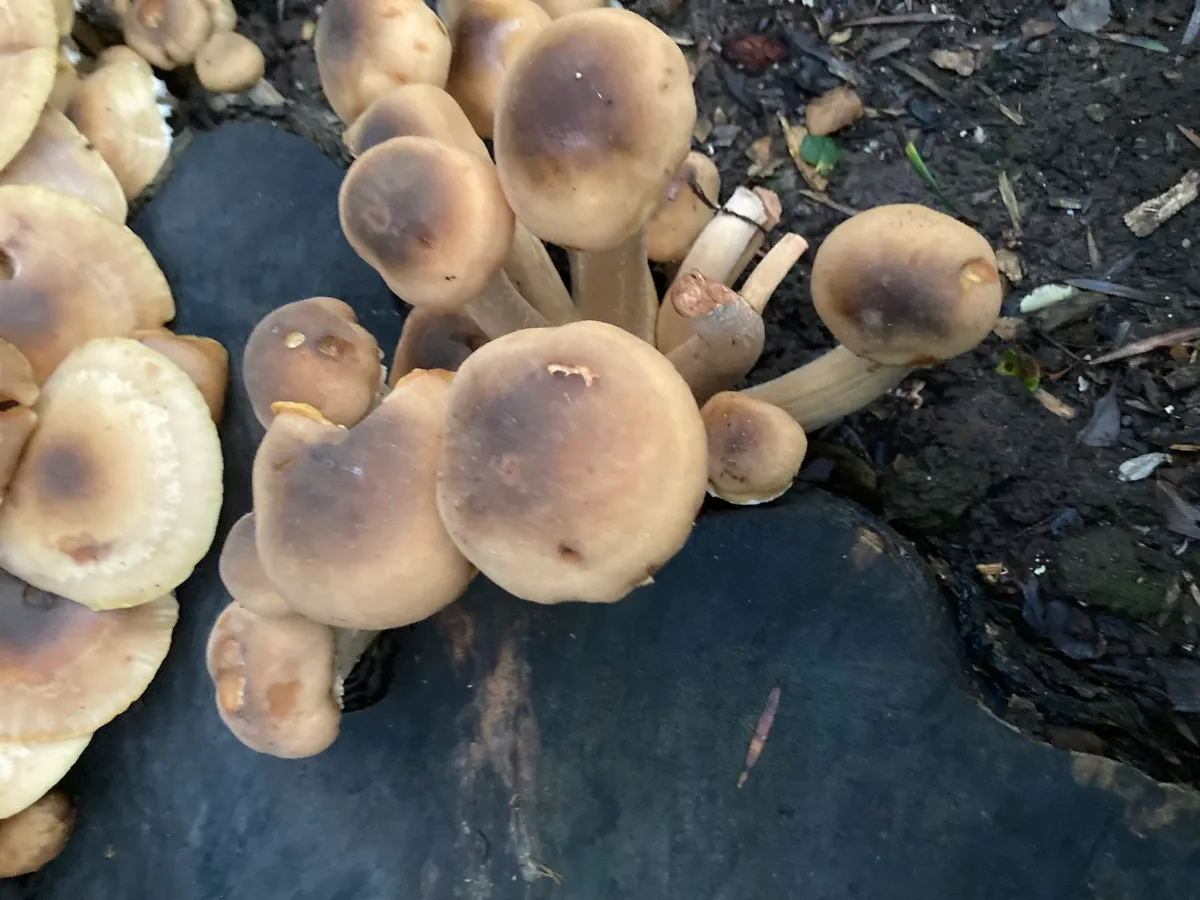 Honey fungus
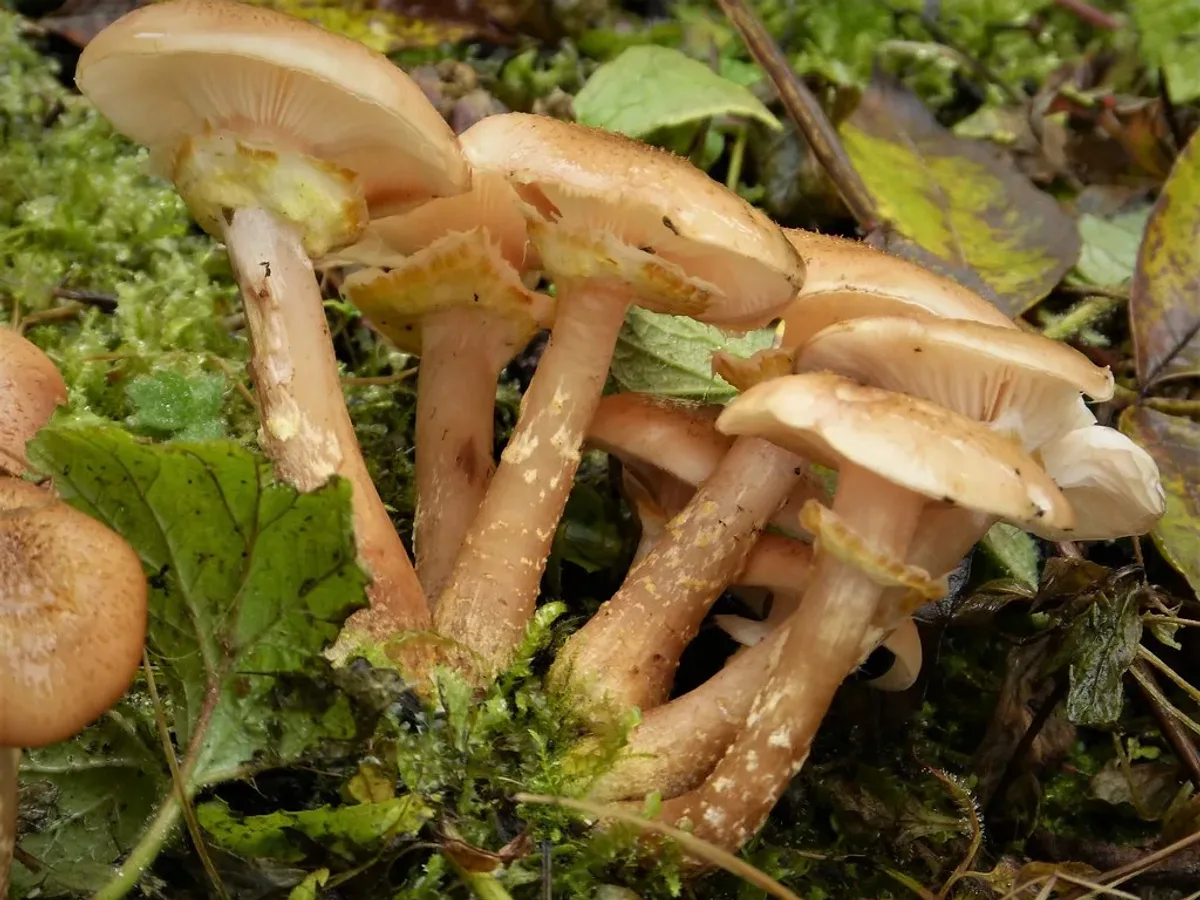 Honey fungus
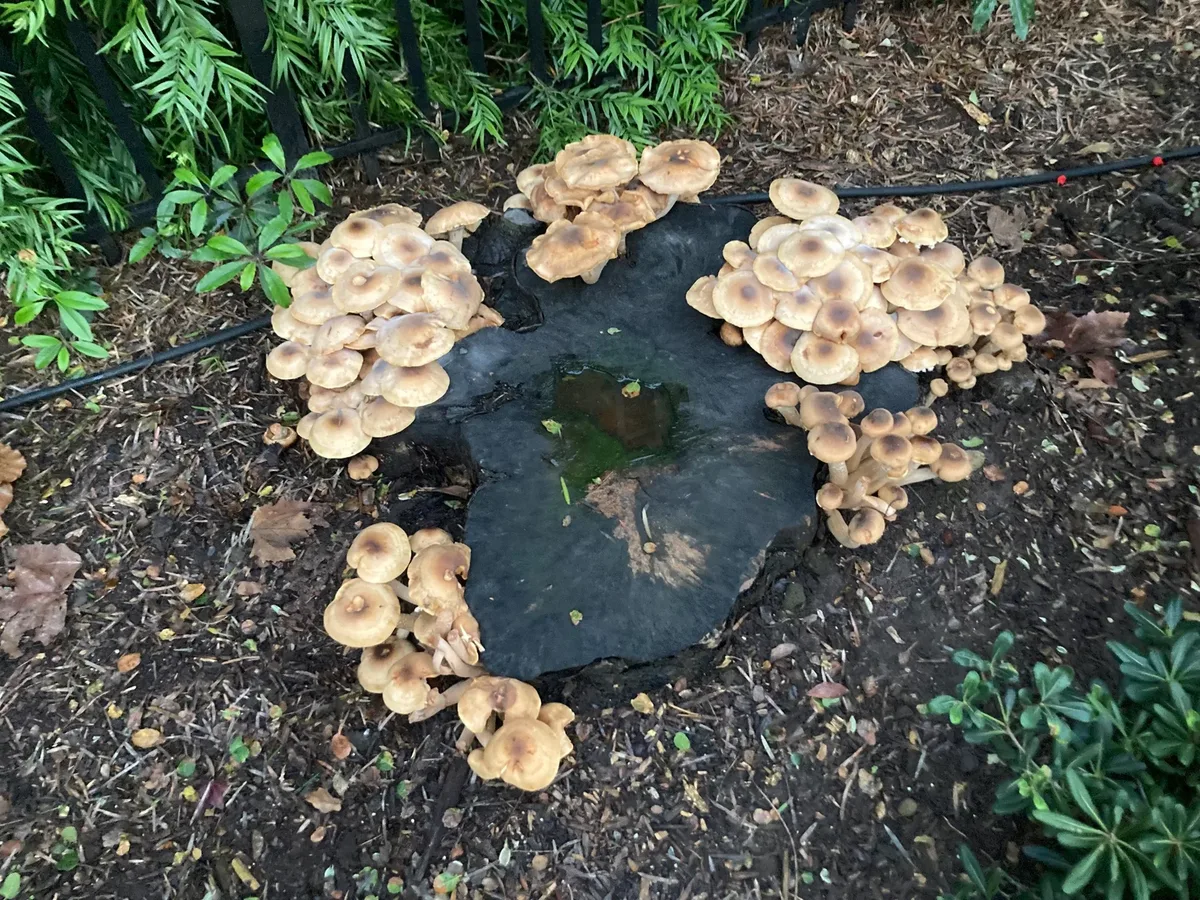 Honey fungus
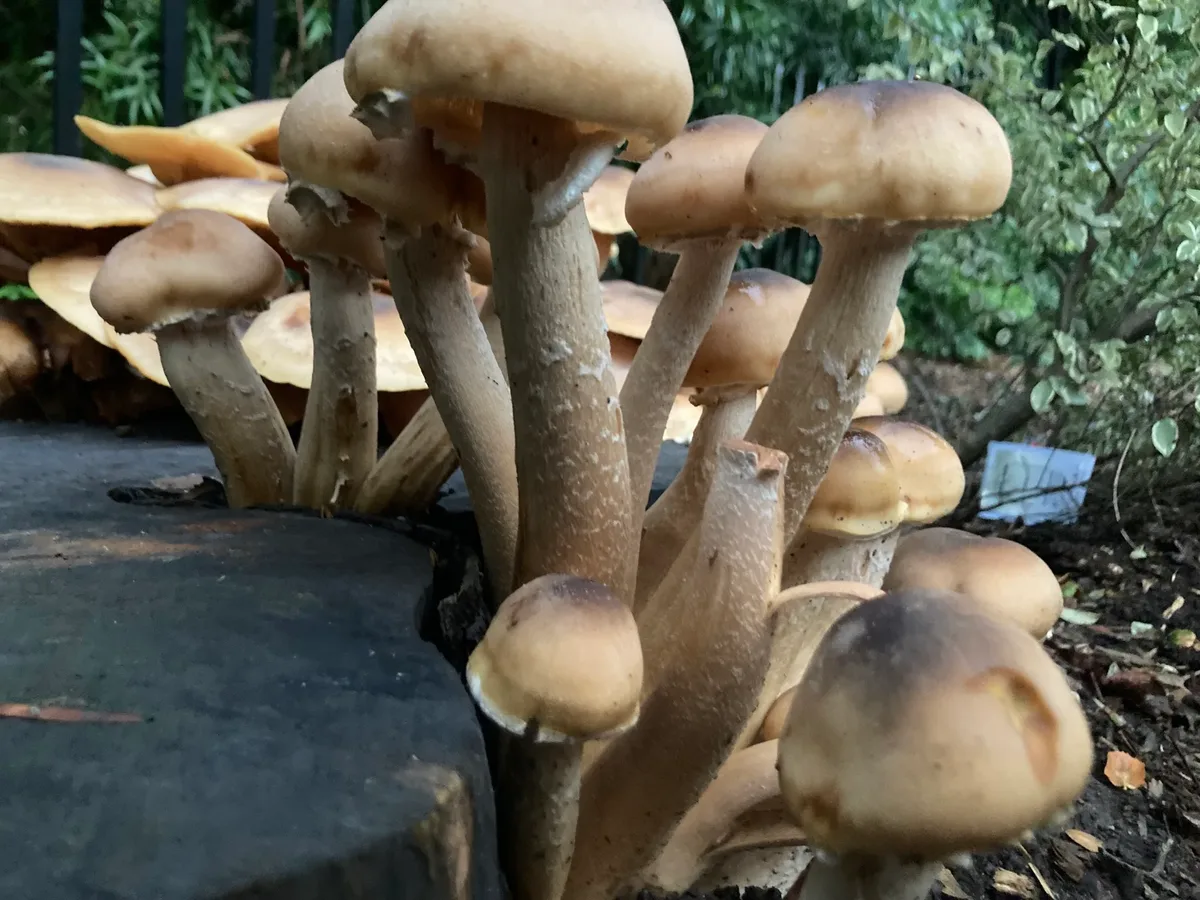 Honey fungusHoney fungusHoney fungus
Honey fungus
Armillaria melleaGood once parboiled, but poisonous raw or undercooked - and a deadly look-alike, the funeral bell, grows on the same wood.
How to recognise it
Cap 3-15 cm across, honey-yellow to warm brown, often dusted with small dark scales toward the centre and faintly sticky when wet. Gills start white to cream and develop yellow-brown spots with age. Stem fibrous and tough, with a neat white ring (annulus) sitting high up. Spore print white - an essential check. Below ground the fungus extends itself through flat black rhizomorphs (bootlaces) that can travel metres under bark and soil. The mycelium itself glows with a faint greenish bioluminescence on dark nights - the foxfire of old woodland folklore.
Where it grows
A parasite and saprotroph on a broad range of deciduous and coniferous trees - oak, beech, birch, pine, and many others. It fruits in dense, overlapping clusters at stumps, trunks, and buried roots, sometimes covering an entire stump in a single spectacular flush.
Cooking
After parboiling, fry with onion and garlic, or use in stews and soups where they hold their shape well. Pickling is a traditional favourite in Eastern Europe and Italy, where they are known as chiodini - the small, firm caps are ideal for preserving in jars.
Look-alikes
Small, brown, also grows on wood and contains deadly amatoxin. Has a rust-brown spore print, whereas honey fungus has a white spore print - always take a spore print.
Deadly, contains amatoxin; also grows on wood and resembles small honey mushrooms. Take a spore print: Galerina marginata produces a rust-brown print; honey fungus produces a white print. Taste is not a reliable differentiator - Galerina also has a mild taste and must never be used as a distinguishing cue.
Yellow-green gills, bitter taste, poisonous.
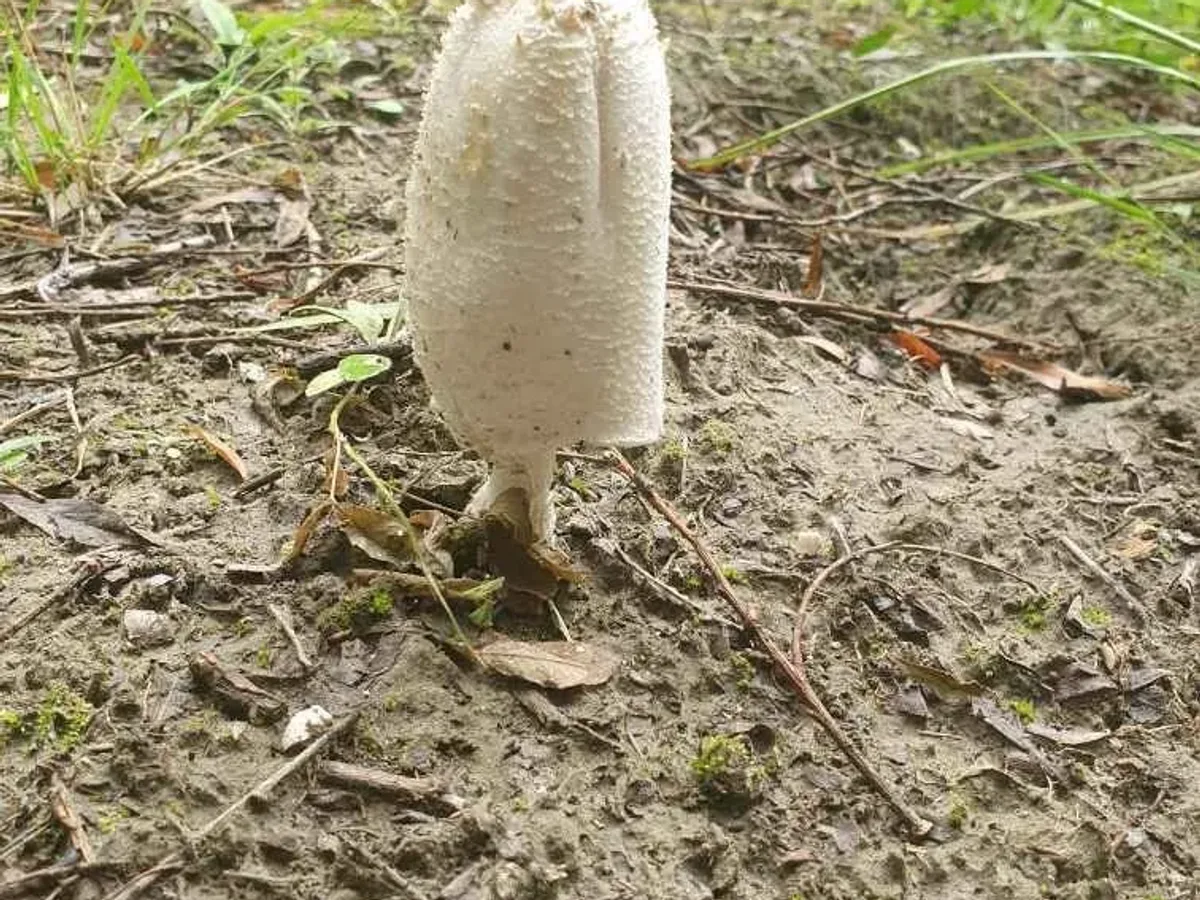 Shaggy ink cap
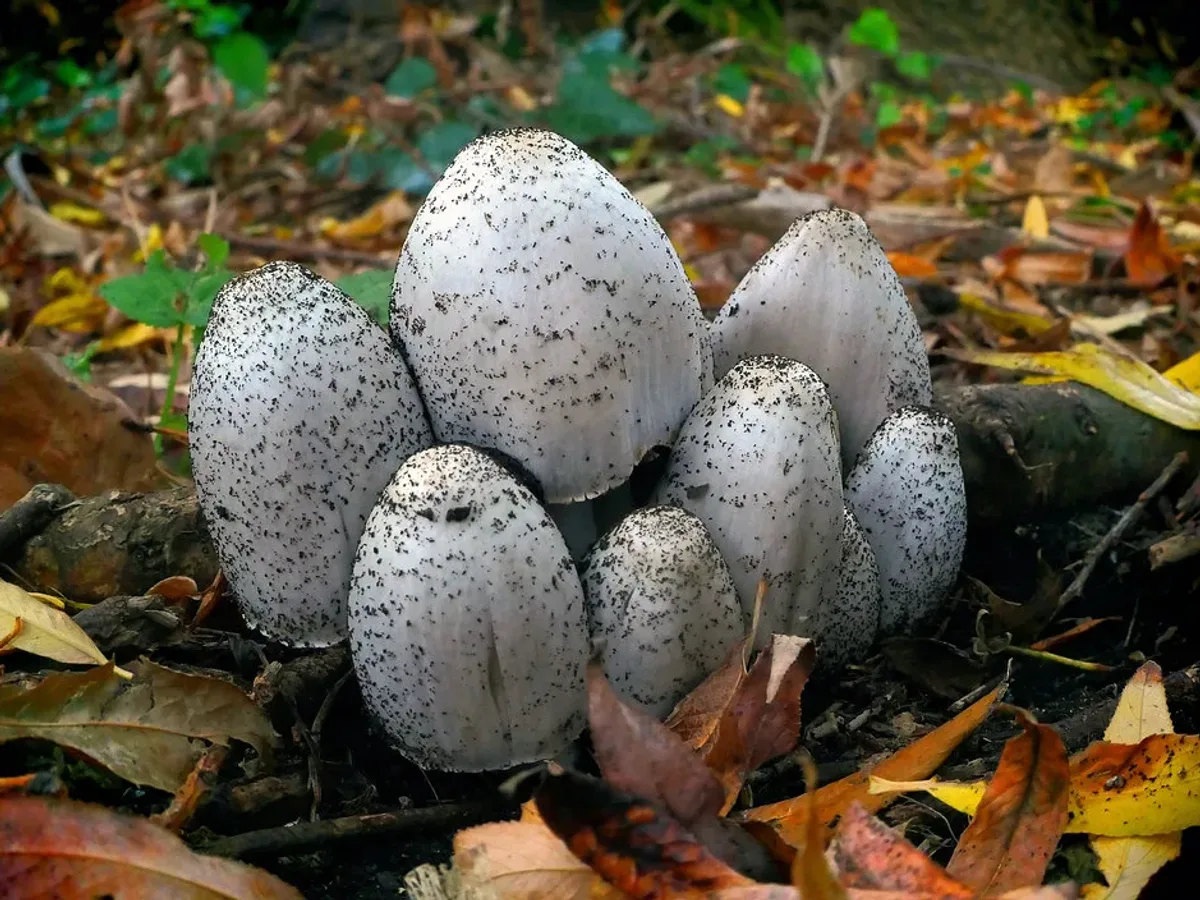 Shaggy ink cap
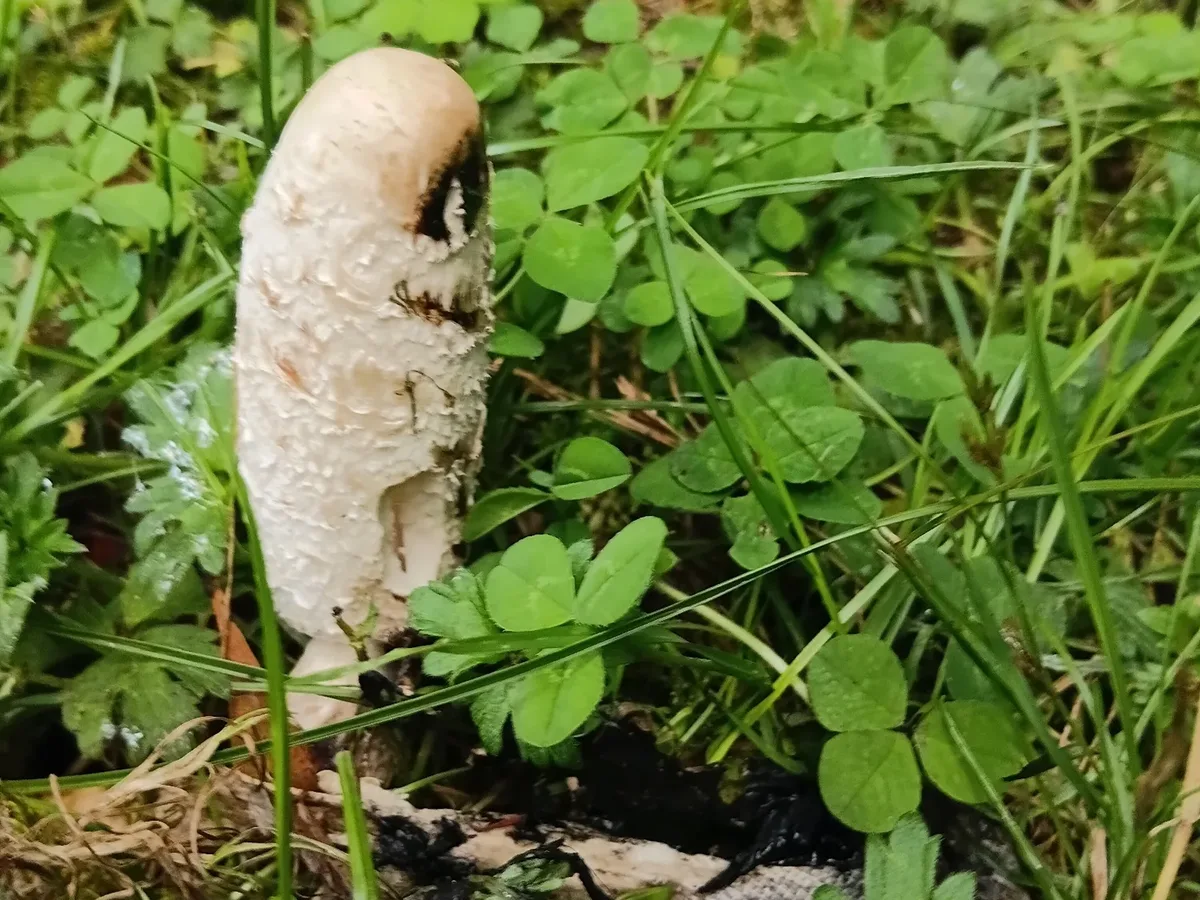 Shaggy ink cap
 Shaggy ink capShaggy ink capShaggy ink cap
Shaggy ink cap
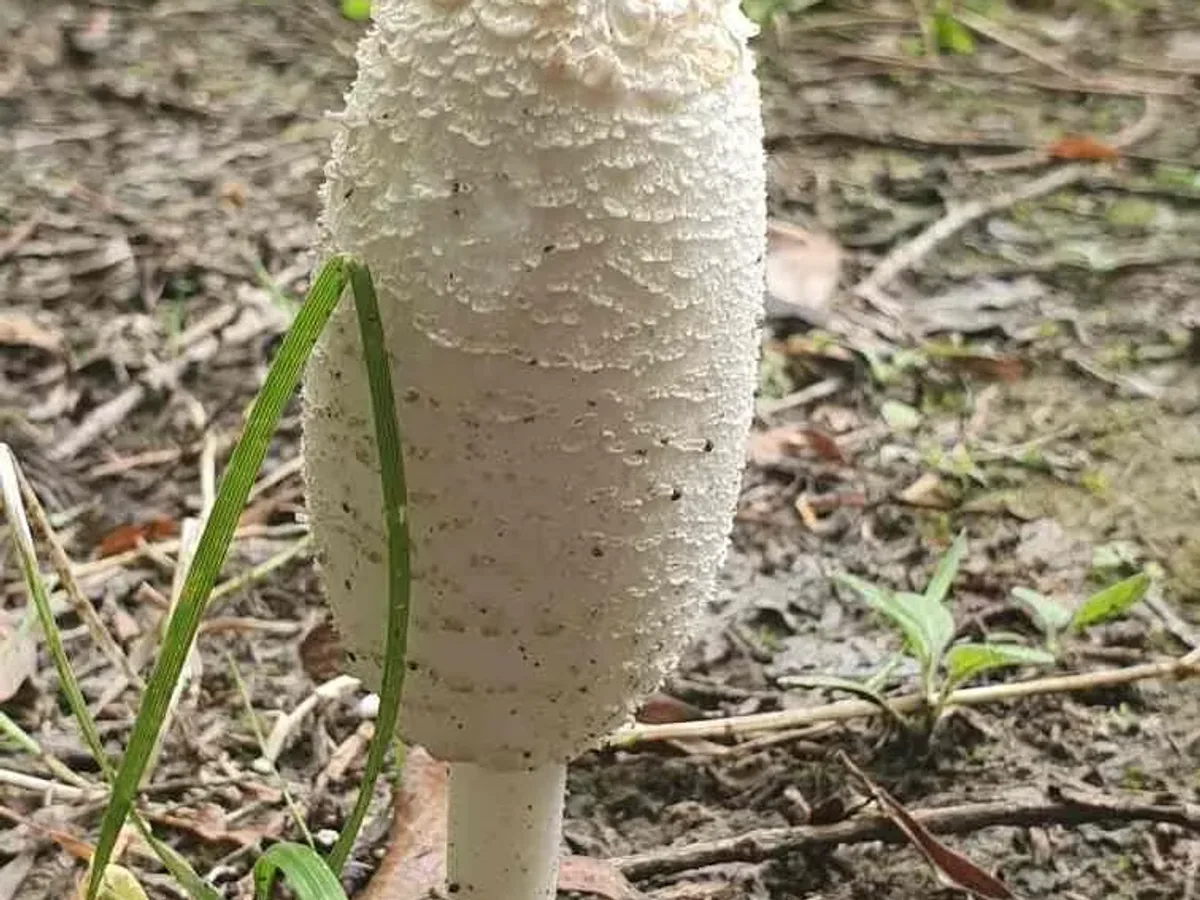
Coprinus comatusPick it young and white and cook within hours, before it dissolves itself into black ink.
How to recognise it
Young cap 4-8 cm, cylindrical and finger-shaped, white with upright woolly pale-brown scales - the source of the "lawyer's wig" nickname. The gills start white, shift to pink, then rapidly turn black as the mushroom begins to digest itself from the edges inward, dissolving into an inky fluid within hours of reaching maturity. This process - called deliquescence - is one of the more remarkable things a fungus can do, and it means timing is everything. Stem white, tall (8-14 cm), hollow, with a loose movable ring. Spore print black.
Where it grows
A saprotroph of rich, disturbed ground - lawns, roadsides, parks, gravel paths, and vacant lots. It thrives where other fungi often struggle, quietly breaking down organic matter in heavily-used human spaces.
Cooking
Mild, delicate. Fried in butter, very good with scrambled eggs; good in soups/sauces. Freezes best after a quick sauté.
Look-alikes
Smooth-capped and greyer (lacks the shaggy woolly scales). Contains coprine, which causes an antabuse-like reaction with alcohol; the shaggy ink cap does not contain coprine and is safe with alcohol.
 Wood blewit
 Wood blewit
 Wood blewitWood blewitWood blewit
Wood blewit
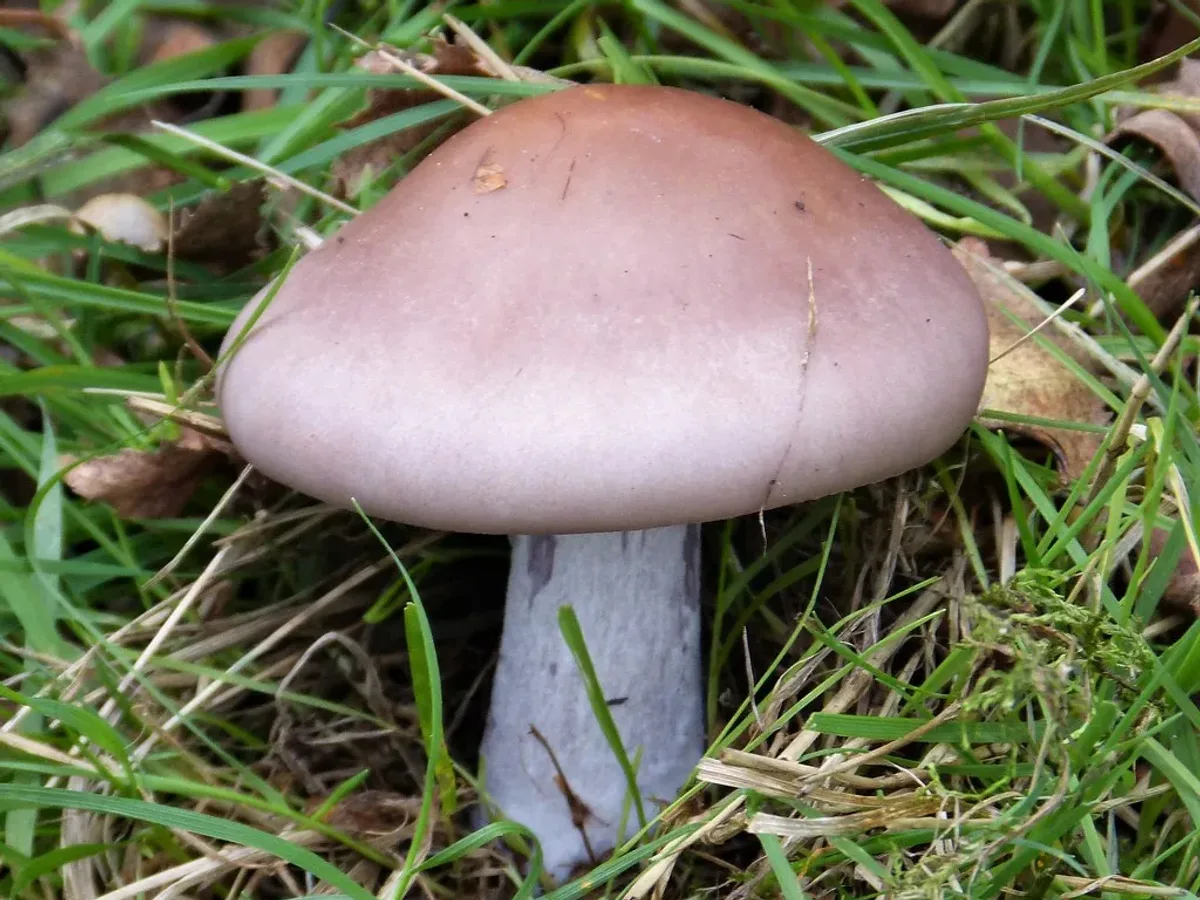
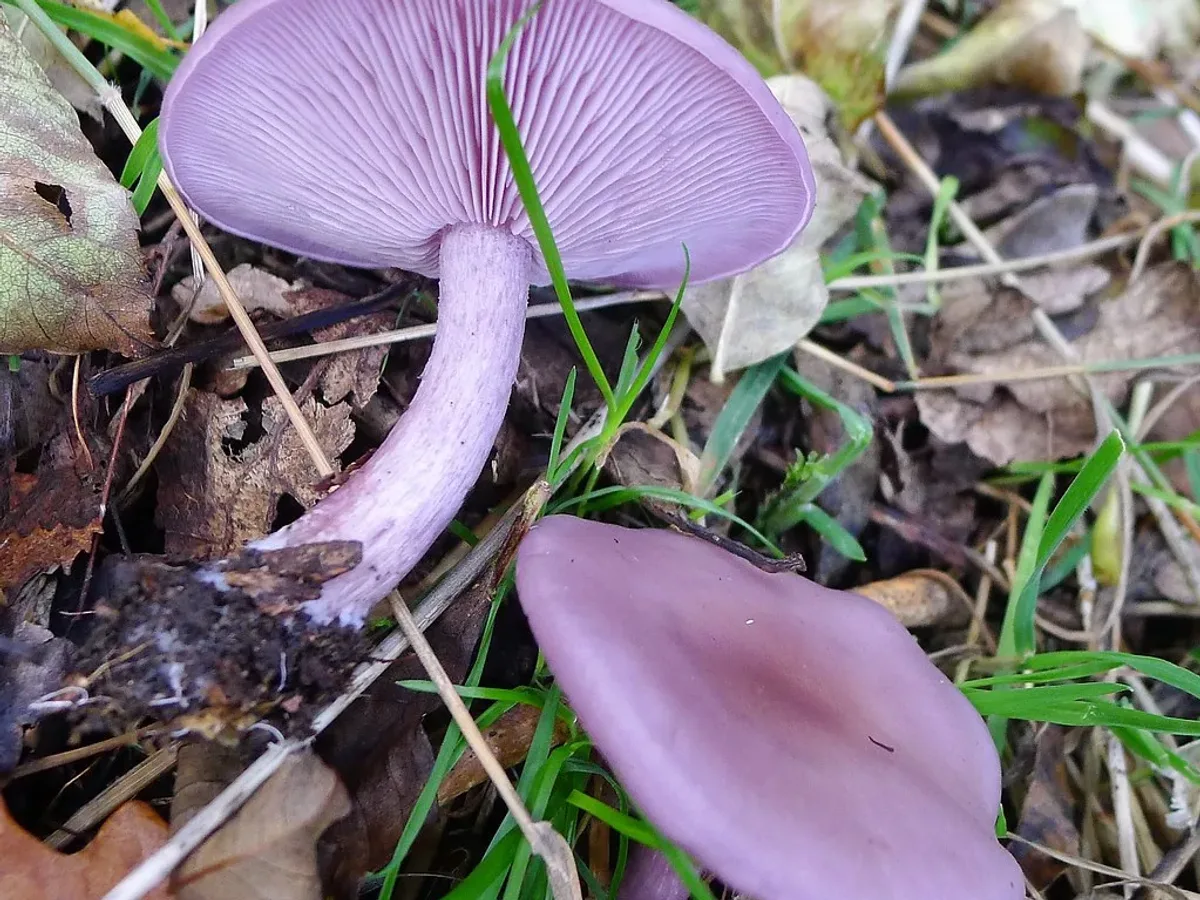
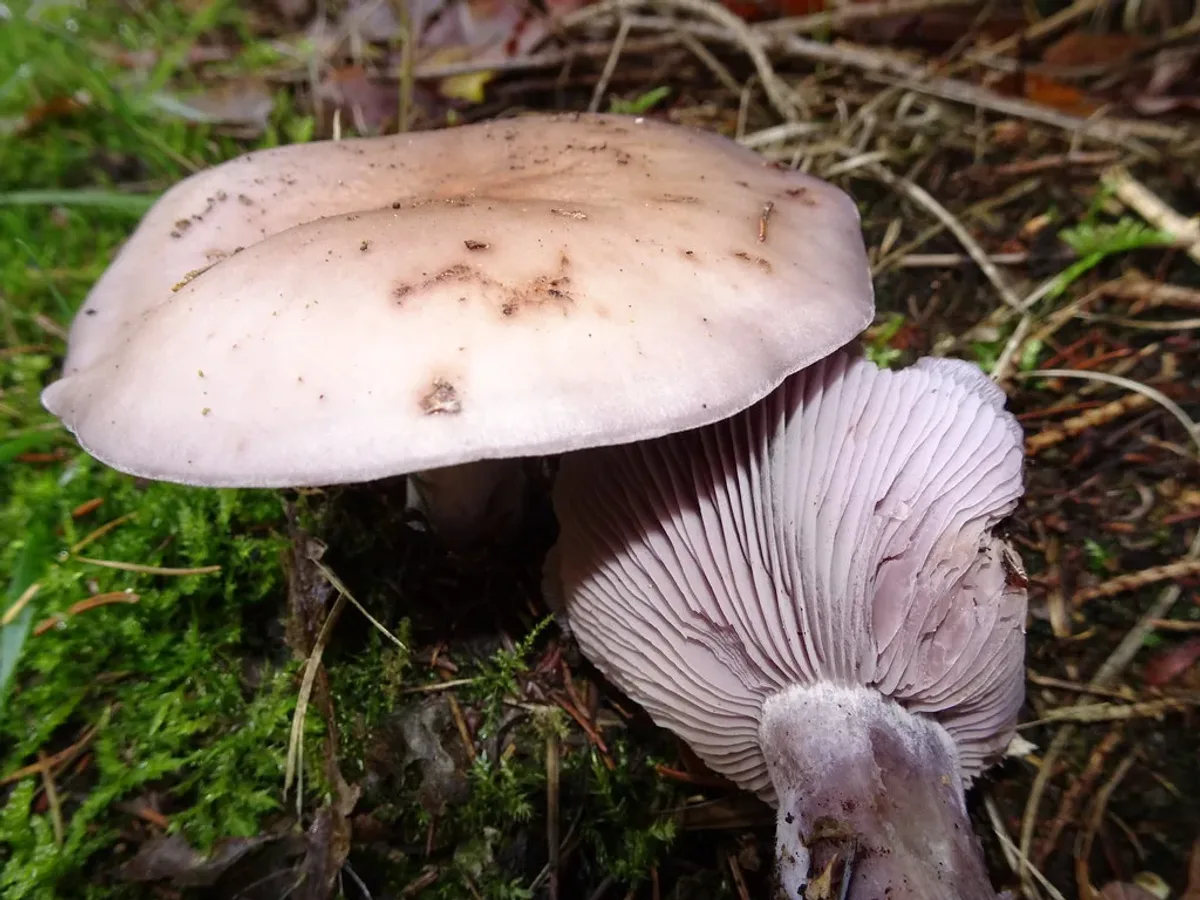
Lepista nudaA cold-hardy violet beauty with a pink spore print - poisonous raw, and never to be confused with rusty-spored webcaps.
How to recognise it
Cap 4-20 cm, young convex with a neatly inrolled margin, gradually flattening and becoming wavy; a deep lilac-violet when fresh, fading from the centre outward to ochre or tan as the cap dries. It is strongly hygrophanous - the colour shifts noticeably with moisture. Gills crowded and initially lilac to lavender, eventually fading buff. Stem 4-10 cm, fibrous, and characteristically violet, holding its colour longer than the cap; covered in fine lilac down. Flesh firm, lilac-grey, with a pleasant mealy-fruity smell. Spore print pale pink to pinkish-buff - a key identification feature.
Where it grows
Saprotrophic in leaf litter (especially oak and beech), coniferous and mixed forest, hedgerows, parks, compost heaps; often in arcs or fairy rings.
Cooking
Fry well in butter until cooked through - it must always be thoroughly cooked. Pairs nicely with light meats such as veal, pork, and chicken; works well in cream or cheese sauces, omelettes, and risotto. The mealy-sweet flavour is particularly good with onion or leek.
Look-alikes
Rust-brown spore print and traces of a cobweb-like veil (cortina) over the gills when young, plus rust-coloured dust on the stem. Wood blewit lacks a cortina and has a pink spore print. Always take a spore print.
White poisonous funnel caps with a white spore print (C. dealbata is widely treated as a synonym); pale, faded blewits must not be confused with them. Never rely on colour alone.
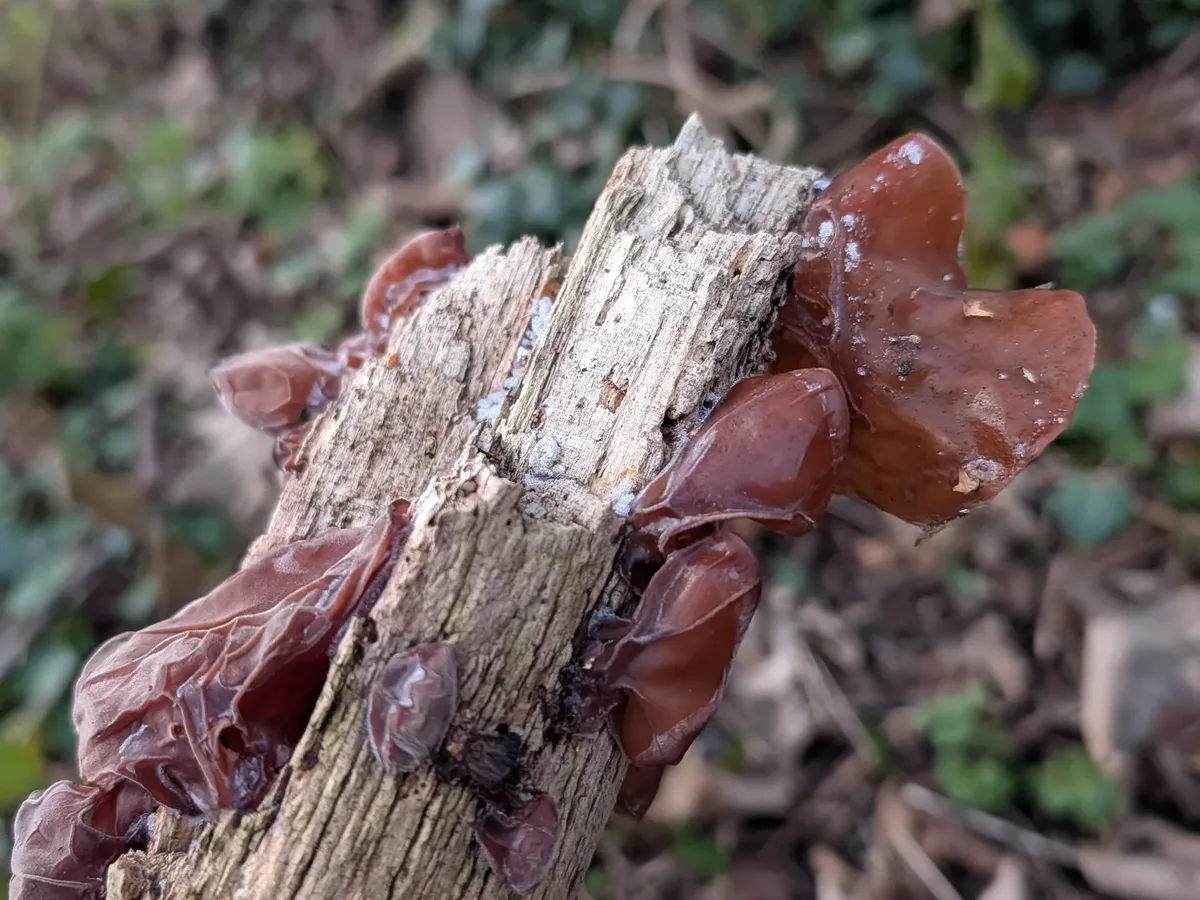 Wood ear
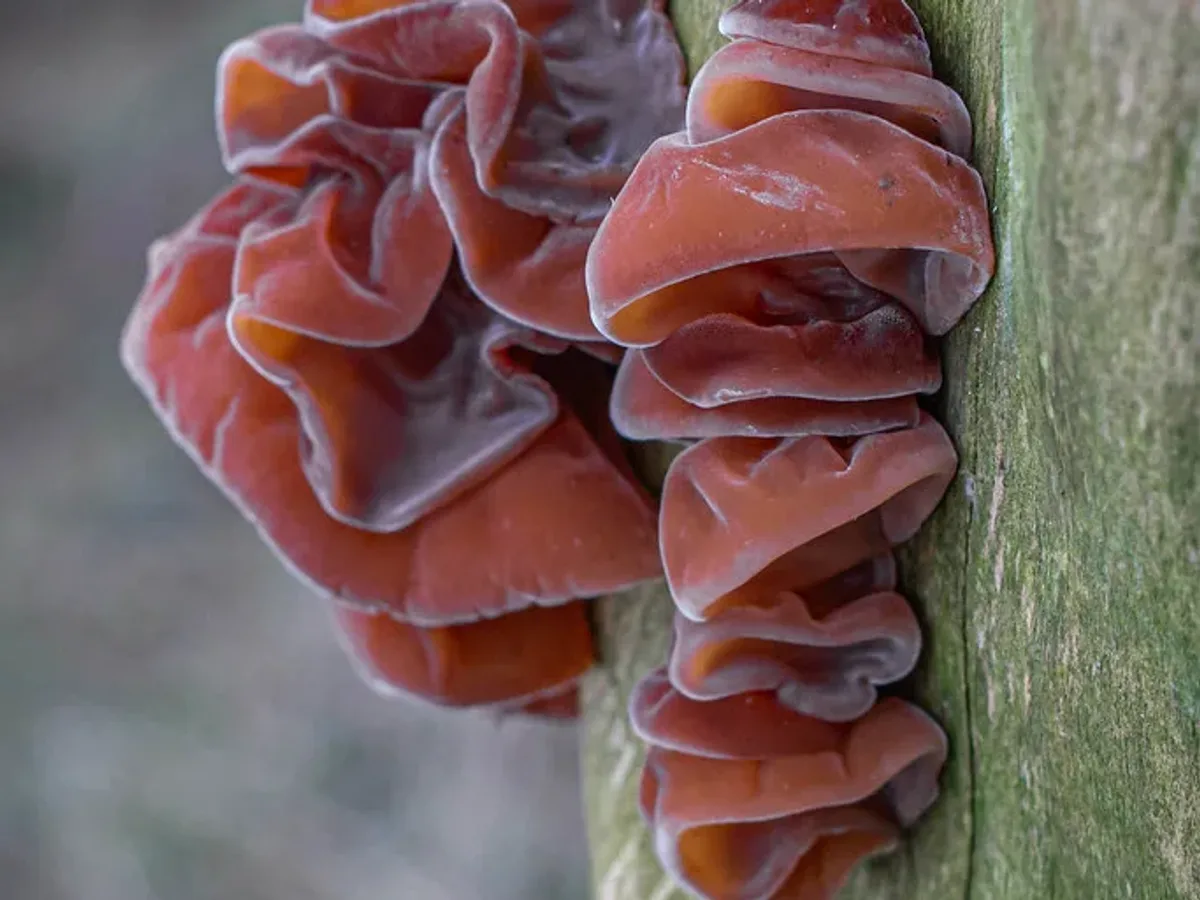 Wood ear
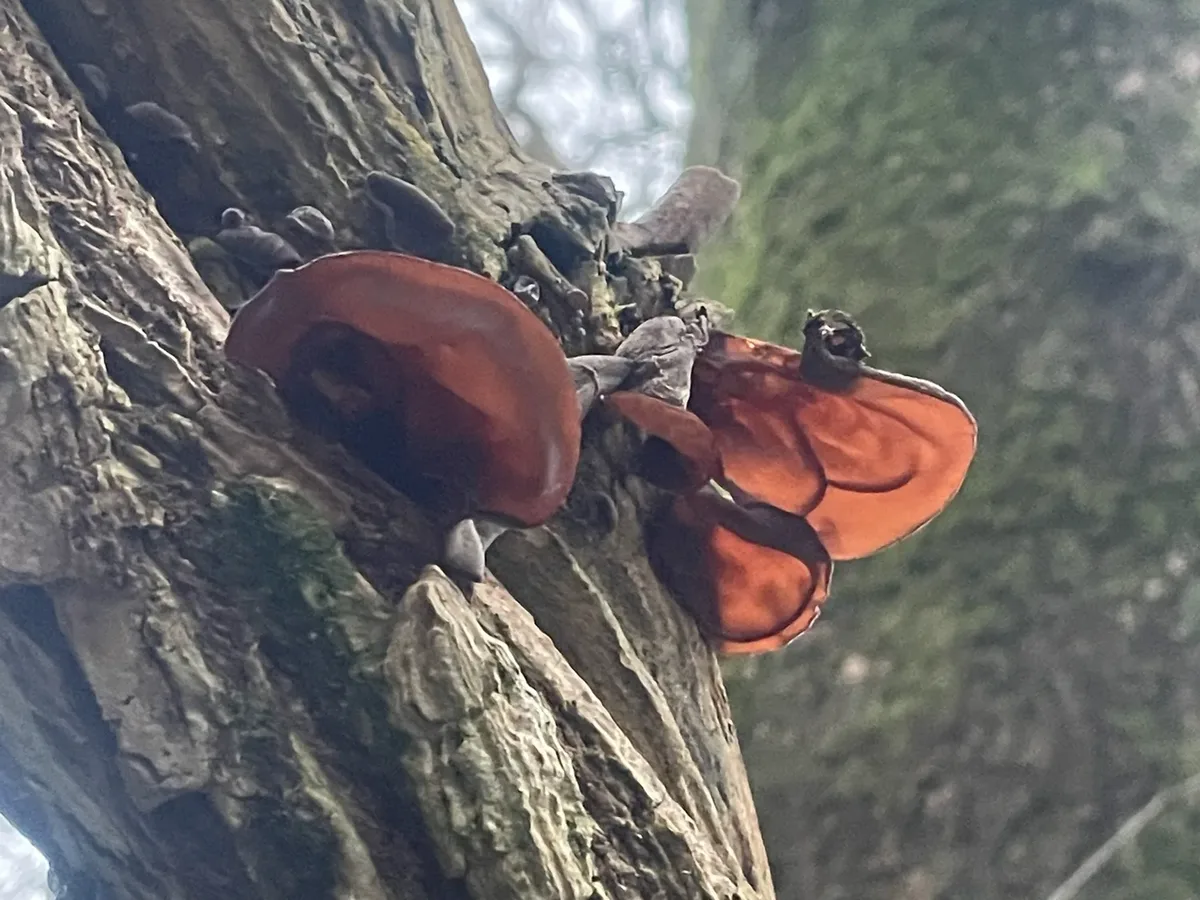 Wood ear
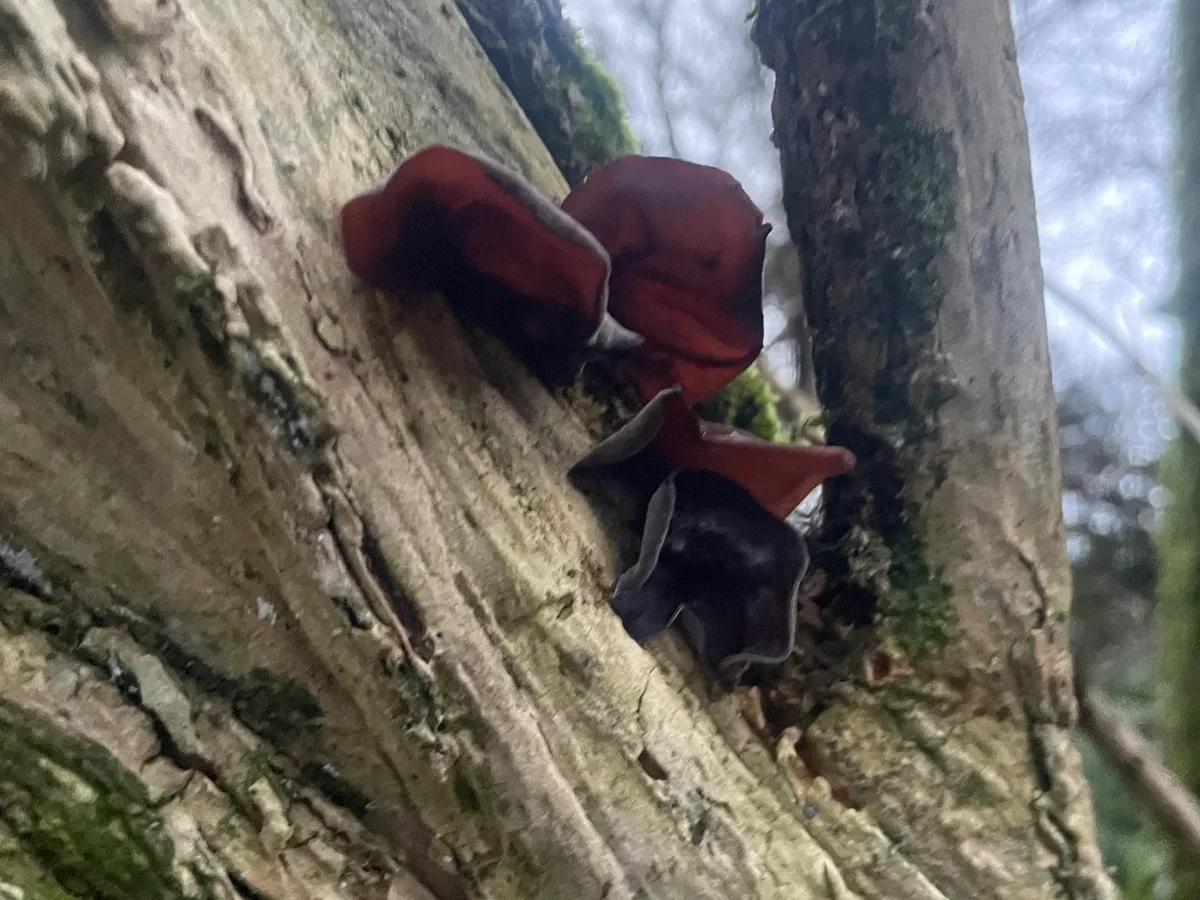 Wood earWood earWood ear
Jew's ear / wood ear
Auricularia auricula-judaeA gelatinous ear-shaped fungus on dead elder with essentially no dangerous look-alikes.
How to recognise it
Auricularia auricula-judae grows as a wavy, ear-shaped bracket attached directly to wood. Fresh specimens are brown to blackish-brown with a gelatinous, rubbery texture - the upper surface finely velvety, the fertile underside smoother and slightly paler. One of its most striking traits is its ability to survive drought by shrivelling to a hard, leathery disc, then swelling back to full size when rain returns. The related oyster mushroom (Pleurotus) looks entirely different: a fan-shaped, grey-white cap with gills that run down a short, off-centre stem.
Where it grows
Both grow on wood rather than soil. Auricularia favours dead and decaying broadleaf trees and has been documented across Tanzania, Mozambique, Congo, Cameroon, and neighbouring countries. Oyster mushrooms (Pleurotus) are similarly widespread and turn up in most vegetation zones with suitable deadwood.
Cooking
Auricularia has a mild flavour and a pleasantly slippery, slightly crunchy texture that holds up well in soups and stews. Oyster mushrooms (Pleurotus) are more versatile: fry them in oil for a quick side dish, add them to soup, or fold them into a vegetable relish.
Look-alikes
Oyster shape with decurrent (down-running) gills on a short eccentric stem distinguishes it; both genera have few dangerous confusion species.
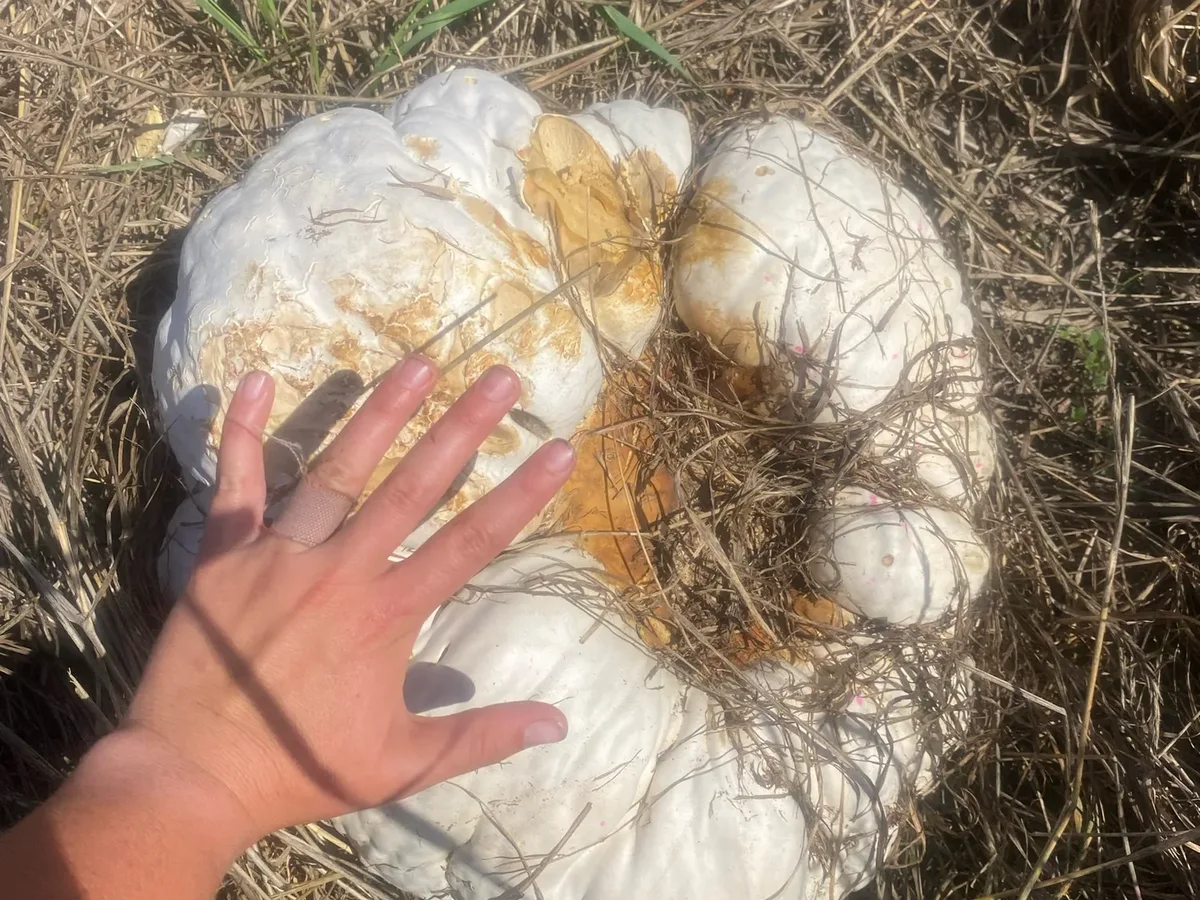 Giant puffball
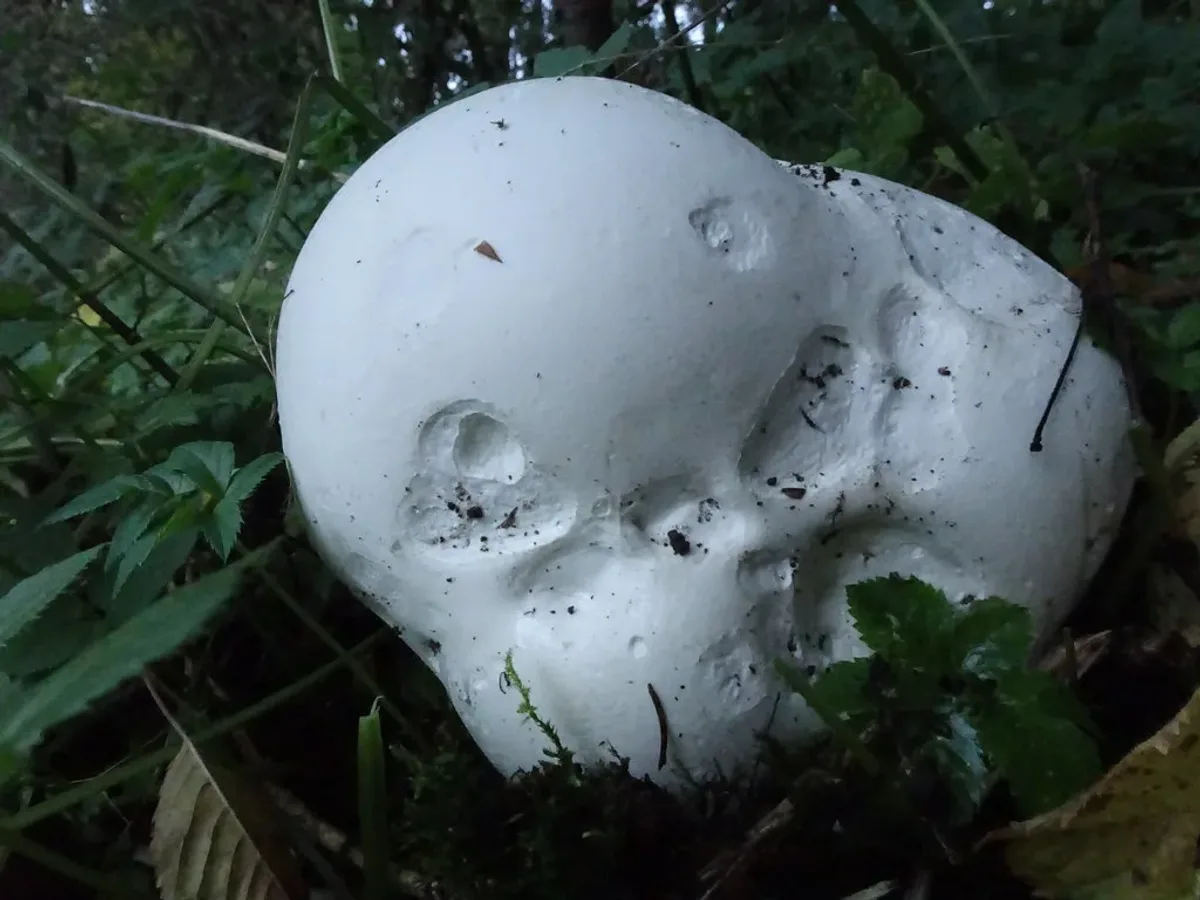 Giant puffball
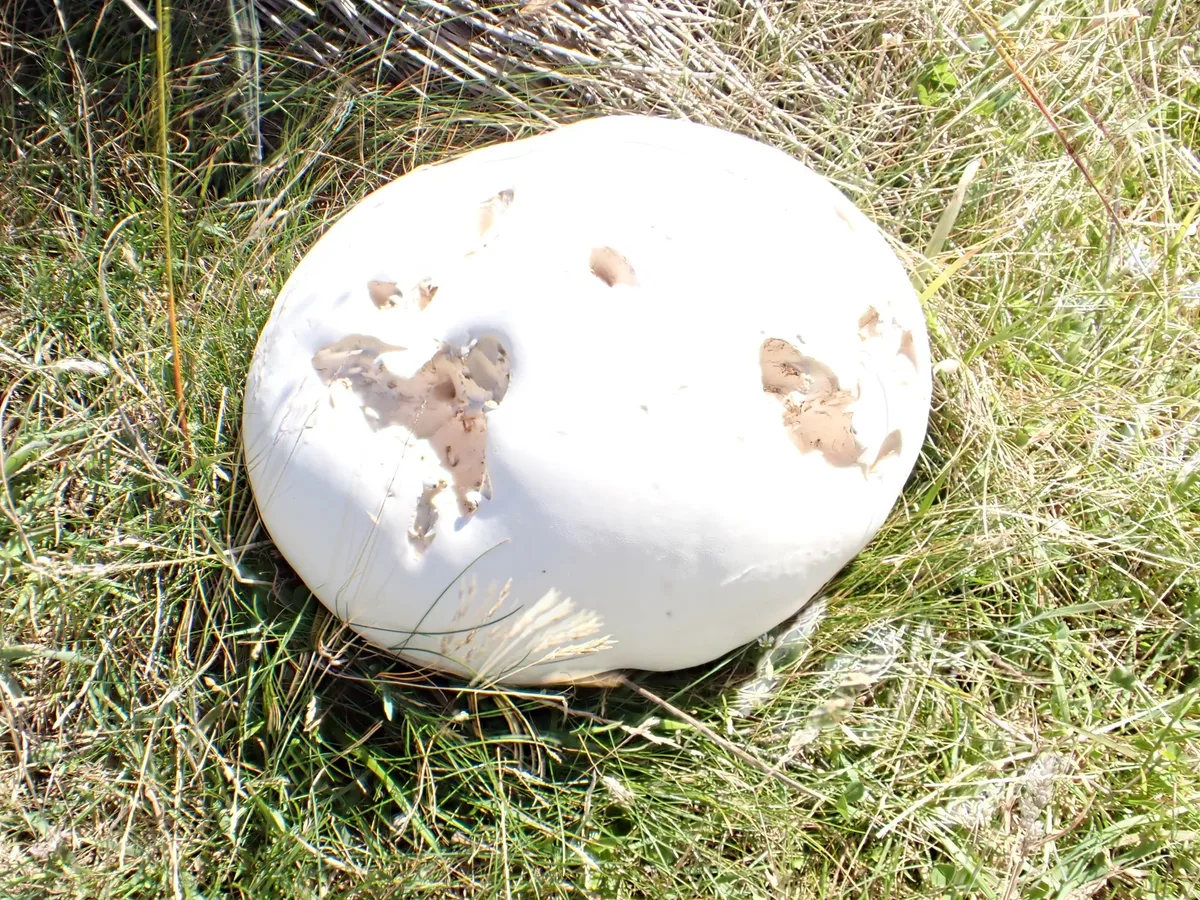 Giant puffball
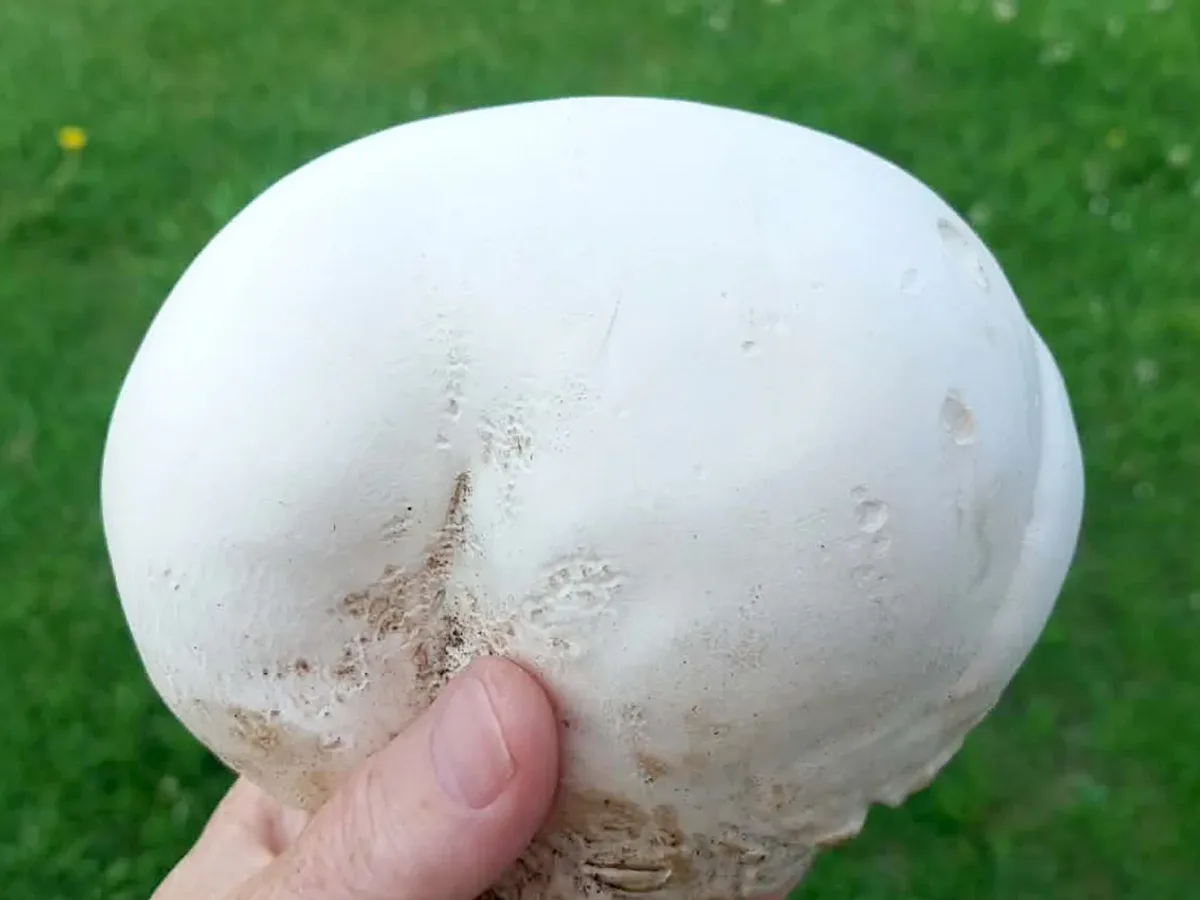 Giant puffballGiant puffballGiant puffball
Giant puffball
Calvatia giganteaEdible only when pure white and firm right through - always cut lengthwise to rule out a deadly Amanita egg inside.
How to recognise it
A large white ball, often the size of a football (can grow to more than 1 m across and weigh several kilograms). When young it has solid white inner flesh. When older it yellows on the outside and the interior becomes brown spore powder.
Where it grows
Disturbed soil, farmland and pasture. Self-introduced in New Zealand. Found February to June throughout New Zealand.
Cooking
Sliced and fried; Maori also boiled or steamed it fresh. Must be eaten immediately as it rots quickly.
Look-alikes
Always cut lengthwise. An Amanita button shows a fully formed mushroom in miniature (gills, stem, volva), whereas a true puffball is homogeneously white with no internal structure. Never cut into a 'puffball' smaller than a ball.
Much firmer than a puffball and has a dark purple-black interior even when young.
If the inner flesh is gelatinous rather than solid white, it may be a stinkhorn.
The dangerous ones
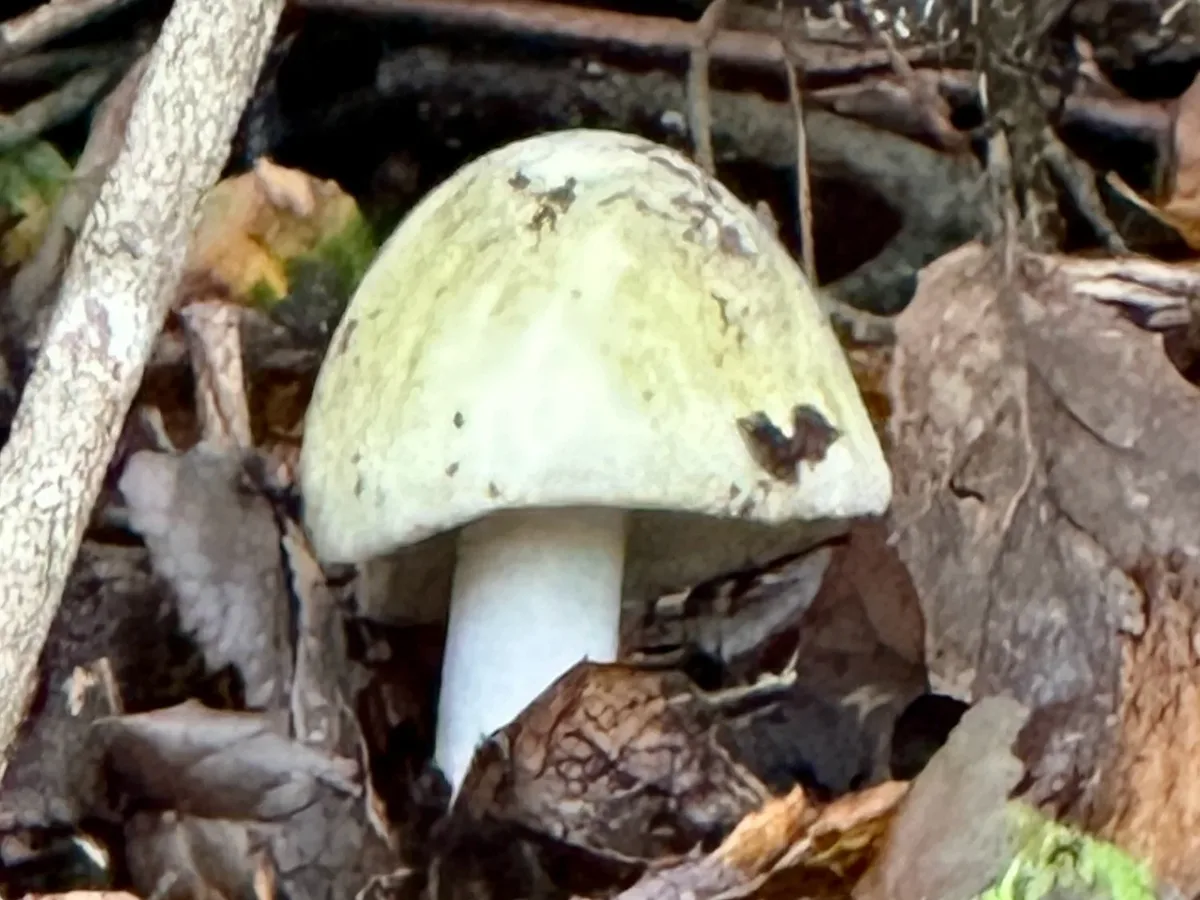 Death capDeath cap
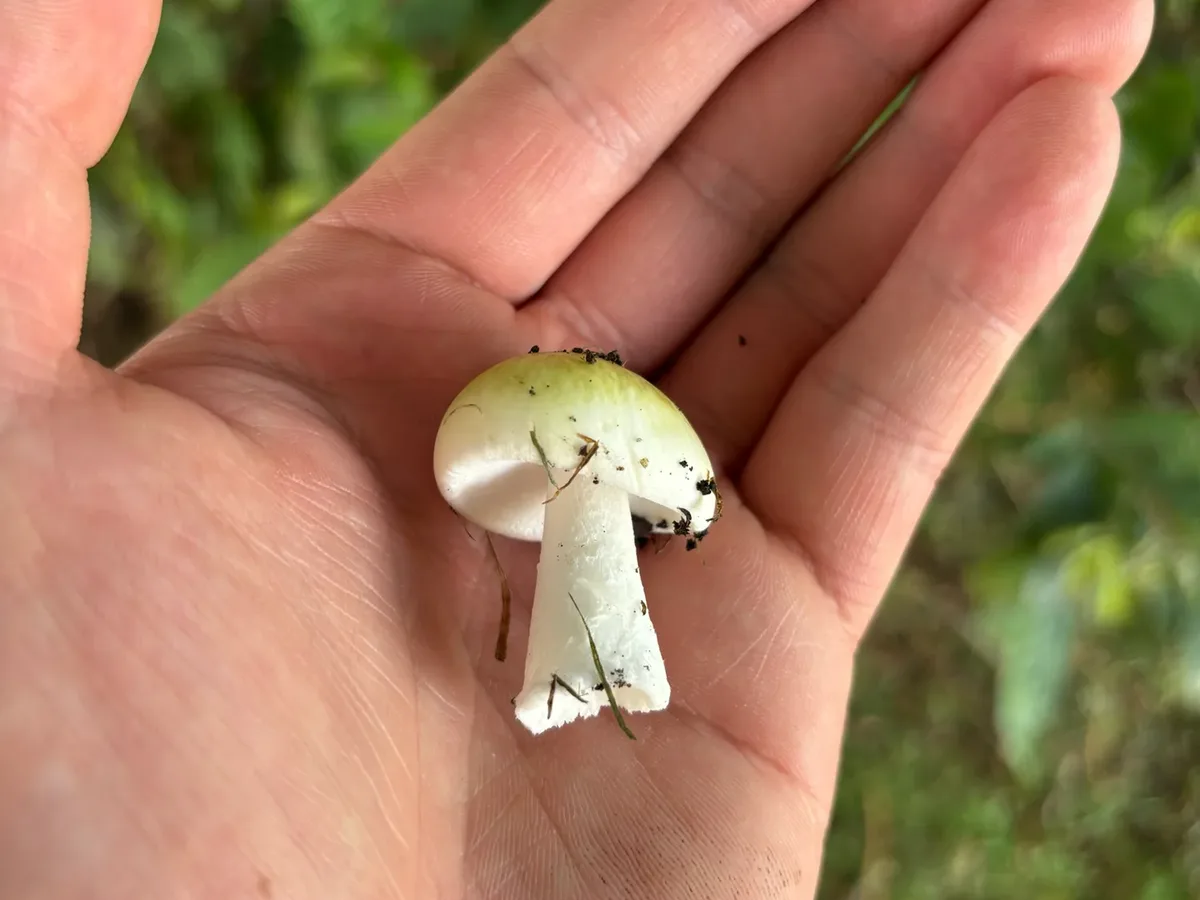 Death capDeath capDeath cap
Death cap
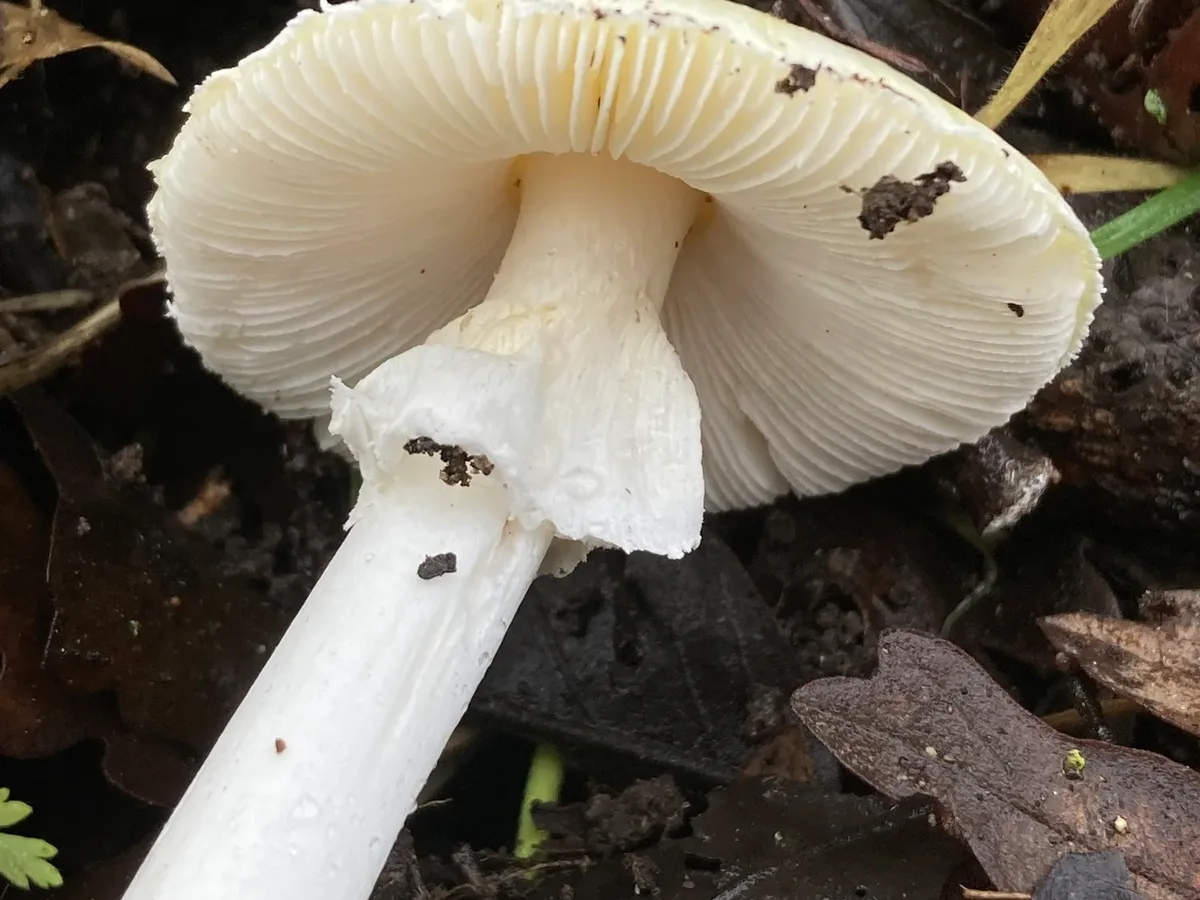
Amanita phalloidesThe deadliest mushroom in Europe: a greenish cap, white gills, a ring and a sac-like volva - half a cap can kill an adult.
How to recognise it
Cap 40-160 mm, hemispherical, becoming convex, then flat, smooth, slimy in wet conditions and glossy when dry; most often pale yellow/greenish to pale brown, but can be almost white (colour is not a reliable feature). White gills, a white stem, a membranous ring, and a sac-like volva at the base. Amyloid spores (white spore print).
Where it grows
Found only under exotic/introduced trees, especially oak (Quercus), also in gardens, lawns and parks. In Australia it has only been recorded in SA, Victoria and the ACT (Canberra). In Victoria it is widespread across Melbourne (Kew, Camberwell, South Yarra and others) and regionally (Bendigo, Bright, Castlemaine). In New Zealand it grows under introduced oaks and chestnuts; it has also been reported in association with Leptospermum/Kunzea (potentially invasive). There are no confirmed finds in undisturbed native forest.
Cooking
Not edible under any circumstances. The toxins are not inactivated by cooking, drying, freezing or soaking.
Danger
World's deadliest mushroom; as little as half a cap can kill an adult human. Documented fatalities: Canberra, New Year's Eve 2011/2012 - cook Liu Jun picked death caps in Braddon (mistaking them for straw mushrooms) and put them in a stir fry; he and the kitchen hand Tsou Hsiang (a 52-year-old Chinese national) died, of four poisoned. According to the Canberra Times there have been in total "four fatalities and 12 reported incidents of poisoning associated with death cap mushrooms in the ACT". Of nine poisoned in the Canberra region 1988-2011, three were from Laos and two from China. Leongatha, Victoria, July 2023: Erin Patterson, 50, served death caps in individual Beef Wellingtons; Don Patterson, Gail Patterson and Heather Wilkinson died, while Ian Wilkinson survived. She was convicted on 7 July 2025 of three murders and one attempted murder, and on 8 September 2025 sentenced by Justice Christopher Beale to three concurrent life sentences with a 33-year minimum (plus 25 years for the attempted murder), parole no earlier than 2056; Beale found the murders required "substantial premeditation" and an "elaborate cover-up". (The conviction is under appeal.)
Look-alikes
The fully white form of the death cap resembles the white Amanita; both are deadly. Treat any white gilled mushroom with a ring and a sac-like volva as lethal.
Edible Asian mushroom that has caused several deaths among East/Southeast Asian migrants through confusion with the death cap. Both have a volva; check gill colour (straw mushroom develops pink to brown gills and a pink spore print, whereas the death cap has white gills and a white amyloid spore print).
Edible Amanita that can be confused with the death cap; distinguish by colour and spore features, but never rely on colour alone.
Agaricus species have pink-to-brown gills and a dark spore print and lack a volva, whereas the death cap has white gills, a white spore print and a sac-like volva at the base.
Native species (A. austrophalloides, A. marmorata, A. murina, A. murinaster) with a sac-like volva, ring and amyloid spores are untested but likely toxic; do not eat.
Young death cap buttons resemble Agaricus and puffballs, but Agaricus has pink to chocolate-brown gills, a brown spore print and no volva; the death cap always has white gills, a white spore print and a sac-like volva.
The green/greenish-yellow death cap form can be confused with green Russula species; check for the white free gills, ring and sac-like volva, which Russula lacks.
Russulas lack a volva and a ring; always dig up the base to check for the sac-like volva and look for the skirt-like ring and white free gills of the Death Cap.
Agaricus has pink to brown gills (not white) and no volva; the Death Cap has white free gills and a sac-like volva at the stem base.
Agarics lack a sac-like basal volva and have pink-to-brown gills and a brown spore print; the death cap has white free gills, a white spore print, and a volva in the soil.
The pale form of the death cap can be mistaken for puffballs; cutting a puffball reveals uniform white flesh, whereas a young death cap button shows the outline of a developing capped mushroom.
Green russulas lack a ring and volva and have brittle flesh.
Easily confused at the young, egg-like stage; always dig up the base and check the diagnostic combination of white gills + white ring + white sac-like volva.
Field mushrooms have pink to brown gills (not the death cap's white gills) and lack a basal volva/sac.
Distinguished by the death cap's combination of ring plus volva and its olive-green cap colour.
Young egg-stage Death Caps can resemble puffballs; always slice any 'puffball' in half - a developing mushroom with cap, gills and stem inside means it is not a puffball.
In Chile, warnings are given about confusing the death cap with Macrolepiota; look for the death cap's volva, ring and greenish cap with white gills.
In Chile, warnings are given about confusion with Russula; Russula lacks a ring and volva.
In Chile, warnings are given about confusion with Agaricus; Agaricus has a ring but no volva and develops pinkish-to-brown gills with a brown spore print, unlike the death cap's persistently white gills.
In Chile, warnings are given about confusion with Tricholoma; Tricholoma lacks the ring and volva of the death cap.
Locally eaten edible Amanita (also A. loosii); the central confusion in African ethnomycology - the deadly white Amanita are mistaken for these.
An unopened white egg-stage deadly Amanita can resemble a puffball; cut it in half - a developing capped mushroom outline reveals the Amanita.
A globally risky lookalike that also has a volva; check for the ring (present in Amanita, absent in Volvariella) and spore colour (white in Amanita, pinkish in Volvariella).
Same deadly section (Phalloideae) by appearance but lacks the toxins and is eaten locally in Rwanda/Burundi/Tanzania; cannot be told apart by eye alone, underscoring why species-level knowledge is essential.
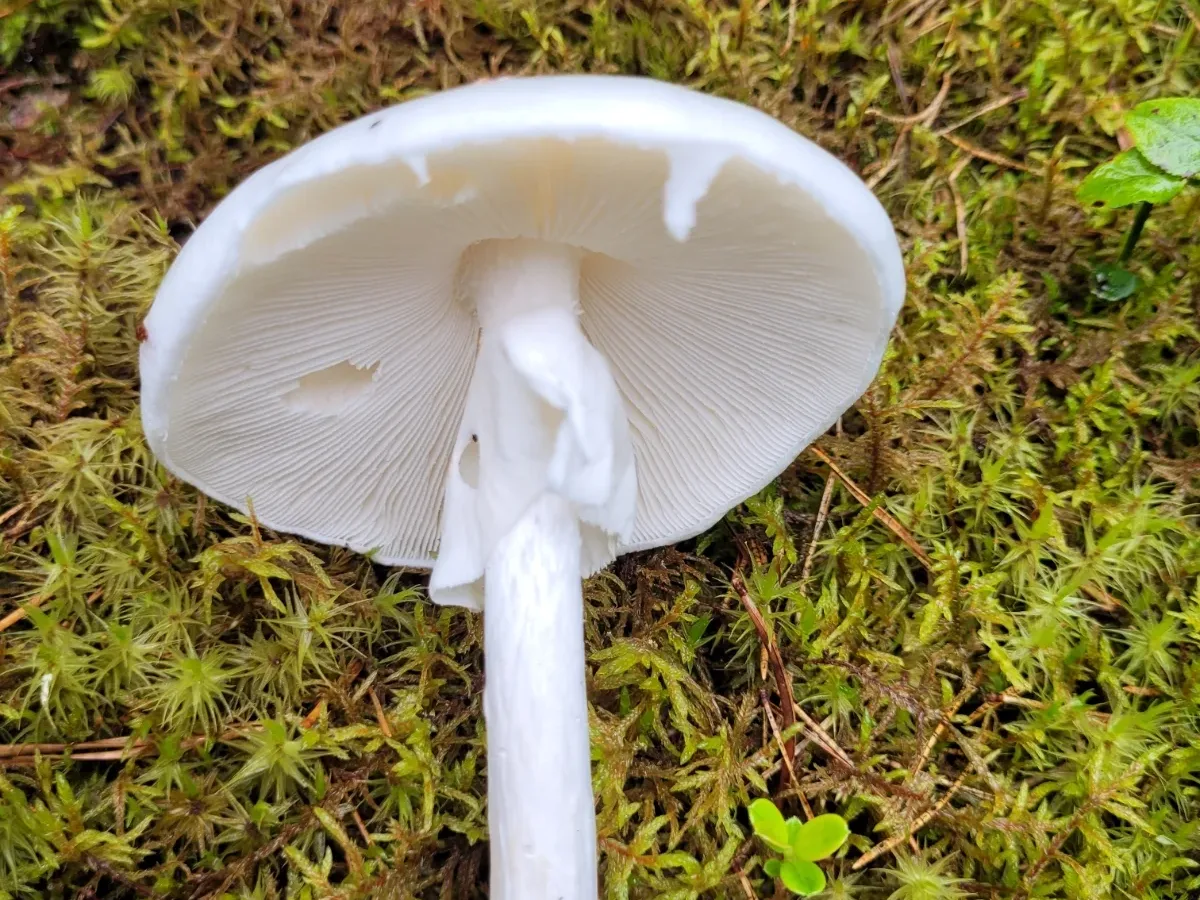 Destroying angel
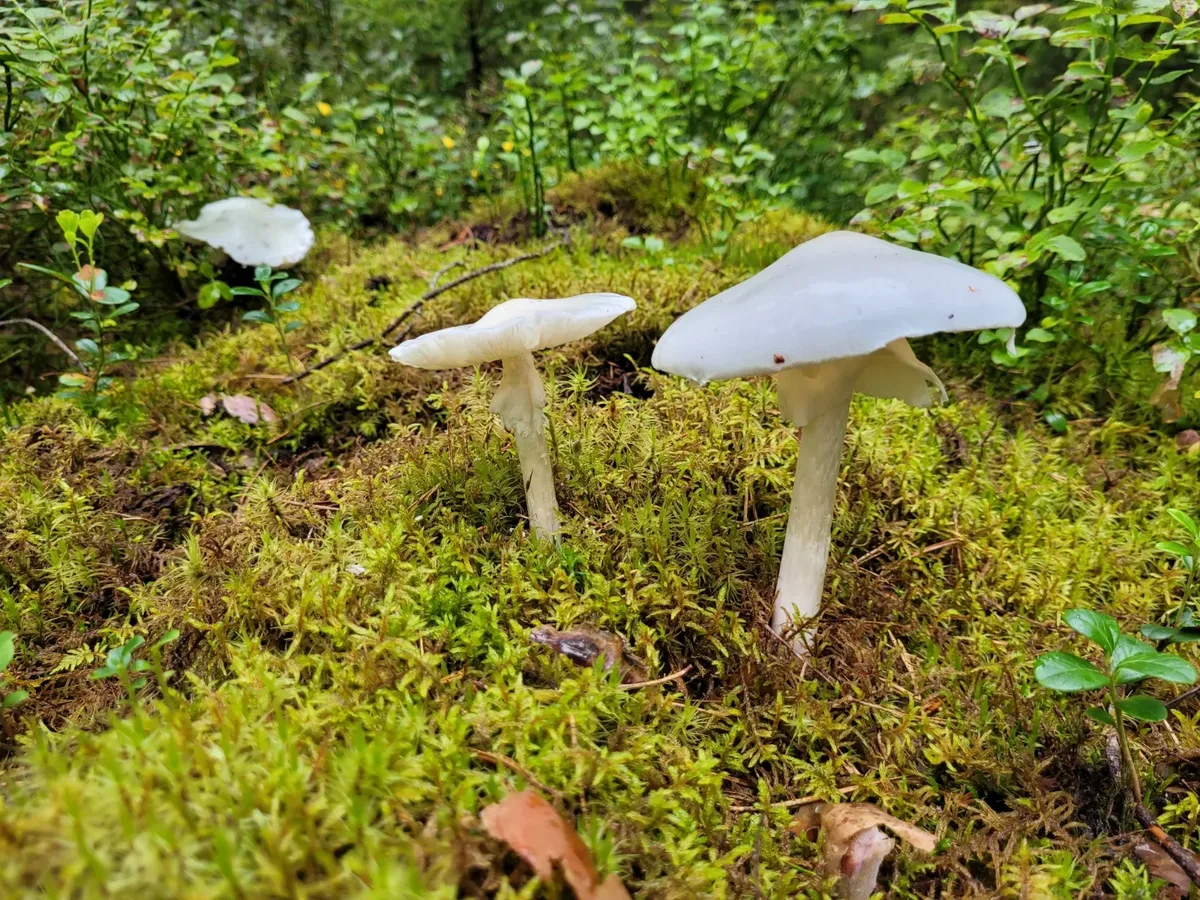 Destroying angel
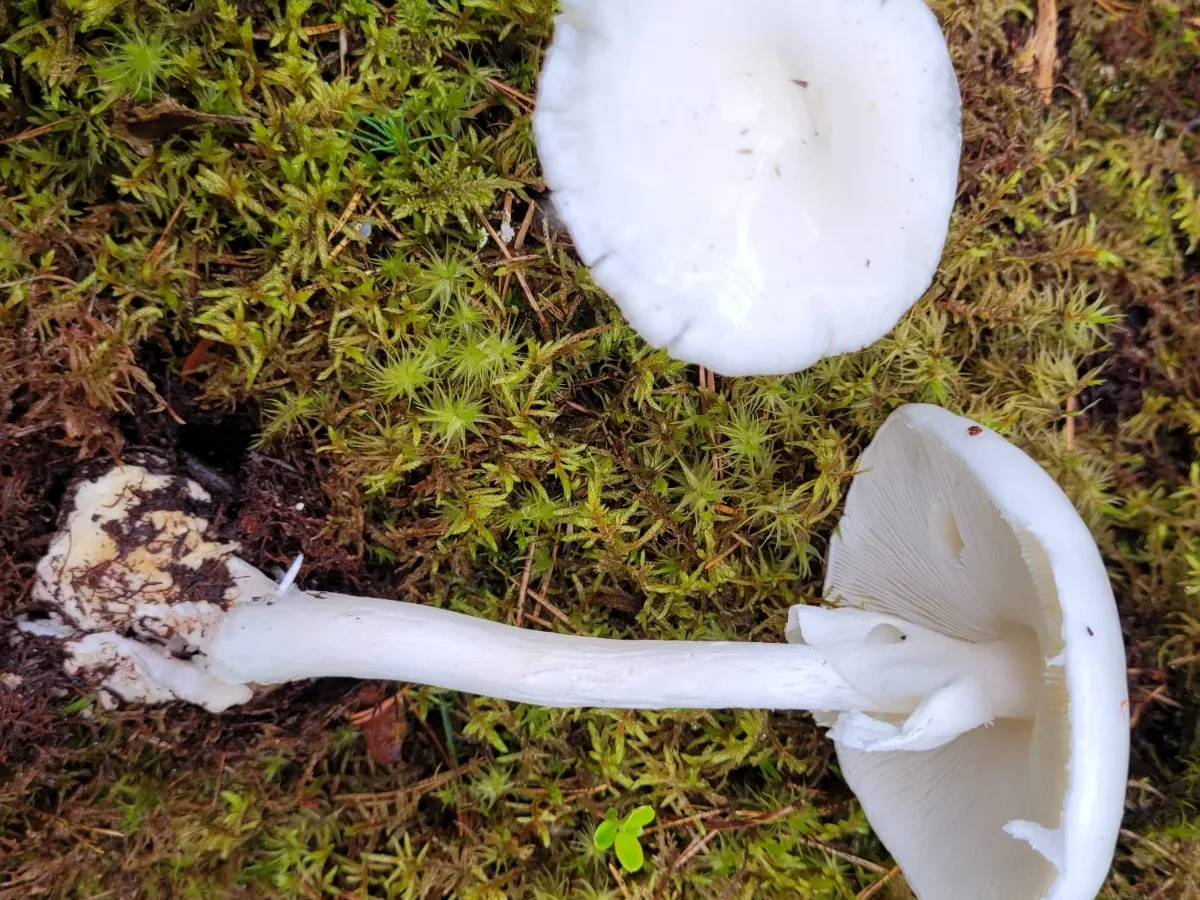 Destroying angelDestroying angelDestroying angel
Destroying angel
Amanita virosaPure white from cap to volva, as lethal as the death cap - one cap can kill, with the same treacherous delayed course.
How to recognise it
Entirely white from cap to base, with no colour change anywhere on the fungus. The cap (5-12 cm) begins egg-shaped or conical, then expands to a dome with a low central bump; the surface is often faintly sticky. Gills are white and free from the stem. The stem is white and fibrous, sometimes gently curved, with a fragile ring sitting fairly high up and a distinct sac-like white volva at the base - this volva is often buried in soil or leaf litter and easily missed. Spore print white. KOH applied to the cap gives a yellow reaction. Mature specimens develop a faint, slightly unpleasant smell.
Where it grows
Mycorrhizal with deciduous trees (beech, oak, chestnut) and conifers; damp, mossy woodland, often on acidic ground.
Cooking
Amanita virosa must never be eaten under any circumstances. No method of preparation - boiling, frying, drying, parboiling, or prolonged cooking - destroys or reduces its amatoxins to a safe level. The reason is fundamental: amatoxins are small, heat-stable bicyclic peptides. They survive temperatures that denature proteins and are not broken down by stomach acid or intestinal enzymes. Discarding the cooking water does nothing, because amatoxins are water-soluble and the broth simply becomes a concentrated toxin solution. There is no culinary workaround. Any food prepared in the same pan, or mixed with fragments of this mushroom, must also be discarded. If ingestion is suspected, contact emergency services and a poison control centre immediately - do not wait for symptoms, because the onset is delayed and the window for effective intervention is narrow.
Danger
As deadly as the death cap; a single cap can kill. The same treacherous course with latency and false improvement.
Look-alikes
Both are deadly Amanitas with the same amatoxins; the death cap is typically greenish rather than entirely white. Any Amanita with a volva should never be eaten.
Agaricus has pink to brown gills and a brown spore print, and no volva; the destroying angel is all white with white free gills that do not darken and a sac-like volva.
Cut lengthwise - a young Amanita egg shows the outlines of a cap and gills and has a volva, while a puffball is solid and uniform inside.
Edible Agaricus species develop dark gills as they mature, whereas the destroying angel keeps white gills and has a volva.
Young white puffballs are solid spheres without gills, ring, or volva; cutting one open reveals a uniform interior rather than the developing mushroom of an Amanita.
Gurumelo flesh reddens when scraped and smells of earth; the white destroying angels stay white and do not oxidize.
Young Agaricus lack a sac-like volva; the destroying angels have a white sac volva at the stem base.
Immature egg-stage Amanitas of various species can look similar; slice lengthwise to reveal the developing structure and avoid all-white forms with a volva.
Agaricus have pink-to-brown gills and lack a basal volva; the destroying angel has white gills and a sac-like volva at the base. Cut the young mushroom open to check for an Amanita inside the veil.
Brittlegills lack a ring and a volva.
Volvariella have pink spore deposits/gills and lack a ring.
Compare ring, volva and scale pattern; cut young specimens open to check for an Amanita inside the veil.
Cut the egg-like young mushroom in half: a young destroying angel shows the developing capped fungus inside the veil, whereas a puffball is uniform white flesh throughout.
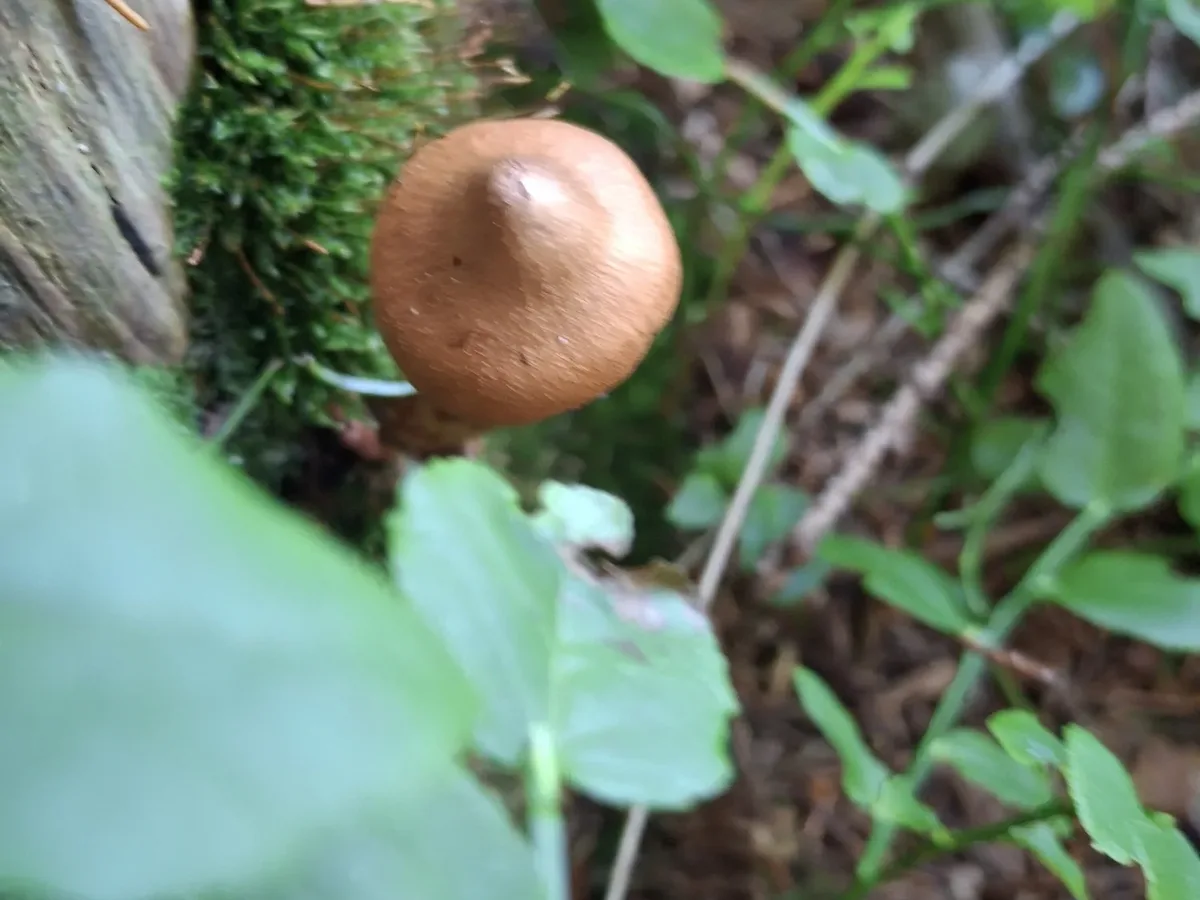 Deadly webcap
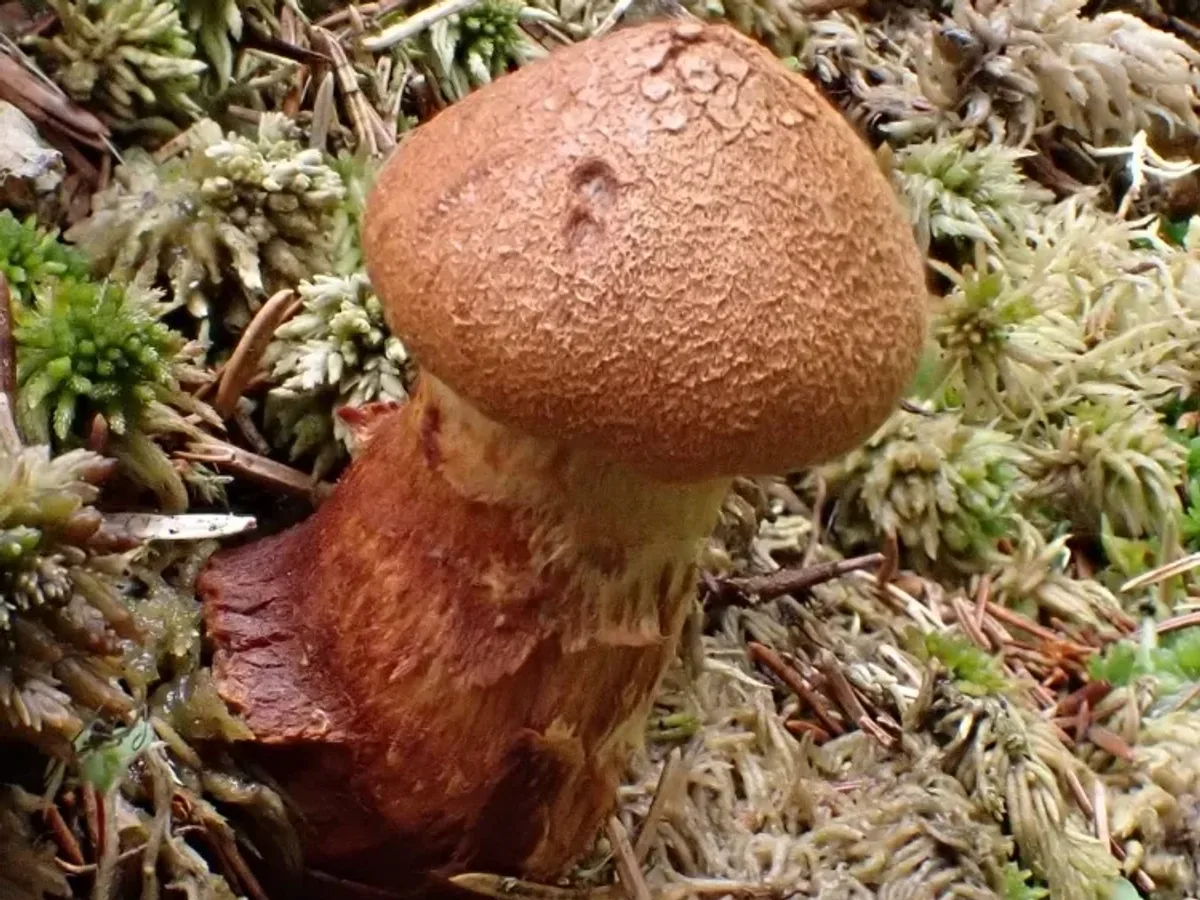 Deadly webcap
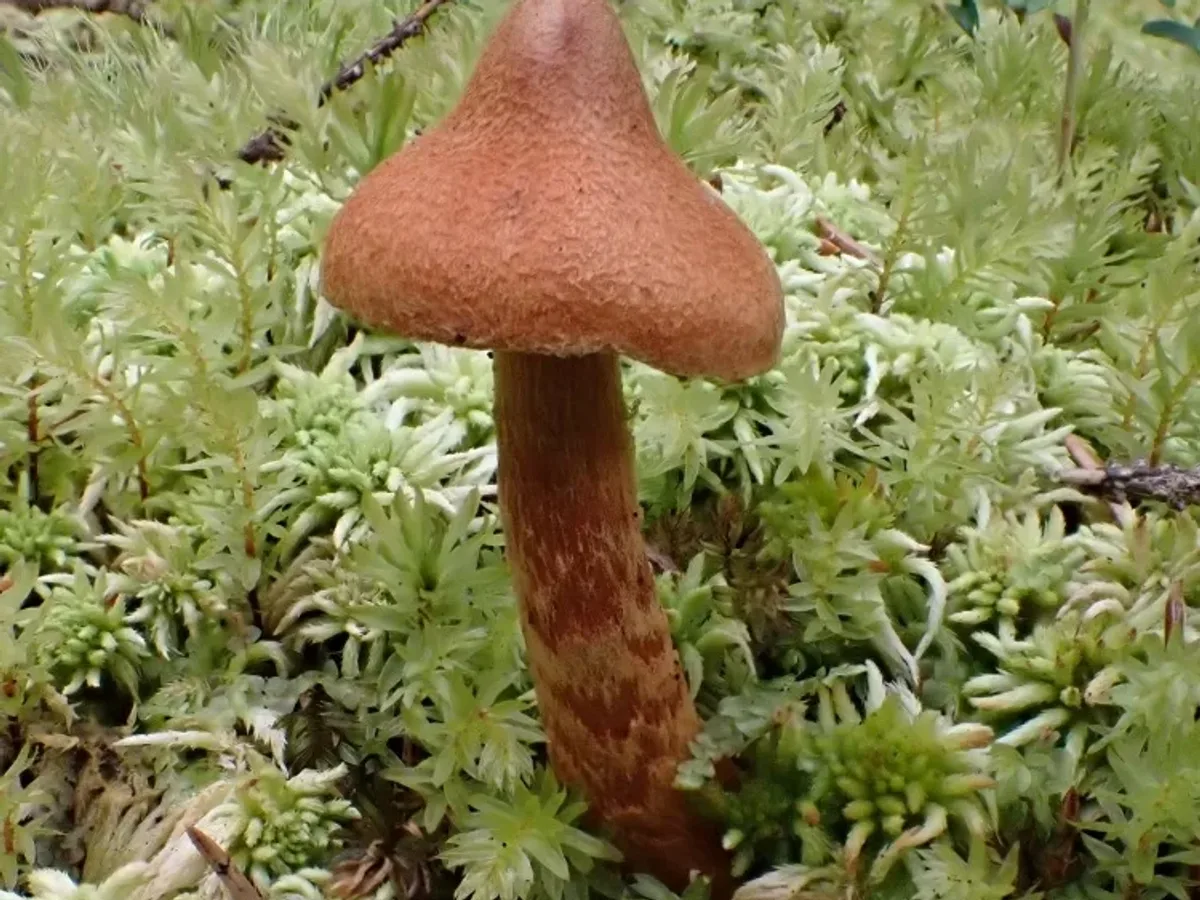 Deadly webcapDeadly webcapDeadly webcap
Deadly webcap
Cortinarius rubellusRusty-brown with a cobweb veil; its orellanine destroys the kidneys days to weeks after a meal that seemed harmless.
How to recognise it
Cap 3-8 cm, reddish-brown to cinnamon-brown or orange-brown, with a characteristic pointed umbo - C. rubellus keeps this point even at maturity, unlike most mushroom caps that flatten as they age. Surface dry and fibrous. Gills sparse and widely spaced, rust-brown. Stem yellow-brown, often marked with yellow veil bands - the remnants of the cobweb-like cortina that all young Cortinarius mushrooms carry stretched between cap and stem. Take a spore print: it will be rust-brown, a key identifying feature.
Where it grows
Mycorrhizal in coniferous and mixed forest, living in an unseen root partnership with its host tree. C. rubellus grows with spruce on moist ground; C. orellanus with broadleaf trees and oak on drier ground.
Cooking
Not edible under any circumstances. The toxin is not destroyed by cooking, drying or freezing.
Danger
Orellanine gives a very long latency (2 days to 3 weeks) - no, or only flu-like, early symptoms, then kidney failure. In a western Swedish cohort 1979-2012 (Nilsson et al., BMC Nephrology 2017), 28 cases with medical records were included out of a total of 39 poisonings by the deadly webcap (toppig giftspindling); "22 of 28 patients developed acute kidney injury requiring dialysis." There is no specific antidote; treatment is dialysis, sometimes transplantation. The toxin is not destroyed by cooking, drying or freezing.
Look-alikes
A close relative that is likewise deadly, also containing orellanine.
The orange/reddish-brown colour can tempt chanterelle pickers. The webcap has true sparse rust-brown gills, a rust-brown spore print, a cobweb-like cortina when young and yellow veil bands on the stem, whereas the chanterelle has blunt, forked, decurrent false gills (ridges), a paler spore print and no cortina.
Check for the rust-brown spore print, rust-brown gills, the cobweb-like cortina and the yellow-brown stem with yellow veil bands, which together identify a deadly webcap.
Shares the same habitat, so they are easily confused. Inspect each mushroom: the deadly webcap has a pointed cap and true gills, whereas the funnel chanterelle has ridges (false gills) and a hollow stem.
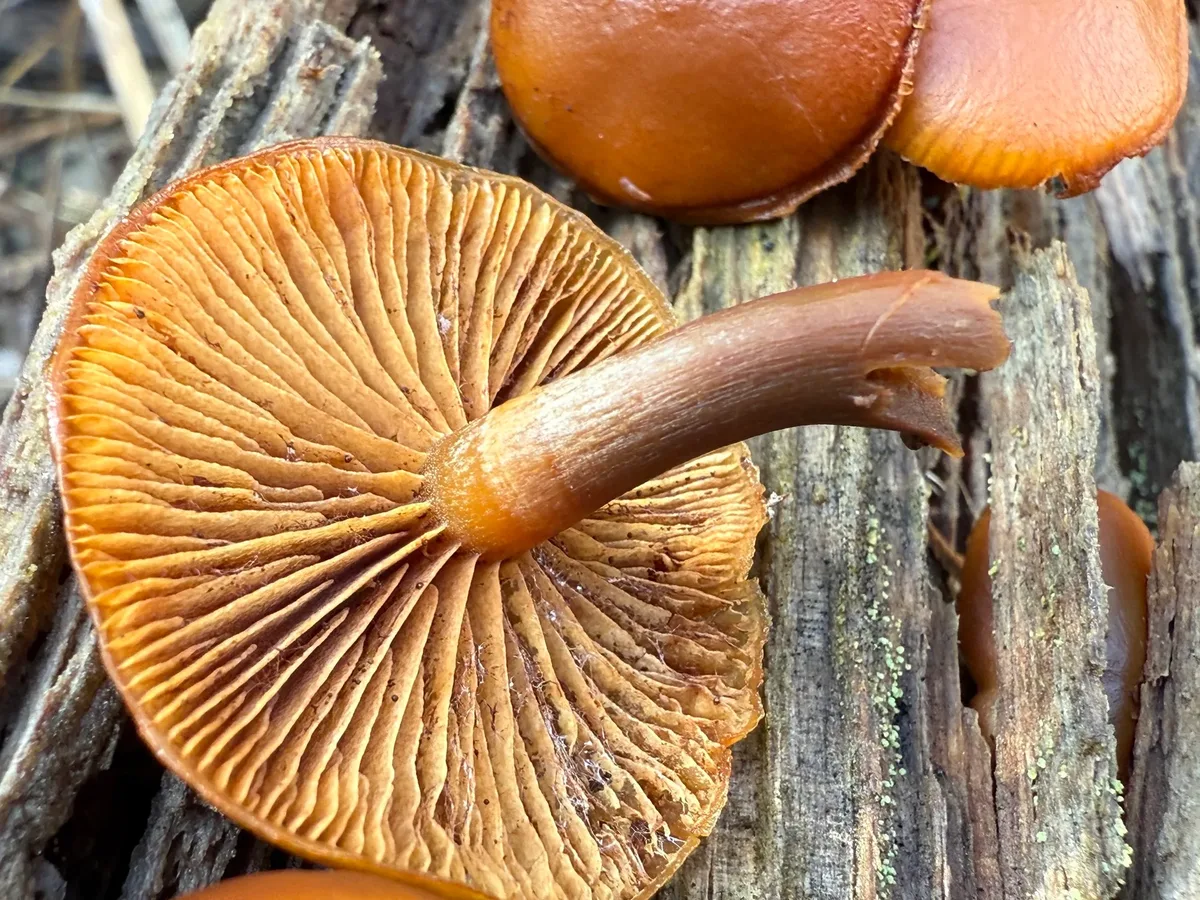 Funeral bell
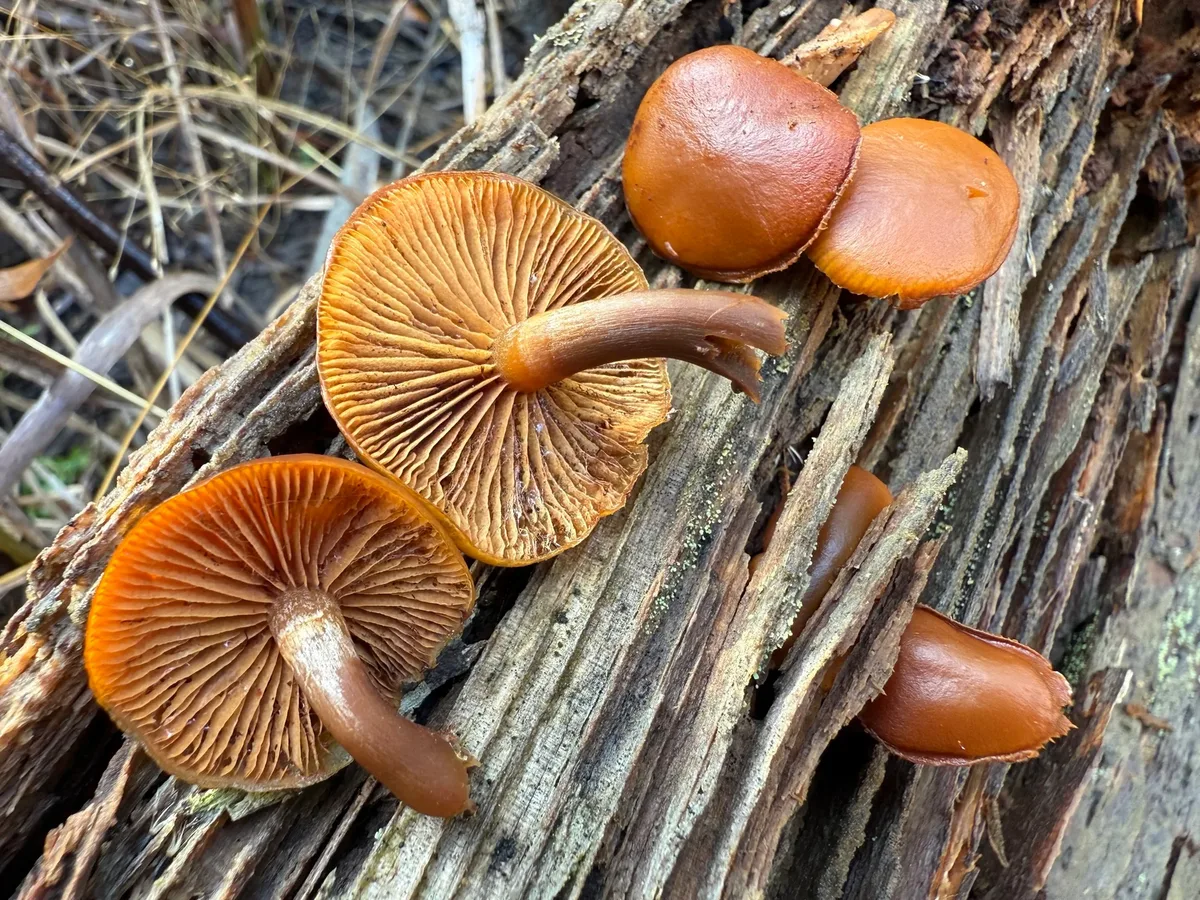 Funeral bell
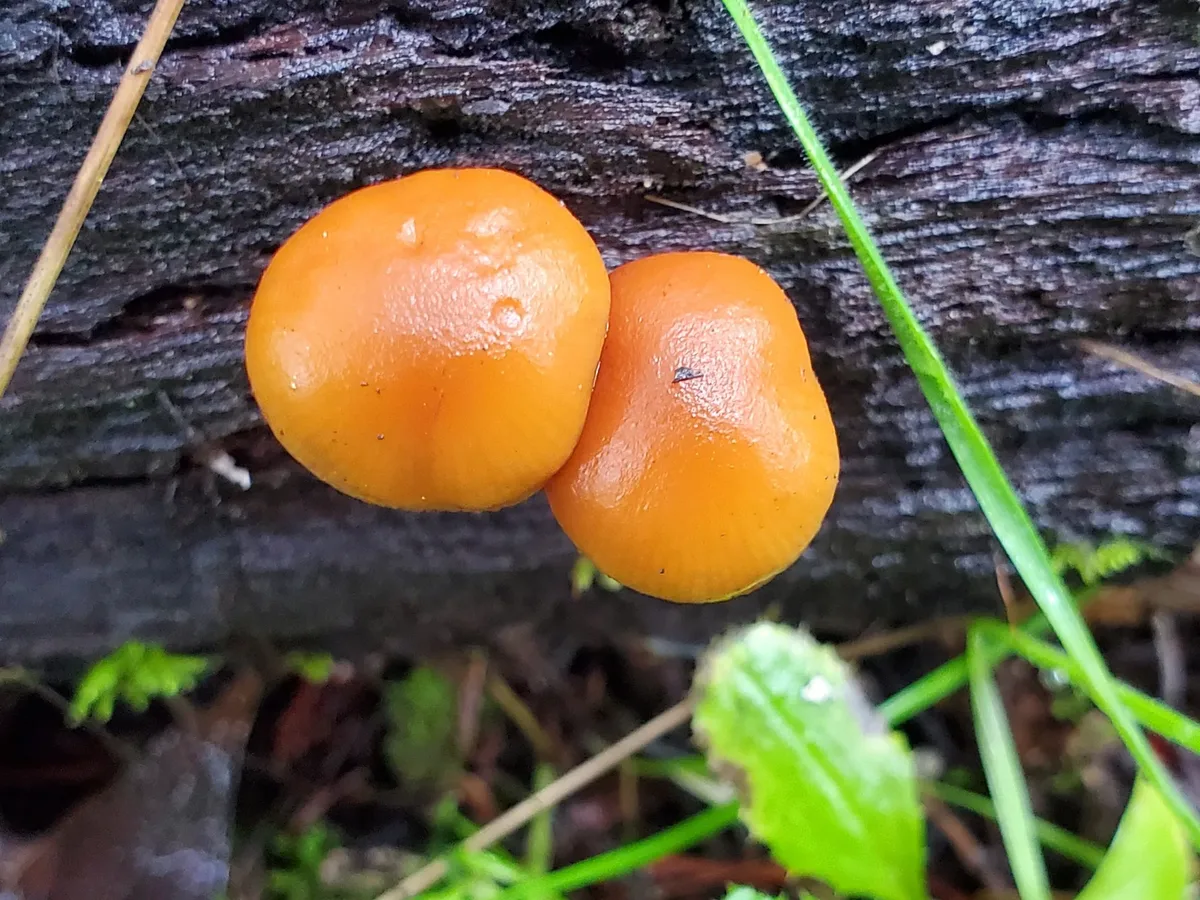 Funeral bellFuneral bellFuneral bell
Funeral bell
Galerina marginataA small brown mushroom on wood carrying the same amatoxins as the death cap - never eat a little brown wood-dweller unidentified.
How to recognise it
Small - cap 1-4 (-5) cm, honey- to yellow-brown, hygrophanous (dark brown when moist, pale yellow when dry), smooth. Gills brownish, giving a rust-brown spore print. Stem thin with a (often disappearing) ring; darkens towards the base. Grows on wood.
Where it grows
Saprotroph on dead wood (deciduous and coniferous), on rotting logs and stumps, often in moss; from the lowlands to alpine settings.
Cooking
Galerina marginata must never be eaten. There is no preparation method - boiling, parboiling, frying, drying, or any other technique - that destroys or neutralises its amatoxins. Alpha- and beta-amanitin are heat-stable proteins: they survive cooking temperatures completely intact and are absorbed unchanged through the gut. Eating even a single cooked cap can cause fatal liver and kidney failure. The insidious danger is a deceptive latency period of 6-24 hours during which no symptoms appear, followed by violent gastrointestinal illness, a brief false recovery, and then organ failure within days. By the time symptoms are undeniable, irreversible damage has already begun. This species has killed people who deliberately ate what they believed were edible wood-growing mushrooms and who had removed or discarded the ring as an unimportant detail. If there is any possibility that this species entered a dish, seek emergency medical care immediately - do not wait for symptoms.
Danger
Contains the same amatoxins as the death cap; a single cap can be fatal.
Look-alikes
Edible; grows on wood but gives a white spore print, whereas funeral bell gives a rust-brown spore print.
Edible; also grows on wood. Distinguish by spore print (rust-brown in funeral bell) and overall features. Many fatalities have occurred from picking funeral bell along with this species.
Edible wood-growing mushroom that can be confused with Galerina marginata; lacks the fragile ring and has white spore powder rather than rust-brown.
Wood-dwelling like Galerina; very different in appearance, but beginners can mistake it.
Small brown hallucinogenic mushrooms that can be dangerously confused with deadly Galerina.
Edible small brown-gilled mushrooms can resemble Galerina marginata; confirm features carefully before eating any small brown mushroom from wood.
Psilocybe has a purple-brown to black spore print and bruises blue; galerina has a rust-brown print and does not bruise blue. At least one death in the PNW resulted from confusing galerina with Psilocybe stuntzii.
Flammulina velutipes has a white spore print.
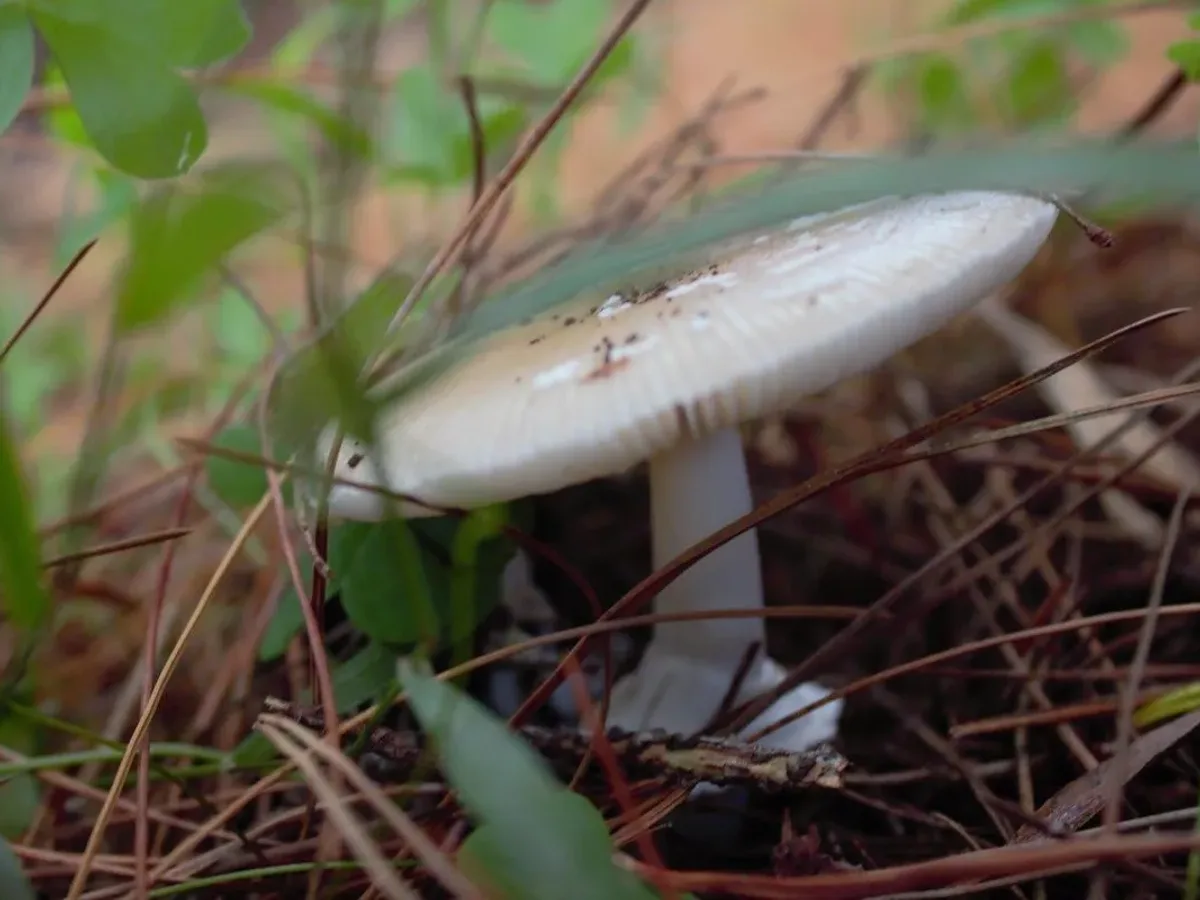 Panther cap
 Panther cap
 Panther capPanther capPanther cap
Panther cap
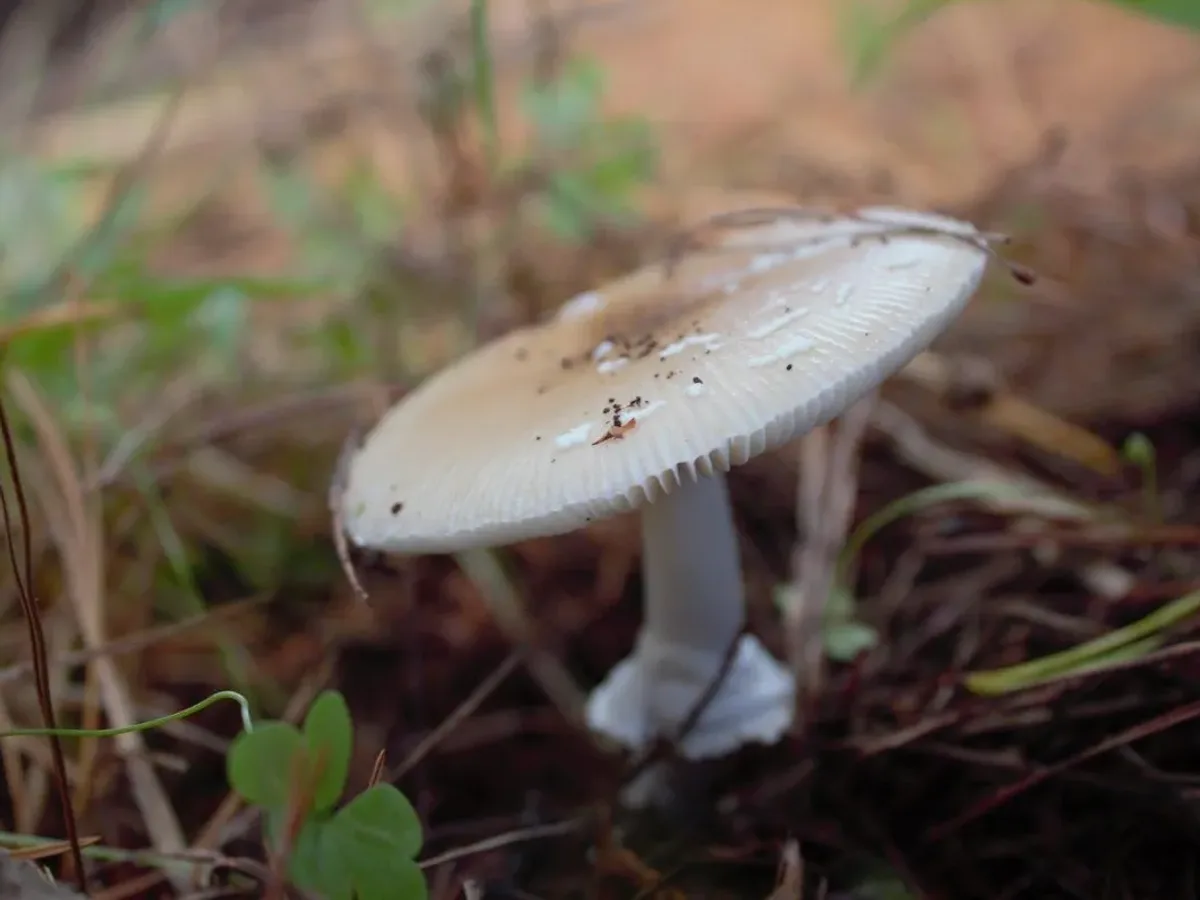
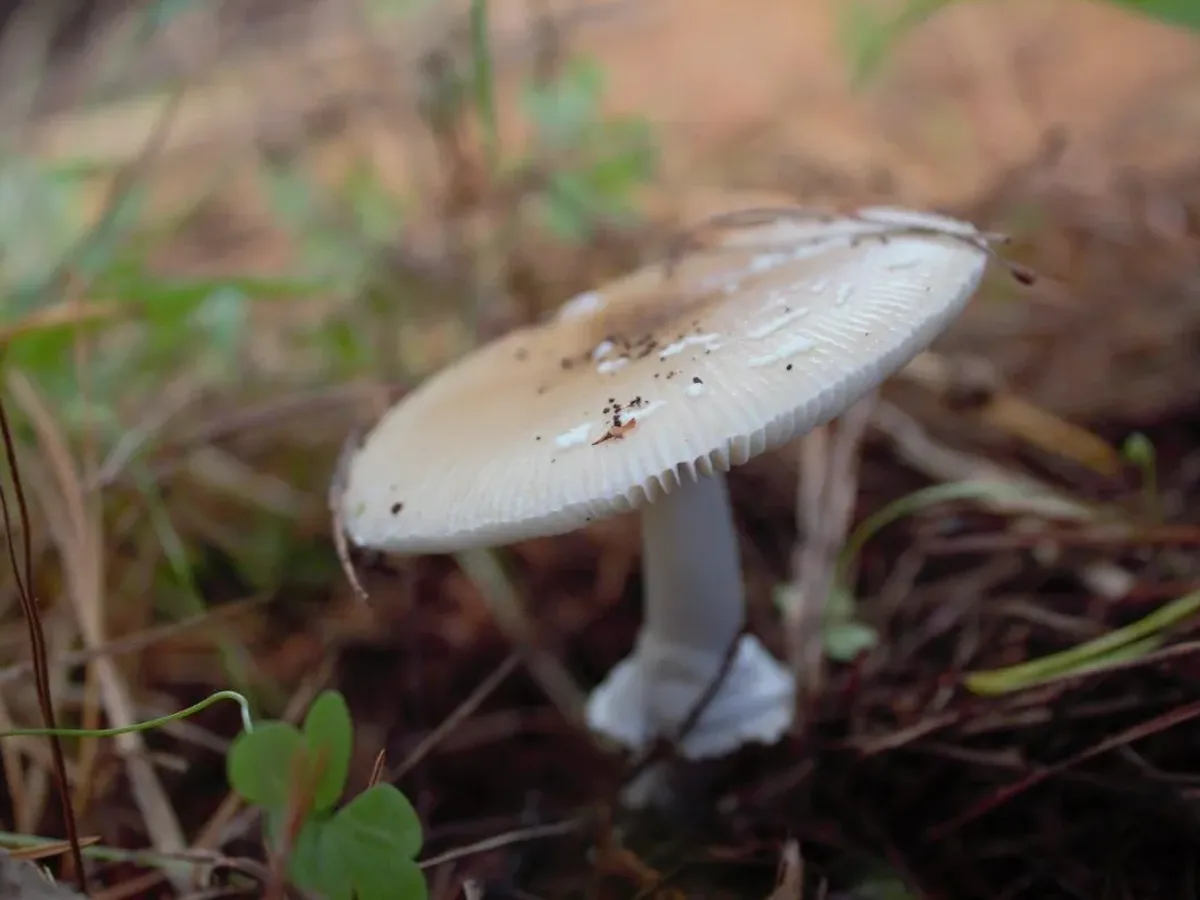
Amanita pantherinaBrown with clean white spots and a collared volva - rarely fatal but seriously toxic, with nausea, confusion and seizures.
How to recognise it
Cap 5-12 cm, brown to grey-brown, dotted with clean bright-white spots - fragments of the universal veil left behind as the cap expanded. The margin is distinctly grooved (striate). Gills white, crowded. Stem white, ringed, with a collar-like, sharply rimmed volval ring encircling the bulbous base. Spore print white.
Where it grows
Grows in woodland, forming mycorrhizal partnerships with deciduous and coniferous trees - beech and oak especially. Has a preference for calcareous (lime-rich) soils.
Cooking
The panther cap must never be eaten. No cooking method - boiling, parboiling, drying, frying, or any other preparation - reliably removes or neutralises its toxins. The principal toxins are ibotenic acid and muscimol, both water-soluble isoxazole compounds that act on glutamate and GABA receptors in the brain. Some ibotenic acid converts to muscimol during cooking or drying, but the total psychoactive and toxic load is not reduced to a safe level; indeed, partial conversion can make the preparation more potent. Critically, the panther cap contains significantly higher and more variable concentrations of these toxins than the superficially similar fly agaric (Amanita muscaria), meaning a dose that might cause only mild symptoms in one individual can cause severe poisoning - confusion, agitation, hallucinations, convulsions, or coma - in another. There is no antidote. Treatment in hospital is supportive. Discard any specimen and wash your hands after handling it.
Danger
Contains higher and more variable levels of ibotenic acid / muscimol than the fly agaric (Amanita muscaria). Rarely fatal but serious. Most poisonings are accidental.
Look-alikes
White/pale Amanita with a volva should be left alone; deadly amatoxin-containing Amanita are responsible for most lethal mushroom poisonings. Introduced to South African plantations with exotic trees.
Edible Amanita with which the panther cap is most often confused unintentionally; distinguished by its overall reddening flesh rather than the panther cap's clean white spots on a brown cap with striate margin and collar-like volva.
An edible Amanita that can be confused with the panther cap.
Rule of thumb: dark scales on a light background = parasol; light (white) patches on a dark background = Amanita (panther cap).
Edible Caesar-type Amanita are confused with A. pantherina; the panther cap has white warts (which can wash off in rain), a ring, and a ringed/concentric stem base.
 Devil's bolete
 Devil's bolete
 Devil's bolete
 Devil's boleteDevil's boleteDevil's bolete
Devil's bolete
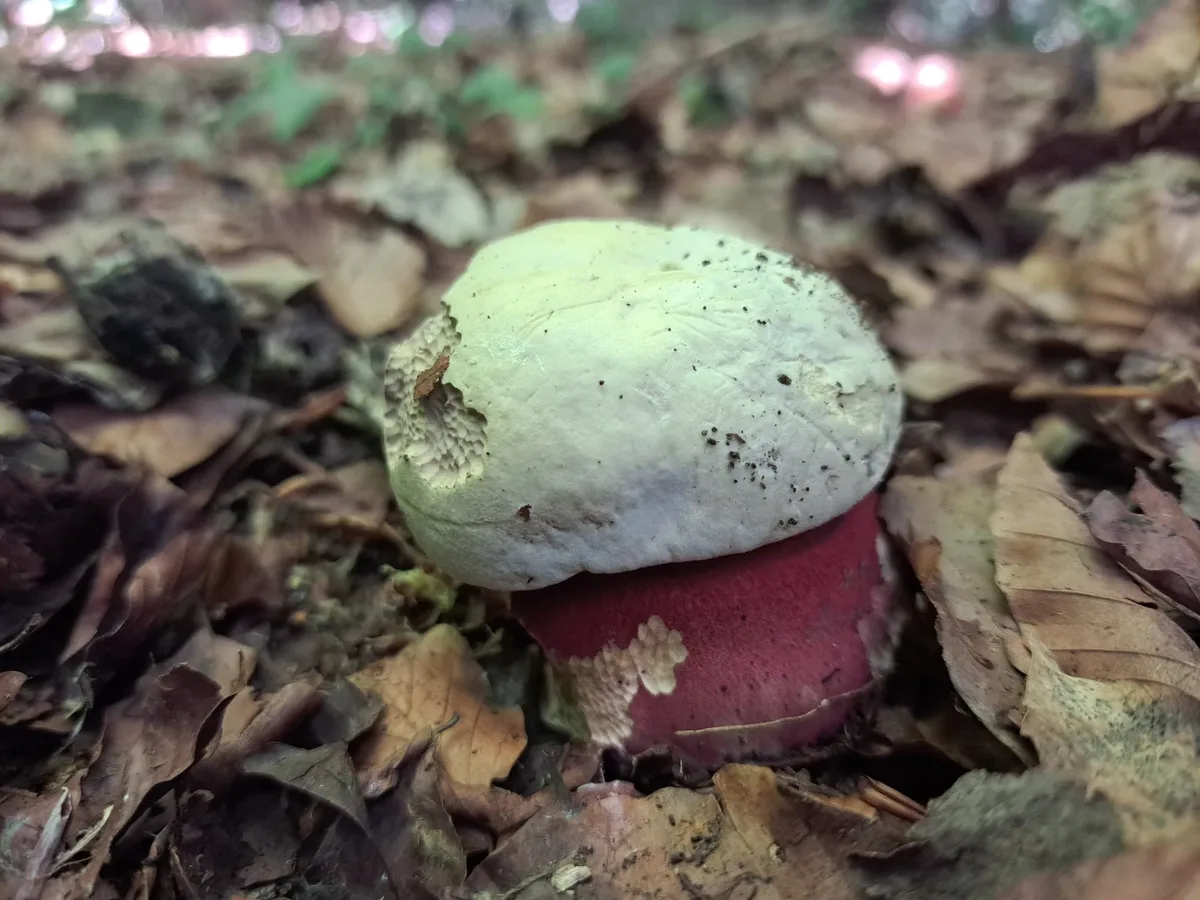
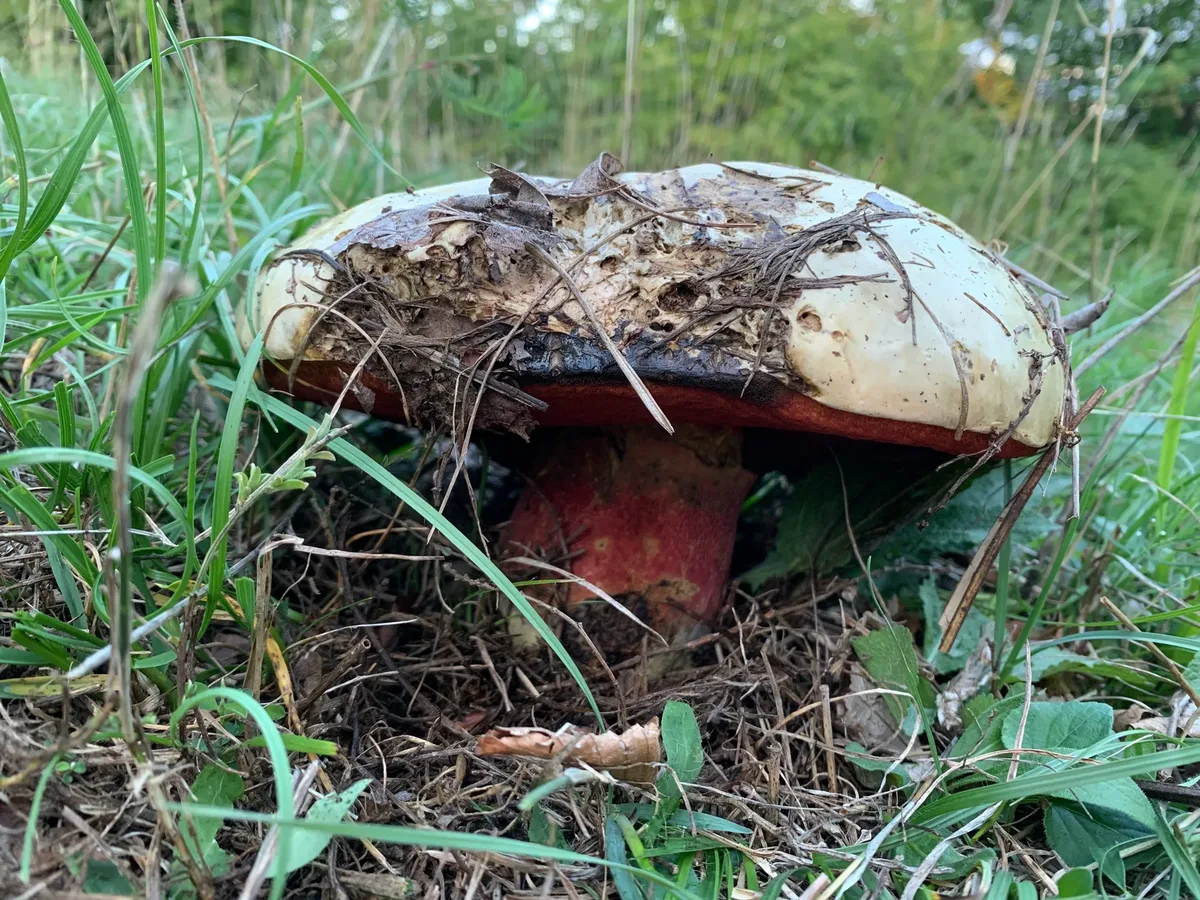
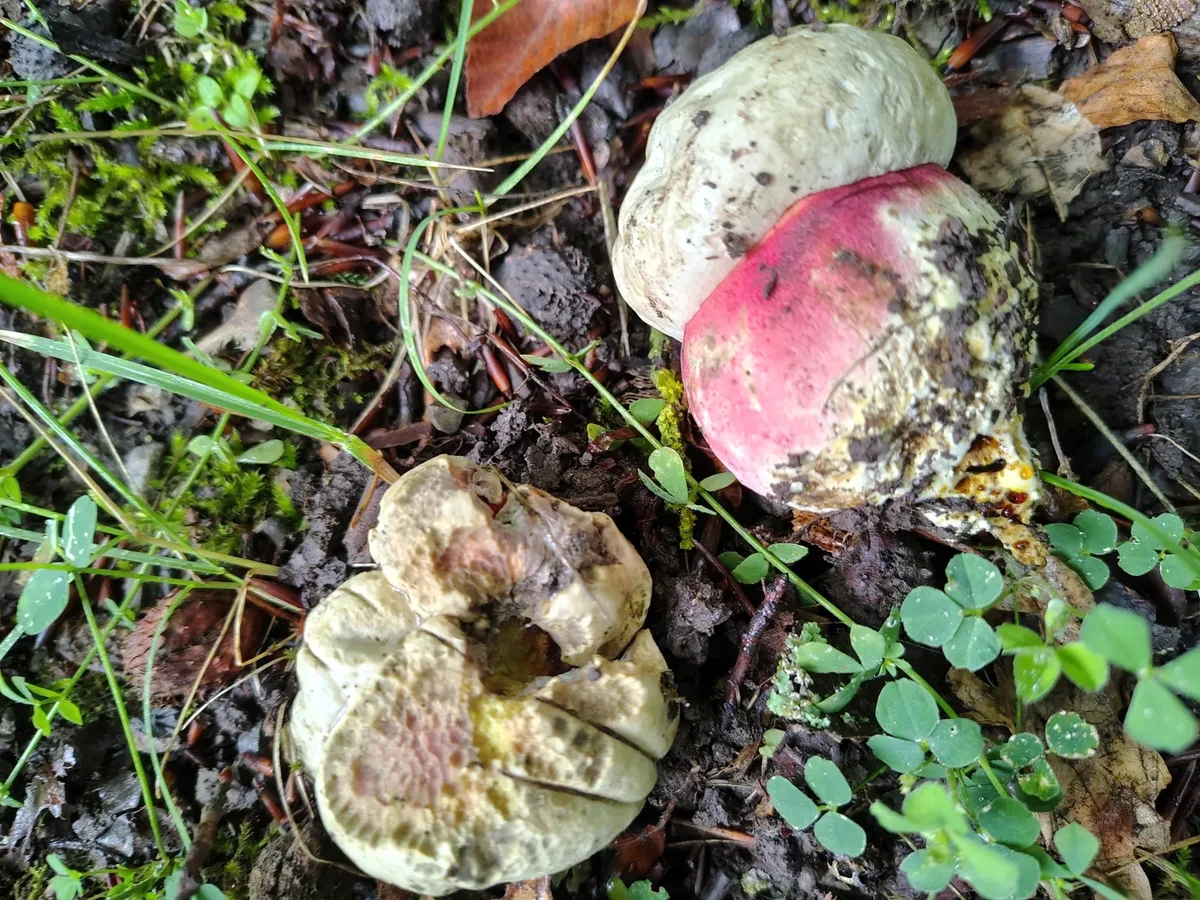
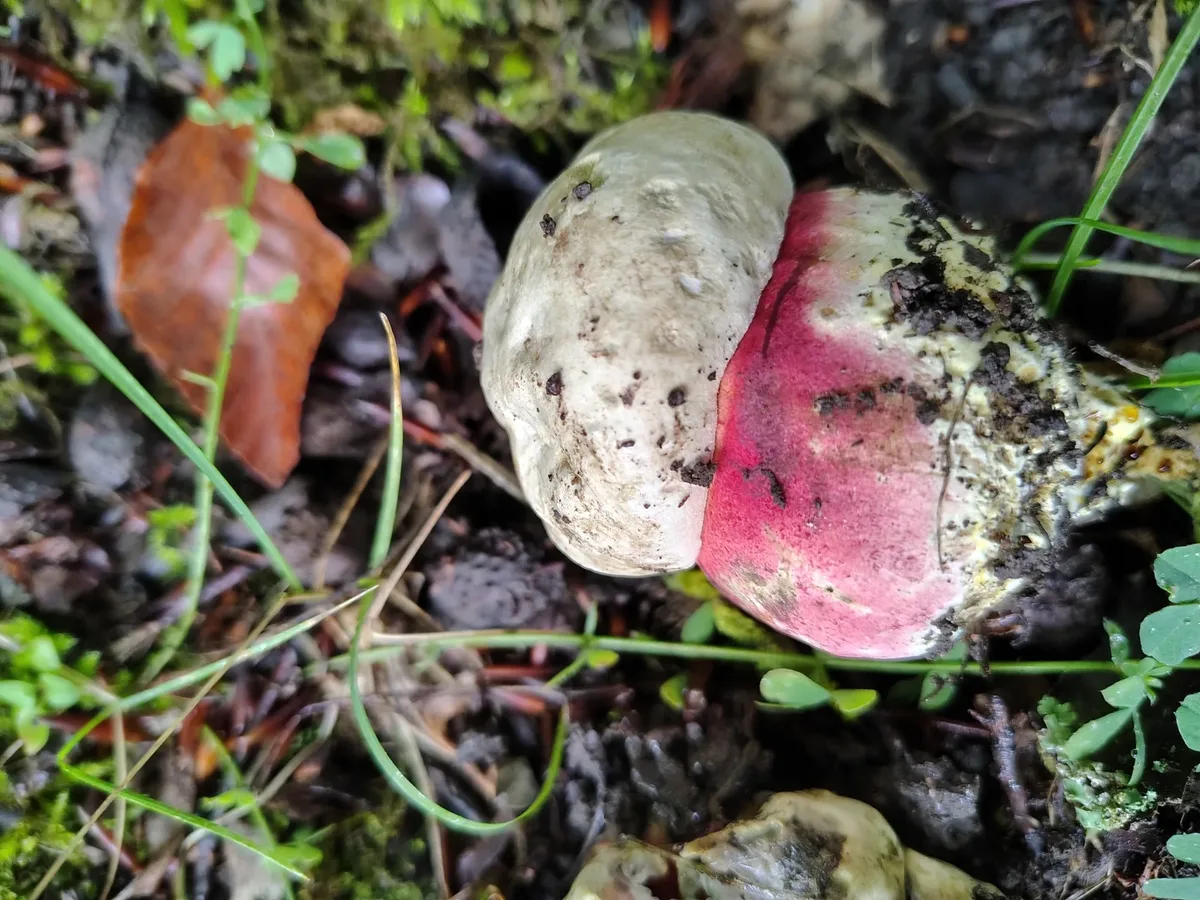
Rubroboletus satanasRed pores, a red netted stem and blue-bruising flesh - the rule is to avoid every bolete with red pores that strongly bruises blue.
How to recognise it
One of Europe's most imposing boletes: cap 8-30 cm (occasionally to 50 cm), pale greyish-white to beige, with a smooth, dry, velvety surface. The pores are a vivid red to orange-red - a striking contrast to the pale cap - and the stem is thick, bulbous and covered in a crimson net-like pattern (reticulation). Cut the flesh and it stains blue almost instantly, a reaction caused by oxidation of the pigment variegatic acid. Older specimens develop a distinctive, unpleasant smell of carrion. Spore print olive-brown.
Where it grows
A thermophilic mycorrhizal partner of oak, beech and chestnut, rooted in warm, calcareous (lime-rich) soil. Largely a species of southern and central Europe; in the UK confined to southern England, absent from colder northern forests.
Cooking
Not a food mushroom. This species is poisonous and should not be eaten.
Danger
Causes severe gastroenteritis with violent vomiting, abdominal pain and sometimes bloody diarrhoea within hours. Especially poisonous raw. According to Oberlin et al. (Ann Toxicol Anal 25(1):13-16, 2013), in summer 2011 in southern France "184 cases of Devil's bolete poisoning... called into Poison Control" were reported. No confirmed deaths in the UK, but serious.
Look-alikes
The cep has white/yellow pores, a light-coloured net, and does not blue; the devil's bolete has red pores, a red net-stem and blueing flesh.
Another red-pored bolete; avoid all boletes with red pores that blue strongly.
Another red-pored bolete; avoid all boletes with red pores that blue strongly.
Inexperienced foragers may mistake the pale cap for a porcini until they notice the red pores; the porcini has whitish to olive (never red) pores and does not have a red-networked stem.
Edible porcini have pale pores, a pale stem, and white flesh that does not turn blue. Red pores plus blue-staining flesh indicate the devil's bolete.
 False morel
 False morel
 False morelFalse morelFalse morel
False morel
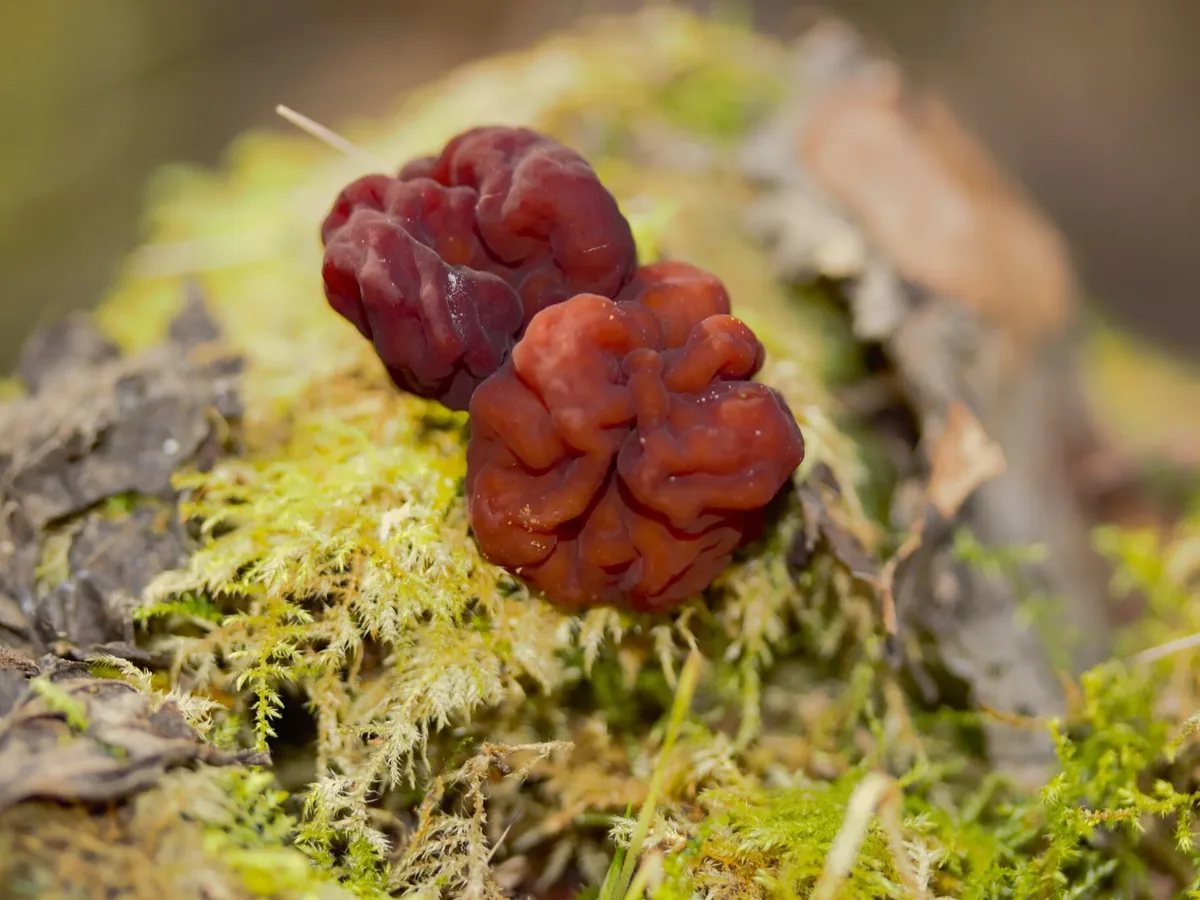
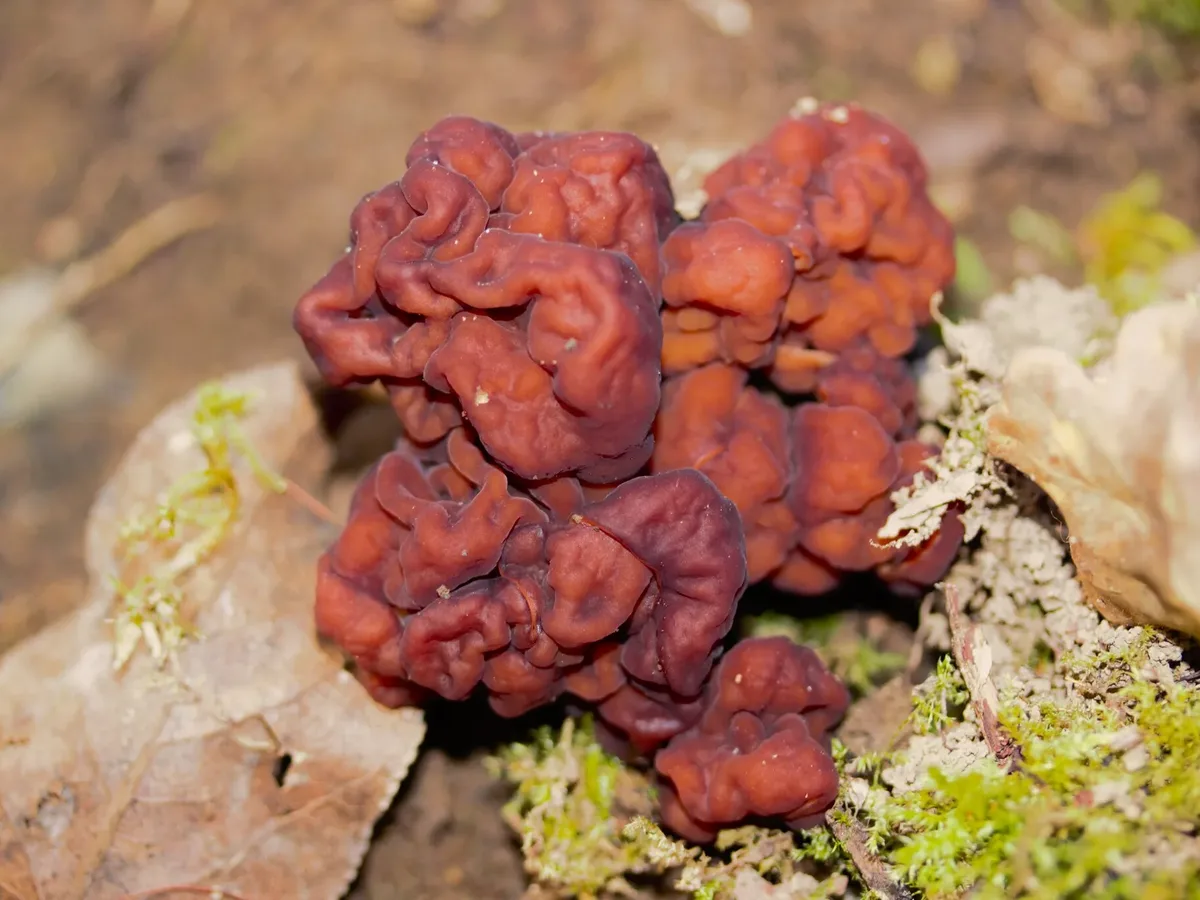
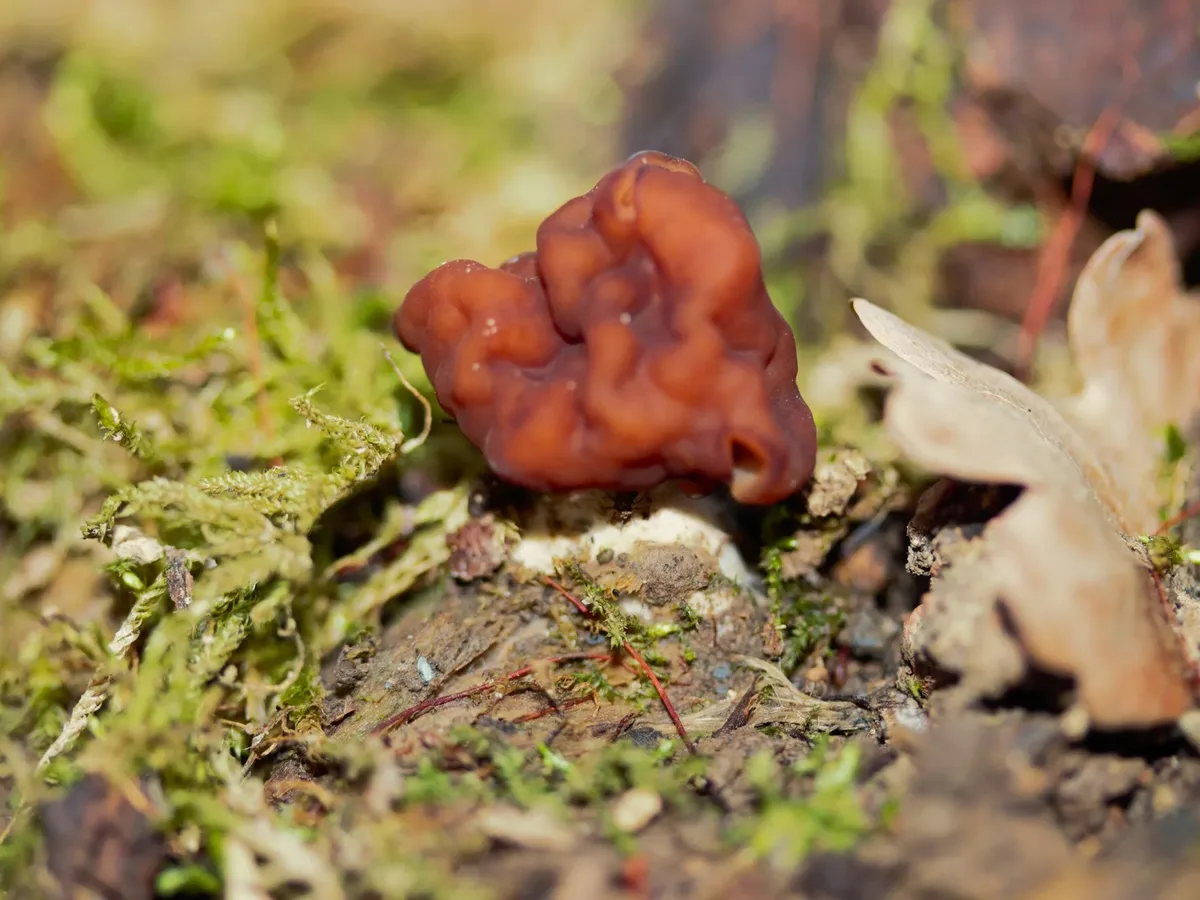
Gyromitra esculentaBrain-shaped and wrinkled, not honeycombed - its gyromitrin can cause liver damage and death, and even the vapours are toxic.
How to recognise it
Irregular, brain- or walnut-shaped cap, reddish-brown to dark brown - wrinkled and convoluted rather than pitted in a honeycomb. The stem is short; the interior is hollow or chambered, not cleanly hollow throughout.
Where it grows
Sandy coniferous forest floor, especially under pine. Also turns up on burned ground and other disturbed soils where the forest floor has been opened up.
Cooking
In the Nordic countries and Eastern Europe it is traditionally eaten after repeated parboiling, but this is considered risky - the toxin content is reduced but not entirely eliminated, and the vapors are poisonous.
Danger
Contains gyromitrin which is converted in the stomach to monomethylhydrazine (MMH): vomiting, dizziness, liver damage, in severe cases convulsions and death. Individual sensitivity varies. Although traditionally eaten after repeated parboiling in the Nordic countries and Eastern Europe, this is regarded as risky - the toxin content is reduced but not fully eliminated, and the vapors are poisonous.
Look-alikes
True morels have a regularly pitted honeycomb cap and are completely hollow inside; the false morel is brain-like and filled/chambered.
A safe edible; has a pitted, honeycomb-like cap rather than a wrinkled/convoluted one.
Also a Gyromitra; likewise to be avoided.
 Fly agaric
 Fly agaric
 Fly agaricFly agaricFly agaric
Fly agaric
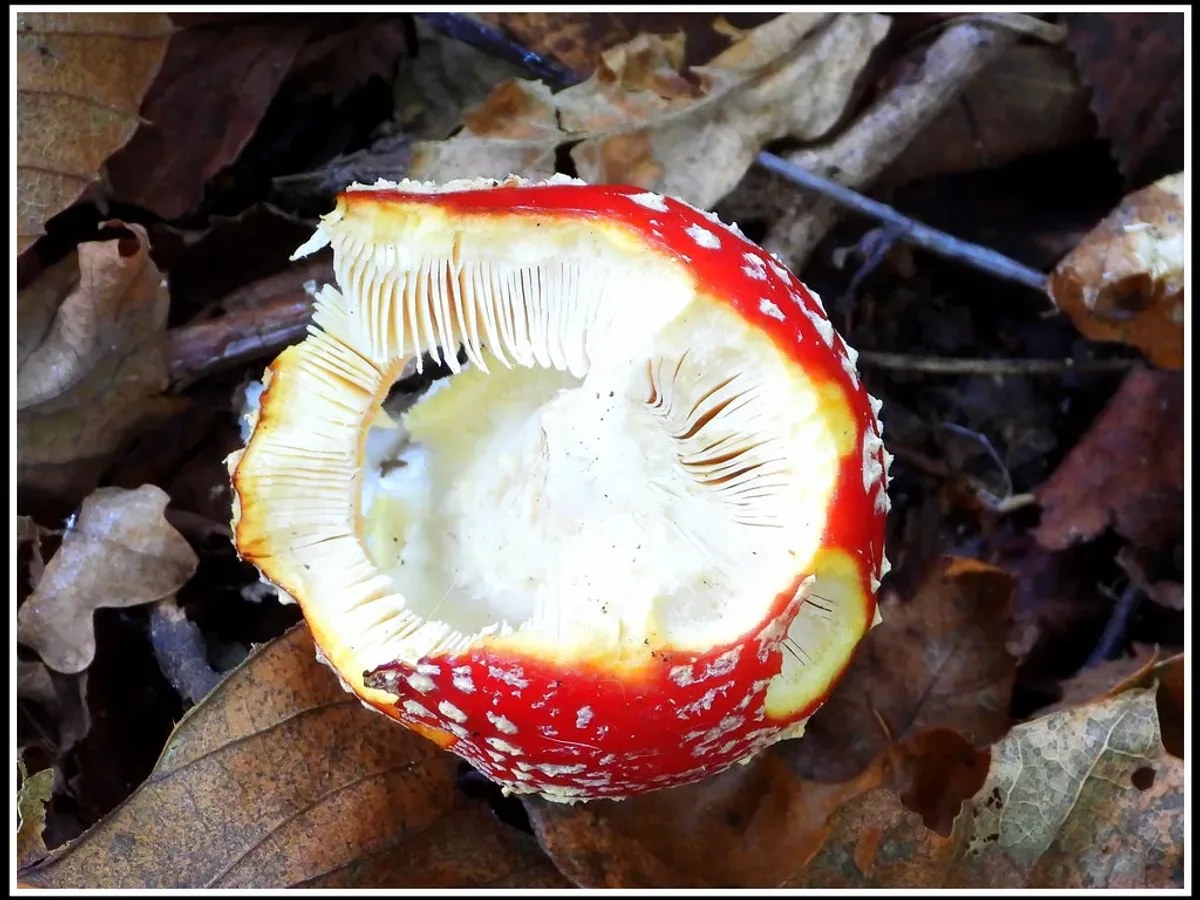
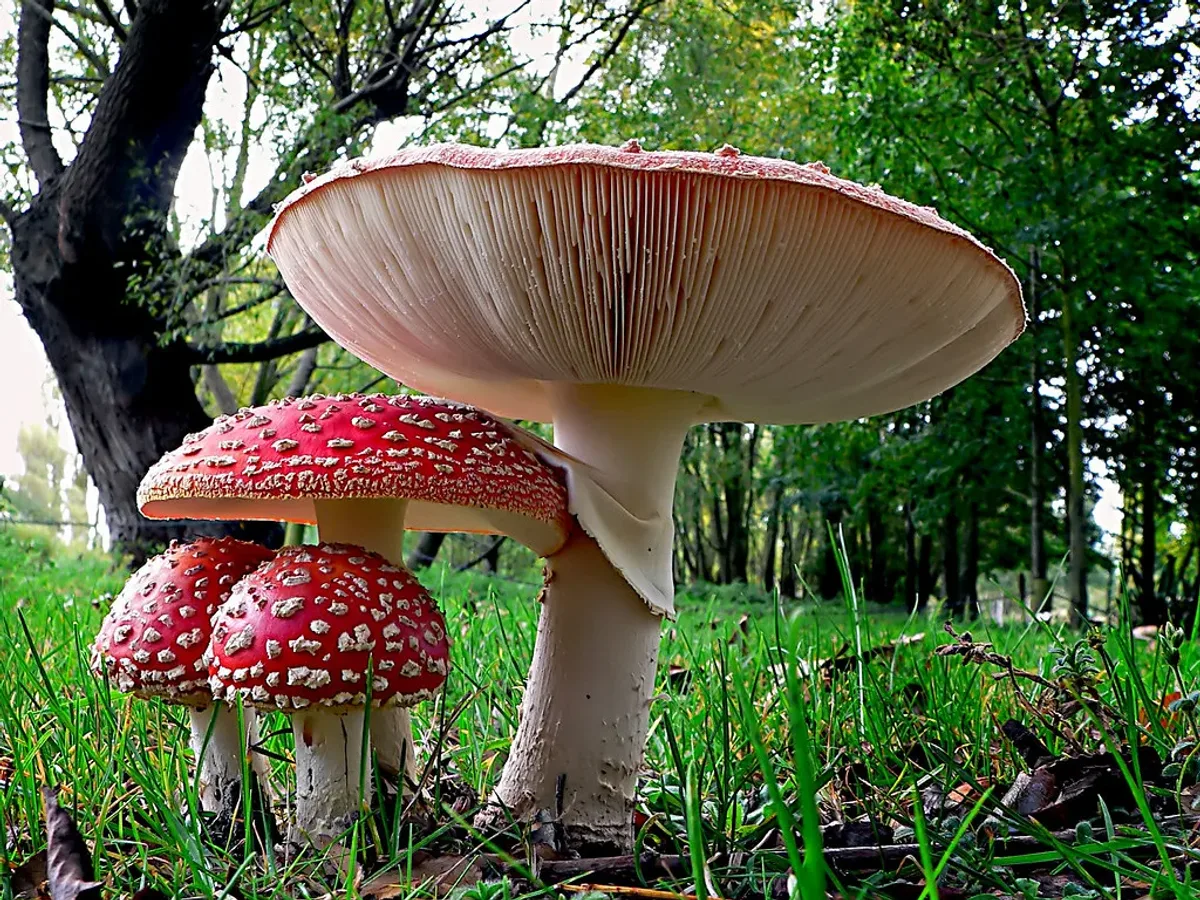
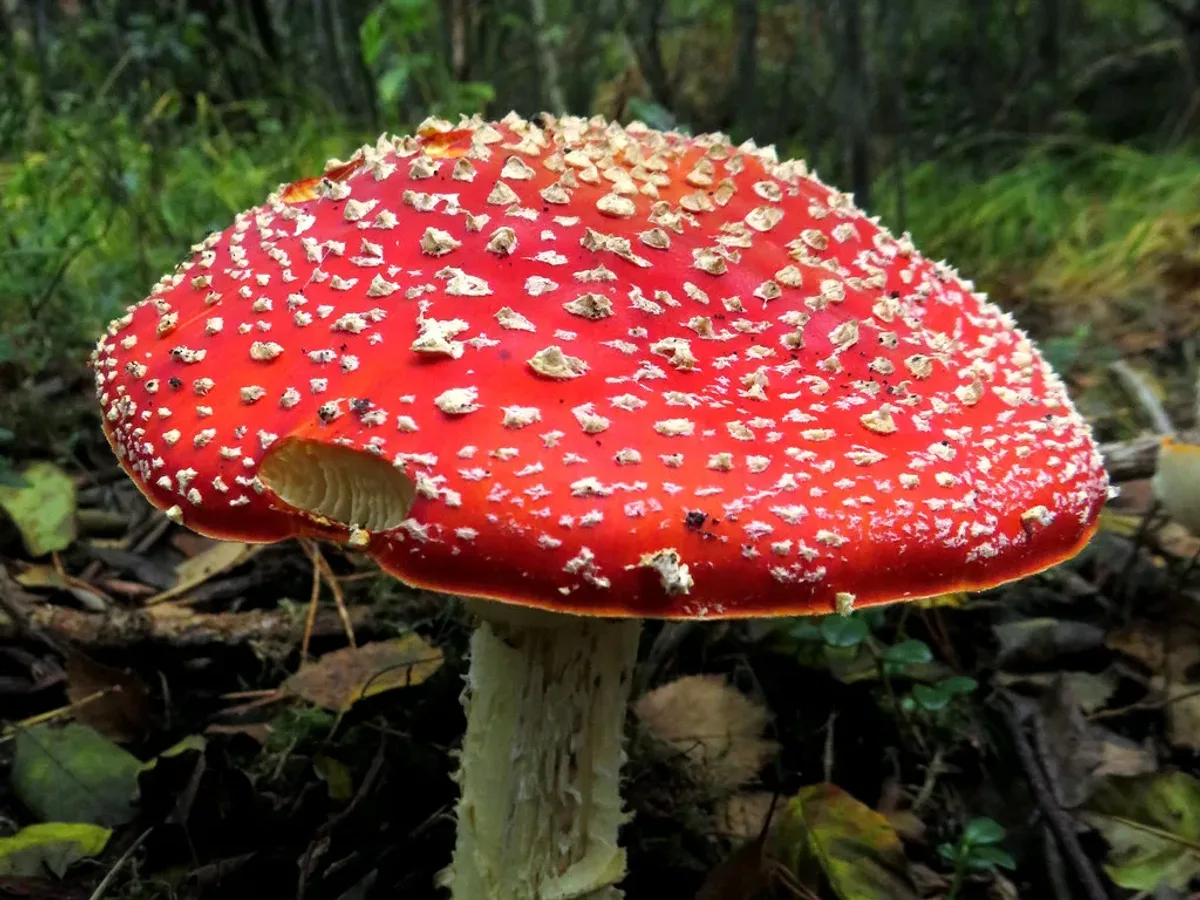
Amanita muscariaThe classic red-and-white fairytale mushroom - intoxicating and never to be eaten, with most poisonings deliberate.
How to recognise it
Cap 8-20 cm, vivid red with white warts that can be washed off by rain or simply fade with age, leaving a plain orange-red cap. White gills, white stem with a pendant ring, and a white bag-like volva at the base. Young specimens emerge as white "eggs" wrapped in a universal veil before the red cap breaks through.
Where it grows
Introduced to Australia and New Zealand alongside pine and birch plantations, where it has since formed mycorrhizal relationships with native southern beech (Nothofagus, including Myrtle Beech N. cunninghamii) in Victoria, Tasmania and New Zealand - spreading into ecosystems it was never meant to reach and displacing native fungi as it goes. Range is expanding northwards (towards Port Macquarie, NSW); also found under silver birch in Manjimup, WA (2010).
Cooking
None - poisonous/psychoactive.
Danger
Deaths extremely rare. Easy to recognise, so poisoning is uncommon.
Look-alikes
The guide advises beginners to avoid the entire Amanita genus; faded specimens of the fly agaric can mislead the inexperienced, and the genus includes deadly amatoxin-containing species.
Native Australian species, eucalyptus-associated, lacking white warts and a ring.
Caesar's mushroom (edible, southern Europe) has a yellow cap, yellow gills and yellow stem; a young rain-washed fly agaric lacking warts could theoretically be confused with it, but the fly agaric has white gills and white stem.
At the button stage the fly agaric is a white ball that can resemble a puffball; cut it lengthwise to reveal the developing cap, gills and stem of the agaric.
Brown cap with white warts, ring, and banded volva; the more toxic of the two and can be confused by inexperienced foragers with edible grey- or brown-capped species.
The red color plus white warts plus a volva at the base distinguish the fly agaric; rely on these warning features even when the cap color has faded.
The rules that save lives
- Learn the deadly ones first: be able to recognise the death cap, destroying angel and funeral bell without hesitation before picking anything to eat.
- Eat only species you have identified with 100% certainty, using several features - cap, gills or pores or spines, stem, ring, volva, smell, spore print - never colour alone.
- Take a spore print at the slightest doubt: it separates honey fungus (white) from funeral bell (rust), and wood blewit (pink) from webcaps (rust).
- Never pick small brown mushrooms on wood for food, and no boletes with red pores that bruise blue.
- Cook properly: morels, honey fungus and wood blewit must be well cooked; parboil honey fungus and discard the water. Always try a small amount of any new species first.
- If poisoning is suspected, seek emergency care immediately - do not wait for symptoms, since amatoxin and orellanine act late - and bring the mushroom remains in a rigid container.