Chanterelle
Cantharellus cibariussyn. Cantharellus lateritius, Cantharellus cinnabarinus
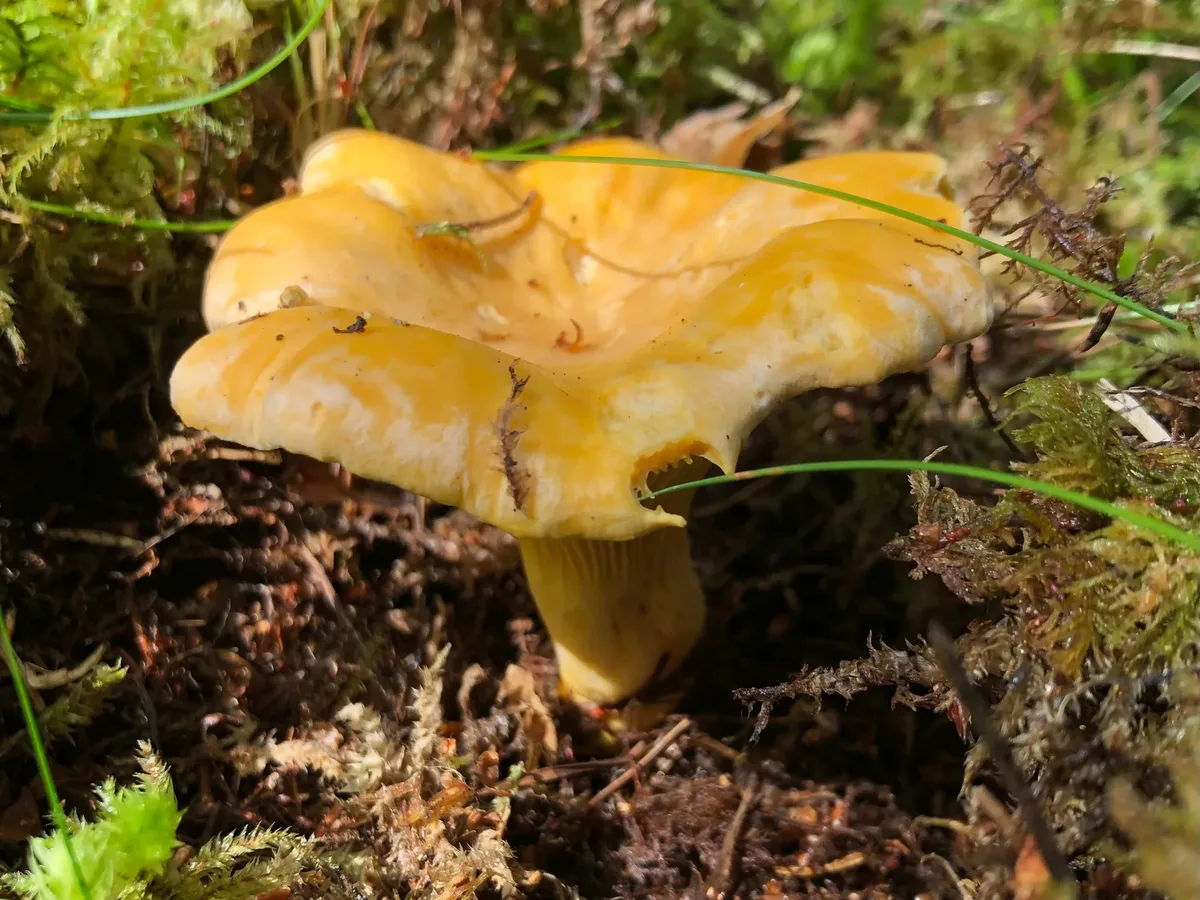 © jonsense (CC BY 4.0)
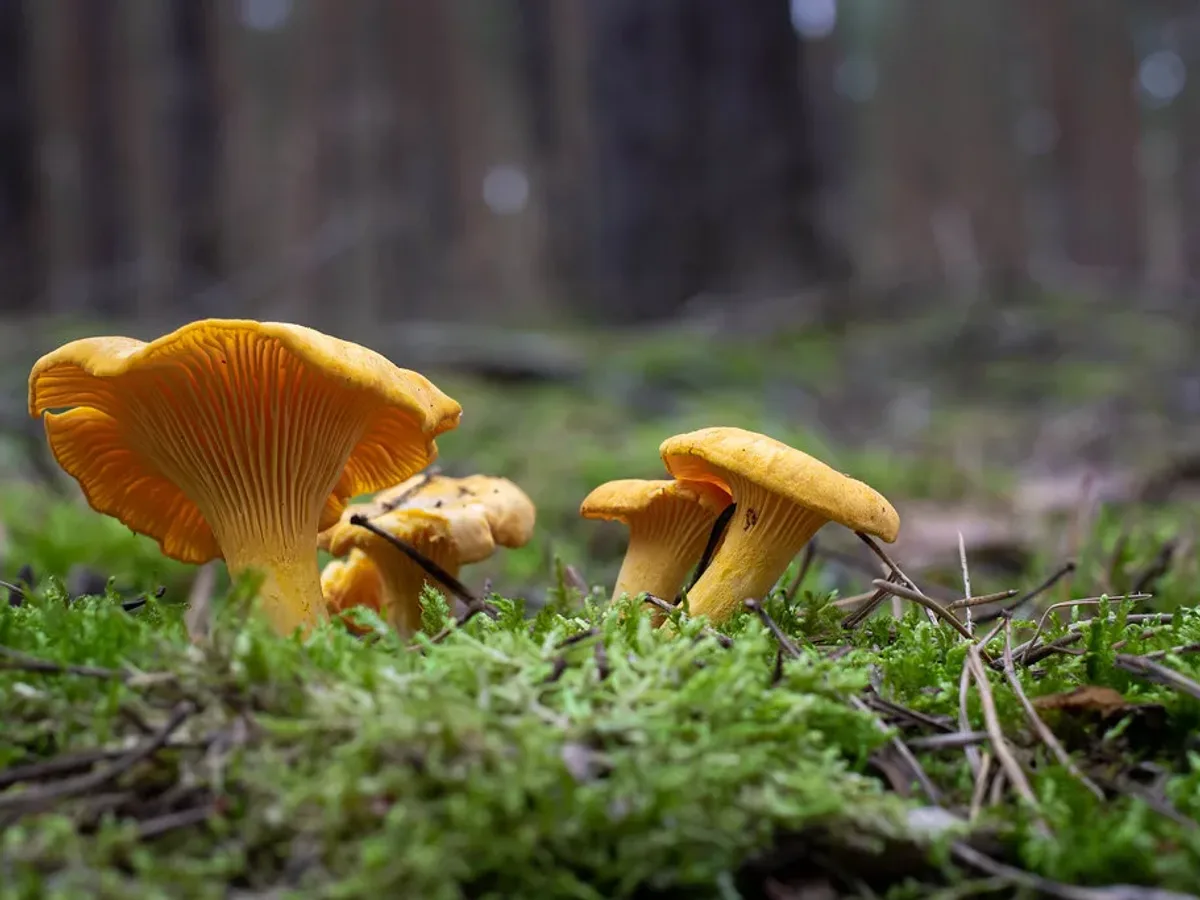 © Wolfgang Wollschweber (CC BY 2.0)
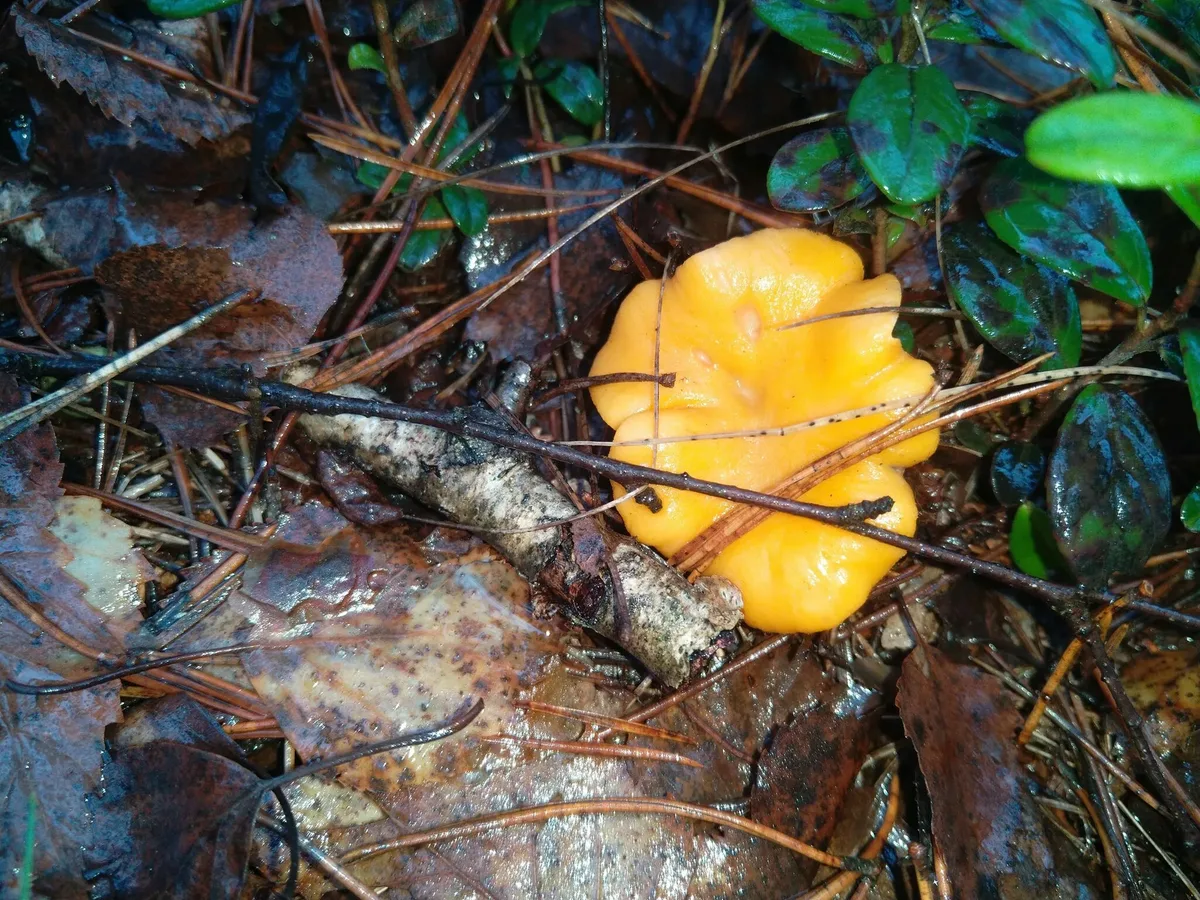 © Andrejus Gaidamavičius (CC BY)
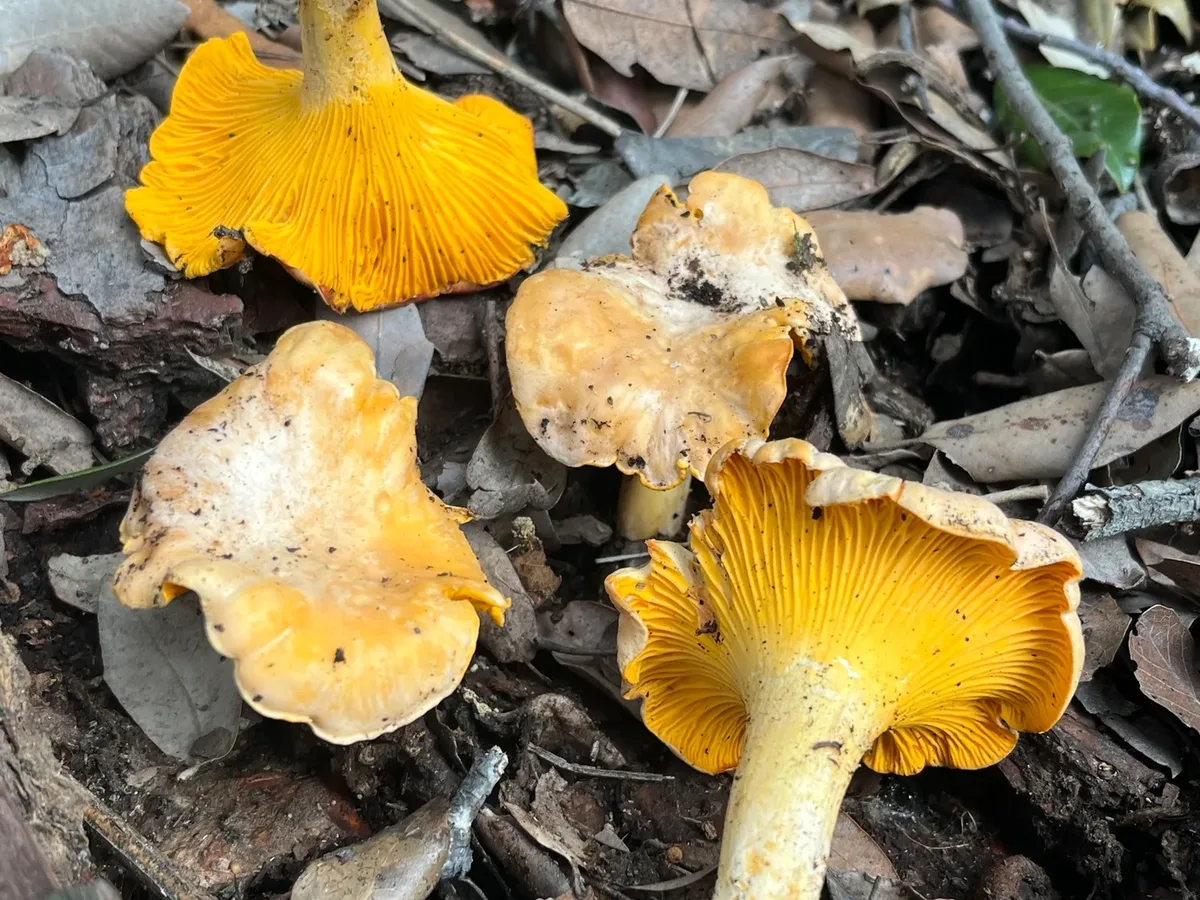 © Tony KM (CC BY)
 © Tony KM (CC BY)
 © Ephemeral Impressions (CC BY-SA 2.0)
 © Auvo Korpi (CC BY 2.0)
 © Valentin Kosterin (CC BY 4.0)
 © Carminda Santos (CC BY 4.0)© jonsense (CC BY 4.0)© Wolfgang Wollschweber (CC BY 2.0)
One of the best mushrooms you can bring home - once you are certain of the identification.
Never eat a mushroom you are not 100% sure of - check the look-alikes below, and always cook wild mushrooms.
How to recognise it
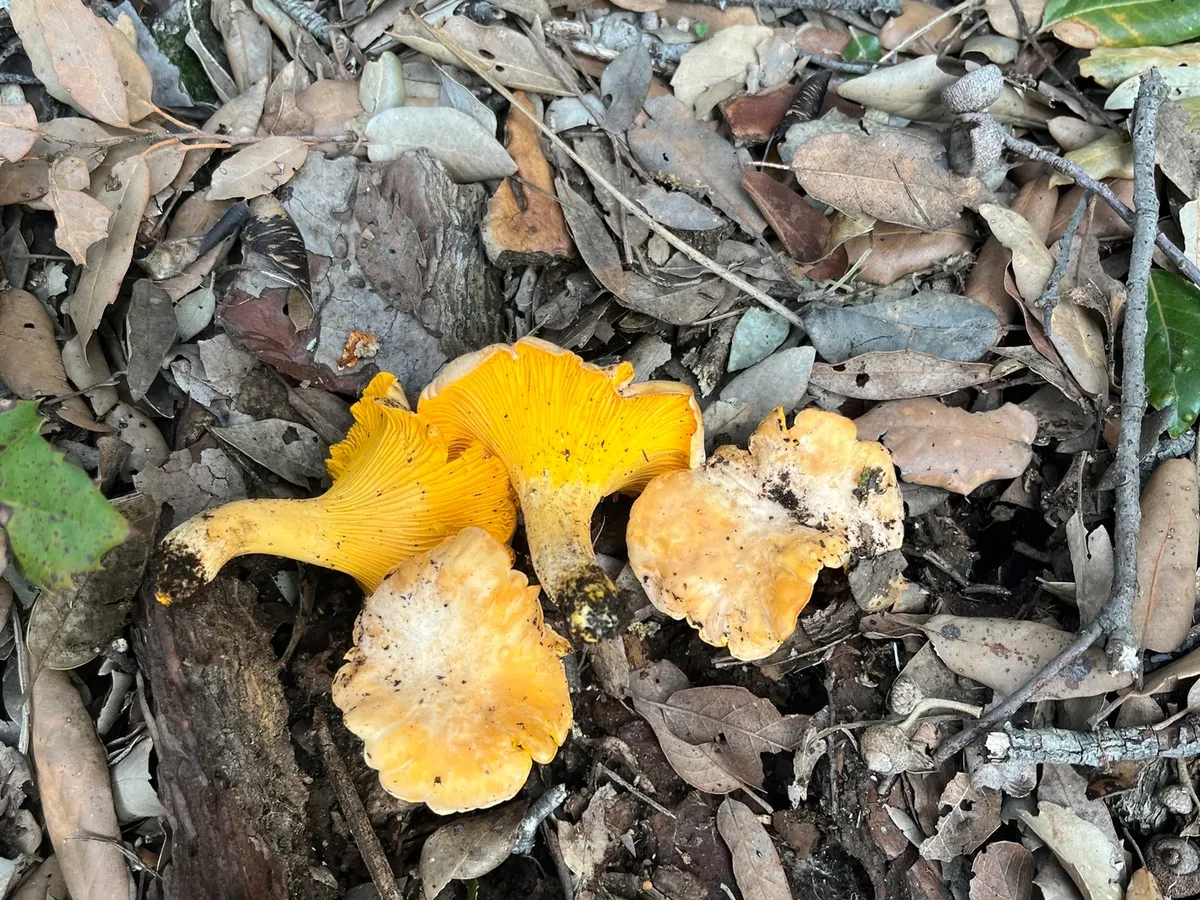
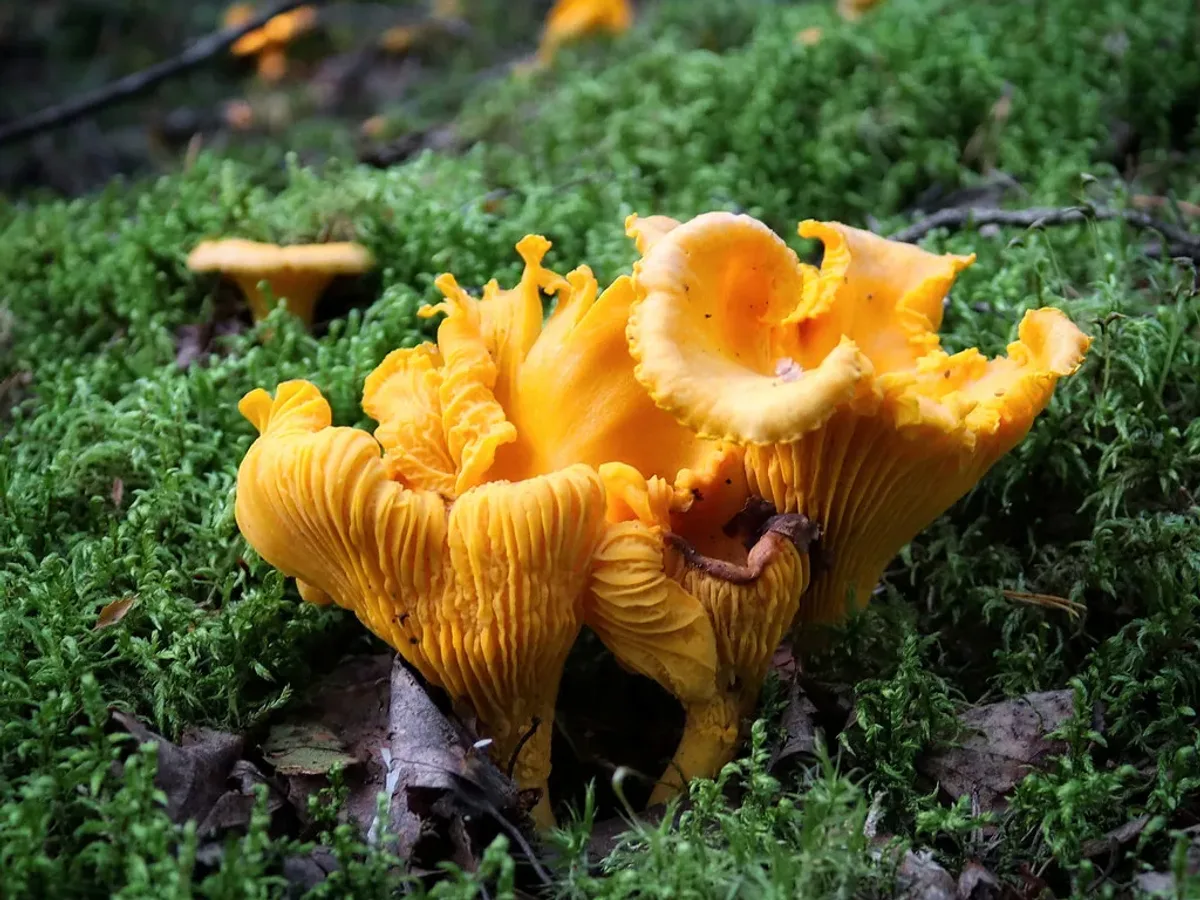
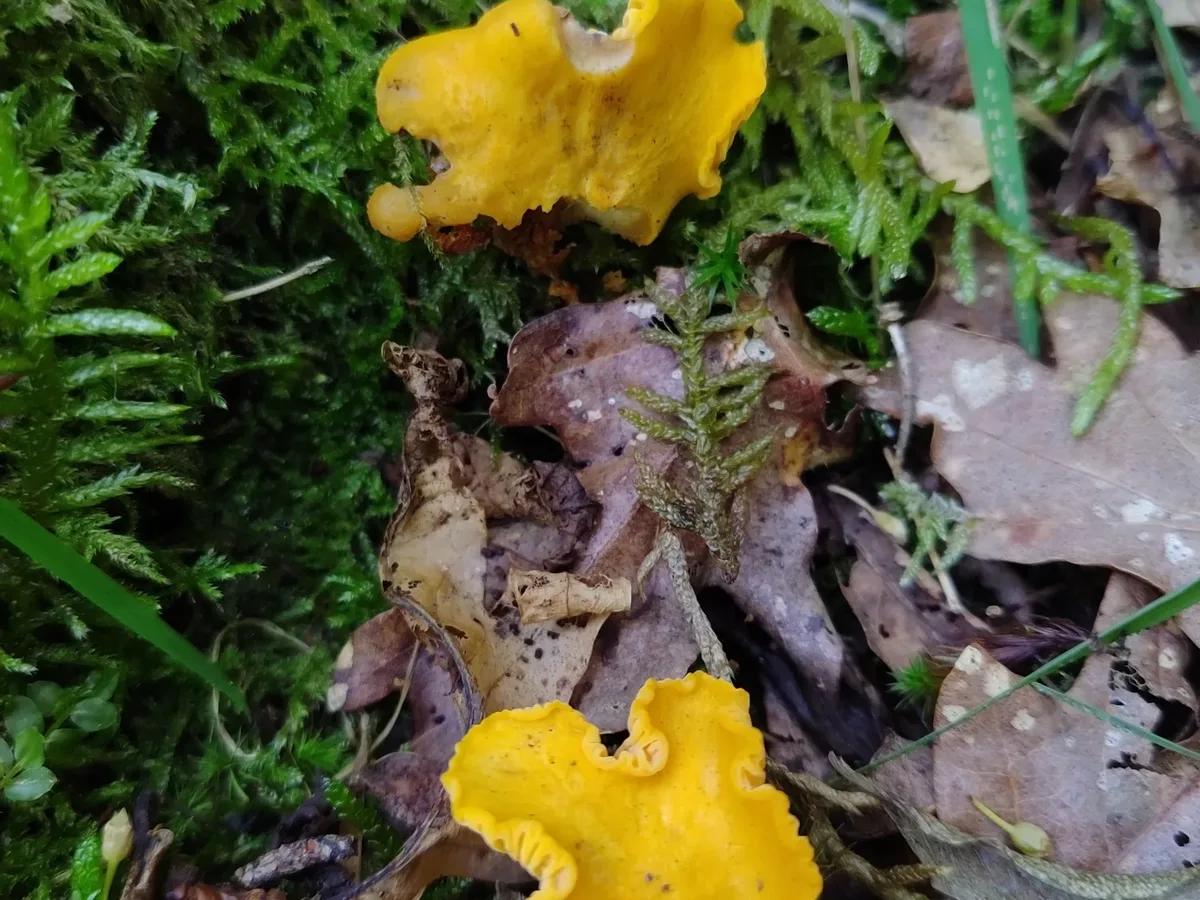
Few mushrooms announce themselves as boldly as Cantharellus cibarius. The entire fruiting body - cap, false gills, and stem - is saturated in the same warm yellow to deep egg-yolk gold, a colour that reads unmistakably against the green of moss or the grey of spruce duff even on an overcast day.
Cap
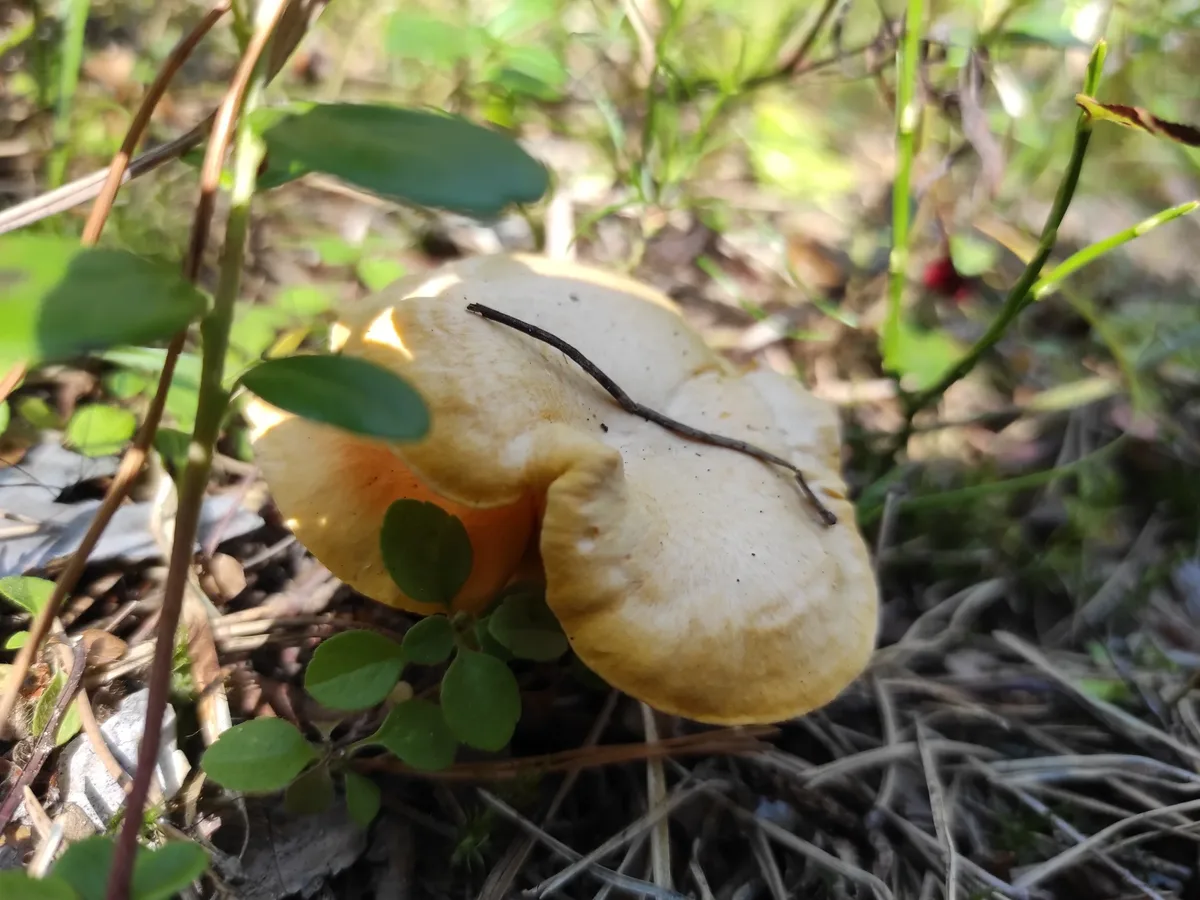
Young caps emerge convex and button-like, sometimes almost perfectly domed, before gradually flattening and then inverting into a shallow funnel as the specimen matures. The margin, meanwhile, refuses to be straight: it waves, lobes, and folds back on itself in an irregular, almost handmade way that distinguishes chanterelles from most other forest species at a glance. Cap diameter ranges from about 3 cm in juveniles to 10 cm or occasionally a touch larger in prime old specimens growing on rich soils.
Gills / Pores
The underside is the feature that rewards close inspection. Instead of the knife-blade gills of a typical agaric, the chanterelle bears forking, blunt-edged ridges that look as though they have been pressed into the flesh rather than attached to it. These ridges are the same golden colour as the cap surface, they are shallow and widely spaced, and they run smoothly down onto the upper stem - a configuration mycologists call decurrent. Run a finger across them and they feel rubbery and rounded, nothing like the sharp lamellae of a true gill mushroom.
Stem
The stem is stout and solid, typically 3-7 cm tall and 1-3 cm thick, tapering slightly toward the base. It is paler than the cap - a warm cream-yellow - and its interior is white and dense when sliced. Damaged or bruised tissue, especially on the stem base and cap edge, tends to develop faint reddish or orange spots as it oxidises; this is a normal response, not a sign of spoilage.
Flesh
The flesh throughout is yellowish-white, firm, and pleasantly dense.
Smell & taste
Broken open, it releases a scent that is widely described as fruity or apricot-like, sometimes with a faint floral undercurrent, quite unlike the neutral or earthy smell of most gilled mushrooms. The taste is mild, slightly peppery on the raw tongue, and richens considerably with heat.
Where & when it grows
Habitat
Cantharellus cibarius is a forest mushroom in the full sense: it does not grow in clearings or meadows but in the living canopy of trees with which it has forged a mycorrhizal partnership.
The species is unusually broad in its tree tolerances, fruiting productively under spruce, pine, birch, oak, aspen, hazel, beech, and lime - essentially any combination of the dominant tree genera across Nordic forests - which helps explain why it is both the most common choice-edible in Scandinavia and the one most likely to appear in familiar places year after year.
What unifies good chanterelle ground is a combination of:
- slightly acidic, well-drained-but-not-dry mineral soil;
- a continuous layer of mosses such as Pleurozium schreberi or Hylocomium splendens;
- dappled light.
Slopes and gentle ridges are productive because they hold moisture without waterlogging; the species does poorly on flat boggy ground. Litter depth matters: a thin, open humus layer allows hyphae to reach mineral soil while still providing the insulation the mycelium needs during dry spells.
In coniferous stands, look particularly on the sides of root ridges and at the base of small hummocks where moss is thick. In mixed birch-spruce forest the species often fruits in long, meandering arcs that follow subsurface root channels - once you learn to read the arc you will often walk its length and find specimen after specimen ahead of you.
Mature, undisturbed woodland consistently outperforms young plantations; the mycorrhizal network takes years to establish and is sensitive to deep soil disturbance.
When
The chanterelle season in Sweden spans roughly from late June in warm southern years to the first hard frosts of October, giving an unusually long window by Nordic standards. The most reliable period - weeks 30 through 38, broadly late July to mid-September - coincides with the warmest soil temperatures and, in most years, the best balance of residual heat and late-summer rain.
In Norrland and at higher elevations the season compresses and shifts roughly two weeks later, with August being the core month and little expectation of productive finds after mid-September.
The chanterelle does not appear simply because the calendar says summer; fruiting is primarily governed by soil moisture and temperature. The mycelium requires soil to have warmed past roughly 12 °C and to have received sustained rainfall - typically 25 mm or more over a two-week window - before the first pins appear.
Because the flush follows the rain by one to two weeks, experienced foragers develop a habit of watching rainfall totals in late June and July as predictors of what the woods will hold in August.
In dry summers the season can stall almost entirely, with only scattered small finds, then resume suddenly after a August thunderstorm period. Conversely, a wet and moderately warm September can extend productive fruiting well into October, long after most people have stopped looking.
The species is not triggered by a single heavy rain event the way some species are; it responds more to a sustained period of moist soil than to a single downpour followed by drought.
How it grows
The visible chanterelle - the golden, funnel-shaped object in your basket - is only the seasonal tip of a living structure whose real body is invisible. Underground, a dense web of mycelium threads through the soil and litter, intimately entwined with the fine absorptive roots of its tree partners.
This is a mycorrhizal relationship of genuine mutual benefit: the fungus colonises root tips, extending its network far beyond what the tree's own roots could reach, and in return receives sugars and carbohydrates that the tree produces through photosynthesis. The chanterelle's mycelium is not a passive net; it actively transports phosphorus, nitrogen, water, and micronutrients from soil pockets the tree cannot access on its own.
Established networks can persist for decades in undisturbed forest. Where conditions remain stable - the right trees, the right soil, no deep tillage or compaction - fruiting bodies reliably reappear in the same patches year after year, sometimes for the entire lifespan of the tree stand.
Chanterelles most often emerge in loose groups or straggling lines rather than tight clusters; nearby specimens are typically connected by the same mycelial mat and may even share carbon resources during stress.
The fruiting body itself forms slowly by mushroom standards: pins take one to two weeks from first appearance to full size, and fully expanded caps can persist in good condition for another week or more if the weather stays cool and moist, making the species unusually forgiving of infrequent visits. This slow development also means that a given patch can be revisited productively every seven to ten days during a good flush.
Fruiting conditions
Mycorrhizal summer-to-autumn species; fruiting typically follows sustained rainfall after warm soil, with a roughly 1-2 week lag.
Look-alikes
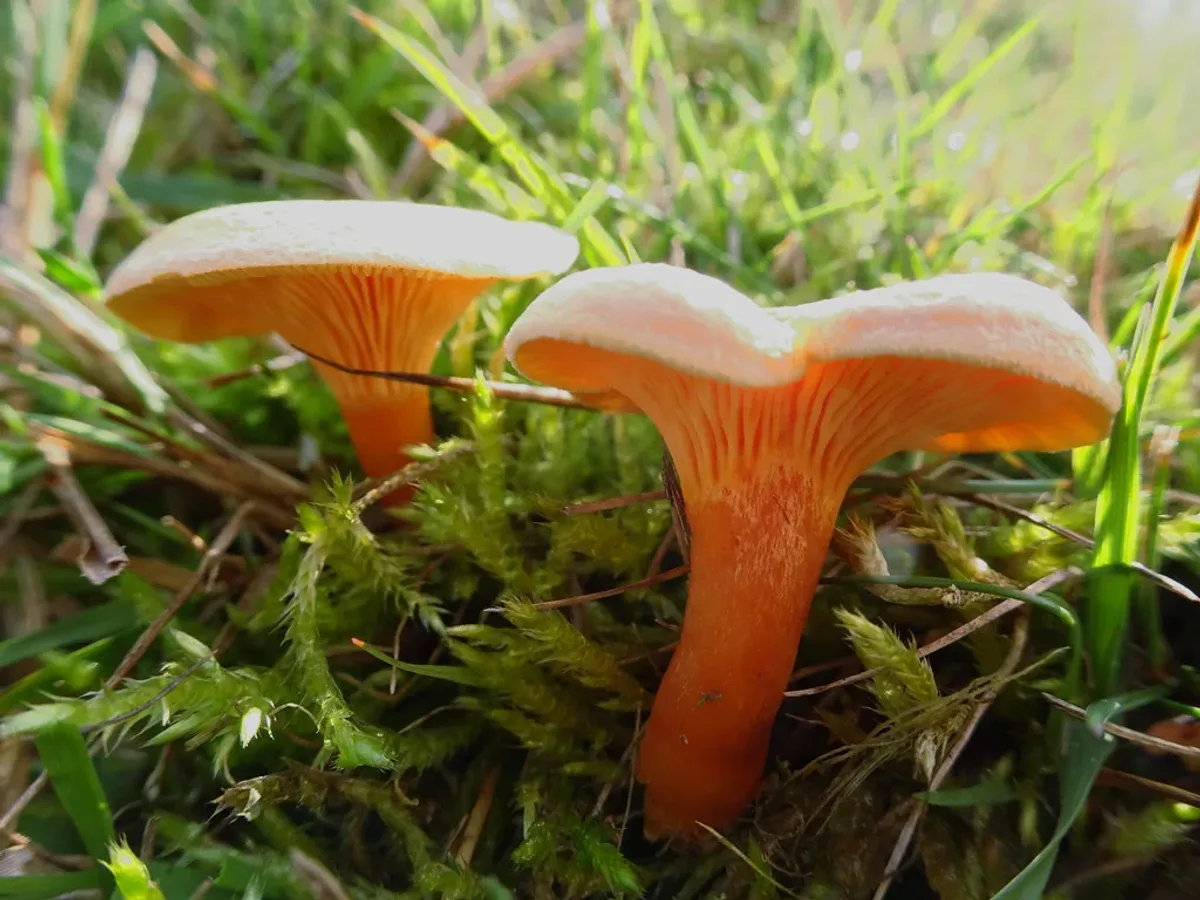
In the Nordic context, the chanterelle has one meaningful lookalike: the false chanterelle, Hygrophoropsis aurantiaca. The comparison is worth studying carefully because the two species share habitat, season, and a broadly similar colour, and the false chanterelle is common enough to appear in the same patch on the same day.
The two are separated on several points:
- The key structural difference is the underside: Hygrophoropsis aurantiaca bears true gills - thin, crowded, knife-edged lamellae that are sharply defined and fork repeatedly but remain clearly blade-like rather than bluntly ridged.
- Running a fingertip across a chanterelle's underside feels smooth and rounded; doing the same on a false chanterelle feels like running it across fine teeth.
- In colour, the false chanterelle tends toward a more vivid orange, often with a cap surface that is distinctly more saturated and uniform than the variable golden-yellow of a true chanterelle.
- Its cap margin tends to curve inward more persistently, and its stem is notably narrower relative to cap width.
- The smell is different too: the false chanterelle lacks the fruity apricot note and instead smells faintly musty or unremarkable.
It is classified as inedible and can cause mild gastrointestinal upset - nausea, stomach cramps - in some people. It is not dangerous in a serious sense but there is no reason to eat it, and mistaking it for a chanterelle produces an unpleasant experience that undermines confidence in future foraging.
No other species in Scandinavia presents a serious confusion risk: the pale chanterelle (Cantharellus pallens) and the tubiform chanterelle (Cantharellus tubaeformis) are both edible and closely related, while waxcap species share habitat but differ substantially in cap texture, colour, and gill structure.
In Europe grows on olive trees in the Mediterranean region; has true gills, grows in clusters on wood, and glows faintly. The truly dangerous double.
Can be orange-coloured; avoid confusion. Have true gills and a cobweb-like veil rather than the chanterelle's blunt decurrent folds.
More orange, with true, thin, closely spaced gills (not folds) that are forked but gill-like. Now considered edible but can cause stomach upset.
Can superficially resemble the chanterelle but has true gills and a different colour.
In the kitchen
Picking & cleaning
Because chanterelles grow slowly and their mycelium persists for many years in the same spot, how you harvest matters for future flushes. Pick only specimens that have reached at least 3 cm - very small pins with caps still tightly convex have not yet opened enough to disperse their spores effectively.
The standard technique is to grasp the stem near the base and twist gently while pulling; this separates the fruiting body cleanly without tearing the mycelium threads in the upper soil. Some foragers prefer a knife to cut at the base, arguing it leaves less disrupted ground; both methods are acceptable as long as you do not dig or rake the litter.
Do not squeeze or stuff chanterelles - their firm flesh tolerates handling well, but compression and plastic bags create condensation and accelerate breakdown. A rigid wicker basket or a paper bag with the top left loosely open is the traditional choice.
Chanterelles are one of the most reliably larva-free species in the Nordic forest; beetle and fly larvae that devastate boletes and russulas in warm weather almost never penetrate chanterelle flesh, which means virtually everything you pick is usable. In the field, a quick check of the stem cross-section confirms this: it should be solid white throughout with no tunnelling.
Specimens that have been rained on heavily for several days may soften at the cap margin; trim any sodden edges but the rest is perfectly fine. Freshness deteriorates more quickly at warm temperatures, so process or refrigerate within 24 hours of picking.
Cooking
Chanterelles reward simple, attentive cooking more than elaborate preparation. The critical first step is releasing their water content.
- 1Place cleaned chanterelles in a dry, wide pan over medium-high heat with no fat at all.
- 2The mushrooms will initially release a considerable volume of liquid as the cells break down; allow this to bubble away completely before adding butter.
- 3Once the pan is dry and the chanterelles begin to sizzle in their own concentrated residue, add a generous knob of butter, turn the heat up briefly, and season with salt.
Skipping the dry-pan step and adding fat immediately produces stewed, rubbery mushrooms rather than the golden-edged, fragrant result the species is capable of.
The entire process from dry pan to finished dish takes roughly eight to twelve minutes and rewards the cook with mushrooms that are tender at the centre with gently crisped edges and an intensified version of their raw apricot scent.
This simple preparation - often called smörfrästa kantareller in Swedish - is considered the canonical way to eat them and works equally well on toast, stirred into scrambled eggs, or spooned over grilled meat. For soup and sauce the same dry-fry technique applies before the mushrooms are transferred to the liquid base.
Drying chanterelles for storage is possible but requires care: the temperature must stay at or below 30 °C (a conventional oven with just the fan running, or a dedicated dehydrator at its lowest setting) because higher heat drives off the volatile aromatic compounds and introduces bitterness. Properly dried chanterelles reconstitute well and retain more flavour than frozen ones.
Freezing is also a practical option: blanch briefly in boiling water or sauté lightly in butter, allow to cool, and freeze in portions. Thawed specimens soften but hold their flavour and are fully acceptable in cooked dishes.
Good to know
The golden chanterelle is one of the safest mushrooms a beginner can start with in Nordic forests. It has no deadly lookalike in Scandinavia, and its one meaningful confusion species - the false chanterelle - is immediately distinguishable by gill structure once you know what to look for.
The single most important habit to build is confirming the underside before picking:
- true chanterelle ridges are blunt, forking, and run down the stem;
- true gills are thin, crowded, and sharply edged.
Practice the comparison on one specimen of each and you will not mistake them again.
As with all wild mushrooms, chanterelles should always be cooked before eating - raw consumption can cause gastrointestinal irritation in some individuals, and thorough cooking also maximises digestibility and flavour.
People with no previous experience of chanterelles should eat a moderate portion the first time and observe for any individual sensitivity, though adverse reactions are genuinely uncommon. The flesh is not toxic in any way when properly prepared.
There are no look-alikes in Sweden with serious toxins, no species with an Amanita-type volva or ring to mistake it for, and no dangerous spore-print trap. The chanterelle's distinctive ridge structure, apricot scent, and uniform golden colour together make it one of the most reliably identifiable species in the forest.
A reference guide - never an edibility guarantee. When in doubt, leave it out.