Cep
Boletus edulissyn. Boletus aereus, Boletus pinophilus, Boletus reticulatus
 © claralieu (CC BY 2.0)
 © Jeremy Rolfe (CC BY)
 George Cox (CC0)
 © reagan peschke (CC BY)
 © reagan peschke (CC BY)
 © Jeremy Rolfe (CC BY)
 © claralieu (CC BY 2.0)
 © claralieu (CC BY 2.0)
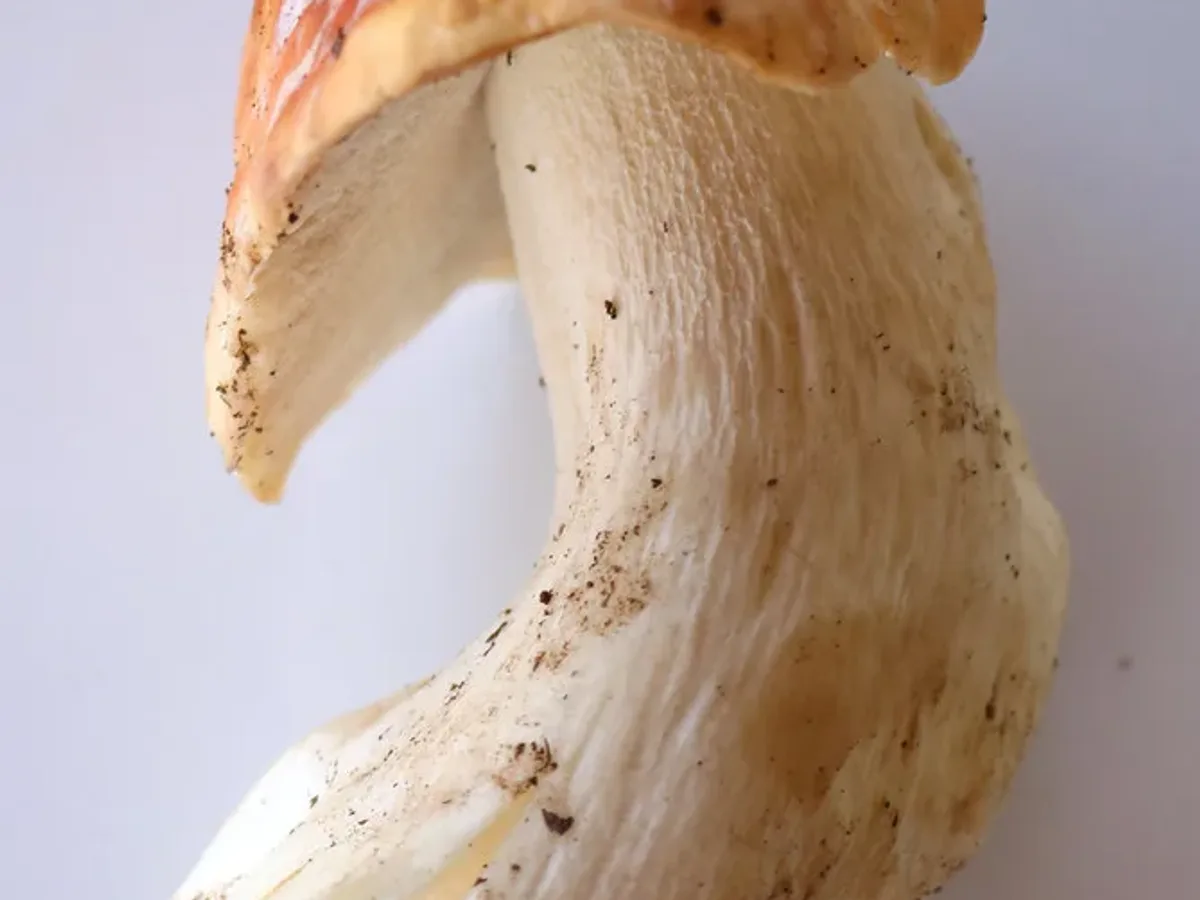 © claralieu (CC BY 2.0)
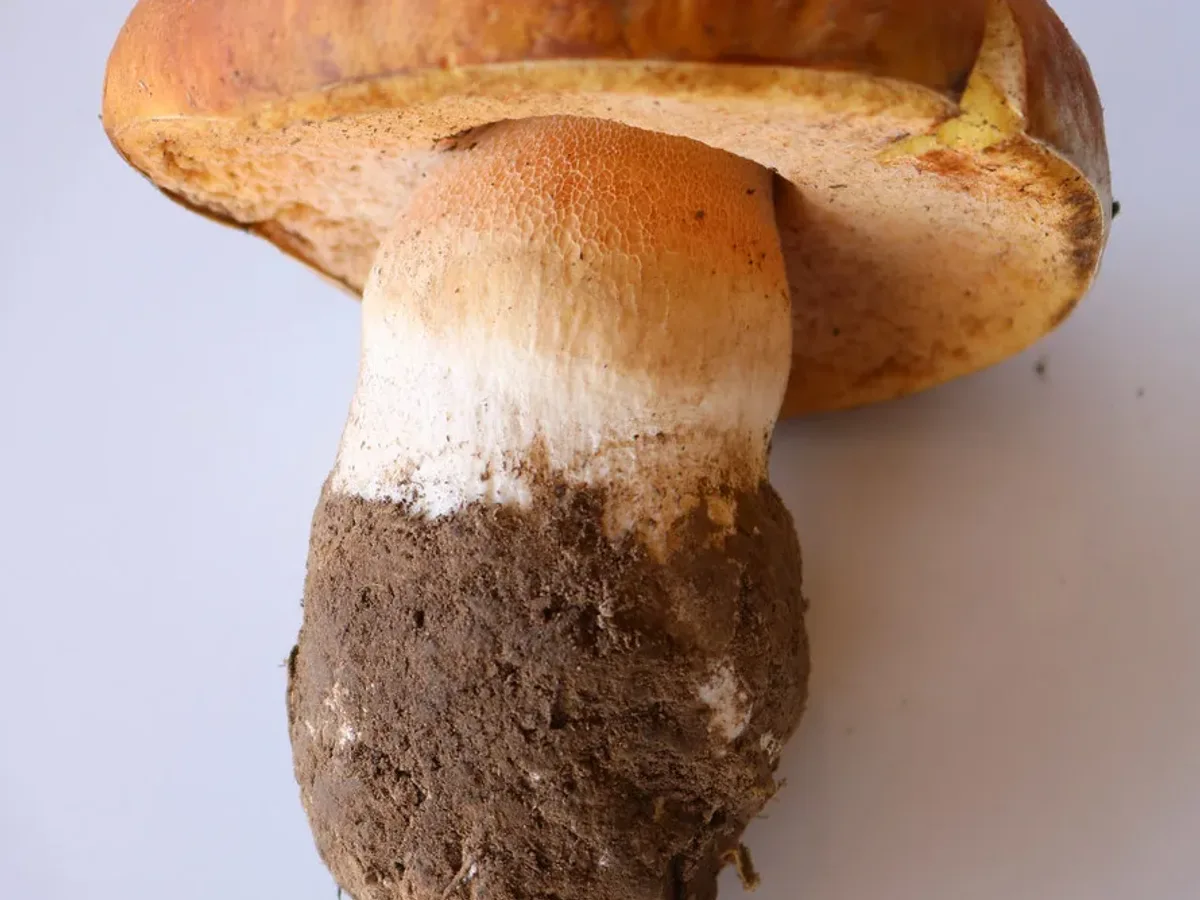 © claralieu (CC BY 2.0)
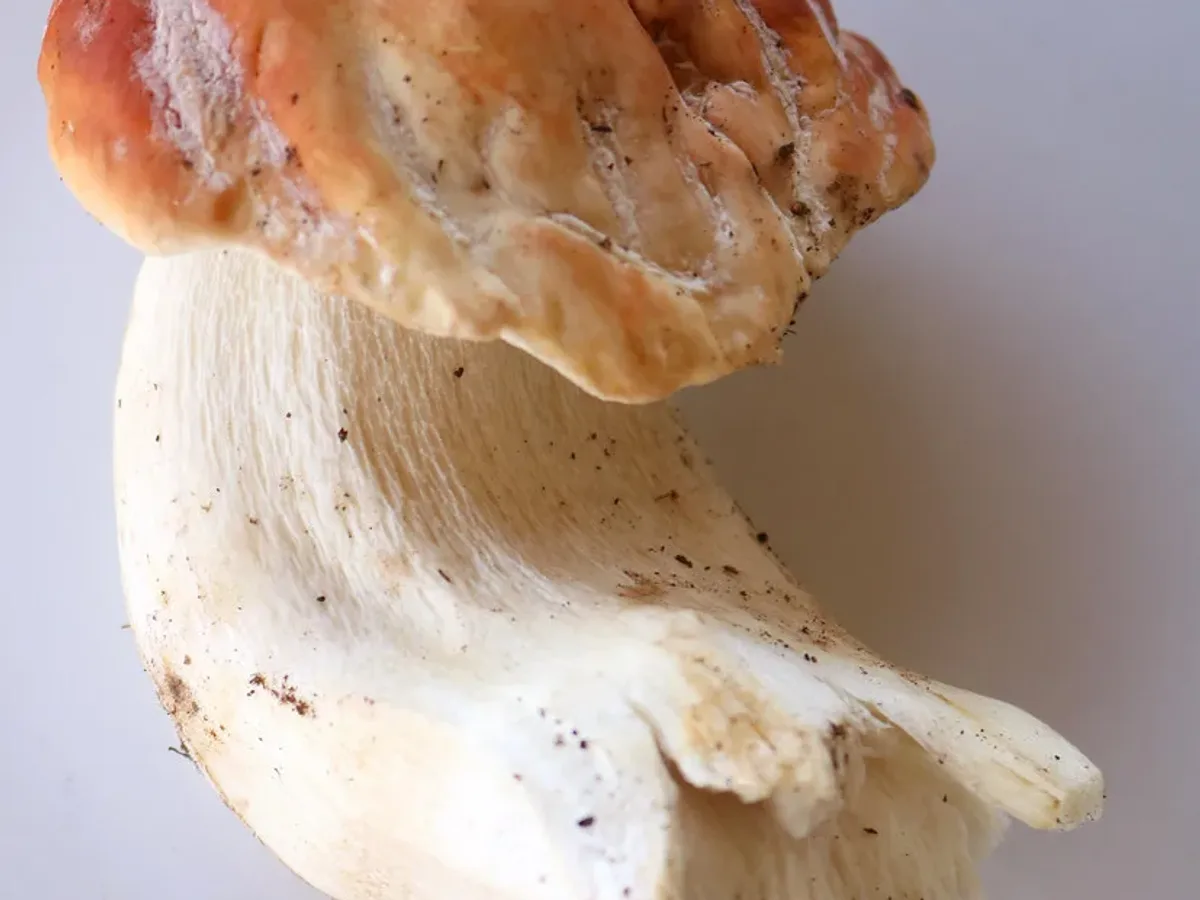 © claralieu (CC BY 2.0)© claralieu (CC BY 2.0)© Jeremy Rolfe (CC BY)
One of the best mushrooms you can bring home - once you are certain of the identification.
How to recognise it
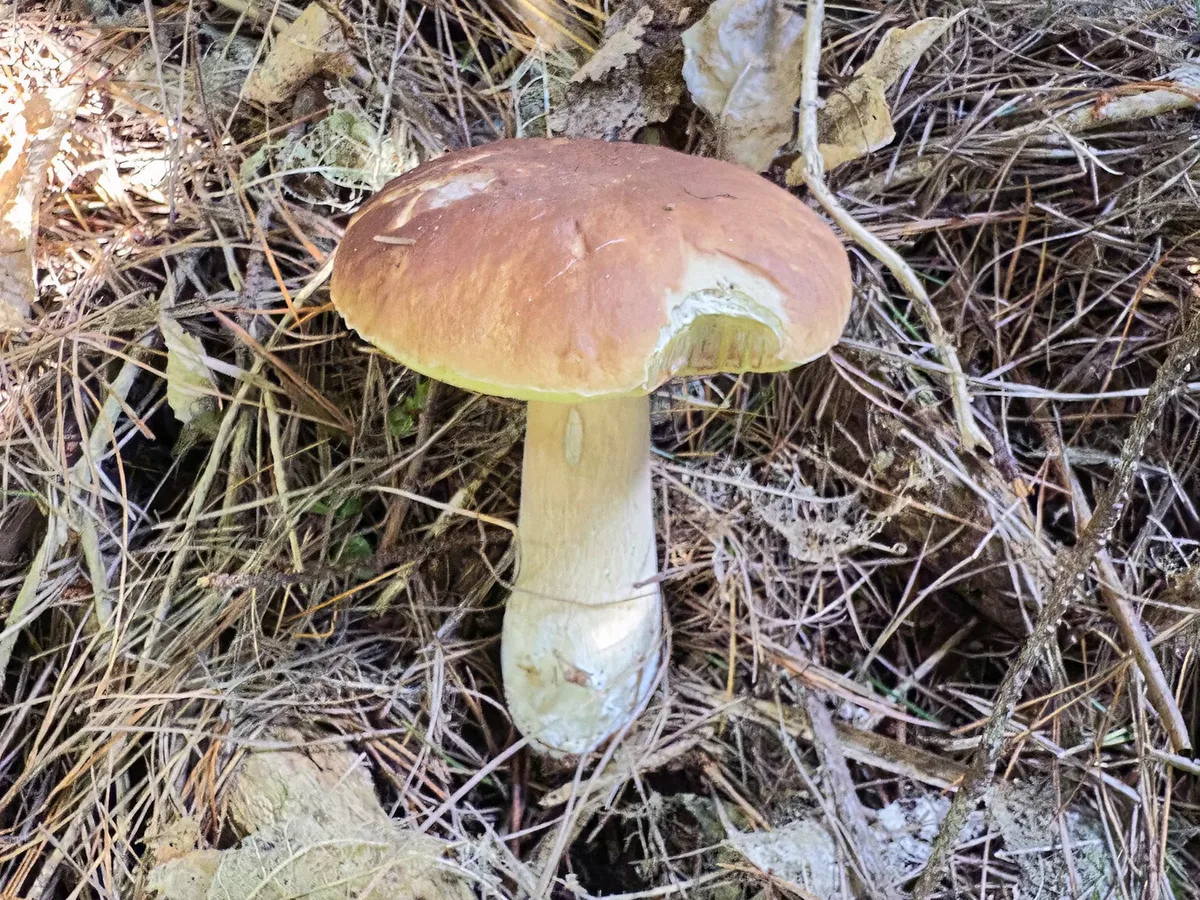
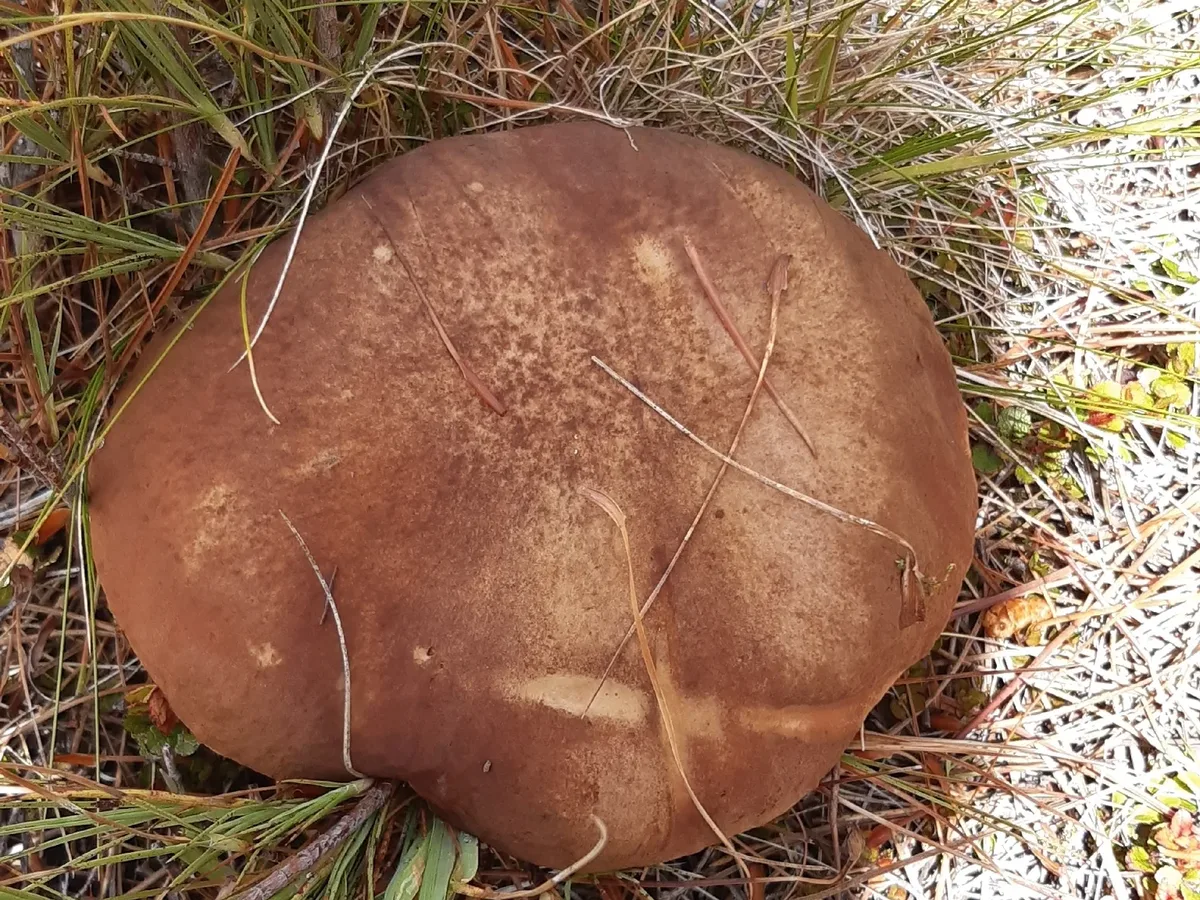
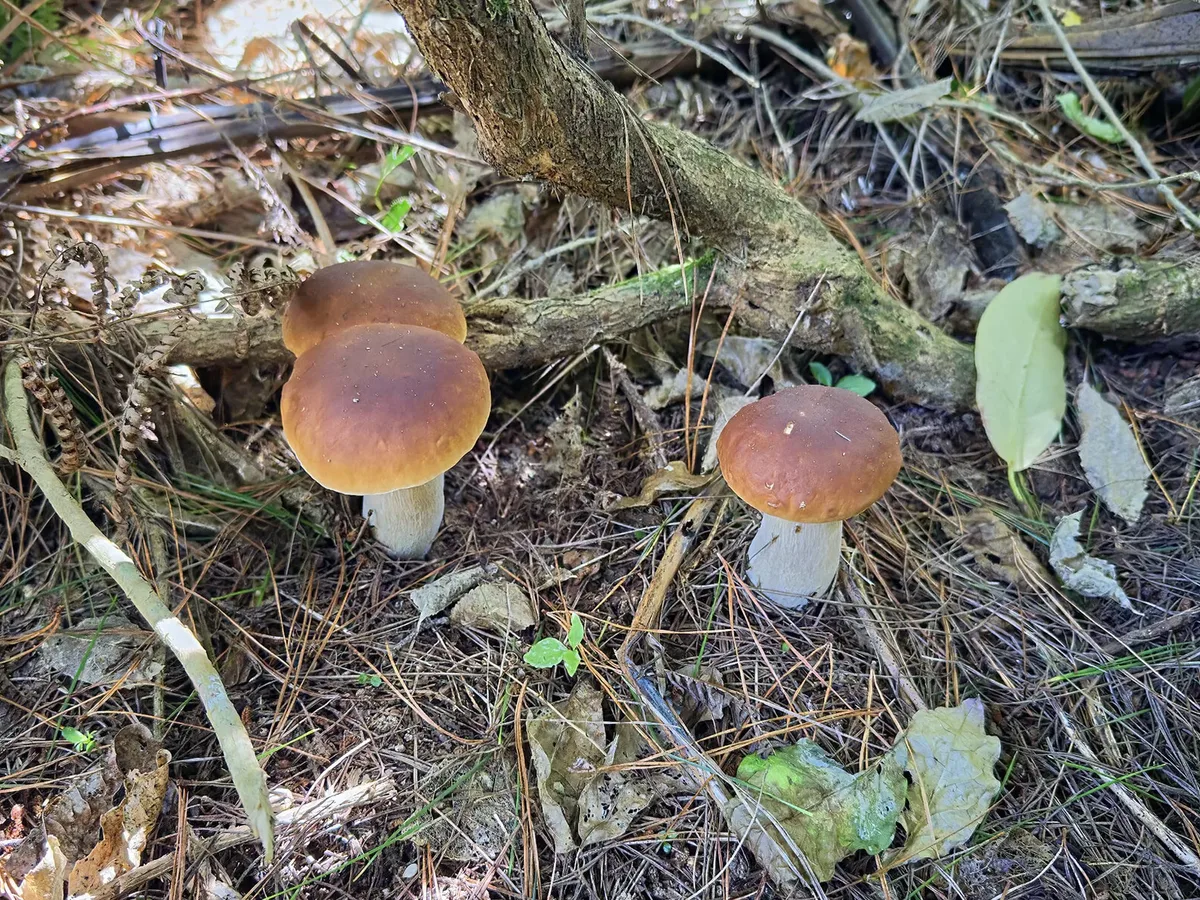
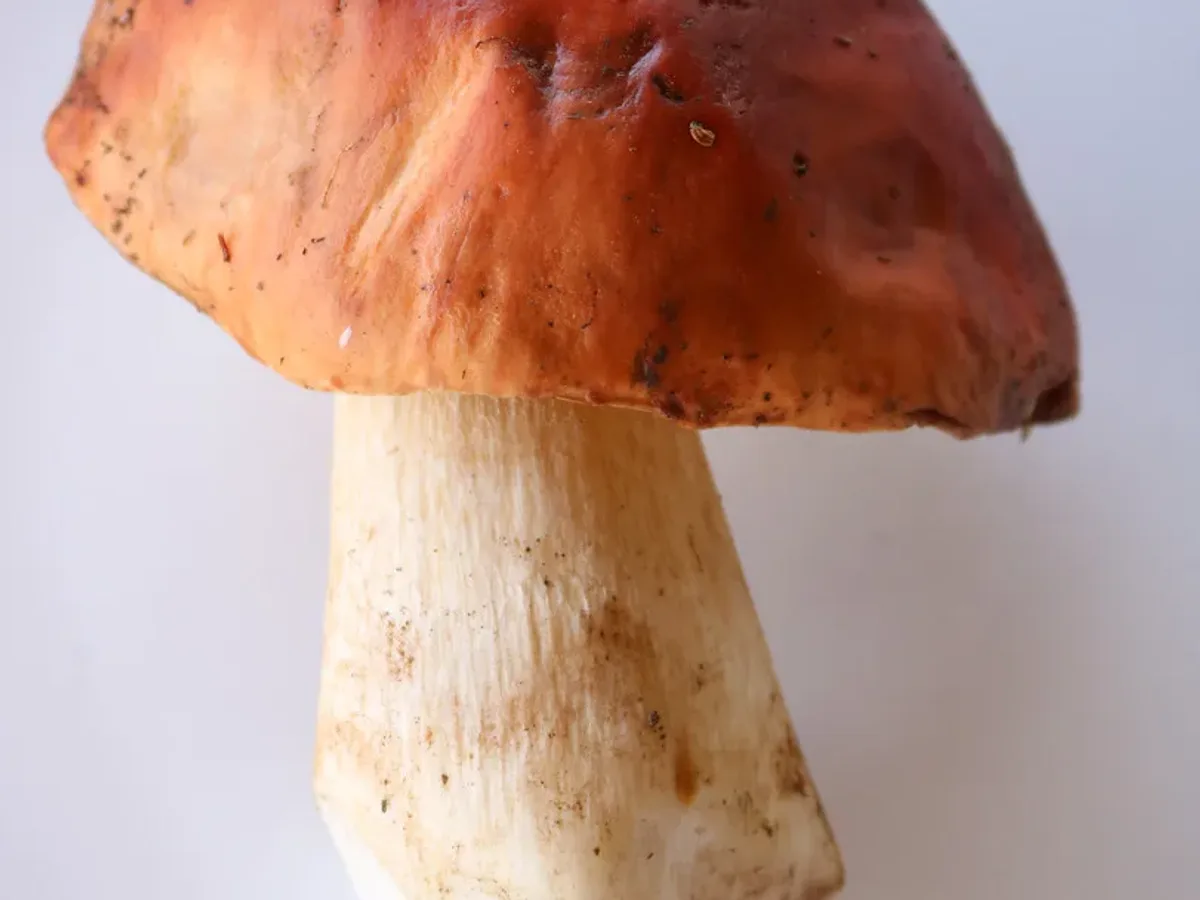
The cap of Boletus edulis begins as a tight hemisphere, its surface the same warm tan as a freshly baked bun - a comparison so apt that foragers across northern Europe settled on 'penny bun' independently.
As it expands to 7-30 cm it flattens and the skin pulls slightly away at the margin, sometimes developing fine cracks in dry weather. Touch the cap after rain and it feels faintly sticky, not viscid, just lightly adhesive.
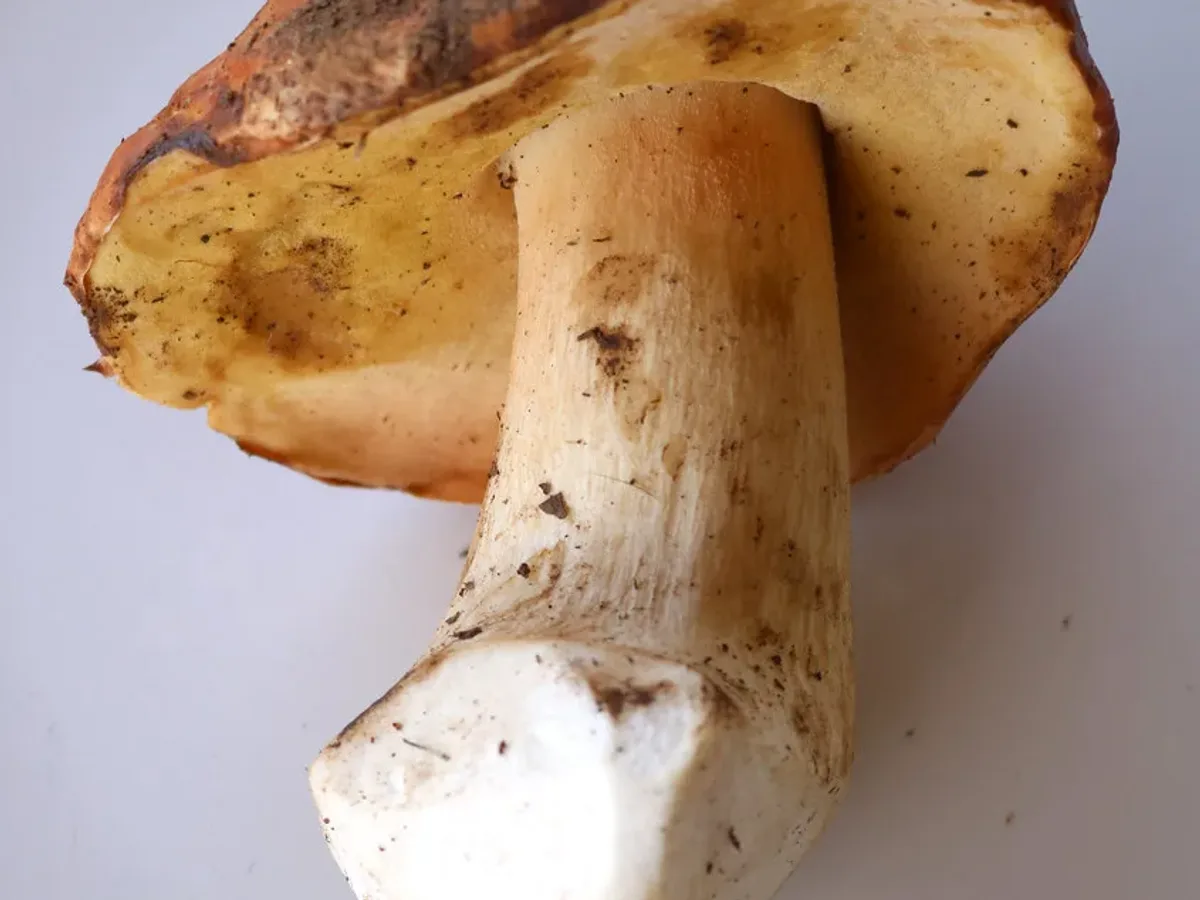
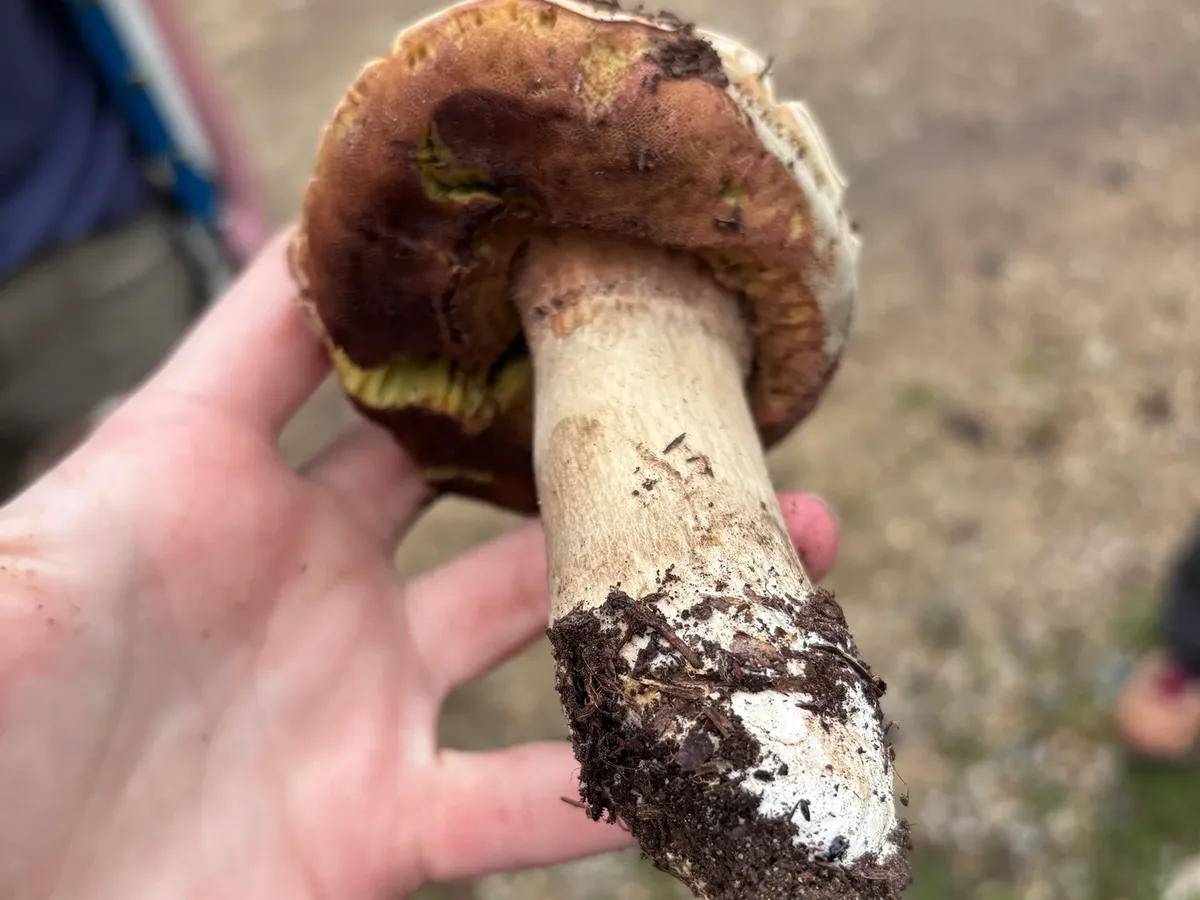
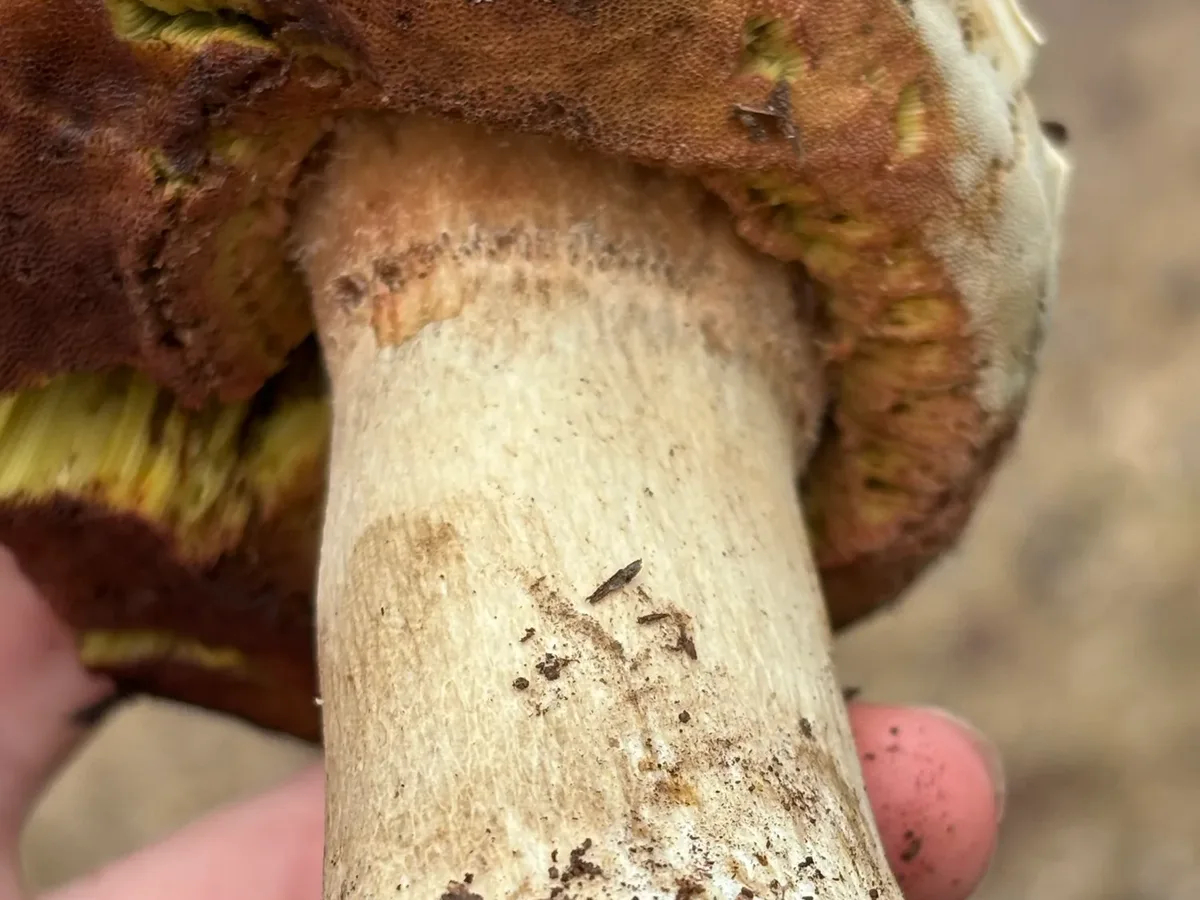
The most important structure sits underneath: a dense layer of tightly packed tubes rather than gills. In young specimens the pore surface is white and nearly smooth; as the mushroom ages it turns cream, then distinctly yellow-green, and by maturity the pores are noticeably angular.
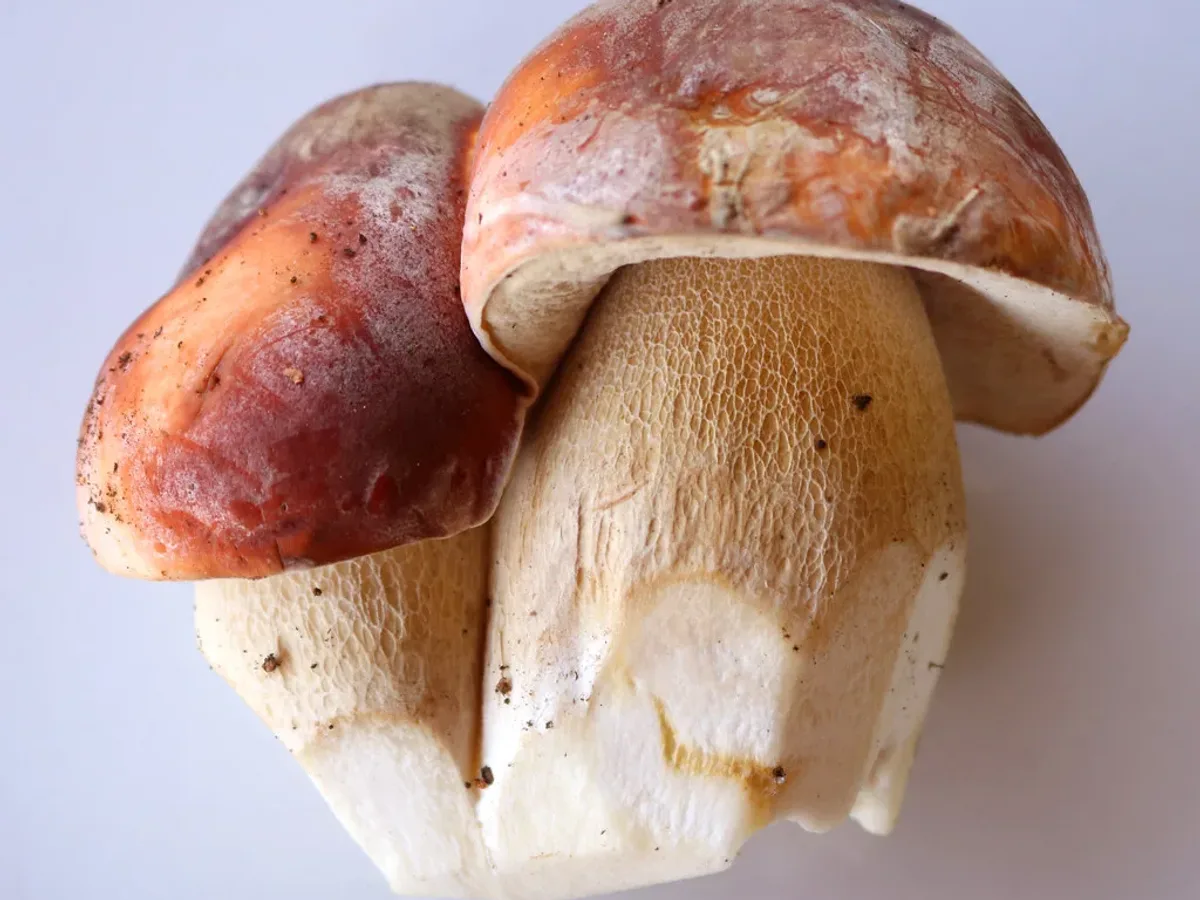
Colour on the stem ranges from white to pale brown; its shape is unmistakably robust - often club-shaped or bulbous at the base - and the upper half carries a fine pale net (reticulation) raised against the background colour. This network of ridges, formed as the tubes expand and push against each other, is one of the most reliable identifiers in the genus.
Cut the flesh and it stays white, firm, and dry - no colour change, no latex, no ring of staining.
The mild smell has been described as hazelnut or fresh bread; the taste raw is pleasant, slightly sweet. Spore print olive-brown.
The variety B. aereus (bronze cep) differs in its cap, which runs from dark chestnut to near-black, and tends toward smaller stature and firmer texture, favouring warm oak and chestnut stands.
Where & when it grows
Habitat
Boletus edulis is a mycorrhizal specialist - it cannot grow without a living root partner. Across its range in central and western Europe it associates with a remarkably wide list of trees: oak, beech, sweet chestnut, and hazel among broadleaves; Norway spruce and Scots pine among conifers.
This flexibility means it turns up in habitats that look quite different at first glance - ancient oak woodland in England, beech-dominated montane forest in central Europe, old spruce plantations in Scandinavia, mixed coastal pine in the west.
Despite that breadth it has clear preferences. It likes soils with good organic matter but not waterlogged; it is particularly fond of forest edges, tracks, and glades where light and moisture gradients shift, which may reflect the patchy, competitive underground landscape where mycorrhizal networks compete for root tips.
You will rarely find it on chalk or strongly alkaline soils; slightly acidic, humus-rich mineral soils suit it best.
B. aereus, by contrast, pushes into warmer Mediterranean-influenced terrain - open oak garrigue and chestnut coppice on lime-tinged ground in southern France, northern Italy, and the Iberian interior - and rarely appears above 1,000 m.
When
The active fruiting window runs from June to November, but it is not evenly distributed across those months.
The early summer flushes are relatively brief and depend on warmth coinciding with useful rain. Most pickers consider the main season to be late August through October, when cooling nights slow the fungus's respiration and give the fruitbodies days rather than hours before they decay.
The rhythm of appearance is not continuous: a warm, dry August may produce no ceps at all, then a bout of 20 mm of rain followed by overcast, mild nights can trigger a visible flush within three to fourteen days.
- High-altitude populations in the Alps and Vosges often peak in August and September.
- Lowland populations in the UK and the Low Countries tend toward September and October.
In a warm autumn with late rains, solitary specimens appear well into November.
The seasonNote on this species - 'a few days after rain in warm weather' - is the single most useful field heuristic for timing a visit.
How it grows
The fruitbody of Boletus edulis emerges from a buried mycelium that is woven around the fine root tips of its host tree in a structure called an ectomycorrhiza. The fungal sheath does not harm the root; instead it dramatically expands the effective absorbing area, delivering phosphorus, nitrogen, and water to the tree while receiving photosynthate (primarily sucrose) in return.
That partnership can persist for decades - the same network may fruit year after year from what is functionally the same organism. Underground the mycelium waits through drought and frost, metabolically quiet, until a pulse of rain and suitable temperature reactivates it.
What we see above ground is the reproductive structure only, equivalent to an apple on a tree: the bulk of the organism remains hidden.
Growth above ground is fast. A pinhead expanding to a mature cap of 15 cm can happen in three to five days under good conditions. This speed is driven by cell expansion (turgor), not cell division - the cells are largely already formed in the primordium and simply inflate with water.
The consequence for foragers is that a very young button the size of a marble may be perfect eating two days later but beginning to soften and attract maggots by day four. Checking known spots every two to three days during a flush is the practical response to this biology.
Fruiting conditions
Fruit bodies form a few days after rain followed by cooler nights in warm weather; typical flush lag of several days to two weeks.
Look-alikes
Two species deserve attention as lookalikes in central and western Europe.
The bitter bolete (Tylopilus felleus) is the most frequently confused: its cap colour and general build are close enough that inexperienced foragers mistake it regularly. The reliable separators are:
- 1Pore colour - pink in T. felleus, white to yellow in B. edulis.
- 2The stem net - dark brown to near-black in T. felleus, pale and cream-coloured in B. edulis.
- 3Taste - a small bite of the raw flesh or pore layer is intensely and immediately bitter in T. felleus.
T. felleus is not toxic but it is inedible and will ruin a dish.
The second is the devil's bolete (Rubroboletus satanas), which is poisonous. It carries red pores and a red-flushed stem at all stages of development, and its flesh stains blue rapidly and strongly when cut or bruised. No confusion with B. edulis is possible if the pore colour is checked.
As a general principle applicable across all boletes: do not eat any bolete with red or orange pores, and do not eat any bolete that bruises strongly blue-green. These two features alone exclude all the significantly toxic European bolete species.
Bitter taste; dark net pattern on a pale stem and pink pores (the cep has a pale net on a brownish stem with white/yellow pores). Tasting a small piece reveals its bitterness.
Red pores and red stem, bruises blue; poisonous. General rule: avoid boletes with red pores or that bruise strongly blue.
Blues immediately when cut and has red/orange pores. Porcini flesh stays white and does not change.
The white net pattern (reticulation) on the upper stalk and the non-bluing pores distinguish Boletus edulis.
Much of the commercial Chilean "porcini" export is actually Suillus and native boletes rather than true B. edulis; the trade name is applied broadly.
In the kitchen
Picking & cleaning
Grip the stem low and twist gently while pulling upward - the base usually comes free cleanly. Alternatively, cut the stem near the base with a knife. Neither method damages the mycelium; the fungal network is underground and the fruitbody is already a disposable structure.
Before putting any specimen in your basket, cut it lengthwise through the centre and examine the interior. Maggots (larvae of fungus gnats, Bradysia and related species) bore upward from the stem base, so a clean cut reveals their tunnels as pale channels in the flesh.
A specimen that is still firm and white at the stem and has an intact, white to cream pore layer is worth collecting even if one or two maggot channels are visible - trim generously. A specimen with a greenish, soft, sunken pore layer and tunnelled flesh is past its best and better left.
Brush off soil and leaf litter in the field; do not submerge the mushroom in water at any stage, as the spongy tube layer absorbs water readily and ruins both texture and flavour.
A shallow, open-weave basket is traditional and practical - the open sides allow spores to shed and the rigid walls protect the fruitbodies. A sealed plastic bag causes sweating and rapid deterioration.
Cooking
Boletus edulis is one of the benchmark edible fungi in European cuisine precisely because its flavour survives a wide range of treatments without becoming harsh or slimy.
Fresh, the most direct preparation is slicing and frying in butter or olive oil over medium-high heat until the moisture has cooked off and the surface colours; garlic and parsley are the classic additions. The tube layer cooks faster than the cap flesh and becomes tender-spongy rather than firm, so some cooks remove it from larger specimens before frying.
Drying transforms the mushroom: the process concentrates glutamates and volatile aromatics, producing an intensity the fresh fungus can only hint at. The standard method:
- 1Slice 3-5 mm thick and dry in an oven at 25-30 C for the first hour to drive off surface moisture, then raise to 45-50 C until fully crisp and brittle.
- 2Store sealed and dry.
- 3Rehydrate for 15-20 minutes in warm water; strain the soaking liquid through a coffee filter or fine cloth and add it to the dish - it carries most of the flavour.
Dried cep is the basis of risotto ai porcini, Steinpilzsosse, and countless ragus throughout central Europe. Powder made from fully dried slices blended in a spice grinder is a practical pantry ingredient that can be added directly to sauces, egg dishes, and butter.
Raw carpaccio of very fresh, firm young caps, dressed with lemon juice, good olive oil, and shaved Parmigiano, is an Italian classic - use only young, pristine specimens gathered the same day.
Good to know
Boletus edulis is one of the most thoroughly safe edible mushrooms in temperate Europe. It contains no known toxins and is eaten raw in thin slices (carpaccio) in Italian cuisine, though normal cooking is the standard practice.
Individual intolerance to raw or undercooked specimens is occasionally reported - if in doubt, cook.
The main risk associated with the species is not toxicity but decomposition: old, soft, or maggot-eaten specimens can cause gastrointestinal upset, most likely from bacterial activity rather than any compound in the mushroom itself. Collect only firm specimens and process or dry them within one to two days.
There are no reports of interaction with medication or alcohol. The species is suitable for consumption by children when cooked, subject to normal portion-size common sense.
The lookalike risk assessment is straightforward: the only realistic lookalike with toxic potential is Rubroboletus satanas, which is eliminated by the absence of red pores and blue bruising.
A reference guide - never an edibility guarantee. When in doubt, leave it out.