Death cap
Amanita phalloidessyn. Amanita strophiolata, Amanita alliodora, Amanita murinacea, Amanita thejoleuca
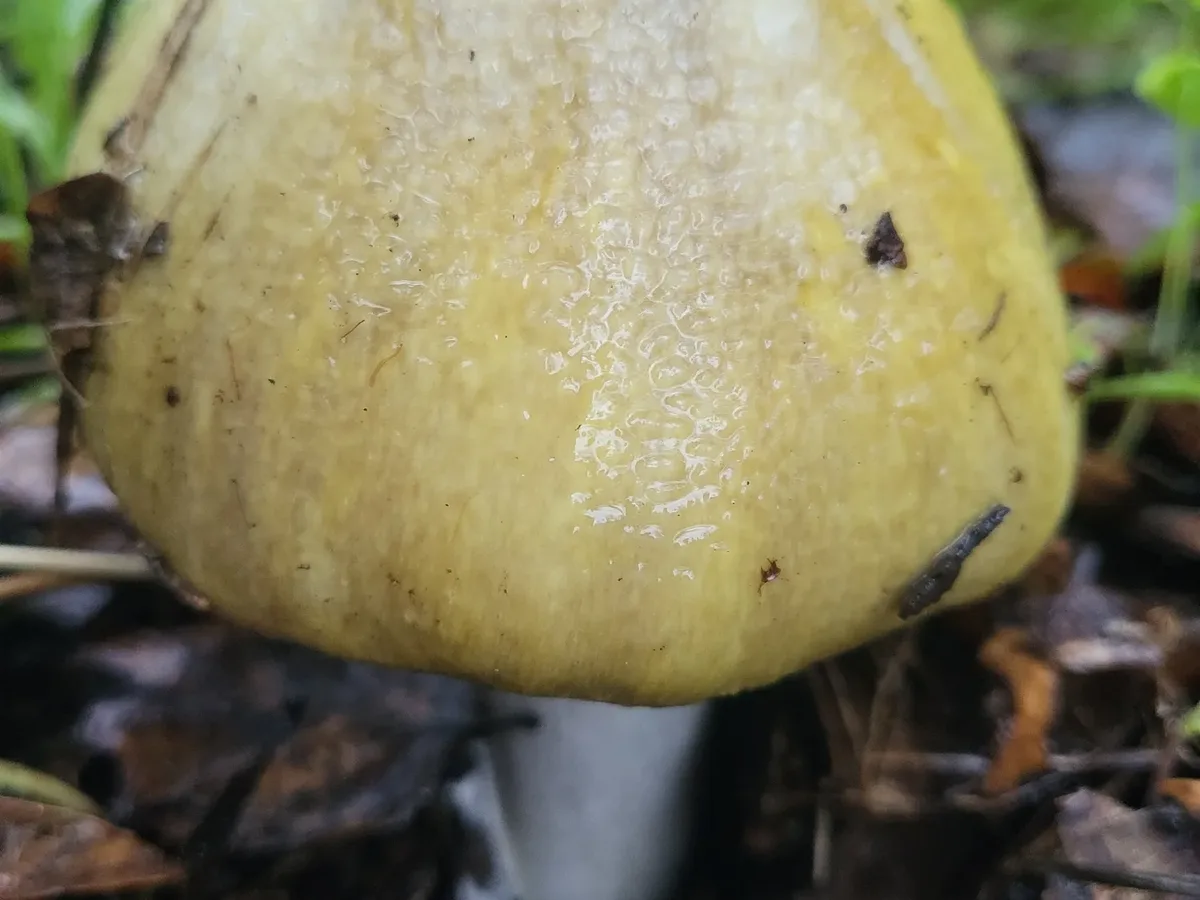 © Peter Brastow (CC BY)
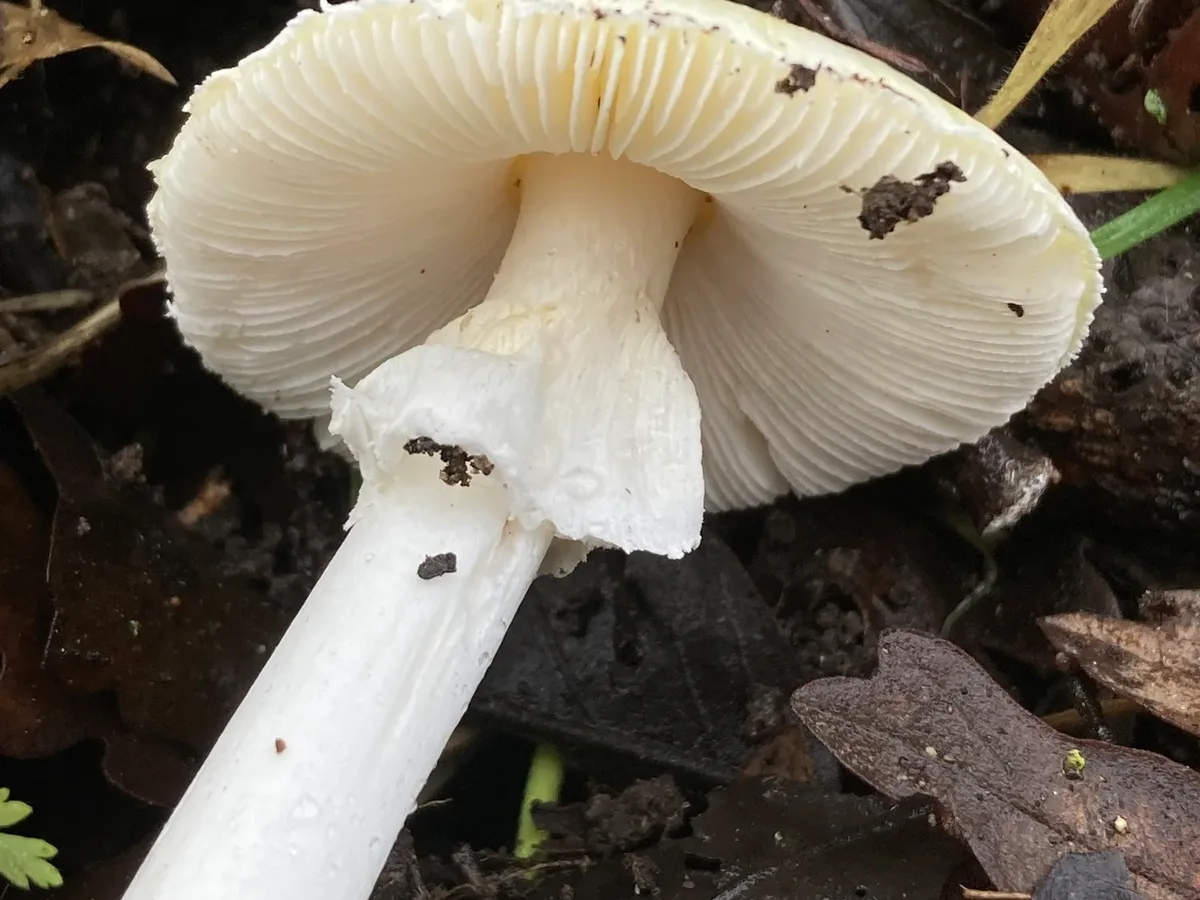 © Adam J. Searcy (CC BY)
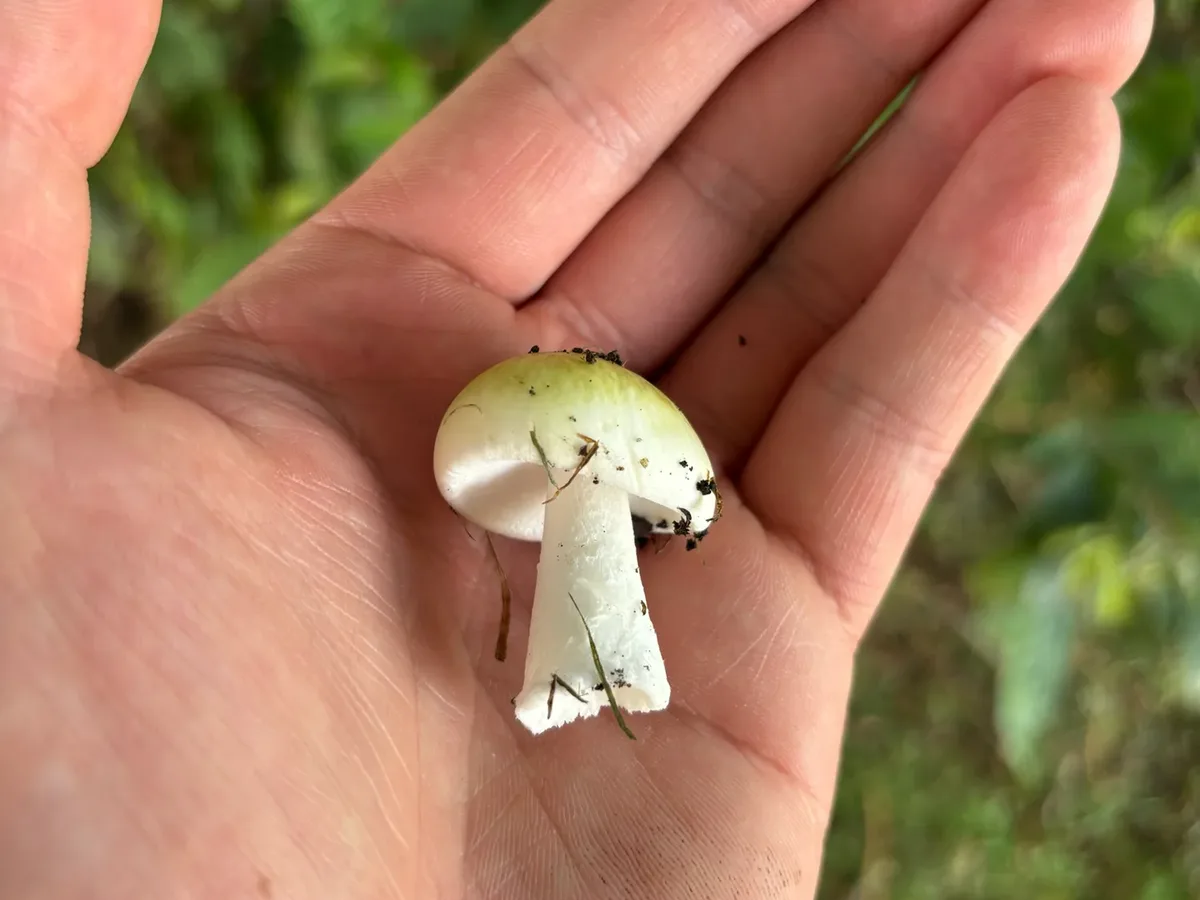 © Damon H (CC BY)
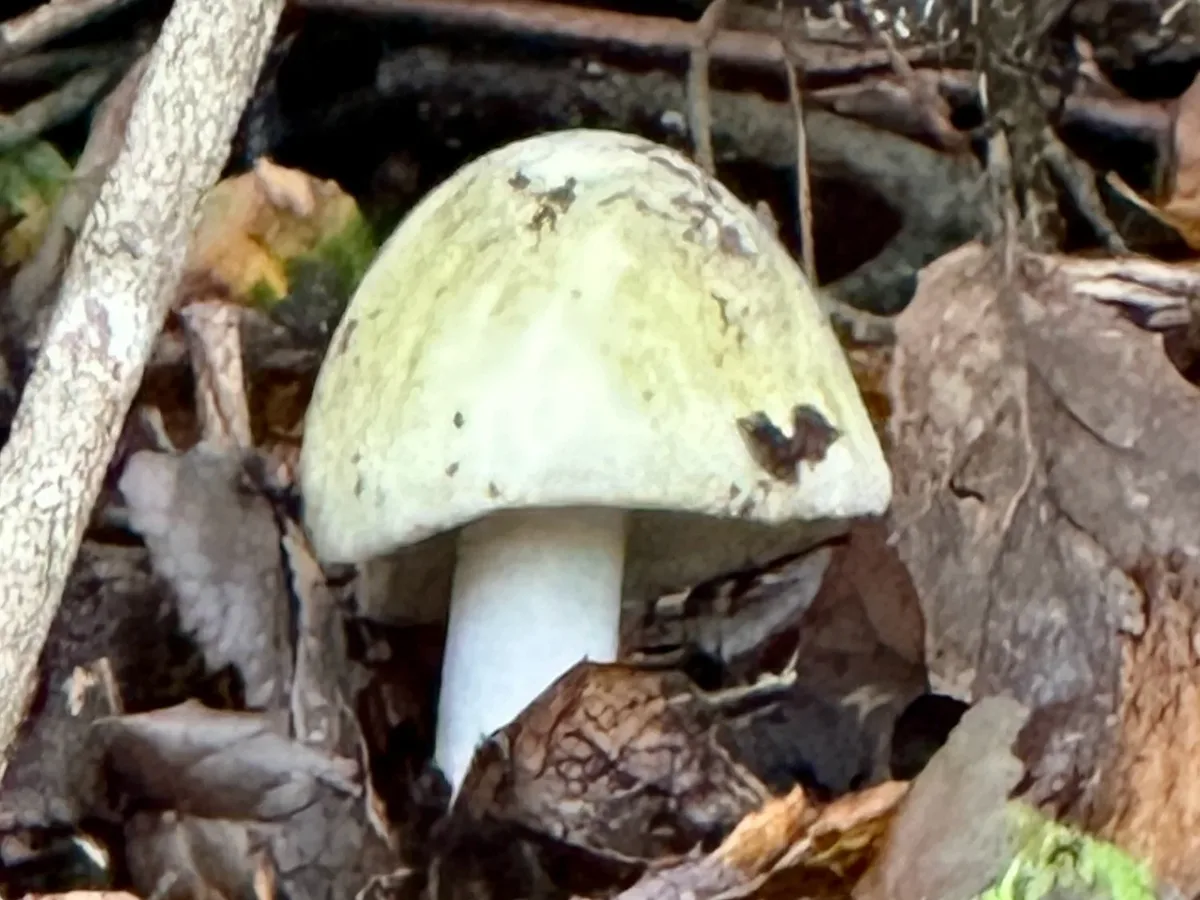 © gretchenparadis (CC BY)
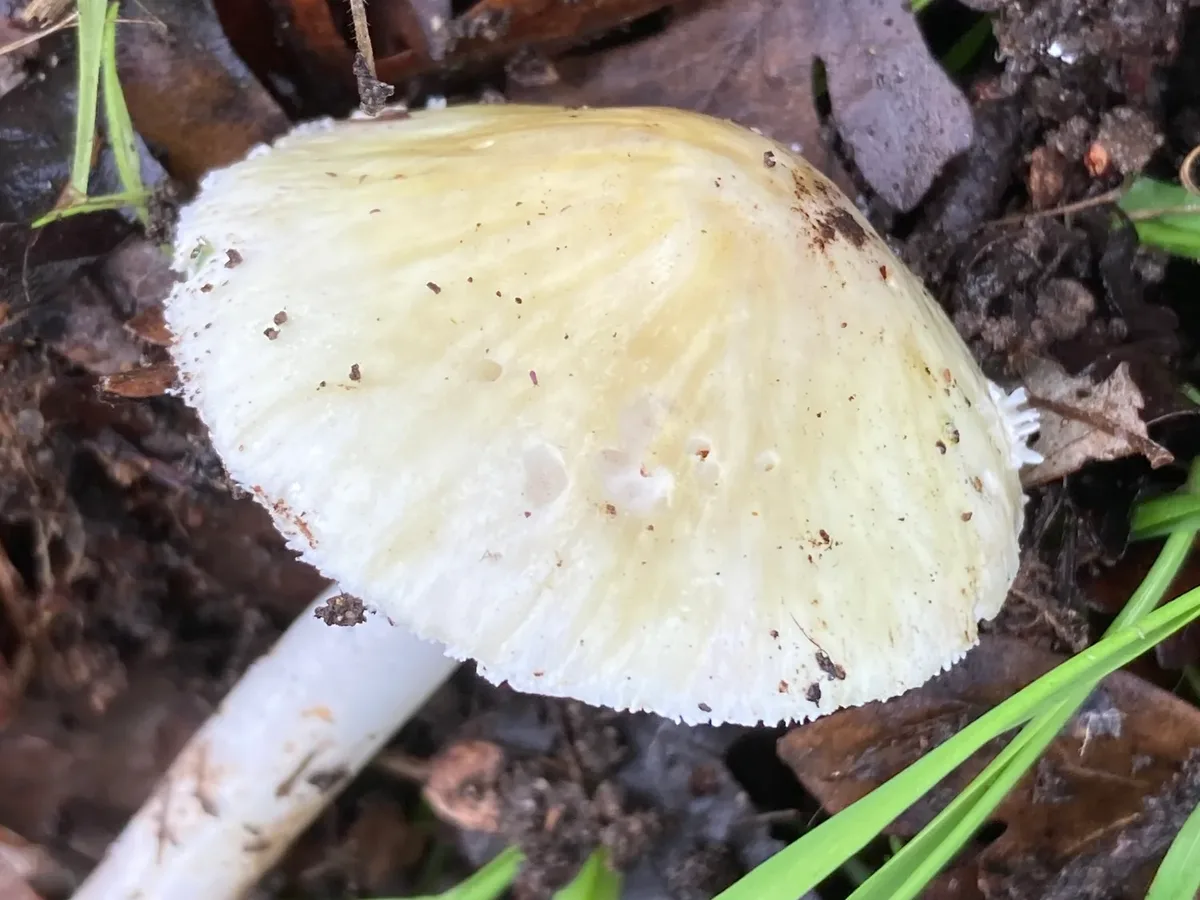 © Adam J. Searcy (CC BY)
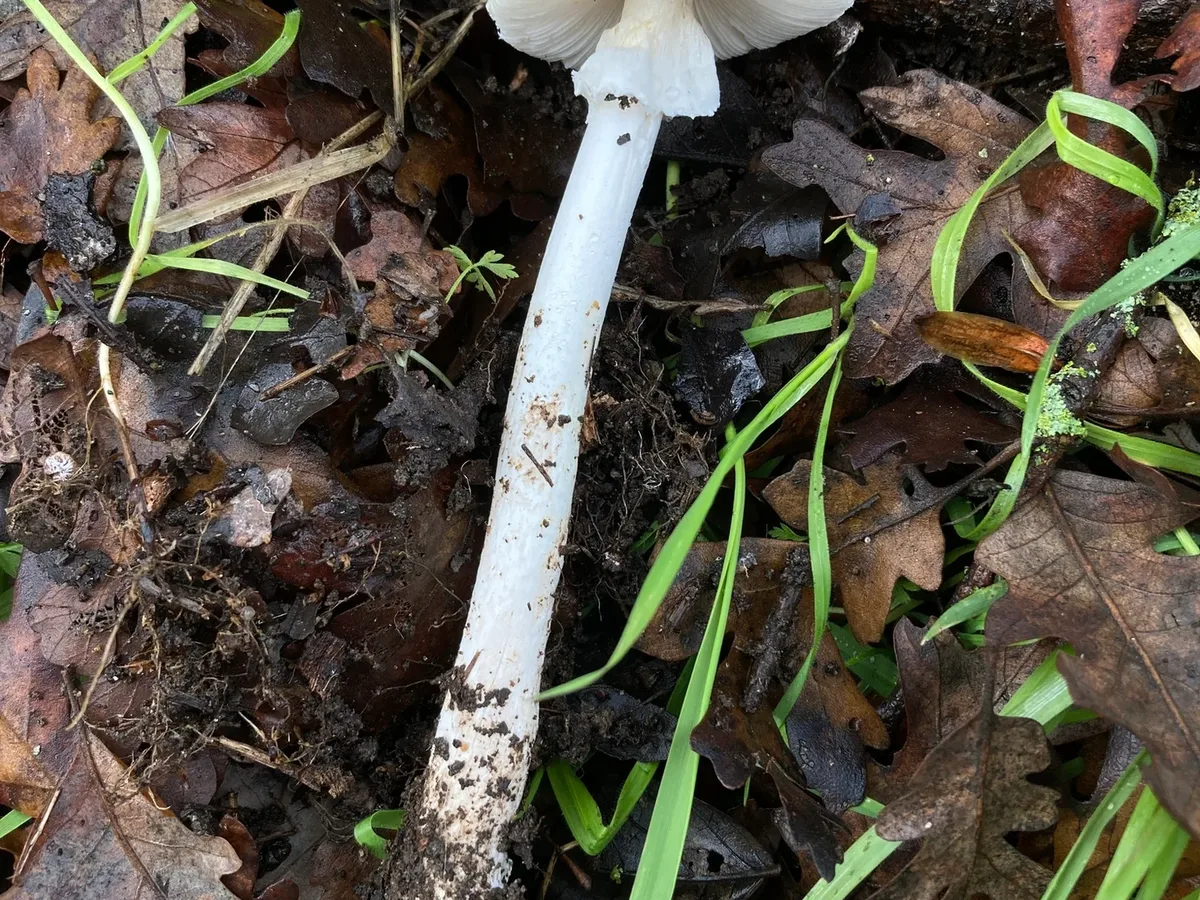 © Adam J. Searcy (CC BY)© Peter Brastow (CC BY)© Adam J. Searcy (CC BY)
Toxic - and the most serious cases can be fatal. Never eat it, and wash your hands after handling.
Never eat a mushroom you are not 100% sure of - check the look-alikes below, and always cook wild mushrooms.
How to recognise it
Cap
The death cap's cap typically spans 4-16 cm across, starting as an almost spherical egg wrapped entirely in the white universal veil before it expands to broadly convex and finally nearly flat.
The surface colour is one of its most treacherous features: the modal expression is a pale to mid greenish-yellow or olive-green, with ingrown radial fibres that give the cap a slightly streaky or silky sheen.
But the pigment is unstable and varies widely across individuals - the same woodland can carry caps ranging from straw-yellow through khaki and pale brown to a fully white form that shows no trace of green at all. Because colour is so variable, it must never be used as a reliable identifier in either direction.
Gills
The gills are pure white, free from the stem (not attached to it), closely packed, and remain white throughout the mushroom's life - they never pink, never brown.
Stem
The stem is 6-15 cm tall, 1-2 cm in diameter, white or very faintly greenish, often marked with a subtle darker-on-lighter snakeskin or zig-zag patterning that is unique among common woodland amanitas.
Near the top of the stem hangs a pendulous, skirt-like ring (annulus) - the remnant of the inner partial veil that once covered the gills; it is white, thin, and tends to lie flat or fold against the stem with age.
At the very base - and this is the diagnostic feature that must always be verified - the stem arises from a substantial white bulb enclosed in a sac-like, membranous volva.
The volva is the remains of the egg-like universal veil that enclosed the entire button-stage mushroom; it persists as a free, cup-like sheath around the basal bulb and is usually buried 2-5 cm below the soil surface, making it invisible until you dig. Always dig.
The spore print is white.
Smell
Older or damaged specimens often develop a sweetish, cloying odour variously described as honey-like, overripe, or faintly corpse-like; young buttons are nearly odourless.
Why it's dangerous
Amatoxins are responsible for more than 90% of fatal mushroom poisonings worldwide (CDC MMWR, Amanita phalloides Poisonings, Northern California, 2016). The death cap is the single species accountable for the majority of those deaths globally.
Lethality is not dose-dependent in the sense of requiring a large meal: half a medium cap - a quantity easily overlooked in a mixed harvest - contains enough α-amanitin to kill an adult.
The delayed onset is a structural hazard of the toxicology, not a mild feature: by the time phase-2 symptoms begin, a dangerous dose has already been absorbed and organ damage is underway.
The false improvement in phase 3 has led to patients discharging themselves from hospital and returning in acute liver failure.
If there is any possibility - however remote - that a person has eaten Amanita phalloides or any unknown white-gilled mushroom from a broadleaf woodland:
- call emergency services immediately
- do not wait for symptoms
- preserve all mushroom remains (including any cooking liquid)
- be explicit with clinical staff about the possibility of amatoxin poisoning, so that silibinin infusion can be considered and a transplant centre alerted early
Time is the critical variable: outcomes improve substantially with early intervention and deteriorate rapidly with delay.
There is no antidote that reverses toxin already bound to RNA polymerase II; treatment is supportive, aimed at buying the liver time to regenerate, and in severe cases liver transplantation is the only life-saving option.
Toxin
The principal toxins are amatoxins, a family of bicyclic octapeptides of which α-amanitin is the dominant and most lethal member.
α-Amanitin acts as a potent inhibitor of RNA polymerase II, the enzyme responsible for transcribing DNA into messenger RNA in eukaryotic cells. By blocking this enzyme, it halts protein synthesis in the cells of the liver and kidneys - the first organs to receive and concentrate the toxin after gut absorption.
A single mature death cap may contain 5-15 mg of total amatoxins; the estimated lethal dose in adults is as low as 0.1 mg/kg body weight, meaning half a medium-sized cap is sufficient to kill an adult human.
The toxins are also fully water-soluble and not destroyed by heat, so cooking water, soup, or pan liquid from a death cap is itself lethal.
Phallotoxins (phalloidin and relatives) are present as well but are not absorbed from the gut in significant quantities in humans and are not thought to contribute materially to clinical poisoning. Virotoxins are present in smaller amounts and of uncertain clinical relevance.
The primary agent of lethality is α-amanitin alone.
Symptoms
Amatoxin poisoning follows a characteristic triphasic clinical course that is itself a major contributor to mortality, because the apparent recovery phase misleads both patients and clinicians.
- 1Phase 1 (latent): onset is delayed 6-24 hours after ingestion - occasionally up to 36 hours - during which the patient may feel entirely well. This long silent interval means that by the time symptoms begin, the toxin has already been substantially absorbed and distributed.
- 2Phase 2 (gastrointestinal): violent, profuse watery or cholera-like diarrhoea and vomiting, severe abdominal cramping, and dehydration. This phase lasts 1-2 days and is often severe enough to require hospital admission for fluid replacement.
- 3Phase 3 (false improvement): diarrhoea and vomiting abate and the patient may feel - and appear - substantially better over 1-2 days. This phase is deceptive; hepatocyte and renal tubule destruction is advancing beneath the surface, invisible without biochemical monitoring.
- 4Phase 4 (organ failure): fulminant hepatic necrosis becomes clinically apparent with jaundice, coagulopathy, encephalopathy, and rising transaminases; acute kidney injury typically develops alongside or shortly after.
Without aggressive treatment, hepatic coma and death follow within 6-16 days of ingestion. Children, elderly individuals, and people with pre-existing liver or kidney disease have lower thresholds for fatal outcome.
Where & when it grows
Habitat
Amanita phalloides is an obligate ectomycorrhizal fungus, forming intimate belowground partnerships with the fine roots of broadleaf trees.
The principal hosts in central and western Europe are pedunculate and sessile oak (Quercus robur, Q. petraea) and European beech (Fagus sylvatica). The network of compatible partners is wider, though: hazel, birch, sweet chestnut, and small-leaved lime are all regular associates, and occasional records exist under hornbeam and hop hornbeam.
The mycorrhizal relationship is a genuine mutualism - the fungal mycelium dramatically expands the effective root-tip surface area, improving the host tree's uptake of phosphorus, nitrogen, and water, while the tree feeds the fungus with photosynthate sugars.
This partnership means the fruitbodies appear at the feet of living trees, not on dead wood, and tends to recur year after year at the same spots as the mycelium persists underground between seasons.
The death cap prefers moderately fertile, calcium-rich soils and shows a marked tolerance for disturbed or semi-urban ground. It is exceptionally common in parks, cemeteries, urban woodlands, and private gardens where oaks or beeches have been planted - environments where foragers may feel 'safe' precisely because they are not deep forest.
Throughout temperate Western Europe the species is abundant and still expanding its range northward, partly through transport of infected nursery saplings carrying dormant mycelium on the roots.
When
Fruitbodies emerge from midsummer (June in warm years) through to late autumn, with the main flush in most of central and western Europe running from August through October.
The trigger is a combination of sufficient late-summer warmth and a meaningful rainfall event after a dry spell.
Soil temperature needs to remain above roughly 12 °C, and a cumulative 20 mm or more of rain over 14 days typically precedes a flush by one to two weeks, as mycelium shifts resources from vegetative growth to fruiting.
In mild Atlantic-influenced regions such as western France, the British Isles, and the Iberian coast, fruitbodies can persist into November or even early December.
The very first emergence of the season deserves special attention: buttons still enclosed in their universal veil - the so-called 'egg stage' - are the forms most likely to be confused with edible puffballs or button mushrooms, because the distinctive ring, gills, and stem are not yet visible.
How it grows
The mycelium of Amanita phalloides can persist in the soil for decades as a branching network of hyphae wrapped around tree-root tips, outlasting individual mushroom seasons and sometimes outlasting the forester who planted the host tree.
Fruitbodies develop rapidly from small primordia: the characteristic egg can push through leaf litter within a few days of initiation, and the cap can fully expand within 24-72 hours of the egg cracking open.
Growth is typically solitary or in loose groups of two to five, with multiple generations of buttons sometimes present beside mature caps after a good flush.
Because the mycelium is intimately tied to a specific tree partner, fruitbodies almost always return to the same ground patch in successive years - a pattern that experienced foragers sometimes describe as the mushroom 'being at home' in a certain tree's shadow.
This site fidelity is, in the death cap's case, a doubled hazard: a family or group that finds edible mushrooms near a death cap site may return confidently next season, not realising the deadly fungus is equally faithful to the spot.
Fruiting conditions
Fruits in autumn (sometimes winter), abundantly after wet autumns; conservative standard mycology estimate, not stated in the source.
Look-alikes
Three lookalike groups account for the majority of serious poisonings in Europe.
- 1Button mushroom (Agaricus campestris and related Agaricus species) - the first and most dangerous overlap: the death cap's egg stage, still wrapped in its white veil, looks virtually identical to an immature Agaricus. Cut or dig carefully - a death cap button will show white flesh and white proto-gills throughout, while an Agaricus button reveals pinkish gills inside even at a small size; additionally, Agaricus lacks a volva entirely and will eventually produce a brown spore print.
- 2Green Russula species (particularly Russula virescens and R. aeruginea): the greenish cap form of the death cap superficially matches these, but all Russula species lack both the ring and the volva, have gills that run to the stem or are adnate (not free), and have a white or cream spore print deposited on the gills themselves rather than on paper - these structural absences are absolute, not variable.
- 3Other white Amanita species, principally the destroying angel (Amanita virosa and A. verna) - the third and most acutely dangerous overlap: both are deadly amatoxin species sharing the white form, white gills, ring, and volva. In this case the lookalike is also lethal; the correct response to any white mushroom with white gills, a ring, and a sac-like volva is to treat it as certainly lethal regardless of which Amanita species it turns out to be.
A further regional concern involves immigrant communities from East and South-East Asia: the death cap closely resembles edible paddy straw mushroom (Volvariella volvacea), which is commonly eaten in those traditions and which has a superficially similar button-stage and a volva-like structure.
The paddy straw mushroom, however, has pink to brown gills and a pinkish-brown spore print; the death cap's gills and spore print are always white.
The fully white form of the death cap resembles the white Amanita; both are deadly. Treat any white gilled mushroom with a ring and a sac-like volva as lethal.
Same deadly section (Phalloideae) by appearance but lacks the toxins and is eaten locally in Rwanda/Burundi/Tanzania; cannot be told apart by eye alone, underscoring why species-level knowledge is essential.
In Chile, warnings are given about confusion with Russula; Russula lacks a ring and volva.
Young death cap buttons resemble Agaricus and puffballs, but Agaricus has pink to chocolate-brown gills, a brown spore print and no volva; the death cap always has white gills, a white spore print and a sac-like volva.
Agaricus species have pink-to-brown gills and a dark spore print and lack a volva, whereas the death cap has white gills, a white spore print and a sac-like volva at the base.
Edible Amanita that can be confused with the death cap; distinguish by colour and spore features, but never rely on colour alone.
Locally eaten edible Amanita (also A. loosii); the central confusion in African ethnomycology - the deadly white Amanita are mistaken for these.
Agarics lack a sac-like basal volva and have pink-to-brown gills and a brown spore print; the death cap has white free gills, a white spore print, and a volva in the soil.
Field mushrooms have pink to brown gills (not the death cap's white gills) and lack a basal volva/sac.
The green/greenish-yellow death cap form can be confused with green Russula species; check for the white free gills, ring and sac-like volva, which Russula lacks.
Green russulas lack a ring and volva and have brittle flesh.
Russulas lack a volva and a ring; always dig up the base to check for the sac-like volva and look for the skirt-like ring and white free gills of the Death Cap.
In Chile, warnings are given about confusion with Tricholoma; Tricholoma lacks the ring and volva of the death cap.
Native species (A. austrophalloides, A. marmorata, A. murina, A. murinaster) with a sac-like volva, ring and amyloid spores are untested but likely toxic; do not eat.
Edible Asian mushroom that has caused several deaths among East/Southeast Asian migrants through confusion with the death cap. Both have a volva; check gill colour (straw mushroom develops pink to brown gills and a pink spore print, whereas the death cap has white gills and a white amyloid spore print).
In Chile, warnings are given about confusing the death cap with Macrolepiota; look for the death cap's volva, ring and greenish cap with white gills.
Young egg-stage Death Caps can resemble puffballs; always slice any 'puffball' in half - a developing mushroom with cap, gills and stem inside means it is not a puffball.
The pale form of the death cap can be mistaken for puffballs; cutting a puffball reveals uniform white flesh, whereas a young death cap button shows the outline of a developing capped mushroom.
A globally risky lookalike that also has a volva; check for the ring (present in Amanita, absent in Volvariella) and spore colour (white in Amanita, pinkish in Volvariella).
In Chile, warnings are given about confusion with Agaricus; Agaricus has a ring but no volva and develops pinkish-to-brown gills with a brown spore print, unlike the death cap's persistently white gills.
Distinguished by the death cap's combination of ring plus volva and its olive-green cap colour.
Easily confused at the young, egg-like stage; always dig up the base and check the diagnostic combination of white gills + white ring + white sac-like volva.
Agaricus has pink to brown gills (not white) and no volva; the Death Cap has white free gills and a sac-like volva at the stem base.
An unopened white egg-stage deadly Amanita can resemble a puffball; cut it in half - a developing capped mushroom outline reveals the Amanita.
A reference guide - never an edibility guarantee. When in doubt, leave it out.