Common morel
Morchella esculenta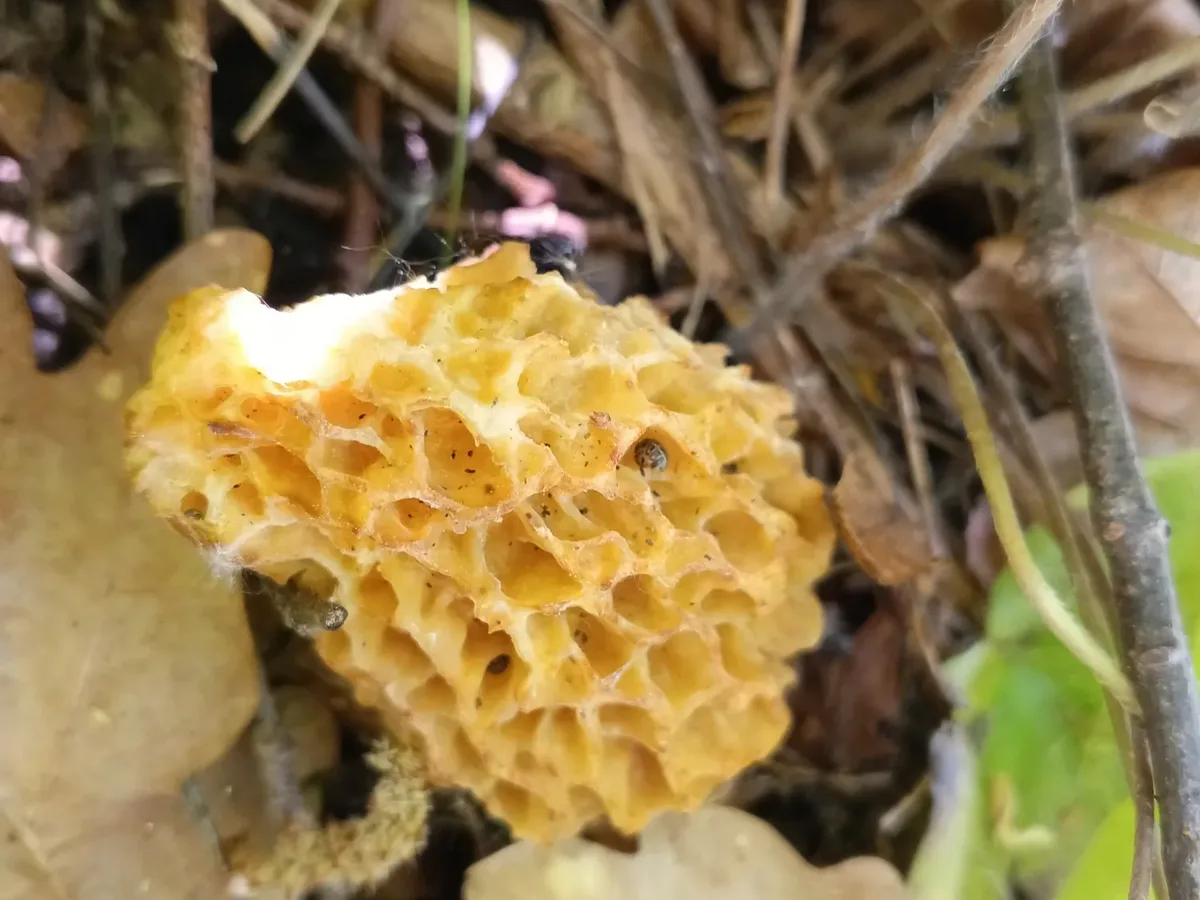 © Maria Kohanovskaya (CC BY 4.0)
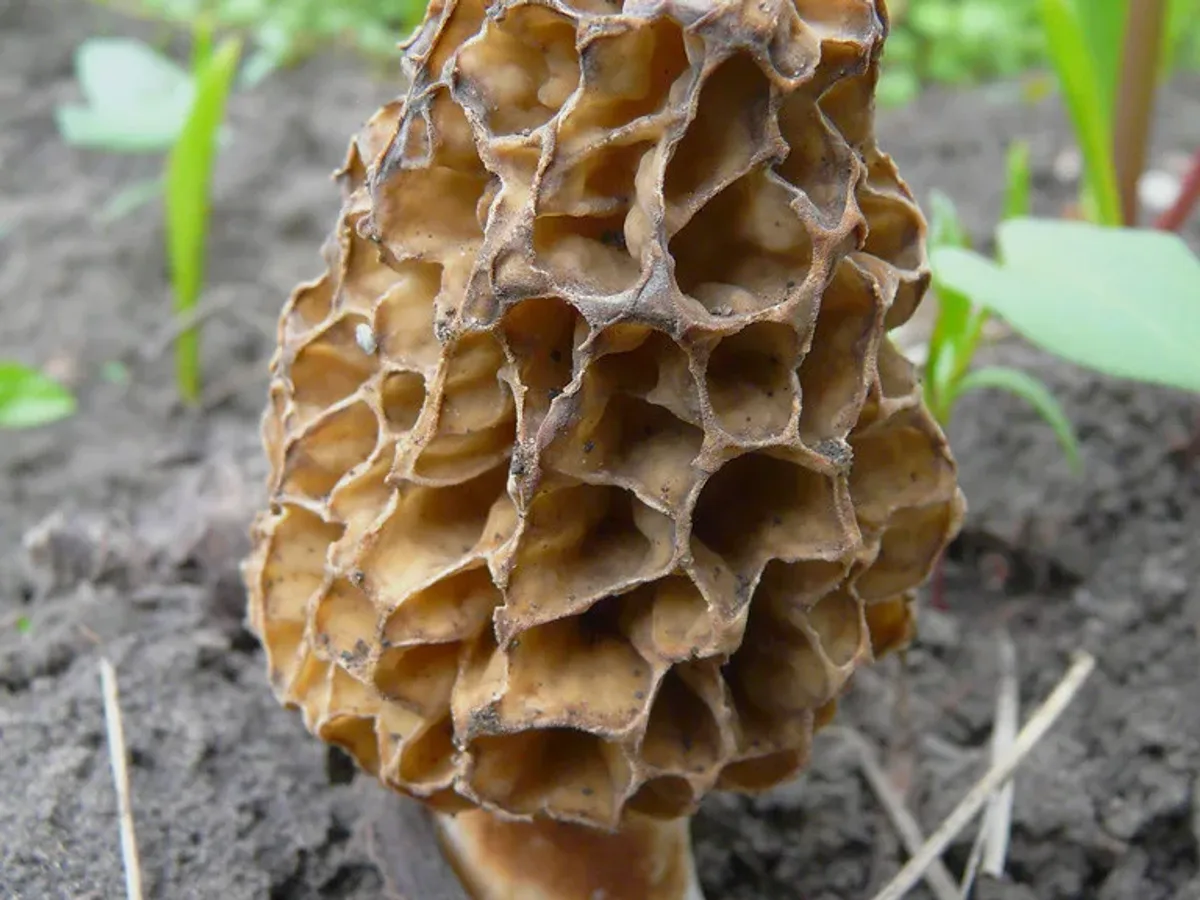 © Radu Chibzii (CC BY-SA 2.0)
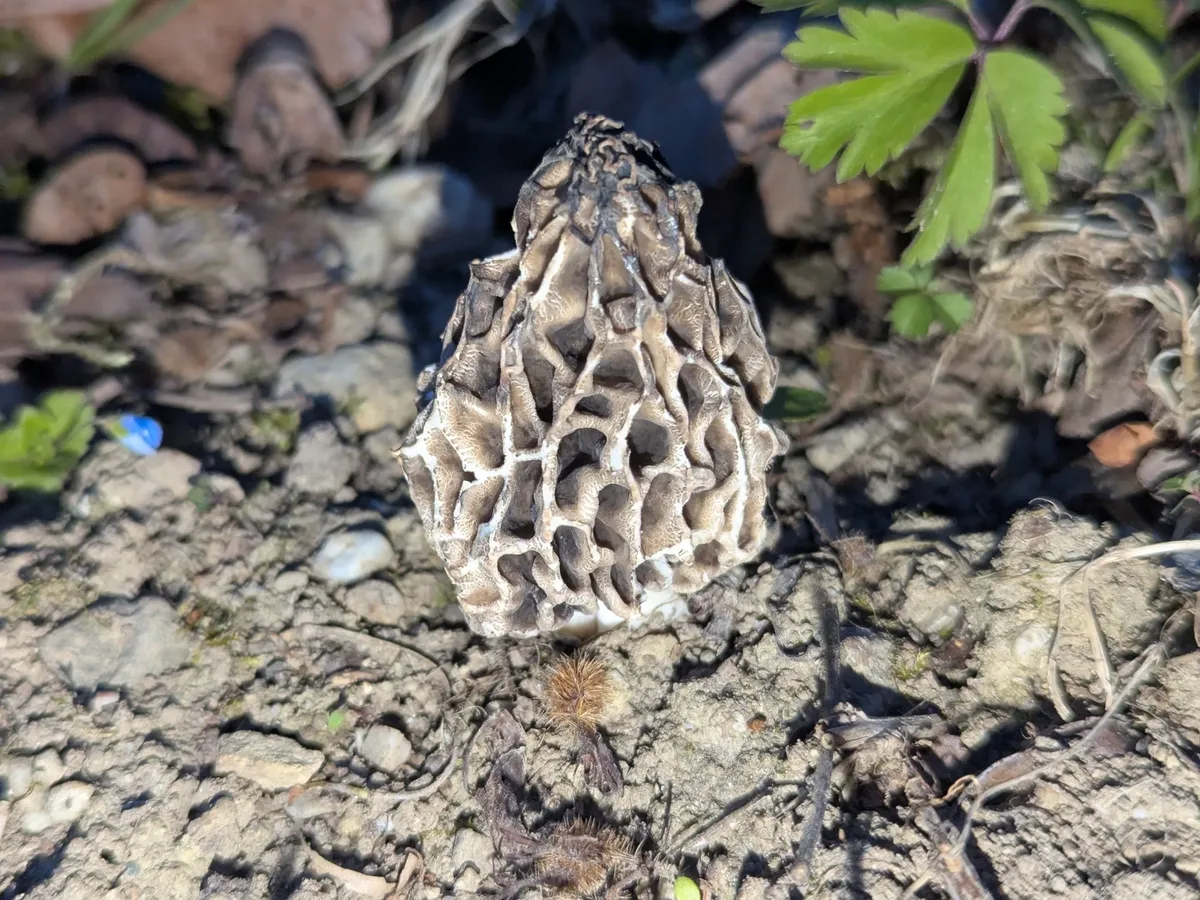 © Elias (CC BY)
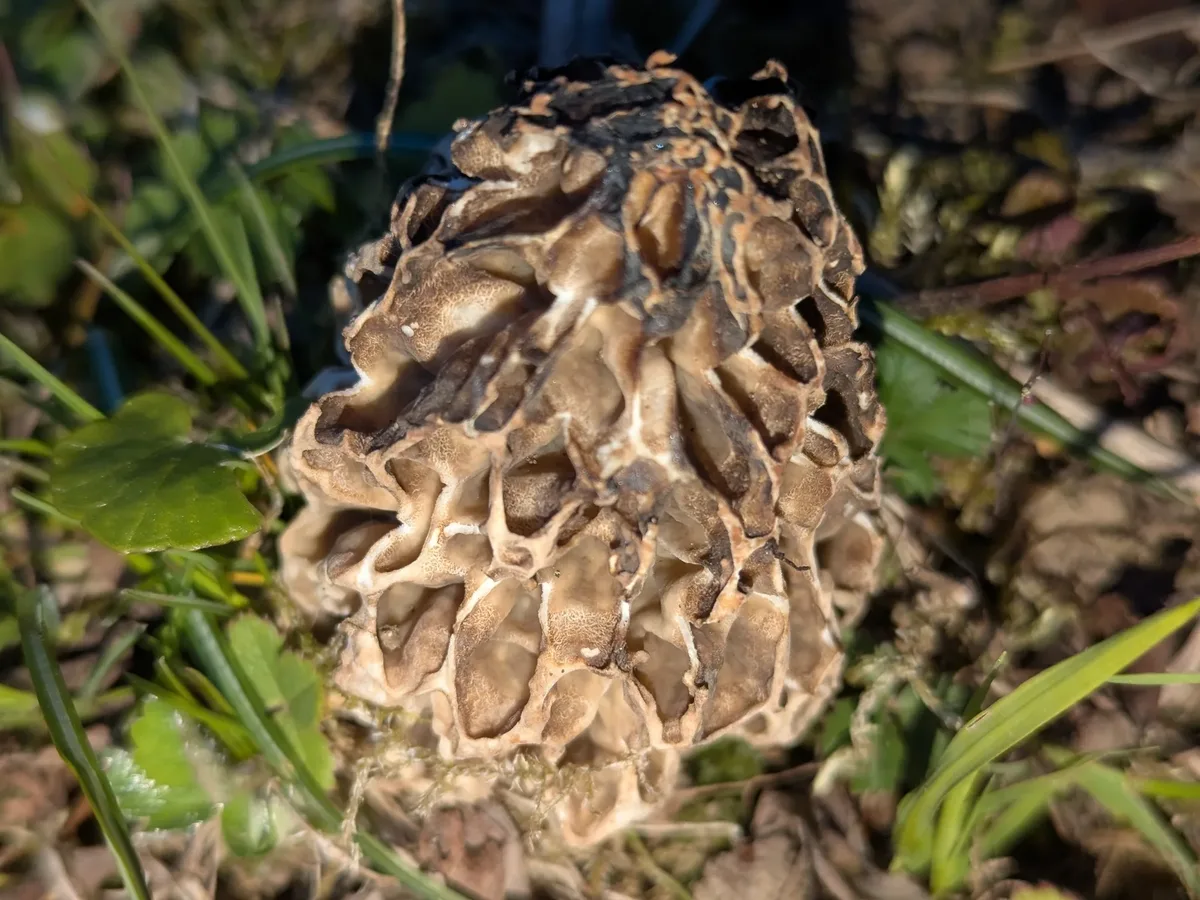 © Elias (CC BY)
 © Elias (CC BY)
 © victor laborde (CC BY)
 © victor laborde (CC BY)
 © victor laborde (CC BY)
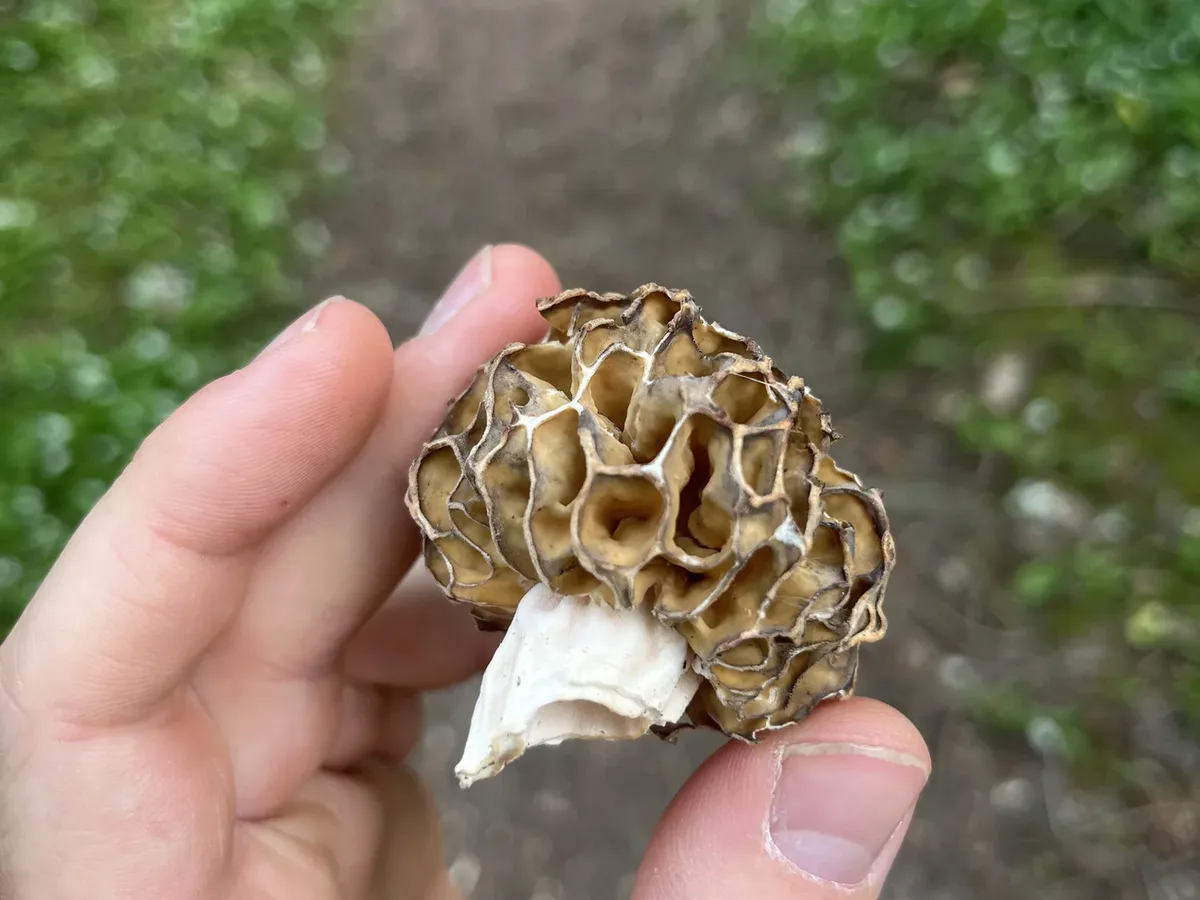 clarko13 (CC0)
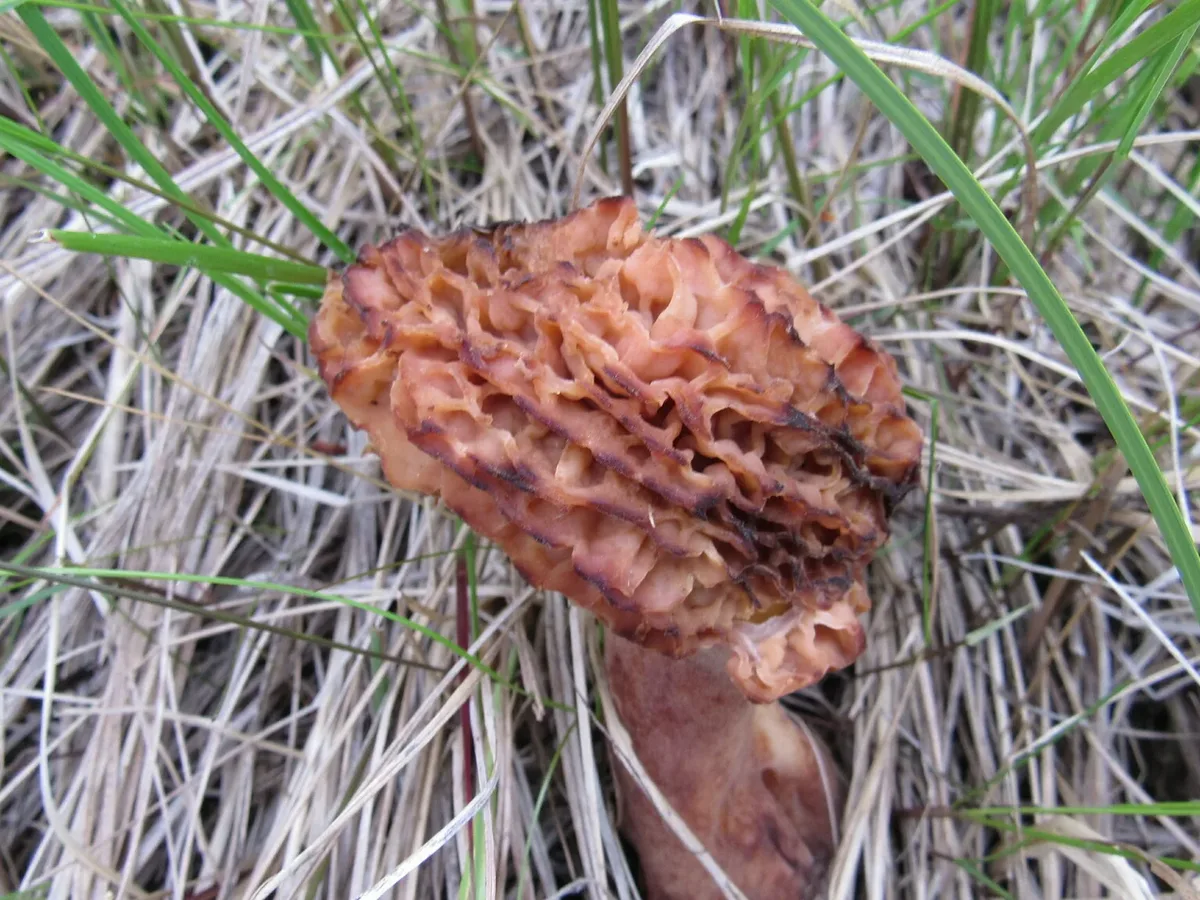 Светлана Царахова (CC0)
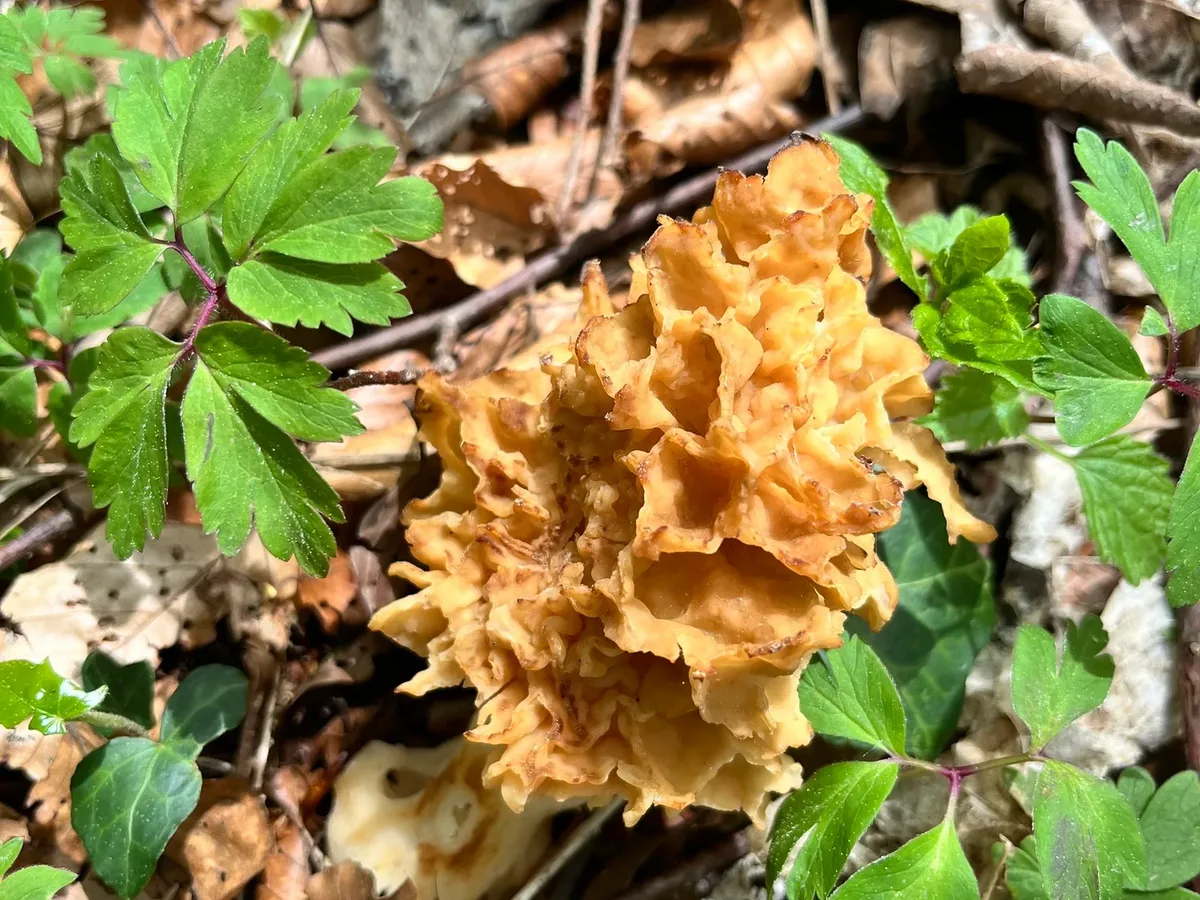 © Dennis Lausch (CC BY 4.0)© Maria Kohanovskaya (CC BY 4.0)© Radu Chibzii (CC BY-SA 2.0)
One of the best mushrooms you can bring home - once you are certain of the identification.
Never eat a mushroom you are not 100% sure of - check the look-alikes below, and always cook wild mushrooms.
How to recognise it
Morchella esculenta is unmistakable once you know it, but the detail repays close study.
Cap
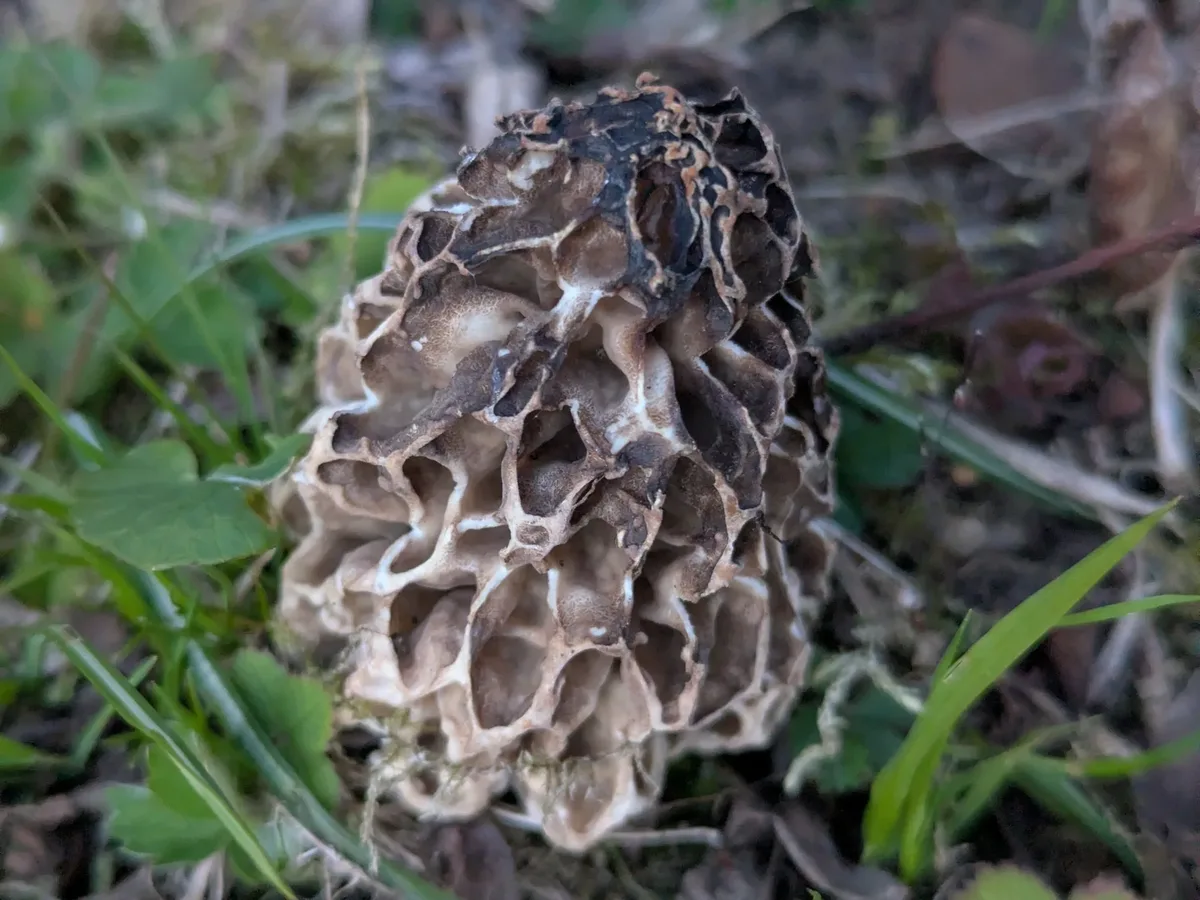
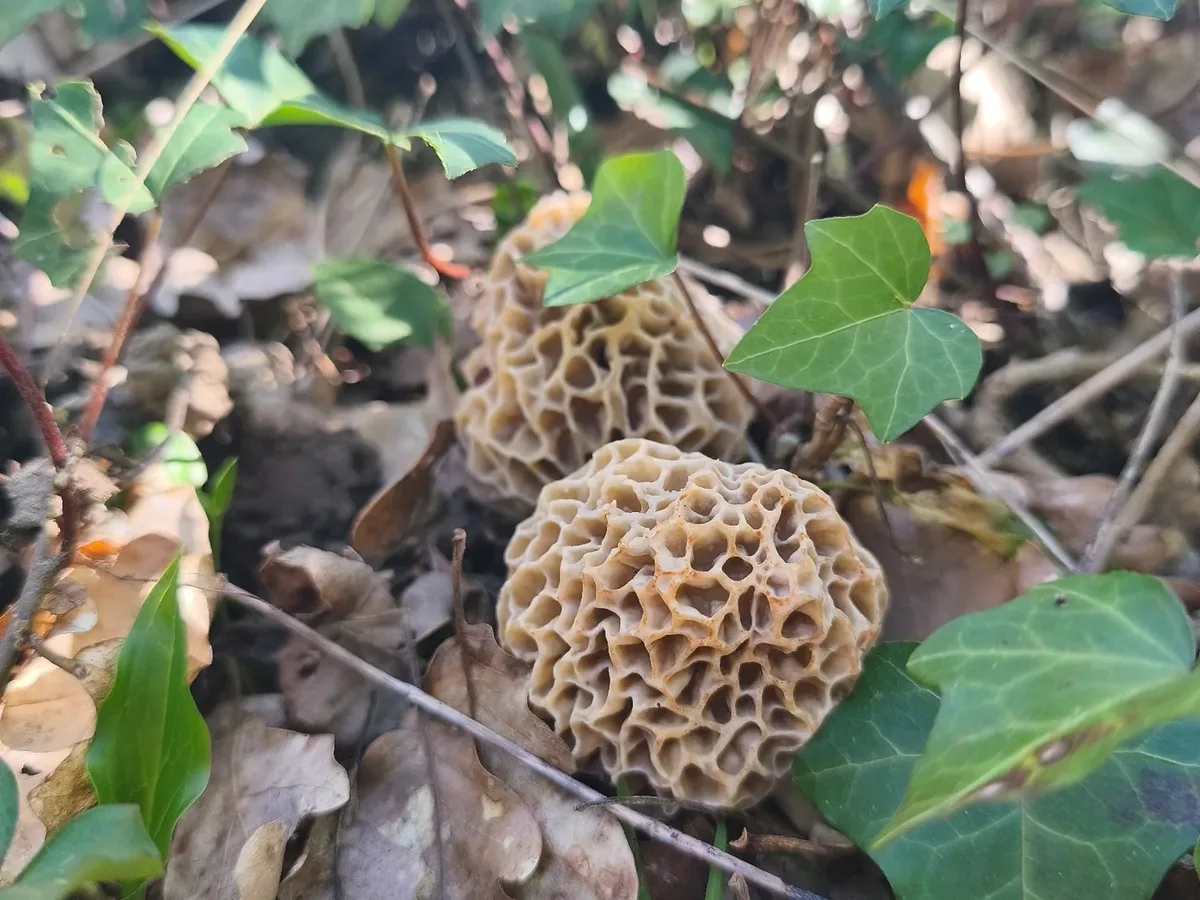
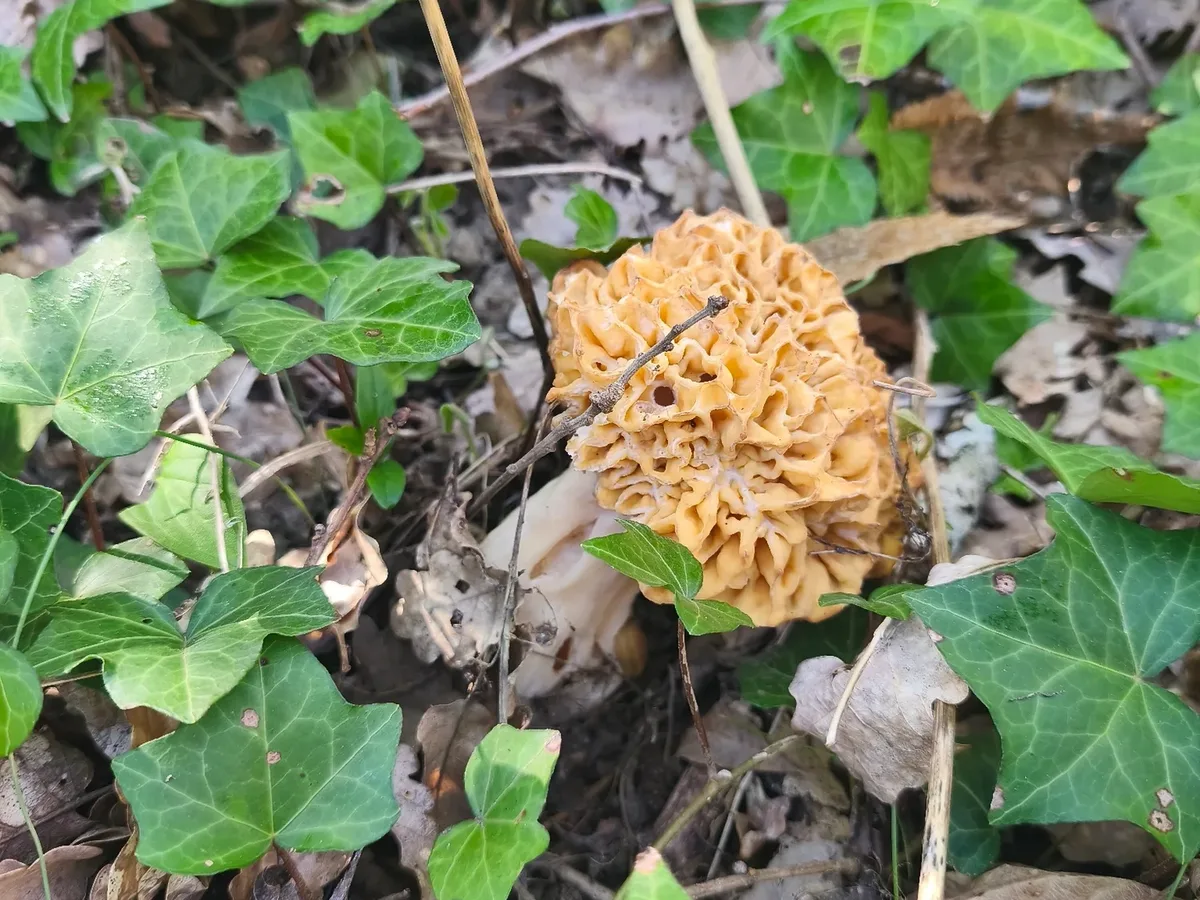
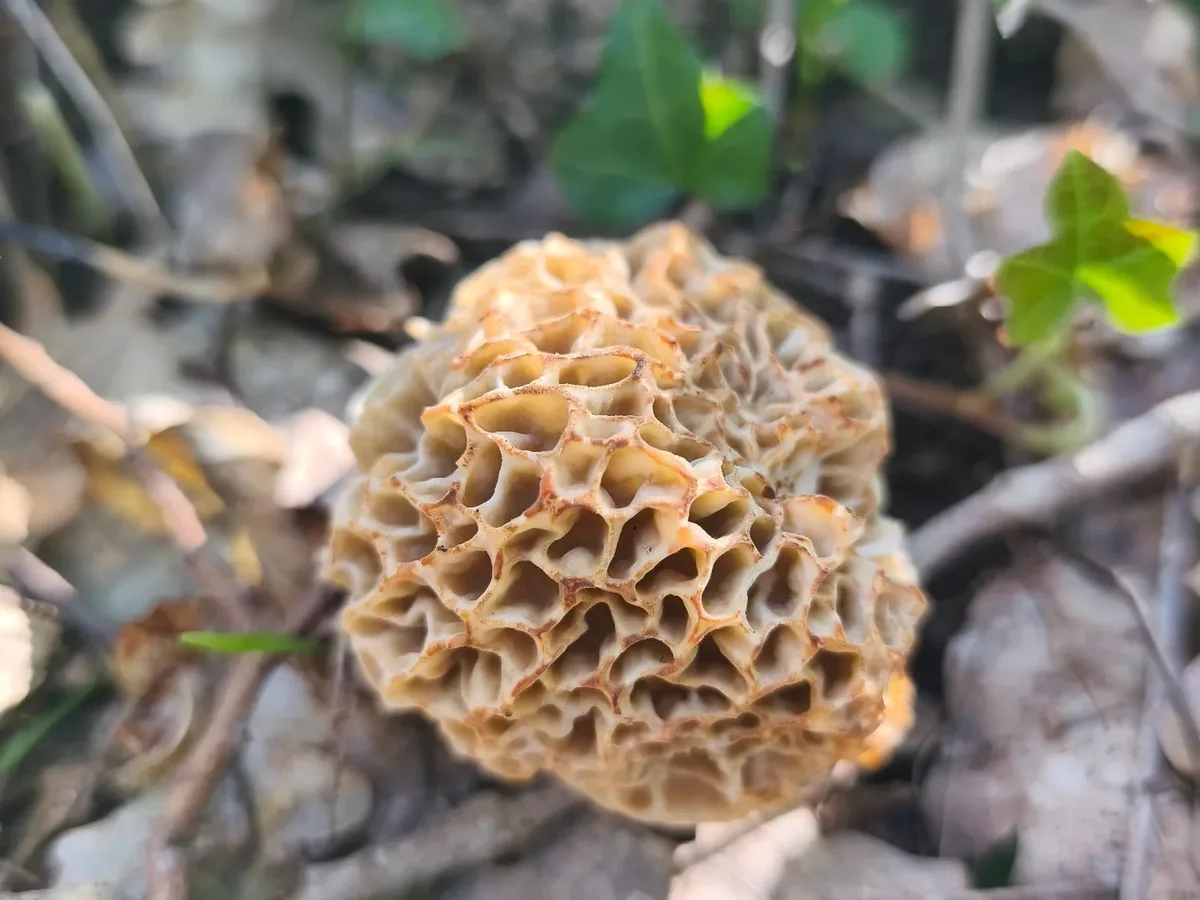
The cap ranges from 2 to 7 cm across and 2 to 10 cm tall, broadly ovoid to somewhat rounded, its surface covered in a three-dimensional network of deep pits and interlocking ridges that recalls a natural honeycomb or sea-sponge.
The colour shifts with age and moisture: freshly emerged fruitbodies tend toward pale ochre or greyish-yellow; as they mature and dry slightly the cap warms to yellow-brown or honey-amber, sometimes with olive tints. The ridges themselves are typically paler than the pit floors.
Flesh
Cut the entire fruitbody vertically from base to tip and you expose the defining trait of the genus: a single continuous hollow chamber running through cap and stem alike, with no cross-walls, partitions or cottony pith whatsoever. The inner wall is smooth.
This clean hollow is the most reliable diagnostic feature and takes only a moment to verify in the field.
The flesh is thin, brittle, and pale; the odour is mild and pleasantly earthy.
Stem
The stem is 2-7 cm tall, 1-3 cm wide, white to pale cream, cylindrical or slightly enlarged at the base, and covered in a finely granular or mealy surface texture. It too is hollow.
The entire fruitbody - cap fused to stem along its full lower margin - emerges directly from the soil with no volva, no ring, and no gills.
Where & when it grows
Habitat
Morchella esculenta occupies a broad but characteristic ecological niche: moist, nutrient-rich ground where calcareous or sandy-loam soils meet decaying organic matter and the root systems of particular trees.
Elm (Ulmus), ash (Fraxinus) and apple (Malus) are the strongest associations in central and western Europe; old orchards, hedgerow elms, and the edges of ash-dominated woodland are classic hunting grounds.
The species also appears reliably on disturbed ground - roadsides, garden beds, old compost heaps, and the margins of paths where the soil has been turned.
Its most dramatic manifestation is on recently burned ground: after a forest fire or controlled burn it can fruit in extraordinary density the following spring on sites where it had never appeared before, a pattern documented repeatedly across Europe and North America.
This post-fire response is not fully understood but is thought to relate to elevated soil pH from ash, nutrient pulses from charred organic matter, and reduced competition from other soil fungi.
The species is at least partly saprotrophic - obtaining nutrients from dead wood and humus - but also forms associations with living tree roots, and the boundary between saprotrophy and facultative mycorrhiza in Morchella remains an active research question.
When
The morel season in central and western Europe runs from late March through May, with the peak typically coinciding with the blossoming of apple and cherry trees - a phenological cue that experienced foragers use as a calendar trigger.
Soil temperature is the underlying driver: fruitbodies begin to push up once the top 10 cm of soil reach roughly 8 °C and stall again above about 16 °C. This is why warm springs produce early and abundant flushes while cold, wet springs delay the season by weeks.
The flush itself can be startlingly brief in any given location - sometimes just ten days to two weeks before the fruitbodies over-mature, dry out, or collapse - which rewards frequent revisits once conditions look right.
Elevation shifts the window considerably: valley sites may fruit in late March while hillside patches at 600 m might not emerge until mid-May.
After a late frost the mycelium typically resumes once the soil warms again, so a cold snap mid-season does not necessarily end the year. In exceptional years following heavy spring rain after a dry winter, flushes can extend into early June.
How it grows
Morchella esculenta grows solitarily or in small scattered groups, occasionally in loose clusters where mycelium is dense. The mycelium itself is perennial, persisting in the soil and leaf litter for years - sometimes decades - between fruiting events, which is why experienced foragers return to the same patches year after year.
But the species is famously and genuinely unpredictable: a site that fruits abundantly for three seasons may go completely silent for five years, then reappear without any obvious change in conditions.
This irregularity is not fully explained; proposed factors include:
- variation in rainfall timing
- soil moisture at depth
- temperature fluctuations during the winter dormancy period
- below-ground competition with bacteria and other fungi
When conditions align, fruitbodies can emerge with striking speed - pushing through leaf litter and rising to full size within 24 to 48 hours of a warm rain event.
The spores are discharged from the pit surfaces (which are lined with asci, the spore-bearing cells of the Ascomycota), and are released forcibly in coordinated puffs triggered by air-current changes, an elegant mechanism that aids wind dispersal.
The underground mycelial network, invisible through most of the year, is the real organism; the fruitbody is a temporary reproductive structure.
Fruiting conditions
Spring fruiter; flushes as soil warms after snowmelt/spring rains, around fruit-tree blossom. Favours calcareous, disturbed ground and recent burn sites.
Handle with care
Toxin
Raw or insufficiently cooked Morchella esculenta contains thermolabile hydrazine-like compounds. These are closely related chemically to the gyromitrin family of toxins but are present in lower concentrations and are efficiently destroyed by thorough cooking.
Unlike the gyromitrin in Gyromitra esculenta, the specific compounds in raw morels have not been fully characterised in the scientific literature. But their thermolabile nature is well established: fruitbodies that cause illness when eaten raw or lightly cooked produce no toxic effect after proper heat treatment.
Gyromitrin in the lookalike Gyromitra esculenta is a separate and far more dangerous compound - it metabolises to monomethylhydrazine (MMH), a substance used as rocket fuel and a known carcinogen and mitochondrial toxin.
These are different poisons in different species; the morel's raw toxin does not carry the systemic, hepatotoxic, and haemolytic risks of gyromitrin.
Symptoms
Raw or undercooked Morchella esculenta causes gastrointestinal illness: nausea, vomiting, abdominal cramps, and diarrhoea typically beginning within a few hours of consumption.
In larger quantities - or in individuals with particular sensitivity - temporary neurological symptoms can follow: dizziness, tremor, and ataxia (loss of coordination). Symptoms generally resolve within 24 hours with supportive care once ingestion has stopped and the offending material has cleared the digestive tract.
The Montana outbreak (CDC MMWR, March 2024) documented gastrointestinal illness in 51 people who ate raw or lightly cooked morels at a single restaurant; the most severe cases resulted in three hospitalisations and two deaths.
Alcohol consumed alongside morels has been reported to exacerbate gastrointestinal symptoms, though the mechanism is not definitively established.
Confusion with Gyromitra esculenta produces a distinct and more severe syndrome: delayed onset of 6 to 24 hours, nausea and vomiting followed by haemolytic anaemia, liver failure, and in serious cases methemoglobinaemia and central nervous system depression - potentially fatal and requiring emergency medical intervention.
Look-alikes
Two groups of lookalikes require attention.
The first and most dangerous is the false morel, Gyromitra esculenta. At a glance the similarity is superficial - both are brownish spring fruitbodies of similar size - but the differences are unambiguous on close inspection.
Gyromitra esculenta has a cap that is brain-like or walnut-like in shape, with irregular lobes and convolutions rather than the orderly honeycomb of pits and ridges that defines Morchella.
Critically, a cross-section of Gyromitra esculenta reveals a chambered or partially filled interior with irregular pockets - it is never cleanly hollow in a single continuous chamber from cap tip to stem base.
Gyromitra esculenta contains gyromitrin, a toxin that metabolises to the potent carcinogen and mitochondrial poison monomethylhydrazine; it has caused fatal poisonings and is discussed further in the toxin and danger sections.
The second group is the Verpa species (early false morels): Verpa conica and Verpa bohemica. These also have a cap over a pale stem, but in Verpa the cap is attached to the stem only at its apex - it hangs free, like a thimble placed over a finger - whereas in Morchella the cap is fused to the stem along its entire lower margin, creating a fully integrated fruitbody. Verpa species are considered mildly toxic in quantity.
No other common spring fungus closely resembles a fully formed true morel with its honeycomb cap and cleanly hollow interior.
Why it matters
Never eat Morchella esculenta raw or lightly cooked. The documented Montana outbreak - properly identified, commercially sourced true morels, served insufficiently cooked - killed two people and hospitalised three.
- Always cook morels thoroughly (minimum 15 to 30 minutes at full heat).
- Drying alone does not deactivate the raw toxin.
- Avoid consuming morels with alcohol.
- First-time consumers should try a small portion before eating a full serving.
The most critical identification error is confusing Morchella esculenta with Gyromitra esculenta (false morel): always cut the fruitbody lengthwise to confirm the single, clean, continuous hollow chamber - a chambered or irregular interior is a hard stop.
Gyromitra esculenta contains gyromitrin, a compound that metabolises to monomethylhydrazine and causes liver failure, haemolytic anaemia, and death; there is no safe dose and no antidote beyond emergency supportive care.
If poisoning by Gyromitra is suspected, seek emergency medical care immediately.
Brain-/walnut-like and irregularly wrinkled rather than a pitted honeycomb; not cleanly hollow but chambered/filled inside. Contains gyromitrin and is seriously poisonous.
The cap hangs free, attached to the stem only at the top. In a true morel the cap is attached to the stem along its lower edge and the whole body is hollow.
In the kitchen
Picking & cleaning
Cut morels at the base of the stem with a knife rather than pulling, which disturbs the mycelium and can dislodge spores still in development.
Because the pits trap soil, insects (springtails, small beetles), and occasionally slugs, the fruitbody rewards careful field inspection: cut each one lengthwise on the spot to verify the clean hollow interior and to tip out any lodged grit or invertebrates. A soft brush helps clear the ridges without crushing the delicate flesh.
Transport in a breathable basket rather than a plastic bag - morels bruise easily and moisture trapped in a sealed container promotes rapid deterioration.
In the kitchen, fill the hollow fruitbodies with cold water and let them soak briefly to dislodge remaining debris, then rinse under running water and drain thoroughly before cooking.
If drying for storage, thread whole or halved fruitbodies onto a string or lay them on a rack in a warm, well-ventilated spot; they dry to a fraction of their fresh weight but the flavour concentrates substantially. Dried morels keep well in a sealed jar for a year or more.
Cooking
Properly cooked, Morchella esculenta is among the most prized culinary fungi in European and North American cuisines. Its flavour is deeply earthy, nutty, and subtly smoky, with a satisfying umami richness that intensifies with heat.
The hollow, honeycomb structure traps sauces and butter beautifully, making it ideal in cream-based preparations. The classical French treatments - poulet aux morilles (chicken braised with morels and cream) and omelette aux morilles - have been central to haute cuisine for centuries, and the morel is a recurring feature in the cooking of Burgundy, Franche-Comté, and Alsace.
For simpler preparations, halved or whole morels sautéed in butter with a little shallot and finished with cream or white wine are excellent. They pair well with eggs, veal, chicken, and mild cheeses.
Morchella esculenta dries exceptionally well: the water content drops from roughly 90% to under 10%, and the flavour compounds concentrate proportionally, making dried morels useful for stock, risotto, and sauces long after the season ends. Rehydrate in lukewarm water for 20 to 30 minutes; the soaking liquid, strained through a fine cloth, is itself a useful flavouring.
Always cook morels thoroughly - the safety rule supersedes every culinary consideration.
Good to know
Morchella esculenta is a valued edible but it is not safely eaten raw. Fresh morels contain thermolabile hydrazine-like compounds - closely related to the toxins in Gyromitra - that are destroyed by thorough heat treatment.
The consequences of eating raw or insufficiently cooked morels range from gastrointestinal distress (nausea, vomiting, abdominal cramps, diarrhoea) to, in larger quantities, temporary neurological symptoms including dizziness, tremor, and ataxia.
A well-documented outbreak in the United States (CDC MMWR, 14 March 2024, vol. 73 no. 10) traced 51 cases of gastrointestinal illness to true morels (DNA-confirmed Morchella sextelata) served raw or lightly cooked at a restaurant in Bozeman, Montana; the outbreak resulted in three hospitalisations and two deaths. This event underlines that even genuine, properly identified morels are dangerous when undercooked.
- The minimum safe preparation is thorough cooking - at least 15 to 30 minutes at full heat.
- Drying alone does not render morels safe; dried morels must also be cooked.
- Consumption with alcohol has been associated with exacerbated gastrointestinal symptoms and is best avoided.
- New consumers should start with a small portion at a single meal.
The danger from lookalike confusion with Gyromitra esculenta is addressed separately.
A reference guide - never an edibility guarantee. When in doubt, leave it out.