Hedgehog mushroom
Hydnum repandumsyn. Hydnum umbilicatum, Hydnum washingtonianum, Hydnum oregonense, Hydnum olympicum, Hydnum subolympicum
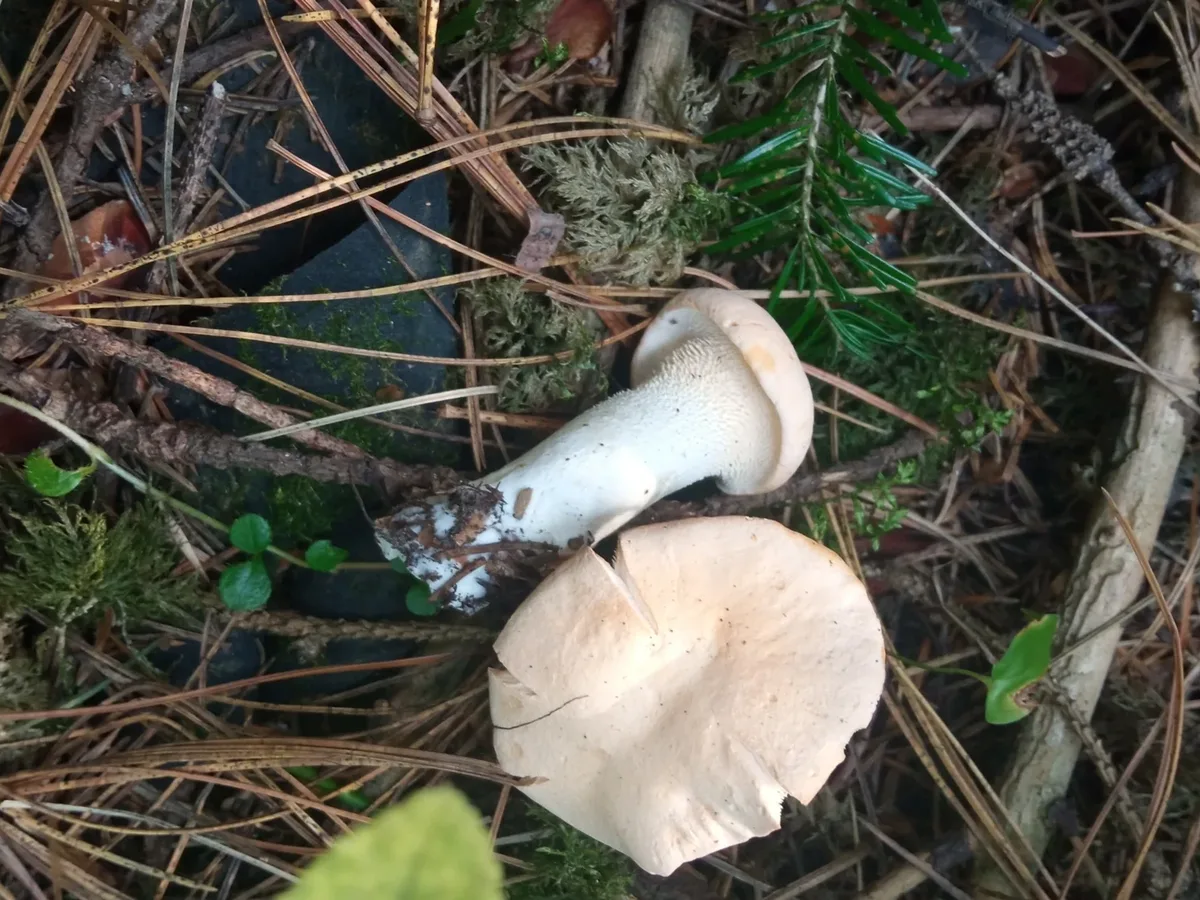 © Tatiana Strus (CC BY 4.0)
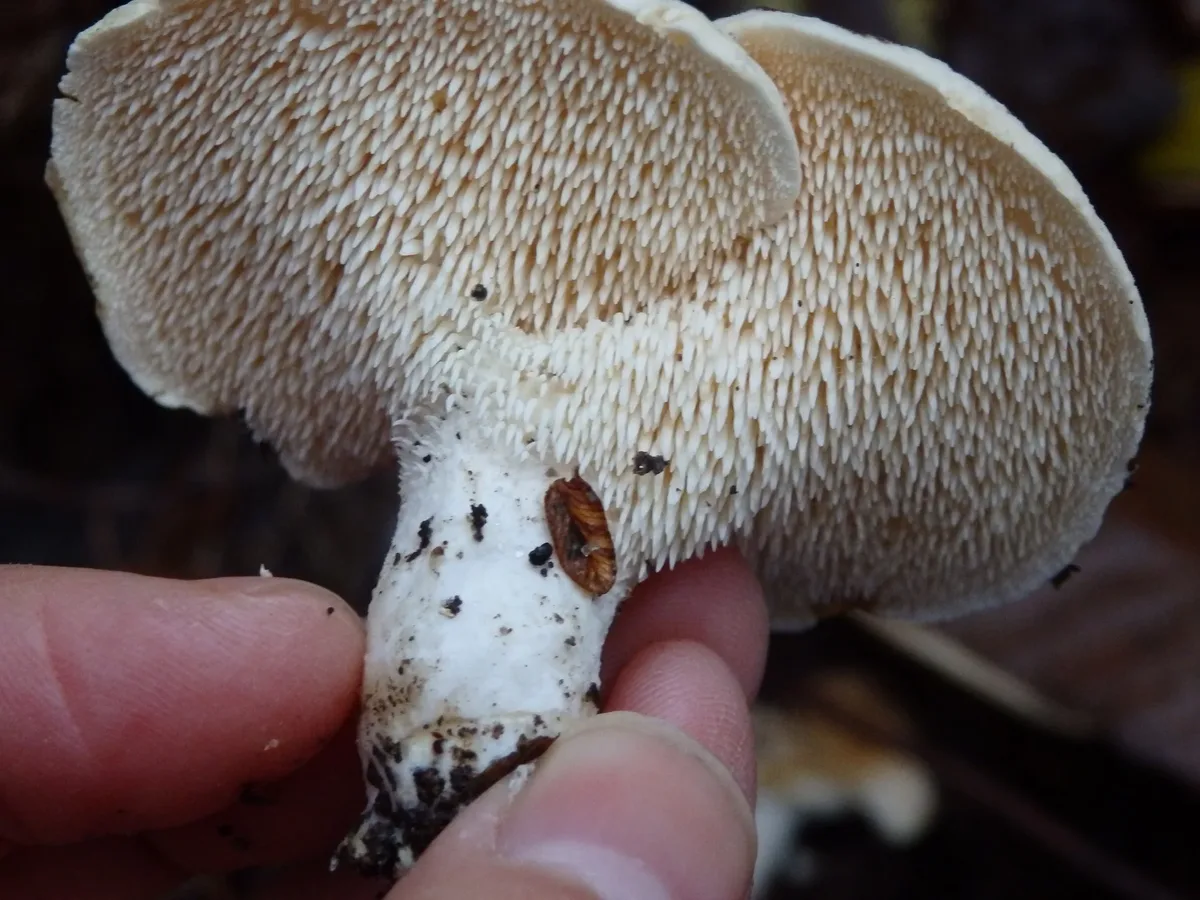 © Carminda Santos (CC BY 4.0)
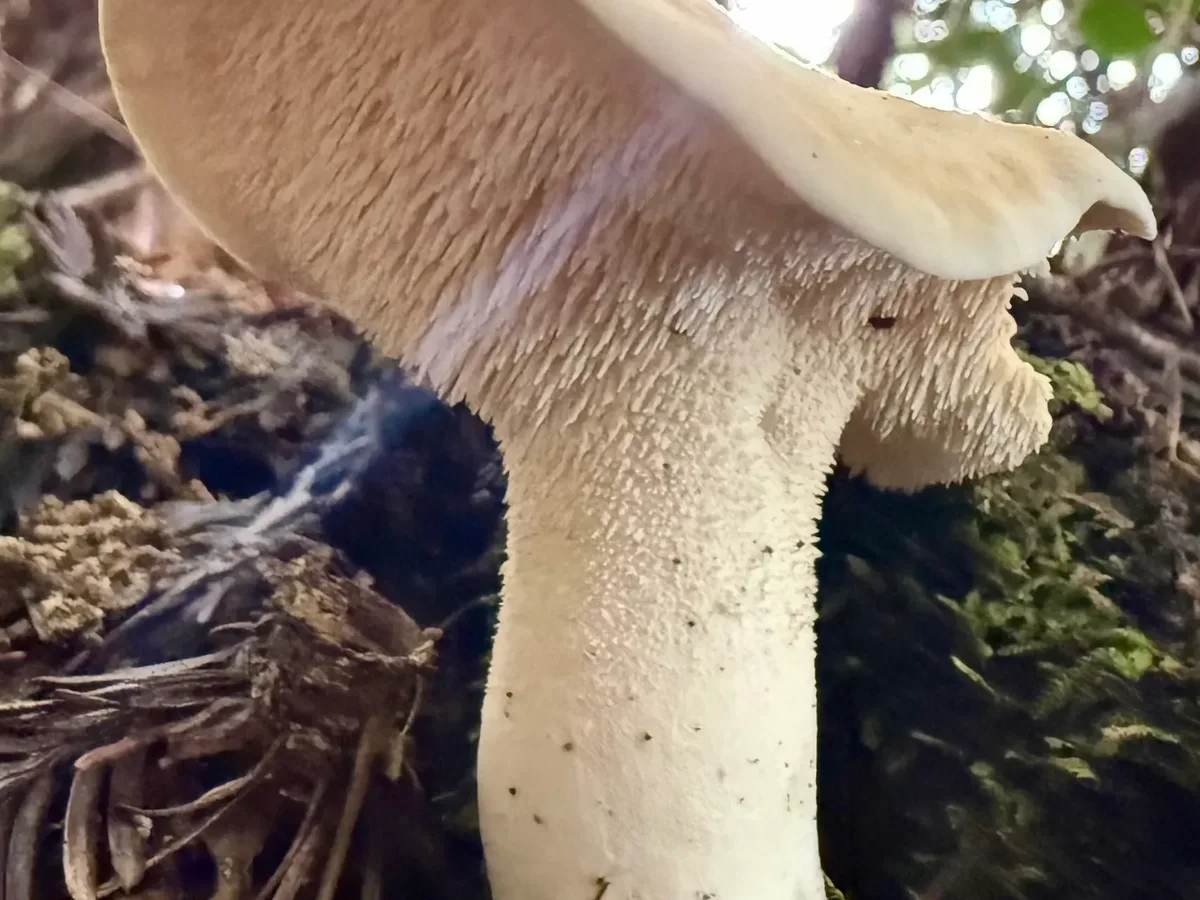 Chuck Wilson (CC0)
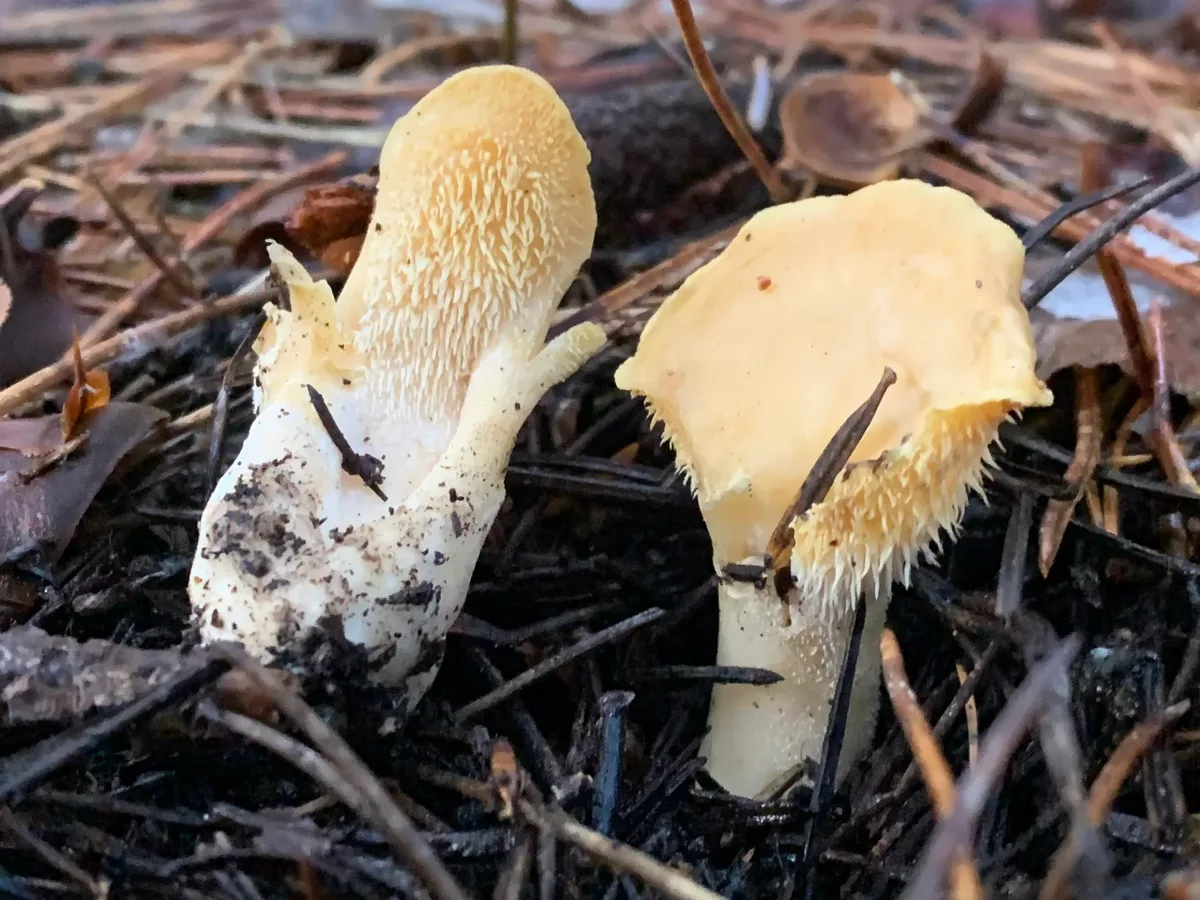 © Manuela Fiorini (CC BY)
 © Manuela Fiorini (CC BY)
 © Manuela Fiorini (CC BY)
 © Carminda Santos (CC BY)
 © Carminda Santos (CC BY)
 © Carminda Santos (CC BY)
 © Carminda Santos (CC BY)
 © Karim Haddad (CC BY 4.0)
 © Ульяна Лалак (CC BY 4.0)
 © Susanna (CC BY 4.0)
 Ukorzeniony Aquarium (CC0)© Tatiana Strus (CC BY 4.0)© Carminda Santos (CC BY 4.0)
One of the best mushrooms you can bring home - once you are certain of the identification.
How to recognise it
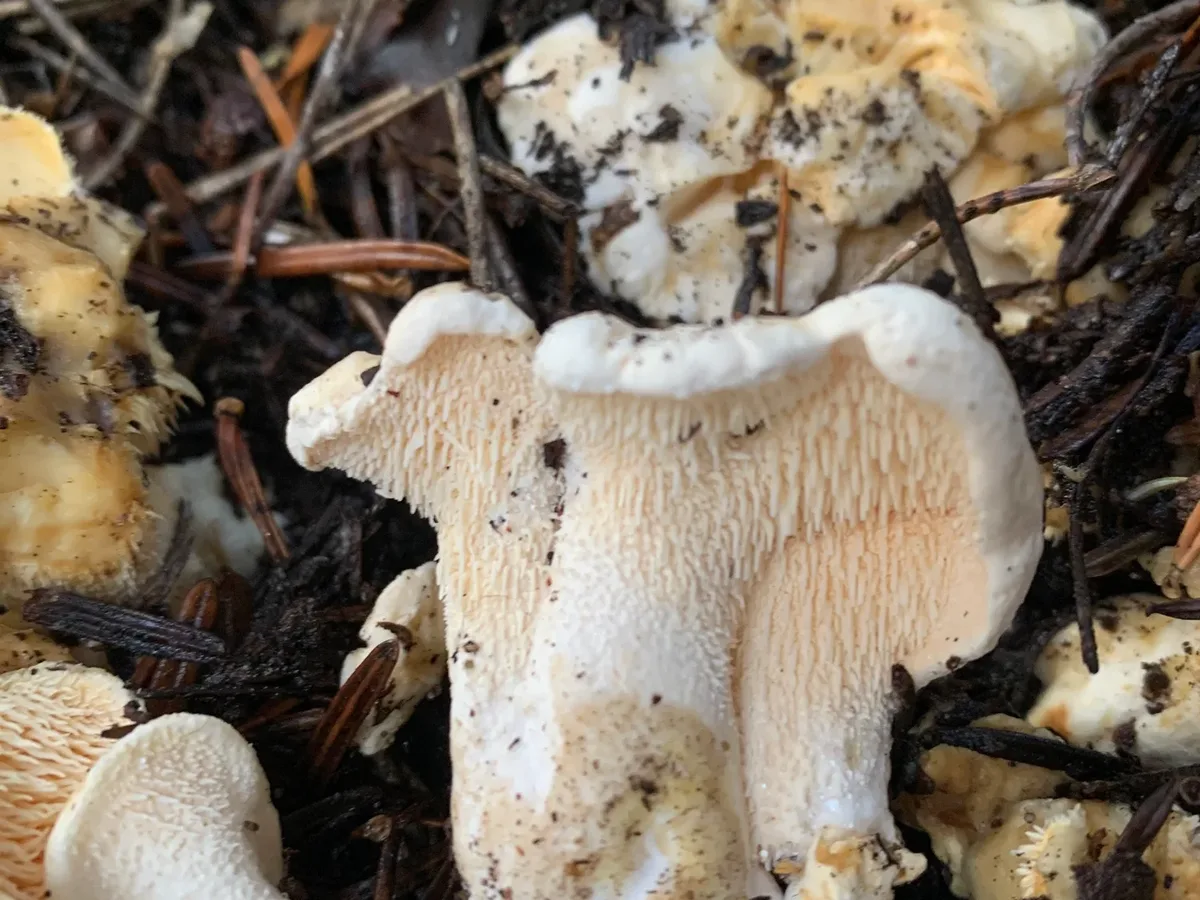
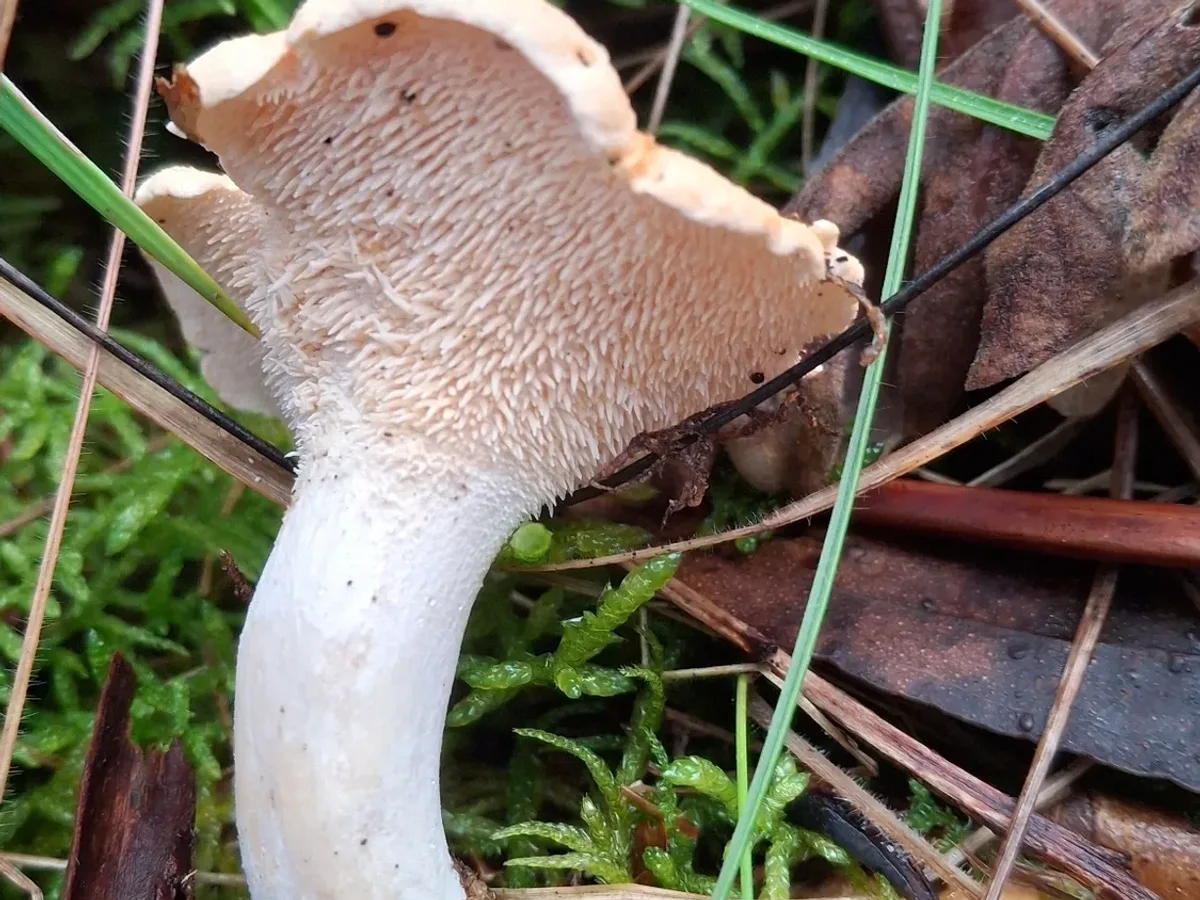
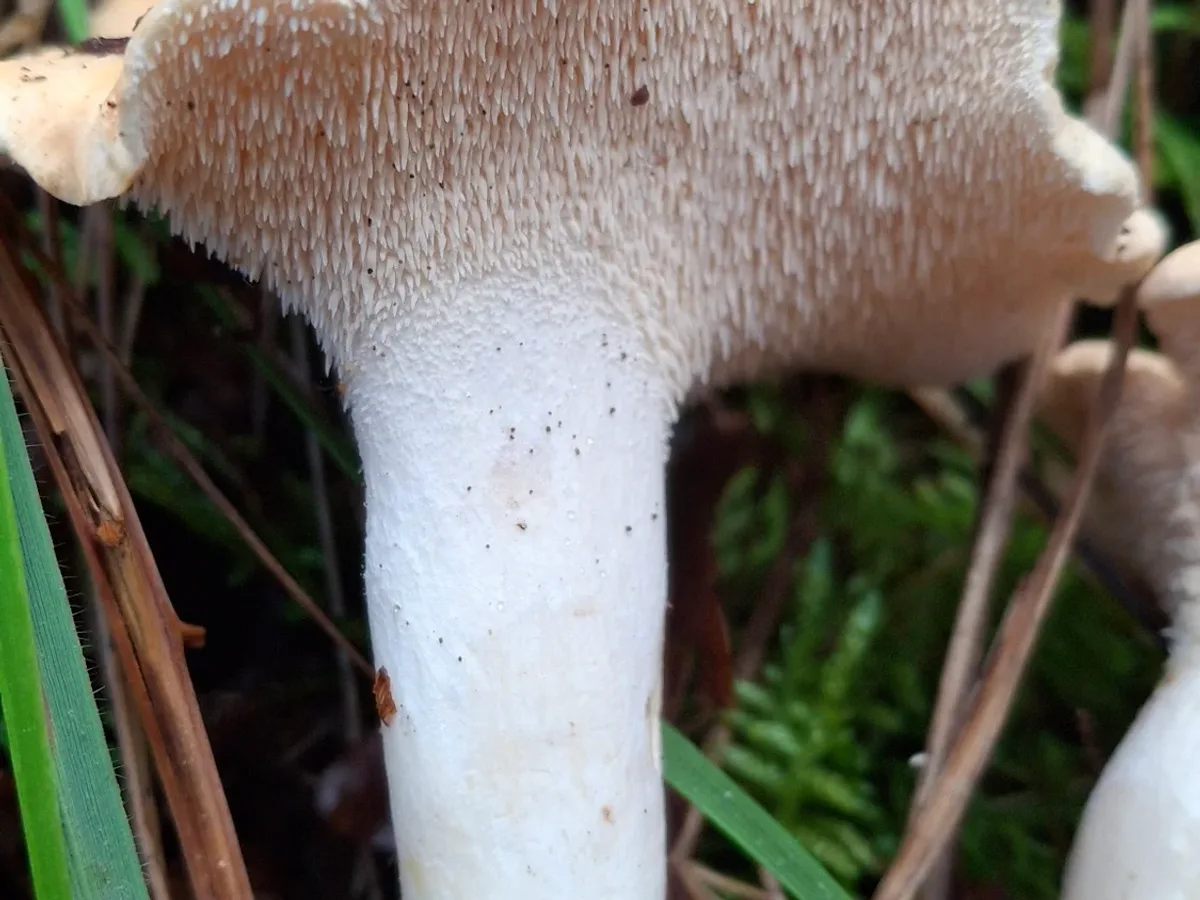
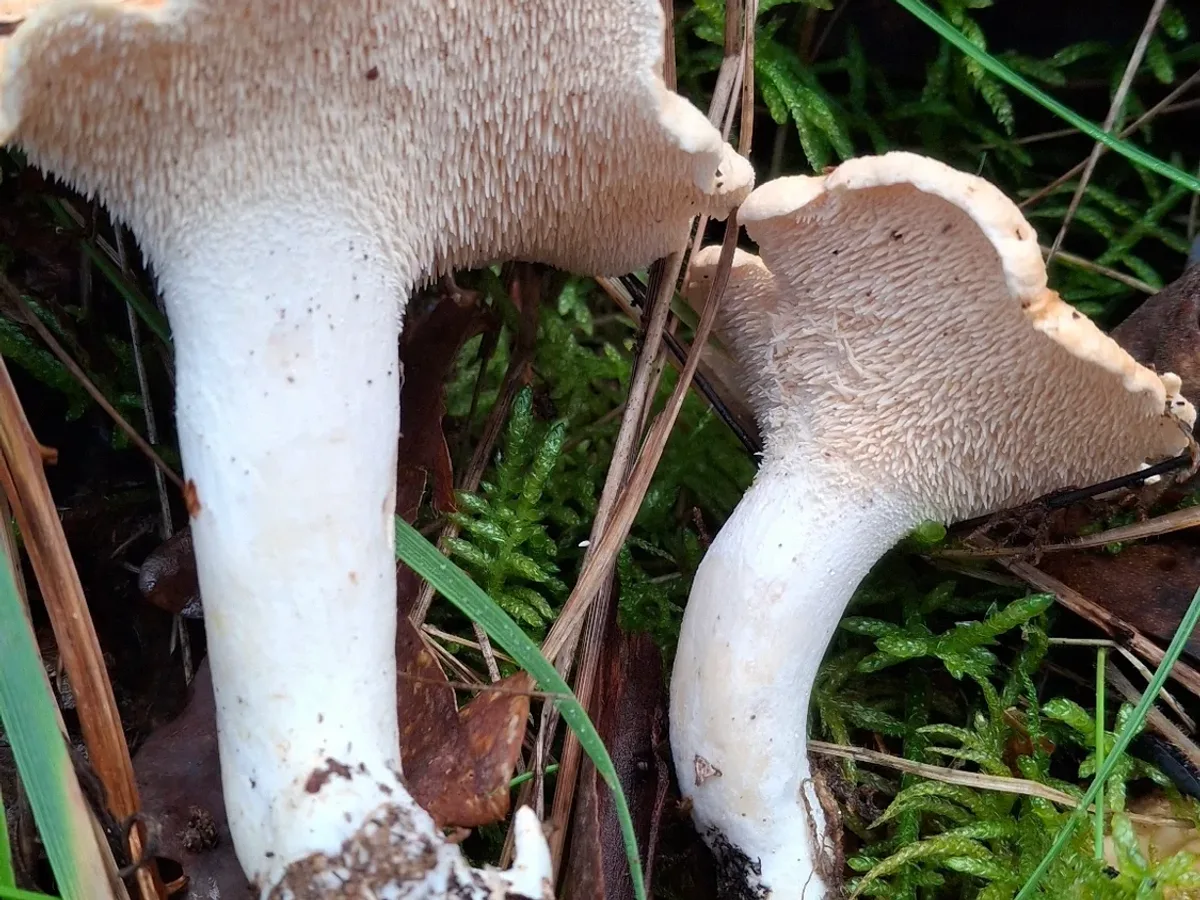
The hedgehog mushroom defies the usual vocabulary of field guides. Where almost every other woodland mushroom presents gills, ridges, or pores on its underside, Hydnum repandum offers spines.
Spines
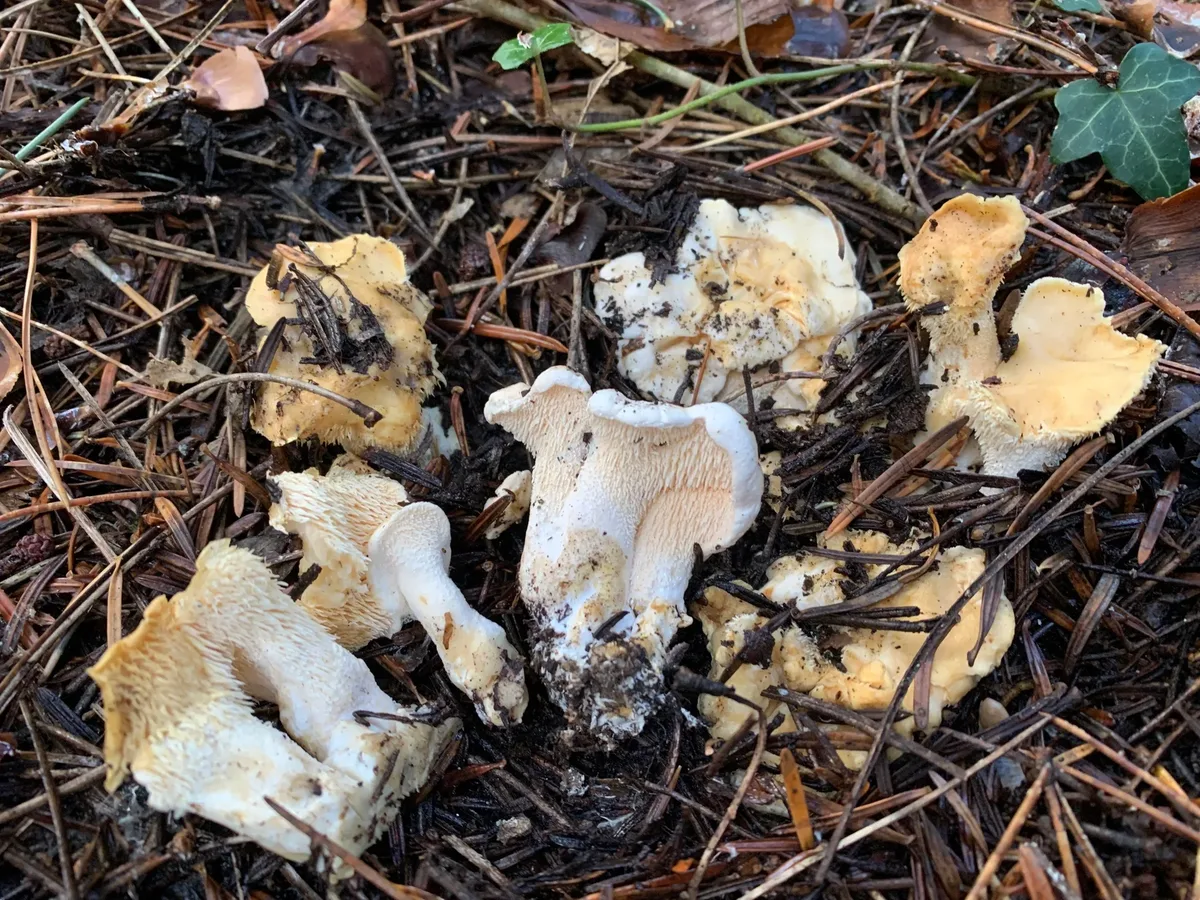
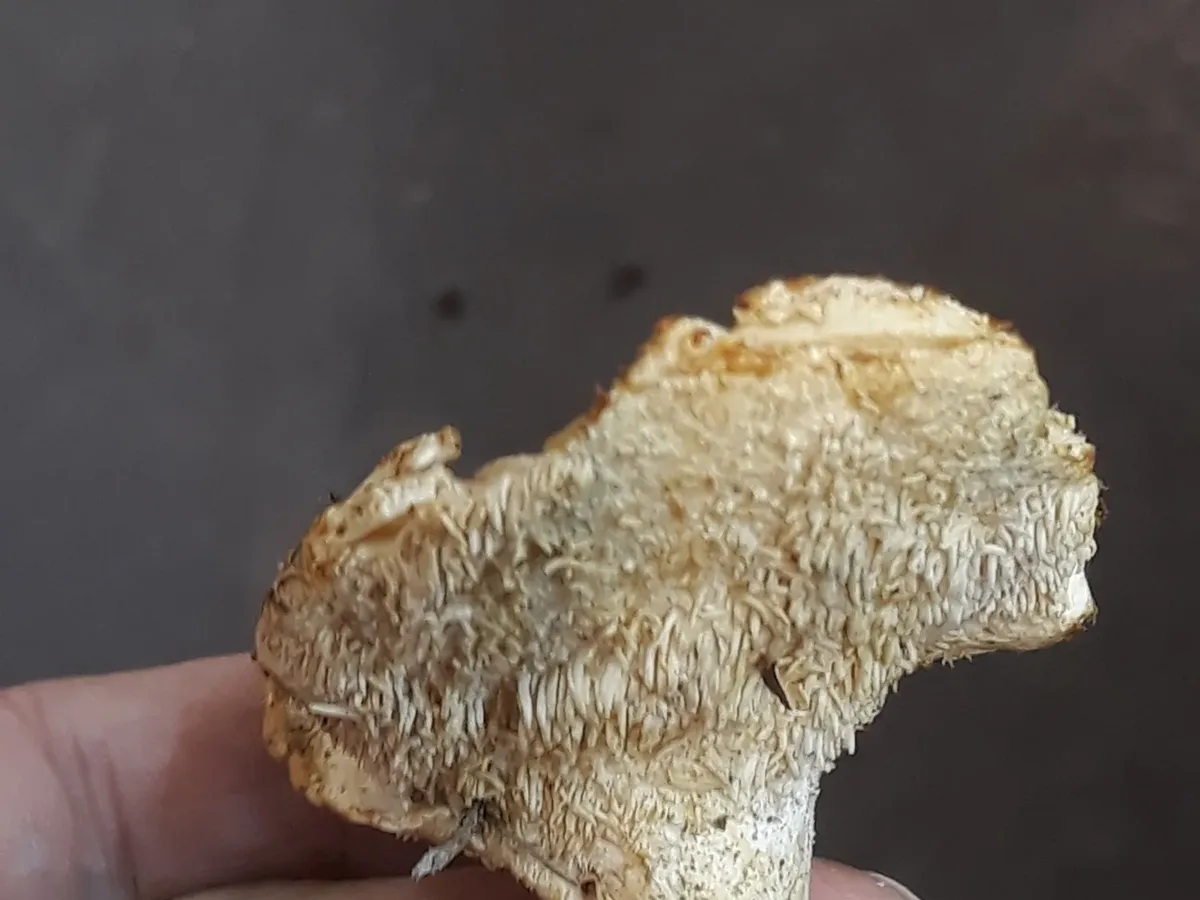
Dense, pale, brittle teeth 1-6 mm long cover the hymenophore like the quills on its namesake animal. They are soft enough to brush off with a fingertip and tend to run slightly down the stem, giving the transition from cap to stipe a characteristic fringed collar.
Cap
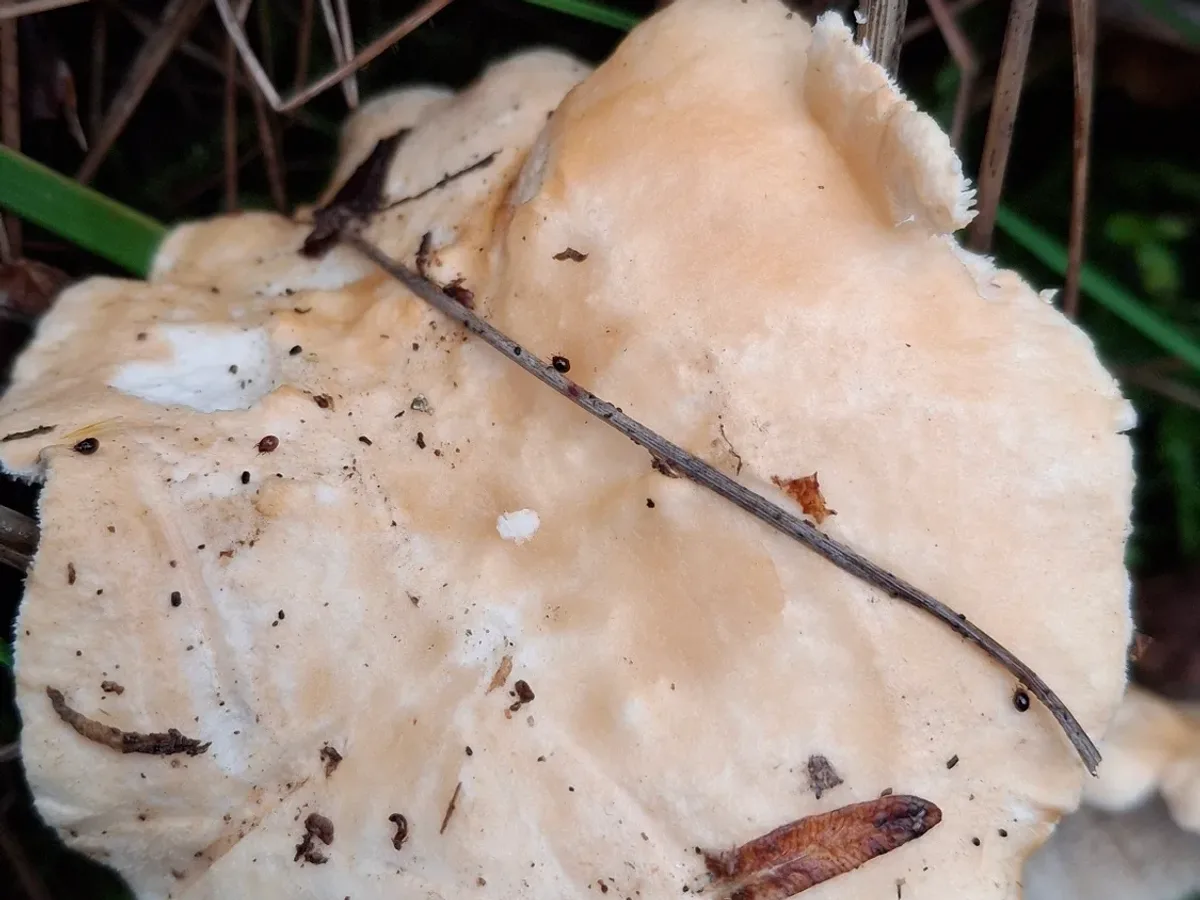
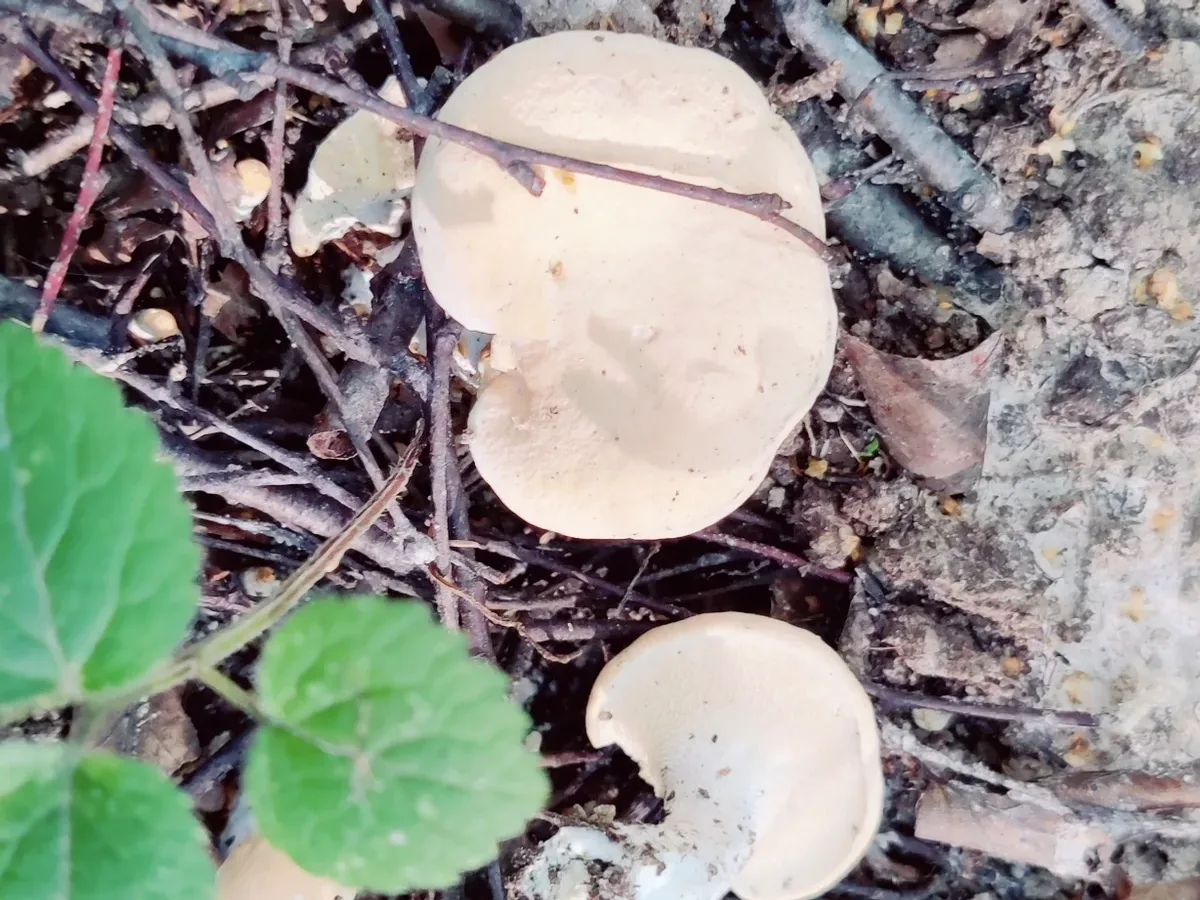
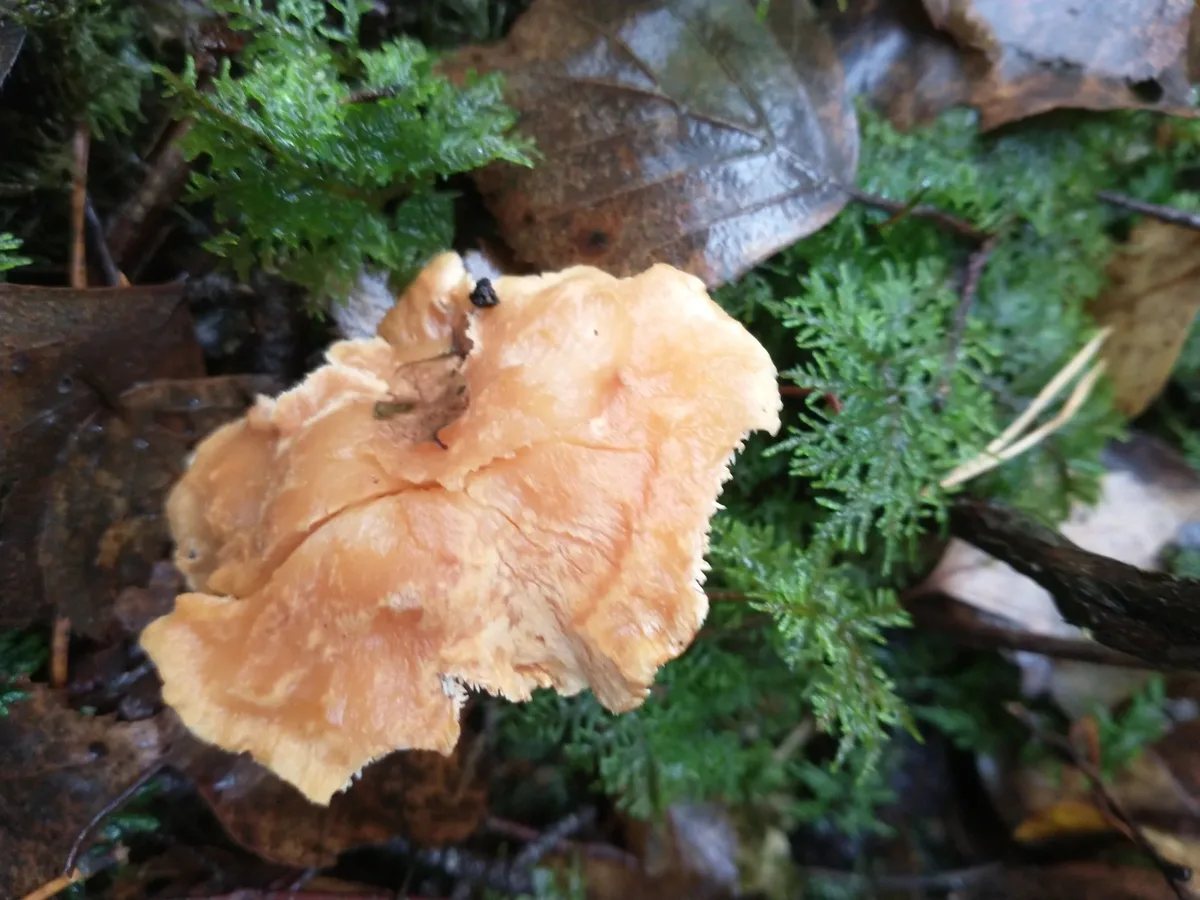
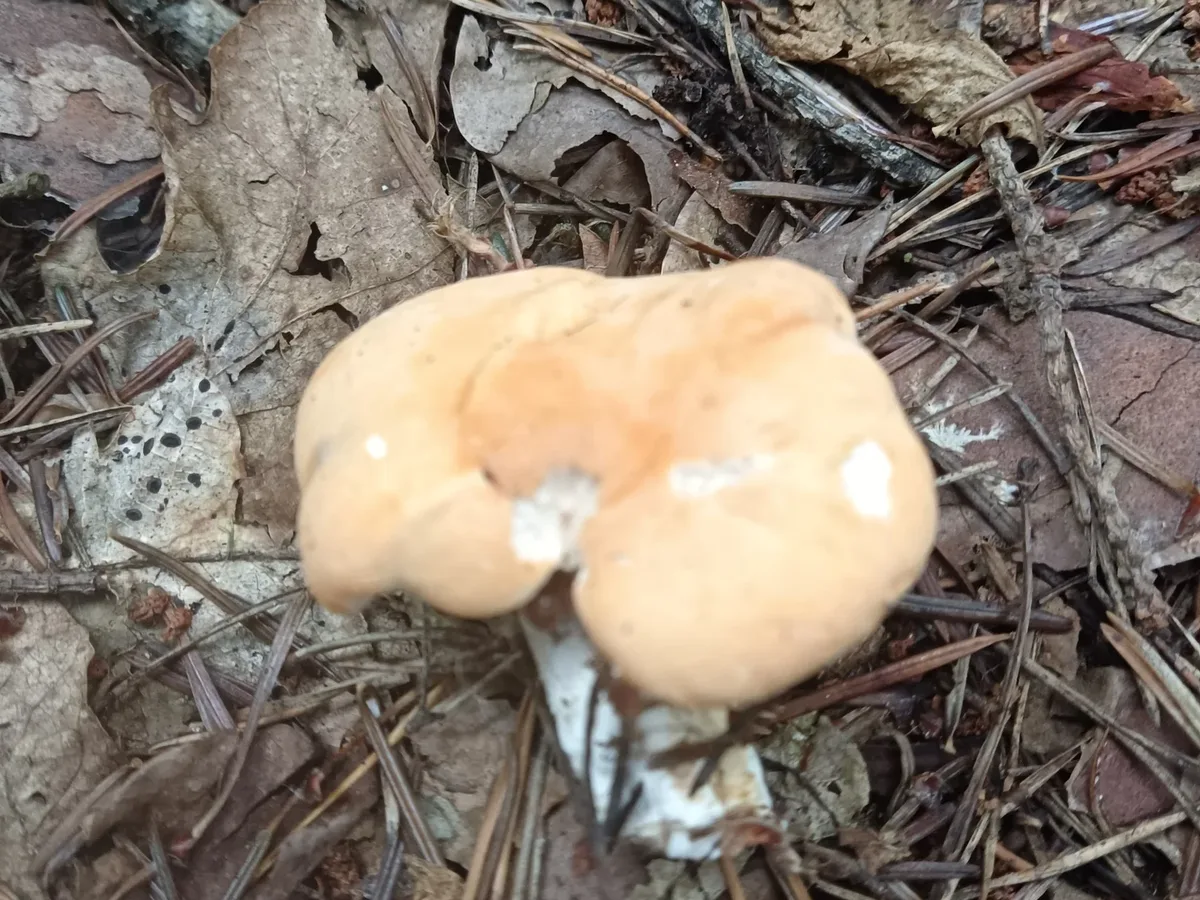
Broad and irregularly lobed, ranging from 4 cm in slender specimens to 25 cm in mature ones - rarely a tidy circle, more often a geography of shallow waves and eccentric bulges shaped by whatever it pushed through on its way up.
Colour varies with age and moisture: fresh caps lean toward cream-white or pale ochre-buff, deepening toward salmon-pink or warm honey-yellow as the flesh matures or dries. The cuticle is dry and slightly felty, matt rather than glossy.
Stem
Stout, often markedly off-centre or eccentric, white to ivory, firm and solid.
Flesh
White, dense, and slow to discolour throughout, though it may bruise faintly yellowish or brownish where cut or handled. There is no ring, no volva, and no latex.
Smell & taste
No appreciable smell beyond a faint pleasant earthiness.
Spore print white. Microscopy shows broadly ellipsoidal, smooth, non-amyloid spores (6-8 × 5-6 µm).
Where & when it grows
Habitat
Hydnum repandum is an obligate ectomycorrhizal partner, meaning it can only fruit in the presence of a living host tree whose fine rootlets it colonises with its hyphal sheaths.
The partnership is broad-minded - it will accept beech, oak, birch, hornbeam, lime, sweet chestnut, hazel, and several conifers including spruce and pine - which explains why hedgehog mushrooms appear across such a wide variety of European woodland types.
Mixed deciduous forest, open beechwoods with deep leaf litter, ancient oak pasture, and edge habitats where birch meets the shadow of conifers are all productive.
The common ecological denominators are:
- Well-drained, slightly acidic to neutral soils with a developed humus layer.
- Moderate shade that retains moisture without waterlogging.
- Crucially, enough undisturbed time for the mycelium to establish.
The mycelium itself is perennial: once rooted, the network persists in the soil through drought, frost, and season change, its carbon supplied in part by sugars from the tree above.
This is not a short-term relationship. Some mycelial networks are almost certainly decades old, outlasting individual fruitbody seasons the way an old tree outlasts its annual leaf-fall.
The same mossy hollow that yields hedgehogs one October is worth revisiting every year thereafter.
When
The hedgehog mushroom is one of the more calendar-generous species in temperate European woodland, fruiting from late summer (August) through the full depth of autumn and into early winter.
The first fruitbodies can appear as early as August in northern and upland sites, where the soil cools sooner after summer warmth.
Across much of central and western Europe, September through November represents peak abundance, aligning with the post-summer soil-temperature drop into the 5-18 °C window the fungus prefers and the sustained rainfall that drives the flush.
In milder Atlantic-climate regions - coastal France, the British Isles, parts of northern Spain and northern Italy - the season extends into December and even into January when conditions remain mild.
Unlike some autumn species that rush out after the first significant rain and collapse within a week, the hedgehog tends to develop more gradually and to hold its quality well once open, giving foragers a wider picking window than many comparable species.
Cold tolerance is notable: fruitbodies can withstand light frosts and resume development when temperatures rise again. This durability is one reason the species can be reliably found well after the first field-guide deadlines for autumn mushrooms have theoretically passed.
How it grows
Hedgehog mushrooms are gregarious, fruiting in loose troops, scattered clusters, and - where the mycelium has had the time and space to expand radially over many seasons - the partial arcs or full rings that foragers call fairy rings.
The ring formation is not magic but geometry. The mycelium expands outward at a roughly uniform annual rate from its original point of establishment, depleting the substrate at its centre and fruiting at the leading edge where it meets fresh, undegraded organic matter.
Because the rate of expansion is slow and consistent, a large, well-formed ring represents a very old mycelium.
Fruitbody development after a triggering rain event typically takes seven to fourteen days to complete - unhurried by the standards of, say, ink caps or oysters, which push through in hours. Individual caps continue to expand for several days, which is part of why they can reach 25 cm.
The teeth (spines) develop relatively late in cap development, appearing first as a smooth, undifferentiated hymenium surface and differentiating into distinct teeth as the cap reaches mature size.
Older fruitbodies in prolonged wet weather can become soft and slightly bitter as the flesh takes on moisture and begins to degrade - the picking window is wide but not unlimited.
Fruiting conditions
Fruits in late summer through autumn after sustained rainfall; tolerates cool conditions and persists into early winter in mild climates.
Look-alikes
Hydnum repandum has the shortest dangerous-lookalike list of almost any European edible mushroom of comparable size and abundance, and the reason is structural: no other common species in its habitat presents soft, downward-pointing spines on the cap underside.
- Chanterelles (Cantharellus cibarius and relatives) share the pale cream-to-golden colour and irregular cap shape and can trigger momentary confusion at a distance, but the underside resolves the question instantly - chanterelles bear blunt forking ridges that run down the stem, not teeth. This is a low-stakes comparison since chanterelles are equally edible.
- Pale milkcaps (Lactarius camphoratus, L. pallidus, L. quietus and allies) share the general colour palette and woodland habitat but always have true bladed gills and exude coloured or white milk (latex) when cut or broken - Hydnum repandum has neither.
- Hydnum rufescens (terracotta hedgehog), a close relative, is smaller and distinctly more orange-brown; it is fully edible and frequently found in the same woodland at the same time.
No deadly or even seriously toxic species is known to be regularly confused with the hedgehog mushroom in central or western European foraging practice.
The combination of spiny underside plus white spore print plus absence of latex plus white firm flesh in a woodland context is effectively diagnostic.
Resembles the hedgehog from above, but the chanterelle has blunt ridges/false gills rather than the hedgehog's spines.
Gelatinous with rubbery spines.
Can resemble a pale chanterelle from a distance, but the spiny underside of Hydnum (versus chanterelle's blunt ridges/false gills) tells them apart. Both edible.
Scaly, darker in colour, and can be bitter.
Smaller and more orange than H. repandum; equally edible.
In the kitchen
Picking & cleaning
Hedgehog mushrooms are among the most forager-friendly species for field identification, preparation, and transport.
- Cut cleanly at the base with a knife rather than pulling - this leaves the base of the stem and the surrounding mycelium undisturbed, which matters for a mycorrhizal species whose underground network is the long-lived part of the organism.
- When cutting, check the underside immediately: the brittle spines are the diagnostic feature, but they are also the first thing to confirm on any new find.
- Choose caps that are still firm and dry to the touch, with spines that point cleanly downward and haven't begun to soften or discolour brown.
- Avoid very large, open caps if they feel spongy or if the flesh smells unpleasant - bitterness intensifies in over-mature specimens.
In the basket, hedgehog mushrooms transport well because the firm flesh doesn't bruise or collapse the way chanterelle ridges or delicate gill mushrooms can.
The spines shed during handling and will coat everything else in a white powder, so it pays to keep them in their own bag or wrap them loosely.
Field cleaning is easy: a stiff brush or dry cloth removes soil and debris without needing water, which can accelerate deterioration before cooking.
Cooking
The hedgehog mushroom's firm, dense flesh is its defining culinary asset. Where chanterelles can collapse into silky softness when overcooked and many large cap mushrooms shed water into the pan and stew rather than fry, Hydnum repandum holds structure well at high heat, making it unusually versatile across cooking techniques.
The classic treatment is high-heat butter frying in a dry, hot pan:
- 1Add the pieces without crowding.
- 2Let them colour before moving them.
- 3Finish with butter, garlic, and parsley.
The mild, faintly sweet and nutty flavour concentrates as moisture evaporates and the flesh picks up a light golden sear. The teeth tend to crisp at the edges in this treatment, adding a subtle textural contrast.
In soups and stews the hedgehog contributes body without disintegrating; in risotto it provides substance where lighter fungi disappear.
It is a natural pairing with chanterelles - the French autumn market tradition of combining the two is partly aesthetic (the colours complement each other) and partly textural (the chanterelle's silk against the hedgehog's bite).
For preserving:
- Drying works well: thin-sliced pieces dry evenly and reconstitute with good colour and flavour retention.
- Pickling in white wine vinegar with a bay leaf and peppercorns (a central European tradition) produces a product that keeps for months and works well on a charcuterie board or alongside braised meats.
Good to know
Hydnum repandum holds one of the best safety records of any European edible mushroom. The spiny underside is a structural feature with no parallel among dangerous species in its range, which means misidentification is not a realistic route to poisoning in normal field conditions.
France and Italy list it as an officially approved market mushroom - a regulatory recognition of both its abundance and the confidence with which it can be identified.
The single practical caveat is bitterness in older specimens: over-mature fruitbodies, particularly those wet for extended periods, can accumulate bitter-tasting compounds in the flesh. These are not toxic but are unpleasant and can cause mild gastrointestinal discomfort in sensitive individuals if eaten in quantity.
Blanching in boiling water for two to three minutes and discarding the water resolves bitterness reliably.
Otherwise no preparation precautions are necessary - the species does not require parboiling, no toxic compounds are known, and it can be eaten raw in small quantities (though cooking improves flavour significantly).
The species is appropriate for all experience levels of forager and is a widely recommended first wild mushroom precisely because its identification features are so unambiguous.
A reference guide - never an edibility guarantee. When in doubt, leave it out.