Parasol mushroom
Macrolepiota procera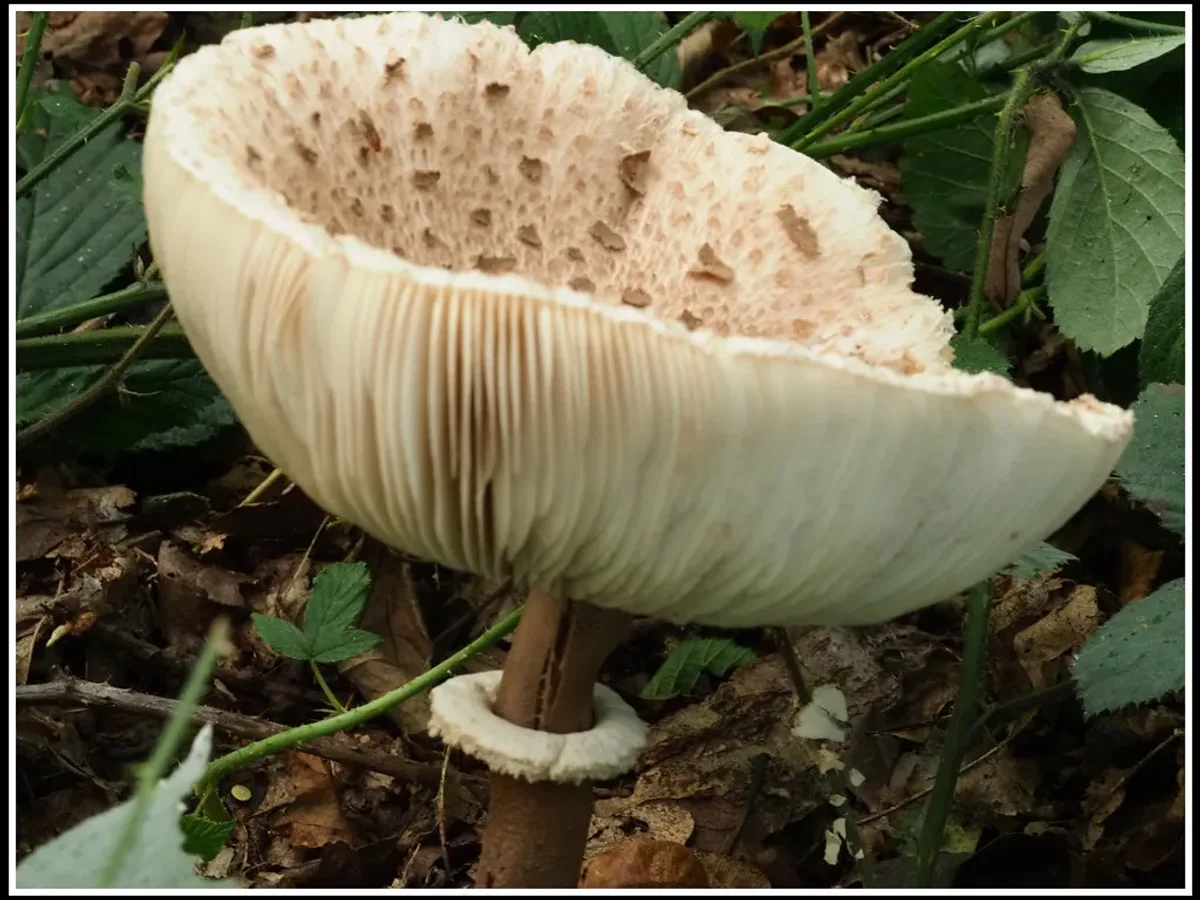 © pete. Taking a rest due to recent heart attack...S (CC BY 2.0)
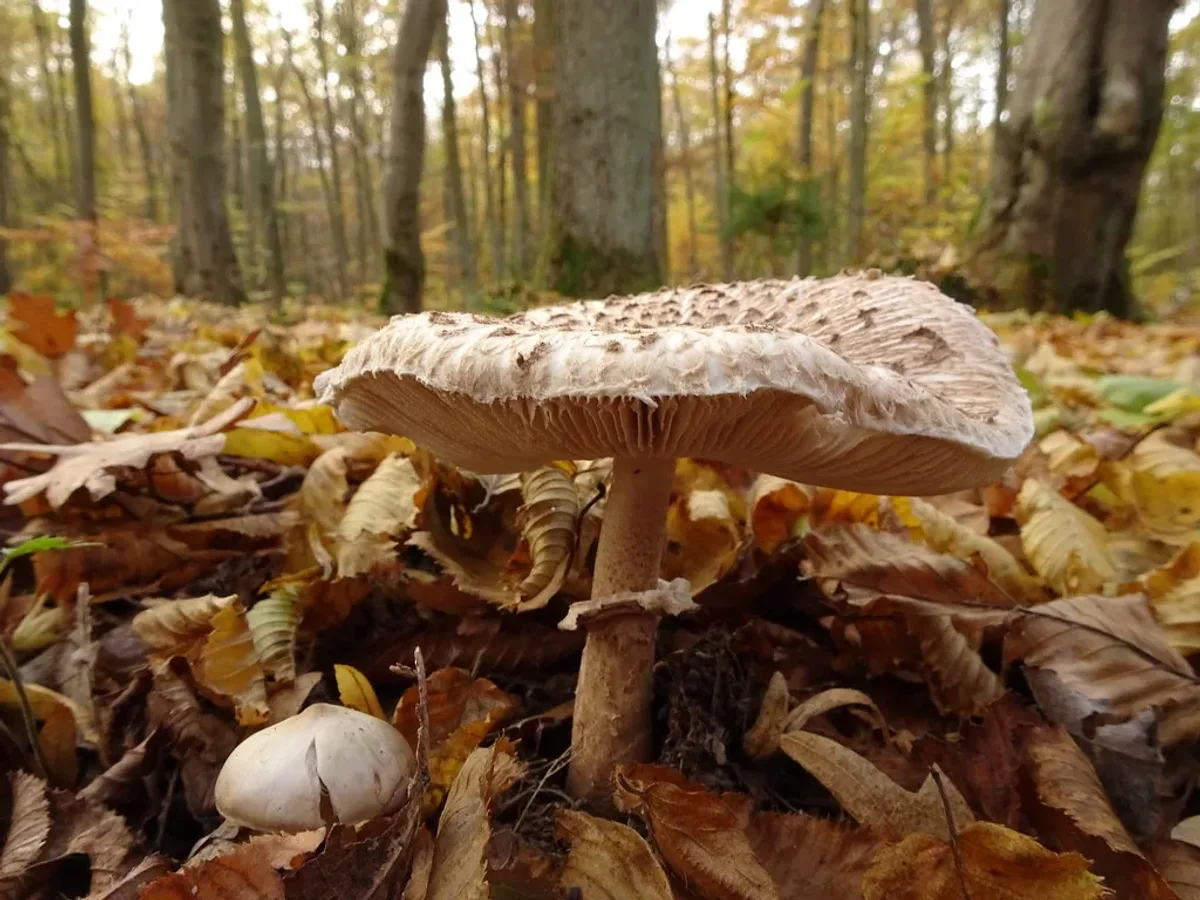 © Ephemeral Impressions (CC BY-SA 2.0)
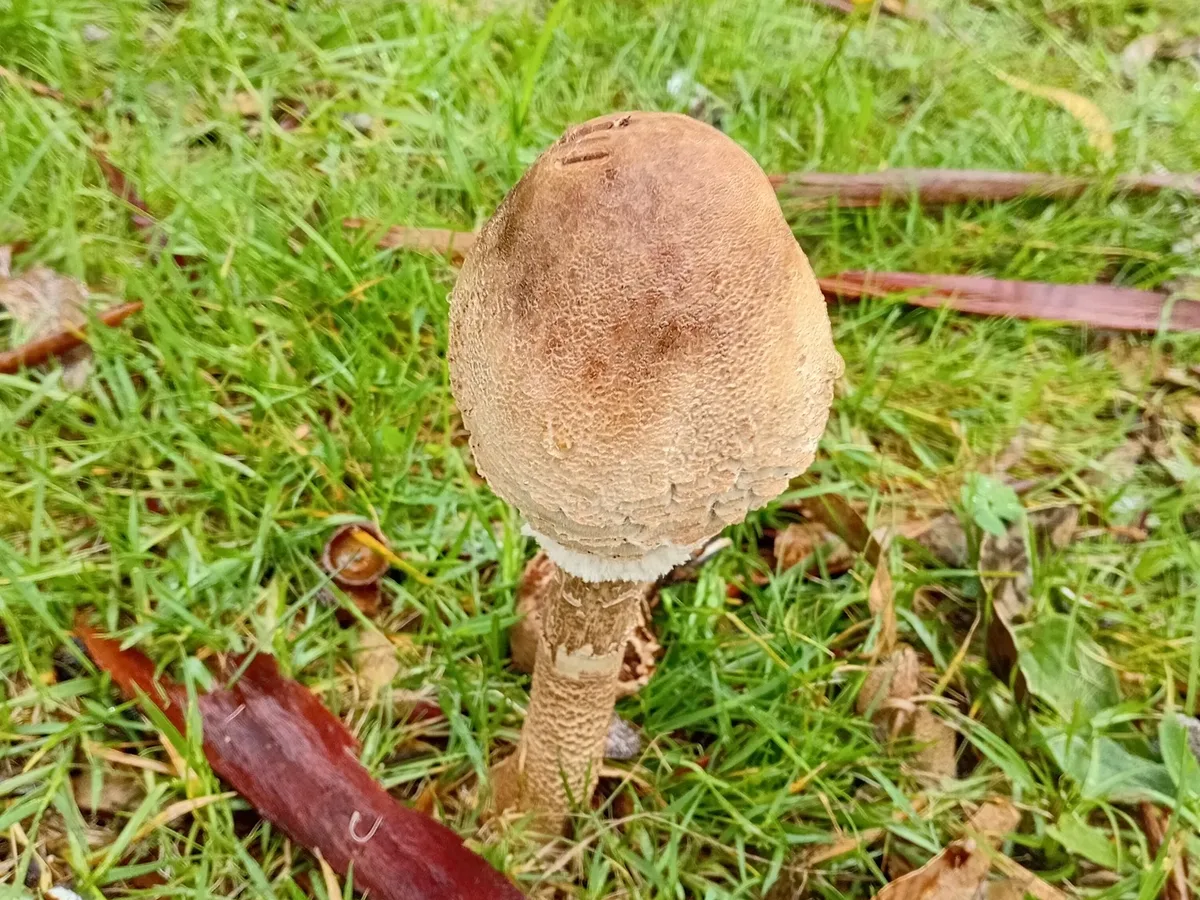 © Gijs Romijn (CC BY)
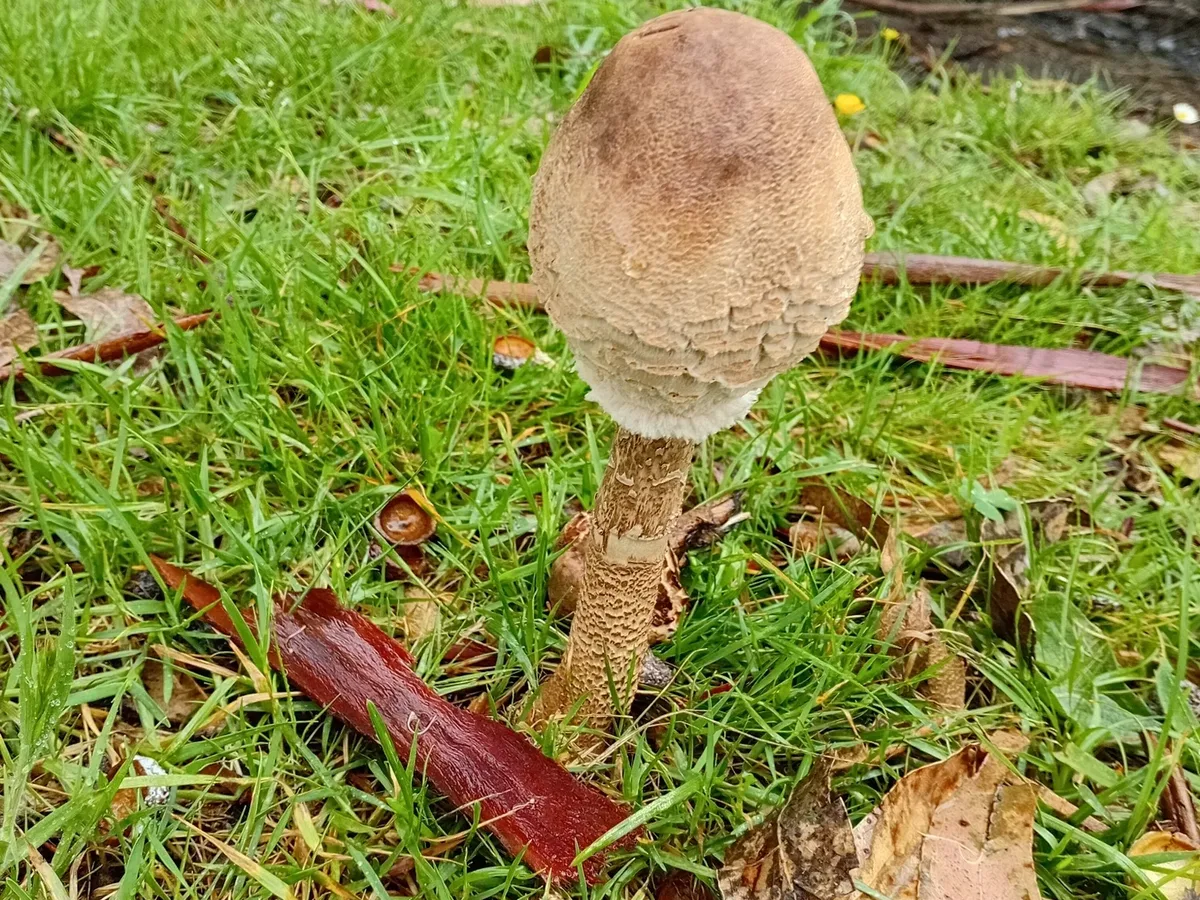 © Gijs Romijn (CC BY)
 © Gijs Romijn (CC BY)
 © bogsuckers (CC BY)
 © bogsuckers (CC BY)
 © marius (CC BY)
 © aga_l_ (CC BY)
 © aga_l_ (CC BY)
 © Ephemeral Impressions (CC BY-SA 2.0)
 © Thijs van Exel (CC BY 2.0)
 © Ephemeral Impressions (CC BY-SA 2.0)
 © Ephemeral Impressions (CC BY-SA 2.0)
 © Ephemeral Impressions (CC BY-SA 2.0)© pete. Taking a rest due to recent heart attack...S (CC BY 2.0)© Ephemeral Impressions (CC BY-SA 2.0)
One of the best mushrooms you can bring home - once you are certain of the identification.
Never eat a mushroom you are not 100% sure of - check the look-alikes below, and always cook wild mushrooms.
How to recognise it
Macrolepiota procera is one of the few European mushrooms where size alone is nearly diagnostic.
Cap
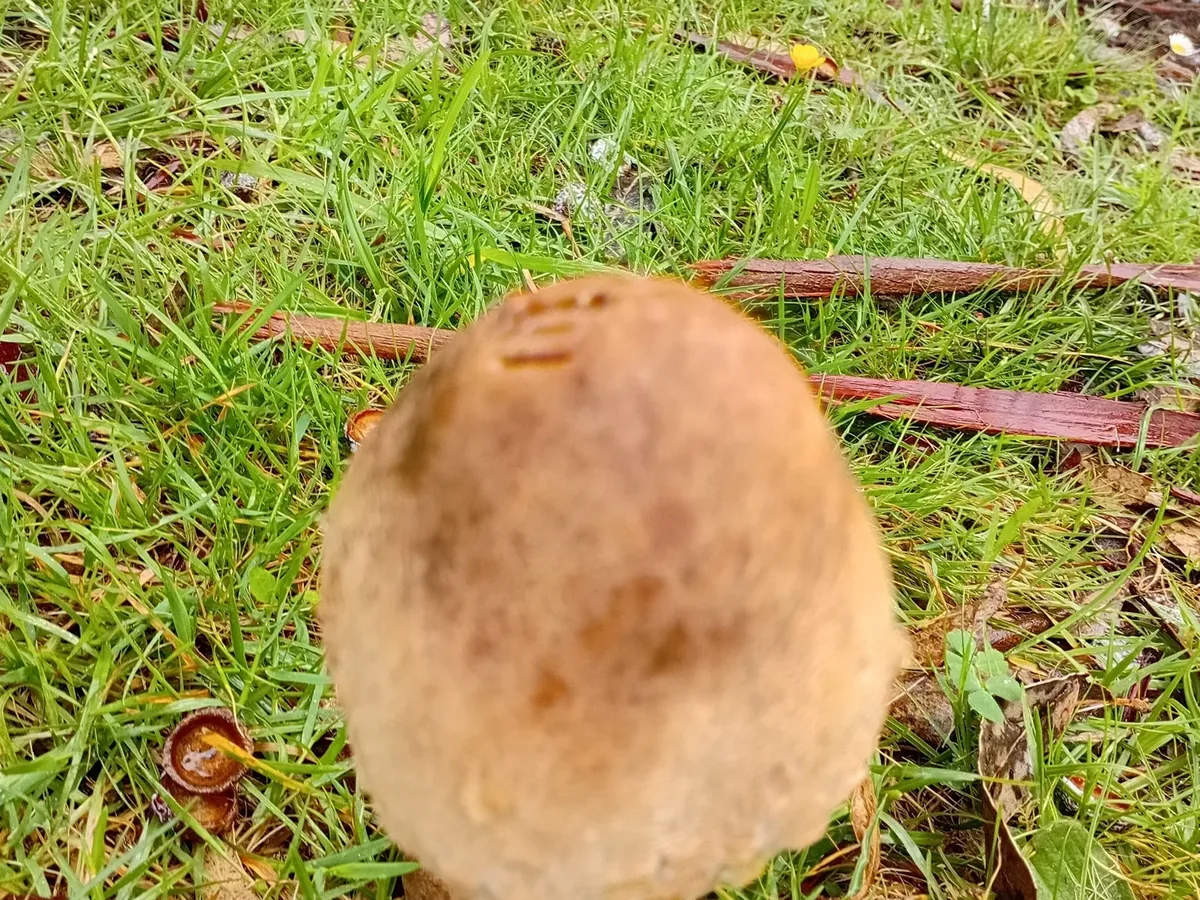
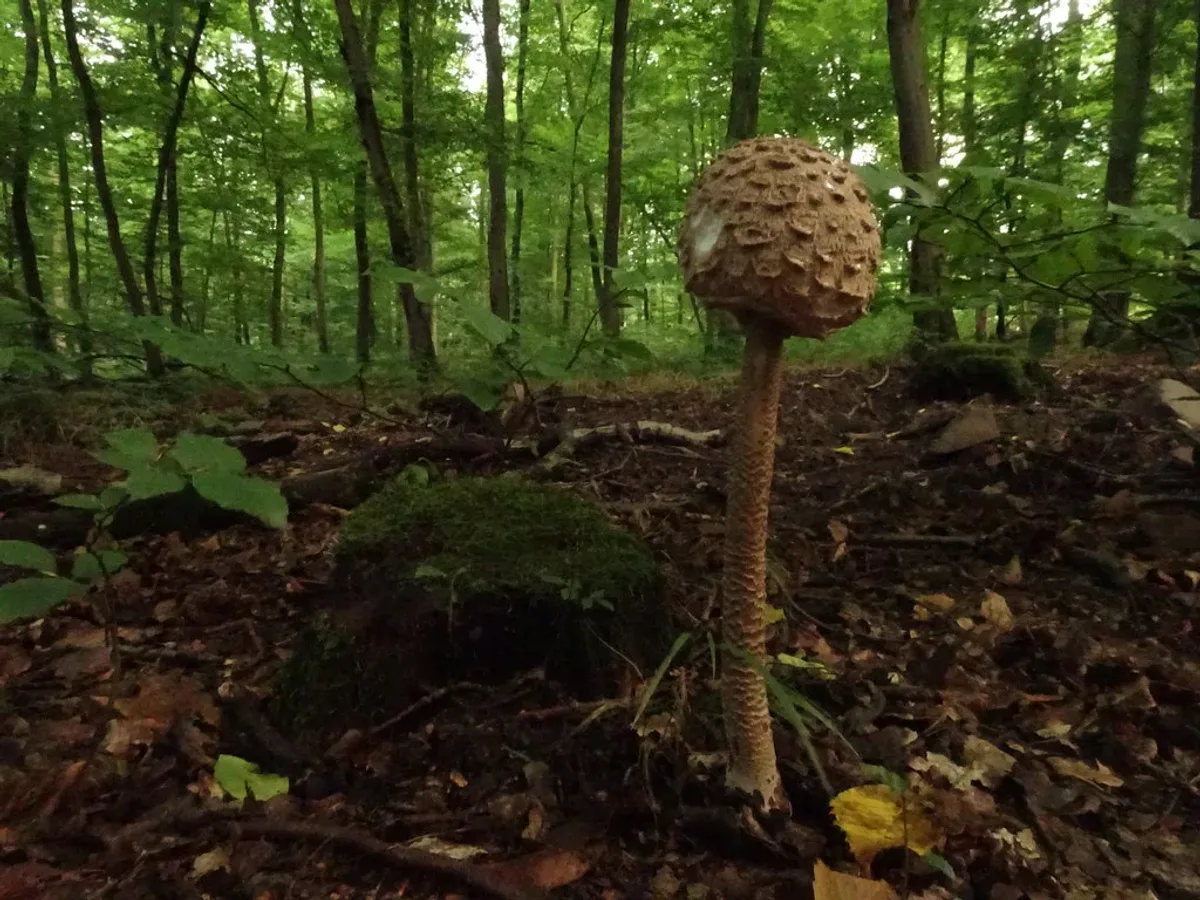
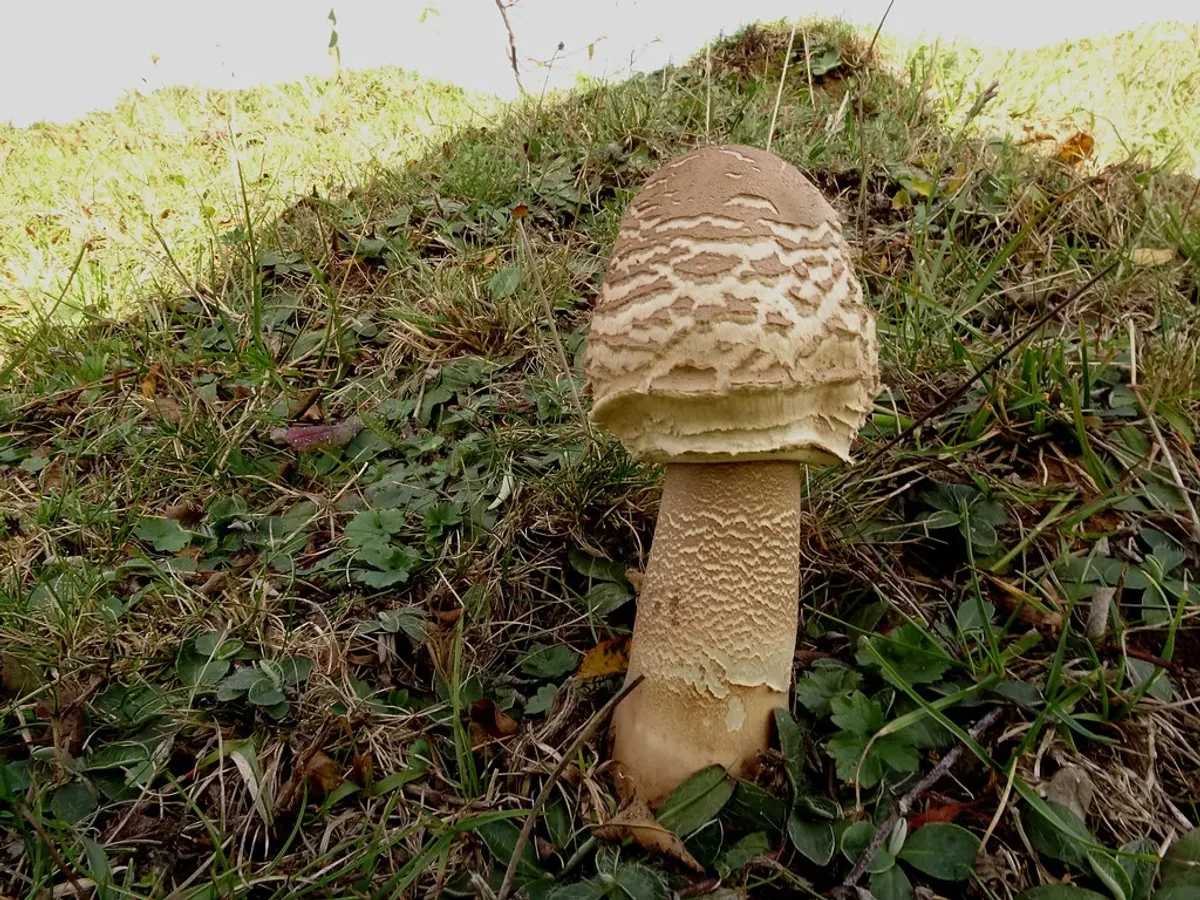
A mature cap routinely spans 25-40 cm and can reach 50 cm - wider than most dinner plates - yet the fruitbody begins life as a smooth, egg-shaped button tightly wrapped around the future stem.
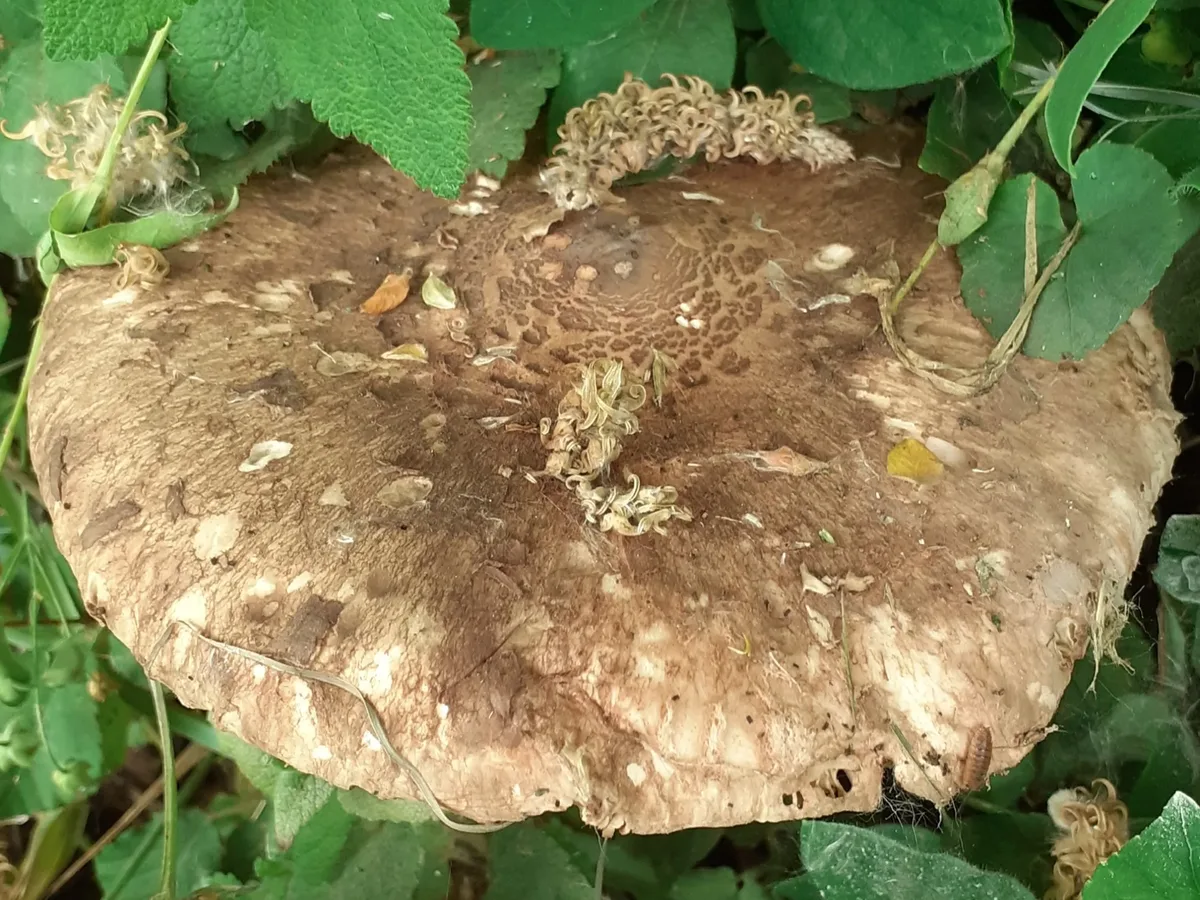
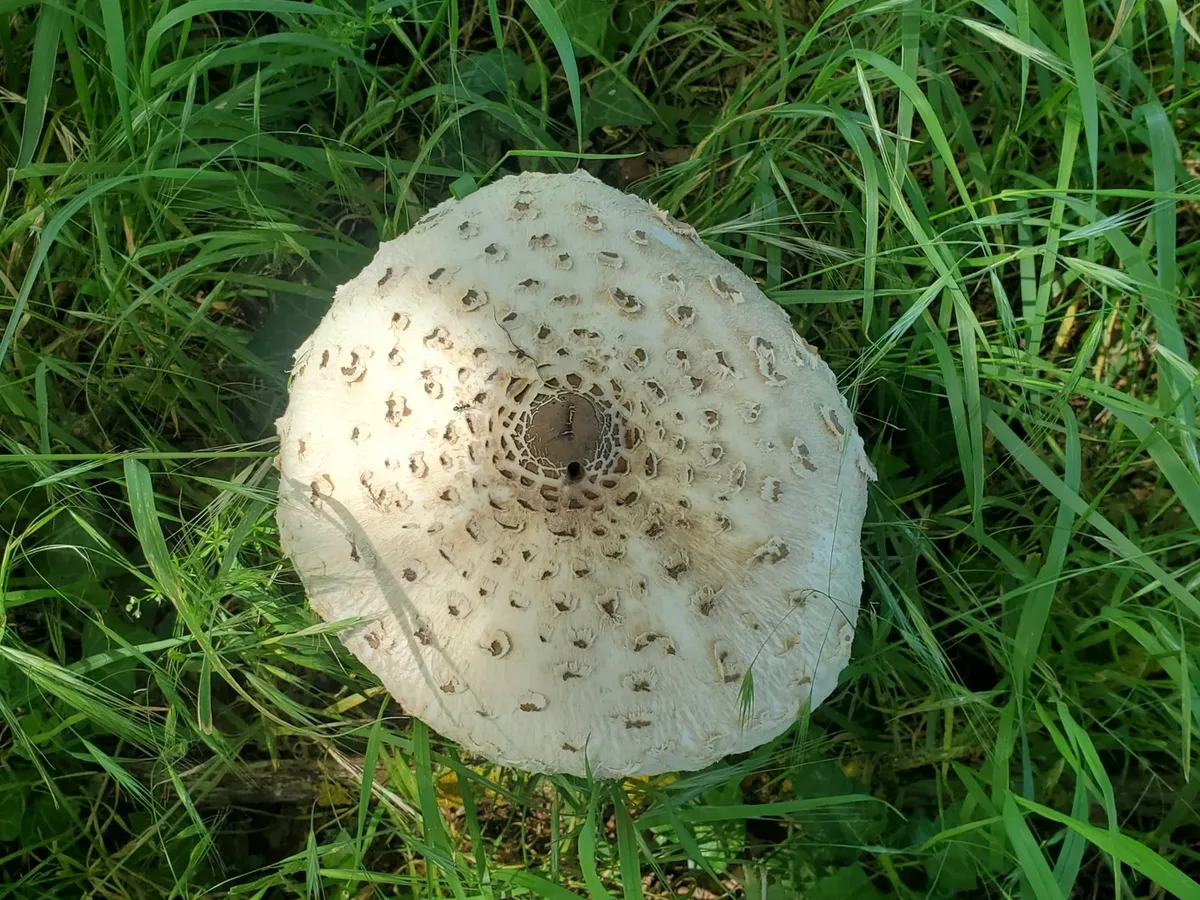
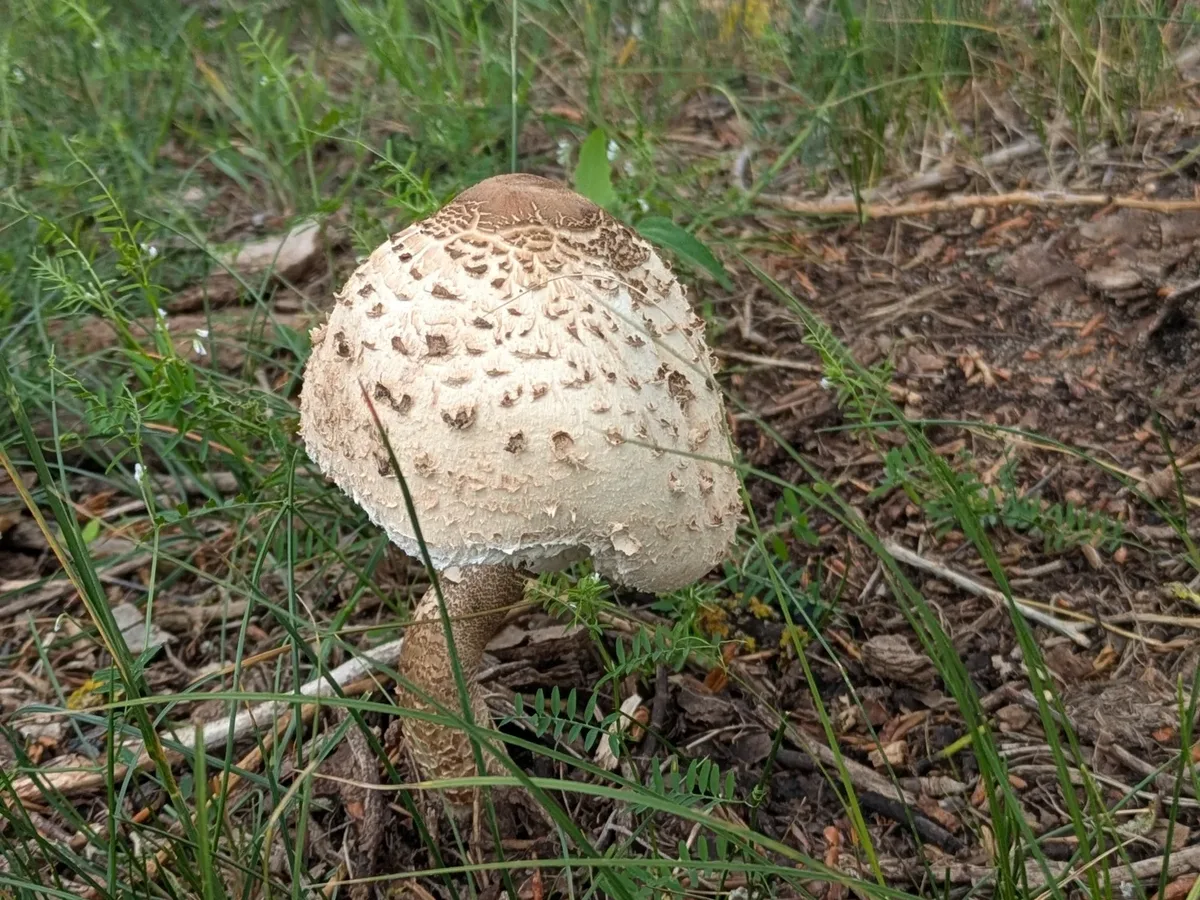
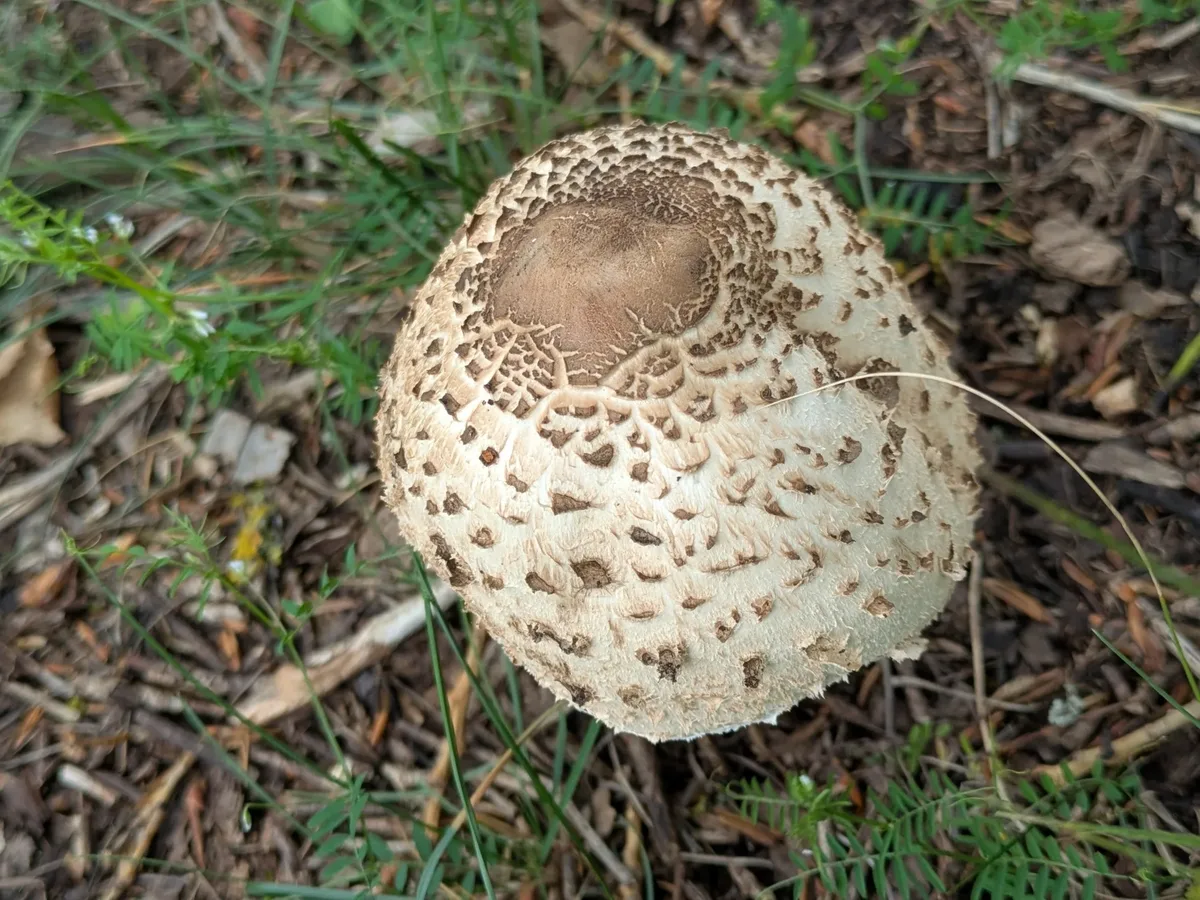
As it elongates into the classic drumstick silhouette, the cap skin stretches and splits into coarse, upturned scales: the central disc stays intact as a rich dark brown patch, while surrounding scales fade to medium brown, set against a cream-to-tan background that brightens toward the margin.
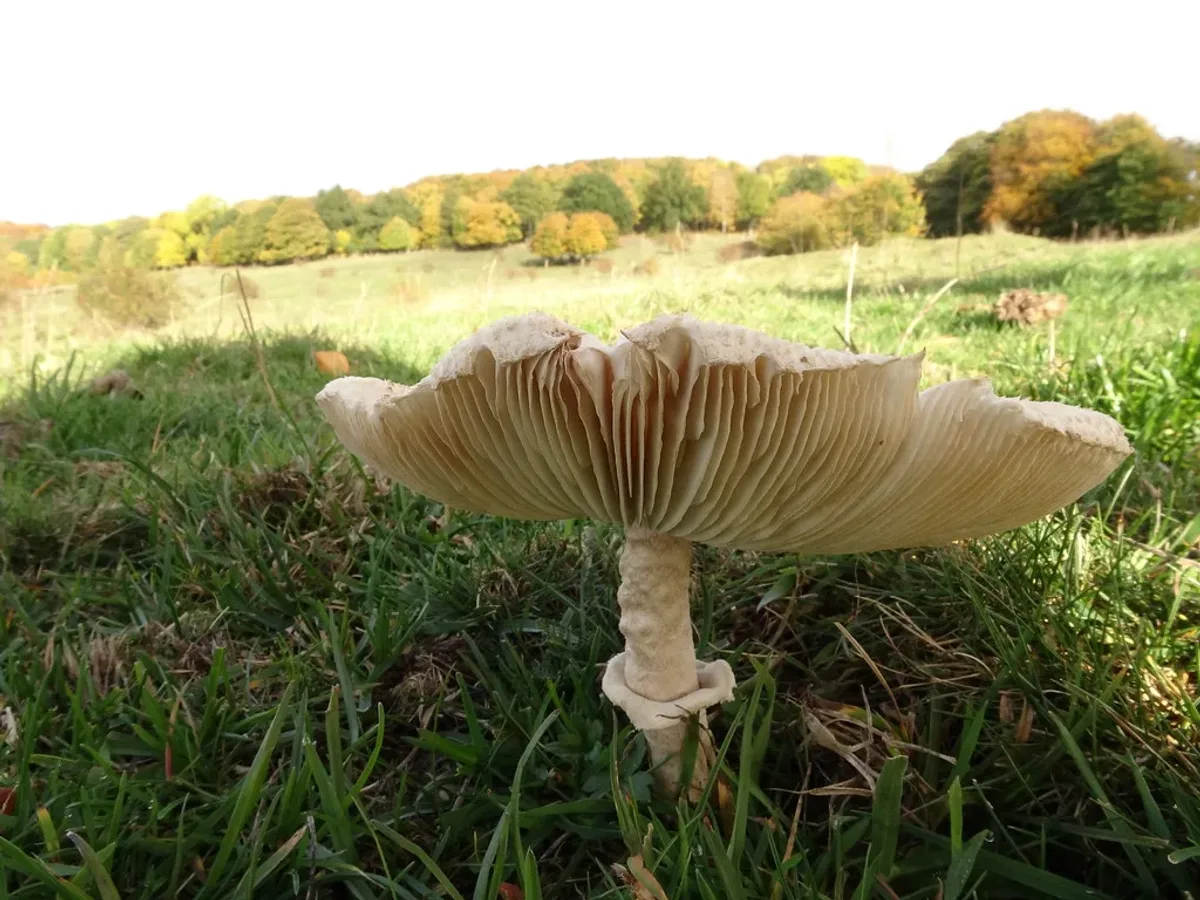
When fully open, the cap becomes almost flat with a persistently raised, dark umbo at the centre - the parasol's handle, so to speak.
Gills
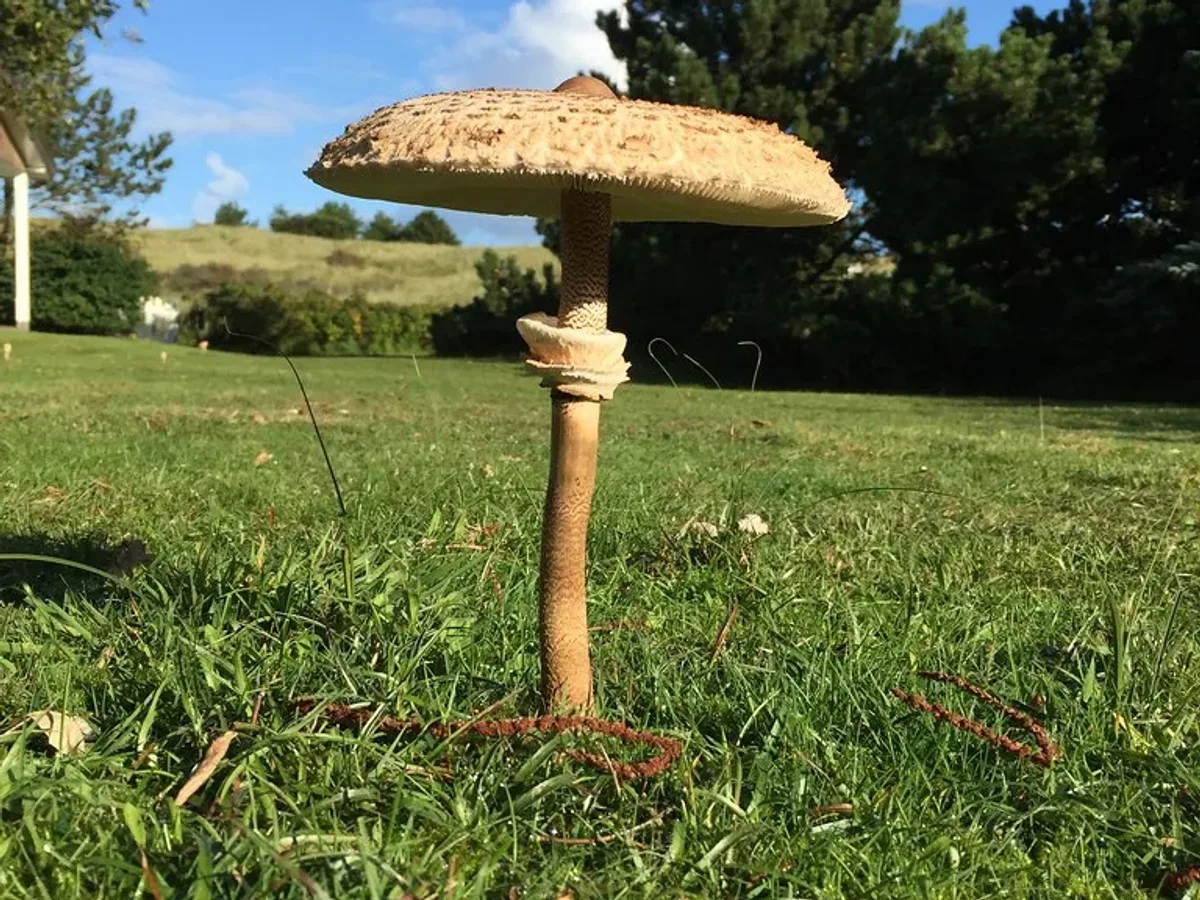
The gills crowd densely beneath it, pure white, broad, and free from the stem with a small collar-like cushion where they nearly meet it (a 'free-running' attachment). They bruise slightly pinkish-buff with age but never green.
Stem
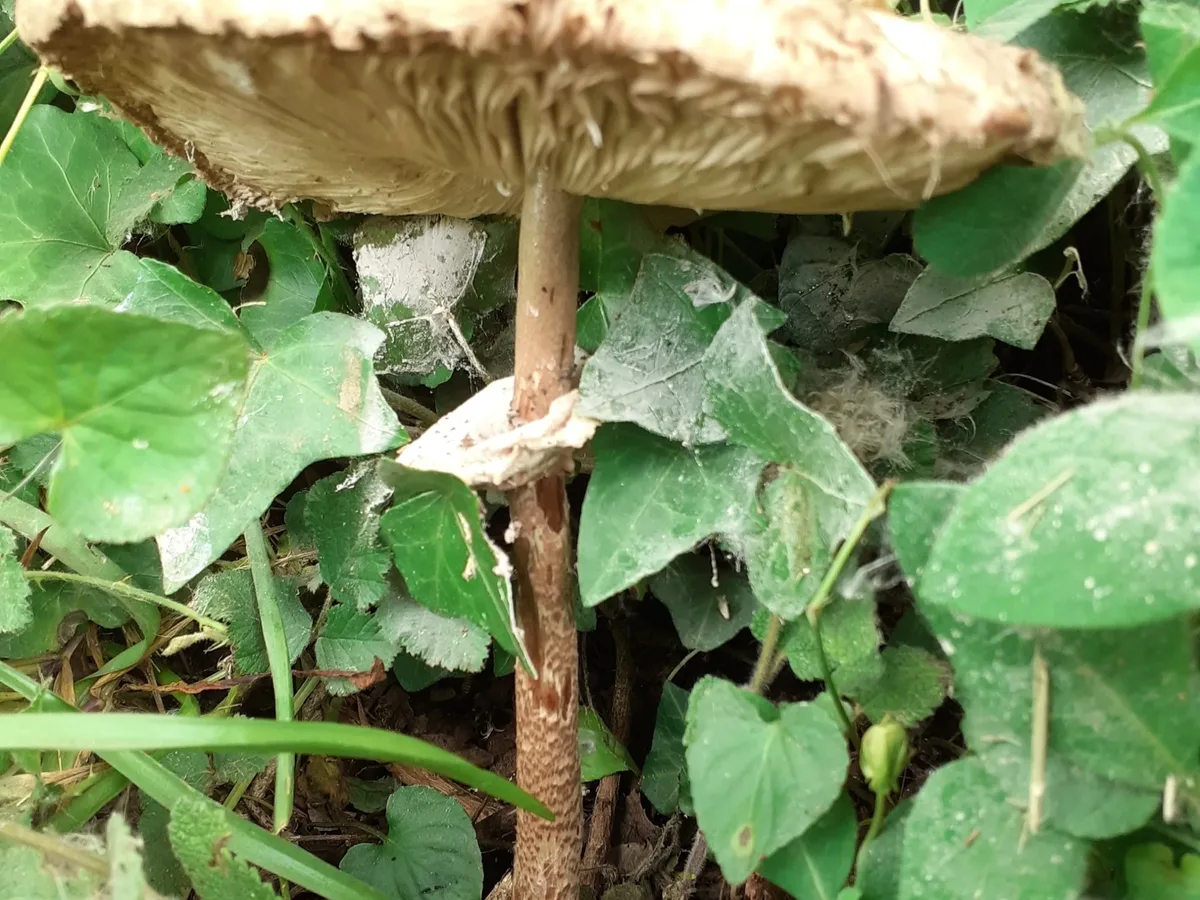
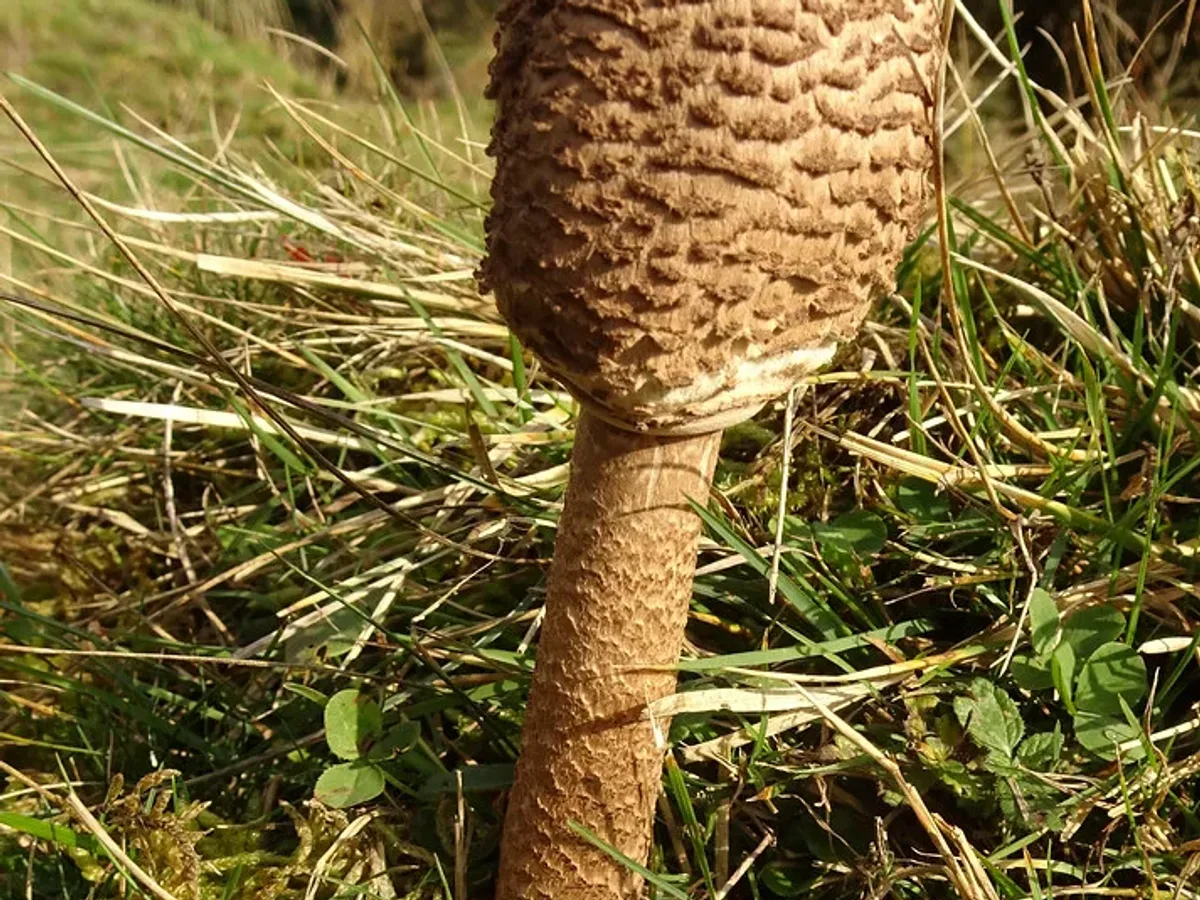
The stem is the other giveaway: 25-35 cm tall, 1-2 cm wide, hollow, but sturdy enough to stand in a light wind. Its surface carries a pattern of fine dark zigzag streaks on a pale ground - described as snakeskin and genuinely resembling it - formed as the outer layer cracks during growth.
The double ring is large, floppy, and membranous; it sits loosely on the stem after the cap expands and can genuinely be pushed up and down, sliding freely. The base swells into a rounded bulb set directly in the soil with no cup, sheath, or volva surrounding it.
Flesh
The flesh throughout is white, firm in the cap, and does not change colour when cut or broken.
Spore print white; spores ellipsoidal, thick-walled, with a germ pore.
Where & when it grows
Habitat
The parasol is a creature of open, nutrient-rich but well-drained ground. It avoids dense forest and waterlogged soils, preferring places where grass or low vegetation meets the soil surface without a thick layer of raw humus.
Typical haunts include:
- permanent pasture and hay meadows
- road verges (especially chalk and limestone downland)
- parkland lawns
- golf rough
- forest clearings
It is particularly fond of the ecotone - the transition strip where a field gives way to the sheltering edge of deciduous woodland, where the soil is enriched by decades of leaf-fall without being shaded heavily enough to suppress fruiting.
Across central and western Europe it is widespread from the Mediterranean north to southern Scandinavia and is common throughout the British Isles, especially on the chalk-rich soils of southern England.
It tolerates disturbed and anthropogenic habitats well: old trackways, the margins of arable fields, and even large garden lawns can host established mycelial networks.
Soil chemistry matters: calcareous (lime-rich) soils are strongly favoured, and it is notably scarce on acidic, sandy heaths where other saprotrophic grassland fungi thrive.
The underground mycelium is perennial; once a colony establishes it tends to return to the same patch for many years, sometimes outlasting the individual trees that once bordered the spot.
When
The parasol's fruiting window stretches from mid-July through to November across central and western Europe, with the bulk of the crop appearing from August to October.
The first fruitbodies of the year often push up during the warmest, most humid stretch of late summer - a hot, dry spell followed by a substantial soaking of 20 mm or more of rain is the classic trigger.
Soil temperature matters more than air temperature: growth stalls below about 10 °C, and the peak flush happens when topsoil holds between 12 and 18 °C, conditions that typically coincide with the long warm-rain events of late August and September in Britain and central Europe.
In southern Europe and along the Atlantic coast of France and the Iberian Peninsula the season runs a little later, with good flushes persisting into November and occasionally December.
Frosts sharply curtail growth; a cold snap with overnight temperatures regularly below 0 °C usually marks the effective end of the season, although mycelium in well-drained soil can survive hard winters to fruit again the following year.
The parasol is not a spring species and does not have a secondary early flush in the way some woodland species do - its entire fruiting season is tied to that late-summer-to-autumn window.
How it grows
Macrolepiota procera is saprotrophic, meaning it feeds on dead organic matter in the soil - breaking down plant debris, old root systems, and the accumulated litter of previous seasons - rather than forming the mycorrhizal partnerships with living tree roots that define so many sought-after edible fungi.
The mycelium spreads outward through well-aerated, moderately organic topsoil as a branching network of hyphae, digesting cellulose and lignin with extracellular enzymes. Because it is not dependent on a specific tree partner, it can colonise open grassland far from any woodland, as long as there is adequate organic matter in the soil.
Fruitbodies appear singly or in small scattered groups, and in well-established sites they sometimes form fairy rings as the mycelium advances outward evenly from its original inoculation point, exhausting the organic matter in the centre and fruiting along the advancing front.
A ring can persist for many decades and expand at a few centimetres per year, making very large rings potentially centuries old - though the parasol's rings are less geometrically perfect than those formed by some purely grassland species.
After rain the drumstick buttons can elongate and expand with impressive speed, occasionally pushing cap diameter from 5 cm to 30 cm within 48 hours as cells swell with water - one of the more spectacular examples of rapid fungal expansion driven by turgor pressure rather than new cell division.
Fruiting conditions
Saprotrophic grassland species; flushes in late summer to autumn after rainfall once soils are warm and moist. Standard mycology estimates; the source text gives no fruiting-trigger data.
Look-alikes
The parasol mushroom has a combination of features that, taken together, make mature specimens essentially unmistakable:
- the enormous size
- the dark-scales-on-light-background cap
- the movable double ring
- the snakeskin-patterned stem
- the white free gills
- the white spore print
- the absence of any volva or cup at the base
However, two categories of dangerous lookalikes demand serious attention.
- 1Young Amanita species - especially Amanita phalloides (deathcap) and Amanita pantherina (panther cap) - can superficially resemble a parasol button when both are in the tight egg stage. The critical difference is that Amanita buttons have a membranous volva (a sack or cup) encasing the base, patches or a smooth cap (light patches on a darker background, the reverse of the parasol's pattern), and a ring that is not freely sliding. Always dig up the base of any candidate: a volva at the base disqualifies it absolutely.
- 2Several smaller Lepiota and Chlorophyllum species are poisonous or deadly. Lepiota brunneoincarnata (deadly dapperling) contains amatoxins and has caused fatalities; it is much smaller (cap 3-6 cm), lacks the snakeskin stem, and has a narrower, non-sliding ring. Chlorophyllum molybdites and related species can reach medium size but have greenish gills and a distinctly greenish spore print - never seen in the true parasol.
A firm rule: do not pick any Lepiota-type specimen with a cap below 15 cm; at that size the risk of misidentification with the small deadly Lepiota species is not worth taking.
Young parasols can resemble young Amanita. Rule of thumb: the parasol has dark scales on a light background, while Amanita has light patches (if any) on a darker background. The parasol has a movable double ring, a snakeskin-patterned stem, and no volva. Never pick at the button stage.
Smaller poisonous Lepiota; deadly due to amatoxin. Lacks the snakeskin stem pattern and is much smaller than the parasol.
Smaller, poisonous; has greenish gills/spores and lacks the snakeskin stem pattern.
In the kitchen
Picking & cleaning
The optimal harvest window opens when the cap is still in the drumstick or early-bell stage and closes as it flattens fully out and begins to show brown, waterlogged patches at the margin.
Young drumstick specimens have the firmest flesh and fewest insect larvae, though even those should be checked: larvae of several dipteran flies use the large caps as a larval habitat, tunnelling upward from the stem base, so it is worth slicing the stem base open before committing to a basket pick.
The cap margin is the last part to be colonised, so a specimen with firm white flesh at the cap edge is usually usable even if the stem shows some damage.
The stem itself is too tough and fibrous to eat - its texture never softens adequately with cooking - and should be left in the field or composted rather than carried home as dead weight.
The easiest field technique is to snap or twist the cap free from the stem at ground level: the clean break exposes the white flesh immediately and lets you verify the absence of green discolouration, unpleasant odours, or unexpected structural oddities before it goes in the bag.
Brush caps clean with a soft brush or dry cloth; do not wash unless absolutely necessary, as the open scales and wide surface area absorb water quickly and a waterlogged cap fries poorly.
If the caps must be carried stacked, place them gill-side up so they do not bruise against each other.
Cooking
The parasol's large, flat, firm cap is one of the most culinarily versatile mushrooms in the European edible repertoire.
The classic preparation across Germany, Austria, and Switzerland is the 'Schnitzelpilz' or 'gebackener Parasol'. The whole cap is dipped, in order, in:
- 1flour
- 2beaten egg
- 3breadcrumbs
It is then pan-fried in clarified butter or neutral oil over medium-high heat until the crumb is deep golden and the cap is cooked through. The result - a crisp, savory pancake-like fritter the size of a dinner plate - is served with lemon and a light salad, and the experience is distinctive enough to justify a dedicated foraging trip.
Beyond the schnitzel treatment, the caps can also be:
- halved or quartered and sautéed in butter with garlic until golden
- used as a pizza topping (their large surface area makes them particularly well suited to this)
- stuffed and baked
- incorporated into omelettes
- sliced into pasta sauces
The flavour is mild, nutty, and pleasantly earthy, with a texture that remains firmer than many mushrooms after cooking - it does not collapse into a watery mass.
Parasol mushroom dries well: sliced caps dehydrated at low heat retain flavour for months and reconstitute cleanly in warm water.
Always ensure the heat is adequate to cook the cap fully to the centre; thick specimens on a very hot pan can brown on the outside while remaining undercooked within.
Good to know
Macrolepiota procera is a well-regarded edible species with a long culinary tradition, but two safety points are non-negotiable.
- 1It must be cooked - the raw mushroom contains haemolytic compounds that can cause gastric distress and, rarely, more serious effects; thorough heat denatures these. Never eat parasol raw, not even a small piece to test the flavour in the field.
- 2The identification must be complete and unambiguous before eating.
Confirm all key features:
- the snakeskin stem
- the movable double ring
- the dark-on-light scale pattern
- the white gills
- the white spore print
- the absence of a volva at the base
Two further rules:
- Do not pick in the button stage (when features are not yet visible).
- Do not pick small specimens that could be confused with the deadly small Lepiota species.
These constraints are especially important for inexperienced foragers: the parasol is a rewarding target, but only after the forager has studied all its features and confirmed each one in person, preferably alongside an experienced guide on the first few finds.
A reference guide - never an edibility guarantee. When in doubt, leave it out.