Giant puffball
Calvatia giganteasyn. Lycoperdon giganteum, Langermannia gigantea
 © Max Miley (CC BY 4.0)
 © Ephemeral Impressions (CC BY-SA 2.0)
 Peter de Lange (CC0)
 © Hannah Whittall (CC BY)
 Peter de Lange (CC0)
 Peter de Lange (CC0)
 Peter de Lange (CC0)
 © Zac (CC BY)
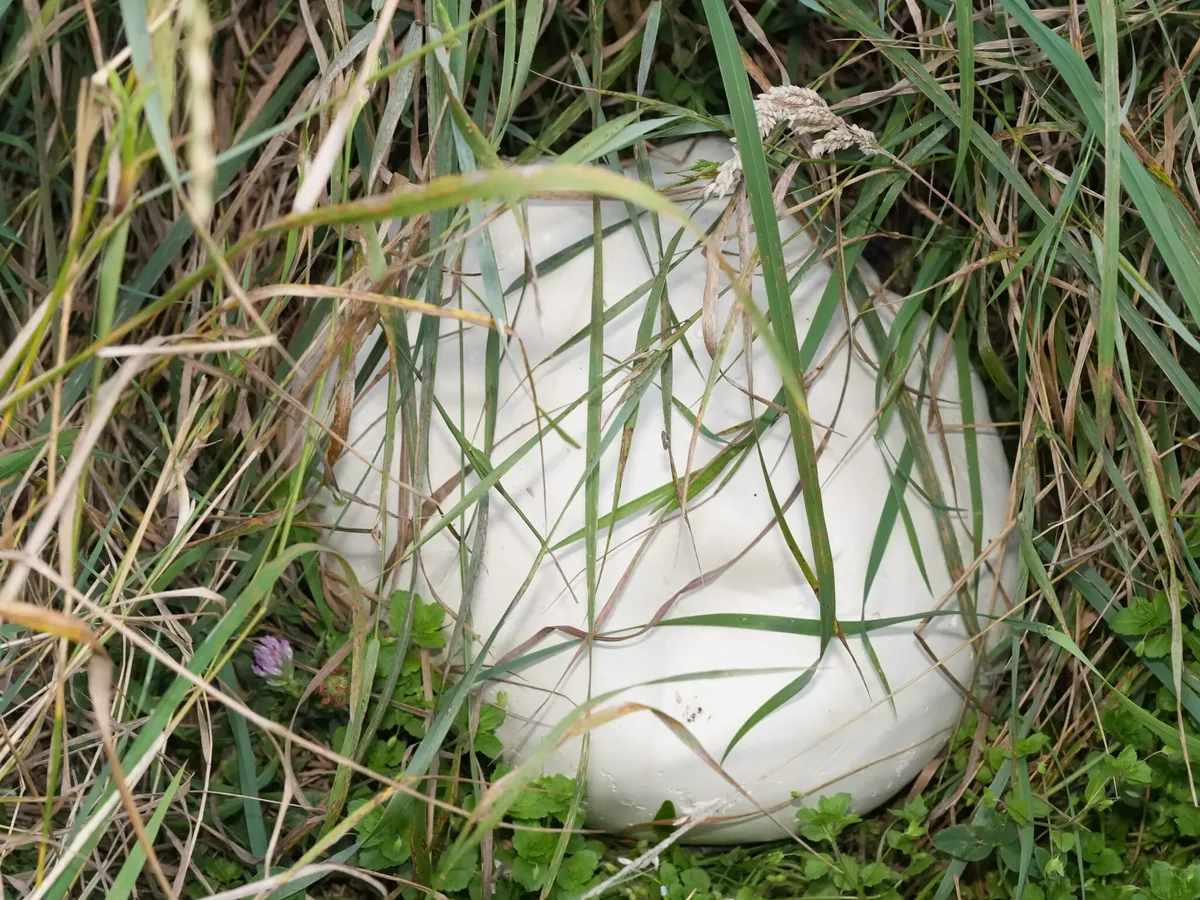 © William Harland (CC BY)
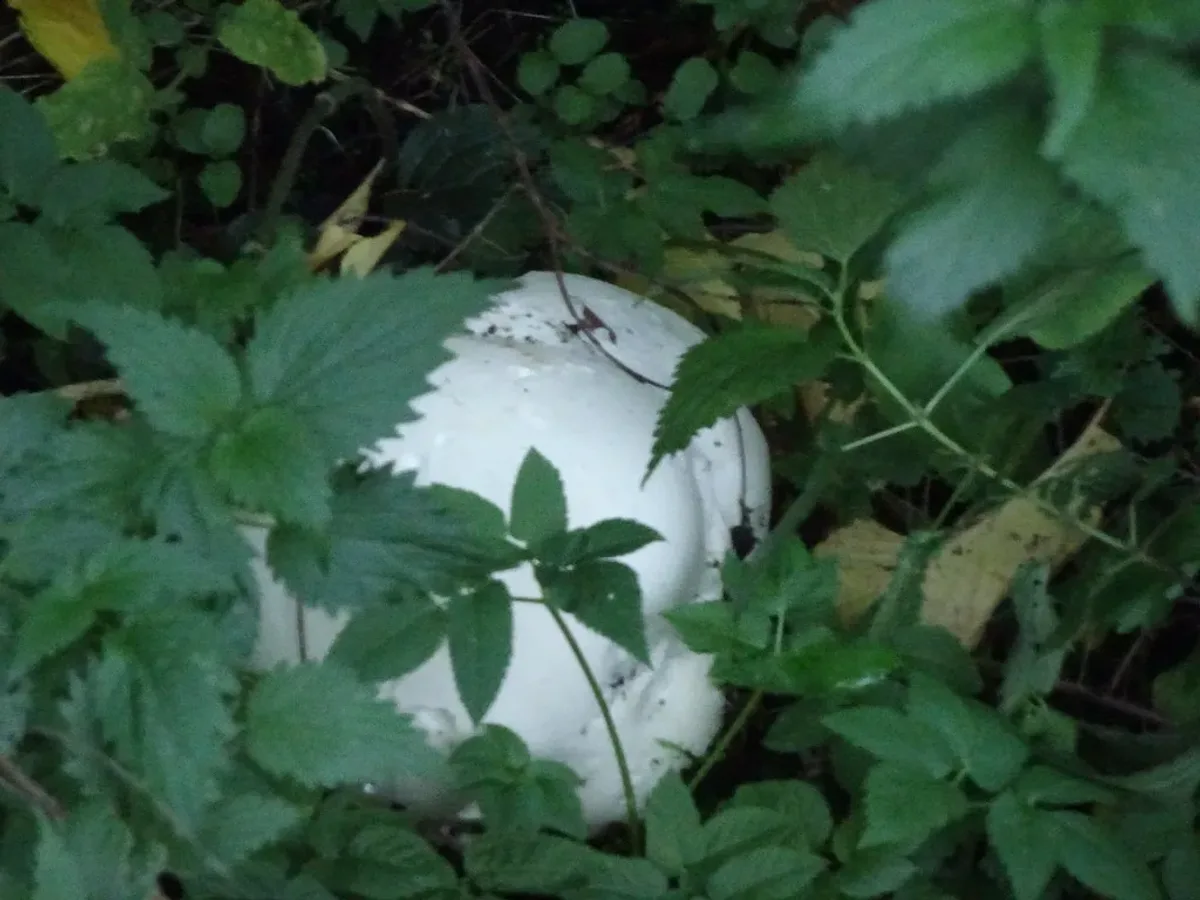 © Ephemeral Impressions (CC BY-SA 2.0)
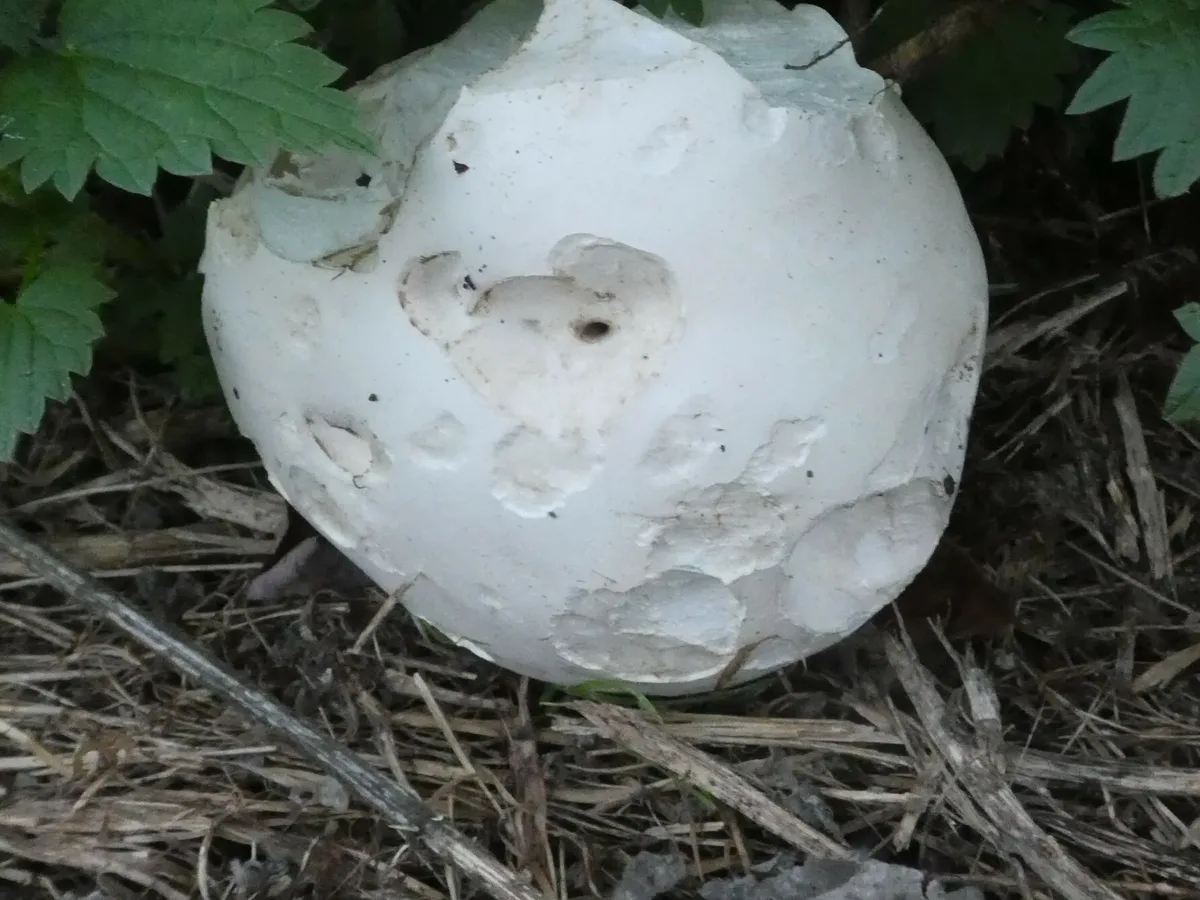 © kitbeard (CC BY 4.0)
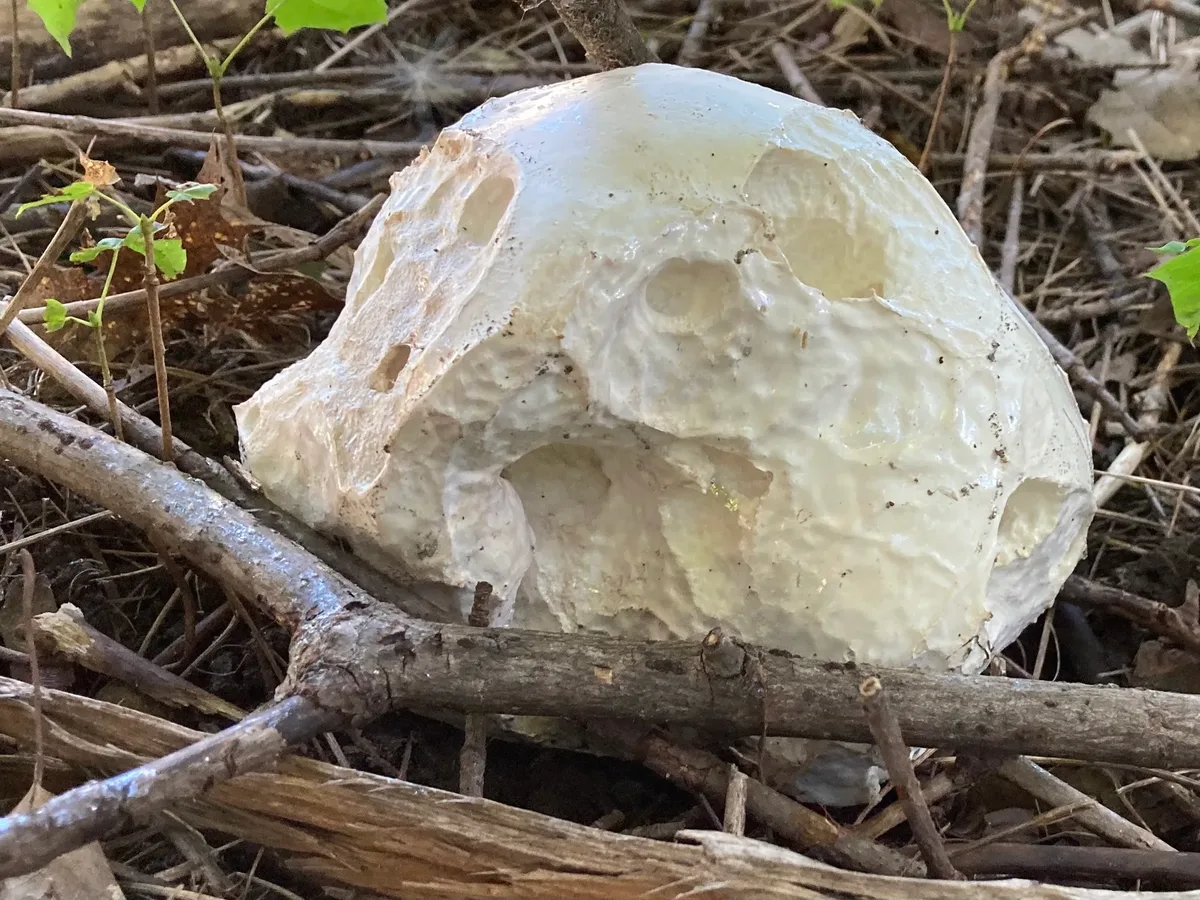 © rintzezelle (CC BY 4.0)© Max Miley (CC BY 4.0)© Ephemeral Impressions (CC BY-SA 2.0)
Good to eat, once you have identified it with certainty and cooked it through.
Never eat a mushroom you are not 100% sure of - check the look-alikes below, and always cook wild mushrooms.
How to recognise it
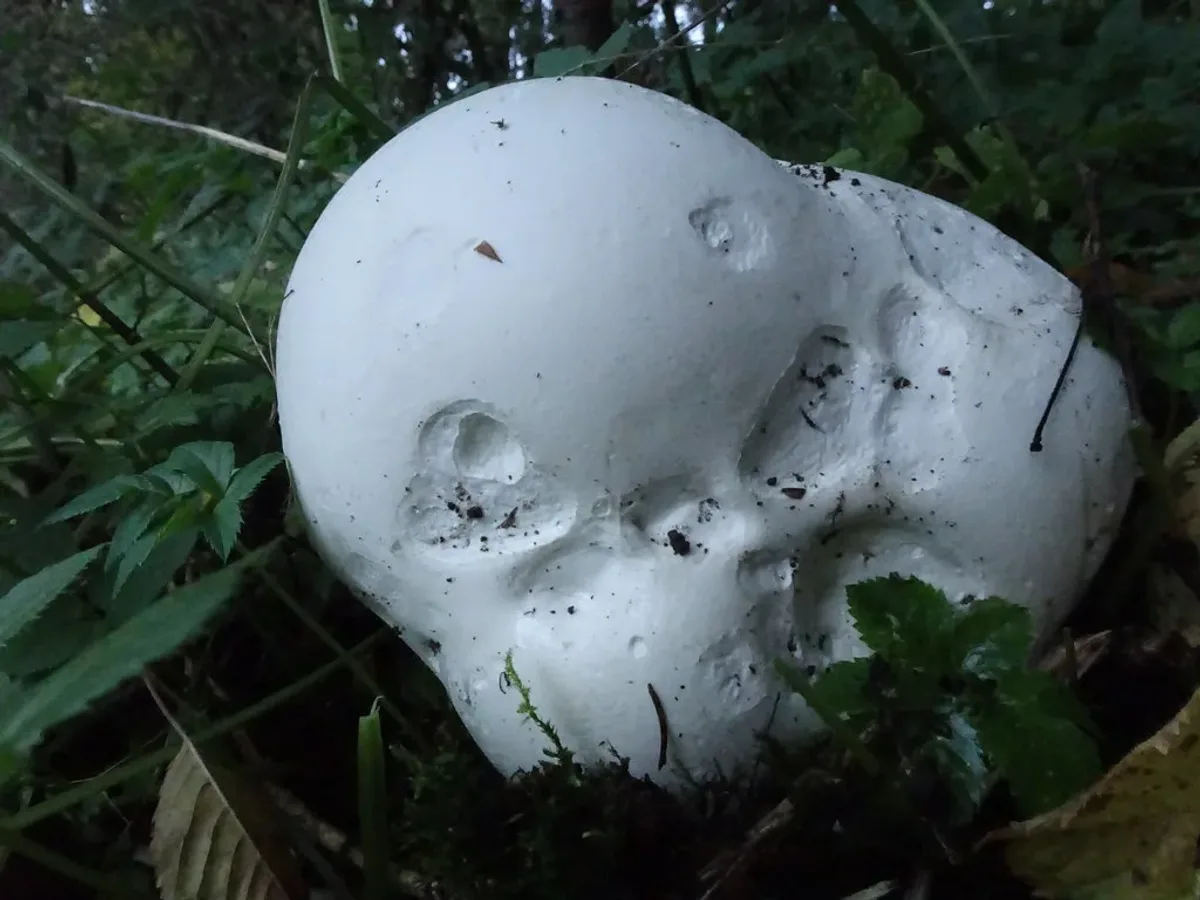
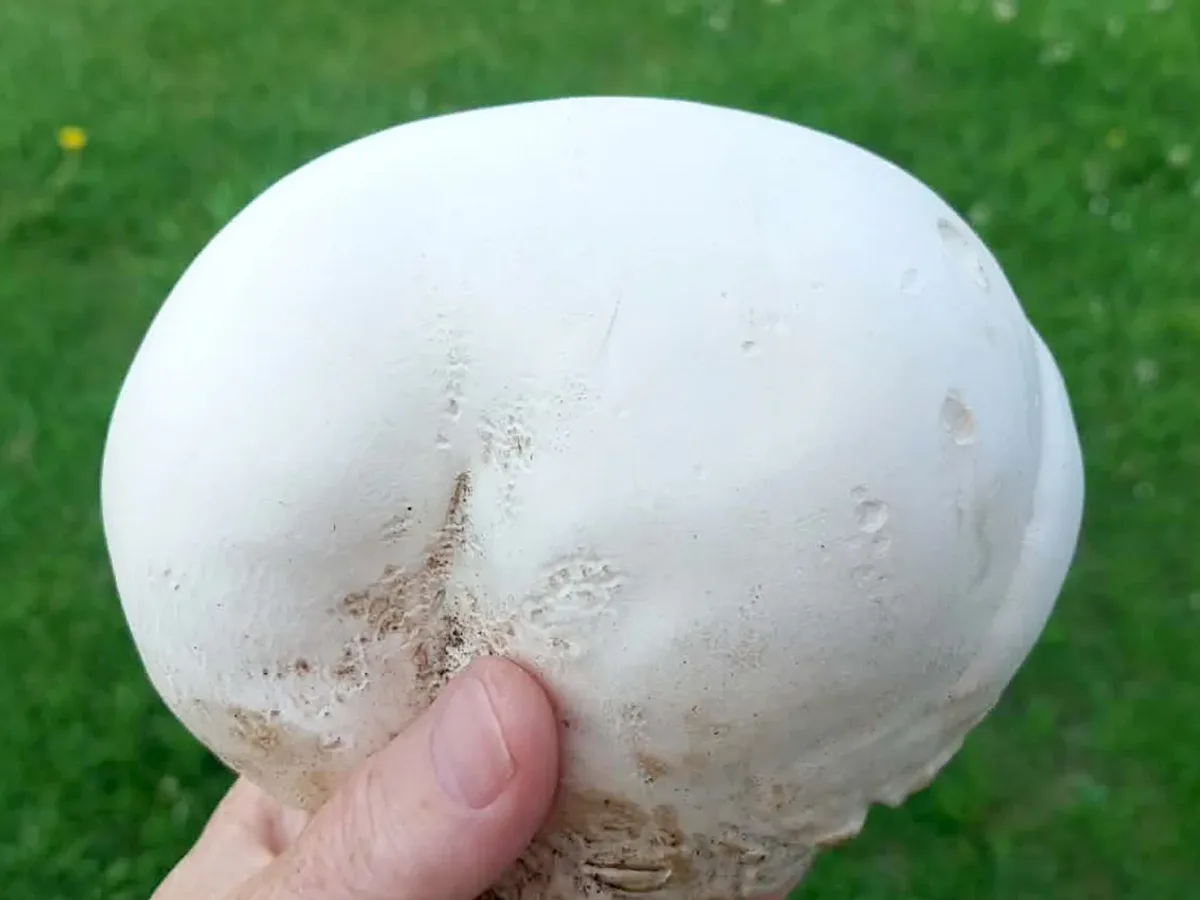
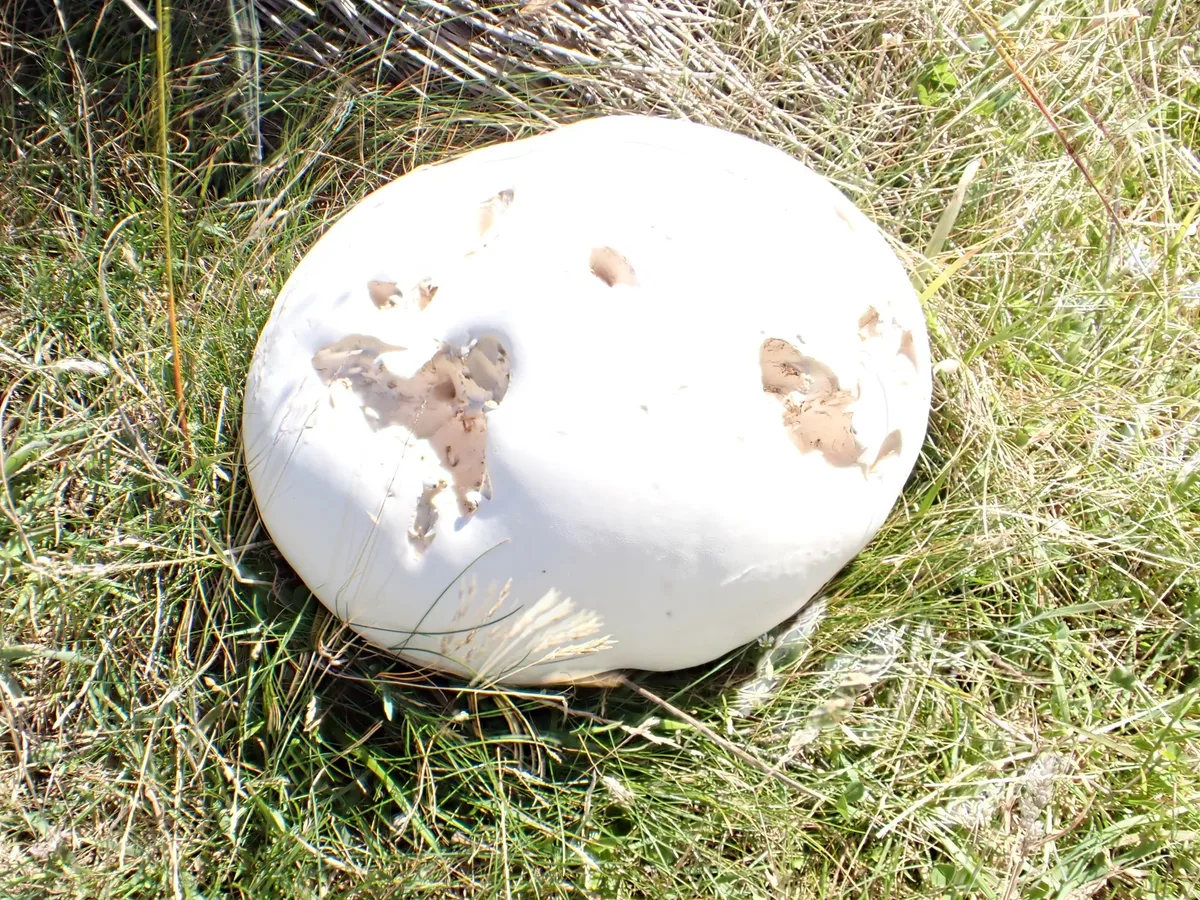
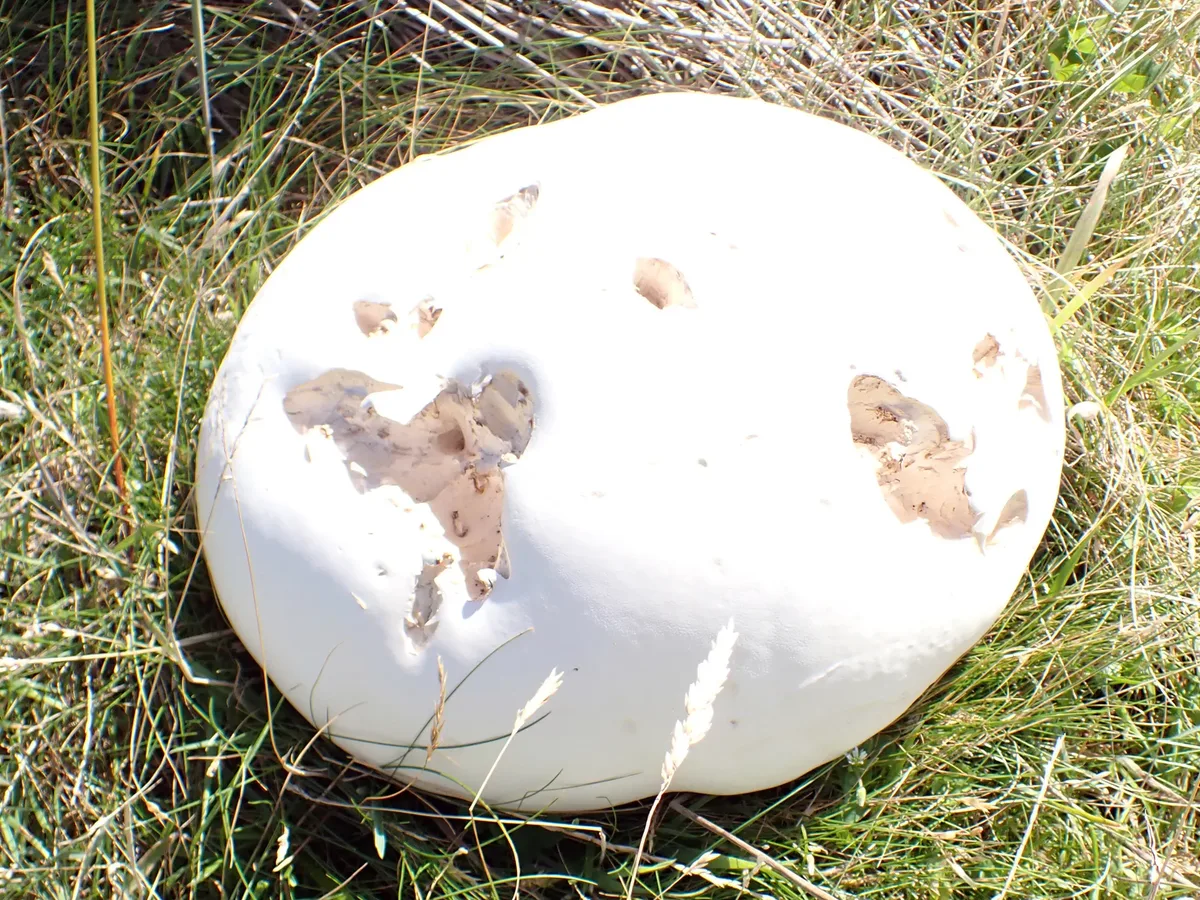
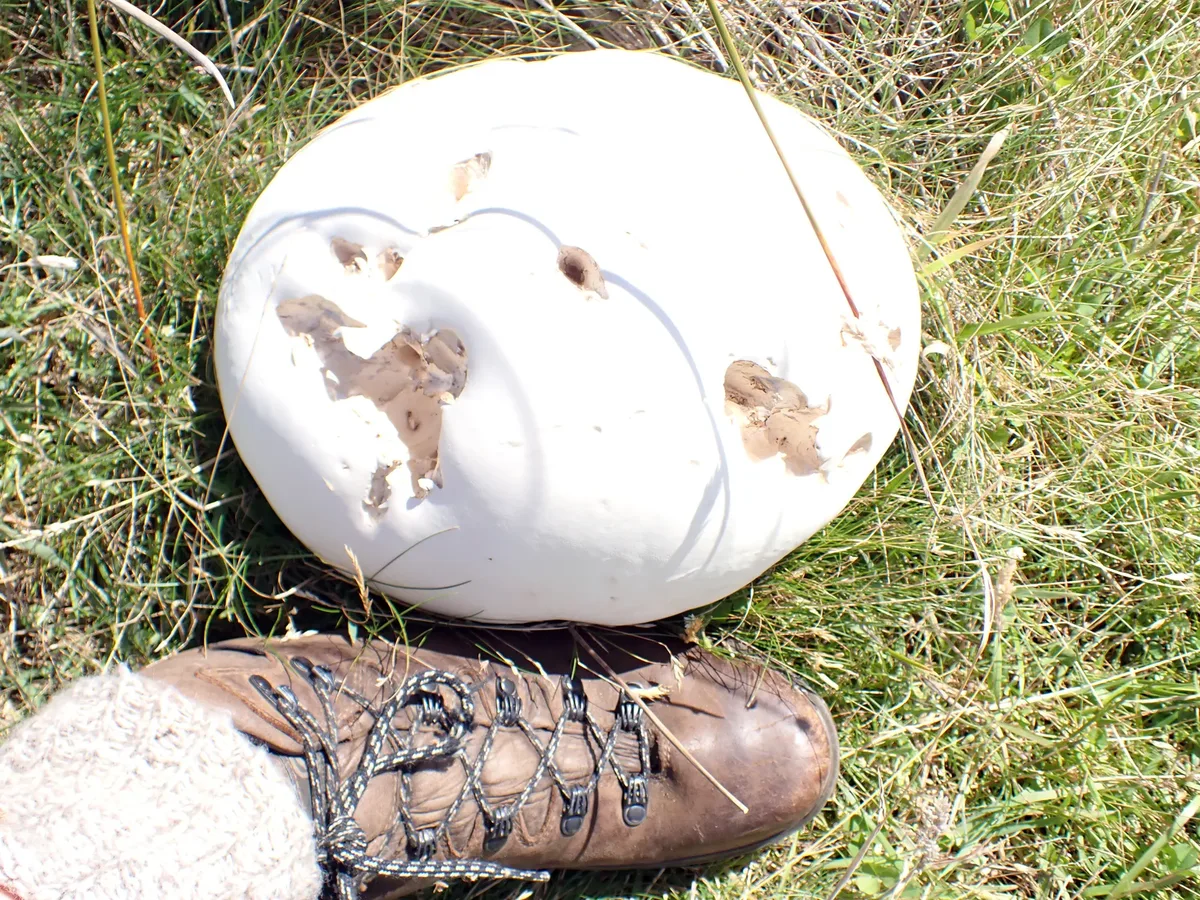
Calvatia gigantea is unmistakable at maturity: a pure white sphere that begins roughly the size of a tennis ball and can, under good conditions, reach 40-80 cm across and tip the scales at 5-7 kg, with exceptional specimens on record beyond 20 kg.
The outer surface - the peridium - starts smooth and finely downy in youth, with a texture not unlike kid leather, then cracks and roughens with age into irregular patches. Young fruitbodies sit directly on the soil with no visible stalk, attached only by a thin white cord of mycelium at the base.
In cross-section the interior is uniformly solid, gleaming white, and feels dense yet gently yielding - comparable to firm mozzarella. This homogeneous white flesh is the definitive edibility checkpoint: if it is anything other than pure white throughout, the specimen is past eating.
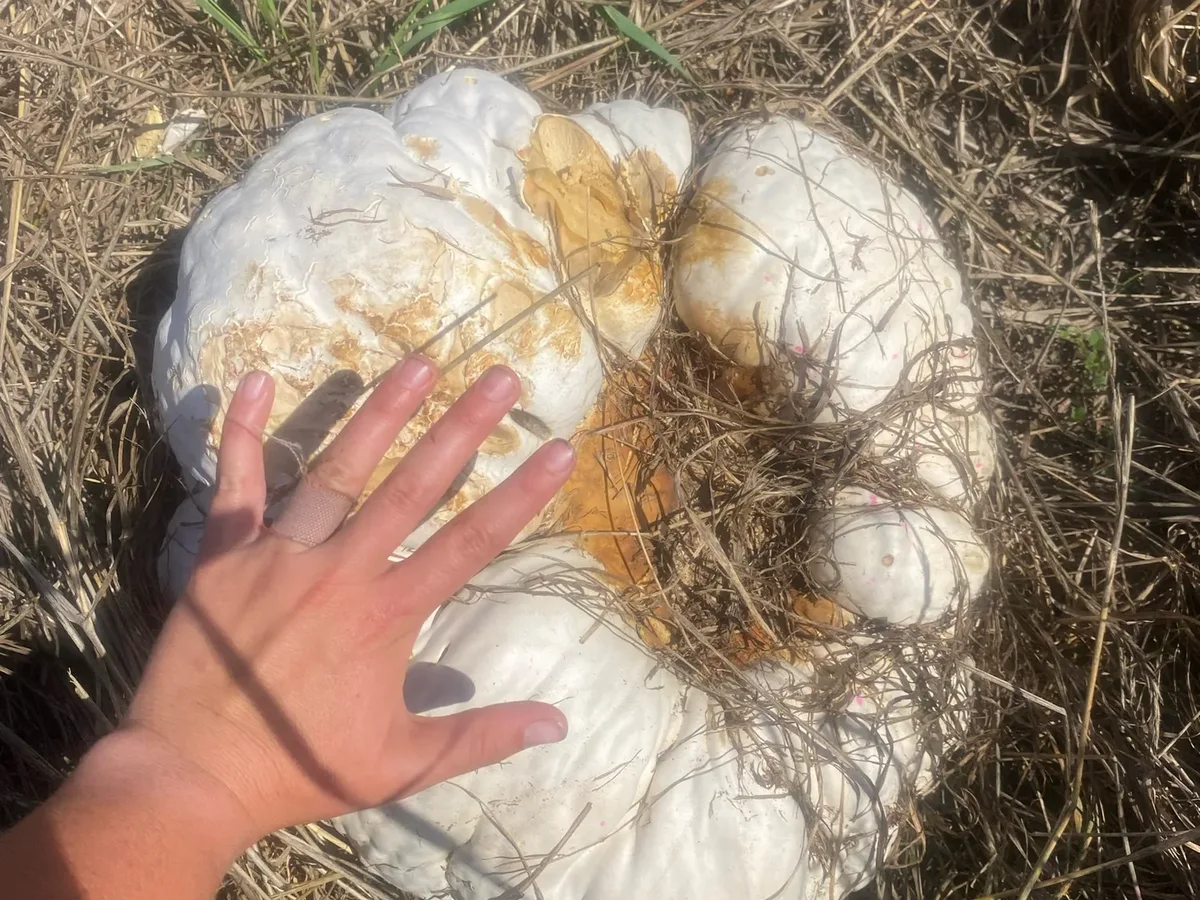
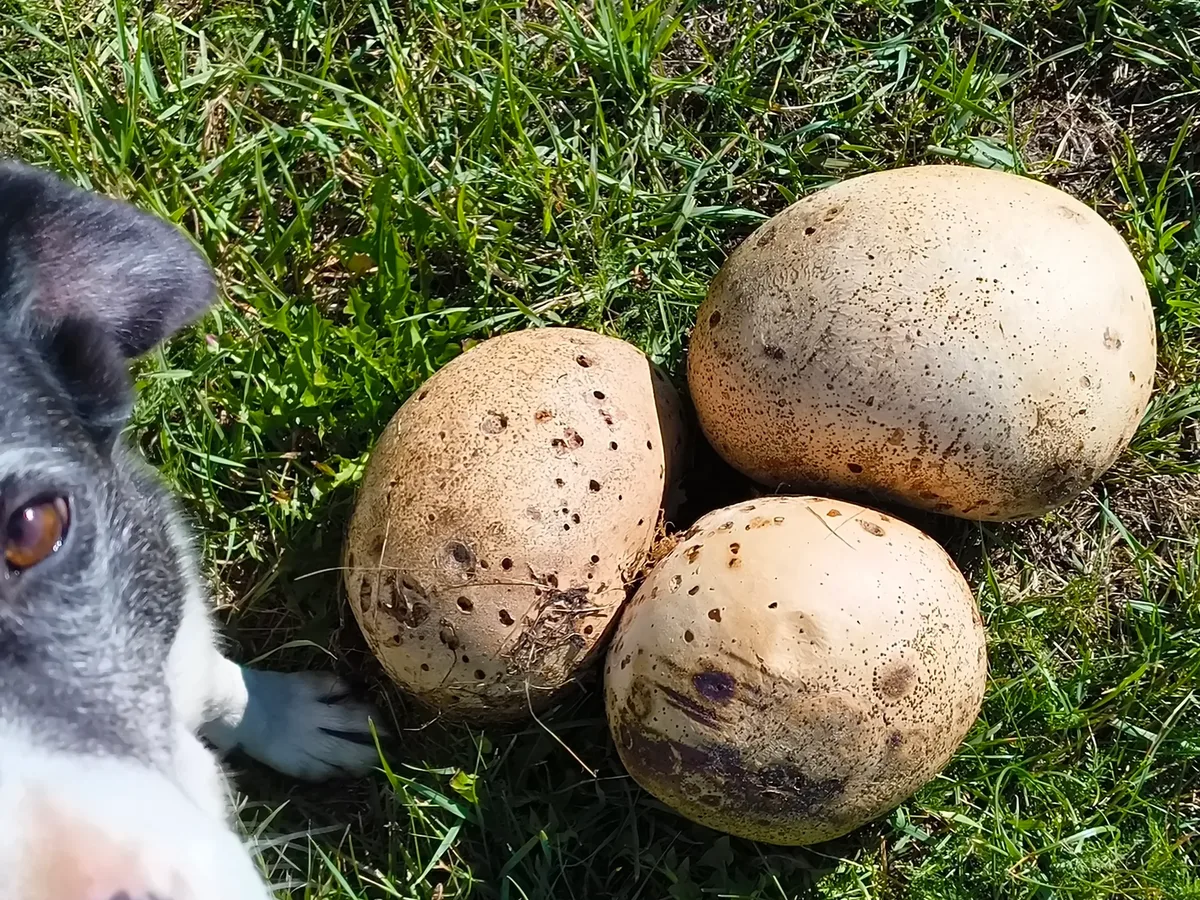
As the fruitbody matures the interior undergoes a remarkable transformation: the gleba (the spore-bearing tissue) progressively yellows, then turns olive-green, then collapses into a fine dry mass of olive-brown to purple-brown spore powder that can contain several trillion individual spores in a large specimen.
The outer peridium becomes papery and eventually ruptures to release the spores in puffs, which is the functional meaning of 'puffball'. No gills, stem, or ring are ever present at any stage of development.
Where & when it grows
Habitat
In New Zealand and Australia, Calvatia gigantea is a self-introduced species, most commonly found in the fertile, disturbed soils of farmland, horse paddocks, and sheep pasture, as well as along roadsides, park margins, riverbanks, and the edges of cultivated gardens.
It is a strict saprophyte: it acquires all its nutrients by decomposing dead organic matter in the soil, particularly in soils rich in nitrogen from animal dung or decaying plant debris. It has no mycorrhizal dependency, so it is not tied to specific tree species and can fruit in fully open ground.
Populations in New Zealand tend to fruit reliably in the same paddocks year after year, wherever the underground mycelium has established in the organic layer. The species tolerates a wide pH range but strongly favours nutrient-enriched ground; heavily grazed pasture that has been resting for some weeks is a classic habitat.
Unlike many fungi that prefer woodland shade, this species is a sun-tolerant open-ground fruiter. It arrived in New Zealand with European livestock and settlement and has now naturalised throughout both the North and South Islands.
When
In New Zealand and the cooler parts of Australia, the main fruiting window runs from late summer through autumn - February to June - with peak abundance in March and April.
The timing is strongly linked to the interaction of soil temperature and moisture. Fruitbodies flush most reliably after substantial rainfall (typically 20 mm or more over 14 days) when soil temperatures have begun to drop below 20 °C but remain above 10 °C.
Maori ecological knowledge captured this pattern in the name tutaewhatitiri ('droppings of thunder'), reflecting the traditional observation that this mushroom appears after the heavy electrical storms that often accompany early autumn in New Zealand.
Modern fruiting data supports the association: the low-pressure systems that bring thunderstorm rainfall also correspond with the soil cooling and moisture levels that trigger flush events.
Fruiting may occur in two or three waves across the season as successive rain events arrive. A dry autumn can suppress the population almost entirely, while a wet season with cool nights can yield enormous individual specimens.
Because the species is perennial - the mycelium persists in the soil for many years - long-established sites tend to produce year after year when conditions allow.
How it grows
Calvatia gigantea is one of the most dramatically fast-growing organisms in the fungal kingdom. The visible fruitbody emerges from mycelium already present in the soil.
It can expand from a marble-sized primordium to a football-sized fruitbody in as little as three to five days after rain triggers development, with growth rates documented at several centimetres per day under ideal conditions.
This speed is possible because the fruitbody is essentially inflating with water alongside rapid cell division. The developing gleba is well-supplied with moisture from the mycelium, which draws water from surrounding soil.
The mycelium itself can persist in the organic soil layer for many years, quietly decomposing buried plant material between fruiting seasons, invisible and patient.
Individual mycelial networks are genetically uniform organisms. What appears as multiple fruitbodies scattered across a paddock often originates from a single mycelial individual spanning many square metres underground.
As a saprophyte rather than a mycorrhizal partner, Calvatia gigantea is not intimately tied to living tree roots; instead it is a decomposer, cycling nitrogen and carbon from dead organic matter back into the soil, making it an important contributor to soil fertility in the pastoral landscapes it inhabits.
Fruiting conditions
Fast-growing saprophyte that flushes after substantial autumn rainfall; tradition links fruiting to thunderstorms.
Look-alikes
Three lookalike categories warrant careful attention, and one carries a deadly risk.
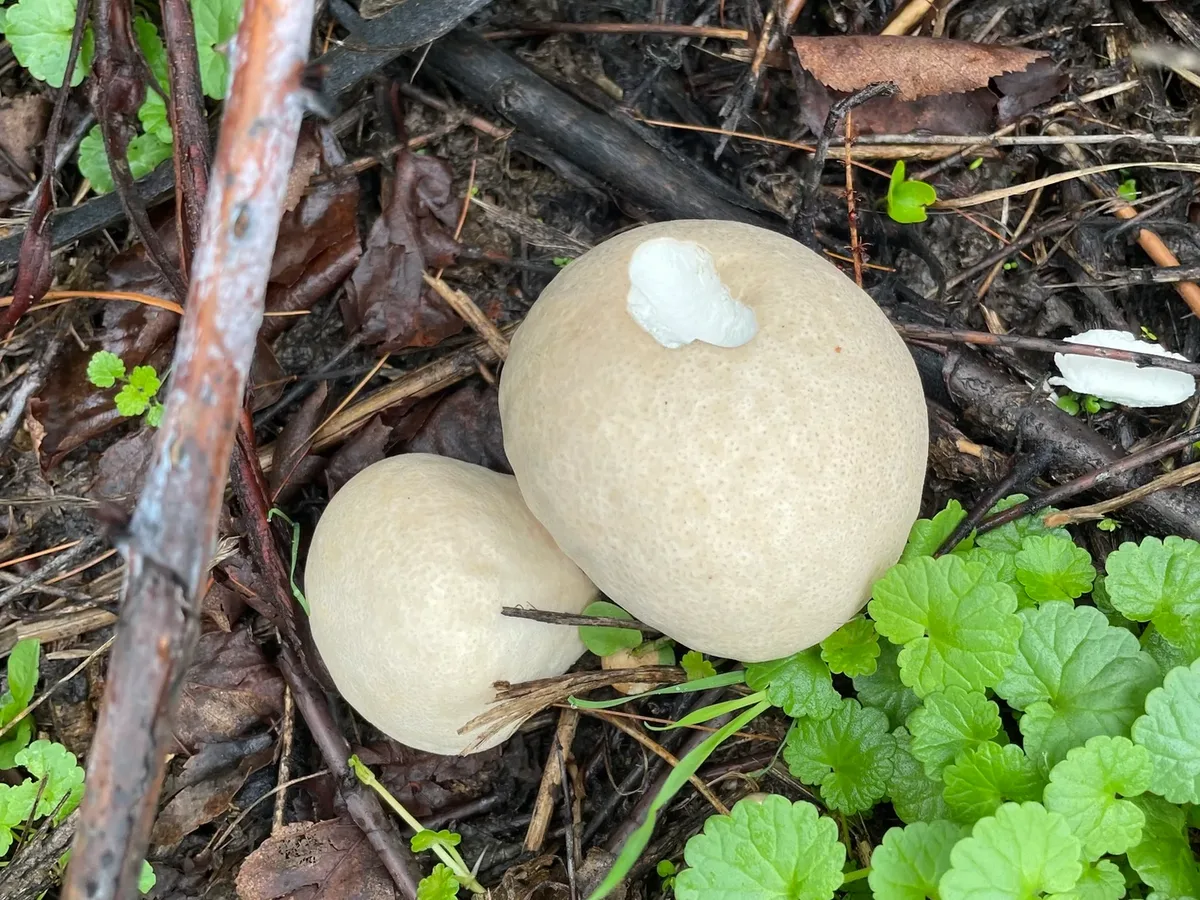
- 1Earthballs (Scleroderma species) can superficially resemble a puffball from the outside but are immediately distinguished by two features: the skin is noticeably thicker and much firmer - almost corky to the touch - and the interior, even in very young specimens, is dark purple-black or marbled purple rather than white. Never eat anything white and round without checking the interior.
- 2Far more dangerous are young Amanita species in the 'button' stage (including the deadly Amanita phalloides, the death cap, and Amanita virosa, the destroying angel), which form as white, egg-shaped, or rounded structures at or just below ground level that can look superficially like small puffballs. The reliable distinguishing test is a vertical cut through the entire specimen: a true puffball is homogeneously white throughout with no differentiated internal structure whatsoever. An Amanita button, by contrast, shows a fully formed miniature mushroom in cross-section - a developing cap, gills, stalk, and the volva (the sac at the base). This structural check is mandatory for every single specimen; it cannot be skipped.
- 3Young stinkhorns (family Phallaceae) in their egg stage are not toxic but are unpleasant: their interior is gelatinous rather than solid white, and sometimes shows a layered or jelly-like structure. Any gelatinous interior disqualifies a specimen.
Always cut lengthwise. An Amanita button shows a fully formed mushroom in miniature (gills, stem, volva), whereas a true puffball is homogeneously white with no internal structure. Never cut into a 'puffball' smaller than a ball.
Much firmer than a puffball and has a dark purple-black interior even when young.
If the inner flesh is gelatinous rather than solid white, it may be a stinkhorn.
In the kitchen
Picking & cleaning
Harvest only fruitbodies that are entirely white inside - this is the single non-negotiable rule. Before picking anything, slice firmly through the centre with a knife and examine the cross-section under good light.
The flesh must be solid, white, and structurally uniform from the outer skin to the very core, with no discolouration, no hint of yellow or olive, and no internal outline of any structure such as a stem or gills.
If the interior is even partially yellowing it is already past its edible window. If any brown or olive colour is present, the gleba has begun converting to spore mass and the specimen should be left to release its spores.
Pick specimens by cutting the mycelial cord at the base with a knife rather than pulling, which minimises soil disturbance and leaves the mycelium intact. Large specimens are often most efficiently harvested by cutting them from the base and carrying them in a broad container - they bruise easily, and a bumped fruitbody begins to discolour at the impact site quickly.
Use immediately or within a day or two at most, refrigerated and unwrapped (wrapping traps moisture and accelerates spoilage). Calvatia gigantea does not dry well, as the high water content leads to a poor, flavourless result.
Cooking
The edible flesh of a prime Calvatia gigantea is mild, pleasantly earthy, with a texture somewhere between firm tofu and young brie - dense when raw, becoming silky and slightly creamy when cooked.
The most widely used preparation is simple: cut into slices roughly 1 cm thick and pan-fry in butter or oil over medium-high heat until golden on each side, adding salt, pepper, and fresh herbs such as thyme or sage.
The high water content means the slices will steam initially before browning, so patience and a hot pan are rewarded. Larger slices can be treated like a schnitzel - dusted in flour or breadcrumbs before frying - which improves the crust and slows moisture loss.
The mild flavour absorbs other ingredients readily, making it suitable in risottos, soups, omelettes, and gratins. Maori traditionally prepared fresh fruitbodies by boiling or steaming, and the cooked result was eaten immediately, reflecting both the cooking tradition and the practical reality that this mushroom does not keep well.
Keeping notes:
- Cooked puffball should be eaten on the day it is prepared; leftovers deteriorate quickly.
- Drying is not recommended.
- The species does not freeze well raw, though some foragers report acceptable results after par-cooking then freezing.
Good to know
Calvatia gigantea is safe to eat when young and the interior is completely white, with no history of adverse reactions in otherwise healthy adults when properly identified and cooked.
The edibility window closes firmly once yellowing begins. Discard anything that is no longer pure white inside - both because the developing spore mass is not palatable, and because the distinction from other round fungi depends on the white-interior test.
The critical safety principle is the mandatory internal inspection cut: this single step is what separates safe puffball foraging from the risk of consuming a deadly Amanita button. There is no shortcut, size-based rule, or smell-based test that replaces this visual check.
Maori traditional knowledge also recorded medicinal uses for the mature spore powder - applied topically to wounds to promote clotting, and to burns as a soothing dressing. This practice has some biological basis, as the powdery gleba has documented haemostatic properties.
For eating, ensure all specimens are thoroughly cooked: raw puffball can cause gastric upset in some individuals. First-time eaters should try a small amount before consuming larger quantities, as individual sensitivities vary.
A reference guide - never an edibility guarantee. When in doubt, leave it out.