The great Pacific Northwest mushroom guide
10 edibles to fill your basket with, 8 to recognise
The great Pacific Northwest mushroom guide

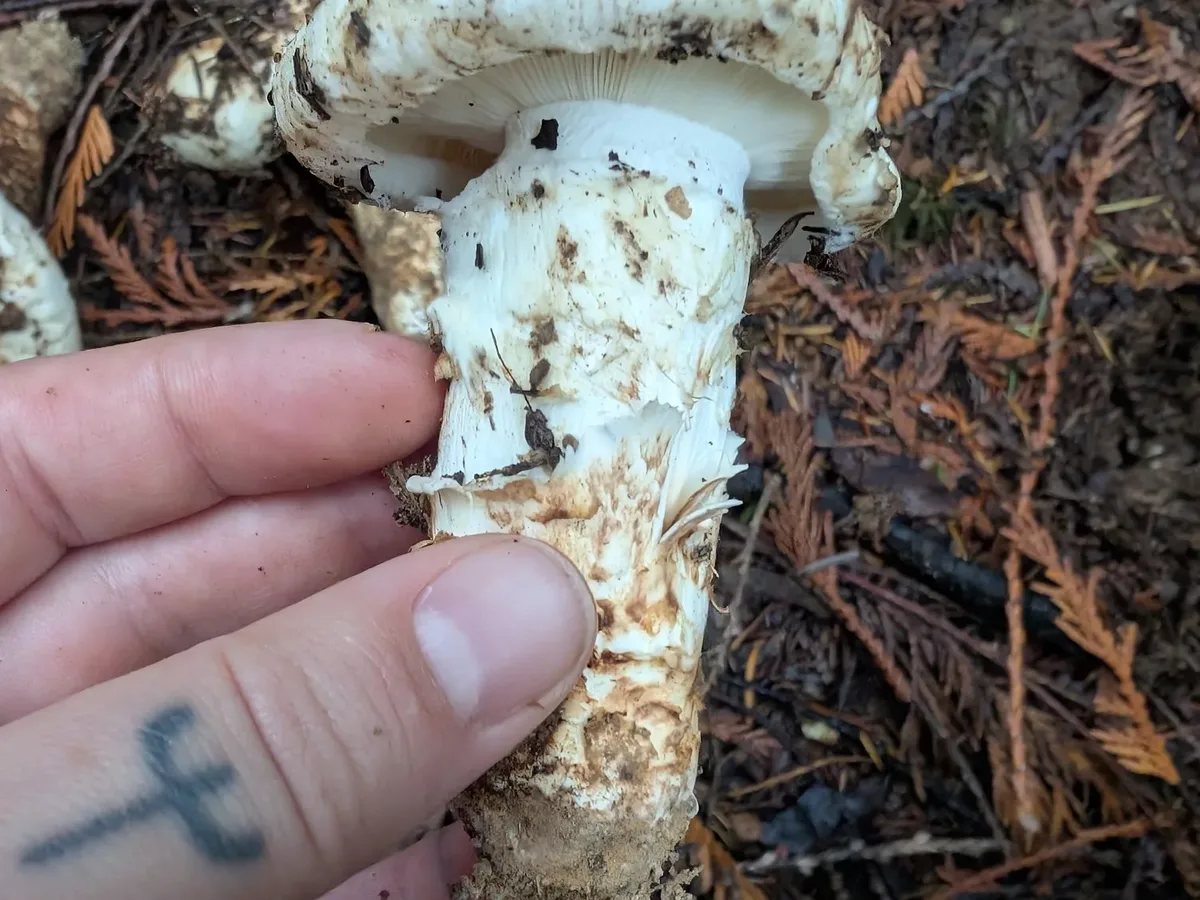 American matsutake
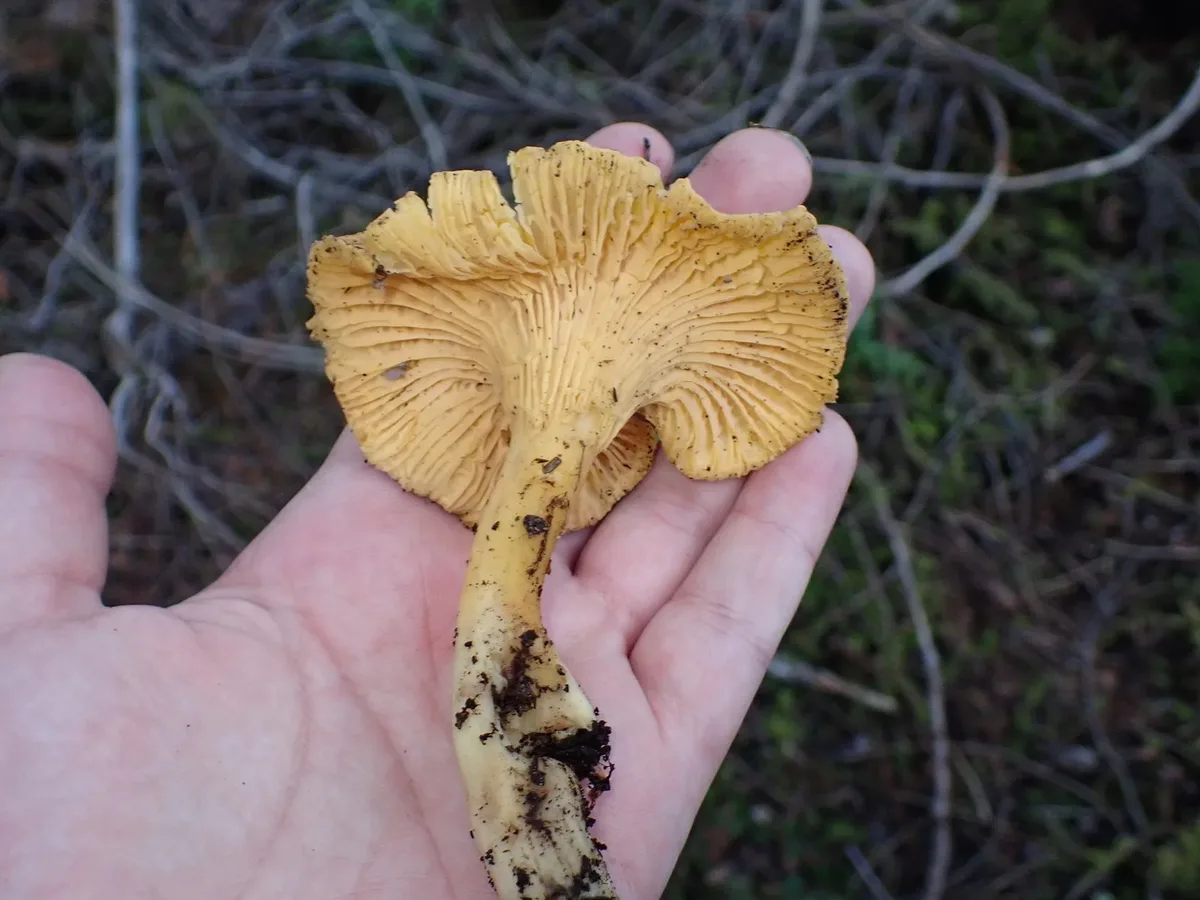 Pacific golden chanterelle
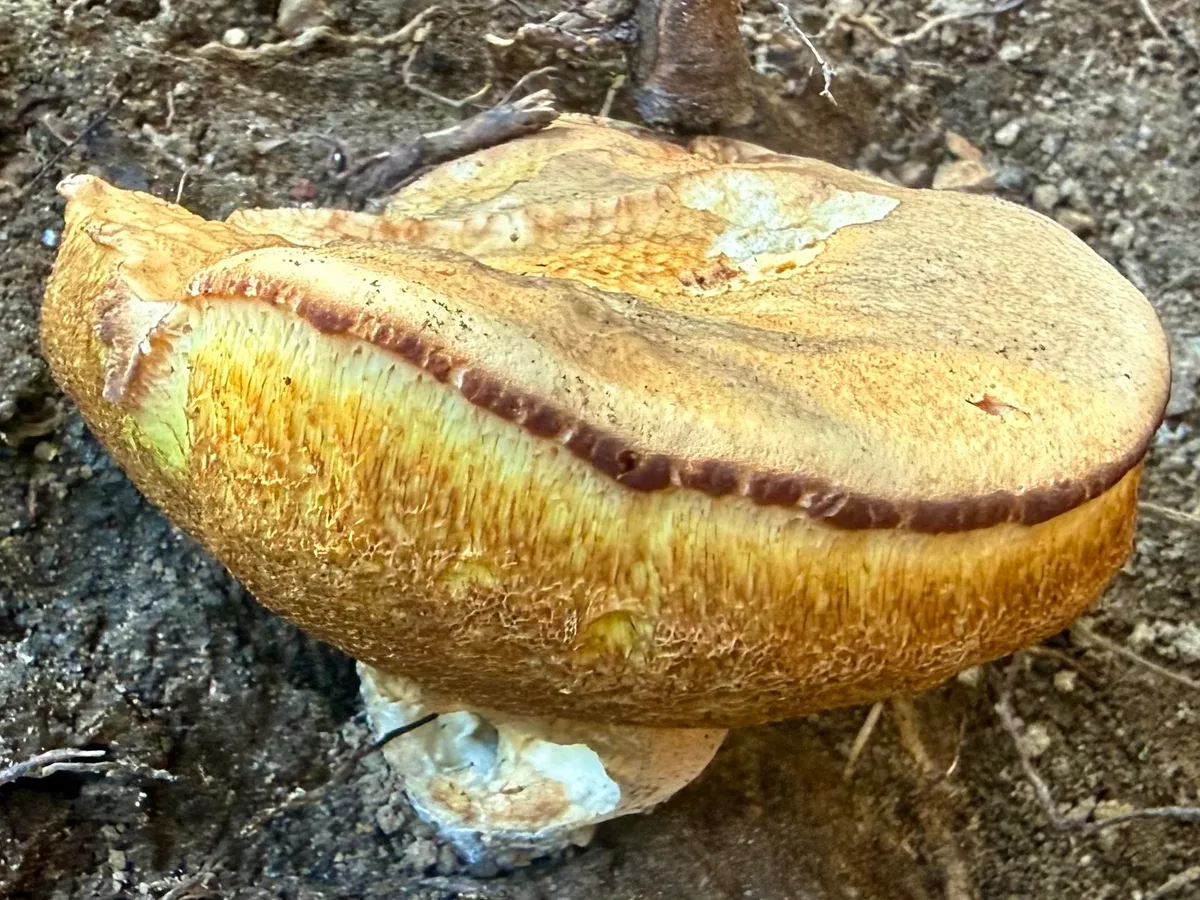 Spring king bolete
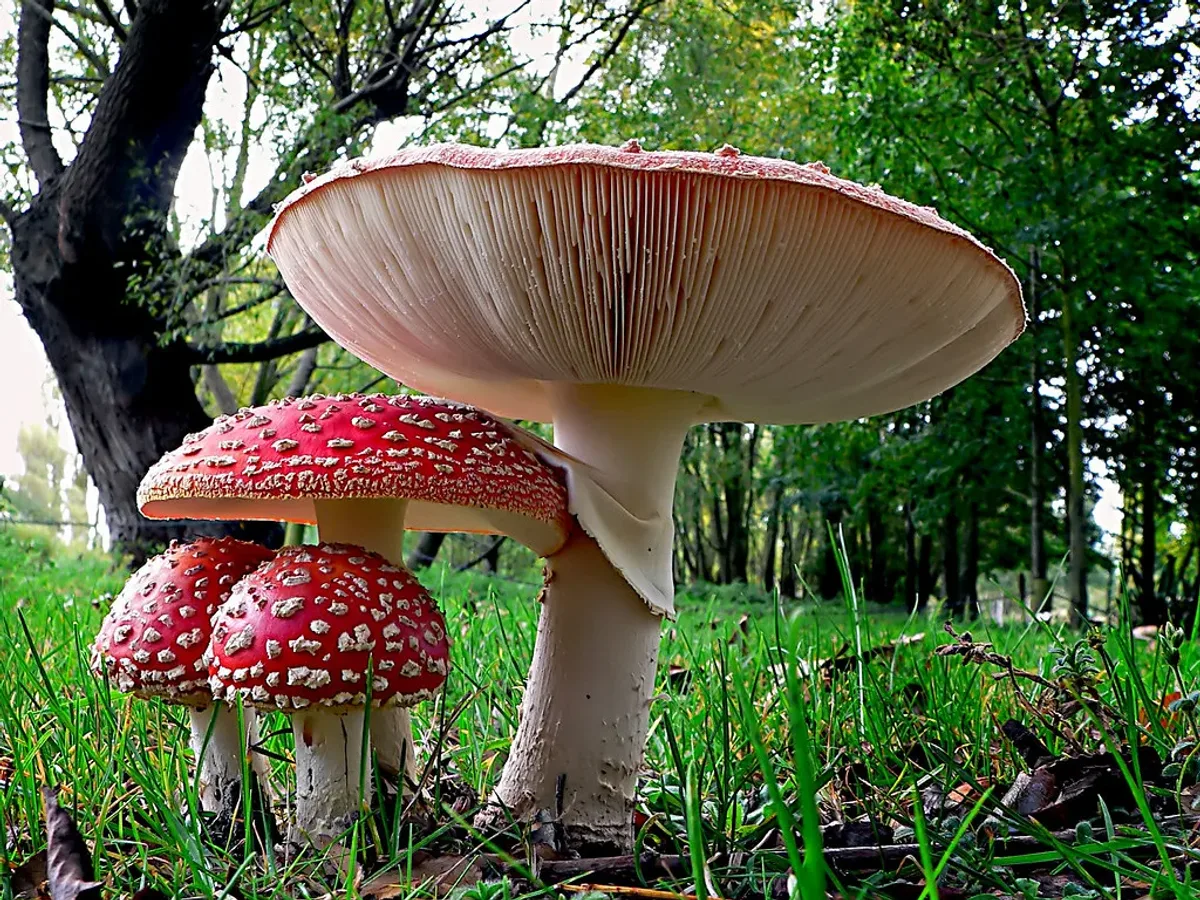 Fly agaric
 American matsutake
From British Columbia down through Washington, Oregon and into northern California, this is one of the richest fungal landscapes on Earth - matsutake that ship by the ton to Japan, golden chanterelles that became Oregon's state mushroom. We walk through ten edibles worth carrying home and the handful of dangerous look-alikes that demand real respect. This is a calm, honest guide, never a guarantee.
What matters most
- The safest starts for beginners are the hedgehog (soft spines, no toxic twins), the chanterelles (blunt ridges, not gills), the lobster and the cauliflower mushroom.
- The deadliest trap is the death cap (Amanita phalloides) - an introduced, spreading species that caused 23 poisonings and a death in California between mid-November and early December 2025.
- Three toxin families dominate: amatoxins that destroy the liver (death cap, destroying angel, deadly galerina), orellanine that destroys the kidneys (webcaps), and gyromitrin in false morels.
- Many PNW mushrooms are genetically distinct New World species - the chanterelle is Cantharellus formosus, the matsutake Tricholoma murrillianum, the spring porcini Boletus rex-veris - so old European field guides mislabel them.
- Handling and storage matter: carry mushrooms in a basket or paper, never sealed plastic, and never harvest matsutake by raking - it harms the mycelium for years.
- Never eat a small brown mushroom growing on wood, and never eat a white-gilled mushroom with a volva and ring.
The great toxin groups
A few chemical families are responsible for nearly all the serious harm here. Knowing which organ each one attacks - and how cruelly the symptoms are delayed - is the heart of foraging safely.
Found in the death cap, the western destroying angel and the deadly galerina, these cyclic peptides halt protein synthesis and attack the liver. They account for over 90% of the world's fatal mushroom poisonings. The course is typically triphasic: a latent period of around 6 hours, then severe gastrointestinal illness, a deceptive false-recovery phase at 24-72 hours, and finally hepatorenal failure on days 4-9.
Carried by deadly webcaps (Cortinarius section Orellani), this highly selective kidney toxin can cause severe renal failure from just one to three mushrooms. Its danger lies in extreme delay: no acute symptoms, with the first flu-like signs appearing only 2-3 days to as long as three weeks later, by which point kidney damage is often irreversible.
Present in Gyromitra esculenta, gyromitrin hydrolyses into monomethylhydrazine - a rocket-fuel component - that attacks the liver, kidneys, CNS and red blood cells, and is carcinogenic. Symptoms begin 6-12 hours after eating with vomiting, dizziness and headache; severe cases progress to organ failure on days 2-3. The toxin can even be inhaled in the steam while cooking.
Amanita smithiana, mistaken for matsutake, contains allenic norleucine and chlorocrotylglycine rather than amatoxins. After GI symptoms 1-12 hours in, a deceptive lull is followed by kidney toxicity on days 2-6, often requiring weeks of dialysis. Renal function usually recovers and deaths are rare.
The neurotoxins in the panther cap and the fly agaric cause a disproportionate share of PNW poisonings of people, dogs and cats. Symptoms appear within 15 minutes to 2 hours: drowsiness, confusion, dizziness, delirium, muscle twitching and deep sleep, with seizures especially in children and dogs. Rarely fatal but serious.
The western jack-o'-lantern (Omphalotus olivascens), confused with chanterelles, contains the sesquiterpene illudin S with muscarine-like effects. Severe cramps, vomiting, diarrhoea and sweating begin 1-3 hours after eating, sometimes with hallucinations. Rarely fatal.
The edibles
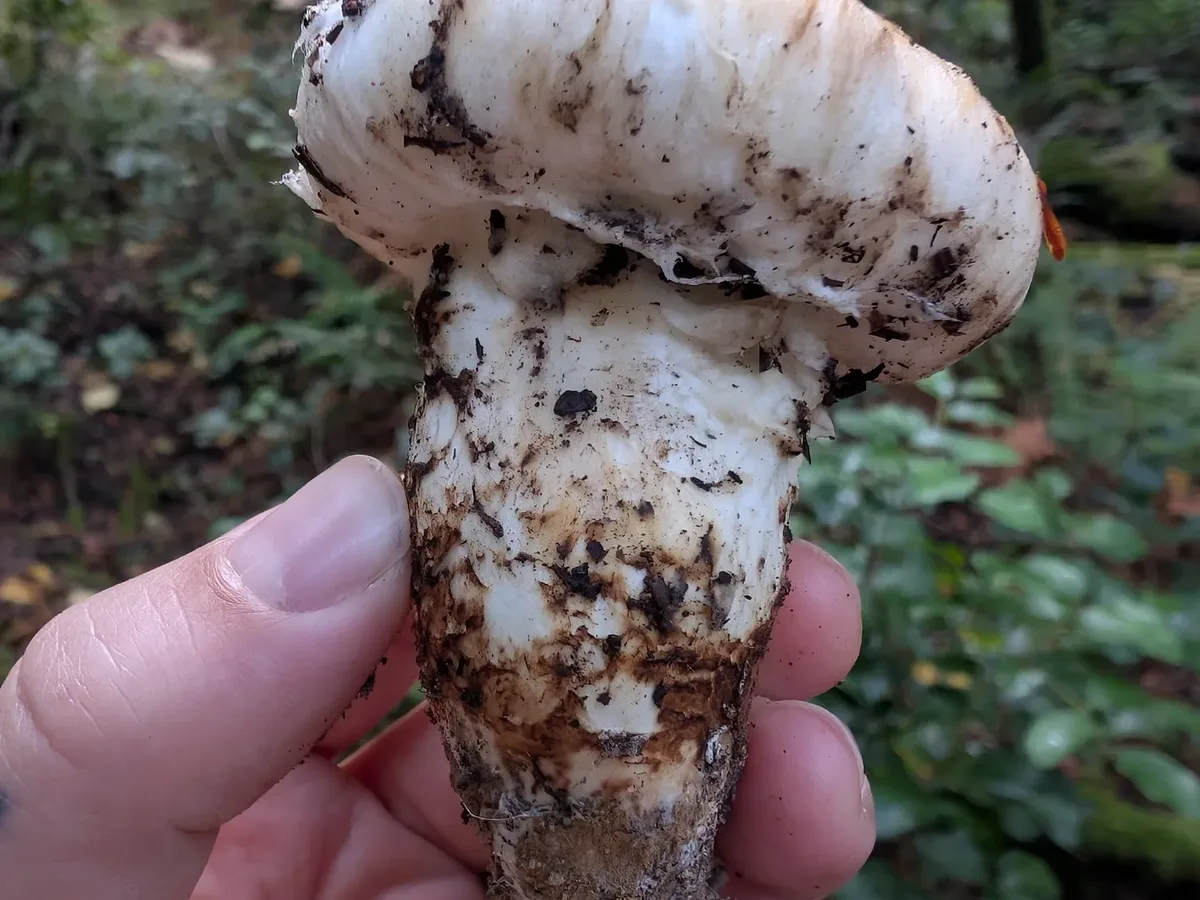 American matsutake
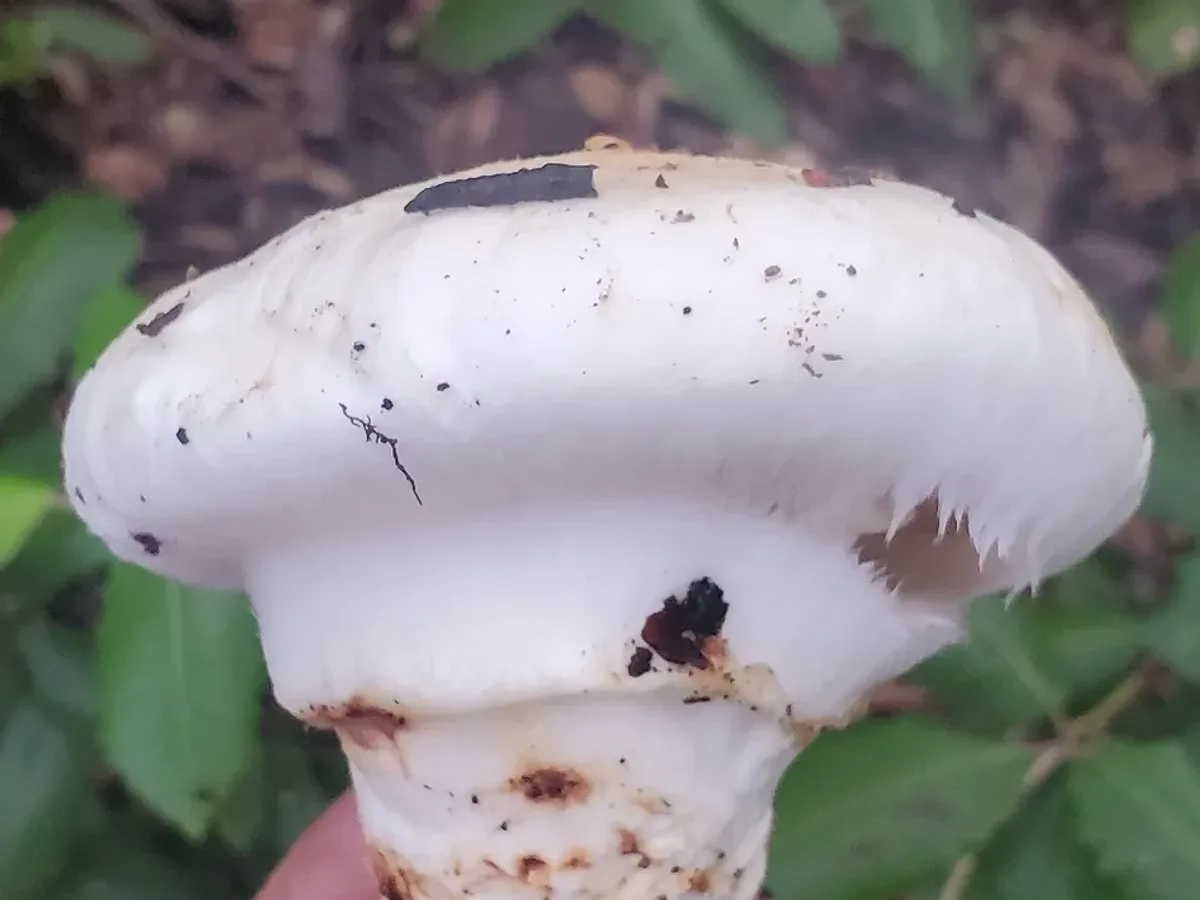 American matsutakeAmerican matsutakeAmerican matsutakeAmerican matsutake
Matsutake (pine mushroom)
Tricholoma murrillianumThe prized pine mushroom - unmistakable for its spicy cinnamon scent, but demands experience because of its kidney-damaging look-alike.
How to recognise it
A robust, firm mushroom. Cap 5-20 cm, white to cream, with ingrown brownish/rust-coloured fibres and scales that deepen to brown stains with age. Gills are white and dense, also staining brown. The thick white stem tapers downward and is often buried surprisingly deep in the duff. A cottony partial veil wraps the young cap; when it tears it leaves a white ring high on the stem. White spore print. The aroma is the most distinctive feature: a powerful, spicy, cinnamon-like smell famously described as "a provocative compromise between Red Hots candy and dirty socks" - unmistakable once you know it.
Where it grows
Grows mycorrhizally in sandy, nutrient-poor, well-drained soils - exactly the kind of lean ground that most plants avoid. In the Pacific Northwest it partners most often with pine (lodgepole pine/Pinus contorta, ponderosa pine), but also with Douglas fir, hemlock, tanoak, madrone and manzanita. Along the Oregon coast it fruits on stabilised sand dunes with shore pine, Sitka spruce and hemlock. These mycelial partnerships run deep: the underground network, the "shiro", can persist for decades, its outward-growing ring slowly mapping years of hidden life.
Cooking
Never wash - wipe with a damp cloth to preserve the aroma. Japanese methods dominate: matsutake gohan (mushroom rice with dashi, soy, mirin, sake), dobin mushi (clear broth steamed in a clay pot with shrimp, chicken, ginkgo, mitsuba and a splash of sudachi/lime), grilled (yaki-matsutake), in sukiyaki. Thinly sliced to spread the aroma.
Danger
The principal danger is misidentification: Amanita smithiana is white, robust and shares the same habitat, and its ingestion can lead to kidney failure. Distinguish by the matsutake's spicy odour, firm brown-staining flesh, and a stem that tapers to a point with no bulbous base or volva; smithiana lacks the spicy odour, has a deeply rooting base and may bear veil remnants.
Look-alikes
White, robust, grows in the same habitat but causes acute kidney failure. Unlike matsutake it lacks the spicy odour (old specimens smell putrid), has a deeply rooting base and may bear veil remnants; matsutake has the spicy/cinnamon odour, firm brown-staining flesh, and a stem tapering to a point with no bulbous base or volva.
Has a double veil and amyloid spores; only a mediocre edible, not the prized matsutake.
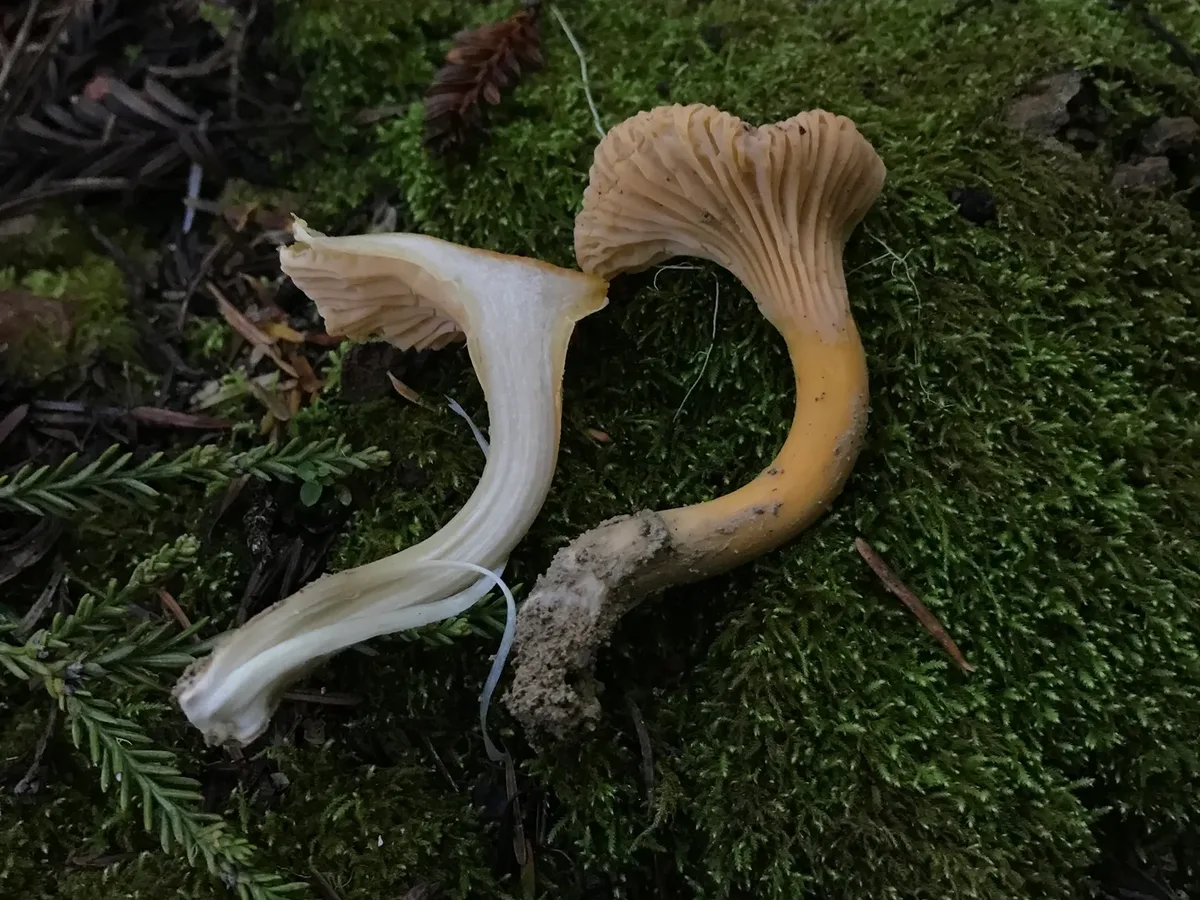 Pacific golden chanterellePacific golden chanterelle
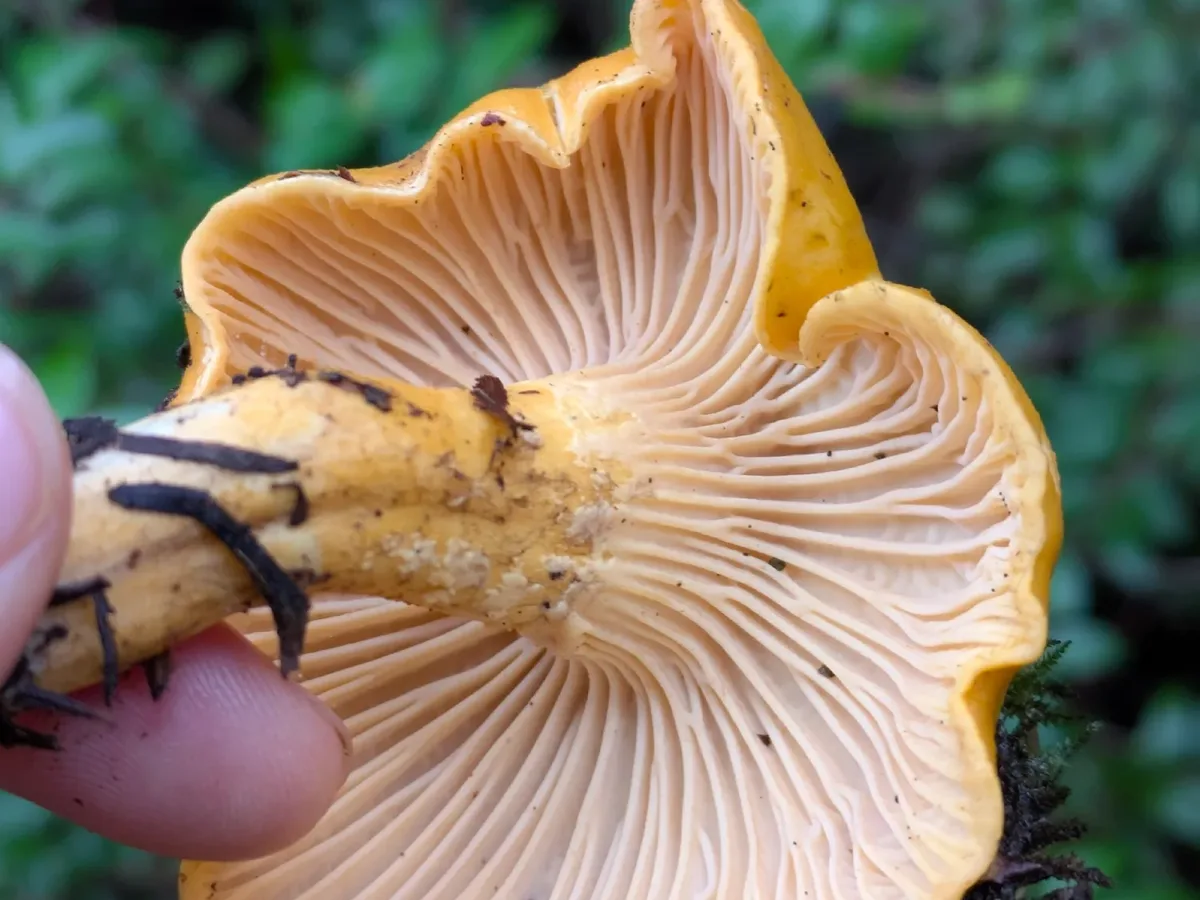 Pacific golden chanterellePacific golden chanterellePacific golden chanterelle
Pacific golden chanterelle
Cantharellus formosusOregon's official state mushroom, and one of the easiest and most rewarding for beginners - blunt ridges, never sharp gills.
How to recognise it
A fleshy, funnel-shaped mushroom in warm shades of deep gold to salmon-pink, with a wavy, rosette-like cap 3-10 cm across. The underside carries forked, decurrent ridges - not true gills - that run partway down the stem and often carry a soft pink blush. The stem tapers toward the base and can be pulled apart lengthwise in fibrous strings, like string cheese. Spore print is white to pale yellow. Scent is mild, sweet, and distinctly fruity - often described as apricot.
Where it grows
A mycorrhizal partner of Douglas fir and western hemlock, living in a quiet but durable exchange with its host trees - trading sugars for soil minerals. Curiously, it fruits more reliably in 40-60 year old second-growth forest than in old-growth stands. Found from British Columbia south to California, with Washington and Oregon (Coast Range, Cascades, and Willamette Valley) at the heart of its range.
Cooking
"Dry-sauteing" is recommended: place in a dry hot pan with a pinch of salt until the liquid has evaporated and the pan becomes dry again, then add butter, garlic/shallot, and thyme. Serve on toast, eggs, fish, or steak. Dry-sauteing before freezing gives the best results.
Look-alikes
Poisonous. Has true thin gills (not blunt ridges), grows in clusters on wood or near oak roots, and glows in the dark.
Has true thin forked gills rather than blunt ridges; can cause stomach upset.
Distinguished from true chanterelles, which have blunt ridges rather than sharp gills.
Formerly placed in Gomphus. Distinguished from true chanterelles, which have blunt ridges rather than sharp gills.
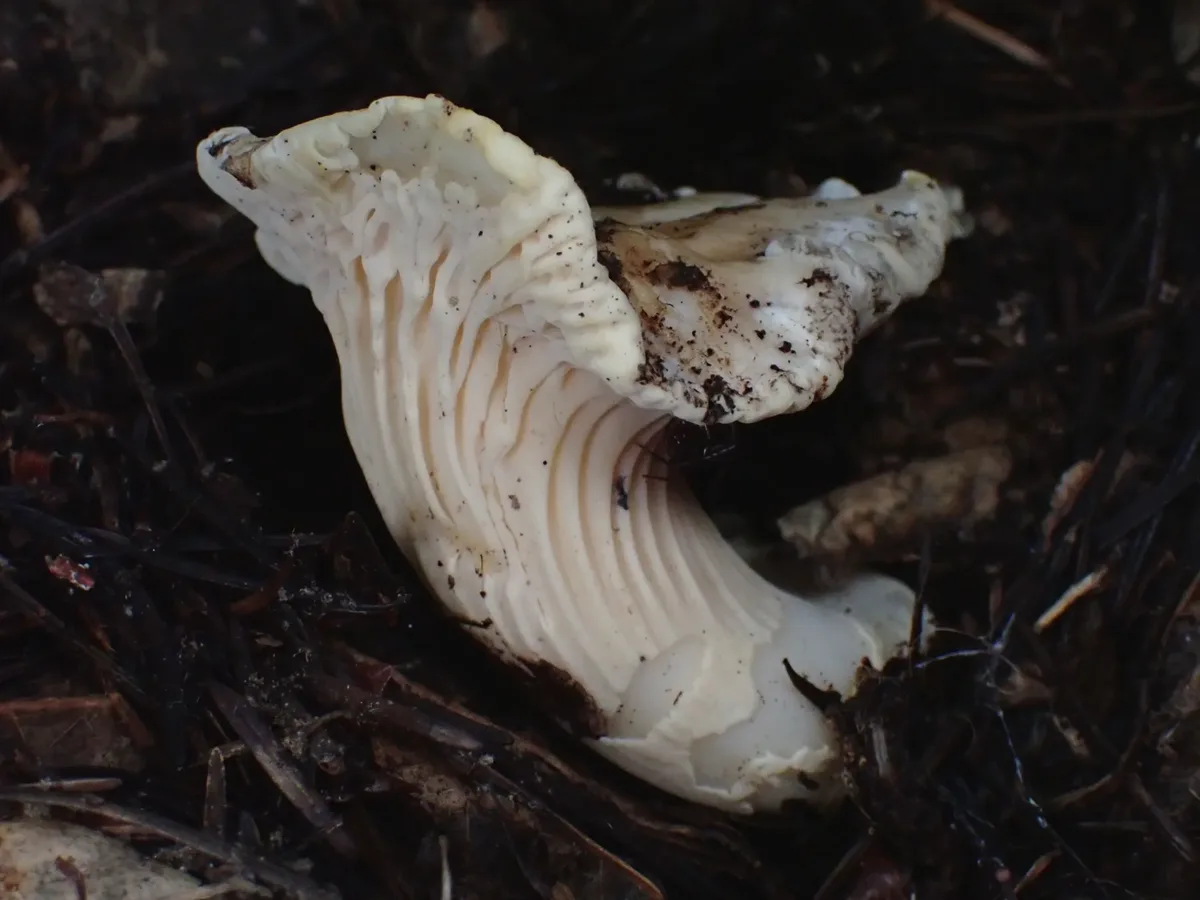 White Chanterelle
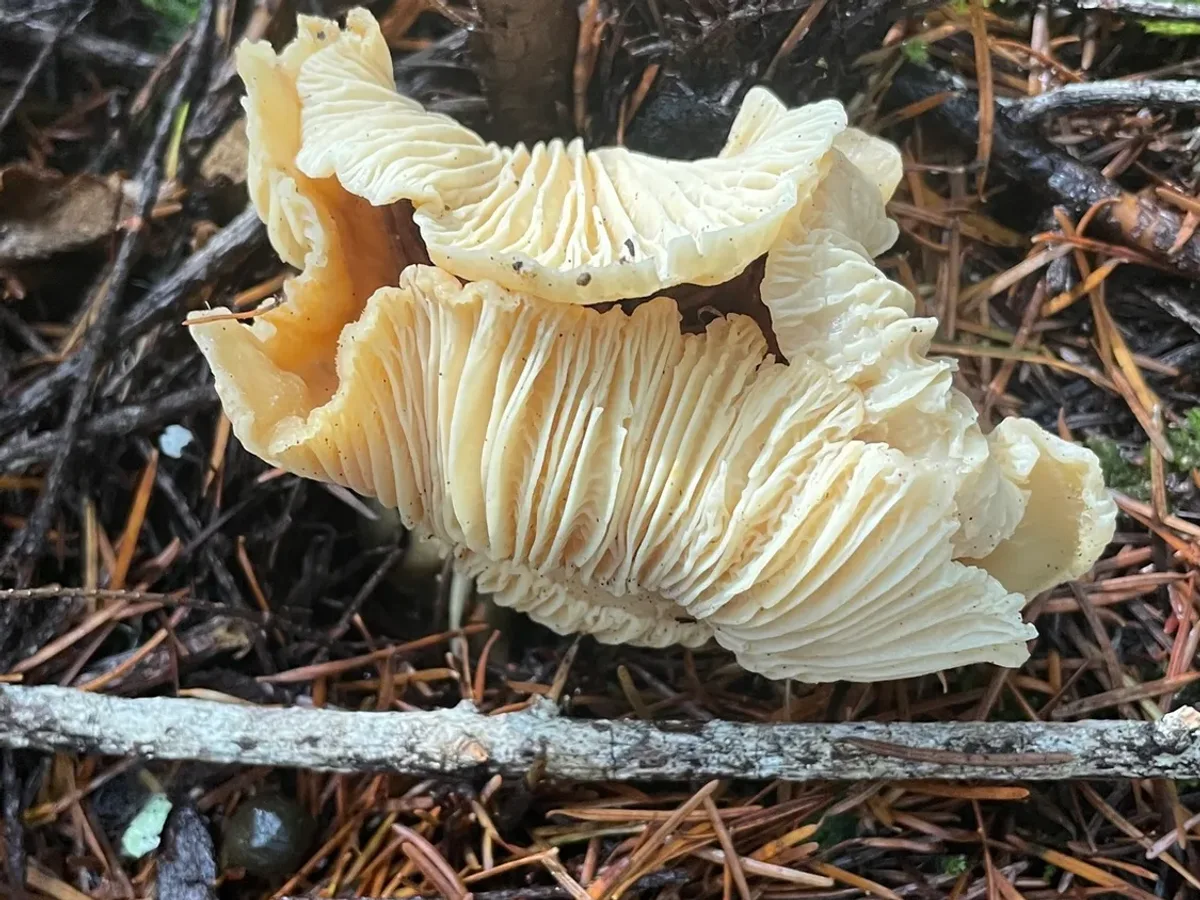 White Chanterelle
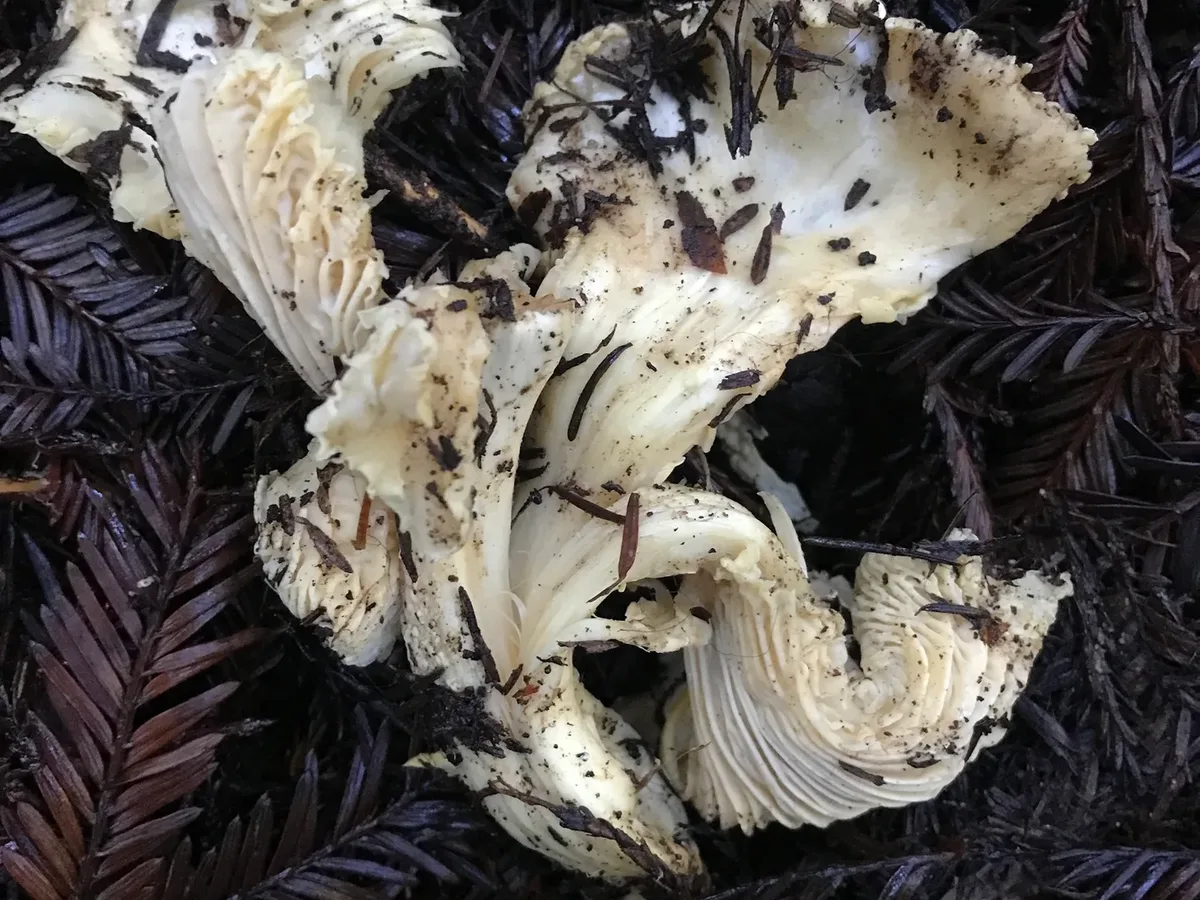 White Chanterelle
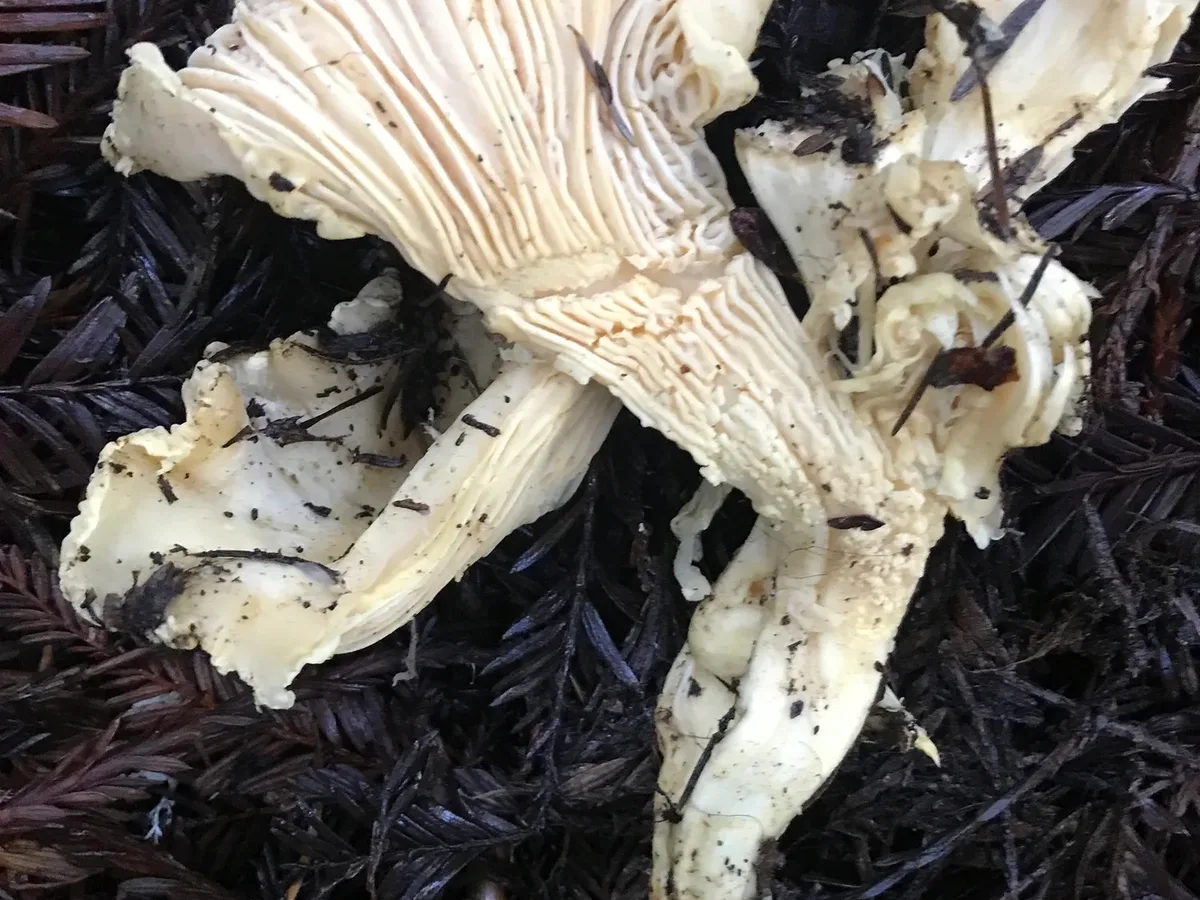 White ChanterelleWhite ChanterelleWhite Chanterelle
White chanterelle
Cantharellus subalbidusFirmer than its golden cousin; being pale, take extra care to rule out white-gilled Amanitas - chanterelles have ridges and no volva.
How to recognise it
White to cream-colored cap that stains yellow-orange when bruised or with age. Cap 4-15 cm across, starting convex and flattening to a shallow funnel with a wavy, lobed margin. The underside carries the chanterelle's signature forked ridges - blunt, pale, and running partway down the stem - rather than true gills. Spore print white. The scent is faintly pleasant but milder than the classic apricot aroma of the golden chanterelle.
Where it grows
Mycorrhizal with the great conifers of the Pacific Northwest - Douglas fir, western hemlock, Sitka spruce, and true fir - and at its most abundant in older and old-growth forest where those partnerships have had decades to take hold. Range covers Washington, Oregon, northern California, and British Columbia.
Cooking
Treat it like the golden chanterelle: dry-sauté first to drive off moisture, then finish in butter. The flavor is mild and woodsy - good in risottos, egg dishes, or simply on toast.
Look-alikes
Because the white chanterelle is white, take extra care to exclude white-gilled Amanitas: the chanterelle has blunt forked RIDGES, not true gills, and has no volva.
Has true thin gills rather than the chanterelle's blunt forked ridges.
Has true thin gills rather than the chanterelle's blunt forked ridges.
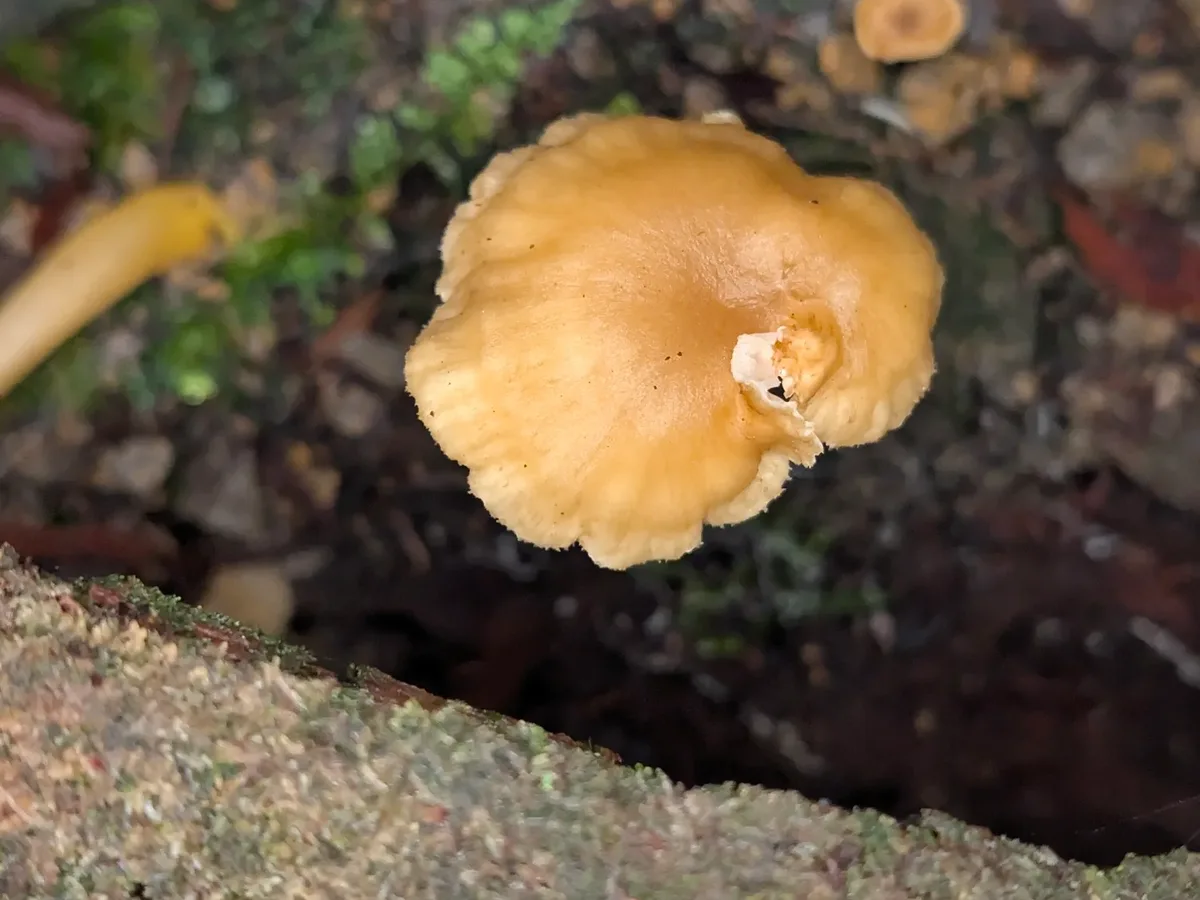 Yellowfoot
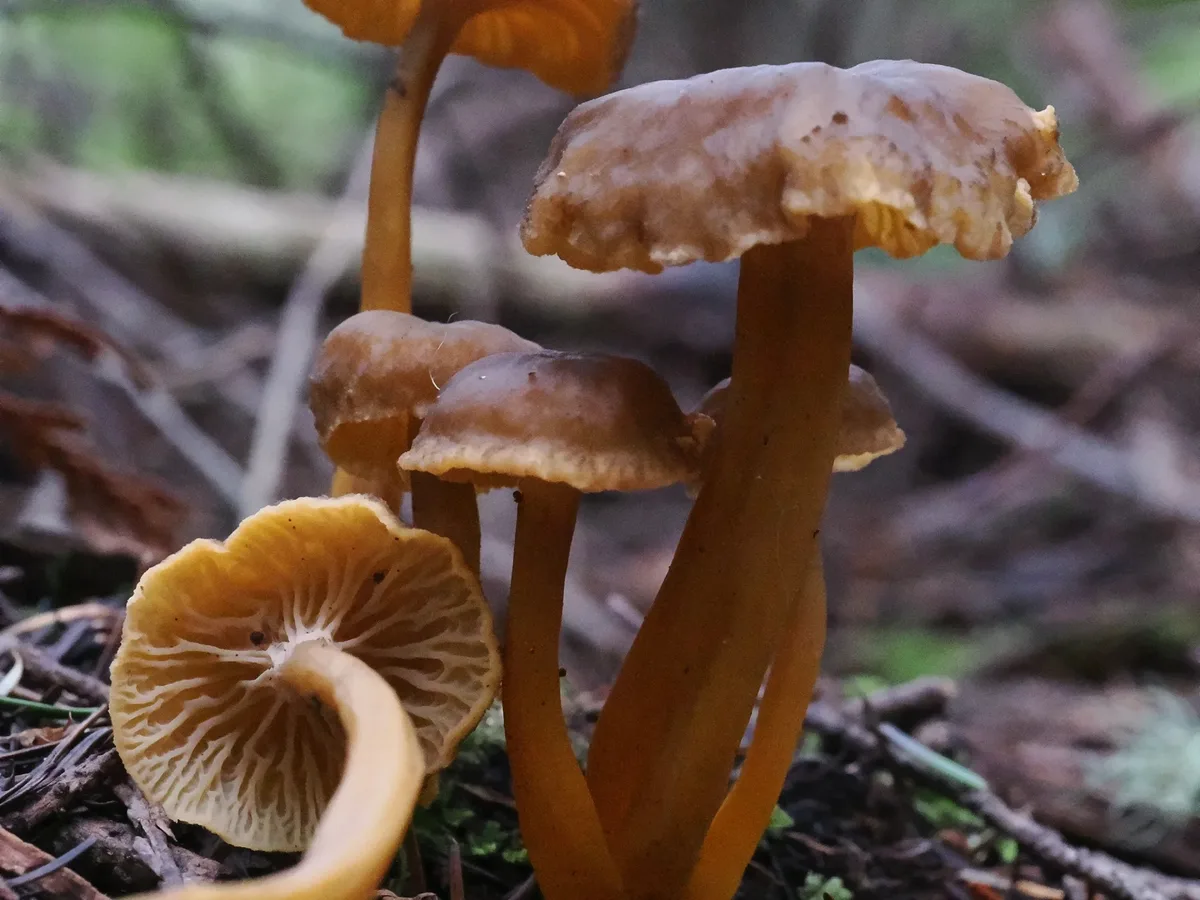 Yellowfoot
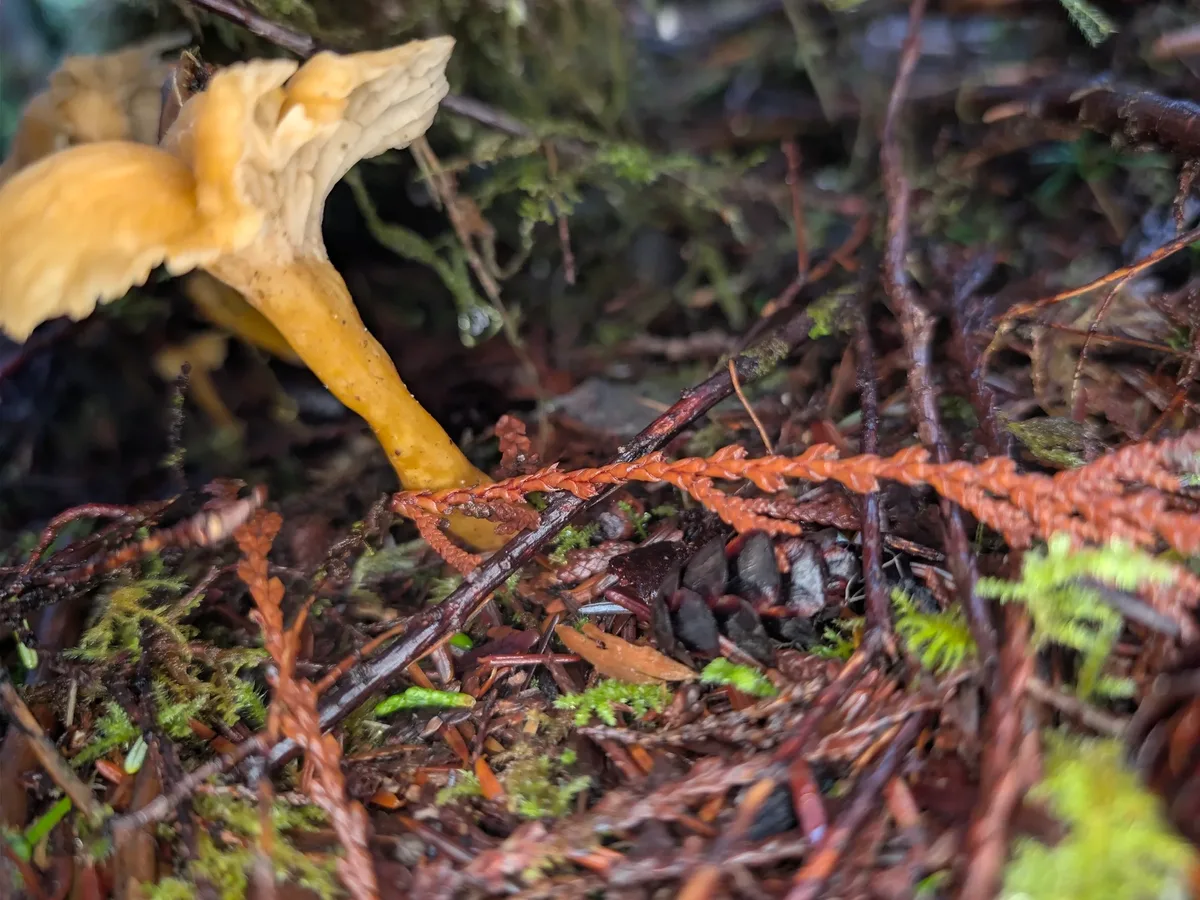 Yellowfoot
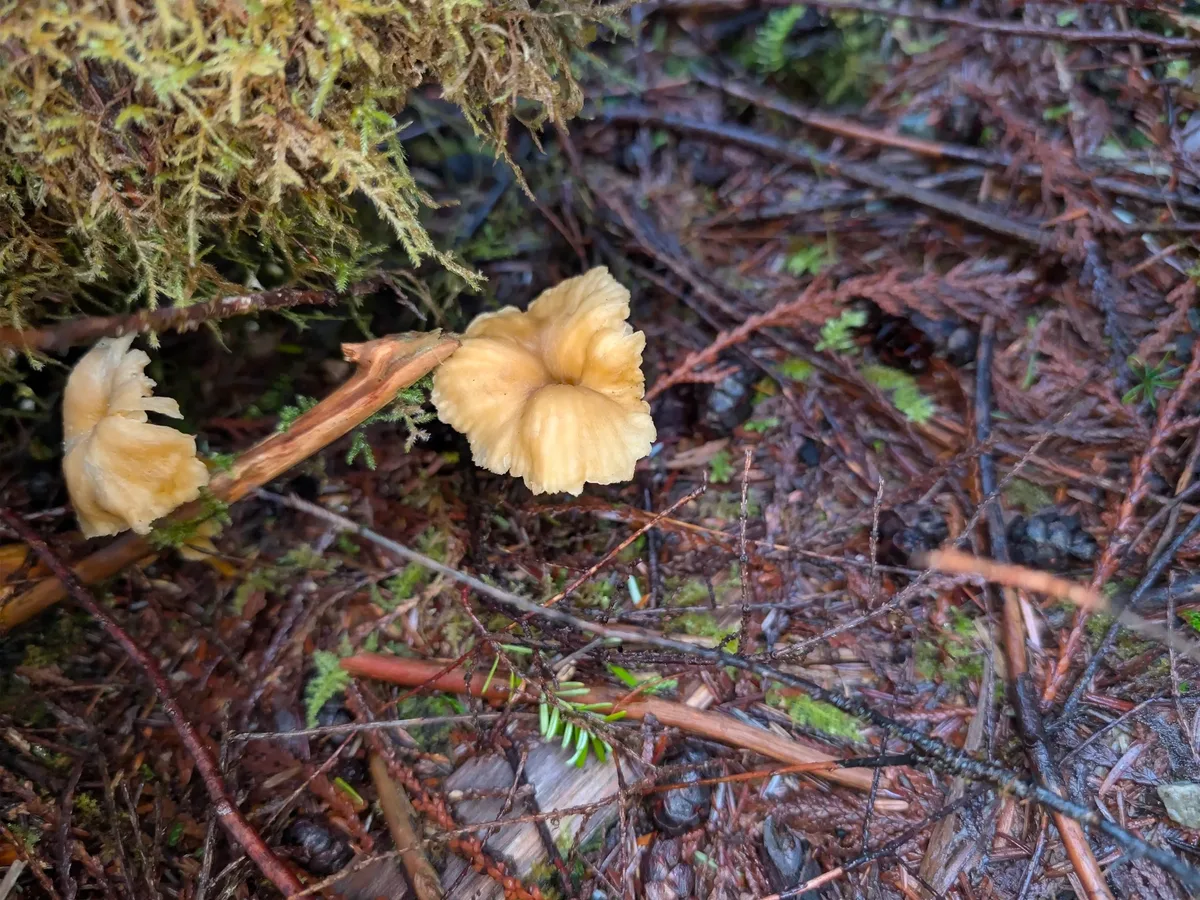 YellowfootYellowfootYellowfoot
Yellowfoot (winter chanterelle)
Craterellus tubaeformisThe last chanterelle of the season - break the stem to find the hollow yellow-orange tube that gives it its name.
How to recognise it
A slender, funnel-shaped cap 2-6 cm across, yellow-brown to grey-brown or near black-brown on top - colours that shift with age and moisture. The underside has sparse, grey-yellow, branching ridges that run smoothly down onto the stem. Most distinctive of all: the stem is hollow, yellow to yellow-brown, a tube you can confirm just by snapping it. Mild smell with a faint nutty edge.
Where it grows
Mossy coniferous and mixed forest, favouring damp hollows and spruce stands where sphagnum holds moisture. Mycorrhizal - its mycelium threads quietly through the soil, in a partnership with the tree roots around it that may have been running for decades. Common in southern and central Sweden.
Cooking
Mild and faintly peppery, with a flavour that deepens with drying. Works well in soups, sauces, stews and risotto - and because it dries so cleanly, it is worth laying some aside for winter.
Look-alikes
The deadly webcap has a pointed cap and red-brown gills; the yellowfoot has branched ridges (not true gills) and a hollow stem. Confusion arises only through carelessness, as they grow in similar damp environments.
Harmless; has a gelatinous "cap" and is not funnel-shaped.
Harmless relative with a similar overall form.
Golden chanterelle has a solid white interior, whereas yellowfoot has a hollow tube with bright yellow-orange walls.
The black trumpet is dark all the way through, whereas yellowfoot has bright yellow-orange walls in a hollow foot.
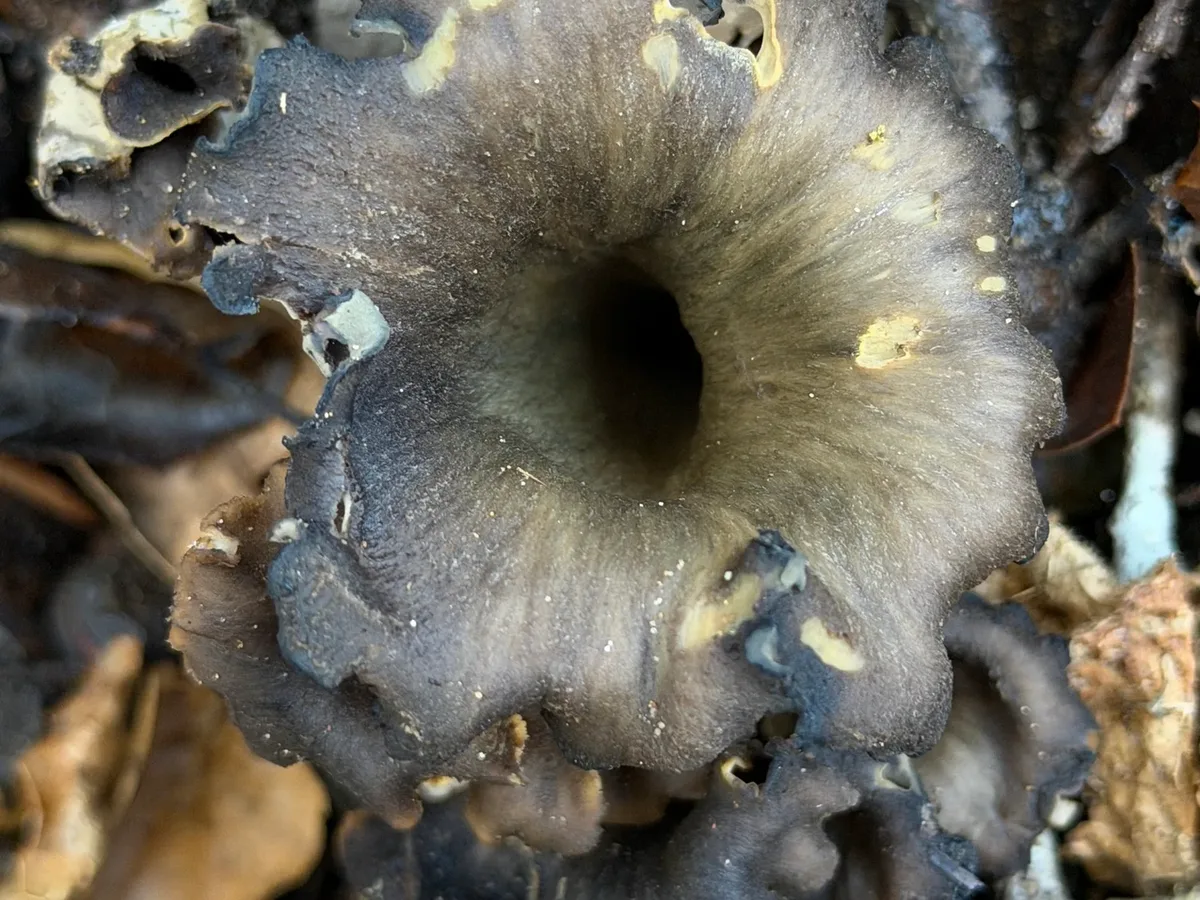 Black trumpet
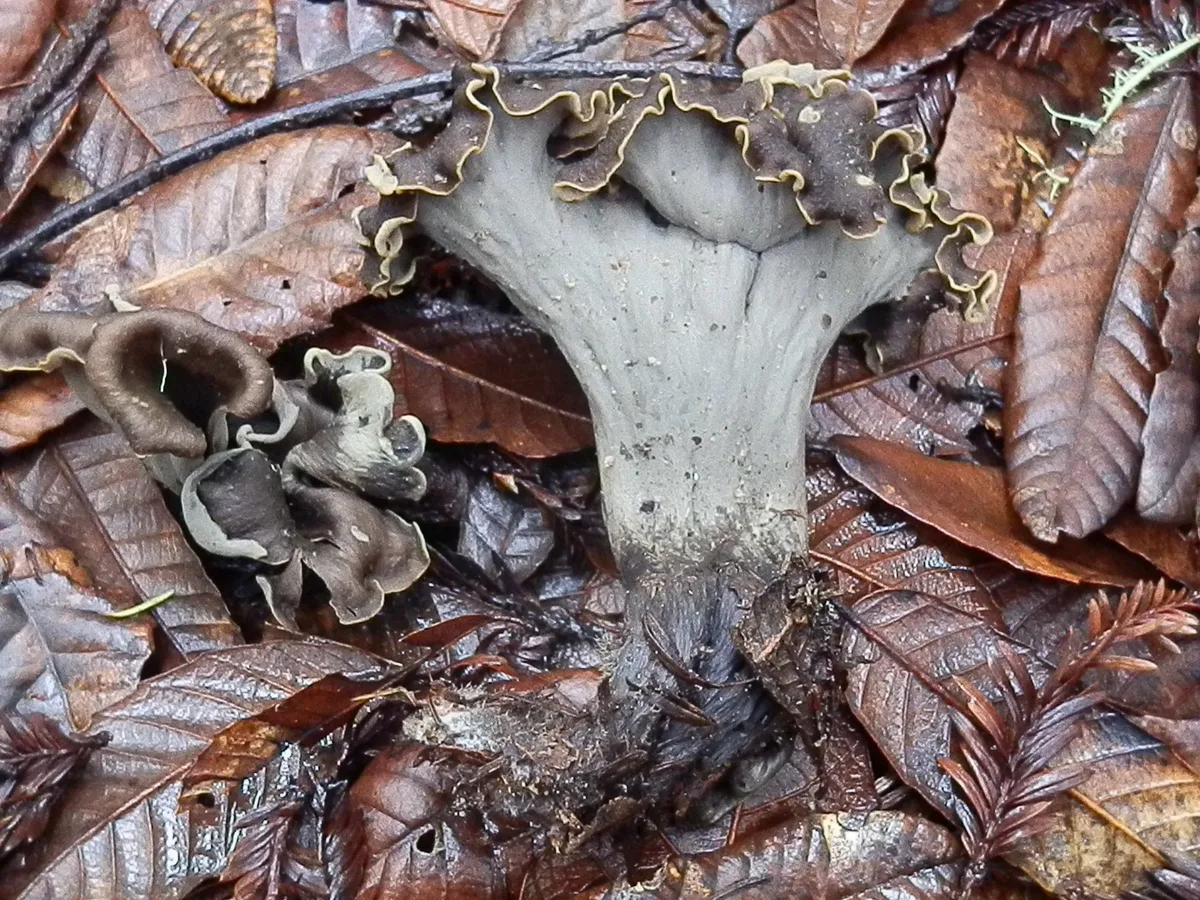 Black trumpet
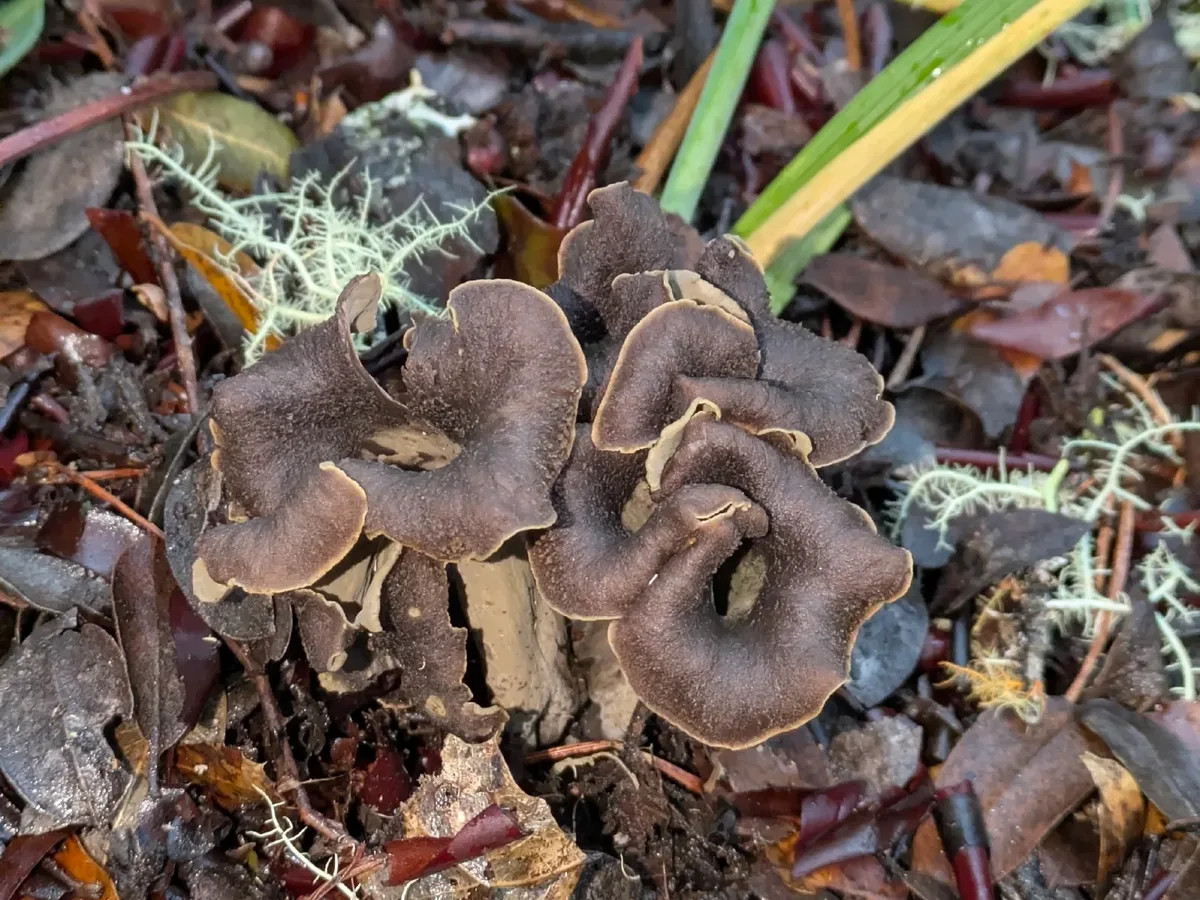 Black trumpet
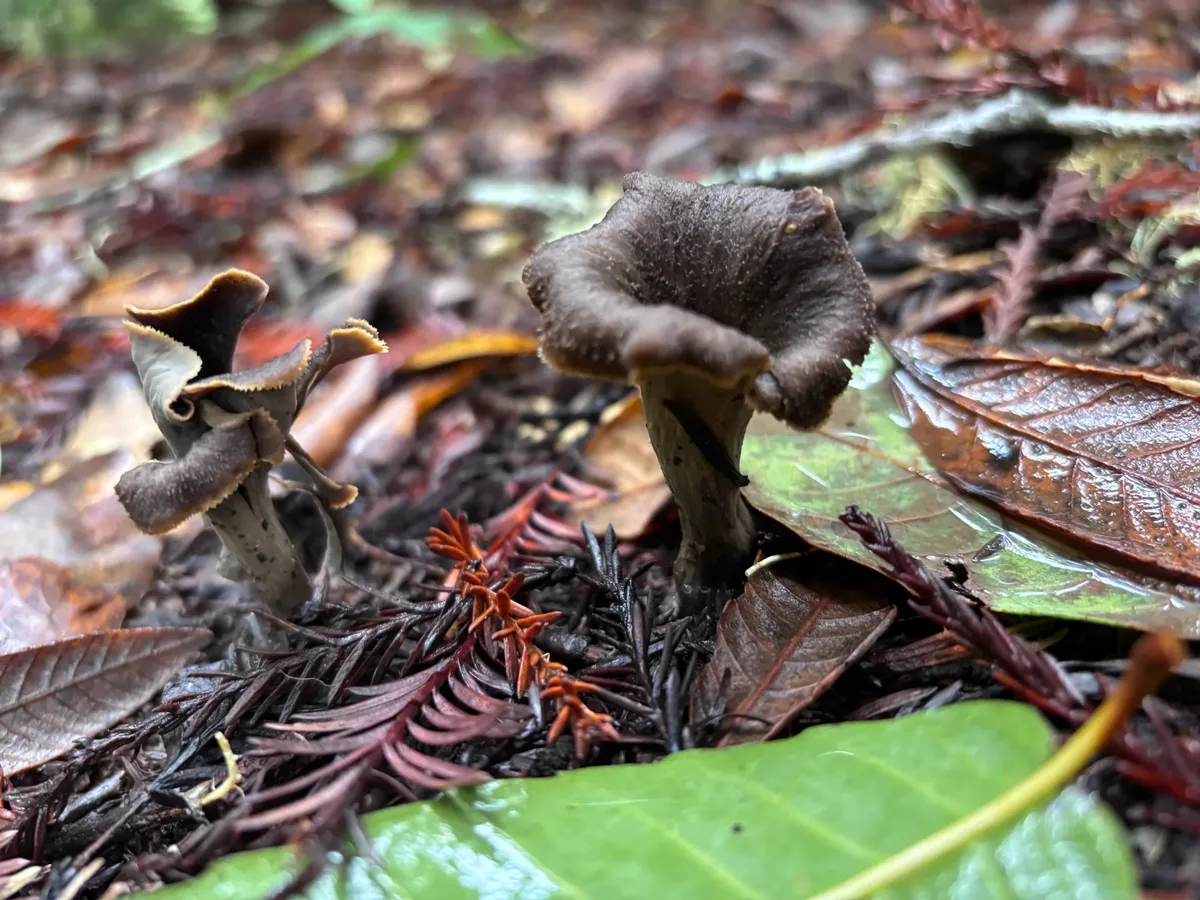 Black trumpetBlack trumpetBlack trumpet
Black trumpet (horn of plenty)
Craterellus calicornucopioidesA grey-black funnel hard to spot against the forest floor, with no poisonous look-alikes; drying deepens it to almost truffle-like.
How to recognise it
A dark grey-to-black funnel, open all the way through like a hollow tube - cap and stem merge seamlessly with no clear boundary. The inner surface is dark grey to near-black with fine scales; the outer fertile surface is paler grey, smooth or faintly wrinkled, with no true gills. Small but deep: 1-5 cm across the mouth, 3-9 cm tall (occasionally to 15 cm). Its colour blends perfectly into the dark leaf litter and mossy soil, making it easy to walk past even a large patch.
Where it grows
Mycorrhizal, living in a long-term underground partnership with its tree hosts. In the Pacific Northwest it grows with Douglas-fir and tanoak; in northern California also with oak. Look for mossy, moist ground on north-facing slopes and near stream edges, where the soil stays cool and damp through winter.
Cooking
Dries excellently - drying intensifies the flavour and gives truffle-like notes; crushed into a seasoning/condiment. Fresh in cream sauce, risotto.
 Spring king bolete
 Spring king boleteSpring king bolete
 Spring king boleteSpring king boleteSpring king bolete
Spring king bolete
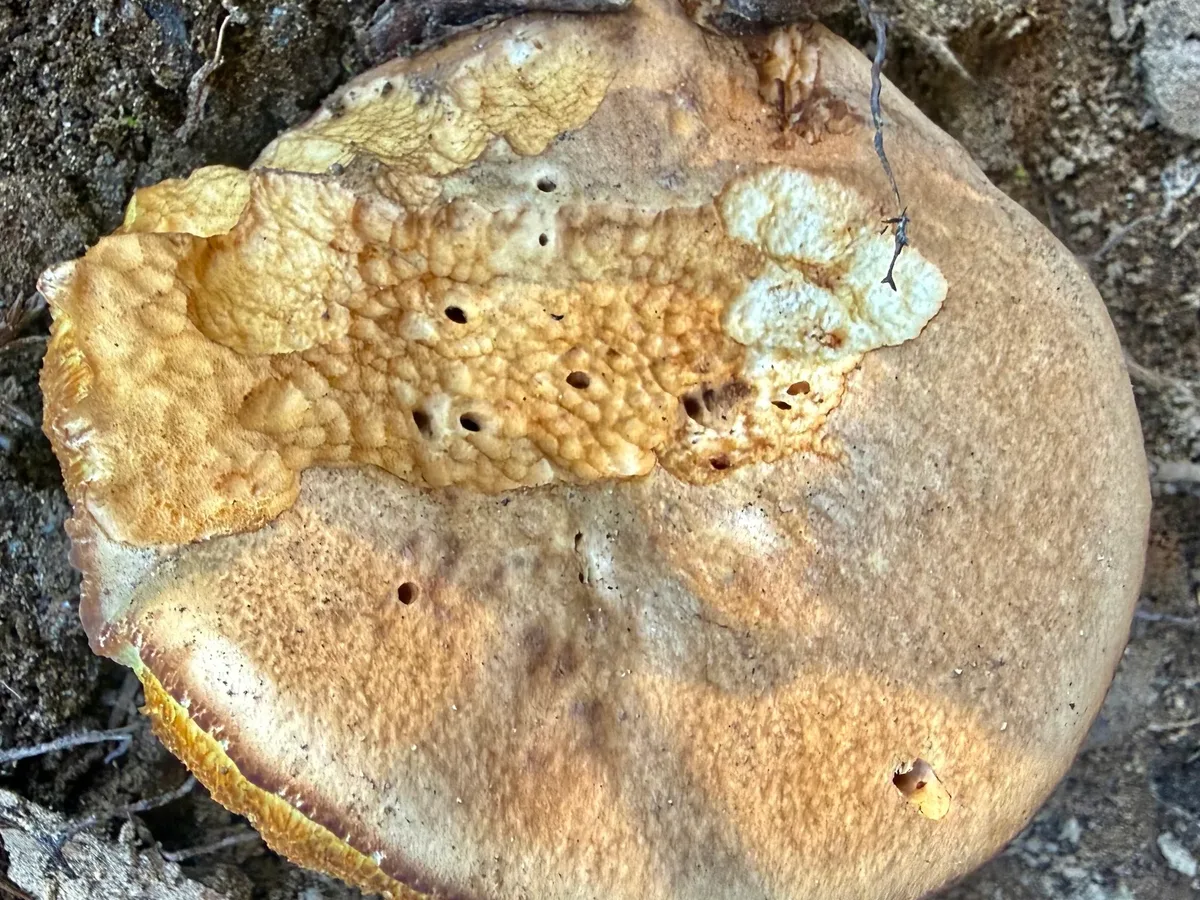
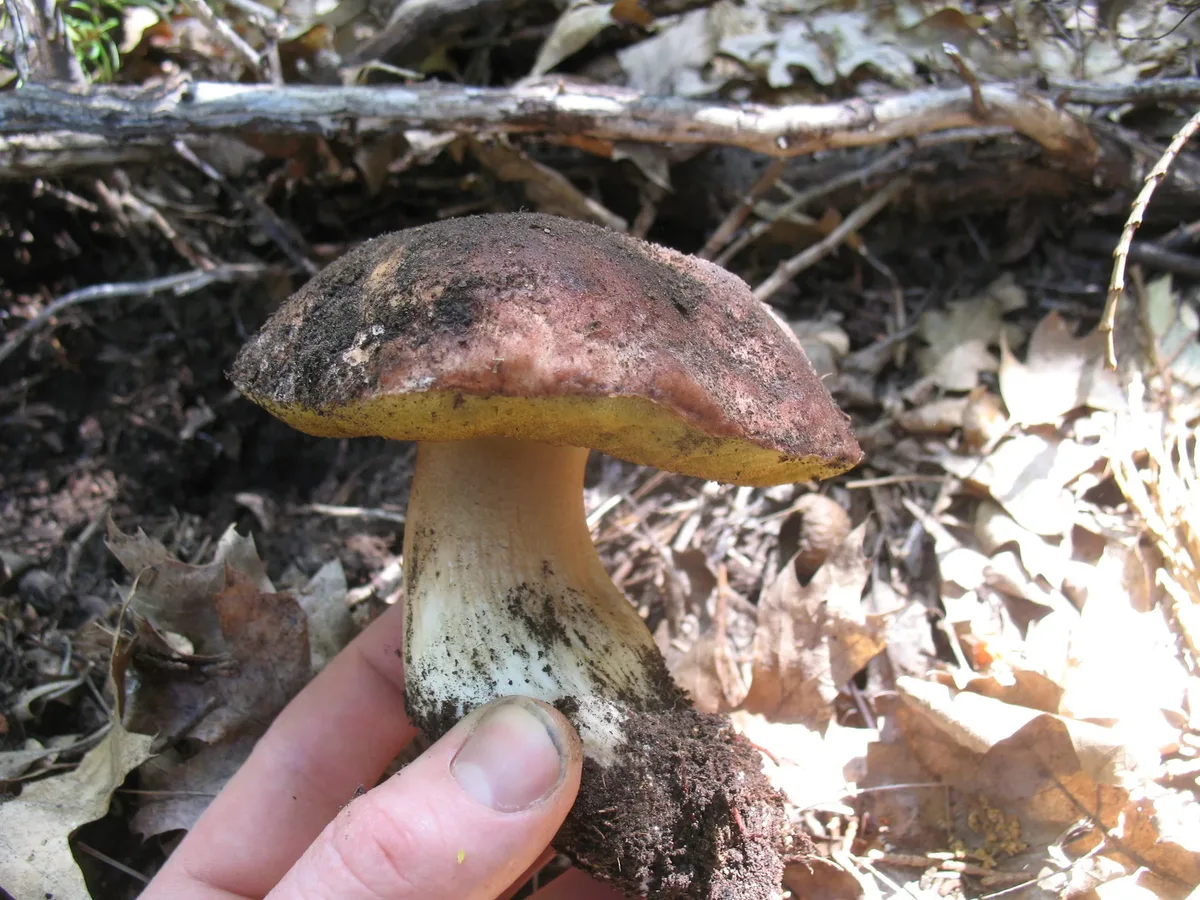
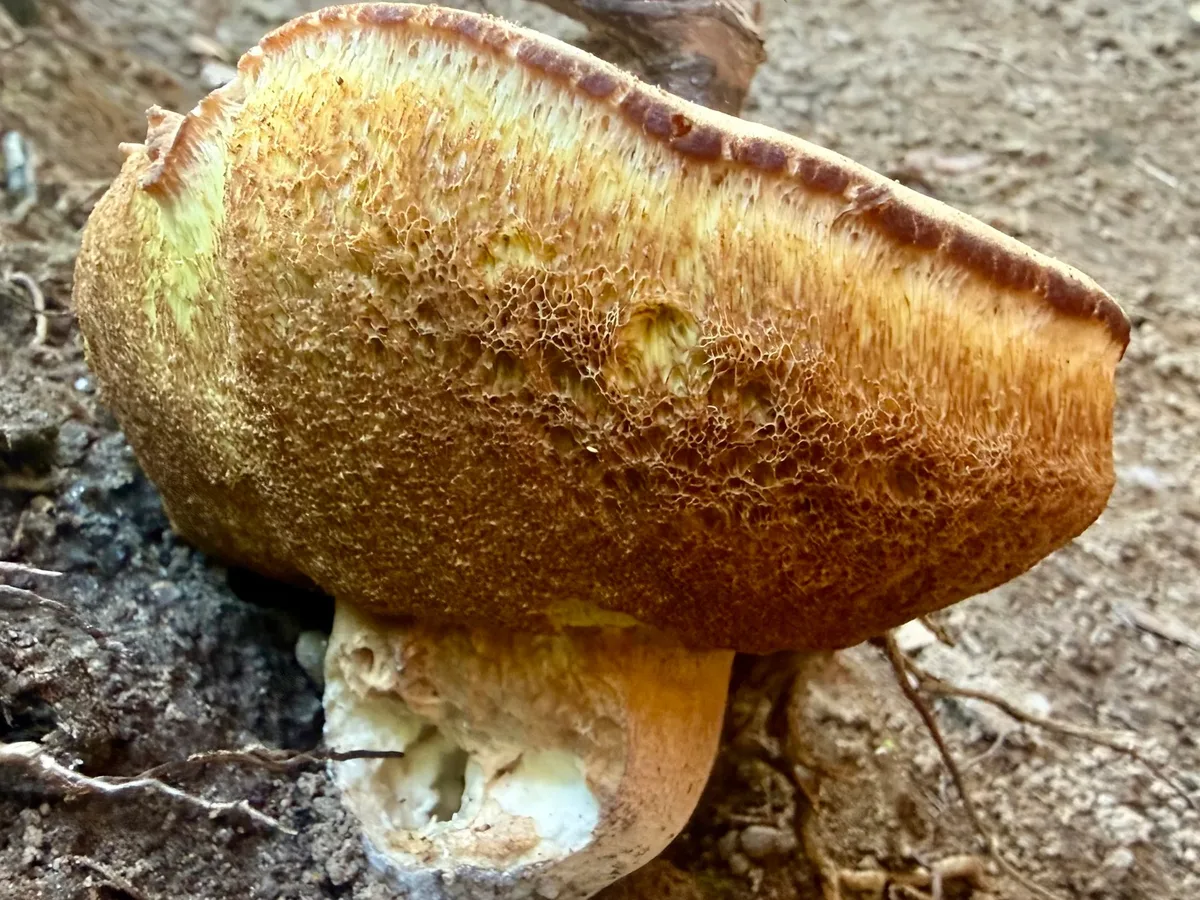
Boletus rex-verisThe year's first porcini, pushing up weeks after snowmelt - brown cap, netted pale stem, and pores that never stain blue.
How to recognise it
A large, solidly built bolete. Cap 10-30 cm, reddish-brown to dark brown, sometimes wearing a pale chalky bloom on young specimens and around the margin. The fertile underside is white pores that turn cream-yellow with age and never stain blue. The stem is thick, often barrel-shaped to cylindrical, usually showing a raised net pattern (reticulation) across its upper third. Flesh is firm and white throughout. Taste is mild, nutty, with a slight fruitiness.
Where it grows
A mycorrhizal species that lives in a quiet, long-running partnership with conifers - ponderosa pine, true fir, and others - threading its mycelium through the root zone for years before fruiting. Strictly east of the Cascades: the Blue Mountains, the northern Rocky Mountains, the Sierra Nevada, and much of Idaho.
Cooking
Dries exceptionally well - slice it thin and the texture and aroma concentrate beautifully. Fresh, it is best pan-fried in butter with a little salt, but it holds its shape well enough for grilling, risotto, and hearty soups.
Look-alikes
Have gills, not pores; any bolete has a spongy pore layer underneath the cap.
Yellow pores that stain blue immediately and an intensely bitter taste; the edible spring king has a white pore layer that never stains blue and a mild taste.
Orange/red pores that turn blue (bruise blue); the spring king has white-to-yellowish pores with no color change.
Orange/red pores that turn blue; the spring king has white-to-yellowish pores that never blue.
 Yellow morel
 Yellow morel
 Yellow morel
 Yellow morelYellow morelYellow morel
Morels & burn morels
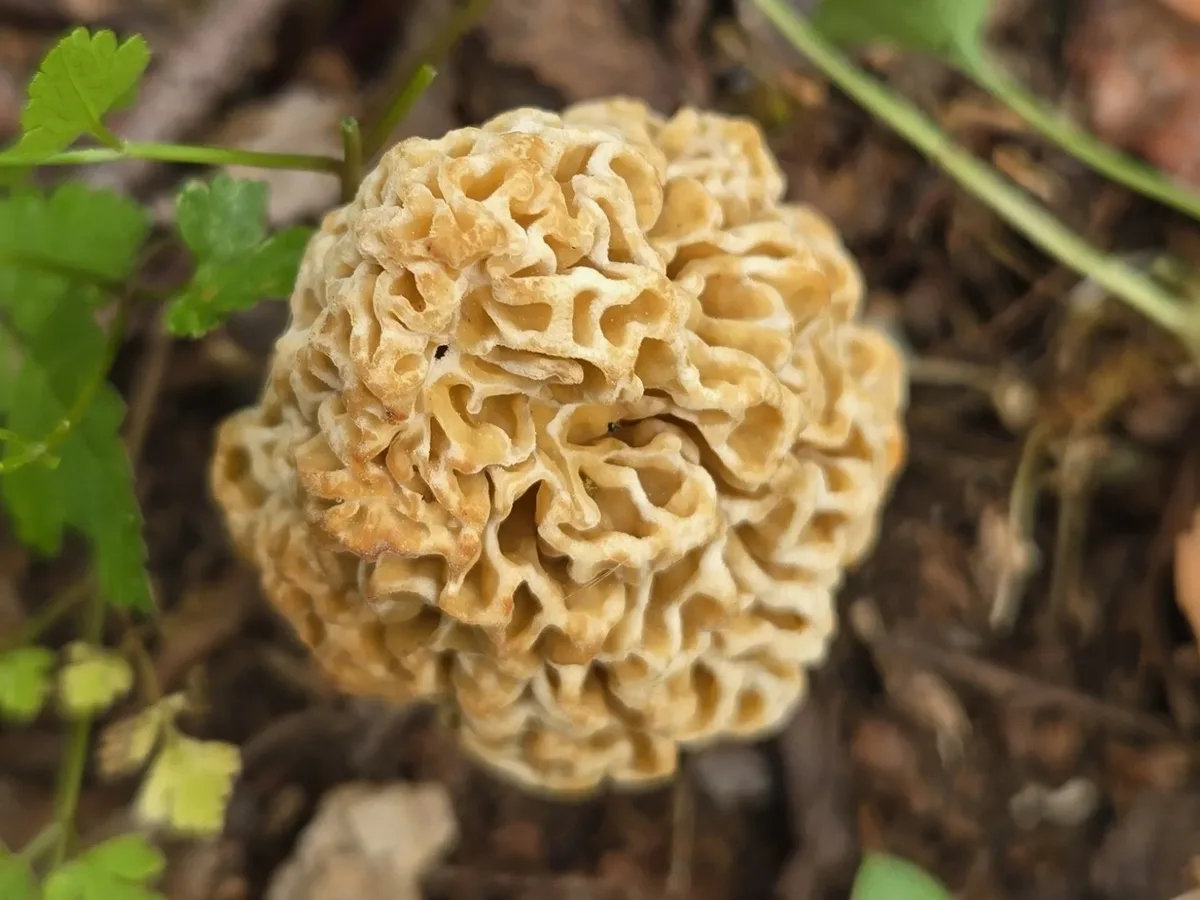
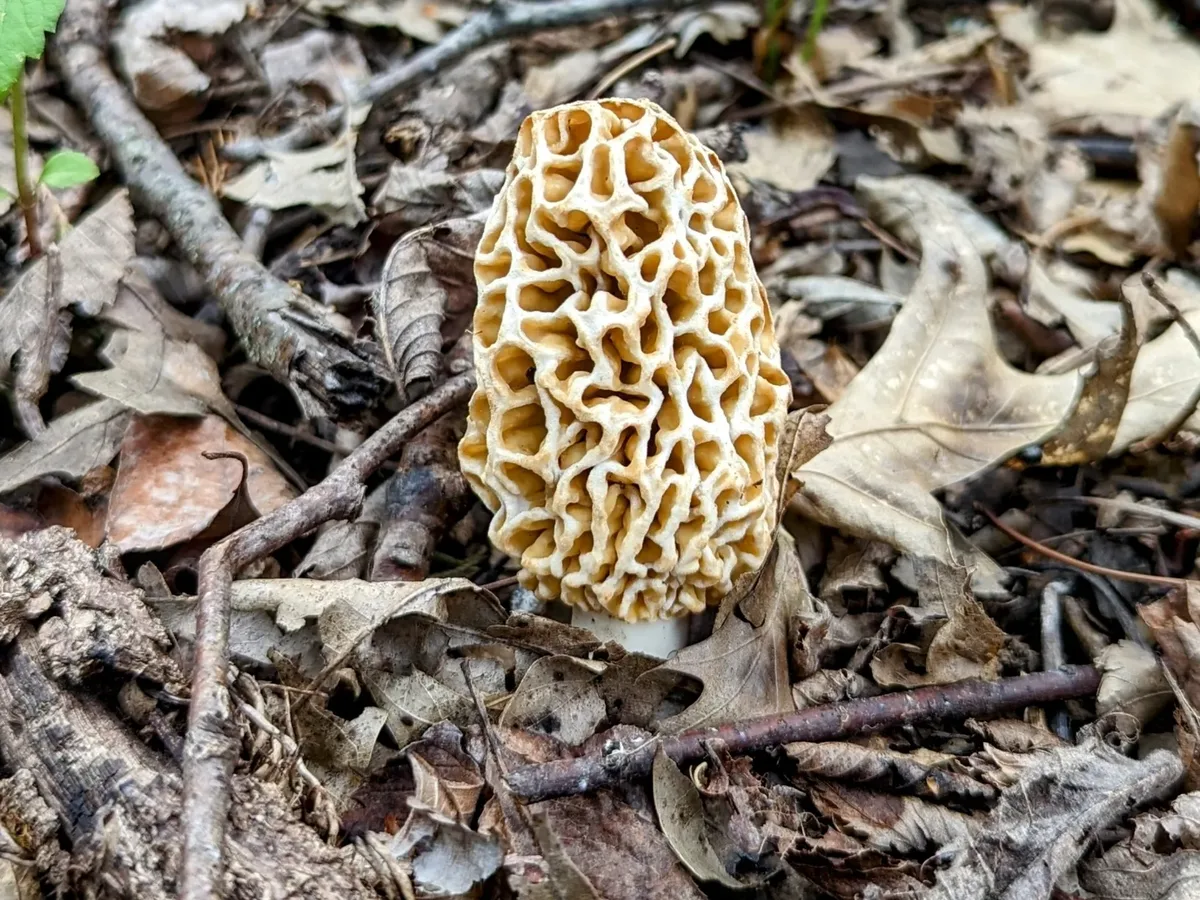
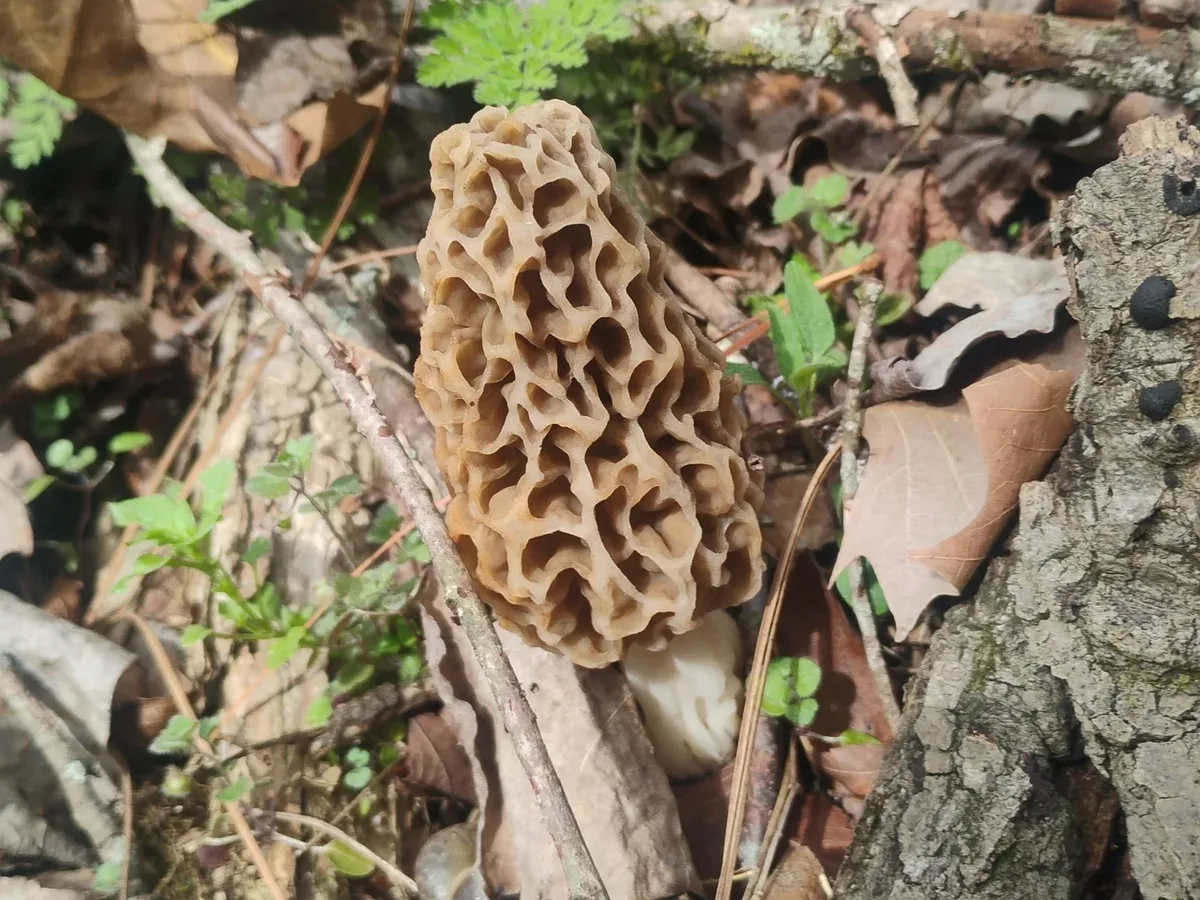
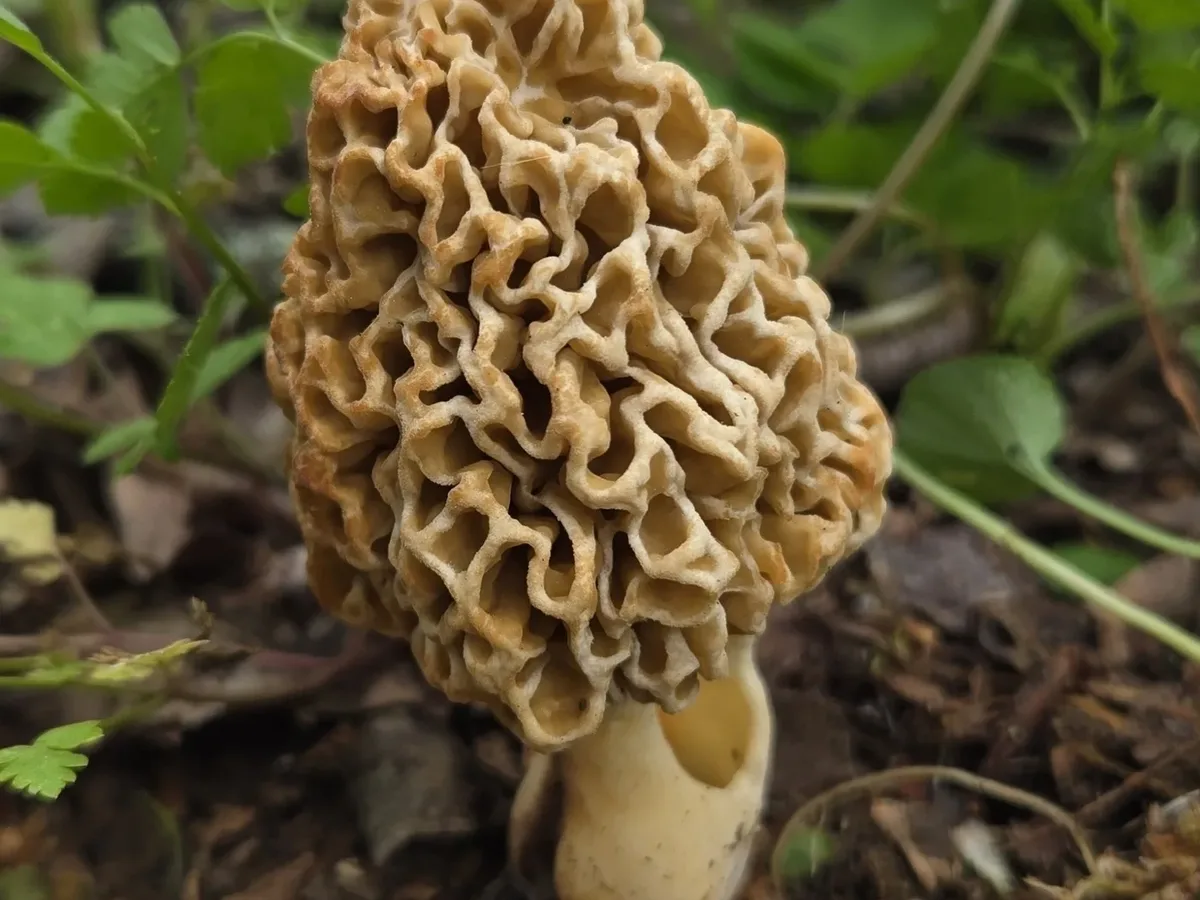
Morchella americanaHoneycombed and hollow throughout - wildfires trigger mass burn-morel fruitings the following spring. Never eat them raw.
How to recognise it
The cap is covered in a honeycomb of pits and ridges, and the whole mushroom - cap to foot - is completely hollow, a single open chamber. The yellow morel is pale-yellow to brown; the black morel is darker with a more pointed cap. That fully hollow interior is the decisive field mark.
Where it grows
Deciduous and mixed forest, often near dying or dead elms and ashes, around living tulip trees, oaks and poplars, in old apple orchards, along rivers and on burn sites. The Midwest is known as 'the morel belt' for good reason - the combination of dying elms, rich river-bottom soils, and spring warmth produces reliable flushes year after year.
Cooking
A Midwest tradition: halve them, soak in salted water to flush out any hidden residents, then bread in flour, egg, and breadcrumbs and fry in butter - fried morels at their simplest and best. They also shine creamed, in a sauce, or dried and reconstituted later in the year.
Look-alikes
Brain-like/wrinkled cap (not honeycomb-patterned), with a chambered interior that is not fully hollow, and contains the toxin gyromitrin. A true morel is completely hollow from cap to foot.
Brain-like/wrinkled, chambered (not fully hollow) interior, contains gyromitrin. The true morel's fully hollow interior is the distinguishing feature.
Brain-like, convoluted cap (not honeycomb-pitted), and not hollow but chambered/filled inside. Contains gyromitrin (a toxin).
The cap is attached only at the top (hangs free), unlike a true morel whose cap is attached down the length of the stem; the fully hollow interior also distinguishes the true morel.
A false early morel; distinguish from true Morchella by cap and stem attachment and chamber structure.
 Lobster mushroom
 Lobster mushroom
 Lobster mushroomLobster mushroomLobster mushroom
Lobster mushroom
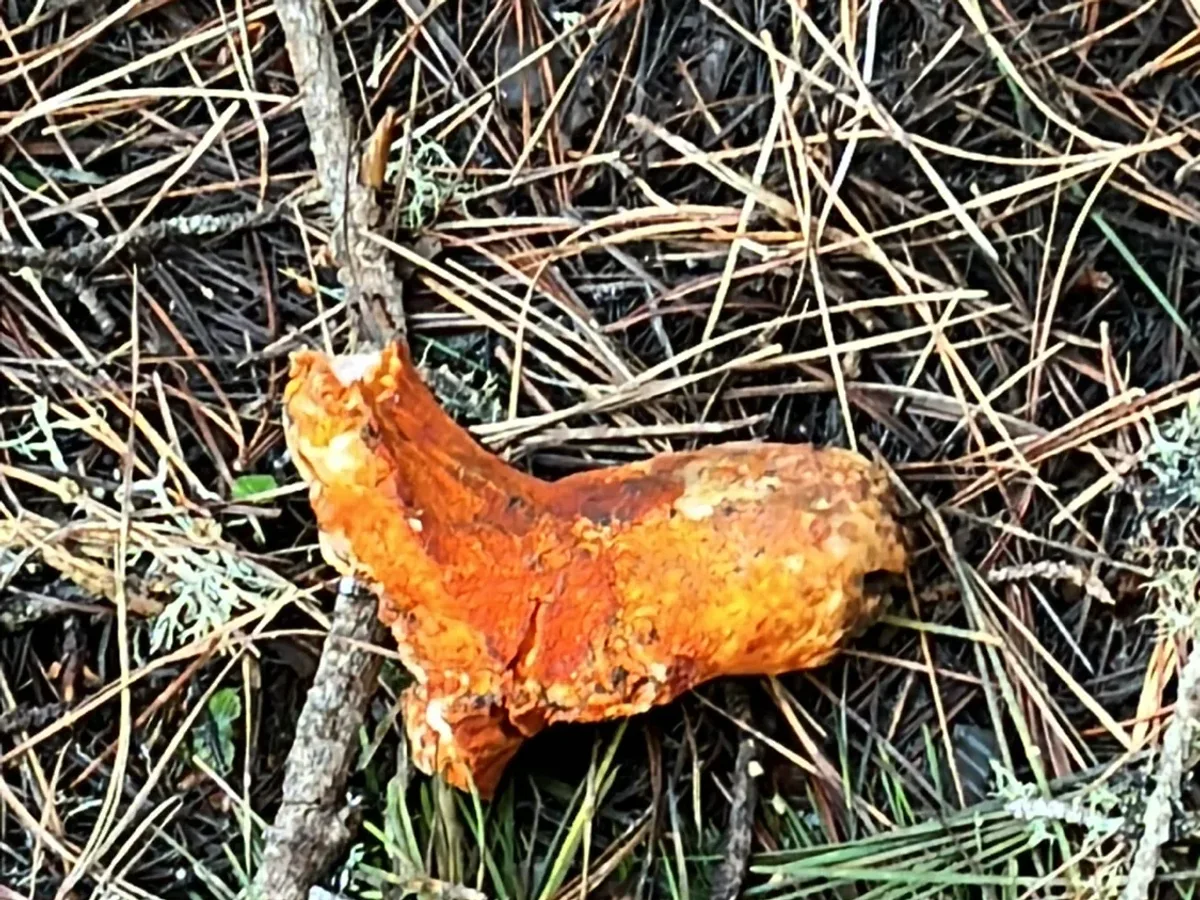
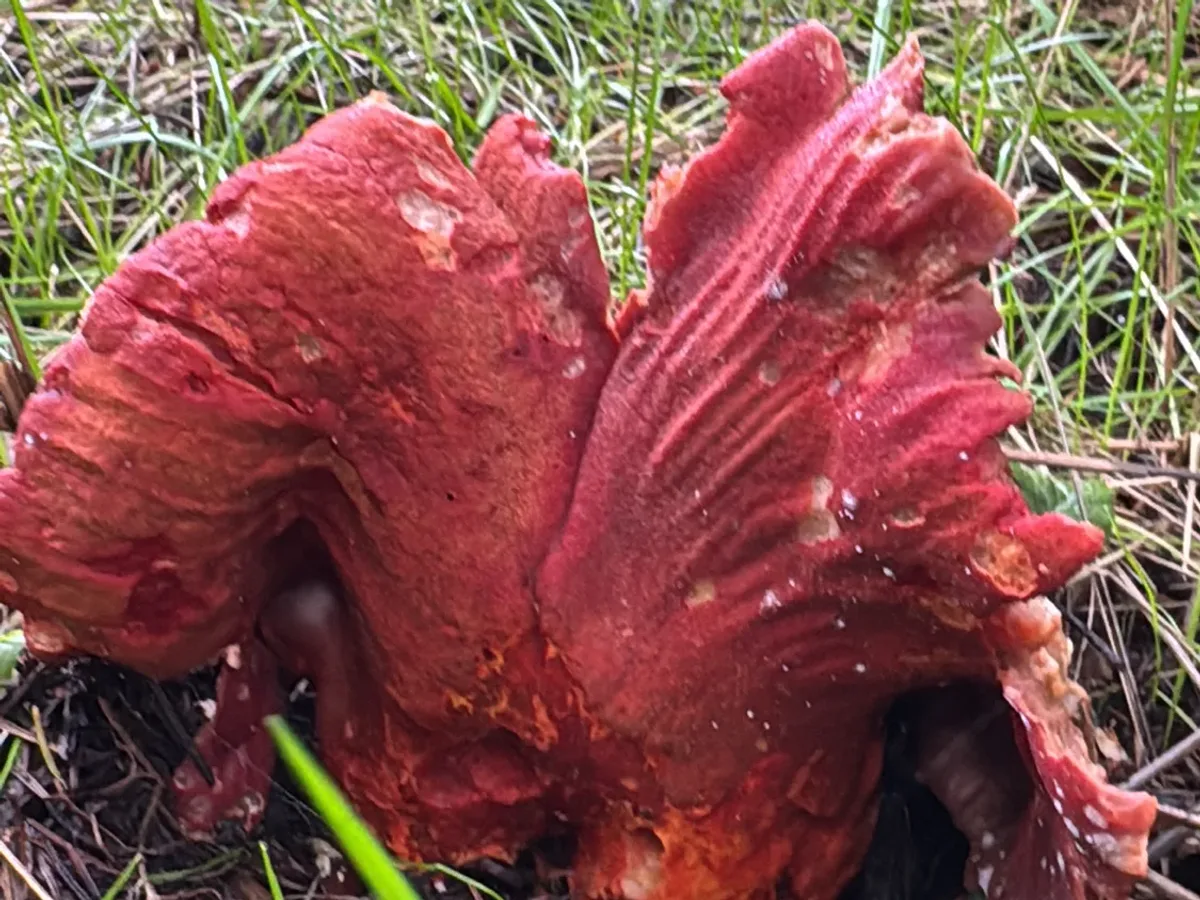
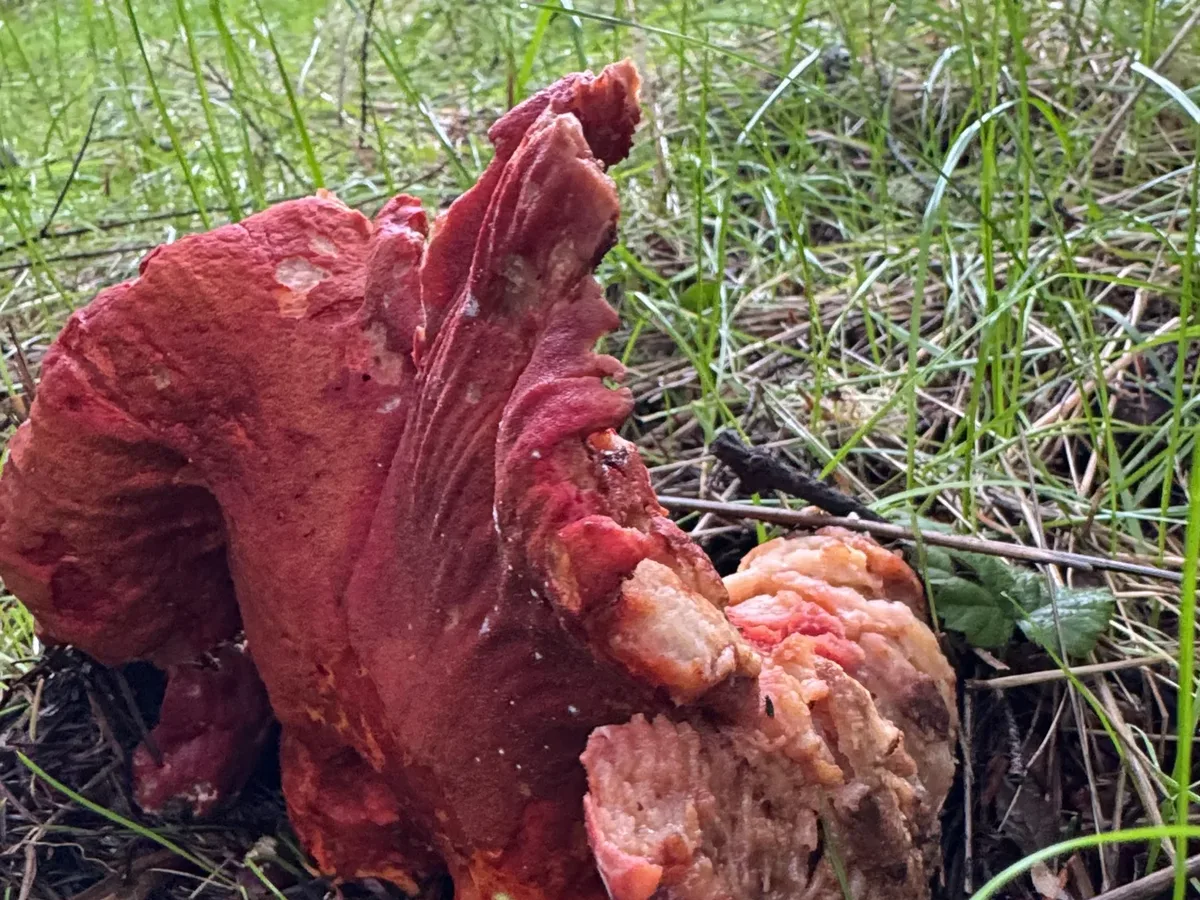
Hypomyces lactifluorumNot really one mushroom but a parasite that transforms its host orange, firm and seafood-scented; eat only fully parasitised, healthy specimens.
How to recognise it
Not an ordinary mushroom but a parasitic ascomycete (sac fungus) that attacks host mushrooms and covers them completely in a bright orange to orange-red, finely pimpled crust - the resemblance to cooked lobster shell is immediate and unmistakable. The flesh inside is white and firm. The host's gills are usually entirely buried under the parasitic crust. Smells pleasantly of shellfish.
Where it grows
Found on the ground wherever its hosts grow - short-stemmed russula (Russula brevipes) and peppery milkcap (Lactarius piperatus) in coniferous and mixed forest. Occurs throughout North America and Mexico.
Cooking
Works well in chowder, bisque, and risotto, holding its shape and color through cooking in a way most mushrooms do not. In Michoacan it has a long culinary tradition: boiled and then fried with tomato and onion as a meat substitute, served with tortillas.
Look-alikes
Common host; once fully parasitized it becomes the bright orange, white-fleshed lobster mushroom.
Another host; the parasite neutralizes its pungency. Eat only firm, clearly parasitized white-fleshed specimens; avoid half-parasitized, purple, soft, fishy-smelling ones since the host identity is uncertain.
Chanterelles lack the wart-like perithecia of the lobster mushroom's surface.
Avoid partly parasitized specimens and overripe ones, which have a soft, brownish interior rather than a firm white one.
 Cauliflower mushroom
 Cauliflower mushroom
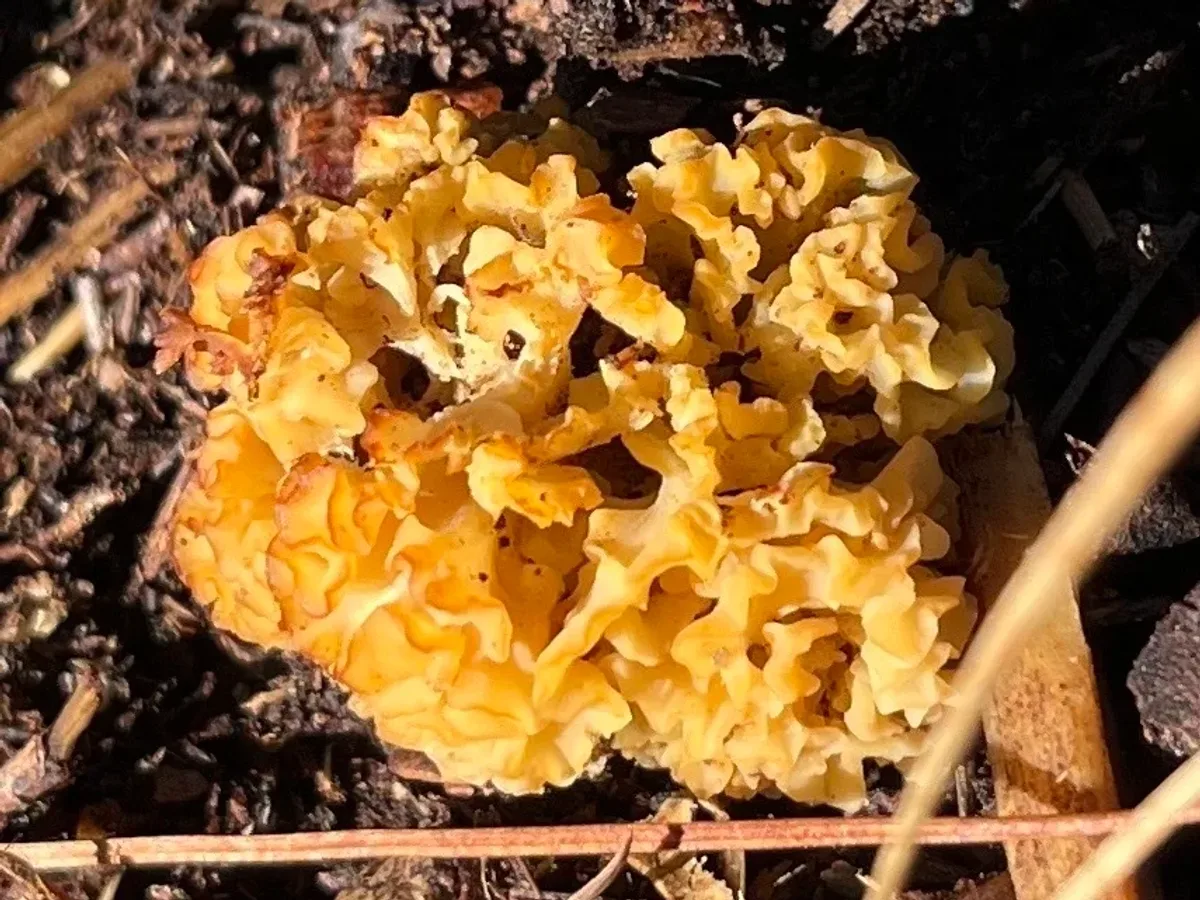 Cauliflower mushroom
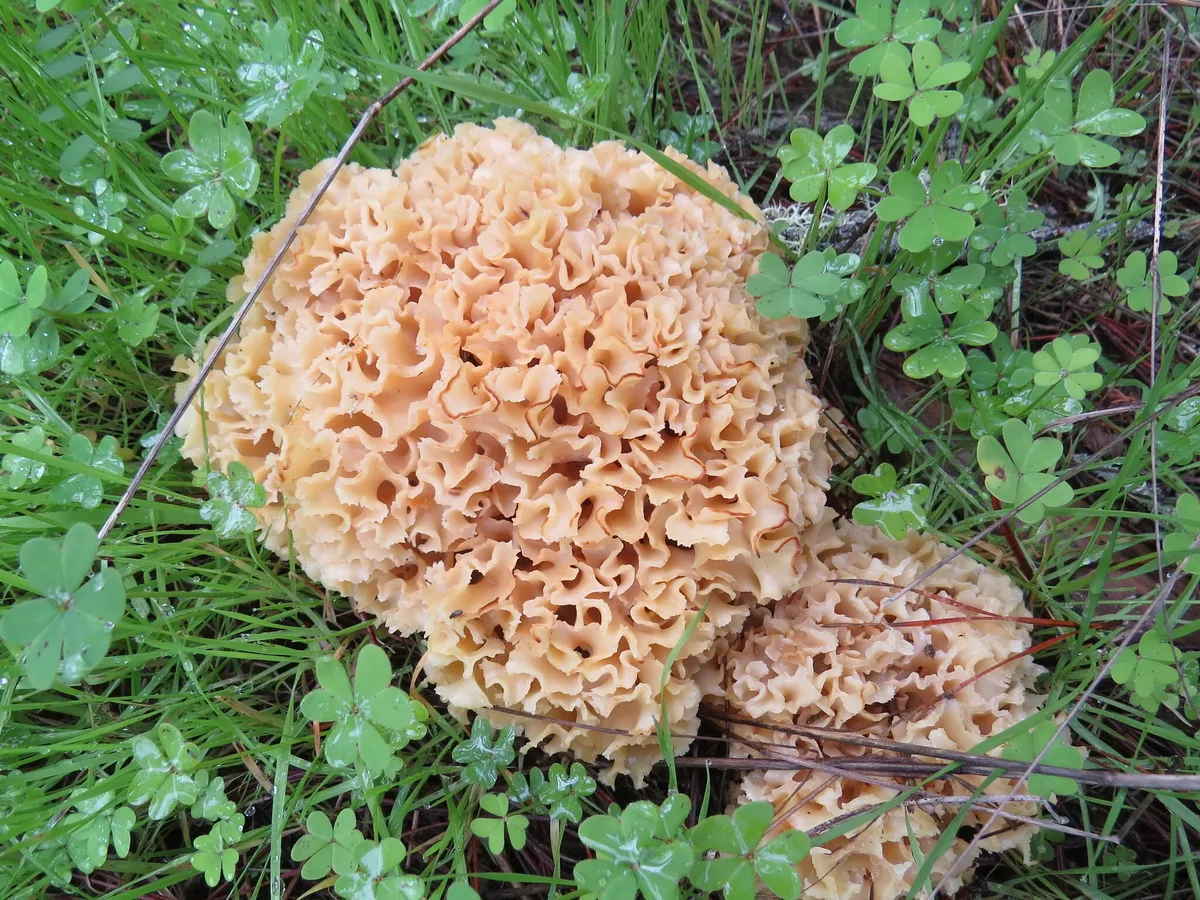 Cauliflower mushroomCauliflower mushroomCauliflower mushroom
Cauliflower mushroom
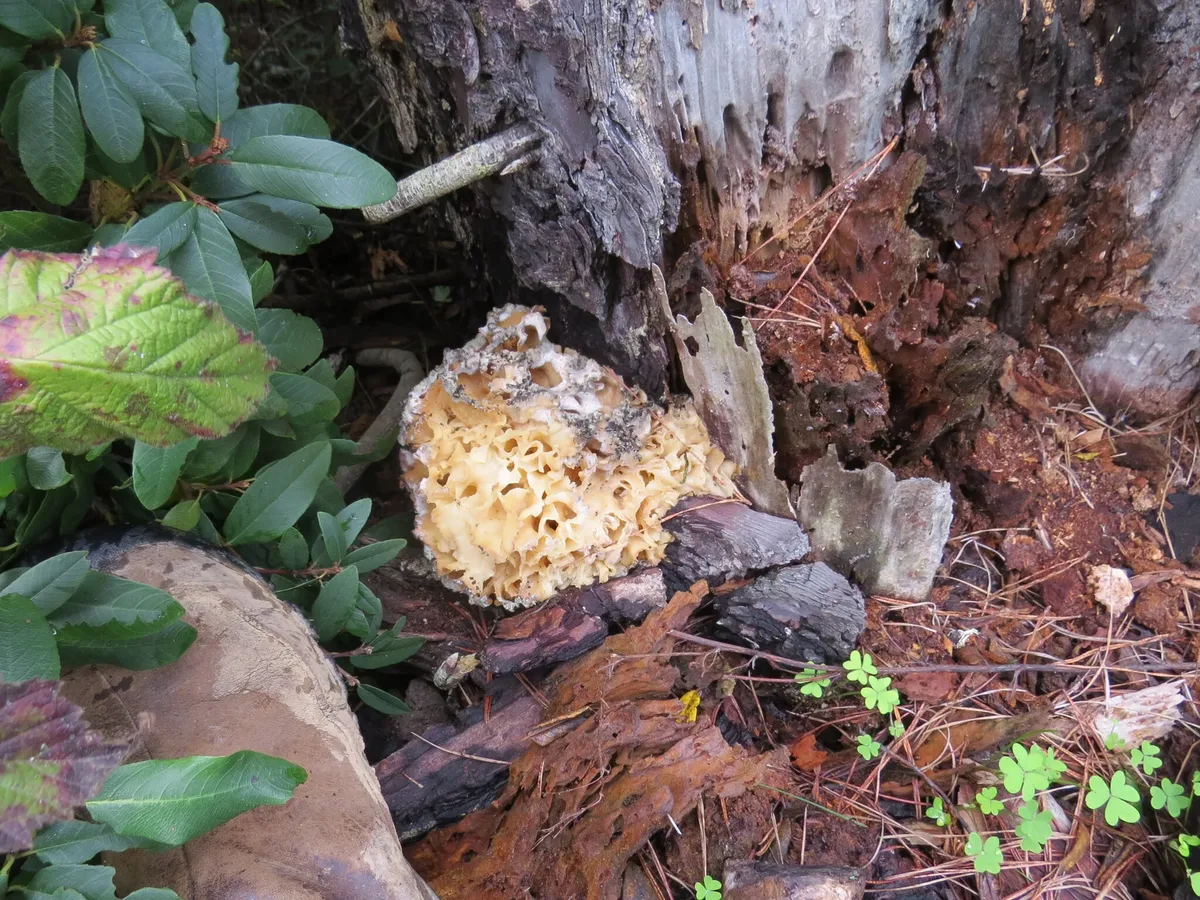
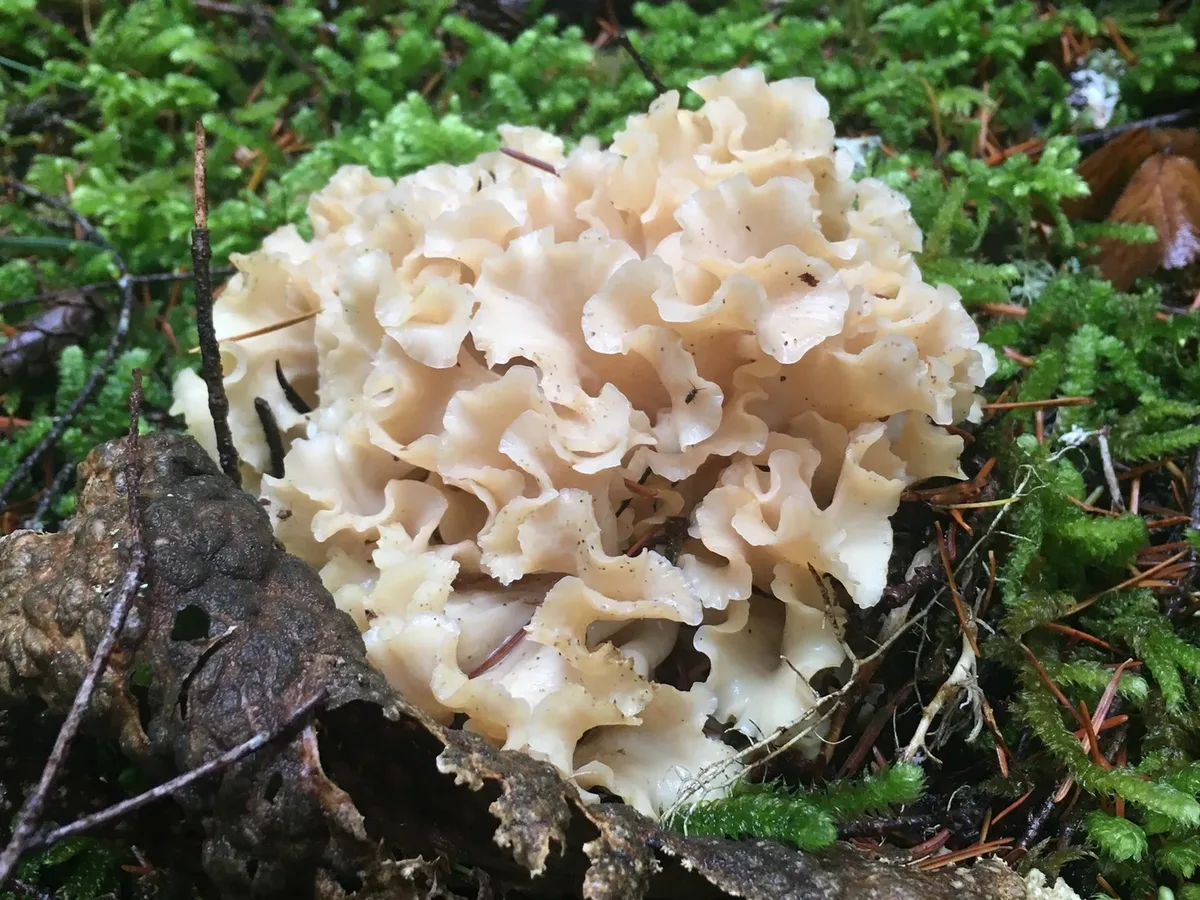
Sparassis radicataA big brain-like ruffle at the base of conifers, with virtually no toxic look-alikes - but clean it thoroughly and cook it well.
How to recognise it
Large cauliflower- or brain-like mass of flat, wavy, ribbon-like lobes. Cream-white to pale yellowish-brown (darkens with age). 10-60 cm wide. Dark "root"/base (2-10 × 10-30 cm) that descends into the host. Spicy/fragrant, non-mushroomy odor. White spore print.
Where it grows
At the base of or on the roots/stumps of Douglas fir (and Sitka spruce); in California near pine. Likely a parasite, can recur for several years in the same place.
Cooking
Retains its texture (slightly crunchy) when cooked. Sauté, soups, quiche; a good meat substitute.
Look-alikes
Ramaria/coral fungi have a different, branched form; the cauliflower mushroom's flat, wavy, ribbon-like lobes are unique.
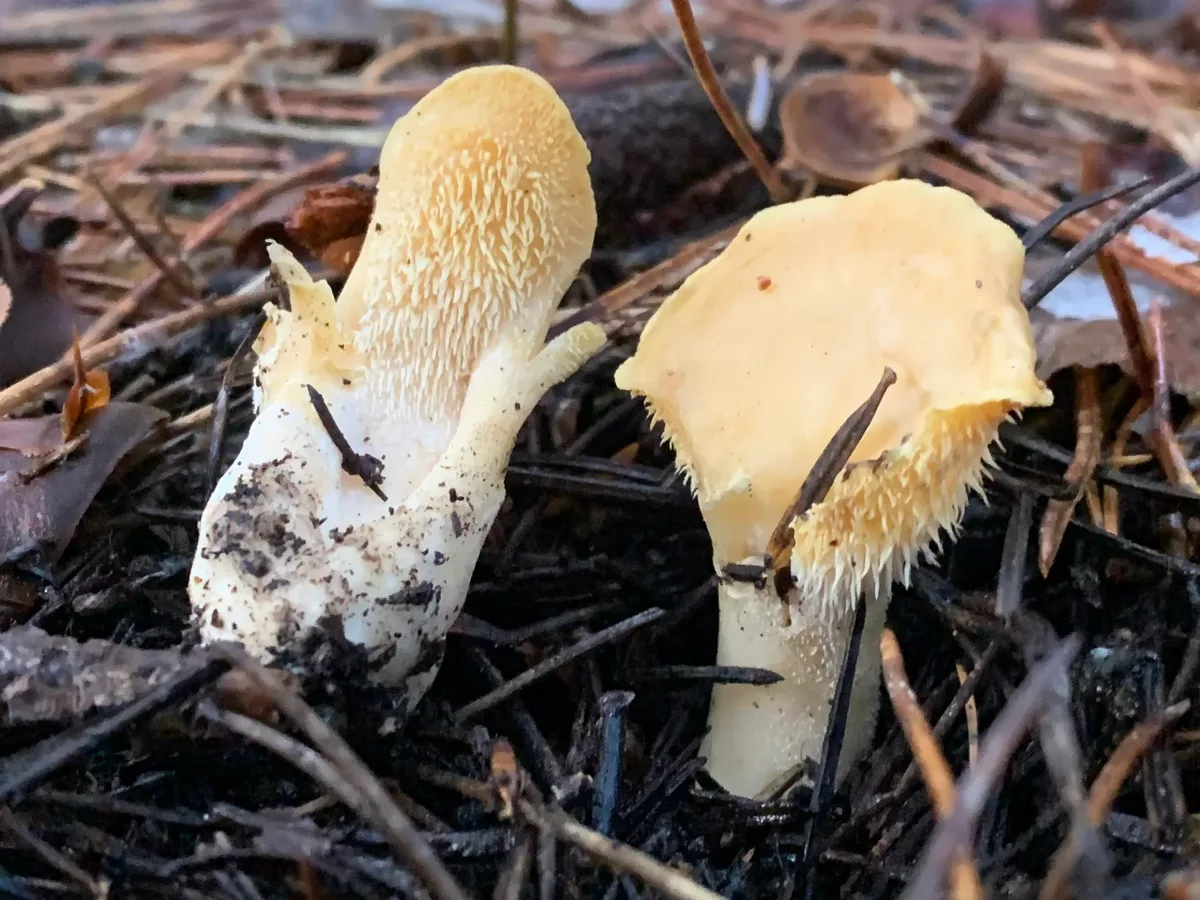 Hedgehog mushroom
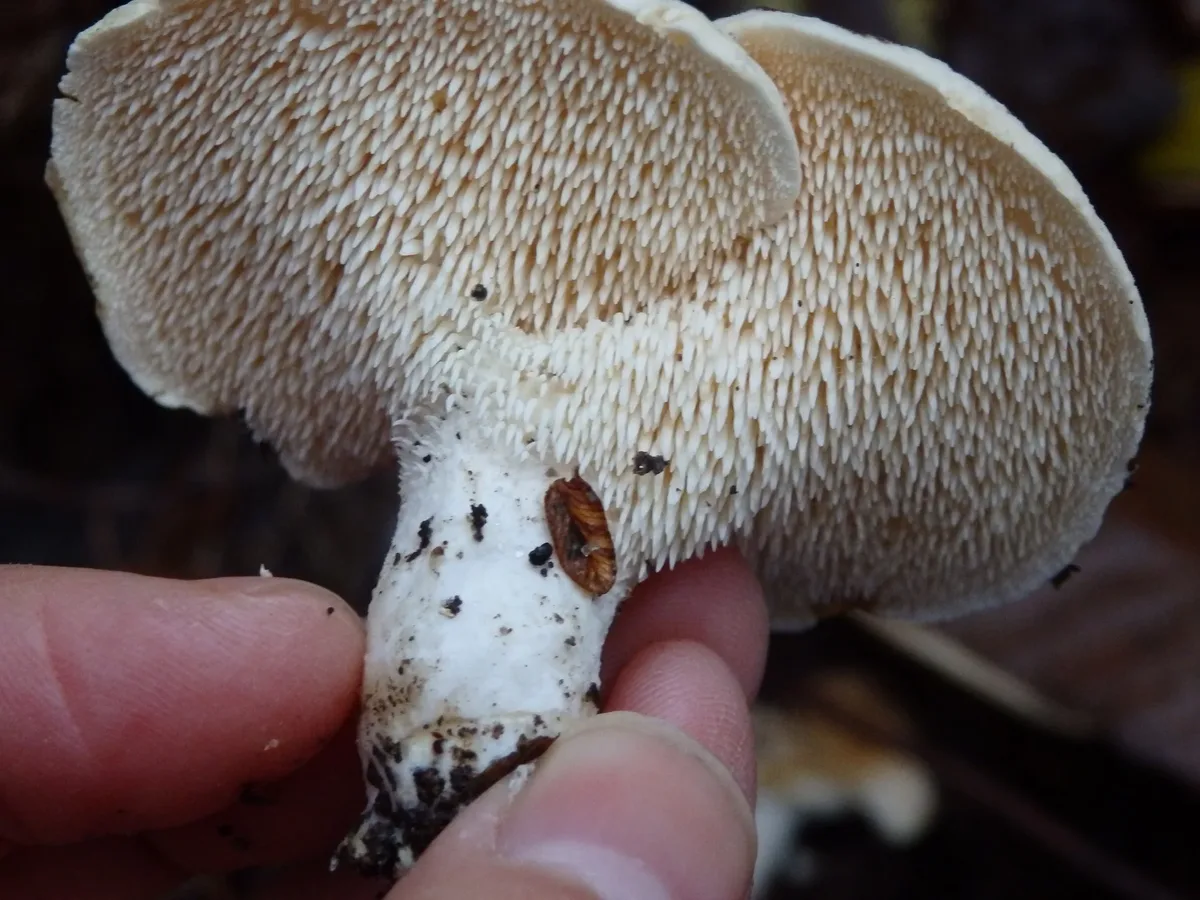 Hedgehog mushroom
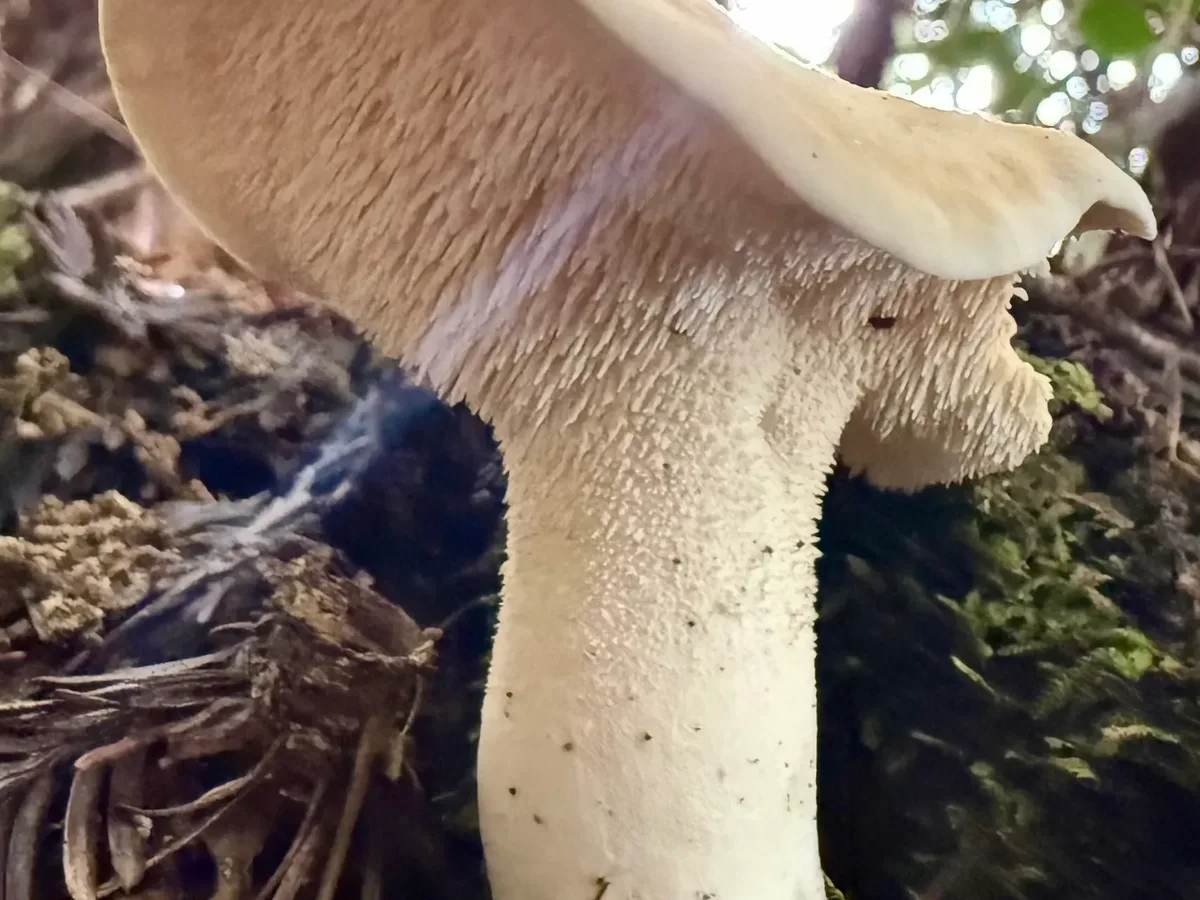 Hedgehog mushroom
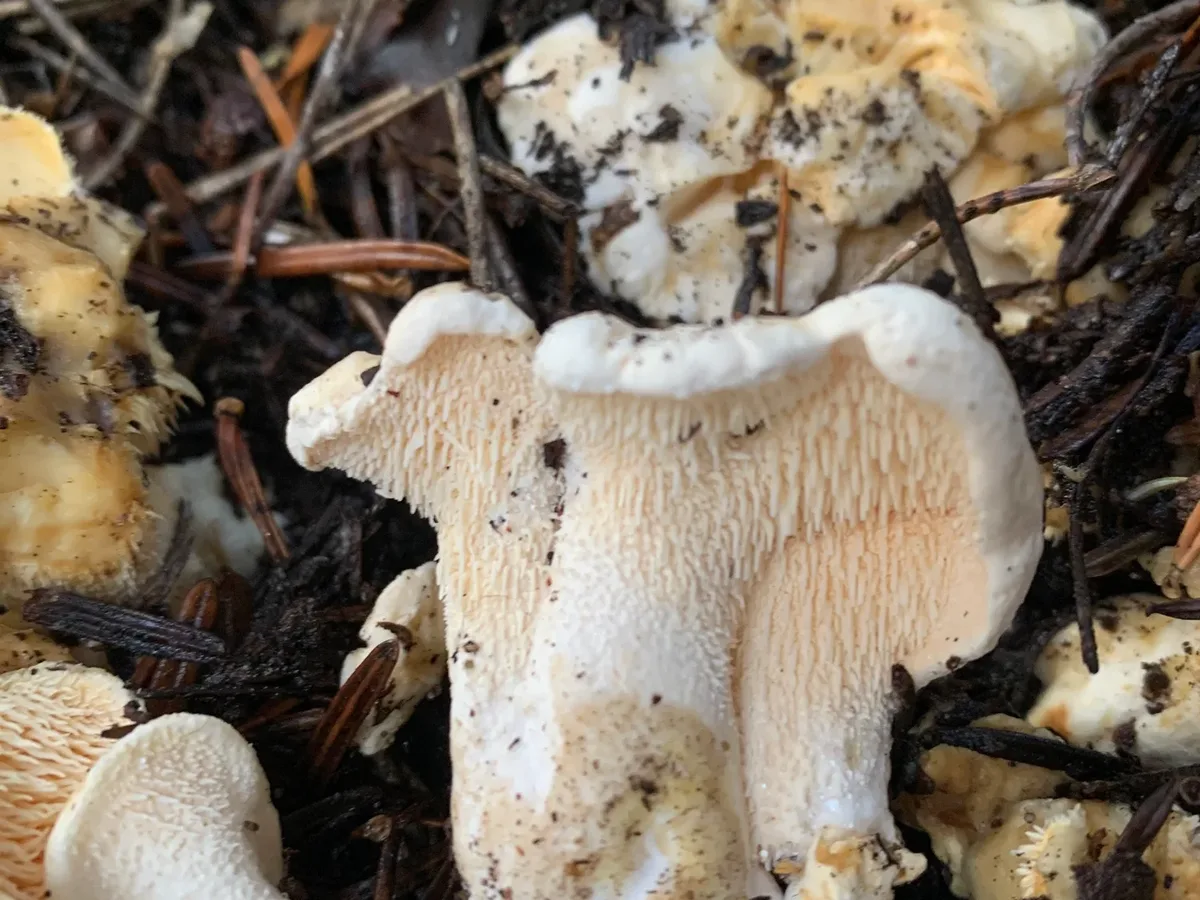 Hedgehog mushroomHedgehog mushroomHedgehog mushroom
Hedgehog (sweet tooth)
Hydnum repandumOne of the safest mushrooms for beginners: soft spines underneath instead of gills, and no poisonous twins.
How to recognise it
Cap 4-17 (-25) cm, irregular with a wavy, lobed edge, cream-white to yellow-brown or salmon-pink. The underside carries the hedgehog's calling card: soft, brittle spines or teeth (1-6 mm) that detach at a touch - no other common edible mushroom looks quite like this underneath. Stem short and stout, often off-centre, white. Flesh white and firm, yellowing or browning slightly where bruised. No milk or latex (separates it from the milkcaps). Spore print white.
Where it grows
Mycorrhizal with deciduous and coniferous trees - beech, oak, birch and spruce - in mossy, well-drained woodland. The mycelium lives for years in the soil, quietly maintaining its tree partnerships long before the fruitbodies emerge each autumn.
Cooking
Firm and meaty, it holds its shape beautifully in the pan - less prone to wilting than a chanterelle. Fry in butter, use in soups and risotto, or pair it with chanterelles in the classic French autumn market combination. The mild, nutty flavour deepens with a good sear.
Look-alikes
Smaller and more orange than H. repandum; equally edible.
Can resemble a pale chanterelle from a distance, but the spiny underside of Hydnum (versus chanterelle's blunt ridges/false gills) tells them apart. Both edible.
Resembles the hedgehog from above, but the chanterelle has blunt ridges/false gills rather than the hedgehog's spines.
Gelatinous with rubbery spines.
Scaly, darker in colour, and can be bitter.
The dangerous ones
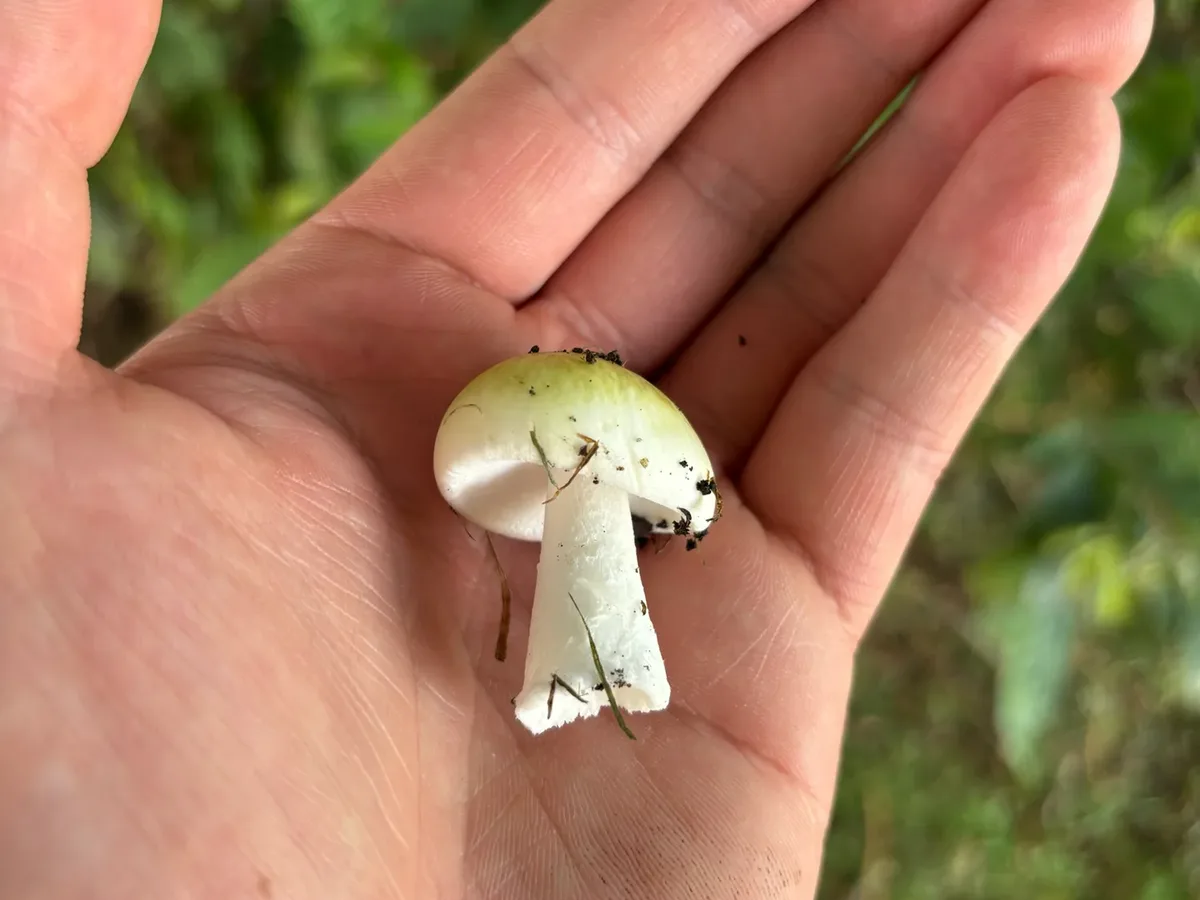
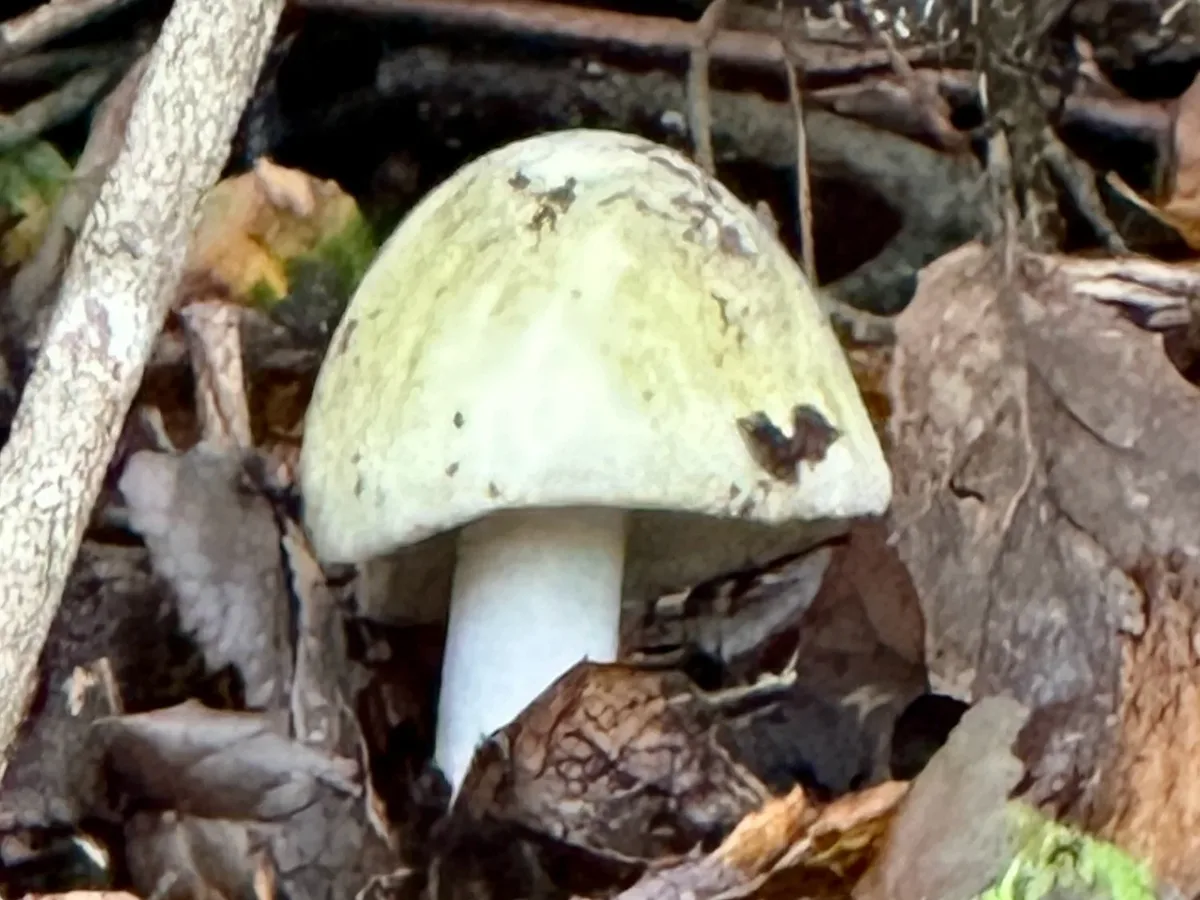 Death cap
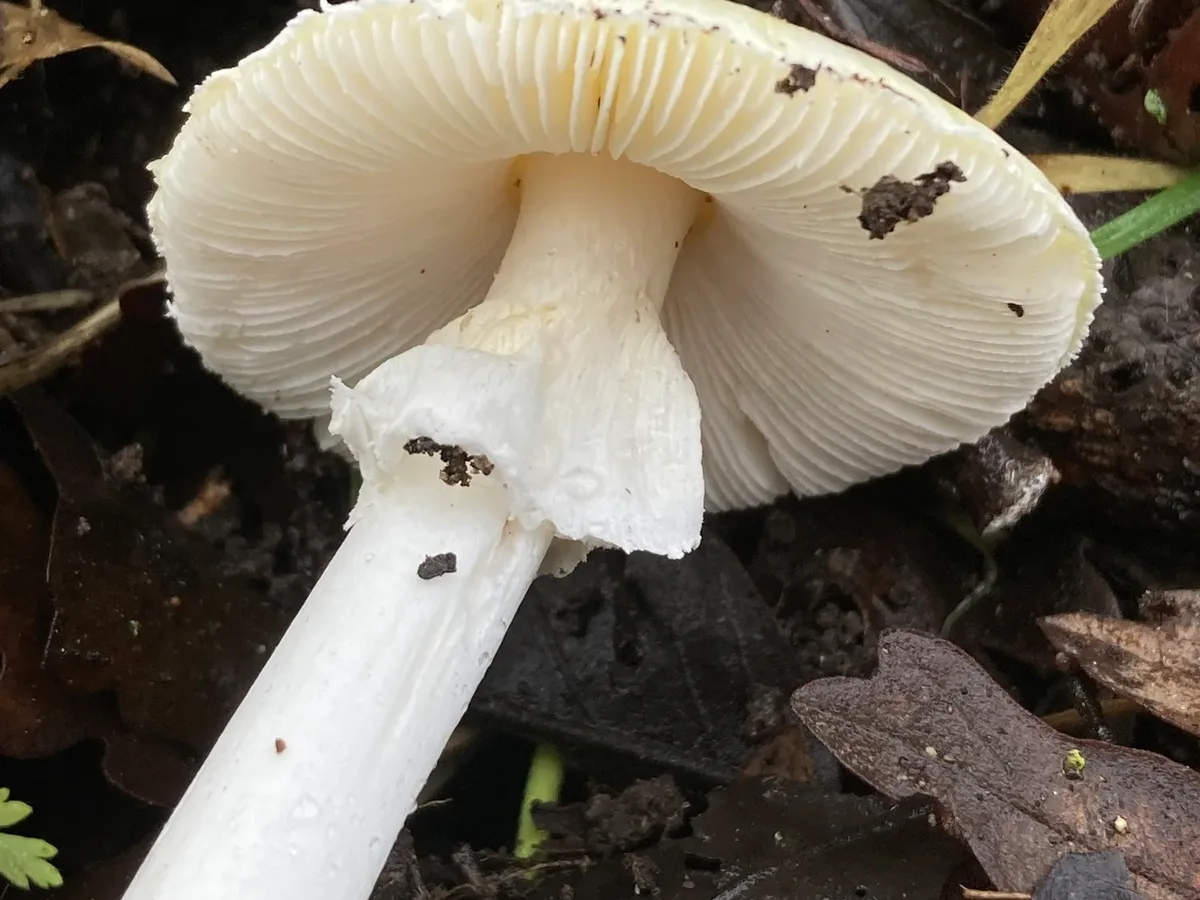 Death cap
 Death capDeath capDeath cap
Death cap
Amanita phalloidesDeadly and introduced - spreading north along the West Coast and responsible for most fatal mushroom poisonings worldwide.
How to recognise it
Cap 40-160 mm, hemispherical, becoming convex, then flat, smooth, slimy in wet conditions and glossy when dry; most often pale yellow/greenish to pale brown, but can be almost white (colour is not a reliable feature). White gills, a white stem, a membranous ring, and a sac-like volva at the base. Amyloid spores (white spore print).
Where it grows
Found only under exotic/introduced trees, especially oak (Quercus), also in gardens, lawns and parks. In Australia it has only been recorded in SA, Victoria and the ACT (Canberra). In Victoria it is widespread across Melbourne (Kew, Camberwell, South Yarra and others) and regionally (Bendigo, Bright, Castlemaine). In New Zealand it grows under introduced oaks and chestnuts; it has also been reported in association with Leptospermum/Kunzea (potentially invasive). There are no confirmed finds in undisturbed native forest.
Cooking
Not edible under any circumstances. The toxins are not inactivated by cooking, drying, freezing or soaking.
Danger
World's deadliest mushroom; as little as half a cap can kill an adult human. Documented fatalities: Canberra, New Year's Eve 2011/2012 - cook Liu Jun picked death caps in Braddon (mistaking them for straw mushrooms) and put them in a stir fry; he and the kitchen hand Tsou Hsiang (a 52-year-old Chinese national) died, of four poisoned. According to the Canberra Times there have been in total "four fatalities and 12 reported incidents of poisoning associated with death cap mushrooms in the ACT". Of nine poisoned in the Canberra region 1988-2011, three were from Laos and two from China. Leongatha, Victoria, July 2023: Erin Patterson, 50, served death caps in individual Beef Wellingtons; Don Patterson, Gail Patterson and Heather Wilkinson died, while Ian Wilkinson survived. She was convicted on 7 July 2025 of three murders and one attempted murder, and on 8 September 2025 sentenced by Justice Christopher Beale to three concurrent life sentences with a 33-year minimum (plus 25 years for the attempted murder), parole no earlier than 2056; Beale found the murders required "substantial premeditation" and an "elaborate cover-up". (The conviction is under appeal.)
Look-alikes
The fully white form of the death cap resembles the white Amanita; both are deadly. Treat any white gilled mushroom with a ring and a sac-like volva as lethal.
Edible Asian mushroom that has caused several deaths among East/Southeast Asian migrants through confusion with the death cap. Both have a volva; check gill colour (straw mushroom develops pink to brown gills and a pink spore print, whereas the death cap has white gills and a white amyloid spore print).
Edible Amanita that can be confused with the death cap; distinguish by colour and spore features, but never rely on colour alone.
Agaricus species have pink-to-brown gills and a dark spore print and lack a volva, whereas the death cap has white gills, a white spore print and a sac-like volva at the base.
Native species (A. austrophalloides, A. marmorata, A. murina, A. murinaster) with a sac-like volva, ring and amyloid spores are untested but likely toxic; do not eat.
Young death cap buttons resemble Agaricus and puffballs, but Agaricus has pink to chocolate-brown gills, a brown spore print and no volva; the death cap always has white gills, a white spore print and a sac-like volva.
The green/greenish-yellow death cap form can be confused with green Russula species; check for the white free gills, ring and sac-like volva, which Russula lacks.
Russulas lack a volva and a ring; always dig up the base to check for the sac-like volva and look for the skirt-like ring and white free gills of the Death Cap.
Agaricus has pink to brown gills (not white) and no volva; the Death Cap has white free gills and a sac-like volva at the stem base.
Agarics lack a sac-like basal volva and have pink-to-brown gills and a brown spore print; the death cap has white free gills, a white spore print, and a volva in the soil.
The pale form of the death cap can be mistaken for puffballs; cutting a puffball reveals uniform white flesh, whereas a young death cap button shows the outline of a developing capped mushroom.
Green russulas lack a ring and volva and have brittle flesh.
Easily confused at the young, egg-like stage; always dig up the base and check the diagnostic combination of white gills + white ring + white sac-like volva.
Field mushrooms have pink to brown gills (not the death cap's white gills) and lack a basal volva/sac.
Distinguished by the death cap's combination of ring plus volva and its olive-green cap colour.
Young egg-stage Death Caps can resemble puffballs; always slice any 'puffball' in half - a developing mushroom with cap, gills and stem inside means it is not a puffball.
In Chile, warnings are given about confusing the death cap with Macrolepiota; look for the death cap's volva, ring and greenish cap with white gills.
In Chile, warnings are given about confusion with Russula; Russula lacks a ring and volva.
In Chile, warnings are given about confusion with Agaricus; Agaricus has a ring but no volva and develops pinkish-to-brown gills with a brown spore print, unlike the death cap's persistently white gills.
In Chile, warnings are given about confusion with Tricholoma; Tricholoma lacks the ring and volva of the death cap.
Locally eaten edible Amanita (also A. loosii); the central confusion in African ethnomycology - the deadly white Amanita are mistaken for these.
An unopened white egg-stage deadly Amanita can resemble a puffball; cut it in half - a developing capped mushroom outline reveals the Amanita.
A globally risky lookalike that also has a volva; check for the ring (present in Amanita, absent in Volvariella) and spore colour (white in Amanita, pinkish in Volvariella).
Same deadly section (Phalloideae) by appearance but lacks the toxins and is eaten locally in Rwanda/Burundi/Tanzania; cannot be told apart by eye alone, underscoring why species-level knowledge is essential.
 Western destroying angel
 Western destroying angel
 Western destroying angelWestern destroying angelWestern destroying angel
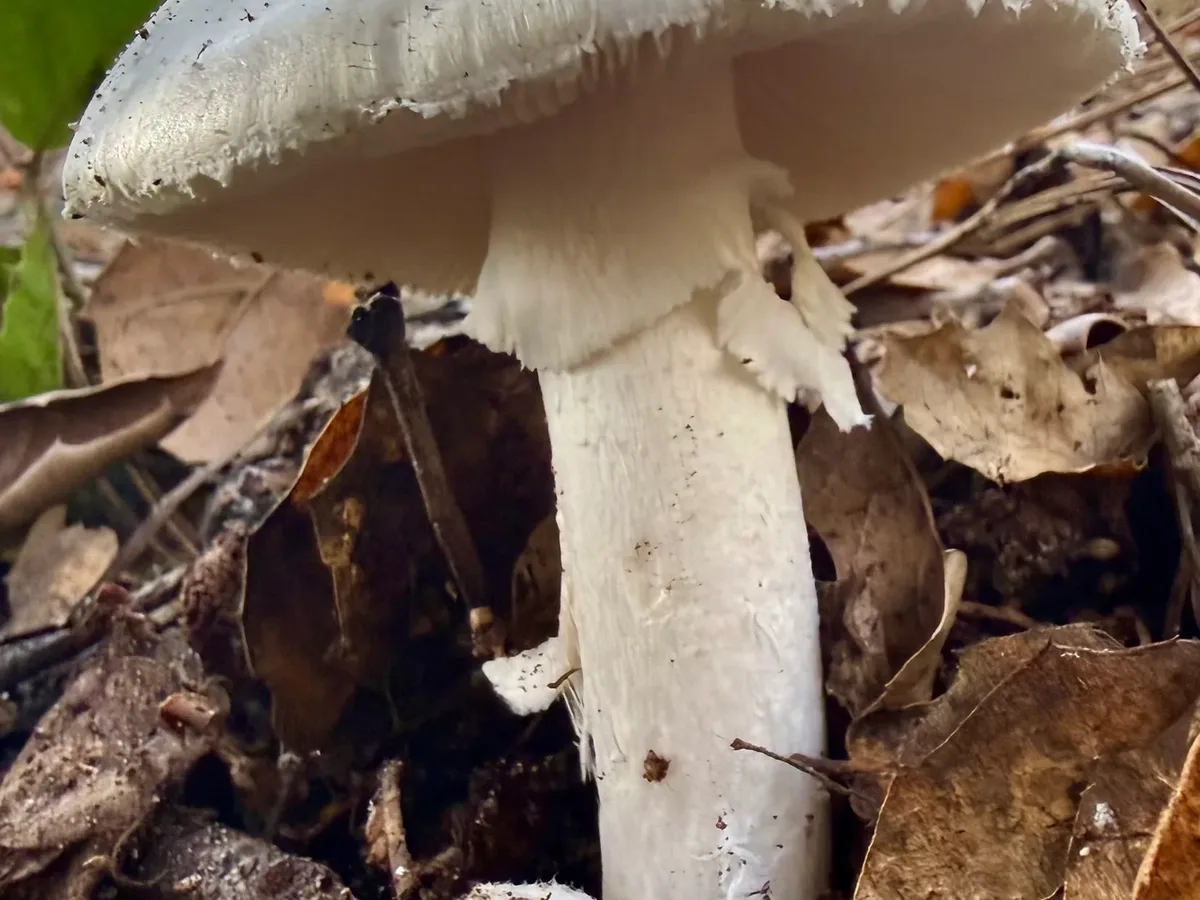
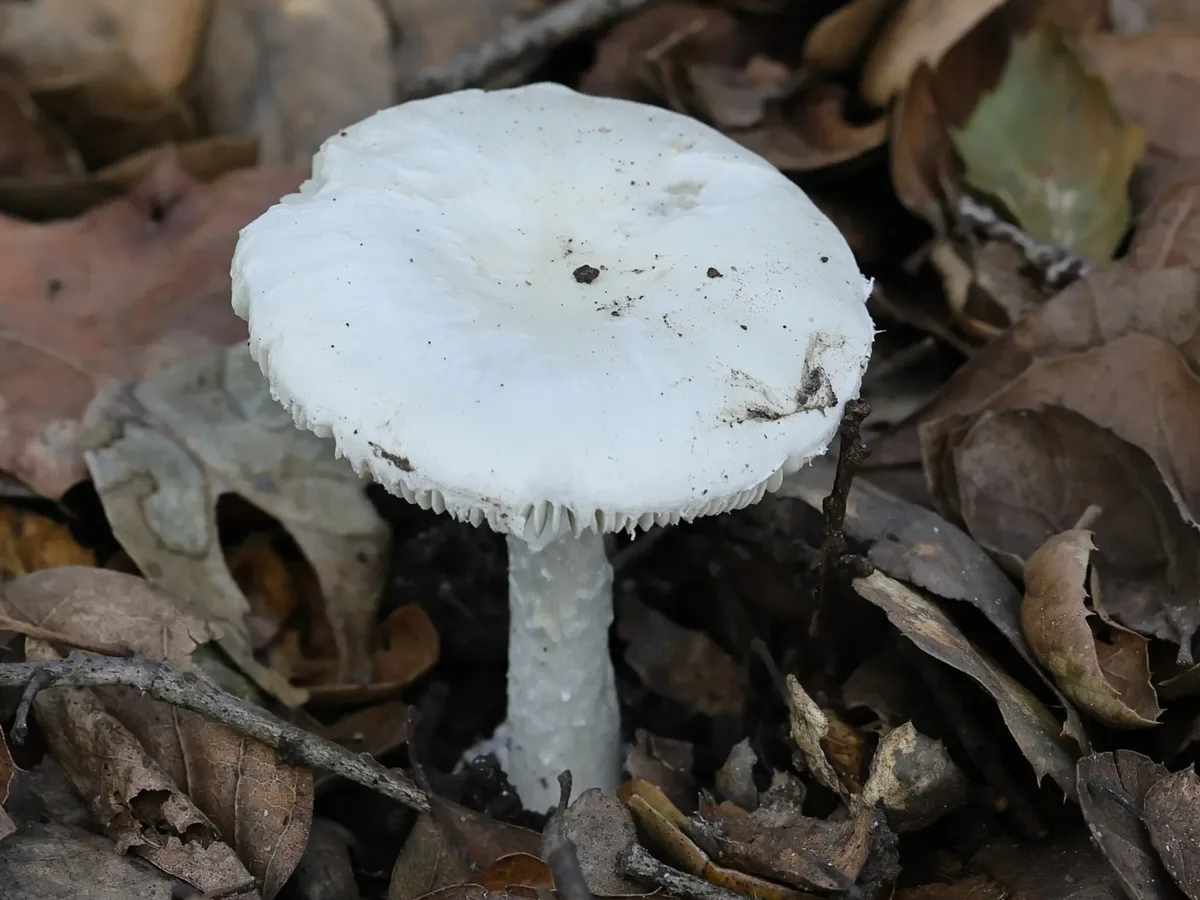
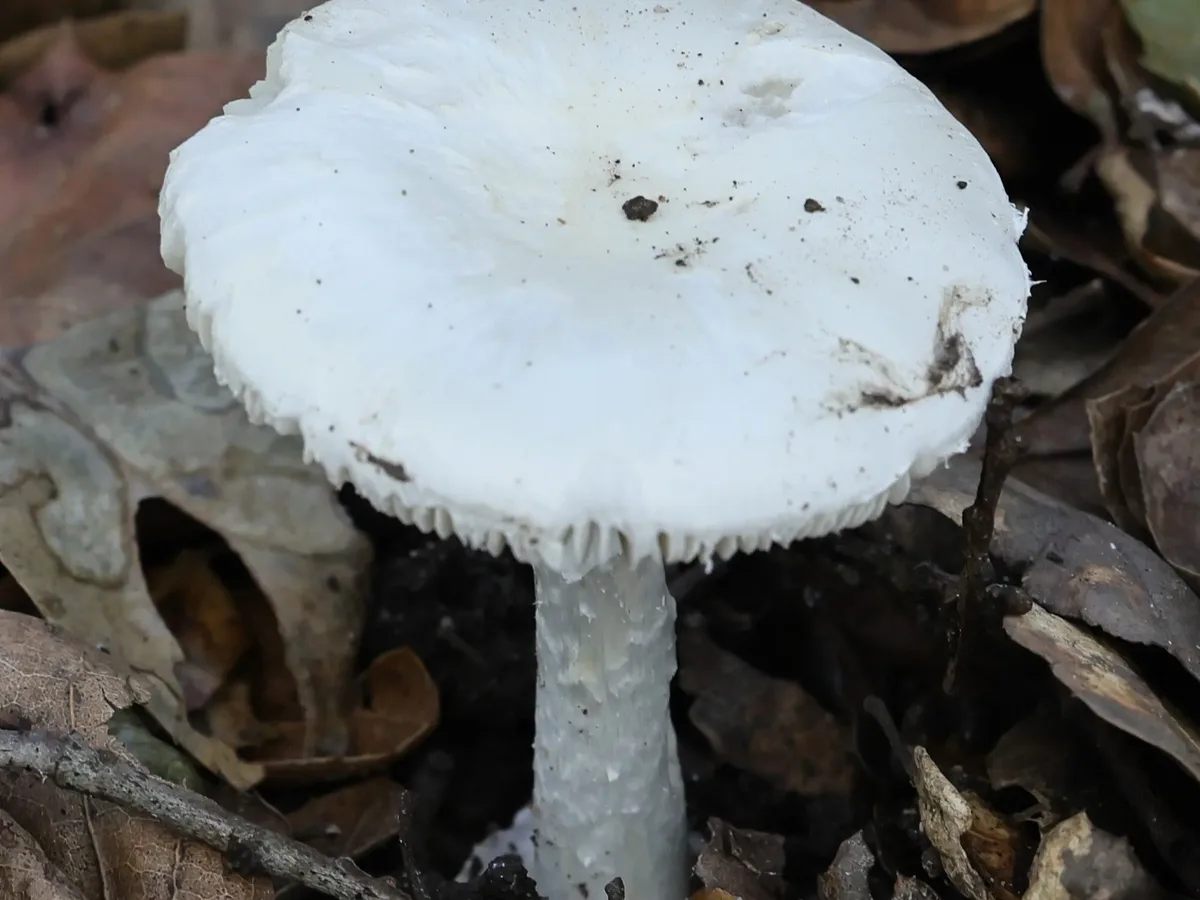
Western destroying angel
Amanita ocreataThe native springtime amatoxin killer of the West Coast, fruiting January to April just as foragers head out for morels.
How to recognise it
Cap 5-15 cm, white to ochre, often with a brownish center; egg-shaped when young, expanding to broadly convex. Gills white and free from the stem. A white skirt-like ring sits on the upper stem, though it may drop away as the cap opens. The base emerges from a white sac-like volva, often partly buried in soil. Spore print white. Young specimens smell mild; older ones may take on an unpleasant odour of chlorine, fish, or iodine. Flesh stains yellow with KOH (potassium hydroxide).
Where it grows
Found in California and the Pacific Northwest, ranging from Washington south through California into Baja California, with records possibly reaching Vancouver Island. Grows almost exclusively under oaks - coast live oak and Garry oak especially - and occasionally hazel, living as a long-term mycorrhizal partner with these trees.
Cooking
Never - deadly poisonous.
Danger
DEADLY. Causes most of the fatal mushroom poisonings on the West Coast every spring. Dogs are also deadly sensitive. There is no antidote; a liver transplant may be required.
Look-alikes
Edible; lacks a ring and has a striate (grooved) cap margin.
Also known as A. calyptroderma; has a darker cap.
Young Agaricus can be confused with young (egg-stage) specimens; Agaricus has pink-to-brown gills and lacks a volva.
Young egg-stage specimens can resemble puffballs; cut in half to reveal the developing mushroom with cap, gills, and stem inside.
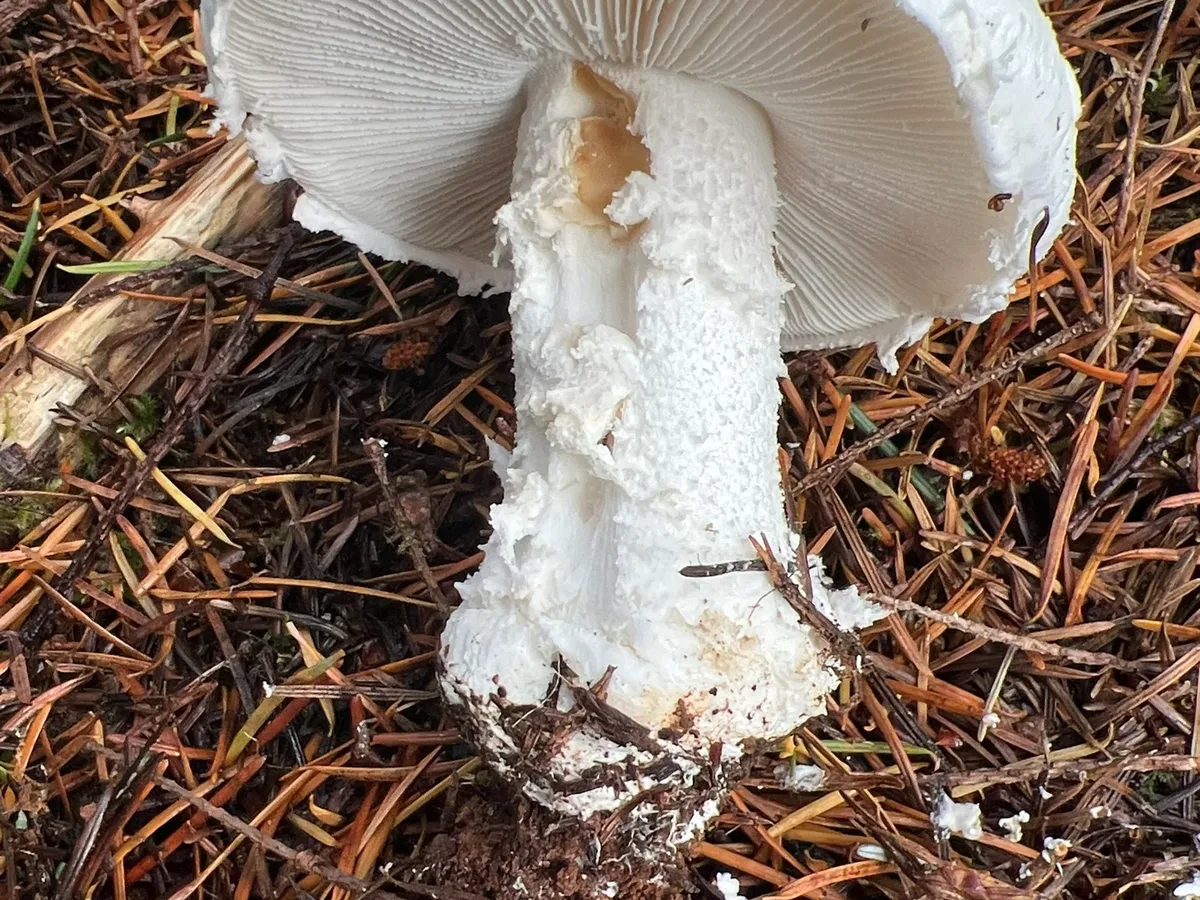 Smith's amanita
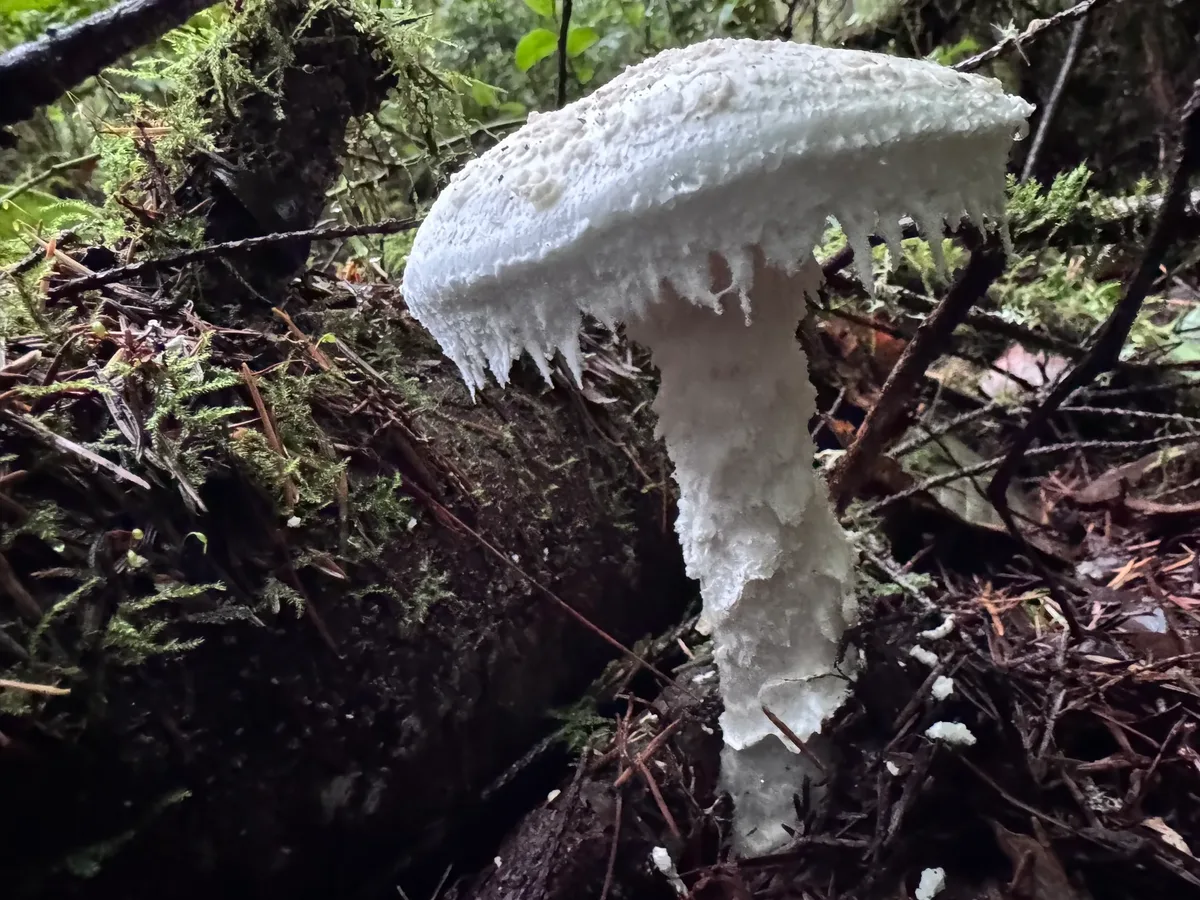 Smith's amanita
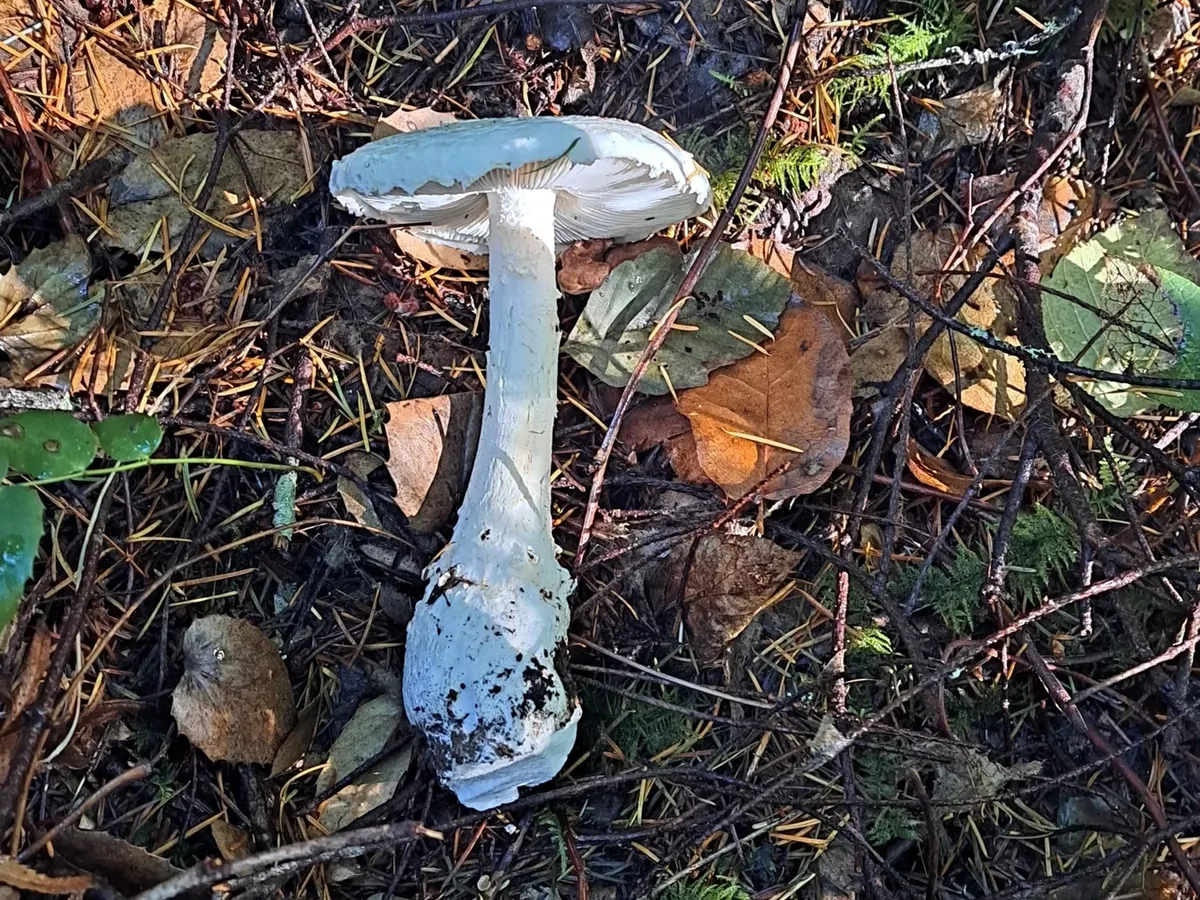 Smith's amanitaSmith's amanitaSmith's amanita
Smith's amanita
Amanita smithianaThe most dangerous edible-confusion in the PNW: taken for matsutake, it causes acute kidney failure. It lacks the spicy scent and has a deep, rooting base.
How to recognise it
Medium to large, white to cream throughout. The cap (5-17 cm) is decorated with shaggy or warty patches - remnants of the universal veil that enclosed the young mushroom. The stem is strikingly long (6-16+ cm), tapering upward, and narrows into a spindle-shaped base that roots itself deep into leaf litter or decaying wood. A ring is often absent or indistinct. Spore print white. Fresh specimens smell mild and faintly sweet; older ones turn unmistakably putrid - never spicy.
Where it grows
Mature coniferous forest in the Pacific Northwest. It grows singly and roots so deeply into the duff or rotten wood beneath that the full spindle-shaped base is rarely visible without digging. That buried base is one of the key features separating it from edible look-alikes.
Cooking
Never - poisonous.
Danger
Acute kidney failure. Kidney function usually recovers; rarely fatal. The greatest danger comes from being mistaken for the edible matsutake.
Look-alikes
Matsutake has a strong spicy aroma, white gills that stain brown, and a firm stem tapering to a point with no rooting base; its base is always covered in soil. A. smithiana lacks the spicy aroma, has a rooting spindle-shaped base with veil remnants, and roots in rotten wood.
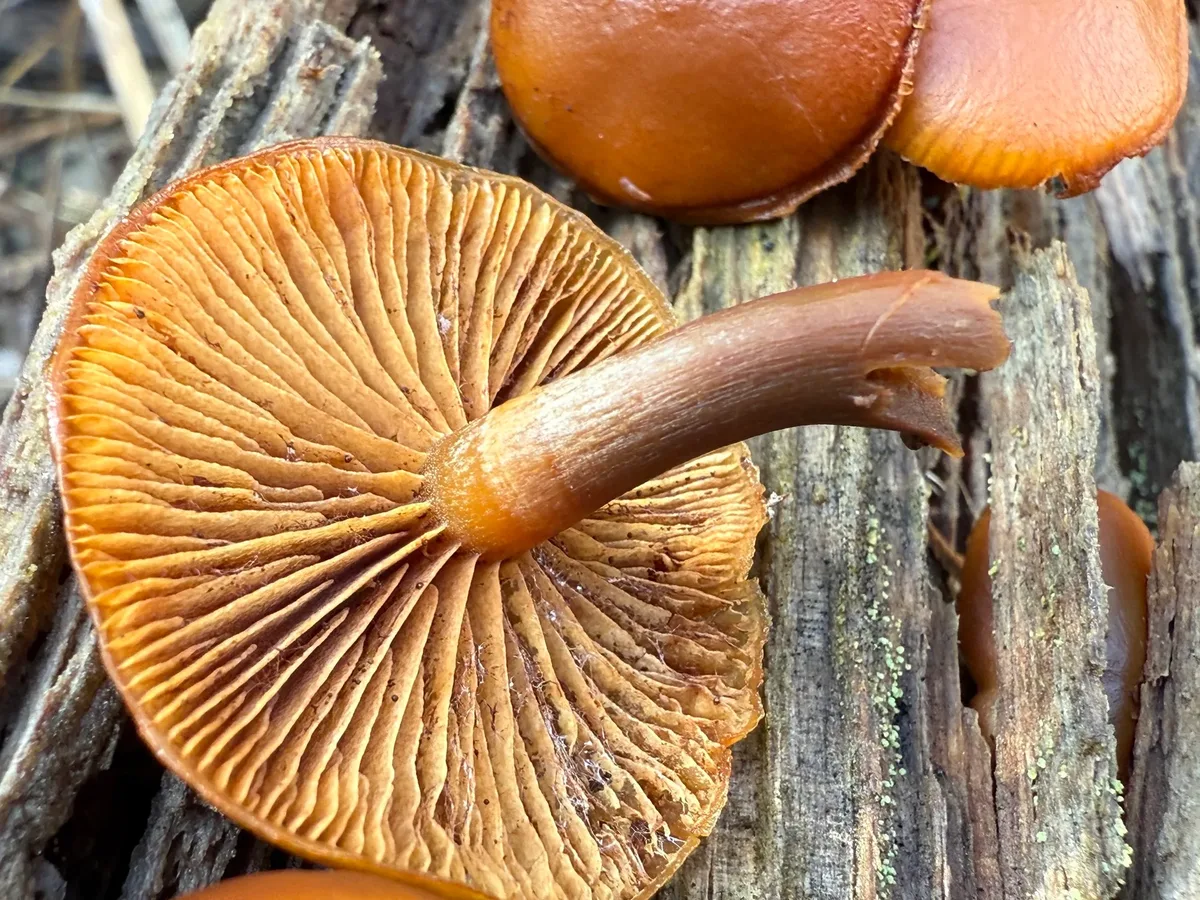 Funeral bell
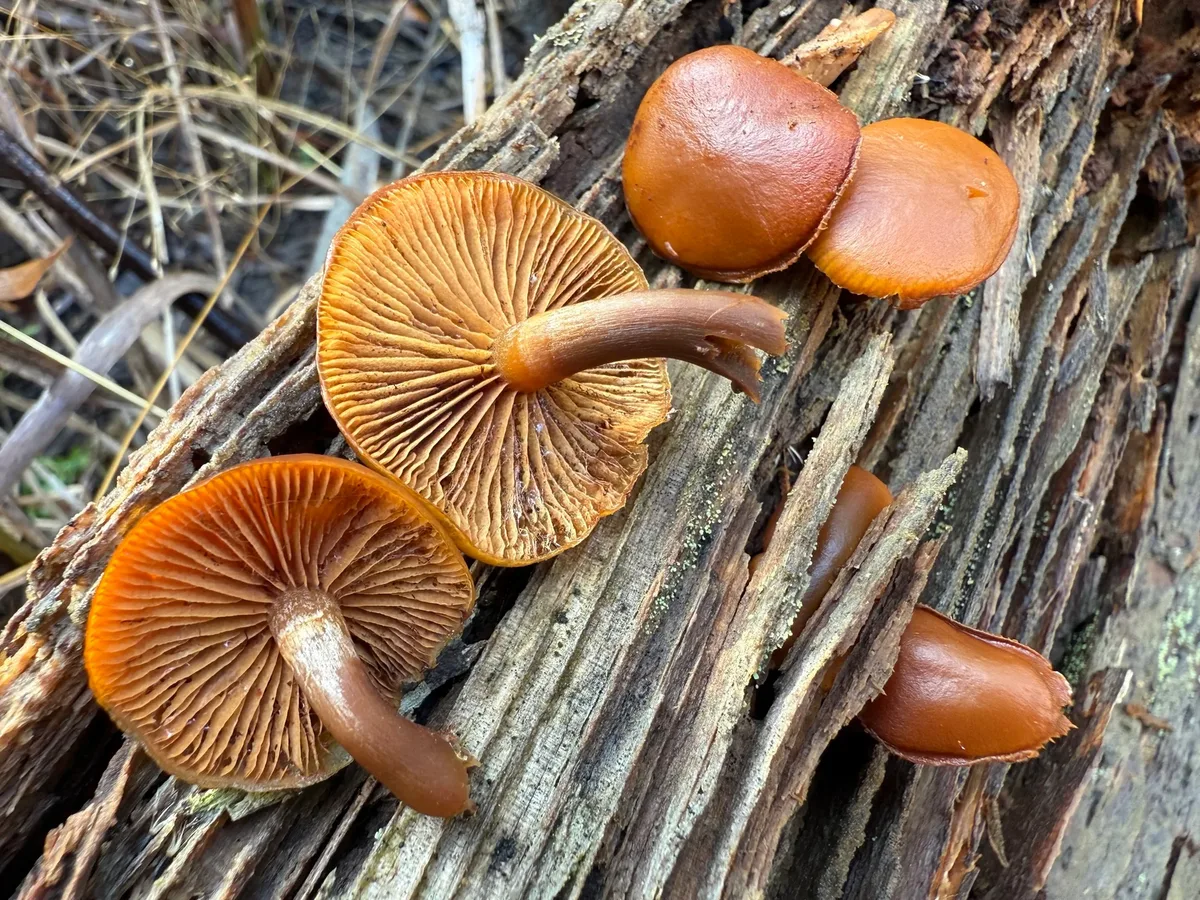 Funeral bell
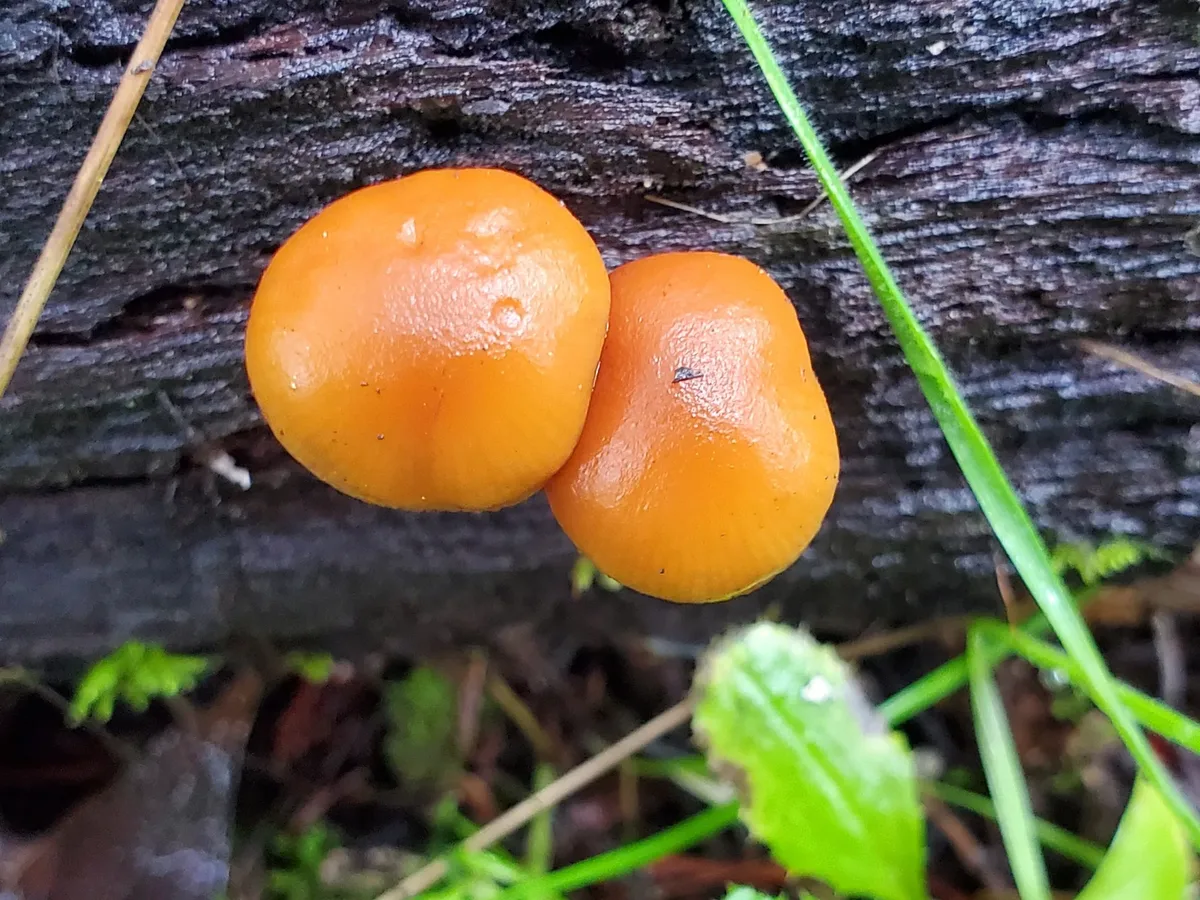 Funeral bellFuneral bellFuneral bell
Deadly galerina (funeral bell)
Galerina marginataA little brown mushroom on rotten wood carrying the same amatoxins as the death cap - confused with both honey mushrooms and psilocybes. Never eat an LBM on wood.
How to recognise it
Small - cap 1-4 (-5) cm, honey- to yellow-brown, hygrophanous (dark brown when moist, pale yellow when dry), smooth. Gills brownish, giving a rust-brown spore print. Stem thin with a (often disappearing) ring; darkens towards the base. Grows on wood.
Where it grows
Saprotroph on dead wood (deciduous and coniferous), on rotting logs and stumps, often in moss; from the lowlands to alpine settings.
Cooking
Galerina marginata must never be eaten. There is no preparation method - boiling, parboiling, frying, drying, or any other technique - that destroys or neutralises its amatoxins. Alpha- and beta-amanitin are heat-stable proteins: they survive cooking temperatures completely intact and are absorbed unchanged through the gut. Eating even a single cooked cap can cause fatal liver and kidney failure. The insidious danger is a deceptive latency period of 6-24 hours during which no symptoms appear, followed by violent gastrointestinal illness, a brief false recovery, and then organ failure within days. By the time symptoms are undeniable, irreversible damage has already begun. This species has killed people who deliberately ate what they believed were edible wood-growing mushrooms and who had removed or discarded the ring as an unimportant detail. If there is any possibility that this species entered a dish, seek emergency medical care immediately - do not wait for symptoms.
Danger
Contains the same amatoxins as the death cap; a single cap can be fatal.
Look-alikes
Edible; grows on wood but gives a white spore print, whereas funeral bell gives a rust-brown spore print.
Edible; also grows on wood. Distinguish by spore print (rust-brown in funeral bell) and overall features. Many fatalities have occurred from picking funeral bell along with this species.
Edible wood-growing mushroom that can be confused with Galerina marginata; lacks the fragile ring and has white spore powder rather than rust-brown.
Wood-dwelling like Galerina; very different in appearance, but beginners can mistake it.
Small brown hallucinogenic mushrooms that can be dangerously confused with deadly Galerina.
Edible small brown-gilled mushrooms can resemble Galerina marginata; confirm features carefully before eating any small brown mushroom from wood.
Psilocybe has a purple-brown to black spore print and bruises blue; galerina has a rust-brown print and does not bruise blue. At least one death in the PNW resulted from confusing galerina with Psilocybe stuntzii.
Flammulina velutipes has a white spore print.
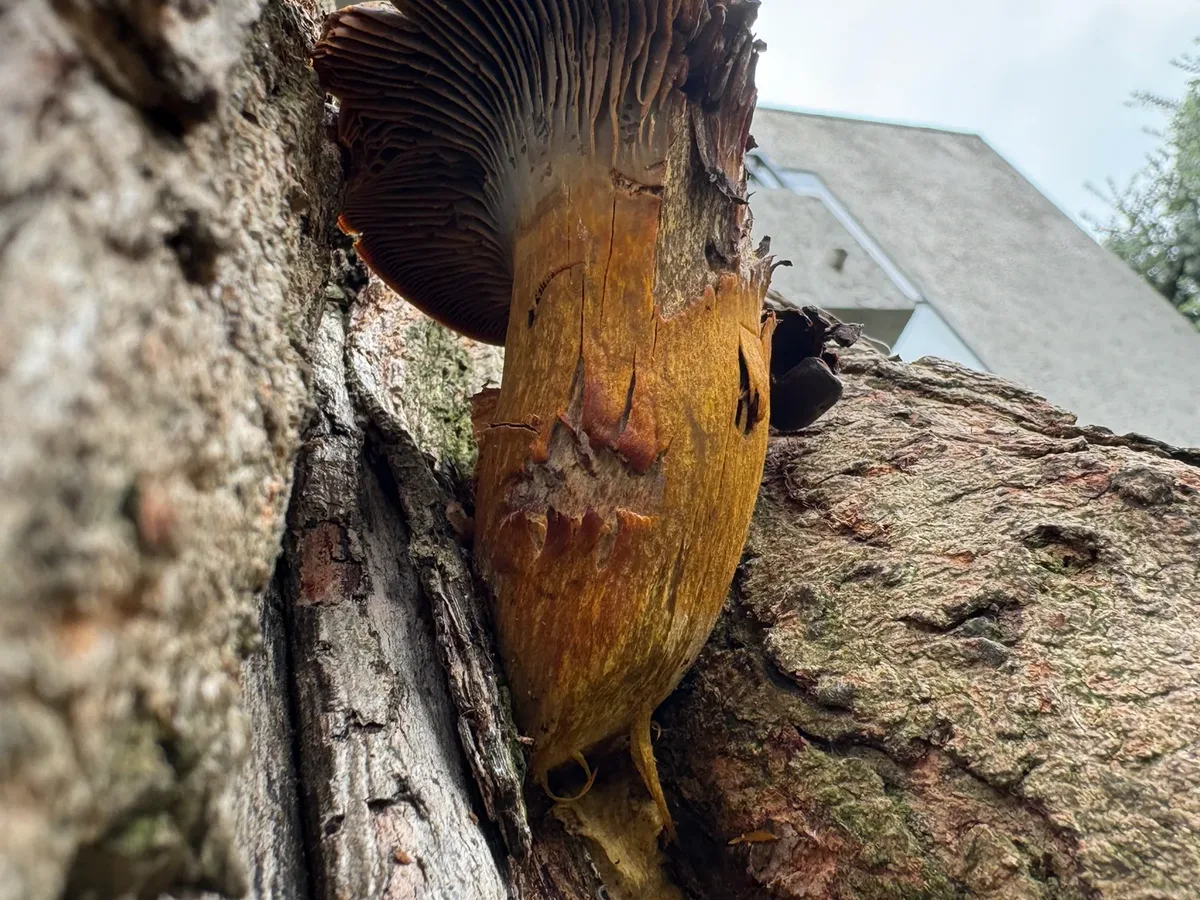 Western jack-o'-lantern
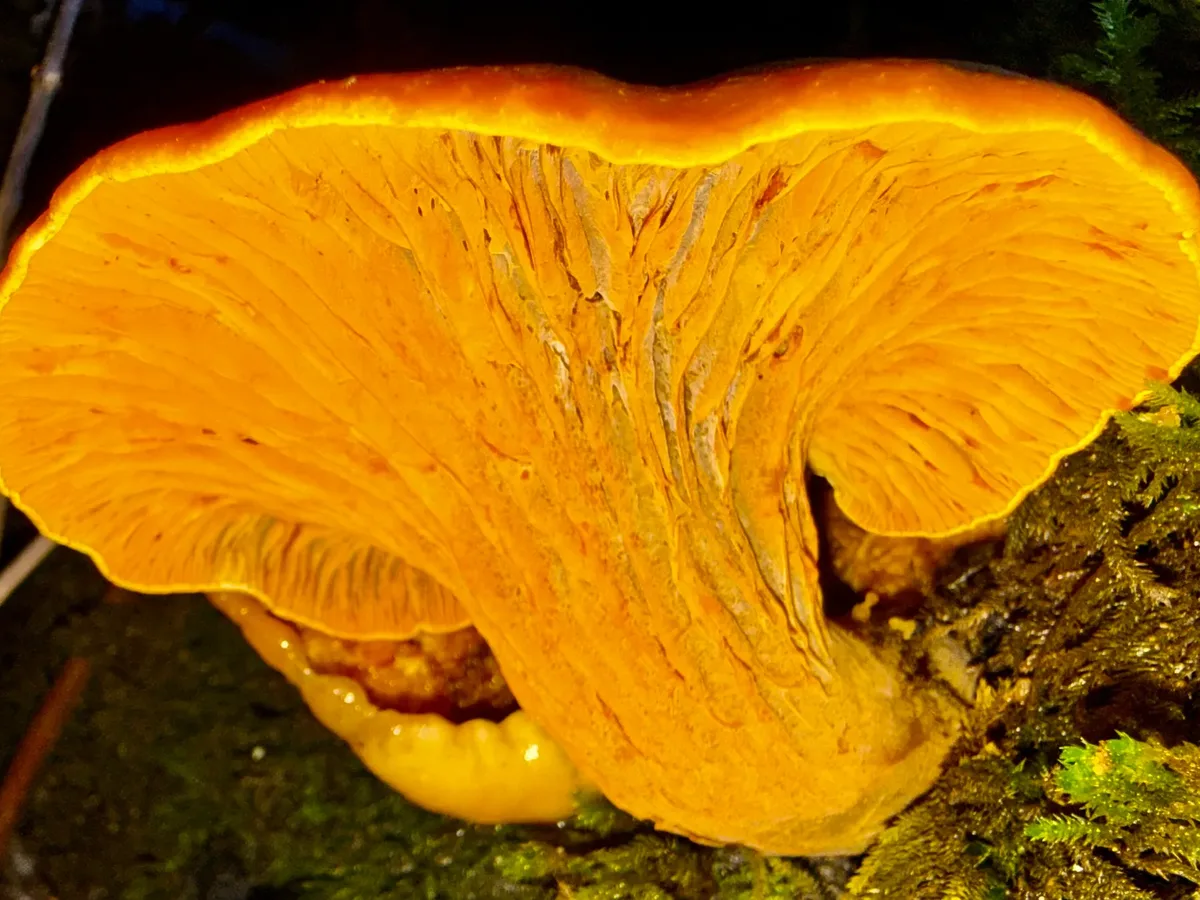 Western jack-o'-lantern
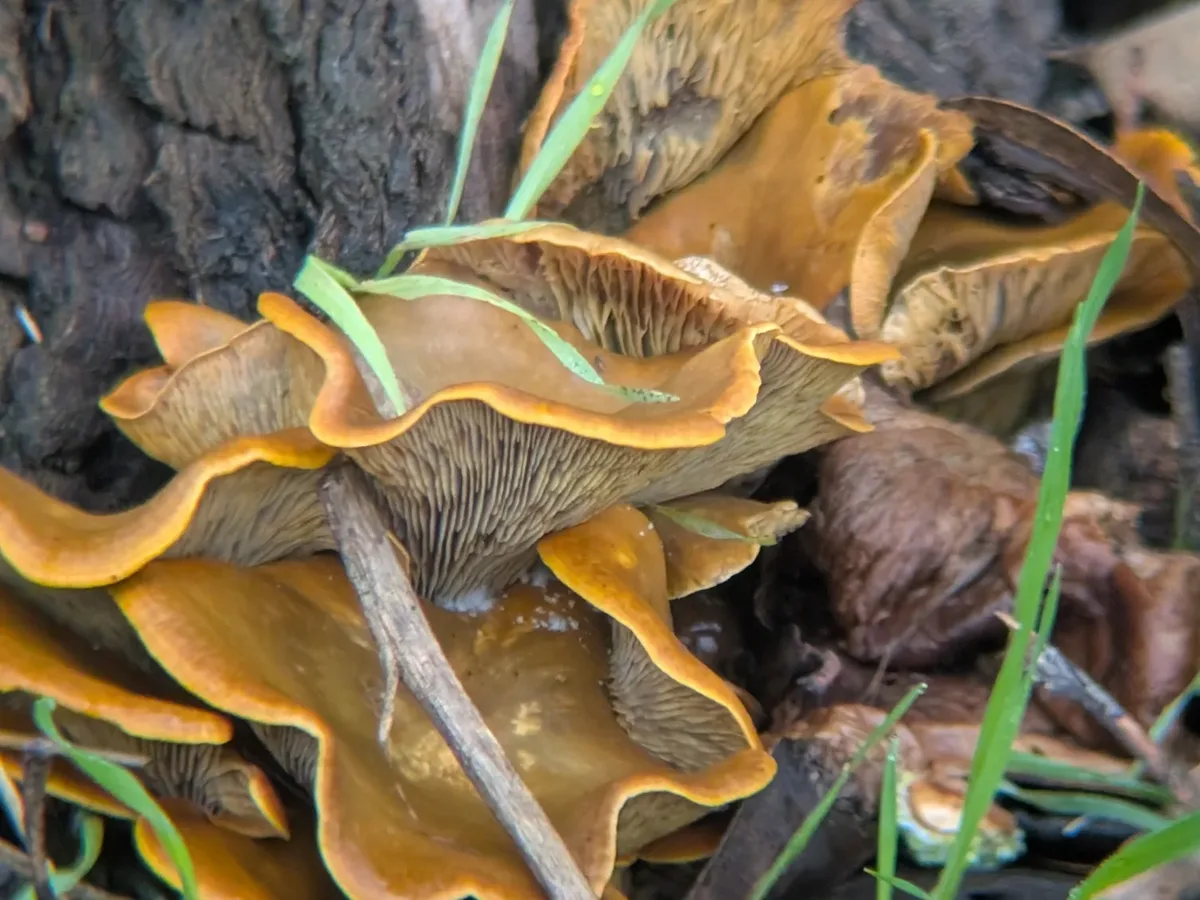 Western jack-o'-lanternWestern jack-o'-lanternWestern jack-o'-lantern
Western jack-o'-lantern
Omphalotus olivascensMistaken for chanterelles, but it has true sharp gills, grows in clusters on wood, and glows faintly green in the dark.
How to recognise it
Cap 5-20 cm, orange to orange-brown with a distinctive olive tint, starting convex then deepening into a funnel or vase shape. Beneath, the gills are true, sharp, and decurrent - knife-thin and crowded, olive-yellow fading to orange. Stipe 5-15 cm, olive-yellow marked with brown spots. Flesh pale orange-olive throughout. In darkness, the fresh gills genuinely glow a faint greenish light - a real, if subtle, bioluminescence.
Where it grows
Grows saprotrophically or as a parasite on wood, appearing at the base of oaks and eucalyptus trees or on buried roots nearby. Almost always in tight clusters.
Cooking
Never - poisonous.
Danger
Poisonous (rarely lethal).
Look-alikes
Chanterelles have blunt ridges (not true gills), grow singly out of the ground (mycorrhizal), and do not glow in the dark. The jack-o'-lantern has true sharp decurrent gills, grows in clusters on or beside wood, and is bioluminescent.
Laetiporus forms bracket/shelf-like fruitbodies with pores rather than the gilled, funnel-shaped cap of the jack-o'-lantern.
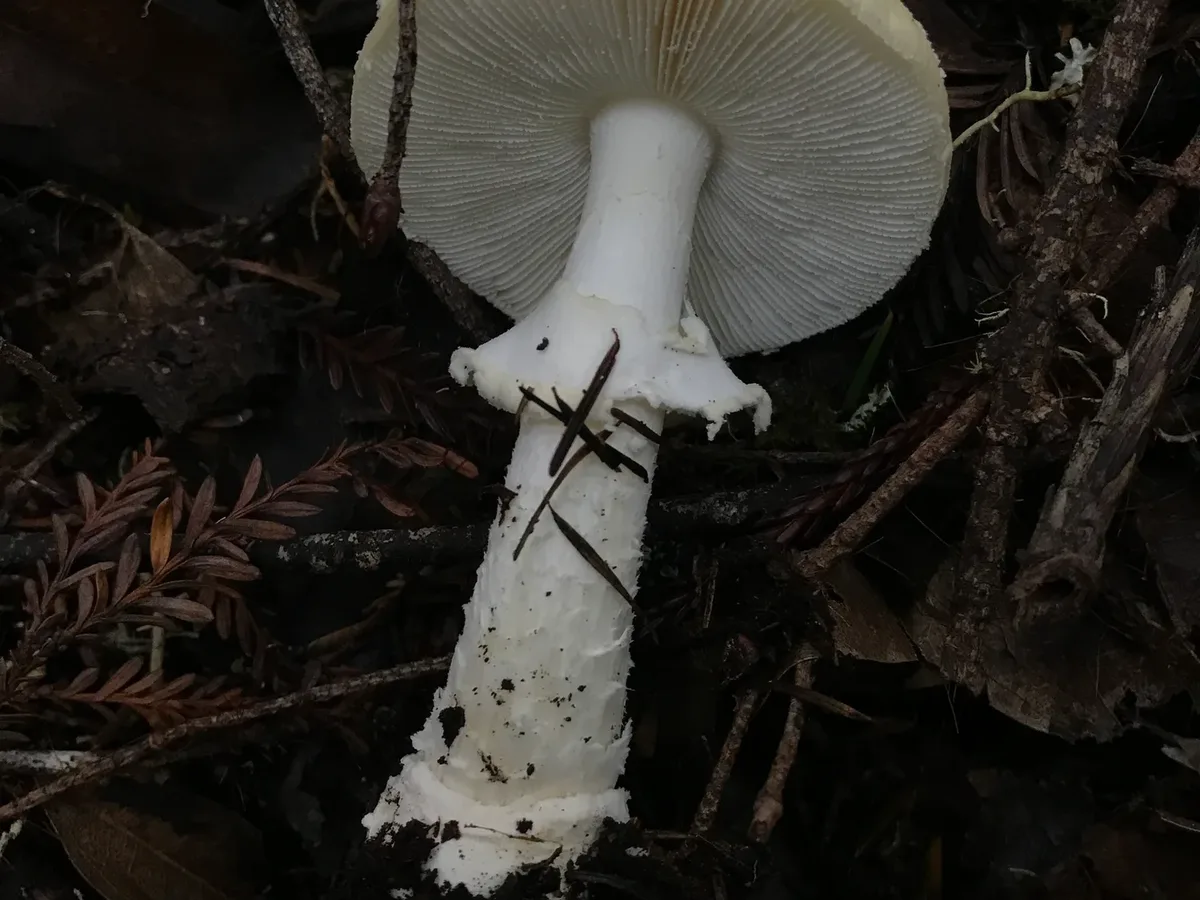 Western panther cap
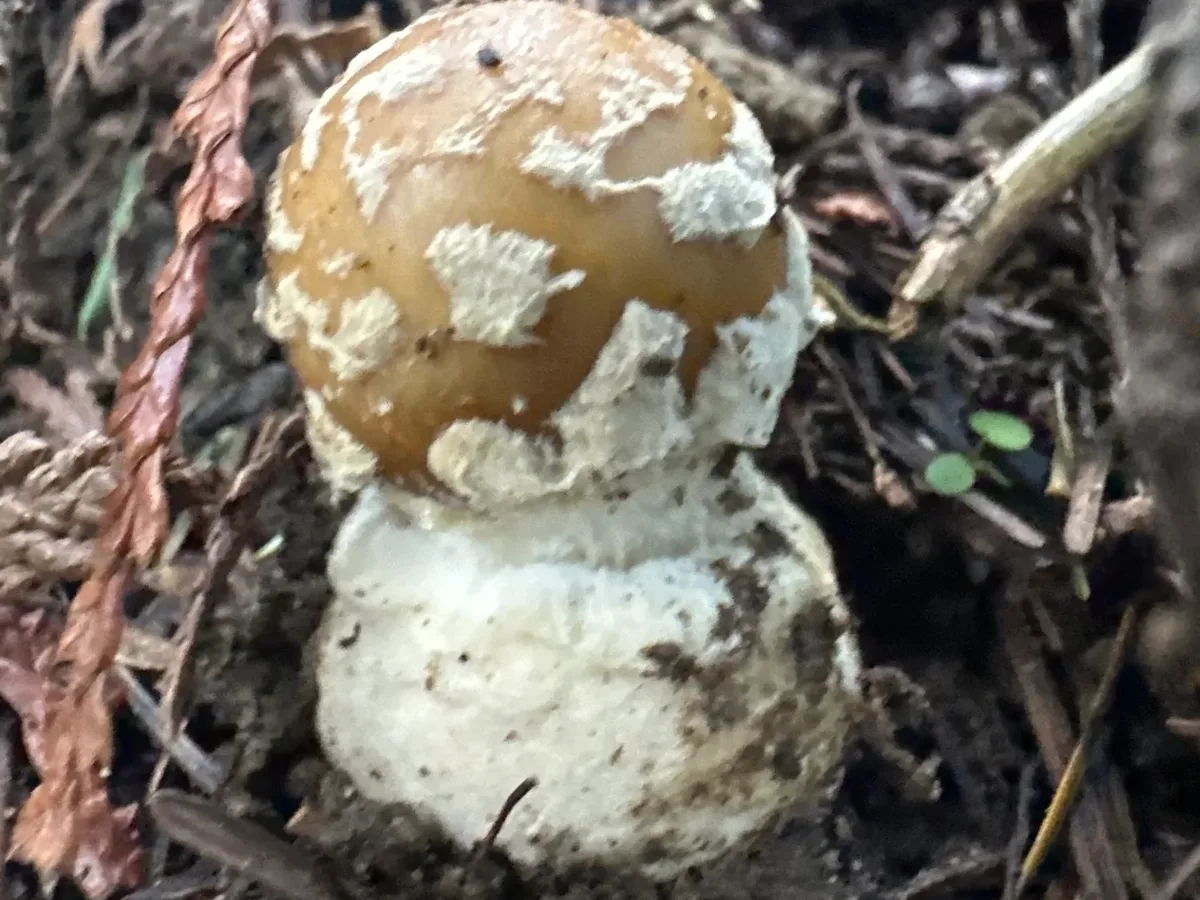 Western panther cap
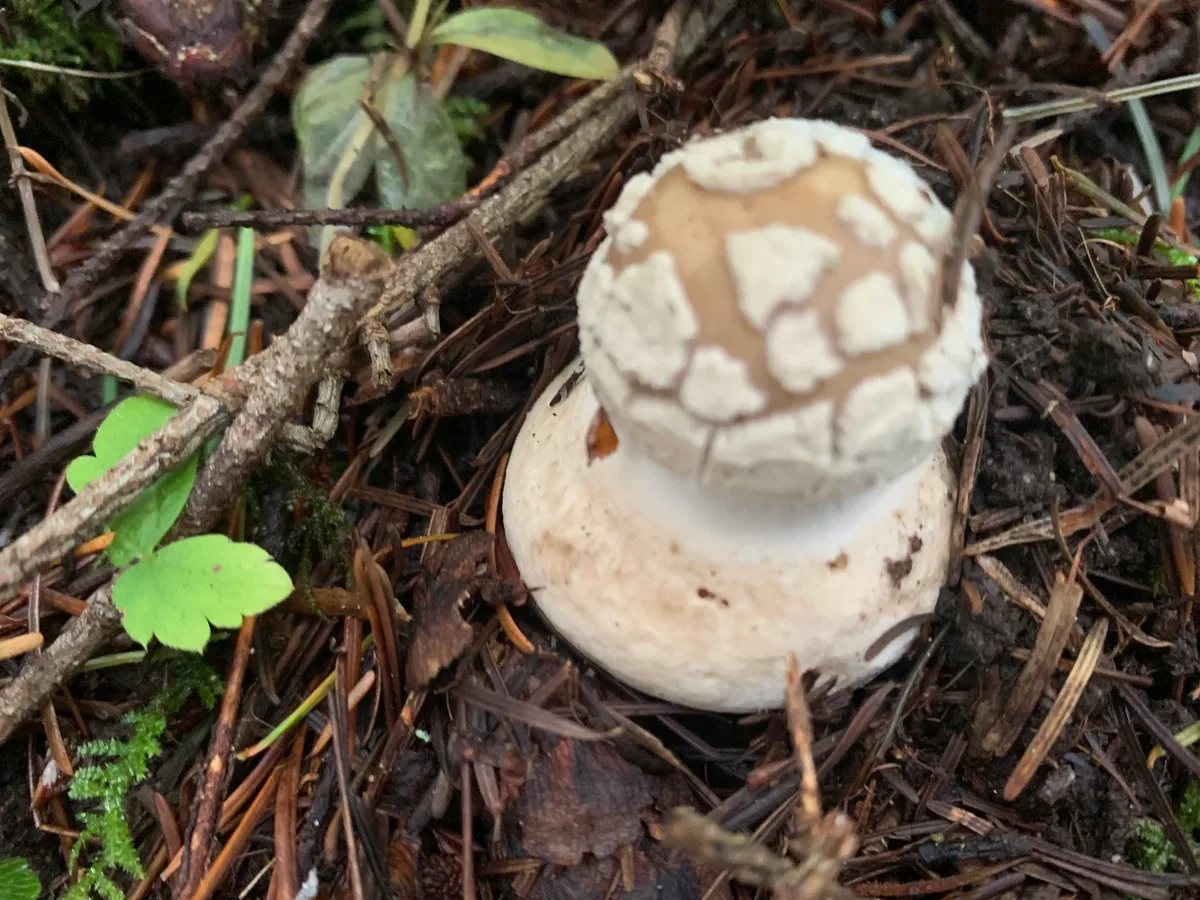 Western panther cap
 Western panther capWestern panther capWestern panther cap
Western panther cap
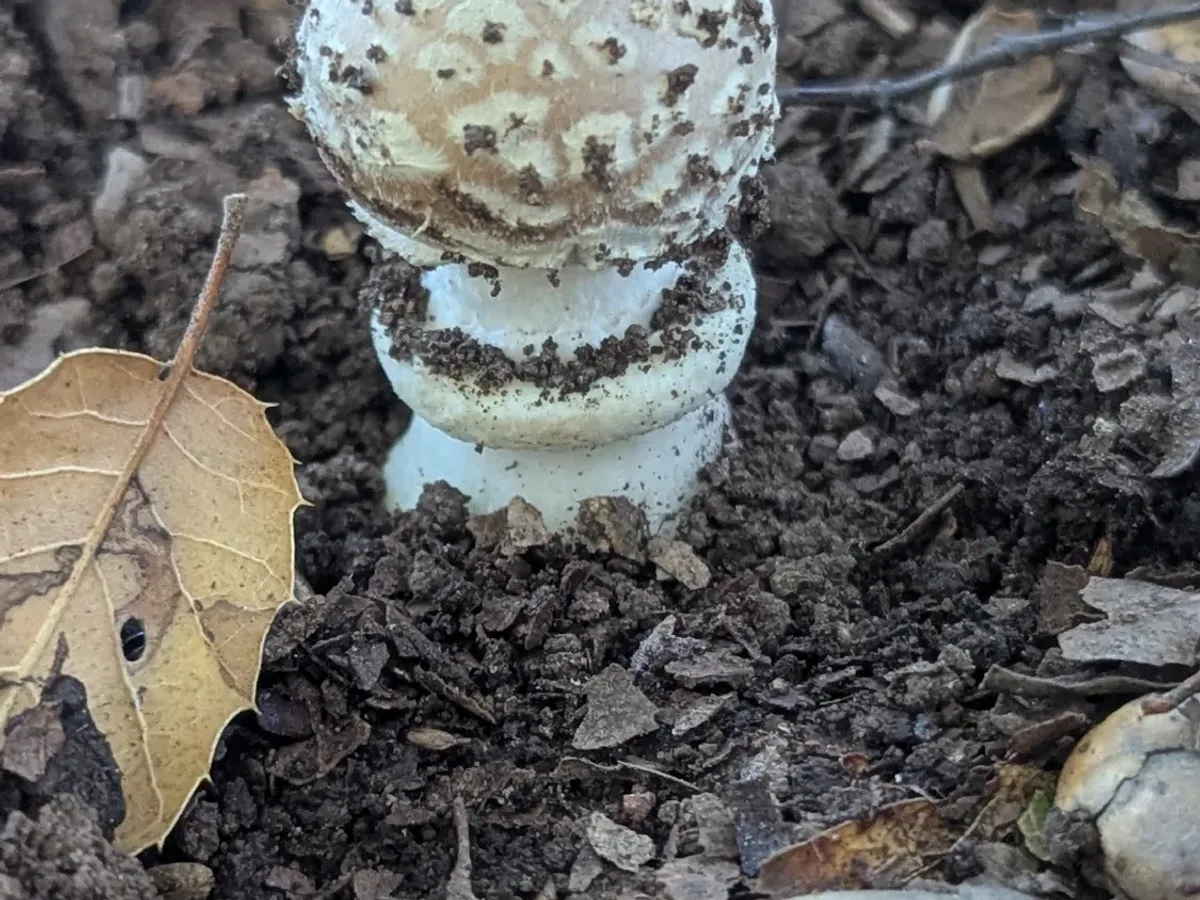
Amanita pantherinoidesA brown warty cap behind a disproportionate number of PNW poisonings of people, dogs and cats from its neurotoxins.
How to recognise it
A brown cap studded with white warts - remnants of the universal veil that once enclosed the whole mushroom - a skirt-like white ring on the stem, and a distinctive banded 'boot' at the base where the volva remains. Spore print white. Closely resembles Amanita gemmata, which has a cream-yellow to tan cap rather than this deeper brown.
Where it grows
Grows from the soil in mixed forests, forming mycorrhizal partnerships with both conifers and hardwoods. Often found at forest edges, parks, and trailheads - anywhere its tree partners grow.
Cooking
Not edible - this species is poisonous and should never be collected for food.
Danger
Causes disproportionately many poisonings of humans, dogs, and cats in the Pacific Northwest. Rarely lethal but serious.
Look-alikes
An edible species that inexperienced foragers confuse with the panther cap.
An edible species that inexperienced foragers confuse with the panther cap.
Similar Amanita with a cream-yellow to tan cap rather than the brown cap of A. pantherinoides.
 False morel
 False morel
 False morelFalse morelFalse morel
False morel
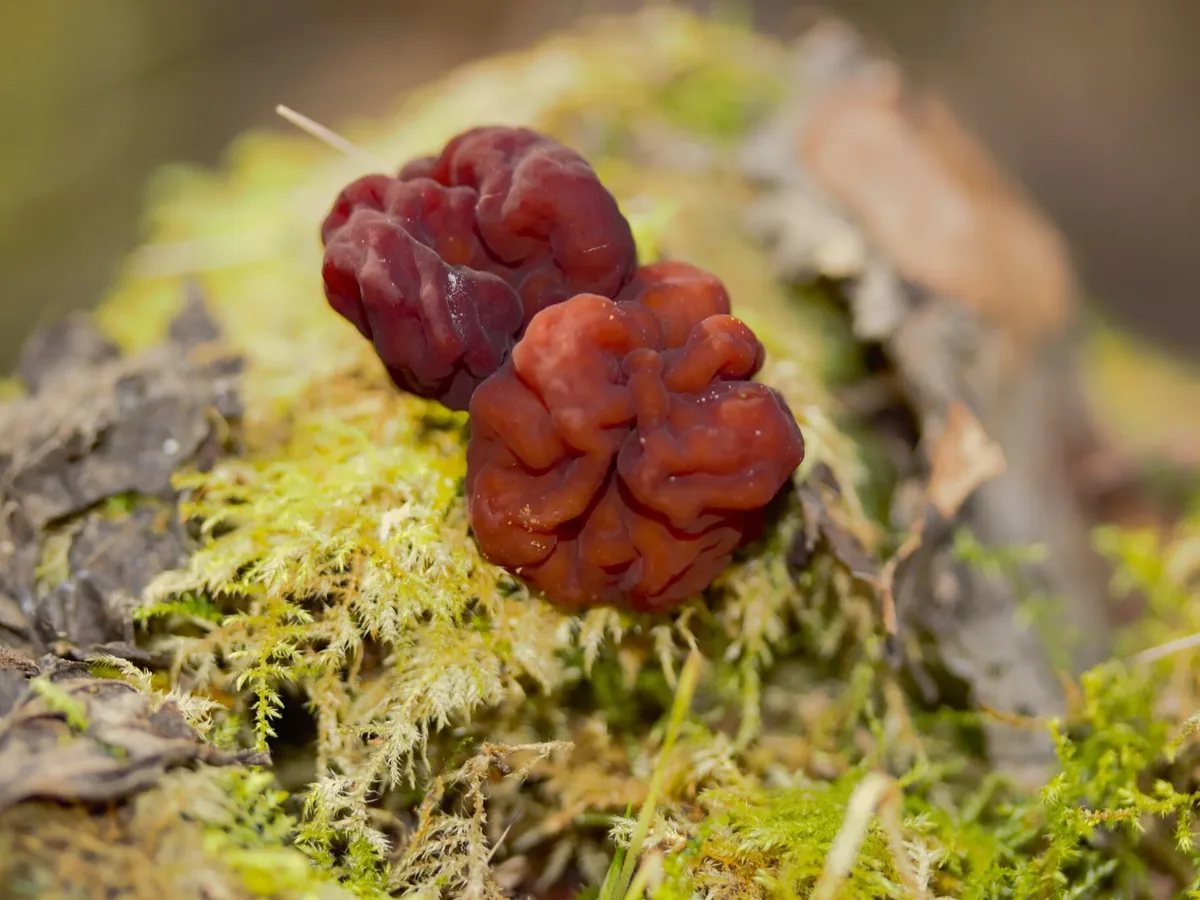
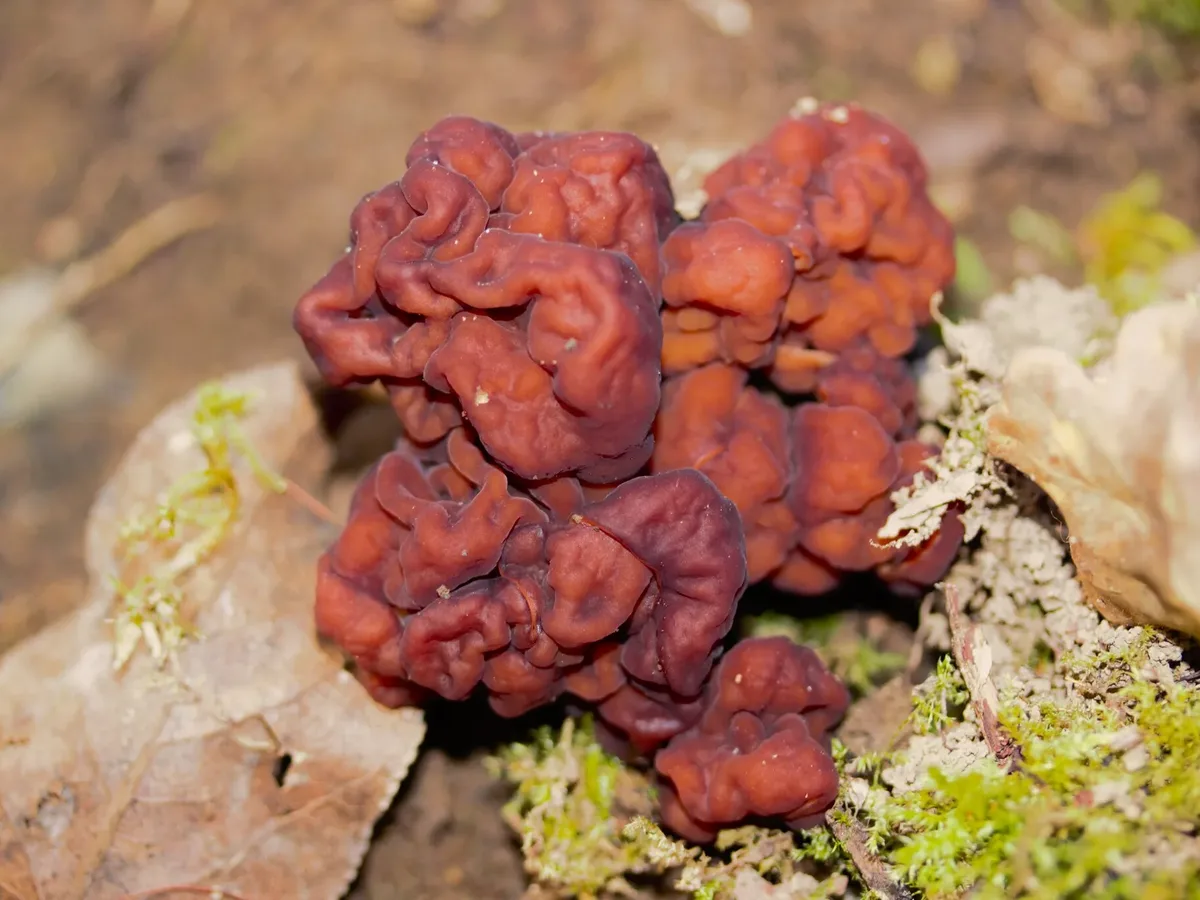
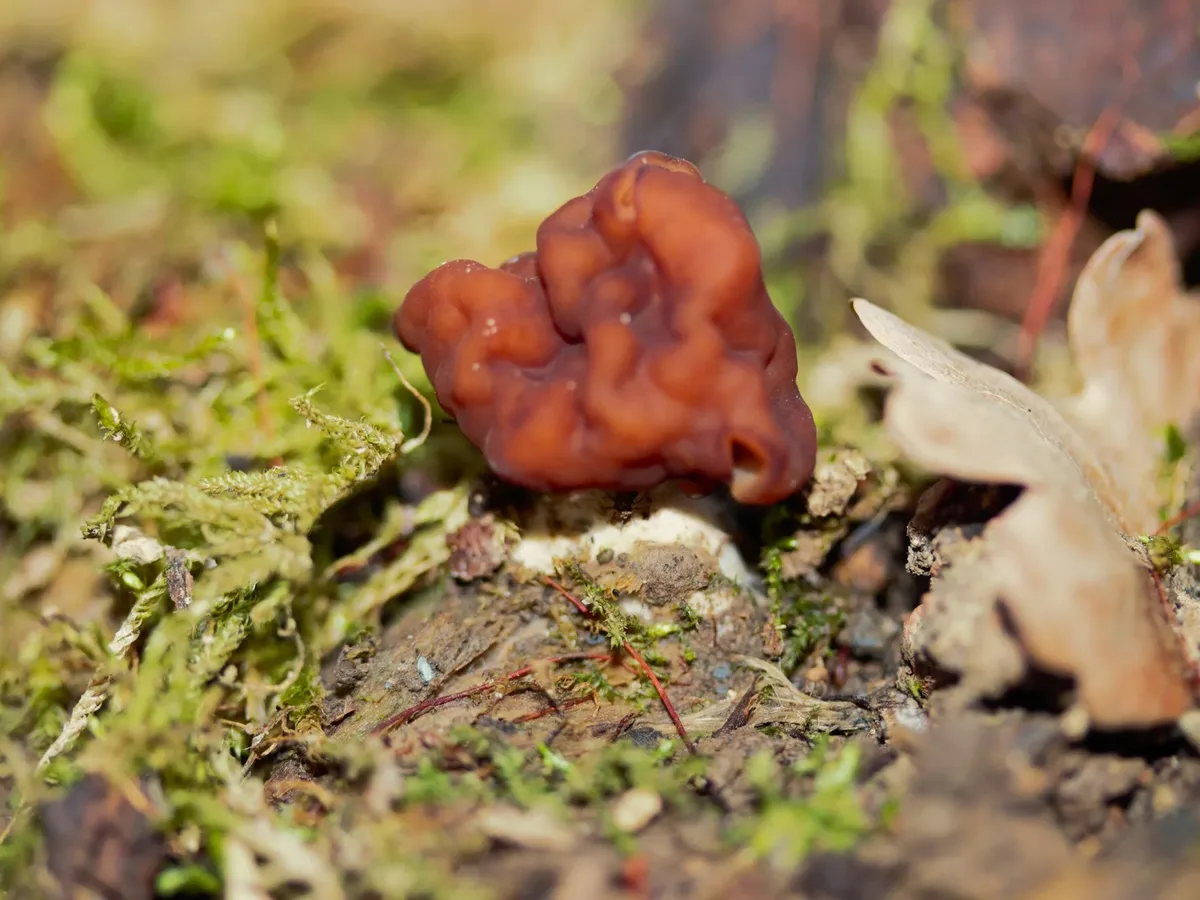
Gyromitra esculentaMistaken for true morels in spring - but its cap is brain-like and wrinkled, not honeycombed, and solid inside rather than hollow.
How to recognise it
Irregular, brain- or walnut-shaped cap, reddish-brown to dark brown - wrinkled and convoluted rather than pitted in a honeycomb. The stem is short; the interior is hollow or chambered, not cleanly hollow throughout.
Where it grows
Sandy coniferous forest floor, especially under pine. Also turns up on burned ground and other disturbed soils where the forest floor has been opened up.
Cooking
In the Nordic countries and Eastern Europe it is traditionally eaten after repeated parboiling, but this is considered risky - the toxin content is reduced but not entirely eliminated, and the vapors are poisonous.
Danger
Contains gyromitrin which is converted in the stomach to monomethylhydrazine (MMH): vomiting, dizziness, liver damage, in severe cases convulsions and death. Individual sensitivity varies. Although traditionally eaten after repeated parboiling in the Nordic countries and Eastern Europe, this is regarded as risky - the toxin content is reduced but not fully eliminated, and the vapors are poisonous.
Look-alikes
True morels have a regularly pitted honeycomb cap and are completely hollow inside; the false morel is brain-like and filled/chambered.
A safe edible; has a pitted, honeycomb-like cap rather than a wrinkled/convoluted one.
Also a Gyromitra; likewise to be avoided.
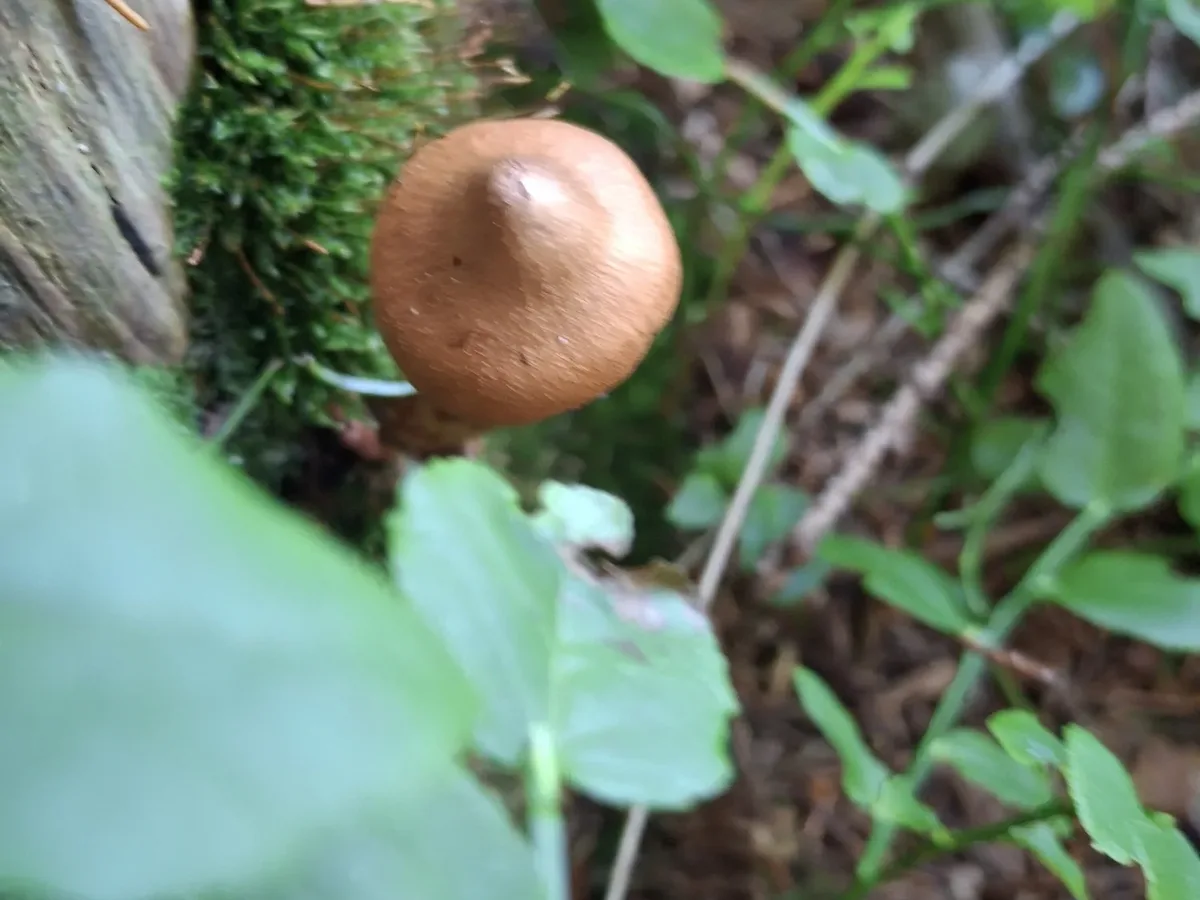 Deadly webcap
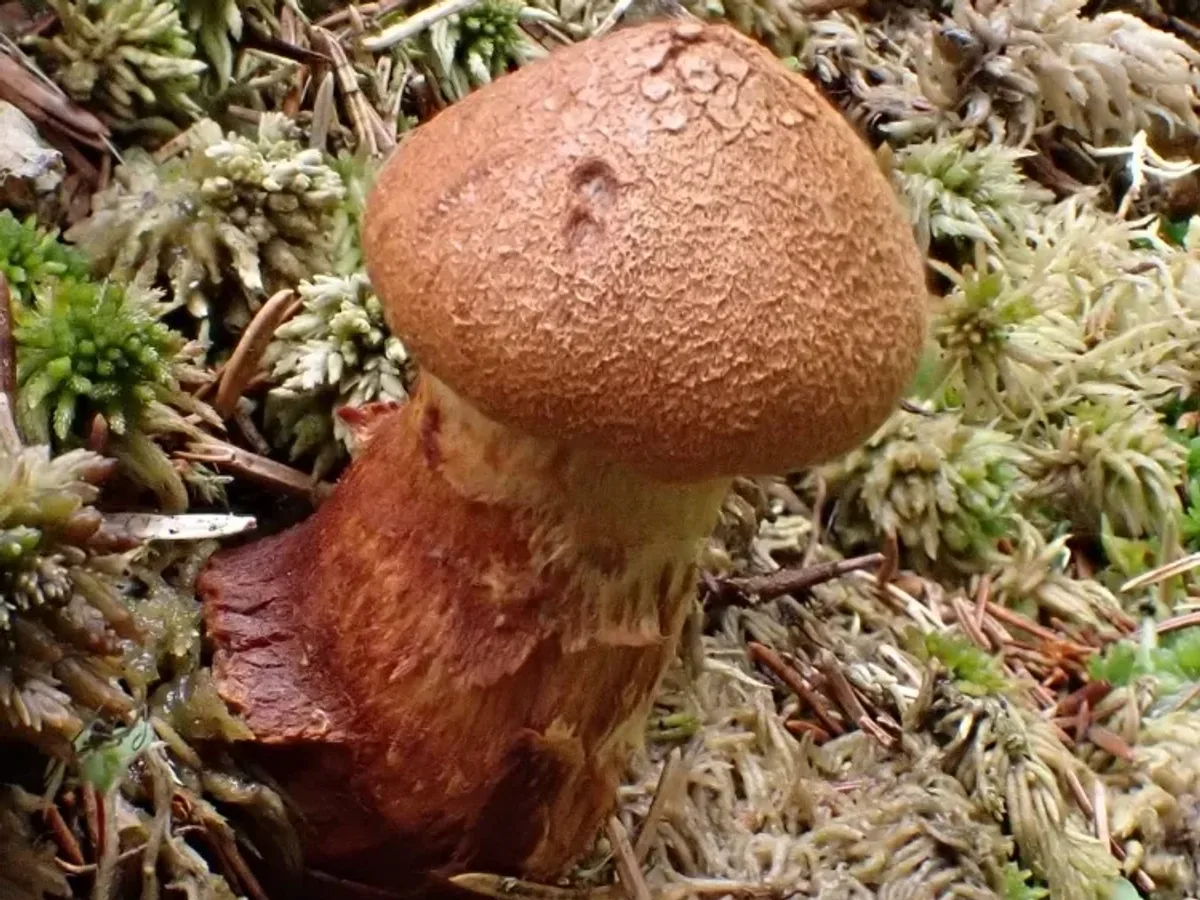 Deadly webcap
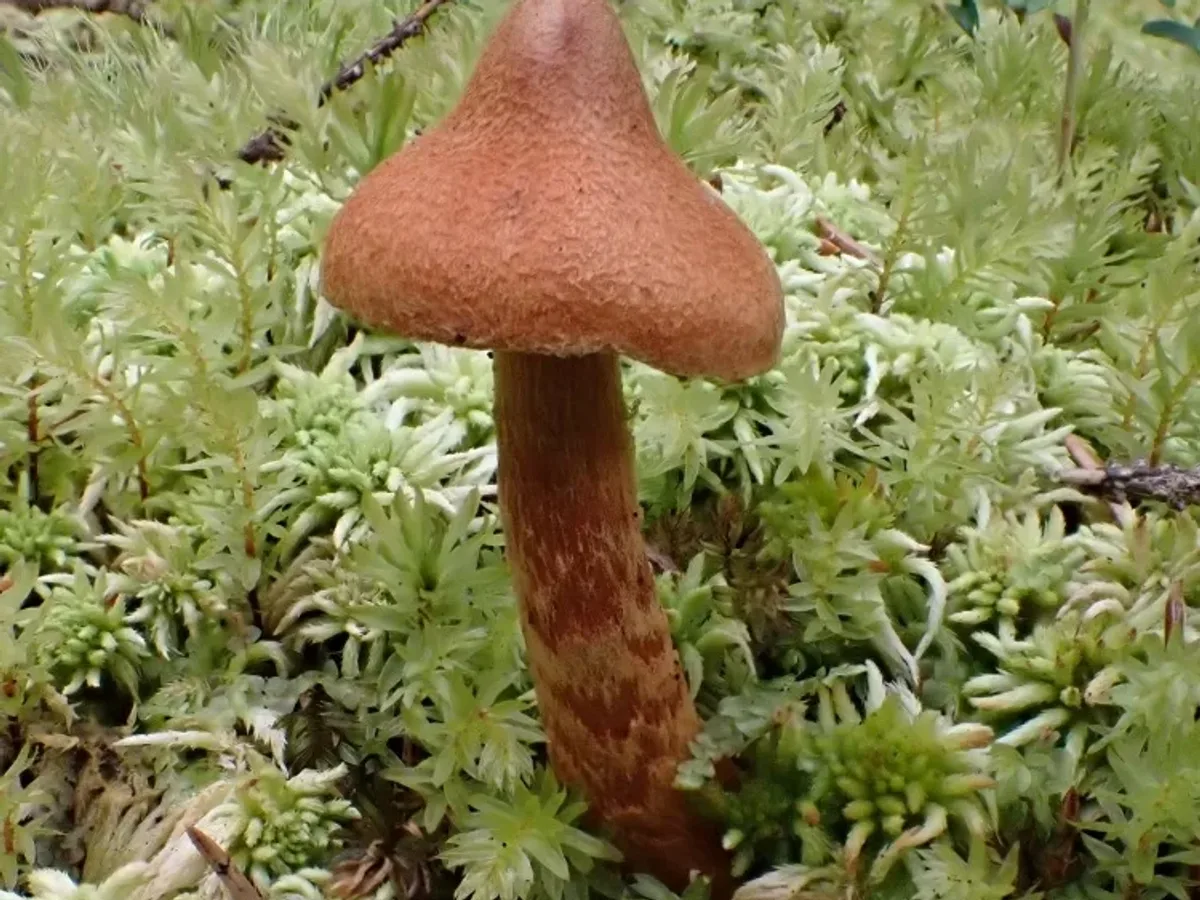 Deadly webcapDeadly webcapDeadly webcap
Deadly webcap
Cortinarius rubellusCarries orellanine, a kidney toxin whose symptoms can be delayed for weeks. The rule is simple: no Cortinarius is ever eaten.
How to recognise it
Cap 3-8 cm, reddish-brown to cinnamon-brown or orange-brown, with a characteristic pointed umbo - C. rubellus keeps this point even at maturity, unlike most mushroom caps that flatten as they age. Surface dry and fibrous. Gills sparse and widely spaced, rust-brown. Stem yellow-brown, often marked with yellow veil bands - the remnants of the cobweb-like cortina that all young Cortinarius mushrooms carry stretched between cap and stem. Take a spore print: it will be rust-brown, a key identifying feature.
Where it grows
Mycorrhizal in coniferous and mixed forest, living in an unseen root partnership with its host tree. C. rubellus grows with spruce on moist ground; C. orellanus with broadleaf trees and oak on drier ground.
Cooking
Not edible under any circumstances. The toxin is not destroyed by cooking, drying or freezing.
Danger
Orellanine gives a very long latency (2 days to 3 weeks) - no, or only flu-like, early symptoms, then kidney failure. In a western Swedish cohort 1979-2012 (Nilsson et al., BMC Nephrology 2017), 28 cases with medical records were included out of a total of 39 poisonings by the deadly webcap (toppig giftspindling); "22 of 28 patients developed acute kidney injury requiring dialysis." There is no specific antidote; treatment is dialysis, sometimes transplantation. The toxin is not destroyed by cooking, drying or freezing.
Look-alikes
A close relative that is likewise deadly, also containing orellanine.
The orange/reddish-brown colour can tempt chanterelle pickers. The webcap has true sparse rust-brown gills, a rust-brown spore print, a cobweb-like cortina when young and yellow veil bands on the stem, whereas the chanterelle has blunt, forked, decurrent false gills (ridges), a paler spore print and no cortina.
Check for the rust-brown spore print, rust-brown gills, the cobweb-like cortina and the yellow-brown stem with yellow veil bands, which together identify a deadly webcap.
Shares the same habitat, so they are easily confused. Inspect each mushroom: the deadly webcap has a pointed cap and true gills, whereas the funnel chanterelle has ridges (false gills) and a hollow stem.
The rules that save lives
- Never eat a white-gilled mushroom with a volva and/or a ring - that rules out the death cap and the destroying angel.
- Never eat a small brown mushroom growing on wood - that rules out the deadly galerina.
- Never eat any Cortinarius - it is a vast, hard-to-identify genus with several deadly, kidney-destroying species.
- Treat 'magic mushrooms' with extreme caution: take a spore print - purple-brown and bruising blue is psilocybe, rusty-brown is the deadly galerina.
- Treat matsutake picking as an advanced skill: learn Amanita smithiana first, and verify the spicy scent plus a tapering, non-rooting base every time.
- Begin with the safest few - hedgehog, chanterelle, lobster and cauliflower - and move to Amanita-adjacent species only after a local expert or mycological society has confirmed your finds.
- If you suspect poisoning, call Poison Control (US 1-800-222-1222; BC 1-800-567-8911), save the mushroom remains, and seek care immediately - delayed treatment of amatoxin poisoning is life-threatening.