Black trumpet
Craterellus calicornucopioidessyn. Craterellus cornucopioides, Craterellus fallax
 © Alan Rockefeller (CC BY 4.0)
 © pinonbistro (CC BY-SA 4.0)
 © My-Lan Le (CC BY)
 © reagan peschke (CC BY)
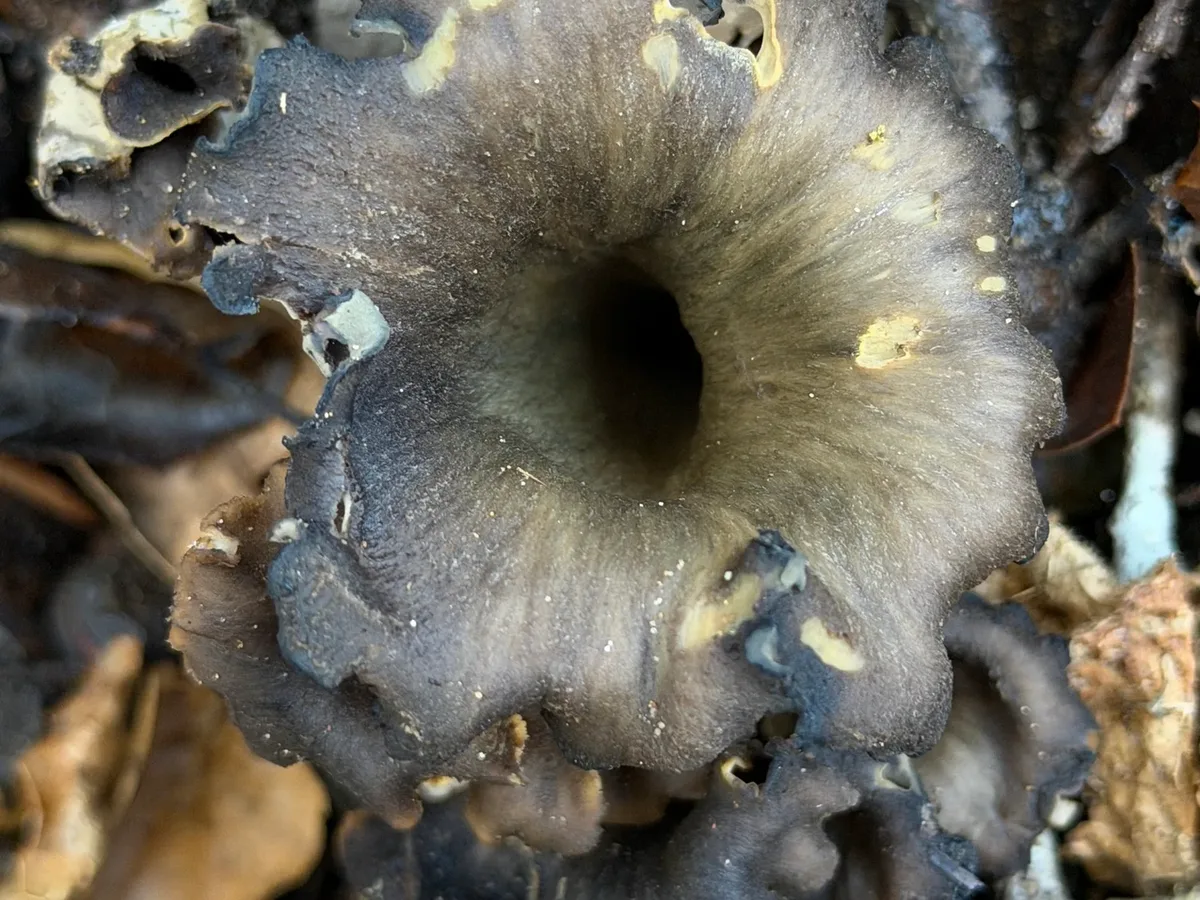 Alex Heyman (CC0)
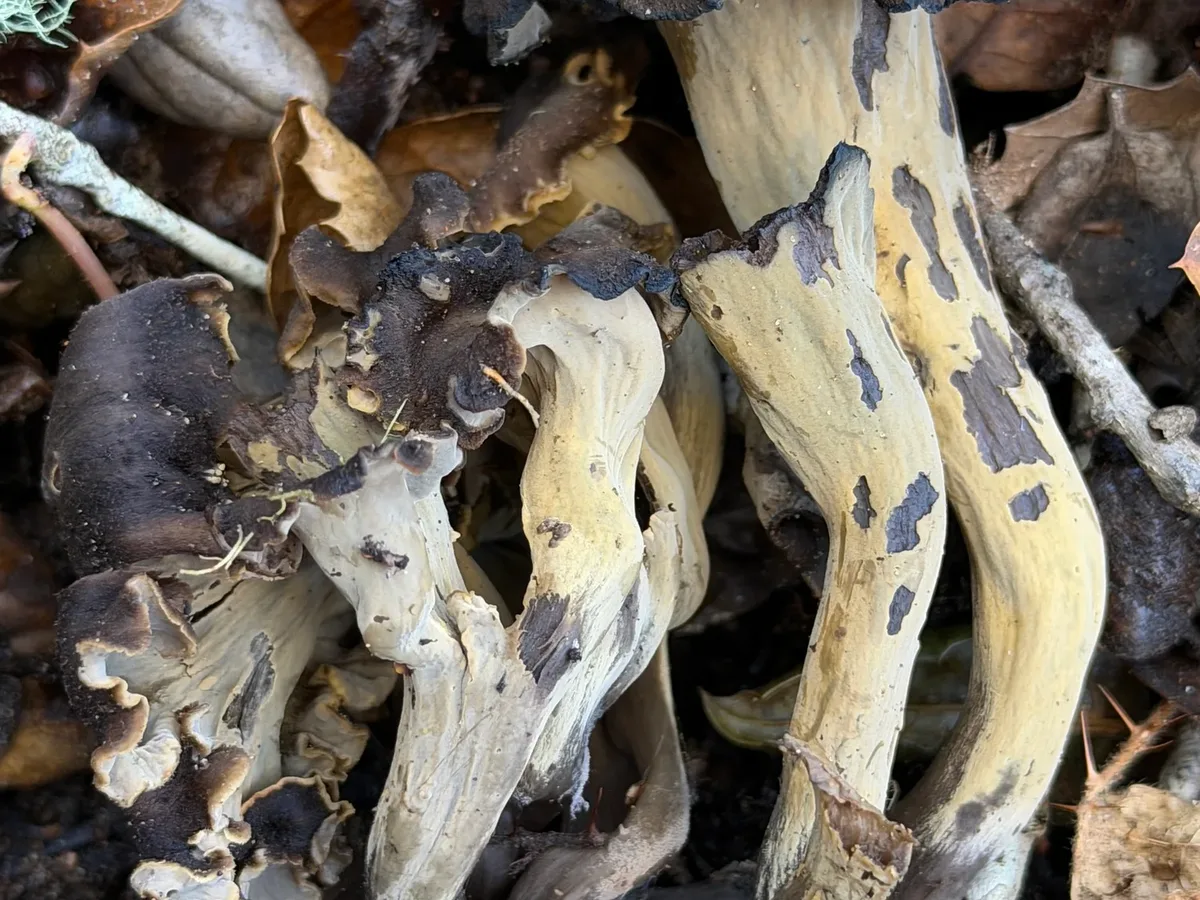 Alex Heyman (CC0)
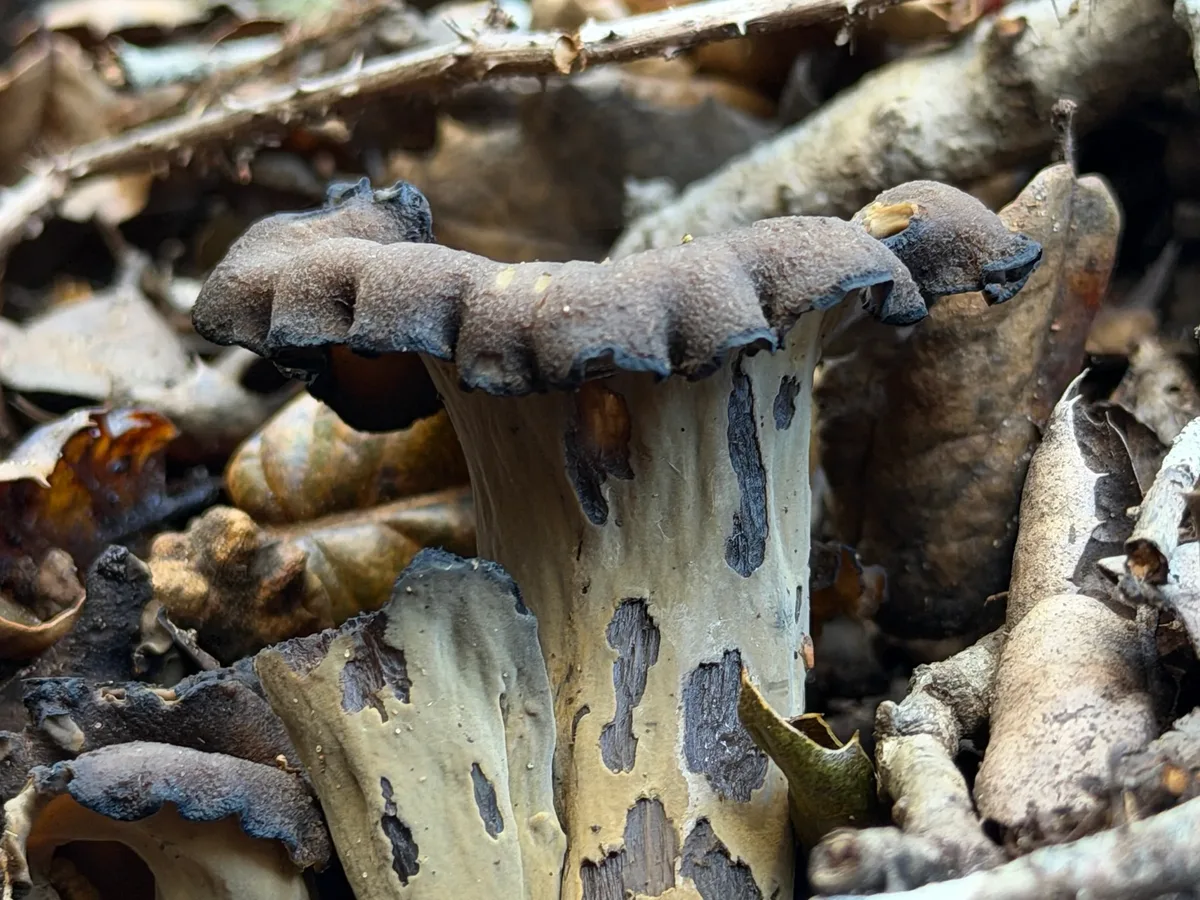 Alex Heyman (CC0)
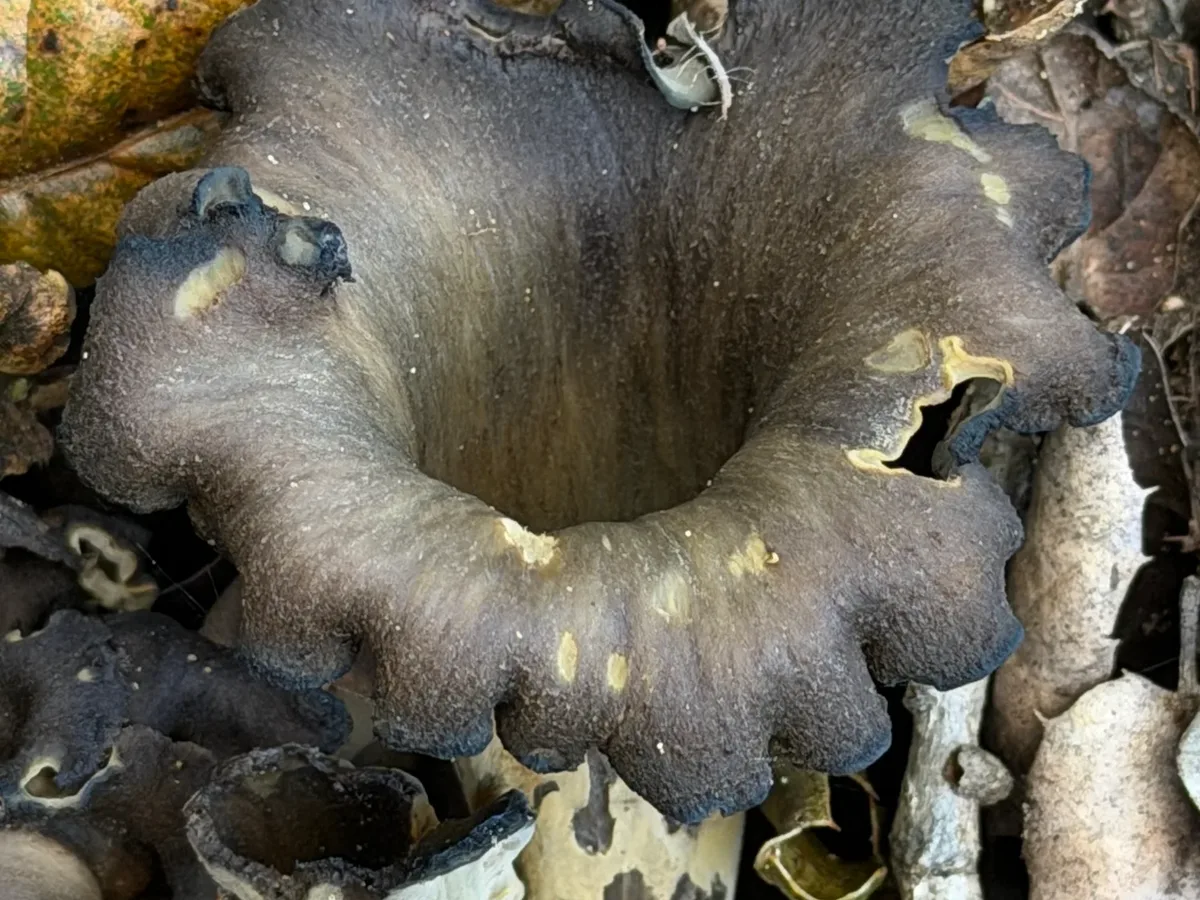 Alex Heyman (CC0)
 Alex Heyman (CC0)
 Alex Heyman (CC0)
 Alex Heyman (CC0)
 © Hilary Rose Dawson (CC BY 4.0)
 Alex Heyman (CC0)
 © Alan Rockefeller (CC BY 4.0)
 © Jonathan Curley (CC BY 4.0)© Alan Rockefeller (CC BY 4.0)© pinonbistro (CC BY-SA 4.0)
One of the best mushrooms you can bring home - once you are certain of the identification.
How to recognise it
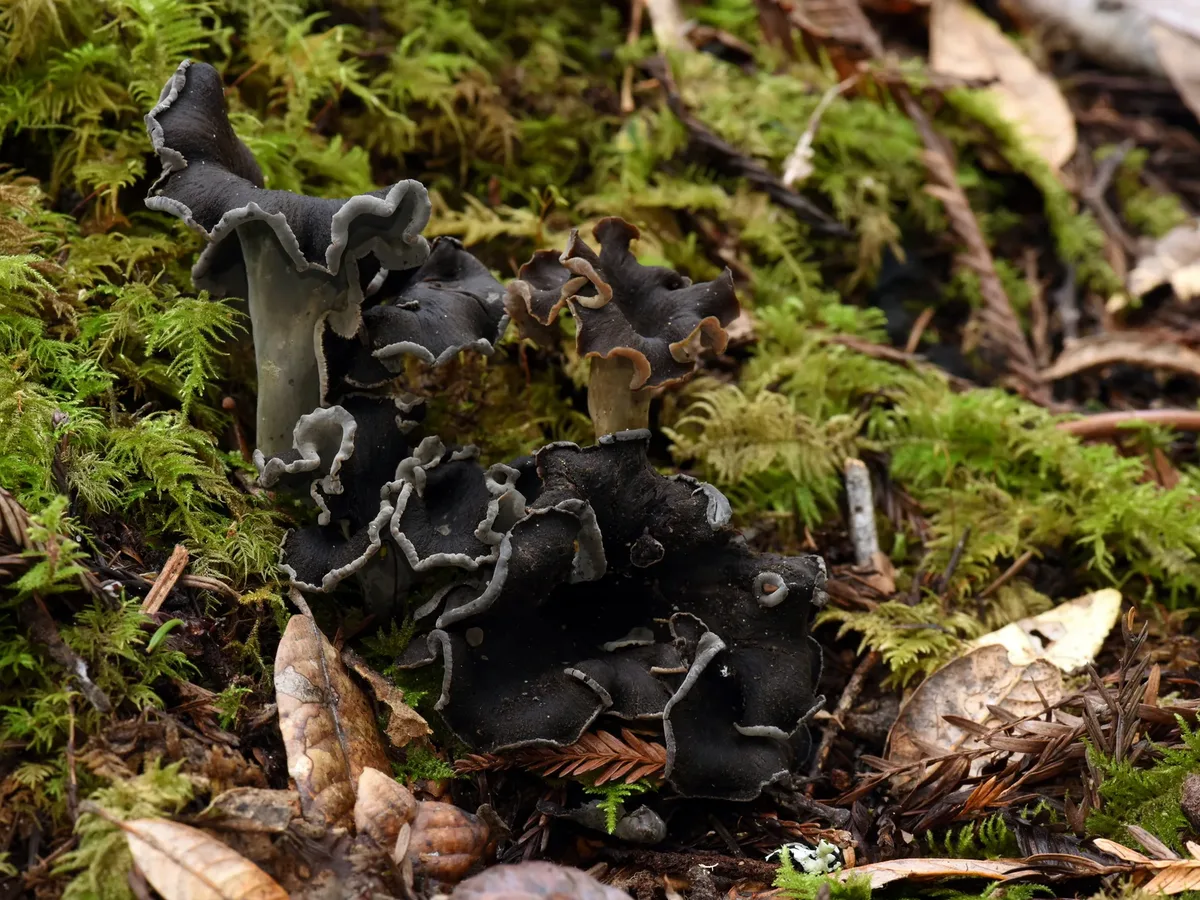
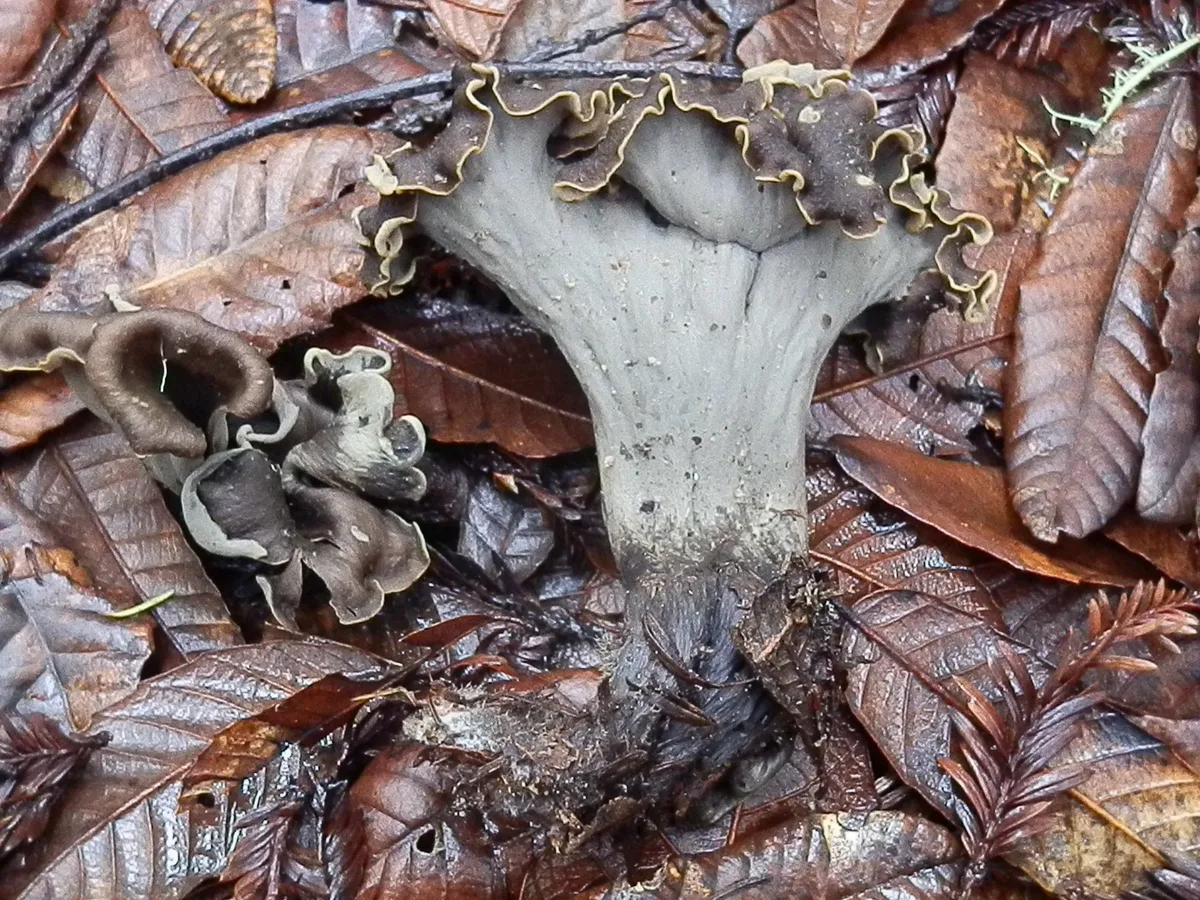
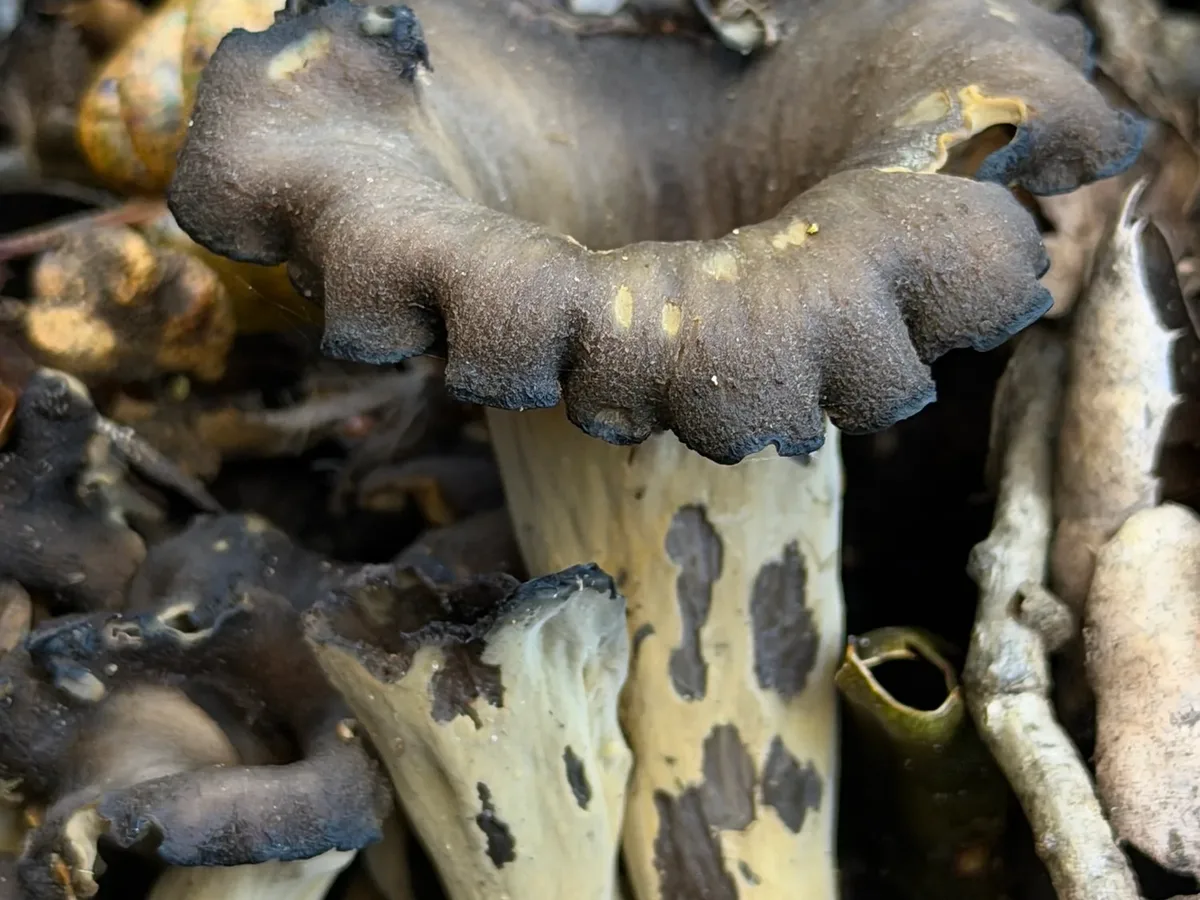
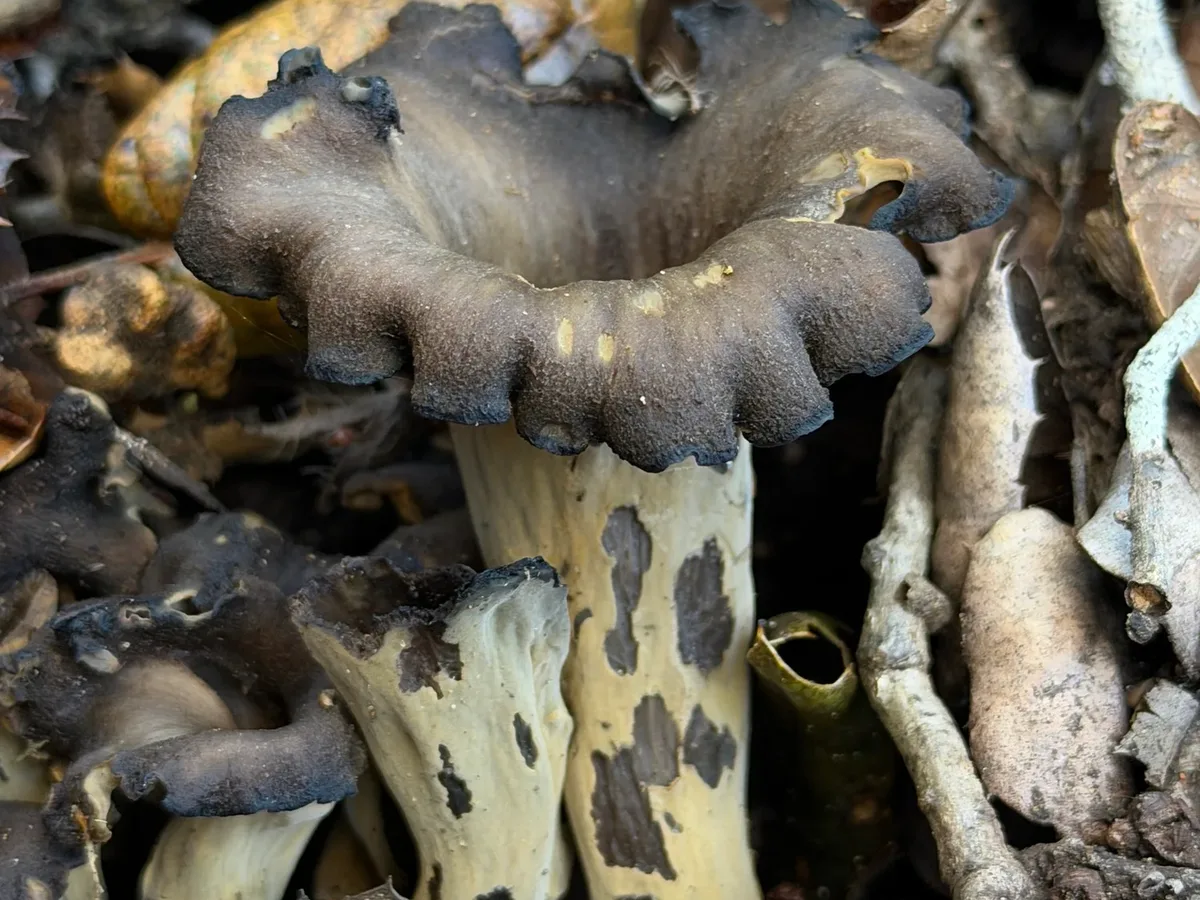
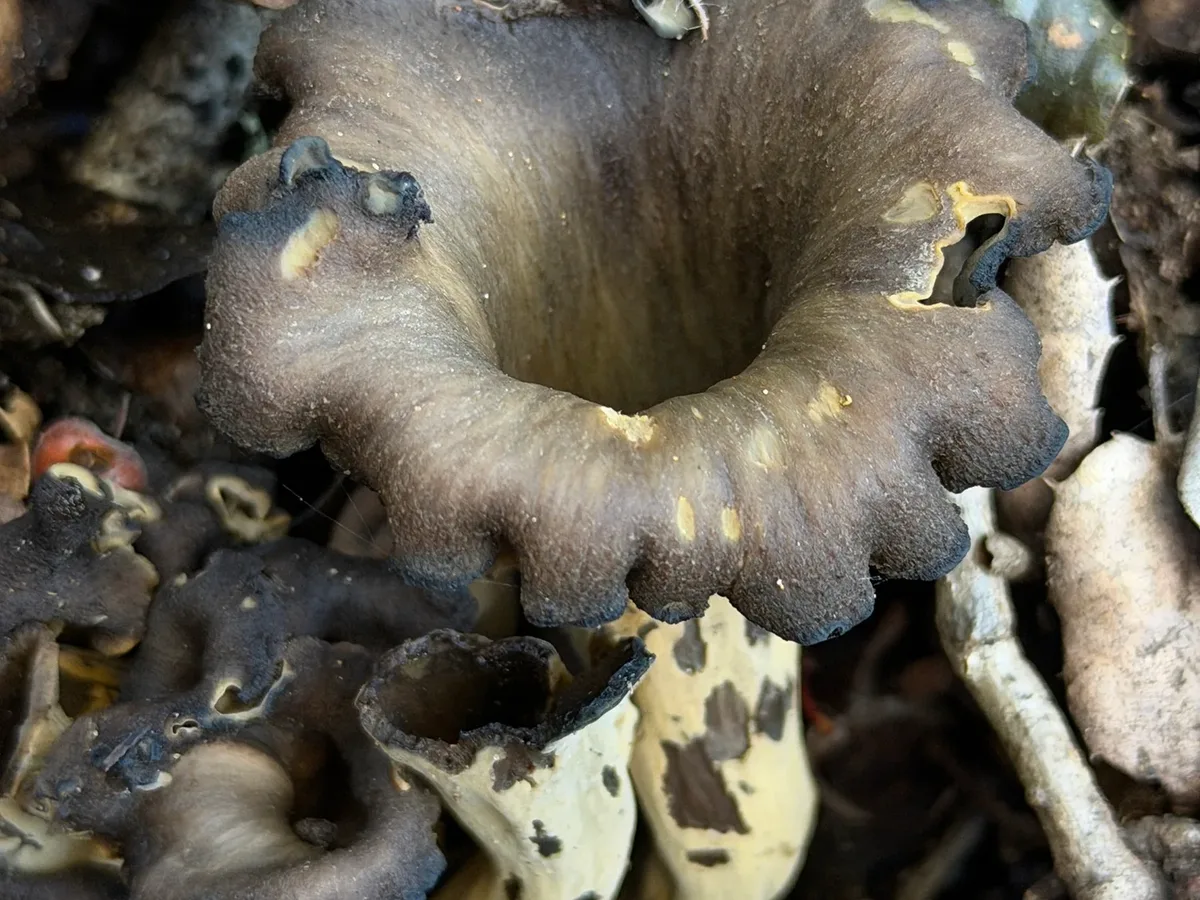
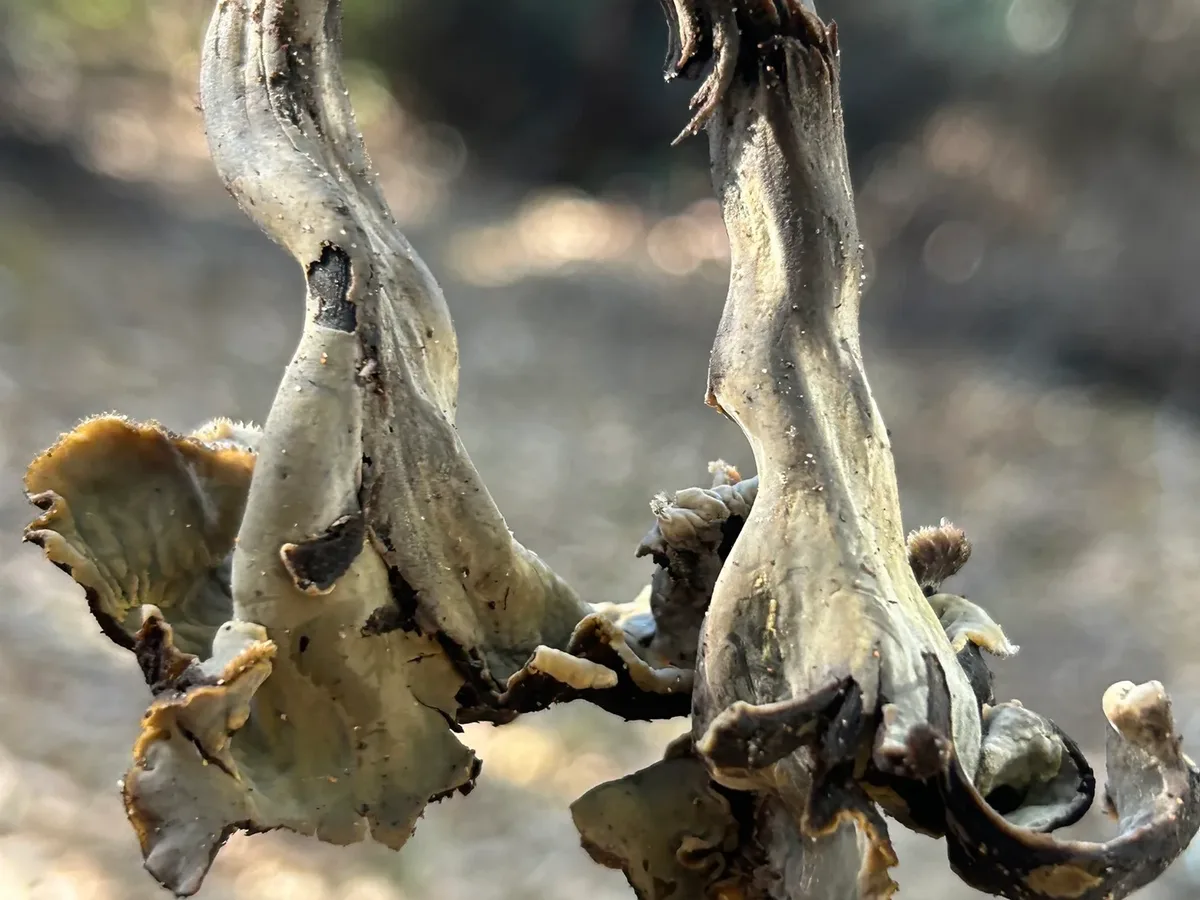
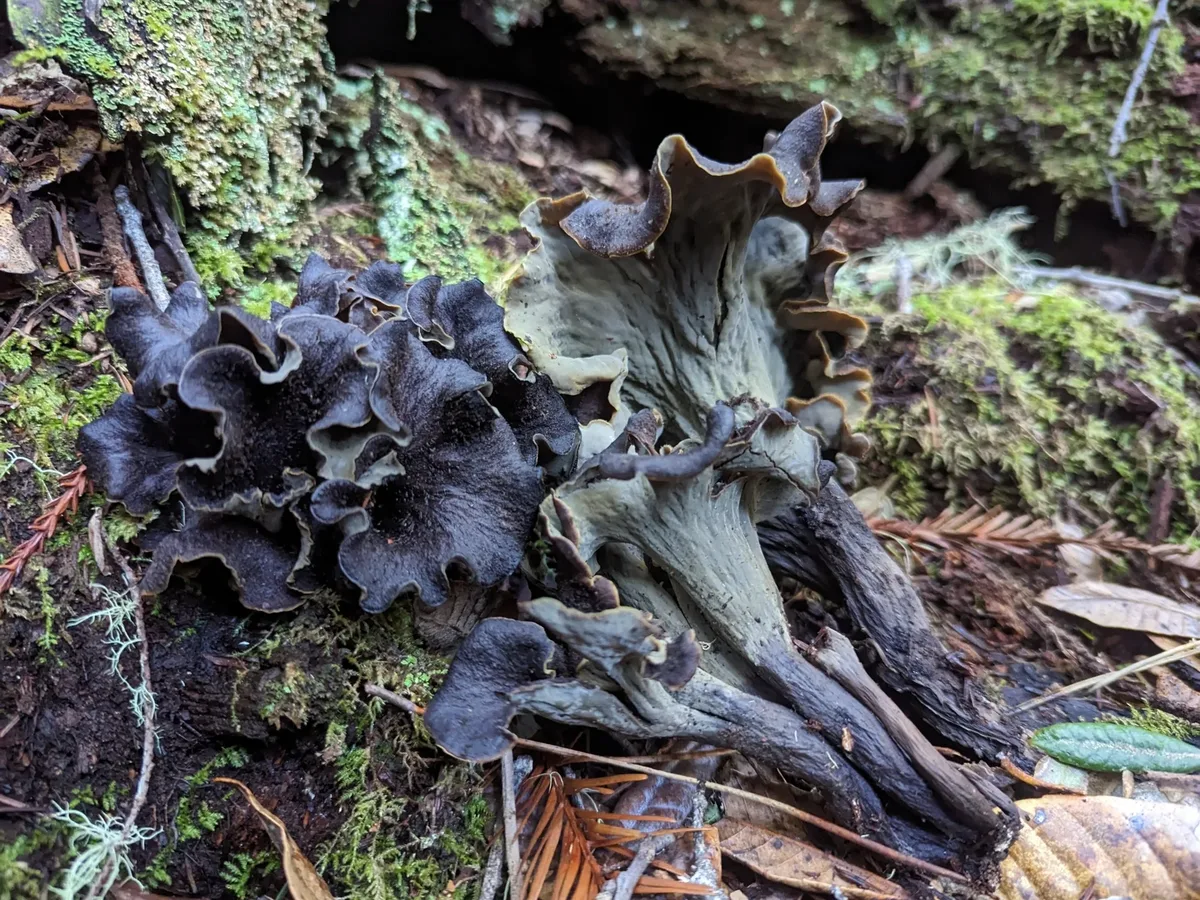
Craterellus calicornucopioides is one of the most architecturally simple of all edible fungi - and one of the hardest to see. The fruitbody is a true hollow tube from base to mouth: there is no cap separate from the stem, no gills, no ring, no volva.
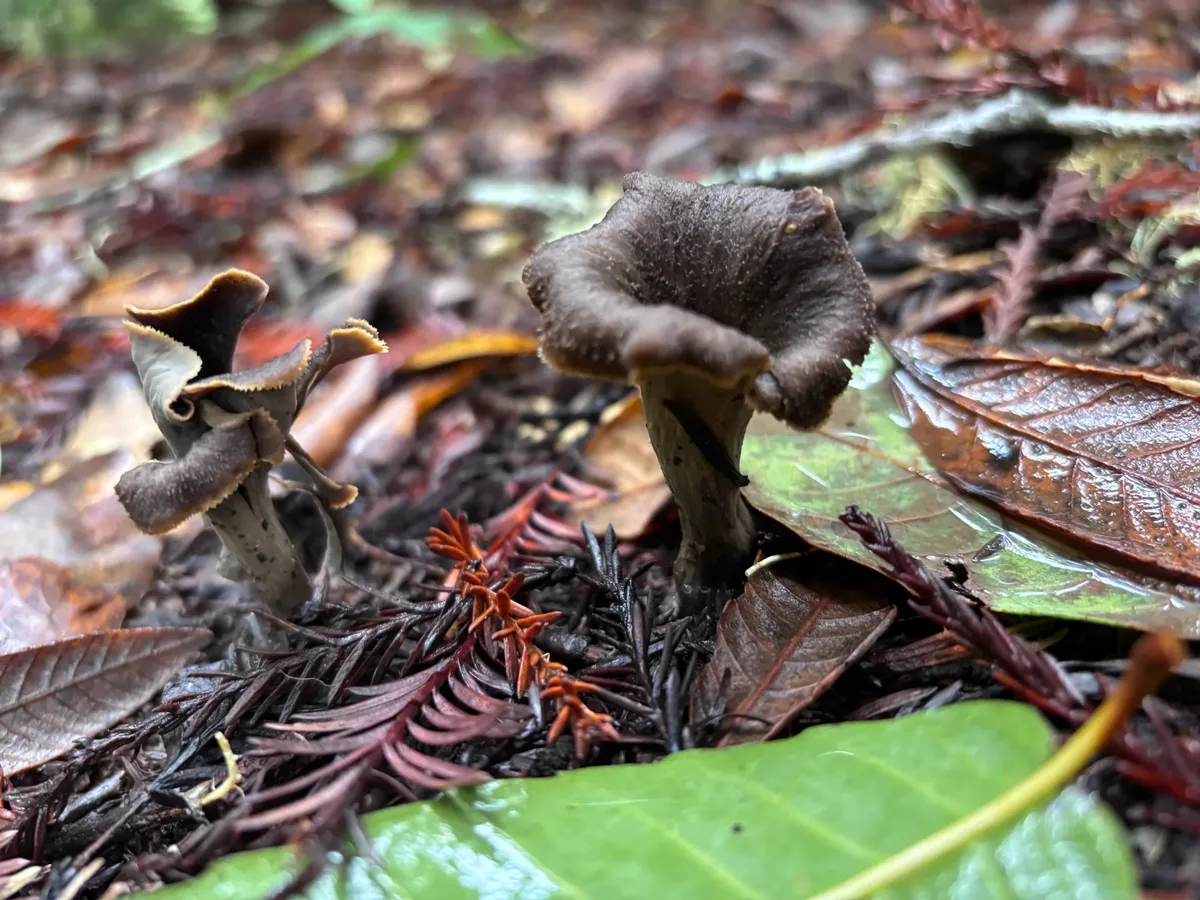
The whole structure is a flared funnel that tapers into a narrow stalk at the base, and looking down from the mouth you can see straight through to the forest floor. The mouth typically spans 1-5 cm and the fruitbody stands 3-9 cm tall, occasionally stretching to 15 cm in old, vigorous flushes.
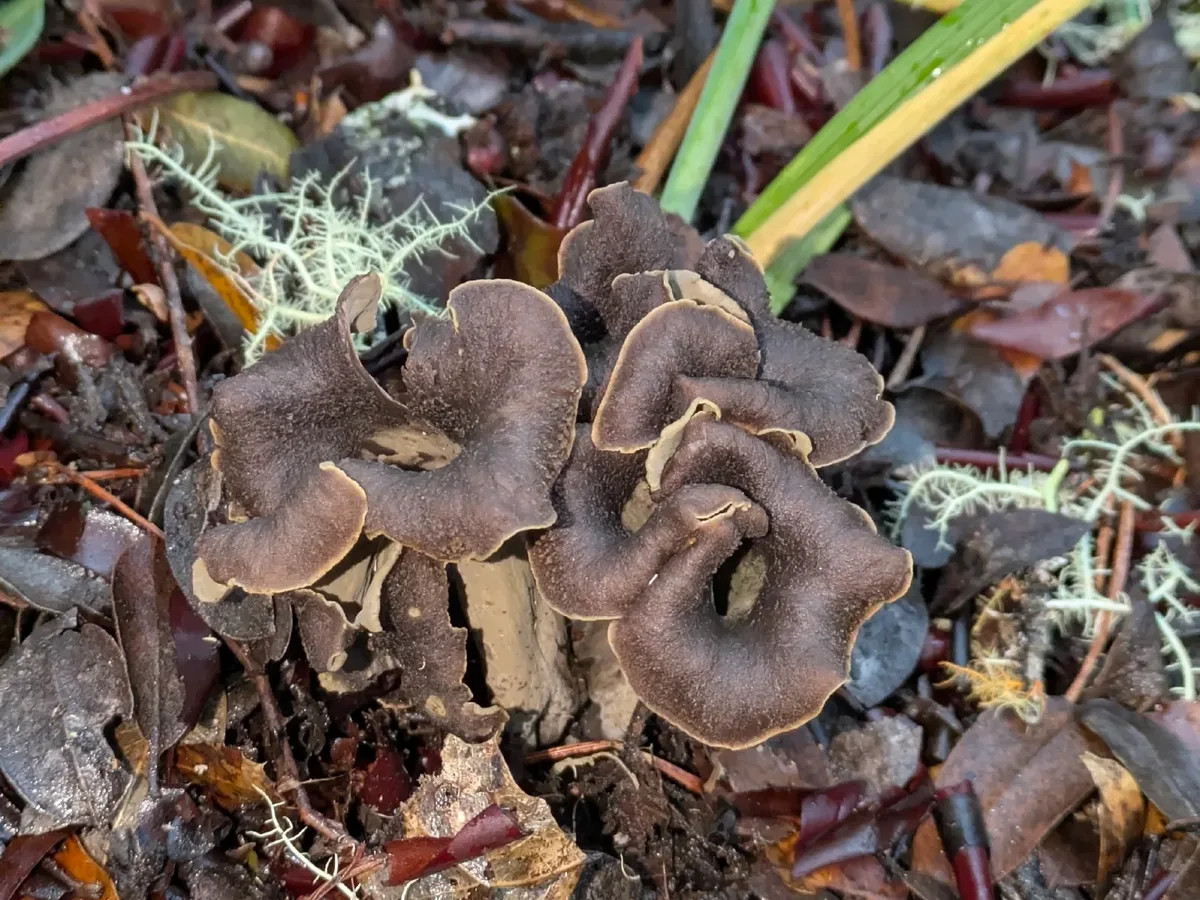
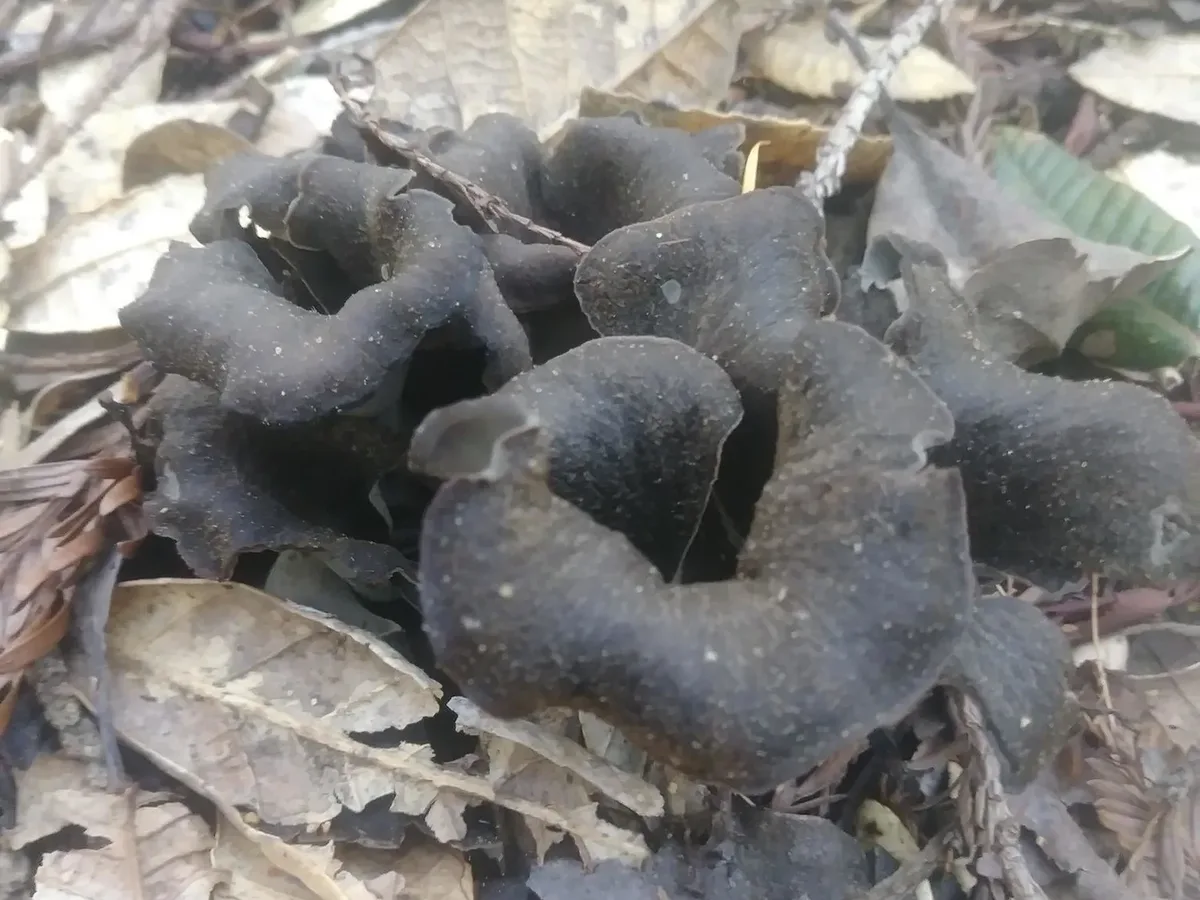
The inner surface (which faces upward into the funnel) is the sterile surface - dark grey to near-black, covered in fine, pressed-down scales that give it a slightly rough, suede-like texture.
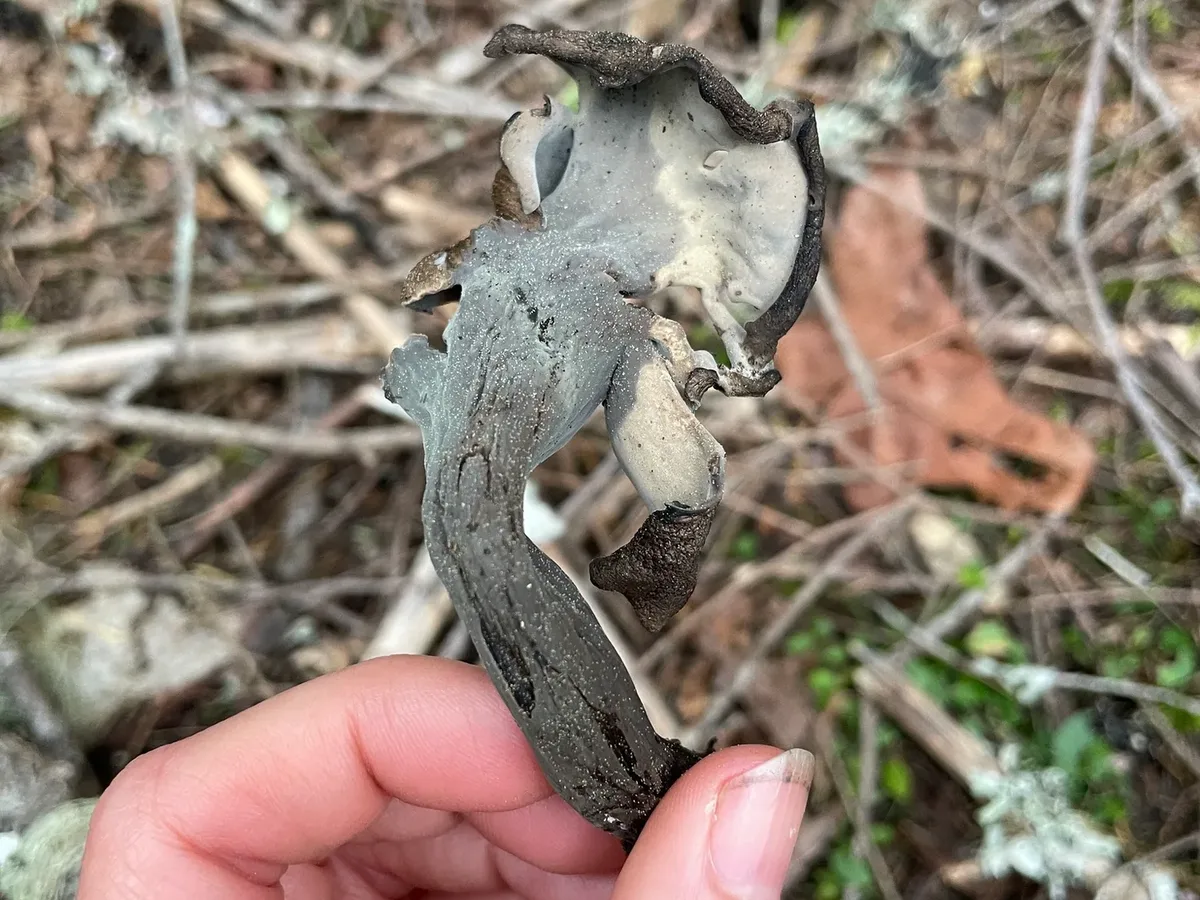
The outer surface is the fertile one, where the spores are produced. It is paler - medium grey to light grey-brown - and smooth to finely wrinkled or ridged with very shallow, blunt false veins, nothing like the sharp blade-like gills of an Agaricus or the forked gills of a chanterelle.
Colouration shifts with moisture and age: freshly emerged fruitbodies in wet weather are a deep charcoal grey, almost black, while older or drying specimens fade to ash-grey or pale grey-brown at the margins.
The flesh is thin, grey-black, pliant, and tough enough to handle without crumbling. When sliced lengthwise the hollow centre is confirmed immediately - there is literally nothing inside.
Spore print is white to very pale cream, deposited on the outer (lower) surface of the funnel walls.
Where & when it grows
Habitat
Black trumpet is a mycorrhizal species: the mycelium lives intertwined with the root tips of its tree partners in a mutual exchange. The fungus receives sugars photosynthesised by the tree and in return delivers water and mineral nutrients - particularly phosphorus - that the tree's roots alone cannot efficiently gather from the soil.
In the Pacific Northwest, the primary partners are Douglas-fir (Pseudotsuga menziesii) and tanoak (Notholithocarpus densiflorus); in northern California the range of hosts expands to include various true oaks (Quercus spp.).
The partnership is long-lived: the same network of mycelium can persist in the soil for decades, fruiting in the same general spots year after year as long as the host trees remain healthy.
Good hunting ground has a characteristic feel:
- north-facing hillsides or ravine edges where direct sun rarely reaches the ground
- a thick moss layer over moist mineral soil or deep leaf litter
- a canopy dense enough to keep summer dryness at bay for at least a few months
Established patches tend to be loyal: if you find them one winter, mark the spot carefully and return the next year within the same rainfall window.
Because the fruitbodies are almost perfectly camouflaged against dark wet soil and decomposing leaves, experienced foragers develop a spatial habit of scanning at low angles rather than looking straight down, and of following the curve of a slope rather than walking perpendicular to it.
When
In the Pacific Northwest, Craterellus calicornucopioides is a winter mushroom, emerging from November through March and peaking roughly in December and January, once cumulative autumn rainfall has thoroughly saturated the soil.
It is not triggered by a single rain event. Sustained moisture over multiple weeks - typically at least 25 mm over a 14-day window - is what finally prompts the mycelium to push fruitbodies to the surface.
Soil temperatures between roughly 4 °C and 15 °C define the comfortable range. Below that threshold the ground may freeze and fruiting pauses, while prolonged warmth above 15 °C suppresses it entirely.
During dry spells within the season, visible fruitbodies may shrivel and appear dead, but the mycelium below is simply waiting; renewed rain can swell them back or trigger a fresh flush from the same patch within a week to three weeks.
The seasonal window is narrow compared to autumn chanterelles or spring morels, and a warm, dry winter can compress it dramatically. In some years fruitbodies persist into early April if cool wet weather extends the season, but by mid-March most Pacific Northwest populations are finishing.
The best single-day conditions are two to three weeks after a prolonged rain event, on a mild, overcast winter day when the soil is still fully saturated.
How it grows
Fruitbodies nearly always emerge in groups - from loose scattered clusters to dense troops where dozens of funnels crowd together so tightly their margins touch. The growth is gregarious: the mycelium forms a radiating network under the duff, and multiple fruiting points fire simultaneously when conditions align.
Finding one or two fruitbodies is a reliable cue to drop to a crouch and scan slowly in a widening radius. Patches regularly hold 20-100 fruitbodies within a few square metres.
Emergence itself happens over a span of days. Early fruitbodies are tiny dark pins barely breaking the soil surface, expanding over 3-7 days into full funnels depending on temperature.
Once emerged, fruitbodies are long-lived by mushroom standards - a healthy specimen can persist for two to three weeks in cool, moist conditions without deteriorating significantly, making repeated visits to a productive patch worthwhile. Fruitbodies that dry out in place become papery and light but do not rot quickly; renewed rain can partially rehydrate them.
The spore load released from even a small colony is substantial. The outer fertile surface continuously sheds white spores, which drift down onto surrounding soil and leaf litter, potentially seeding new mycorrhizal associations in the roots of nearby host seedlings.
Fruiting conditions
Cool-season fruiter in the Pacific Northwest, flushing through the wet winter months after sustained autumn/winter rains.
Look-alikes
Craterellus calicornucopioides has no dangerous lookalikes in the Pacific Northwest. Its hollow, seamless funnel structure, dark inner surface, pale wrinkled outer surface, and complete absence of true gills are collectively unique among local species.
The closest visual relatives are other Craterellus species. The closely related Pacific golden chanterelle (Cantharellus formosus) is orange, not grey-black, and immediately distinguishable.
The eastern North American black trumpet (Craterellus fallax) and the European (Craterellus cornucopioides) are both similarly safe edibles; they are simply not the species present in PNW forests. No toxic or deadly species in the region mimics the hollow all-black funnel form.
The Devil's urn (Urnula craterium) is superficially similar in shape but is a spring ascomycete with a distinctly cup-like rim structure rather than a true trumpet flare, grows on buried wood rather than soil, and is not known to occur in the Pacific Northwest.
Beginning foragers who remain uncertain should confirm the key structural feature: cut a fruitbody in half lengthwise and verify that the interior is completely hollow, with:
- no solid stem
- no partial veil remnant
- no ring scar
In the kitchen
Picking & cleaning
Black trumpets are best harvested by pinching the base and twisting gently to free the narrow stalk from the duff, or by snipping with scissors just above ground level.
Because the fruitbody is hollow its entire length, debris - soil, conifer needles, decaying leaf fragments - falls easily into the funnel and collects at the narrow base. The most reliable cleaning method is to slit each fruitbody lengthwise with a small knife or thumbnail before putting it in the basket: debris falls out immediately, and any slugs or insects lodged in the tube are exposed.
A mesh bag or open basket is preferable to a sealed container: the thin walls bruise and sweat if packed too tightly, and good airflow prevents the collapse that causes grey-black staining of other mushrooms in the bag. Gloves are unnecessary but useful on cold wet mornings.
Because colonies recur in the same spots annually, the forager's interest is in leaving the mycelium undisturbed. Avoid:
- digging
- treading heavily on the root zone around host trees
- pulling fruitbodies so hard that the mycelial threads are torn from the soil rather than cleanly detached
A soft footprint and a light hand keep the patch productive for years.
Cooking
Black trumpet is considered one of the finest flavoured mushrooms in the Pacific Northwest, prized for a deep, earthy, slightly smoky taste with faint floral and truffle-like undertones - qualities that intensify dramatically when the mushroom is dried.
Fresh fruitbodies are thin-walled and cook quickly: a hot dry pan for 2-3 minutes to drive off surface moisture, then butter or oil and brief sautéeing is the classic approach. They pair exceptionally well with cream sauces, pasta, risotto, and eggs. Because they are small, hollow, and already relatively thin, they need no chopping for most preparations.
Drying is where black trumpets really distinguish themselves: the dehydration process concentrates the volatile aromatics and produces a product with an almost truffle-like intensity. Dried at low heat (50-55 °C) until fully brittle, they reconstitute well in warm water or wine for sauces, or can be ground into a fine dark powder used as a finishing seasoning on fish, pasta, potatoes, or scrambled eggs - a pinch of the powder over a finished dish delivers remarkable depth.
Storage:
- Dried powder keeps for 12-18 months in a sealed jar away from light.
- Frozen fruitbodies (ideally pre-sautéed briefly) hold well for 3-6 months.
Their dark colour stains pale sauces and risottos grey-black, which some cooks find dramatic and others avoid by adding them late or keeping them as a garnish; the colour does not affect flavour.
Good to know
Craterellus calicornucopioides is consistently rated a choice edible and carries no known toxins. It should always be cooked before eating - like the majority of wild mushrooms, it contains chitin and various heat-sensitive compounds that can cause mild gastrointestinal discomfort in sensitive individuals if consumed raw or undercooked.
Thorough cooking, which requires only a few minutes in a hot pan, resolves this entirely. There are no reports of allergic reactions specific to this species beyond the general low-level sensitivity some individuals show toward any new wild mushroom.
As a practical rule when eating any species for the first time, consume a modest portion and wait 24 hours before eating a larger quantity.
People with known mushroom sensitivities or on anticoagulant medications should consult a doctor before adding concentrated dried black trumpet (a powerful antioxidant-rich seasoning) to their regular diet, though clinical reports of interactions are not documented for this species. The dried powder has an intensely rich flavour and is typically used in small amounts as a seasoning, which limits total ingestion per serving.
The white spore print, hollow structure, and complete absence of a ring or volva confirm identity; none of the deadly Amanita species even remotely resemble this funnel form.
A reference guide - never an edibility guarantee. When in doubt, leave it out.