American matsutake
Tricholoma murrillianumsyn. Tricholoma magnivelare, Armillaria ponderosa
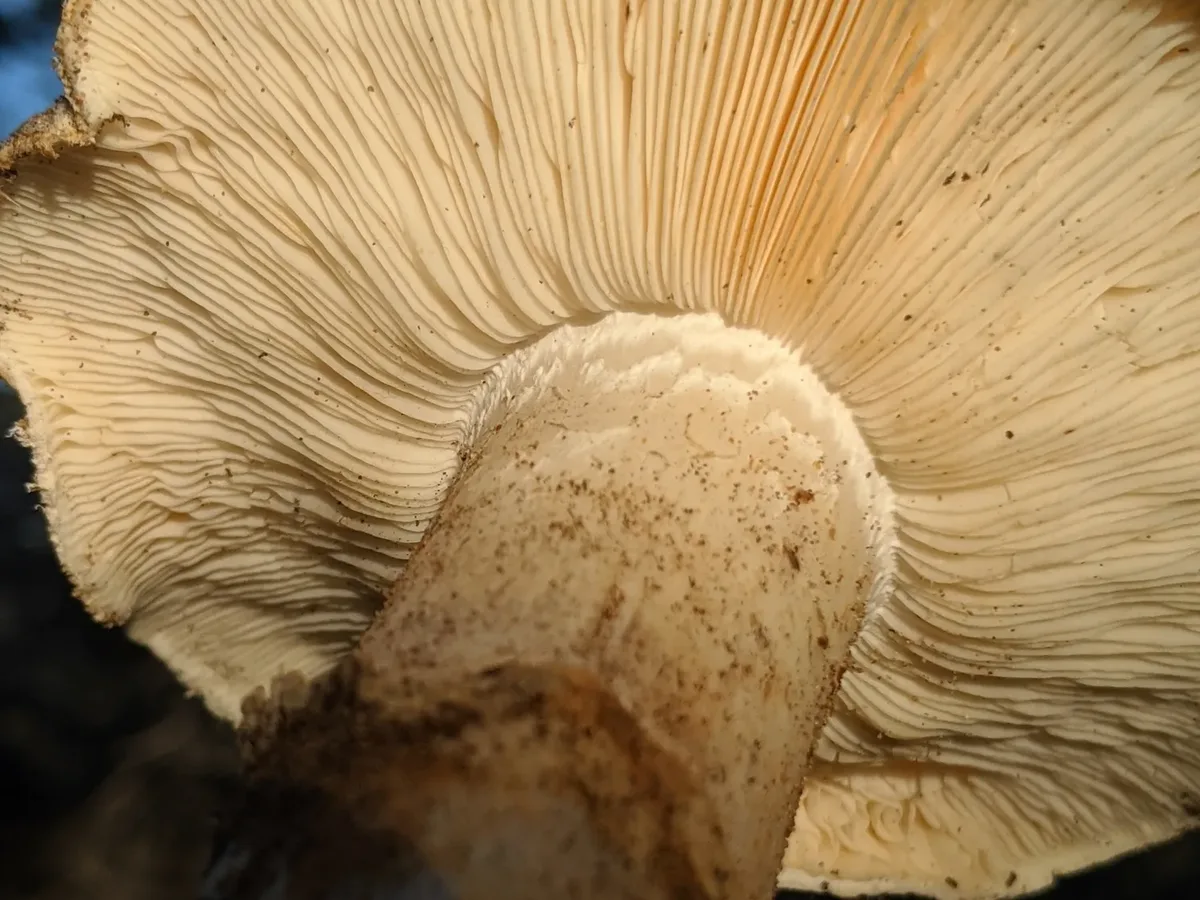 Alex Heyman (CC0)
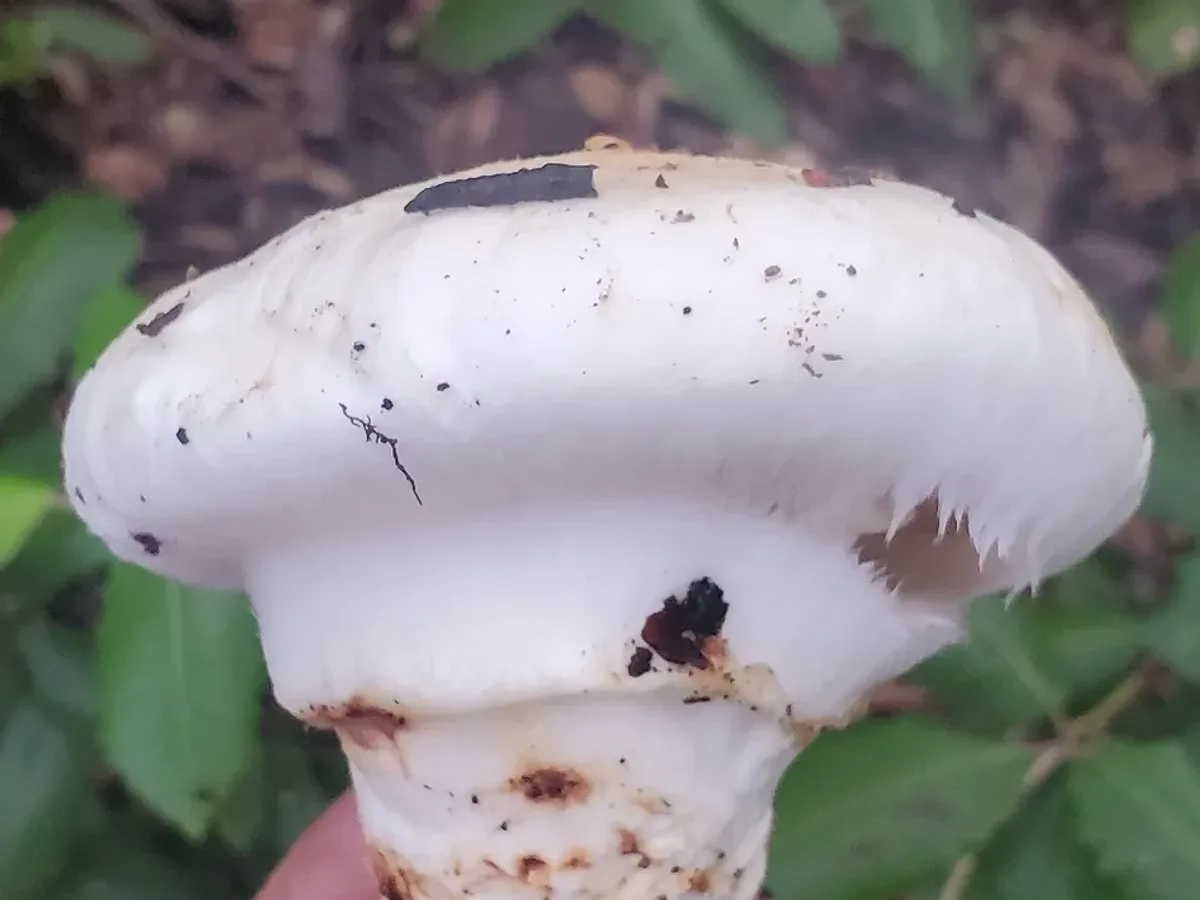 © Eric Austin (CC BY)
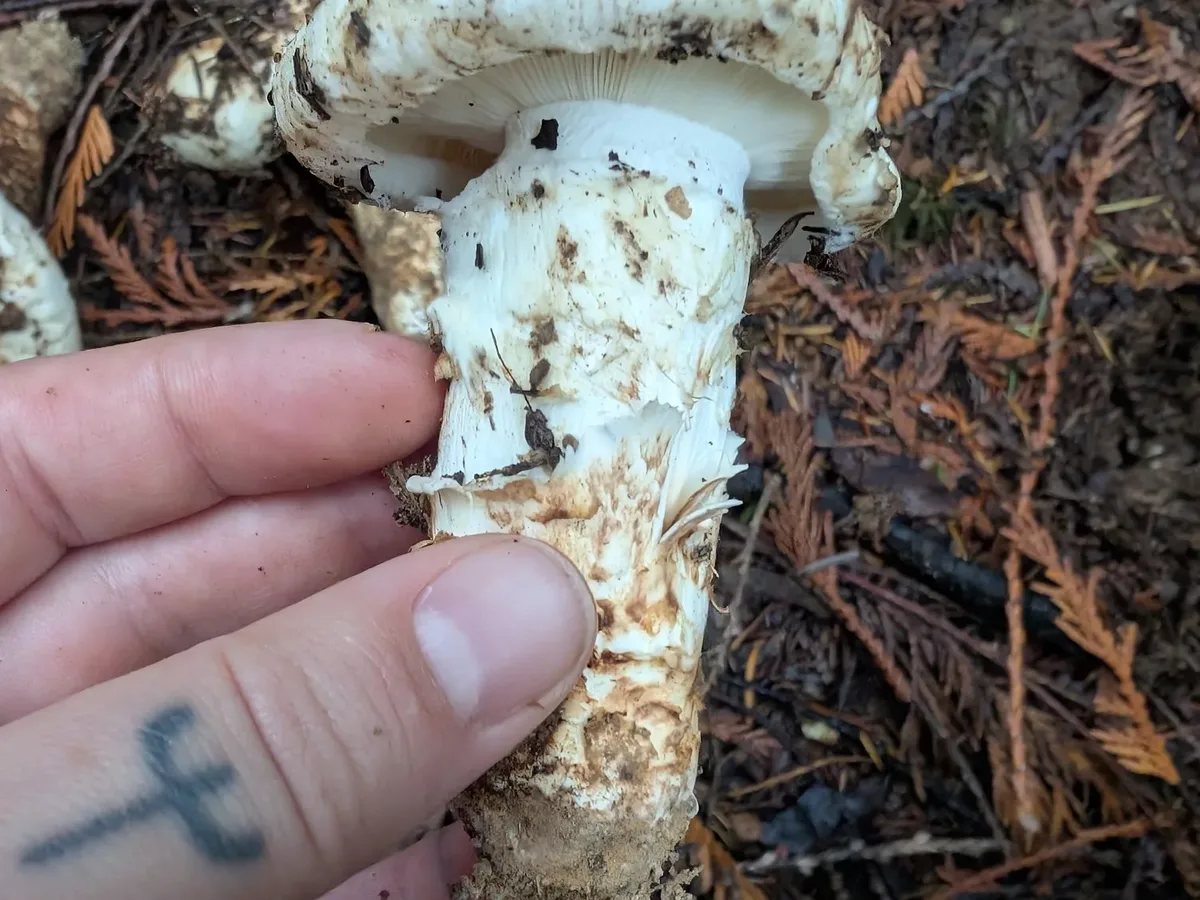 © Simone Littledale (CC BY)
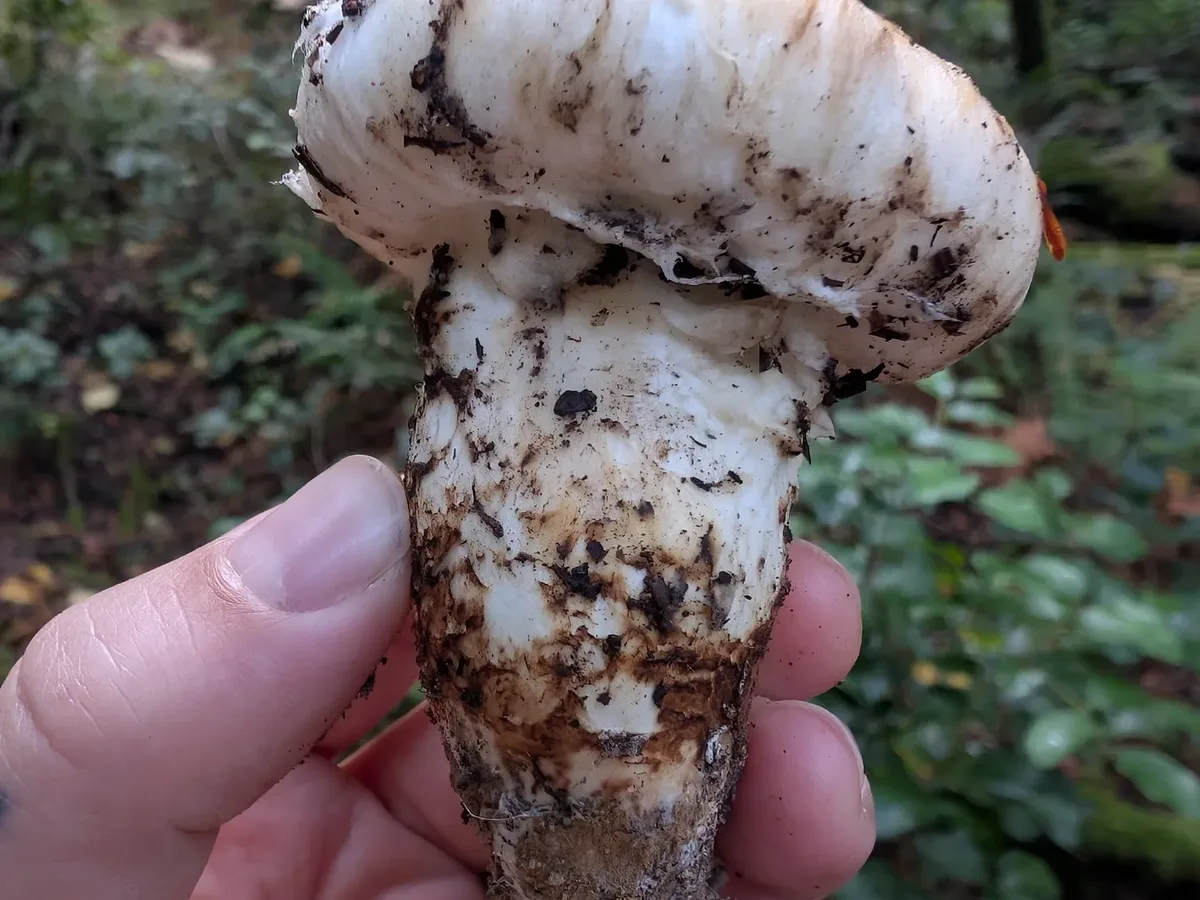 © Simone Littledale (CC BY)
 © Eric Austin (CC BY)
 © Eric Austin (CC BY)
 © reagan peschke (CC BY)
 © reagan peschke (CC BY)
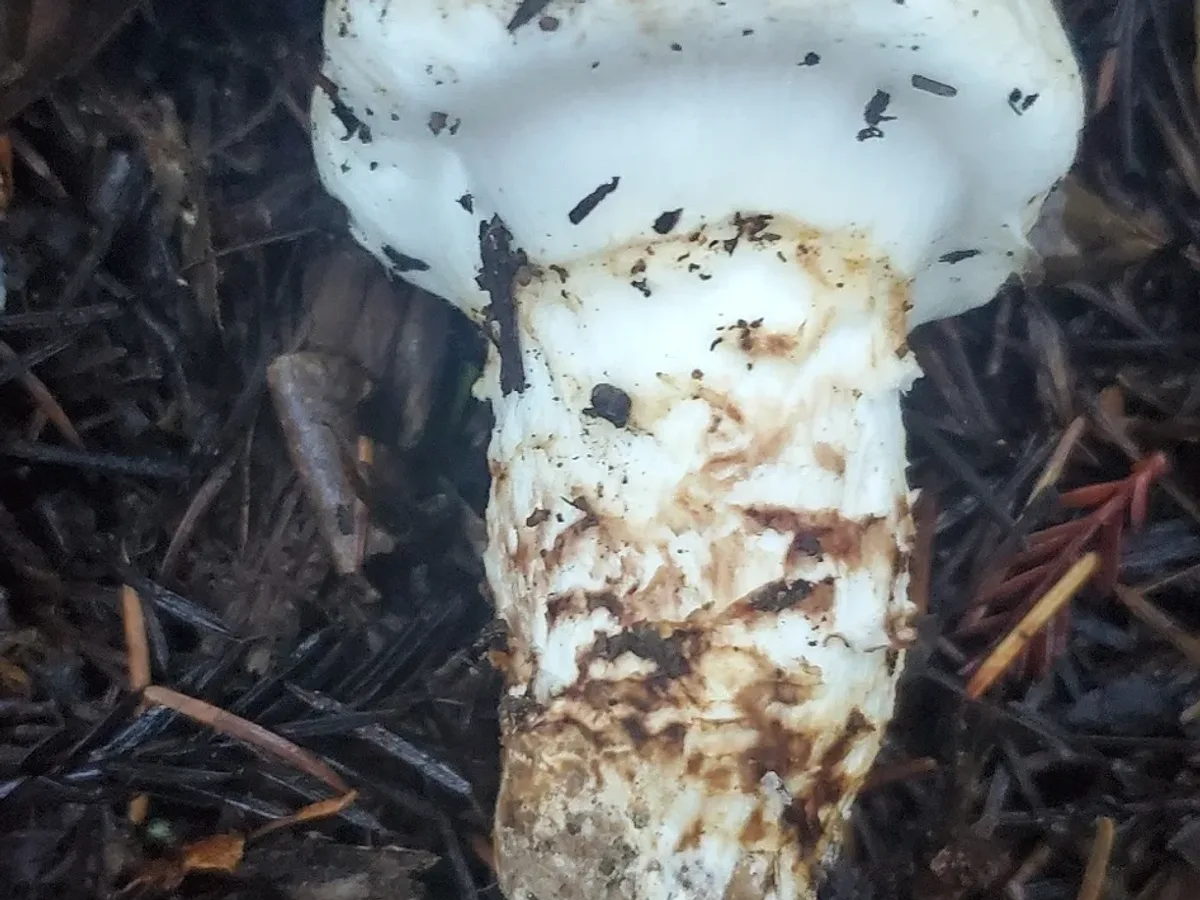 © Eric Austin (CC BY)
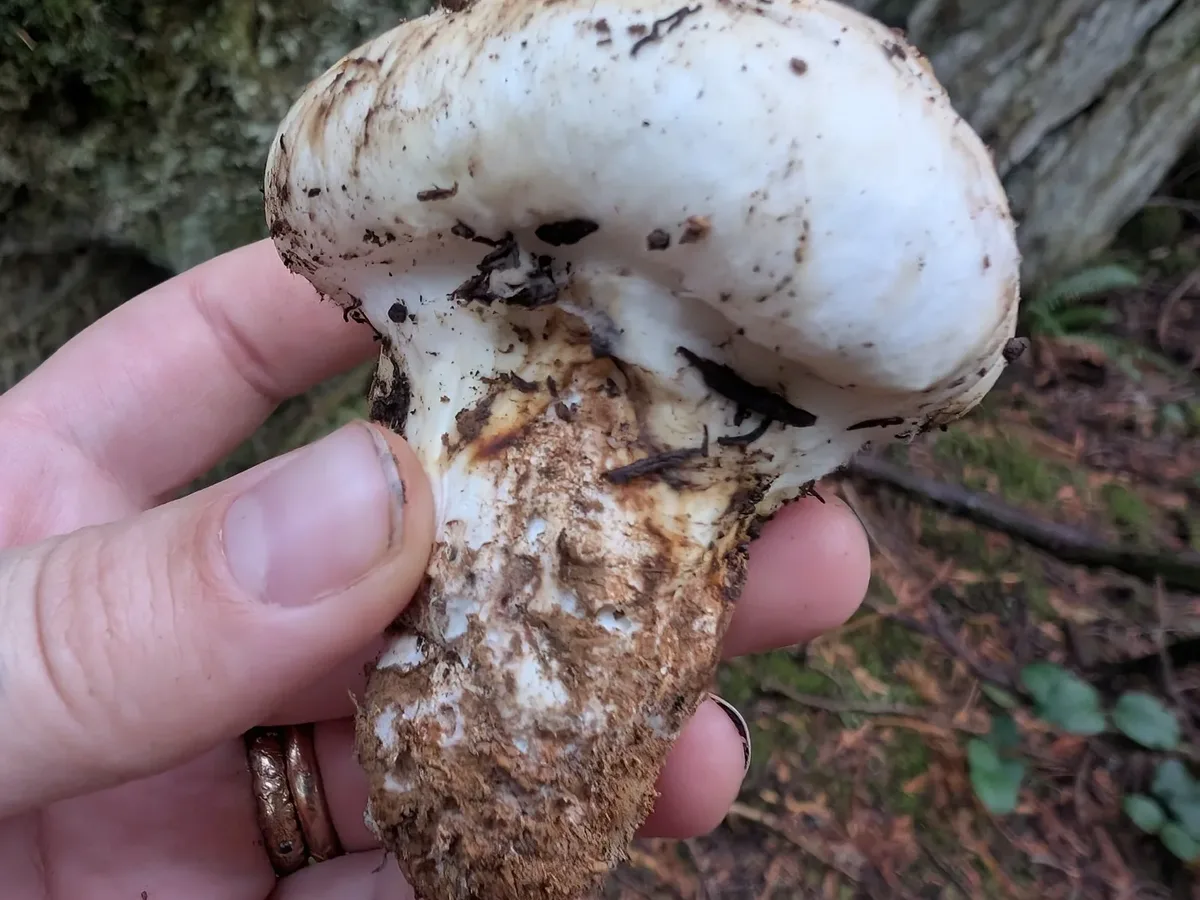 © Simone Littledale (CC BY)
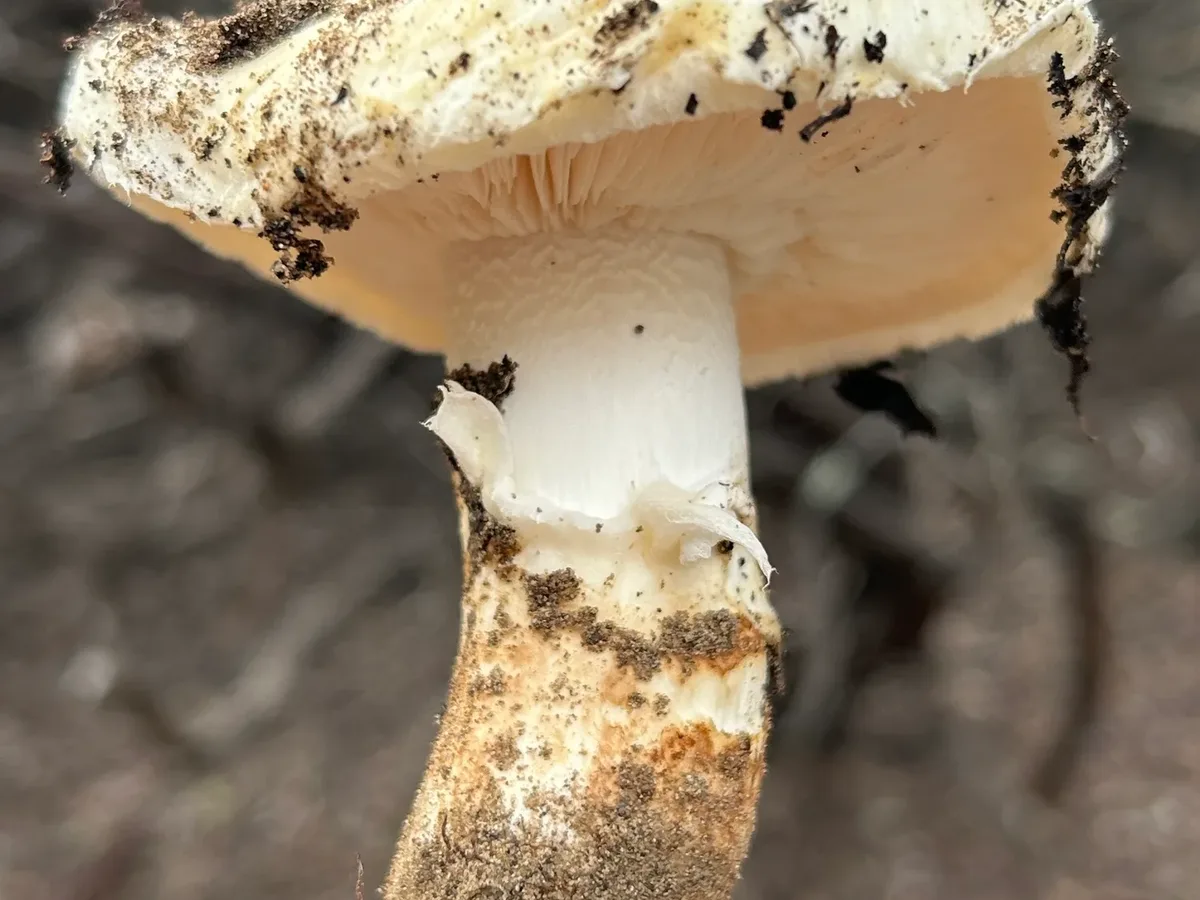 Alex Heyman (CC0)Alex Heyman (CC0)© Eric Austin (CC BY)
One of the best mushrooms you can bring home - once you are certain of the identification.
Never eat a mushroom you are not 100% sure of - check the look-alikes below, and always cook wild mushrooms.
How to recognise it
Tricholoma murrillianum is one of the most structurally imposing mushrooms in the Pacific Northwest forest.
Cap
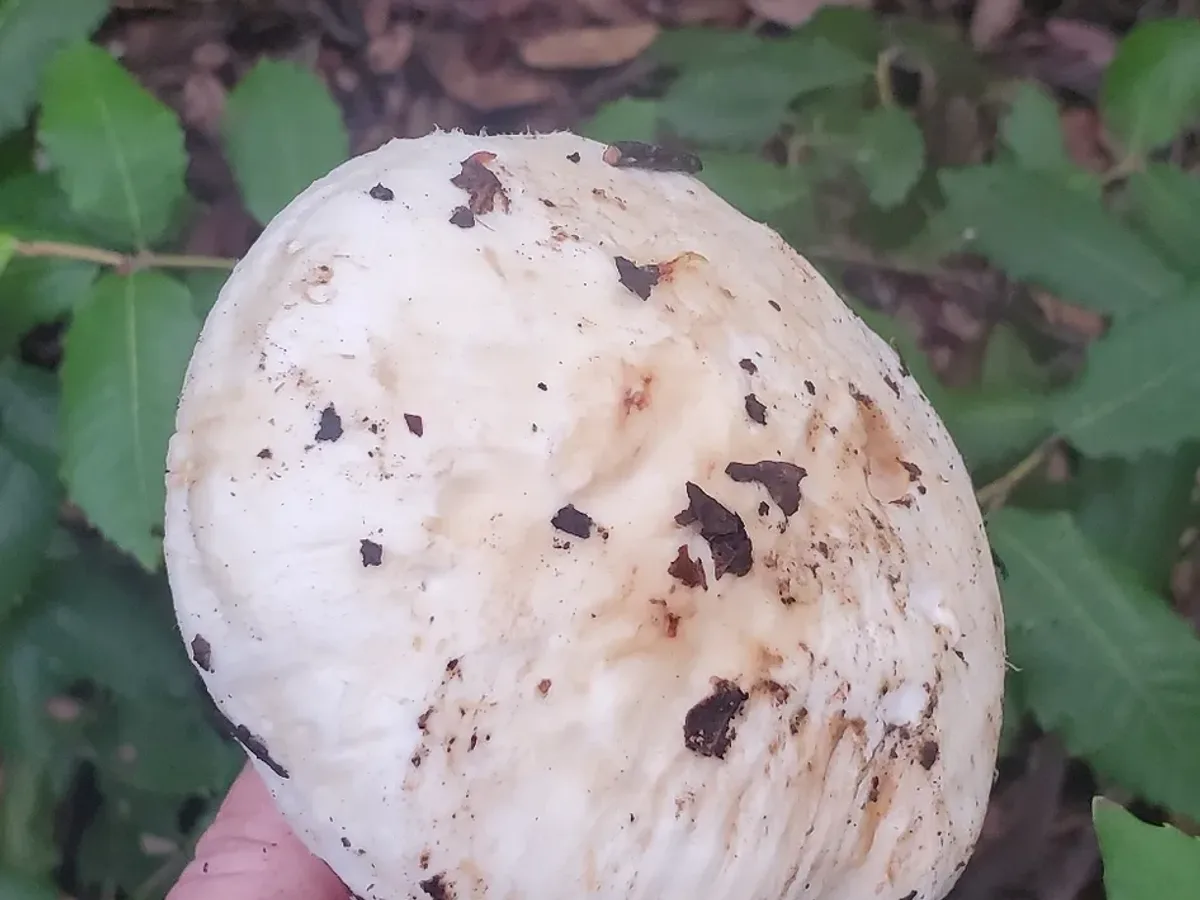
The cap begins as a tightly closed hemisphere, its surface smooth and chalky white, before expanding to a broad convex plane that may reach 20 cm across. As the cap opens, ingrown fibres and scales in warm rust and tobacco brown emerge from beneath the white surface, arranged in loose concentric whorls that intensify toward the margin.
Flesh
The flesh is extraordinarily dense and white throughout, firm to the point of resistance when cut, and it stains faintly brown on prolonged exposure to air - a sign of phenolic oxidation in the tissue.
Gills
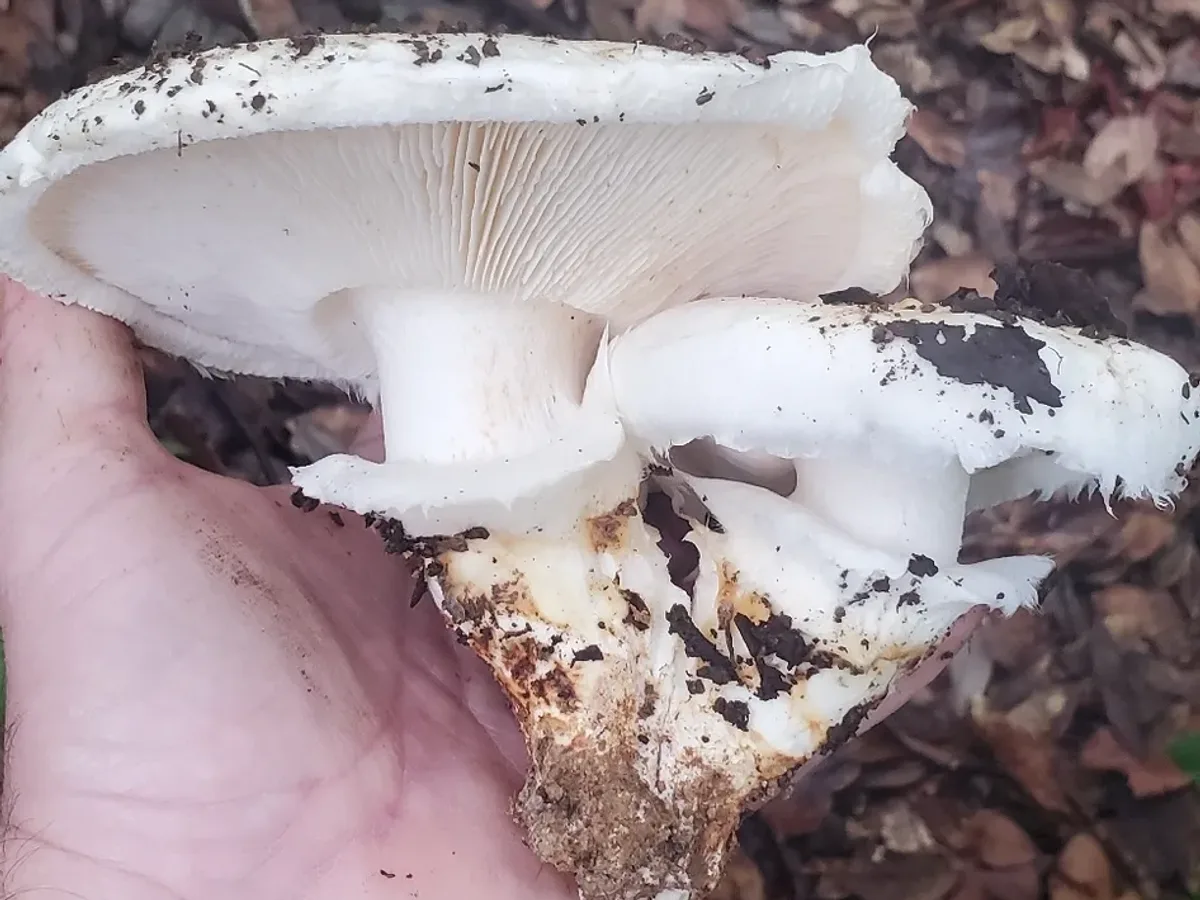
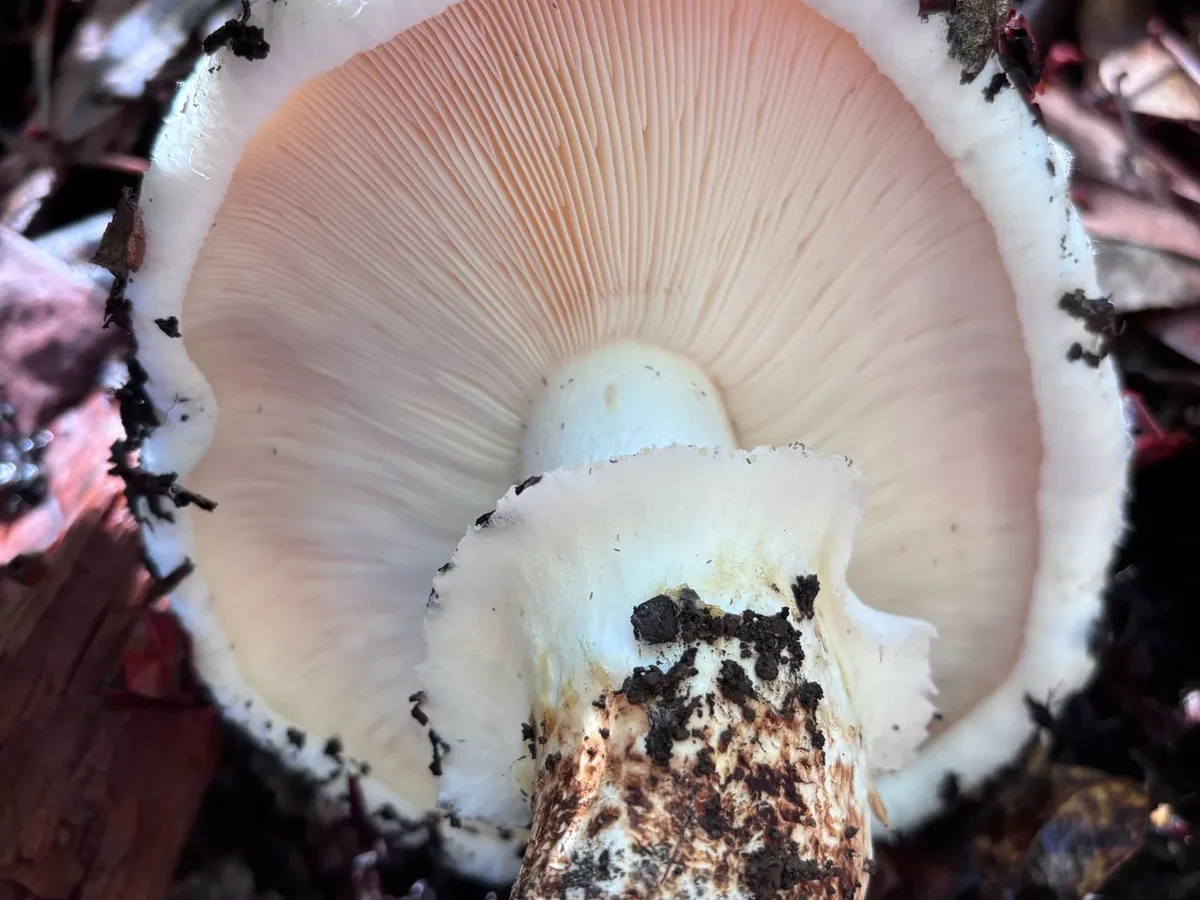
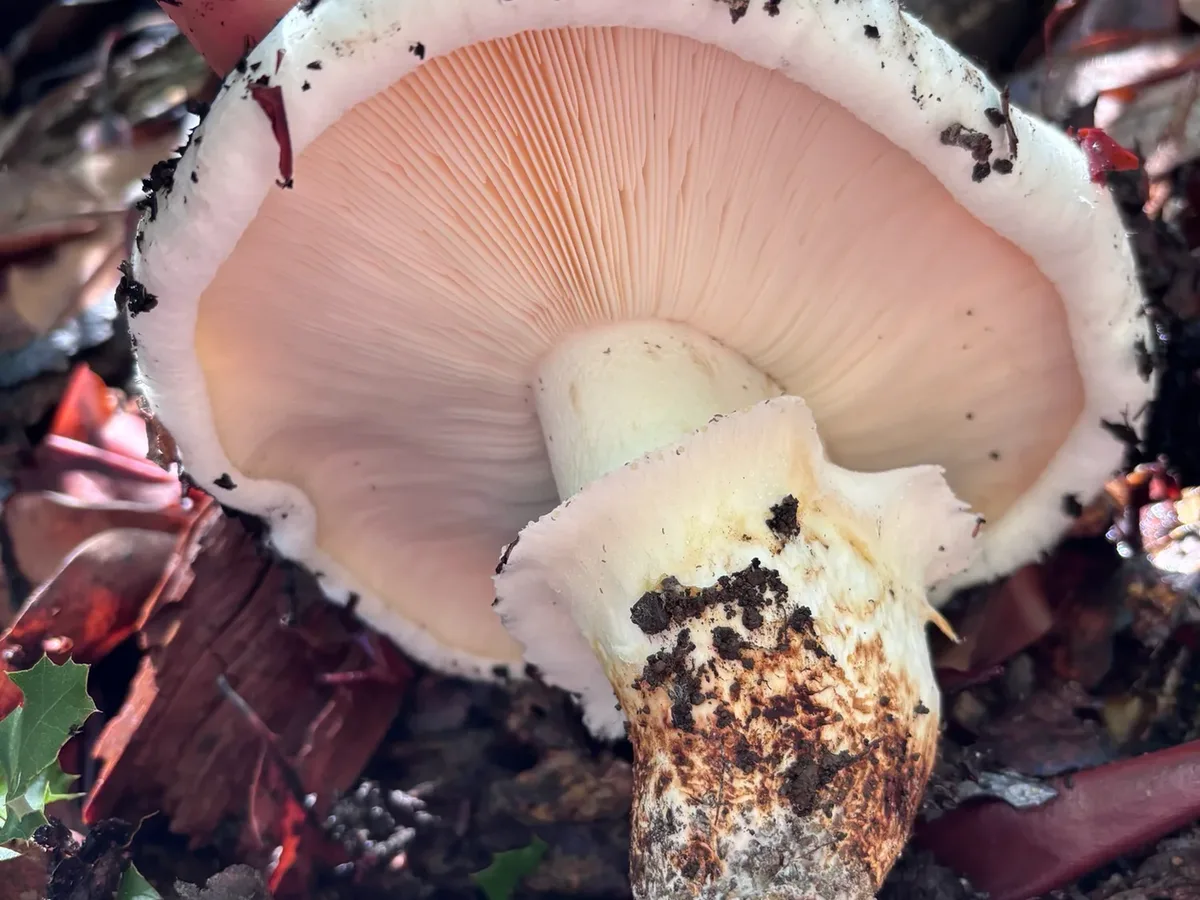
The gills are tightly packed, white to cream, adnate to sinuate where they meet the stem, and they too develop tan to brown staining as the fruitbody matures.
Stem
The stem is its own marvel: thick, white, and clubbed at the base, it commonly descends 5-15 cm into the duff before its pointed tip enters the mineral soil, buried so deeply that the cap alone is visible above the litter.
Near the apex sits the most recognisable structural feature - a thick, double-edged ring, the remnant of the partial veil that once enclosed the gills. Above the ring the stem surface is smooth; below it, the surface is sheathed in brown fibrous scales.
The spore print is white.
Smell & taste
The defining character, reported across every culture that harvests this mushroom, is the aroma: a warm, resinous, spicy-cinnamon smell with underlying earthiness, completely unlike any other forest mushroom. It permeates the surrounding needle duff and can sometimes be detected before the fruitbody is even visible.
Where & when it grows
Habitat
The matsutake's entire existence is built around an intimate, obligate ectomycorrhizal partnership with its host trees. The fungus wraps the finest roots of pines, firs and hemlocks in a dense sheath of fungal tissue - the Hartig net - through which it trades mineral nutrients and water drawn from a wide swath of soil in exchange for photosynthetically fixed carbon it cannot produce itself.
This is not a loose association: without its tree host the matsutake cannot form fruitbodies, and efforts to cultivate it commercially have failed entirely because the relationship cannot yet be replicated in controlled conditions.
In the Pacific Northwest it associates most strongly with lodgepole pine (Pinus contorta) and ponderosa pine, but also with Douglas fir, western hemlock, tanoak, Pacific madrone and manzanita.
The soils it prefers are sandy, coarse-textured, and naturally nutrient-poor - the kind of lean ground where competition from other fungi is reduced and the deep taproot of a pine can still thrive. Along the Oregon coast this translates to stabilised sand dunes colonised by shore pine, Sitka spruce and hemlock.
The outward-growing mycelial network, called the shiro ("castle" in Japanese), advances a few centimetres per year, quietly mapping the forest floor as an arc that can persist for decades.
Old shiro in Japanese Tricholoma matsutake forests have been documented for over a century; there is every reason to think Pacific Northwest populations are similarly long-lived. In dry years the shiro simply waits, alive but dormant in the mineral soil, until rain and cooling temperatures signal that the season for fruiting has returned.
When
Fruiting is tightly keyed to two conditions arriving together: sustained autumn rainfall and falling soil temperatures. After the long dry Pacific Northwest summer the soils are parched, and the matsutake's shiro sits dormant through July and August.
The season typically opens in September at high-elevation sites - mountain slopes above 900 m in the Cascades and Sierras - where nights cool first and the first significant rains arrive earliest.
As autumn deepens, the fruiting front descends in elevation and moves westward toward the coast, reaching low-elevation sand dune sites along the Oregon and Washington shoreline by October and November.
In mild years with moderate rainfall into December and January, fruitbodies continue to appear at coastal and southern sites well past the inland season's end.
The flush lag from significant rain to visible fruitbody is typically one to three weeks. A single autumn can yield several successive flushes if rainfall arrives in discrete pulses separated by drying intervals - each pulse recharges the shiro and triggers a new cohort of pins.
Frost shortens the season at high elevations; warm, dry intervals between rain events suppress it everywhere.
Experienced harvesters track weather data - 25 mm or more of rain over 14 days, soil temperatures between roughly 5 °C and 15 °C - and read the elevation gradient to stay ahead of the flush as it moves downslope through the season.
How it grows
Tricholoma murrillianum is strictly ectomycorrhizal and has never been successfully cultivated in commercial quantities; every matsutake sold in markets worldwide is wild-harvested.
The fruitbodies develop at the outer periphery of the shiro, where the advancing mycelium is contacting new root tips and soil volume. Individual mushrooms form singly or in scattered clusters, sometimes arranged in loose arcs that trace the edge of the underground ring.
A developing pin begins entirely buried in the duff and mineral soil - only the slight mounding of the litter surface (the "mushrump") betrays its presence. The stem elongates first, pushing upward through several centimetres of compacted needle litter before the cap begins to expand.
When freshly emerging, the partial veil tightly seals the gills in a smooth, unbroken cylinder; as the cap expands the veil tears, leaving the prominent fibrous ring.
Once exposed above the litter the cap can expand rapidly after rain, reaching full size in a few days, but the densely packed flesh resists decay far longer than most agarics - a mature matsutake in cool autumn air can remain firm and aromatic for a week or more after the veil tears.
The fruitbody's deep anchor in the soil is both structural and functional: the base of the stem, buried well into mineral ground, may be accessing moisture and mineral nutrients beyond the reach of surface competitors.
Fruiting conditions
Autumn-fruiting after sustained autumn rains and cooling soil; flushes typically appear one to three weeks after significant rainfall, first at higher elevations then lower and along the coast.
Handle with care
Toxin
Tricholoma murrillianum itself contains no known toxins and is safe when correctly identified. The danger is entirely attributable to its lookalike Amanita smithiana.
Amanita smithiana contains nephrotoxic amino acid derivatives - principally allenic norleucine (2-amino-4,5-hexadienoic acid, also called (S)-2-amino-4,5-hexadienoic acid) and the related compound 2-amino-5-hexenoic acid (norvaline derivative). These compounds cause acute tubular necrosis, destroying the proximal tubule cells of the kidney. They are heat-stable and not destroyed by cooking.
The mechanism differs from the amatoxins (liver-targeting) of the death cap: smithiana's toxins target the kidney specifically and directly.
There is no antidote; treatment is supportive and may require haemodialysis or, in severe cases, kidney transplant. The lag between ingestion and symptoms (see symptoms field) is long enough that the poisoning event is often not identified promptly, delaying treatment.
Symptoms
Poisoning by Amanita smithiana - ingested after misidentification as matsutake - follows a characteristic delayed pattern.
An initial gastrointestinal phase (nausea, vomiting, diarrhoea, abdominal cramps) begins within a few hours of ingestion and typically resolves within 24 hours, creating a false impression of recovery.
Two to six days after ingestion, signs of acute renal failure appear:
- Oliguria or anuria (dramatically reduced or absent urine output).
- Rising creatinine and blood urea nitrogen.
- Flank pain.
- General malaise.
Without treatment renal function may continue to deteriorate over one to three weeks. Documented Pacific Northwest cases have required extended haemodialysis; some patients have not fully recovered renal function.
The delay between ingestion and kidney failure is the most dangerous aspect of this poisoning pattern - it means the victim has often consumed multiple meals from the same collection by the time serious symptoms develop.
Look-alikes
The single most important lookalike is Amanita smithiana (Smith's amanita), a white, robust agaric that fruits in the same sandy pine and fir forest habitat during the same autumn weeks. It has caused documented cases of severe kidney failure in the Pacific Northwest, including hospitalisations requiring dialysis.
Distinguishing it from matsutake is non-negotiable before eating. The key characters in order of reliability:
- 1Odour - matsutake has an unmistakable powerful spicy-cinnamon-resinous smell that permeates the surrounding area. Amanita smithiana has no such odour when young; older specimens smell foul and fetid.
- 2Stem base - matsutake tapers to a blunt point with no basal bulb, cup, or volva; Amanita smithiana has a deeply rooting base and may show veil remnants or a partial volva.
- 3Flesh - matsutake flesh is extremely dense and white, staining faintly brown when cut.
- 4Gills - in matsutake the gills extend right to the stem (adnate to sinuate) and are crowded and white; inspect for the free gills and different insertion typical of Amanita.
- 5Ring - both species have a ring, but in Amanita smithiana the ring is skirt-like and may be positioned differently.
Catathelasma ventricosa (swollen-stalked cat) is another white, large, robust species in similar habitat; it has a distinctive double veil system and produces amyloid spores (blued by Melzer's reagent), and is not considered a dangerous lookalike - but it is only a mediocre edible and its presence reinforces the need to verify the matsutake odour before concluding identification.
Why it matters
The danger presented by Tricholoma murrillianum is not from the species itself but from misidentification with Amanita smithiana, which causes acute kidney failure and has hospitalised foragers in the Pacific Northwest who believed they were collecting matsutake.
Both species are large and white, fruit in the same sandy pine and fir forests in autumn, and can appear side by side in the same patch.
The matsutake's spicy-cinnamon odour is the most reliable single character: it is strong, distinctive, and entirely absent in Amanita smithiana (which smells foul when old). Never eat a specimen from this habitat that lacks the matsutake odour.
Check the stem base - matsutake tapers to a blunt point with no volva or basal cup; smithiana has a deeply rooting base.
The toxin (allenic norleucine) in smithiana is heat-stable and causes kidney failure with a delayed onset of two to six days, by which time the patient may have consumed more than one meal from the same misidentified collection. There is no antidote.
Harvest only specimens you have positively identified by odour, stem structure, and habitat, and if there is any uncertainty discard the entire collection.
White, robust, grows in the same habitat but causes acute kidney failure. Unlike matsutake it lacks the spicy odour (old specimens smell putrid), has a deeply rooting base and may bear veil remnants; matsutake has the spicy/cinnamon odour, firm brown-staining flesh, and a stem tapering to a point with no bulbous base or volva.
Has a double veil and amyloid spores; only a mediocre edible, not the prized matsutake.
In the kitchen
Picking & cleaning
Harvesting matsutake well requires patience and attention to what you leave behind as much as what you take.
- 1Begin by reading the needle litter for subtle mounds - a slight upward doming a few centimetres across is the first sign of a developing button.
- 2Use a small, narrow tool (on the Deschutes National Forest regulations restrict blade width to 2.5 cm and length to 45 cm) to part the duff carefully rather than raking it aside.
- 3Once the cap is located, clear a small area around the stem and then lever the mushroom out with a gentle straight-upward motion, working the tip free from the mineral soil without tearing the base.
Leaving behind the cut stub of a raked or broken stem invites bacterial rot that can kill the underlying mycelium. A 2006 scientific study on the effect of different harvest methods on matsutake shiro found that raking - pulling a toothed tool through the litter layer to locate buttons - measurably reduced fruiting for at least nine years after the disturbance. Twist-and-pull, properly done, leaves the shiro intact.
Buttons with a fully closed veil command the highest market grade and the finest flavour; once the veil tears and the gills are exposed the grade drops, but the aroma and taste remain excellent.
Back-fill the small excavation with the cleared duff to protect exposed mycelium. Many experienced harvesters work their patches over a season, returning every few days, picking what has sized up and leaving young pins to develop.
Cooking
The matsutake's cooking reputation in Japan - where wild Tricholoma matsutake is the most expensive edible mushroom in the world - translates almost directly to its North American counterpart, which carries the same aromatic compound (1-octen-3-ol combined with methyl cinnamate) that defines the flavour.
The cardinal rule is to protect the aroma:
- Never submerge in water.
- Never peel.
- Never combine with strong flavours that compete.
Wipe clean with a dry or barely damp cloth. Thin slicing - 3-5 mm - is traditional and correct, maximising surface area for aroma release during brief, high-heat cooking.
The classic preparations:
- Matsutake gohan (rice cooked with dashi, soy sauce, mirin and sake, with the mushroom added partway through steaming) is the single most celebrated preparation; the aroma infuses the rice without being cooked away, and the texture of the firm white flesh provides contrast to the grain.
- Dobin mushi - a delicate clear broth steamed in a small clay teapot with shrimp, chicken, ginkgo nut, mitsuba herb, and a squeeze of sudachi citrus - allows the aroma to perfume the broth and be inhaled as the lid is lifted, which is considered part of the experience.
- Direct grilling (yaki-matsutake): score the surface lightly, brush with soy and mirin, and grill over charcoal until just cooked through - the brevity of heat keeps the volatile aromatics from dissipating.
In North American kitchens, matsutake adapts well to European techniques as long as the heat is brief and the seasoning is light: a cream sauce or a pasta preparation where the mushroom is added at the last moment will carry the aroma into the dish.
Avoid long-braised or heavily spiced preparations - they bury what makes this mushroom worth the effort.
Good to know
Tricholoma murrillianum is a choice edible with no known toxins of its own, but it demands confident identification because it shares habitat with Amanita smithiana, a species that causes acute kidney failure.
Do not eat any large, white, robust autumn mushroom from pine or fir forests in the Pacific Northwest without positively confirming the spicy matsutake odour. This single character - the warm, resinous, cinnamon-spice smell - is strong, pervasive, and unlike anything produced by Amanita smithiana or any other lookalike. If the odour is absent, do not eat the mushroom.
In addition to the identification check:
- Wipe specimens clean rather than washing them (water strips the aroma and waterloggs the dense flesh).
- Avoid any specimen with insect damage deep into the stem base, which indicates advanced decay.
- The aroma can cause mild nausea or headache in sensitive individuals in enclosed spaces.
Commercial harvesting on US National Forest lands requires a permit; regulations vary by forest but the Deschutes NF rules on tool size and prohibiting raking are a useful benchmark.
When in doubt, compare with a confirmed reference specimen or consult an experienced local forager.
A reference guide - never an edibility guarantee. When in doubt, leave it out.