Yellowfoot
Craterellus tubaeformissyn. Cantharellus tubaeformis, Cantharellus infundibuliformis
 © Ian Manning (CC BY 4.0)
 © Neil O'Sidhe (CC BY)
 © Moe Meikle (CC BY)
 © Moe Meikle (CC BY)
 © Moe Meikle (CC BY)
 © Neil O'Sidhe (CC BY)
 © Katharine Khamhaengwong (CC BY)
 © Matthew Rozanoff (CC BY)
 © Matthew Rozanoff (CC BY)
 © Tero Karppinen (CC BY 2.0)
 © Auvo Korpi (CC BY 2.0)
 © Tero Karppinen (CC BY 2.0)
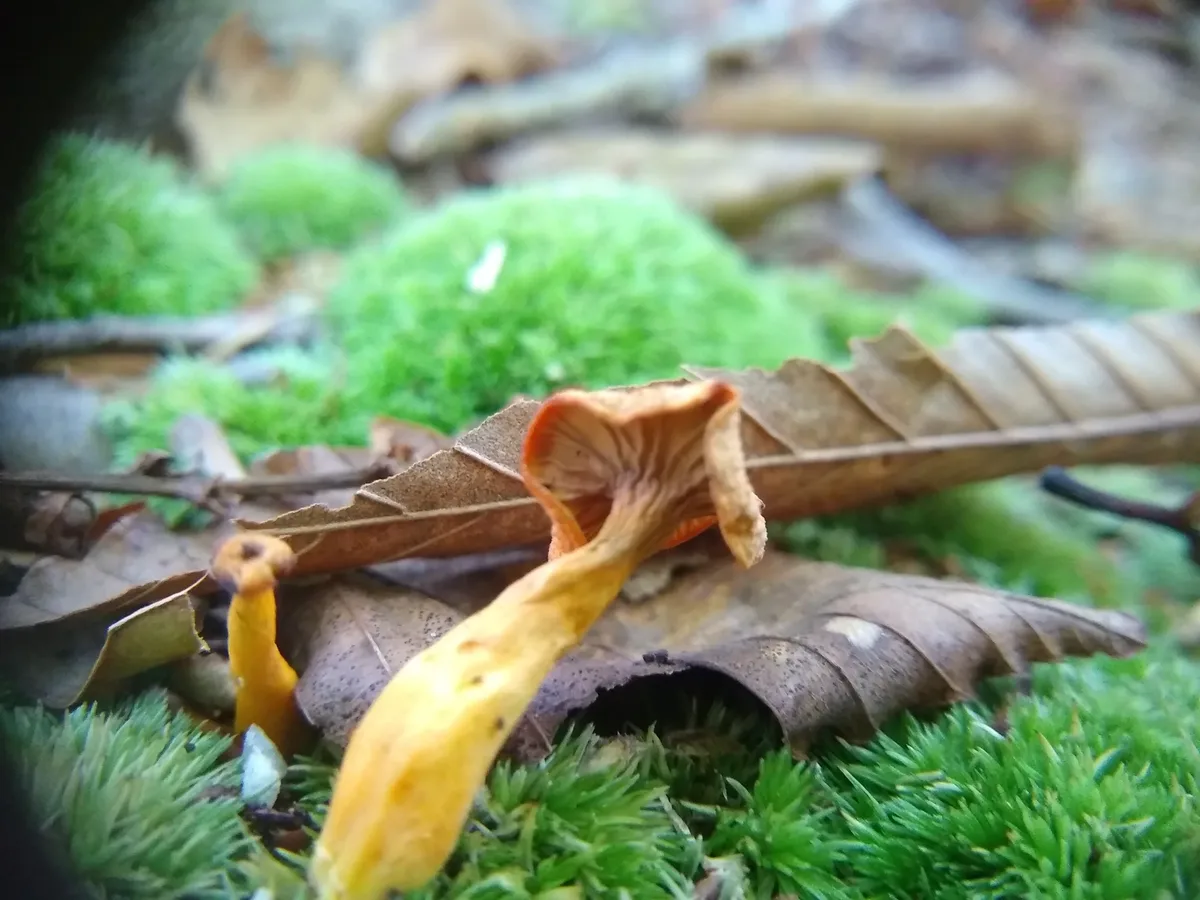 © Quinn Shemet (CC BY 4.0)
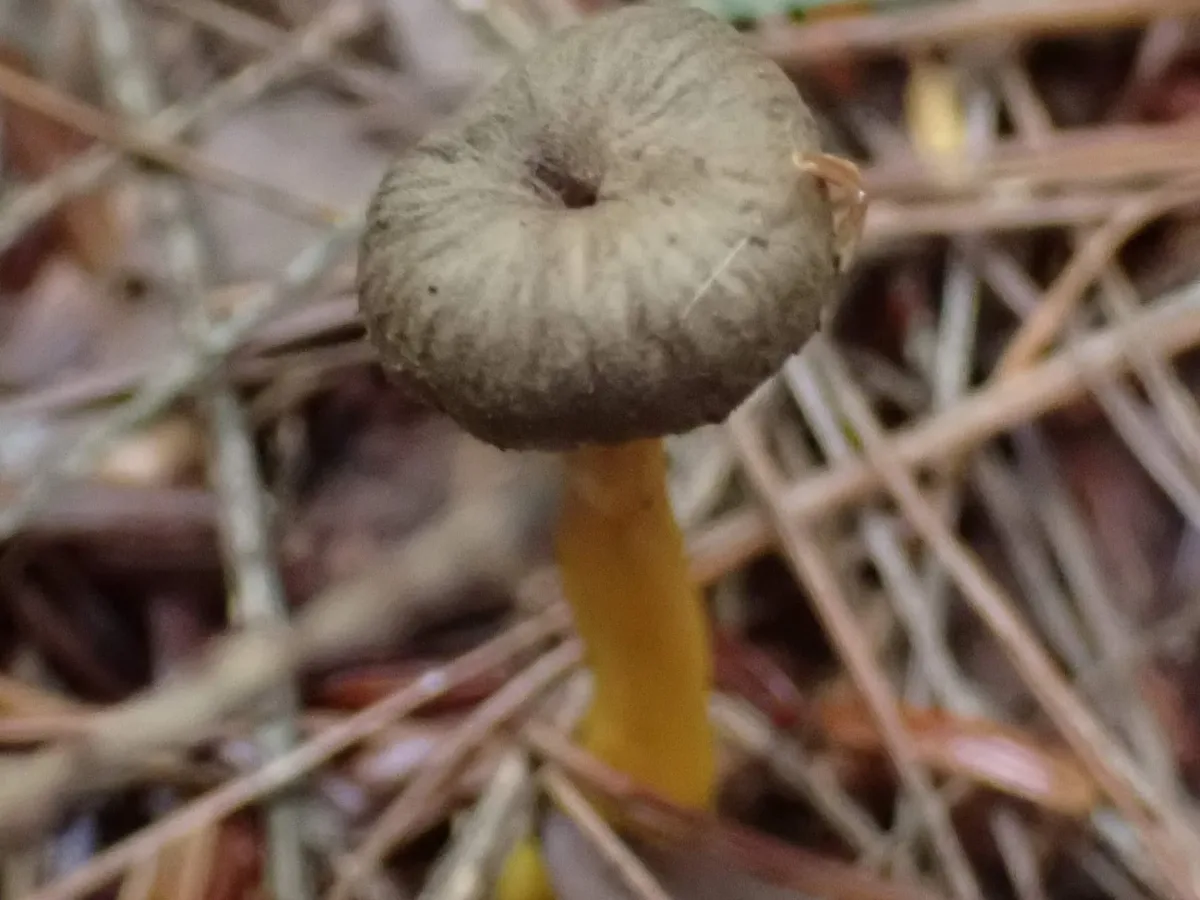 © Dominic McLean (CC BY 4.0)© Ian Manning (CC BY 4.0)© Neil O'Sidhe (CC BY)
One of the best mushrooms you can bring home - once you are certain of the identification.
Never eat a mushroom you are not 100% sure of - check the look-alikes below, and always cook wild mushrooms.
How to recognise it
Craterellus tubaeformis is a study in elegant economy.
Cap
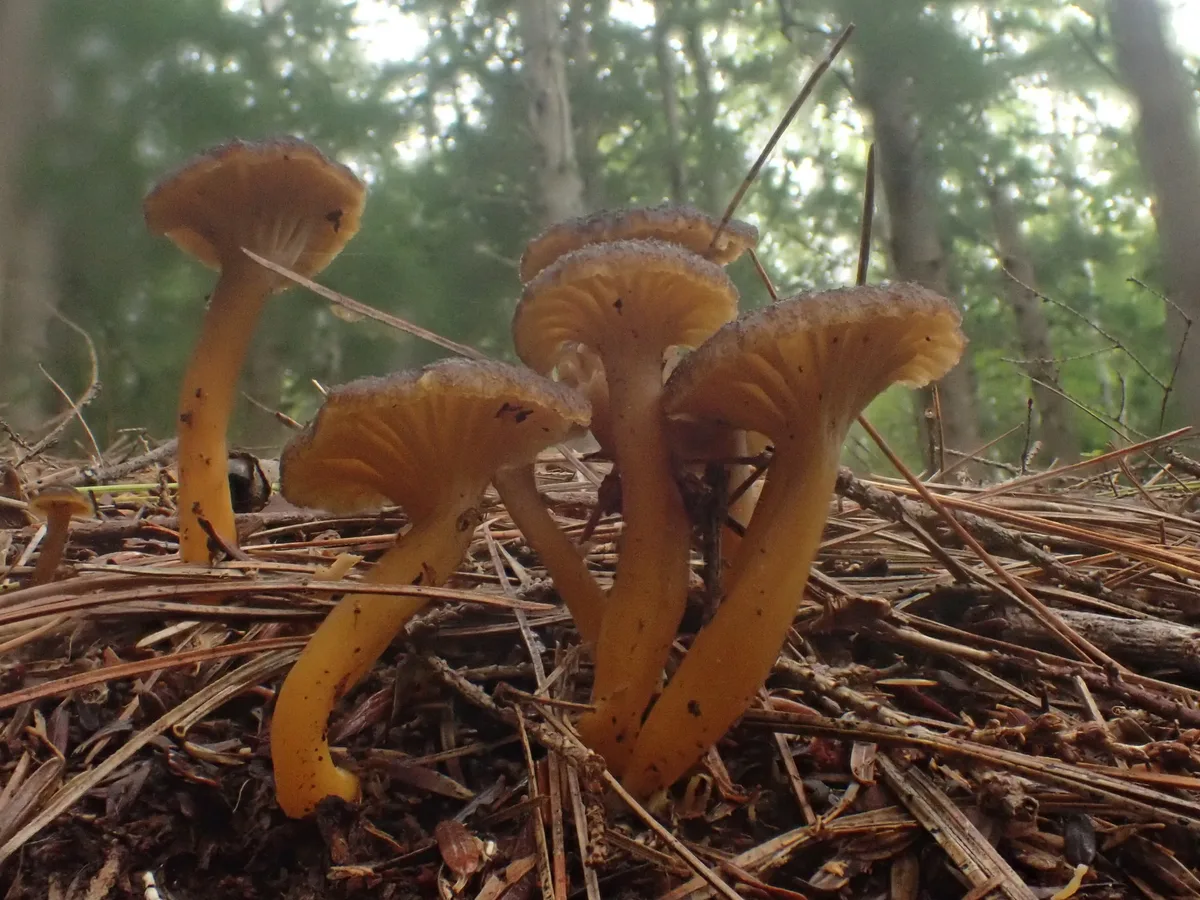
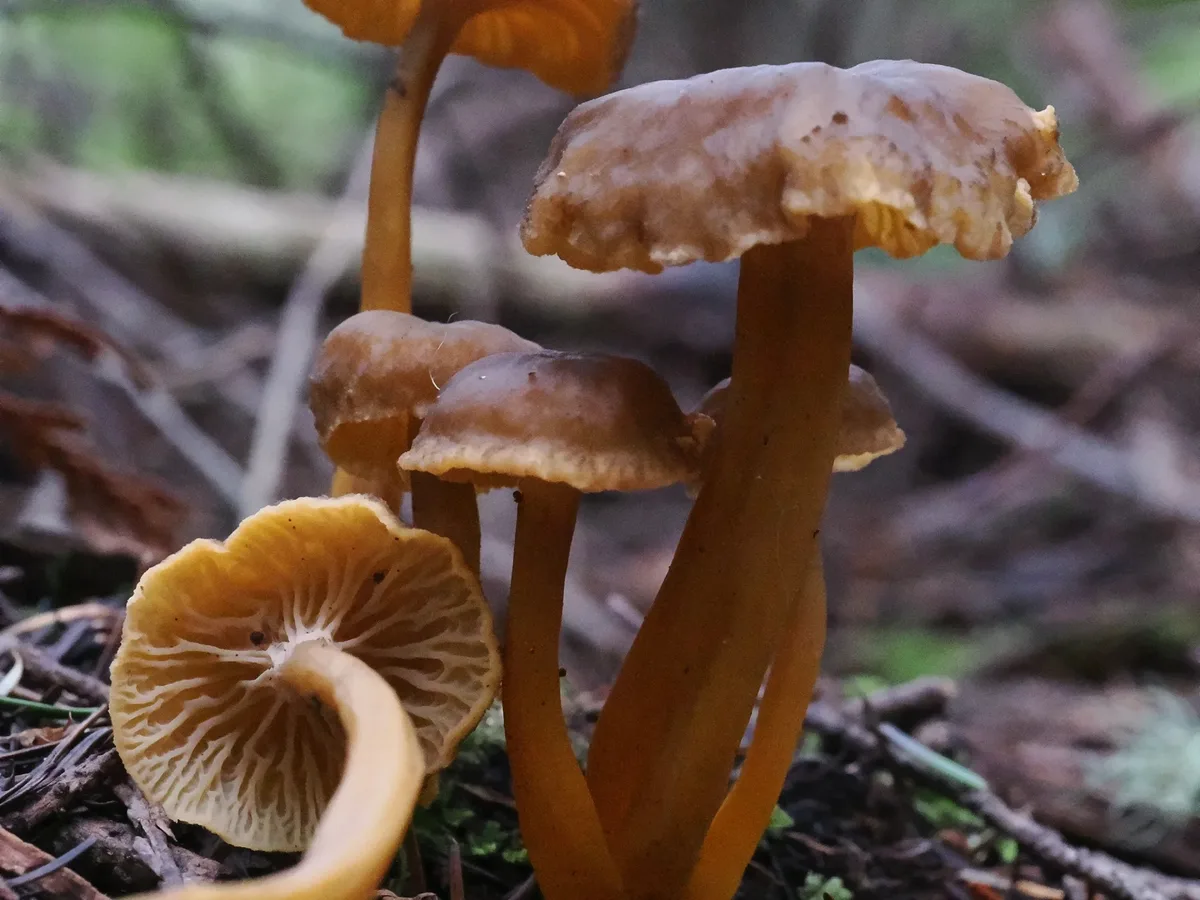
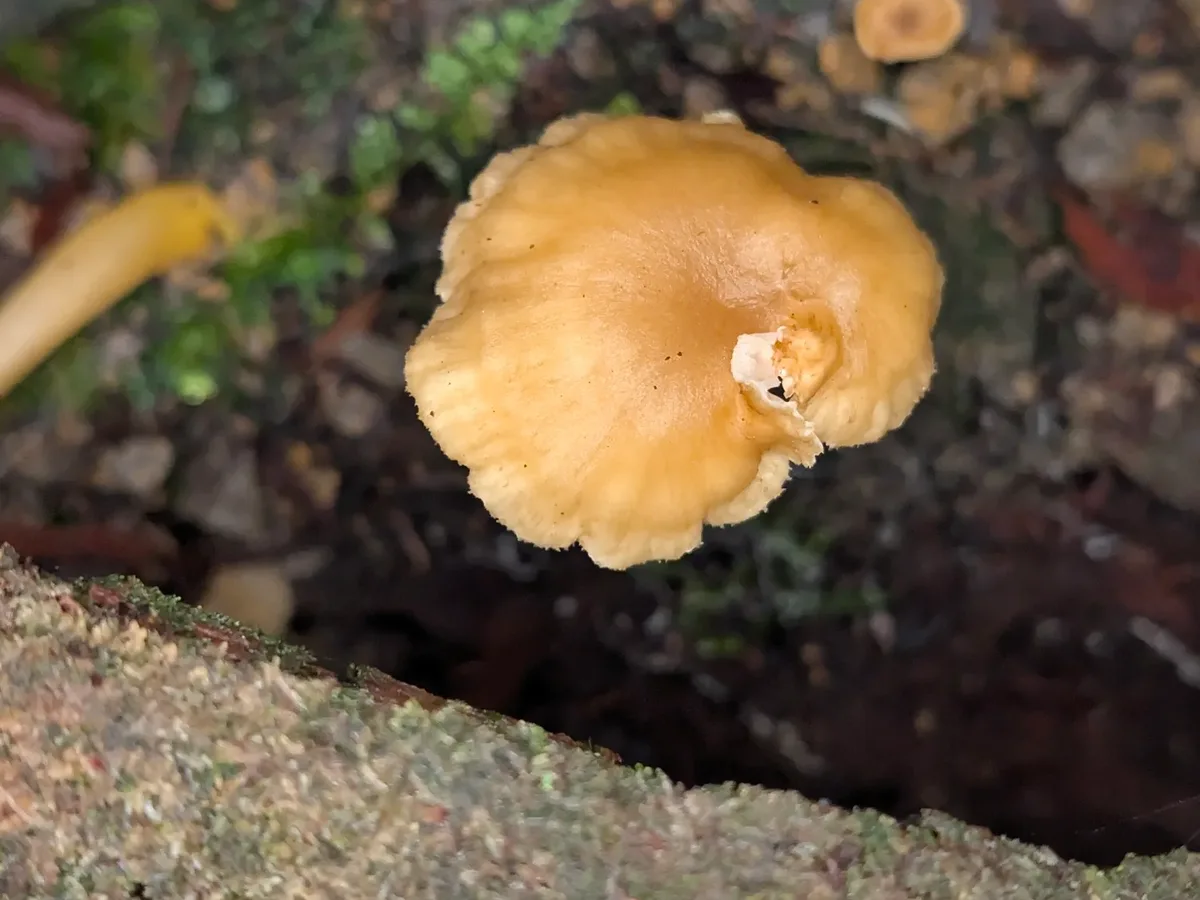
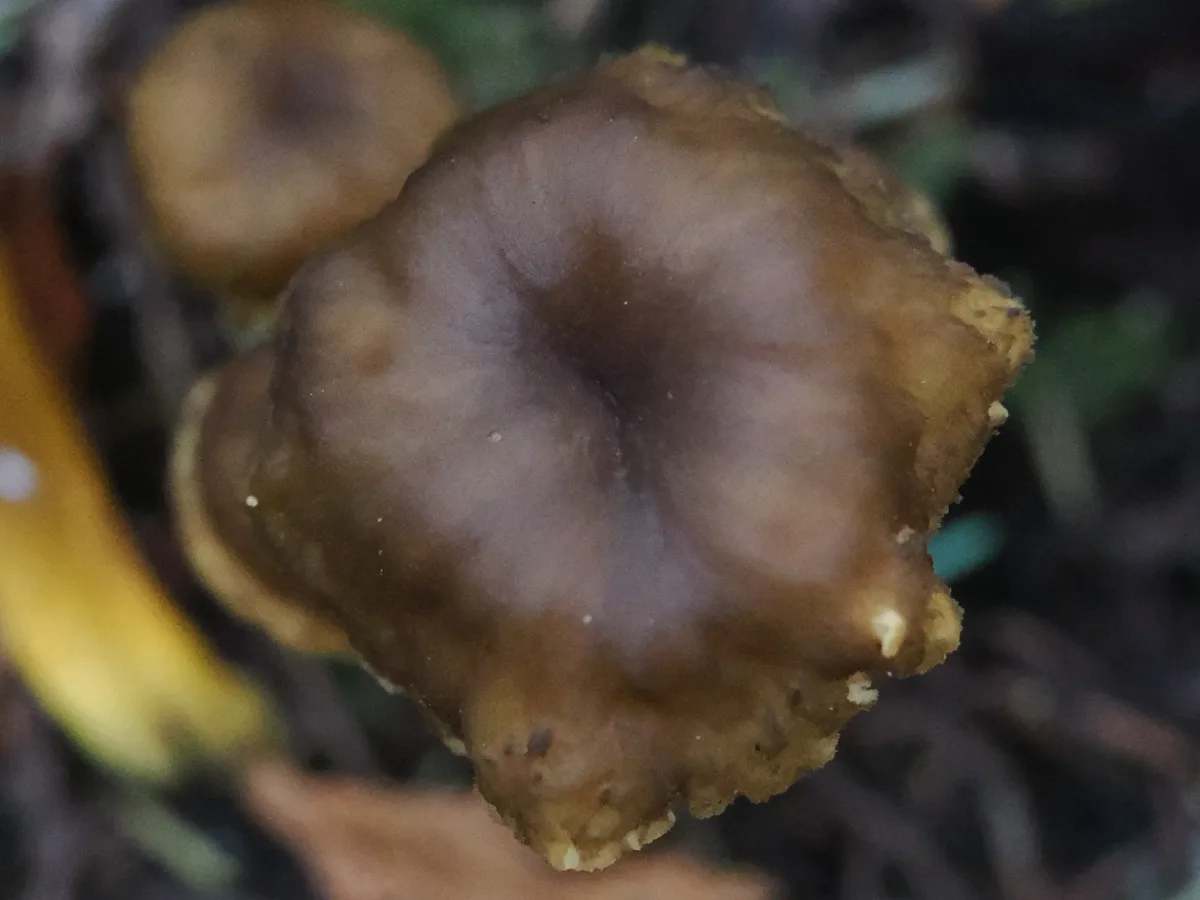
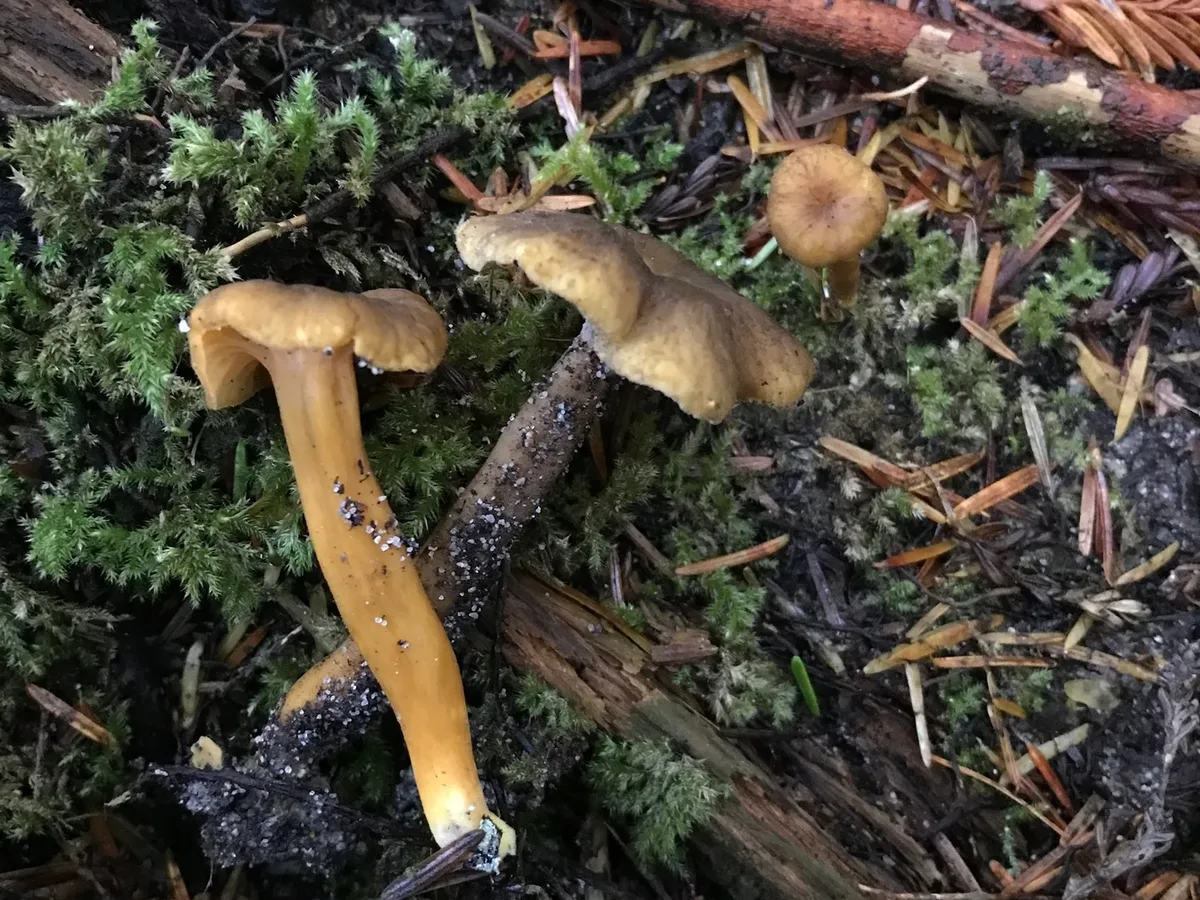
The cap runs 2-6 cm across and begins more or less convex before collapsing into a true funnel - a dry, matt surface whose colour shifts from tawny yellow-brown when fresh and moist to grey-brown or almost sooty dark brown as it dries out or ages.
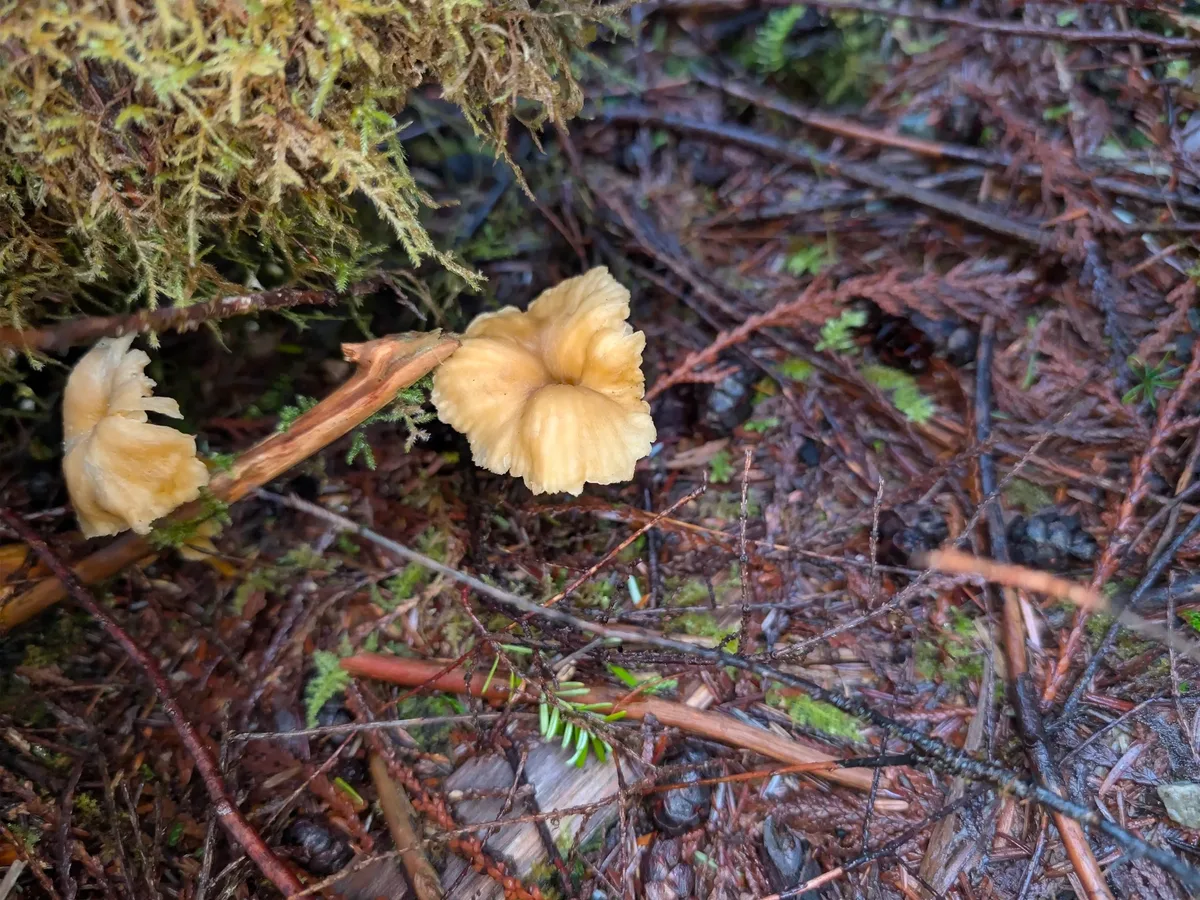
The margin is wavy and often ragged, in older specimens quite deeply lobed.
Underside
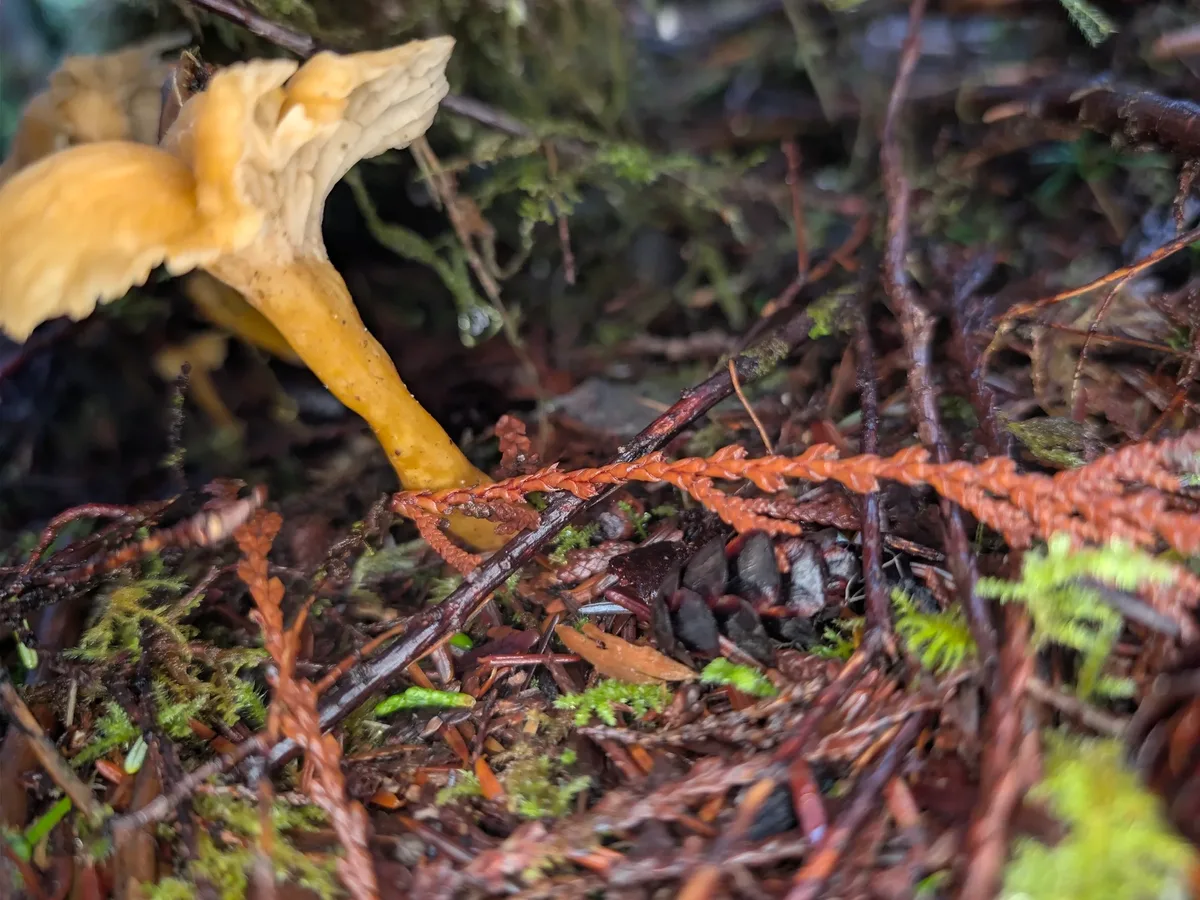
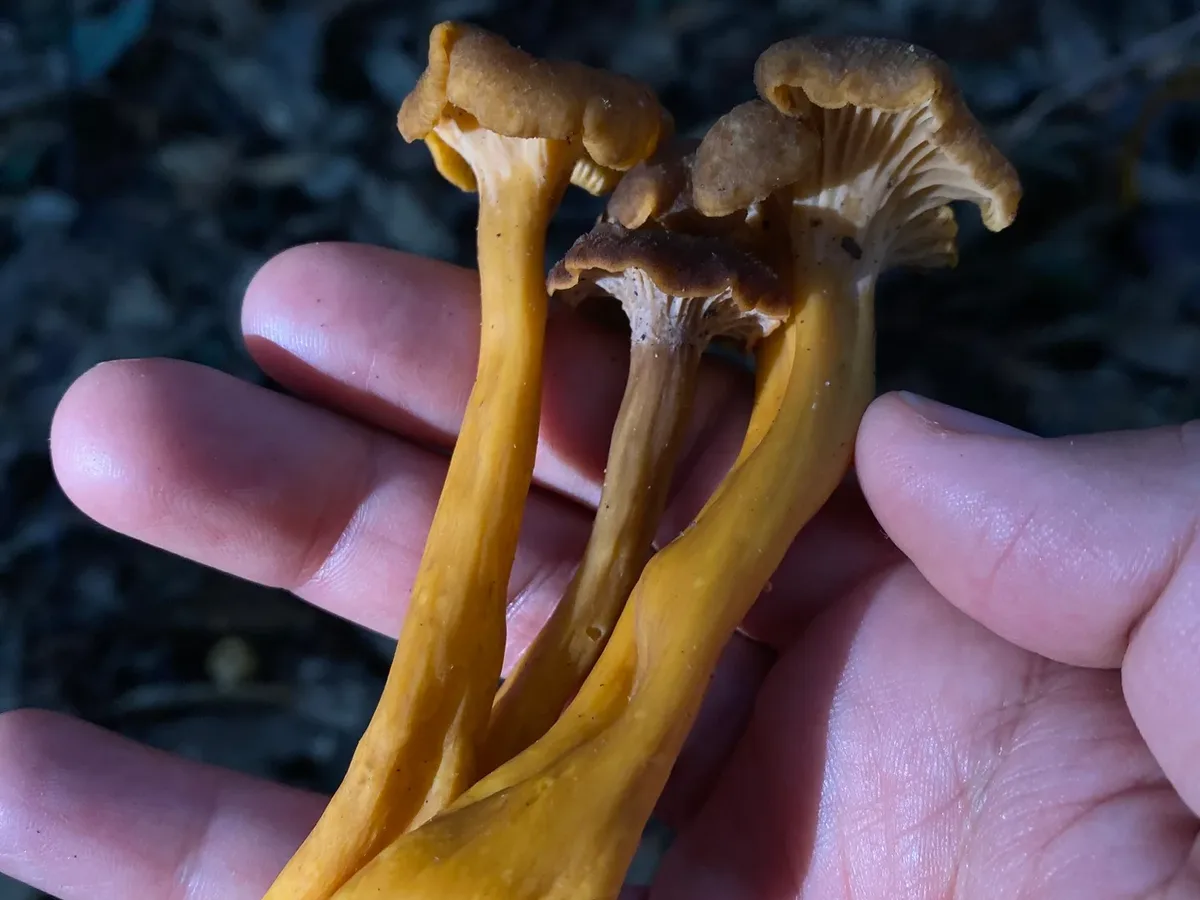
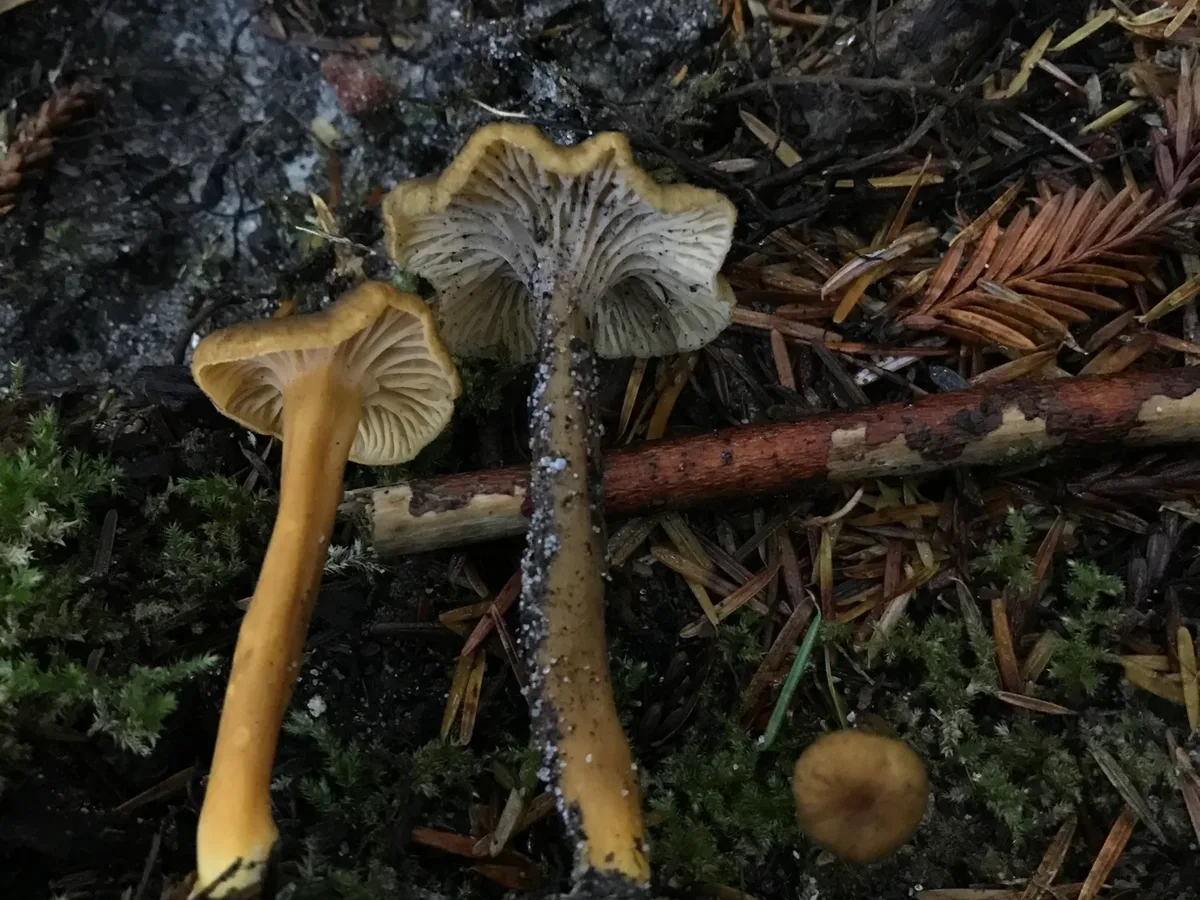
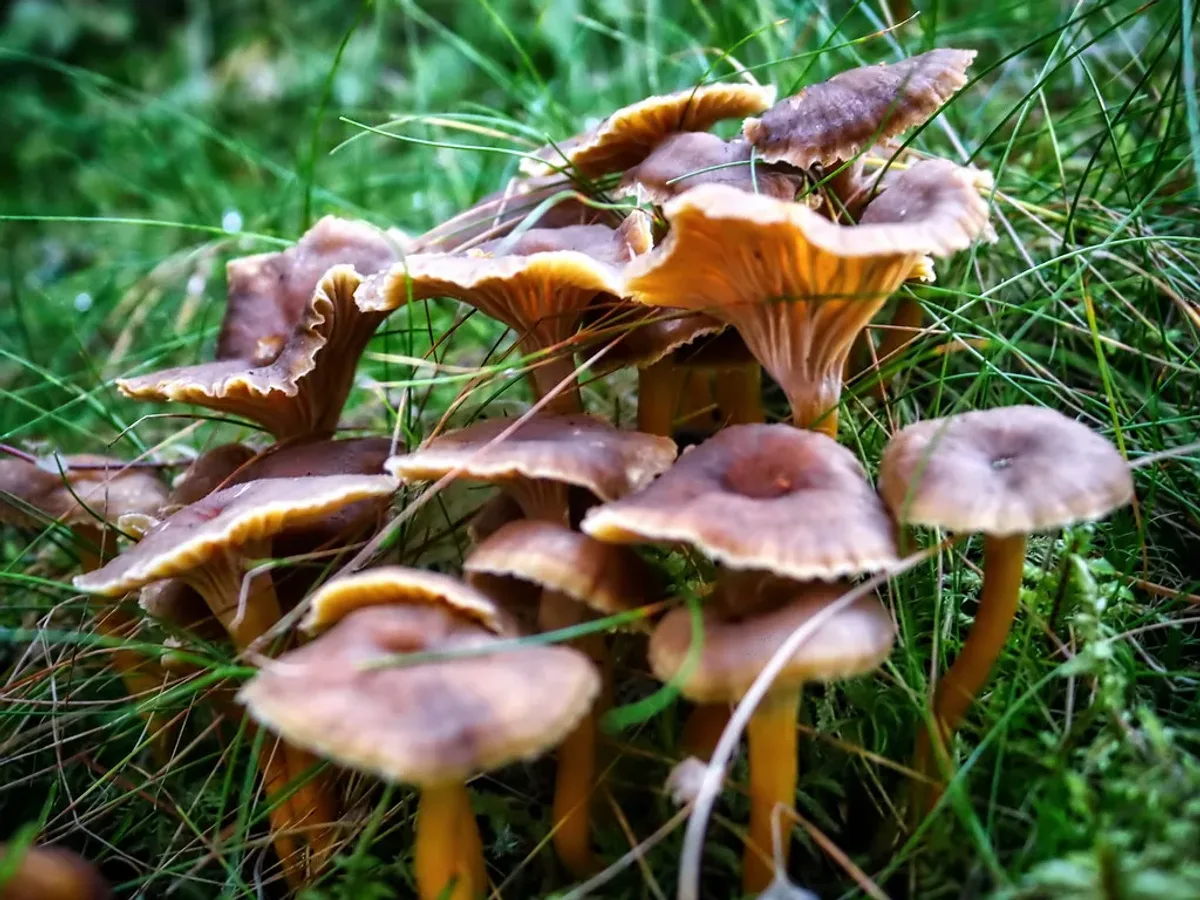
Flip the cap and the underside is immediately unlike a gilled mushroom: instead of vertical blades, it carries a network of shallow, forking ridges - the same structure you see in chanterelles - coloured grey-yellow to pale ochre, running smoothly down onto the stem.
Stem
The stem itself is the single most reliable field mark: slender, 4-8 cm tall, 0.4-1 cm in diameter, yellow to yellow-orange on the outside, and completely hollow from base to cap when you snap it in two.
No other common woodland funnel fruit in the same season shares that hollow yellow tube.
Smell & taste
Smell is mild and pleasant, sometimes with a faint nutty or apricot-like thread that deepens when the mushroom is dried.
Flesh
Flesh thin, pale yellowish, becoming somewhat leathery with age.
Where & when it grows
Habitat
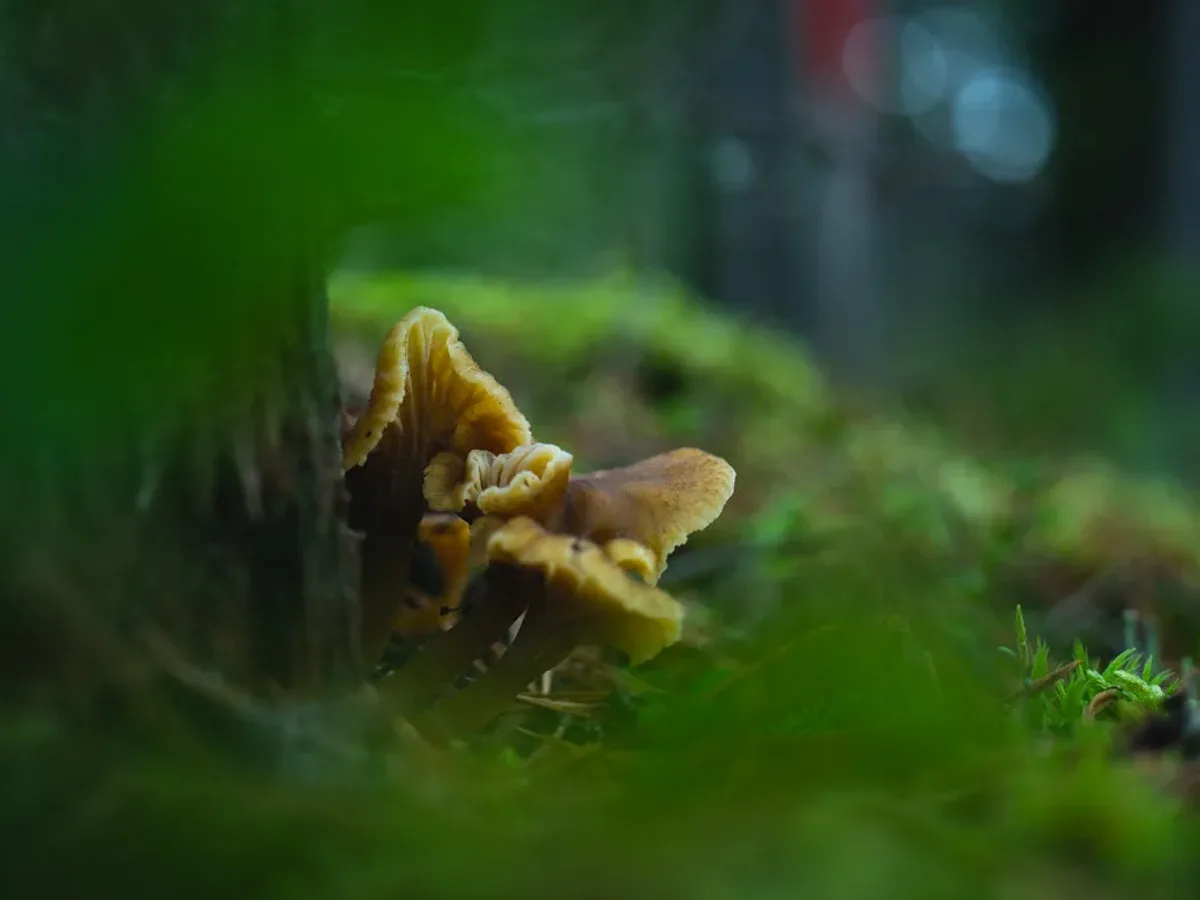
Yellowfoot is a forest dweller defined by two requirements: conifers and moisture-retaining ground cover, especially living sphagnum moss.
It forms ectomycorrhizal partnerships primarily with Norway spruce, though it also associates with Scots pine and occasionally birch where those species grow nearby.
The mycelial network is invisible but ancient - the threads interweaving with feeder roots of trees that may themselves be well over a century old, exchanging carbohydrates from the tree for water and minerals the fungus scavenges from the soil matrix.
Look in:
- low-lying hollows where cold air pools and moss stays consistently damp
- stream margins in spruce forest
- poorly drained pockets where water table sits near the surface
In Sweden the species is most reliably found in southern and central regions; it is the provincial mushroom of Västmanland. It can appear at relatively high elevations as well, wherever spruce grows in damp conditions.
When
Yellowfoot is one of the true late-season species of Nordic forests, fruiting from September well into November and in mild autumns continuing into December when almost every other edible species has finished.
The biology behind this timing is partly about temperature: the mycelium is active at soil temperatures as low as 5 °C, and the fruit bodies tolerate repeated light frost with no real damage - a resilience that lets colonies continue fruiting as nights dip below zero.
Peak yields in Sweden typically fall in October and early November, timed to the cooling rains that follow the first genuine autumn frosts.
In years when September is warm and dry, fruitings may be delayed until late October; in unusually mild years the species has been recorded fruiting in Christmas week.
This extended season, combined with its tendency to fruit in dense clusters, makes yellowfoot a mainstay of the late foraging calendar when the prized summer species are long gone.
How it grows
As a mycorrhizal species, yellowfoot does not decompose dead wood or leaf litter; its fruiting depends entirely on the health and age of the tree roots it is partnered with.
This means productive patches tend to reappear in the same locations year after year - the underground mycelium persisting through drought and frost, patient and largely invisible, until the right trigger arrives.
Fruiting is initiated by a combination of sustained cool temperatures and rain:
- roughly 20 mm of rainfall over the preceding two weeks
- soil temperatures dropping into the 5-15 °C range
Together these encourage a flush that typically appears 7-14 days after the critical rain events.
Fruit bodies emerge singly or, much more commonly, in tight clusters of five to twenty or more, often so densely packed that caps press against each other.
A well-established patch in deep sphagnum can produce dozens of fruit bodies in a single flush, reflushing two or three times across a season if rain continues.
Fruiting conditions
Late-autumn fruiter that flushes after cooling rains and tolerates light night frost, continuing later in the season than most species.
Look-alikes
The single dangerous lookalike is the deadly webcap, Cortinarius rubellus - a toxin-bearing species that causes fatal kidney failure and has been confused with yellowfoot in documented poisoning cases.
The confusion arises from shared habitat (damp spruce forest, same autumn season) and a superficial similarity in overall colour at a glance.
Examined properly, however, the two are unmistakable. The deadly webcap has:
- a distinctly pointed, conical cap that does not open into a flat funnel
- true red-brown to rusty-cinnamon gills on its underside (not forked ridges)
- a solid stem - cut or snap it and there is no hollow
- a rusty brown spore print
Yellowfoot has decurrent ridges, not gills, and a hollow yellow stem - confirm this on every individual specimen you pick.
Two harmless species share a vague resemblance:
- Jelly babies (Leotia lubrica) have a gelatinous, olive-yellow to ochre cap that is not funnel-shaped and a slimy-feeling, pale stem; they do not have ridges.
- The grey chanterelle (Cantharellus cinereus) is a harmless relative with very similar ridged underside and hollow stem, darker overall colouring, and a nearly identical culinary value - an easy confusion that carries no risk.
The deadly webcap has a pointed cap and red-brown gills; the yellowfoot has branched ridges (not true gills) and a hollow stem. Confusion arises only through carelessness, as they grow in similar damp environments.
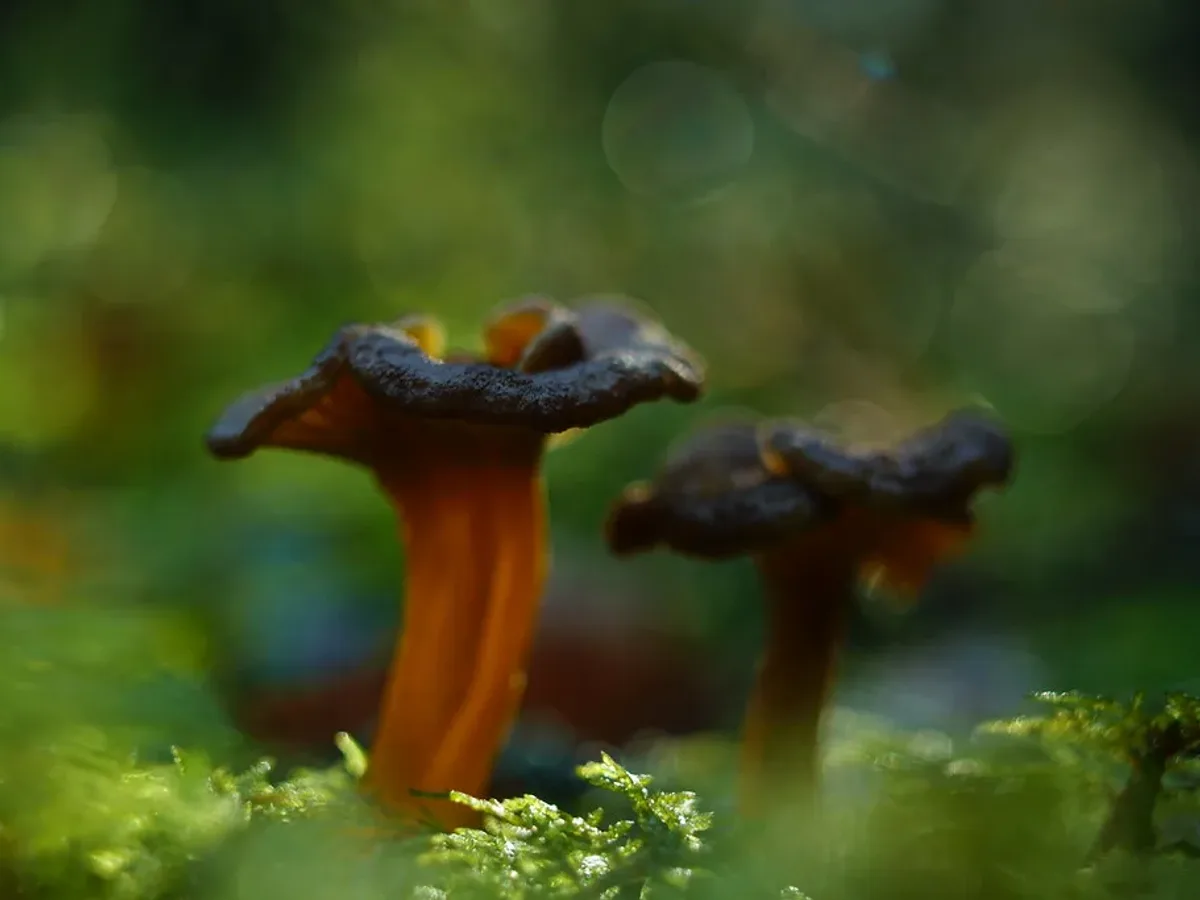
The black trumpet is dark all the way through, whereas yellowfoot has bright yellow-orange walls in a hollow foot.
Golden chanterelle has a solid white interior, whereas yellowfoot has a hollow tube with bright yellow-orange walls.
Harmless relative with a similar overall form.
Harmless; has a gelatinous "cap" and is not funnel-shaped.
In the kitchen
Picking & cleaning
Because yellowfoot fruits in dense clusters, it can be harvested very efficiently once you locate a productive patch - a single square metre of fertile sphagnum can yield a full basket.
Pick the entire cluster at once or twist-and-snap individual stems near the base, leaving as little stump as possible in the moss to avoid creating a site for rot.
The fruit bodies carry a good deal of moisture, so shake or blow out conifer needles and debris before packing - they wedge readily into the ridged underside. The hollow stem is a particular advantage for drying: moisture leaves quickly through the open tube.
Yellowed or very soft specimens are past their best; look for firm, dry-looking caps with intact margins.
On wet days the caps absorb water and become slimy and fragile, so early-morning picking before dew or after a dry spell gives the cleanest product.
The species stores extremely well after drying at 40-50 °C and reconstitutes fully in warm water.
Cooking
Yellowfoot is a mild, versatile edible whose true potential is unlocked by heat and especially by drying. Raw, the flavour is gentle and faintly peppery with a subtle fruitiness.
In the pan with butter over medium-high heat, moisture drives off quickly and the thin flesh concentrates into a slightly chewy, aromatic bite that works well in soups, creamy sauces, risotto, omelettes, and pasta.
Because the hollow stem loses moisture rapidly, even fresh specimens have a drier texture than chanterelles and take well to quick sautéing without excessive steaming.
Drying transforms the flavour significantly: the mild fresh character becomes distinctly earthy and savoury, with depth that holds up in long-simmered stews and broths.
Dried yellowfoot rehydrates fully in 15-20 minutes in warm water; the soaking liquid is flavourful and should be used in the dish.
It can also be powdered in a spice grinder to produce a versatile seasoning for sauces or compound butters. Pairs naturally with thyme, garlic, cream, and root vegetables.
Good to know
Yellowfoot carries a deadly lookalike: Cortinarius rubellus, the deadly webcap, contains orellanine, a nephrotoxin that causes irreversible kidney failure.
Poisoning cases have been recorded where pickers confused the two species by not inspecting individual specimens carefully.
Before packing any cluster, verify the following on each fruit body:
- 1the underside shows shallow forking ridges, not true gills
- 2the stem is hollow - snap it and look
- 3the cap opens into a wide, irregular funnel, not a pointed cone
The deadly webcap will fail at least two of those three checks - pointed conical cap, true rusty-cinnamon gills, solid stem.
Inspect every single mushroom individually; do not assume uniformity within a cluster.
Do not pick on the basis of overall colour alone, which can be misleadingly similar in worn or faded specimens of either species.
A reference guide - never an edibility guarantee. When in doubt, leave it out.