Pacific golden chanterelle
Cantharellus formosus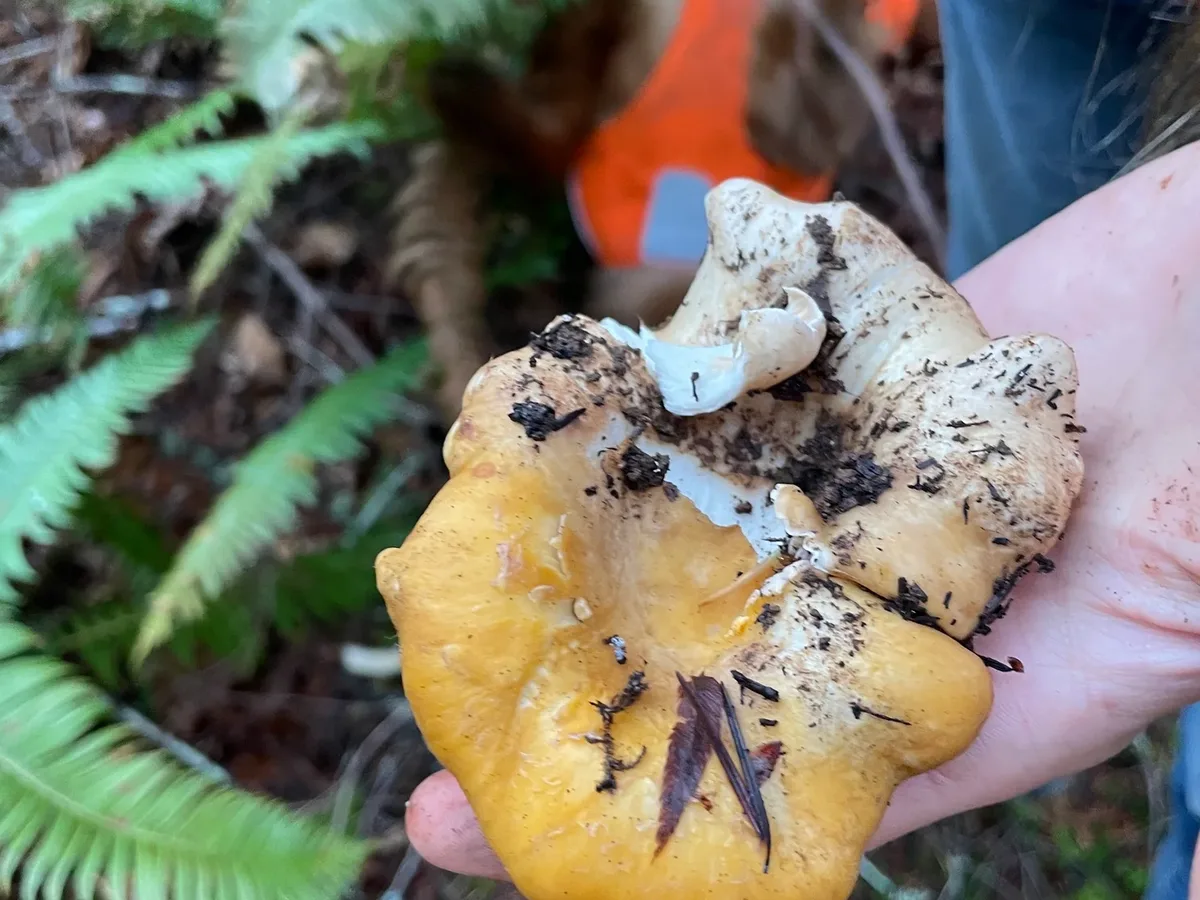 © Hilary Rose Dawson (CC BY 4.0)
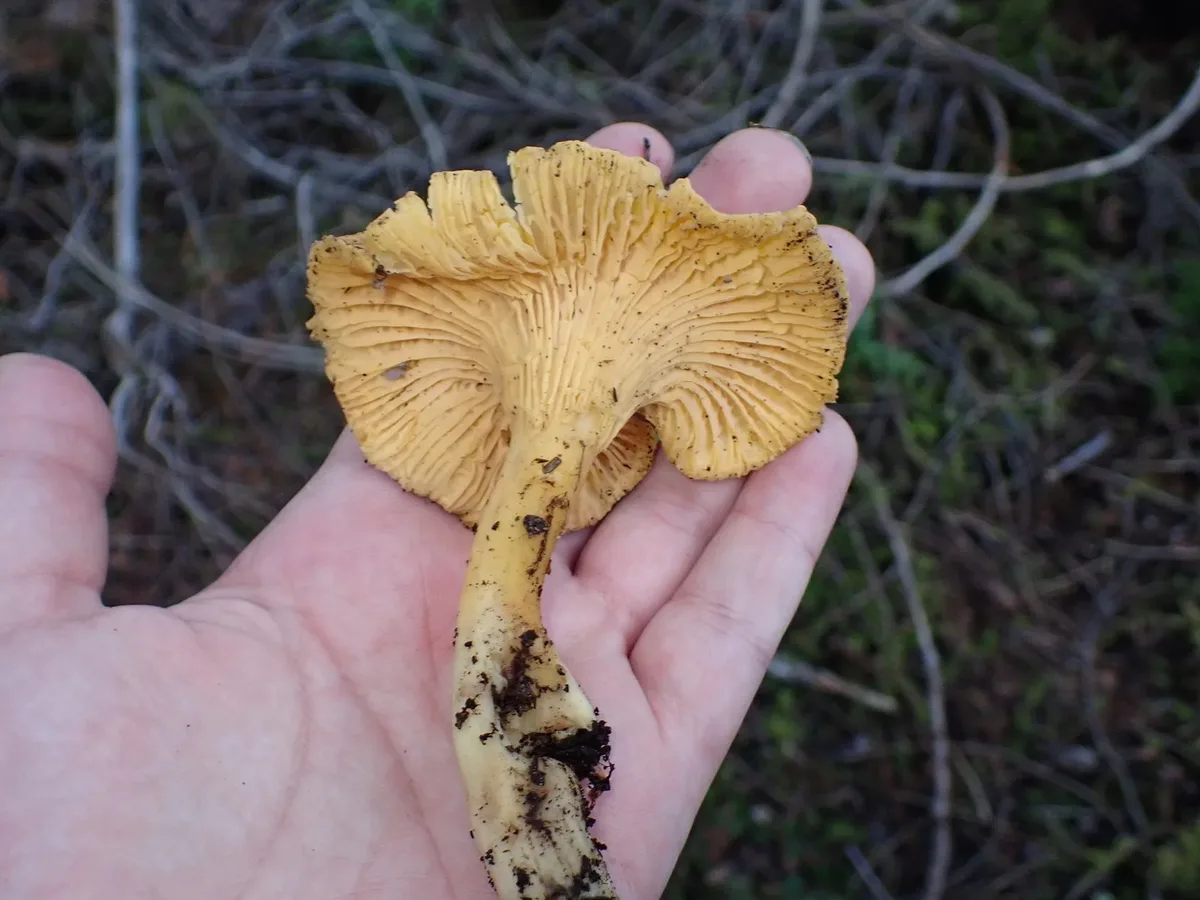 © elik03 (CC BY)
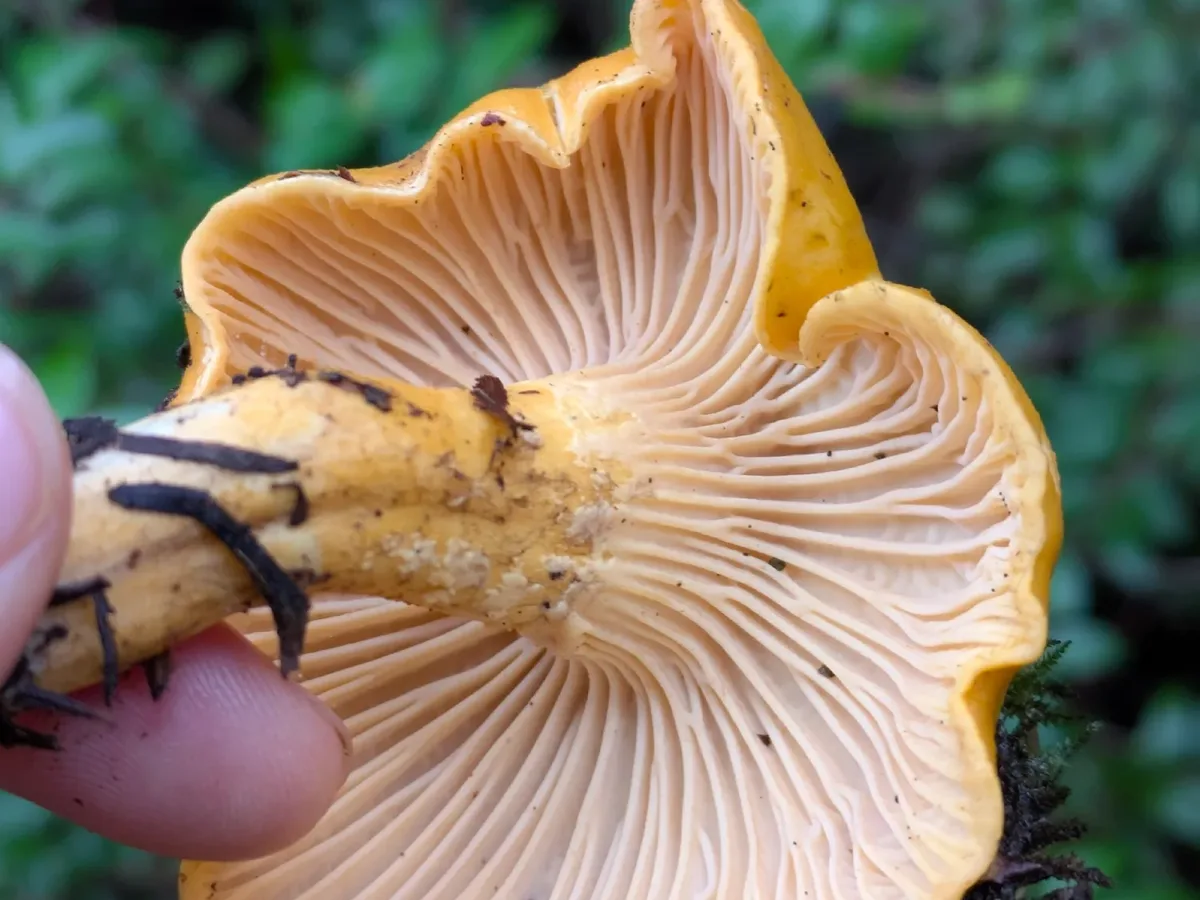 © My-Lan Le (CC BY)
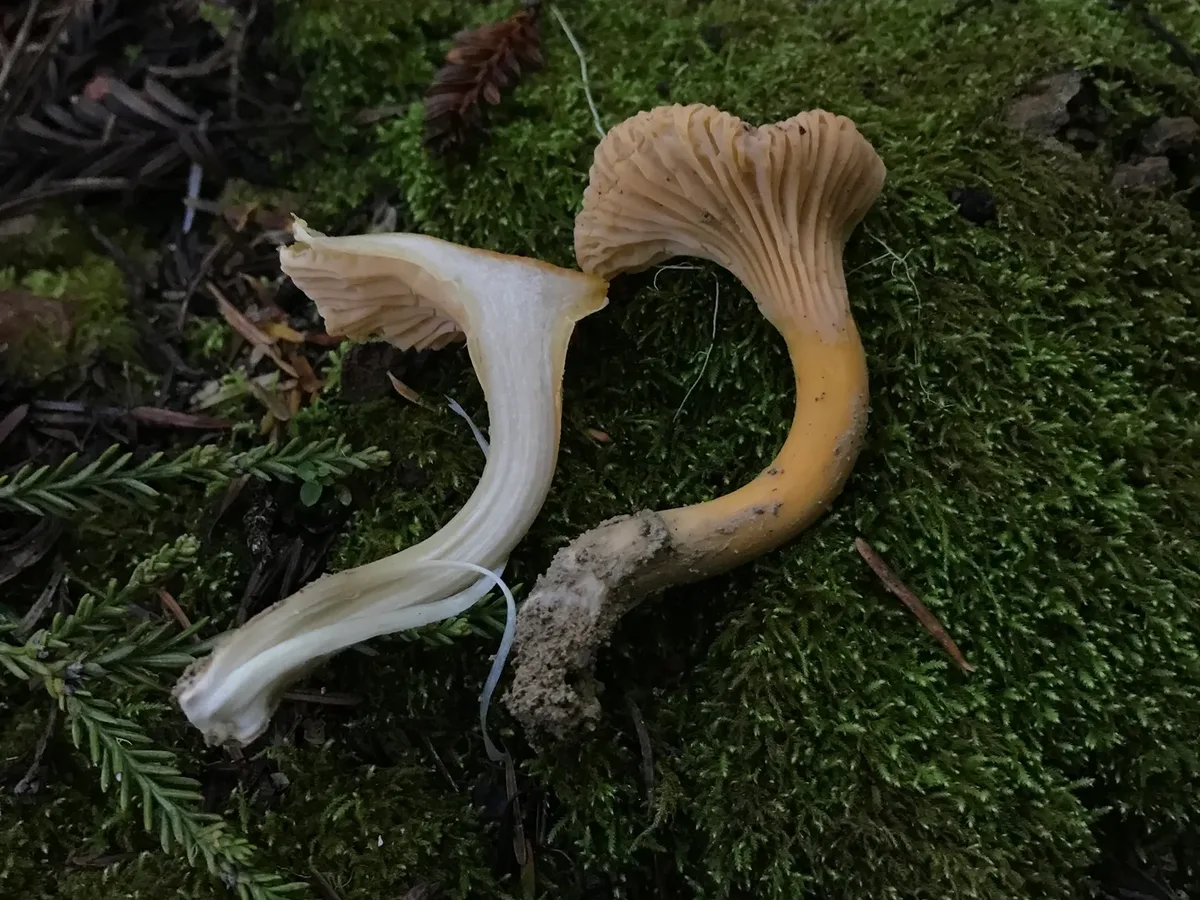 © Matthew Rozanoff (CC BY)
 © Matthew Rozanoff (CC BY)
 © criminy (CC BY)
 © criminy (CC BY)
 © elik03 (CC BY)
 harvardphd (CC0)
 © Jack Christy (CC BY 4.0)
 © Sorrel (CC BY-SA 4.0)
 © Kyle O'Block (CC BY 4.0)© Hilary Rose Dawson (CC BY 4.0)© elik03 (CC BY)
One of the best mushrooms you can bring home - once you are certain of the identification.
How to recognise it
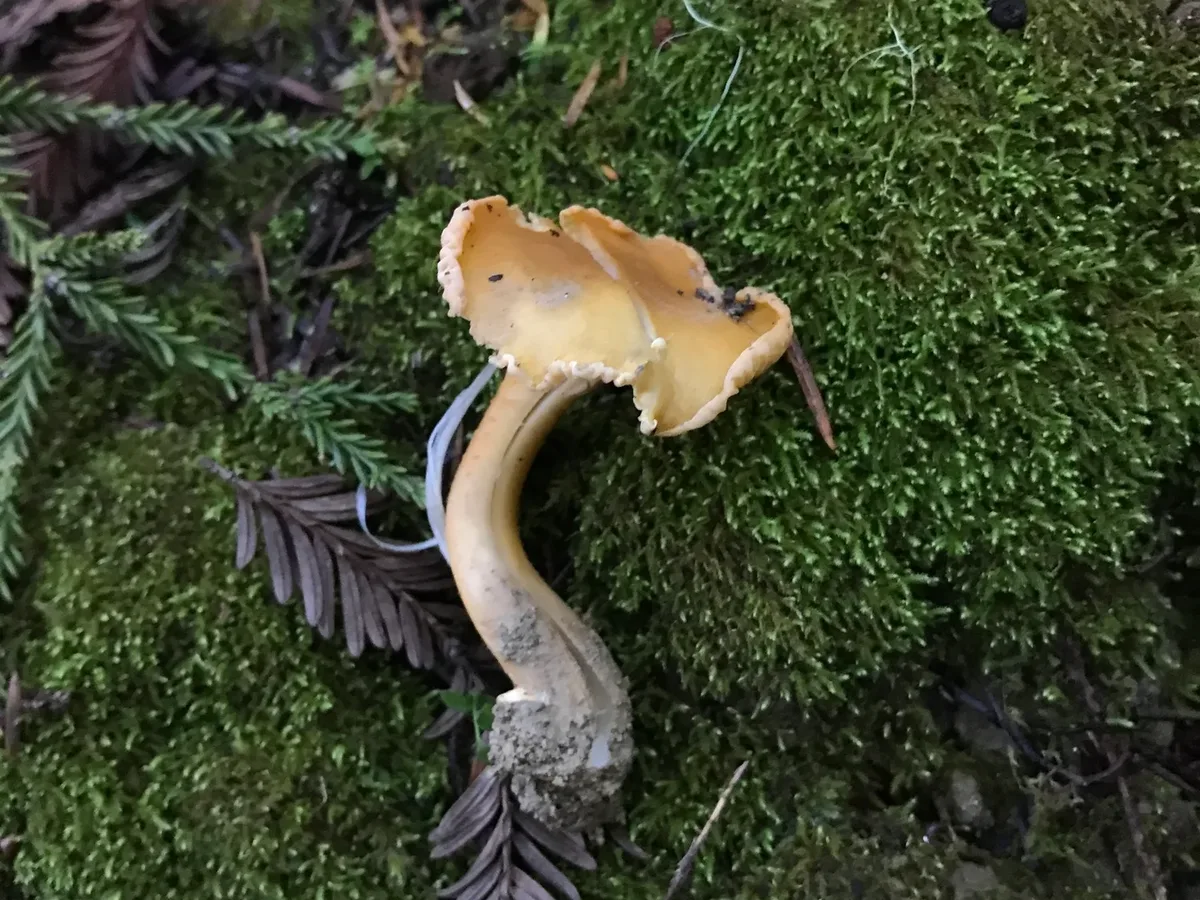
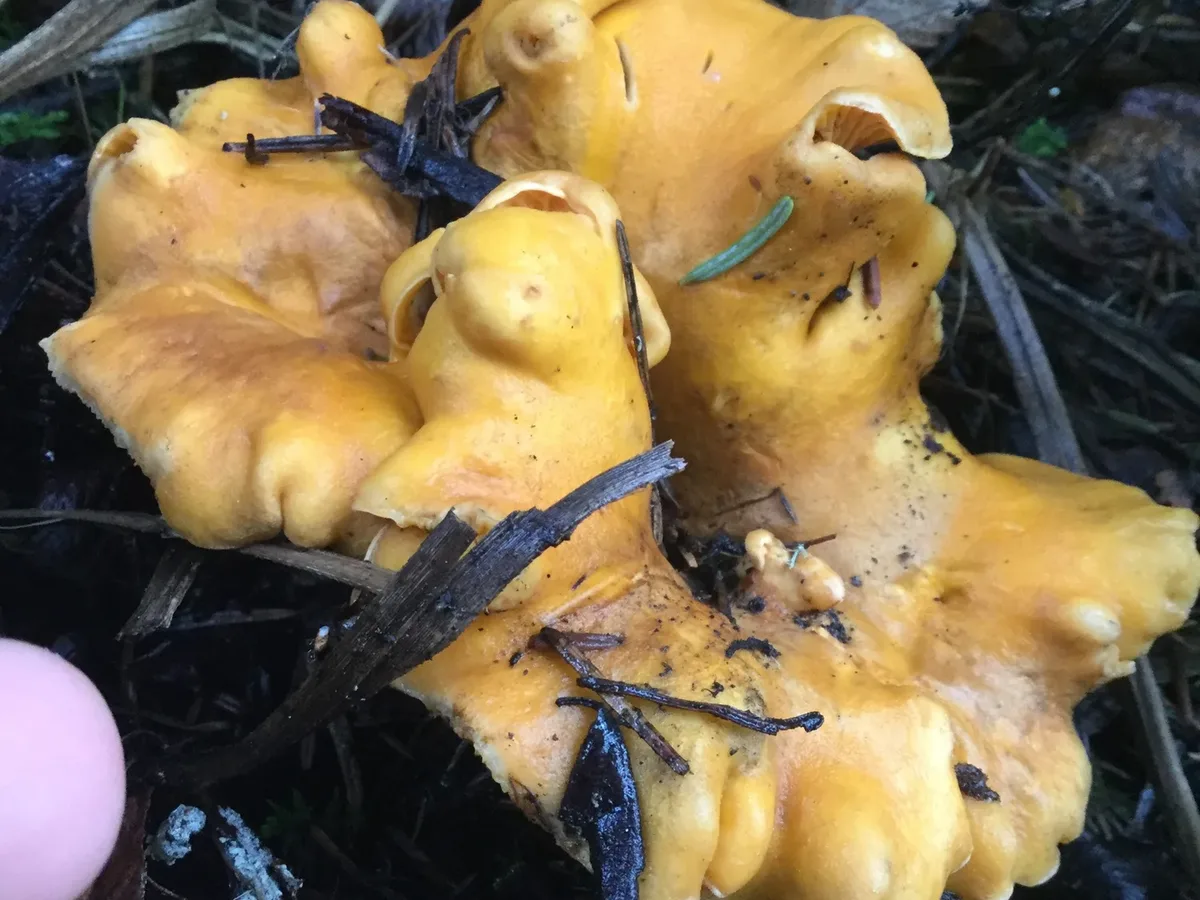
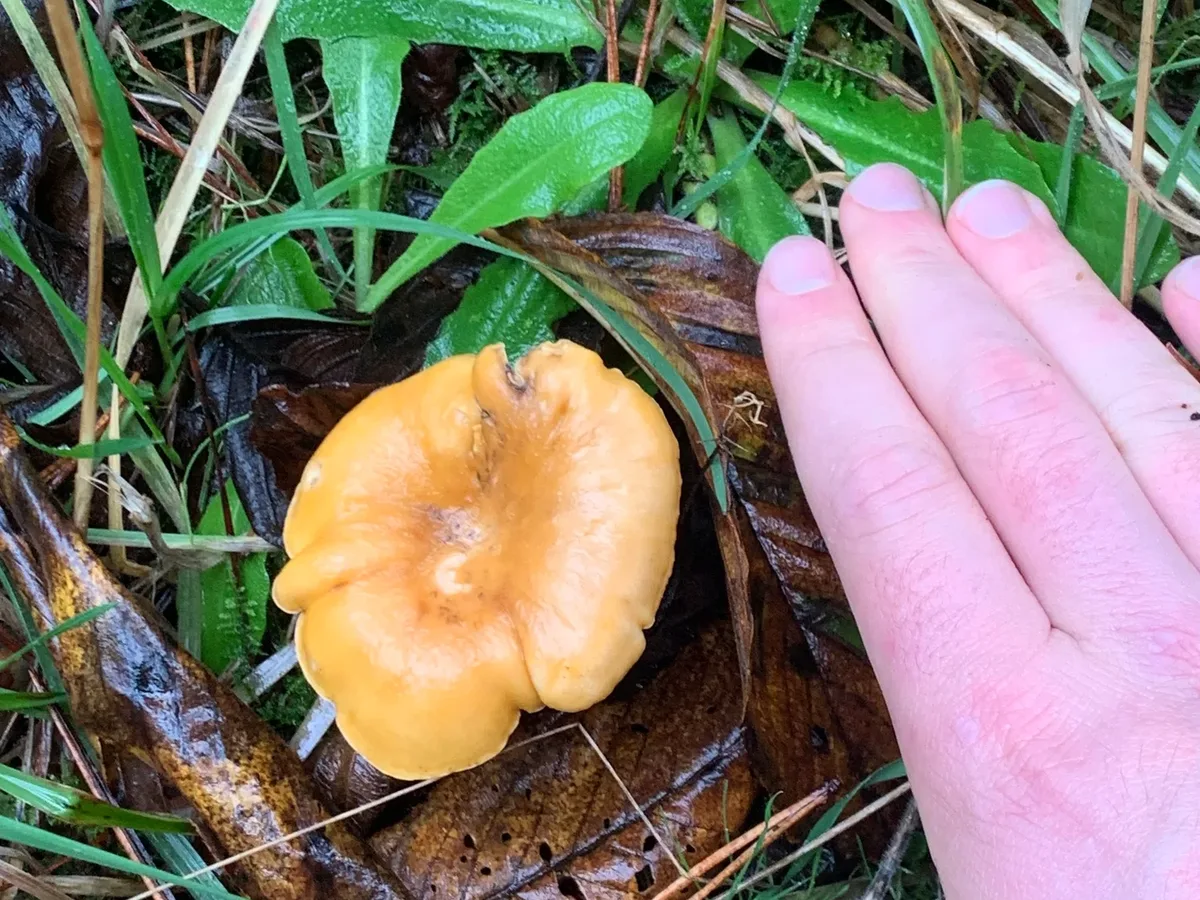
Cantharellus formosus is a robust, fleshy mushroom whose coloration shifts along a warm spectrum from deep egg-yolk gold to muted salmon-pink, occasionally tipping toward a soft peach when young.
Cap
The cap runs 3-10 cm across and rarely achieves a neat, symmetrical shape - the margin rolls under at first, then opens and waves outward into an irregular, rosette-like form that gives the mushroom a perpetually handmade look. The surface is dry and smooth, sometimes lightly tomentose in very young buttons.
Ridges
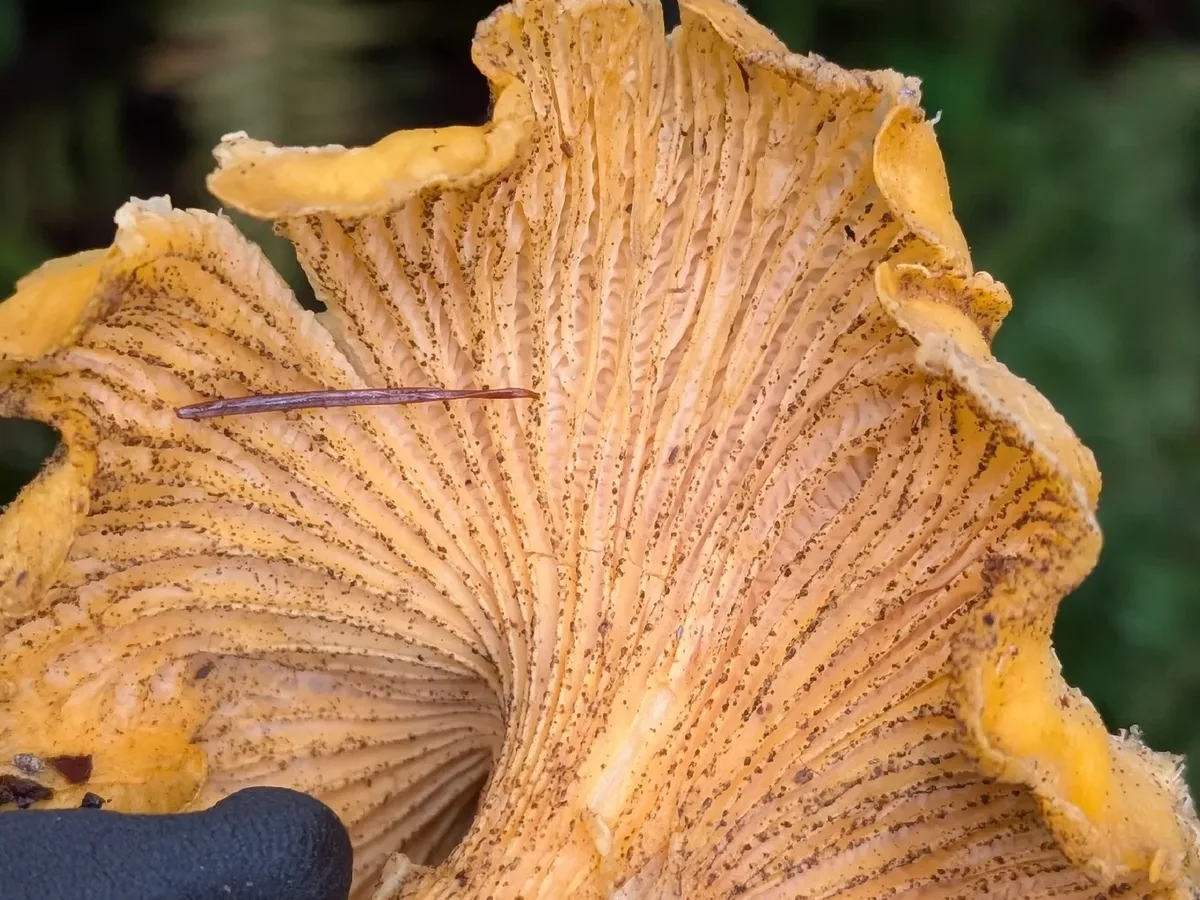
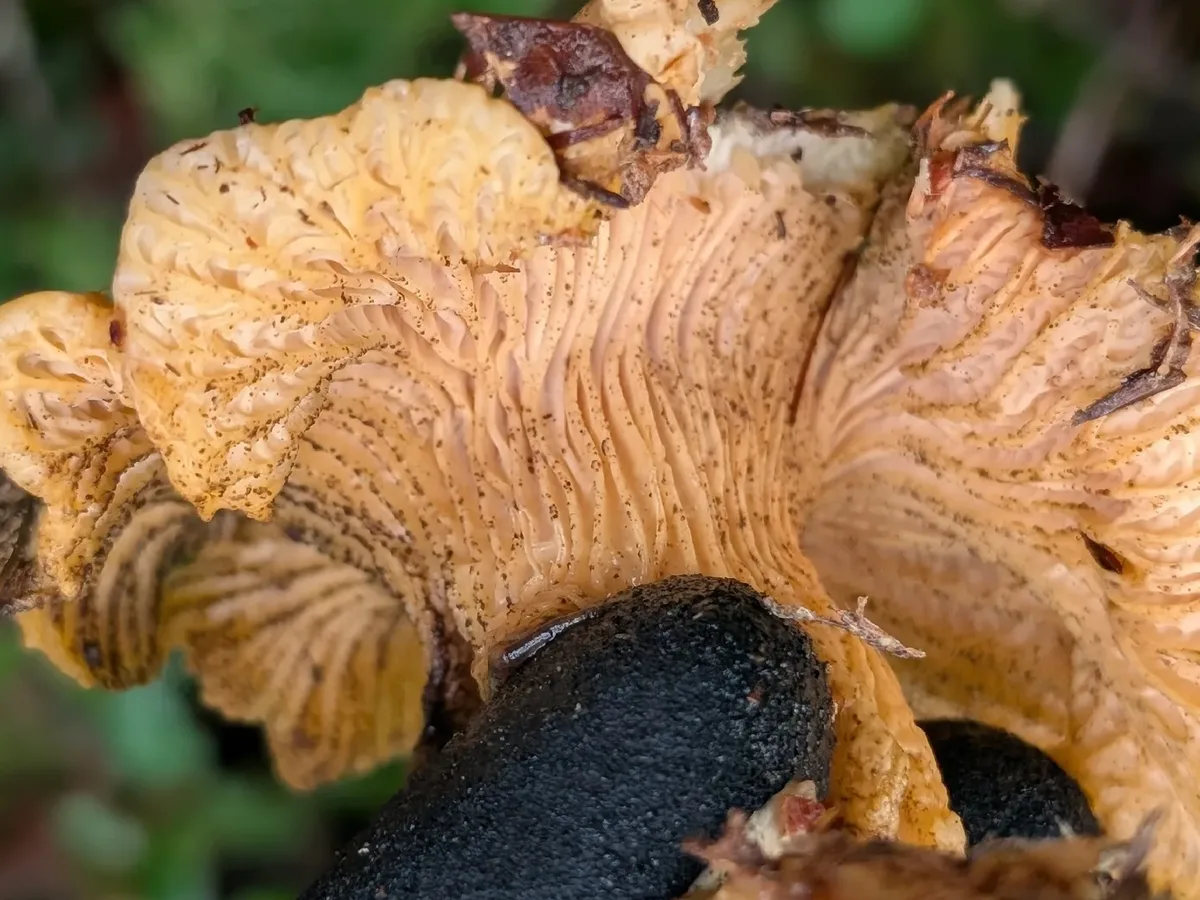
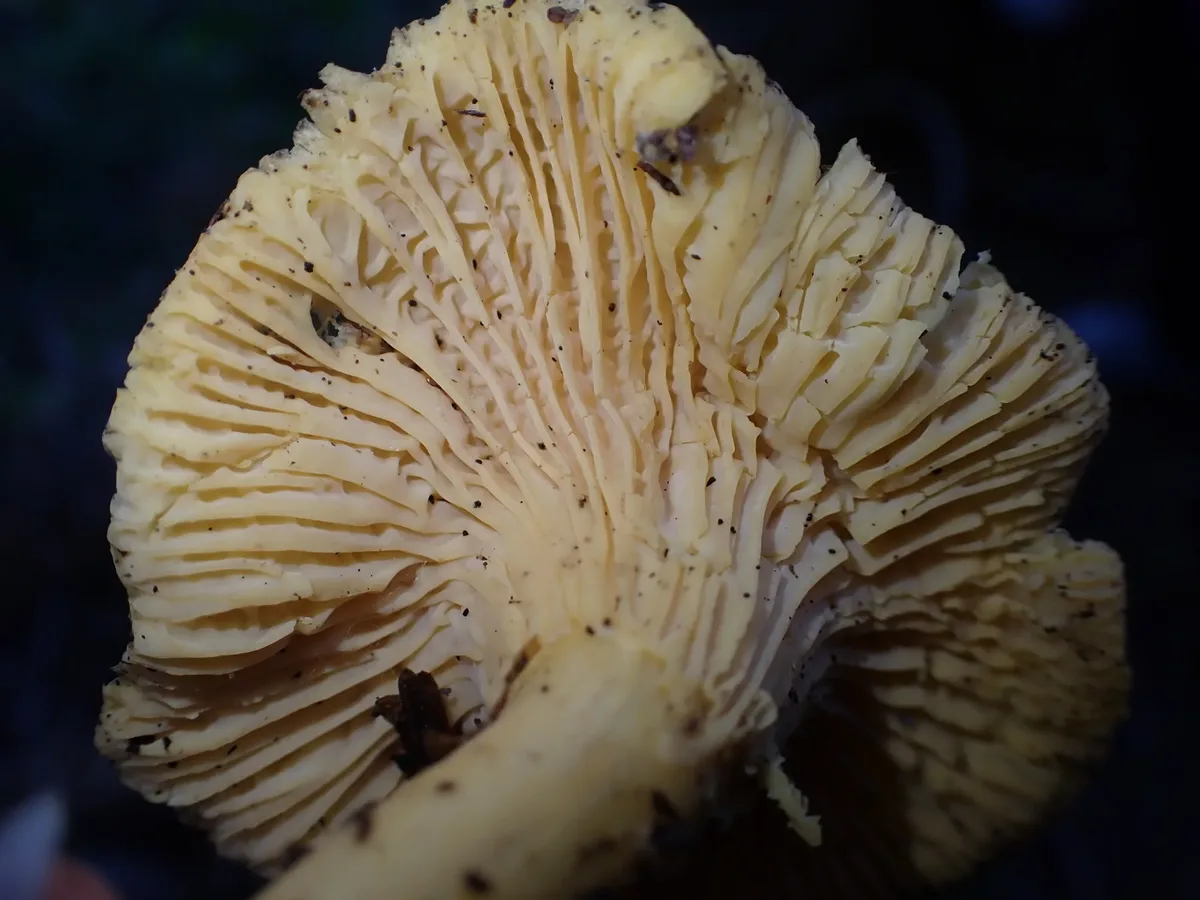
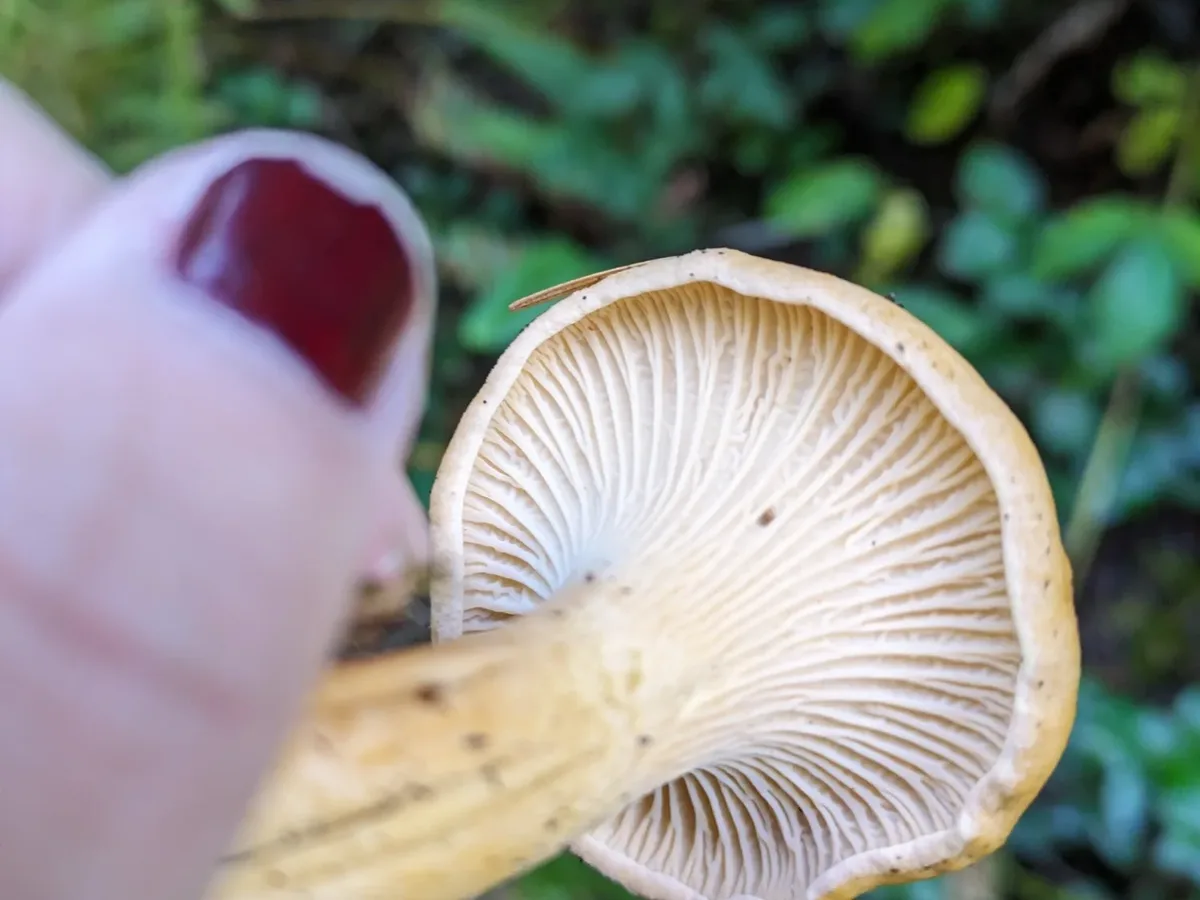
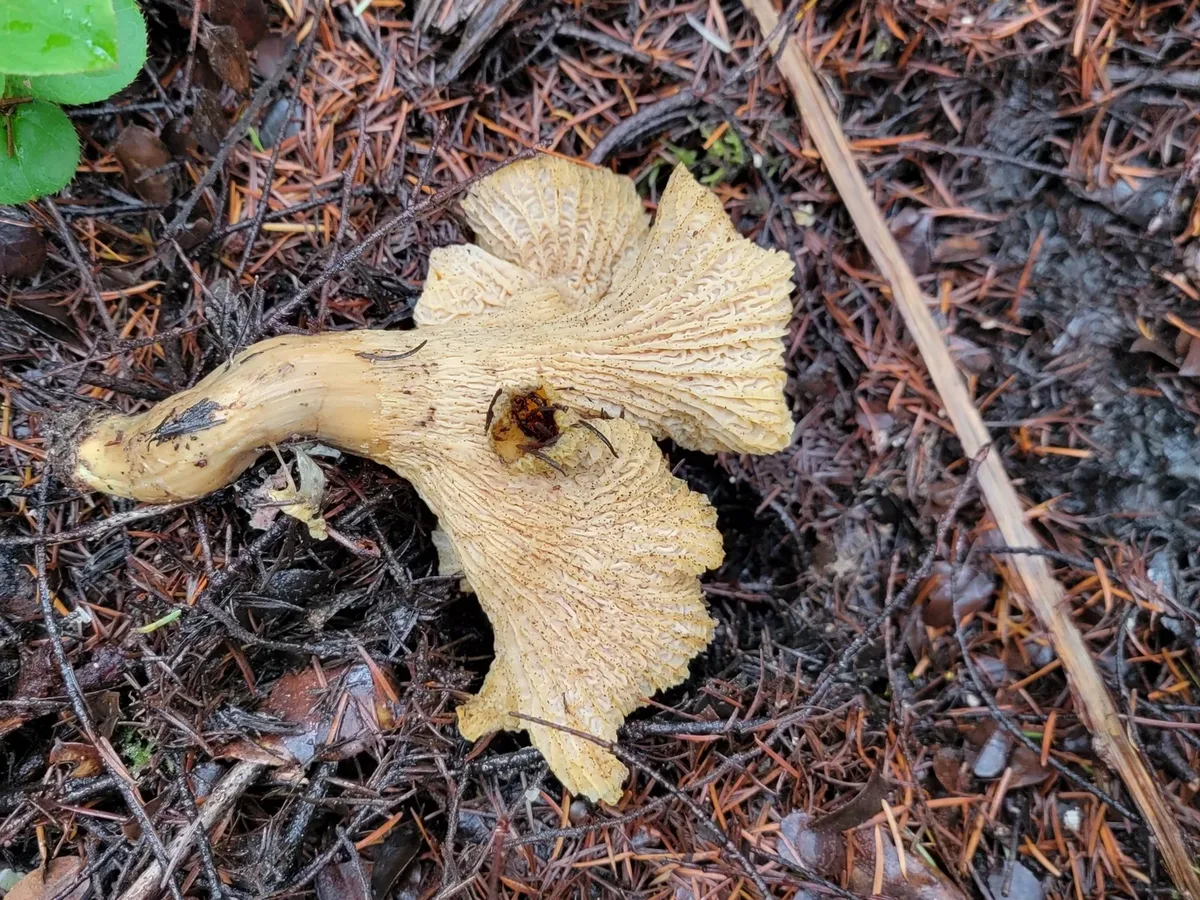
Flip the cap over and the most diagnostic feature becomes immediately clear: instead of sharp, knife-blade gills, the underside carries blunt, forking ridges - shallow, rounded folds of cap tissue that run smoothly down the stem (decurrent) and branch repeatedly like a river delta. These ridges often carry a subtle pink blush, distinct from the yellower cap above.
Stem
The stem is solid, stout, and tapers toward the base. Pull it apart along its length and it separates in fibrous, string-cheese-like strands - a useful field test that gilled lookalikes do not replicate.
Spore print
A spore print left on white paper comes out white to pale cream-yellow.
Smell & taste
The aroma is the last checkpoint: sweet, mild, and distinctly fruity - the apricot note is real enough to be recorded in mycological literature, arising from volatile compounds including trace amounts of 1-octen-3-ol and linalool.
Where & when it grows
Habitat
Cantharellus formosus is an obligate ectomycorrhizal partner, which means it cannot fruit independently of a living host tree - the two organisms are physiologically interlocked.
Underground, the mushroom's mycelium sheathes the fine root tips of Douglas fir (Pseudotsuga menziesii) and western hemlock (Tsuga heterophylla) in a dense mantle, forming a Hartig net of hyphae that threads between the outermost root cells without penetrating them.
Through this interface the fungus delivers water, phosphorus, and other minerals it scavenges from the soil matrix; the tree returns photosynthetically fixed carbon in the form of sugars. The partnership can persist for decades, the same mycelial colony fruiting from the same patch of forest year after year.
One of the least intuitive facts about this species is its preference for second-growth stands roughly 40-60 years old rather than old-growth forest - researchers have hypothesized that the denser fine-root networks of younger, vigorously growing trees support a larger, more productive mycelial network.
The geographic range runs from the coastal forests of southern British Columbia down through Washington and Oregon - where the Coast Range, Cascades, and Willamette Valley together form the commercial heart of the harvest - and continues south into northern California.
Fruit bodies appear on mossy forest floors under stands of the host species, often on gentle slopes where moisture lingers after rain.
When
The Pacific golden chanterelle is a creature of autumn rain. The mycelium persists through the dry Pacific Northwest summer in a resting state, patient in the insulating duff layer, waiting for the conditions that trigger fruiting: soil cooling and the return of sustained moisture.
The main season opens in July in cooler, higher-elevation sites, but the true flush comes with the autumn rains - typically September through November in the Willamette Valley and the Coast Range, peaking in October and November in most years.
Warm, wet autumns can push harvests into December; prolonged dry spells compress the window drastically.
The lag between rain and visible fruitbody is typically one to three weeks - the mycelium needs time to hydrate, renegotiate nutrient flow with its host root, and push a primordium up through the duff.
This lag means that a heavy rain event on its own is not enough information: the forecaster's question is what happened in the soil two to three weeks before you plan to go out, not what happened yesterday.
How it grows
The life of a chanterelle fruitbody begins as a microscopic knot of hyphae - a primordium - buried in the soil or duff. Over the course of several days it swells and differentiates into the characteristic funnel shape, the ridges forming on the underside as folds of tissue rather than independent lamellae as in true gilled mushrooms.
This developmental difference is not cosmetic: it reflects a genuinely distinct strategy for spore production and dispersal.
Individual fruit bodies emerge singly or in loose, scattered groups, rarely touching. The same patch of ground can produce mushrooms in the same relative positions across multiple seasons, because the underlying mycelial network is perennial.
The mycelium itself has no fixed lifespan under favorable conditions - colonies many decades old are documented.
Chanterelle fruit bodies grow slowly relative to many species; a button that appears after rain may take a week or more to reach maturity, and the slow pace means the flesh is dense rather than watery.
Growth rates accelerate in warm, wet conditions and nearly stall when temperatures drop below about 7 °C. A single colony can produce dozens of fruit bodies across a season, though not simultaneously - flushes tend to follow rain pulses in waves.
Fruiting conditions
Fruits in response to autumn rains once soils have cooled and rewetted; conservative standard mycology estimate, not stated in the source.
Look-alikes
Four species are routinely listed as confusion risks for C. formosus, and the single most reliable separation from all of them is the ridge structure: true chanterelles have blunt, forked, vein-like ridges that are continuous with the cap surface and can be rubbed smooth with a fingernail. All four lookalikes have sharp, knife-blade gills that stand up individually and snap off cleanly.
- The jack-o'-lantern (Omphalotus olivascens) is the most dangerous: it is poisonous, capable of causing severe gastrointestinal illness. It grows in tight clusters at the base of oak or other hardwood stumps, or from buried roots, and the gills may faintly bioluminesce in total darkness. The growth habit alone - clustered on wood versus scattered on soil - is highly diagnostic.
- The false chanterelle (Hygrophoropsis aurantiaca) is more closely similar in color and habitat but carries true, crowded, thin gills that fork repeatedly; ingestion can cause gastrointestinal upset in some individuals.
- The woolly pine spike (Chroogomphus tomentosus) occupies the same conifer forest but has a slimy-viscid cap when wet, a pointed umbo, and true decurrent gills with a brownish spore print.
- The scaly vase chanterelle (Turbinellus floccosus, formerly Gomphus floccosus) is vase-shaped rather than funnel-shaped, has a scaly reddish-orange cap surface, and bears shallow, forking ridges similar to a chanterelle - but the overall shape and cap surface texture are unmistakable once seen.
Has true thin forked gills rather than blunt ridges; can cause stomach upset.
Poisonous. Has true thin gills (not blunt ridges), grows in clusters on wood or near oak roots, and glows in the dark.
Formerly placed in Gomphus. Distinguished from true chanterelles, which have blunt ridges rather than sharp gills.
Distinguished from true chanterelles, which have blunt ridges rather than sharp gills.
In the kitchen
Picking & cleaning
Cantharellus formosus has a well-earned reputation as one of the most forager-friendly species in the Pacific Northwest: the flesh is dense, slow to degrade, naturally resistant to insect larvae (believed to result from antifungal and insect-deterrent compounds in the tissue), and nearly always maggot-free even when collected late in the season.
Both cutting at the base with a knife and pulling the entire fruit body by hand are acceptable; the underlying mycelium is not meaningfully harmed by either method, because the productive part of the organism - the mycelial network - lies meters away from the stem base. Cut stems do not meaningfully reduce next-year's harvest.
Brush off adhering needles, moss, and soil in the field; the dense, dry flesh holds its shape well in a breathable basket.
Oregon's commercial harvest alone exceeds 500,000 pounds (approximately 227 metric tonnes) in productive years, most of it exported fresh or frozen to European and Asian markets - making this species one of the most economically significant wild mushrooms in North America.
Recreational harvesters should check state regulations on permit requirements, bag limits, and restricted harvest areas; rules vary by land management agency.
Cooking
The Pacific golden chanterelle is prized in professional kitchens for the depth and persistence of its flavor, which survives heat far better than delicate species like matsutake or porcini.
The foundational technique is dry-sautéing:
- 1Place clean, torn or halved mushrooms in a wide, heavy pan over medium-high heat with no fat and a pinch of salt.
- 2The mushrooms release considerable moisture as they heat; continue cooking, stirring occasionally, until all of that liquid has evaporated and the pan is dry again - this concentrates the flavor and drives off excess water that would otherwise dilute the final dish.
- 3Add butter (or a neutral oil) and aromatics - shallot, garlic, fresh thyme - and cook for another two to three minutes until fragrant.
The result is a sautéed chanterelle with a slightly firm bite, rich golden color, and the full apricot-fruity depth the species is known for.
The dry-sauté step also happens to be the correct preparation before freezing: dry-sauté first, cool fully, then freeze in portions. Chanterelles frozen raw turn watery and lose texture.
Other applications include chanterelle cream sauce for pasta or polenta, omelets and scrambled eggs, and as a filling for tarts or vol-au-vent.
They pair well with cream, eggs, mild cheeses, white wine, and simple starches that let the mushroom flavor lead.
Good to know
Cantharellus formosus is widely regarded as an excellent species for foragers with limited experience, provided the ridge-versus-gill distinction is firmly understood and verified for each specimen collected.
The species has no documented toxins, no known dangerous compounds, and no serious confusion species that shares all of its field marks simultaneously.
The one genuine contamination risk is environmental rather than intrinsic: like many ectomycorrhizal mushrooms, chanterelles can bioaccumulate heavy metals - particularly lead and cadmium - from polluted soils.
Avoid collections from:
- roadsides
- former industrial sites
- mine tailings
- areas with known soil contamination
This is not a theoretical risk: studies on European chanterelle species have documented measurable heavy metal loads in specimens from contaminated soils, and the Pacific species shares the same physiology. In clean forest habitat, no such concern applies.
Allergy to any fungal species is always possible in sensitive individuals; new foragers should consume a modest portion of any species on first encounter.
A reference guide - never an edibility guarantee. When in doubt, leave it out.