White Chanterelle
Cantharellus subalbidus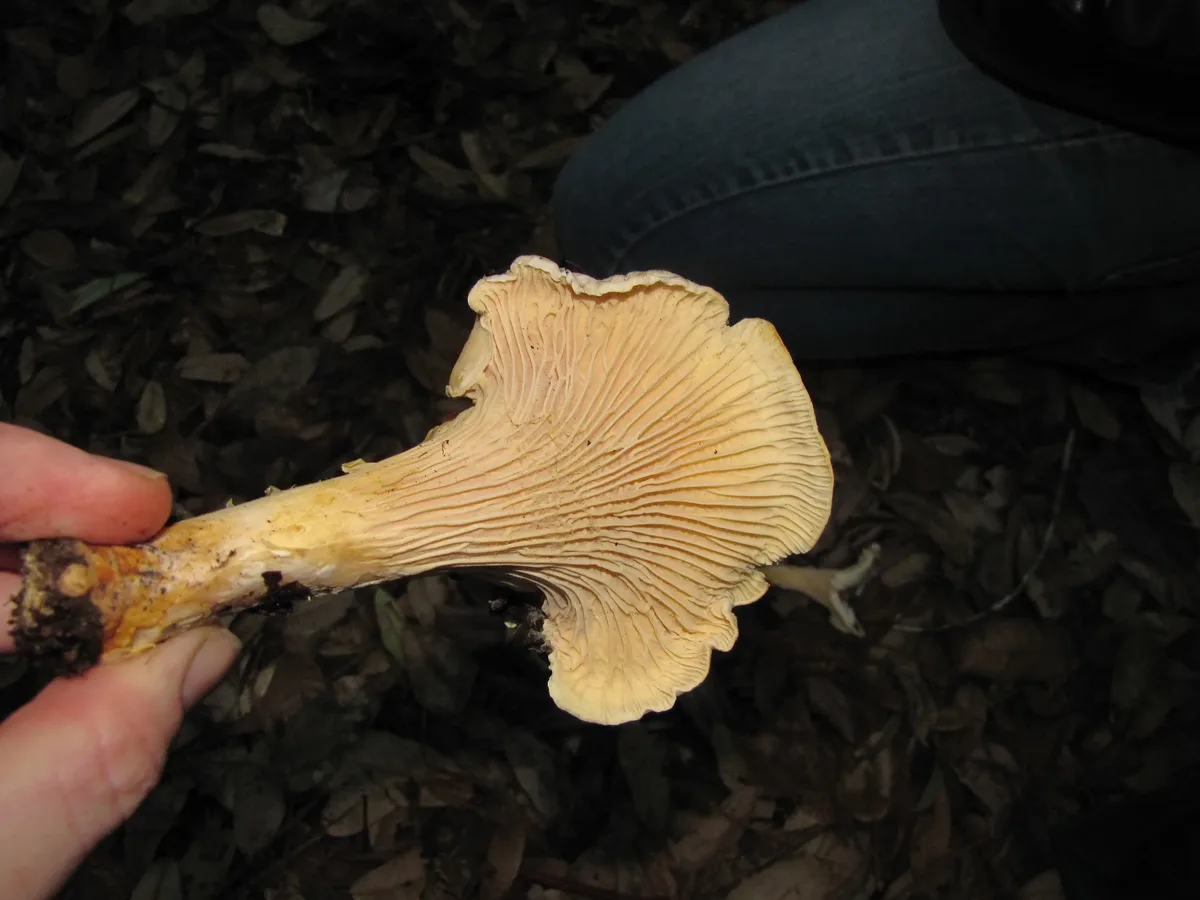 © Alan Rockefeller (CC BY 4.0)
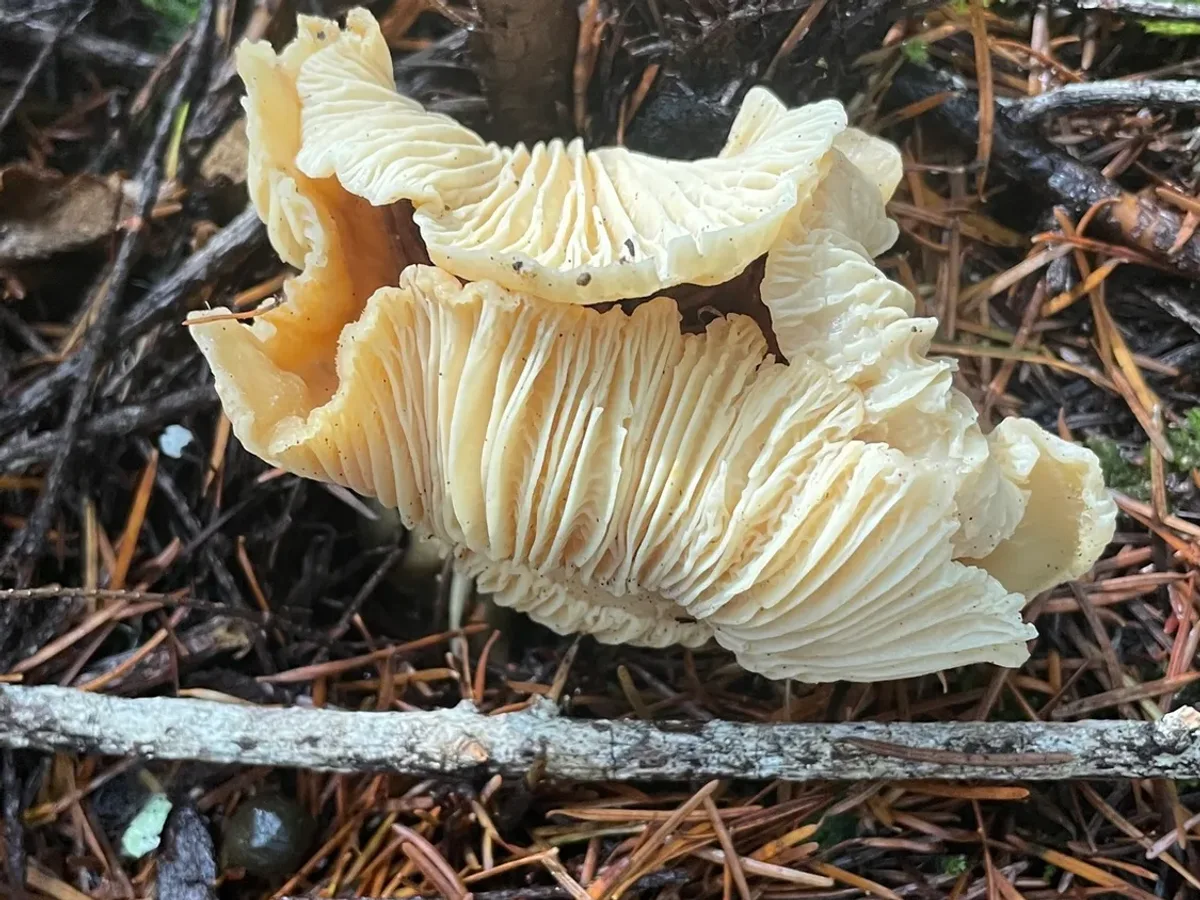 © Hilary Rose Dawson (CC BY 4.0)
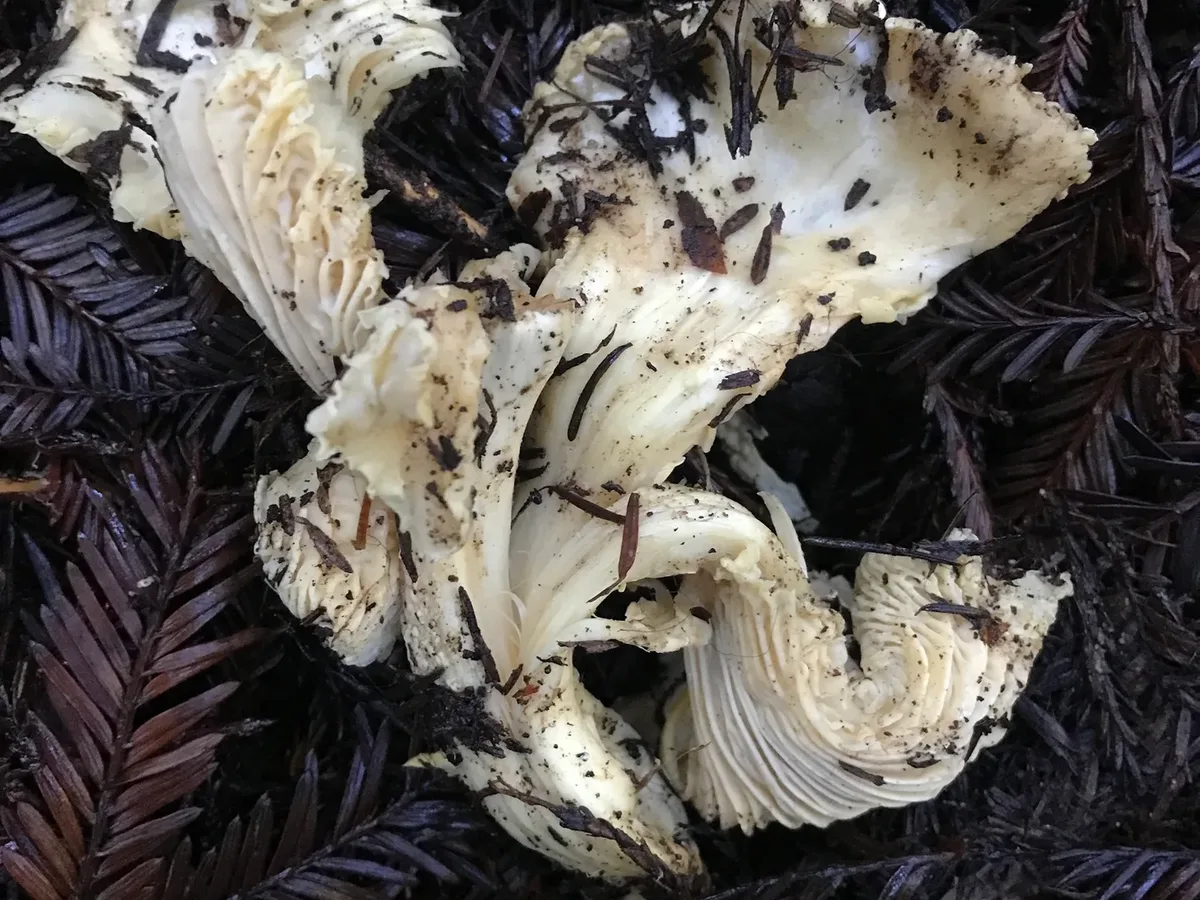 © Matthew Rozanoff (CC BY)
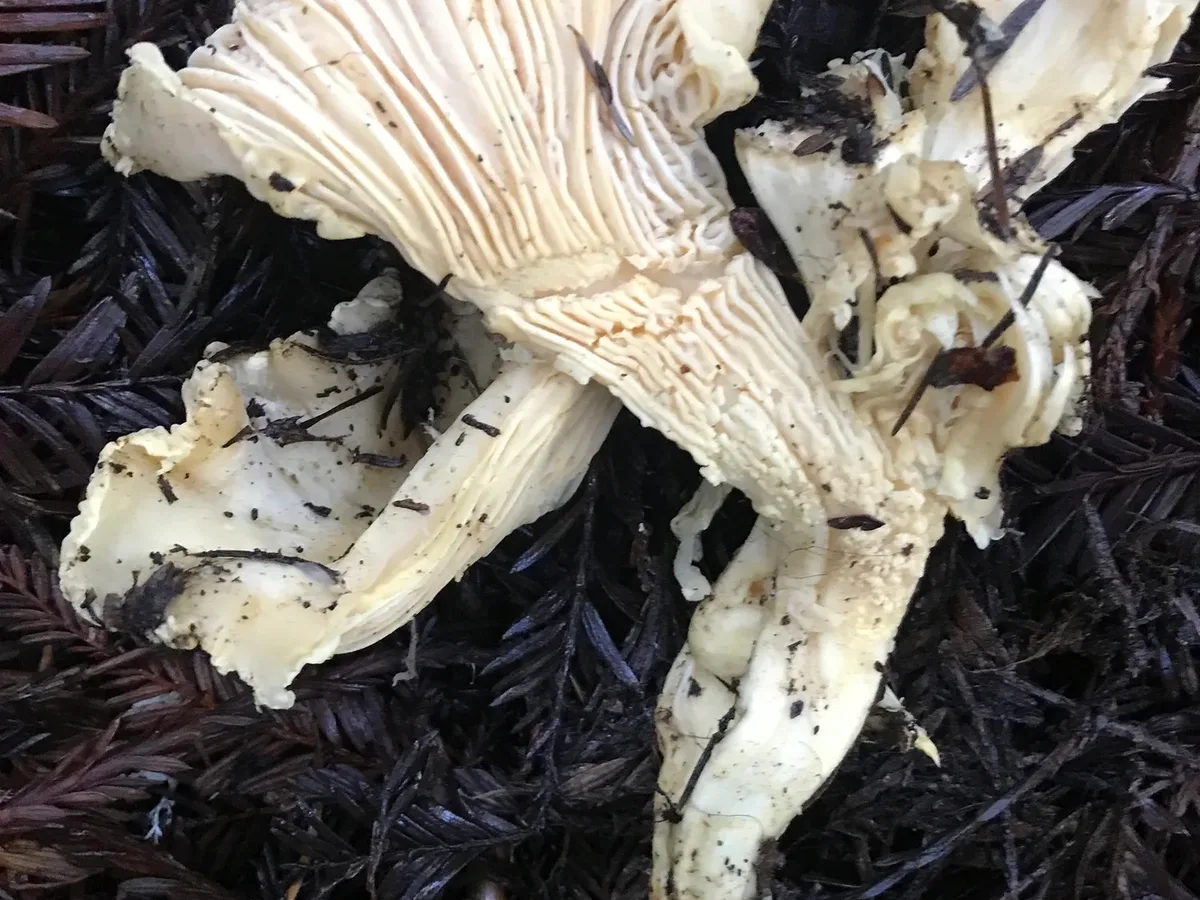 © Matthew Rozanoff (CC BY)
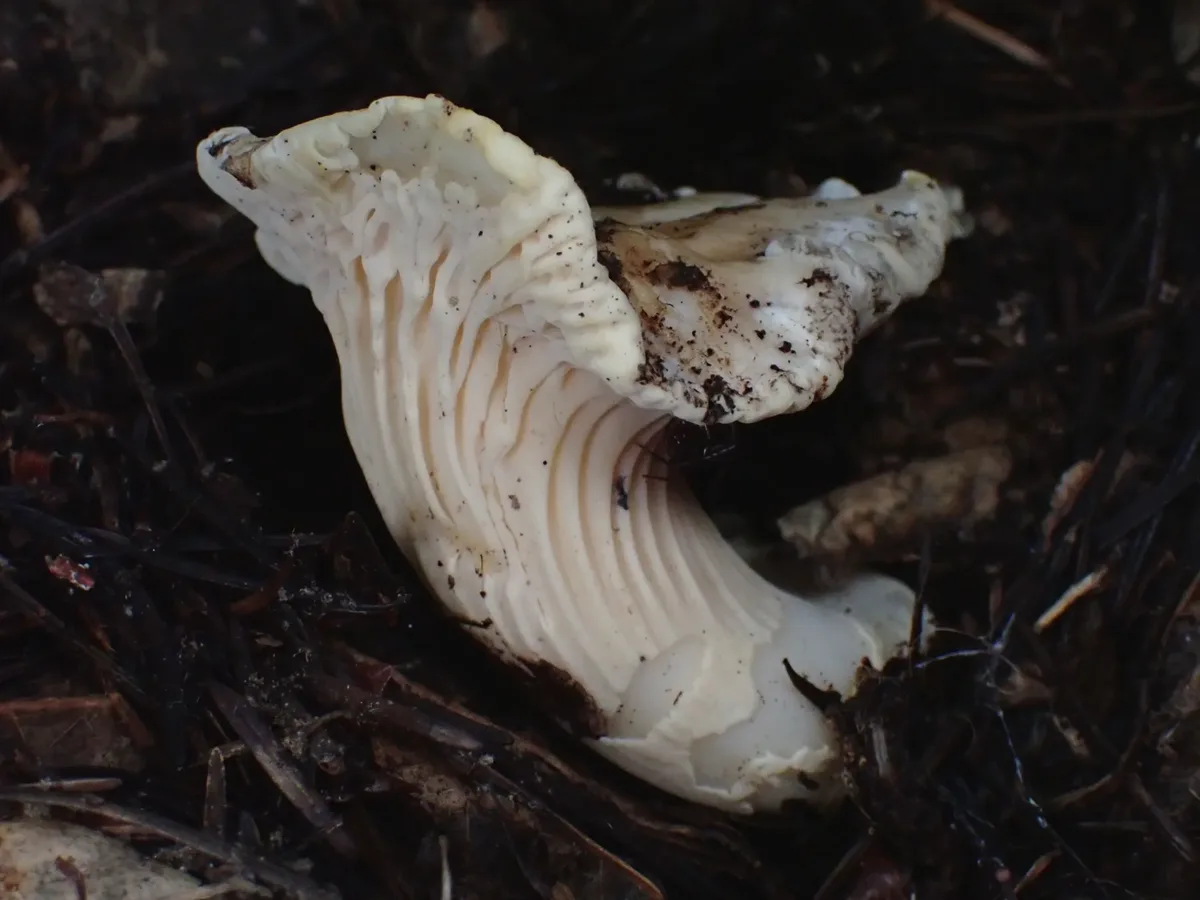 © Mandy Hackney (CC BY)
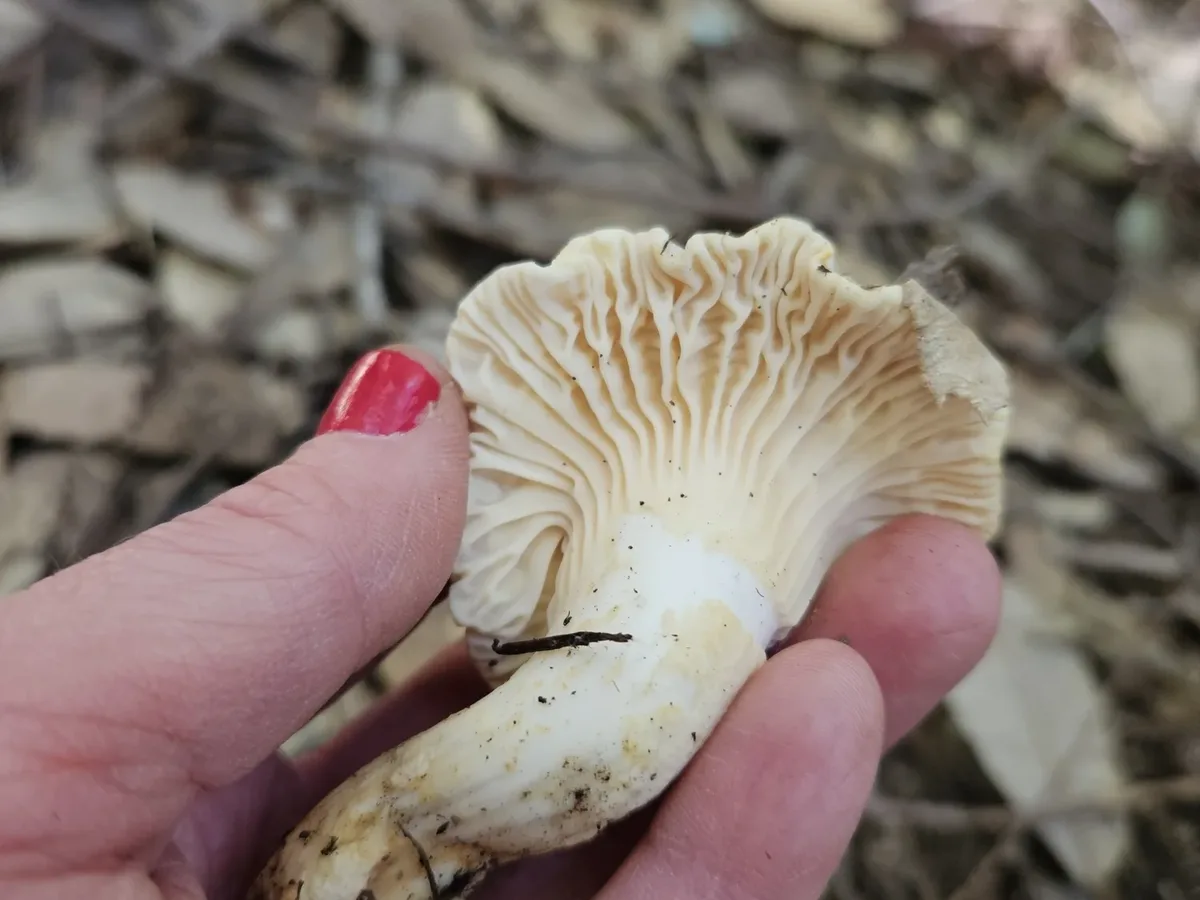 © Mandy Hackney (CC BY)
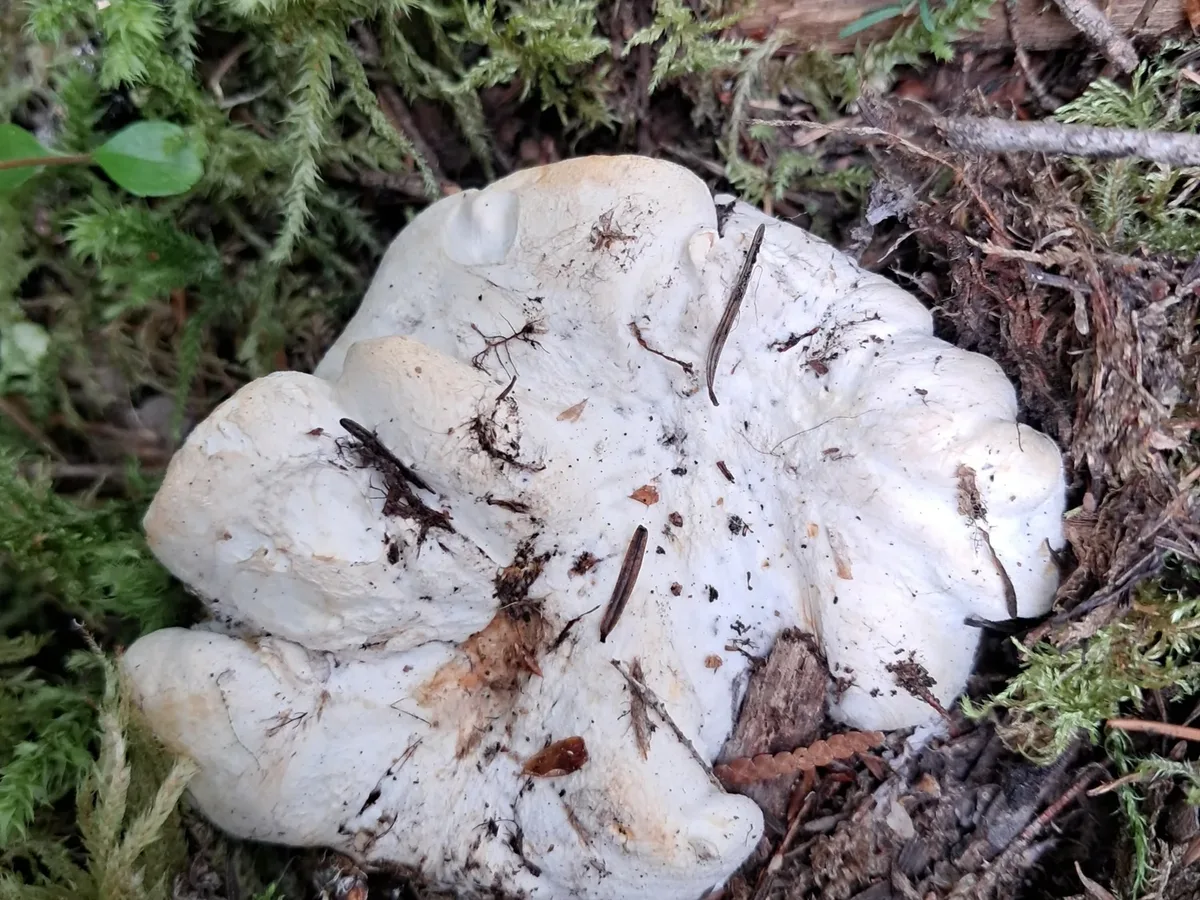 © Alex Reitan (CC BY)
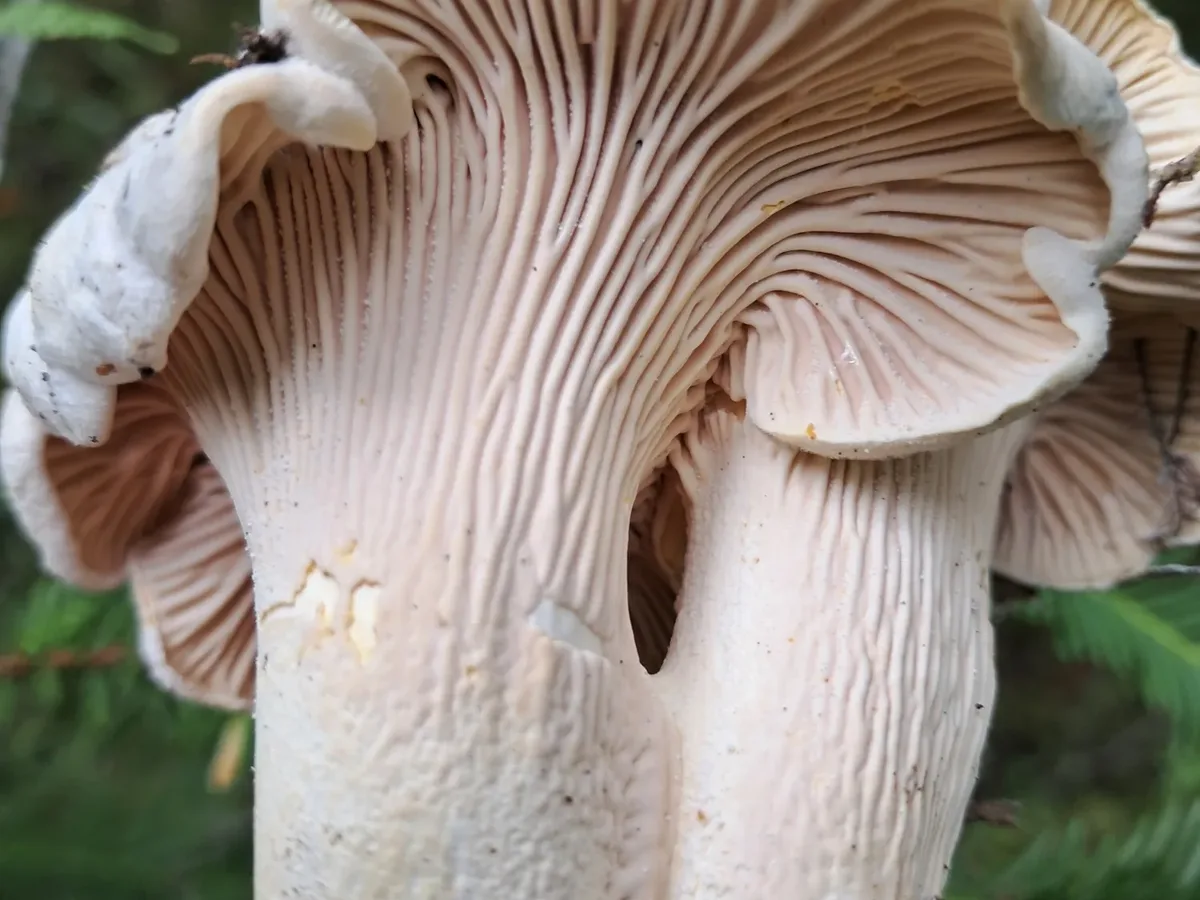 © Alex Reitan (CC BY)
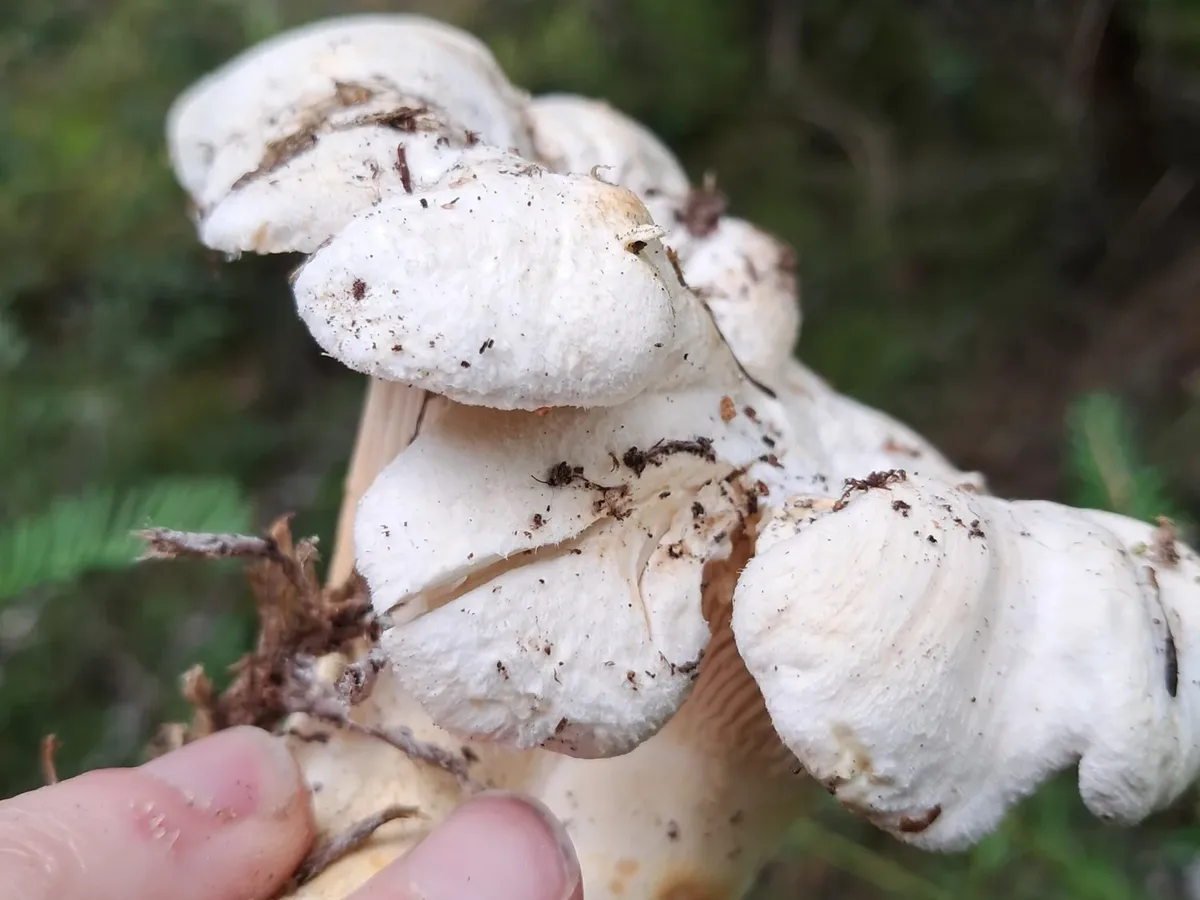 © Alex Reitan (CC BY)
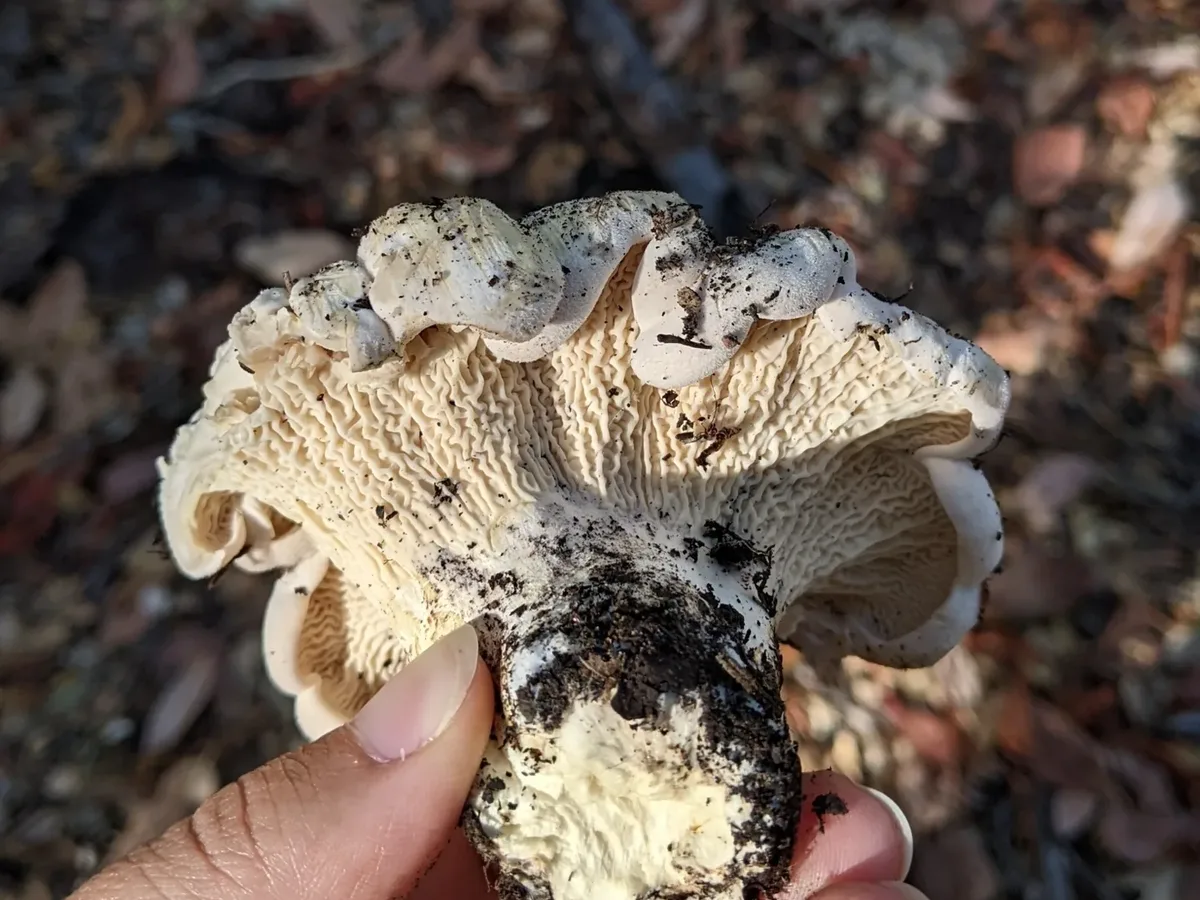 © Kayla Sweeten (CC BY 4.0)
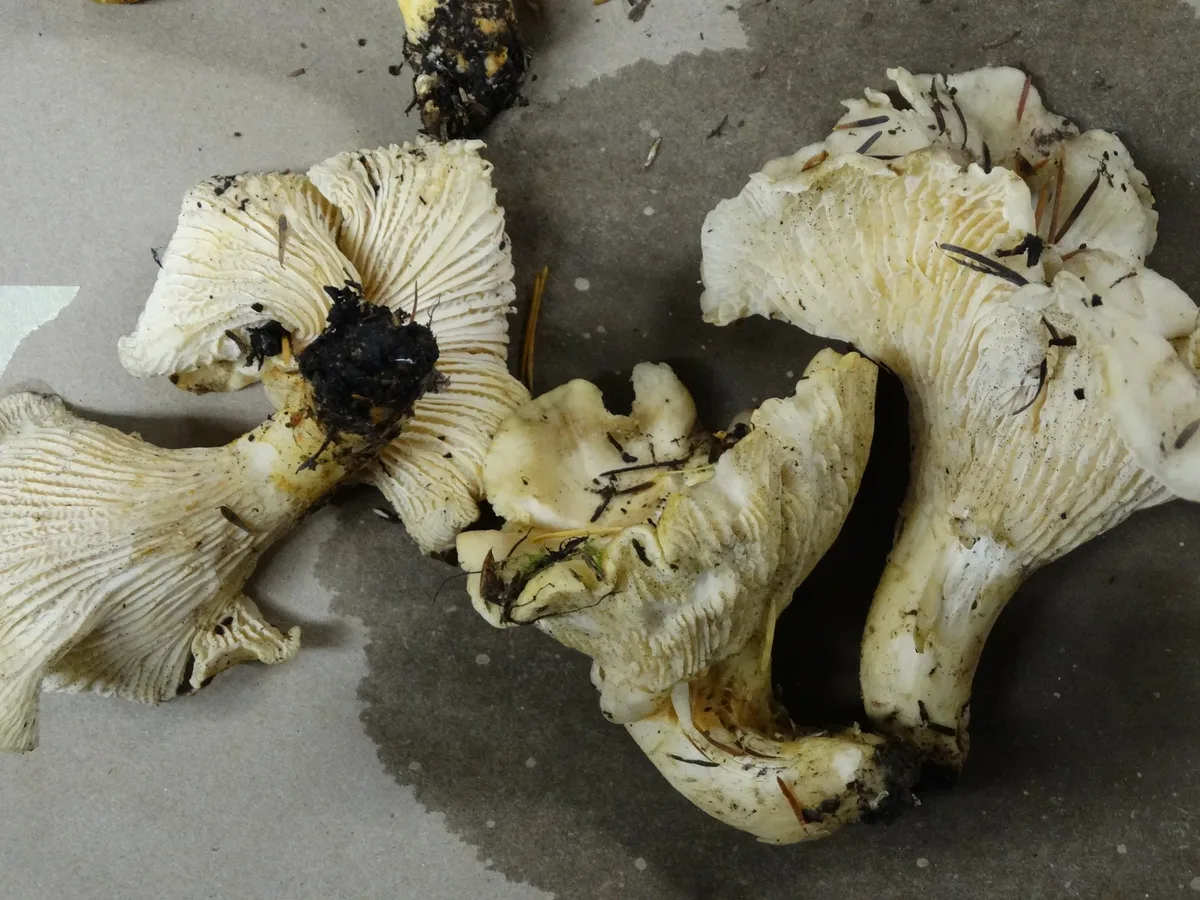 © Kem Luther (CC BY-SA 4.0)© Alan Rockefeller (CC BY 4.0)© Hilary Rose Dawson (CC BY 4.0)
One of the best mushrooms you can bring home - once you are certain of the identification.
Never eat a mushroom you are not 100% sure of - check the look-alikes below, and always cook wild mushrooms.
How to recognise it
The white chanterelle is immediately distinctive in a region dominated by the golden Cantharellus cibarius: where the golden chanterelle glows egg-yolk orange, Cantharellus subalbidus emerges a clean white to pale cream, the color of old bone or fresh snow in low light beneath the canopy.
Cap
Caps span 4-15 cm, beginning as broadly convex mounds and gradually flattening, the margin becoming distinctly wavy and lobed - sometimes so deeply incised that each lobe appears almost independent. The surface is dry and smooth, without scales or sliminess.
Flesh
The flesh is thick and firm throughout, white inside, staining a pale yellow-orange where cut or bruised. That staining reaction - more pronounced in older fruitbodies and where the base meets the substrate - is one useful confirmation cue.
Gills / Pores
The hymenium (spore-bearing surface) on the underside does not carry true gills: instead, the pale cream ridges are blunt-edged, repeatedly forked, and conspicuously decurrent, running down the stout, tapering stem like shallow ribs. A knife blade drawn lightly across them will confirm they are not blade-like gills but low, rounded folds that resist clean separation. The spore print is white.
Smell & taste
Aroma is mildly pleasant - earthy and faintly fungal - but markedly less fruity than the apricot note many foragers associate with the golden chanterelle.
Where & when it grows
Habitat
Cantharellus subalbidus forms obligate ectomycorrhizal partnerships with the dominant conifers of the Pacific Northwest coast ranges and Cascades:
- Douglas fir (Pseudotsuga menziesii)
- western hemlock (Tsuga heterophylla)
- Sitka spruce (Picea sitchensis)
- true firs (Abies spp.)
The relationship is mutualistic - the fungal mycelium sheaths the fine root tips of its host, expanding the tree's effective absorptive surface and trading mineral nutrients and water for photosynthates the tree produces.
This partnership is not quick to establish; older, undisturbed forest stands support the richest populations, and the species is markedly less abundant in second-growth plantations or heavily logged terrain.
Look for it in the deep duff layers - accumulated decades of decomposing needles and bark - of moist, shaded mid- to low-elevation conifer forest. Coastal fog belts in Oregon and Washington and the wetter western Cascade drainages in British Columbia are strongholds.
The mycelium persists invisibly through dry seasons and drought years, retreating underground rather than perishing, ready to fruit again when autumn rains arrive.
When
Fruiting runs from late September through February across most of its range, with the core flush concentrated from October through January.
This late-season timing makes the white chanterelle especially welcome: it arrives after most boletes, hedgehogs, and matsutake have finished and fills the basket when the forest floor is otherwise quiet.
In coastal British Columbia and the wet west slopes of the Washington and Oregon Cascades, mild winters can extend fruiting well into February. Elevation matters: populations in lower coastal valleys may peak in October-November while higher Cascade sites wait for temperatures to drop further before the first fruitbodies appear.
Fruiting is triggered by the combination of significant rainfall - typically at least 25 mm over the preceding two weeks - and a drop in soil temperature into the 5-15 °C window. Warm, dry autumns delay or suppress the flush entirely; the mycelium waits.
How it grows
Like all true chanterelles, Cantharellus subalbidus is ectomycorrhizal and cannot be cultivated - it depends on living host-tree roots for the carbon it cannot synthesize itself.
Underground, the mycelium forms a dense hyphal mat around feeder roots, creating the characteristic mycorrhizal mantle visible under magnification as a pale sheath.
Fruitbodies emerge singly or in small, loose groups - sometimes a handful scattered across a few square meters - and rarely in the dense clusters typical of decomposer species like oyster mushrooms. The development from pinhead to harvest-size fruitbody takes roughly one to two weeks under good conditions.
Individual fruitbodies persist longer than many species, remaining firm and edible for several days to two weeks before waterlogging or slug damage compromises quality.
Flushes are not perfectly predictable year to year; the same patch may produce abundantly in one autumn and be silent the next if rainfall timing or soil temperatures fall outside the fruiting window.
Fruiting conditions
Cool, wet autumn-to-winter conditions trigger fruiting in coastal PNW conifer forests; flushes follow significant rainfall after a drop in soil temperature.
Look-alikes
Three lookalikes require attention.
Jack-o'-lantern (Omphalotus olearius and related species) grows in dense clusters at the base of trees or from buried roots and has true, blade-like gills - thin, close, and sharply edged - instead of the chanterelle's blunt forked ridges; it is toxic, causing gastrointestinal distress.
False chanterelle (Hygrophoropsis aurantiaca) is typically orange rather than white, but paler forms occur; it also has true thin gills and a more deeply funnel-shaped cap with distinctly inrolled margins.
The critical distinction for both is the hymenium structure: the white chanterelle's ridges are blunt, shallow, repeatedly forked, and feel like low ribs under a finger, while true gills are thin, blade-like, and can be peeled away individually.
The most serious lookalike for this species is any white-gilled Amanita - including the deadly Amanita phalloides (death cap) in pale forms, Amanita ocreata (destroying angel), and Amanita bisporigera. These contain amatoxins that cause fatal liver and kidney failure.
The decisive exclusion features are:
- 1Amanita fruitbodies have TRUE GILLS, not blunt ridges - run a finger across the underside and confirm;
- 2Amanita species emerge from a volva, a membranous cup or sheath at the base of the stem buried in soil - dig gently around the base and check;
- 3Amanita stems are more slender and may show a ring.
The white chanterelle has no volva, no ring, and no true gills.
Because the white chanterelle is white, take extra care to exclude white-gilled Amanitas: the chanterelle has blunt forked RIDGES, not true gills, and has no volva.
Has true thin gills rather than the chanterelle's blunt forked ridges.
Has true thin gills rather than the chanterelle's blunt forked ridges.
In the kitchen
Picking & cleaning
Fruitbodies are fleshy and robust - they tolerate basket carrying far better than more fragile species.
The conventional method is to cut cleanly at the base with a knife, leaving the basal mycelium and attached duff undisturbed; alternatively, a gentle twist-and-pull can free the fruitbody without tearing the substrate. Opinion among foragers varies on which method best preserves the patch; there is no strong experimental evidence favoring either for mycelial recovery, but a clean cut minimizes soil disturbance.
Before placing in the basket, brush off loose duff and pine needles - the ridged underside traps debris.
Inspect the base of each fruitbody closely: confirm the absence of any basal cup or volva (sac-like membrane at the base), which is the first exclusion check against white-gilled Amanita species. The flesh should be solid and white throughout, with no hollow stem.
Cooking
The white chanterelle's flavor is mild, clean, and woodsy - subtler than the golden chanterelle's more assertive taste but in the same register, and the firm flesh holds its texture through longer cooking better than many species.
Dry-sautéing is the standard first step: place sliced or torn pieces in a dry, hot pan and cook until the released moisture has evaporated before adding butter or oil, which prevents a watery, stewed result. At that point the chanterelle caramelizes slightly and its flavor concentrates.
From there the applications are wide:
- folded through a risotto in the final minutes
- paired with eggs in a frittata or scramble
- layered into a cream sauce for pasta
- simply finished with butter, garlic, and thyme on toast
The firm texture also holds up in longer braises if added late.
Like most chanterelles it does not dry as well as porcini - drying mutes its flavor significantly - so fresh or lightly blanched-and-frozen preparation is preferred. A brief blanch before freezing preserves texture and flavor for several months.
Good to know
Cantharellus subalbidus is a choice edible mushroom with no known toxins and a long record of safe consumption.
Confident identification rests on confirming three features together:
- 1blunt, forked, decurrent RIDGES on the underside - not true gills;
- 2no volva or basal cup at the stem base;
- 3white, firm, non-hollow flesh that stains faint yellow-orange when cut or bruised.
Because this species is white, the risk of misidentification with deadly white-gilled Amanita species is higher than for the golden chanterelle - do not let familiarity with the golden chanterelle substitute for a full check of these features on every white specimen.
Collect only fruitbodies in good, fresh condition; old, waterlogged, or insect-riddled specimens degrade quickly and may cause gastrointestinal upset even though the species itself is edible.
A reference guide - never an edibility guarantee. When in doubt, leave it out.