Western destroying angel
Amanita ocreata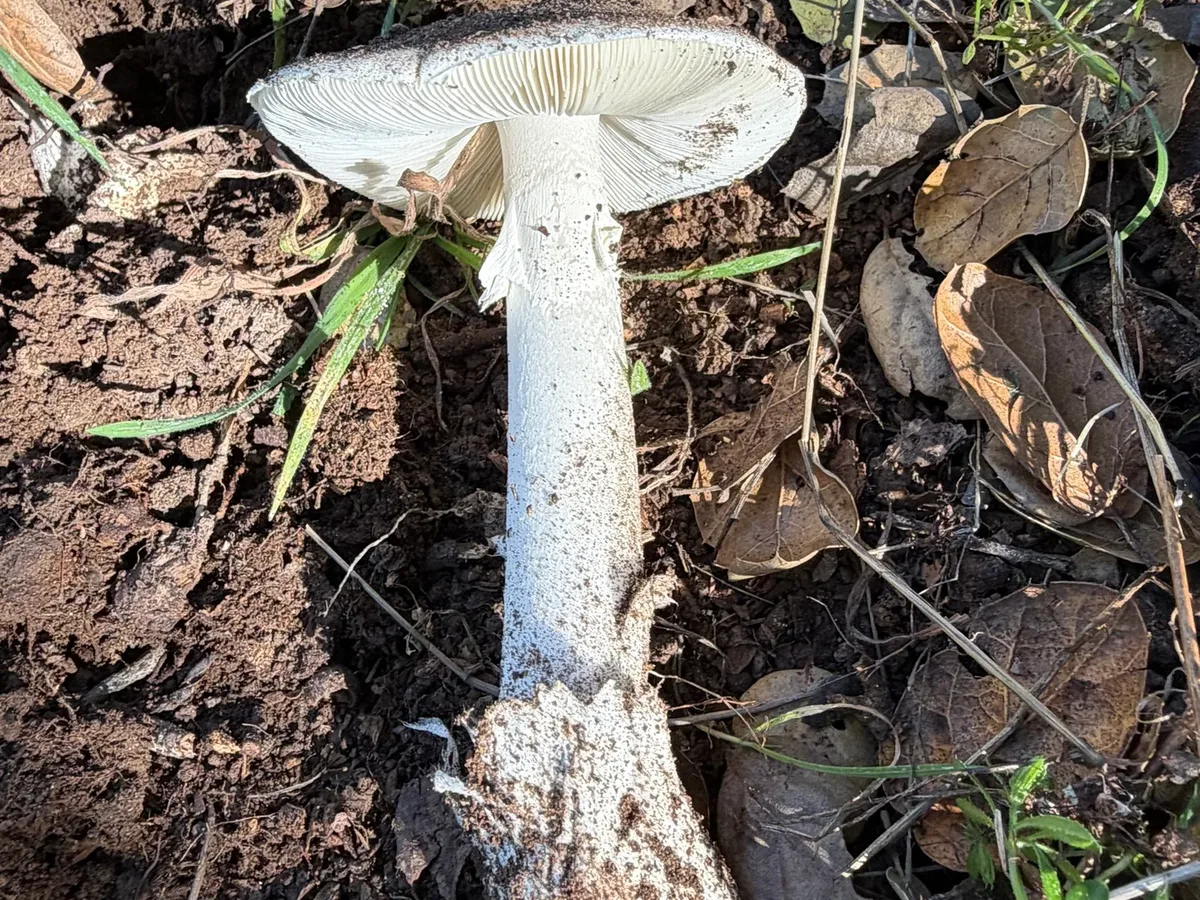 © Irina Mitine (CC BY)
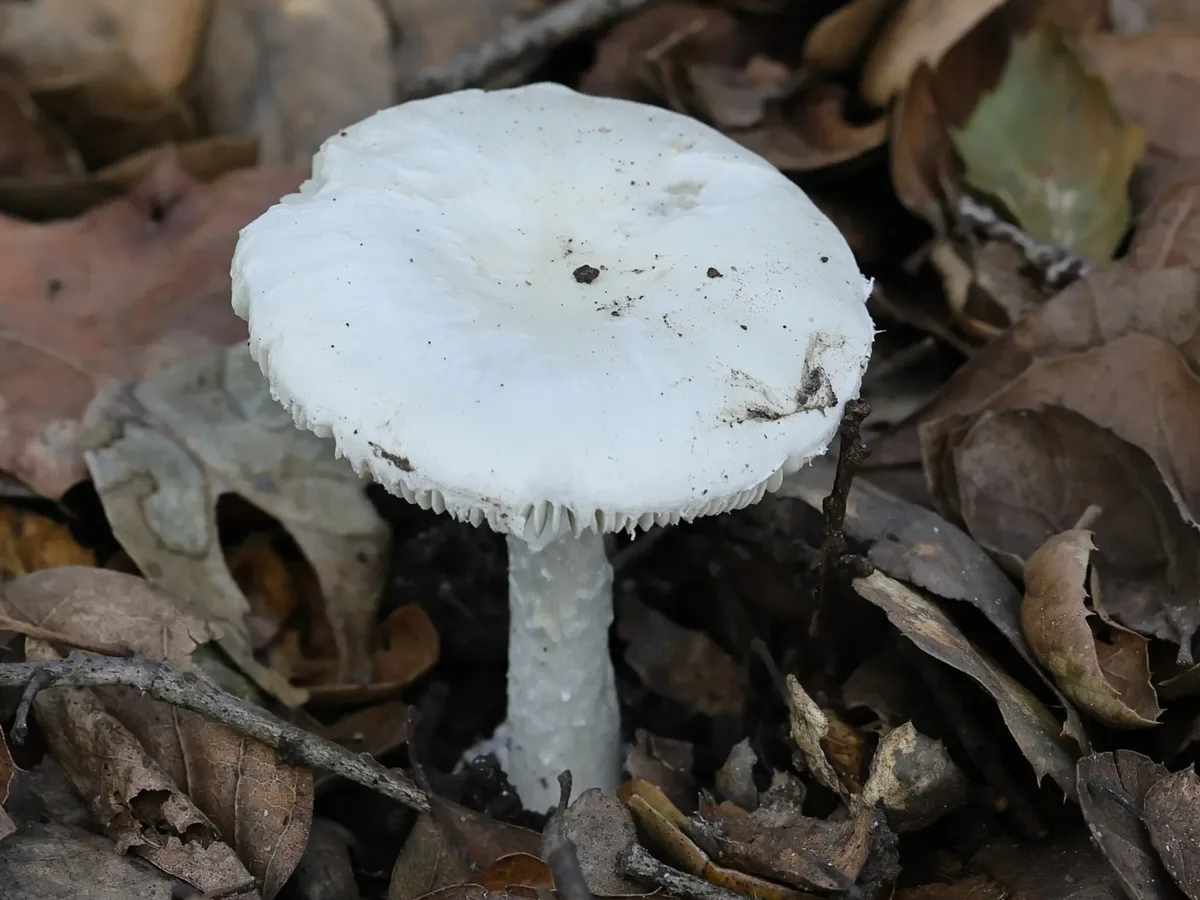 © nmoorhatch (CC BY)
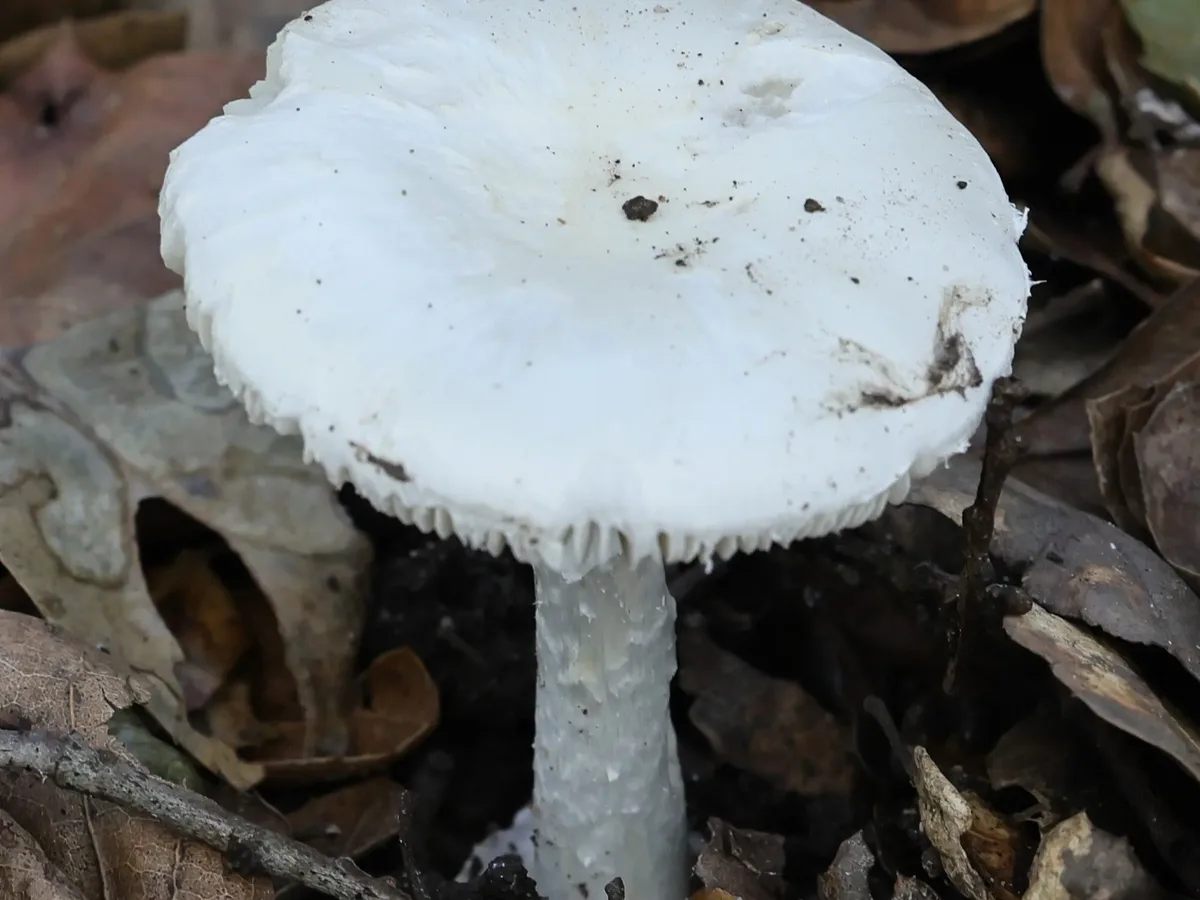 © nmoorhatch (CC BY)
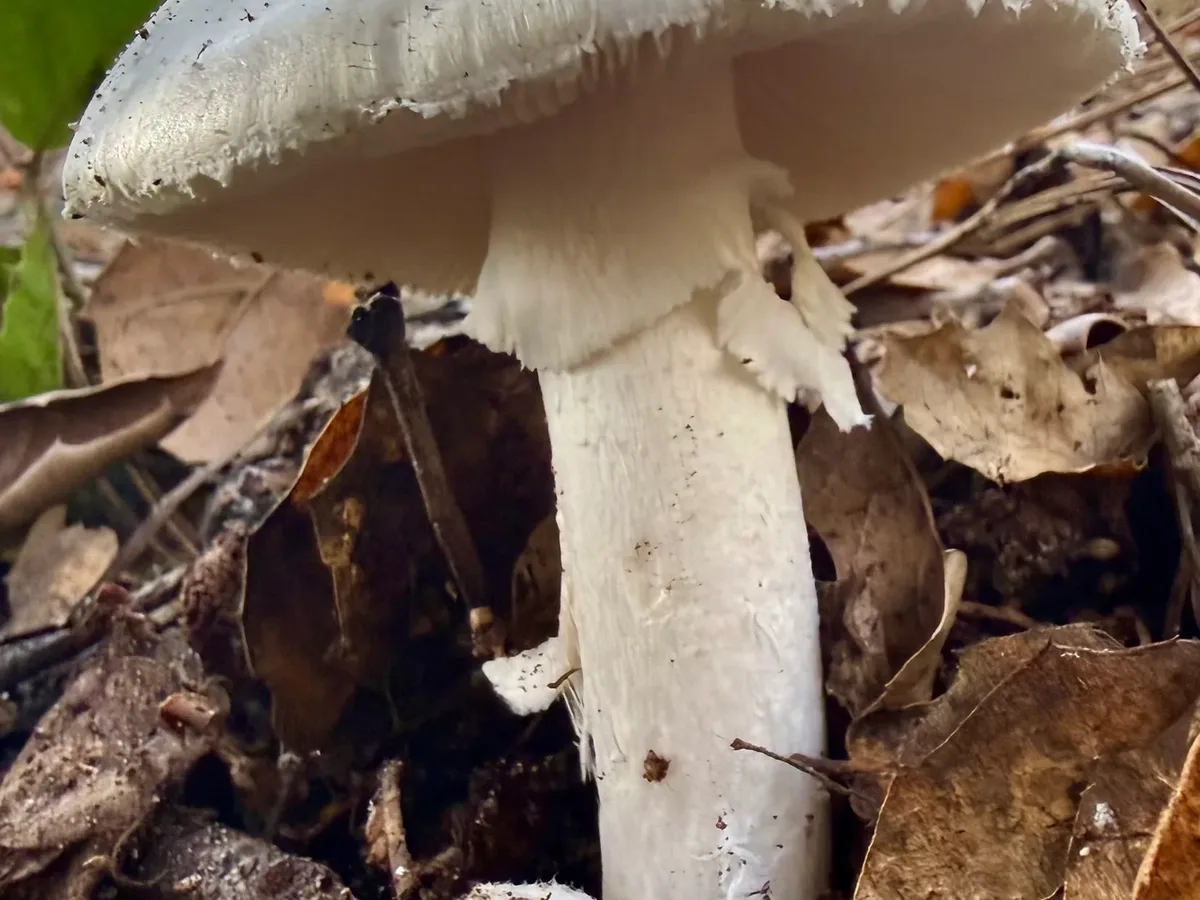 Chuck Wilson (CC0)
 Chuck Wilson (CC0)
 Chuck Wilson (CC0)© Irina Mitine (CC BY)© nmoorhatch (CC BY)
Toxic - and the most serious cases can be fatal. Never eat it, and wash your hands after handling.
Never eat a mushroom you are not 100% sure of - check the look-alikes below, and always cook wild mushrooms.
How to recognise it
The Western destroying angel is a study in deceptive plainness. Young fruiting bodies emerge from the soil as white or creamy eggs - smooth, firm, and wholly enclosed in a universal veil that sheathes every surface.
As the cap expands over days, the veil ruptures: the upper portion stretches into a thin, skirt-like annulus (ring) draped around the upper stem, and the lower portion tears free to become the volva, a thick white sac that cups the stem base and typically remains buried several centimetres beneath the soil surface.
Cap
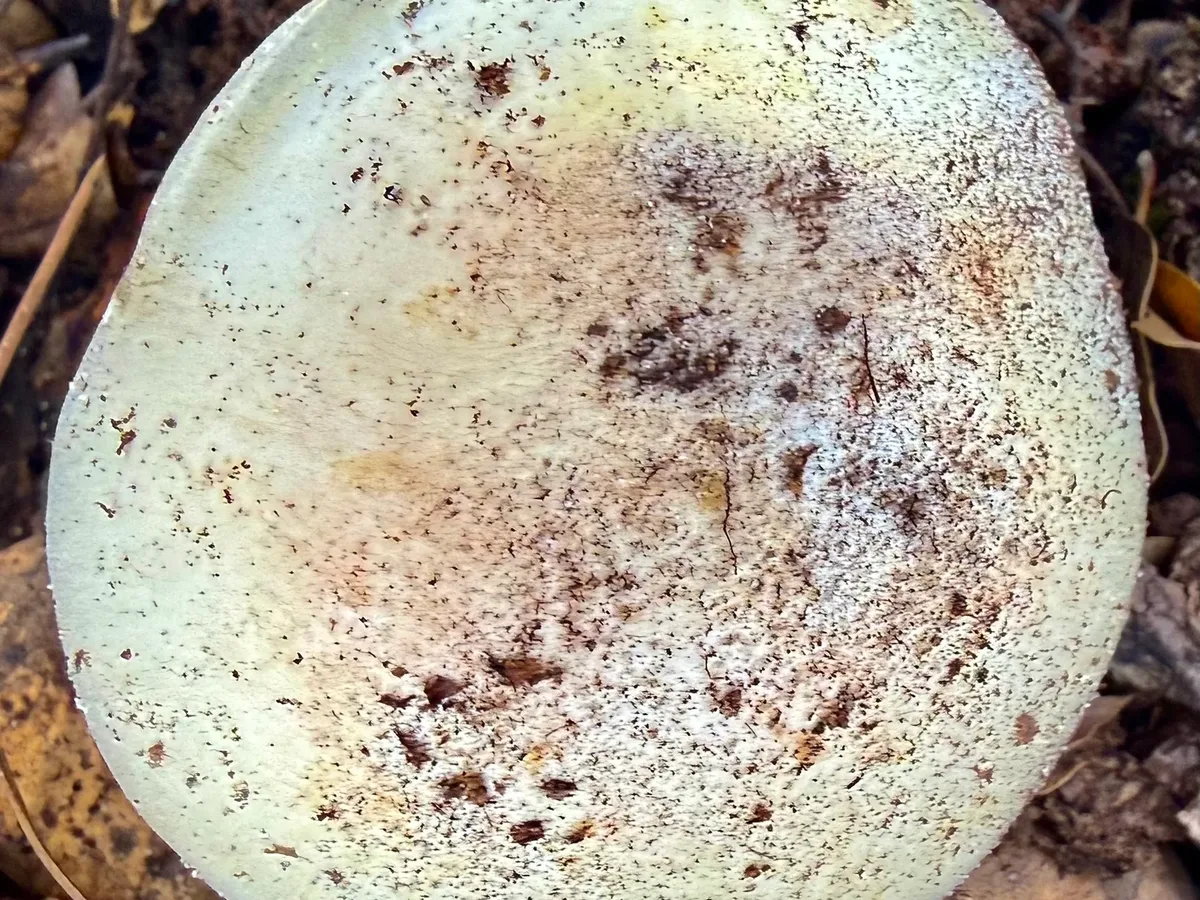
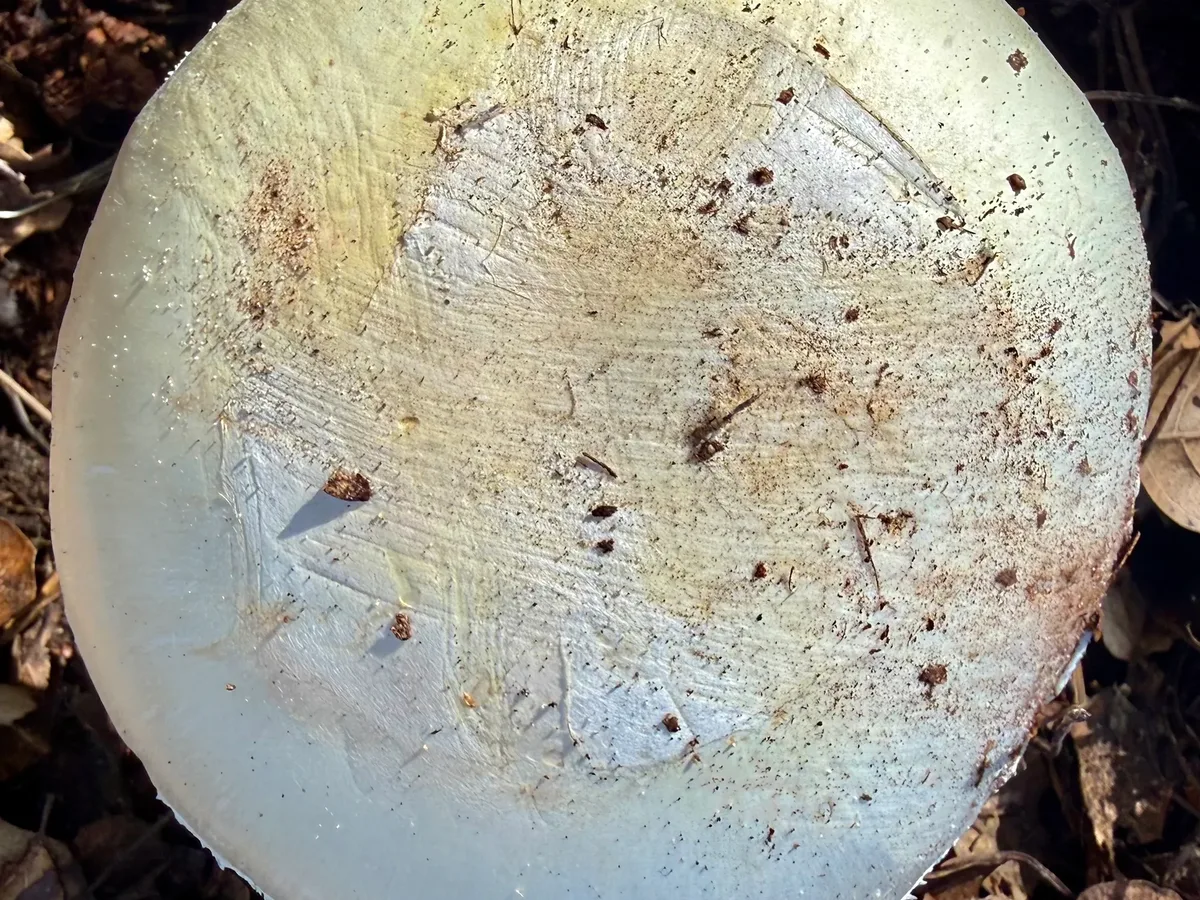
The cap reaches 5-15 cm across, beginning egg-shaped then flattening to broadly convex or almost plane. The surface is smooth, white to off-white, often picking up an ochre or pale tan wash at the centre as it matures.
Gills
Gills are white, crowded, and free from the stem - they do not attach to or run down it. Spore print white.
Stem
The stem is white, 8-20 cm tall, slightly club-shaped, and may carry faint fibrous ornamentation or faint scaly patches below the ring.
Flesh
The flesh is white throughout, firm when fresh, and does not discolour when cut.
Smell & taste
Young or freshly opened specimens smell mild or faintly sweet; with age the odour shifts to something sharp and unpleasant - described variously as chlorine, fish, iodine, or honey-gone-wrong.
A drop of 10% potassium hydroxide (KOH) on the fresh flesh produces an immediate bright yellow stain, a reaction diagnostic for A. ocreata and useful in the field if you carry a KOH swab - though that diagnostic test is for identification only; the mushroom is still deadly.
Why it's dangerous
DEADLY - no qualification, no exceptions. Amanita ocreata kills adults at doses achievable from a single cap. It kills dogs. It has no antidote.
Symptoms are delayed by 6-24 hours, which means patients frequently do not seek care until irreversible liver damage is underway. Emergency liver transplantation is sometimes the only life-saving option, and is not always available or successful.
This species causes more fatal poisonings per year on the West Coast of North America than any other fungus.
If there is any possibility that A. ocreata has been eaten - even a small taste, even if the patient feels well - call Poison Control immediately (US: 1-800-222-1222) and go to an emergency department without waiting for symptoms.
Toxin
Amanita ocreata contains amatoxins - primarily alpha-amanitin and beta-amanitin - the same bicyclic octapeptides responsible for the toxicity of the death cap (Amanita phalloides) and destroying angel (A. bisporigera).
Alpha-amanitin acts by irreversibly binding and inhibiting RNA polymerase II, the enzyme that transcribes messenger RNA in eukaryotic cells. Once absorbed across the gastrointestinal mucosa, it concentrates in the liver, where hepatocytes undergo progressive necrosis as their capacity for protein synthesis collapses. The kidneys are the second major target.
The lethal dose in humans is estimated at approximately 0.1 mg per kilogram of body weight. A single average fruiting body of A. ocreata may contain 5-15 mg of alpha-amanitin - sufficient to kill an adult.
Critically, the toxins are not destroyed by heat, drying, freezing, or any culinary process, and they are absorbed through the gut wall without significant degradation.
Symptoms
Amatoxin poisoning follows a characteristic three-phase sequence that routinely leads to delayed medical treatment, because the initial phase mimics a self-limiting gastroenteritis.
- 1Latent phase: following ingestion, symptoms are absent for 6-24 hours, occasionally as long as 36 hours - the longest silent period of any mushroom toxin syndrome. During this window amatoxins are already being absorbed and transported to the liver.
- 2Gastrointestinal phase: sudden onset of severe, watery (sometimes bloody) diarrhoea, nausea, vomiting, and abdominal cramps, beginning at 6-24 hours post-ingestion and lasting 12-24 hours. Patients who present at this stage are frequently misdiagnosed as having gastroenteritis; many are discharged after rehydration.
- 3Hepatorenal phase: a brief apparent improvement is followed - 2-6 days after ingestion - by rapid deterioration as hepatocellular necrosis becomes clinically apparent. Laboratory values show sharply rising transaminases (AST, ALT), rising bilirubin, prolonged clotting times, and falling blood glucose. Acute liver failure and, frequently, acute kidney injury develop.
Without aggressive supportive care and, in severe cases, emergency liver transplantation, death follows within 6-16 days of ingestion.
If Amanita ocreata poisoning is suspected at any stage, go to an emergency department immediately and do not wait for symptoms to worsen.
Staying safe
DEADLY. Amanita ocreata is responsible for the majority of fatal mushroom poisonings in California and the Pacific Northwest, a distinction it holds year after year.
The toxins are alpha- and beta-amanitin (amatoxins), the same compounds responsible for the lethality of the death cap (A. phalloides). There is no antidote. No preparation method neutralises amatoxins.
The mushroom is lethal to dogs as well as humans, and canine deaths from A. ocreata are recorded annually. Even experienced foragers have been fatally poisoned by it through confusion with A. velosa.
The risk is highest during the peak January-April window, when foraging activity is elevated and the species is at maximum abundance.
Before eating any white, gilled mushroom in Pacific oak woodland, the distinguishing features that must be checked are:
- 1Volva at the stem base - always dig to expose it.
- 2Presence of a ring - A. velosa lacks one.
- 3Cap margin - striate in A. velosa, smooth in A. ocreata.
- 4Gill colour - white and free in all Amanita.
If in any doubt, do not eat the specimen.
Where & when it grows
Habitat
Amanita ocreata is a mycorrhizal specialist, threading its hyphae through the fine rootlets of oaks and sharing a long, obligate partnership with them. In practice this means the species almost always fruits within the dripline of oaks - coast live oak (Quercus agrifolia), Garry oak (Q. garryana), blue oak (Q. douglasii), and Oregon white oak among them - and occasionally under hazel (Corylus), which can also form mycorrhizal associations.
The range runs from the Pacific slopes of Washington State southward through Oregon, the entire length of California, and into Baja California, with occasional records from Vancouver Island.
Geologically this aligns well with the distribution of California's oak woodlands: the coast ranges, the foothills of the Sierra Nevada, and the mixed oak-woodland corridors of the Central Valley margins. Within the Pacific Northwest proper the species is most reliable in the Willamette Valley and coastal Oregon wherever Garry oak savanna persists.
It does not establish in conifer forest without oaks, which makes host-tree identification a useful first filter when determining whether the habitat carries any risk at all.
When
Amanita ocreata occupies an unusual phenological window for the genus: it is a late-winter to mid-spring species, fruiting from January through April, occasionally persisting into early May in cool coastal microclimates or at higher elevation. This contrasts sharply with the autumn-centred fruiting of most temperate Amanita.
The trigger appears to be the West Coast's seasonal rhythm of winter rain followed by soil warming. When soils that have been chilled through December begin to climb back through the 8-16 °C range, and when 14-day rainfall exceeds roughly 20 mm, the mycelium initiates fruitbodies. The flush often arrives 7-14 days after a significant rain event.
Crucially, this window overlaps almost perfectly with the spring foraging season - the same weeks that morels begin to push in burn sites, that hedgehogs and yellowfoot chanterelles linger in the coast ranges, and that the edible springtime amanita (A. velosa) emerges under oaks.
That ecological overlap is the primary reason A. ocreata accounts for the majority of fatal poisonings on the West Coast year after year.
How it grows
The mycelium of Amanita ocreata persists through the long dry California summers as dormant hyphal strands intertwined with its host's root tips, exchanging carbon from the tree for phosphorus, water, and minerals from the soil - a partnership that can be decades old.
When conditions shift in winter - sufficient rain, the right soil temperature - the mycelium condenses into a primordium, a knot of densely packed hyphae that inflates into the egg stage visible at the soil surface.
The entire process from primordium to a fully opened cap can take as little as three to five days in warm, moist conditions; under cold, damp weather the egg stage may persist for a week or more.
Fruiting bodies appear singly or in small scattered groups, occasionally in loose clusters where the root system of a single large oak radiates outward.
The volva, which remains in the soil at the stem base, is often covered by the surrounding duff and leaf litter, making it invisible unless the stem is carefully uprooted and the base examined. This buried structure is fundamental to the biology - it is the remnant of the original universal veil - and its presence is one of the clearest markers of genus Amanita.
Fruiting conditions
Fruits in the mild, wet winter-to-spring window of the West Coast (January-April), associated with oak.
Look-alikes
Four species account for nearly all confirmed or suspected A. ocreata poisonings.
Amanita velosa (springtime amanita) is the most dangerous confusion target, because it is genuinely edible, is collected by experienced foragers in the same oak woodland at the same time, and superficially resembles A. ocreata: both are white, emerge from a volva, and fruit under oaks in early spring. The critical differences are absolute: A. velosa never develops a ring - the partial veil that would form the ring is absent or vestigial - and its cap margin is distinctly striate (grooved with fine radial lines), especially near the edge. If a ring is present or the cap margin is smooth, the specimen is not A. velosa.
Amanita lanei (syn. A. calyptroderma), the coccora, is another prized edible that shares the same habitat and season. It is distinguished by its notably tan-to-golden-brown cap and thicker, more robust volva with a brownish inner surface - A. ocreata is persistently white.
Agaricus species (button mushrooms and their wild relatives) resemble young A. ocreata at the egg or button stage. Agaricus always has gills that mature from pink to chocolate-brown (never remaining white) and lacks a volva at the base.
Common puffballs (Calvatia, Lycoperdon) resemble the buried egg stage when only the white dome is visible. Bisect any suspected puffball vertically: a true puffball is homogeneous white flesh with no internal anatomy, while an Amanita egg shows a distinct developing fruitbody inside.
Young Agaricus can be confused with young (egg-stage) specimens; Agaricus has pink-to-brown gills and lacks a volva.
Also known as A. calyptroderma; has a darker cap.
Young egg-stage specimens can resemble puffballs; cut in half to reveal the developing mushroom with cap, gills, and stem inside.
Edible; lacks a ring and has a striate (grooved) cap margin.
A reference guide - never an edibility guarantee. When in doubt, leave it out.