Western panther cap
Amanita pantherinoides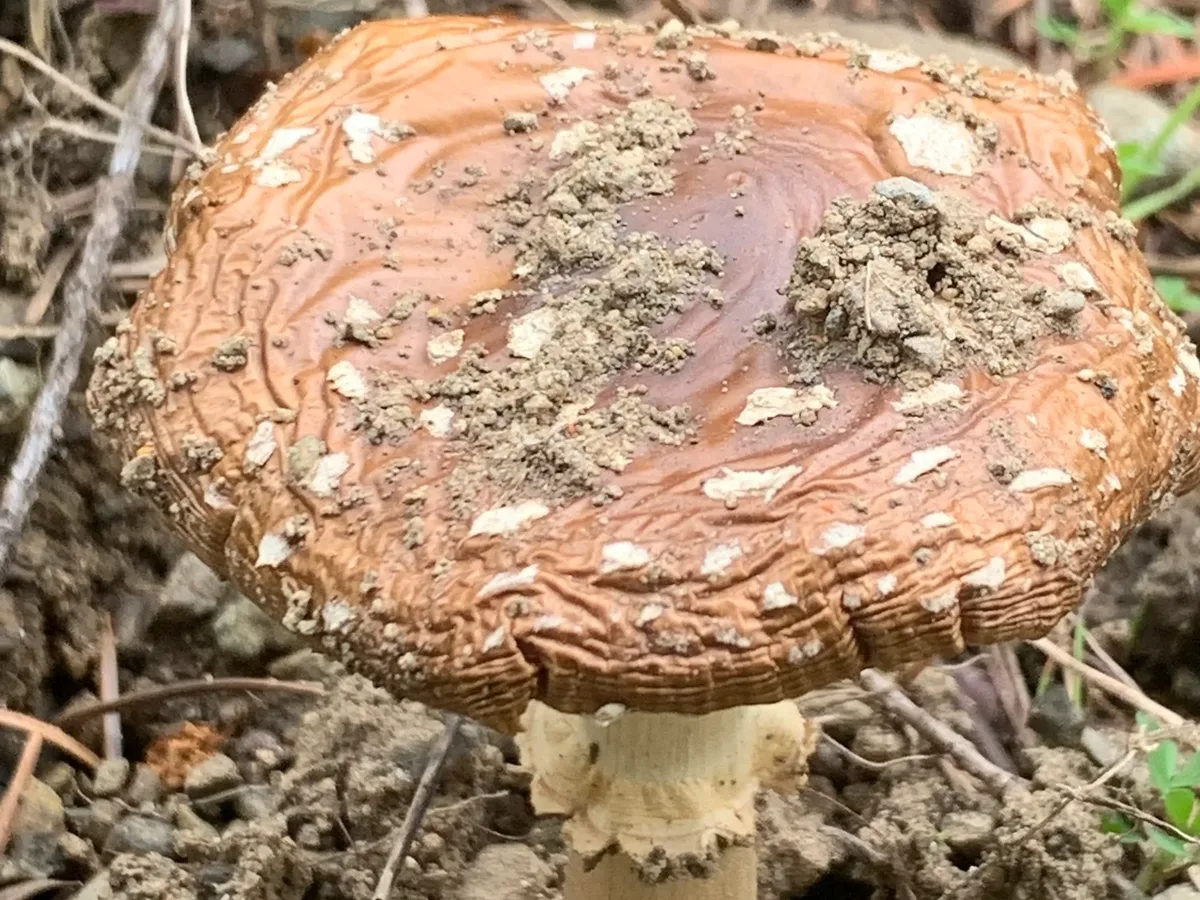 © Corvi Zeman (CC BY 4.0)
 © Nicholas Thweatt (CC BY 4.0)
 davidbroadland (CC0)
 © Cypress Hansen (CC BY)
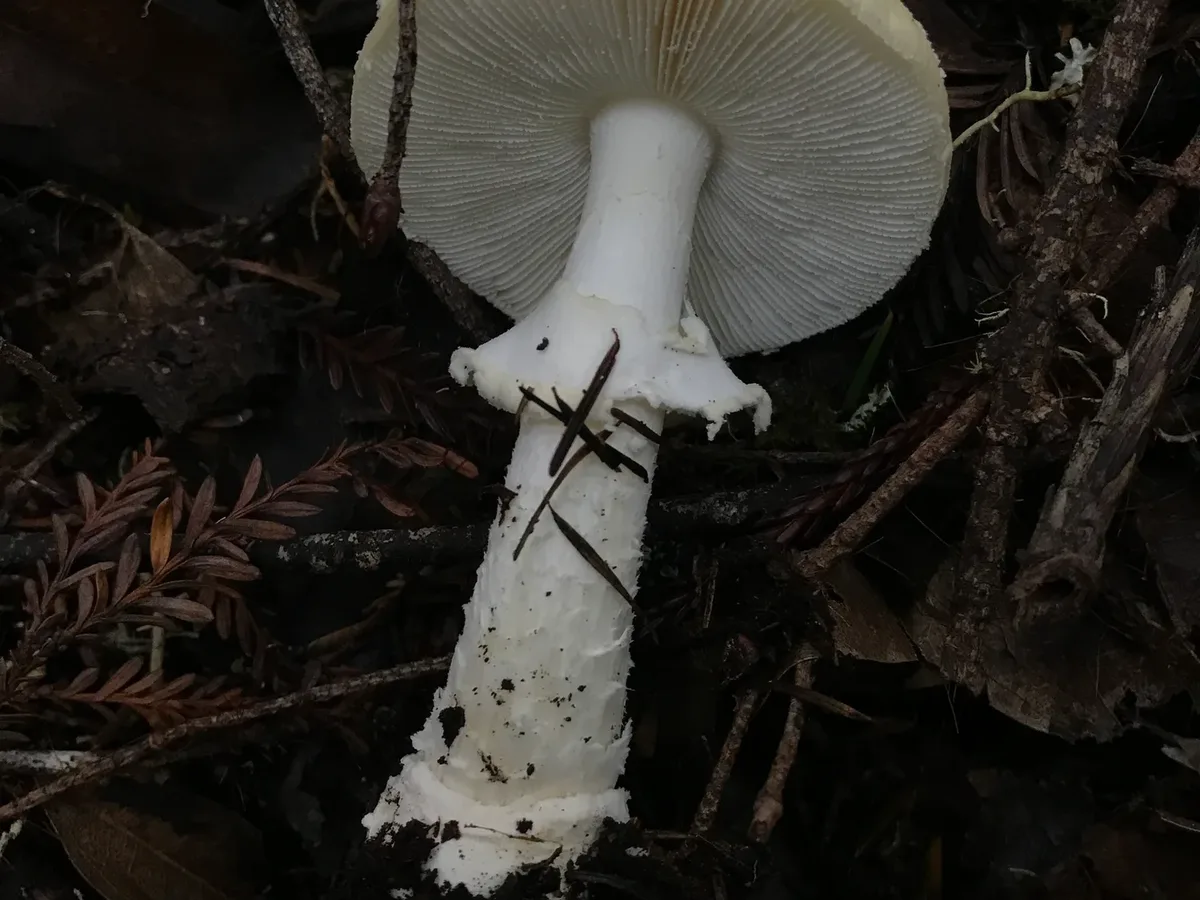 © Matthew Rozanoff (CC BY)
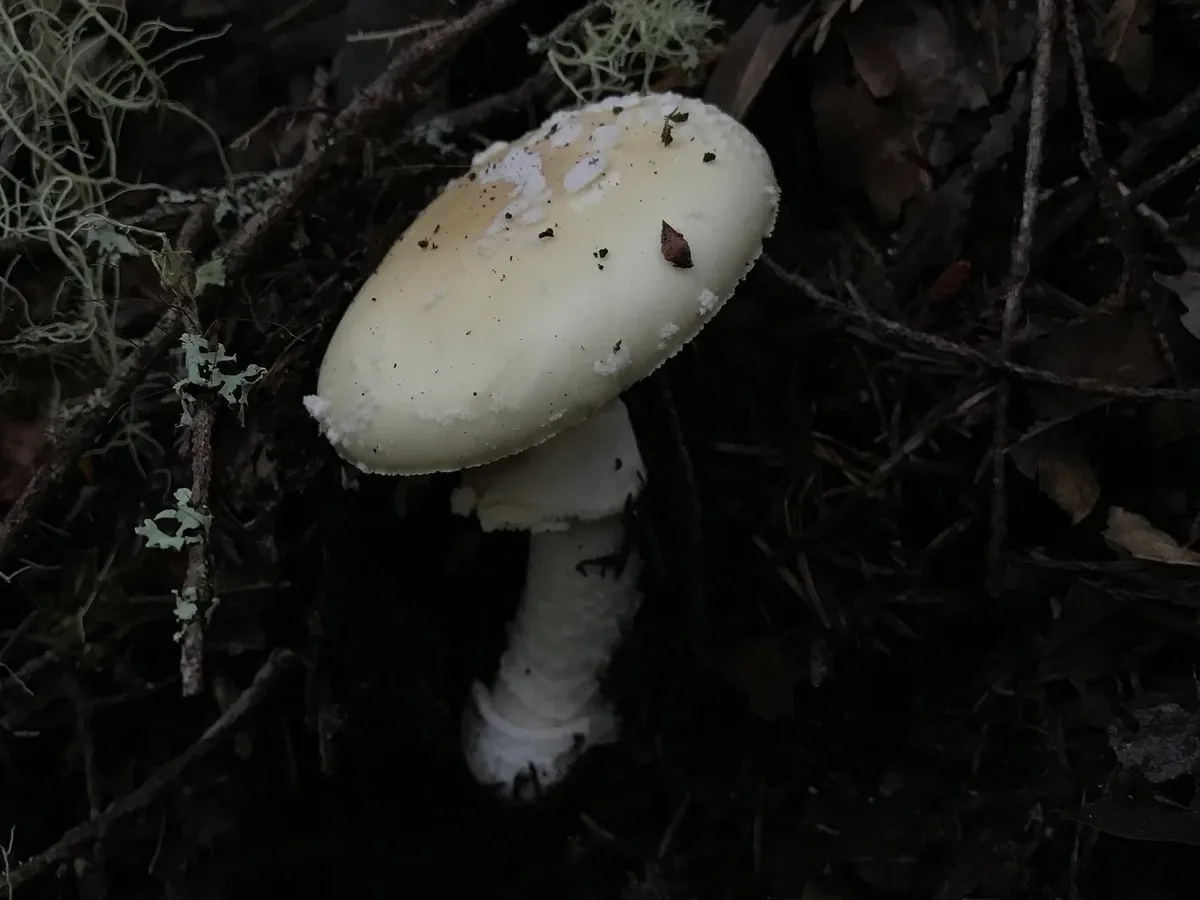 © Matthew Rozanoff (CC BY)
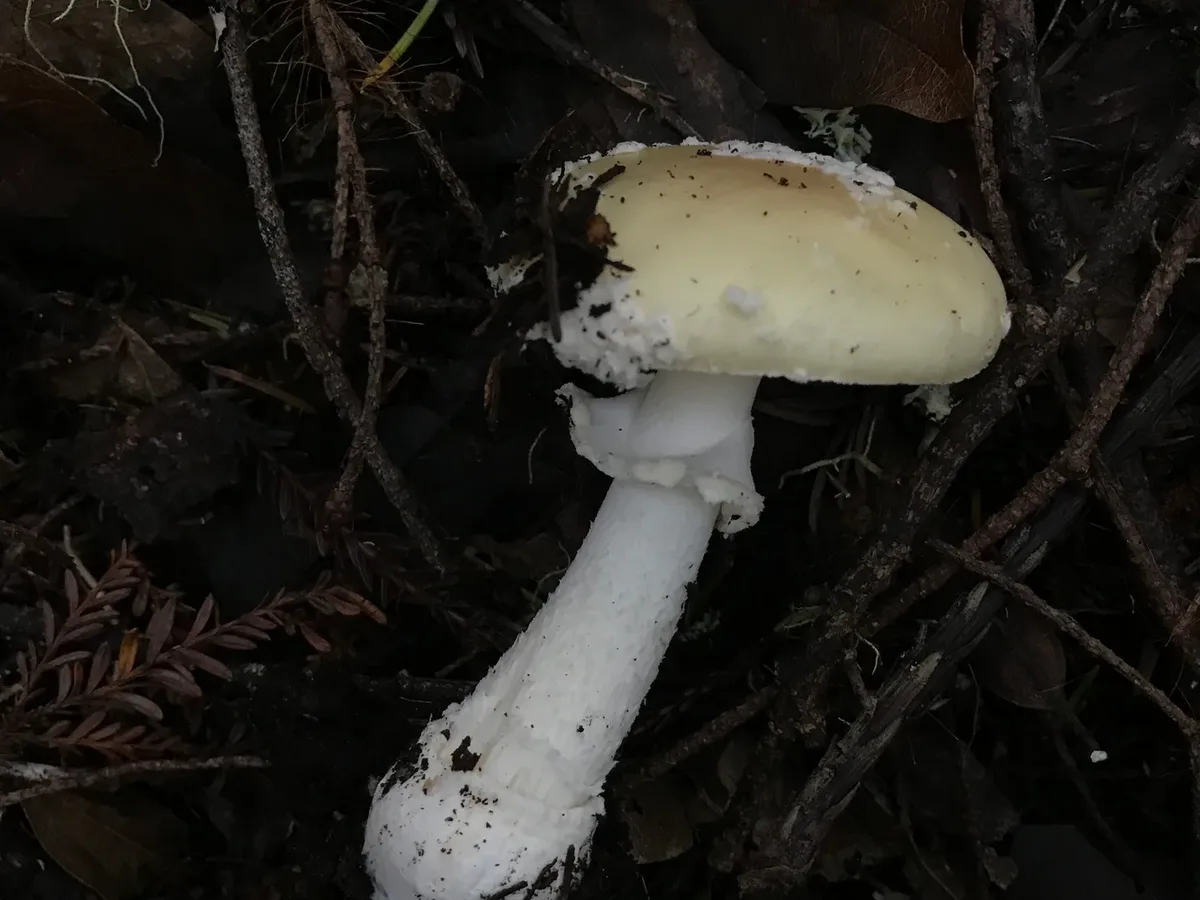 © Matthew Rozanoff (CC BY)
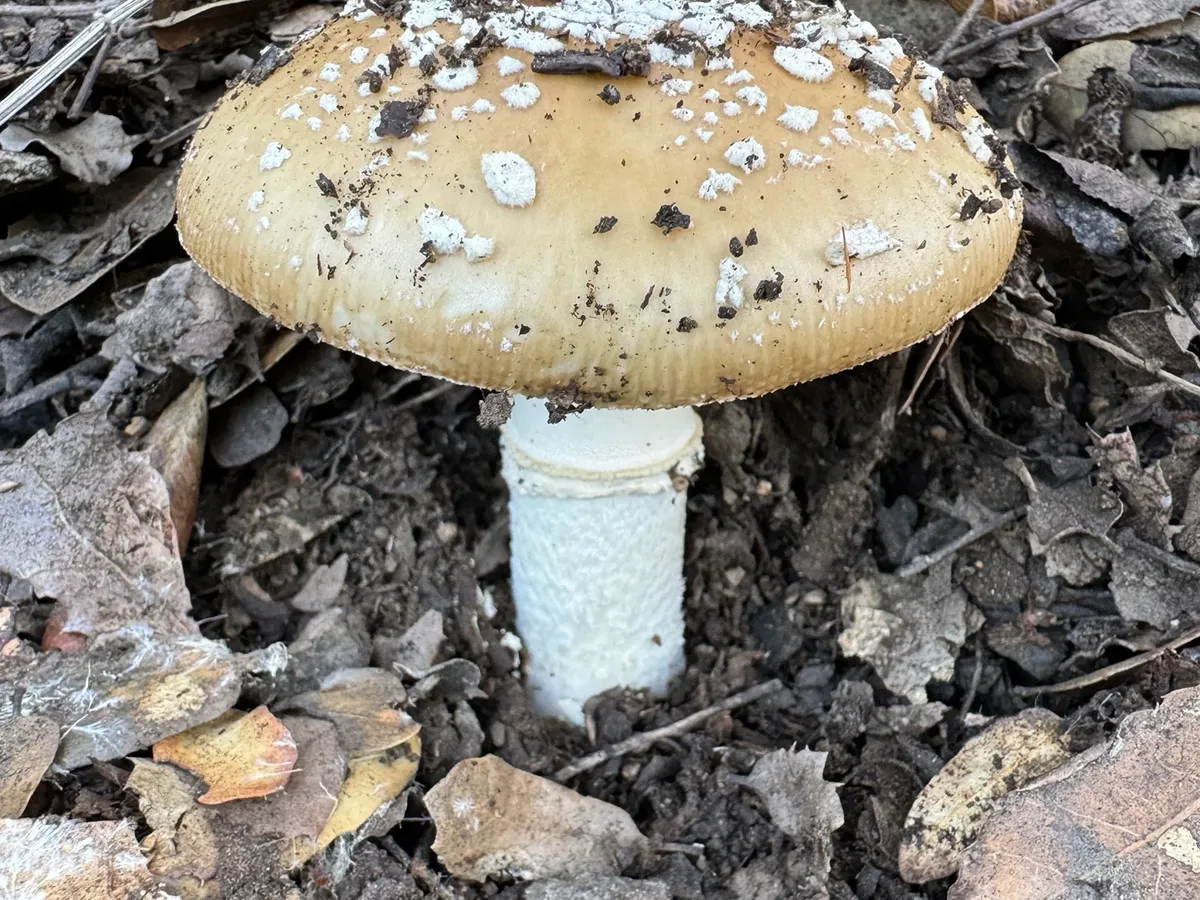 © TM (CC BY)
 © TM (CC BY)
 © TM (CC BY)
 Alex Heyman (CC0)
 Liam Steele (CC0)
 © Ty Creelan (CC BY-SA 4.0)
 Drew Meyer (CC0)© Corvi Zeman (CC BY 4.0)© Nicholas Thweatt (CC BY 4.0)
Edible only with the right preparation - or safe for some people but not others. Learn the caveats first.
How to recognise it
Amanita pantherinoides is a mid-sized to large agaric that arrests the eye the moment it emerges from the leaf litter.
Cap
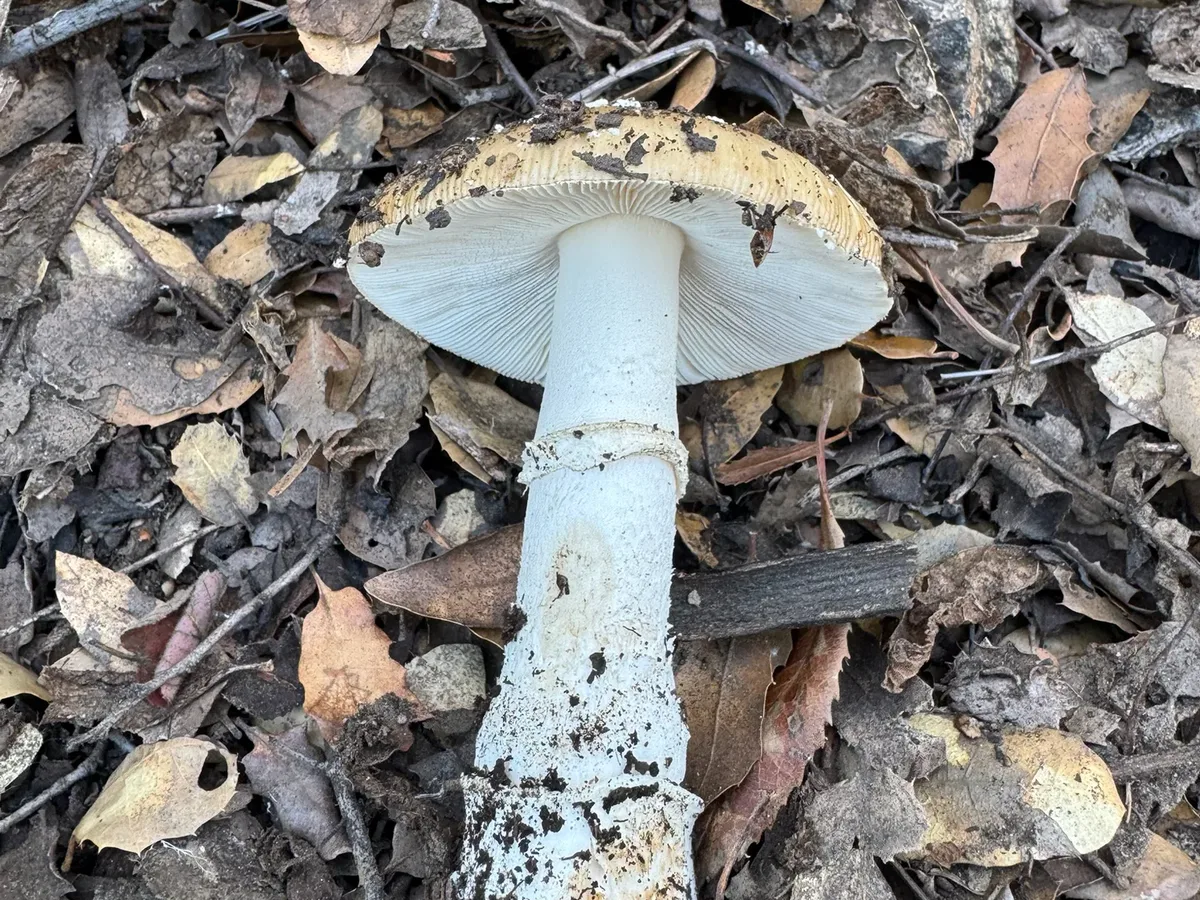
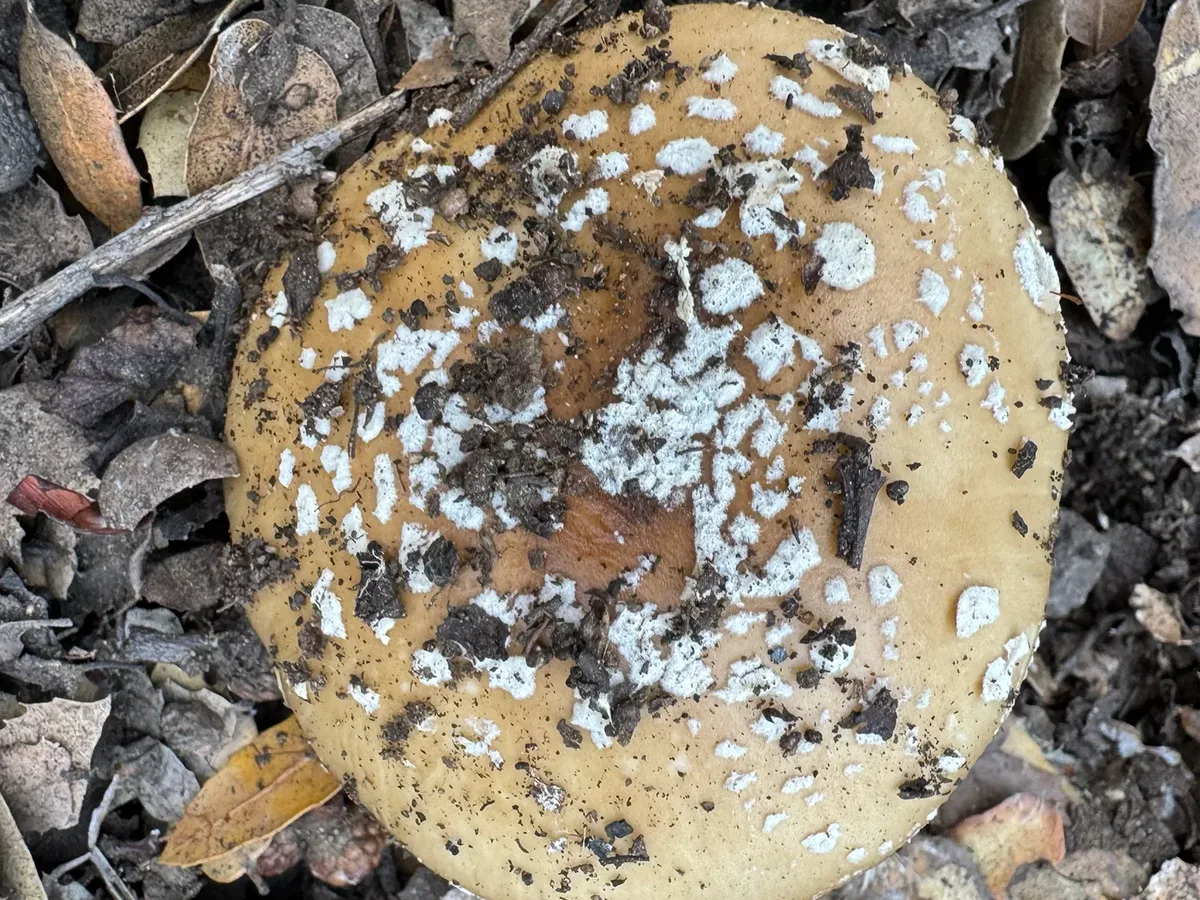
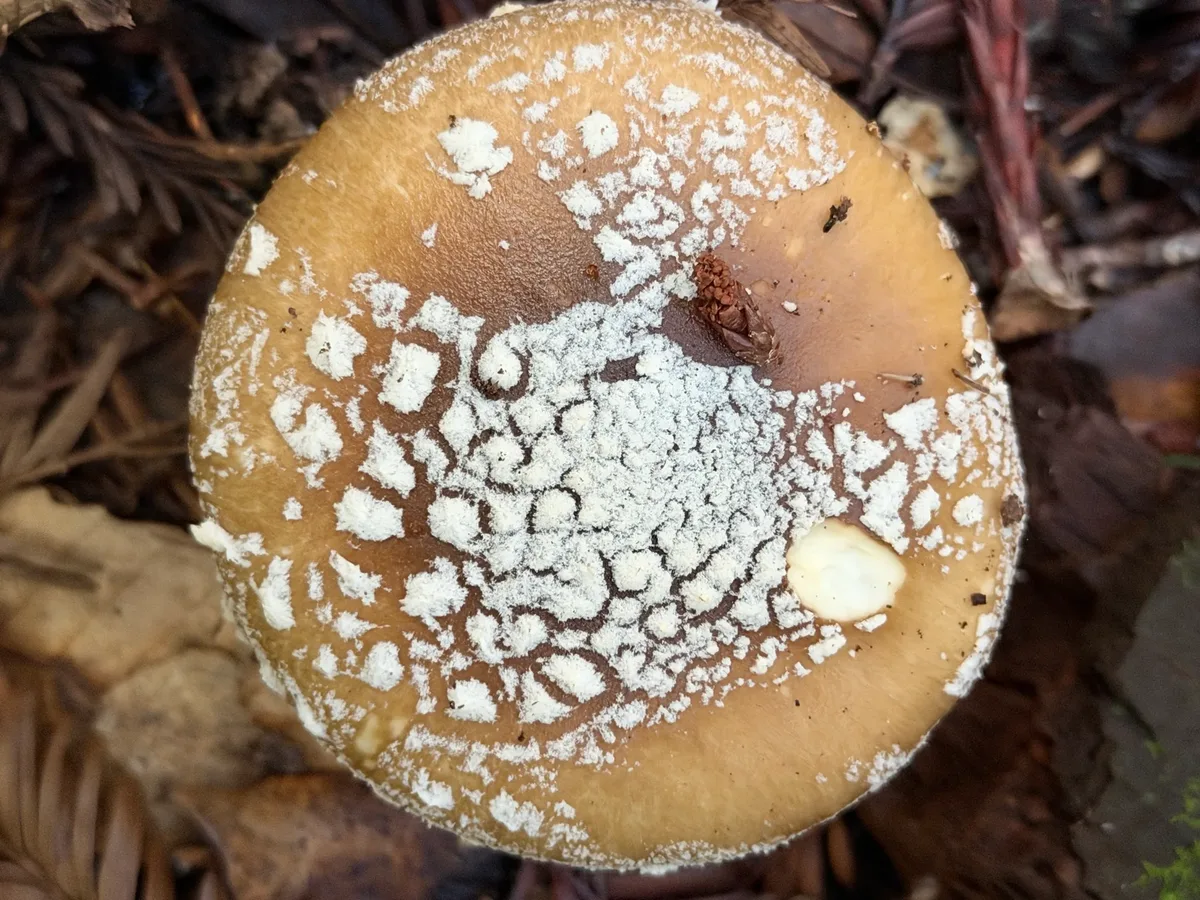
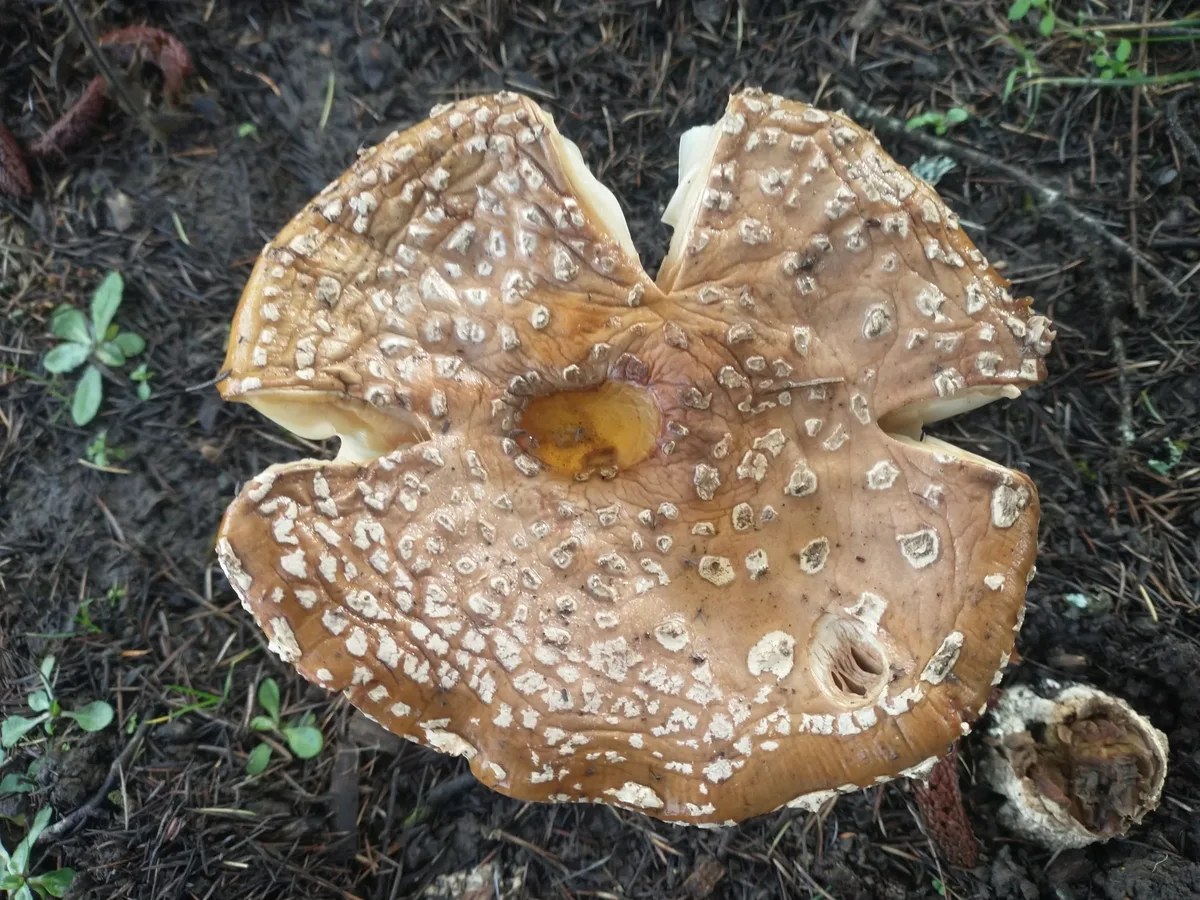
The cap begins as a hemisphere wrapped tightly in the universal veil - a membranous tissue that fully encloses the developing fruitbody - and expands with age to a broadly convex or nearly flat disc 6-12 cm across. Its colour is a rich tawny to umber-brown, sometimes paler toward the margin.
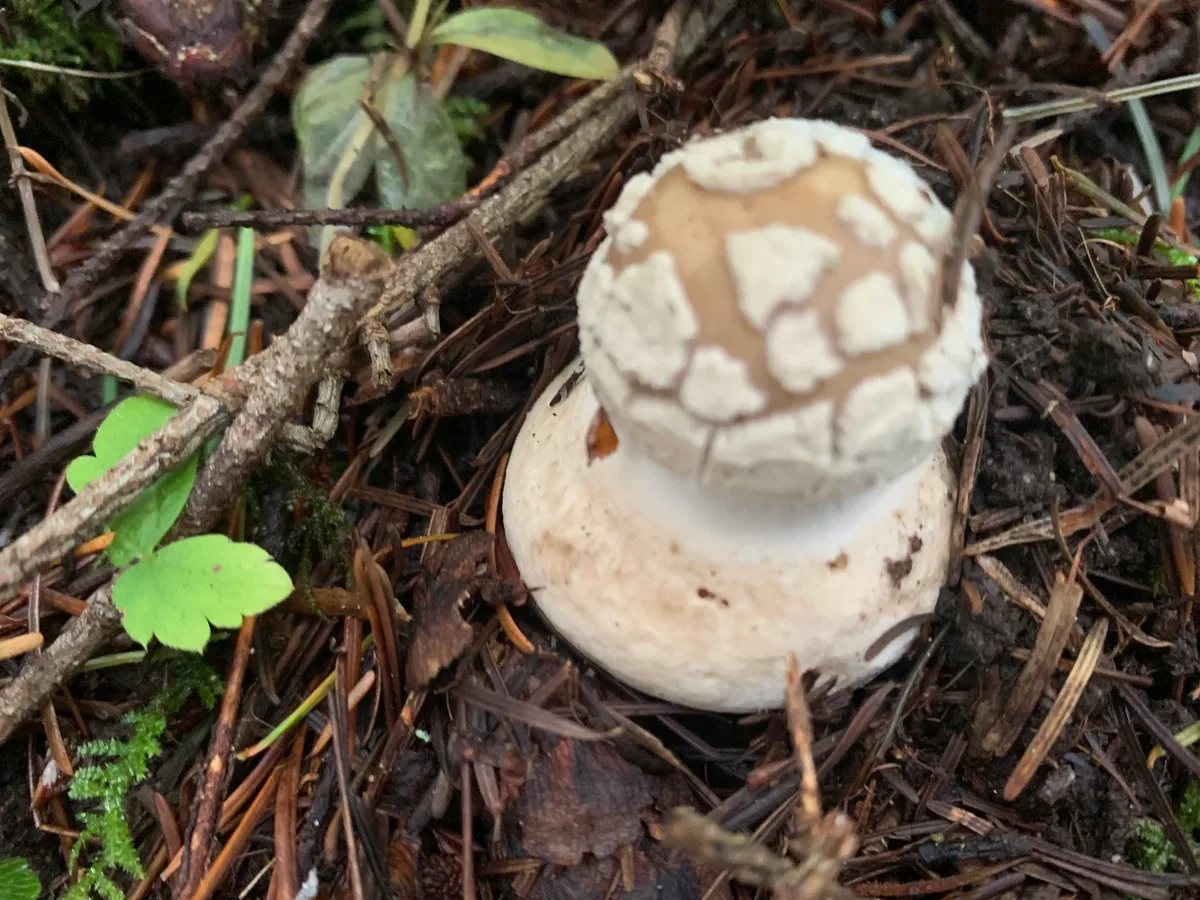
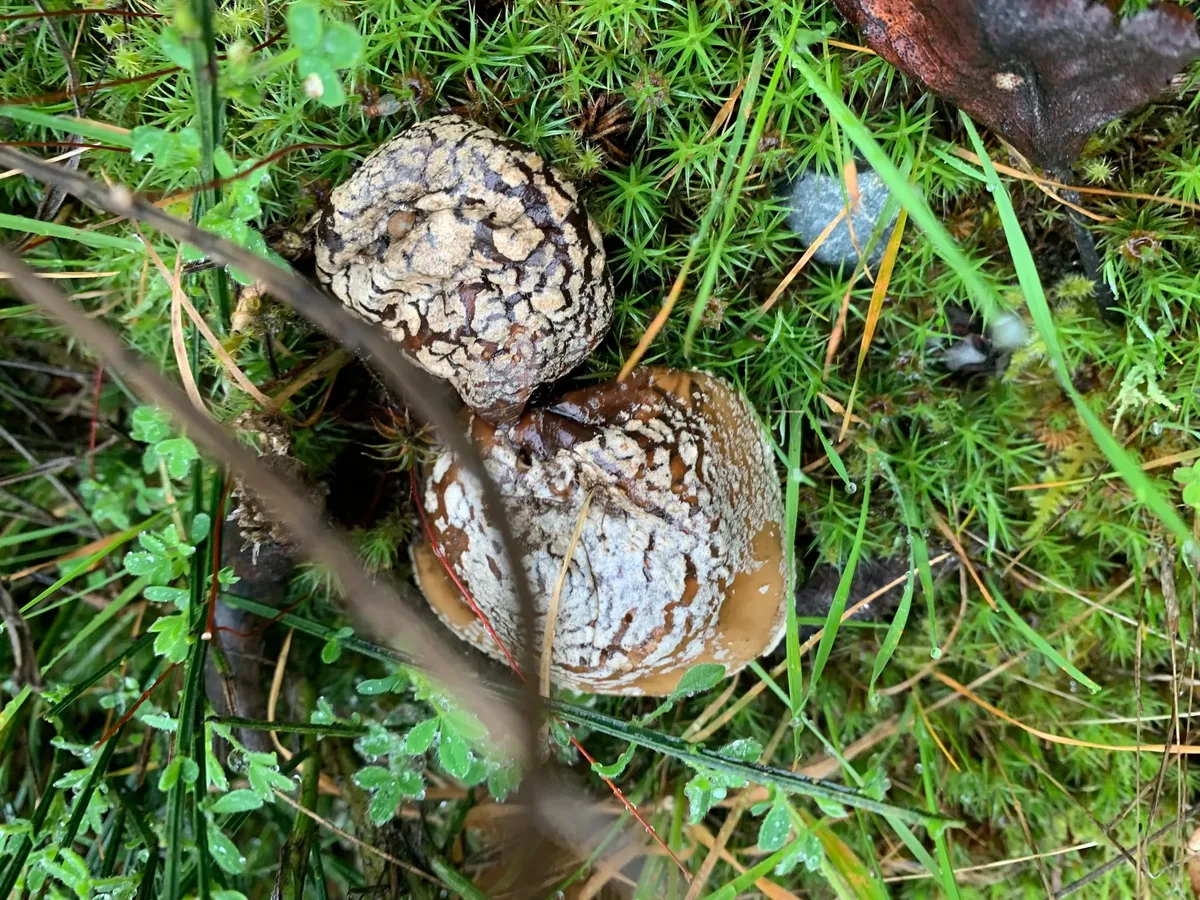
The defining surface feature is an irregular scatter of white to off-white warts: fragments of the universal veil that split as the cap expanded, pressed flat by rain, or occasionally washed away on old specimens, so their absence alone does not make a specimen safe.
Gills
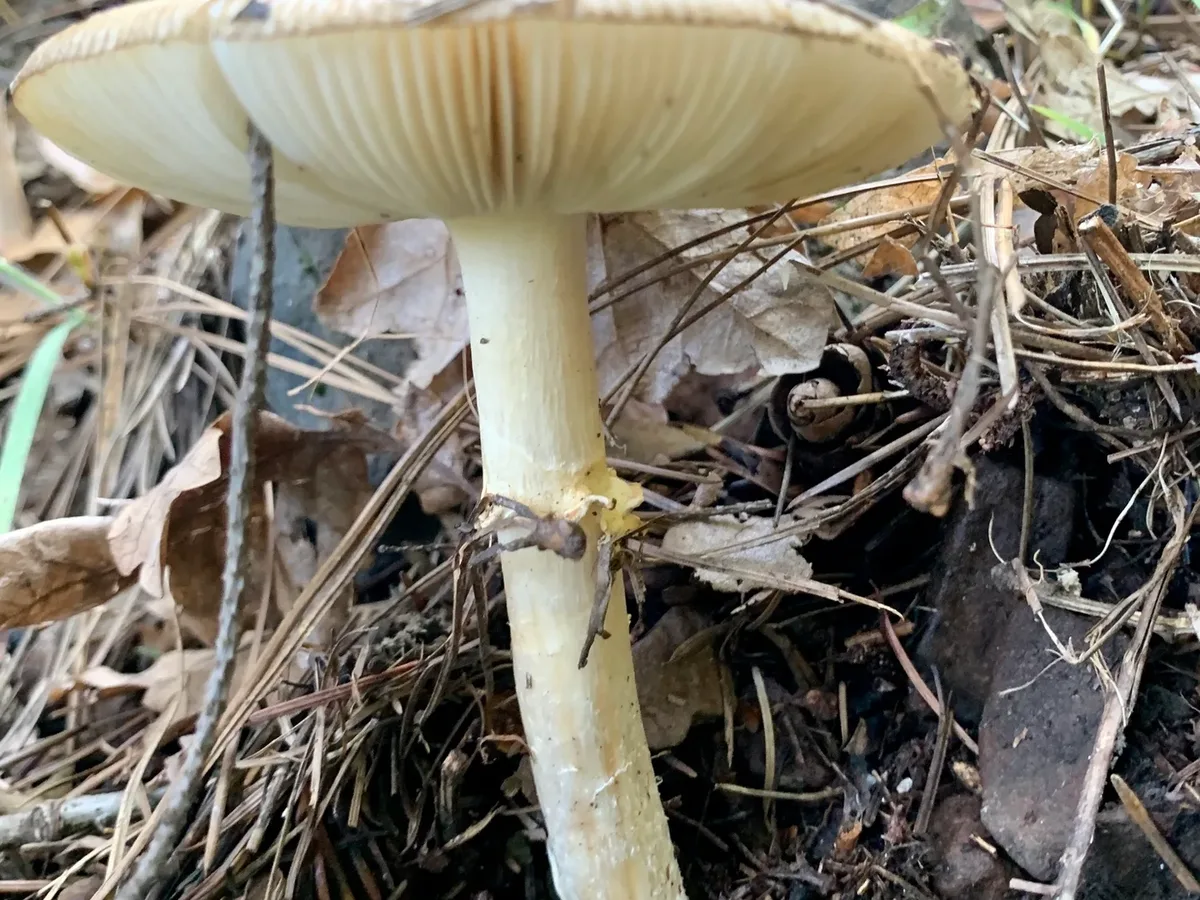
The gills are white, free from the stem, and crowded; they do not stain or change colour when cut or bruised.
Stem
The stem is white, 7-14 cm tall and 1-2 cm thick, carrying a pendant, skirt-like ring (annulus) that hangs loosely below the cap - a remnant of the inner partial veil that once covered the gills. Below the ring the stem surface is smooth to finely fibrous.
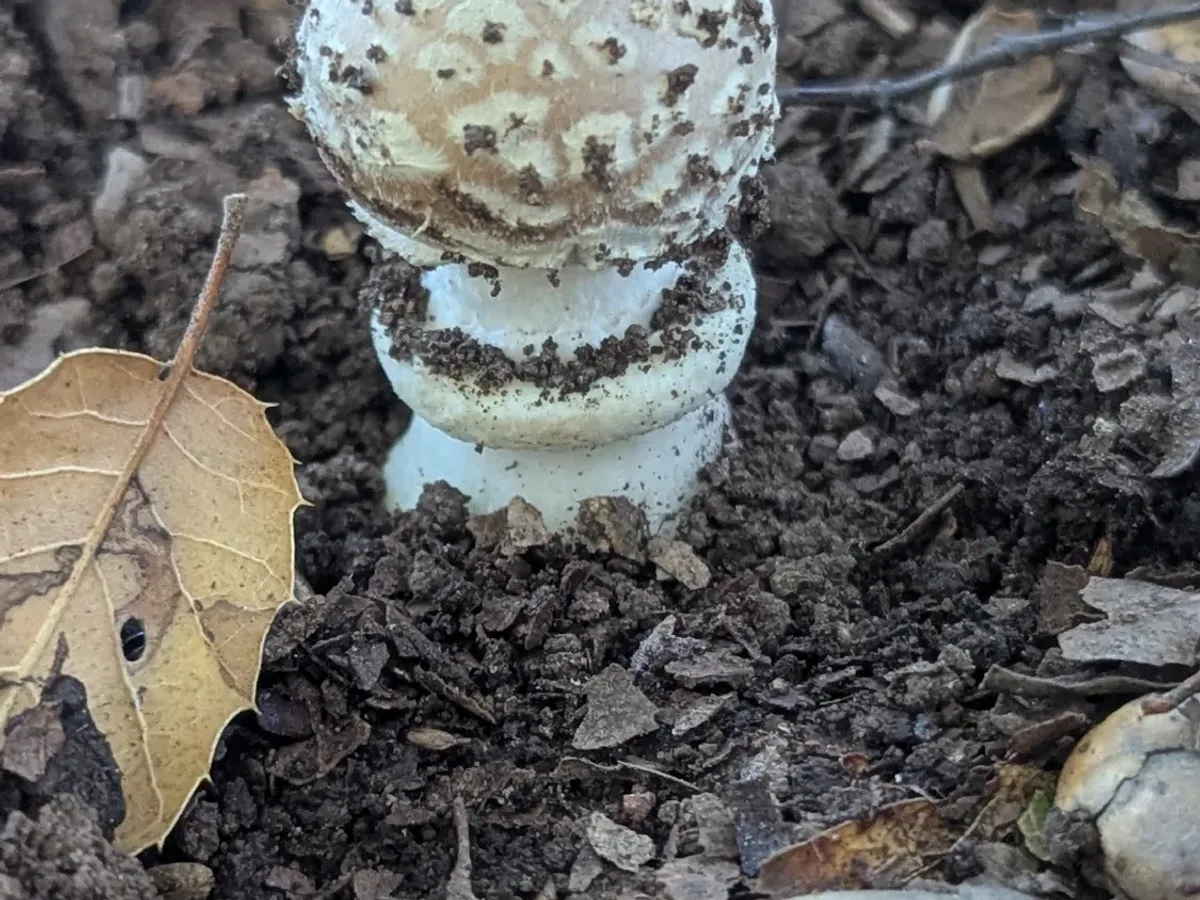
At the very base sits the most diagnostic single character: a bulbous base encircled by one or more concentric rings or ridges of volval tissue, creating a distinct banded collar or 'gutter' rather than the cup-shaped sheath seen in Amanita phalloides. This banded volval rim is characteristic of the panther-group Amanitas.
Spore print is white.
Why it's dangerous
This species causes a disproportionately high number of poisonings in the Pacific Northwest relative to its abundance, because it fruits in frequented outdoor spaces and is convincingly similar to edible species that foragers actively seek.
The risk is not theoretical: regional poison control centres and veterinary emergency clinics receive A. pantherinoides cases every spring.
The danger to dogs and cats is equivalent to or greater than the danger to adult humans. A dog that forages freely in a park during spring months is at meaningful risk in areas where this species is known to fruit.
The mushroom is rarely fatal to healthy adults, but 'rarely fatal' does not mean mild - the neurological episode it causes is frightening, disorienting, and unpredictable in severity.
- Do not collect
- Do not prepare
- Do not taste-test
If you find this species in a high-traffic area used by pets or children, removing specimens (wearing gloves, disposing in a sealed bag) is a reasonable harm-reduction action.
Toxin
Amanita pantherinoides contains the isoxazole alkaloids ibotenic acid and muscimol as its primary active compounds, along with the related isoxazole muscazone and trace amounts of muscarine.
Ibotenic acid is a structural analogue of glutamate, the brain's primary excitatory neurotransmitter, and exerts its initial effect by overstimulating glutamate receptors. Once absorbed, it is decarboxylated to muscimol in the body - a conversion that happens spontaneously and is accelerated by heat.
Muscimol is a potent agonist of GABA-A receptors, the main inhibitory receptor system in the central nervous system, producing sedation, disorientation, and in higher doses, delirium and convulsions.
The ratio of ibotenic acid to muscimol varies between individual specimens and changes with specimen age and preparation, making dose prediction impossible.
Muscarine is present in trace amounts and contributes minor parasympathomimetic effects (increased salivation, sweating) in some cases, but is not the dominant toxin in this species - a distinction that matters clinically because atropine, which reverses muscarine poisoning, is not the appropriate primary treatment here.
Symptoms
Symptoms appear rapidly, typically 30 minutes to 2 hours after ingestion - a short latency that distinguishes this poisoning clinically from the delayed-onset Amanita phalloides (death cap) syndrome, which typically begins 6-24 hours post-ingestion.
Early symptoms include drowsiness, dizziness, confusion, and a sensation of intoxication.
These progress to incoordination, visual disturbances, and - in moderate to severe cases - frank delirium with hallucinations, agitation, muscle twitching or spasms, and an abnormally deep, difficult-to-rouse sleep.
Convulsions and seizures are the most serious acute complication and occur more frequently in children and in dogs and cats than in healthy adults.
Nausea and vomiting are inconsistent: some patients experience them, others do not, depending on the muscarine contribution.
The episode typically resolves within 4-8 hours in adults without further medical intervention once no further toxin is being absorbed, but the patient requires observation throughout. In dogs, the progression from onset to severe neurological signs can be faster and less predictable than in adult humans.
Staying safe
Amanita pantherinoides is poisonous and causes a high volume of human, dog, and cat poisonings in the Pacific Northwest each year. It is rarely lethal in healthy adults but causes severe neurological symptoms that reliably require medical attention, and deaths have occurred in children, elderly individuals, and pets.
The species fruits abundantly in parks, campgrounds, and trailheads - exactly the environments where dogs roam off-leash - making accidental canine ingestion a frequent emergency. Dogs are particularly susceptible and deteriorate rapidly; any suspected ingestion by a pet should be treated as an emergency.
There is no antidote for isoxazole poisoning. Treatment is supportive:
- activated charcoal if the patient presents within an hour of ingestion
- monitoring for seizure activity
- in severe cases, sedation to manage agitation and convulsions
Physostigmine has been used in some clinical settings to reverse muscarinic symptoms when muscarine contribution is suspected, but its use is not universal.
If you or someone with you has eaten a mushroom that may be A. pantherinoides, call Poison Control immediately (US: 1-800-222-1222) and, if possible, preserve the specimen or take a photograph showing cap, gills, ring, and base.
Where & when it grows
Habitat
Amanita pantherinoides is an obligate mycorrhizal fungus, meaning it cannot complete its life cycle without a living tree partner. Its mycelium forms a close anatomical embrace around the fine feeder roots of its host, creating a sheath (the Hartig net) through which the fungus trades soil-derived phosphorus, nitrogen, and water for photosynthetically fixed carbon from the tree.
The partnership is ancient and mutually dependent in a way that no amount of laboratory culture can replicate - which is why no Amanita has ever been domesticated.
In the Pacific Northwest, A. pantherinoides works with a wide range of hosts - Douglas-fir, western hemlock, true firs, oaks, and alders all qualify - making the species habitat-generalist in a way that keeps it common across the region's mixed forests.
It fruits from the mineral soil beneath the duff layer, occasionally pushing up through packed path edges, wood chips, or lawns where tree roots extend - hence its regular appearance in parks, campgrounds, and trailsides.
The mycelium can persist for years underground as a diffuse network, invisibly waiting for the right combination of rain and temperature before investing the sugars needed to build a fruitbody.
When
The species fruits across a long window that spans spring through autumn, broadly April to October in Pacific Northwest lowlands, with the exact timing governed by soil temperature and the arrival of sustained rain.
The most medically significant flush occurs in spring and early summer, April through June, when soils are moist and cool from winter precipitation, temperatures climb into the zone the fungus favours, and hikers, dog-walkers, and mushroom collectors all spend more time in the woods. This spring cohort is responsible for a disproportionate share of the region's annual poisoning cases.
A second flush typically follows the first autumn rains in September-October. Between these two windows, summer heat and drought may suppress fruiting entirely in drier inland sites, though coastal and riparian forest often produce scattered individuals throughout the warm months.
Mature fruitbodies are short-lived; they decay within days, which means a patch that looked safe yesterday may already be hosting another flush of buttons tomorrow.
How it grows
Like all mycorrhizal fungi, Amanita pantherinoides grows in a fundamentally different way from the wood-rotting or dung-loving mushrooms many people first encounter. There is no substrate it is consuming in the conventional sense.
Instead, its mycelium is woven invisibly through the soil around tree root-tips, a living net that can persist for years or decades without producing a single visible fruitbody.
When soil temperature and moisture cross the thresholds the fungus is waiting for - typically a sustained period of rain following warmth - resources flow into aggregating hyphal knots that will become fruitbodies. The entire structure from tiny pin to full-grown cap can develop in 7-14 days.
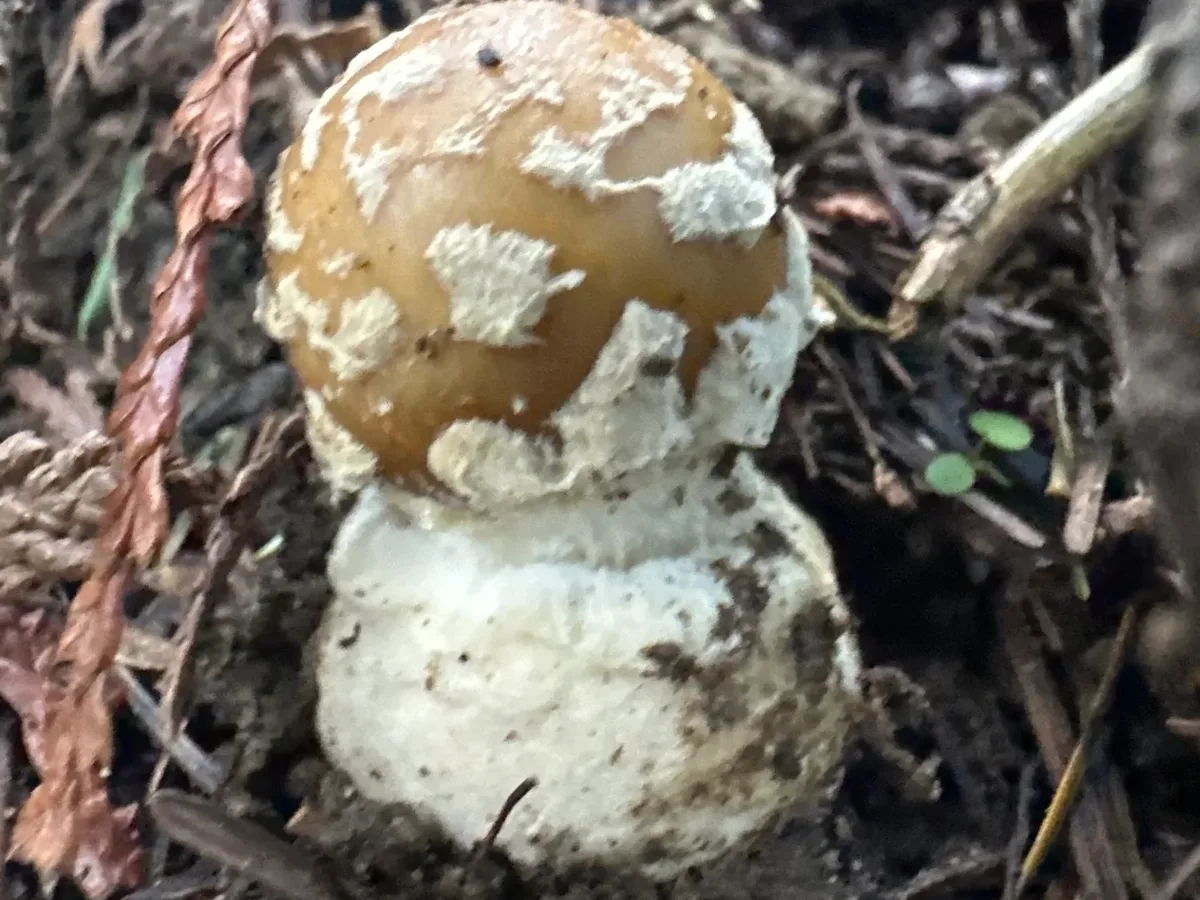
In its earliest button stage the developing mushroom is entirely enclosed by the universal veil, looking more like a small white egg half-buried in soil than a mushroom. As the stem elongates it ruptures that outer membrane, leaving wart fragments on the cap and the banded collar at the base.
Buttons in the 'egg' stage are impossible to identify safely - the gills, ring, and cap colour are all hidden - and are particularly dangerous if collected by foragers who mistake them for puffballs.
Fruiting conditions
Mycorrhizal Amanita; flushes follow sustained rain once soil temperatures are moderate, in spring through autumn.
Look-alikes
Three species cause the majority of A. pantherinoides misidentifications in the Pacific Northwest, all of them edible and sought by foragers.
The blusher (Amanita rubescens) is the most dangerous confusion in terms of clinical frequency: it shares the brown wart-studded cap, white ring, and volval base. The single most reliable distinguishing mark is flesh colour - cut or scratch the cap flesh or the stem base; A. rubescens stains distinctly pinkish-red within minutes at the cut surface, a reaction absent in A. pantherinoides, which stays pure white throughout.
The parasol mushroom (Macrolepiota procera) is a large, ringed mushroom whose cap can superficially resemble a large A. pantherinoides, but three concurrent structural differences together make separation reliable:
- the stem has a conspicuous brown zigzag snakeskin pattern
- the ring is thick, double-layered, and slides freely up and down the stem
- the base is bulbous but lacks any volval collar or warts
The gemmed amanita (Amanita gemmata) is itself mildly toxic but is more often confused with A. pantherinoides than with edible species; it is distinguished by its cream-yellow to pale tan (not deep brown) cap.
None of the lookalikes in this list are deadly, but misidentifying A. pantherinoides as any of them and consuming it can result in serious neurological illness requiring emergency care.
An edible species that inexperienced foragers confuse with the panther cap.
Similar Amanita with a cream-yellow to tan cap rather than the brown cap of A. pantherinoides.
An edible species that inexperienced foragers confuse with the panther cap.
A reference guide - never an edibility guarantee. When in doubt, leave it out.