Western jack-o'-lantern
Omphalotus olivascens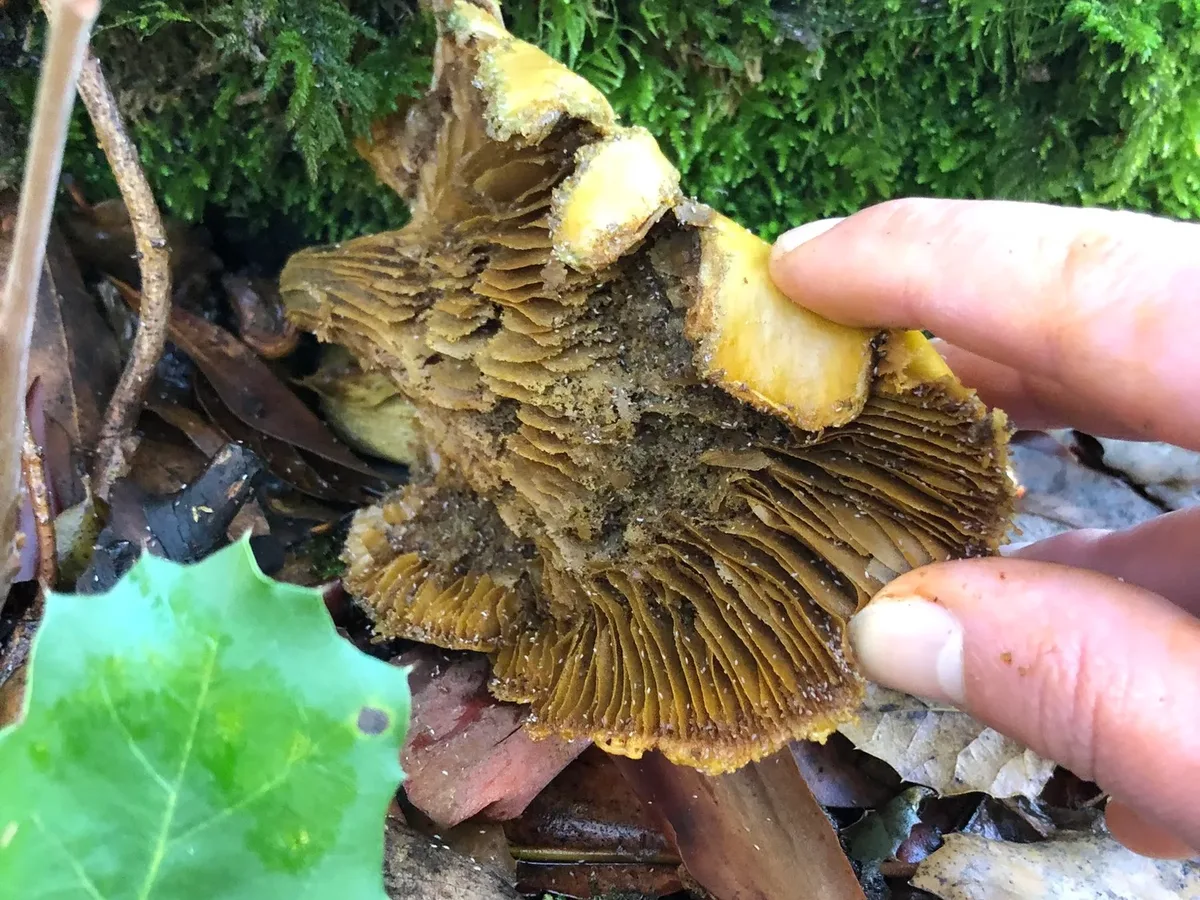 © Arvel Hernandez (CC BY-SA 4.0)
 Chuck Wilson (CC0)
 © Hannah Stitt (CC BY)
 Kat (CC0)
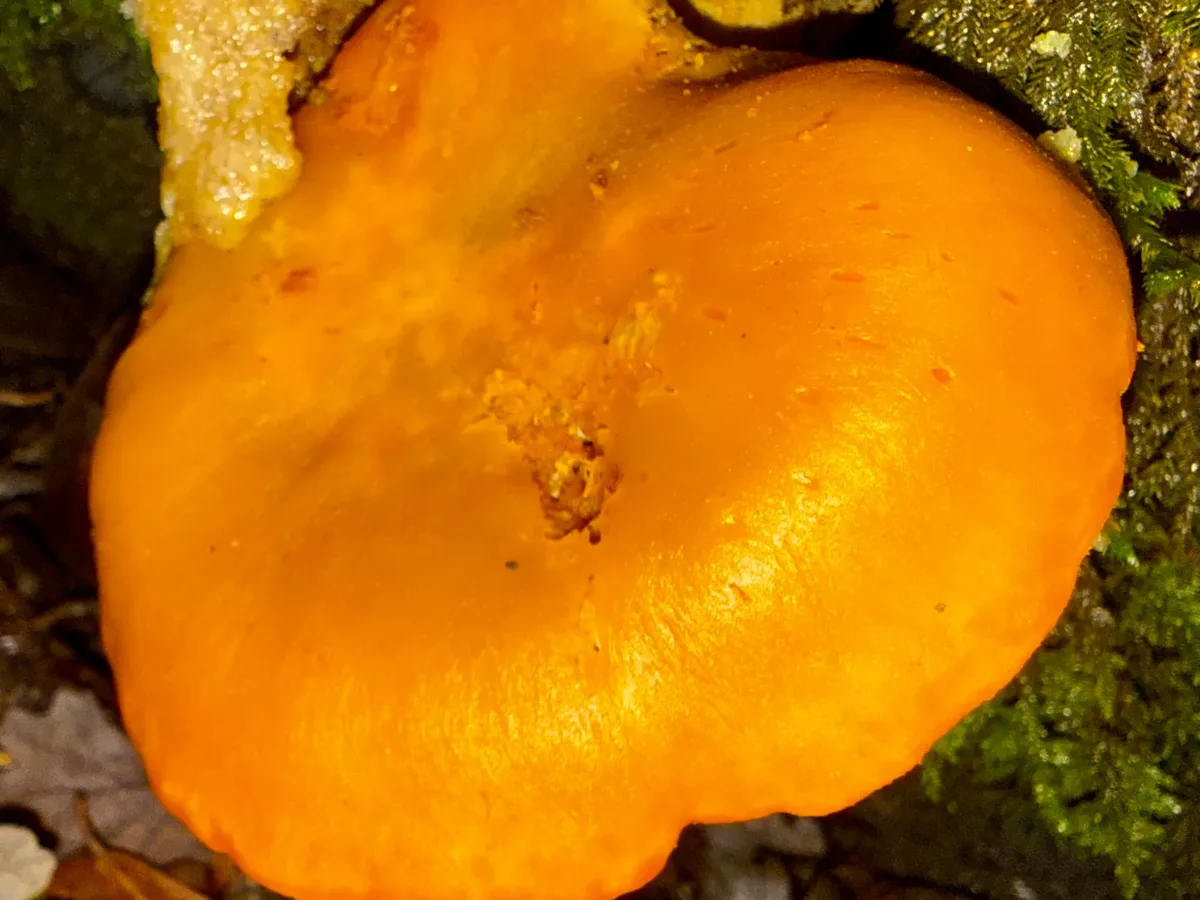 Chuck Wilson (CC0)
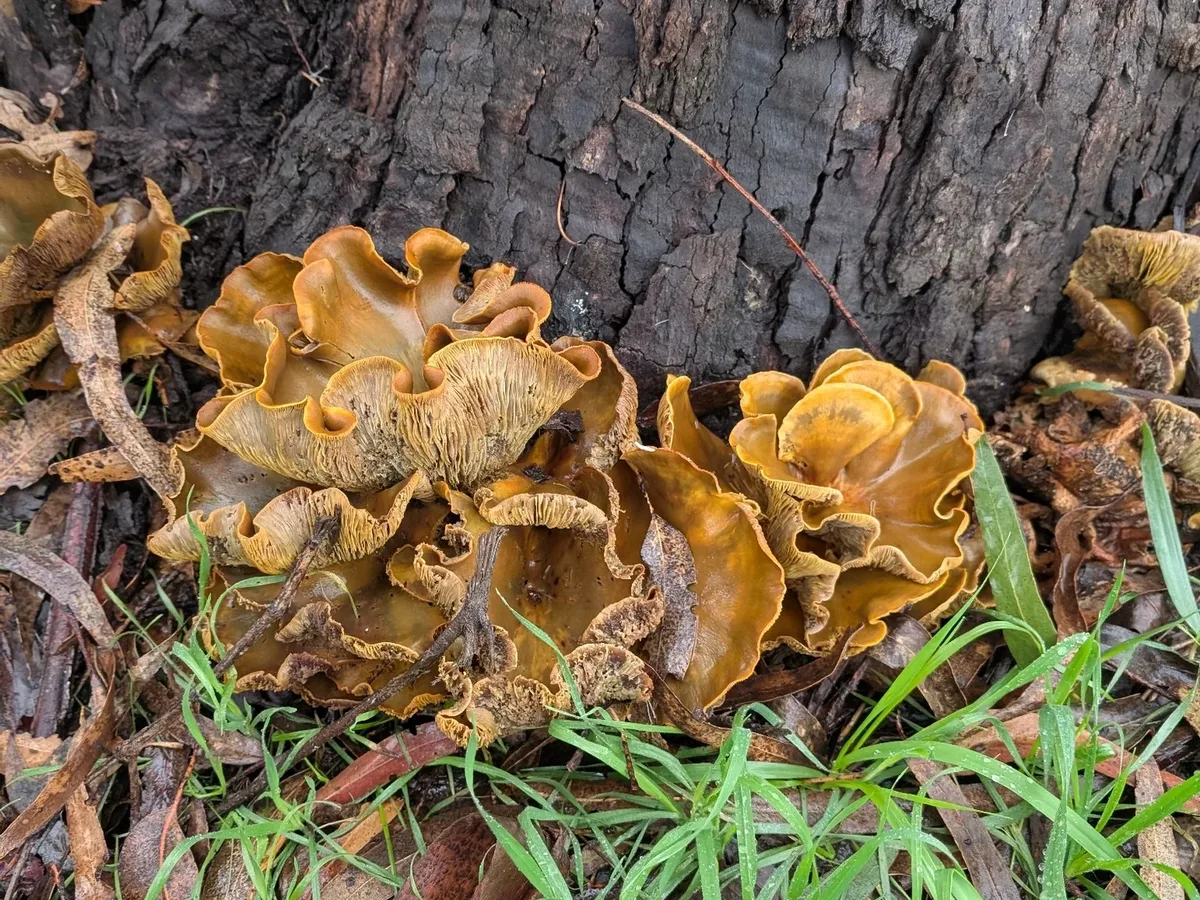 © Hannah Stitt (CC BY)
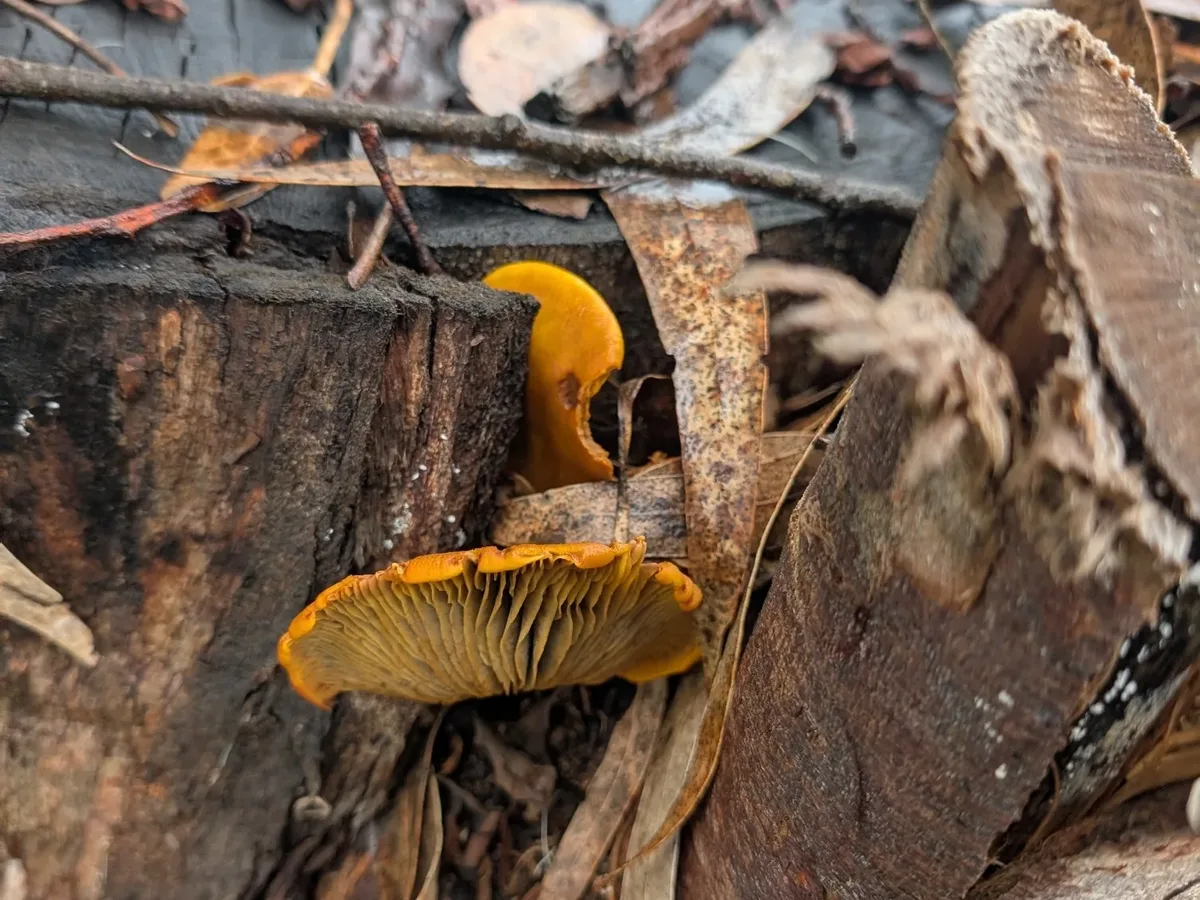 © Hannah Stitt (CC BY)
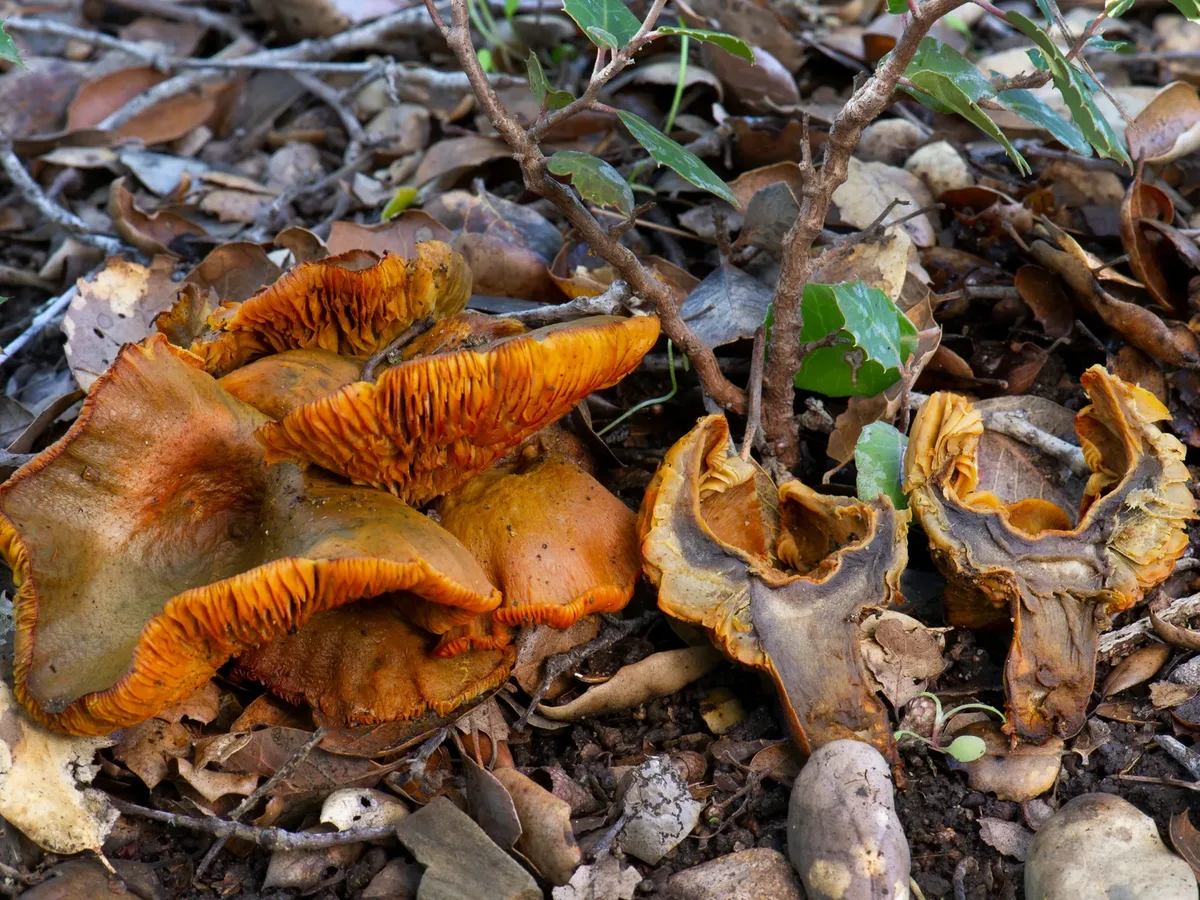 © Alan Rockefeller (CC BY 4.0)
 © Alan Rockefeller (CC BY 4.0)
 © Alan Rockefeller (CC BY 4.0)
 © Alan Rockefeller (CC BY 4.0)© Arvel Hernandez (CC BY-SA 4.0)Chuck Wilson (CC0)
Edible only with the right preparation - or safe for some people but not others. Learn the caveats first.
How to recognise it
Omphalotus olivascens is a substantial, vividly coloured fruitbody that announces itself loudly in the autumn understorey - and yet it is persistently confused with chanterelles, which says more about the limits of human attention than about any close resemblance.
Cap
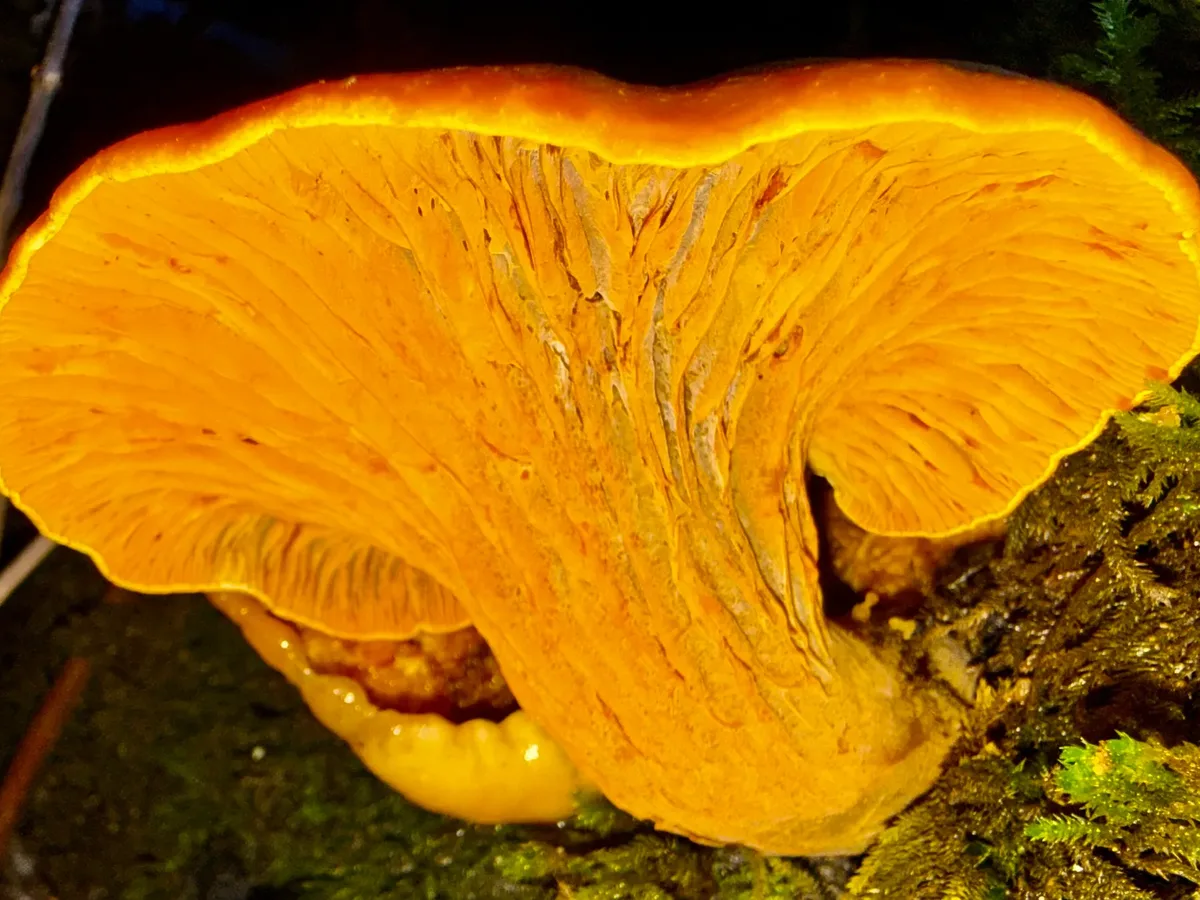
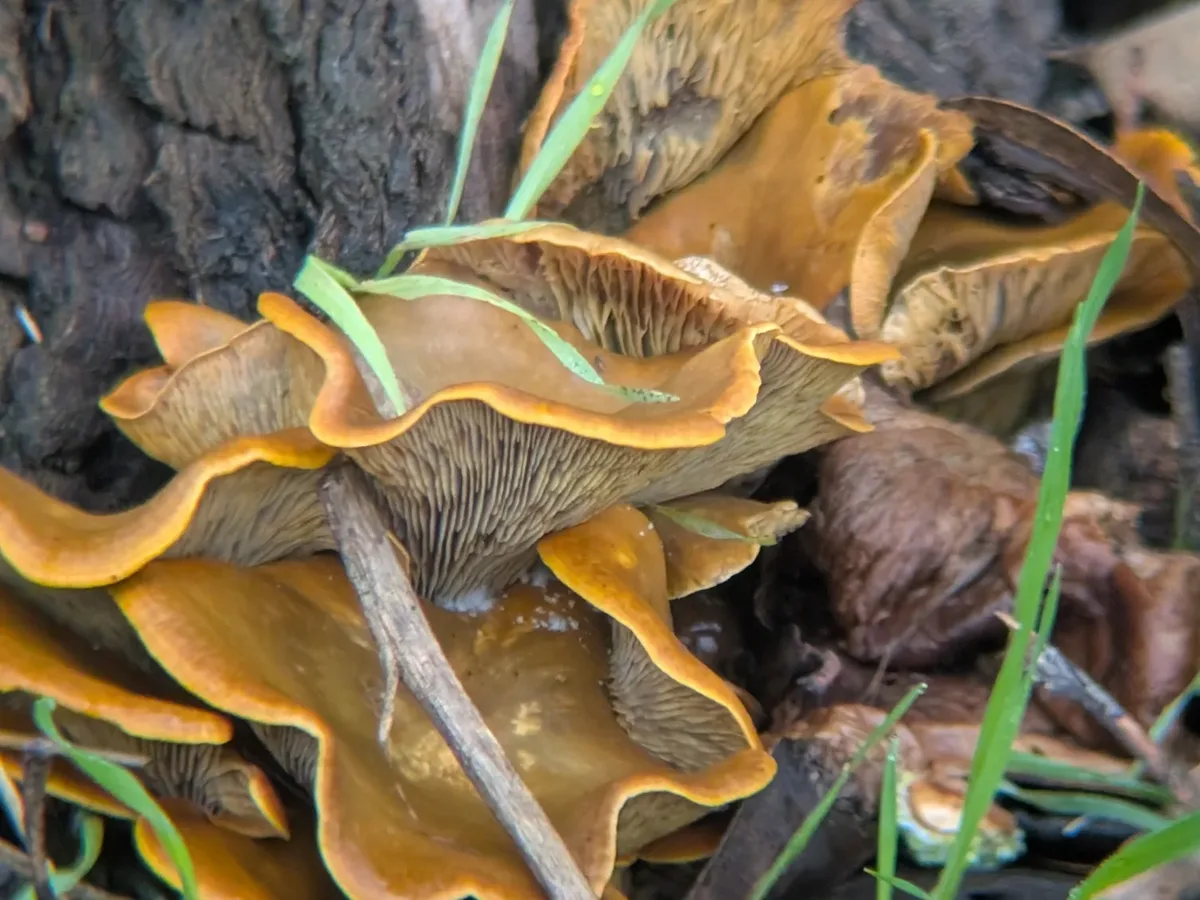
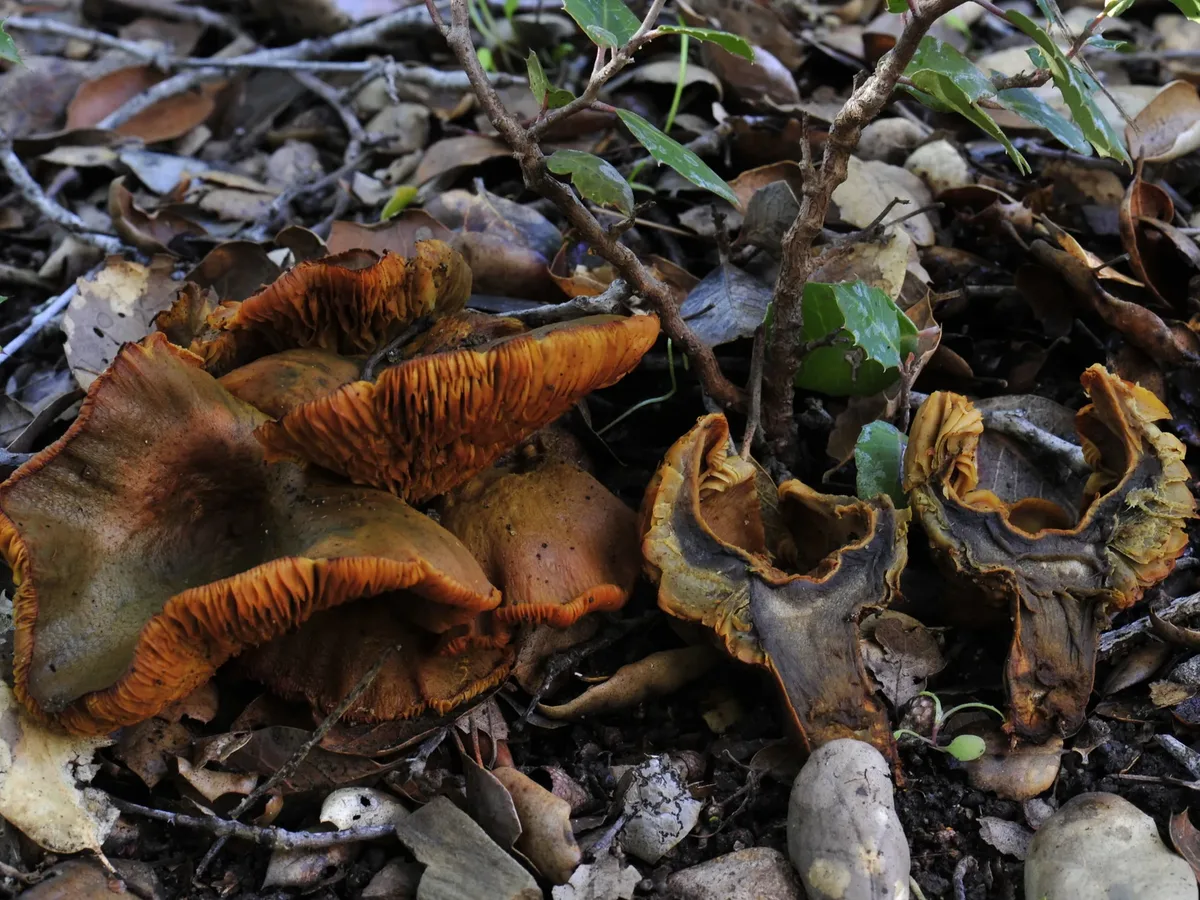
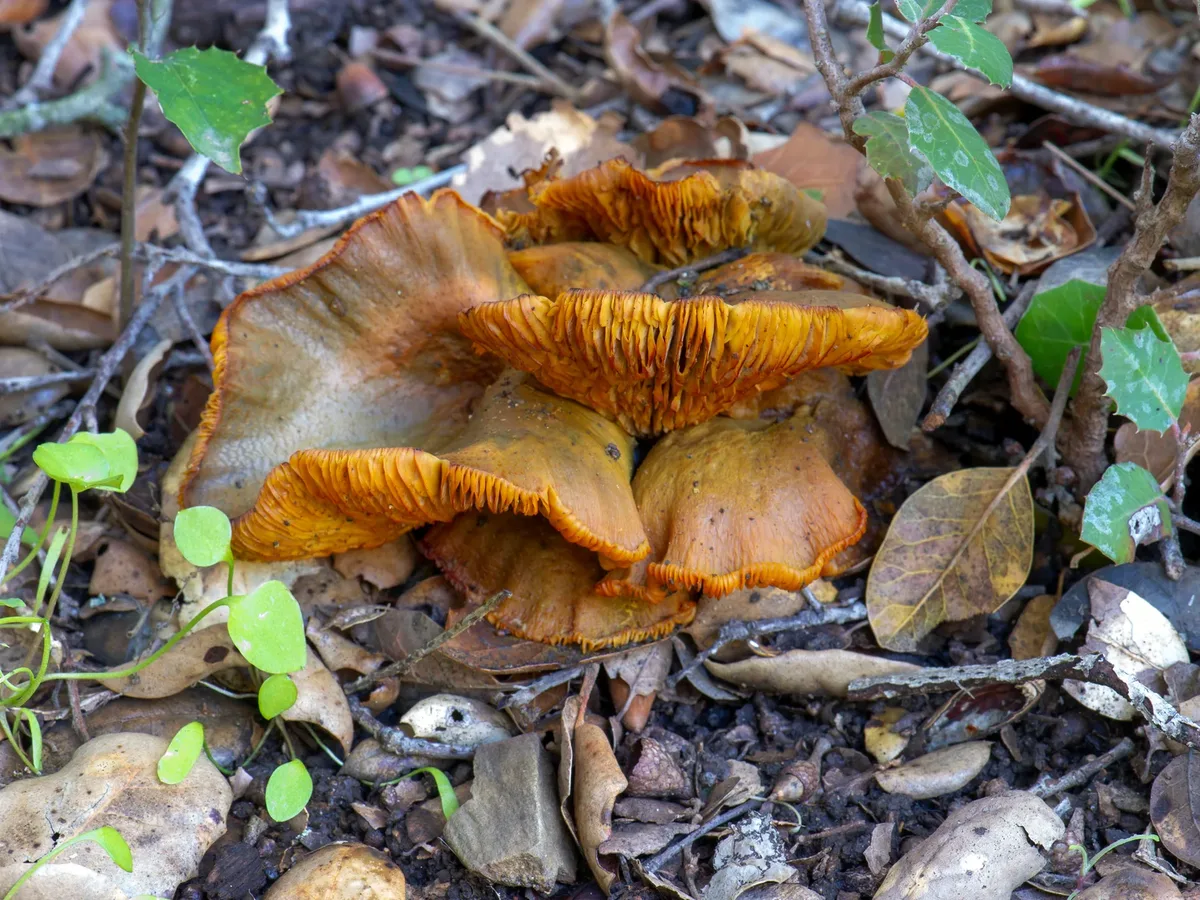
Caps begin broadly convex, 5-20 cm across, and as the cluster matures they deepen progressively into an irregular funnel or vase: the margin wavy, often lobed, sometimes splitting at the edges.
The colouration is the species' signature: a base of warm orange to orange-brown overlaid with a dulling olive wash that gives the cap its scientific name. In wet conditions the surface can look almost lacquered; as the flesh begins to degrade it shifts toward tawny-brown.
Gills
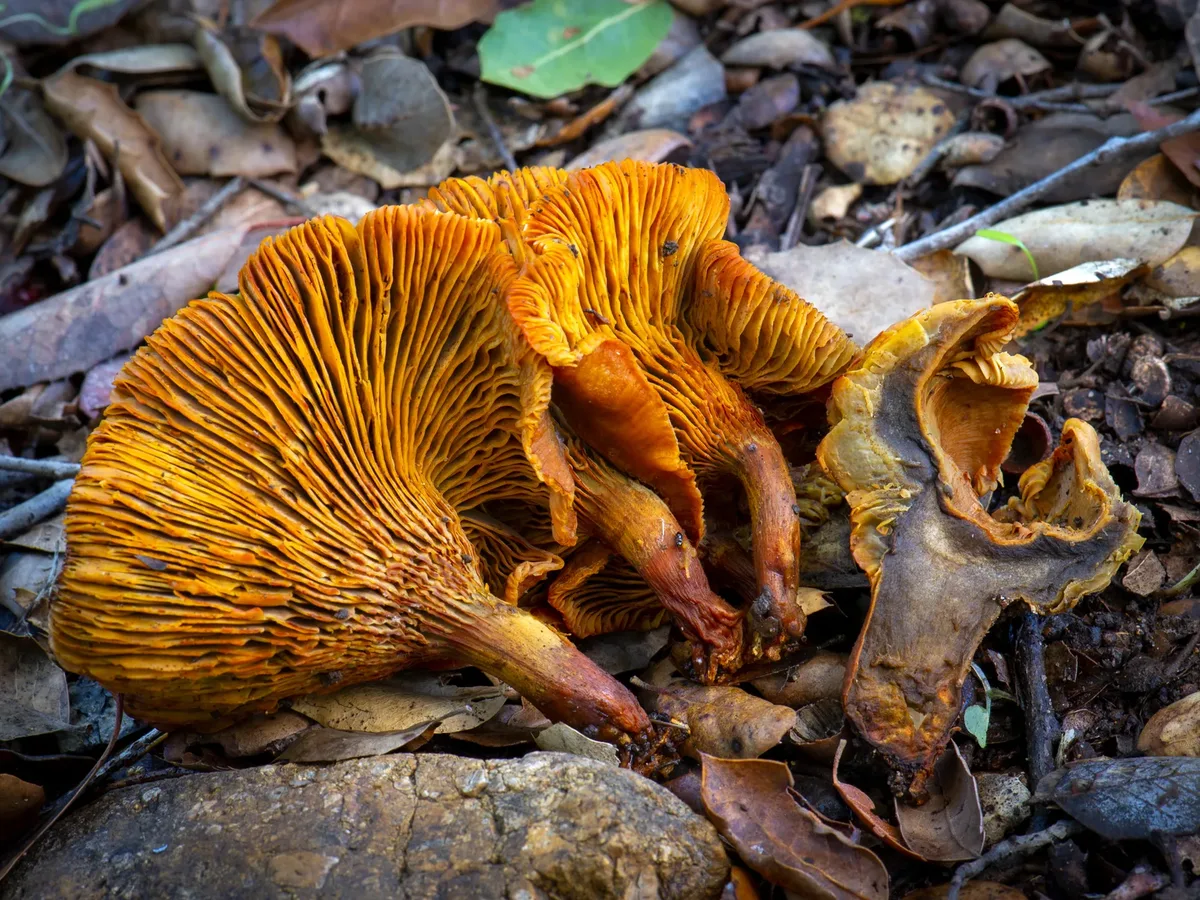
The underside is the critical feature. The gills are true, anatomically complete structures - knife-thin, sharply edged, closely crowded, and decurrent, running down the stipe in a manner that can look superficially vein-like but is unmistakably blade-sharp under close inspection.
Their colour is olive-yellow when fresh, shifting toward orange as the fruitbody ages.
One property is unique among North American gilled fungi: in complete darkness, after five or more minutes of dark adaptation, the fresh gills emit a dim but unmistakable greenish bioluminescence. This light is produced by the enzyme-driven oxidation of a luciferin compound and is brightest in very fresh material. It cannot be seen in ambient light and fades as the fruitbody senesces.
Stem
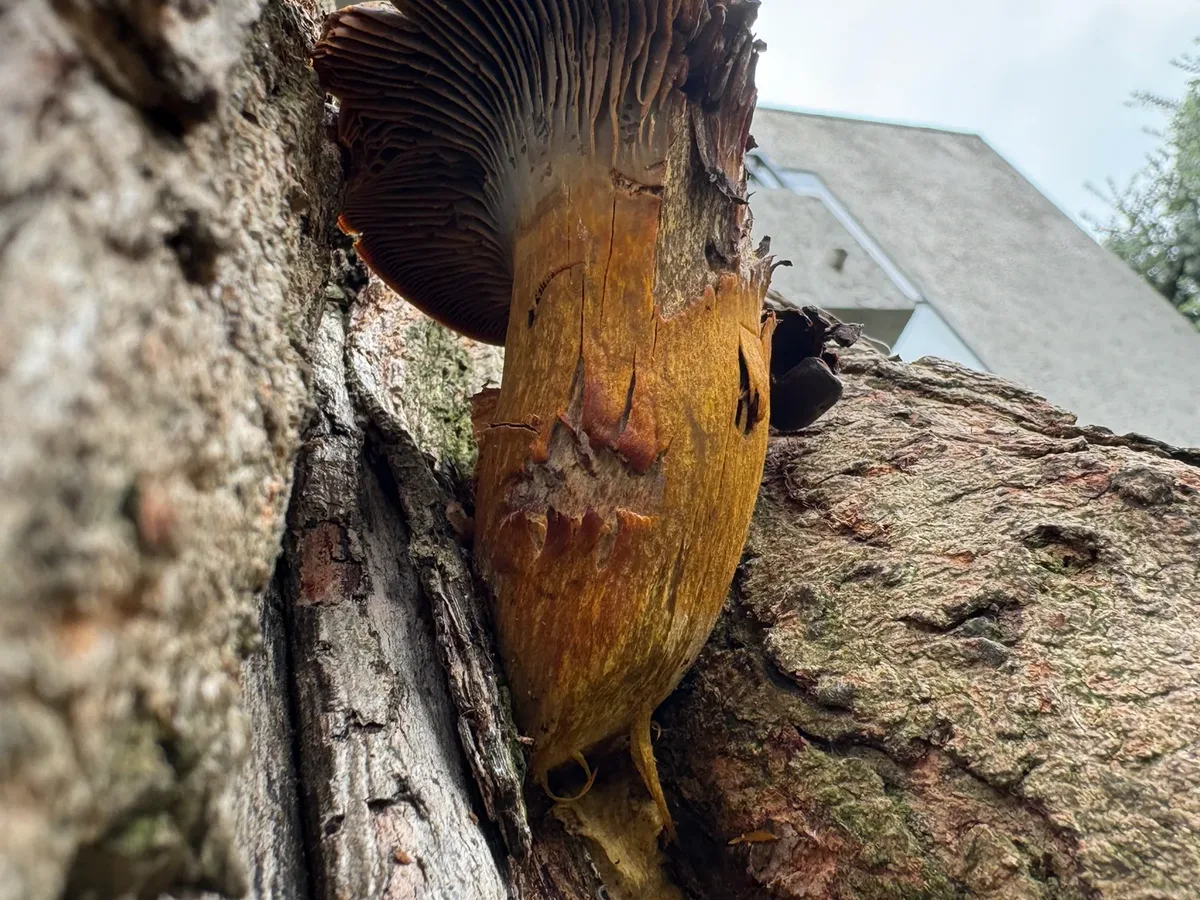
The stipe is 5-15 cm tall, solid and fibrous, often eccentric or off-centre in clustered specimens, coloured olive-yellow and marked with irregular brown streaks or patches.
Flesh
Flesh is pale orange-olive throughout, firm in young specimens and softening quickly.
Why it's dangerous
Omphalotus olivascens is a genuinely poisonous mushroom and the principal cause of chanterelle-related poisoning events on the Pacific Coast of North America.
The danger is not hypothetical or rare: it is a large, abundant, visually compelling species that fruits at exactly the same time and in partially overlapping habitats as the most sought-after edible mushroom in the region.
Every autumn, multiple poisoning cases result from collectors who used colour and rough shape as their identification criteria without checking gill structure or substrate. The hazard is compounded by the species' tendency to produce very large, impressive clusters that reward a collector who has already decided what they are looking at.
The three-check protocol - gills versus ridges, substrate (wood versus living soil), and bioluminescence in darkness - provides near-certain discrimination and must be applied every single time, without exception, regardless of how confident the collector feels about a find.
Toxin
The primary toxic compound in Omphalotus olivascens is illudin S, a sesquiterpene natural product first isolated from the related O. illudens.
Illudin S is a DNA-alkylating agent at the cellular level - it forms covalent bonds with DNA, disrupting replication and triggering cell death. This is why illudin analogues have been investigated as antitumour leads in pharmaceutical research.
In acute poisoning from ingested fruitbodies, however, the clinical presentation is primarily gastrointestinal and cholinergic rather than genotoxic. The dose delivered by a meal is not sufficient to produce genotoxic injury in the way a prolonged therapeutic exposure would, but it is more than sufficient to produce severe GI irritation and autonomic (muscarine-like) effects, including:
- salivation
- sweating
- lacrimation
- abdominal cramps
The toxin is heat-stable and present throughout all tissues of the fruitbody; there is no preparation method that removes or neutralises it.
Symptoms
Symptoms begin 30 minutes to 3 hours after ingestion, with most cases presenting within 1-2 hours.
The initial presentation is nausea followed rapidly by severe, cramping abdominal pain, profuse vomiting, and watery diarrhea. Concurrent autonomic signs - sweating, salivation, and in some cases lacrimation - reflect the muscarine-like component of illudin toxicity.
The illness is not hallucinogenic.
Symptoms typically peak at 3-6 hours and begin to subside within 6-12 hours in otherwise healthy adults, but the dehydration produced by prolonged vomiting and diarrhea can require intravenous fluid replacement, particularly in children, the elderly, and anyone with pre-existing renal or cardiac vulnerability.
Recovery is generally complete without long-term sequelae. No deaths directly attributable to illudin S from Omphalotus poisoning are well-documented in clinical literature, but the severity of the acute episode consistently warrants medical evaluation rather than waiting it out at home.
Staying safe
Omphalotus olivascens is a confirmed poisonous species responsible for frequent, well-documented gastrointestinal poisoning episodes, particularly among foragers who mistake it for chanterelles.
It is not classified as deadly under normal circumstances - fatalities directly attributed to illudin toxicity are not documented in the Western literature - but the illness it produces is severe, rapid in onset, and occasionally requires hospitalisation for fluid replacement.
There is no safe preparation method, no dose at which a small taste is instructive rather than harmful, and no antidote.
If ingestion is suspected, contact Poison Control immediately (US: 1-800-222-1222). The onset is fast - typically within one to three hours - so the window for contacting medical services is narrow.
Identification by a mycologist from photograph or physical specimen after the fact is useful for confirming treatment, but the treatment protocol for illudin poisoning is supportive regardless of confirmation.
Where & when it grows
Habitat
Omphalotus olivascens is a wood-decay fungus - a saprotroph that also functions opportunistically as a parasite - and its ecology is therefore fundamentally different from that of the chanterelles it is routinely mistaken for.
Chanterelles are obligate mycorrhizal partners of living trees and can only fruit from living soil rich with fine root tips; the Western jack-o'-lantern fruits from dead or dying wood.
In Californian and Pacific Coast habitats this typically means the base of standing oaks (Quercus agrifolia, Q. lobata, Q. kelloggii, and others) or their stumps, where the mycelium colonises dead heartwood and large lateral roots.
Eucalyptus, a ubiquitous introduced tree across coastal California, is equally important as a substrate - large old eucalyptus stumps are among the most reliable fruiting sites.
The visible fruitbodies almost always emerge as dense, often massive clusters from a single mycelial mass, which itself may be metres wide beneath the soil surface.
The substrate connection can be ambiguous at the moment of harvest: when roots extend underground from a stump, the cluster can appear to be growing from bare soil several metres away from the nearest visible wood - a critical point for foragers who use ground contact as their sole test.
Always examine whether the base of the stipe and any underground tissue connects, directly or via root, to wood.
When
The Western jack-o'-lantern follows the first significant rains of the Pacific Coast autumn. Across most of its California range this means October and November are the primary months, with flush timing tightly linked to when autumn precipitation breaks the summer-dry soil.
A single substantial rain event - typically 25 mm or more over a short period - is often sufficient to trigger a flush that was waiting as dormant mycelium through the dry months.
The onset of fruiting is therefore unpredictable in calendar terms but highly predictable in relation to weather: find the first real autumn rain, and inspect oak woodland and eucalyptus groves within one to two weeks.
Fruitbodies develop rapidly and can reach full size within a few days of emergence. In wetter coastal years, sporadic late flushes persist into December.
The season is almost entirely contained within the September to November window, with October peak in most of its range, and is abruptly ended by the first hard frosts.
How it grows
Omphalotus olivascens decomposes wood by white rot - a process that breaks down both lignin and cellulose, leaving the decayed wood pale, stringy, and spongy.
The mycelium colonises large woody substrates over many years and can persist in a single stump or root system across multiple seasons, producing fruitbodies from the same location year after year.
Fruitbodies emerge in dense, often spectacular clusters: it is common to find 10-30 individual caps emerging from a single point, the stipes pressed together at the base and fanning outward as they grow. The development from pinhead to full size is rapid, typically three to five days in mild, moist conditions.
The bioluminescence - produced metabolically throughout the growing mycelium and concentrated in the gill tissue of fresh fruitbodies - is thought to function partly as a mechanism for attracting insects that disperse spores, though its adaptive function in this species is not fully resolved.
The spore print is white to cream, and the spores are subglobose to broadly ellipsoid, smooth and inamyloid.
Fruiting conditions
Fruits in autumn on dead or living hardwood (oak) and eucalyptus, typically after autumn rains.
Look-alikes
The only lookalike that creates genuine, repeated poisoning incidents is the chanterelle (Cantharellus cibarius and related Pacific Coast species). The confusion is entirely a function of colour and general shape, and it evaporates the moment a collector examines the underside of the cap.
Chanterelles bear forking, blunt, vein-like ridges that are continuous with the cap flesh and cannot be cleanly separated - they look and feel like folds, not blades. Omphalotus olivascens bears true gills: anatomically distinct, thin, sharp, crowded, and cleanly detachable.
Beyond the gill-versus-ridge distinction, chanterelles are strictly mycorrhizal, always emerging from living soil, always growing singly or in loose groups never in fused clusters - they never grow from wood or stumps under any circumstances. The bioluminescence of fresh jack-o'-lantern gills in darkness is a third independent confirmation.
Sulphur shelf or chicken-of-the-woods (Laetiporus) is occasionally listed as a lookalike, but the confusion is superficial: Laetiporus forms overlapping, fan- or bracket-shaped fruitbodies with a pore surface on the underside rather than gills, and its brilliant sulphur-yellow and orange zoning has a different character entirely from the funnel-capped, gill-bearing jack-o'-lantern.
No chanterelle or edible look-alike is deadly, but an Omphalotus misidentification will produce a serious, hours-long illness requiring medical evaluation.
Chanterelles have blunt ridges (not true gills), grow singly out of the ground (mycorrhizal), and do not glow in the dark. The jack-o'-lantern has true sharp decurrent gills, grows in clusters on or beside wood, and is bioluminescent.
Laetiporus forms bracket/shelf-like fruitbodies with pores rather than the gilled, funnel-shaped cap of the jack-o'-lantern.
A reference guide - never an edibility guarantee. When in doubt, leave it out.