The great Eastern North America & Mexico mushroom guide
10 edibles to fill your basket with, 6 to recognise
The great Eastern North America & Mexico mushroom guide

 Hen of the woods
 Yellow morel
 Indigo milk cap
 Eastern North American destroying angel
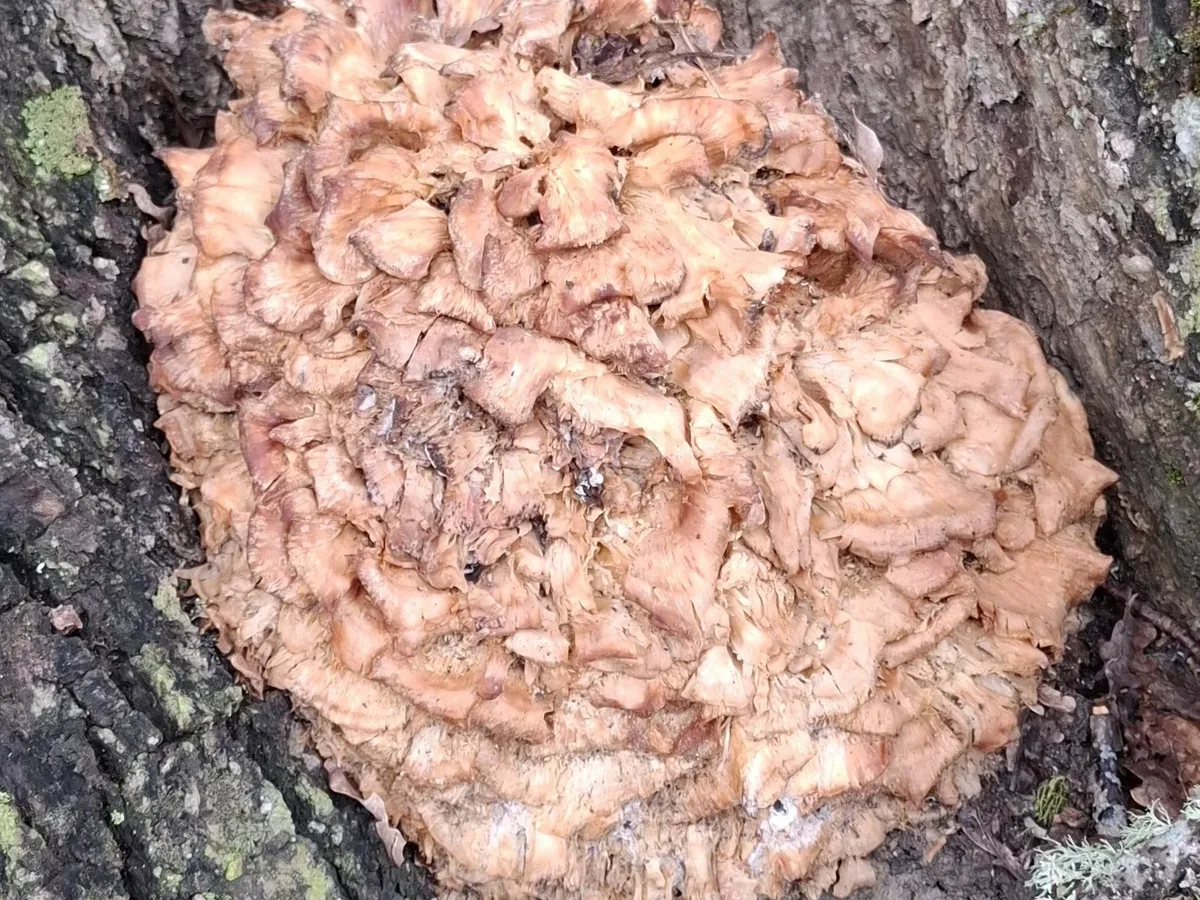
 Hen of the woods
From the spring "morel belt" of the Midwest to the thousand-year-old market traditions of Mexico, this is one of the world's richest and most mycophilic foraging regions. We cover ten edibles worth filling a basket with and six dangerous look-alikes worth knowing by heart. Nothing here is a guarantee - it is an invitation to look closely, cook thoroughly, and stay humble.
What matters most
- The safest beginner edibles have no deadly twins: black trumpet, hedgehog and lion's mane are hard to get wrong.
- The deadliest trap is a white mushroom with a sac-like volva - the destroying angel (Amanita bisporigera) and the introduced death cap (Amanita phalloides) carry amatoxins that cooking cannot destroy.
- Chlorophyllum molybdites, the green-spored parasol, is the single most common cause of mushroom poisoning in North America - always take a spore print on parasols.
- The main toxin groups to fear are amatoxins (liver), gyromitrin (blood and nerves) and illudin (violent stomach upset).
- DNA studies have split many familiar names - Morchella, Cantharellus, Craterellus, Laetiporus and Boletus now cover several species each.
- Almost everything must be cooked, and even "safe" species upset some people raw - try a small amount of anything new and wait 24 hours.
The great toxin groups
Most serious poisonings in this region trace back to a handful of toxins. The deadliest ones share a cruel pattern: you feel fine for hours, then better, before the real damage shows.
Found in the destroying angels (Amanita bisporigera, A. phalloides) and the deadly Galerina marginata. They irreversibly block RNA polymerase II and halt protein synthesis. Symptoms are deceptively delayed 6-24 hours - violent vomiting and diarrhoea, a false recovery, then jaundice and acute liver failure. Heat-stable: not destroyed by cooking, drying, freezing or pickling.
Found in the false morels (Gyromitra esculenta, G. caroliniana). In the body it converts to monomethylhydrazine - a rocket-fuel compound. Symptoms come 6-12 hours after eating: vomiting, diarrhoea, headache and weakness, with damage to red blood cells, the nervous system and the liver; it can even be inhaled while cooking.
Illudin S/M from the jack-o'-lantern (Omphalotus illudens) causes severe cramps, vomiting and diarrhoea, often within hours and frequently sending people to the emergency room. Rarely life-threatening for healthy adults; symptoms pass in a day or two.
The likely protein toxin of the green-spored parasol (Chlorophyllum molybdites). It causes violent vomiting, diarrhoea (sometimes bloody) and cramps 1-3 hours after eating. Seldom fatal, but children, the elderly and pets can become dangerously dehydrated.
The edibles
 Hen of the woods
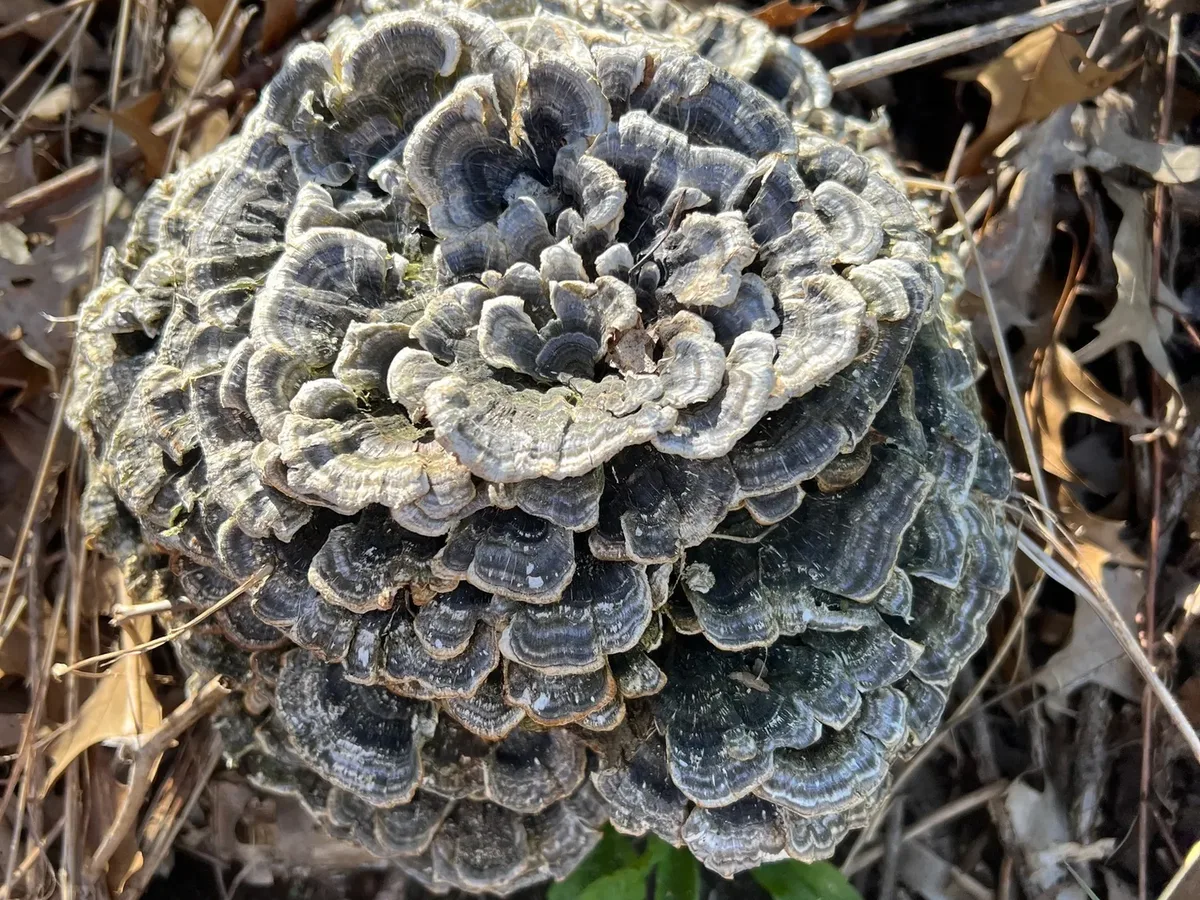 Hen of the woodsHen of the woods
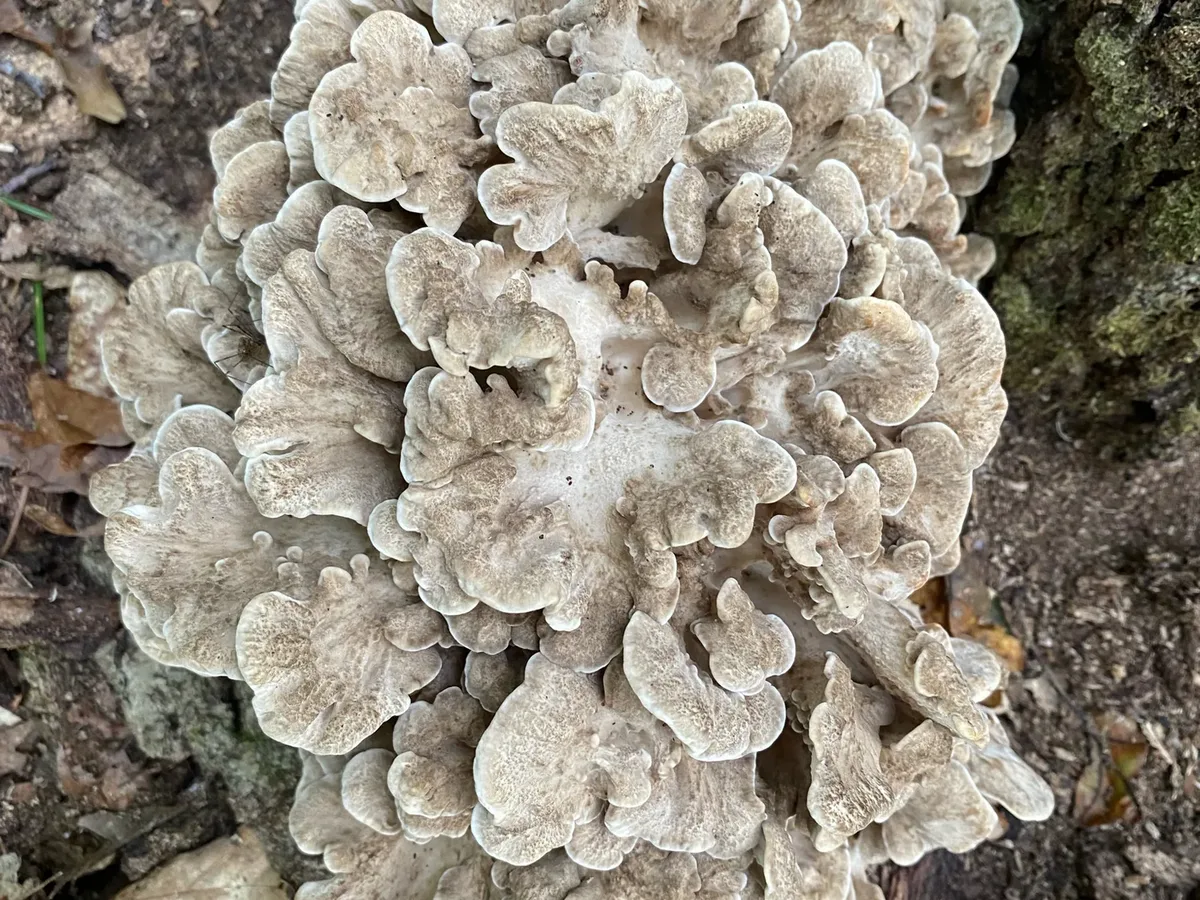 Hen of the woodsHen of the woodsHen of the woods
Maitake (hen of the woods)
Grifola frondosaGreat grey rosettes that return to the same oak base for years - sometimes weighing tens of kilos.
How to recognise it
Few mushrooms announce themselves quite like maitake. A soft-fleshed polypore, it erupts from the forest floor as a broad rosette of overlapping, spoon-shaped caps - grey-brown above, with wavy, rippling margins, each cap 2-10 cm wide. Flip a frond over and you'll find white to cream-yellow pores (1-3 per mm), not gills. The flesh inside is white throughout. A full cluster can span 20-60 cm and weigh anywhere from 1.5 to 15 kg, with exceptional old trees hosting specimens that tip the scales above 45 kg. Spore print white. The smell is rich, nutty, and faintly spicy - unmistakable once you know it.
Where it grows
Grows at the base of broadleaf trees - almost always oak, especially red oak, though it occasionally colonises maple or other hardwoods and their stumps. Most common in eastern North America; rare west of the Rocky Mountains.
Cooking
Maitake is one of the more versatile wild mushrooms in the kitchen - equally at home sauteed, roasted, deep-fried, stirred into soups, or reduced to duxelles. A classic approach is to roast it in the oven with olive oil and salt until the petal-like edges turn crispy. It freezes well both raw and cooked.
Look-alikes
An edible lookalike that blackens when touched.
An edible lookalike; thick-fleshed and cream-coloured.
An edible lookalike with ribbon-like folds rather than spoon-shaped capped fingers.
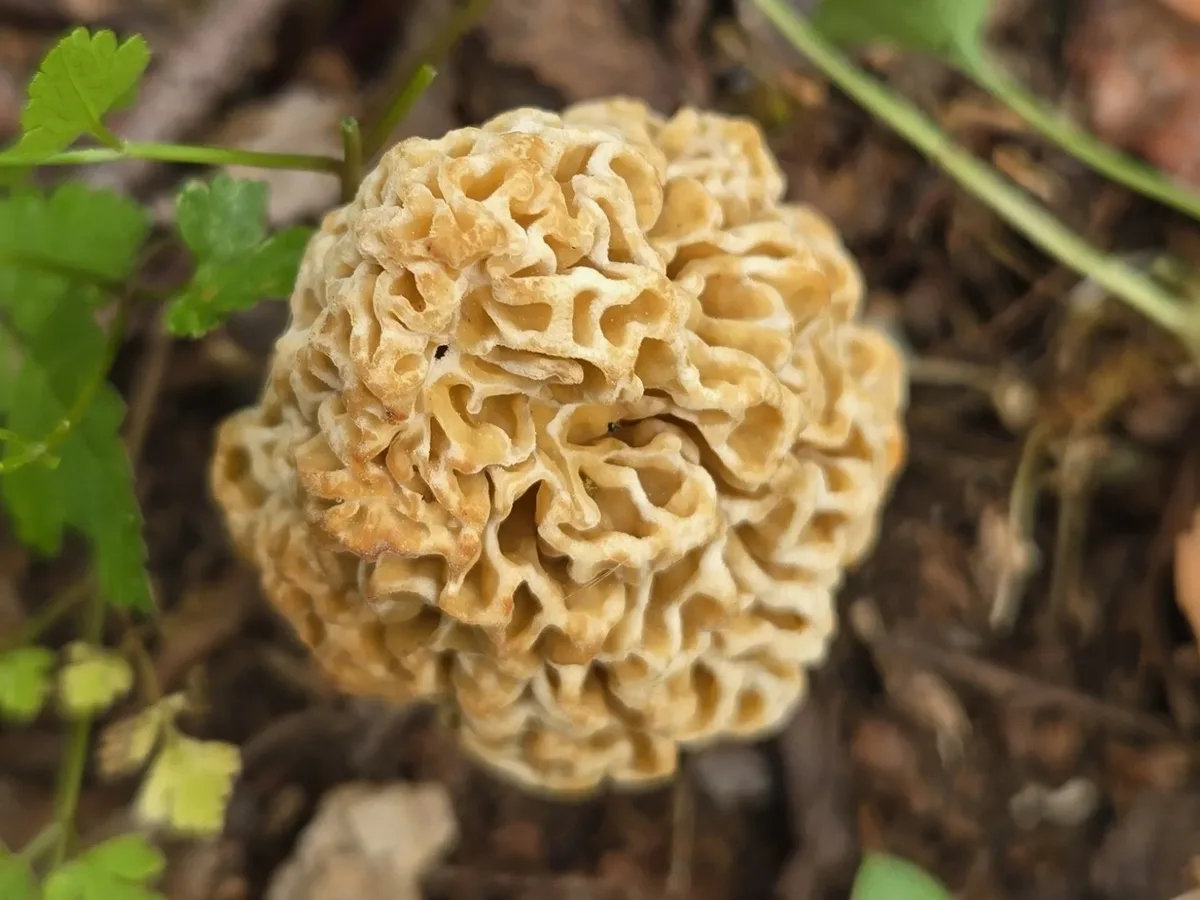 Yellow morel
 Yellow morelYellow morel
 Yellow morelYellow morelYellow morel
Yellow morel
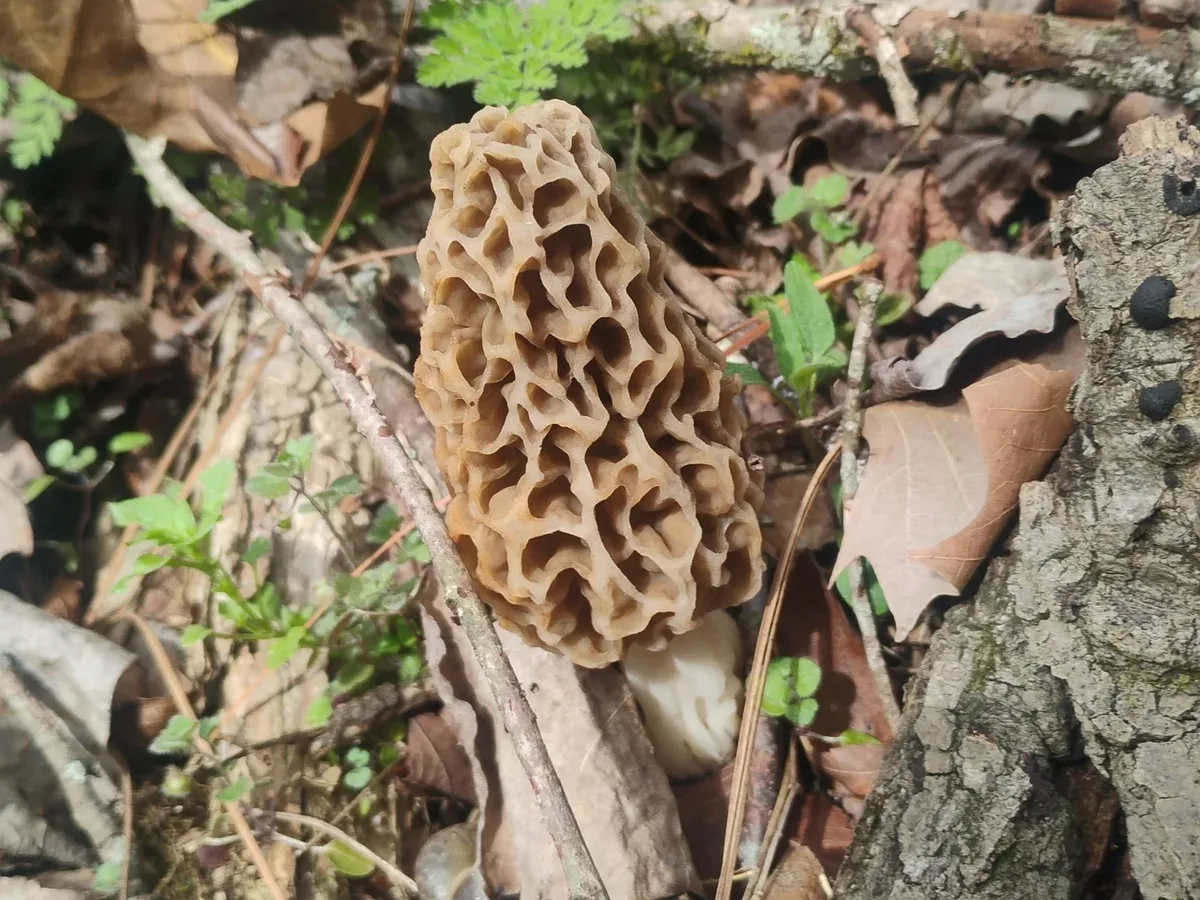
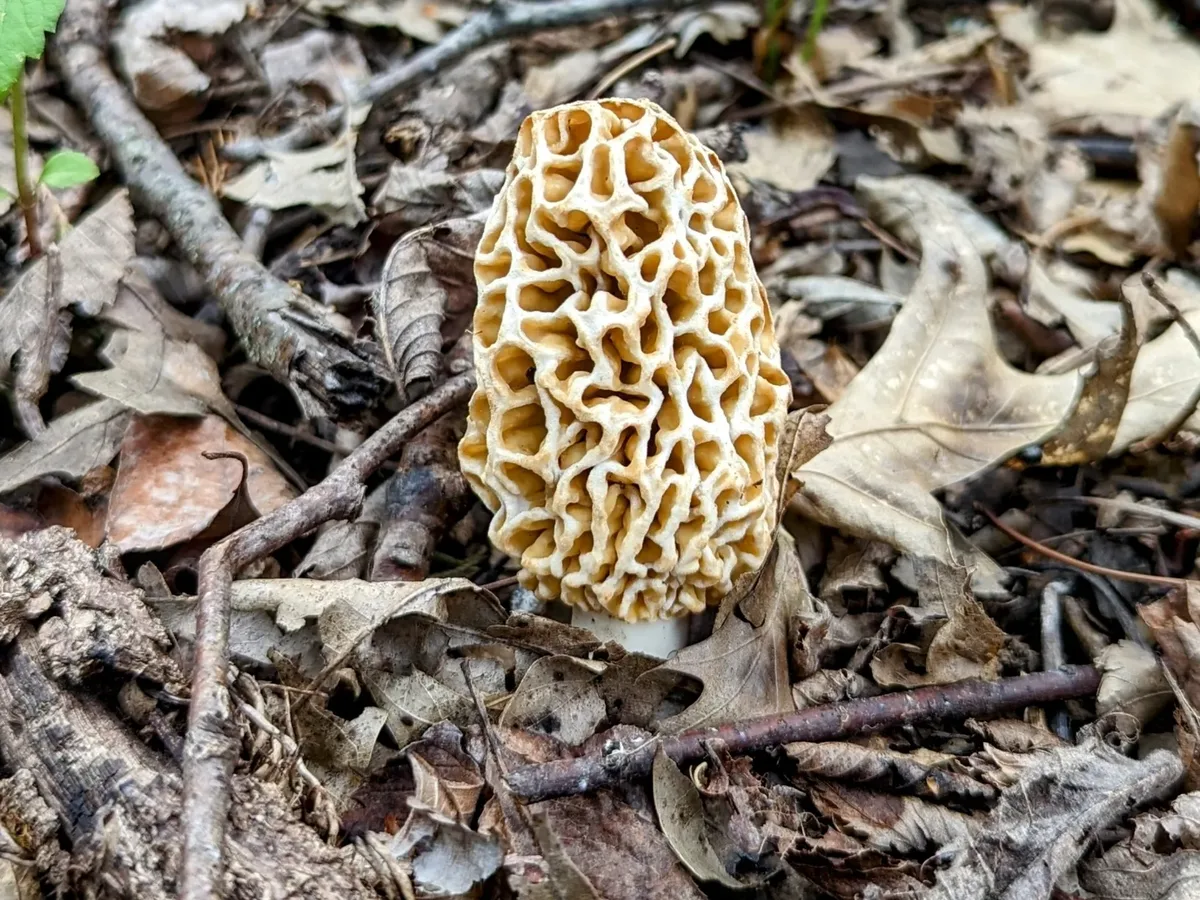
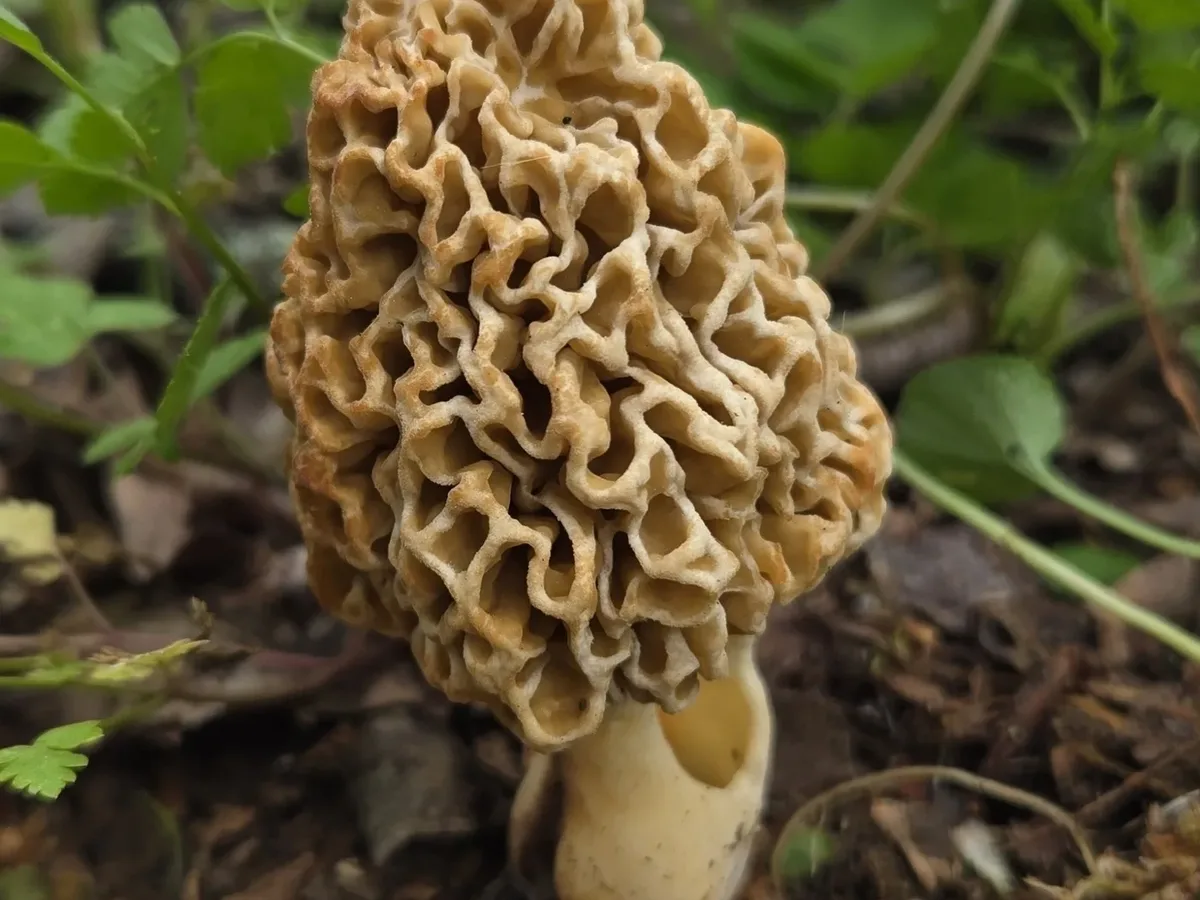
Morchella americanaThe honeycombed prize of the spring "morel belt" - hollow all the way through, and deadly raw.
How to recognise it
The cap is covered in a honeycomb of pits and ridges, and the whole mushroom - cap to foot - is completely hollow, a single open chamber. The yellow morel is pale-yellow to brown; the black morel is darker with a more pointed cap. That fully hollow interior is the decisive field mark.
Where it grows
Deciduous and mixed forest, often near dying or dead elms and ashes, around living tulip trees, oaks and poplars, in old apple orchards, along rivers and on burn sites. The Midwest is known as 'the morel belt' for good reason - the combination of dying elms, rich river-bottom soils, and spring warmth produces reliable flushes year after year.
Cooking
A Midwest tradition: halve them, soak in salted water to flush out any hidden residents, then bread in flour, egg, and breadcrumbs and fry in butter - fried morels at their simplest and best. They also shine creamed, in a sauce, or dried and reconstituted later in the year.
Look-alikes
Brain-like/wrinkled cap (not honeycomb-patterned), with a chambered interior that is not fully hollow, and contains the toxin gyromitrin. A true morel is completely hollow from cap to foot.
Brain-like/wrinkled, chambered (not fully hollow) interior, contains gyromitrin. The true morel's fully hollow interior is the distinguishing feature.
Brain-like, convoluted cap (not honeycomb-pitted), and not hollow but chambered/filled inside. Contains gyromitrin (a toxin).
The cap is attached only at the top (hangs free), unlike a true morel whose cap is attached down the length of the stem; the fully hollow interior also distinguishes the true morel.
A false early morel; distinguish from true Morchella by cap and stem attachment and chamber structure.
 Chicken of the woods
 Chicken of the woods
 Chicken of the woodsChicken of the woodsChicken of the woods
Chicken of the woods
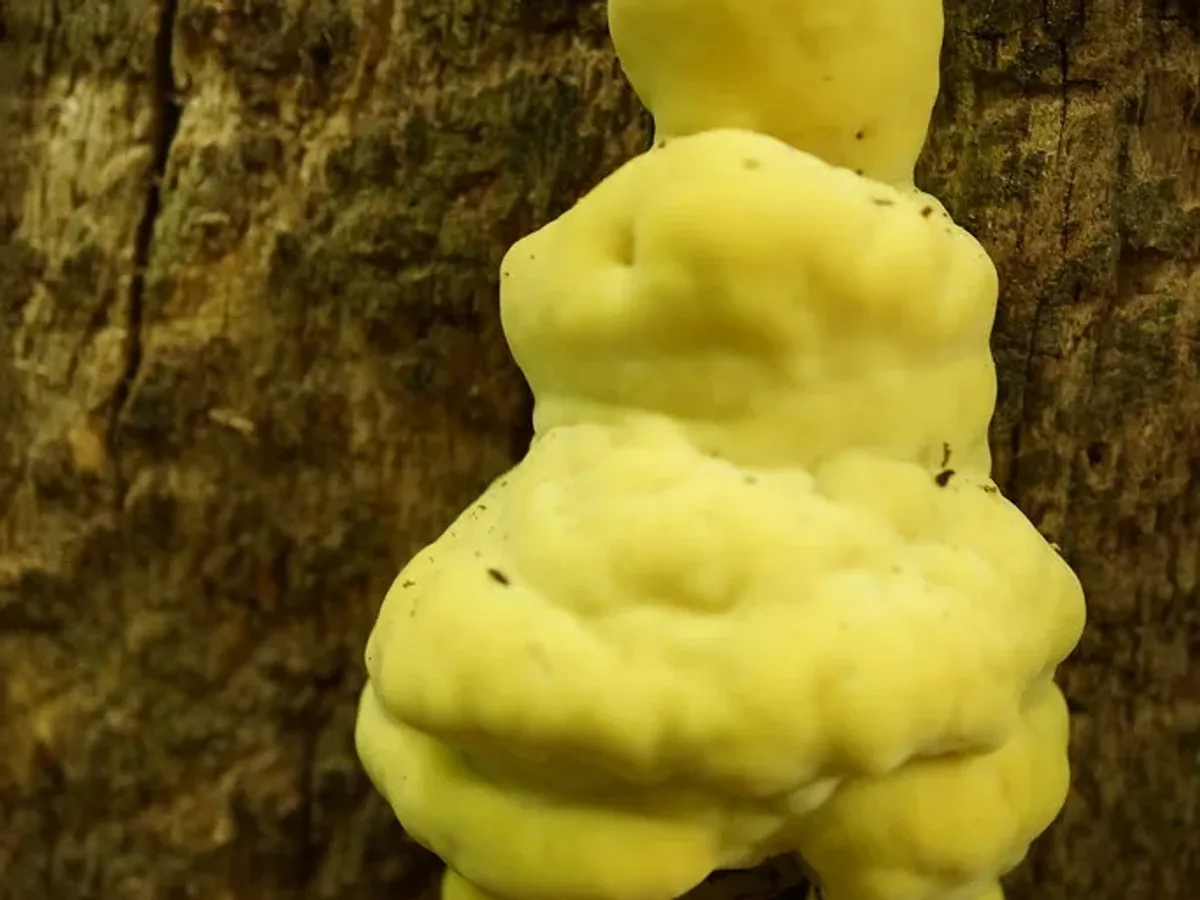
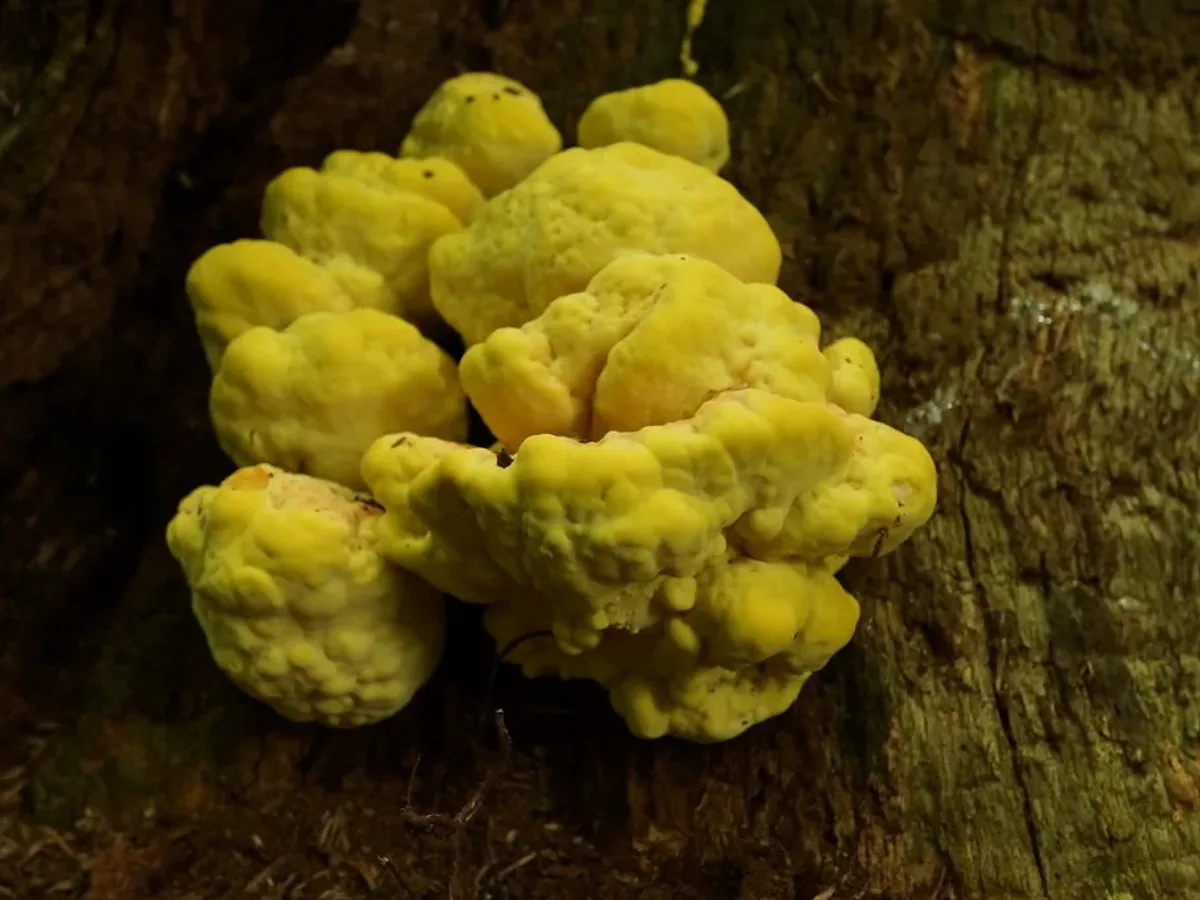
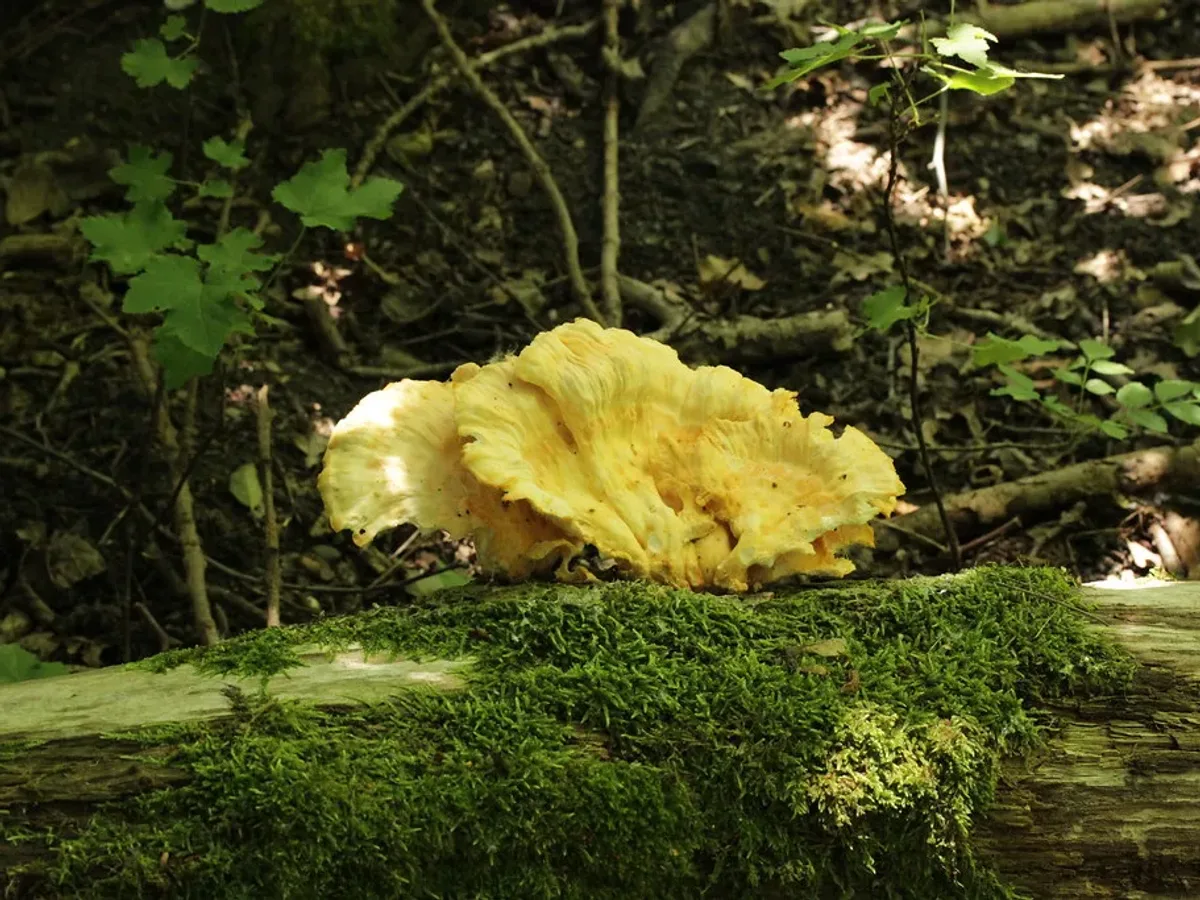
Laetiporus sulphureusBrilliant orange shelves on oak, with a meaty texture that earns its "mock chicken" name.
How to recognise it
Hard to miss: brilliant orange to yellow-orange shelves fan out in overlapping brackets on tree trunks (L. sulphureus) or form a ground-level rosette at oak roots (L. cincinnatus). Pores on the underside are sulphur-yellow in L. sulphureus and white in L. cincinnatus. Young flesh is soft, juicy, and white; with age it turns tough and chalky. Individual shelves reach 5-25 cm across.
Where it grows
On or near hardwood trees, especially oak, also cherry, poplar, willow. L. sulphureus grows on the trunk or stump (east of the Great Plains); L. cincinnatus grows in a rosette from the ground at oak roots.
Cooking
Valued as a meat substitute, earning the nickname "chicken of the woods" for its firm, stringy texture and mild flavour. Bread and fry it, fold it into stews or curries, or cook it on the BBQ. L. cincinnatus is considered the most tender and least worm-eaten of the group.
Look-alikes
Poisonous and orange, but has gills rather than pores.
Grows on hemlock and causes digestive upset more often than L. sulphureus.
 Smooth chanterelle
 Smooth chanterelle
 Smooth chanterelle
 Smooth chanterelleSmooth chanterelleSmooth chanterelle
Smooth chanterelle
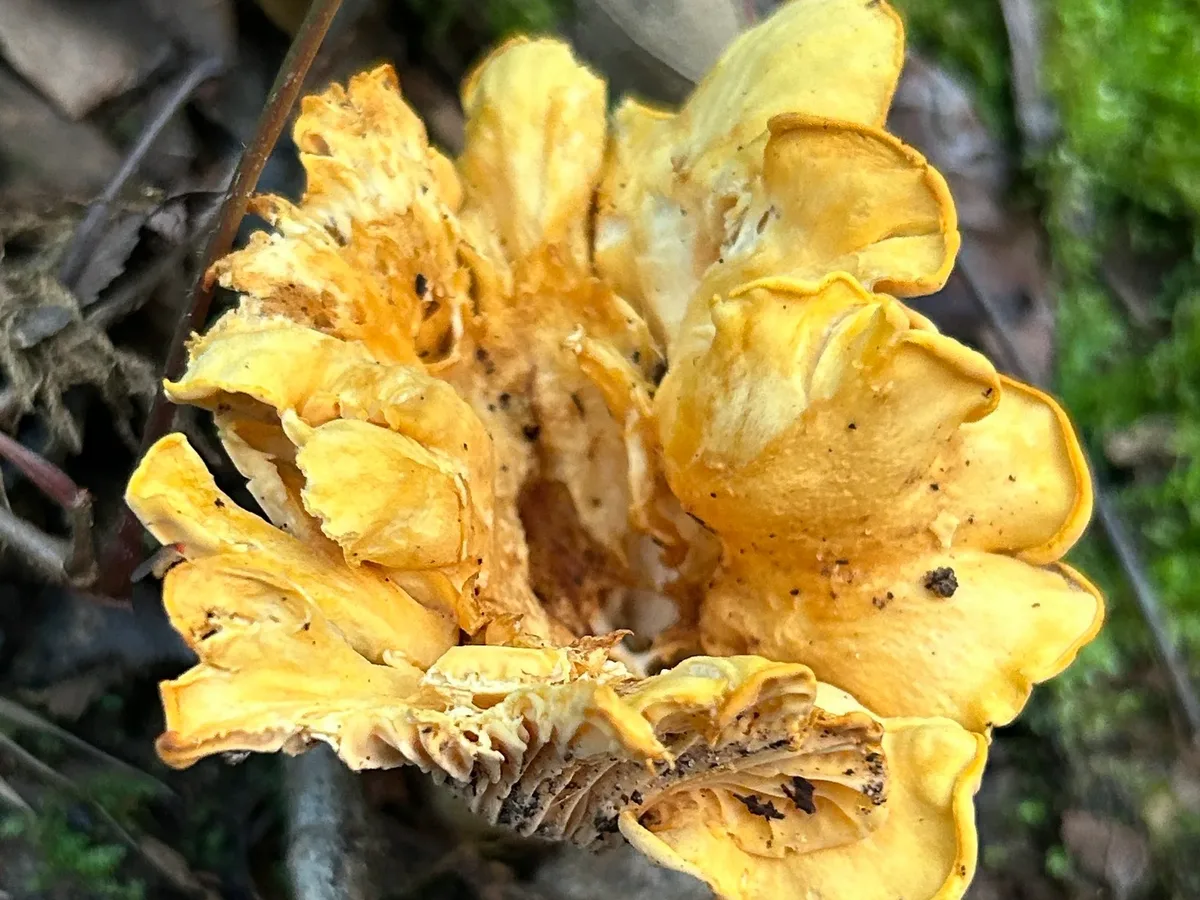
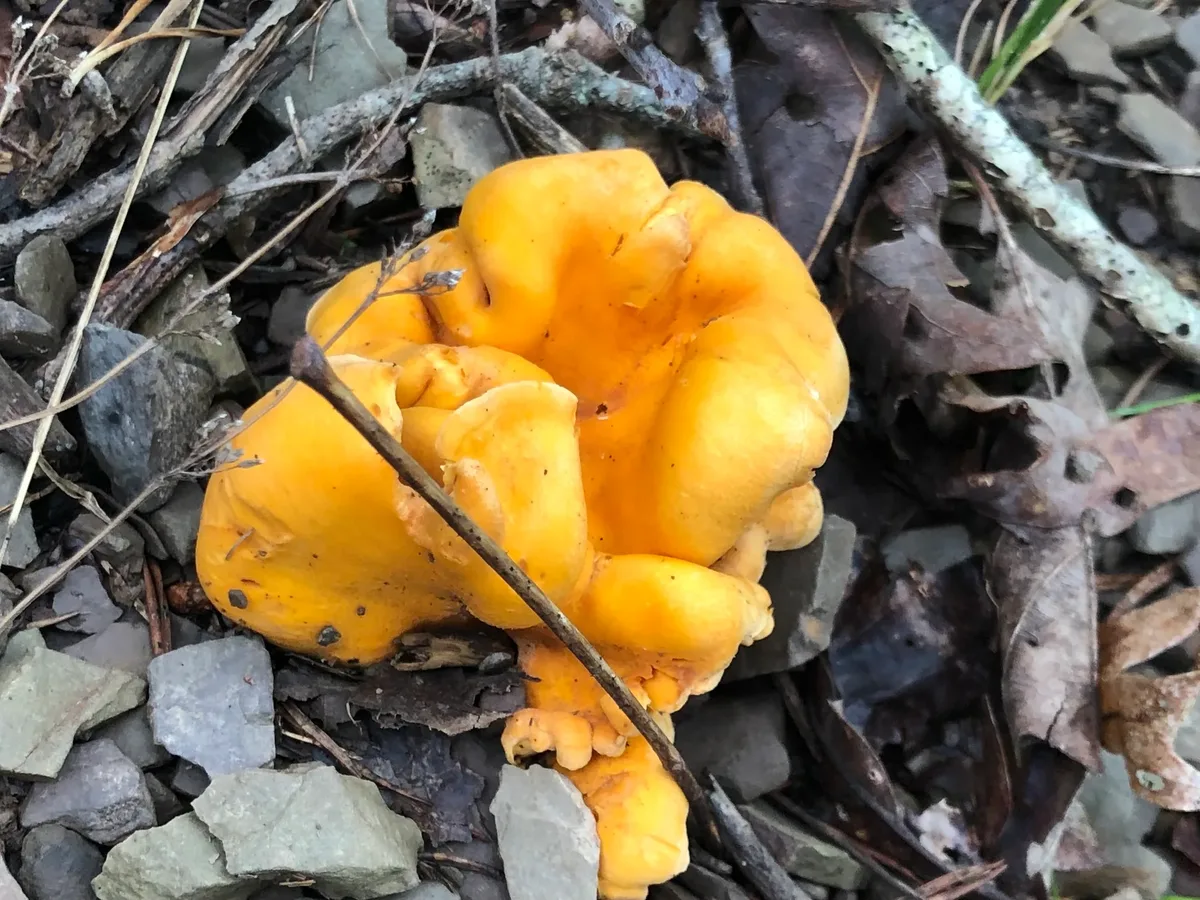
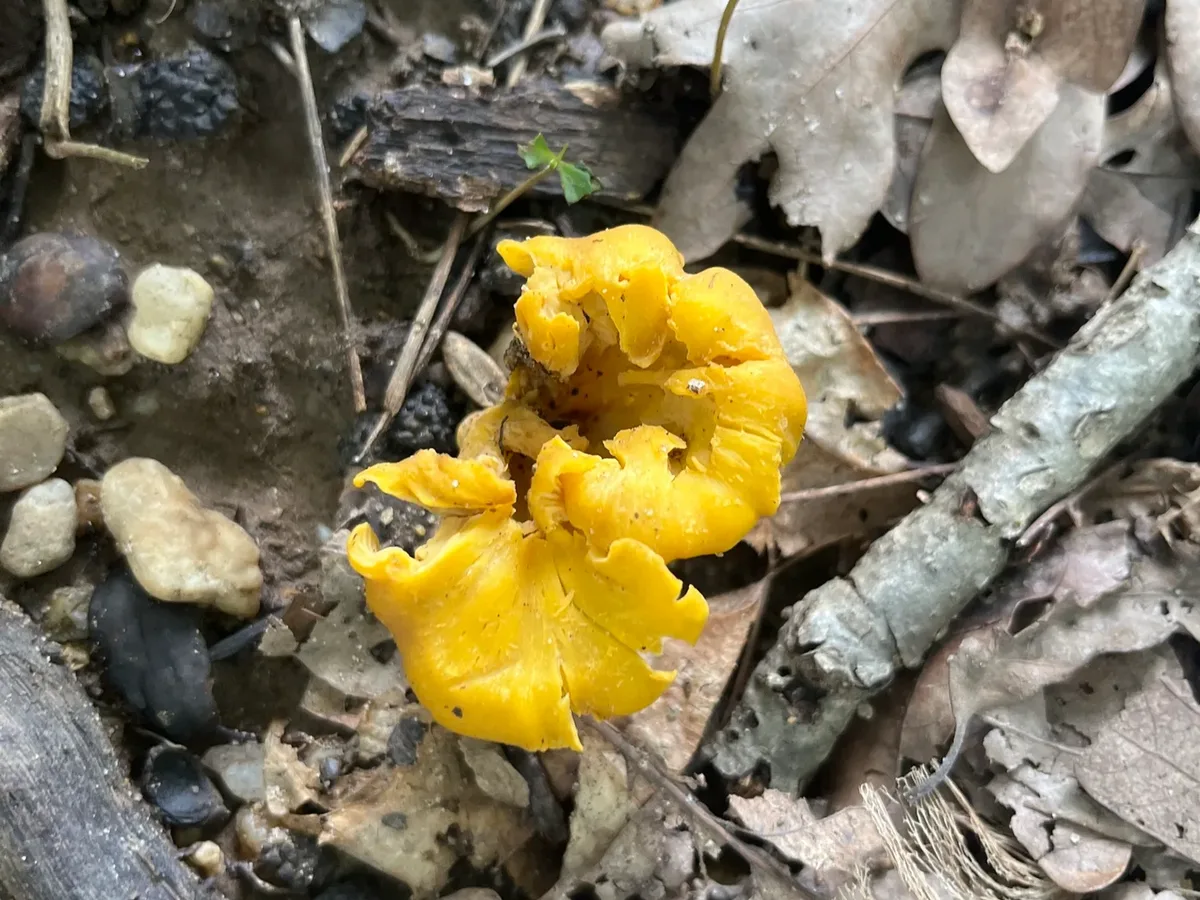
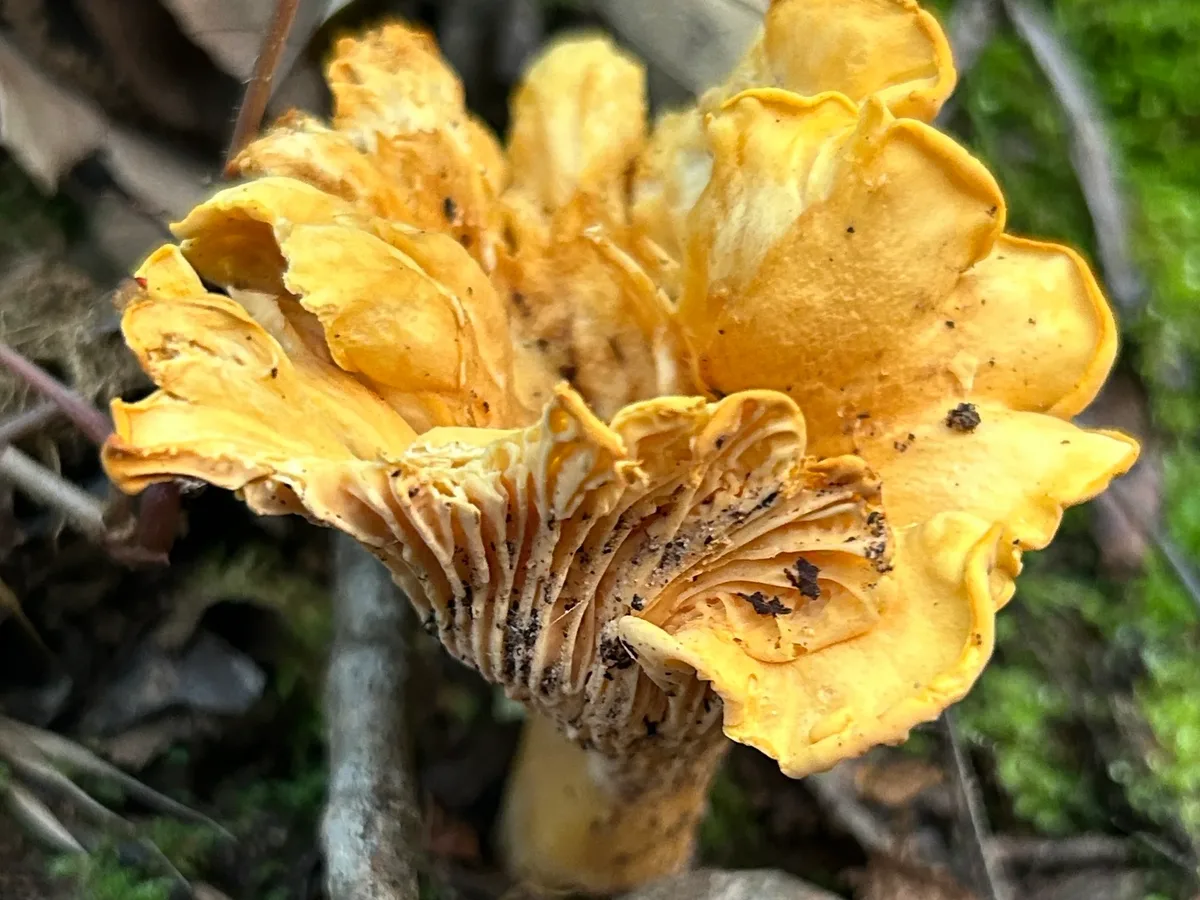
Cantharellus lateritiusApricot-scented gold rising alone from the forest floor - never in clusters on wood.
Look-alikes
Eastern North American species; grows in dense clusters at tree bases or from buried wood; has true, crowded, sharp blade-like gills (never blunt ridges or smooth surface); orange flesh throughout the entire stem; may glow faintly bioluminescent in the dark; lacks apricot scent; causes severe gastrointestinal poisoning requiring emergency care
European and Mediterranean species associated with olive, oak, and other hardwood stumps; clustered growth on or near wood; true sharp crowded gills; may glow bioluminescent; no fruity scent; causes severe gastrointestinal illness; not expected in eastern North America but included for travellers
Very similar and equally edible; C. cibarius sensu stricto is primarily European; has more developed, better-formed pseudogills compared to the nearly smooth hymenium of C. lateritius; North American 'C. cibarius' collections are now mostly assigned to other species including C. lateritius
True gills, crowded and repeatedly forking, sharp-edged; cap more uniformly depressed with thin, incurved margin; found mainly in conifer duff; flesh thinner and more pallid; lacks apricot scent; mildly toxic - causes gastrointestinal distress and occasionally neurological symptoms
Edible; distinguished by vivid scarlet-red to orange-red colouration throughout; much smaller fruitbodies (cap 1-4 cm); co-occurs with C. lateritius in eastern North America but easily told by intense red colour and pinkish spore print
 Black trumpet
 Black trumpet
 Black trumpetBlack trumpetBlack trumpet
Black trumpet
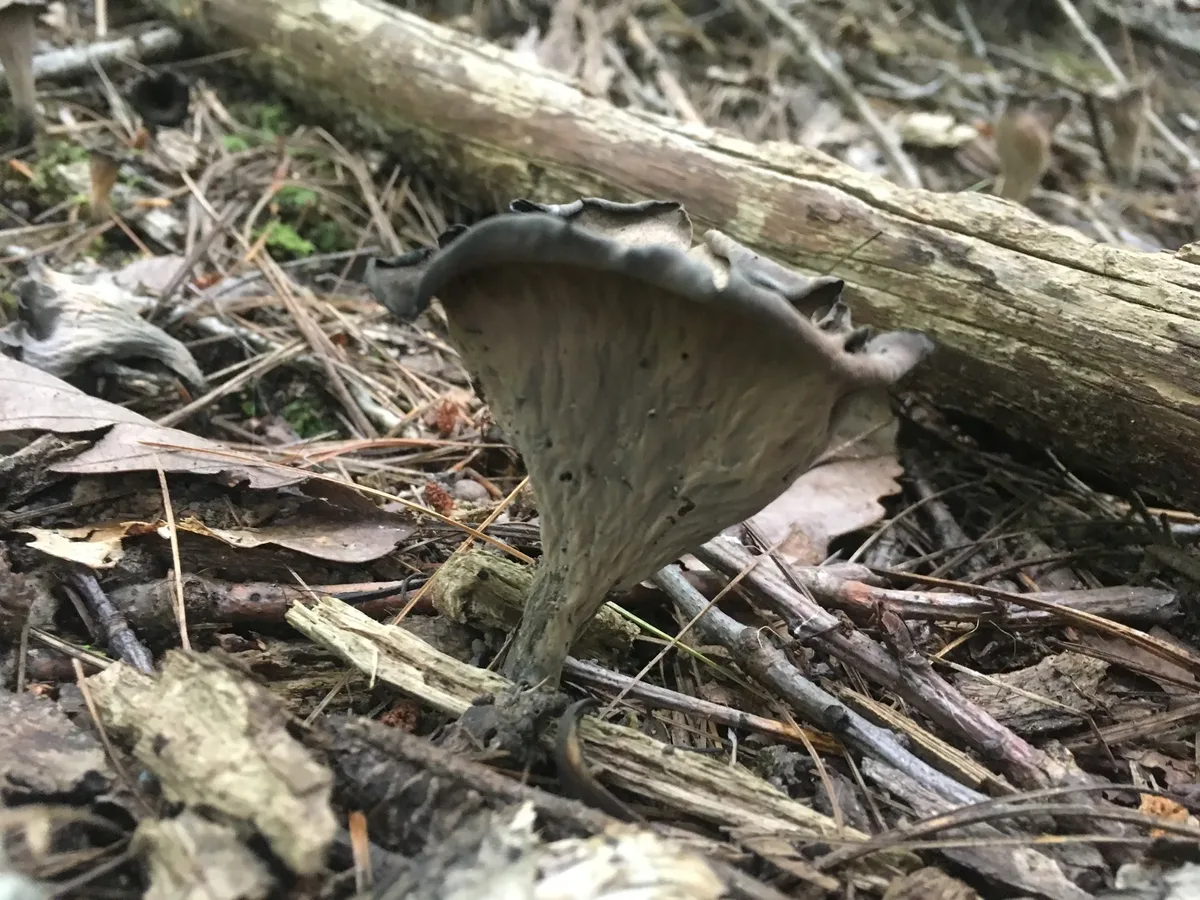
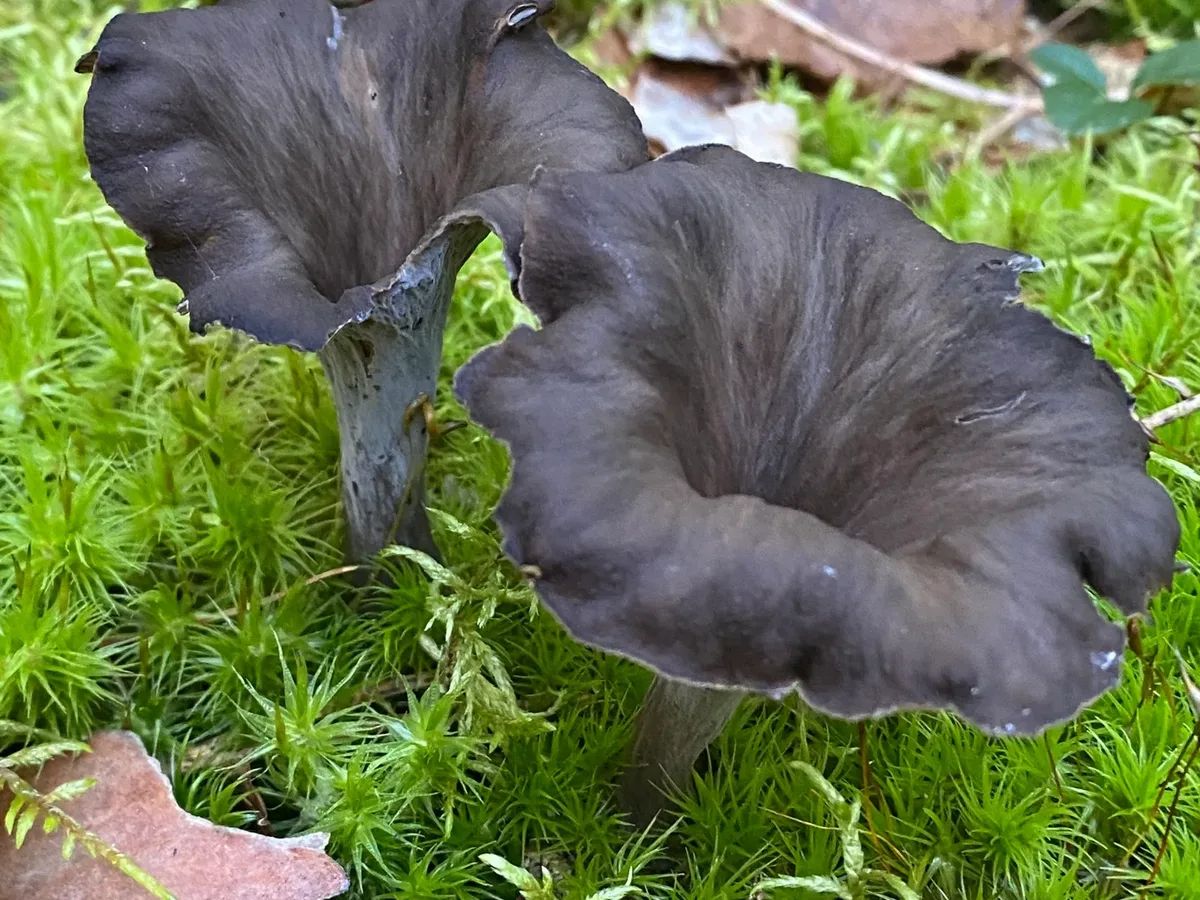
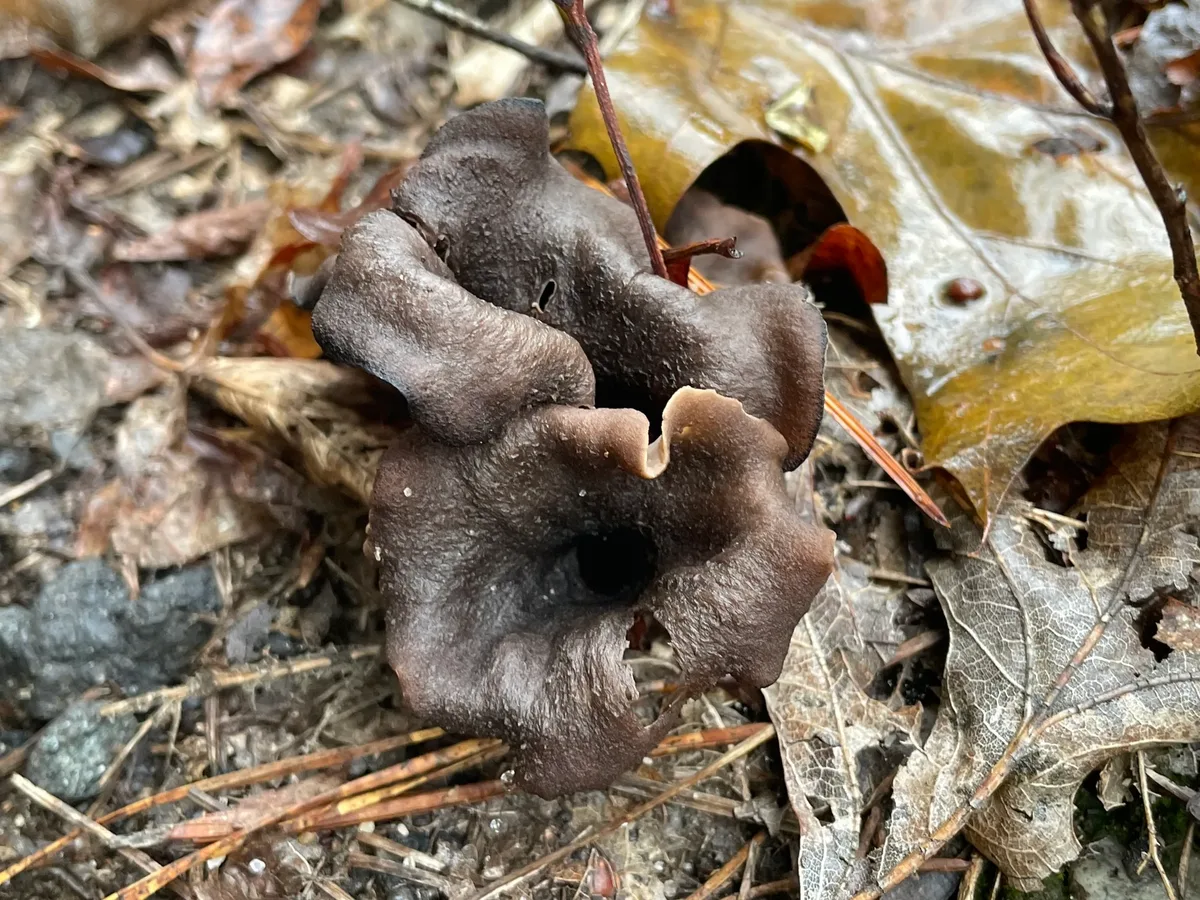
Craterellus fallaxOne of the safest mushrooms for beginners - and dried, it gives a deep, powerful umami.
How to recognise it
Trumpet- or funnel-shaped, gray-black to brown-black, thin and waxy. Smooth to slightly wrinkled outer surface (spore-bearing), with no distinct gill structure. Salmon-colored spore print (distinguishes it from the European C. cornucopioides, which has a white spore print). Fruity, sweet smell.
Where it grows
Mycorrhizal with hardwoods (oak, beech); in moss, on moist ground, often in natural hollows. The vermilion chanterelle (cinnabar chanterelle) is a good indicator species - black trumpets are often found nearby.
Cooking
Fried in butter, in omelets and with egg/cheese, in sauces, on pizza, with steak. Dried and powdered it provides intense umami.
Look-alikes
The nearest lookalike; also edible, so no danger from confusion.
Closely related European species; distinguished by its white spore print versus the salmon-colored spore print of C. fallax.
 Hedgehog mushroom
 Hedgehog mushroom
 Hedgehog mushroom
 Hedgehog mushroomHedgehog mushroomHedgehog mushroom
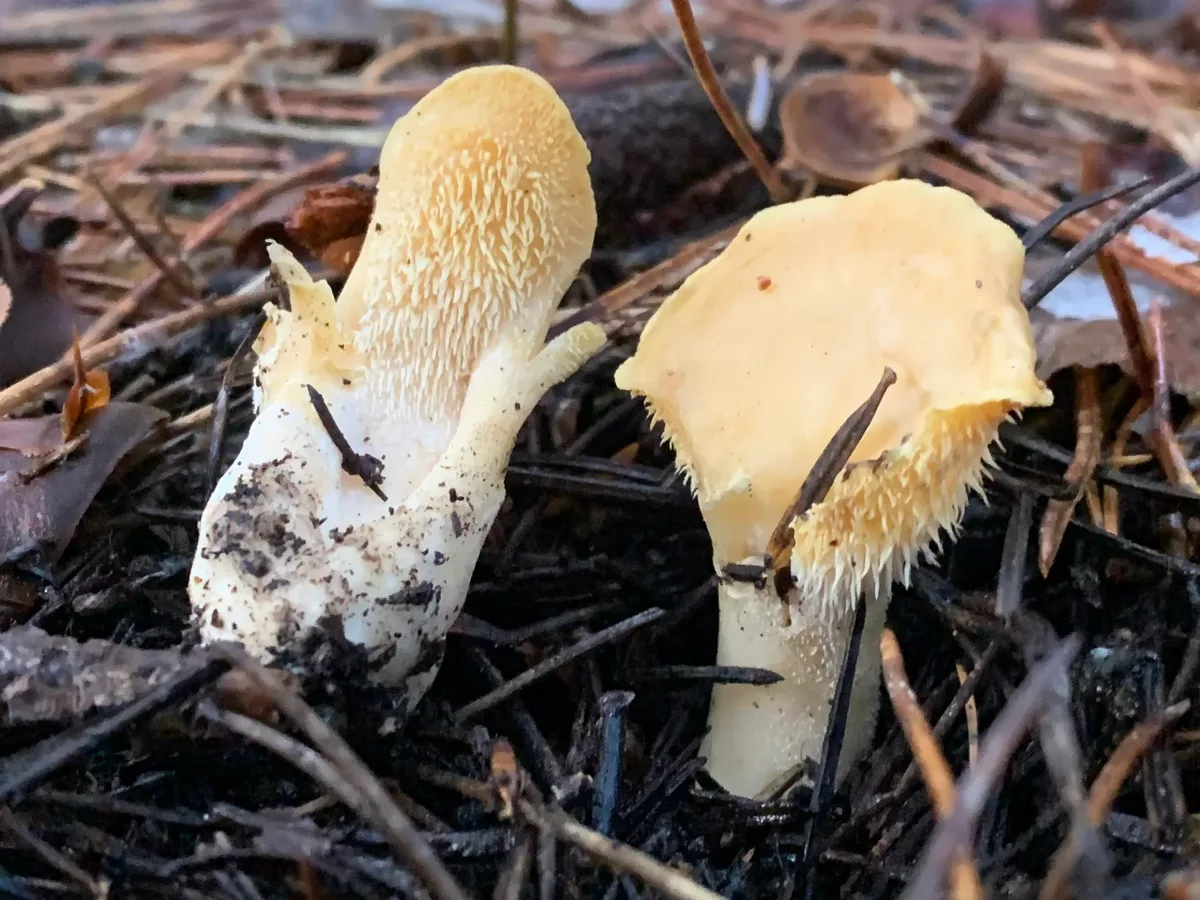
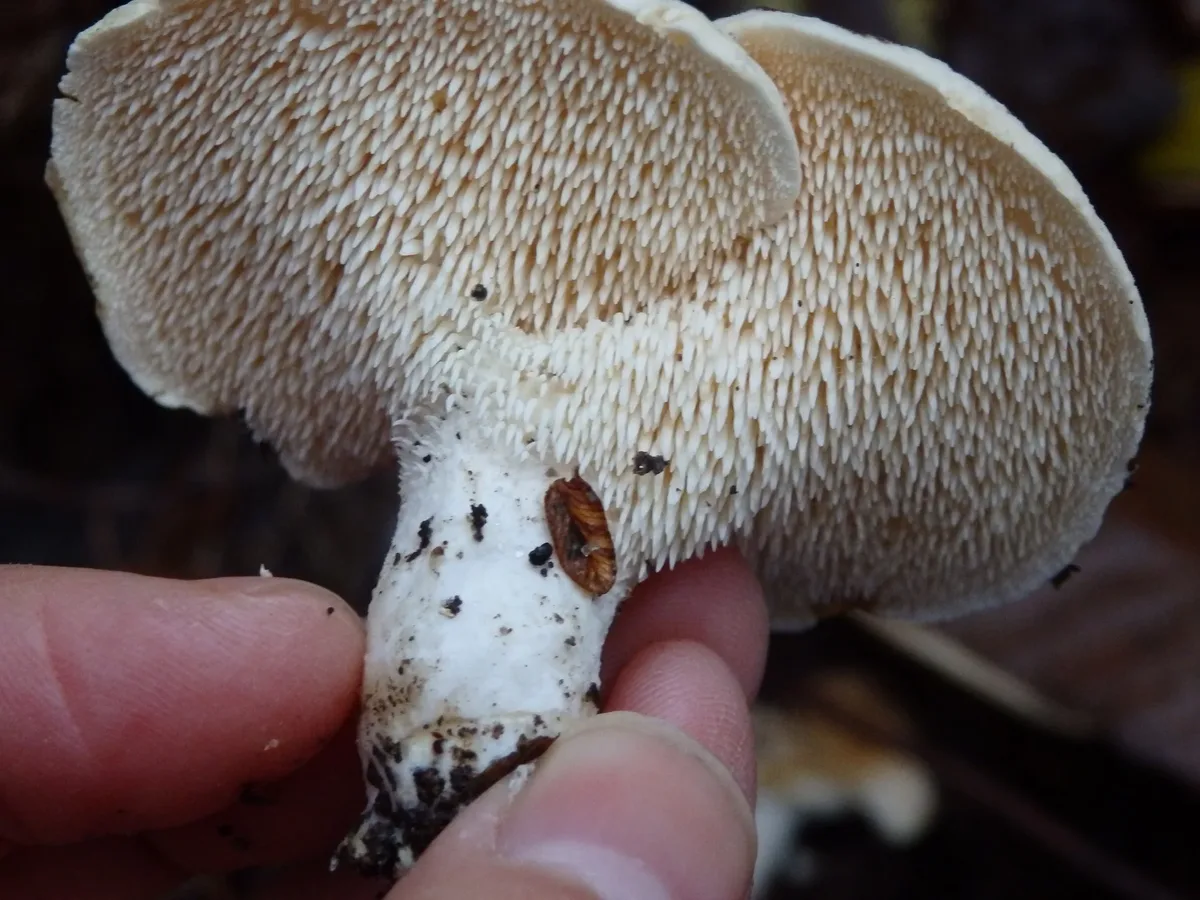
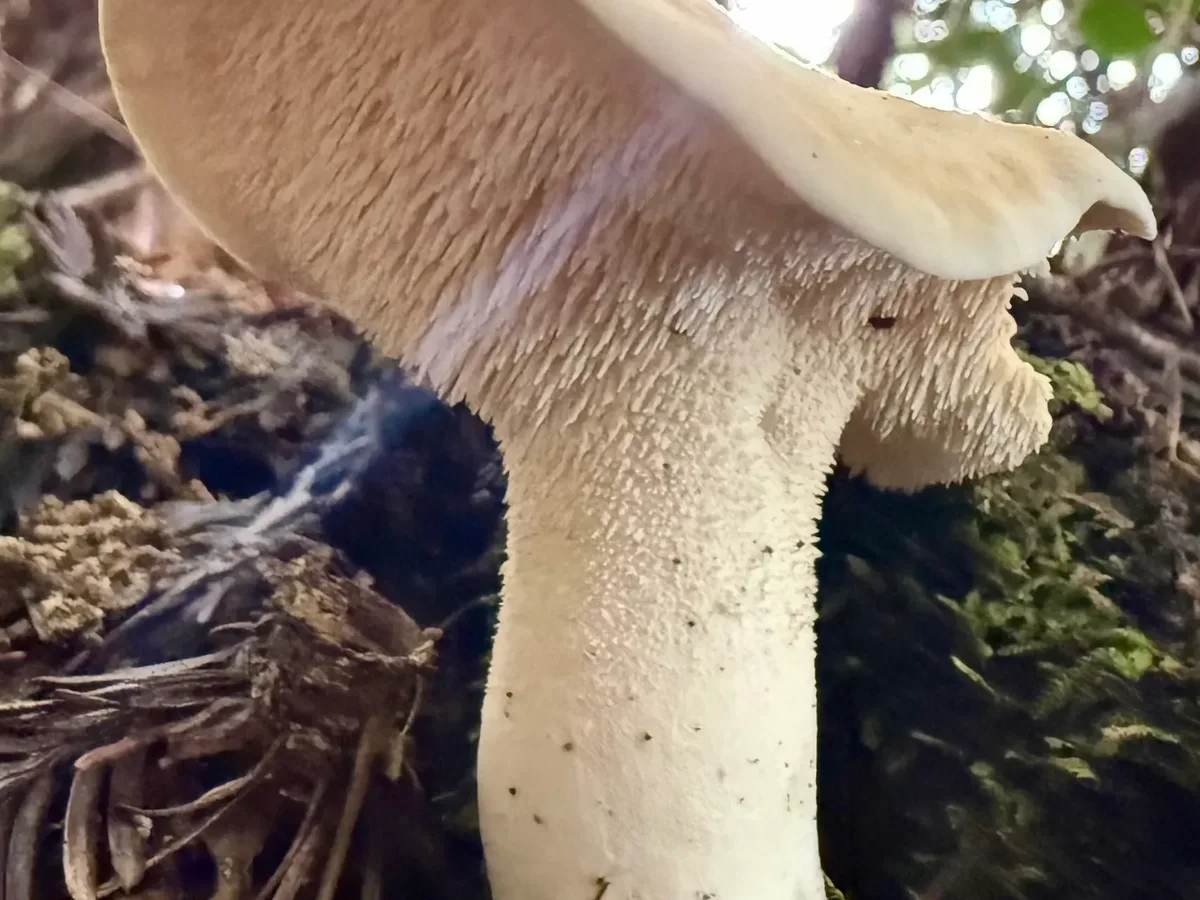
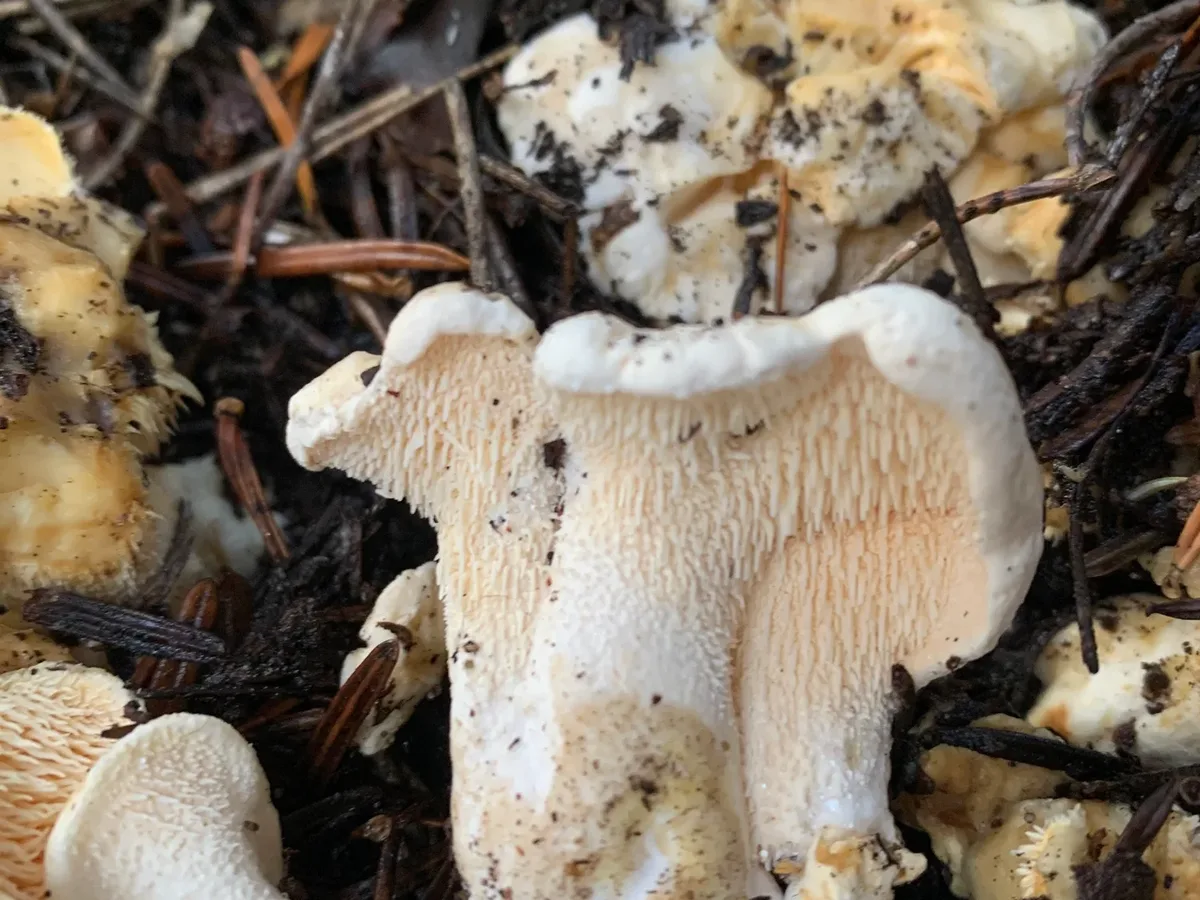
Hedgehog (sweet tooth)
Hydnum repandumSoft spines instead of gills make this one almost impossible to mistake for anything dangerous.
How to recognise it
Cap 4-17 (-25) cm, irregular with a wavy, lobed edge, cream-white to yellow-brown or salmon-pink. The underside carries the hedgehog's calling card: soft, brittle spines or teeth (1-6 mm) that detach at a touch - no other common edible mushroom looks quite like this underneath. Stem short and stout, often off-centre, white. Flesh white and firm, yellowing or browning slightly where bruised. No milk or latex (separates it from the milkcaps). Spore print white.
Where it grows
Mycorrhizal with deciduous and coniferous trees - beech, oak, birch and spruce - in mossy, well-drained woodland. The mycelium lives for years in the soil, quietly maintaining its tree partnerships long before the fruitbodies emerge each autumn.
Cooking
Firm and meaty, it holds its shape beautifully in the pan - less prone to wilting than a chanterelle. Fry in butter, use in soups and risotto, or pair it with chanterelles in the classic French autumn market combination. The mild, nutty flavour deepens with a good sear.
Look-alikes
Smaller and more orange than H. repandum; equally edible.
Can resemble a pale chanterelle from a distance, but the spiny underside of Hydnum (versus chanterelle's blunt ridges/false gills) tells them apart. Both edible.
Resembles the hedgehog from above, but the chanterelle has blunt ridges/false gills rather than the hedgehog's spines.
Gelatinous with rubbery spines.
Scaly, darker in colour, and can be bitter.
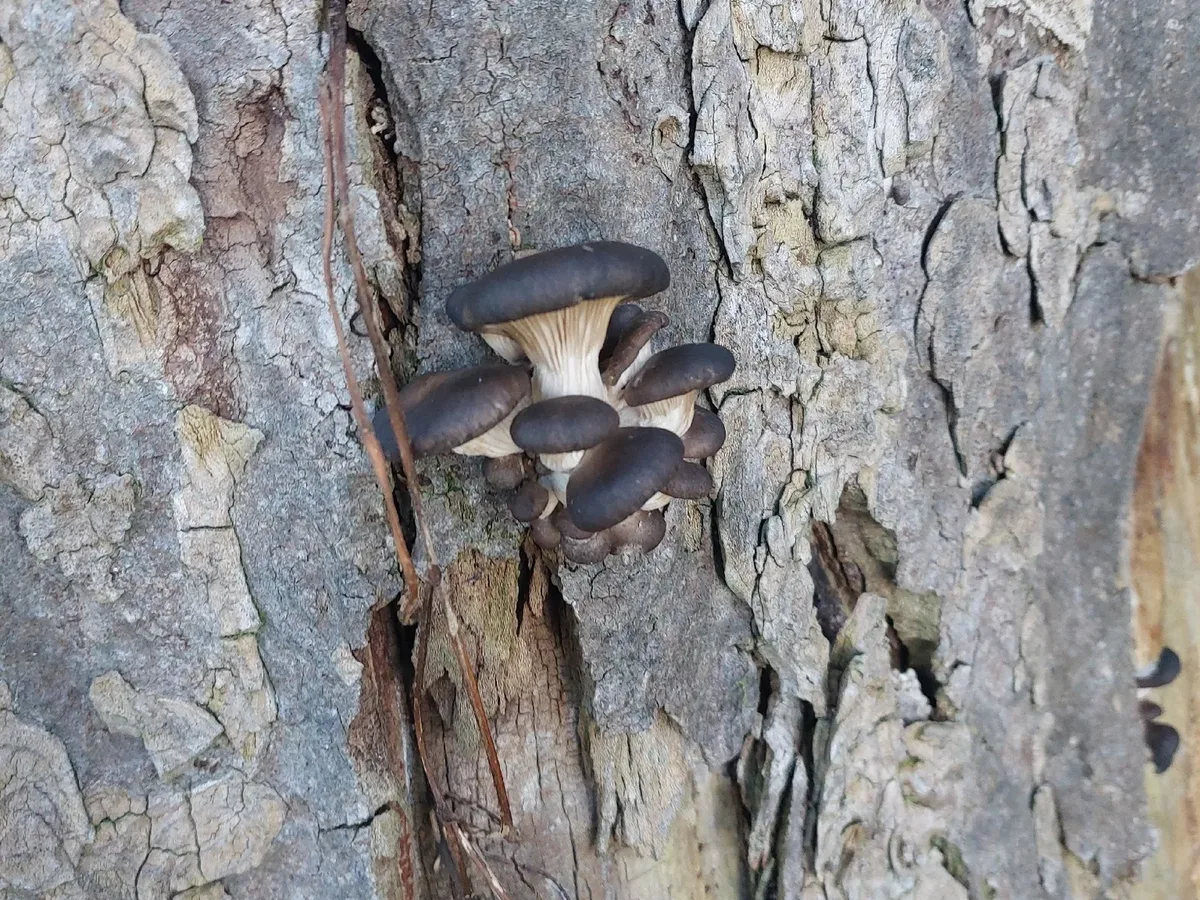 Oyster mushroom
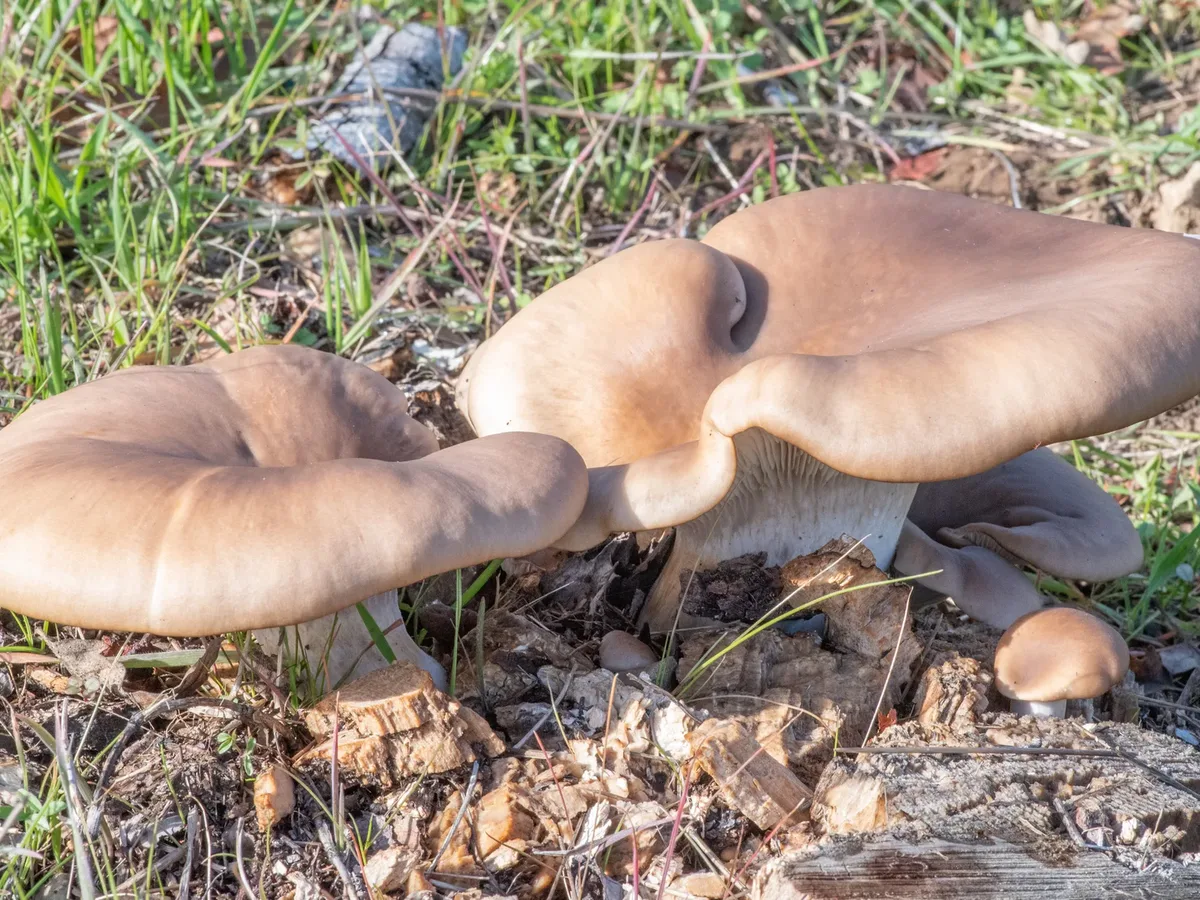 Oyster mushroom
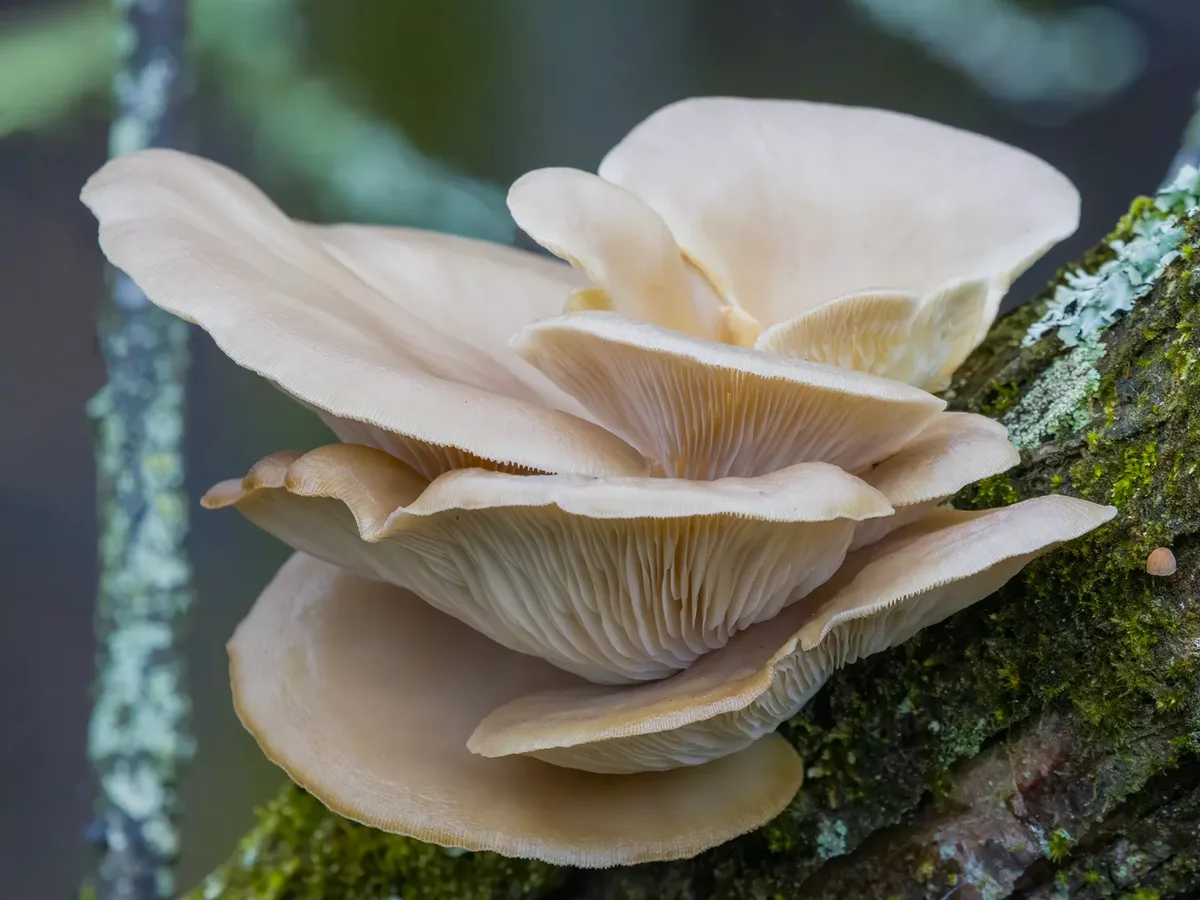 Oyster mushroom
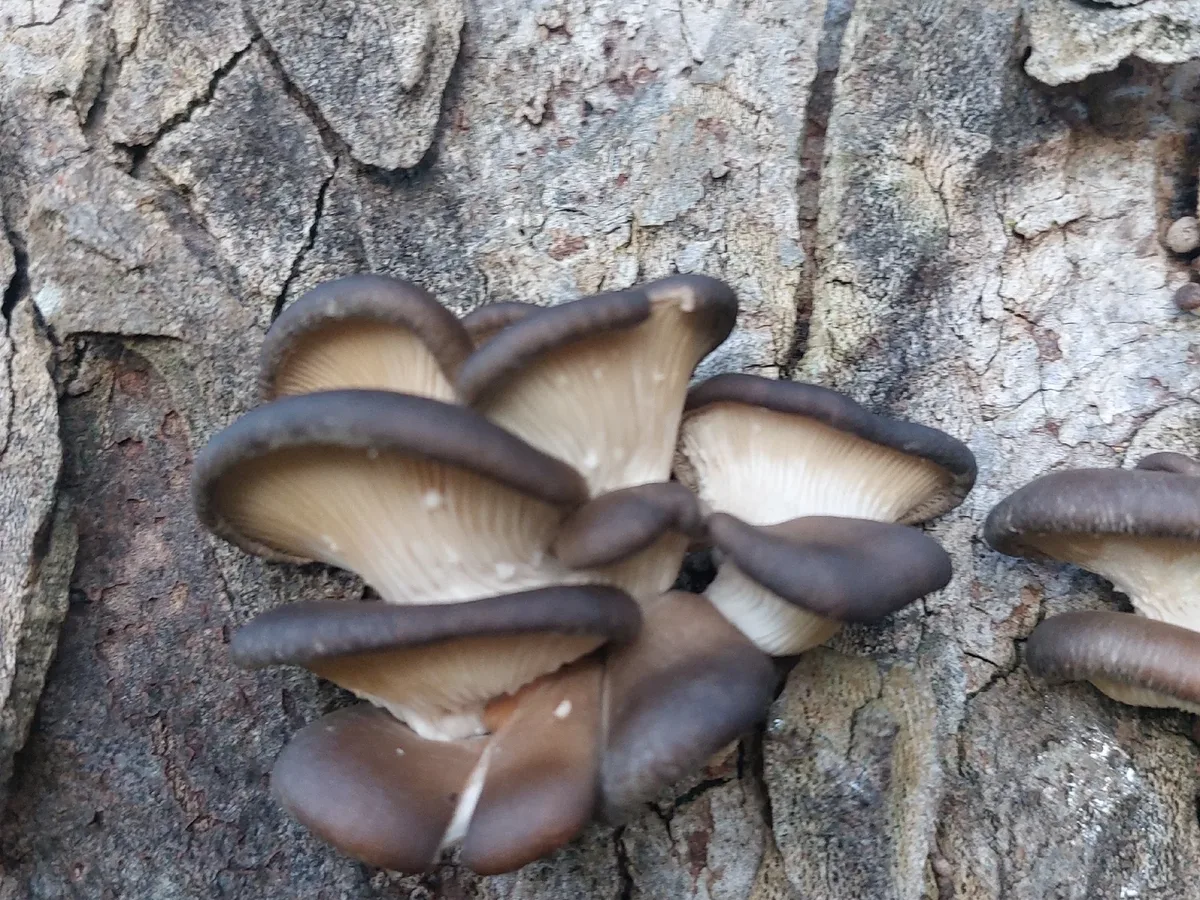 Oyster mushroomOyster mushroomOyster mushroom
Oyster mushroom
Pleurotus ostreatusOverlapping shelves on dead hardwood that fruit through mild winters, filling the empty months.
How to recognise it
The cap is fan-shaped or oyster-shaped, 5-25 cm across, and ranges from white through pale grey or beige to darker brown depending on light and temperature. White gills run decurrently down the short, often off-centre or absent stem, giving the whole fruitbody a clean, sculpted look. Spore print white to greyish-lilac. Clusters can stack into impressive overlapping shelves on a single log.
Where it grows
Grows on dead or dying deciduous wood - especially beech, oak, birch and poplar - colonising fallen trunks, exposed stumps and standing dead trees. It is rarely found on the ground: if you spot it, look up or look closer for the buried wood beneath.
Cooking
Versatile in the kitchen - fry or sear it for a lightly crisp edge, toss it into stir-fries, or let it simmer into soups and stews. The flavour is mild with a faint seafood undertone; the texture softens readily with heat. Large caps can be sliced; small clusters are good left whole.
Look-alikes
Poisonous; grows in clusters but is orange-coloured and has true luminous (bioluminescent) gills.
Also edible.
Also edible.
 Lion's mane
 Lion's mane
 Lion's mane
 Lion's maneLion's maneLion's mane
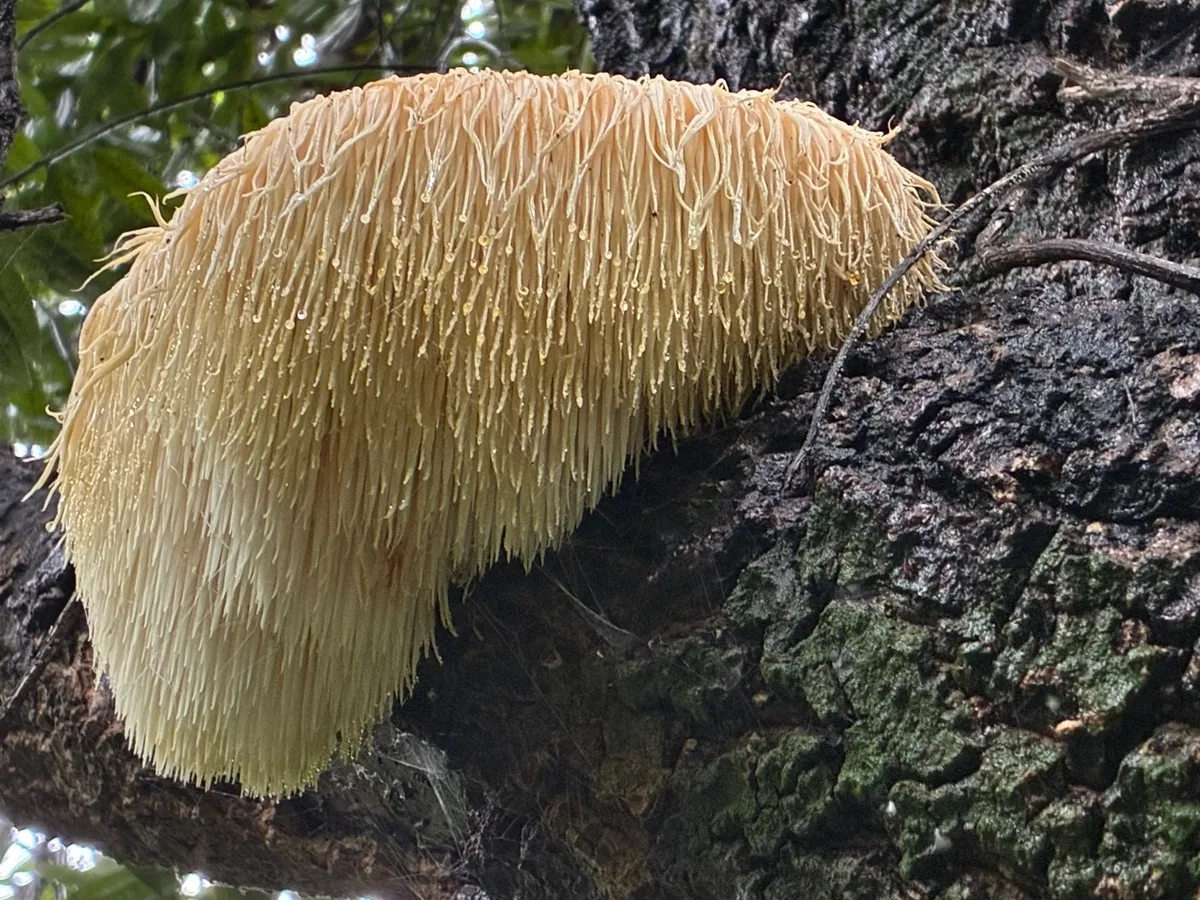
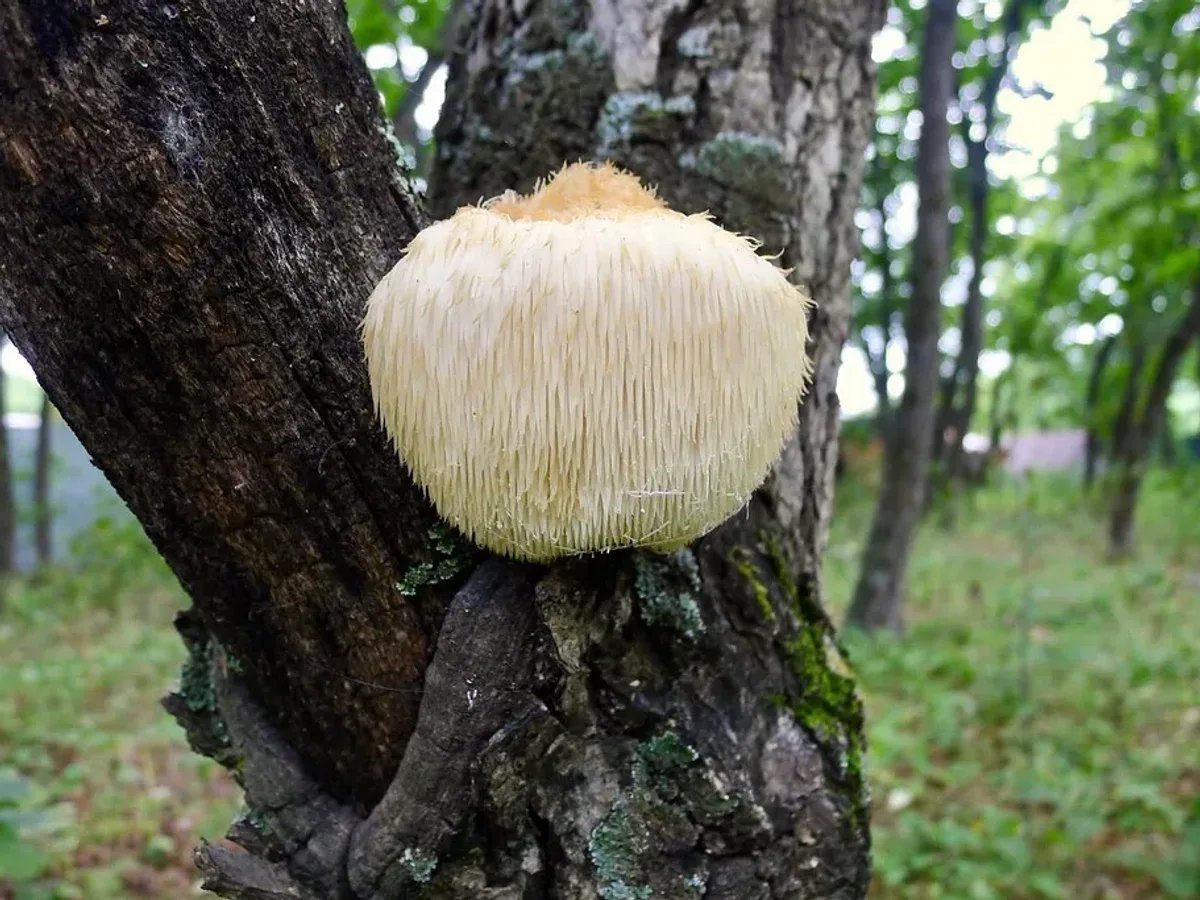
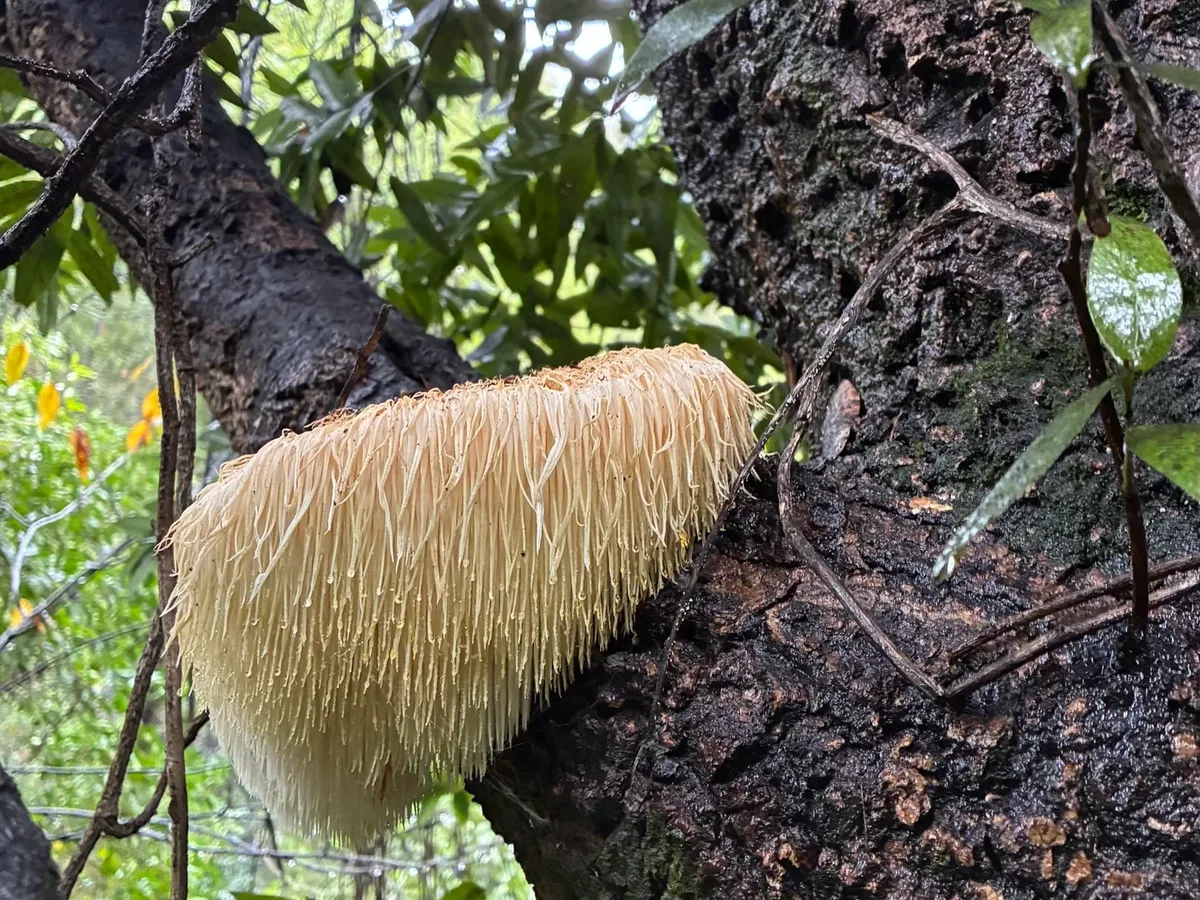
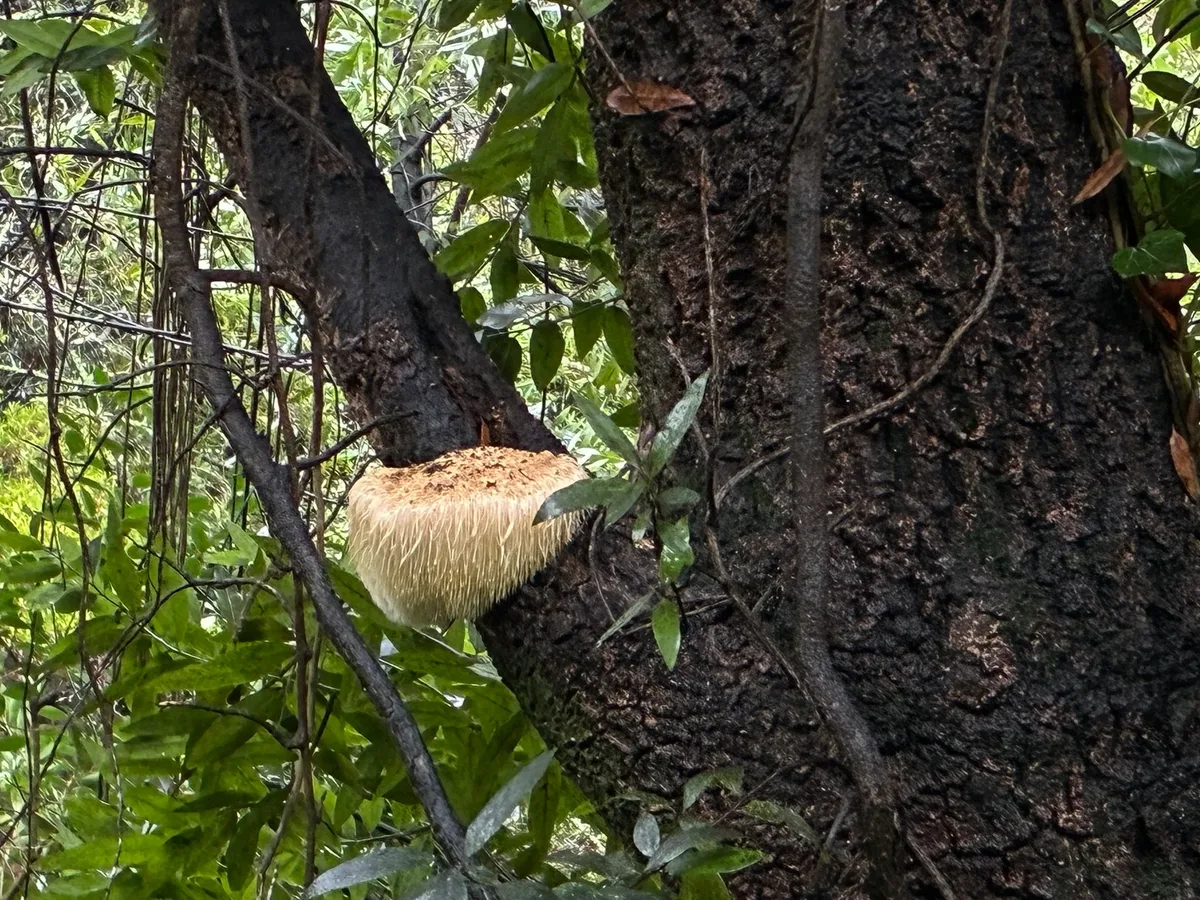
Lion's mane
Hericium erinaceusA white cascade of icicle-like spines that cooks up tasting of crab or lobster.
How to recognise it
One of the most unmistakable fungi in the forest: a single dense mass of white, downward-hanging spines growing straight from the bark. Fresh specimens are bright white; older ones turn cream then pale yellow. H. erinaceus forms one compact, unbranched clump. The related H. americanum is branched with long spines; H. coralloides branches finely like coral with short spines - all three are edible, so the distinction is academic.
Where it grows
Grows on hardwoods, especially oak and beech, fruiting at wounds or branch scars on living trees and on dead standing wood. Often appears high on the trunk where a limb has broken away, which can make it a dramatic but frustrating find. Eastern North America.
Cooking
The texture is dense and slightly chewy; the flavour is mild and seafood-like - often compared to crab or lobster. Slice into thick rounds and fry in butter until golden. Works well in pasta, made into fritters or "crab cakes", or simply pan-fried as a centrepiece. Always cook thoroughly; raw consumption is not recommended.
Look-alikes
A branched Hericium with long spines; edible, so no safety risk from confusion.
Finer, coral-like branching with short spines; edible, so no safety risk from confusion.
Grow from the ground and lack the downward-pointing spines of Hericium.
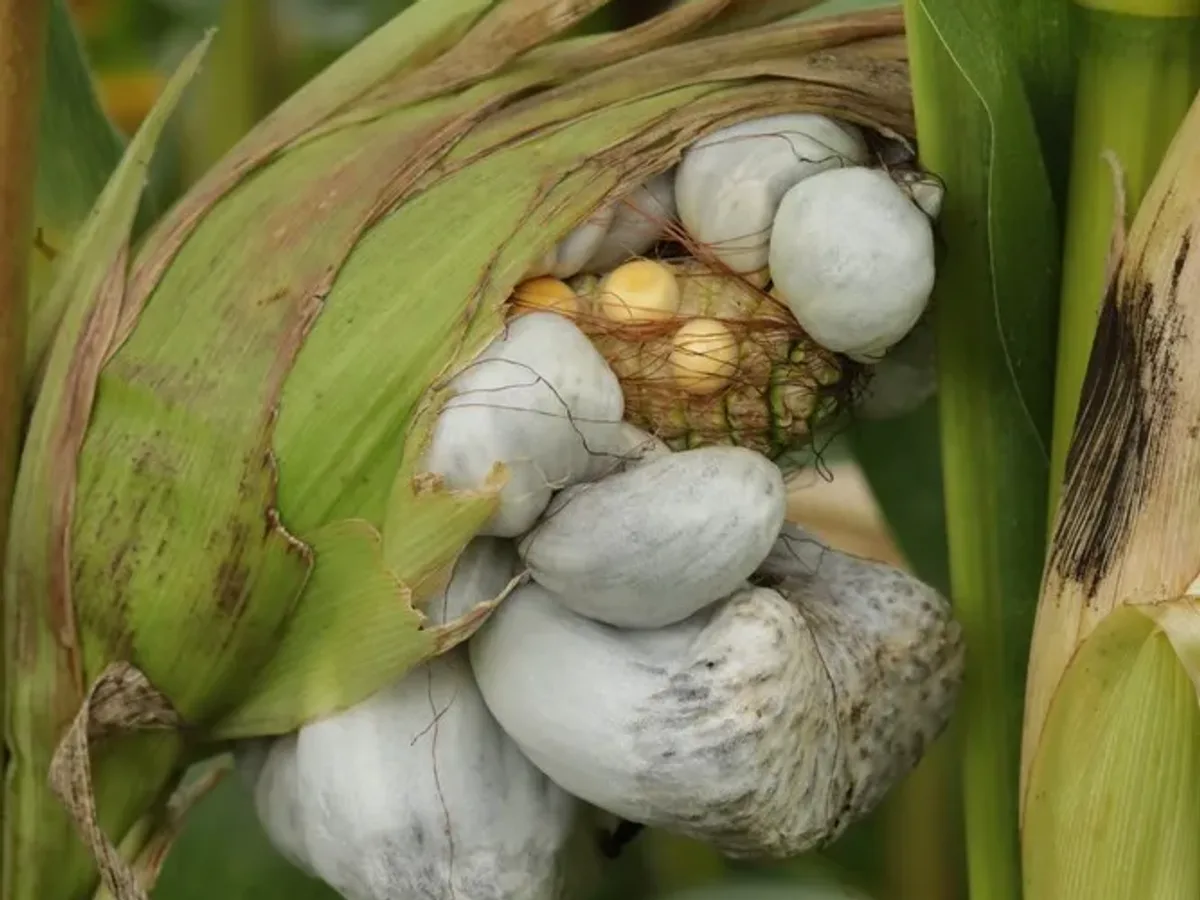 Corn smut
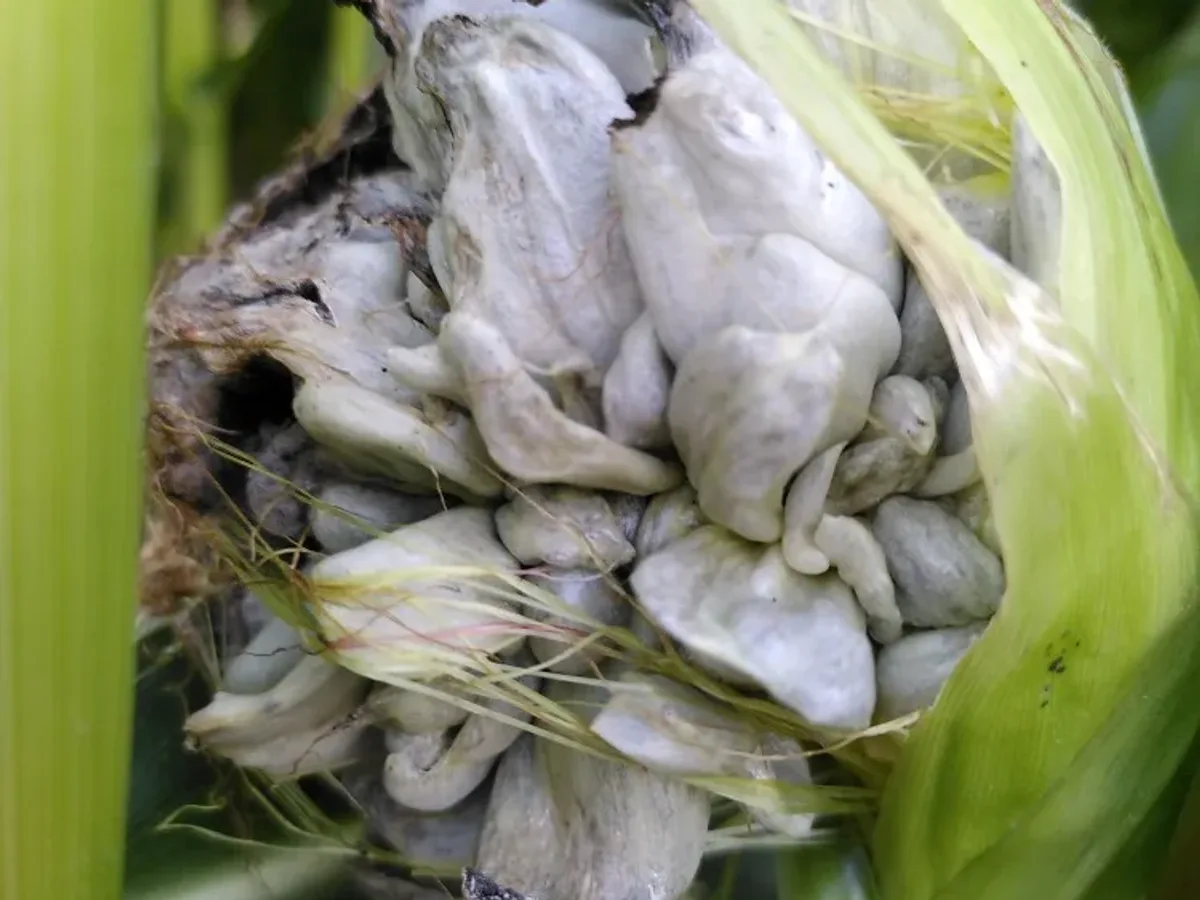 Corn smut
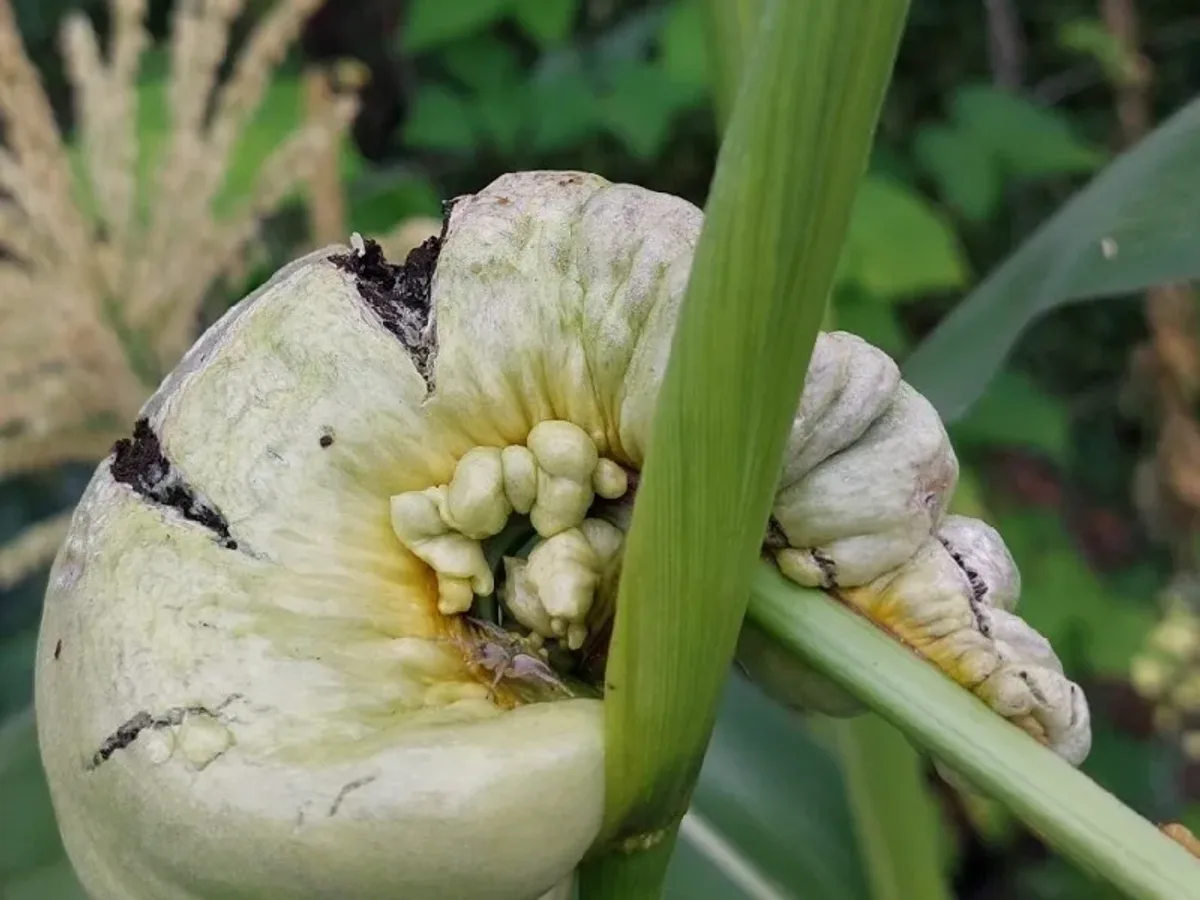 Corn smutCorn smutCorn smut
Huitlacoche (corn smut)
Ustilago maydisThe "Mexican truffle" - smoky, swollen corn galls and the soul of a classic quesadilla.
How to recognise it
Not a cap-and-stem mushroom but swollen galls that replace the kernels of a corn ear. The infected kernels balloon into lumpy, silvery-grey masses, darkening through blue-grey to near-black as they mature - 0.5-11 cm across. The surface is smooth and velvety; inside the flesh is creamy and almost purple-black.
Where it grows
On corn (maize) and teosinte - in cultivated fields, above all in the more humid areas of central Mexico.
Cooking
Huitlacoche is most famous in quesadillas - lightly fried with onion, garlic, chile and epazote, folded into tortillas or masa with fresh cheese. It turns up in tacos, soups (crema de huitlacoche), tamales and even crêpes. Its deep, smoky, earthy flavour is why it is called the "Mexican truffle" and "Aztec caviar".
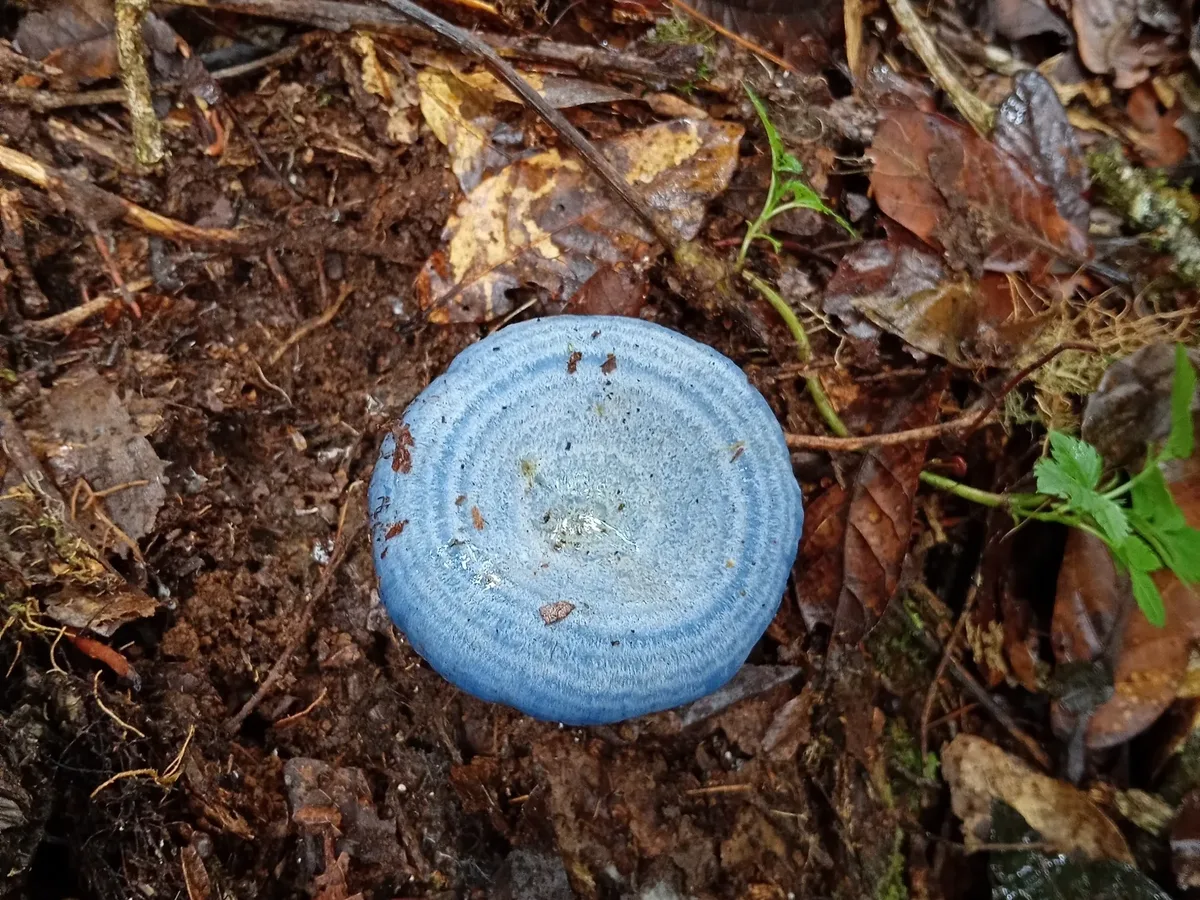 Indigo milk cap
 Indigo milk capIndigo milk cap
 Indigo milk capIndigo milk capIndigo milk cap
Indigo milk cap
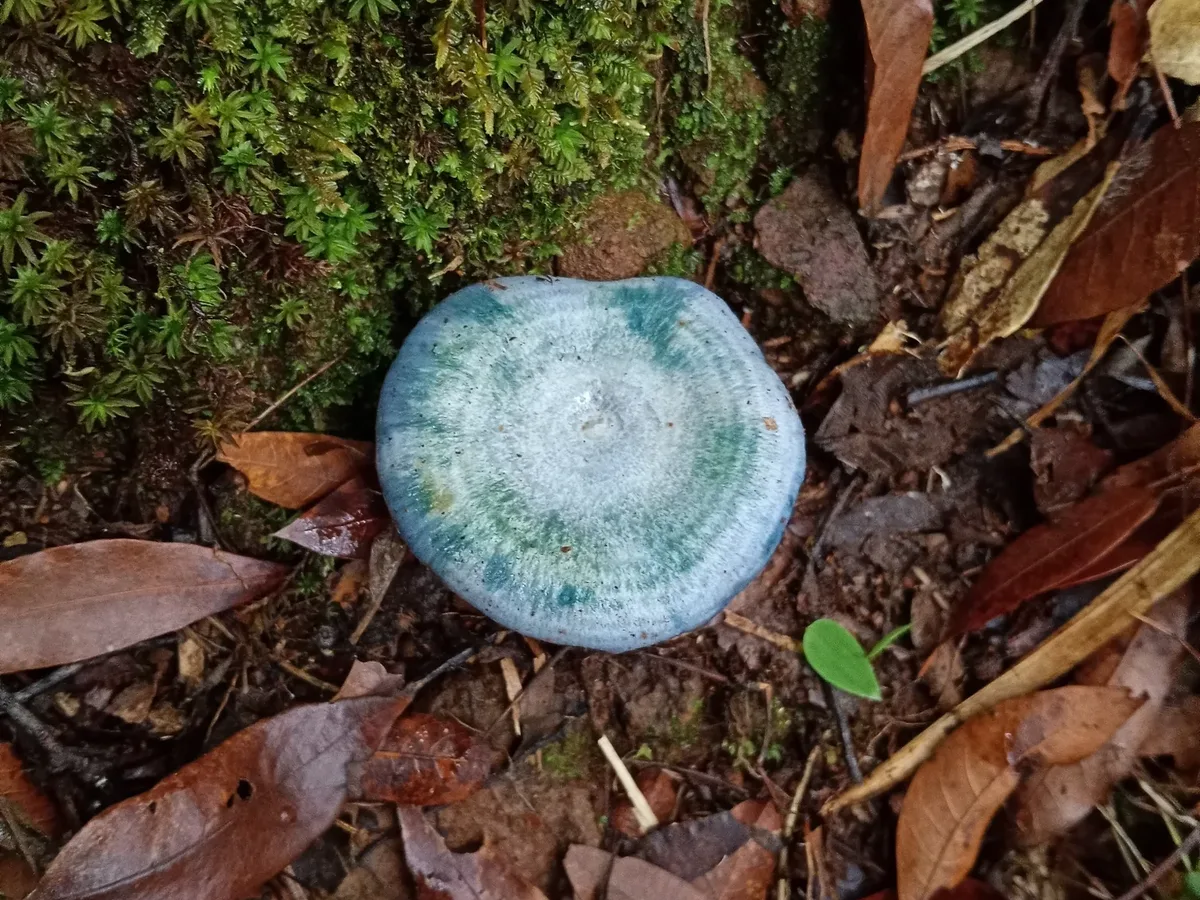
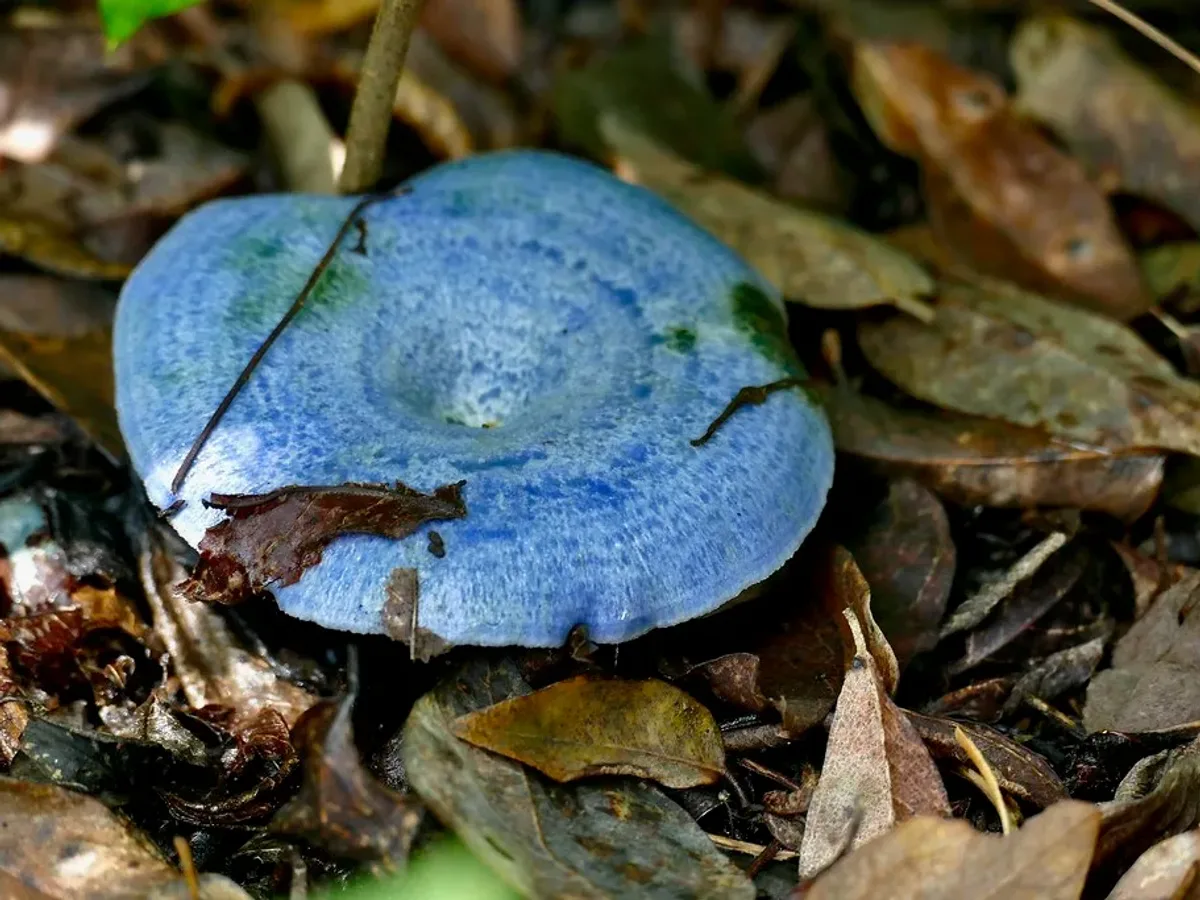
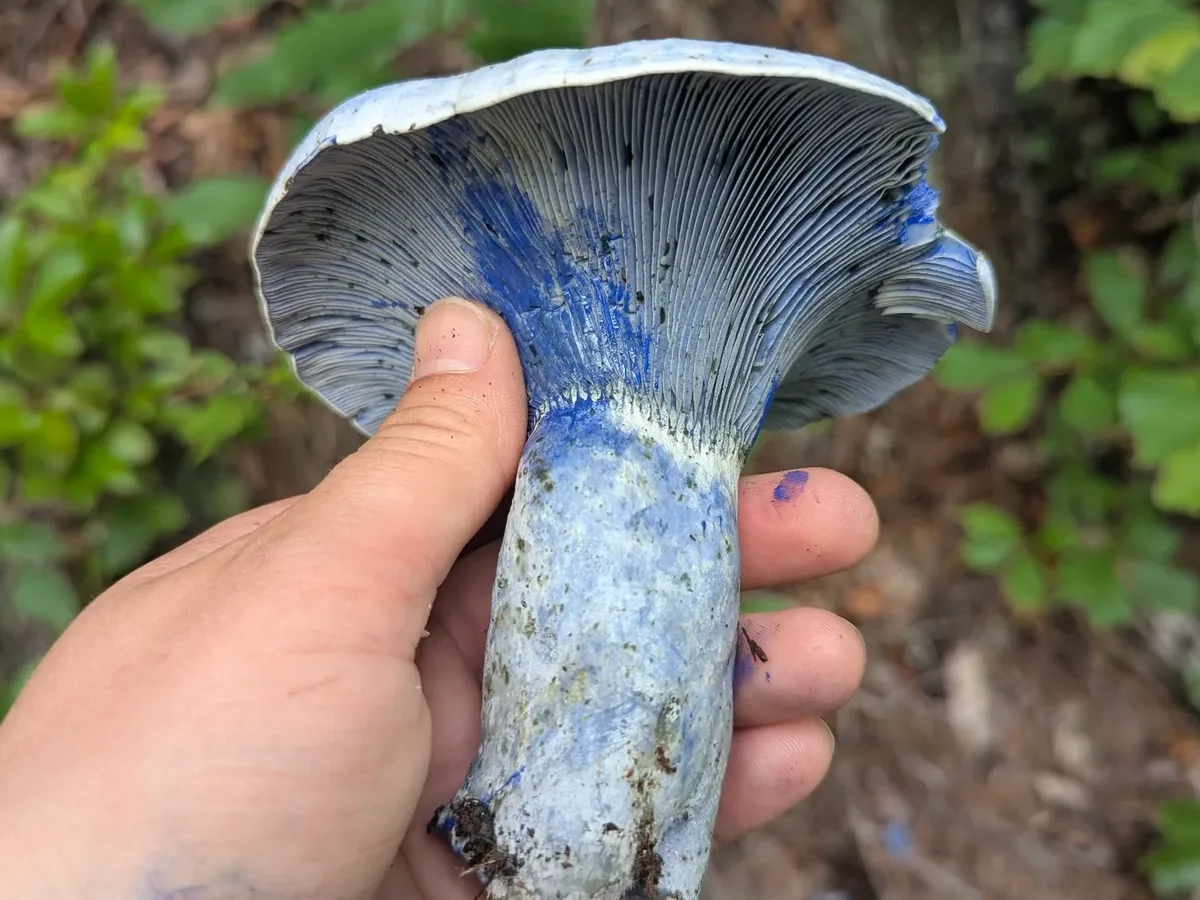
Lactarius indigoWholly indigo-blue, bleeding blue milk - sold by name across the markets of central Mexico.
How to recognise it
Few fungi announce themselves so boldly. Entirely indigo blue when fresh, the cap (5-15 cm) often carries a faint greenish sheen, and the whole mushroom fades to a softer blue-grey with age. Cut or nick it anywhere and it weeps vivid blue milk - latex that slowly shifts to green as it oxidises in the air. The gills share the same deep blue and turn green wherever a finger brushes them. The stem (2-8 cm) is partly hollow. Spore print cream-coloured. The flesh is firm and granular - a texture that sets it apart from most gilled mushrooms.
Where it grows
Mycorrhizal with oak and pine, growing in both deciduous and coniferous forest. In North America it is found across the eastern USA and Texas into Mexico, but is absent from the Pacific Northwest and the West Coast.
Cooking
Works well grilled, in soups, or in Mexican preparations with onion, chile, and epazote - a combination that has a long tradition in the regions where this mushroom is sold in markets. Also good fried. Bear in mind that the abundant latex can stain marinades.
Look-alikes
Another bluish Lactarius, but with a different latex colour.
Another bluish Lactarius, but with a different latex colour.
The dangerous ones
 Eastern North American destroying angelEastern North American destroying angelEastern North American destroying angelEastern North American destroying angel
Eastern destroying angel
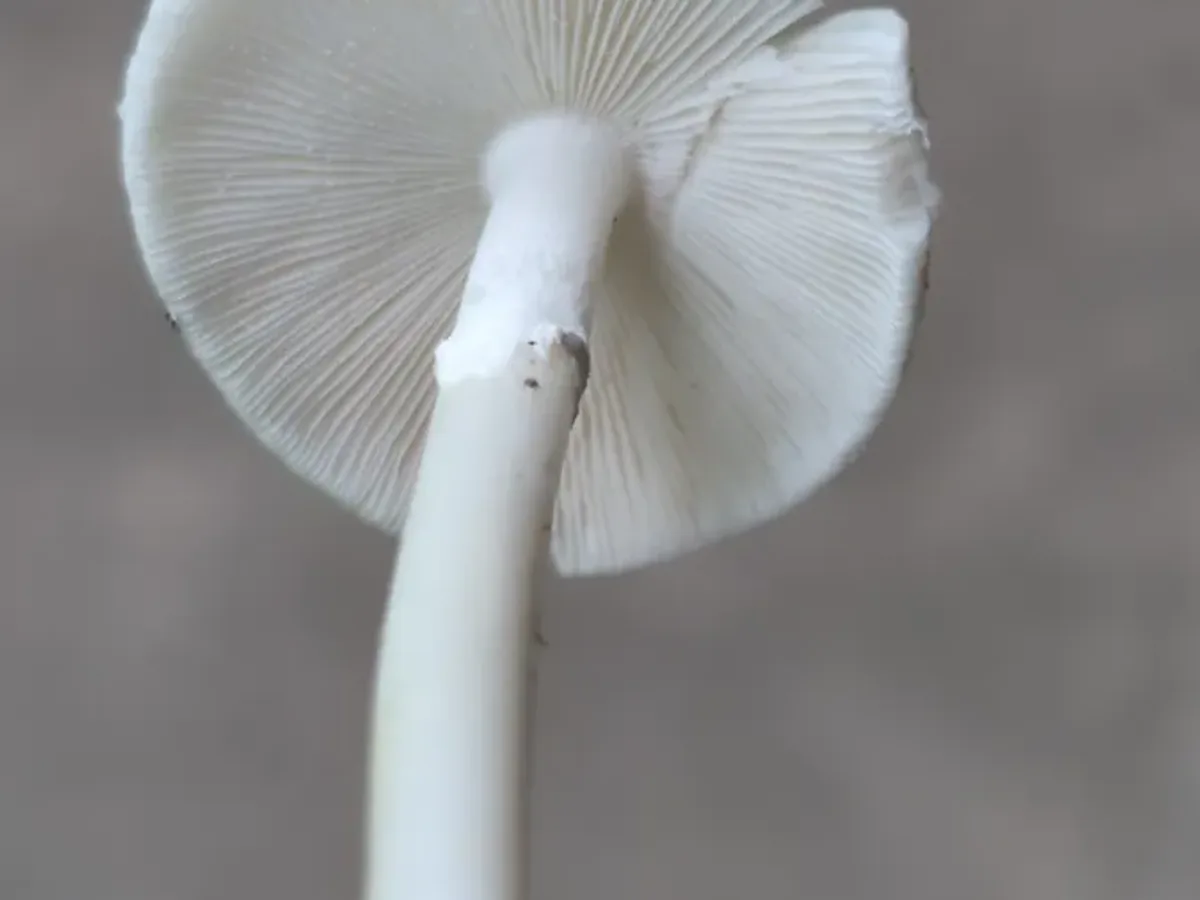
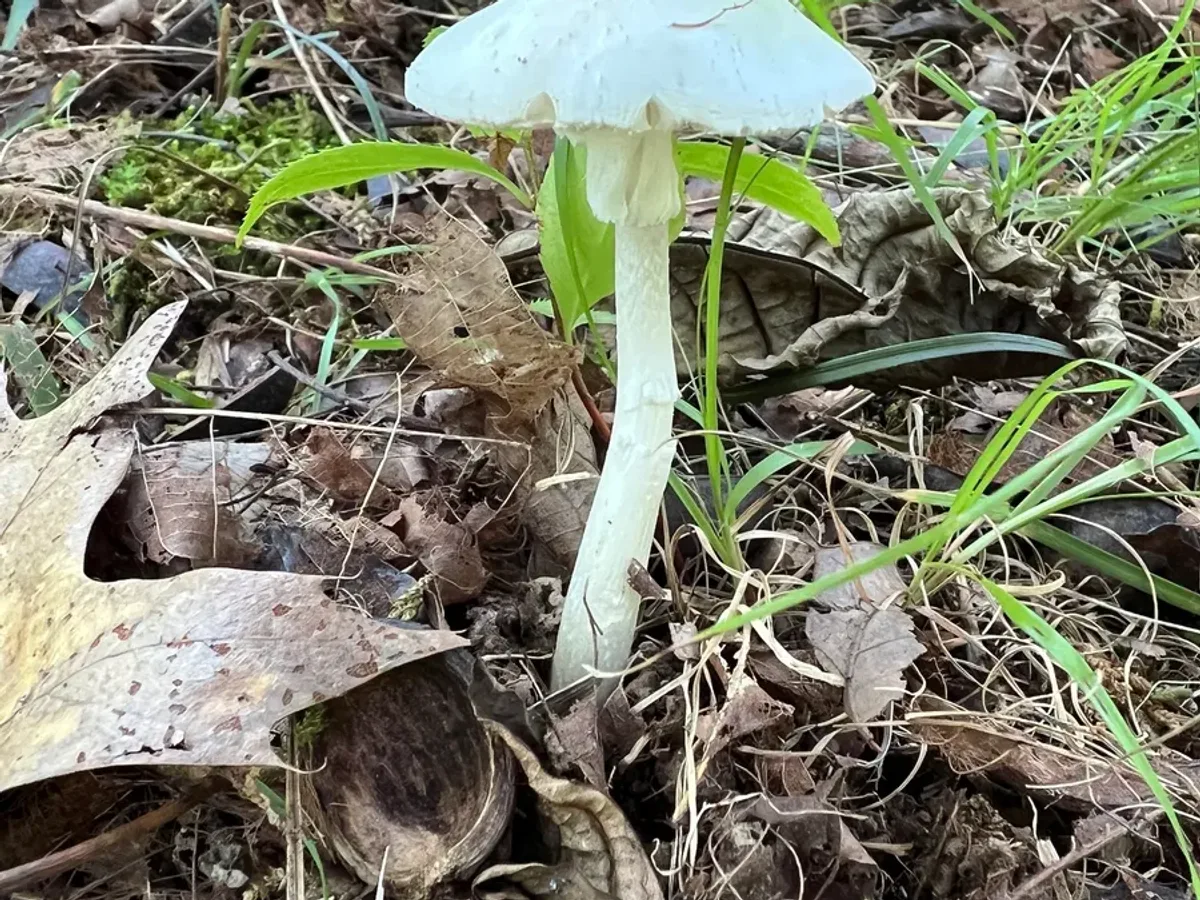
Amanita bisporigeraPure white and deadly - described as North America's deadliest mushroom; always cut open suspected puffballs.
How to recognise it
An entirely white mushroom. Smooth white cap up to 10 cm. White, free, crowded gills. White stem up to 14 cm with a thin, skirt-like ring set high up and a sac-like volva at the bulbous base. White spore print. KOH test: the cap turns yellow (diagnostic). Often bears two spores per basidium.
Where it grows
Mixed deciduous and coniferous forest, commonly near oak and other broadleaf trees, with which it forms mycorrhizal partnerships. Found across eastern North America south to Mexico; rare in the west.
Cooking
This mushroom is never edible under any preparation. Do not taste, cook, or experiment with any unidentified white mushroom.
Danger
Deadly. Described as "North America's deadliest mushroom". According to NAMA, four deaths from A. bisporigera have been reported over 30 years.
Look-alikes
Young white buttons are confused with young Agaricus. Agaricus develops pink-to-brown gills and a brown spore print and lacks a volva, while this species has white gills, a white spore print and a sac-like volva at the base.
Mature specimens are confused by inexperienced foragers with white edible gilled mushrooms; check for the high skirt-like ring and the sac-like volva at the bulbous base, and use the KOH test (cap yellows).
White young buttons of the destroying angel resemble puffballs. Always cut suspected puffballs in half - a developing cap, gills and stem inside reveal an Amanita, whereas a true puffball is uniformly solid white inside.
 Death cap
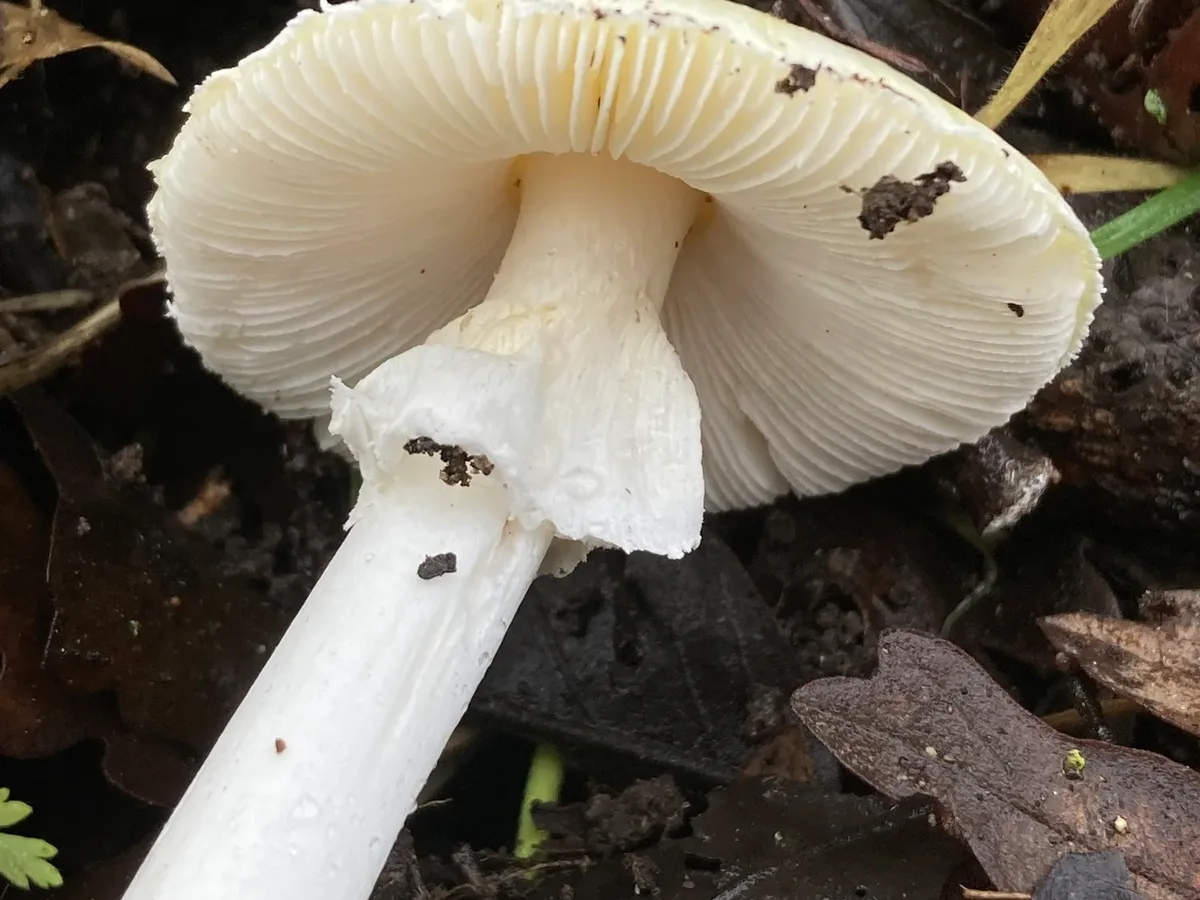 Death cap
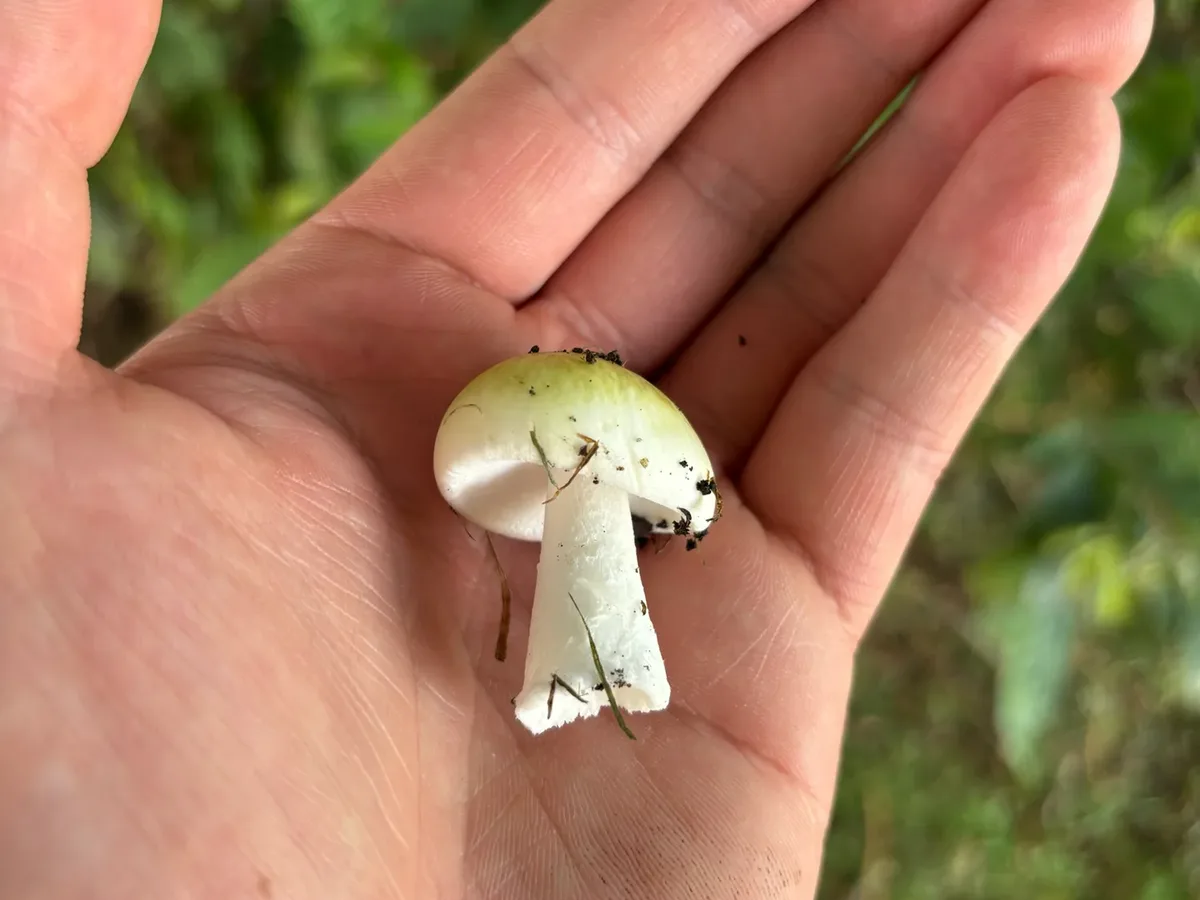 Death capDeath capDeath cap
Death cap
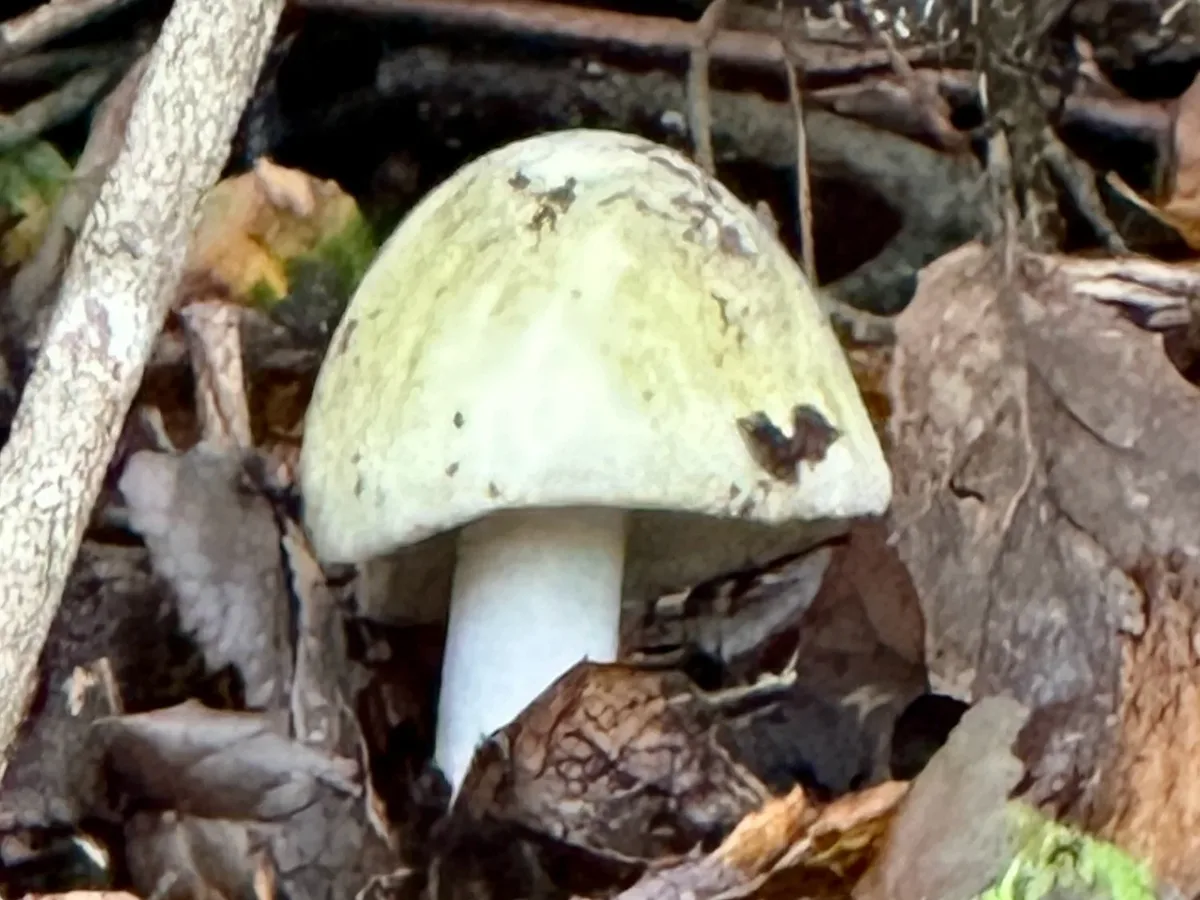
Amanita phalloidesAn introduced European species blamed for 90% of the world's mushroom deaths - one cap can kill an adult.
How to recognise it
Cap 40-160 mm, hemispherical, becoming convex, then flat, smooth, slimy in wet conditions and glossy when dry; most often pale yellow/greenish to pale brown, but can be almost white (colour is not a reliable feature). White gills, a white stem, a membranous ring, and a sac-like volva at the base. Amyloid spores (white spore print).
Where it grows
Found only under exotic/introduced trees, especially oak (Quercus), also in gardens, lawns and parks. In Australia it has only been recorded in SA, Victoria and the ACT (Canberra). In Victoria it is widespread across Melbourne (Kew, Camberwell, South Yarra and others) and regionally (Bendigo, Bright, Castlemaine). In New Zealand it grows under introduced oaks and chestnuts; it has also been reported in association with Leptospermum/Kunzea (potentially invasive). There are no confirmed finds in undisturbed native forest.
Cooking
Not edible under any circumstances. The toxins are not inactivated by cooking, drying, freezing or soaking.
Danger
World's deadliest mushroom; as little as half a cap can kill an adult human. Documented fatalities: Canberra, New Year's Eve 2011/2012 - cook Liu Jun picked death caps in Braddon (mistaking them for straw mushrooms) and put them in a stir fry; he and the kitchen hand Tsou Hsiang (a 52-year-old Chinese national) died, of four poisoned. According to the Canberra Times there have been in total "four fatalities and 12 reported incidents of poisoning associated with death cap mushrooms in the ACT". Of nine poisoned in the Canberra region 1988-2011, three were from Laos and two from China. Leongatha, Victoria, July 2023: Erin Patterson, 50, served death caps in individual Beef Wellingtons; Don Patterson, Gail Patterson and Heather Wilkinson died, while Ian Wilkinson survived. She was convicted on 7 July 2025 of three murders and one attempted murder, and on 8 September 2025 sentenced by Justice Christopher Beale to three concurrent life sentences with a 33-year minimum (plus 25 years for the attempted murder), parole no earlier than 2056; Beale found the murders required "substantial premeditation" and an "elaborate cover-up". (The conviction is under appeal.)
Look-alikes
The fully white form of the death cap resembles the white Amanita; both are deadly. Treat any white gilled mushroom with a ring and a sac-like volva as lethal.
Edible Asian mushroom that has caused several deaths among East/Southeast Asian migrants through confusion with the death cap. Both have a volva; check gill colour (straw mushroom develops pink to brown gills and a pink spore print, whereas the death cap has white gills and a white amyloid spore print).
Edible Amanita that can be confused with the death cap; distinguish by colour and spore features, but never rely on colour alone.
Agaricus species have pink-to-brown gills and a dark spore print and lack a volva, whereas the death cap has white gills, a white spore print and a sac-like volva at the base.
Native species (A. austrophalloides, A. marmorata, A. murina, A. murinaster) with a sac-like volva, ring and amyloid spores are untested but likely toxic; do not eat.
Young death cap buttons resemble Agaricus and puffballs, but Agaricus has pink to chocolate-brown gills, a brown spore print and no volva; the death cap always has white gills, a white spore print and a sac-like volva.
The green/greenish-yellow death cap form can be confused with green Russula species; check for the white free gills, ring and sac-like volva, which Russula lacks.
Russulas lack a volva and a ring; always dig up the base to check for the sac-like volva and look for the skirt-like ring and white free gills of the Death Cap.
Agaricus has pink to brown gills (not white) and no volva; the Death Cap has white free gills and a sac-like volva at the stem base.
Agarics lack a sac-like basal volva and have pink-to-brown gills and a brown spore print; the death cap has white free gills, a white spore print, and a volva in the soil.
The pale form of the death cap can be mistaken for puffballs; cutting a puffball reveals uniform white flesh, whereas a young death cap button shows the outline of a developing capped mushroom.
Green russulas lack a ring and volva and have brittle flesh.
Easily confused at the young, egg-like stage; always dig up the base and check the diagnostic combination of white gills + white ring + white sac-like volva.
Field mushrooms have pink to brown gills (not the death cap's white gills) and lack a basal volva/sac.
Distinguished by the death cap's combination of ring plus volva and its olive-green cap colour.
Young egg-stage Death Caps can resemble puffballs; always slice any 'puffball' in half - a developing mushroom with cap, gills and stem inside means it is not a puffball.
In Chile, warnings are given about confusing the death cap with Macrolepiota; look for the death cap's volva, ring and greenish cap with white gills.
In Chile, warnings are given about confusion with Russula; Russula lacks a ring and volva.
In Chile, warnings are given about confusion with Agaricus; Agaricus has a ring but no volva and develops pinkish-to-brown gills with a brown spore print, unlike the death cap's persistently white gills.
In Chile, warnings are given about confusion with Tricholoma; Tricholoma lacks the ring and volva of the death cap.
Locally eaten edible Amanita (also A. loosii); the central confusion in African ethnomycology - the deadly white Amanita are mistaken for these.
An unopened white egg-stage deadly Amanita can resemble a puffball; cut it in half - a developing capped mushroom outline reveals the Amanita.
A globally risky lookalike that also has a volva; check for the ring (present in Amanita, absent in Volvariella) and spore colour (white in Amanita, pinkish in Volvariella).
Same deadly section (Phalloideae) by appearance but lacks the toxins and is eaten locally in Rwanda/Burundi/Tanzania; cannot be told apart by eye alone, underscoring why species-level knowledge is essential.
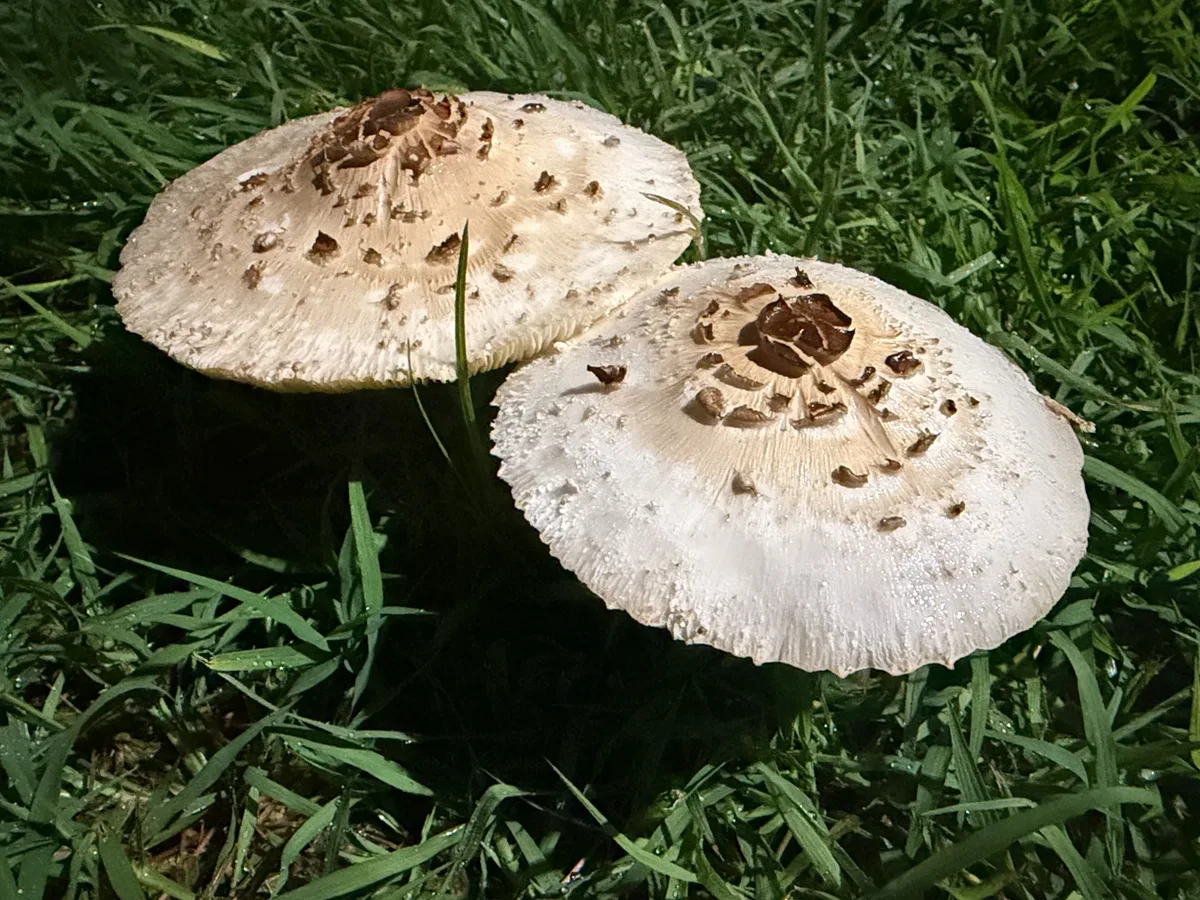 Green-spored parasol
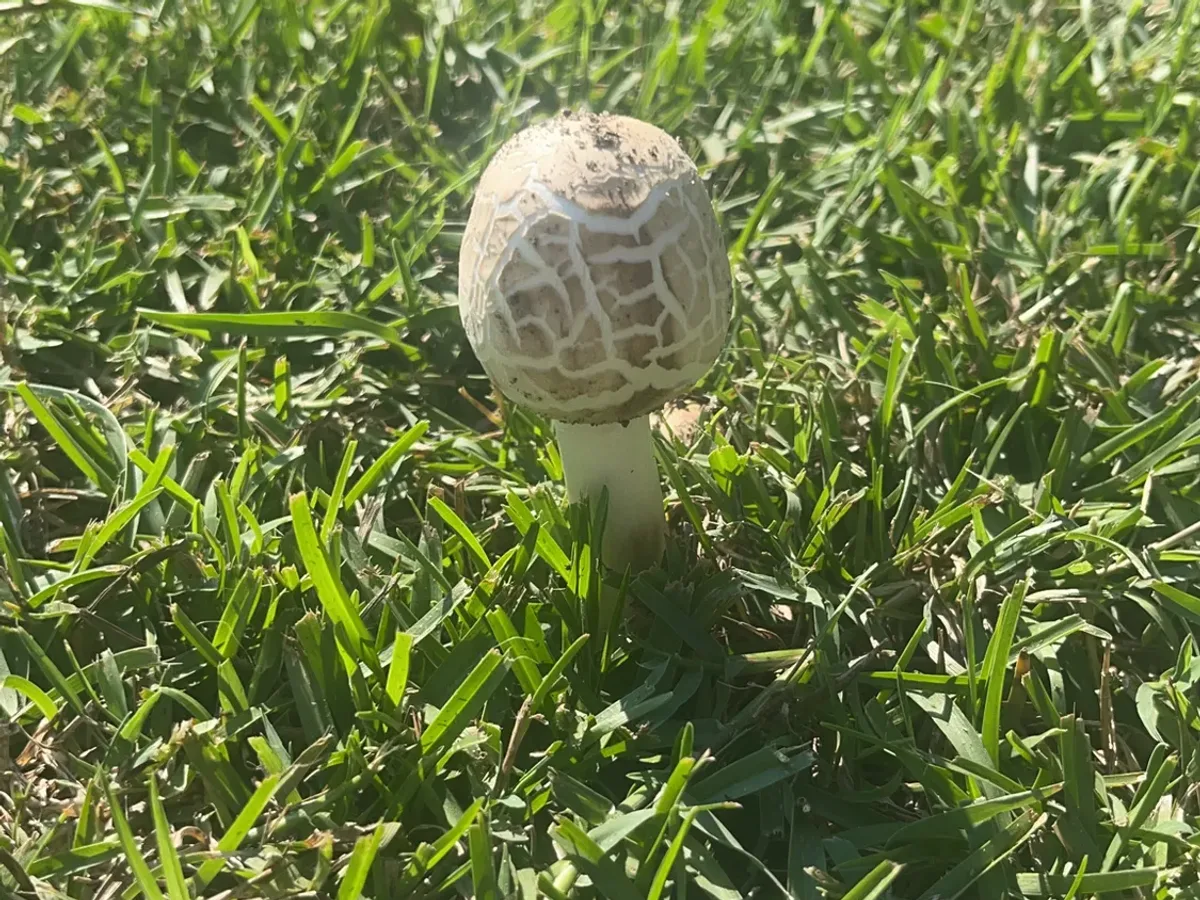 Green-spored parasol
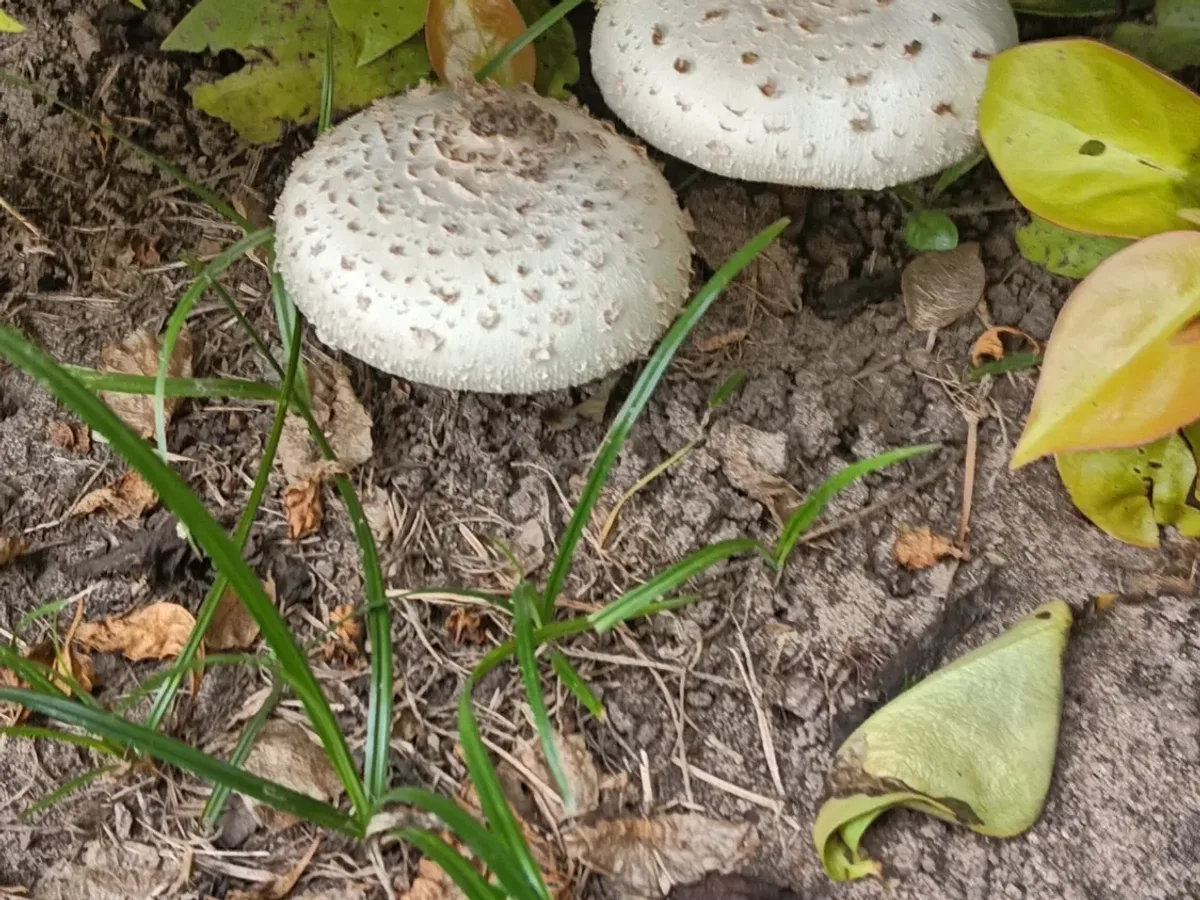 Green-spored parasol
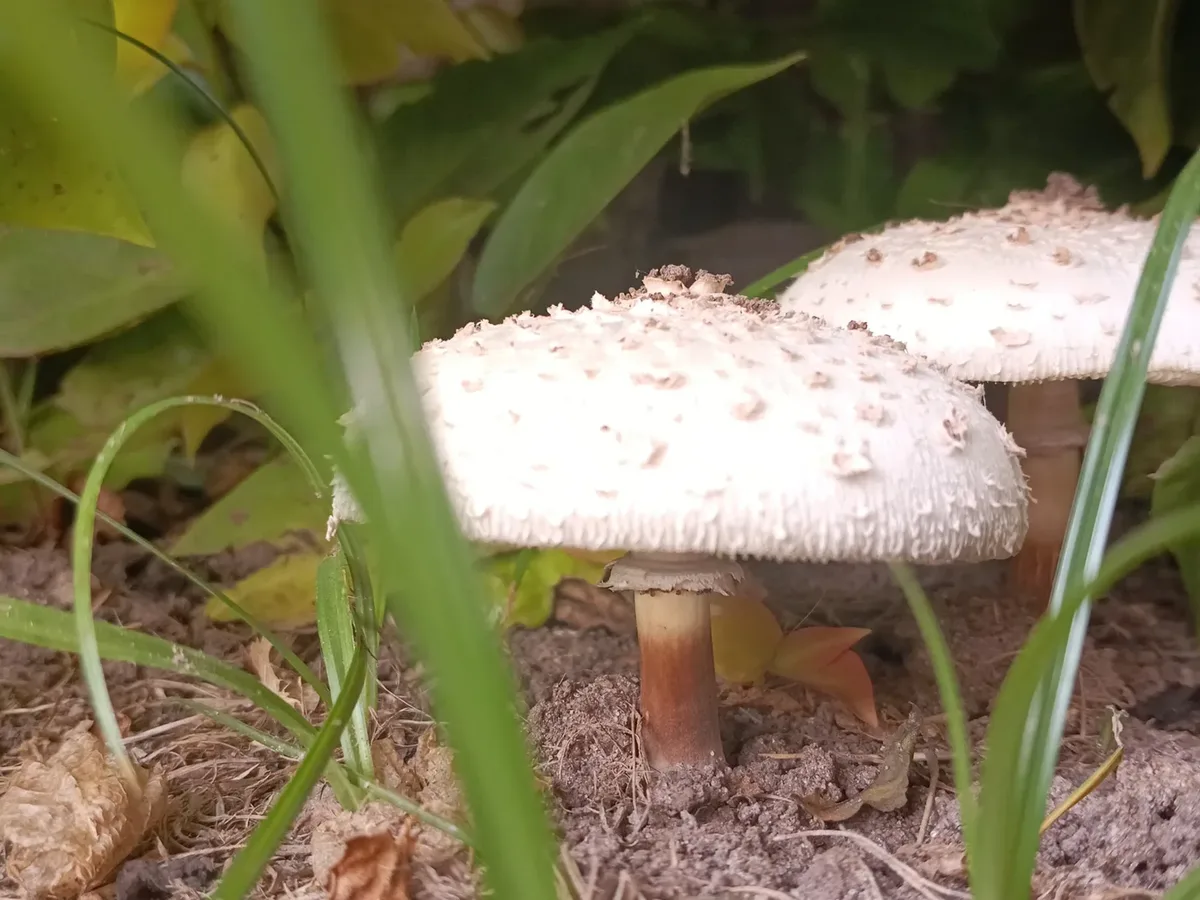 Green-spored parasolGreen-spored parasolGreen-spored parasol
Green-spored parasol
Chlorophyllum molybdites"The vomiter" - North America's most common poisoner, lurking on the lawns where children and dogs play.
How to recognise it
Large, stately, white cap with brown scales toward the center, at first drumstick-shaped then broad and flat. The gills are white in young specimens but turn grayish-green to green at maturity, and the spore print is green (very unusual, diagnostic). Free gill attachment, ring around the stem. The flesh may blush faintly. Often grows in fairy rings on lawns.
Where it grows
Lawns, pastures, parks, open grassy surfaces, and near human habitation. Common in Florida and the southeastern/southern USA, less common in the north.
Cooking
Not applicable - poisonous even when cooked.
Danger
Causes the most mushroom poisonings in North America, leading to severe gastrointestinal distress, sometimes with blood in the vomit and excrement. Rarely fatal, but children, the elderly, and pets can become seriously dehydrated and need hospital care. Especially risky because it grows where children and dogs play.
Look-alikes
The edible parasol has white gills and a white spore print; Chlorophyllum molybdites develops grayish-green to green gills and a green spore print at maturity.
The shaggy parasol has white gills and a white spore print, not the green gills/green spore print of Chlorophyllum molybdites.
Shaggy mane gills turn black and deliquesce (dissolve into ink) rather than turning green, and it produces a black spore print.
The green spore print distinguishes C. molybdites from related Chlorophyllum species.
Edible termite-associated mushrooms; confusion documented especially in Asia, and considered a risk even for T. titanicus per field guides. Check for the green spore print of C. molybdites.
True parasol mushrooms have a white spore print and white gills; Chlorophyllum molybdites has a greenish to grey-green spore print and greenish gills in age.
Distinguish by spore print colour and the presence of a stem ring (Volvariella lacks one and has a volva).
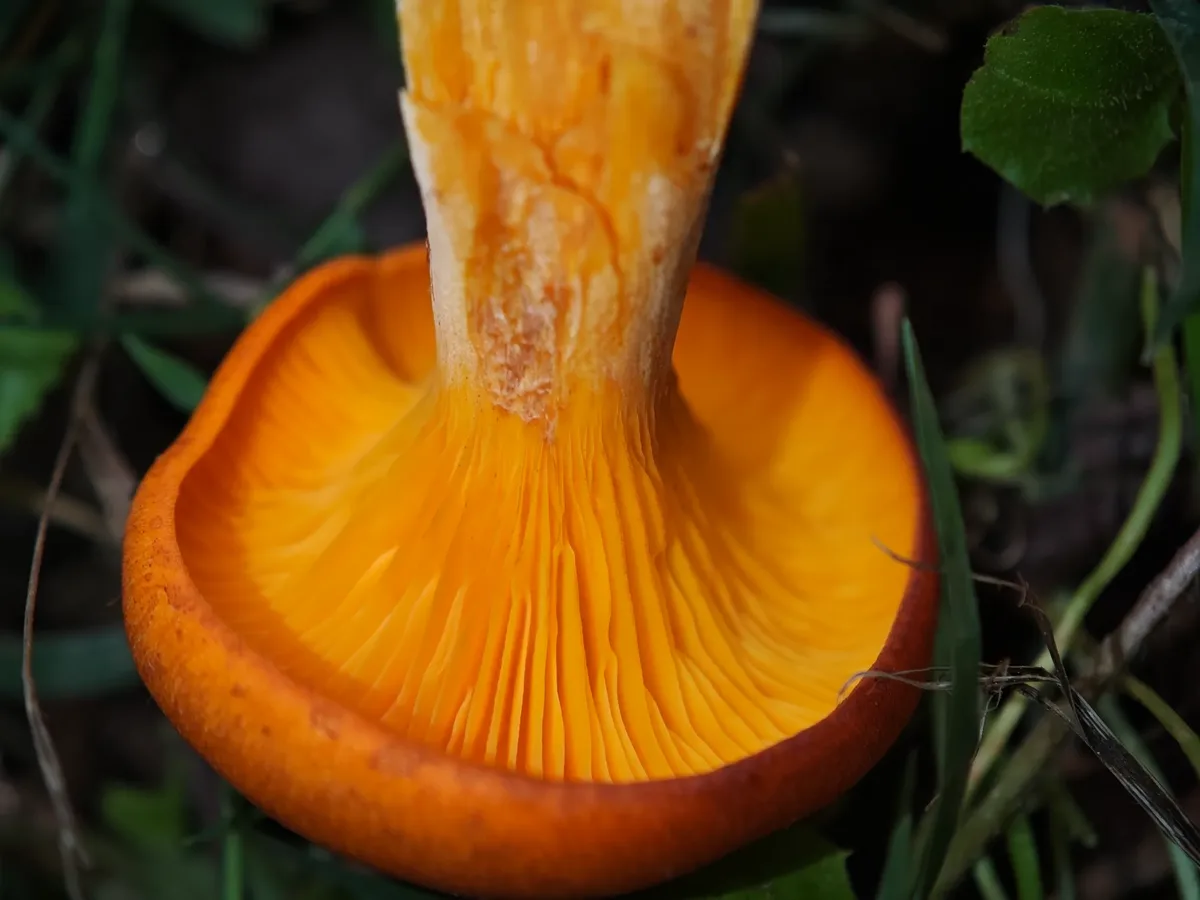 Eastern jack-o'-lantern
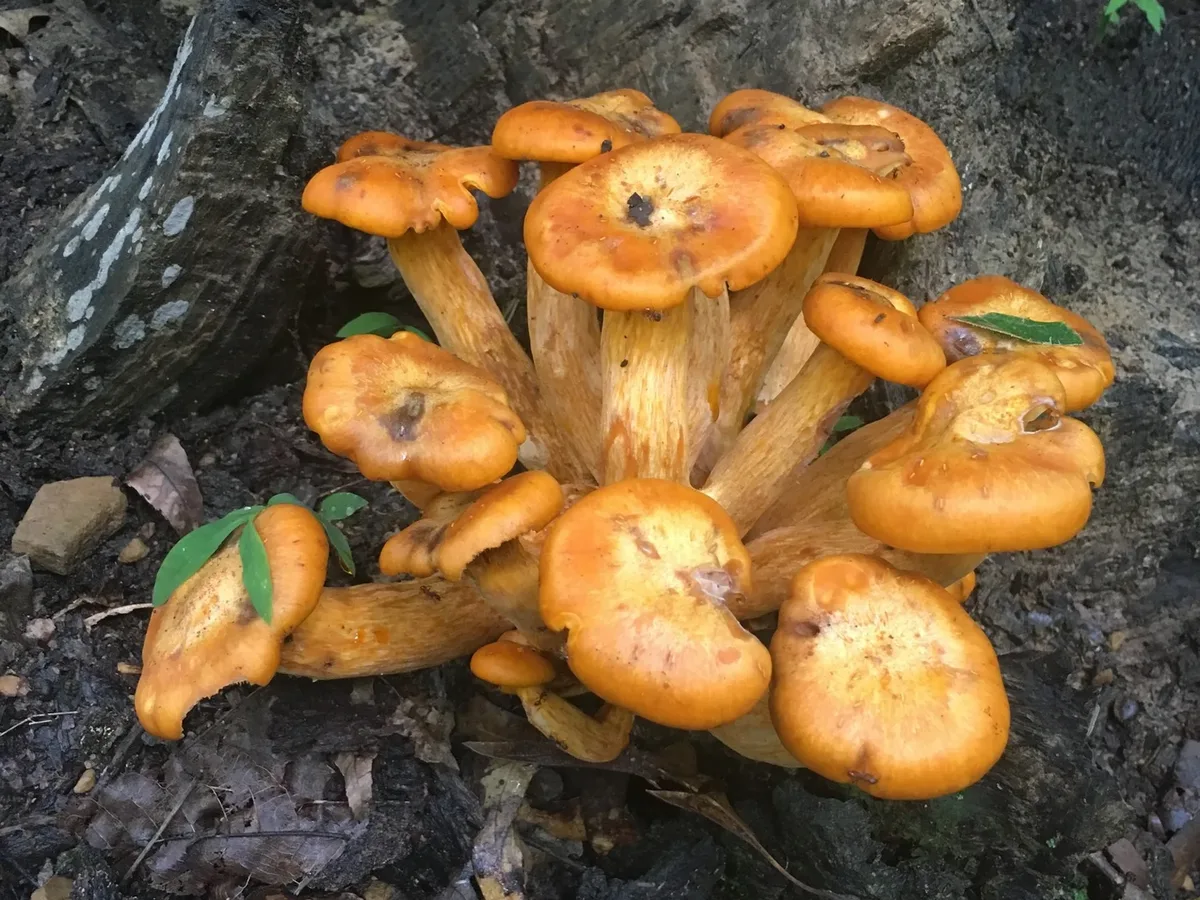 Eastern jack-o'-lantern
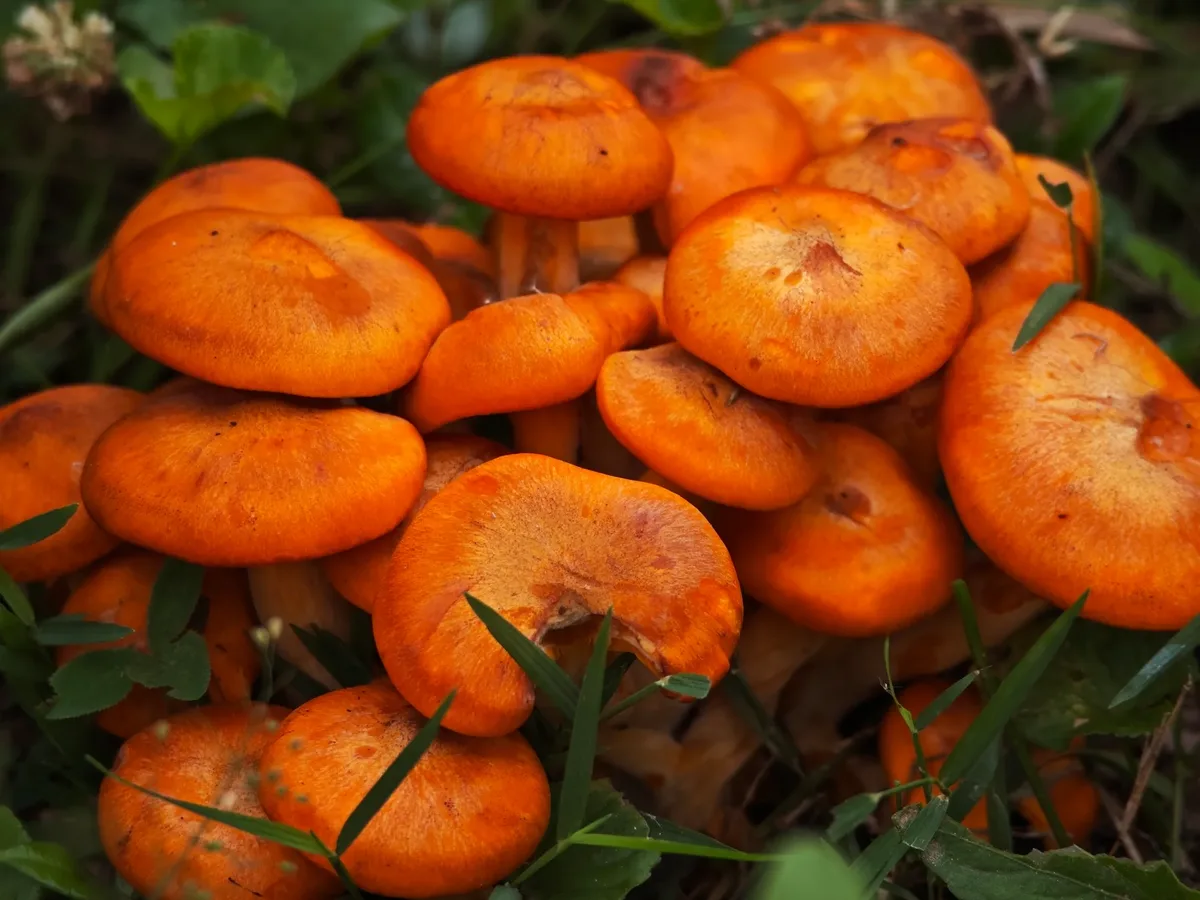 Eastern jack-o'-lantern
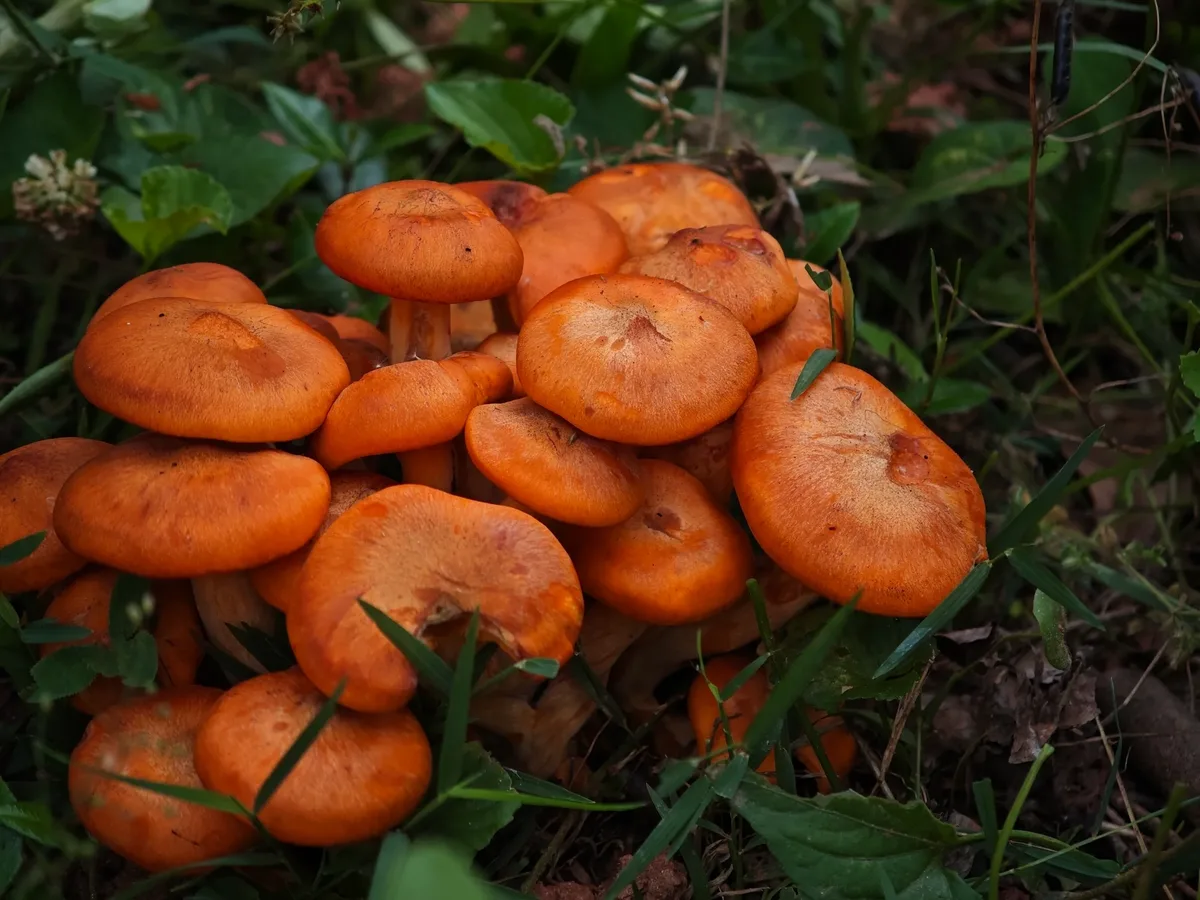 Eastern jack-o'-lanternEastern jack-o'-lanternEastern jack-o'-lantern
Jack-o'-lantern
Omphalotus illudensOrange clusters on wood with sharp true gills - mistaken for chanterelles and maitake; don't trust the faint glow.
How to recognise it
A vivid orange to yellow-orange mushroom, cap up to 15 cm across, starting convex and opening into a funnel shape. The gills are true, sharp, and non-forking, running down the stem (decurrent) - a key ID point. The flesh is orange all the way through the stem. Spore print cream-white. One genuinely remarkable feature: fresh gills emit a faint green glow in the dark - real bioluminescence, not a myth.
Where it grows
Always found in clusters, erupting from or beside stumps, dead deciduous trees, and buried roots - especially oak. The wood may be completely underground, making a cluster look as though it has appeared from bare soil.
Cooking
Not applicable - poisonous even when cooked.
Danger
Not life-threatening for healthy adults, but one of the most common causes of poisoning in the northeast. Poisonous even when cooked.
Look-alikes
Chanterelles have blunt ridges/folds (not true gills), grow singly on the ground (not in clusters on wood) and have a paler inner stem.
Chanterelles have blunt ridges/folds (not true gills), grow singly on the ground (not in clusters on wood) and have a paler inner stem.
Sometimes confused; chicken of the woods is a bracket/shelf fungus on wood without true decurrent gills.
Sometimes confused; maitake forms a rosette of grey-brown fronds, not orange gilled caps.
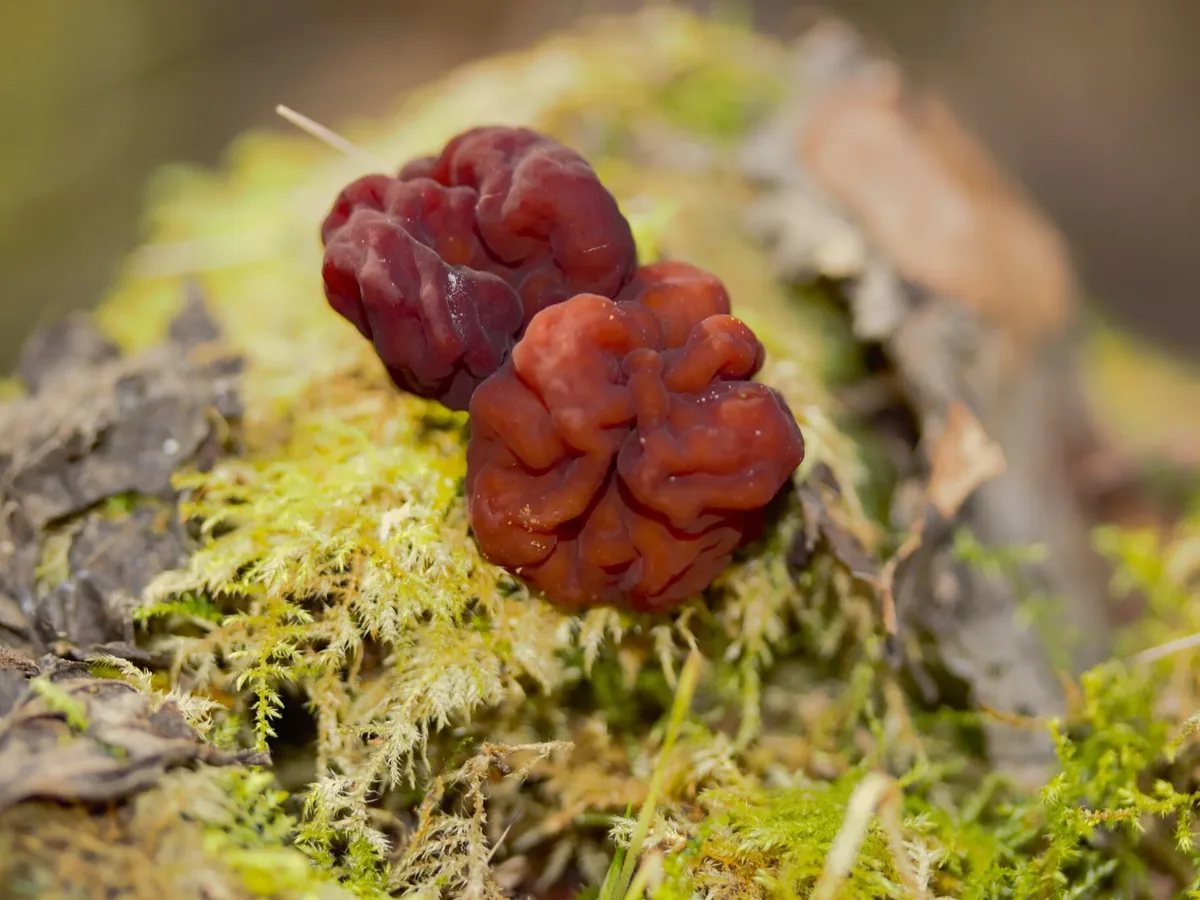 False morel
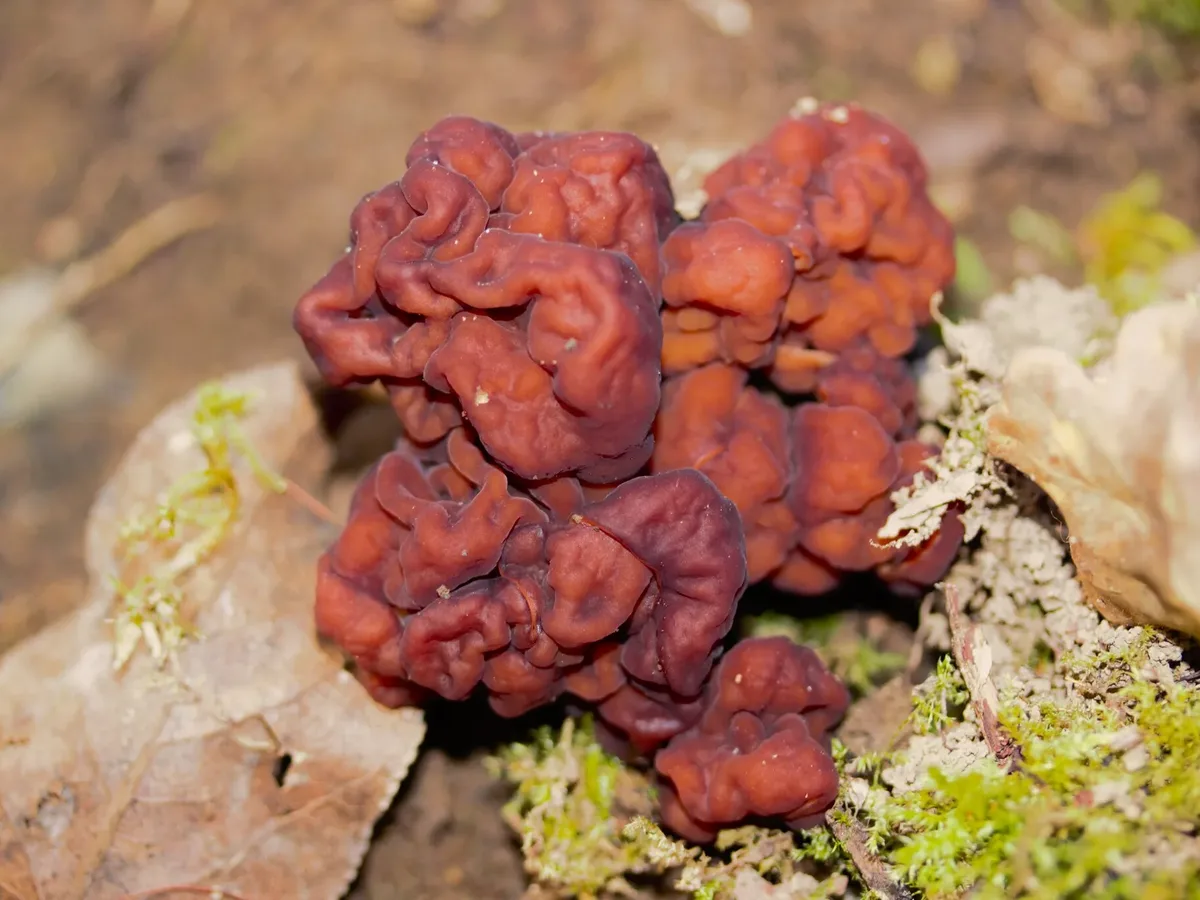 False morel
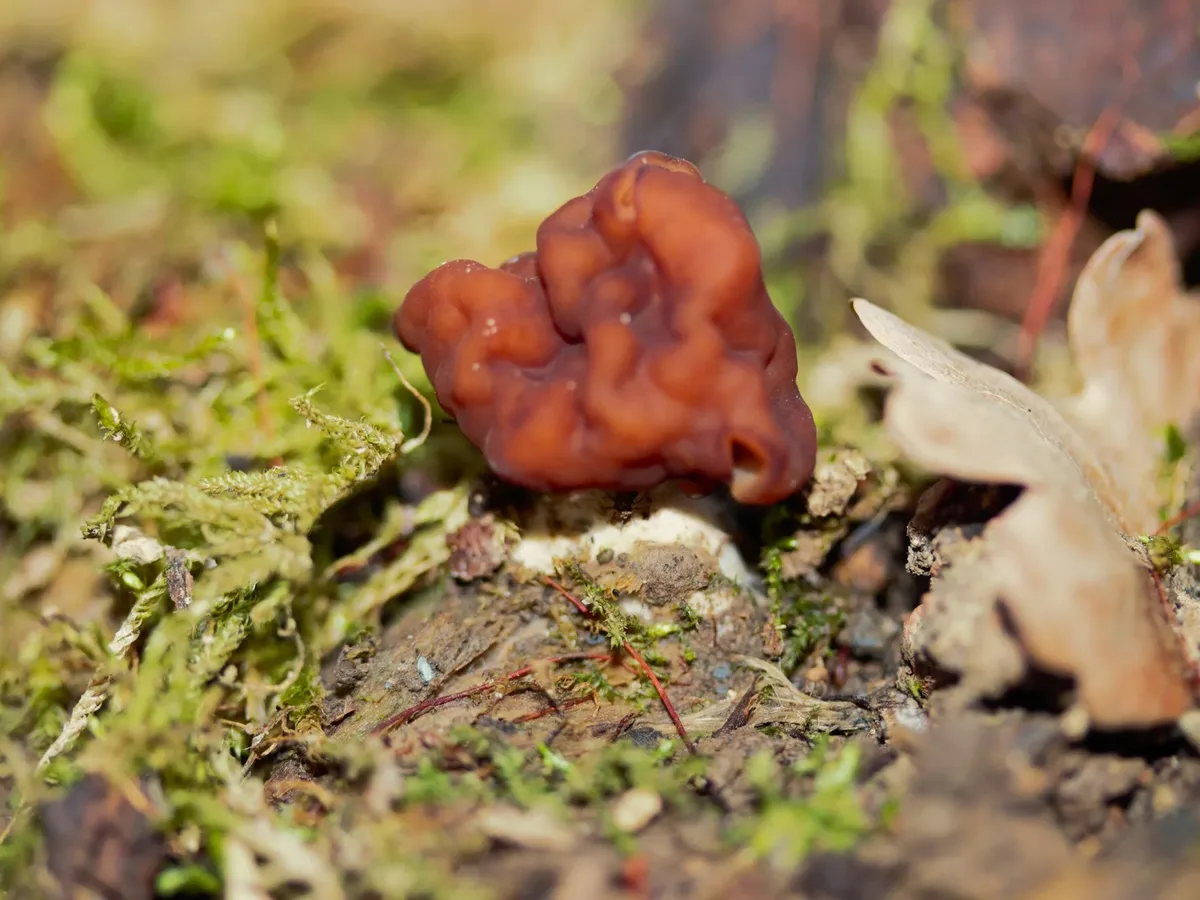 False morelFalse morelFalse morel
False morel
Gyromitra esculentaBrain-like and chambered, never honeycombed - its gyromitrin can even be inhaled while cooking.
How to recognise it
Irregular, brain- or walnut-shaped cap, reddish-brown to dark brown - wrinkled and convoluted rather than pitted in a honeycomb. The stem is short; the interior is hollow or chambered, not cleanly hollow throughout.
Where it grows
Sandy coniferous forest floor, especially under pine. Also turns up on burned ground and other disturbed soils where the forest floor has been opened up.
Cooking
In the Nordic countries and Eastern Europe it is traditionally eaten after repeated parboiling, but this is considered risky - the toxin content is reduced but not entirely eliminated, and the vapors are poisonous.
Danger
Contains gyromitrin which is converted in the stomach to monomethylhydrazine (MMH): vomiting, dizziness, liver damage, in severe cases convulsions and death. Individual sensitivity varies. Although traditionally eaten after repeated parboiling in the Nordic countries and Eastern Europe, this is regarded as risky - the toxin content is reduced but not fully eliminated, and the vapors are poisonous.
Look-alikes
True morels have a regularly pitted honeycomb cap and are completely hollow inside; the false morel is brain-like and filled/chambered.
A safe edible; has a pitted, honeycomb-like cap rather than a wrinkled/convoluted one.
Also a Gyromitra; likewise to be avoided.
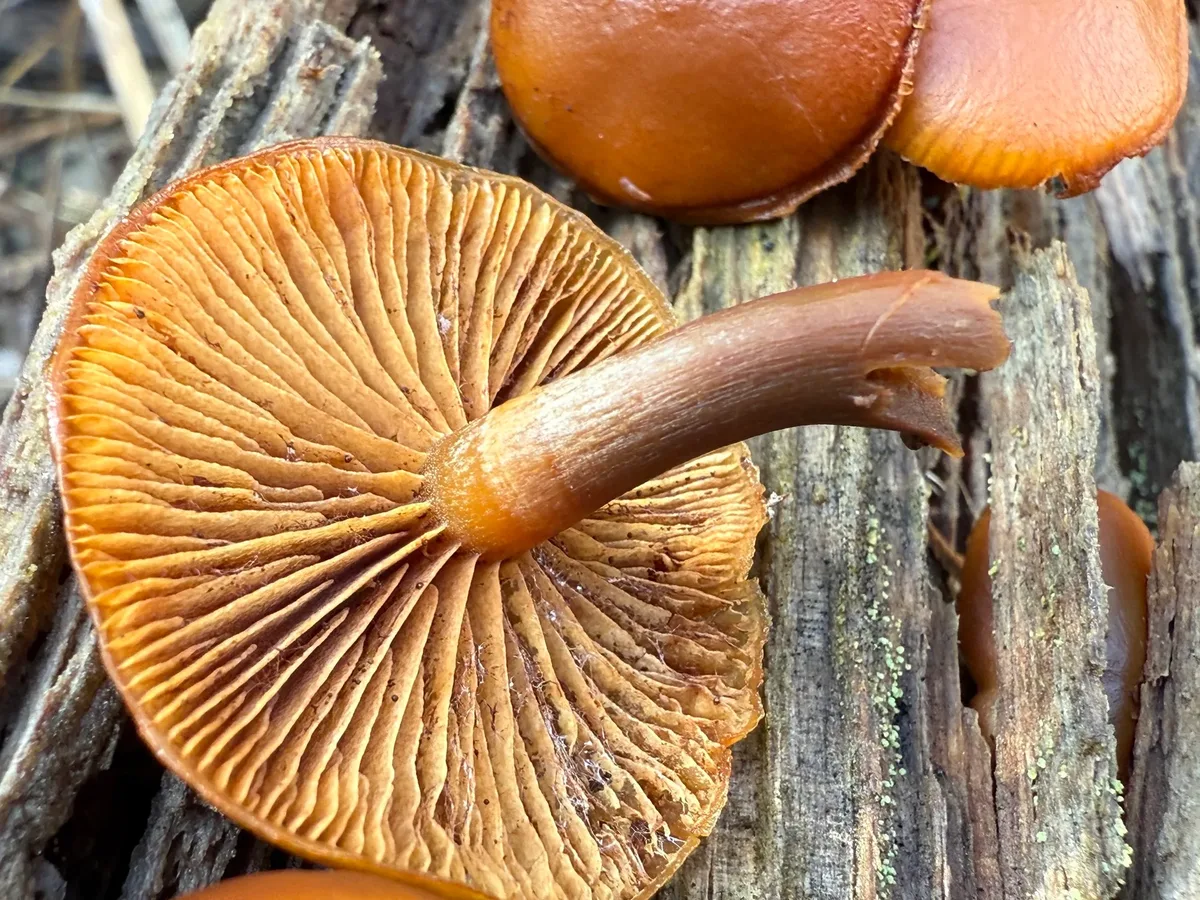 Funeral bell
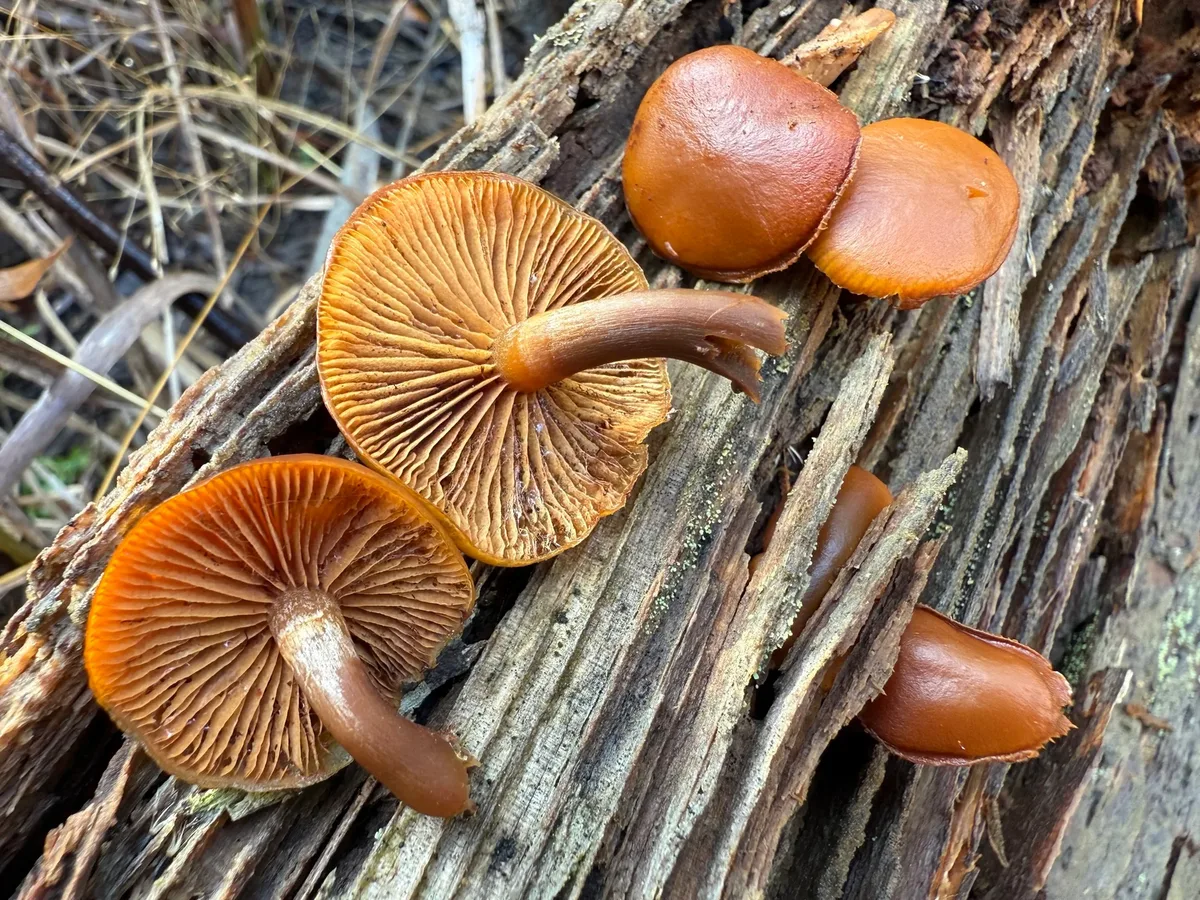 Funeral bell
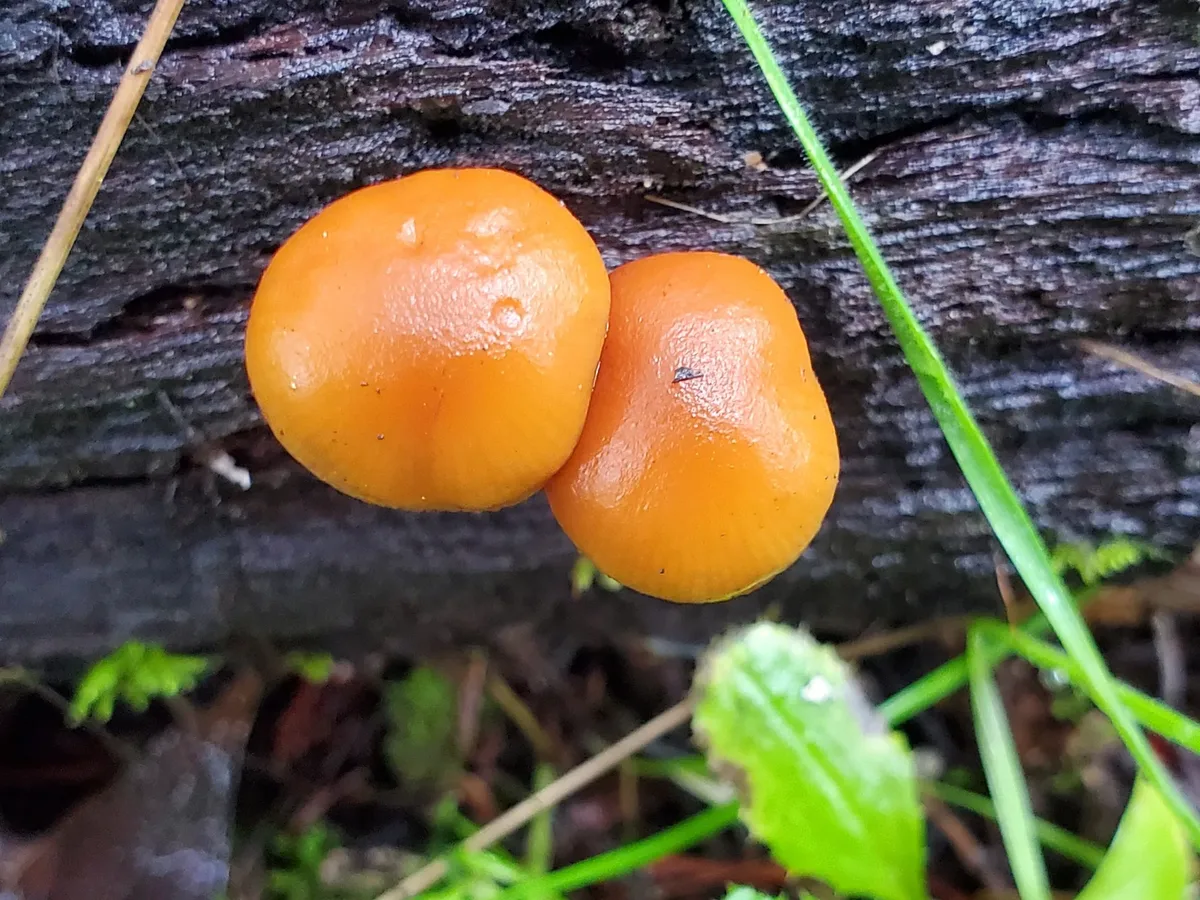 Funeral bellFuneral bellFuneral bell
Deadly galerina (funeral bell)
Galerina marginataA small brown mushroom on dead wood carrying the same amatoxins as the death cap - about 15-20 caps can kill.
How to recognise it
Small - cap 1-4 (-5) cm, honey- to yellow-brown, hygrophanous (dark brown when moist, pale yellow when dry), smooth. Gills brownish, giving a rust-brown spore print. Stem thin with a (often disappearing) ring; darkens towards the base. Grows on wood.
Where it grows
Saprotroph on dead wood (deciduous and coniferous), on rotting logs and stumps, often in moss; from the lowlands to alpine settings.
Cooking
Galerina marginata must never be eaten. There is no preparation method - boiling, parboiling, frying, drying, or any other technique - that destroys or neutralises its amatoxins. Alpha- and beta-amanitin are heat-stable proteins: they survive cooking temperatures completely intact and are absorbed unchanged through the gut. Eating even a single cooked cap can cause fatal liver and kidney failure. The insidious danger is a deceptive latency period of 6-24 hours during which no symptoms appear, followed by violent gastrointestinal illness, a brief false recovery, and then organ failure within days. By the time symptoms are undeniable, irreversible damage has already begun. This species has killed people who deliberately ate what they believed were edible wood-growing mushrooms and who had removed or discarded the ring as an unimportant detail. If there is any possibility that this species entered a dish, seek emergency medical care immediately - do not wait for symptoms.
Danger
Contains the same amatoxins as the death cap; a single cap can be fatal.
Look-alikes
Edible; grows on wood but gives a white spore print, whereas funeral bell gives a rust-brown spore print.
Edible; also grows on wood. Distinguish by spore print (rust-brown in funeral bell) and overall features. Many fatalities have occurred from picking funeral bell along with this species.
Edible wood-growing mushroom that can be confused with Galerina marginata; lacks the fragile ring and has white spore powder rather than rust-brown.
Wood-dwelling like Galerina; very different in appearance, but beginners can mistake it.
Small brown hallucinogenic mushrooms that can be dangerously confused with deadly Galerina.
Edible small brown-gilled mushrooms can resemble Galerina marginata; confirm features carefully before eating any small brown mushroom from wood.
Psilocybe has a purple-brown to black spore print and bruises blue; galerina has a rust-brown print and does not bruise blue. At least one death in the PNW resulted from confusing galerina with Psilocybe stuntzii.
Flammulina velutipes has a white spore print.
The rules that save lives
- White mushroom with a volva = mortal danger. Always dig up the whole base; a sac-like volva, ring, white gills and white spore print point to the deadly Amanita. Amatoxin poisoning is deceptively delayed (6-24 h) - seek care at the first suspicion, never wait for "improvement".
- Always cut through "puffballs". A uniformly white interior is a true puffball; a miniature mushroom with gills, stem and volva is a deadly Amanita button.
- Take a spore print on parasols. A green spore print means the green-spored parasol (Chlorophyllum molybdites) - never eat a parasol with greenish gills.
- Chanterelle vs jack-o'-lantern: chanterelles have blunt ridges and grow alone on the ground; jack-o'-lanterns have sharp true gills and grow in clusters on wood. Don't trust "glows in the dark".
- Morel vs false morel: a true morel is honeycombed and completely hollow; a false morel is brain-like and chambered (gyromitrin). Always cook morels well and never combine them with alcohol.
- Avoid small brown wood-rotting mushrooms - the deadly Galerina marginata is easily confused with them.
- In Mexico, never eat the egg/button stage of any Amanita - at that stage even cutting it open can't tell the edible Caesar's group from the deadly white species.
- Cook all wild mushrooms, always try a small amount of a new species and wait 24 hours.