Indigo milk cap
Lactarius indigo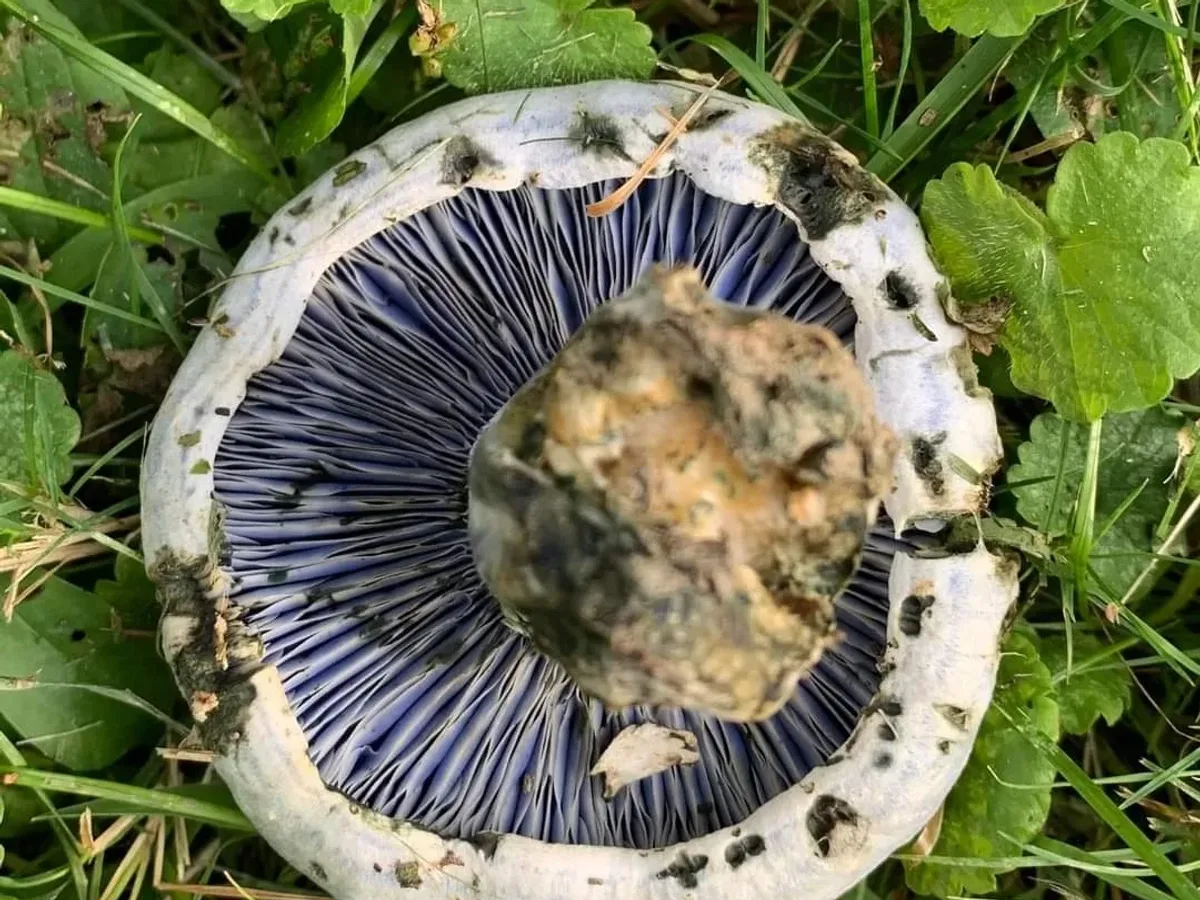 © Andrew Turner (CC BY-SA 4.0)
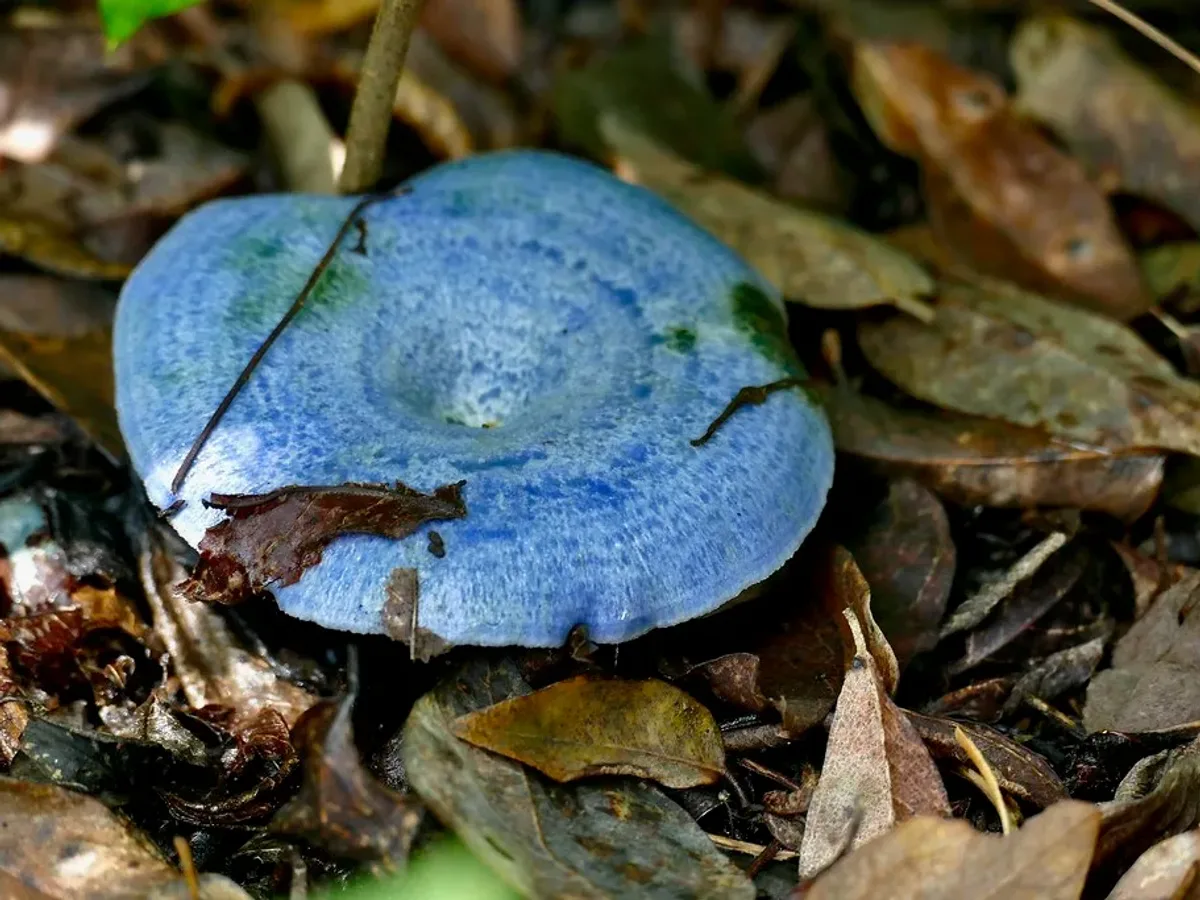 © Bernard DUPONT (CC BY-SA 2.0)
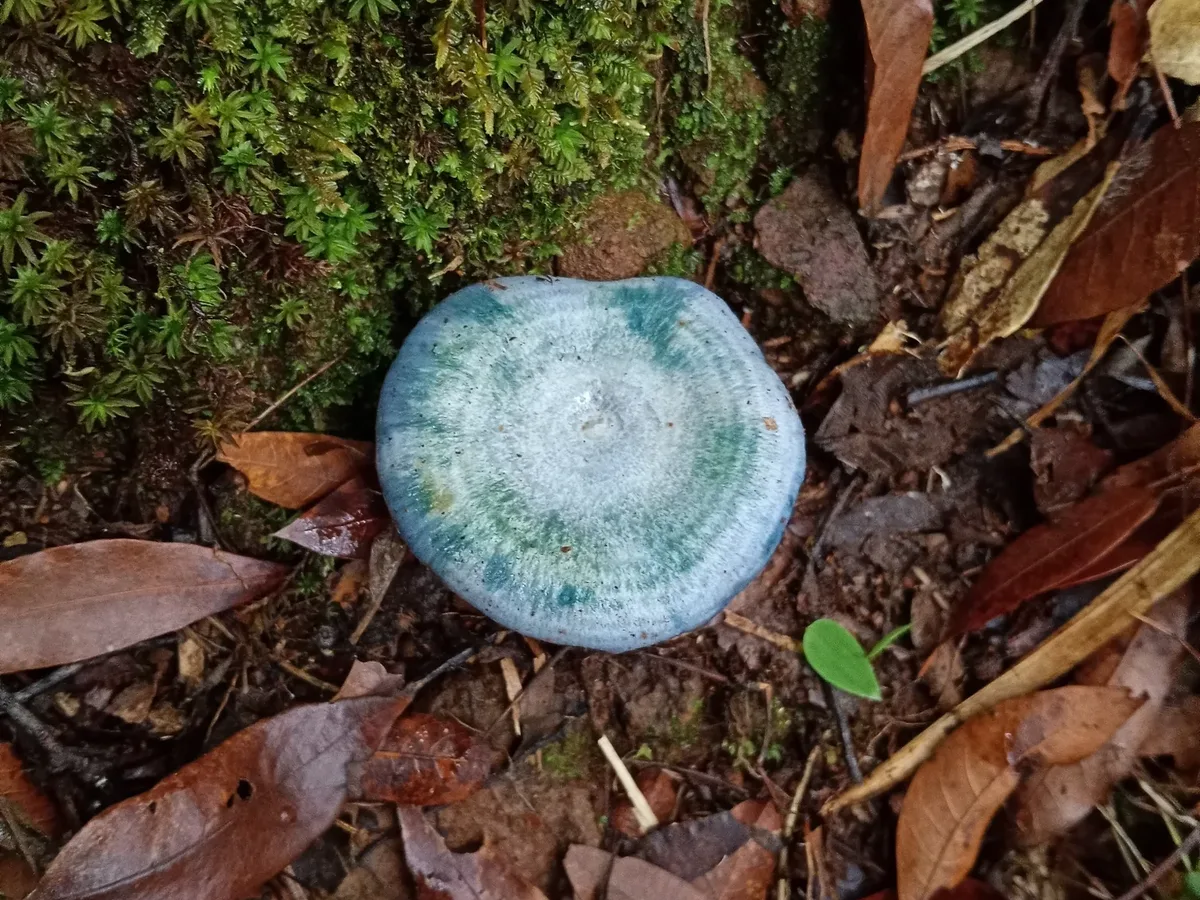 © Anthony Mora Aguilar (CC BY)
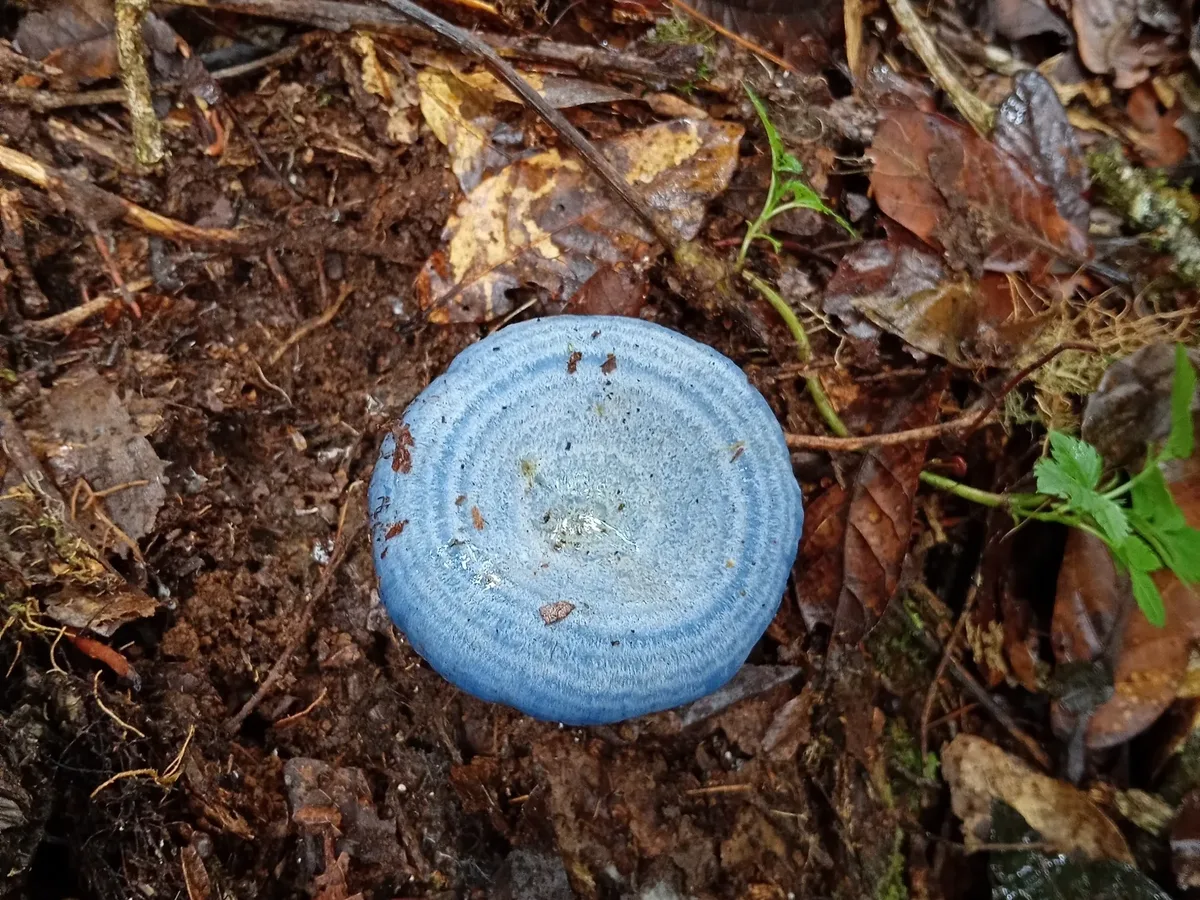 © Anthony Mora Aguilar (CC BY)
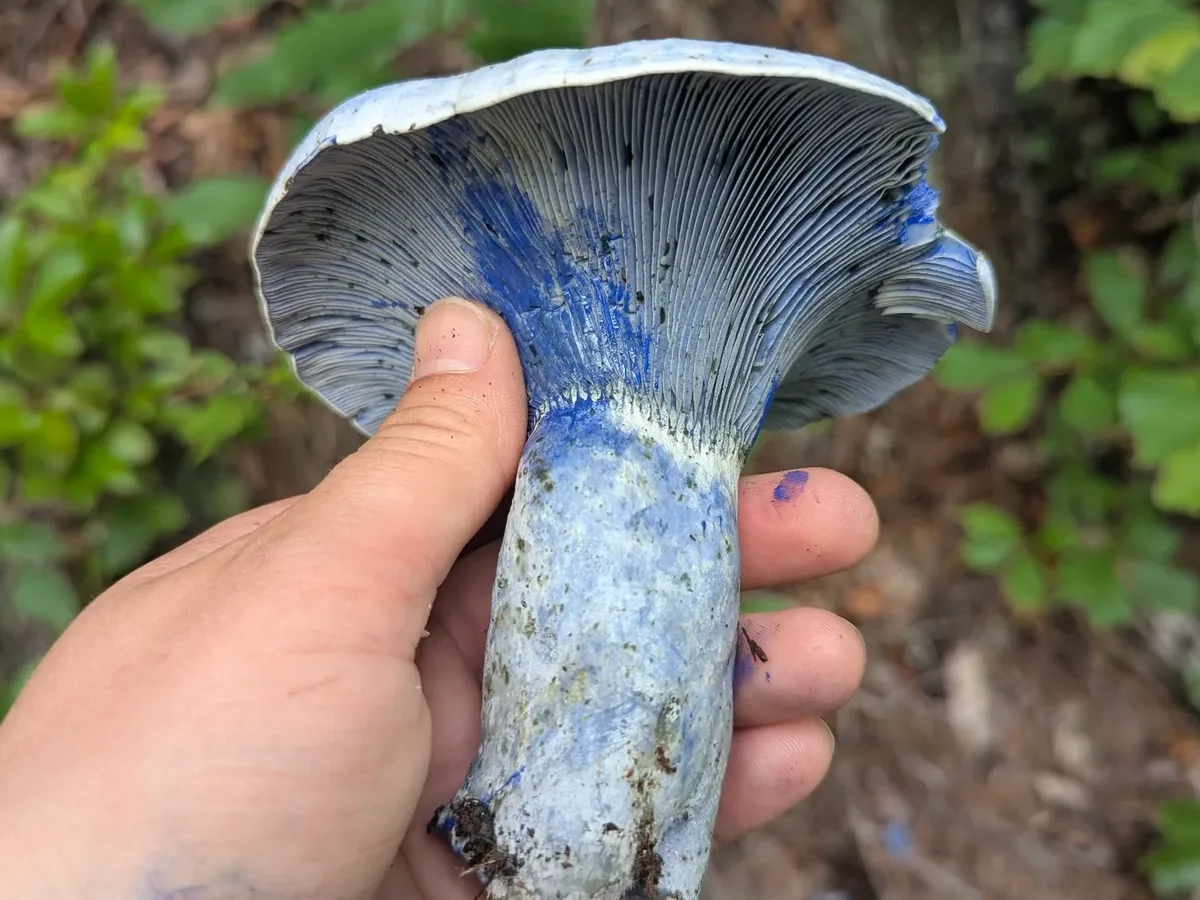 © Alina Martin (CC BY)
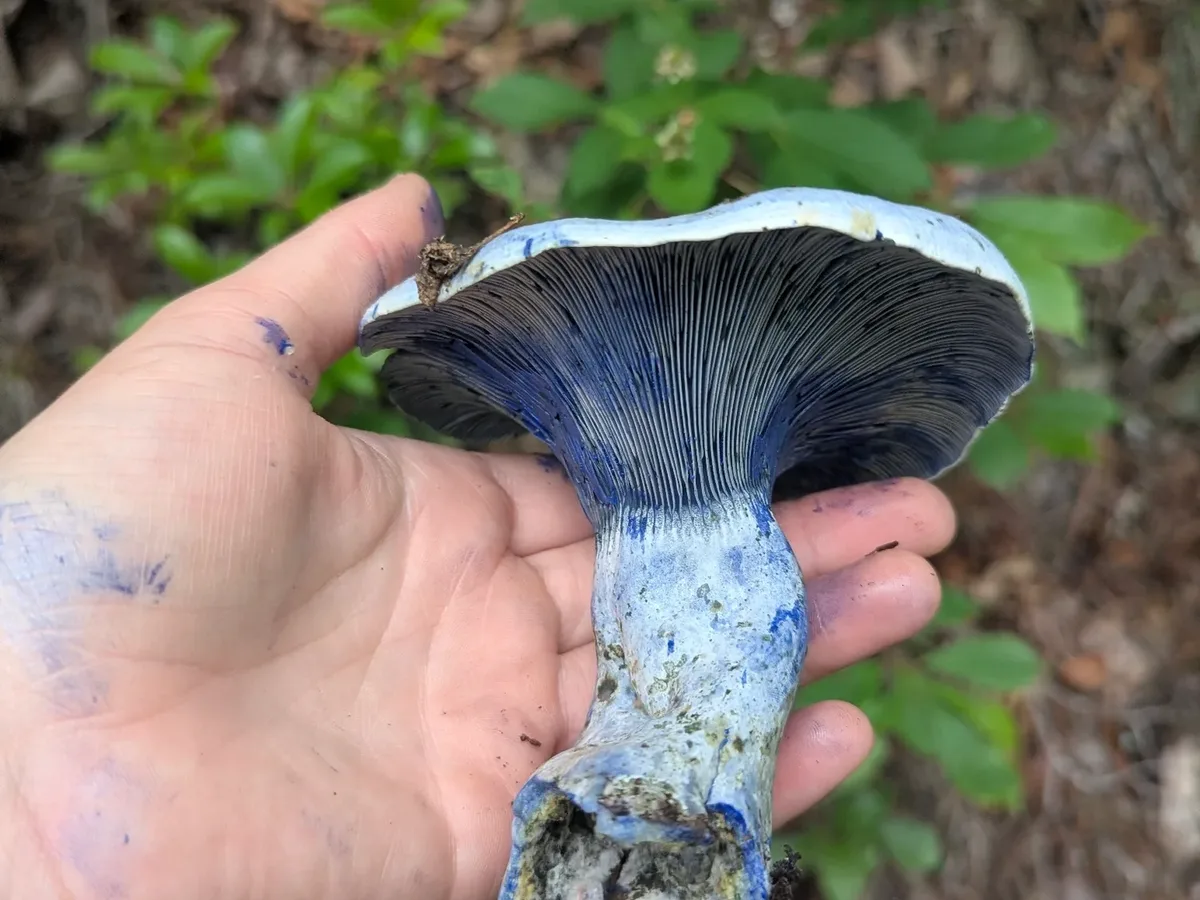 © Alina Martin (CC BY)
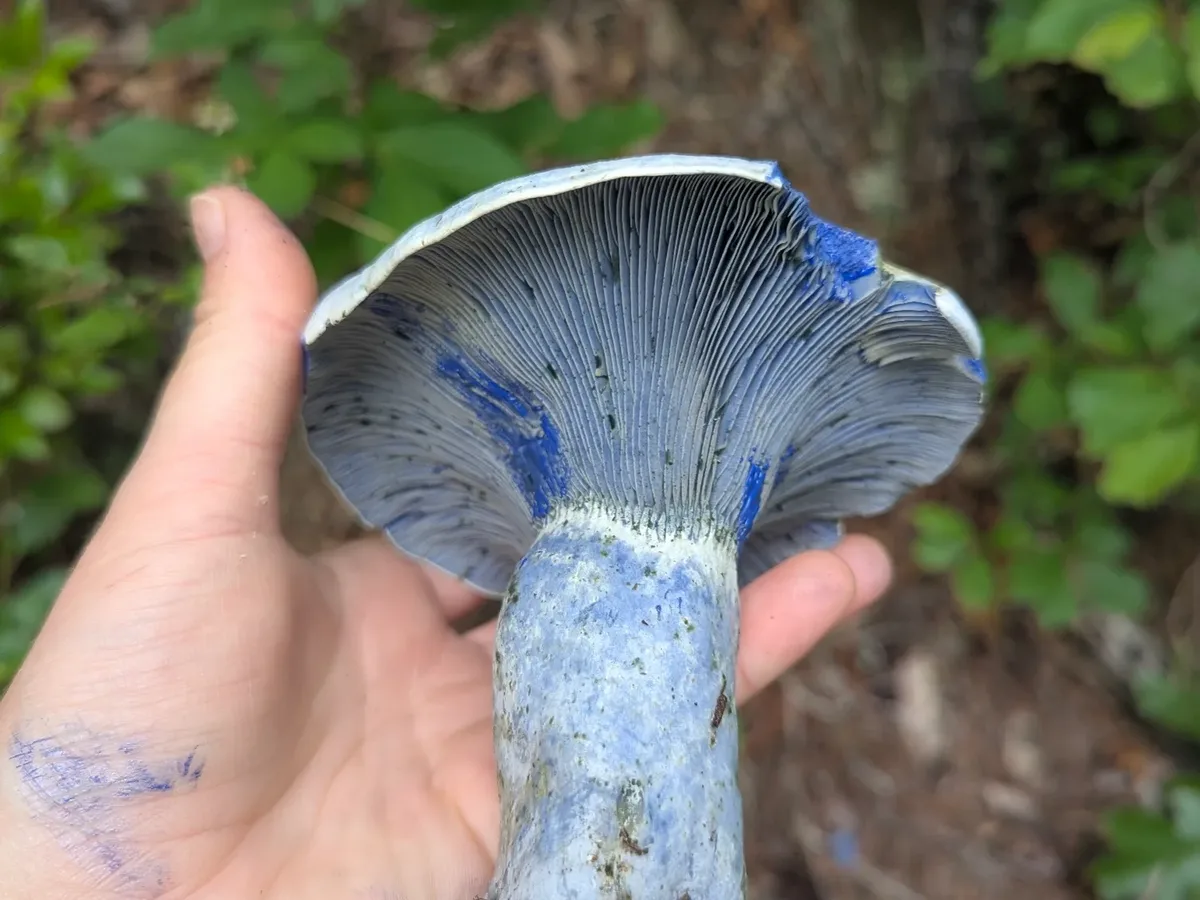 © Alina Martin (CC BY)
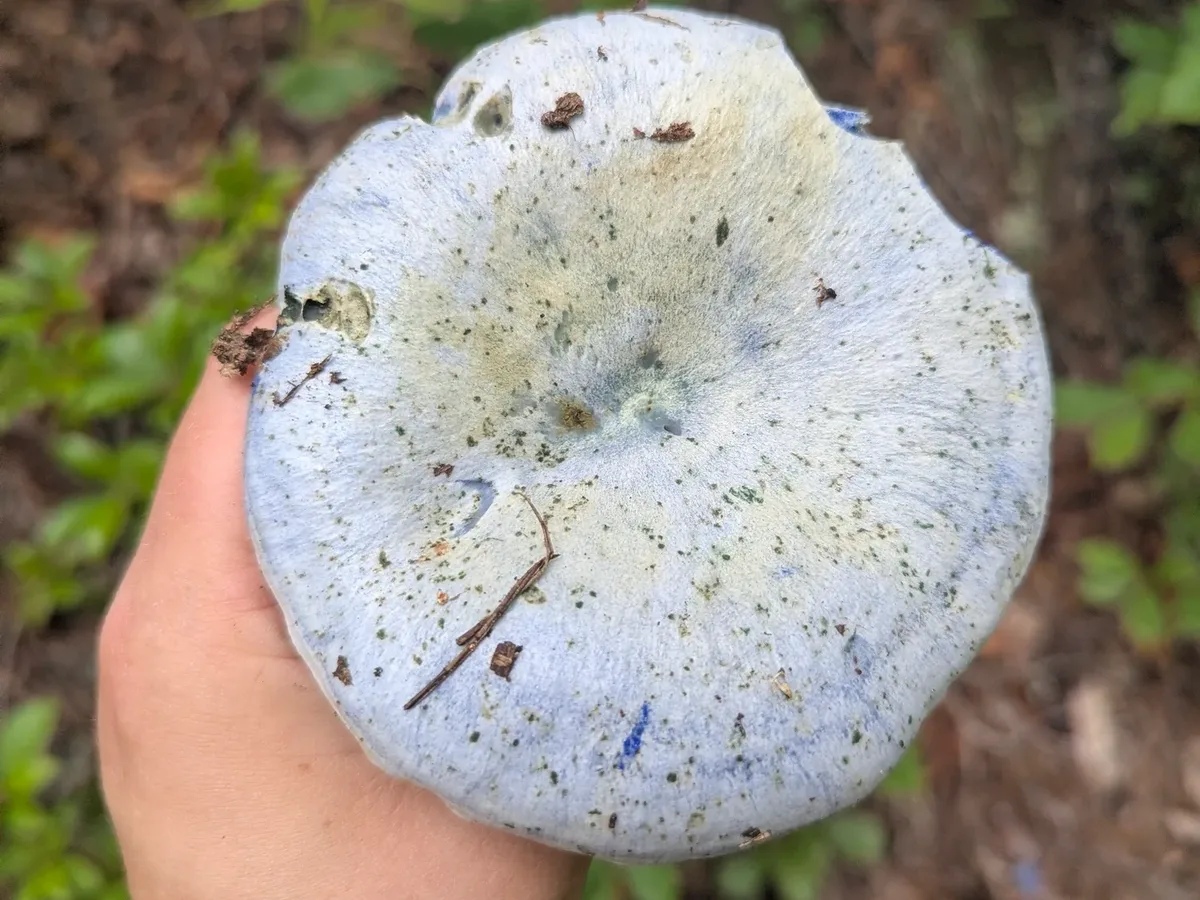 © Alina Martin (CC BY)
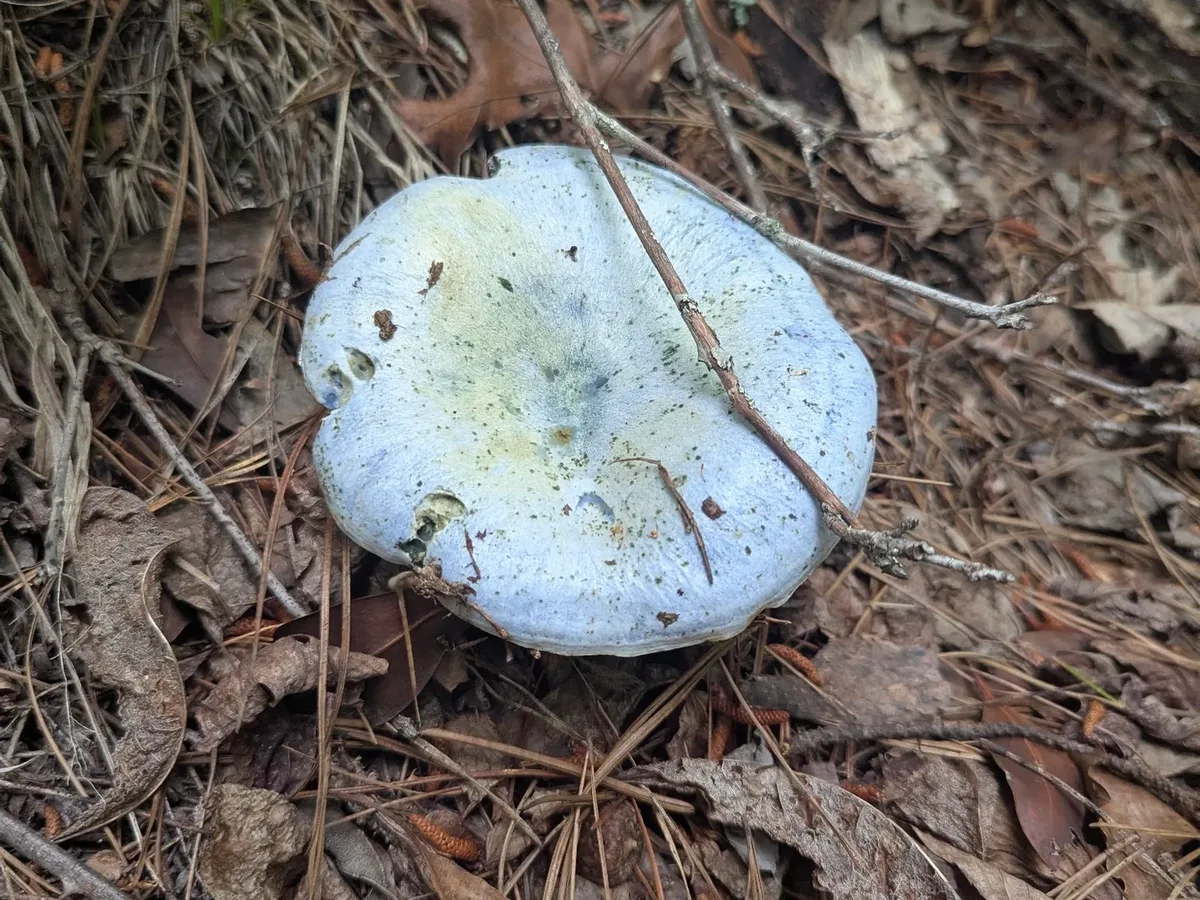 © Alina Martin (CC BY)
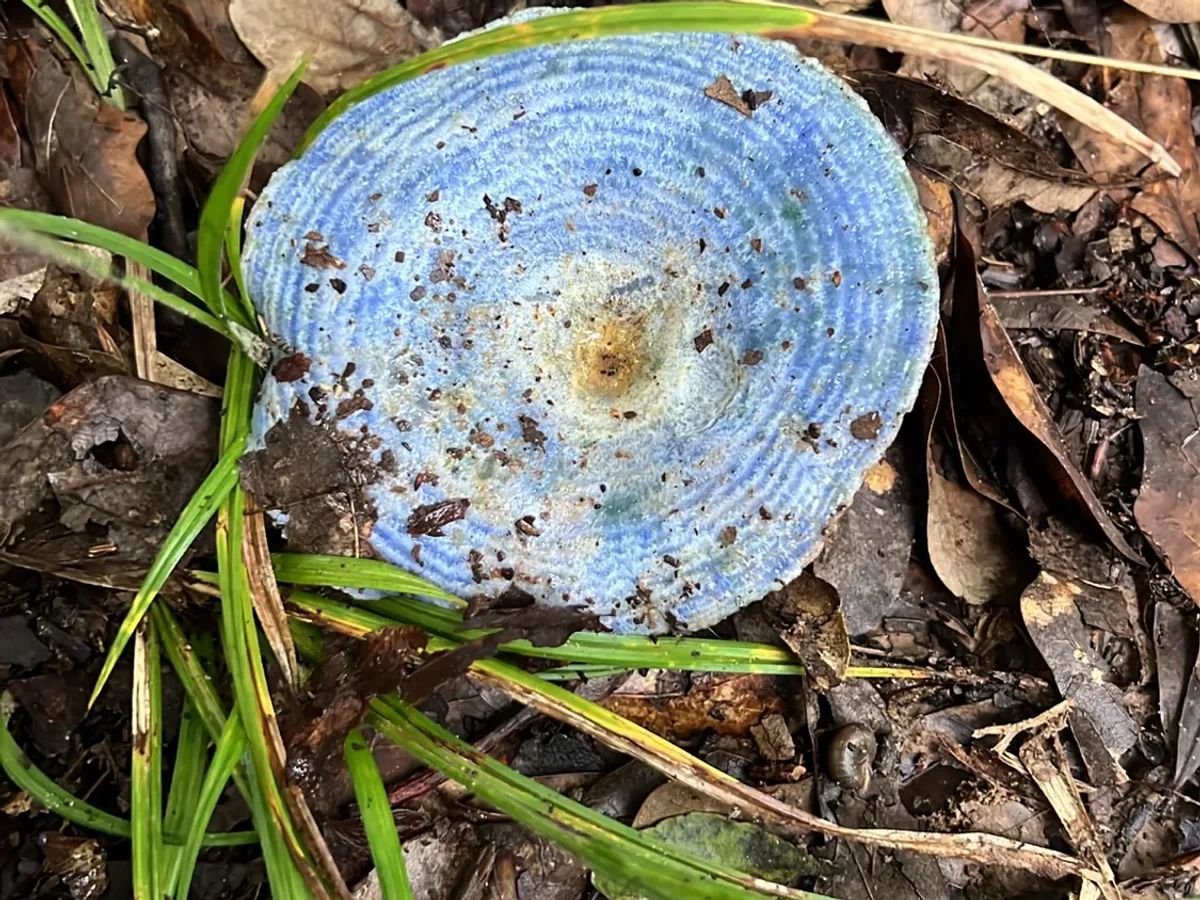 © Sue Ann Kendall (CC BY)
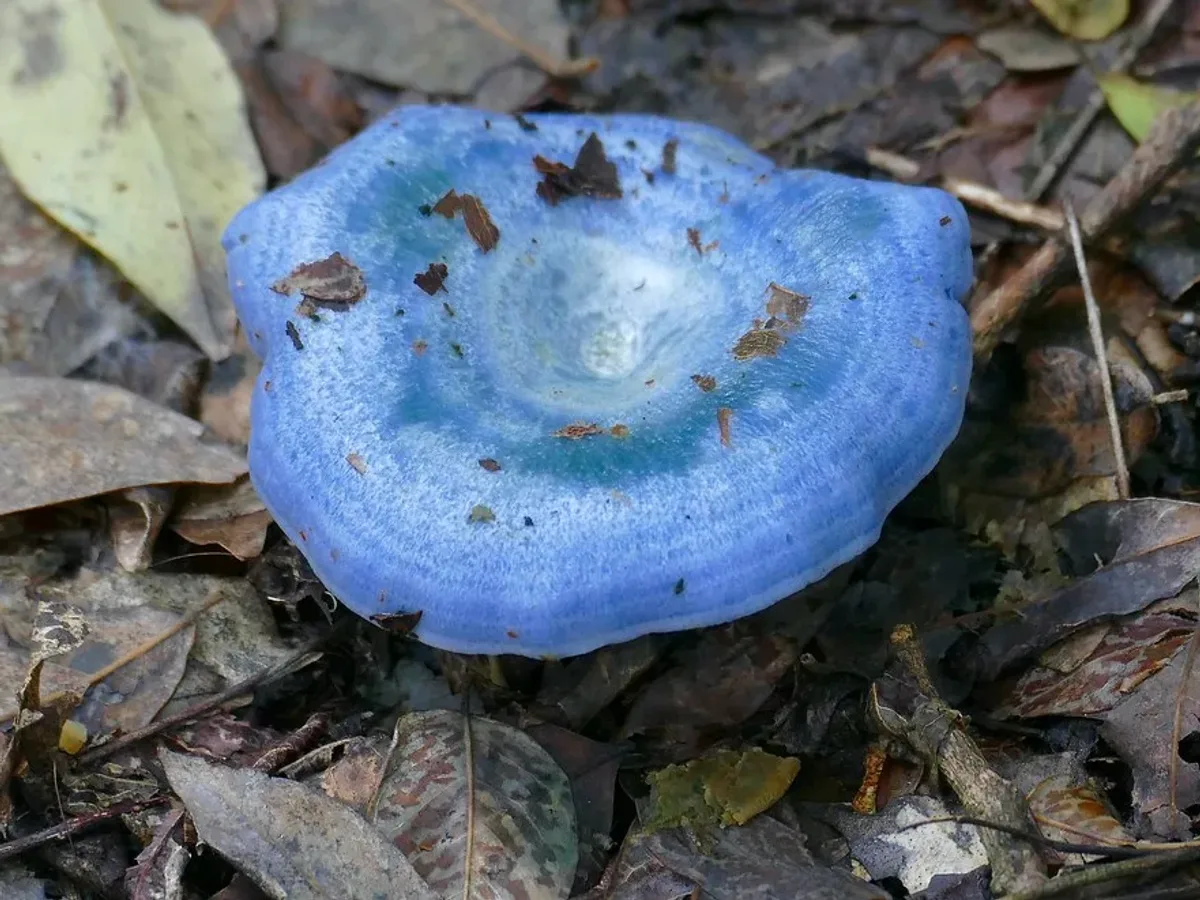 © Bernard DUPONT (CC BY-SA 2.0)
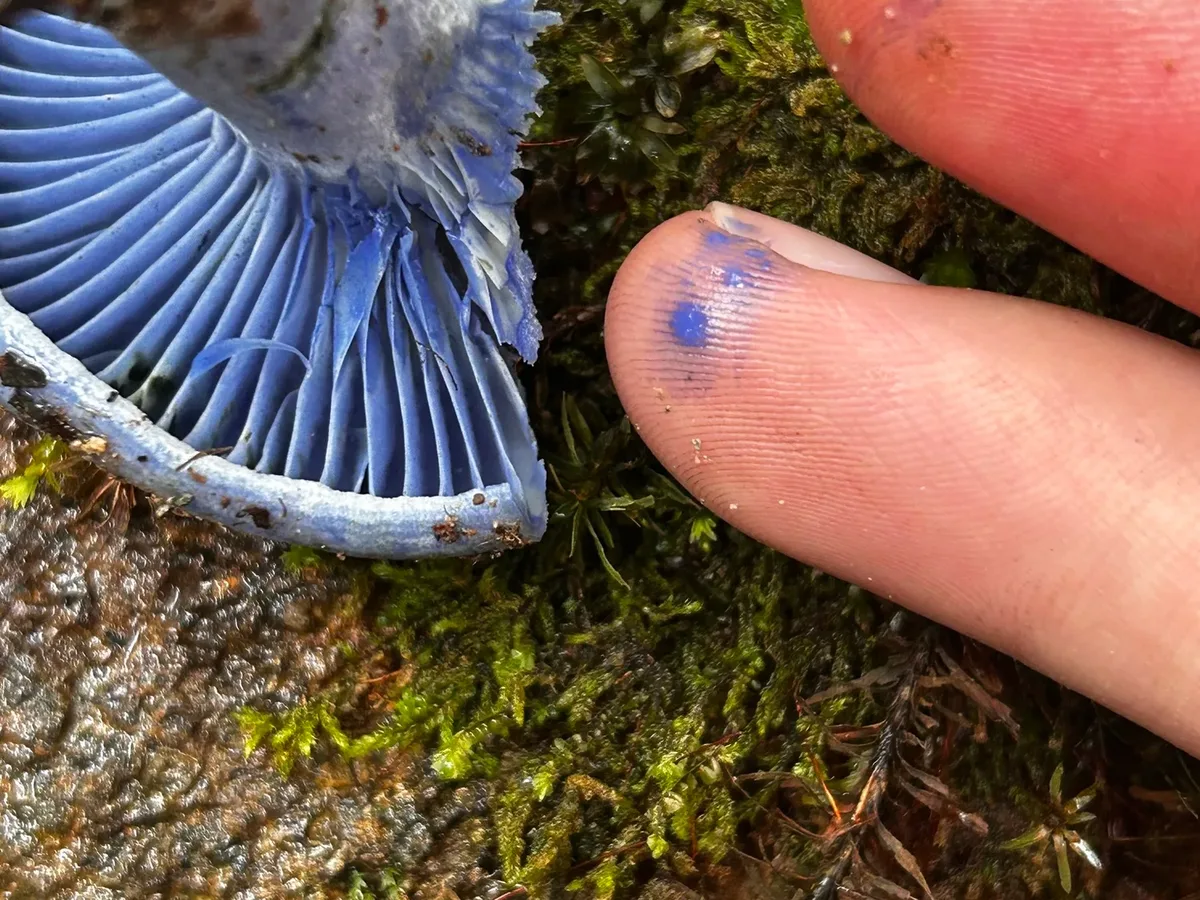 © Curtis Drake (CC BY 4.0)
 © Alan Rockefeller (CC BY 4.0)
 Ingolf Askevold (CC0)© Andrew Turner (CC BY-SA 4.0)© Bernard DUPONT (CC BY-SA 2.0)
Good to eat, once you have identified it with certainty and cooked it through.
How to recognise it
Lactarius indigo is one of the most visually arresting fungi in North American forests, and no amount of familiarity fully dissolves the surprise of finding it.
Cap
The cap measures 5 to 15 centimetres across, convex and then centrally depressed as it matures, eventually developing the shallow funnel shape characteristic of many Lactarius species.
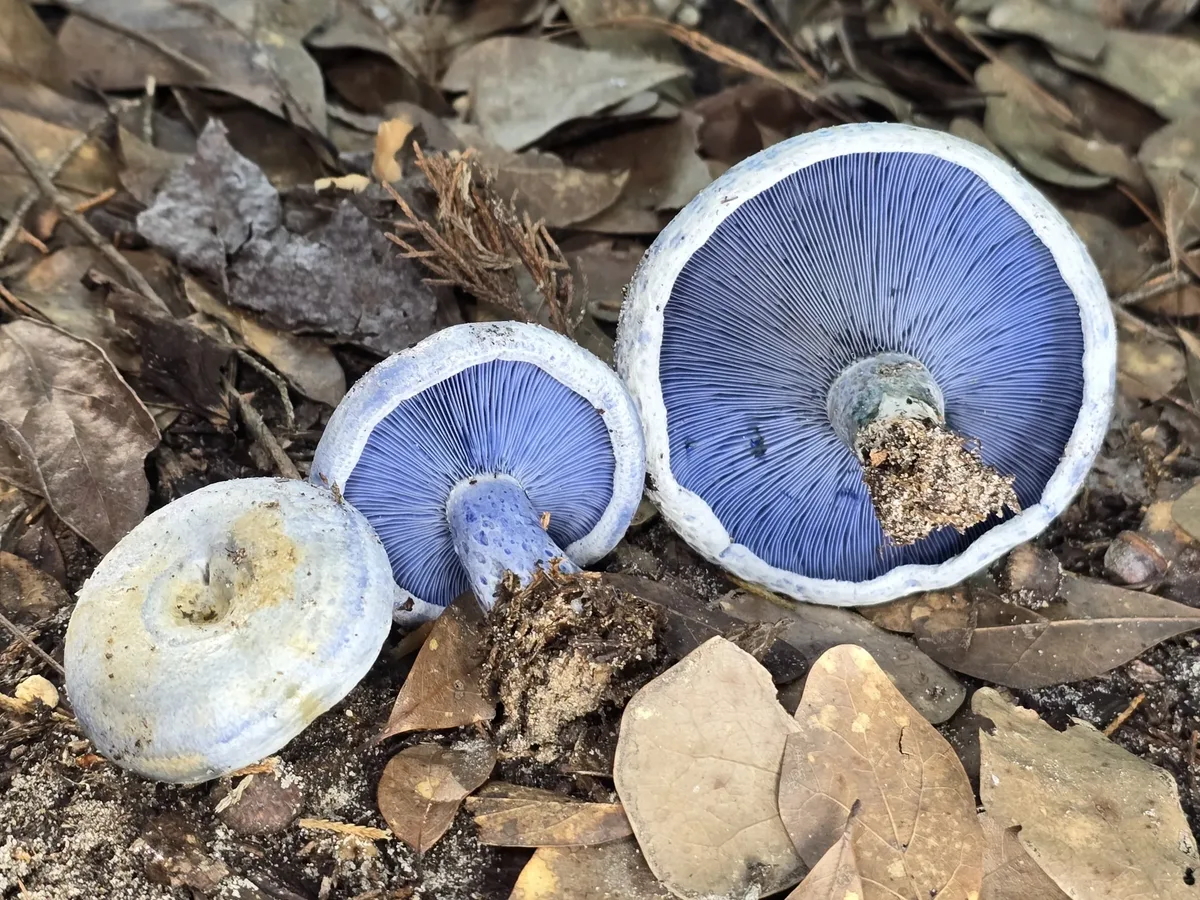
Colour is the defining trait: a deep, saturated indigo-blue when the fruitbody is young and fully hydrated, grading toward a paler blue-grey as the cap ages or dries out. Older specimens often carry a greenish tinge across the surface, especially at the centre, and in very mature examples the cap can appear mostly greenish-grey with only faint blue remaining.
The surface is smooth and dry to slightly viscid in wet conditions, sometimes subtly concentrically zoned.
Gills
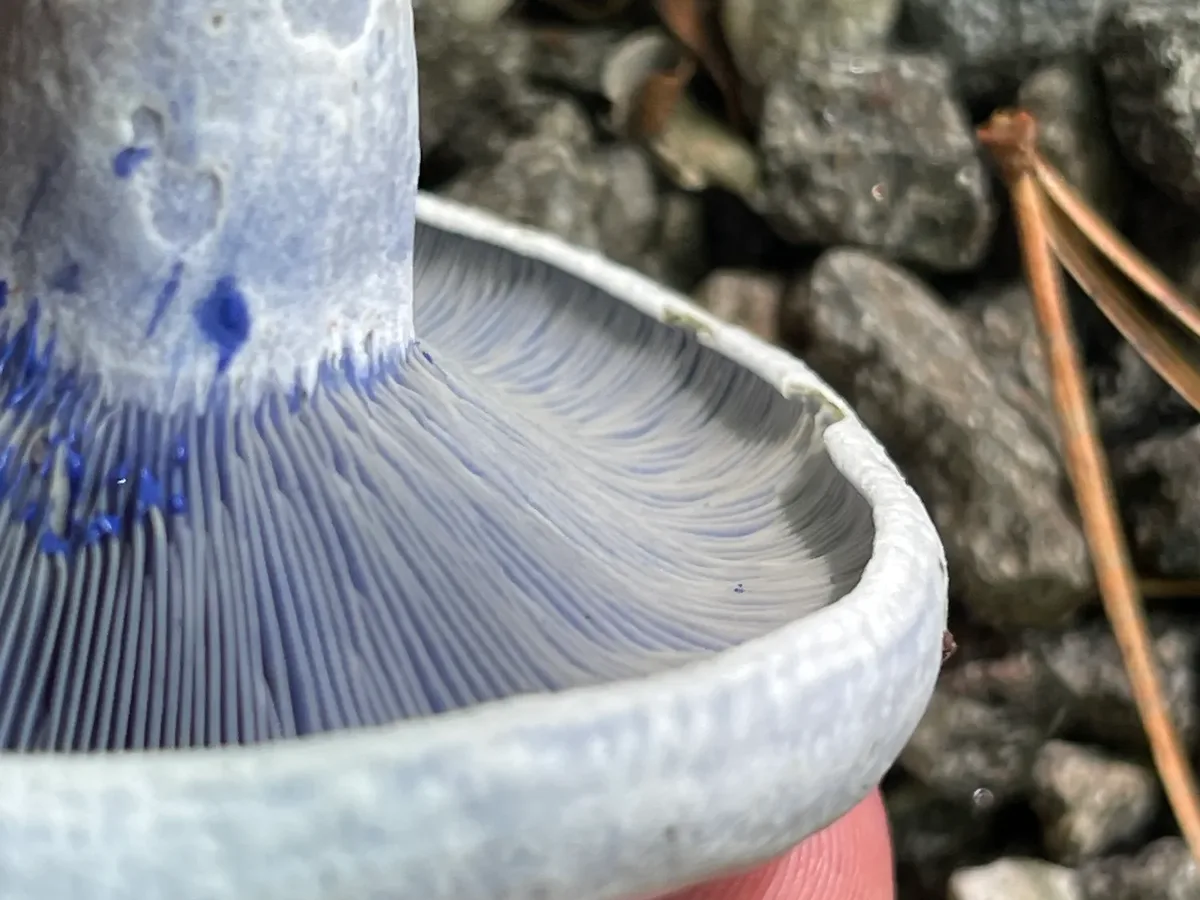
Gills are close, adnate to slightly decurrent, the same vivid blue as the cap. Any mechanical damage to gills, flesh, or stem - a thumb-press, a knife cut, an insect bite - immediately releases the latex: a rich, indigo-blue milk that is unmistakable in the field.
This latex is physiologically remarkable; it contains azulene-related sesquiterpene pigments that oxidise on contact with air, the blue shifting slowly and visibly toward green over five to fifteen minutes.
The spore print is cream to pale yellow - unremarkable in contrast to everything else about the mushroom.
Flesh
Flesh is firm and granular rather than fibrous, with a texture closer to firm tofu than to most gilled fungi, which matters in the kitchen and on the trail alike.
Where & when it grows
Habitat
Lactarius indigo is a strict mycorrhizal specialist, meaning it cannot survive independent of a living host tree. Across eastern North America it forms partnerships primarily with oaks (Quercus spp.) and pines (Pinus spp.), and it occurs in both pure deciduous woodland and in mixed or predominantly coniferous stands wherever these hosts are present.
The relationship is ancient and deeply metabolic: the fungal mycelium wraps around and penetrates the outermost root cells of the host, forming a sheath (the mantle) and an intercellular network (the Hartig net) through which sugars flow from tree to fungus and minerals - particularly phosphorus and water - flow from fungus to tree. Neither partner is optional for the other in this exchange.
In the United States the species ranges across the entire eastern half of the country and south through Texas into Mexico, where it is particularly abundant in the oak and pine forests of the highlands. It is absent from the Pacific Northwest and the West Coast, tracking the distribution of its preferred host communities.
Within a forest it tends to appear in areas with good duff accumulation and moderate moisture - not in saturated soils, but reliably in spots that stay modestly damp between rains. It is found most often at low to mid elevations in the American east, and at higher elevations in Mexico where the climate keeps temperatures in its preferred range.
When
The fruiting season for Lactarius indigo in eastern North America runs from June through November, with the densest flushes typically occurring in July through September after warm, substantial rains have saturated the soil and soil temperature sits between roughly 12 and 22 degrees Celsius.
Like all ectomycorrhizal fungi, the species fruits episodically rather than continuously: the mycelium persists underground year-round, but the signal to produce fruitbodies appears to be a combination of soil warmth, available soil moisture, and possibly an internal phenological cue tied to host tree physiology.
There is typically a lag of one to two weeks between significant rainfall and the emergence of fruitbodies - long enough for the mycelium to allocate resources and initiate primordia.
In Mexico, where the highland oak-pine forests receive reliable summer monsoon rainfall, the species is harvested and sold in markets from June onward and remains available into late autumn. In the southern United States fruiting can begin earlier and persist later than in northern states.
A single flush at a productive site may last ten to fourteen days before the caps open fully, release spores, and begin to deteriorate.
How it grows
Below the forest floor, Lactarius indigo persists as a web of pale mycelium threaded through the mineral soil and duff layer, enmeshed with the fine absorptive roots of oak and pine. This subterranean network is perennial, surviving drought, cold, and the absence of fruitbodies for multiple seasons at once.
When soil conditions cross the thermal and moisture thresholds the fungus requires, it initiates primordia - dense hyphal knots that will become fruitbodies - at points where the mycelium meets the soil surface or the base of the duff layer. The developing buttons are already blue; azulene pigments are present from the earliest visible stage.
Individual fruitbodies can emerge within a day or two of initiation and reach full size within three to five days under favourable conditions, which is fast growth for a large-capped fungus. They appear singly, in scattered groups, or occasionally in loosely clustered arcs that follow subsurface mycelial strands.
Because the mycelium is connected to tree roots that span large soil volumes, productive sites tend to fruit repeatedly from the same approximate locations year after year, though the exact positions shift as the mycelium and root system grow. Fruitbodies deteriorate relatively quickly once the gills begin to darken and the cap flattens and curls; the window for picking in prime condition is narrow.
Fruiting conditions
Warm-season ectomycorrhizal Lactarius fruiting after substantial summer/autumn rains; conservative standard-mycology estimate, not stated in the source.
Look-alikes
Lactarius indigo has no deadly lookalike in eastern North America, but two other blue-tinted Lactarius species merit attention.
Lactarius paradoxus grows in similar oak-pine habitat in the eastern and southeastern United States and superficially resembles L. indigo in overall shape and in having bluish tones in the cap and gills. The critical distinction is the latex: L. paradoxus exudes a latex that is white or watery and does not stain or turn blue - it may develop vinaceous or purplish tints on the gills but the freshly released liquid is not indigo-blue. A quick latex test at the site of a gill nick resolves the identification immediately.
Lactarius chelidonium is another bluish-tinted Lactarius, mainly associated with pine, which produces a yellowish to greenish-yellow latex rather than blue - again, the latex colour test is definitive and takes under a minute.
No Amanita species is likely to be confused with L. indigo given the colour and latex, but as a matter of habit it is worth confirming the absence of a ring or a volva (basal sac) at the stem base, particularly in young specimens where the cap colour may not yet be fully saturated.
In practice, experienced foragers regard L. indigo as one of the safest identification targets in North American mycology, precisely because the blue latex test is so rapid, specific, and impossible to fake.
Another bluish Lactarius, but with a different latex colour.
Another bluish Lactarius, but with a different latex colour.
In the kitchen
Picking & cleaning
Identification in the field is unusually reliable for a wild mushroom. The combination of blue cap, blue gills, and blue-bleeding latex is found in no other species a forager is likely to encounter in eastern North American oak-pine woods, and the latex test takes less than thirty seconds: nick the gills or flesh and watch for the saturated indigo-blue milk, confirming both that the latex exists and that it is the right colour.
If in any doubt, observe the latex for several minutes and confirm it shifts toward green as it oxidises - no other blue-latexing Lactarius in this range behaves identically.
Cut the fruitbody at ground level with a clean knife rather than pulling, which can disturb the mycelium and the surrounding duff. Select caps that are still firm and convex to slightly flattened: fully open caps with darkened or greenish gills are past prime and may have begun to harbour larvae.
Brush debris from the cap and gills in the field. The granular flesh does not hold moisture well once cut, so store picks loosely in a breathable basket or paper bag and use them within one to two days.
Avoid collecting from roadsides or sites with known pollution history, as Lactarius species can bioaccumulate heavy metals from contaminated soils.
Cooking
Lactarius indigo has a mild, faintly nutty flavour with a subtle pepperiness that diminishes with heat, and a firm, granular texture that holds its shape through most cooking methods rather than wilting to mush.
It performs best at high heat: a dry or lightly oiled cast-iron skillet or griddle produces good browning and concentrates the flavour without waterlogging the granular flesh.
In Mexican highland cooking it is most traditionally prepared with white onion, serrano or jalapeño chile, and epazote - the aromatic herb acting as both flavour complement and a traditional digestive aid - with the whole preparation served as a taco filling, a soup base, or alongside eggs.
This combination has been used in Oaxacan and Veracruz markets for generations and is widely considered the best vehicle for the mushroom's mild, earthy taste. It also works well in soups and broths, where it remains identifiable in texture even after extended simmering.
Grilling whole young caps over charcoal or wood is popular in regions where it is foraged fresh.
Bear in mind that the blue latex is water-soluble and will tint soaking water, marinades, or light broths a striking blue-green colour - the visual effect fades to grey-green on cooking and is not a sign of spoilage.
Pairing with strong cheeses, butter, or cream rounds out the mild flavour well. Avoid drying as a preservation method; frozen blanched slices hold texture better and remain usable for months.
Good to know
Lactarius indigo is edible and has a long history of human consumption, most extensively documented in the markets of Oaxaca, Veracruz, and other Mexican highland states where it is sold commercially as a "second-class" edible - meaning it is prized but not ranked among the most prestigious market species.
It is consumed cooked; like most Lactarius species it is not suited to raw eating, and the raw latex has a mildly acrid to peppery taste that disappears with heat. There are no known toxins in L. indigo.
The flesh turns grey-green on cooking, which surprises some foragers but is a harmless pigment change and does not affect flavour or safety. The mushroom is poorly suited to drying because the granular texture breaks down and the colour disappears almost entirely.
Some individuals with sensitivity to raw or undercooked Lactarius species may experience mild gastrointestinal discomfort if the mushroom is insufficiently cooked, so thorough cooking to an internal temperature sufficient to denature proteins is recommended.
The latex can stain cutting boards, cloth, and skin a transient blue-green that fades in hours. No significant drug or medication interactions are documented.
A reference guide - never an edibility guarantee. When in doubt, leave it out.