Black trumpet
Craterellus fallax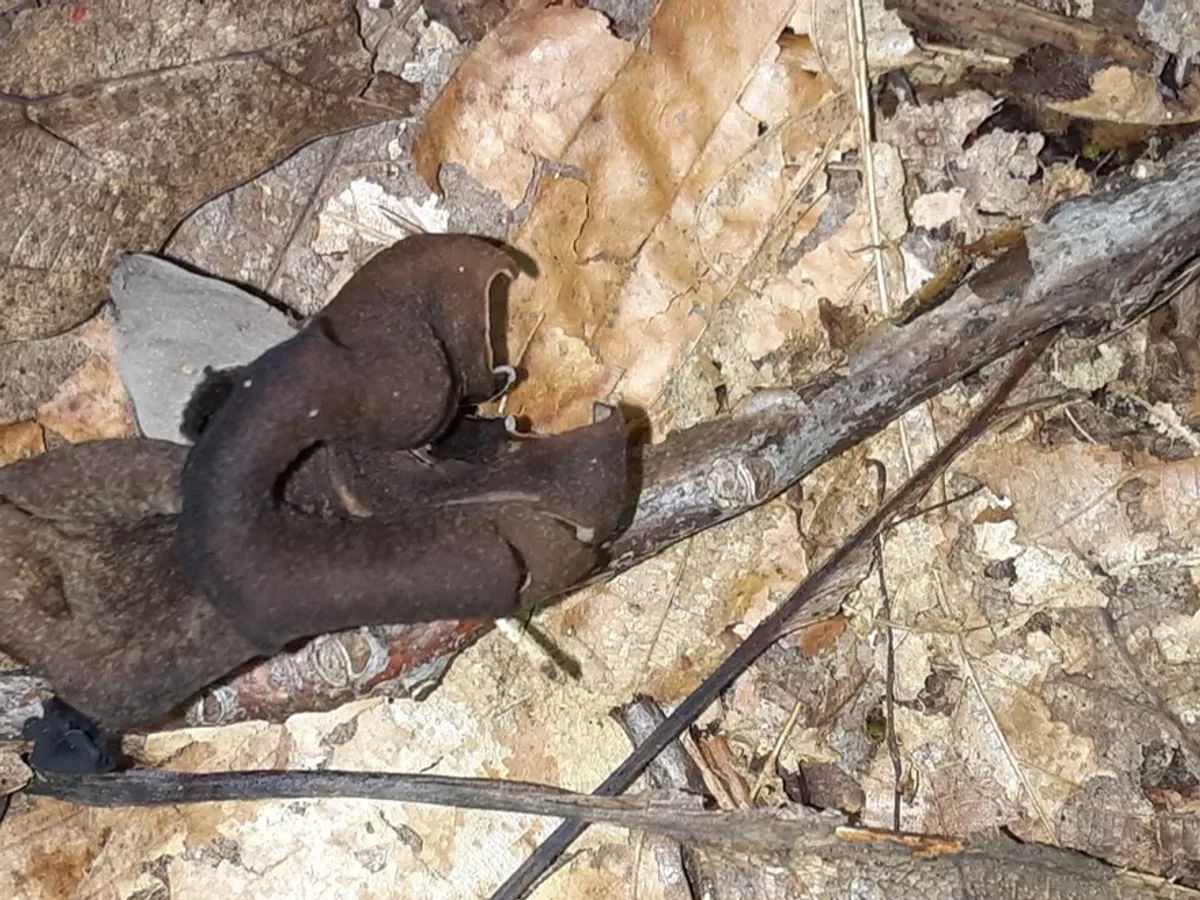 © Larry Jensen (CC BY 4.0)
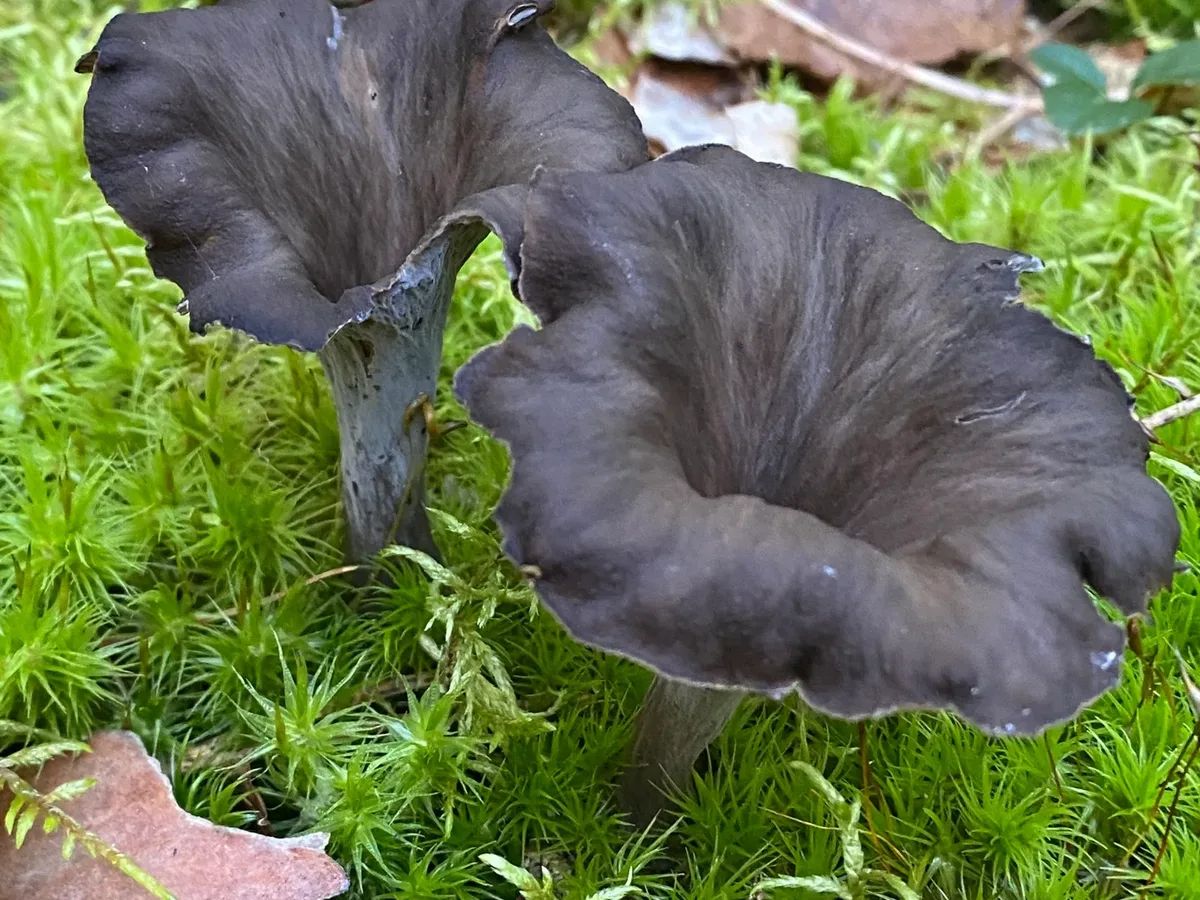 Sara L Giles (CC0)
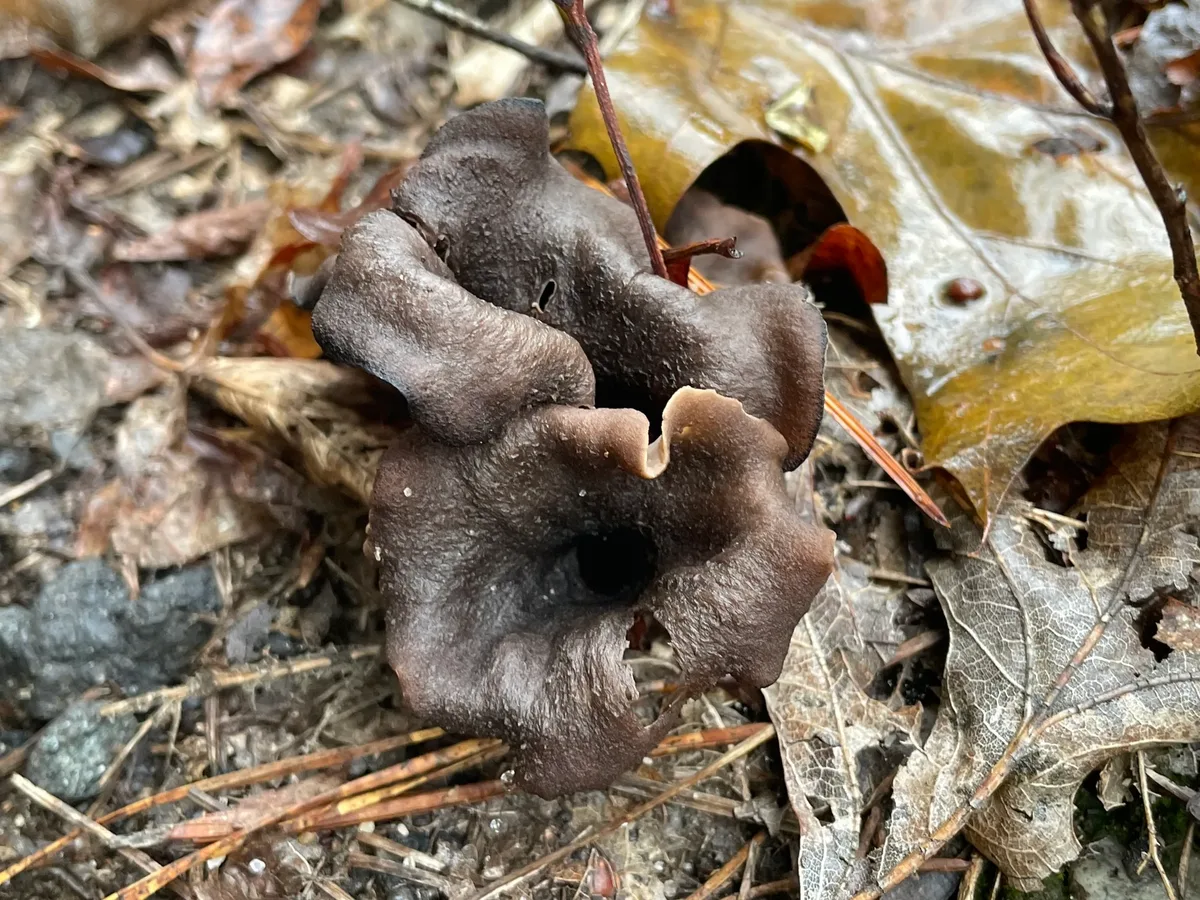 © Annie Weissman (CC BY 4.0)
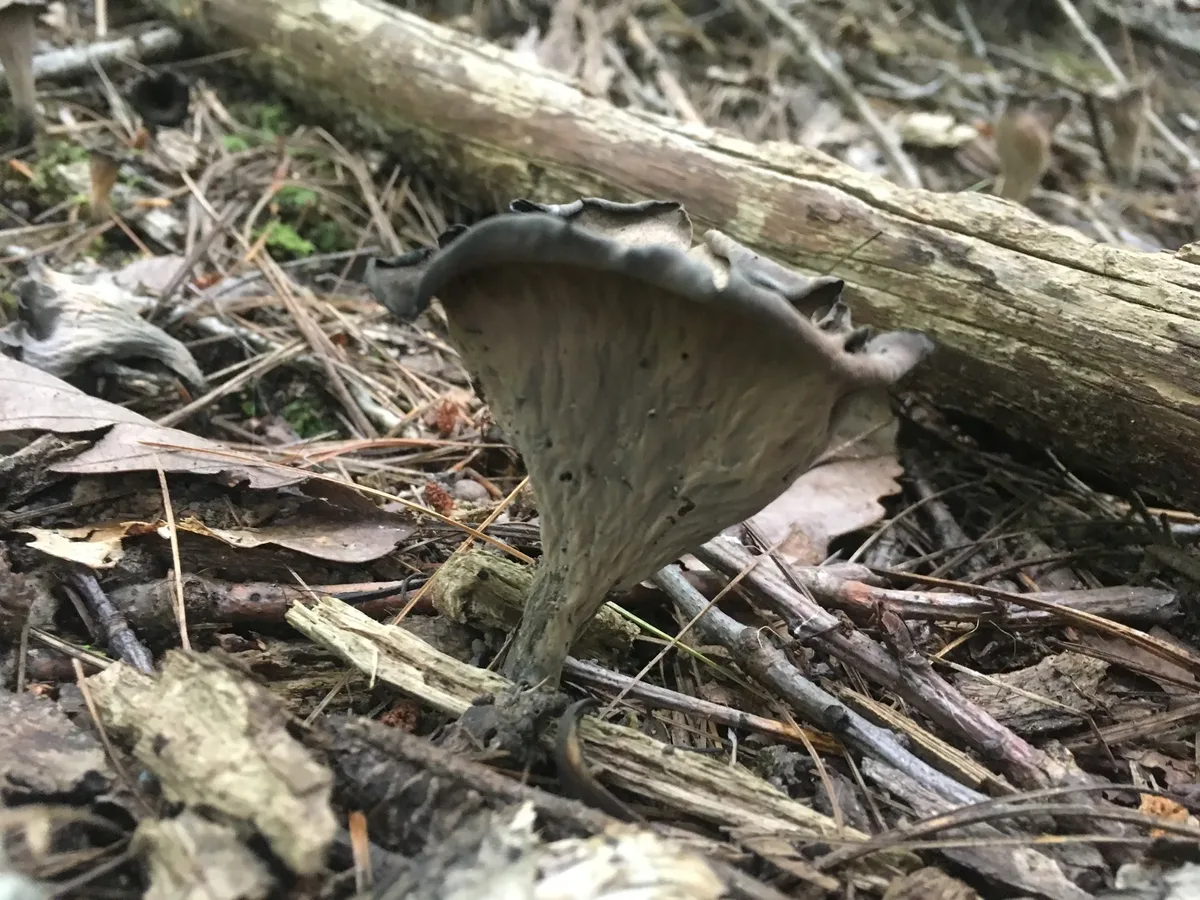 © Ben Hayden (CC BY 4.0)
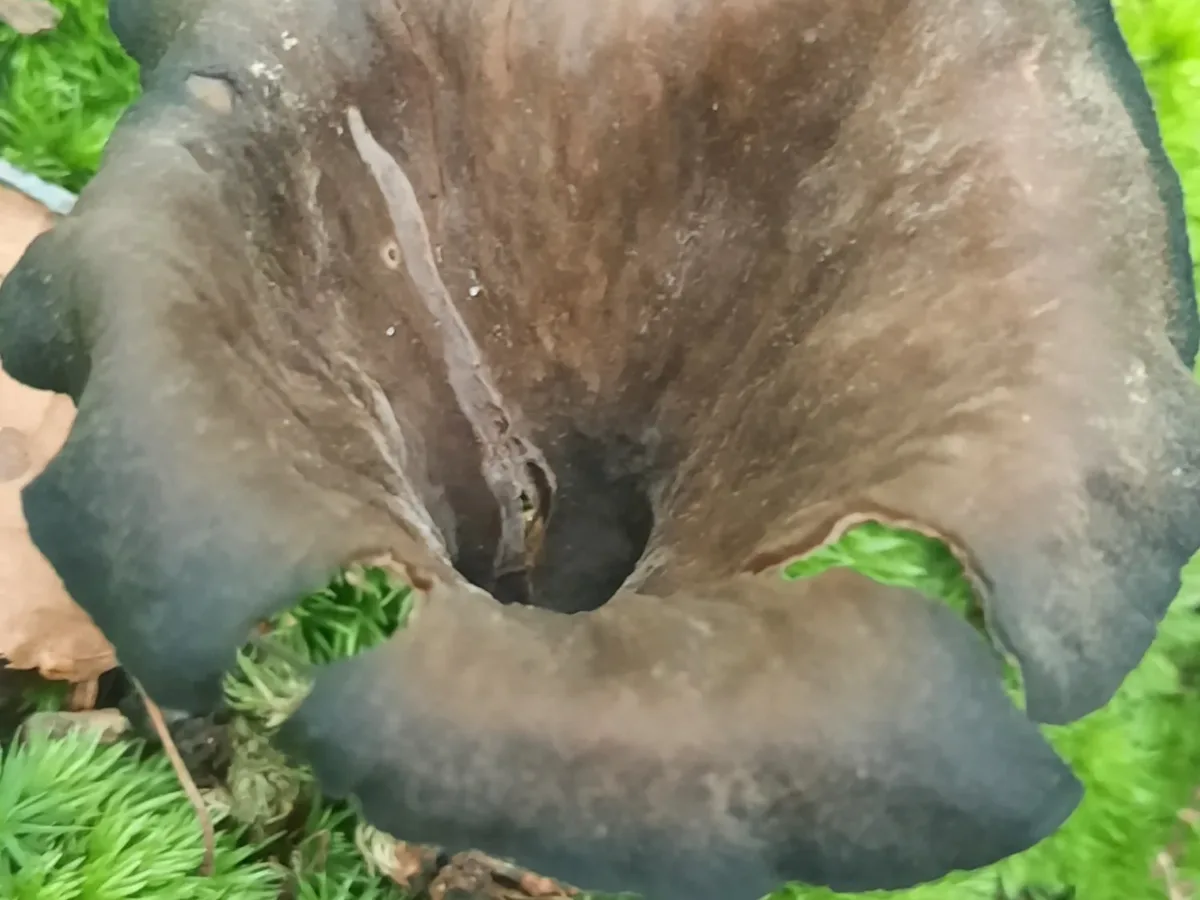 peakaytea (CC0)© Larry Jensen (CC BY 4.0)Sara L Giles (CC0)
One of the best mushrooms you can bring home - once you are certain of the identification.
How to recognise it
Craterellus fallax is built unlike almost any other forest mushroom: it is hollow all the way through, a thin-walled, dark tube that widens from a narrow stalk into an irregular trumpet mouth, typically 3-8 cm tall and 2-6 cm across.
Cap
The interior of the funnel - the side you look into - is a dull charcoal to brownish-gray, dry and slightly scurfy. The cap margin is persistently wavy and lobed, never cleanly circular.
Gills / Pores
The outer surface, which actually bears the spores, is smoother and slightly paler, ranging from blue-gray in young specimens to deep gray-black as the fruitbody matures, often with very shallow, irregular ridges or wrinkles rather than true gills.
The spore print is unmistakably salmon to pale ochre-pink, the single most reliable character for separating C. fallax from its European relative Craterellus cornucopioides, whose print is white.
Flesh
Flesh is thin, grayish, and almost papery when dry. Cap and stem form one continuous structure, making the whole body feel soft and collapsible in the hand.
Smell & taste
A fresh specimen releases a distinctly fruity, faintly apricot-like scent - the same aromatic esters that appear in chanterelles, confirming its close evolutionary kinship with them.
Where & when it grows
Habitat
Craterellus fallax forms obligate mycorrhizal partnerships with hardwoods, most reliably with oaks (Quercus spp.) and beeches (Fagus grandifolia). The mycelium threads through organic-rich forest soil, trading mineral phosphorus and water drawn from deep soil layers for photosynthetic sugars supplied by the tree root - a partnership that may persist for decades.
Look for it in humid, undisturbed stands where the duff layer is thick and moss is present. It strongly favors natural bowls and swales where rainwater lingers and the soil stays moist after the surface dries.
Because the dark fruitbodies blend seamlessly with decomposing leaves and dark soil, the best search strategy is to scan low and obliquely across the forest floor, or to look for the vermilion chanterelle (Cantharellus cinnabarinus) as a companion indicator - both species share similar habitat preferences and frequently fruit within a few meters of each other.
Old-growth or mature second-growth forest with well-developed leaf litter is far more productive than younger stands.
When
In eastern North America, Craterellus fallax fruits from June through October, with the most productive flushes typically occurring in July and August after extended warm, humid weather.
The season is closely tied to soil temperature: fruitbodies reliably appear when soil at 5-10 cm depth reaches 12-22 °C and stays in that band. A dry June often delays the first fruiting into July, and a warm, wet September can extend excellent conditions well into October.
Unlike many species that fruit in one or two brief windows, black trumpets can produce multiple successive flushes from the same ground after each soaking rain, making established spots worth revisiting every one to two weeks through the core season.
The window in the upper Midwest and Northeast tends to close earlier than in the Mid-Atlantic and Appalachian South, where warm nights persist longer into autumn.
How it grows
The mycelium of Craterellus fallax spends most of the year invisible, woven through the upper mineral soil and humus as a network of fine white threads that colonize and maintain living root tips of its host trees.
Fruiting is triggered by two things aligning:
- Adequate soil moisture - typically at least 25 mm of rain over the preceding two weeks.
- The right temperature window.
Once conditions align, fruitbodies can emerge and reach full size in as little as 48-72 hours. They usually appear in loose clusters or scattered groups of 5-30 individuals, though solitary fruitbodies are common at the edges of a colony.
The groups often reflect the underground architecture of the mycelial network: a ring or arc of fruitbodies traces the extent of a root-associated mycelium that may have been growing quietly for years or decades.
After picking, the same spot will often flush again if rain returns within a week or two, because the mycelium itself is untouched.
Fruiting conditions
Mycorrhizal hardwood associate that fruits after sustained warm-season rain on moist ground; conservative standard-mycology estimate, not stated in the source.
Look-alikes
Craterellus fallax is one of the safest wild mushrooms for beginners precisely because no poisonous North American species shares its combination of:
- Hollow trumpet shape.
- Gray-black color.
- Spore-bearing outer surface with no true gills.
- Salmon spore print.
The nearest look-alike - the blue chanterelle, Polyozellus multiplex - is also edible, so confusion carries no penalty beyond curiosity.
The European horn of plenty, Craterellus cornucopioides, is the closest relative and nearly identical in the field; the only reliable separation is spore print color (white for C. cornucopioides, salmon for C. fallax). In North America this distinction matters mainly academically, since the two species occupy separate continents.
No deadly or toxic species reliably mimics the black trumpet. If a dark, trumpet-shaped fruitbody has true, blade-like gills or ridges on its inner surface, or if it grows on wood rather than soil, it is not C. fallax.
The nearest lookalike; also edible, so no danger from confusion.
Closely related European species; distinguished by its white spore print versus the salmon-colored spore print of C. fallax.
In the kitchen
Picking & cleaning
Black trumpets are among the cleanest wild mushrooms to harvest. Because the fruitbody is hollow and thin-walled, they collect very little debris inside when growing upright.
Pinch or gently twist the base free from the soil rather than cutting, which avoids leaving a stub that can rot and introduce infection near the mycelium.
Older, rain-soaked specimens can become waterlogged and fragile; pick them promptly once mature or they will self-liquefy within days.
In the field, a quick visual check of the interior of the funnel is sufficient - the hollow cavity should be clean and free of insect tunnels.
When you find one, pause and shift your viewpoint before moving: more are almost always within a meter or two.
Carry a breathable mesh bag or wicker basket; black trumpets bruise and heat quickly in plastic bags. A single productive spot can yield hundreds of grams in a flush.
Cooking
The flavor profile of Craterellus fallax is one of the most complex among wild edible fungi: earthy and smoky at the base, with fruity top notes and a deep, savory umami finish that intensifies dramatically with heat.
Dry-sautéing in a hot, butter-finished pan - without crowding the pan - drives off moisture and concentrates the aromatics best. The gray color bleeds into light sauces but actually deepens to a handsome near-black in richer preparations.
Classic pairings include:
- Omelets and scrambled eggs, where the color contrast is striking.
- Cream sauces for pasta or risotto.
- A finish for pan-seared fish or scallops.
Dried and ground to a powder, C. fallax becomes an extraordinarily versatile seasoning: half a teaspoon stirred into a beurre blanc, a mushroom butter, or a burger blend adds a layer of forest umami that is difficult to identify but impossible to ignore.
Fresh specimens keep only 2-3 days refrigerated; dry them at 40-50 °C until brittle and store in an airtight container away from light.
Good to know
Craterellus fallax must be cooked before eating. Like virtually all wild mushrooms, consuming it raw carries a risk of gastrointestinal irritation from heat-labile compounds, and the flavor is far better after heat anyway.
There are no recorded cases of serious poisoning from correctly identified C. fallax.
The salmon spore print is the definitive confirmation character and is easy to obtain: set a mature cap outer-surface-down on white paper for 30-60 minutes.
The species dries and freezes exceptionally well, with the aromatic compounds concentrating rather than degrading during drying - a trait that makes it one of the best wild mushrooms for long-term storage.
No lookalike in its range is dangerous, making this an excellent species for foragers developing their confidence with wild mushrooms.
A reference guide - never an edibility guarantee. When in doubt, leave it out.