Chicken of the woods
Laetiporus sulphureussyn. Laetiporus cincinnatus, Laetiporus huroniensis
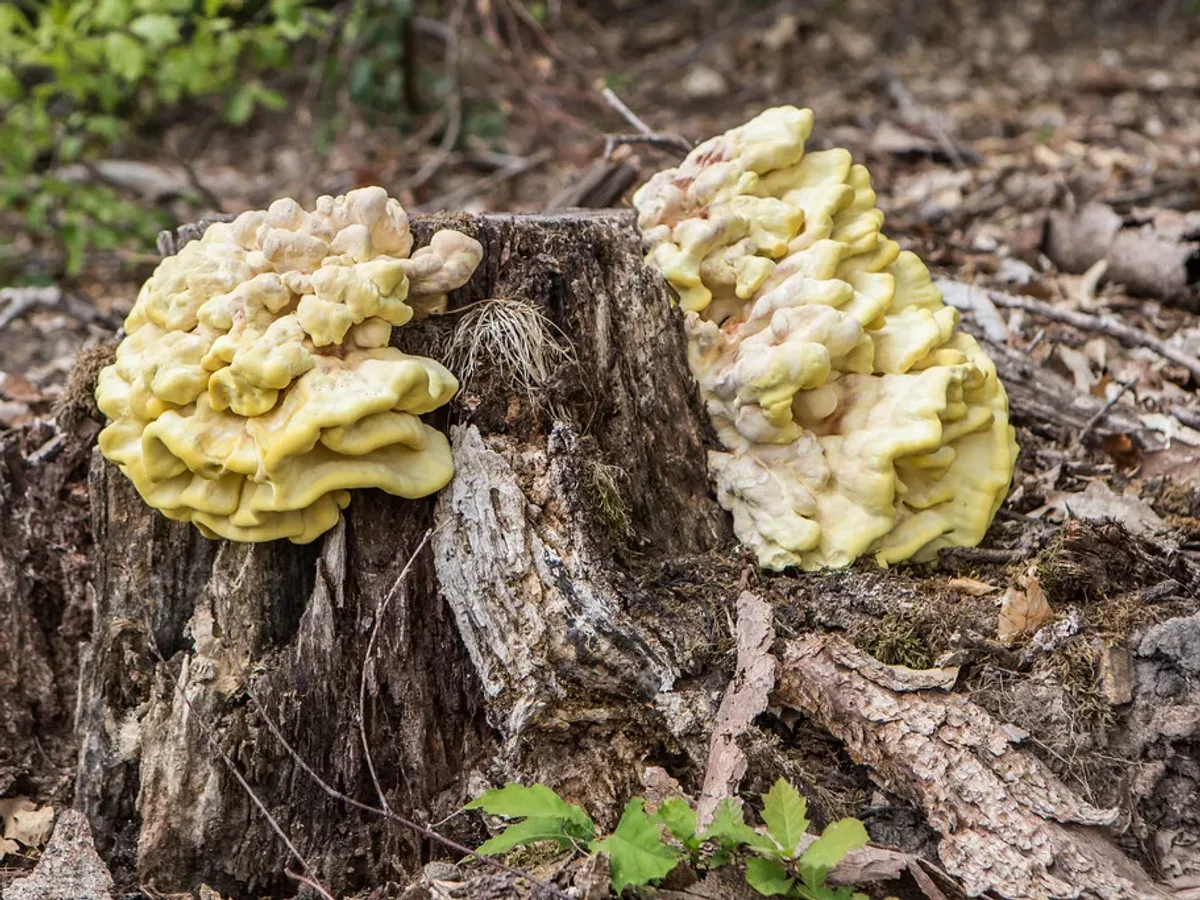 © blumenbiene (CC BY 2.0)
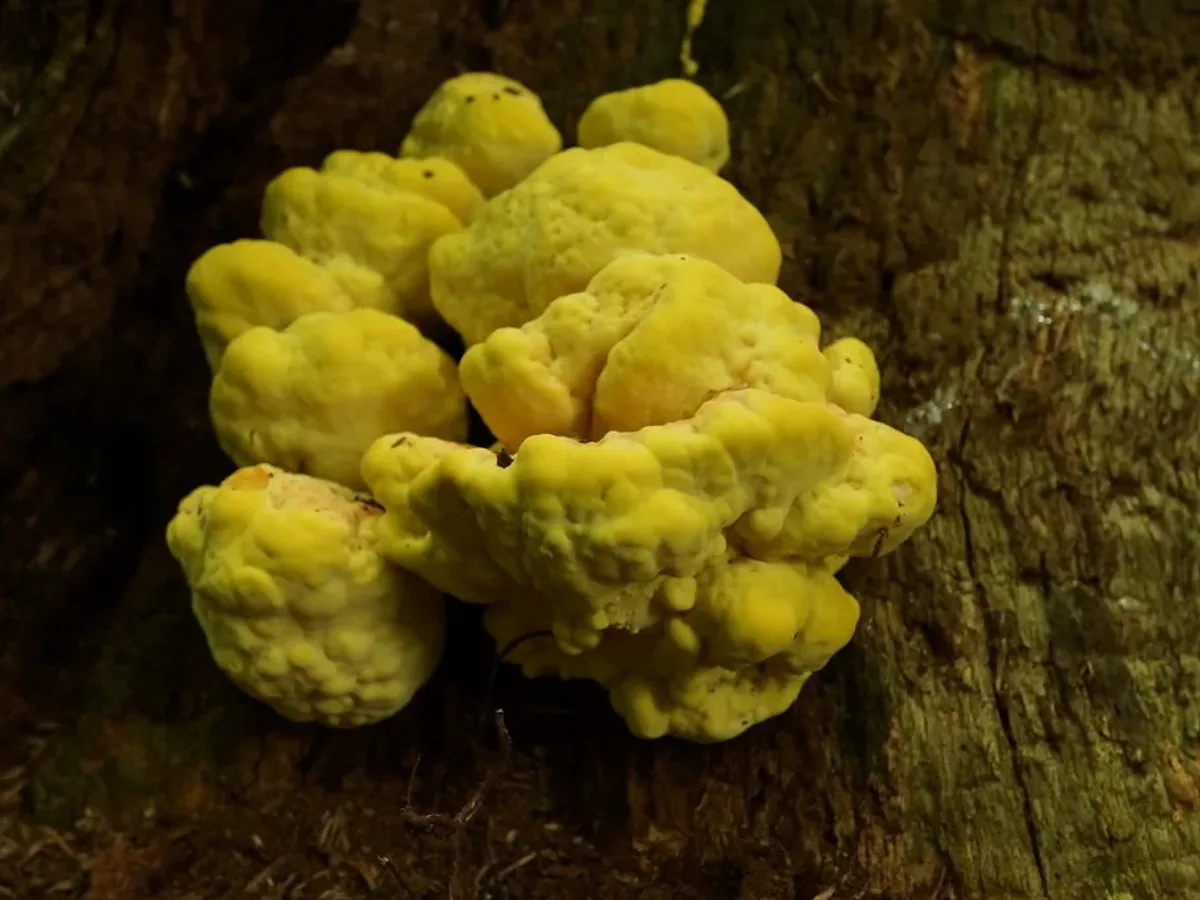 © Ephemeral Impressions (CC BY-SA 2.0)
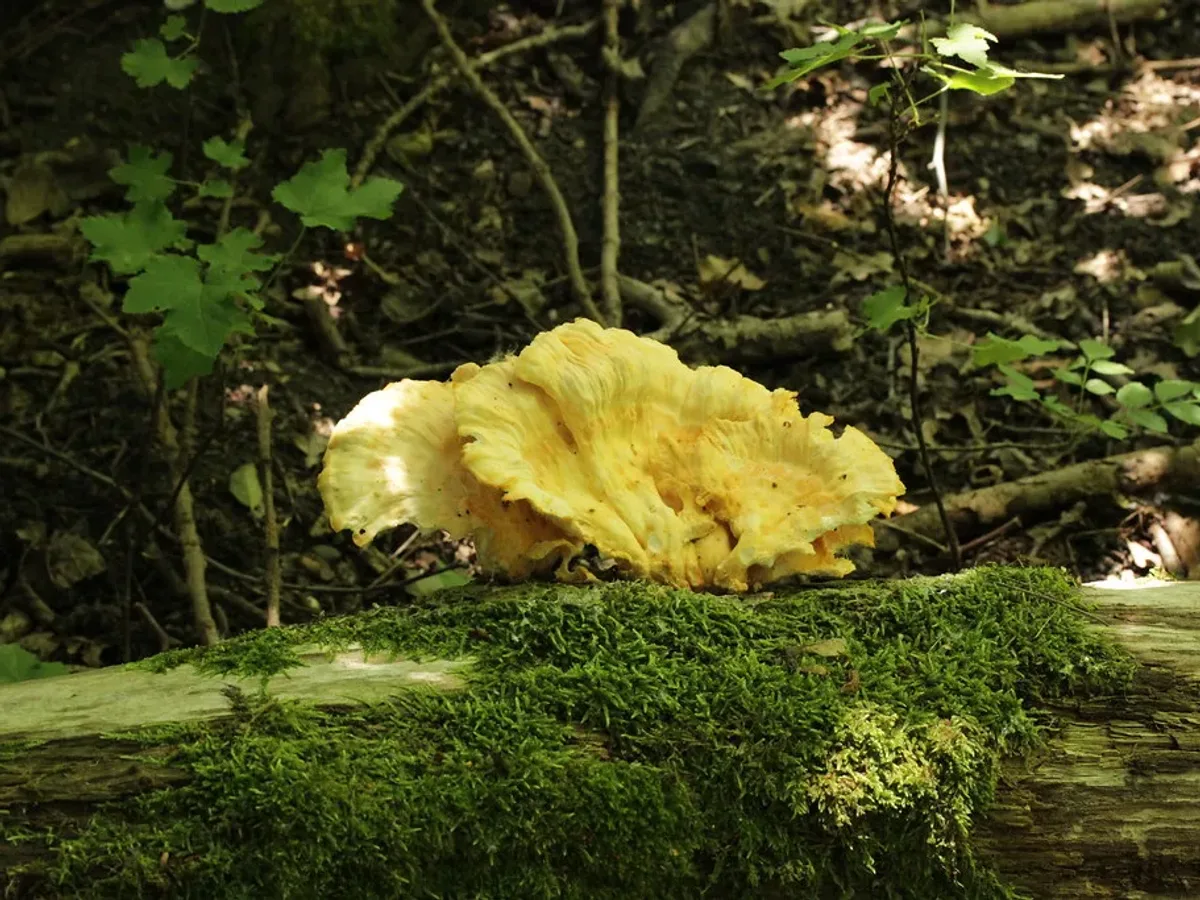 © Björn S... (CC BY-SA 2.0)
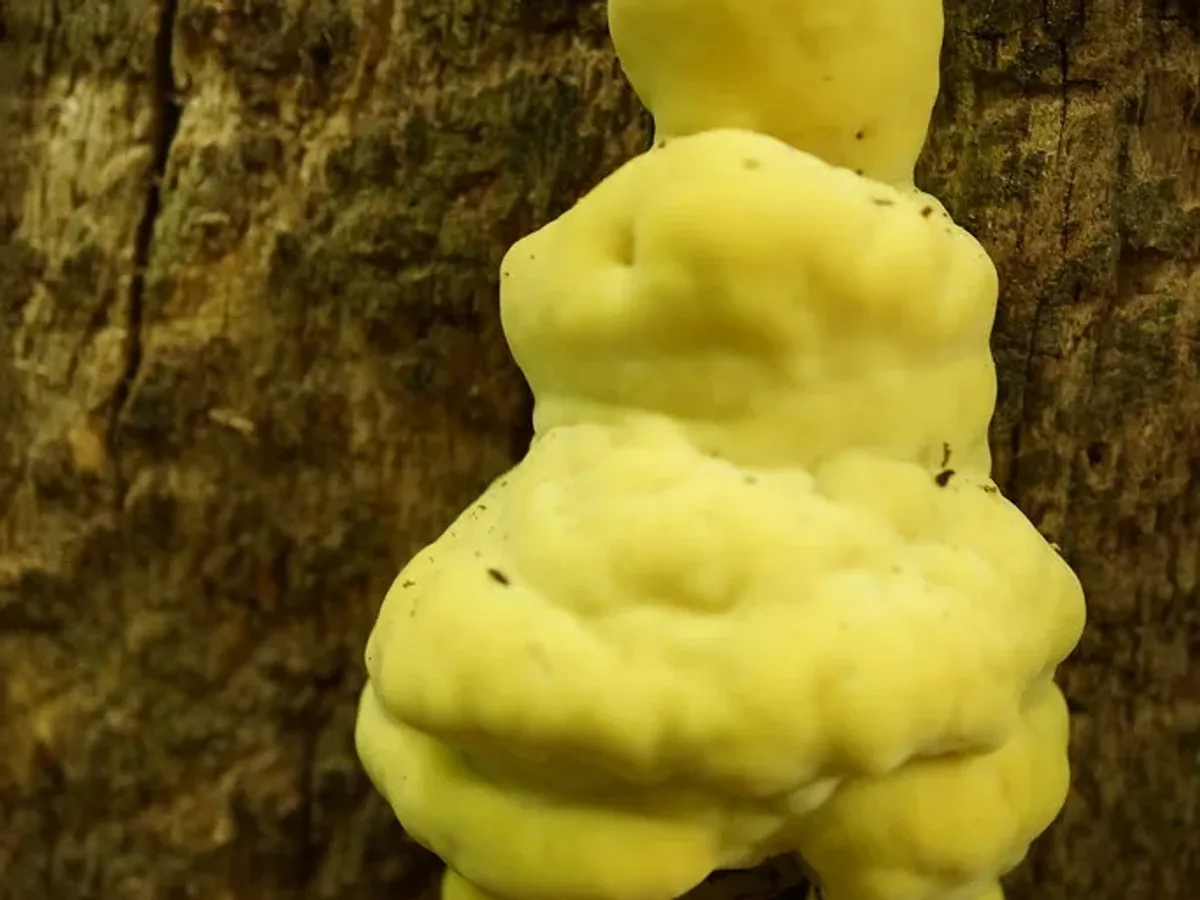 © Ephemeral Impressions (CC BY-SA 2.0)
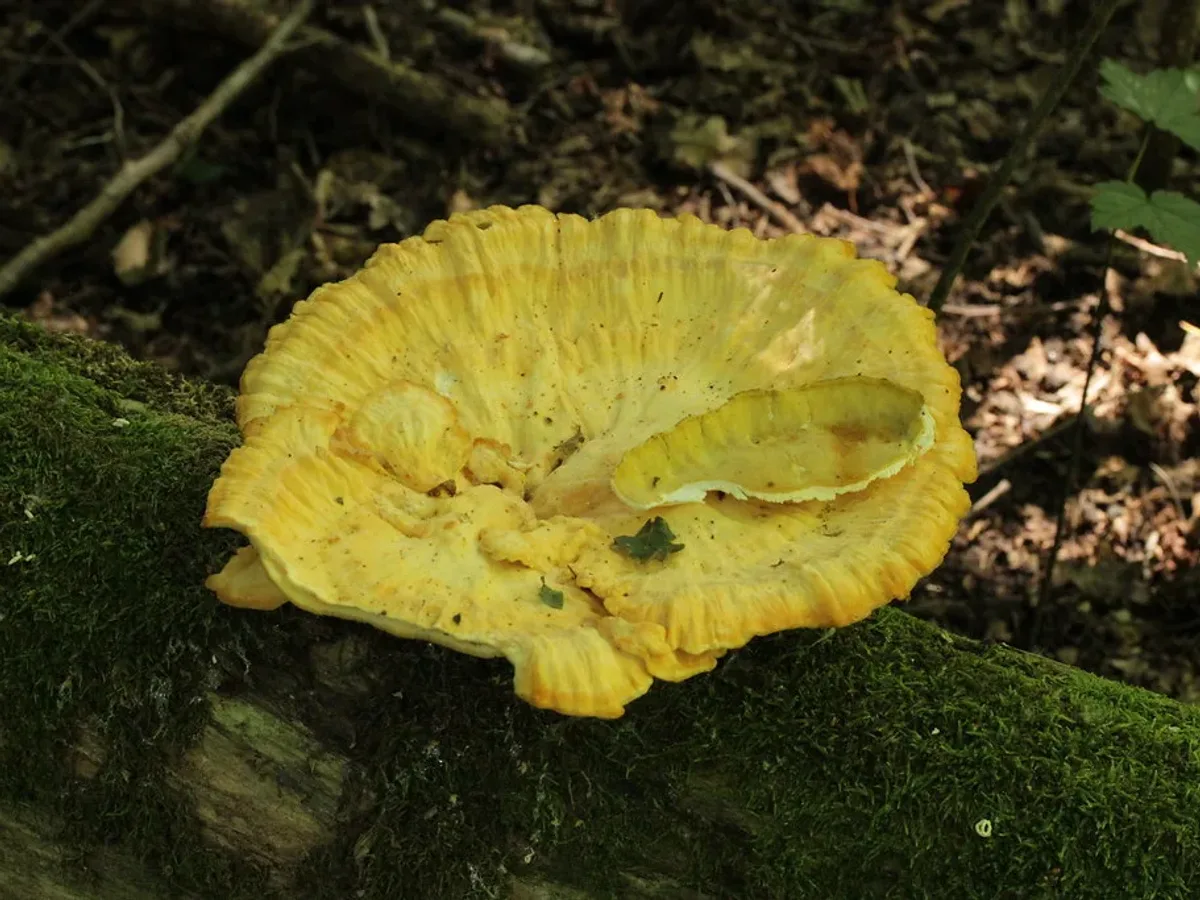 © Björn S... (CC BY-SA 2.0)
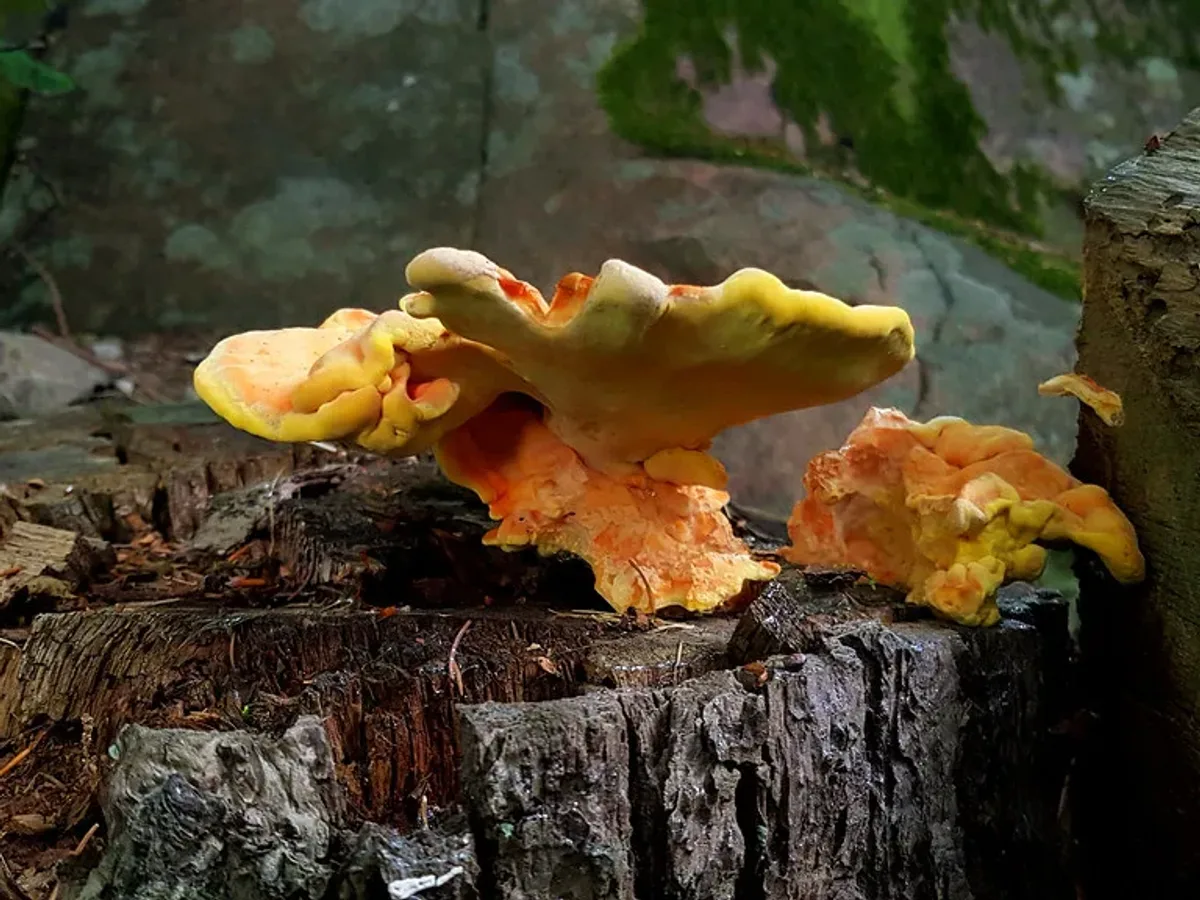 © blondinrikard (CC BY 2.0)
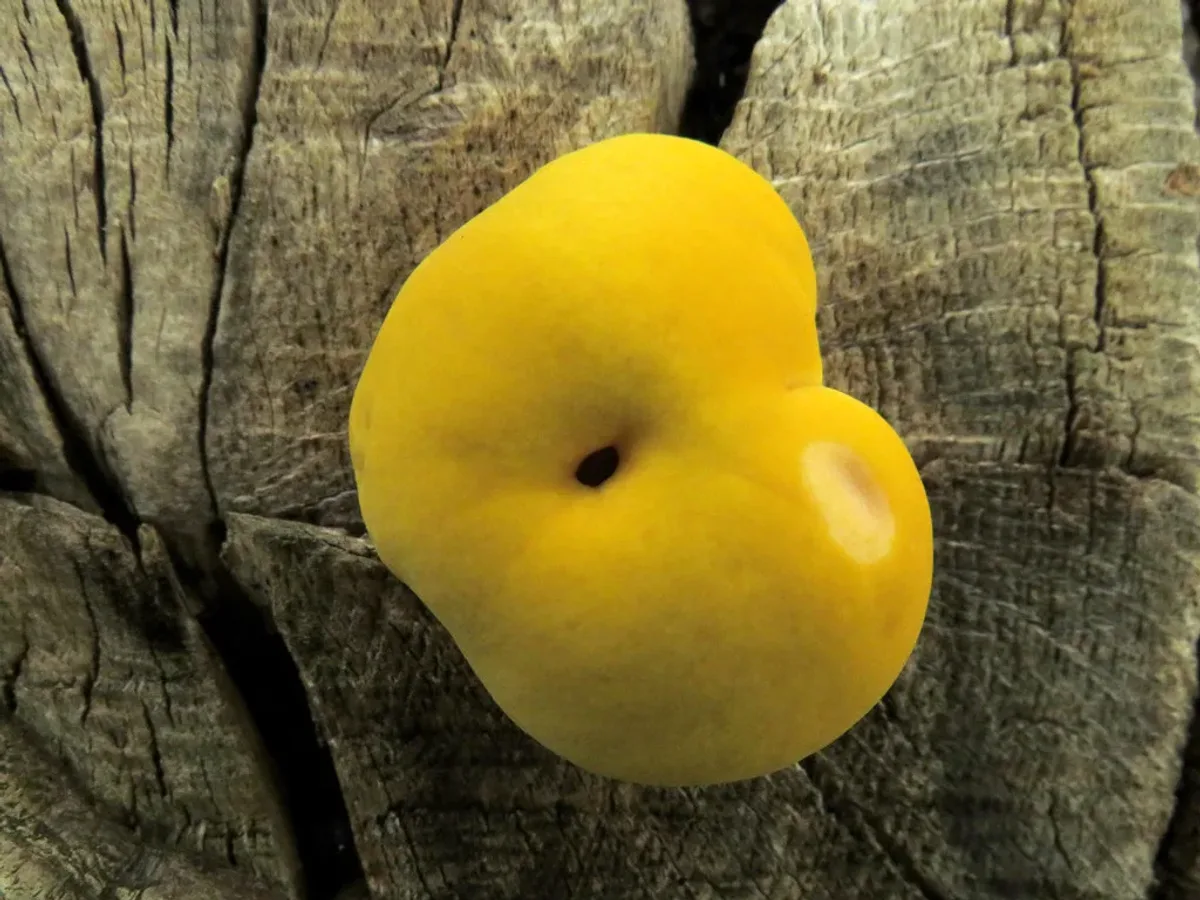 © blondinrikard (CC BY 2.0)
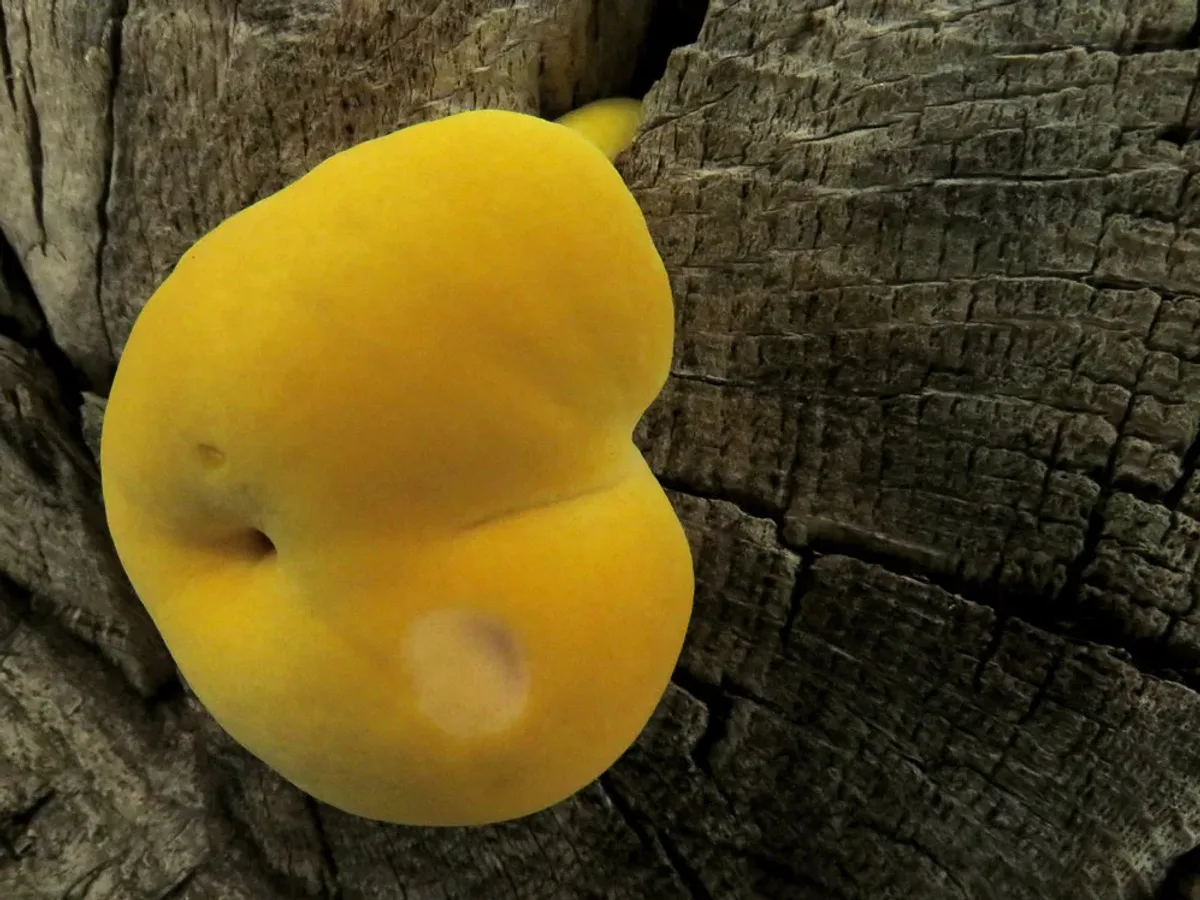 © blondinrikard (CC BY 2.0)© blumenbiene (CC BY 2.0)© Ephemeral Impressions (CC BY-SA 2.0)
Good to eat, once you have identified it with certainty and cooked it through.
How to recognise it
Chicken of the woods announces itself before you are close enough to read a label: a blaze of saturated orange and sulphur-yellow visible from thirty metres against grey bark. The fruiting body is a polypore - a bracket fungus that produces spores from a layer of tiny tubes (pores) rather than from radiating gills.
In Laetiporus sulphureus the brackets grow directly from the trunk or stump, tiling themselves in an overlapping rosette called an imbricate shelf. Individual shelves typically span 5-25 cm across, though old, undisturbed specimens can pile to 50 cm or wider and collectively weigh several kilograms.
Cap
The upper surface is smooth to finely velvety when young and moist, shading from vivid tangerine at the outer growing margin to a paler, more washed-out apricot toward the point of attachment.
Gills / Pores
The underside - the fertile spore-bearing surface - is covered in tiny circular pores packed at 3-4 per millimetre; in L. sulphureus these pores and the surrounding tissue are distinctly sulphur-yellow.
Flesh
Slice through a fresh bracket and the cut face is white to cream, firm and juicy, with a texture sometimes compared to raw chicken breast.
As the mushroom ages and the spores disperse, that moisture leaves: the flesh stiffens, the colours pale to a chalky buff or tan, and the whole structure eventually becomes hard and brittle enough to snap. That textural transition is your harvest window - press gently on the outer rim and take only what springs back a little, not what resists like wood.
The closely related L. cincinnatus produces a ground-level rosette at the base of oaks rather than on the trunk; it is distinguished by white rather than yellow pores and is generally considered the most tender of the North American Laetiporus.
Where & when it grows
Habitat
Laetiporus sulphureus is a wood-decay fungus with a broad palate for hardwood hosts, but it shows a pronounced preference for oaks. Across eastern North America - from maritime New England down through Appalachia and west to the prairie edge - you find it most reliably on white oak, red oak, and chestnut oak, though it colonises cherry, poplar, willow, and occasionally other broadleaves with enthusiasm.
It is almost always growing on the wood itself:
- on a living trunk in clear distress (a lightning scar, a cavity, a stub where a large branch tore away),
- on a recently dead standing snag,
- or erupting from a stump.
The mycelium is already inside, digesting the heartwood from within; what you see is the fungus's brief reproductive structure pushed outward through bark. Dead logs on the forest floor are a reliable host late in the season.
L. cincinnatus, which shares the region, grows at ground level from wood buried in the soil - the base of an oak root ball - and this habit makes it look at first glance like a terrestrial species, which it is not.
Note the host carefully: Laetiporus on conifers in the east (particularly hemlock, associated with L. huroniensis) is linked to a higher rate of gastrointestinal reactions, so the identity of the tree matters as much as the identity of the fungus. Black locust (Robinia pseudoacacia) and eucalyptus are also trees to avoid when selecting Laetiporus specimens for the table.
When
The fruiting window stretches from late spring through autumn, roughly May to October in eastern North America, but it is not a uniform bell curve - it has structure.
- A short, sharp spring flush can appear in the Midwest and mid-Atlantic in late May, triggered when lengthening warm days push soil temperatures past about 12 °C in the rooting zone of suitable hosts. This early crop is sometimes small and easy to miss.
- The main season opens in earnest in midsummer, with July and August typically the peak months for large, vigorous brackets in the Northeast and Midwest.
- A second, often generous wave can arrive in September and October as cooling nights slow growth on other species.
Because the mycelium is embedded in a persistent woody host, the fungus tends to return to the same tree each year - sometimes the same wound site - so a location noted in one season is worth revisiting the next.
The trigger is warmth combined with moisture: a warm spell following substantial rain (roughly 20 mm or more over a two-week period) tends to push the brackets out within seven to fourteen days. Dry spells suppress fruiting even on well-colonised hosts.
How it grows
Unlike most mushrooms familiar to foragers, Laetiporus sulphureus is not mycorrhizal - it does not trade carbohydrates with tree roots in a mutualistic partnership. It is a parasite and saprophyte, inserting its mycelium into wounded or compromised wood and digesting the structural cellulose and hemicellulose using a suite of oxidative enzymes, while leaving the lignin relatively intact.
The result is a brown rot: the wood interior turns brick-red, then chocolate-brown, and finally breaks into characteristic cuboidal blocks - the 'crumbly brown cheese' that field guides describe. This is distinct from white rot, where lignin is broken down along with the structural polymers and the wood bleaches pale and stringy.
The mycelium can persist inside a living tree for years, slowly honeycombing the heartwood while the tree continues to function through its outer sapwood. Only when conditions align - warmth, moisture, the right metabolic state of the colony - does the fungus invest energy in building reproductive brackets.
A bracket can grow several centimetres per day under optimal conditions, the pale growing margin visibly advancing on a warm, humid morning. Once spores are shed, the bracket is largely spent; the mycelium underneath is unchanged and will attempt to fruit again next year if the host remains.
The brown rot it produces ultimately hollows the host, and large bracket fungus colonies are often a sign that a tree is structurally compromised - a point worth noting if the tree is near a trail or structure.
Fruiting conditions
A wood-decay bracket fungus; fruiting follows warm, humid spells after rain on host hardwoods, recurring on the same tree year after year.
Look-alikes
Chicken of the woods is among the least dangerous mushrooms for a new forager to learn, specifically because its combination of features - bracket growth on wood, brilliant orange-yellow colour, pores rather than gills, and white flesh - is essentially unique among North American fungi, and there is no deadly species that closely matches it.
The most commonly cited look-alike is the jack-o'-lantern mushroom, Omphalotus illudens, which is poisonous and causes severe gastrointestinal illness. It is orange, it can grow at the base of trees, and it is conspicuous.
However, Omphalotus has distinct blade-like gills on its underside - not pores - and it produces individual cap-and-stem fruiting bodies that cluster at the base of hardwoods, not overlapping brackets. The underside check is definitive: run your finger along it and feel for pores (tiny holes, smooth surface) versus gills (sharp ridges radiating from a centre).
There is also the question of sibling species within the Laetiporus genus. L. huroniensis grows on conifers, especially hemlock, in the northeast; it looks nearly identical to L. sulphureus but the host tree distinguishes it. L. cincinnatus grows from the ground at oak root systems and has white pores instead of yellow. Both are edible in principle, but L. huroniensis on hemlock is associated with a higher rate of adverse reactions and is best avoided.
The key identification points to confirm before eating:
- bracket or shelf shape (not individual caps),
- pores on the underside (not gills),
- orange-yellow palette,
- white cut flesh,
- and a hardwood host (not hemlock, not conifer, not black locust).
Grows on hemlock and causes digestive upset more often than L. sulphureus.
Poisonous and orange, but has gills rather than pores.
In the kitchen
Picking & cleaning
Harvest timing is everything with chicken of the woods, and the difference between a delicious meal and a disappointing, tough mouthful comes down to selecting the right portion at the right moment.
The outer margin of each shelf - typically the outermost 3-5 cm - is where active growth is happening. This tissue is bright-coloured, moist, and yields to gentle pressure from your thumb: it dents slightly and springs back. This is what you want.
The inner portions closer to the attachment point age faster; they firm and dry first, and by the time you find the outer edge at its peak, the core may already be unpleasantly chewy or chalky.
Use a knife to cut the outer shelves free, leaving the older central tissue on the tree. There is no conservation reason to take the entire bracket - the mycelium will not be harmed, and you will have more palatable mushroom if you are selective.
Young specimens that have not yet spread their full width are often the best eating, though mature outer edges can still be excellent.
Inspect the cut surface: it should be white or cream, moist, and free of tunnelling. Insect larvae (primarily fly larvae) can penetrate even young specimens, but are usually concentrated toward the inner, older tissue, so selective picking reduces the problem. L. cincinnatus growing from ground-level root mats is generally less worm-damaged than trunk-growing L. sulphureus.
Clean the harvested tissue gently with a dry brush or barely damp cloth - do not soak it in water, as the already-moist flesh will waterlog and steam rather than sear in the pan.
Cooking
Chicken of the woods has earned genuine culinary affection, not just forager novelty, and the reason is texture: young, well-picked outer tissue is firm, slightly fibrous, and juicy in a way that holds up to high heat without disintegrating. It shreds along grain lines in a way that genuinely evokes cooked chicken breast, which made the common name inevitable.
The flavour is mild - faintly savoury, slightly lemony in fresh specimens, with no bitter or earthy aftertaste if the tissue was harvested young. Thorough cooking is mandatory; the centre of each piece should be cooked through, not just seared outside.
The most straightforward preparation is to slice the brackets about 1 cm thick and sear them in a hot dry or lightly oiled pan until golden on both sides and cooked through to the centre, then finish with butter, garlic, and fresh herbs. The texture after this treatment is close enough to cooked chicken that it genuinely works as a meat stand-in in tacos, sandwiches, and stir-fries.
It also holds well in curries and stews, where the longer cook time further tenderises the tissue without turning it to mush. Breadcrumbing and deep-frying is a popular approach that showcases the firm texture.
Do not overcrowd the pan: Laetiporus releases water as it cooks, and crowding causes it to steam rather than sear, yielding a pale, limp result instead of the golden, slightly crisp exterior that makes it so good.
Fresh is always better than stored, but cleaned pieces can be blanched for two minutes and frozen successfully; dried chicken of the woods rehydrates poorly and is not recommended. L. cincinnatus is widely considered the premium table form - more tender, cleaner-tasting, and generally less tunnelled by insects.
Good to know
Laetiporus sulphureus must always be thoroughly cooked before eating - raw or undercooked chicken of the woods causes gastrointestinal upset reliably.
Even with proper cooking, a meaningful minority of people - estimates range from around 5 to 15 percent - experience adverse reactions that can include swollen lips, nausea, vomiting, or dizziness. The mechanism is not fully understood and does not appear to be a classic IgE-mediated allergy; it may involve bioactive compounds or residual lectins that cooking partially denatures.
The practical implication is that even experienced foragers who have eaten the mushroom before should not overindulge on a first meal of a new season's crop or on mushroom from an unfamiliar host tree. A conservative first serving - two or three bites, wait 24 hours - is reasonable when trying any Laetiporus specimen for the first time.
Reactions from Laetiporus on hemlock (L. huroniensis) appear to be more frequent and are the main reason host-tree identification matters. Specimens growing on black locust (Robinia pseudoacacia), eucalyptus, or conifers should not be eaten.
There are no recorded fatalities attributed to Laetiporus sulphureus, and the species does not contain amatoxins or other life-threatening compounds - but 'no deadly toxin' is not the same as 'no risk', and individual sensitivity varies enough that caution and small initial portions are always warranted.
A reference guide - never an edibility guarantee. When in doubt, leave it out.