Eastern jack-o'-lantern
Omphalotus illudenssyn. Omphalotus olearius
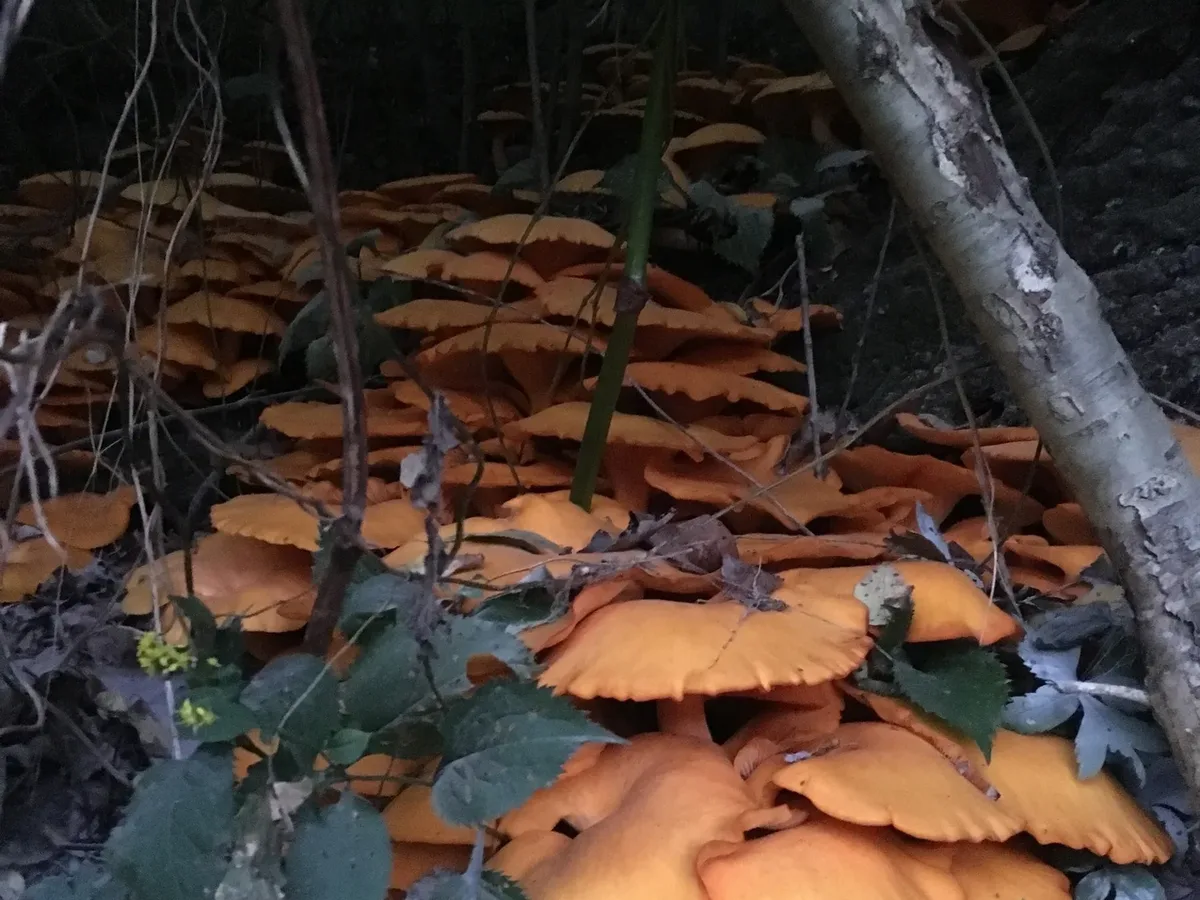 © Regina (Gina) Hart (CC BY-SA 4.0)
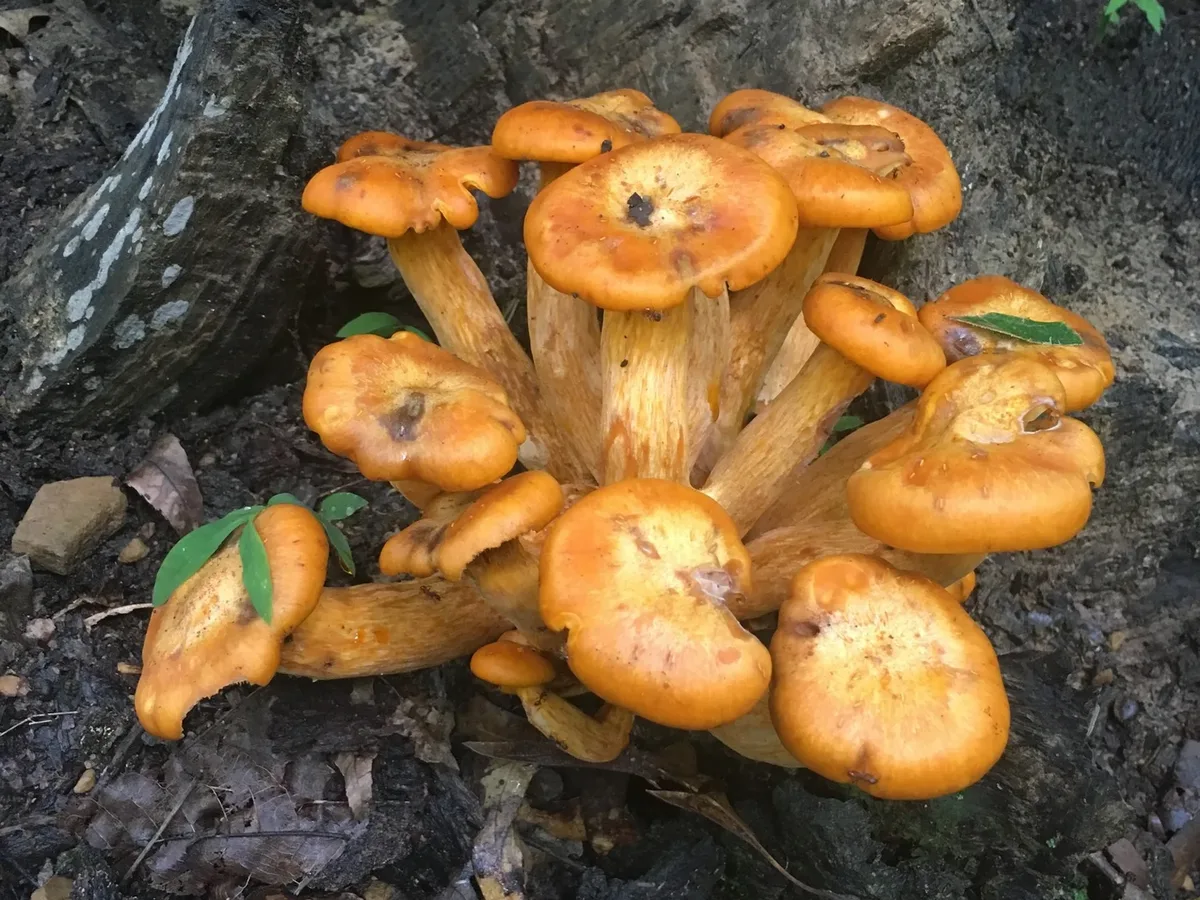 © roundabout1812 (CC BY 4.0)
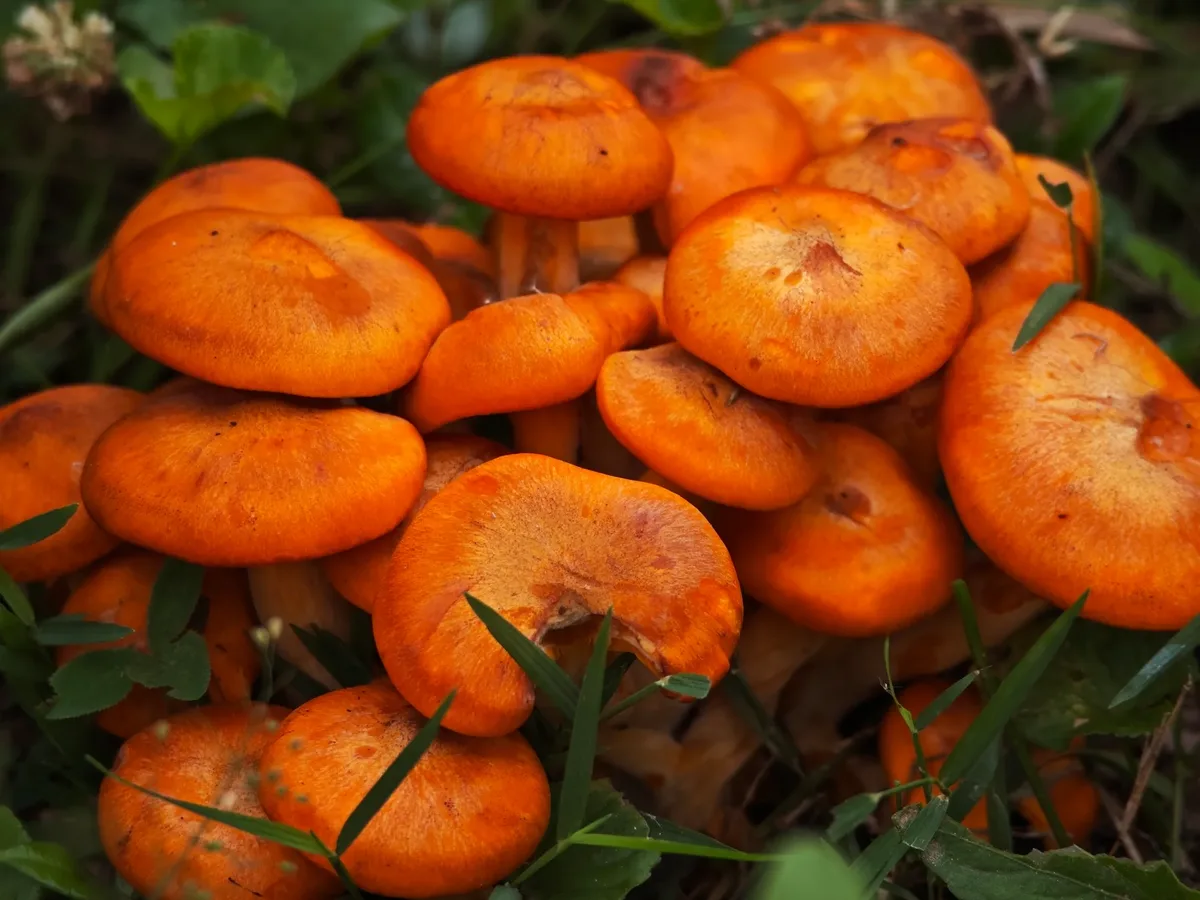 © werealljustwalkingeachotherhome (CC BY)
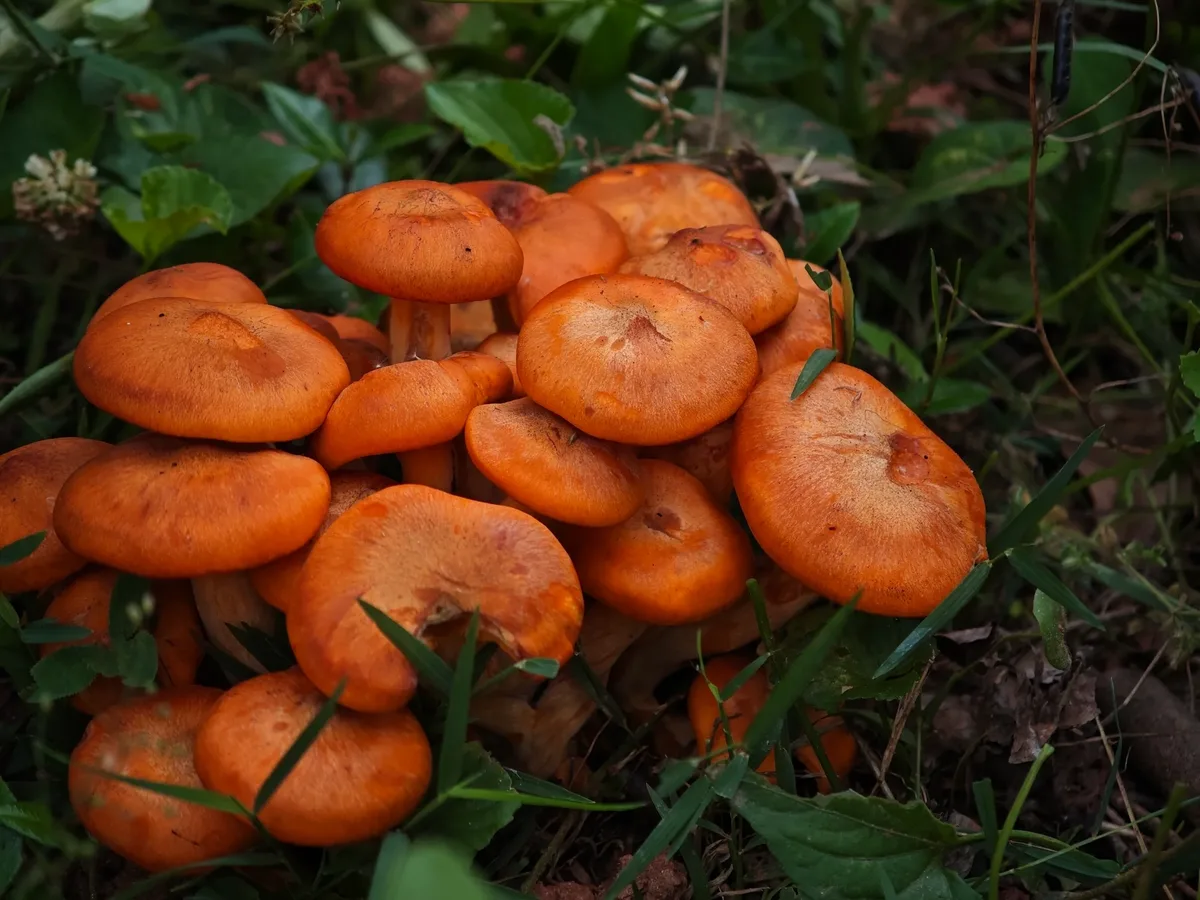 © werealljustwalkingeachotherhome (CC BY)
 © werealljustwalkingeachotherhome (CC BY)
 © Summit Metro Parks (CC BY)
 © kirk gardner (CC BY)
 Andrea Kautz (CC0)
 Andrea Kautz (CC0)
 Andrea Kautz (CC0)
 Sam Allon (CC0)
 forager423 (CC0)
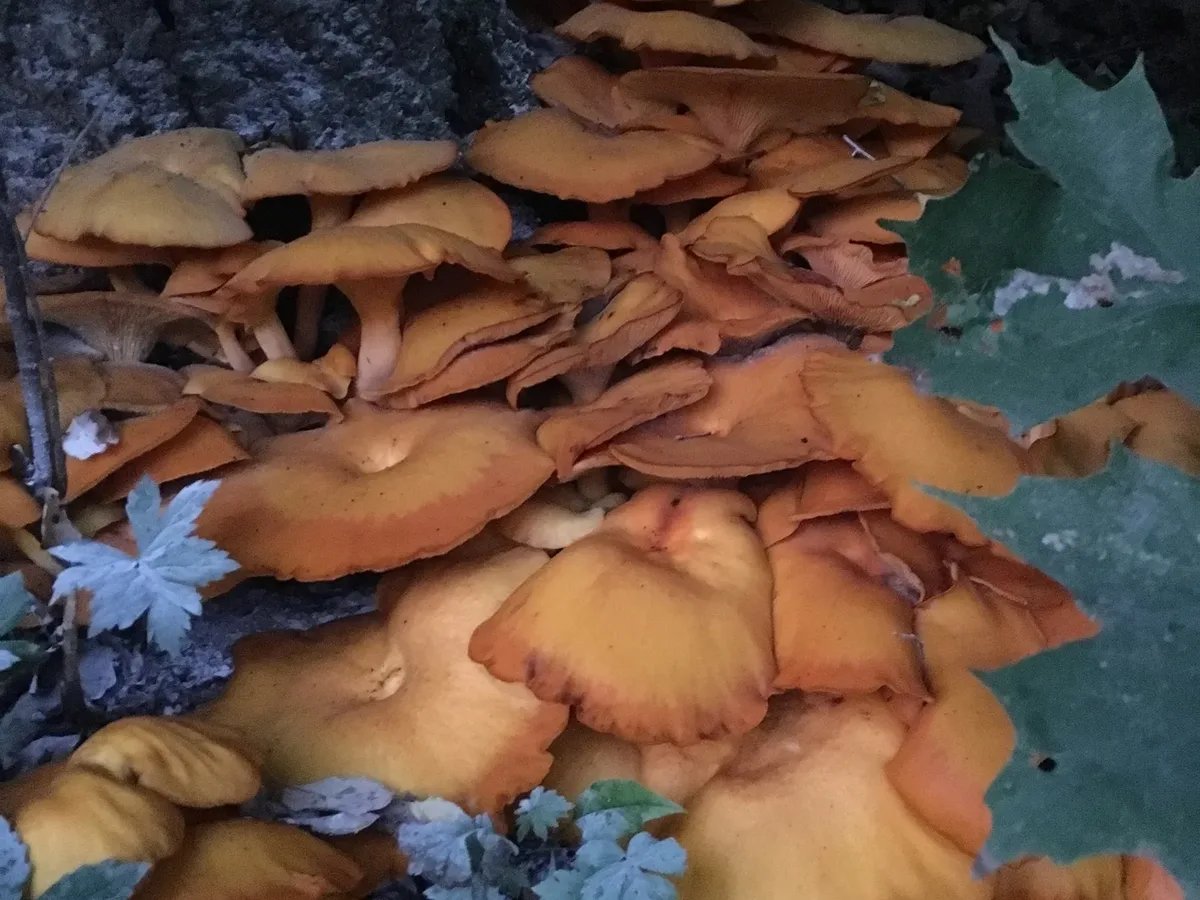 © Regina (Gina) Hart (CC BY-SA 4.0)© Regina (Gina) Hart (CC BY-SA 4.0)© roundabout1812 (CC BY 4.0)
Edible only with the right preparation - or safe for some people but not others. Learn the caveats first.
How to recognise it
Omphalotus illudens announces itself loudly.
Cap
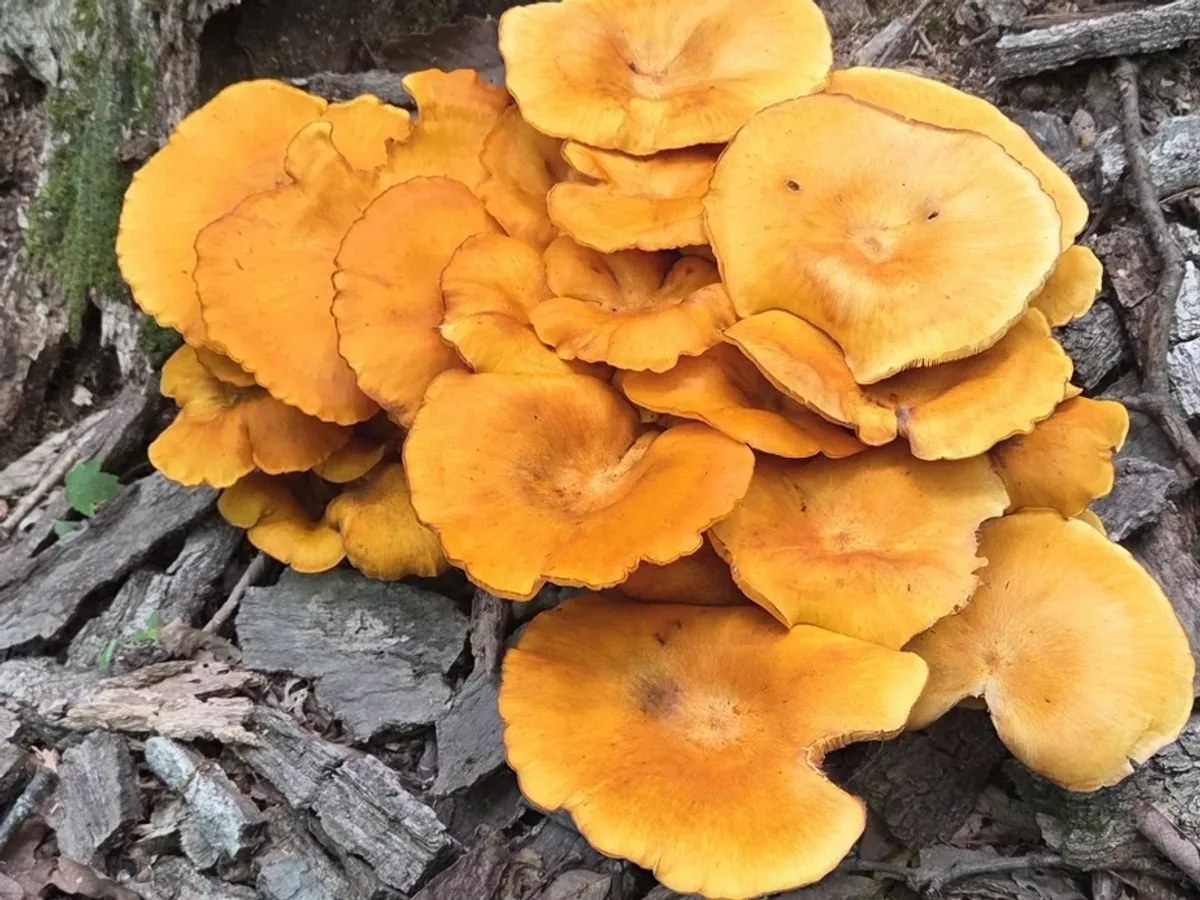
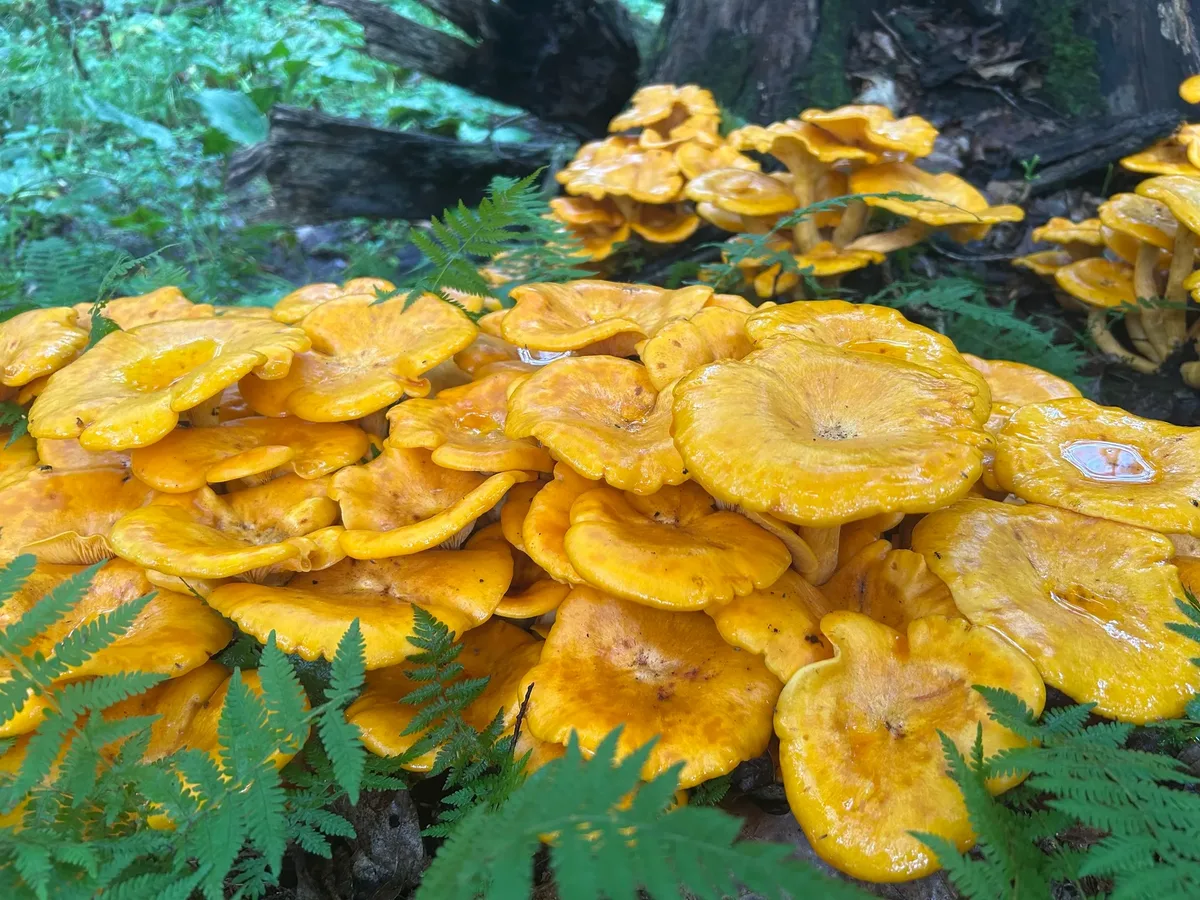
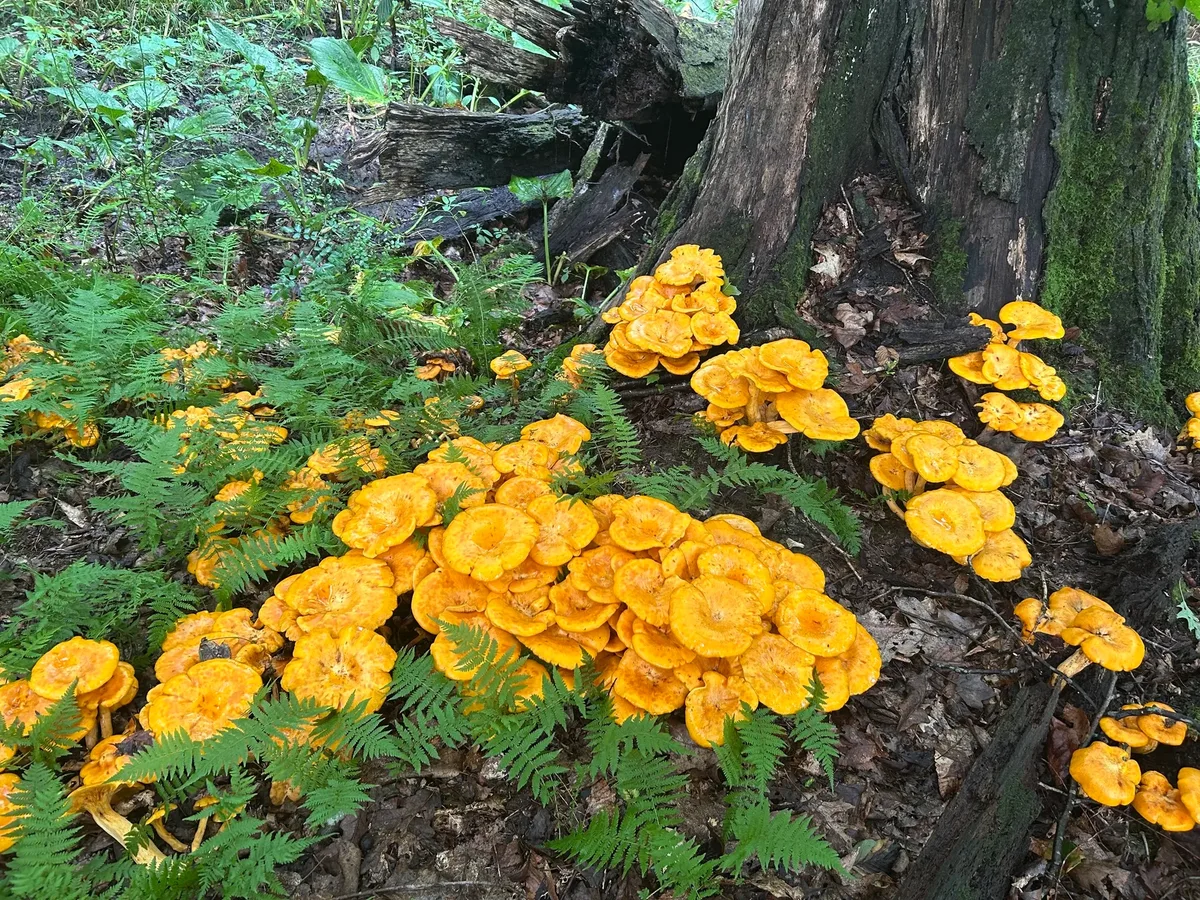
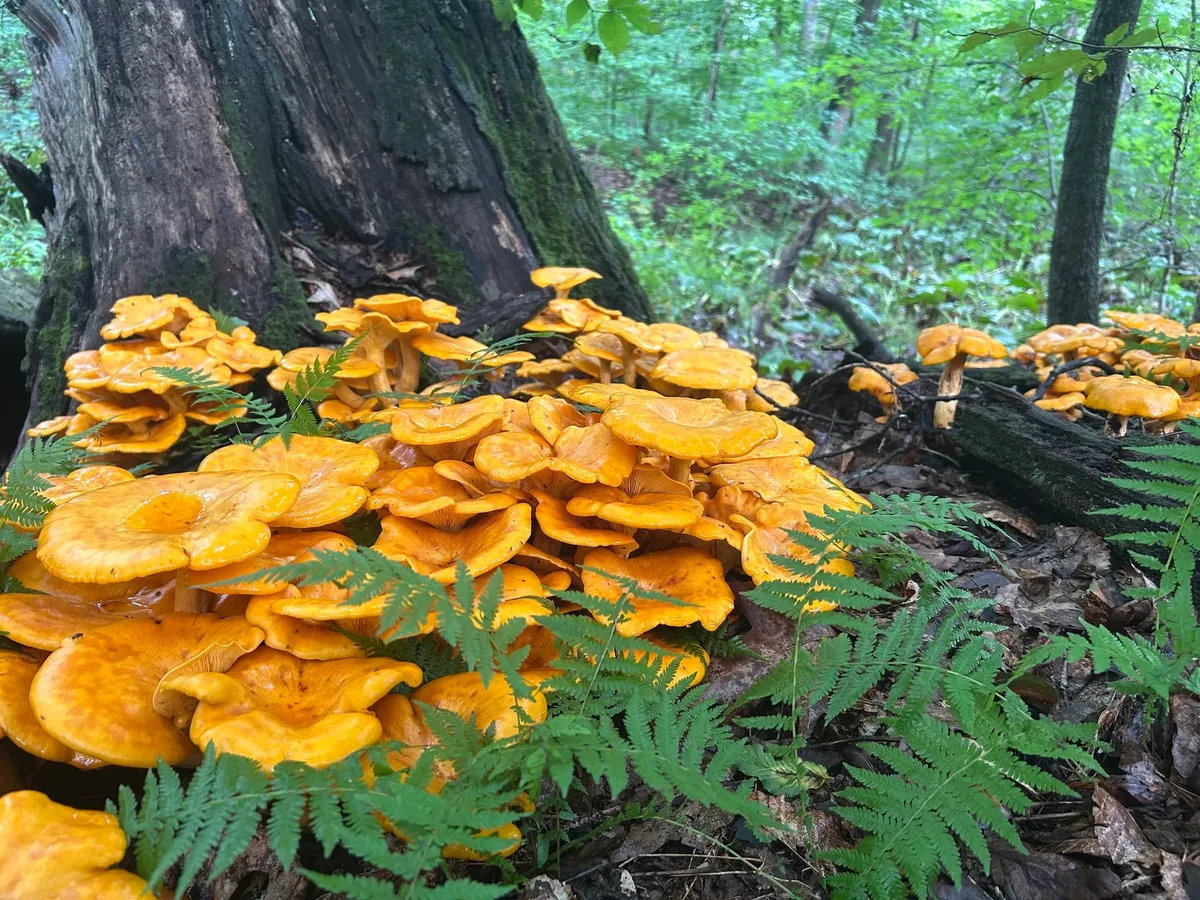
Caps run a deep, saturated orange to yellow-orange, 5-15 cm across, with individual fruitbodies packed tightly into clusters that can collectively weigh several kilograms.
Young caps are broadly convex with inrolled margins; as they mature the center depresses until the cap becomes a shallow funnel, sometimes almost vase-shaped.
The surface is smooth and dry, occasionally developing a silky sheen in humid conditions. The cap surface, like many saprotrophic wood fungi, shows concentric color variation when wet versus dry.
Gills
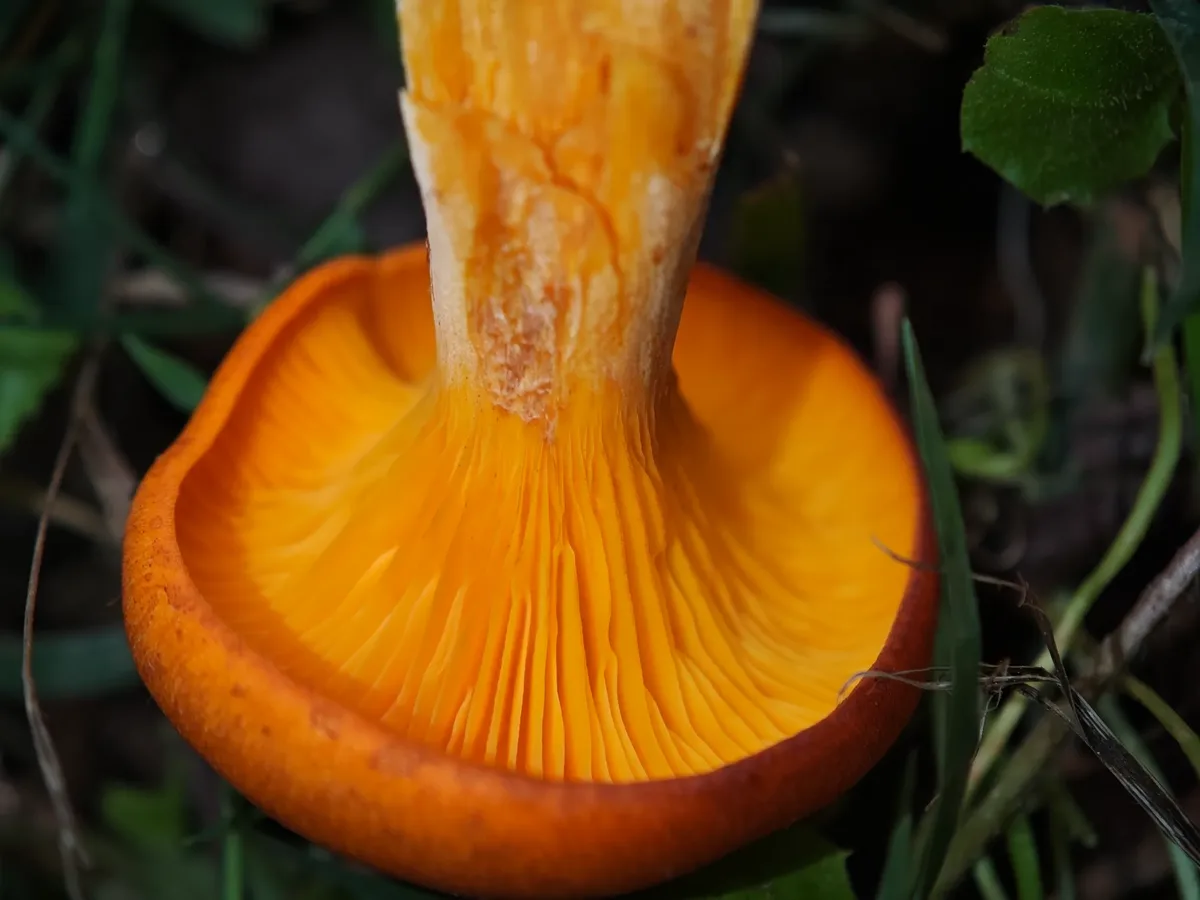
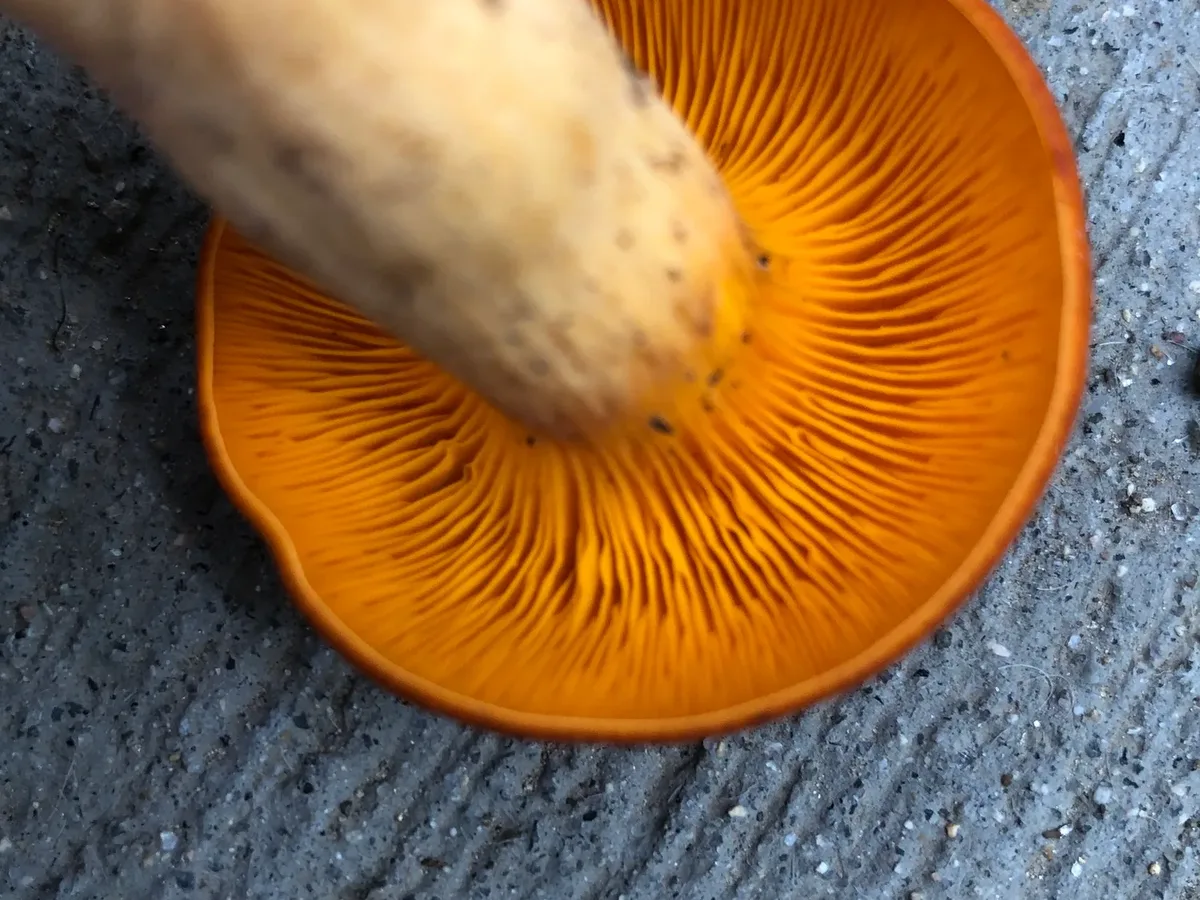
Gills are the single most diagnostic feature - they are true, blade-like gills with sharp edges, close together, and strongly decurrent, running down the stem in parallel lines.
They do not fork, do not taper to blunt ridges, and do not anastomose: this is the opposite of chanterelle anatomy.
The most remarkable single trait: fresh gills emit a cold, faint green bioluminescence visible only in complete darkness after several minutes of dark-adaptation. The glow fades as the fruitbody dries or ages. This is a biological fact confirmed in laboratory conditions, not folklore.
Flesh
Cut any stem and the flesh throughout - cap, gills, stipe - is uniformly orange, never white or pallid. Spore print is cream to pale yellow-white.
Stem
Stem 5-20 cm tall, 1-2 cm thick, tapering downward, often curved and eccentric (off-center).
Why it's dangerous
Poisonous - not lethal for healthy adults, but severe enough to require emergency-room management in a significant proportion of reported cases.
Cooking provides no protection: illudin S and M are heat-stable.
The species is one of the most common causes of documented mushroom poisoning in the northeastern United States. The primary risk pathway is misidentification as chanterelles, a mistake that occurs regularly even among foragers with moderate experience.
There is no antidote. Any suspected ingestion should be reported to Poison Control immediately; preserve a sample of the consumed mushroom or a photograph if possible to assist identification.
Do not underestimate severity on the basis of a single small bite - individual sensitivity to illudins varies.
Toxin
The primary toxins are illudin S and illudin M, cytotoxic sesquiterpene compounds produced by the mycelium and concentrated in the fruitbody tissue.
Illudins act by alkylating DNA and inhibiting nucleotide excision repair at low concentrations, causing direct cellular damage in gastrointestinal epithelium after ingestion.
The mechanism differs from amatoxins (which inhibit RNA polymerase II) and from muscarine (which acts on acetylcholine receptors): illudin toxicity is primarily a direct cytotoxic effect on rapidly dividing mucosal cells.
Muscarine may also be present at low levels, though the gastrointestinal syndrome in O. illudens poisonings is not consistently cholinergic in character, suggesting illudin S/M are the dominant agents.
Illudins are water-soluble and heat-stable; neither leaching in boiling water nor frying at high temperature reliably removes or inactivates them.
The same illudin compounds have been studied in oncology research as potential cytotoxic agents (irofulven is a synthetic analogue), underscoring their genuine biochemical potency.
Symptoms
Symptoms begin within 20 minutes to 3 hours of ingestion - characteristically faster than amatoxin poisoning, which has a delayed 6-24-hour onset.
The presentation is dominated by gastrointestinal effects:
- severe abdominal cramping
- nausea
- profuse vomiting
- watery diarrhea
Dehydration can be clinically significant, particularly with heavy ingestion, in young children, or in adults with existing conditions. Headache and dizziness are commonly reported alongside the GI syndrome.
Symptoms typically resolve within 24-48 hours without organ involvement. There is no hepatotoxic or nephrotoxic phase; liver and kidney function is not expected to be compromised in otherwise healthy adults at typical ingestion amounts.
Emergency-room visits are common due to symptom severity and the inability of patients to retain fluids. Treatment is supportive: fluid and electrolyte replacement.
If there is any uncertainty about the species consumed, early contact with a Poison Control Center (1-800-222-1222 in the US) is the correct first step.
Staying safe
Omphalotus illudens is poisonous and must not be eaten.
It is one of the most frequent causes of mushroom poisoning in the northeastern United States, consistently appearing in NAMA (North American Mycological Association) annual poisoning case reports.
The poisoning is gastrointestinal and typically severe, but not life-threatening for otherwise healthy adults. Children, the elderly, and individuals with hepatic or renal conditions carry greater risk.
Cooking does not neutralize the toxins - boiling, sautéing, and drying are ineffective.
The three-part field test is the reliable separation from chanterelles:
- 1cluster-on-wood
- 2true sharp decurrent gills
- 3orange flesh throughout
Spore print (cream, not white) and bioluminescence are secondary confirmatory characters.
Never eat an orange gilled mushroom unless it has been positively identified as a chanterelle by someone experienced - orange color alone is not edibility evidence.
Where & when it grows
Habitat
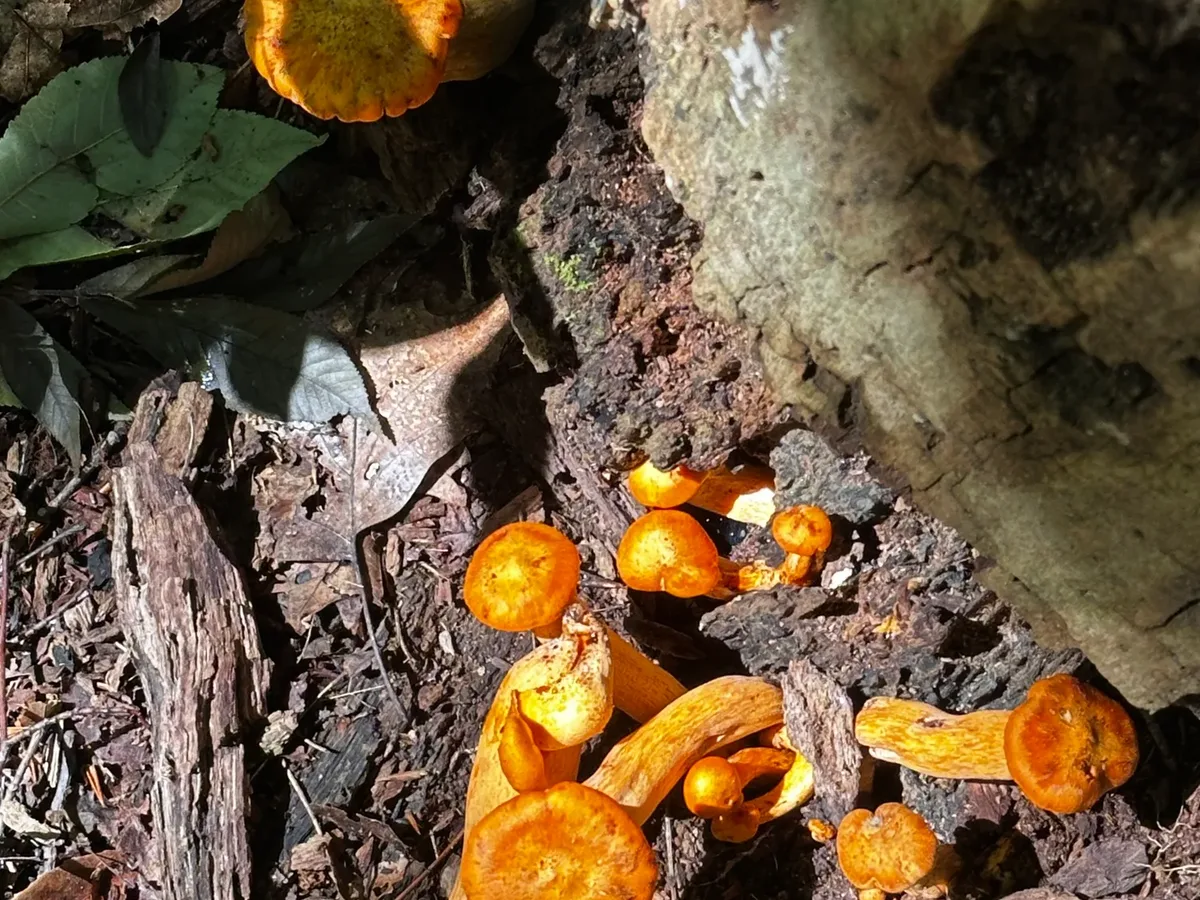
Eastern jack-o'-lantern is a strict wood-decaying saprophyte with a particular affinity for oaks (Quercus spp.), though it also uses other hardwoods including American elm, beech, tulip poplar, and sweetgum.
It decays the heartwood and dead sapwood of large-diameter logs, stumps, and buried root systems - the fungal mycelium threads through lignified tissue, breaking down complex wood polymers.
A critical field observation: the substrate is often entirely underground. A spectacular cluster erupting from apparently bare soil in an oak forest is almost always rooted to a buried stump or large root 10-60 cm below the surface. This creates genuine confusion in the field, since foragers expect wood-fruiting fungi to show visible wood.
Range covers eastern North America from the Gulf states north through New England and southern Canada, with highest abundance in the Appalachian hardwood belt and the oak-dominated forests of the mid-Atlantic.
It is not a forest-edge species; mature mesic deciduous forest - the kind with substantial litter depth and large-diameter dead wood - provides the ideal substrate and microclimate.
When
Fruiting runs June through November across the eastern range, with the peak flush concentrated July through October.
The earliest summer flushes tend to follow the first sustained warm rains of July in the southern Appalachians; in the mid-Atlantic and New England the peak is August-September.
Fruiting is driven by soil temperature (optimal 12-24 °C at rooting depth) combined with adequate moisture - a minimum of roughly 20 mm of rain in the preceding 14 days is associated with productive flushes, with a 5-14-day lag between rain and emergence.
Unlike many ectomycorrhizal species that flush in narrow autumn windows, O. illudens can produce multiple flushes from the same stump over several weeks if conditions remain favorable.
Clusters on a given substrate may return year after year as the mycelium continues to colonize adjacent root tissue, so a stump that produces a cluster in September 2024 is a reliable candidate in 2025 and 2026. The mycelium is perennial, overwintering in the wood and remaining dormant through dry or cold periods.
How it grows
Omphalotus illudens is a white-rot saprotrophic fungus: its mycelium secretes lignin-degrading enzymes - laccases and peroxidases - that selectively break down the lignin matrix of hardwood cell walls, leaving cellulose behind and producing the characteristic pale, stringy decay.
The fruitbodies emerge in discrete, tightly fused clusters called caespitose or gregarious clusters; individuals within a cluster share basal tissue and arise from the same mycelial mat. A large stump can produce clusters of 20-40 caps simultaneously.
Emergence follows a pattern familiar in fleshy fungi: primordial pins form within the wood at or just below the surface, swell rapidly as cells take on water through the interconnected mycelial network, and expand fully within 2-5 days of first visibility.
Growth is driven almost entirely by turgor expansion of pre-formed cells, not new cell division - the mycelium has already built the fruitbody architecture; rain simply inflates it.
The mycelium can persist in a single large-diameter oak stump for decades, fruiting annually for the entire period of heartwood decay. During drought the vegetative mycelium survives in the wood, resuming enzyme secretion and reproductive growth when moisture returns.
Fruiting conditions
Wood-decaying saprophyte fruiting in warm summer-to-autumn conditions following rain; conservative standard mycology estimate.
Look-alikes
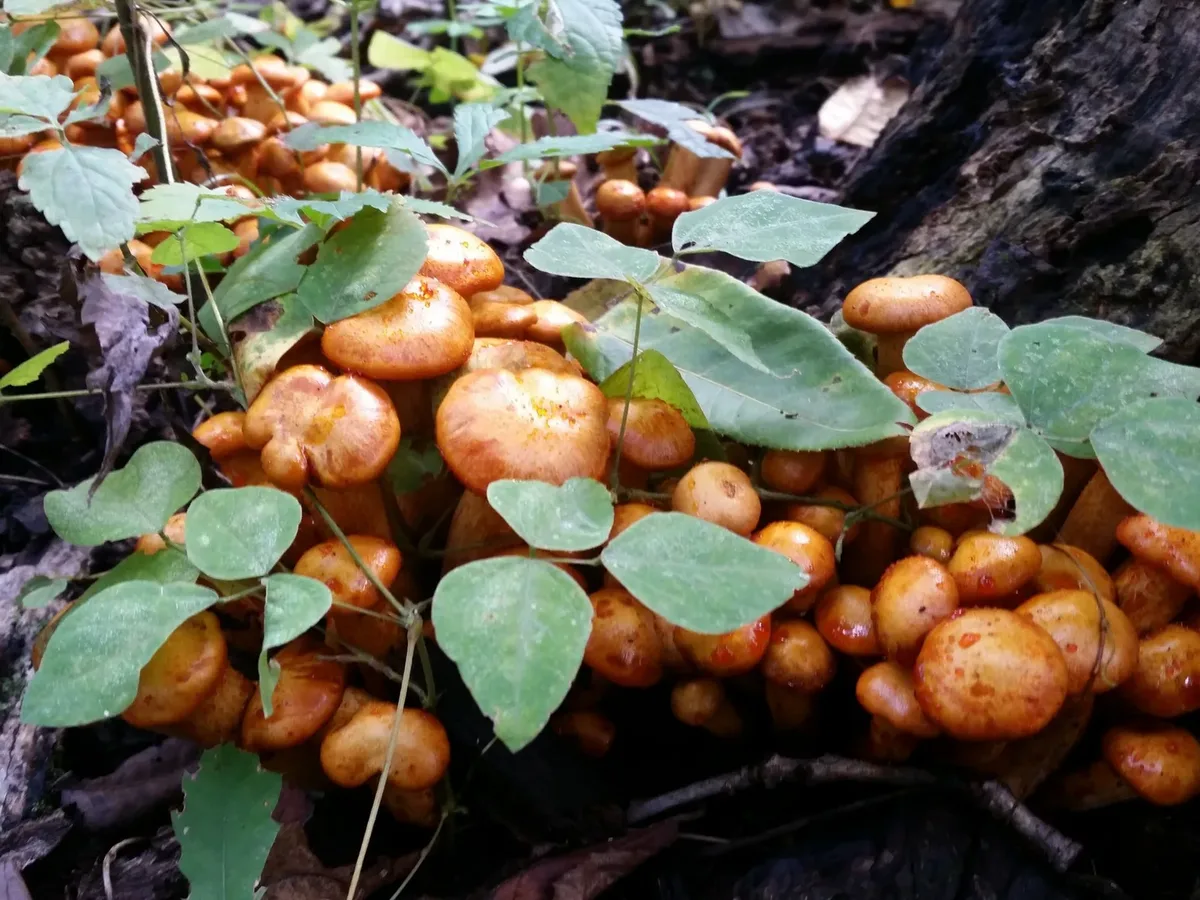
The principal dangerous confusion is with edible chanterelles, particularly smooth chanterelle (Cantharellus lateritius) and golden chanterelle (Cantharellus cibarius). Both share orange-yellow coloration and are abundant in eastern hardwood forests in the same months.
The separating characters are absolute:
- chanterelles have blunt, forking, ridge-like folds on the cap underside - not true sharp gills
- chanterelles almost always grow singly or in scattered individuals from the soil, not in fused clusters
- chanterelle flesh is white to pale yellow throughout the stem; jack-o'-lantern flesh is uniformly orange
- chanterelles fruit from the ground, not from wood or buried wood
Maitake (Grifola frondosa) is occasionally confused; it forms rosettes of grey-brown fronds without distinct gills and is not orange.
Chicken of the woods (Laetiporus sulphureus) is a pore-bearing bracket fungus without gills and typically yellow-and-orange with a shelf architecture.
No lookalike in this group is deadly - the edible species (chanterelles) are the ones at risk of being displaced by a jack-o'-lantern misidentification, causing poisoning rather than the reverse.
Sometimes confused; chicken of the woods is a bracket/shelf fungus on wood without true decurrent gills.
Chanterelles have blunt ridges/folds (not true gills), grow singly on the ground (not in clusters on wood) and have a paler inner stem.
Sometimes confused; maitake forms a rosette of grey-brown fronds, not orange gilled caps.
Chanterelles have blunt ridges/folds (not true gills), grow singly on the ground (not in clusters on wood) and have a paler inner stem.
A reference guide - never an edibility guarantee. When in doubt, leave it out.