Smooth chanterelle
Cantharellus lateritiussyn. Cantharellus cibarius var. floridulus, Cantharellus odoratus, Craterellus cantharellus, Cantharellus floridulus
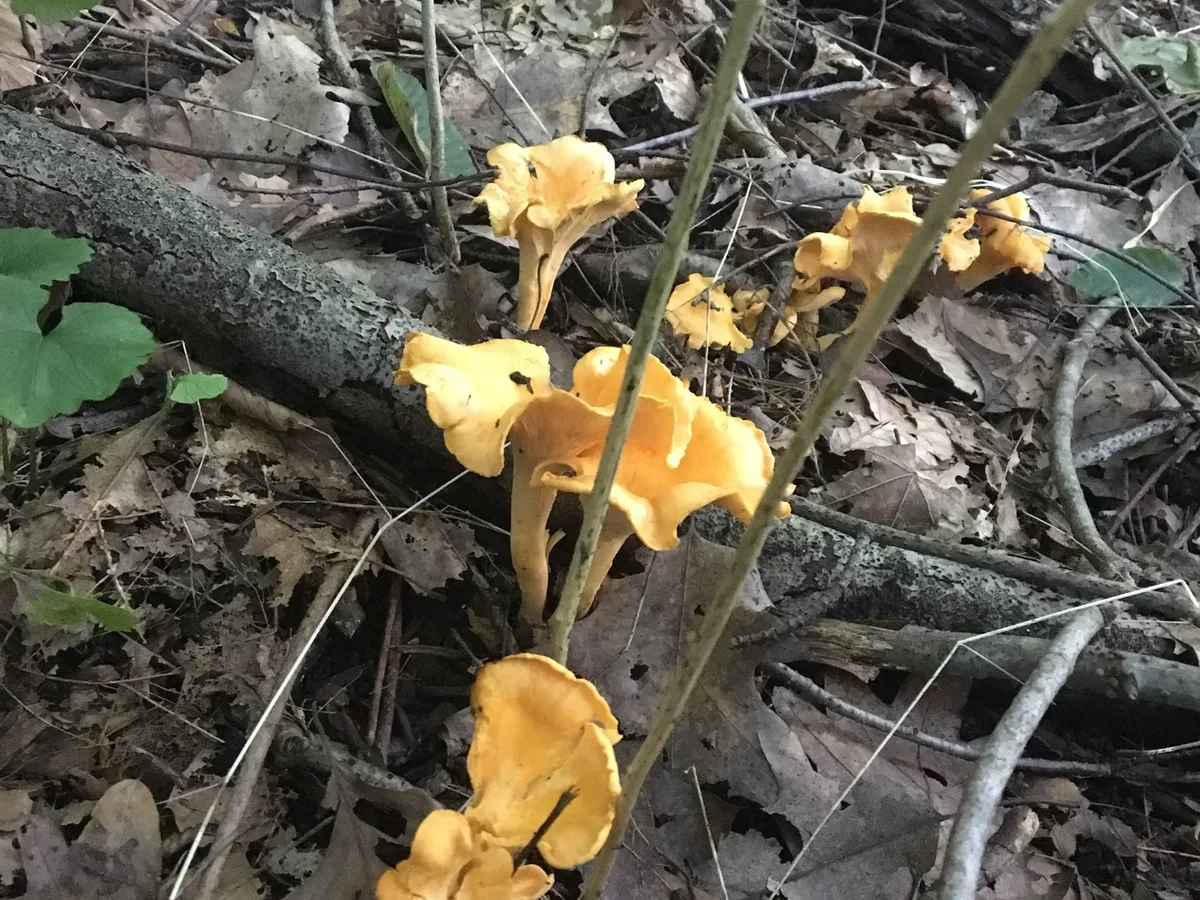 Elspeth Pierce (CC0)
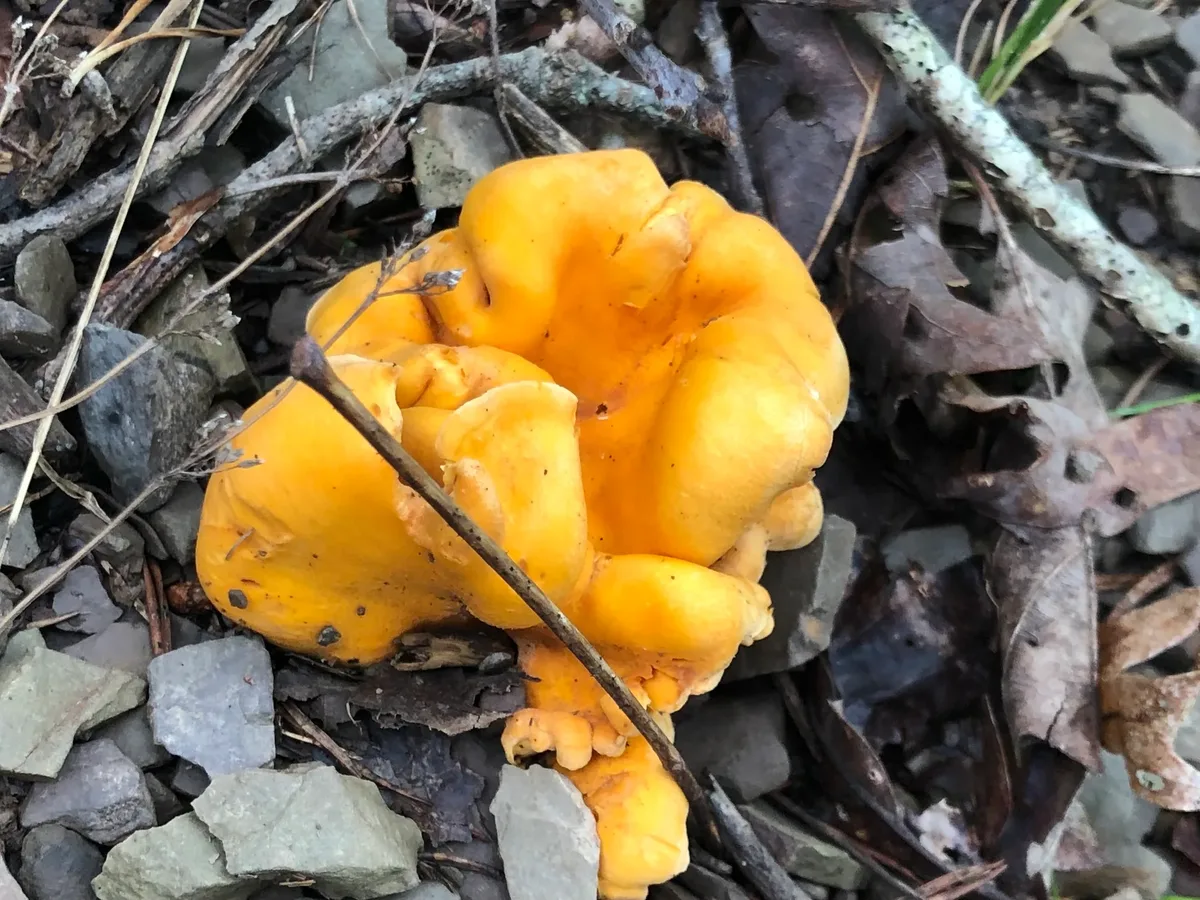 © Ryan Kurtz (CC BY 4.0)
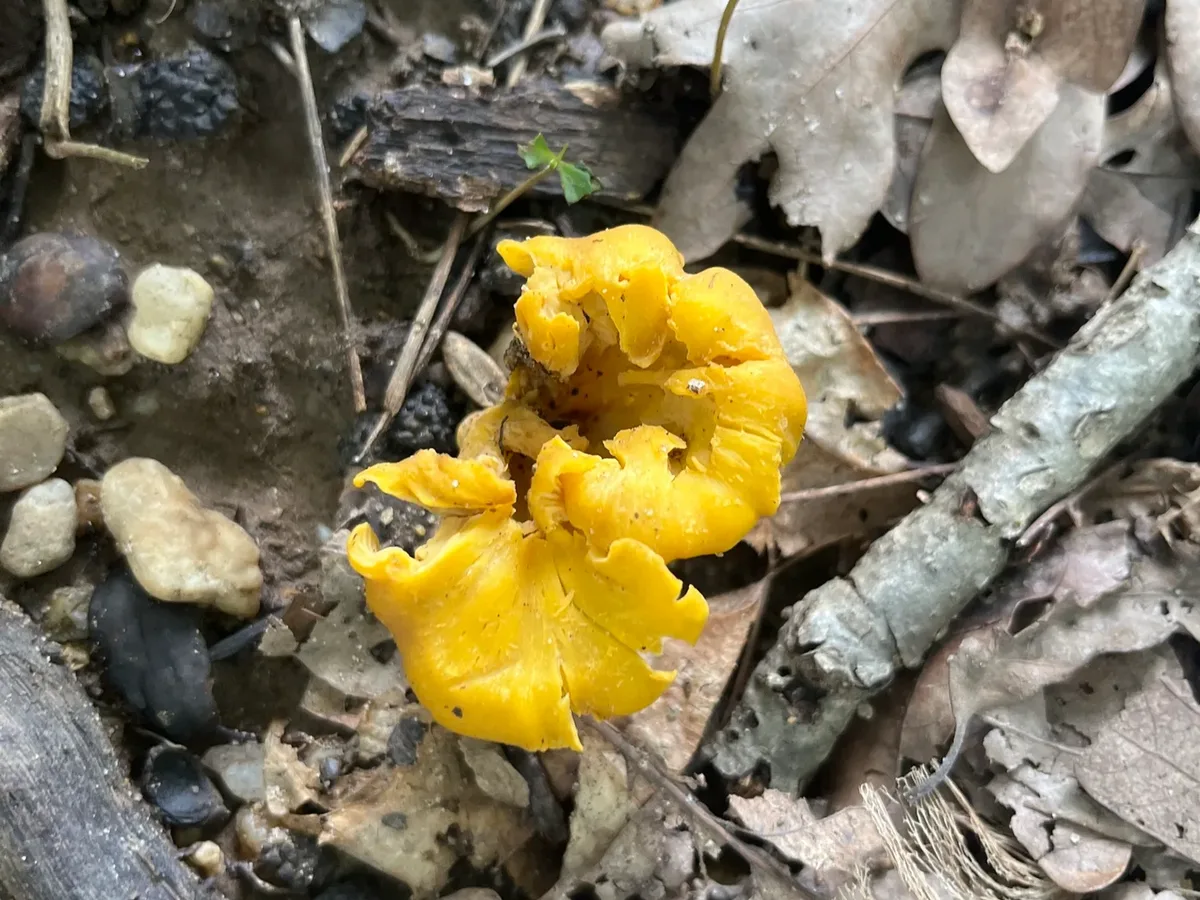 © Evan A Miller (CC BY)
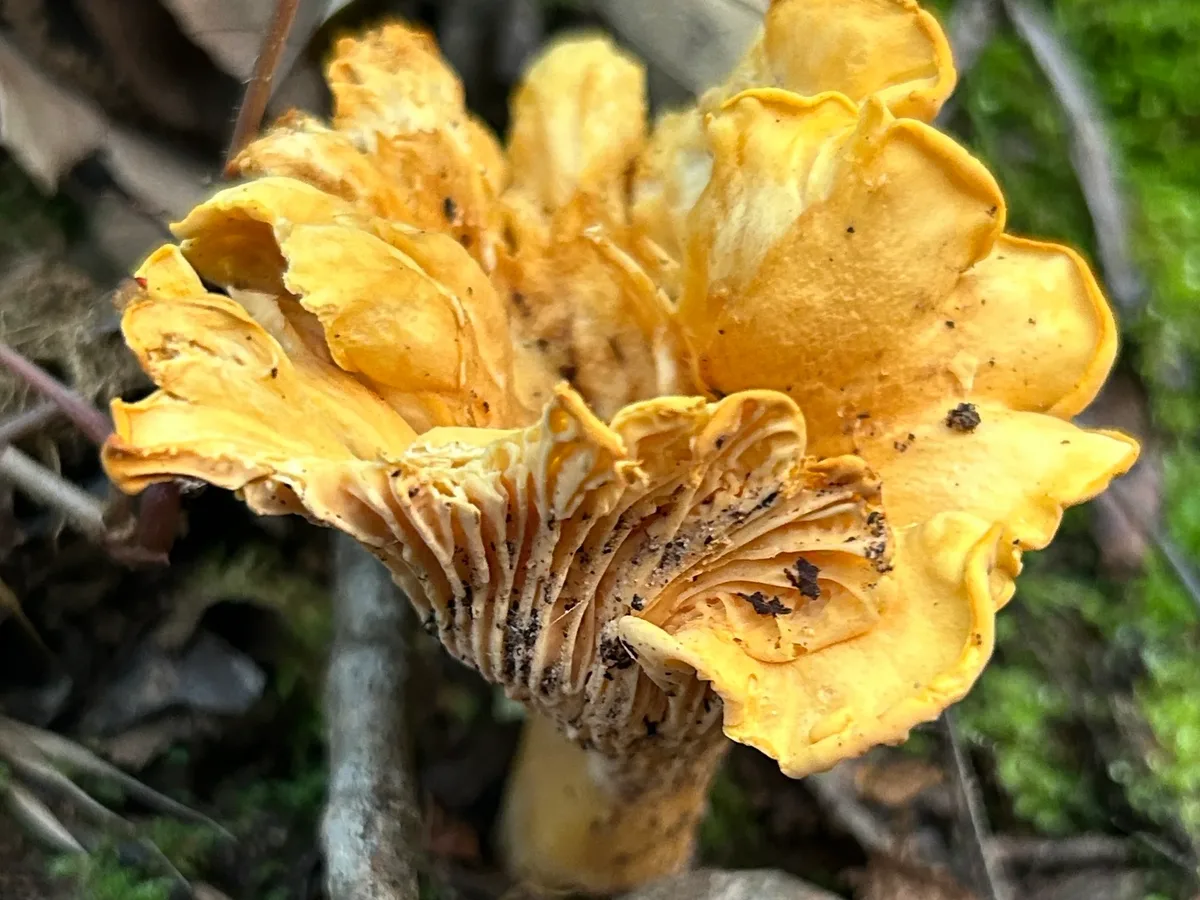 © Northcut (CC BY)
 © Northcut (CC BY)
 © Emma Walker (CC BY)
 © Emma Walker (CC BY)
 © Emma Walker (CC BY)
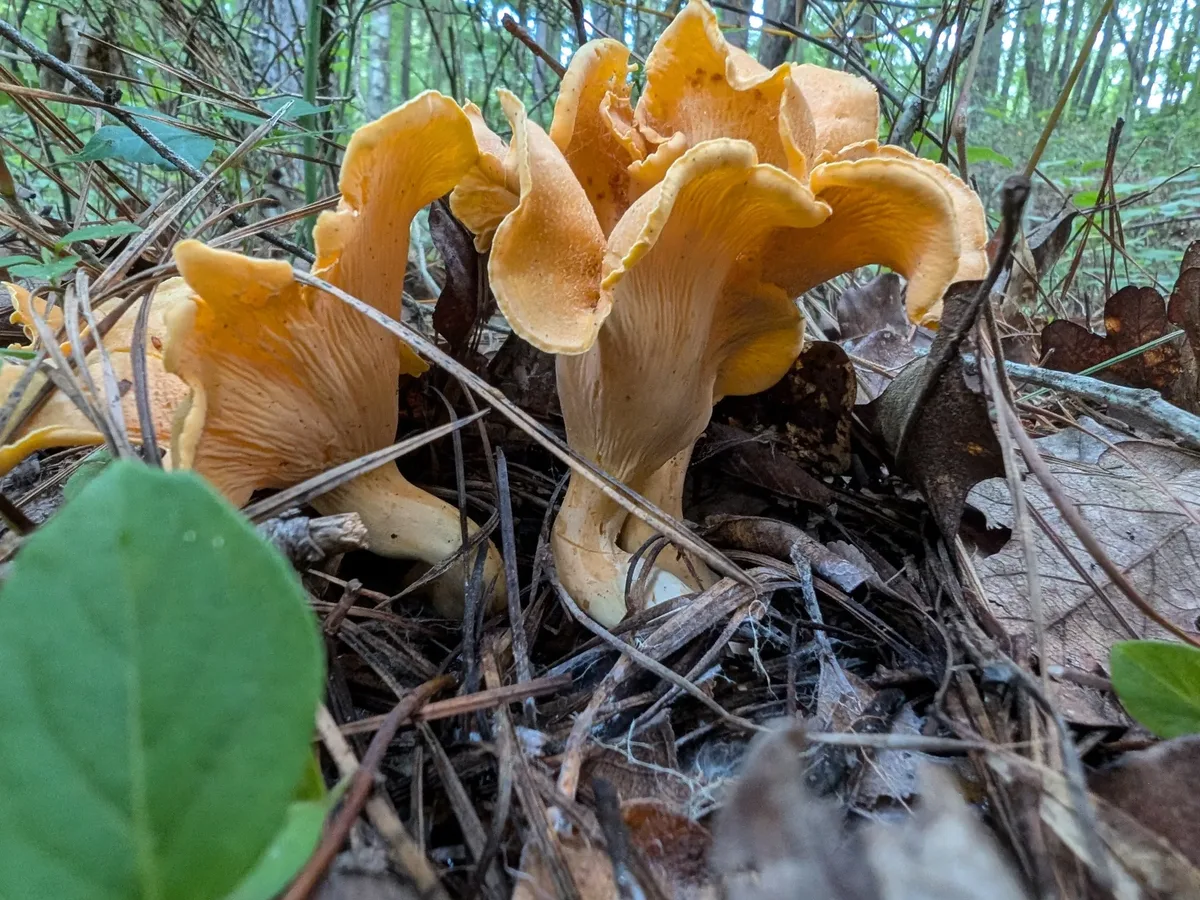 Kristi Zoebelein (CC0)
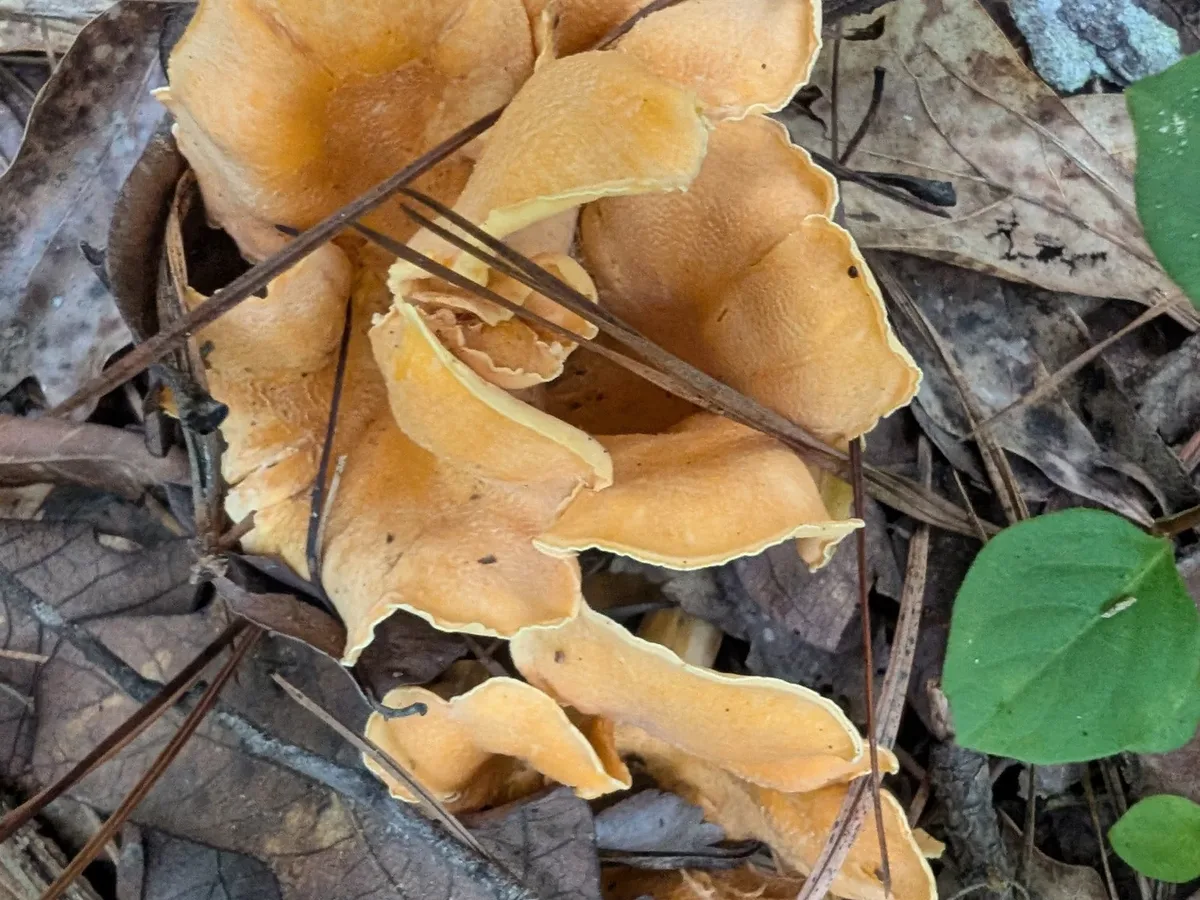 Kristi Zoebelein (CC0)
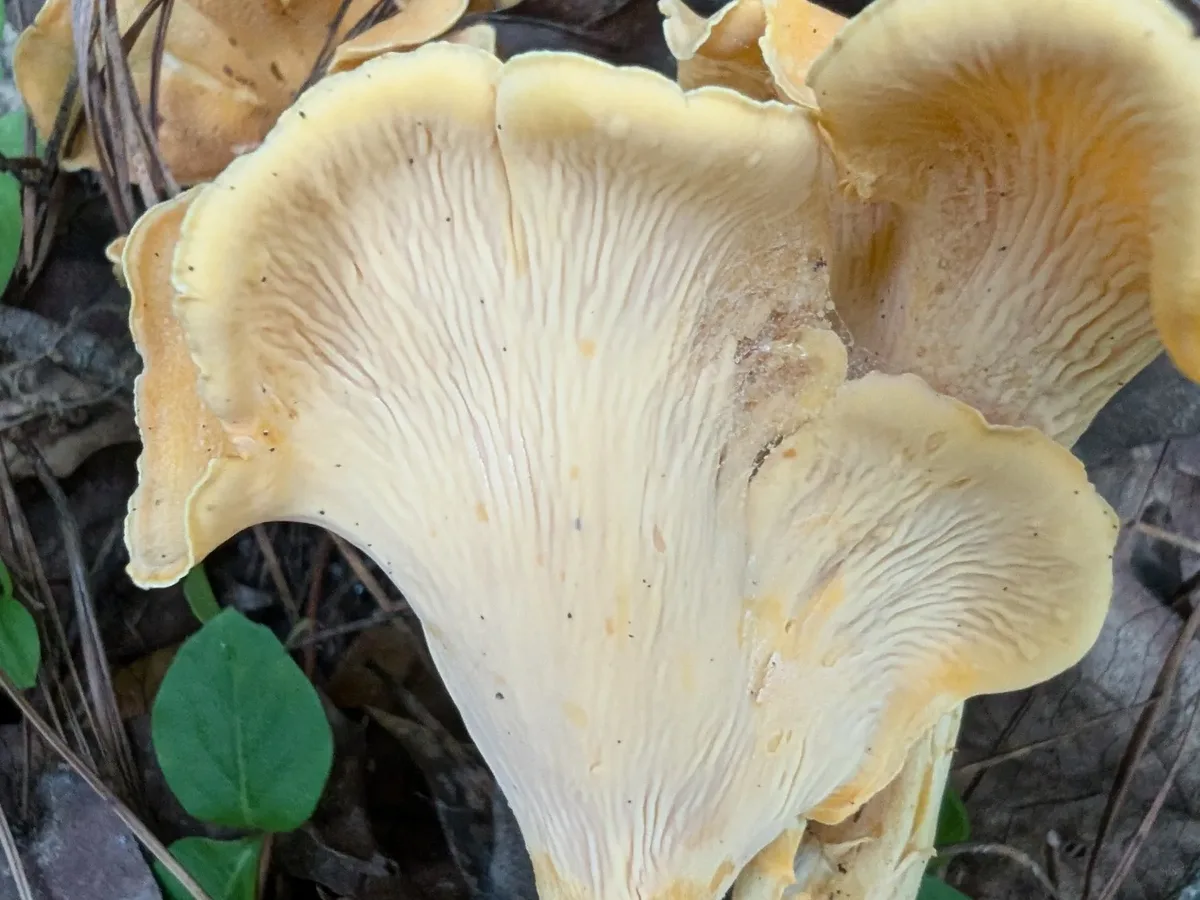 Kristi Zoebelein (CC0)
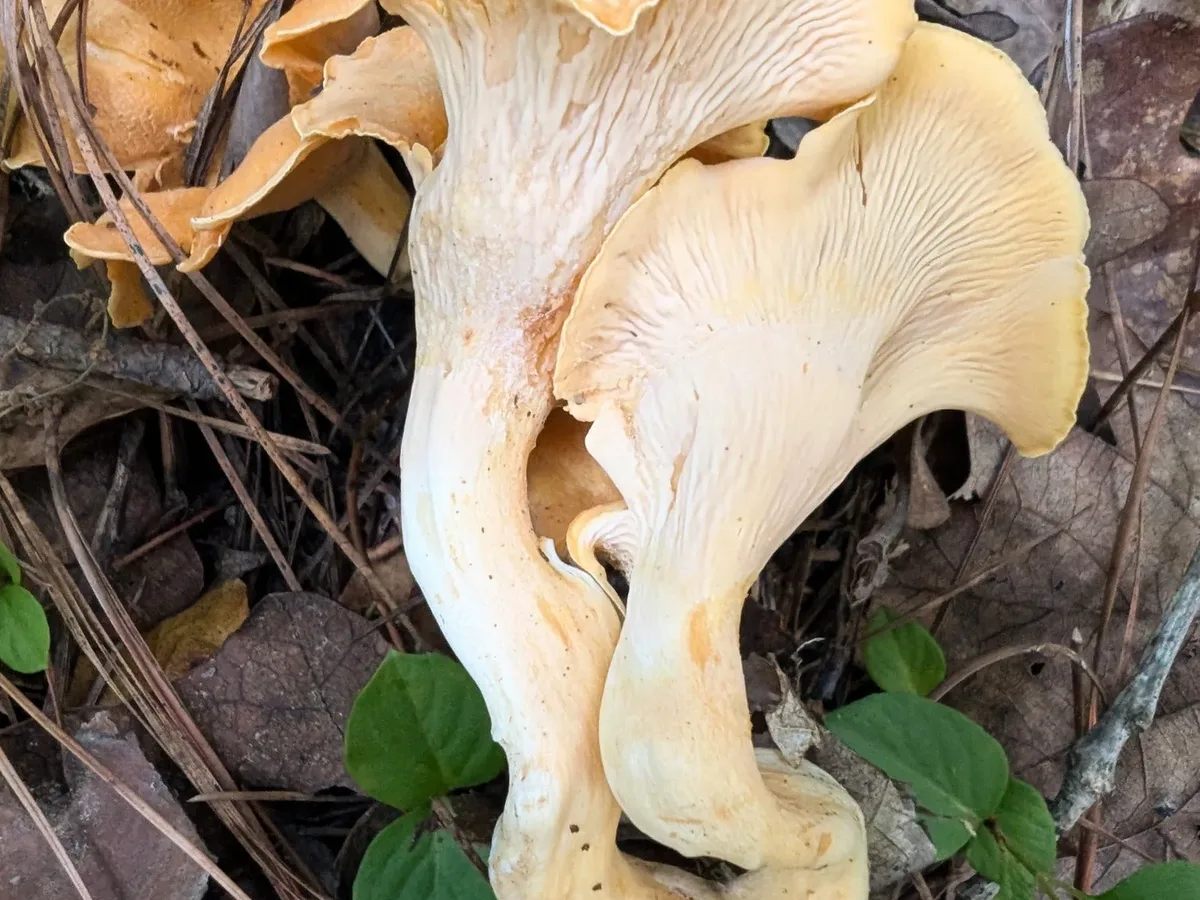 Kristi Zoebelein (CC0)
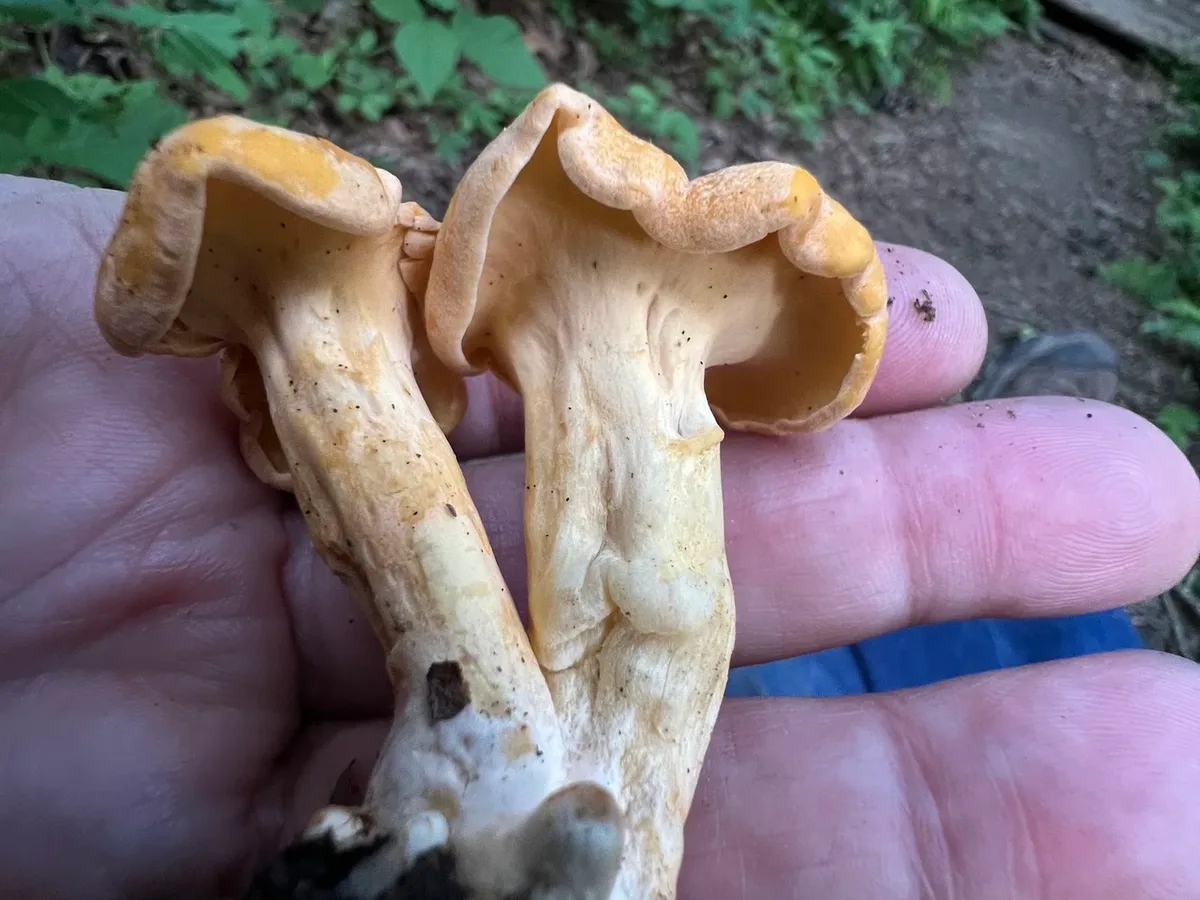 © Mark Richman (CC BY 4.0)
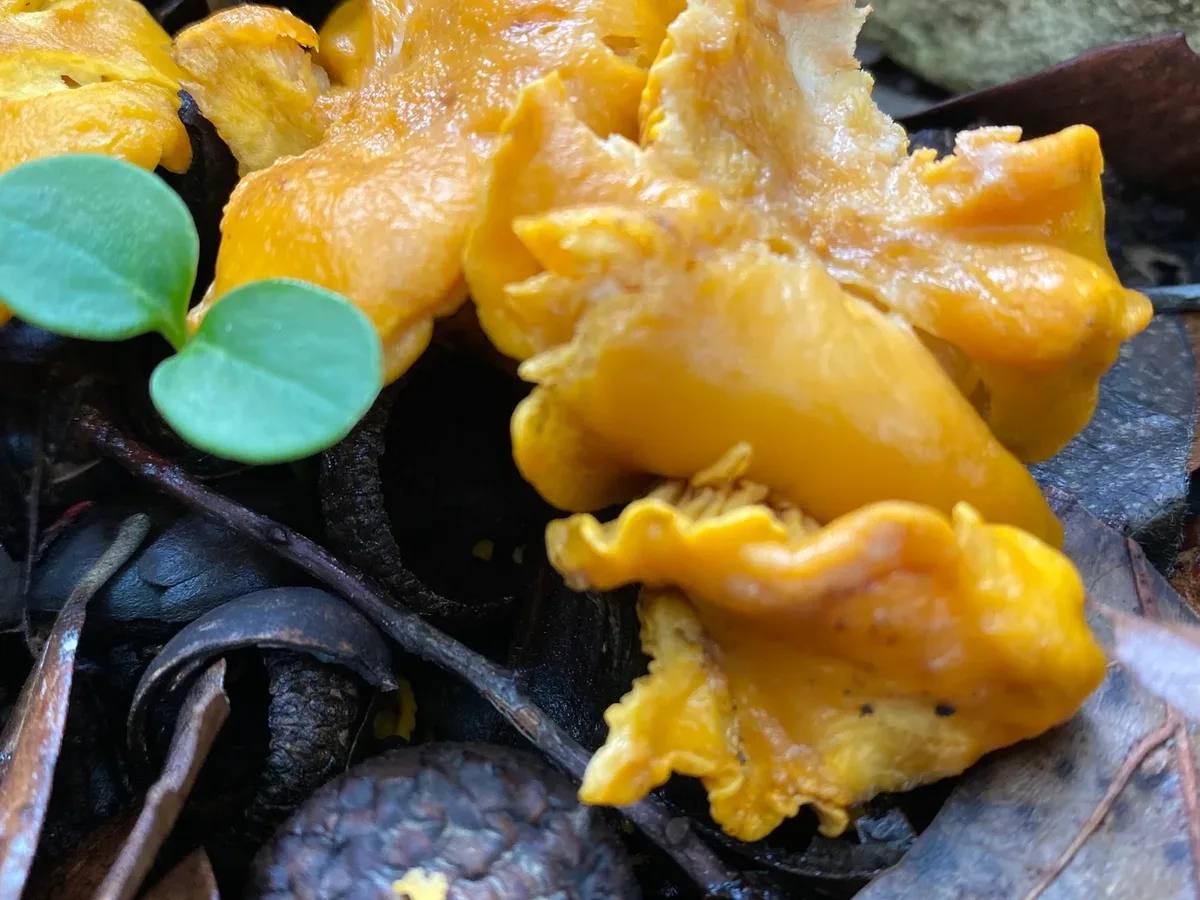 © georgiakharper (CC BY 4.0)
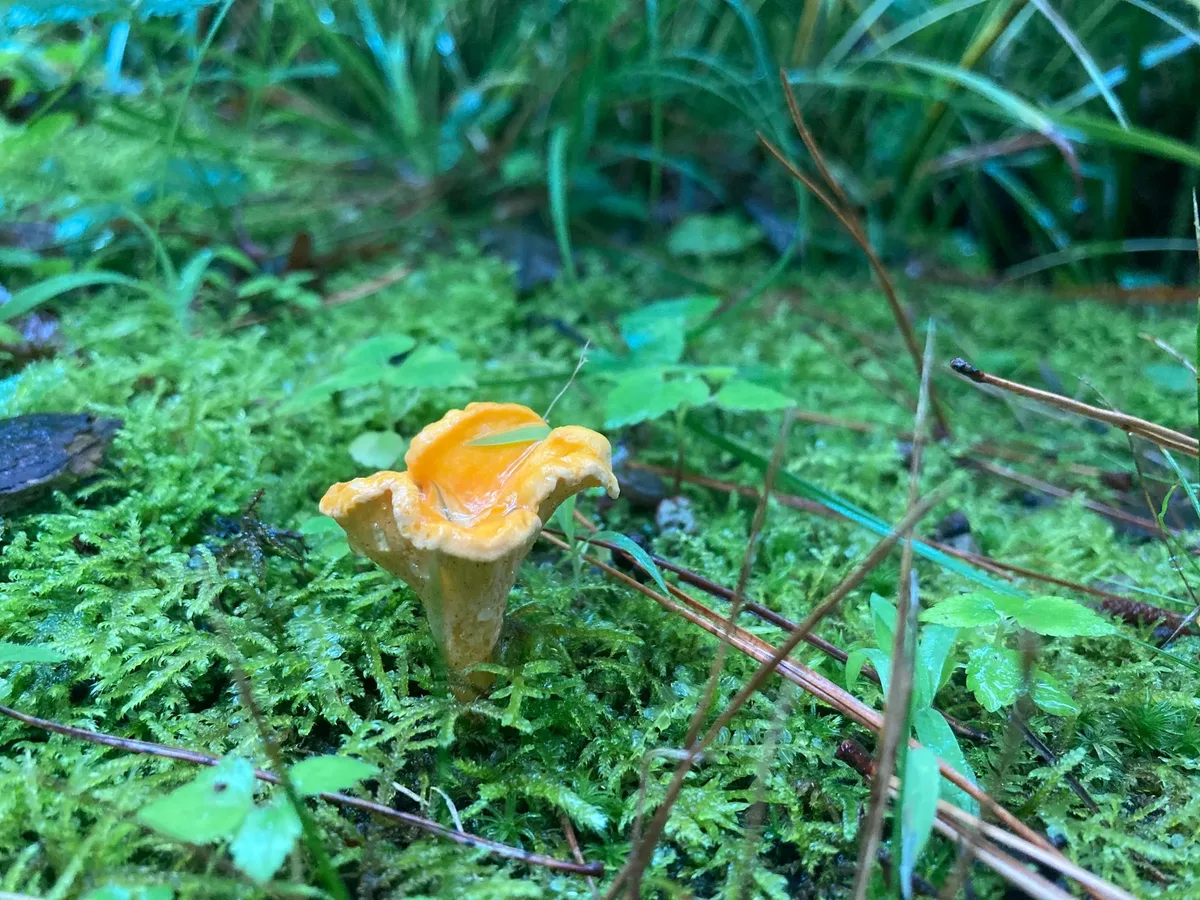 Monika Fischer (CC0)
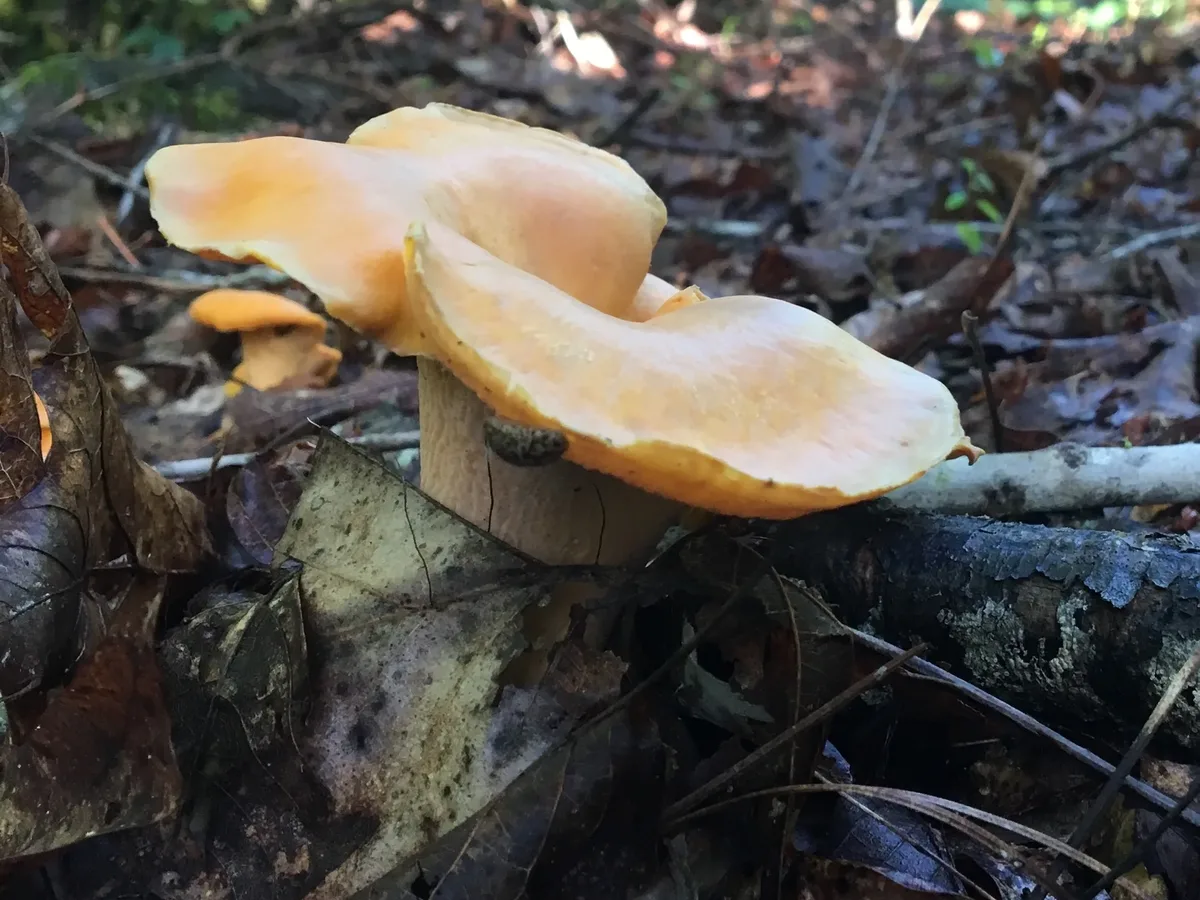 © dianner (CC BY 4.0)
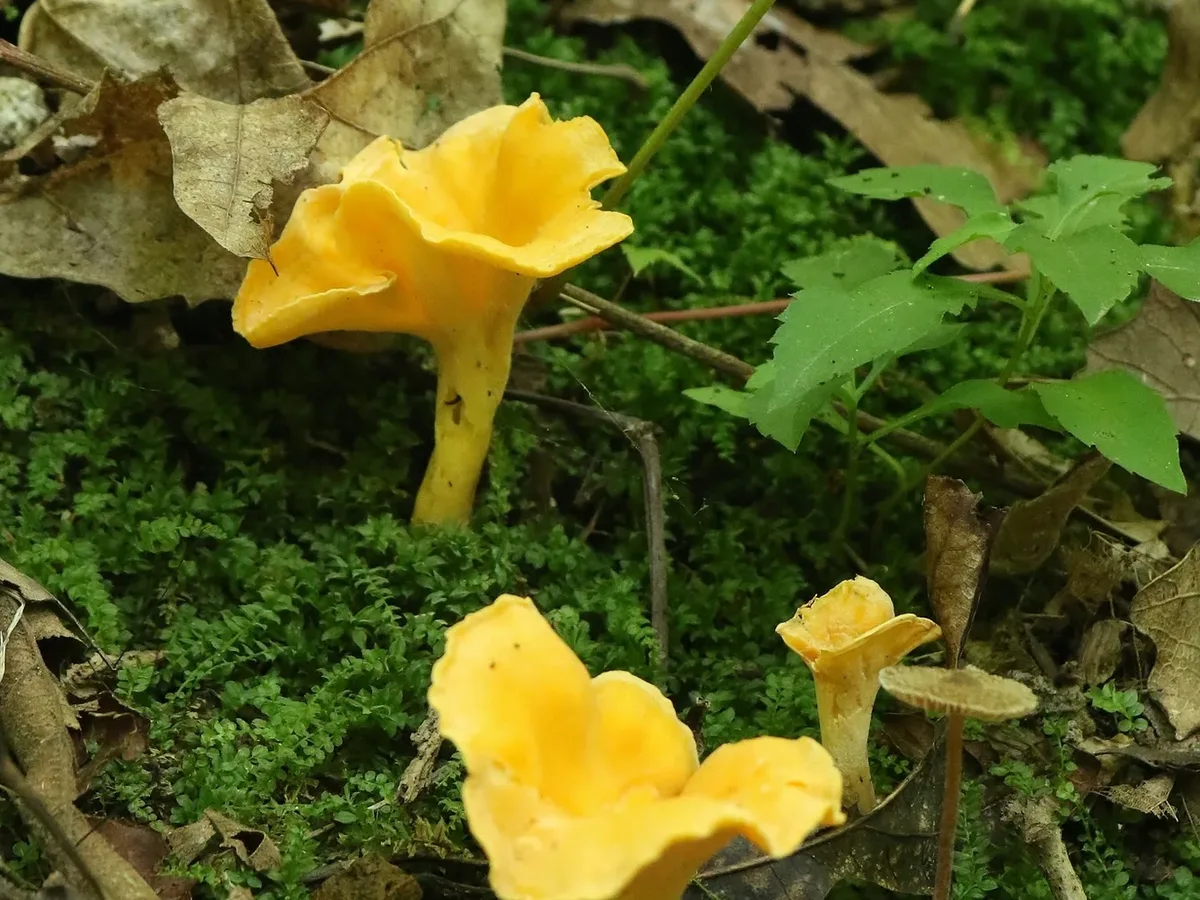 © Thibaud Aronson (CC BY-SA 4.0)Elspeth Pierce (CC0)© Ryan Kurtz (CC BY 4.0)
One of the best mushrooms you can bring home - once you are certain of the identification.
How to recognise it
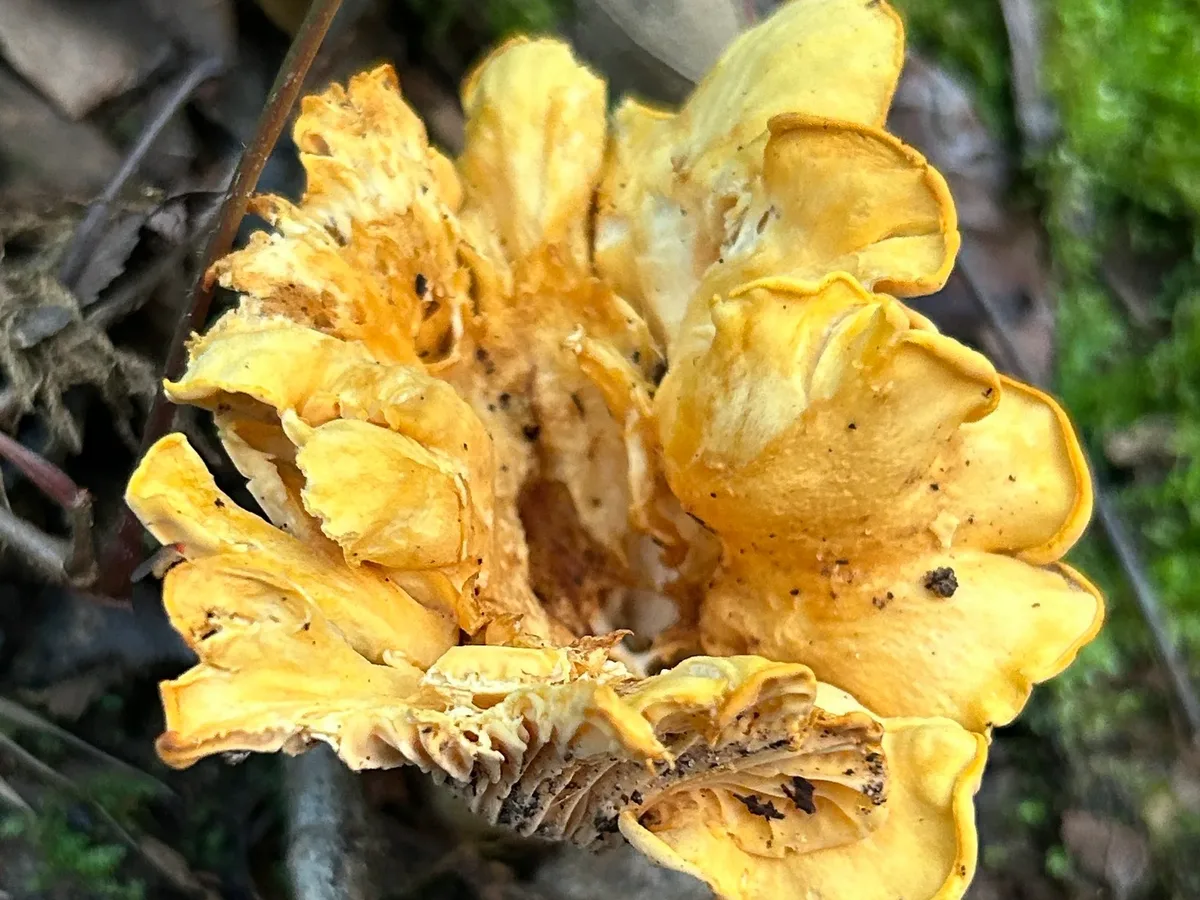
Cantharellus lateritius is a robust, bright golden-yellow chanterelle immediately set apart by its nearly smooth to barely ridged undersurface - the trait captured in both its English name 'smooth chanterelle' and the epithet lateritius (brick-coloured, nodding to the orange-yellow hues).
Cap
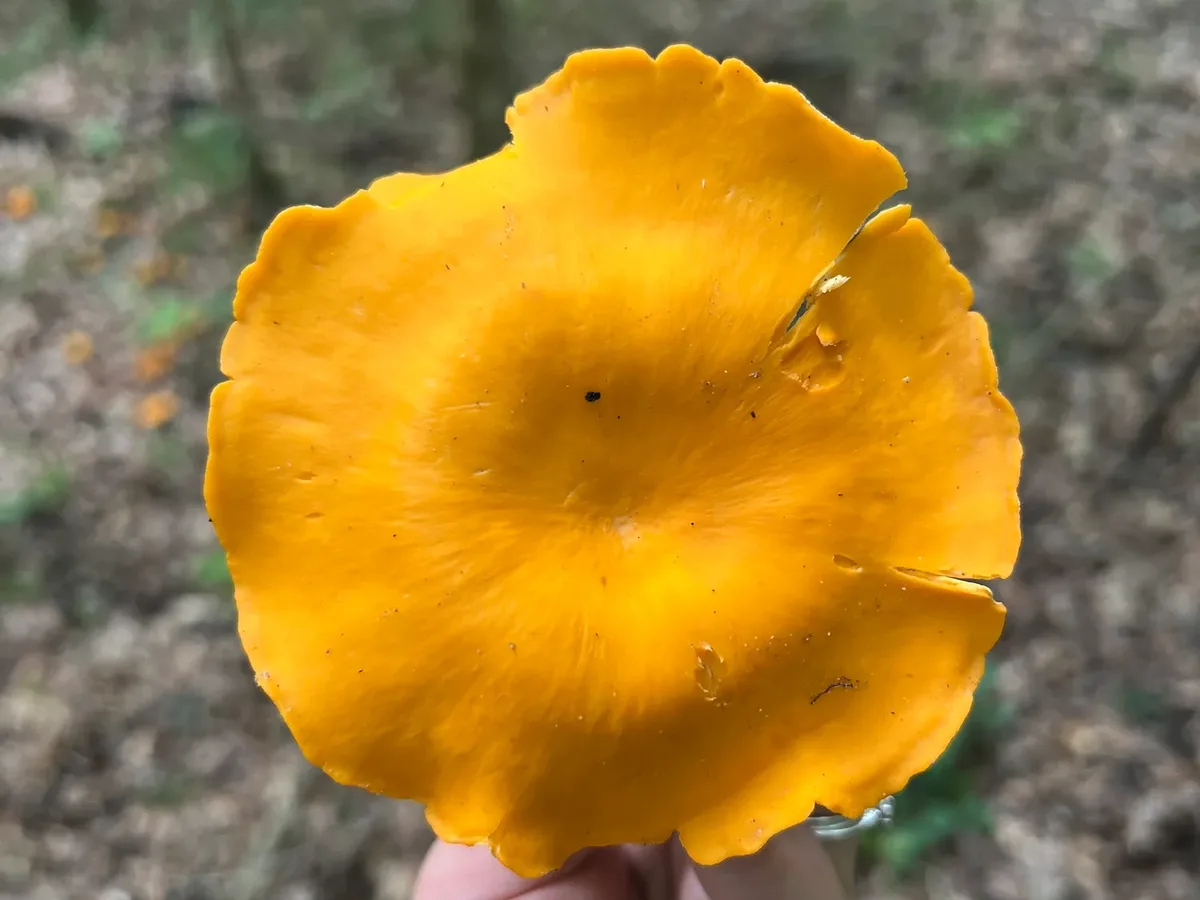
The cap begins convex with an inrolled margin, expanding to broadly plane or shallowly funnel-shaped, often with a wavy, irregularly lobed edge in age. Colour ranges from vivid egg-yolk yellow to warm golden-orange, occasionally fading to pale ochre in sun or drought.
Gills / Pores
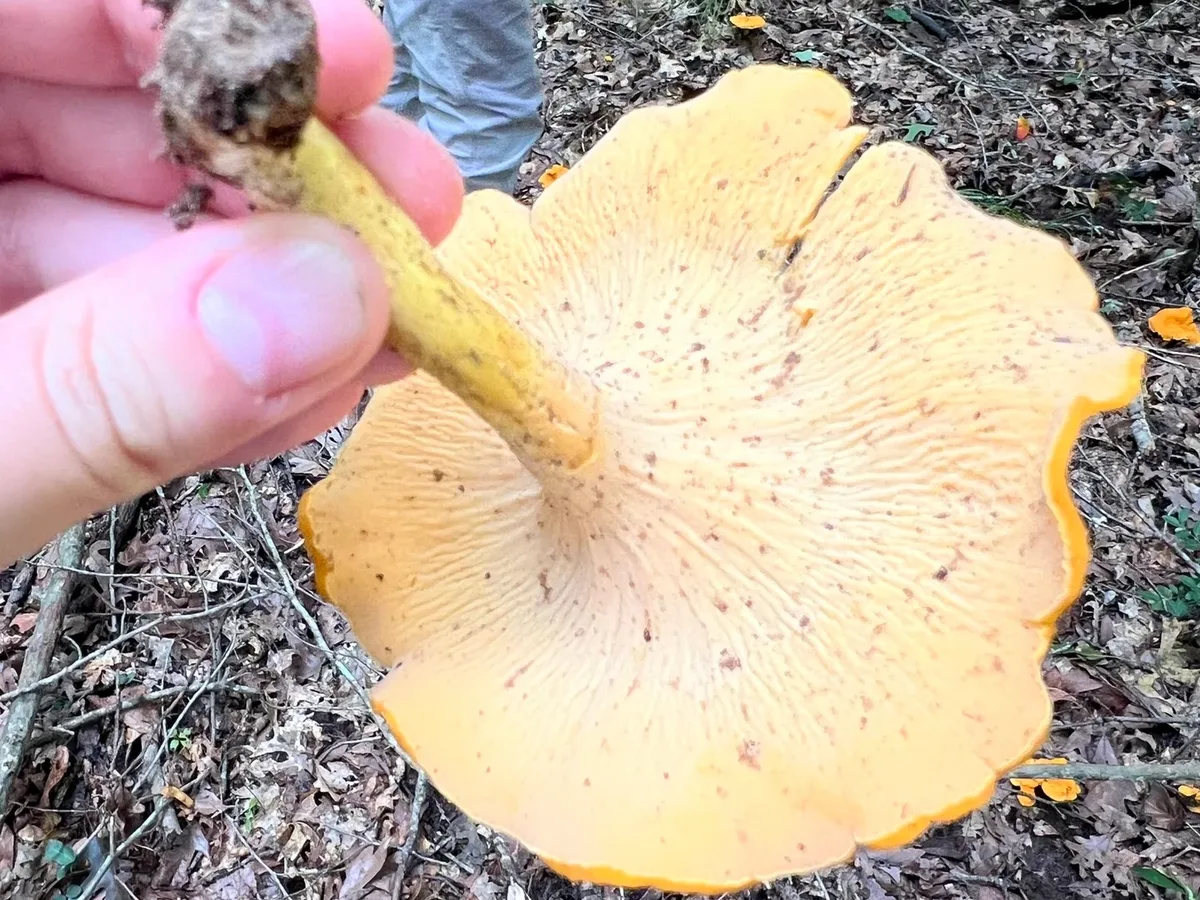
The underside is the key diagnostic: where most chanterelles carry well-developed, forking, blunt false gills running down the stem, C. lateritius has a nearly smooth surface - ridges are shallow, widely spaced, barely forked, or entirely absent, giving the underside a gently wrinkled, almost waxy feel.
This unusual smoothness is why some mycologists have placed it closer to Craterellus, and it is indeed listed in synonymy as Craterellus cantharellus.
Stem
The stem is stout, solid, concolourous with the cap, and tapers gently to the base.
Flesh
Flesh is thick, white to pale yellow, firm, and unchanged when cut.
Smell & taste
The scent is one of the most rewarding of the eastern chanterelles - strongly fruity, ripe apricot or peach, noticeable from arm's length on a warm morning.
Spore print pale cream-yellow to buff.
Where & when it grows
Habitat
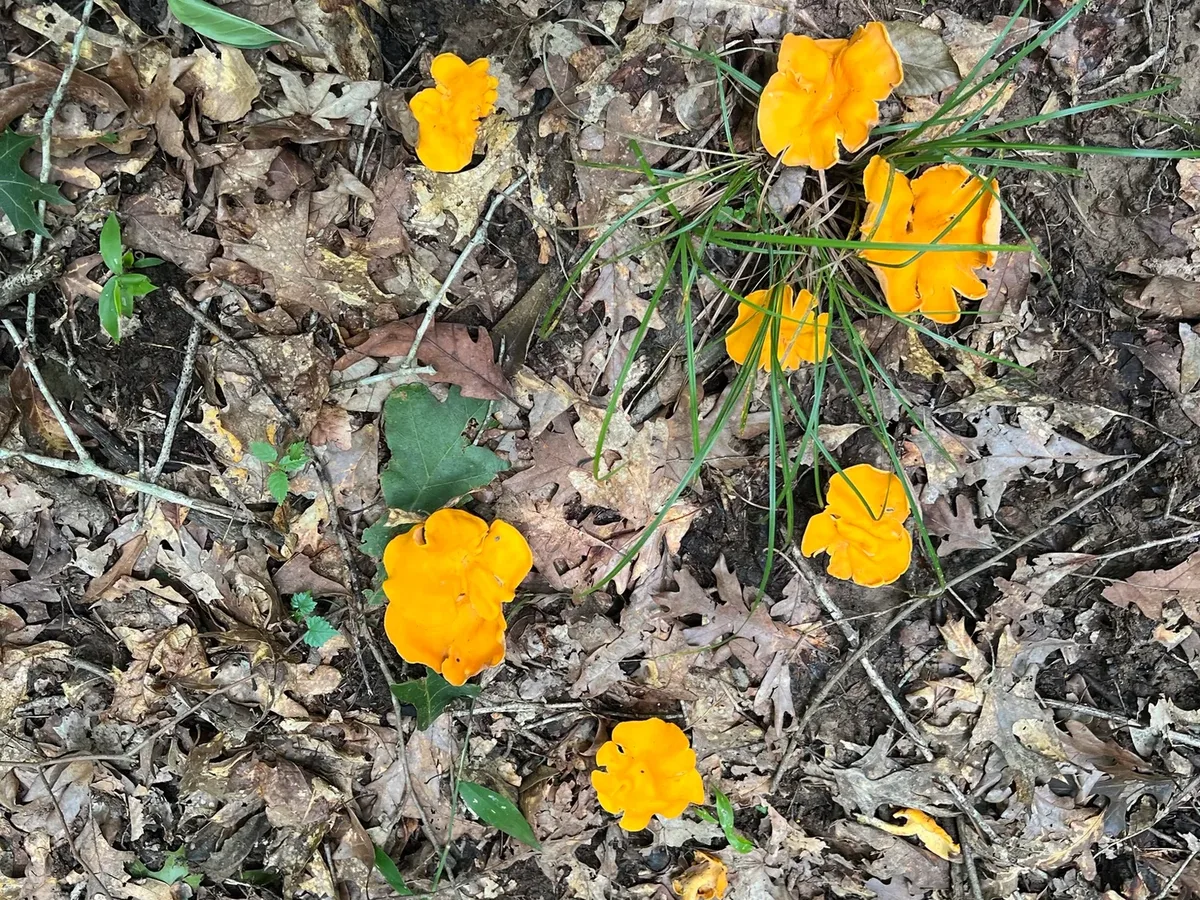
A mycorrhizal associate of hardwoods throughout the eastern deciduous forest zone of North America, with a particular affinity for oaks (Quercus spp.), American beech (Fagus grandifolia), and hickories (Carya spp.).
It grows scattered to gregarious on the forest floor amid deep leaf litter and humus, often in the same woods as Cantharellus cibarius and C. phasmatis but frequently fruiting earlier and in warmer, more humid conditions.
The smooth chanterelle is especially prolific in the Appalachian foothills, the Piedmont region, and the coastal plain forests of the southeastern United States.
Unlike many fungi it tolerates the warm, muggy summer weather of the American South well, thriving when temperatures remain above 20 °C.
It is rarely found in pure conifer stands but may appear in mixed pine-hardwood transition zones. Rich, well-drained loam soils under mature hardwood canopy are optimal.
When
Cantharellus lateritius is fundamentally a summer mushroom - it arrives when most North American foragers are still waiting for autumn.
In the Deep South (Georgia, Florida, Alabama, Mississippi) meaningful fruiting can begin in June, occasionally even late May after warm rains.
The peak across much of the range - Virginia, the Carolinas, Tennessee, Kentucky, Missouri - falls in July and August. A secondary, often smaller flush may follow in September or early October after late-summer rainfall.
Fruiting kicks off when warm, sustained rain of at least 20-30 mm falls over several days, followed by warm nights above 15 °C, with soil temperature above 18 °C appearing necessary for the mycelium to push.
In drought years C. lateritius can be scarce even when other fungi appear, since consistent soil moisture during initiation seems to matter more than a single heavy shower.
How it grows
Fruits scattered to gregarious on the forest floor, rarely in tight clusters. Individual fruitbodies emerge directly from soil or humus, sometimes partially buried, the tapered base nestled in leaf litter.
Loose troops of 5-30 fruitbodies spread across a few square metres are common.
Like all chanterelles, C. lateritius forms a mycorrhizal partnership with the roots of nearby trees. The underground mycelium is perennial, and a well-established colony can return faithfully to the same patch of ground for decades as long as its host trees stand.
Growth is moderate: caps expand over 4-7 days from pinhead to full size, but quality degrades quickly in hot, wet weather as slugs and insect larvae move in.
Fruiting conditions
Warm summer rains (25+ mm over 14 days) with sustained soil temperatures above 18 °C are the primary drivers; the flush typically emerges 5-12 days after rainfall. Hot, dry spells suppress fruiting entirely. A second flush often follows late-summer rains in August-September.
Look-alikes
The most important dangerous lookalike is the jack-o'-lantern mushroom (Omphalotus illudens), which is toxic and causes severe gastrointestinal illness requiring emergency care.
Jack-o'-lanterns grow in clusters at the base of trees or from buried wood and have true, knife-sharp, crowded gills - never the blunt, shallow ridges or smooth surface of C. lateritius. In dim conditions they may glow faintly bioluminescent in their gills - a feature no chanterelle shares.
Always check:
- chanterelle = solo or scattered on soil, smooth to ridged underside, white interior flesh
- jack-o'-lantern = clustered on or near wood, true sharp gills, orange flesh throughout
The false chanterelle Hygrophoropsis aurantiaca is another orange impostor with true crowded gills that fork repeatedly. It grows in conifer duff, has a more centrally depressed, thin-fleshed cap, and lacks the fruity apricot scent; it is mildly toxic.
Chanterelle lookalikes in the Cantharellus genus itself (C. cibarius, C. phasmatis, C. tenuithrix) are all edible and the distinctions are primarily taxonomic rather than safety-relevant.
The key safe-zone features for C. lateritius are:
- 1smooth to barely ridged hymenium with blunt, forked pseudo-ridges
- 2solid, not hollow stem
- 3fruity apricot odour
- 4white flesh that does not discolour
- 5solitary or scattered - not clustered at wood
Edible; distinguished by vivid scarlet-red to orange-red colouration throughout; much smaller fruitbodies (cap 1-4 cm); co-occurs with C. lateritius in eastern North America but easily told by intense red colour and pinkish spore print
European and Mediterranean species associated with olive, oak, and other hardwood stumps; clustered growth on or near wood; true sharp crowded gills; may glow bioluminescent; no fruity scent; causes severe gastrointestinal illness; not expected in eastern North America but included for travellers
True gills, crowded and repeatedly forking, sharp-edged; cap more uniformly depressed with thin, incurved margin; found mainly in conifer duff; flesh thinner and more pallid; lacks apricot scent; mildly toxic - causes gastrointestinal distress and occasionally neurological symptoms
Very similar and equally edible; C. cibarius sensu stricto is primarily European; has more developed, better-formed pseudogills compared to the nearly smooth hymenium of C. lateritius; North American 'C. cibarius' collections are now mostly assigned to other species including C. lateritius
Eastern North American species; grows in dense clusters at tree bases or from buried wood; has true, crowded, sharp blade-like gills (never blunt ridges or smooth surface); orange flesh throughout the entire stem; may glow faintly bioluminescent in the dark; lacks apricot scent; causes severe gastrointestinal poisoning requiring emergency care
In the kitchen
Picking & cleaning
Harvest with a knife, cutting cleanly at the base to leave the mycelium and root undisturbed. Brush away soil and leaf litter in the field.
Smooth chanterelles are relatively durable but the thin ridged surface and golden colour require care to avoid bruising.
They hold well at 4 °C for 5-7 days; longer storage benefits from wrapping loosely in paper rather than plastic.
Unlike some chanterelles, the smooth chanterelle can become quite spongy and waterlogged in prolonged wet weather - specimens collected in optimal dry-after-rain conditions are far superior.
Avoid collecting overmature specimens (edges splitting, colour fading to pale cream) as quality declines sharply. The solid stem is entirely edible and flavourful.
Cooking
One of the finest summer table mushrooms in eastern North America. The smooth chanterelle has a delicate apricot-fruity aroma and a mildly nutty, slightly peppery flavour that deepens considerably with cooking.
It pairs beautifully with butter, cream, white wine, shallots, tarragon, and eggs.
Ideal preparations include:
- sautéed in clarified butter with a pinch of salt until liquid evaporates and edges are golden
- folded into omelettes or scrambled eggs
- incorporated into cream pasta sauces
- used in risotto or polenta
- as a filling for crêpes with crème fraîche
Avoid boiling or steaming, which washes out volatile aromatics. Unlike some mushrooms it does not need long cooking - 5-8 minutes in a hot pan is usually sufficient.
Drying or freezing is possible but degrades texture; the preferred preservation is brief sautéing followed by freezing. The smooth chanterelle is also excellent in compound butters or infused into cream for sauces.
Good to know
Cantharellus lateritius is a safe and excellent edible mushroom with no known toxins. It does not accumulate heavy metals at dangerous levels in typical forest soils.
The sole significant risk is misidentification with toxic species, principally the jack-o'-lantern (Omphalotus illudens), which causes severe but non-fatal gastrointestinal poisoning.
Always confirm before consuming:
- smooth to barely ridged hymenium
- solid stem
- white interior flesh
- fruity scent
- solitary-to-scattered (not clustered) growth from soil
Never eat orange-gilled mushrooms that grow in tight clusters from wood or tree bases - these are likely jack-o'-lanterns.
If any doubt exists about the identity of a specimen, do not eat it.
A reference guide - never an edibility guarantee. When in doubt, leave it out.