Oyster mushroom
Pleurotus ostreatus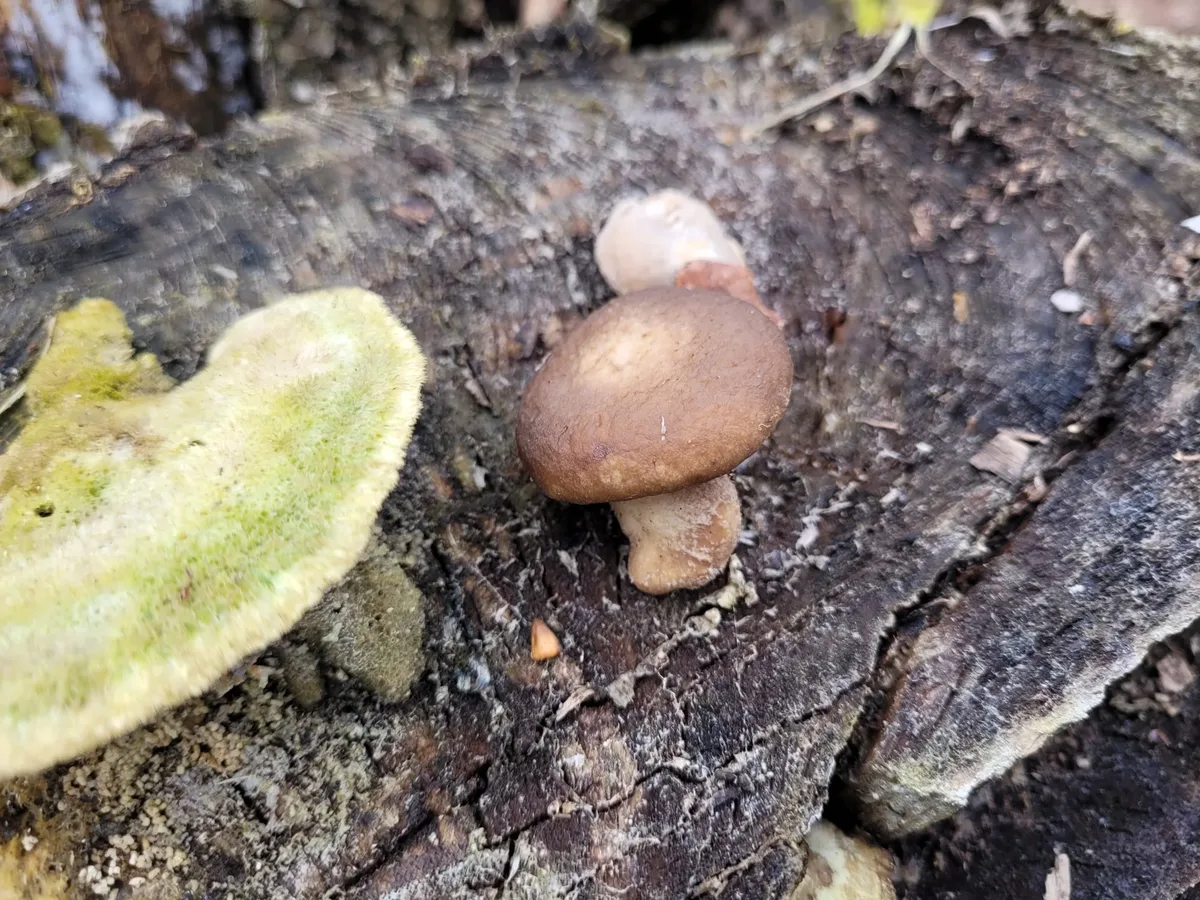 © Bobo-X (CC BY 4.0)
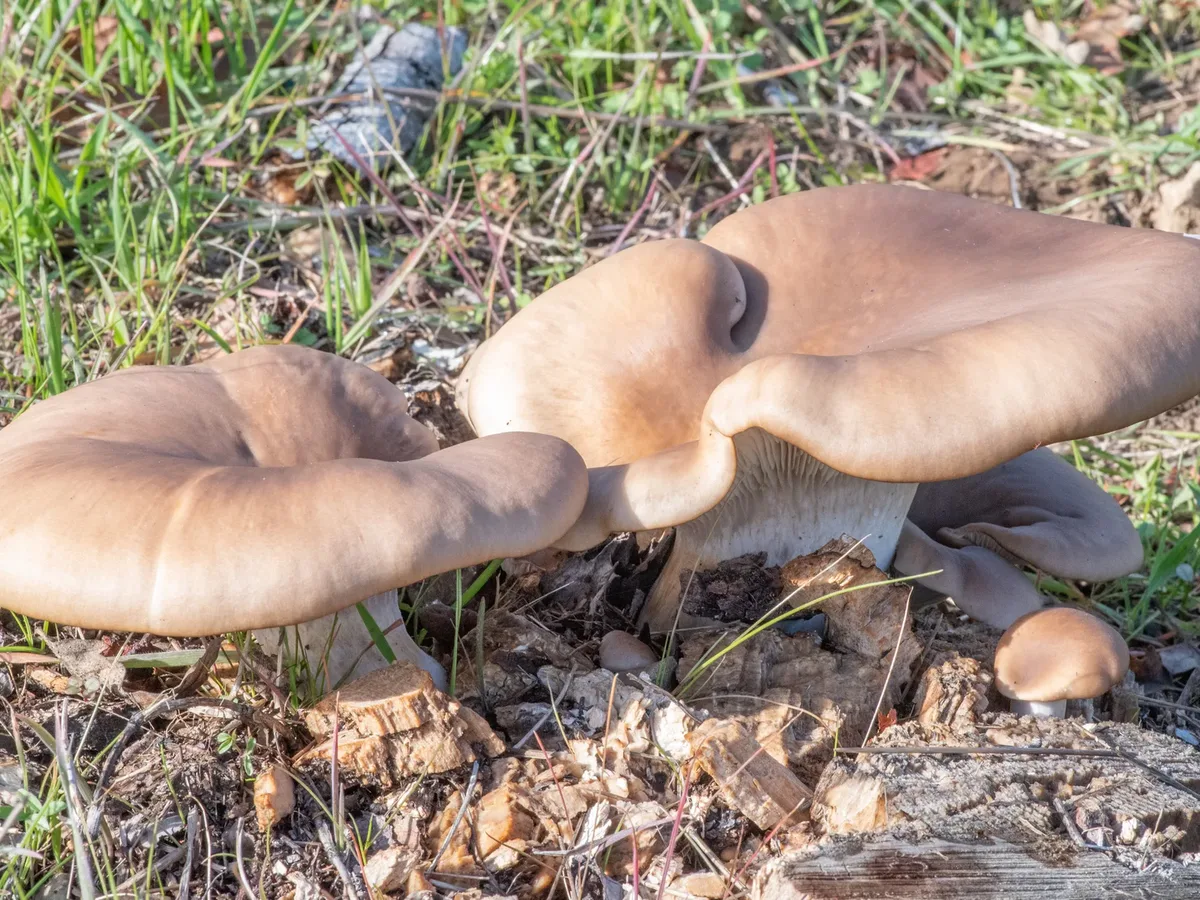 © Don Loarie (CC BY 4.0)
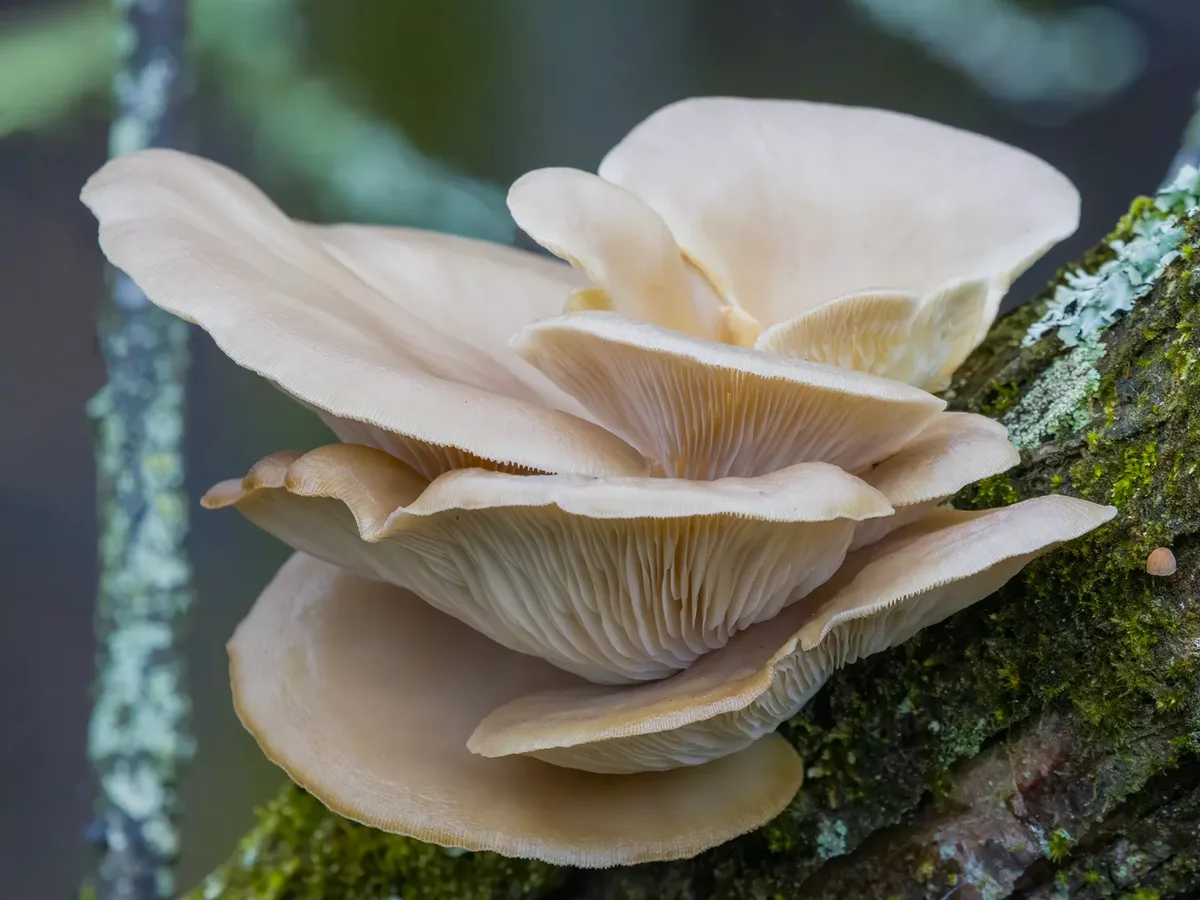 © Dan Vickers (CC BY)
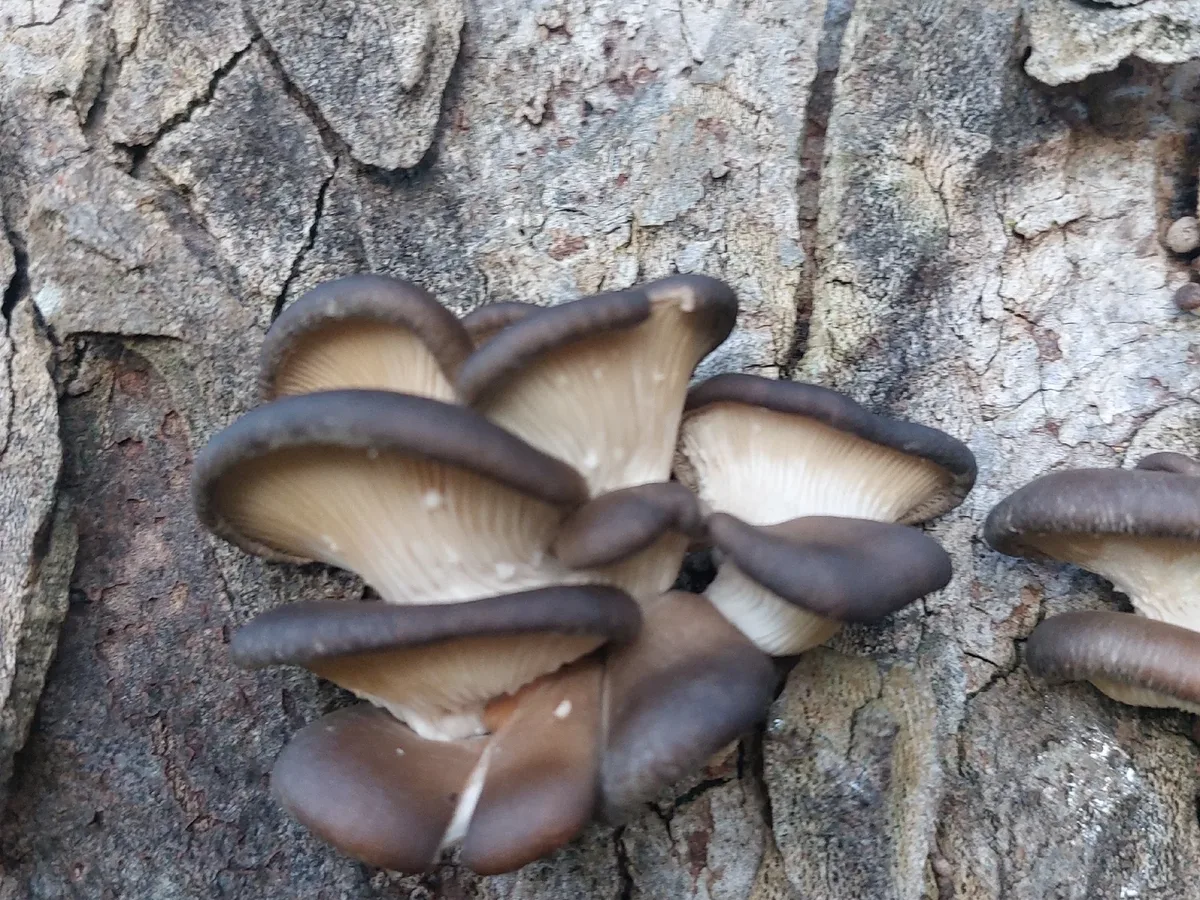 © Holly (CC BY)
 © Holly (CC BY)
 NENP_StBartsNewbury (CC0)
 NENP_StBartsNewbury (CC0)
 NENP_StBartsNewbury (CC0)
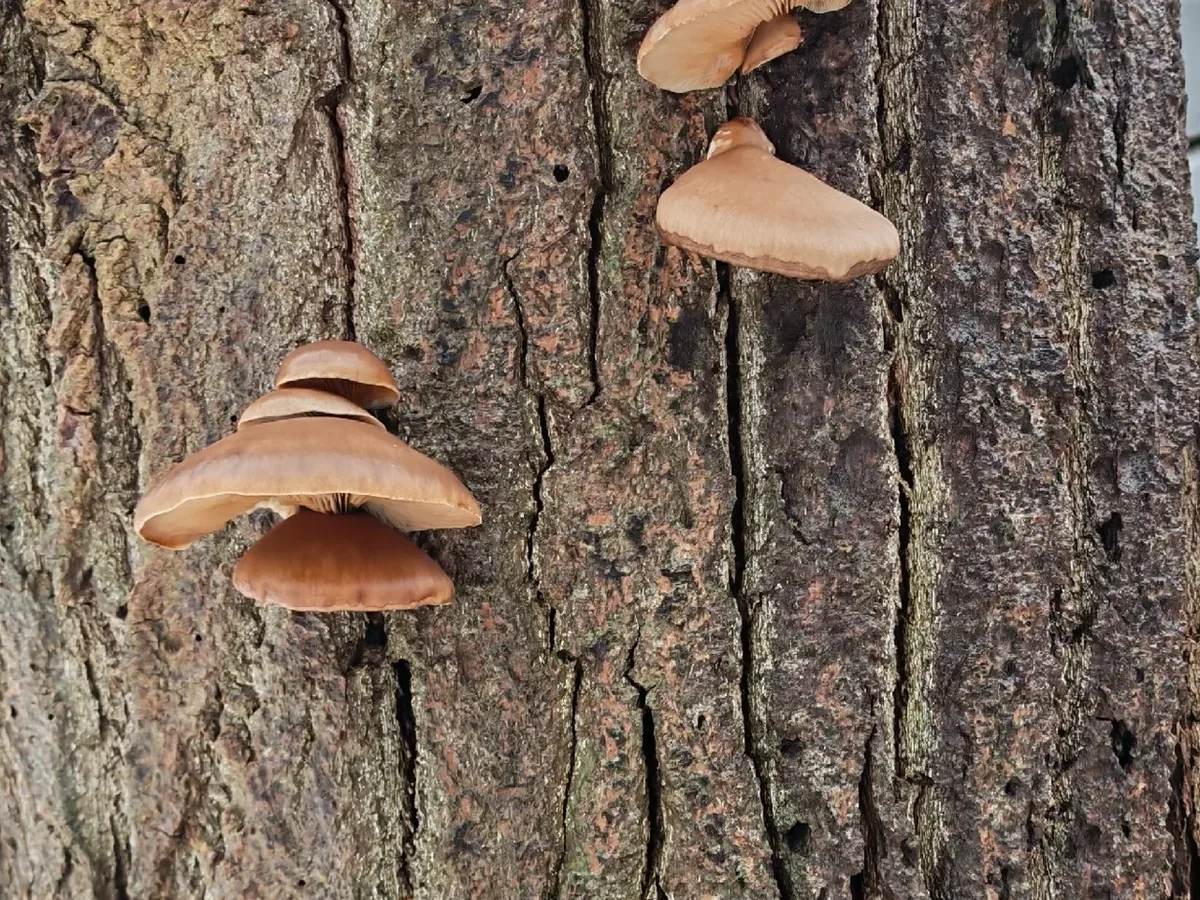 © Andrey Polstianoi (CC BY)
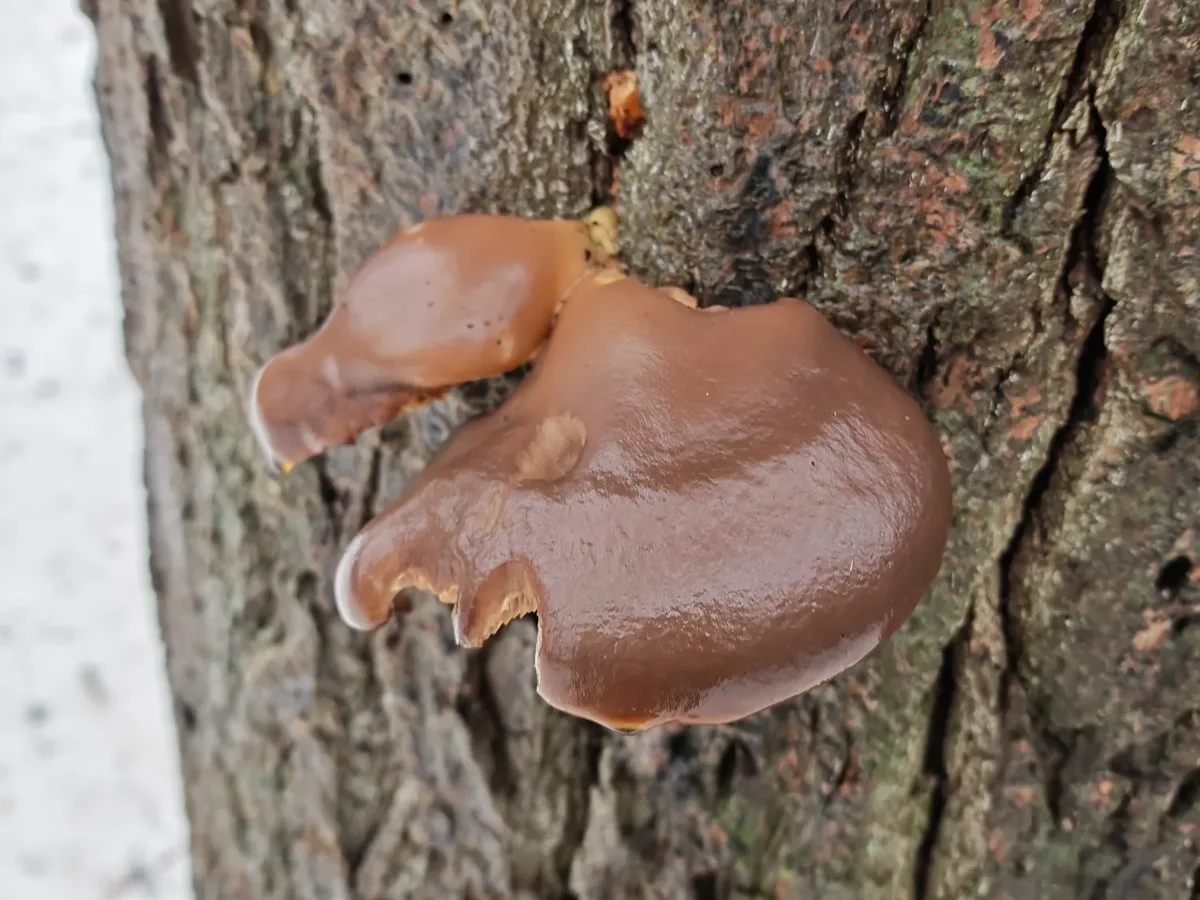 © Andrey Polstianoi (CC BY)
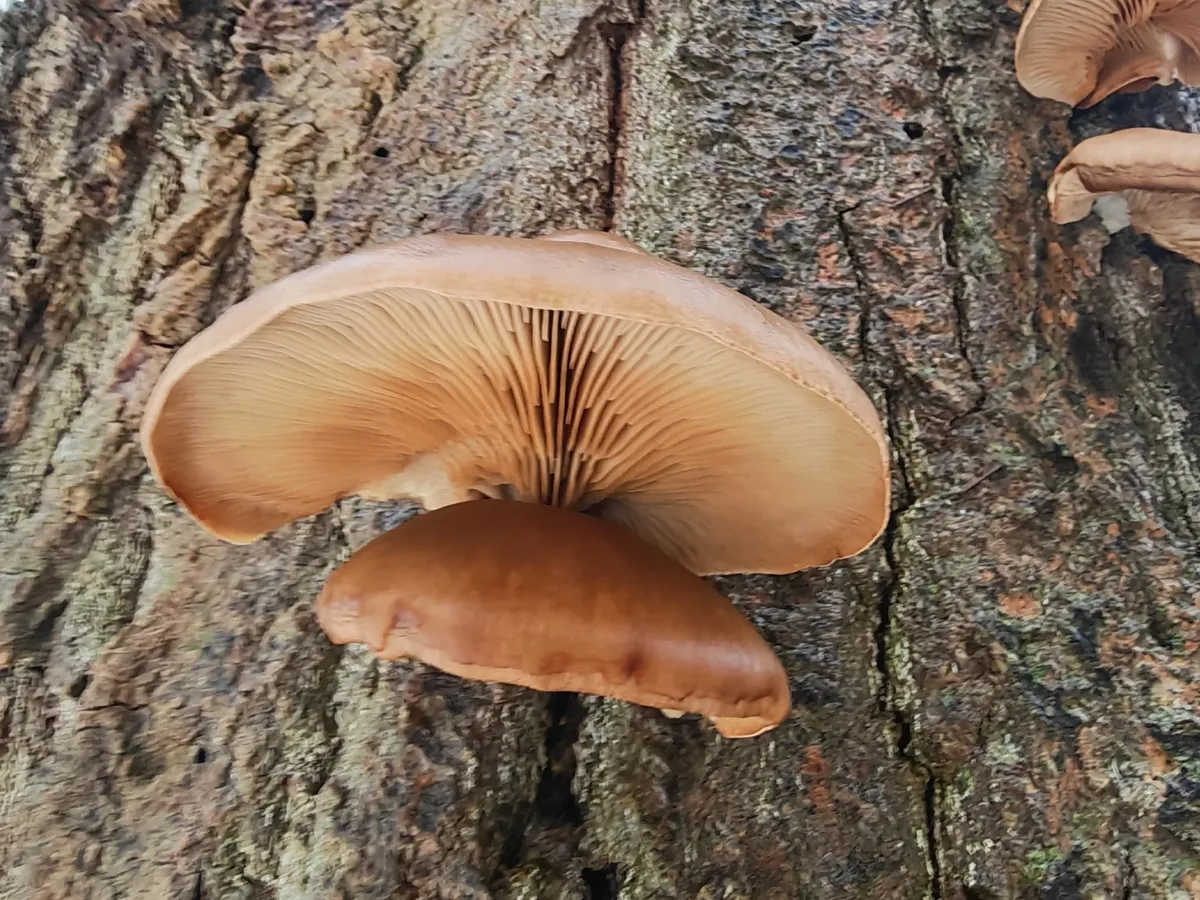 © Andrey Polstianoi (CC BY)
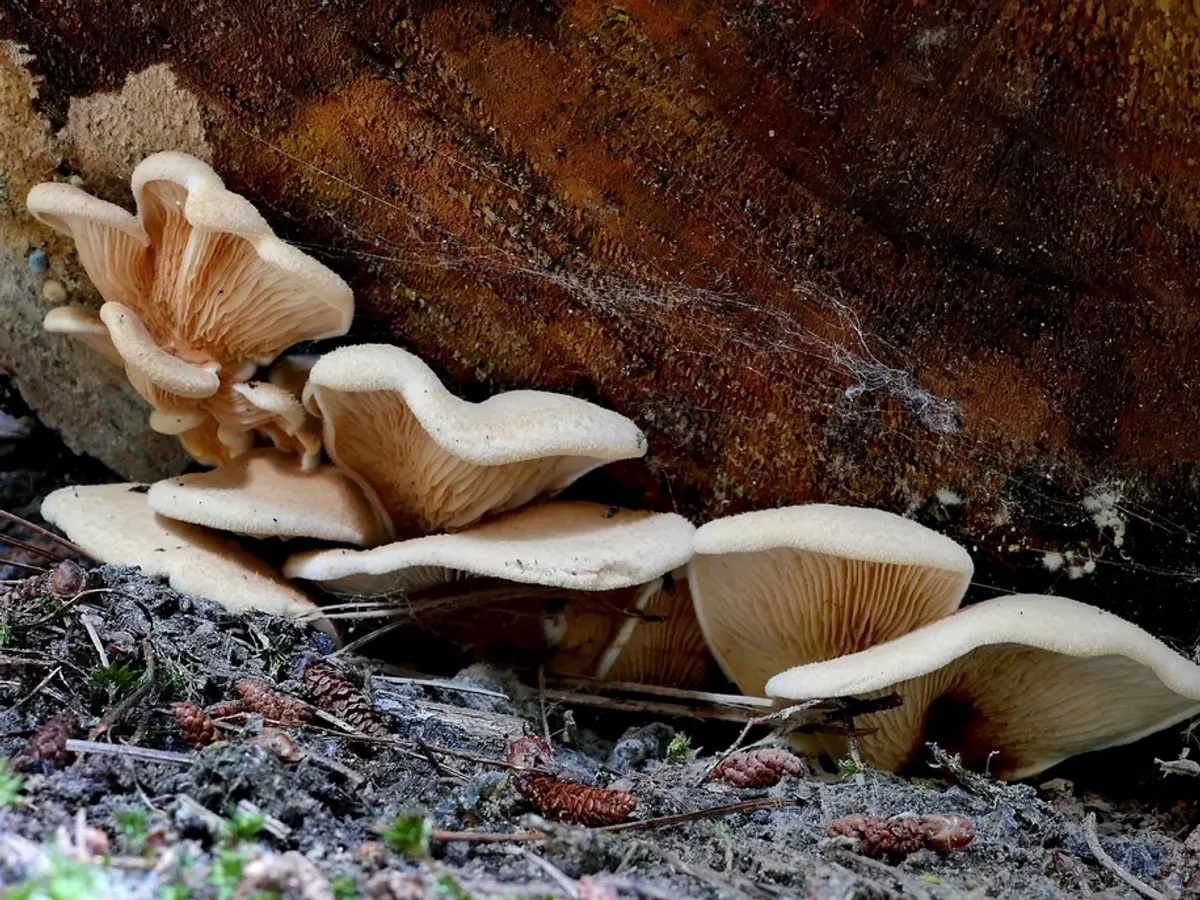 Openverse (CC0)
 © Aimee Lusty (CC BY 4.0)
 © snail_hiker (CC BY 4.0)
 © Michelle (CC BY 4.0)
 © Michel Langeveld (CC BY 4.0)© Bobo-X (CC BY 4.0)© Don Loarie (CC BY 4.0)
Good to eat, once you have identified it with certainty and cooked it through.
How to recognise it
Cap
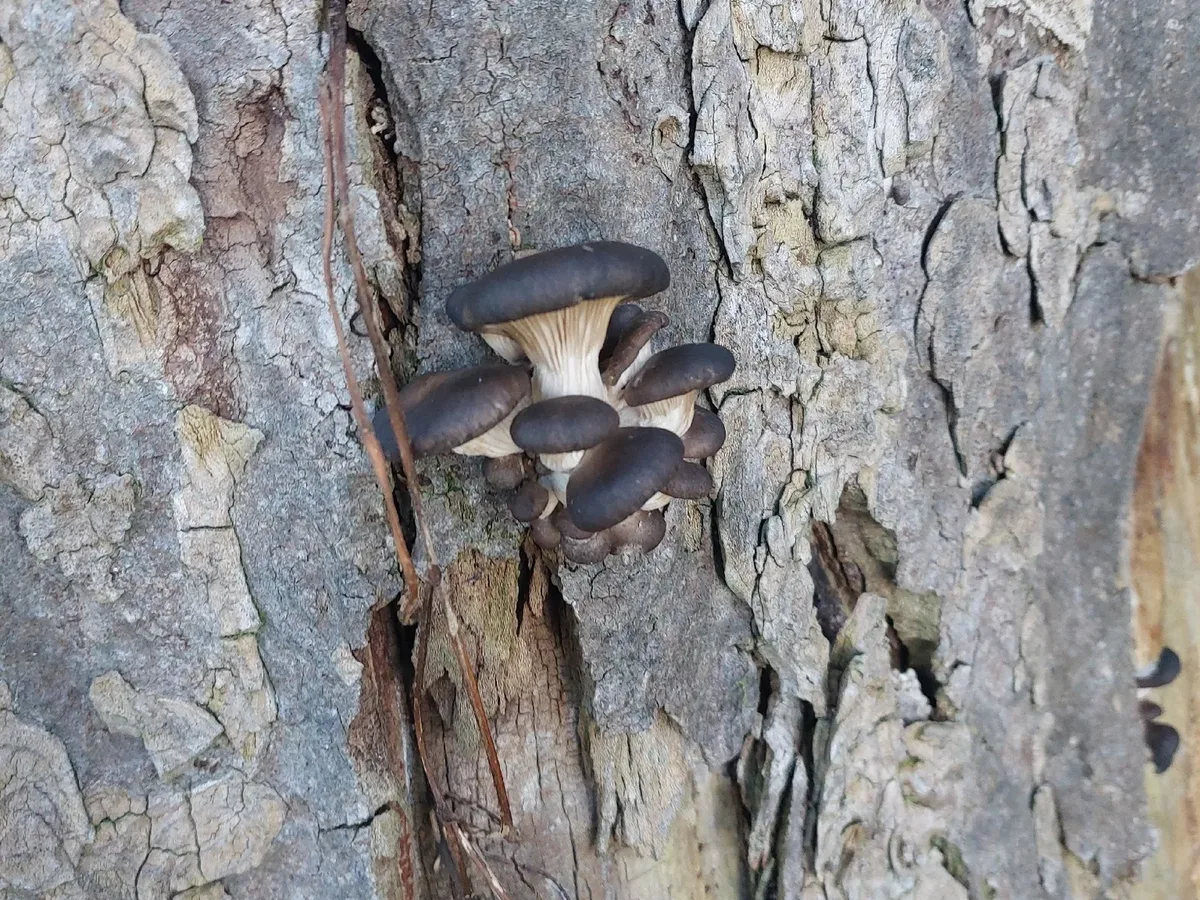
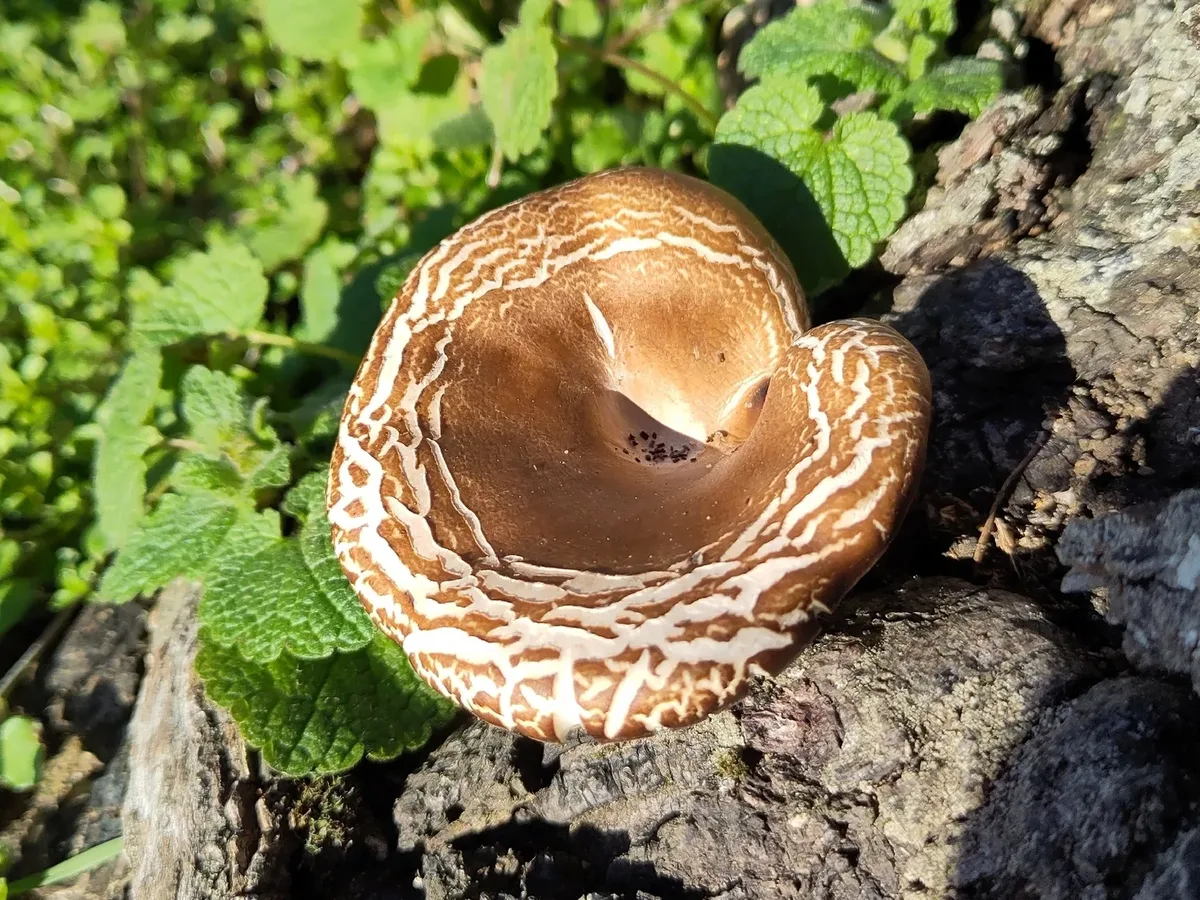
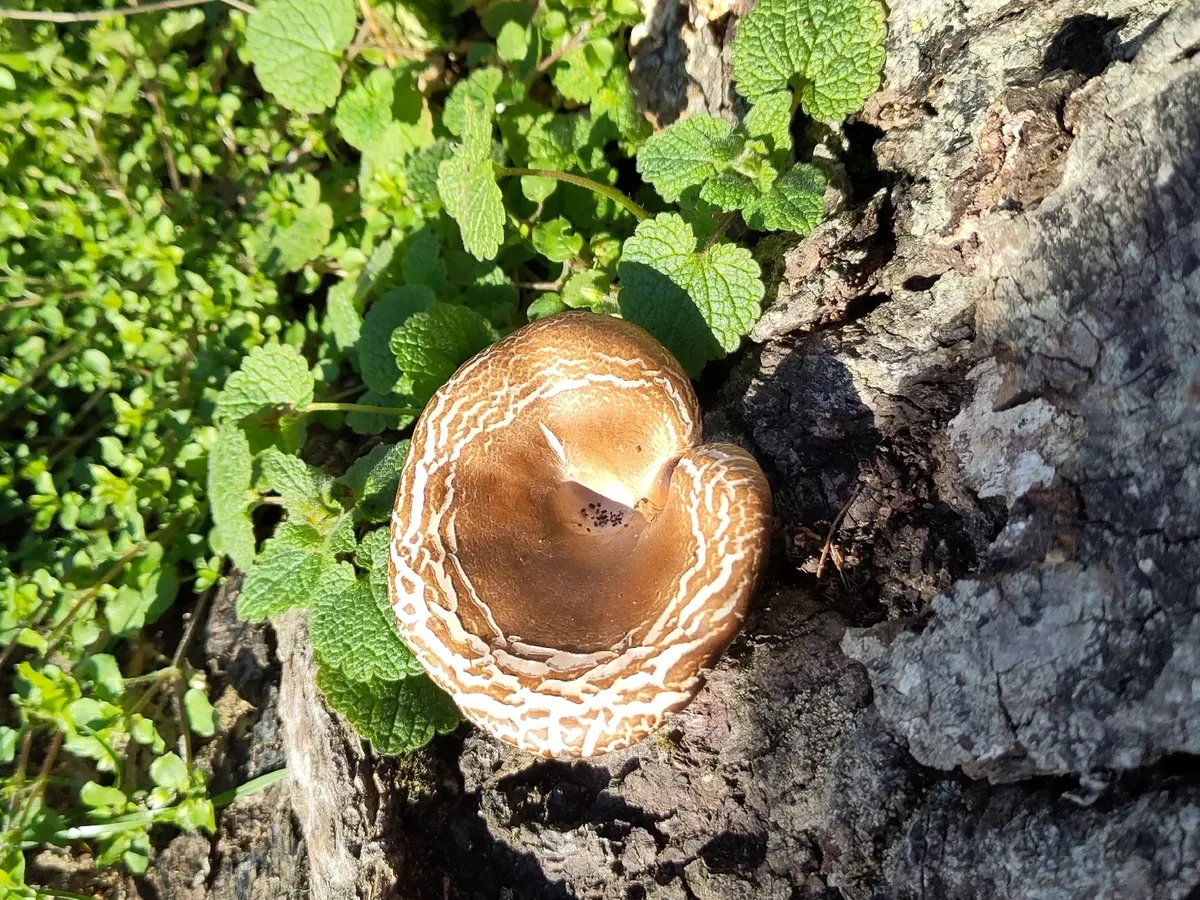
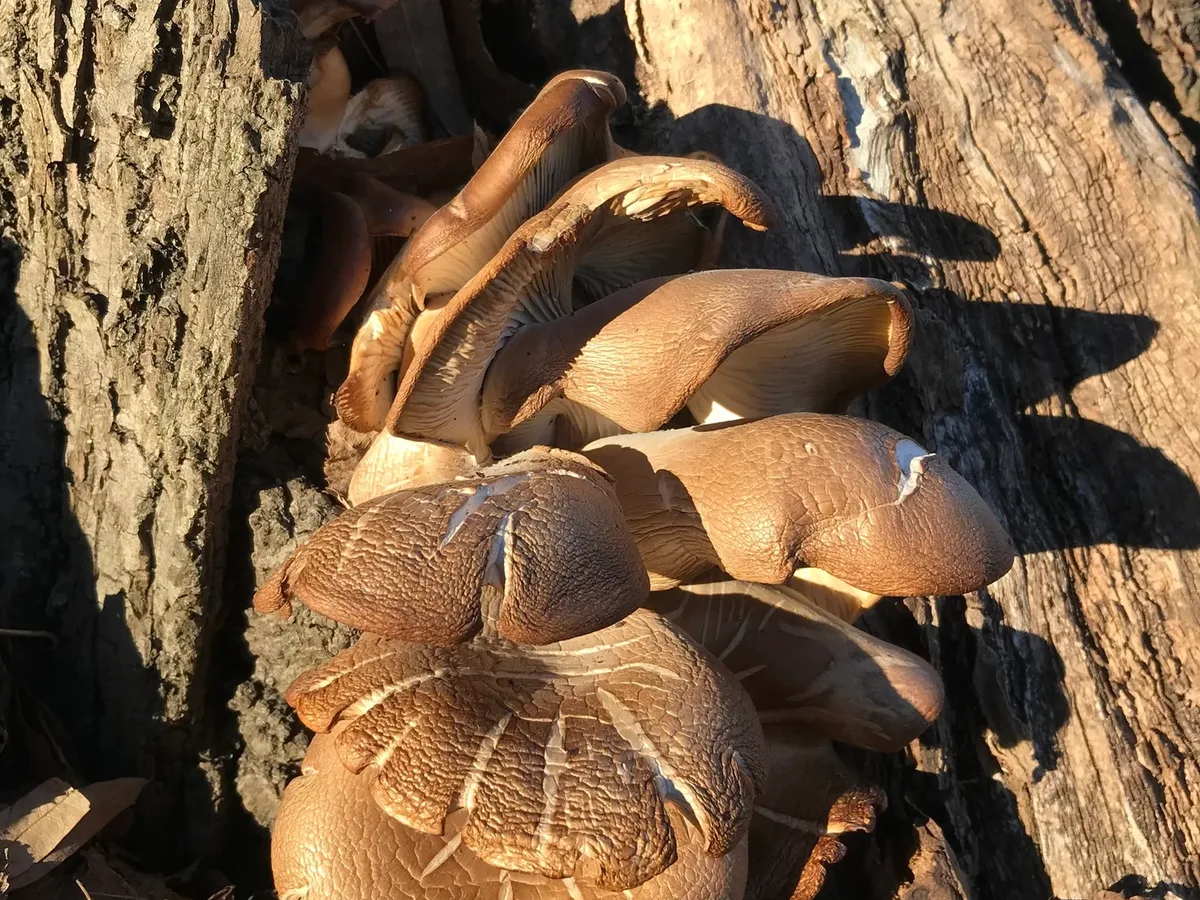
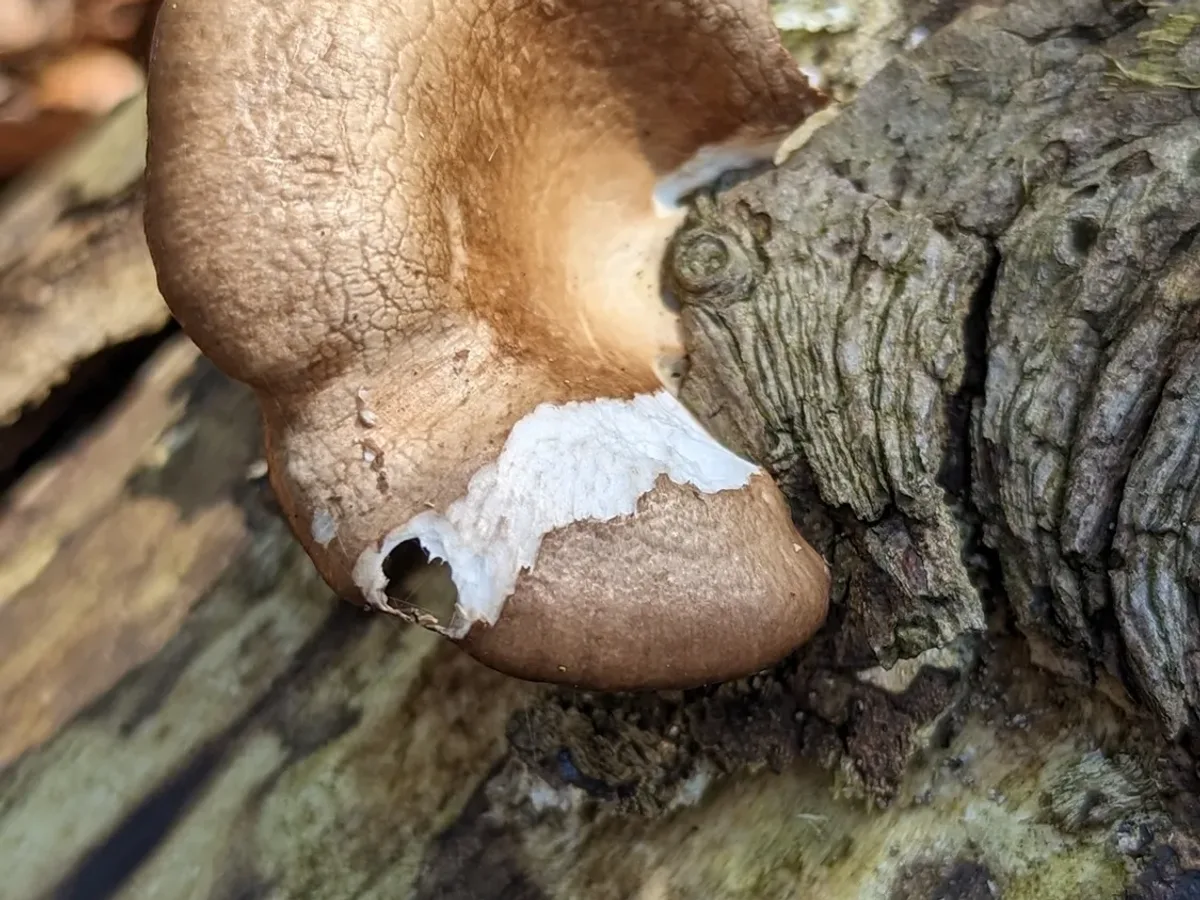
The cap begins as a tight, inrolled lobe pressed close to the wood, then expands into the characteristic fan or oyster shell shape, reaching anywhere from 5 cm on young specimens to a sprawling 25 cm on mature ones.
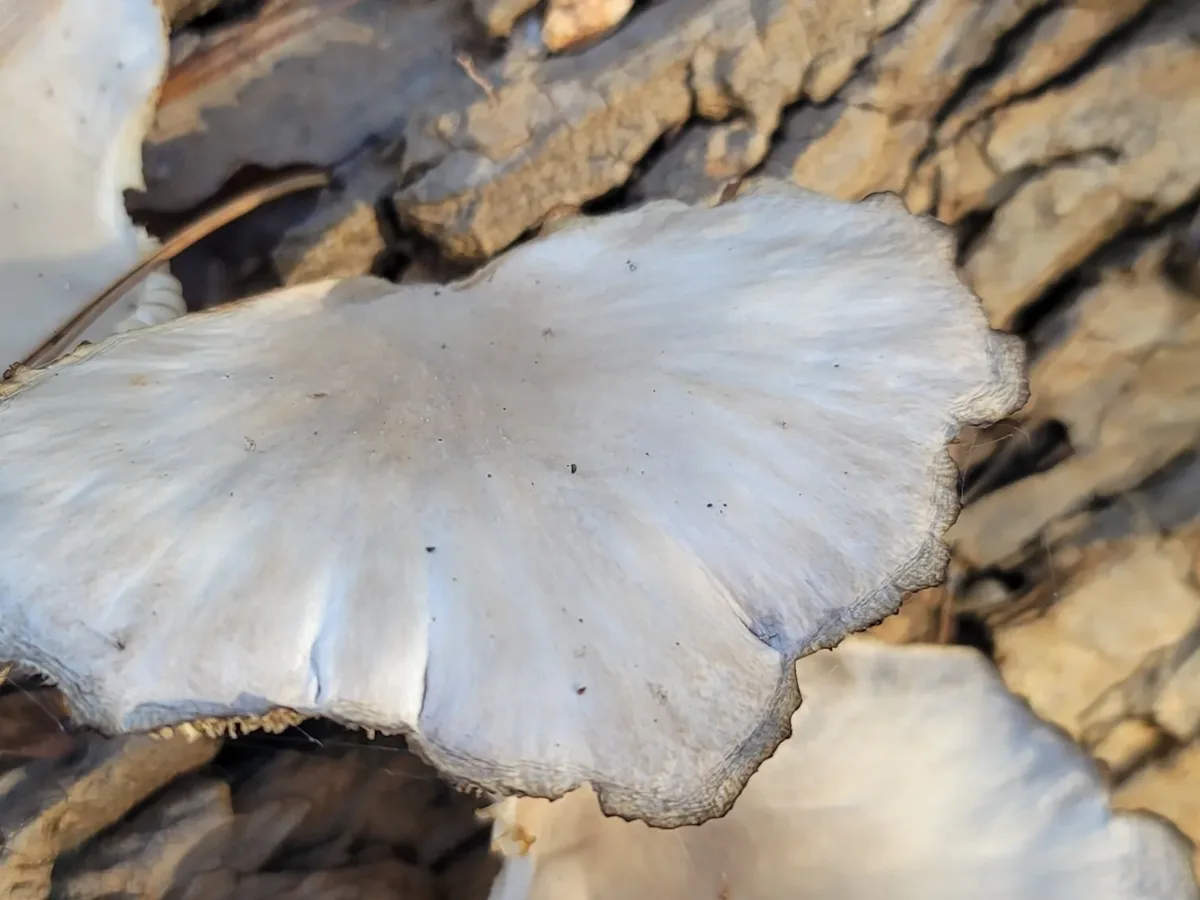
Surface texture is smooth and matte when dry, faintly viscid after rain.
Colour is strongly influenced by the amount of light the growing fruitbody receives: shaded specimens are pale white to cream, while those in brighter spots develop steel-grey or dove-brown tones; cold temperatures shift them toward deeper umber-brown.
A mature cluster can build into a spectacular overlapping architectural shelf, each cap slightly tilted to shed rain and funnel spores outward into the air.
Gills
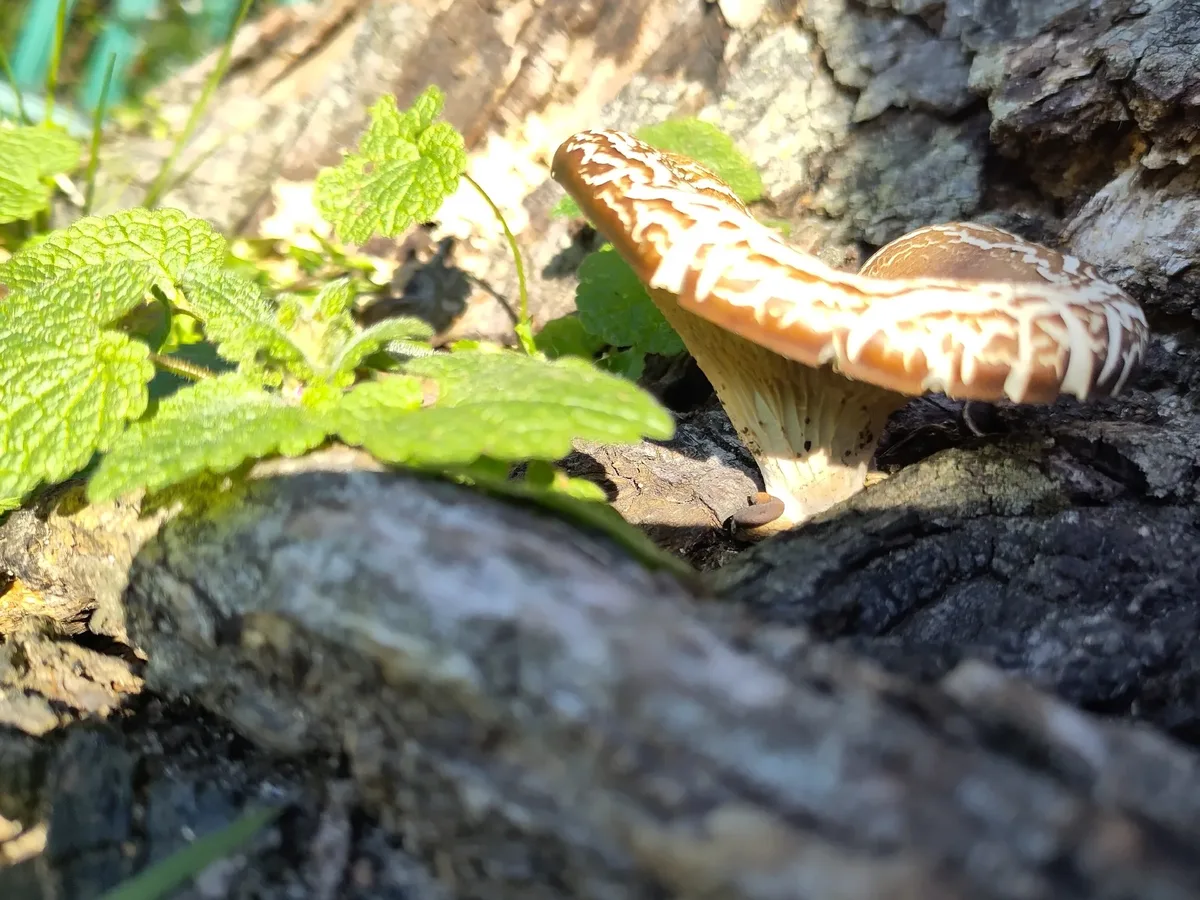
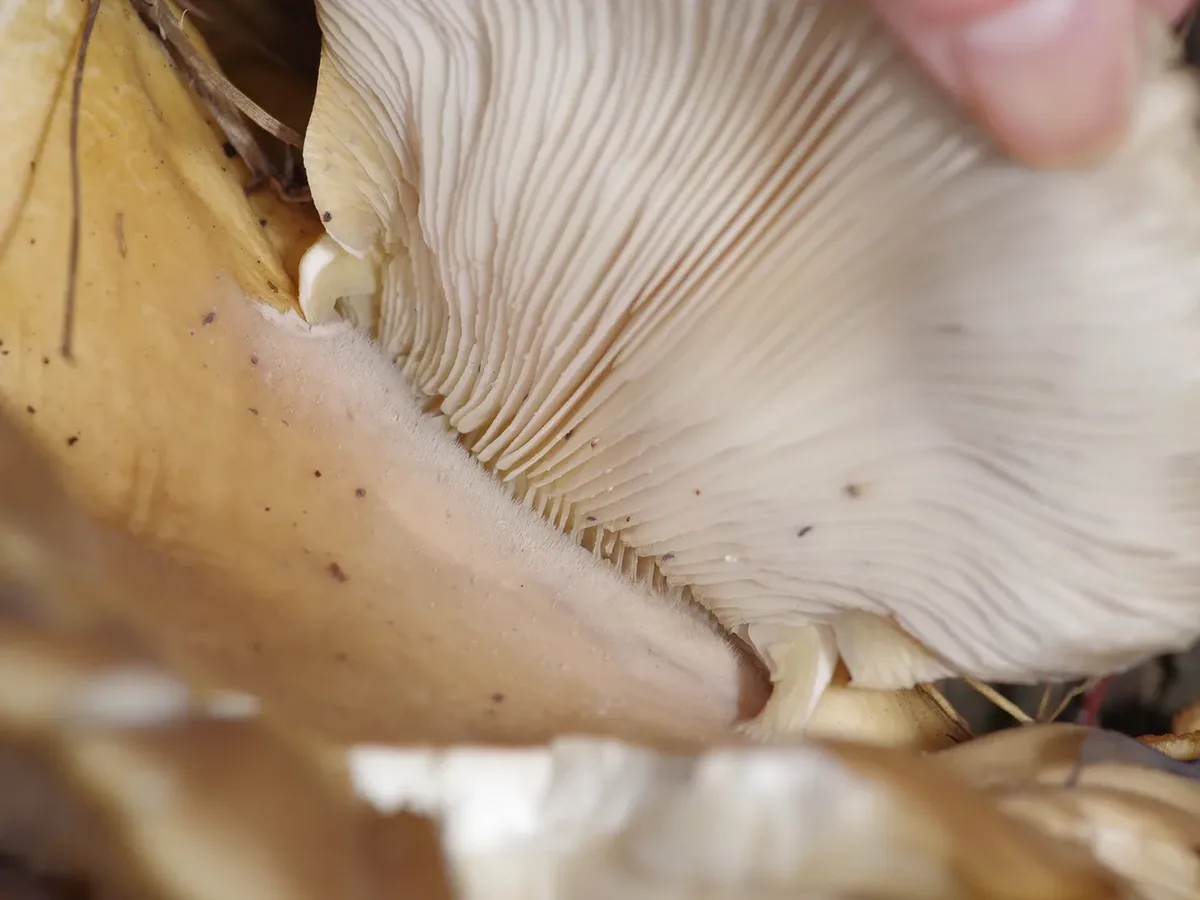
The gills are crowded, white to off-white, and decurrent - they run down the short, stubby stipe and often continue partway along whatever the mushroom is attached to, blurring the boundary between gill and stem.
Spore print white to pale greyish-lilac - a key detail when separating it from lookalikes.
Stem
The stem itself is typically short, stout, and set to one side or nearly absent on clustered shelf forms.
Flesh
When bruised or cut, the flesh is firm, white, and pleasantly scented, with no colour change.
Where & when it grows
Habitat
Pleurotus ostreatus is a wood-decay specialist, not a soil mushroom. If you think you are seeing it on bare ground, look more carefully for buried root material or a half-submerged branch tip just beneath the leaf litter.
In eastern North America its preferred hosts are beech and oak, but it is thoroughly opportunistic: birch, poplar, elm, maple, and alder are all acceptable substrates.
It colonises fallen trunks, cut stumps, standing dead snags, and occasionally the basal wounds of living but compromised trees, which gives it a mild facultative-parasitic streak. The mycelium infiltrates sapwood and heartwood alike, working steadily through cool seasons when the wood holds moisture.
Forest edges, riverbanks, and parks with mature or dying deciduous trees are reliable hunting grounds. Look especially on the shadowed underside of large fallen logs - the first clusters often push out from the least-exposed face, where moisture lingers longest after rain.
When
Oyster mushrooms are among the few wild species that fruit reliably outside the main summer-autumn window, making them valuable winter and early-spring finds across eastern North America. The fruiting window is essentially year-round, but the species strongly prefers cool, damp conditions and goes quiet during the heat of summer.
Autumn flushes begin as temperatures drop below about 15 °C; a significant rain event after a week of cool nights can trigger the first visible pins within three to ten days.
Winter flushes occur wherever temperatures remain above freezing, and in mild spells fruitbodies can persist for weeks without rotting.
Early spring sees another reliable peak as snowmelt saturates logs and stumps before competing fungi have stirred.
This fruiting pattern - filling the 'empty' period between late autumn and early spring - is one of the best practical field aids: when most other mushrooms have disappeared, a pale shelf on a beech log is almost certainly this species.
How it grows
Pleurotus ostreatus is a white-rot fungus: its enzymatic toolkit targets lignin - the structural polymer that makes wood rigid - breaking it down alongside cellulose to leave a bleached, soft, fibrous residue. This places it among the ecologically indispensable decomposers that return locked carbon and minerals to the forest nutrient cycle.
The mycelium spreads through wood as a network of fine, branching hyphae, secreting ligninase and laccase enzymes that work even at near-freezing temperatures - which is why it fruits in winter when competing species cannot.
What makes the biology genuinely strange is that the same mycelium is also a predator: it secretes a toxin - trans-2-decenedioic acid - that rapidly paralyses nematode worms in the surrounding soil. The immobilised worms are then penetrated and digested, supplementing the nitrogen that wood alone cannot supply.
This carnivorous strategy is not incidental; it is a key reason the species can fruit so prolifically on nitrogen-poor substrates.
The fruitbodies themselves grow fast, often doubling in size overnight after conditions align, driven by turgor pressure as the mycelium pumps water from deep in the log.
Fruiting conditions
Wood-decay species that fruits in cool, mild and damp weather; tolerates low temperatures and can flush in autumn, winter and early spring after temperature swings and rain.
Look-alikes
In eastern North America, Pleurotus ostreatus has no deadly lookalikes, which makes it one of the more forgiving species for careful beginners.
The most important species to rule out is the jack-o'-lantern mushroom (Omphalotus olearius and O. illudens), which grows in dense clusters at the base of hardwood stumps and can appear superficially similar in low light.
The distinction is reliable: jack-o'-lantern is bright orange to yellow-orange throughout - cap, gills, and flesh - and its gills are bioluminescent (visibly glow in total darkness, though the glow is faint and best seen after 20-30 minutes of dark adaptation). Oyster mushroom is white, grey, or brown, never orange, and does not glow.
Spore print confirms: oyster prints white to lilac-grey; jack-o'-lantern prints white, but the orange flesh and gills make confusion unlikely by that stage.
The elm oyster (Hypsizygus ulmarius) and phoenix oyster (Pleurotus pulmonarius) are both edible and so similar that misidentification carries no safety consequence.
Other shelf fungi on wood - Ganoderma, Trametes - are tough and leathery and cannot be mistaken once handled.
Also edible.
Poisonous; grows in clusters but is orange-coloured and has true luminous (bioluminescent) gills.
Also edible.
In the kitchen
Picking & cleaning
Harvest whole clusters by cutting cleanly at the base where they attach to the wood, leaving as little stub as possible - a clean cut discourages secondary rot at the wound and helps protect any remaining mycelium for future flushes.
Young, firm fruitbodies with inrolled or just-opening cap margins are the best table quality; once caps fully flatten and the edges begin to fray or yellow, texture degrades and insect larvae are more likely to have moved in.
Shake or tap freshly cut clusters over a bag before heading home: beetles and their larvae shelter in the gill spaces and are easier to dislodge while the mushroom is still cool.
Avoid specimens with a strong, stale or sour smell - normal oysters have a mild pleasant scent - and discard any portions that are slimy, darkening, or show signs of secondary bacterial breakdown.
Because a single log can produce multiple flushes across a season, note the location: returning after the next significant rain event often rewards a second or third harvest from the same substrate.
Cooking
Pleurotus ostreatus is one of the most kitchen-friendly wild mushrooms: it has no prep complexity, cooks evenly, and its mild flavour integrates well with almost any savoury context. The characteristic gentle seafood undertone - faint brininess and umami - intensifies with high heat.
Searing in a dry or lightly oiled pan over high heat until the edges are golden and slightly crisped is the technique that draws out the most flavour; crowding the pan steams rather than sears and produces a limp, watery result.
For stir-fries and Asian-inspired dishes, tear large caps into strips along the gill lines - the texture holds better than a knife cut. The mushroom reduces considerably in volume with heat, so start with more than you think you need.
It pairs naturally with garlic, ginger, butter, cream, miso, soy, and white wine. In soups and stews it softens readily and absorbs surrounding flavours; add it toward the end of cooking to preserve some texture.
Large, thick caps sliced into planks can be pan-roasted as a substantial meat alternative. Leftover cooked oyster mushroom keeps for two to three days refrigerated and reheats without becoming rubbery, unlike many other species.
Good to know
Pleurotus ostreatus is widely regarded as one of the safest wild mushrooms for beginners. Its distinctive shelf-cluster habit on deciduous wood, white-to-grey colouration, decurrent white gills, and white-to-lilac spore print together form a robust identification picture, with no deadly species overlapping all these features in eastern North America.
That said, a small number of people experience mild gastrointestinal upset from undercooked or raw oyster mushrooms. This is reliably avoided by thorough cooking, which also deactivates the raw-mushroom allergens that can occasionally trigger respiratory sensitivity in people who work in large-scale cultivation environments.
Collect only from substrates you can confidently identify as uncontaminated deciduous wood. Oyster mushrooms on dead softwood (conifers) or in heavily polluted urban environments are less desirable, as wood-decay fungi can bioaccumulate environmental contaminants.
Always inspect for insect infestation, particularly in warm-season specimens. When collecting in new terrain, confirm spore print colour and gill structure before eating.
A reference guide - never an edibility guarantee. When in doubt, leave it out.