The great Mediterranean mushroom guide
10 edibles to fill your basket with, 8 to recognise
The great Mediterranean mushroom guide

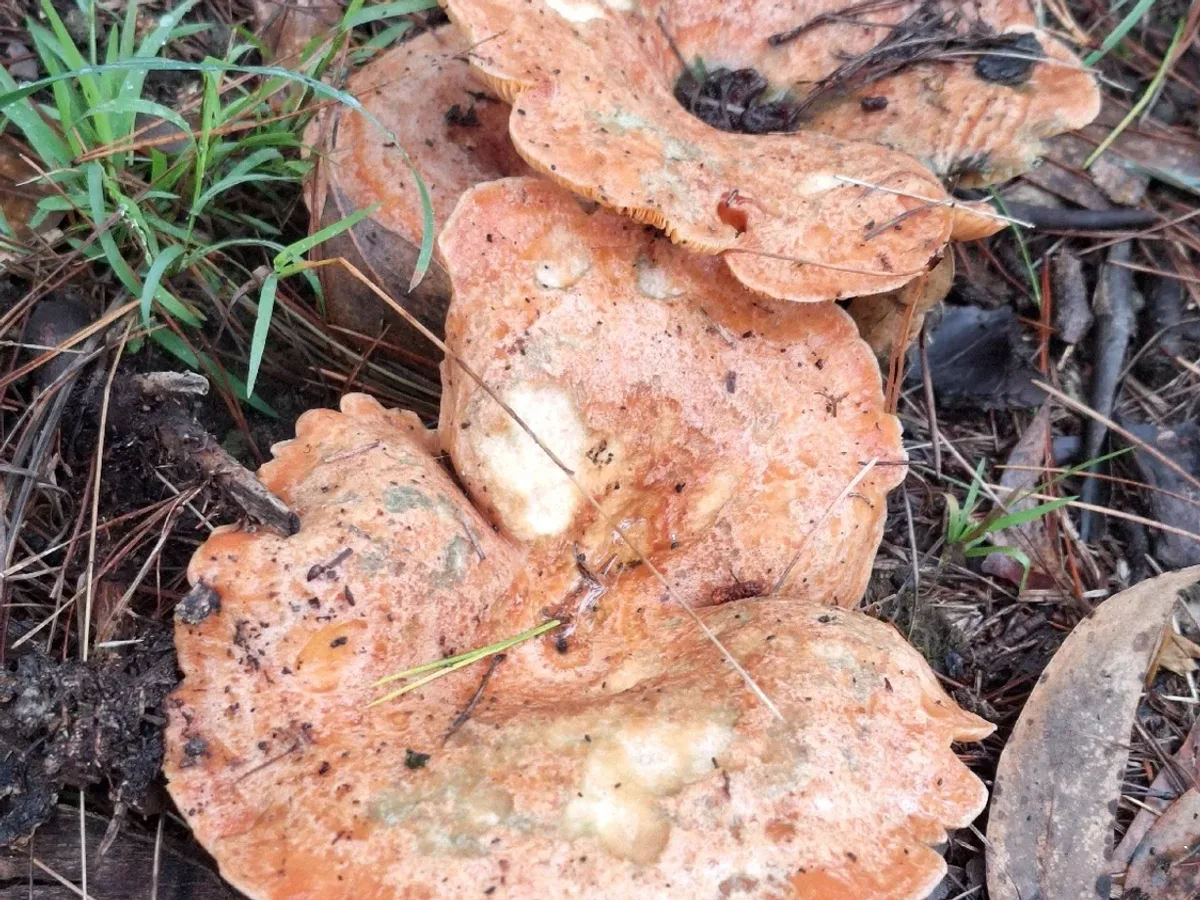 Saffron milk cap
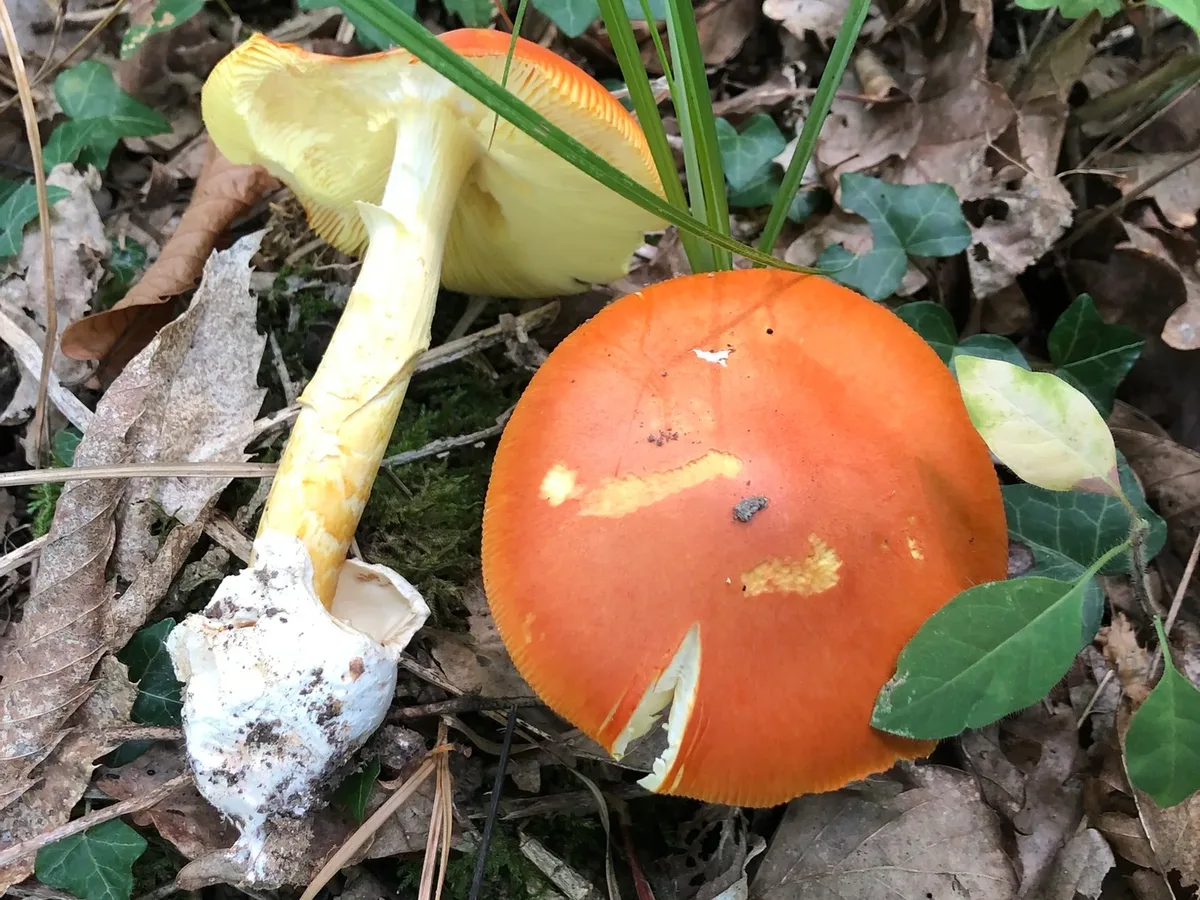 Caesar's mushroom
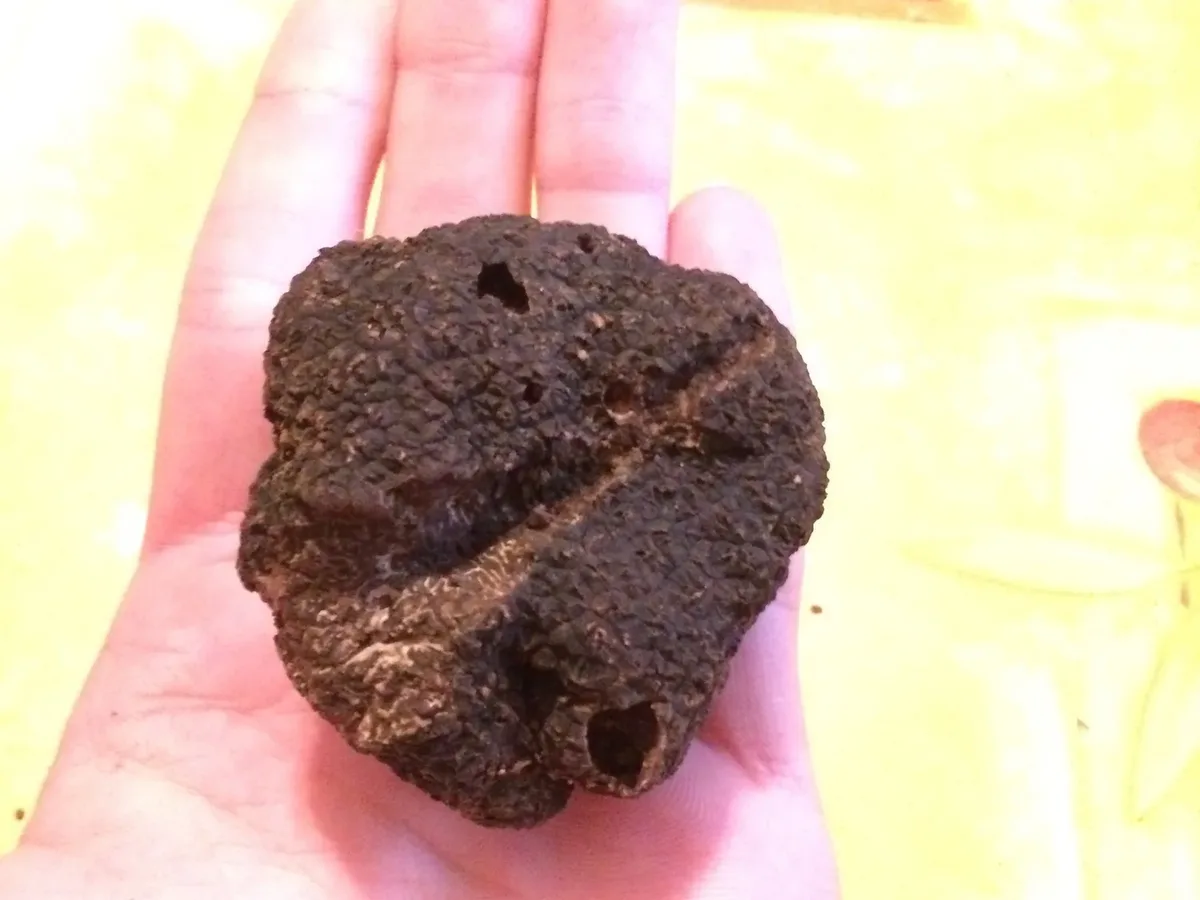 Black truffle
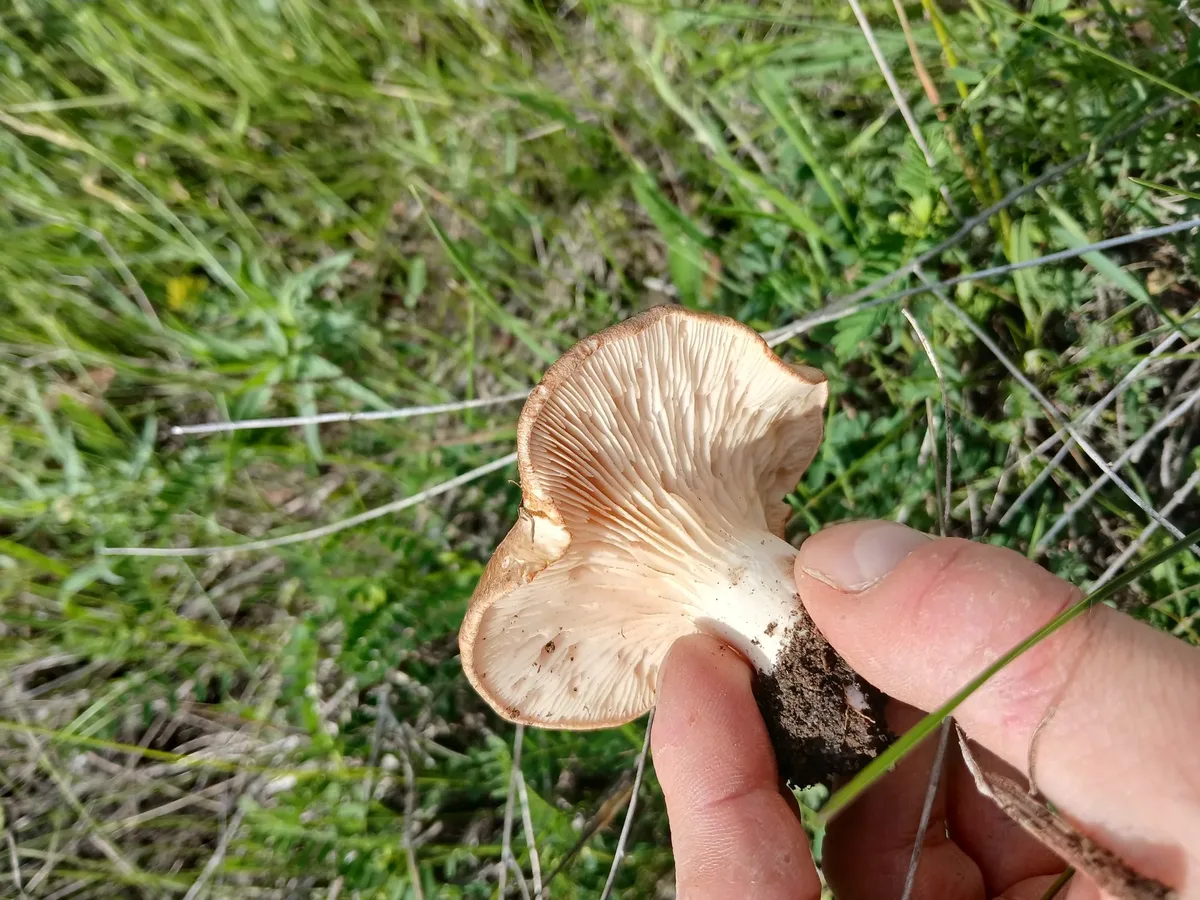 King oyster mushroom
 Saffron milk cap
In the cork-oak, holm-oak and pine country of southern Europe the season runs backwards from the North: summer drought stills the ground, and the harvest follows the autumn rains, with a second flush in late winter and spring. Around ten celebrated edibles fill the basket here, while a handful of deadly look-alikes grow in the very same oak woods. This is a calm, honest map of both, never a guarantee of safety.
What matters most
- The safest beginner edibles are the saffron milkcap (orange or red milk under pines), the king oyster (sea-holly habitat, decurrent gills, no ring or volva) and the desert truffle (no toxic double).
- The deadliest trap is the death cap, Amanita phalloides, growing in the same oak woods as Caesar's mushroom and the green russulas it is mistaken for.
- Two more cause repeated serious poisonings here: the small deadly dapperling (Lepiota brunneoincarnata) and the livid pinkgill (Entoloma sinuatum).
- Main toxin groups to learn: amatoxins (liver, deadly), orellanine (kidneys, very delayed) and muscarine; plus gyromitrin-style and gastrointestinal toxins.
- Yellow knight (Tricholoma equestre/flavovirens) is now treated as risky and is banned from sale in Italy after fatal rhabdomyolysis cases.
- Handling and storage matter: never freeze milkcaps or boletes raw, brush truffles rather than wash them, and rinse the gritty desert truffles thoroughly.
The great toxin groups
A few chemical families account for nearly all the dangerous mushrooms of the region. Learning them, and how slowly their symptoms can appear, is the difference that saves lives.
The deadliest group, found in Amanita phalloides, the white Amanita verna/virosa, small Lepiota and Galerina marginata. Not destroyed by cooking, drying or freezing; a single mature cap can kill. Symptoms are treacherously delayed: violent gastrointestinal upset 6 to 24 hours after the meal, a deceptive false recovery, then liver failure over the following days.
Found in Cortinarius orellanus and C. rubellus. Notorious for extreme latency: symptoms appear 2 days to 3 weeks later (typically 1 to 2 weeks), first flu-like, then kidney failure. There is no antidote; treatment is dialysis, and only about 30 percent recover full kidney function.
High levels in Inocybe and Clitocybe species, and present in Omphalotus olearius. Causes a rapid-onset PSL syndrome within 15 to 30 minutes: sweating, salivation, tearing, constricted pupils, stomach upset and slowed heartbeat. Treated with atropine.
Caused chiefly by Entoloma sinuatum, one of the most common severe poisonings in the Mediterranean. Violent vomiting, diarrhoea and abdominal pain; rarely life-threatening but very distressing and dangerous for children, the elderly and the frail.
The edibles
 Saffron milk cap
 Saffron milk capSaffron milk cap
 Saffron milk capSaffron milk capSaffron milk cap
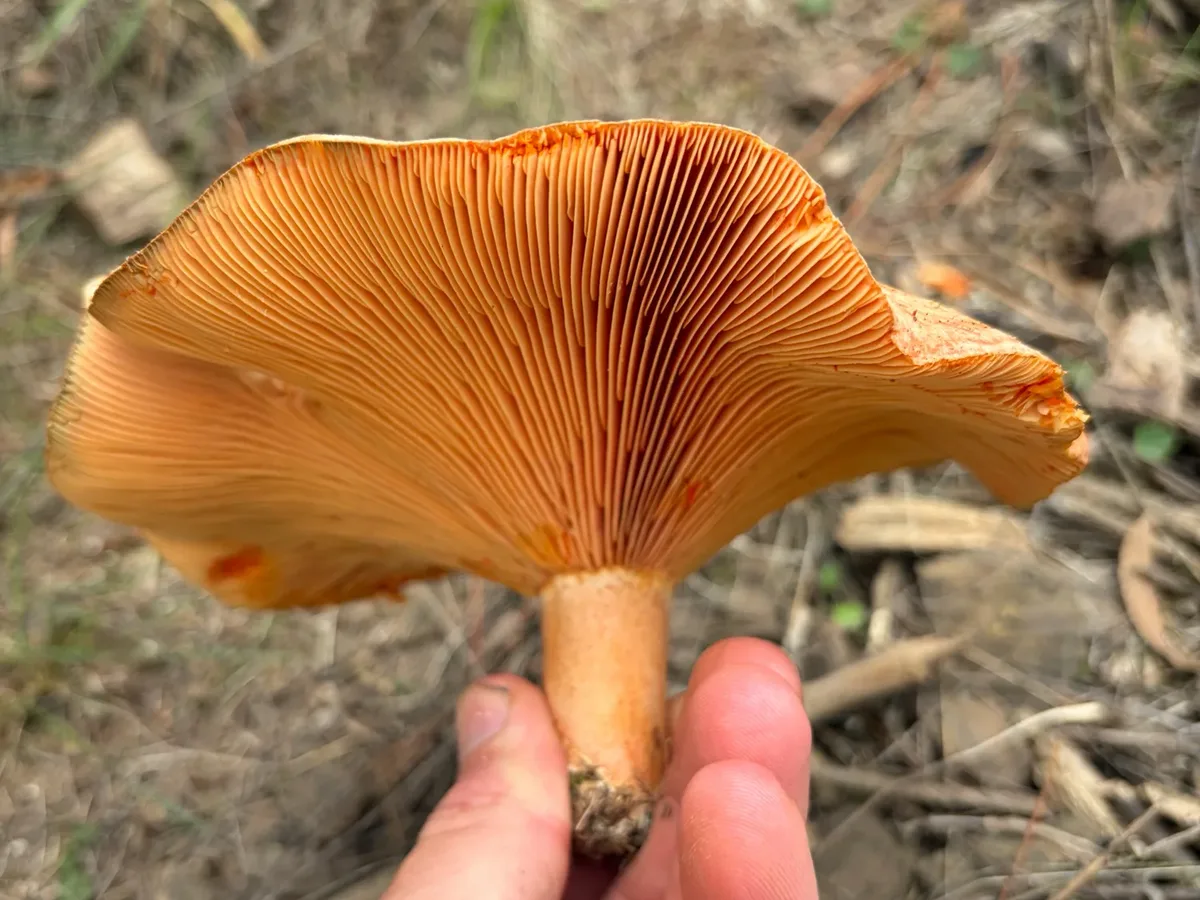
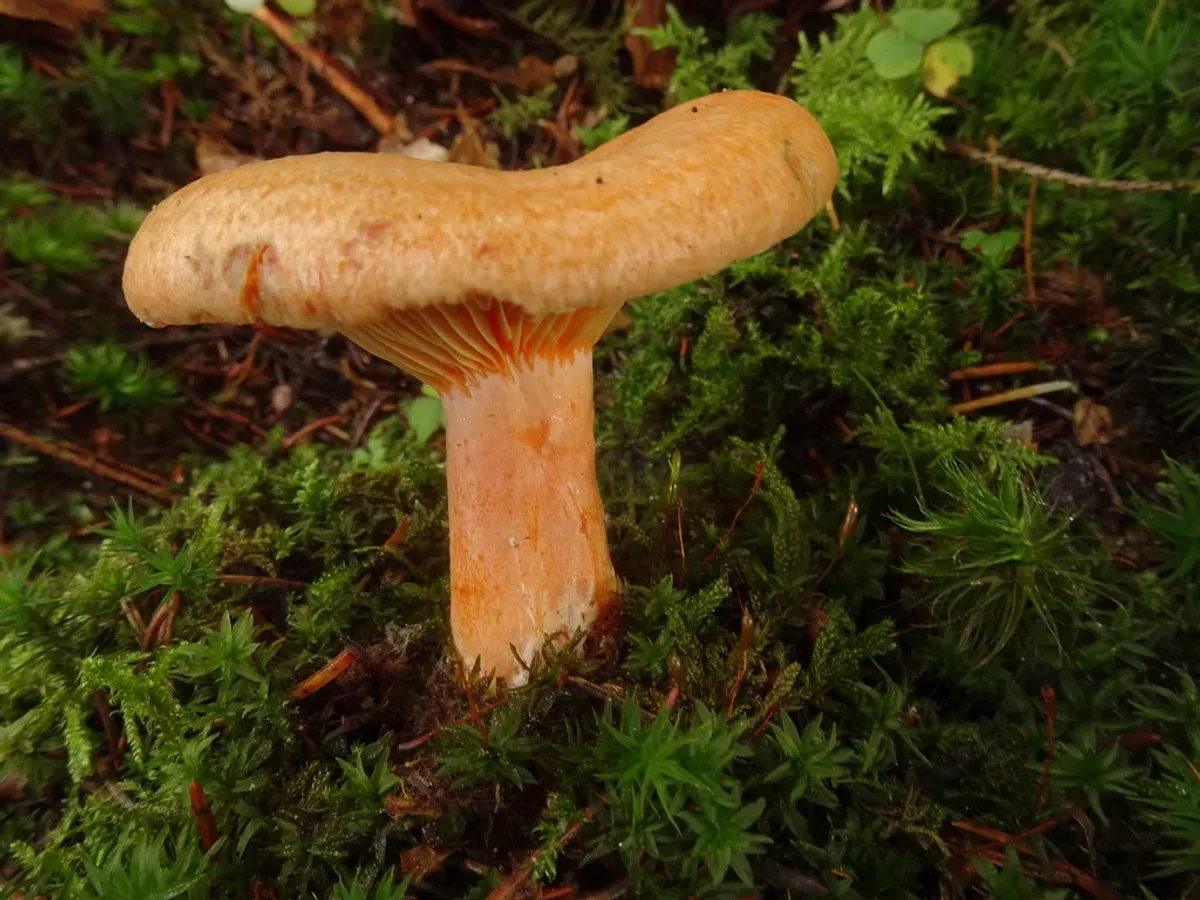
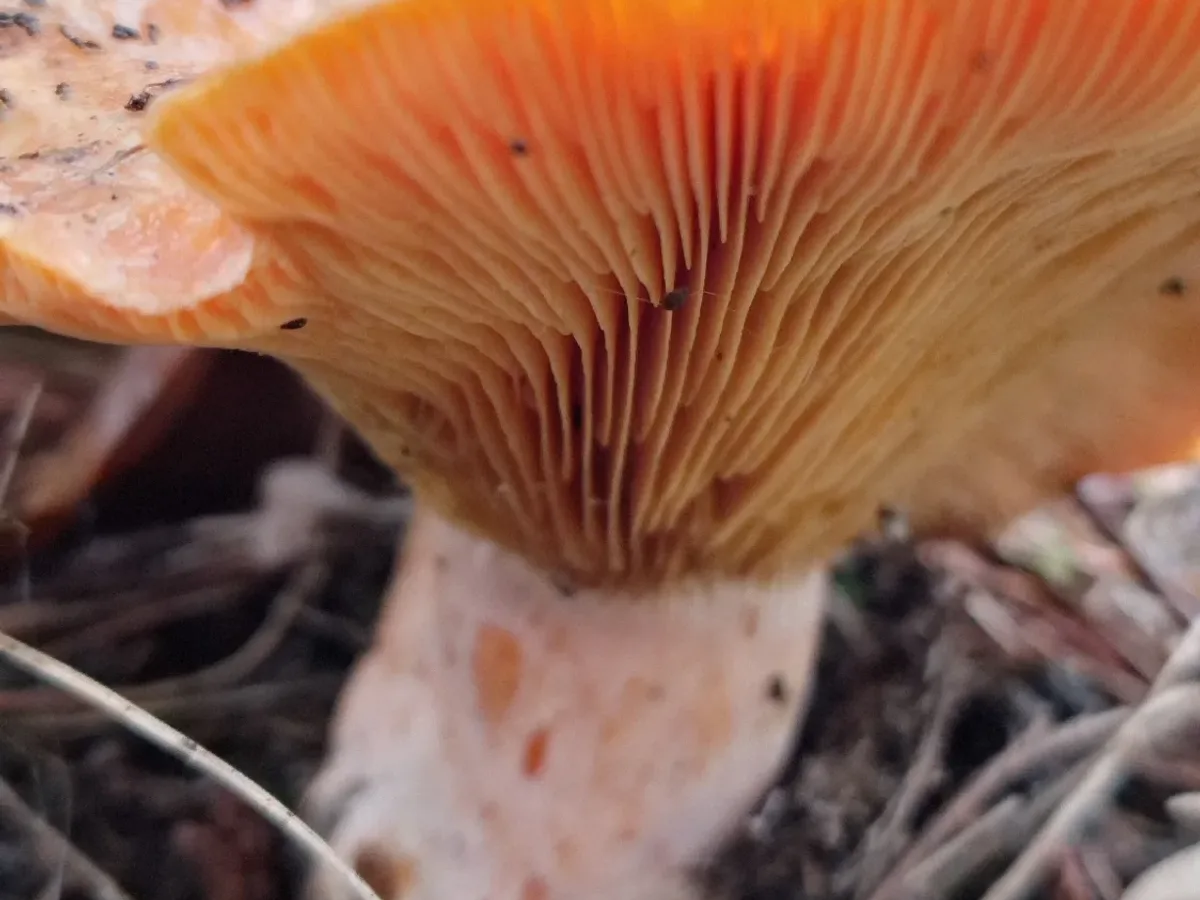
Saffron milkcap
Lactarius deliciosusThe orange or blood-red milk that bleeds from a cut, under pines, is its unmistakable signature.
How to recognise it
Cap 6-20 cm, bright orange-gold with darker concentric rings - striking even under the pine litter. Young specimens are convex with the margin curled under; with age the cap opens out to a funnel or vase shape. Gills are orange and densely packed. Cut the stem or break a gill and it immediately bleeds a clear, carrot-orange milk (latex) - the species' unmistakable calling card. Any bruising produces a telltale green discoloration. Stem hollow, 5-8 cm, pitted with orange dimples (scrobiculations). Mild, slightly peppery taste and a pleasant aromatic smell.
Where it grows
Found exclusively under introduced pines (Pinus radiata, P. pinea, P. halepensis) in plantations and pine plantings, on moist but well-drained ground beneath thick pine-needle litter. Key locations: NSW (Oberon, Blue Mountains/Hampton, Jenolan, Vulcan State Forest), Victoria (Macedon Ranges, Mornington Peninsula, Bright), SA (Mt Crawford/Adelaide Hills), Canberra; and in New Zealand under introduced pines. It arrived with the trees and has colonised wherever they were planted.
Cooking
Grill/fry quickly over high heat (otherwise they become "stewed"/tough). A classic Australian preparation: BBQ'd in a forest picnic area with olive oil, garlic, chili, parsley, served with sourdough bread. Also risotto, soup, pie, schnitzel (dipped in egg and breadcrumbs), pickling in oil/brine, drying into mushroom powder/mushroom salt.
Look-alikes
Amanita species lack the saffron-orange milk and have a volva. If the cap spots wash off and there is no orange milk, do not eat.
These lack the clear saffron color and the combination of orange latex, pine habitat and green bruising.
Greenish-tinged and less tasty, but harmless.
All edible. Only milkcaps with orange/red milk are safe here; those with white, burning milk should be avoided.
Lacks milk and grows on wood.
Also edible; like L. deliciosus it shows orange milk, which distinguishes it from bitter milk caps.
Also edible; distinguished from bitter milk caps by the orange milk.
Distinguish the edible saffron milk caps from bitter milk caps by the carrot-orange milk.
Has white/pink latex and a woolly (shaggy) cap margin, unlike the orange/red milk and smooth margin of the edible milk caps. Avoid it.
The orange latex and its greening reaction are reliable distinguishing features.
 Caesar's mushroom
 Caesar's mushroomCaesar's mushroom
 Caesar's mushroomCaesar's mushroomCaesar's mushroom
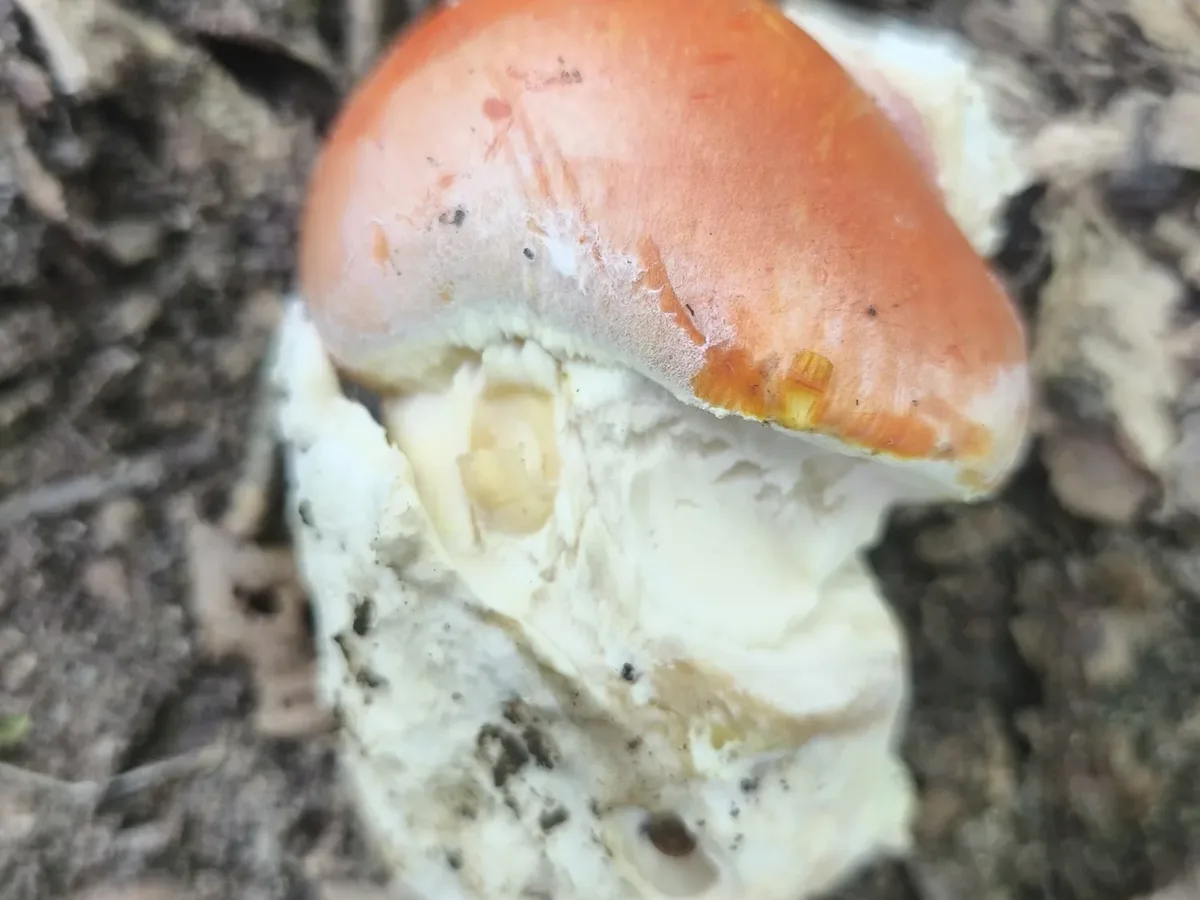
Caesar's mushroom
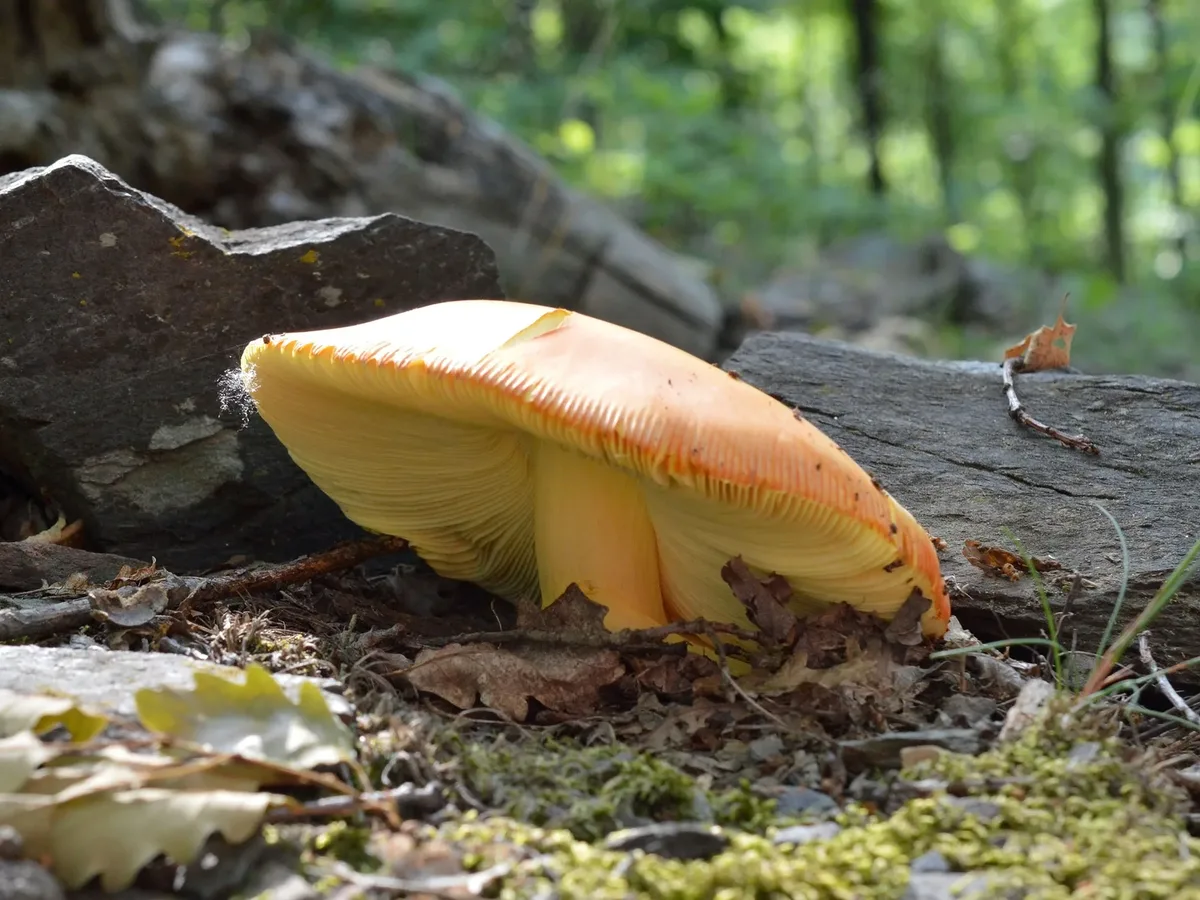
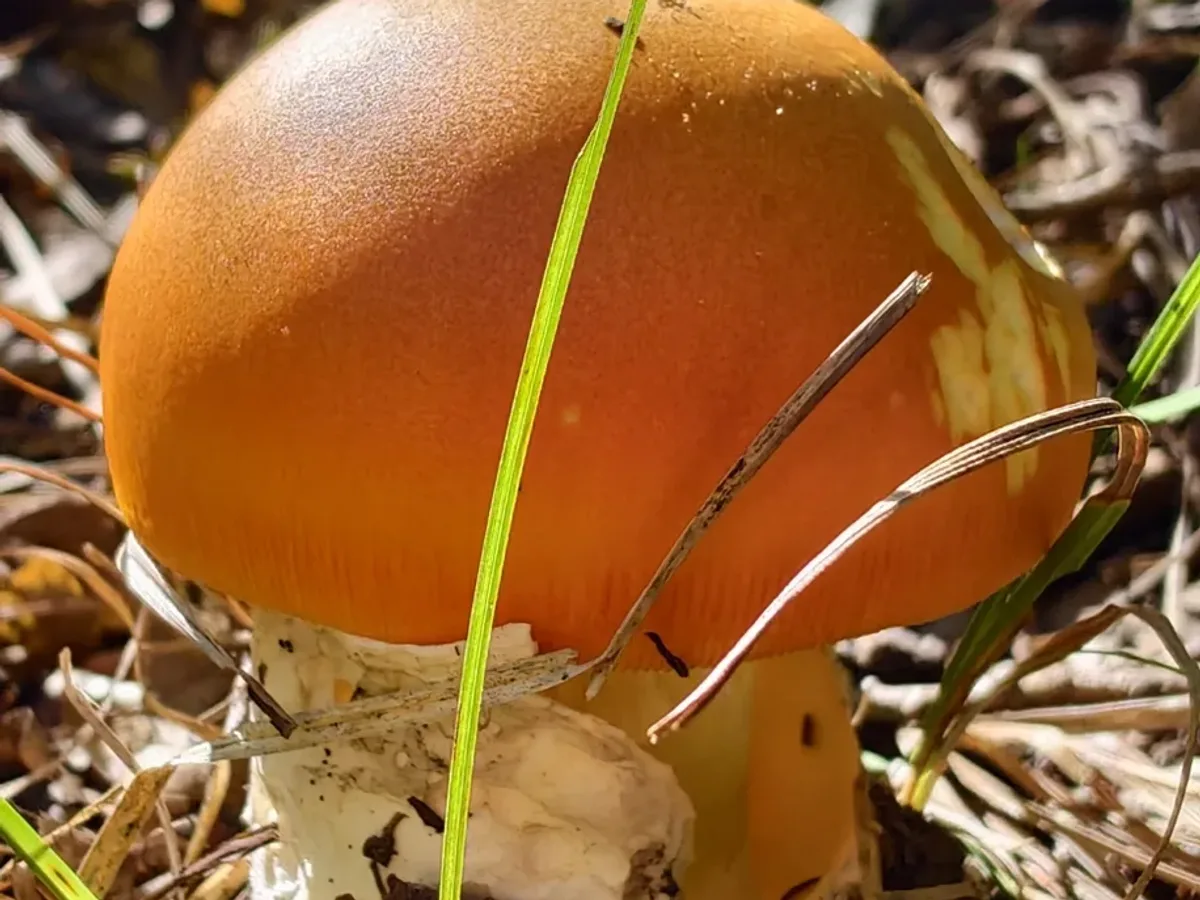
Amanita caesareaOrange cap, golden gills and stem, white sac-like volva: a prized rarity for experienced pickers only.
How to recognise it
Cap 8-15 (18) cm, starting hemispherical - emerging from its egg - then flattening to convex or broadly flat. Colour is a vivid orange to orange-red, smooth, with a finely striate margin. The colour triad that sets it apart from almost everything else: orange cap, bright yellow gills and stem, white sack-like volva at the base. The ring is white and drooping, with a yellow underside. Flesh is white with a yellowish tinge just under the cap skin. Mild, nutty smell. Spore print white.
Where it grows
Found in Mediterranean oak woods - principally holm oak, pedunculate oak, cork oak and chestnut, but also hazel and beech. It is mycorrhizal, meaning it lives in a close, mutually beneficial partnership with the roots of its host trees, exchanging minerals for sugars. It needs acidic (siliceous), well-drained soils and favours sun-exposed slopes.
Cooking
Young eggs/buttons are eaten raw, thinly sliced in salad with olive oil, lemon, salt, pepper and parmesan (insalata di ovoli crudi, carpaccio d'ou de reig). Older specimens are fried in olive oil or grilled.
Look-alikes
In the egg/button stage its gills and flesh are white, never yellow. Caesar's mushroom has bright yellow gills, stem and ring.
White gills and flesh in the egg/button stage, never the yellow gills, stem and ring of Caesar's mushroom.
Red cap with white warts, white gills and white ring, and a bulbous warty base - not a sack-like volva. Caesar's mushroom has yellow gills/ring and a white sack volva.
 Black truffle
 Black truffleBlack truffle
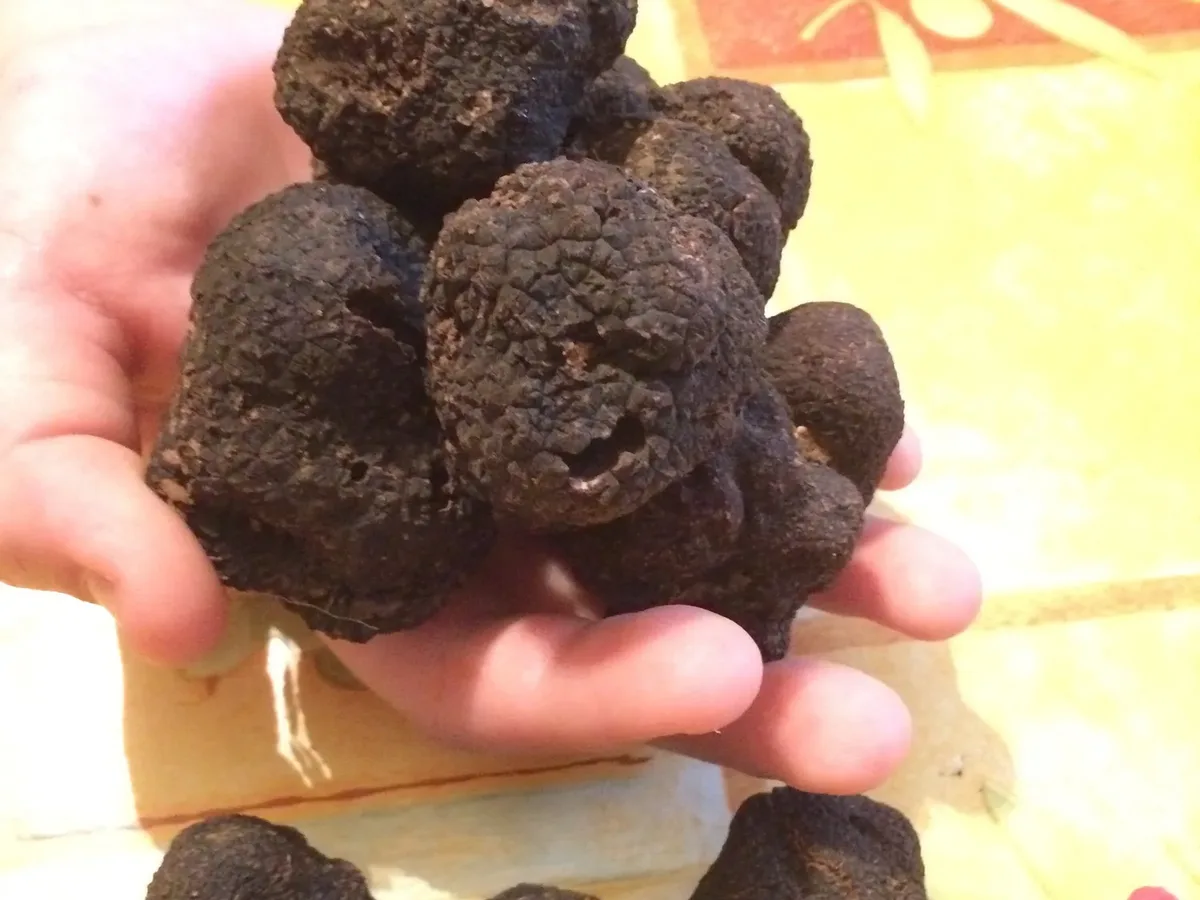 Black truffleBlack truffleBlack truffle
Black (Périgord) truffle
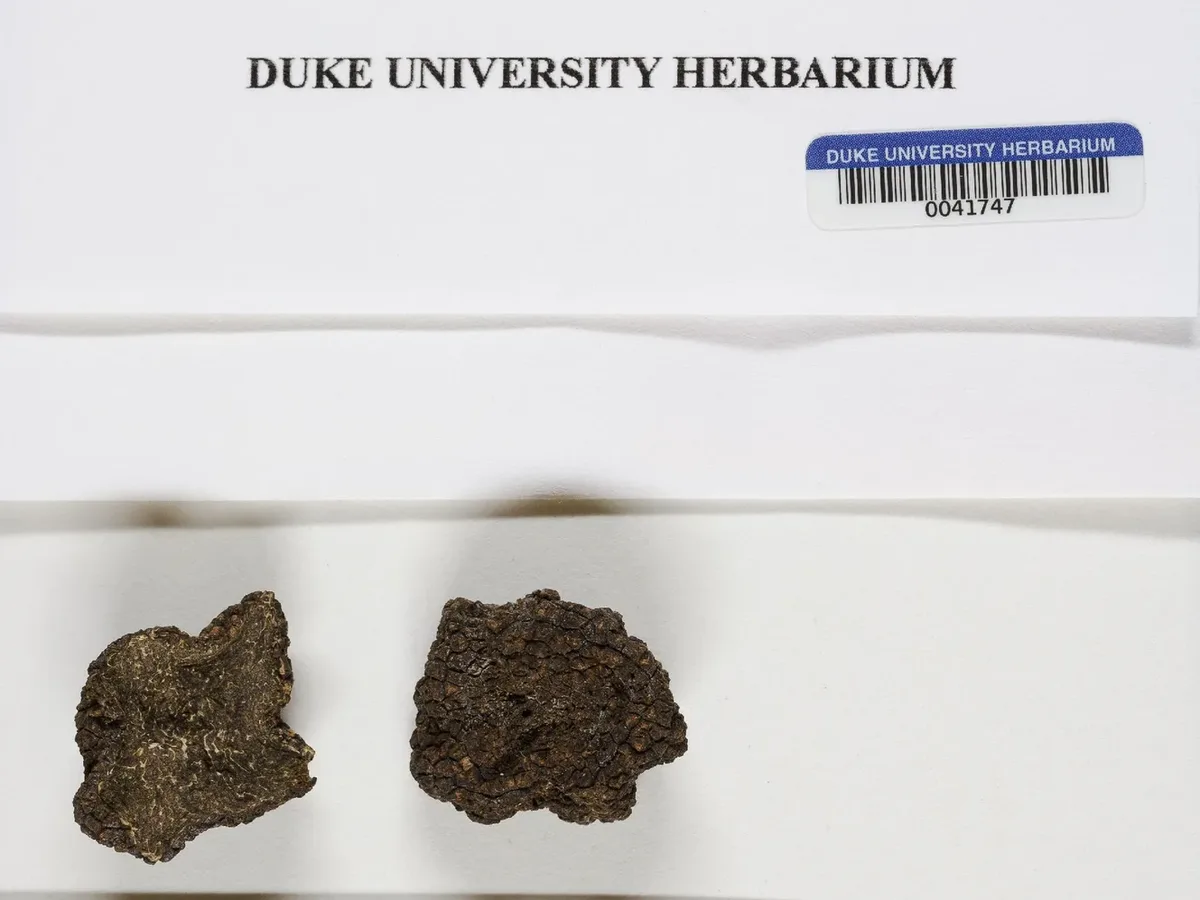
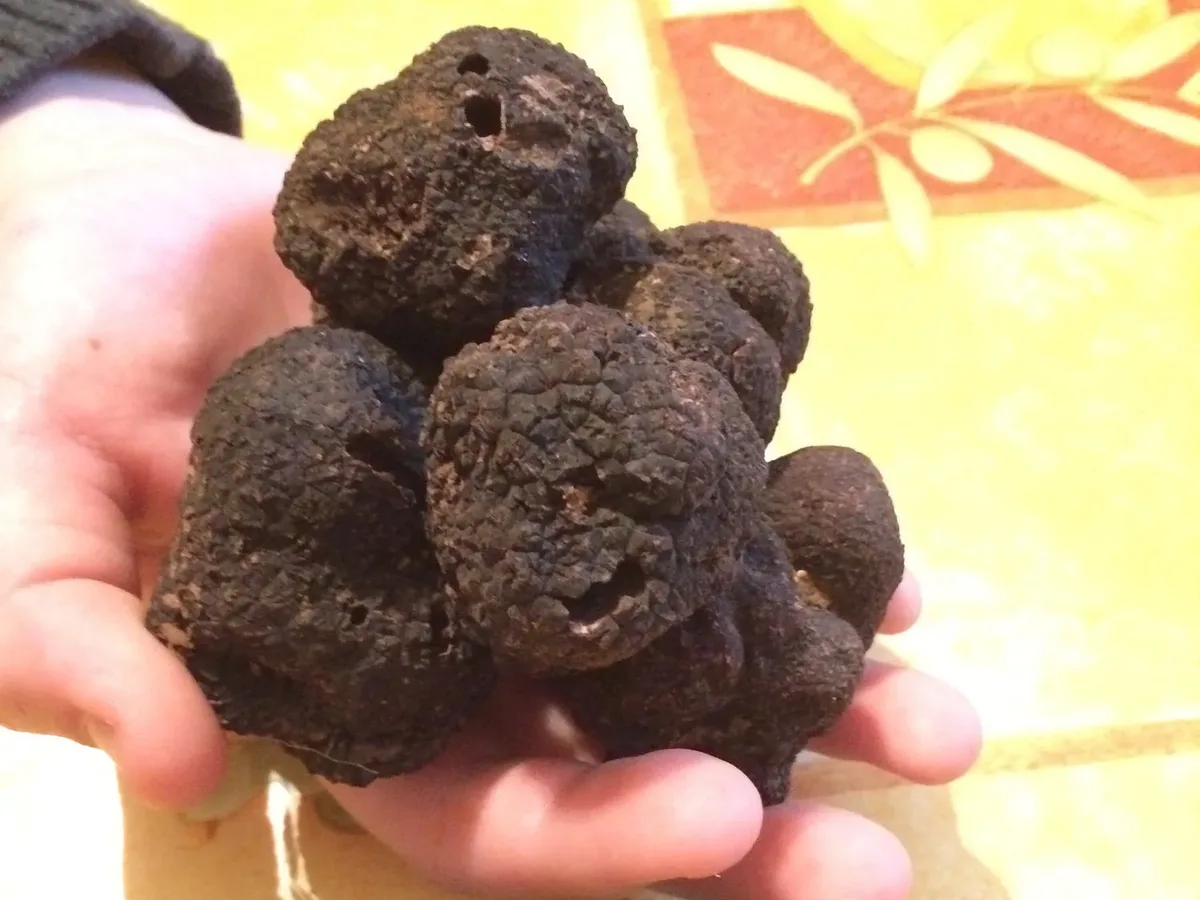
Tuber melanosporumThe black diamond of the winter oak woods, sniffed out by trained dogs.
How to recognise it
Round to lumpy fruiting body, typically 2-10 cm across - though exceptional specimens do appear, including one found in the Dordogne in 2012 that weighed 1.277 kg. The black-brown surface (peridium) is covered in small pyramid-shaped warts that give it an almost armoured look. Slice it open and the flesh (gleba) starts white, then darkens over days to black-brown or purple-black, laced with fine white veins that deepen in the air - a slow-motion transformation that hints at something alive and chemical happening inside. The aroma is strong and complex: earth, cocoa, roasted nuts, all at once. Spores are dark brown and finely spiny.
Where it grows
Black truffle lives underground in a close, long-running partnership with its host trees - principally downy oak (Quercus pubescens) and holm oak (Q. ilex), with hazel on the margins. It demands limestone-rich, well-drained soils with a high pH; heavy or acidic ground will not do. Where a truffle bed is active, the host tree's roots are threaded so densely with mycelium that the grass and weeds around the base die back, leaving a bare circle of soil. This telltale clearing, the brûlé (French for 'burnt'), is one of the few signs of a healthy truffle plantation visible to the naked eye. Core areas span southwestern France (Périgord, Provence), northeastern Spain (Aragón, Catalonia, Castile) and central Italy (Umbria, Tuscany).
Cooking
The aroma of black truffle is volatile and collapses with sustained heat, so it is almost always added at the very end: shaved paper-thin or grated over a dish that is already hot. Classic pairings are pasta (tagliatelle or tajarin al tartufo), soft-scrambled eggs, risotto, and simply buttered bread. A little goes a long way - even a few grams, warm and fragrant over a bowl of fresh egg pasta, is enough to understand why this species has driven a European luxury trade for centuries.
Look-alikes
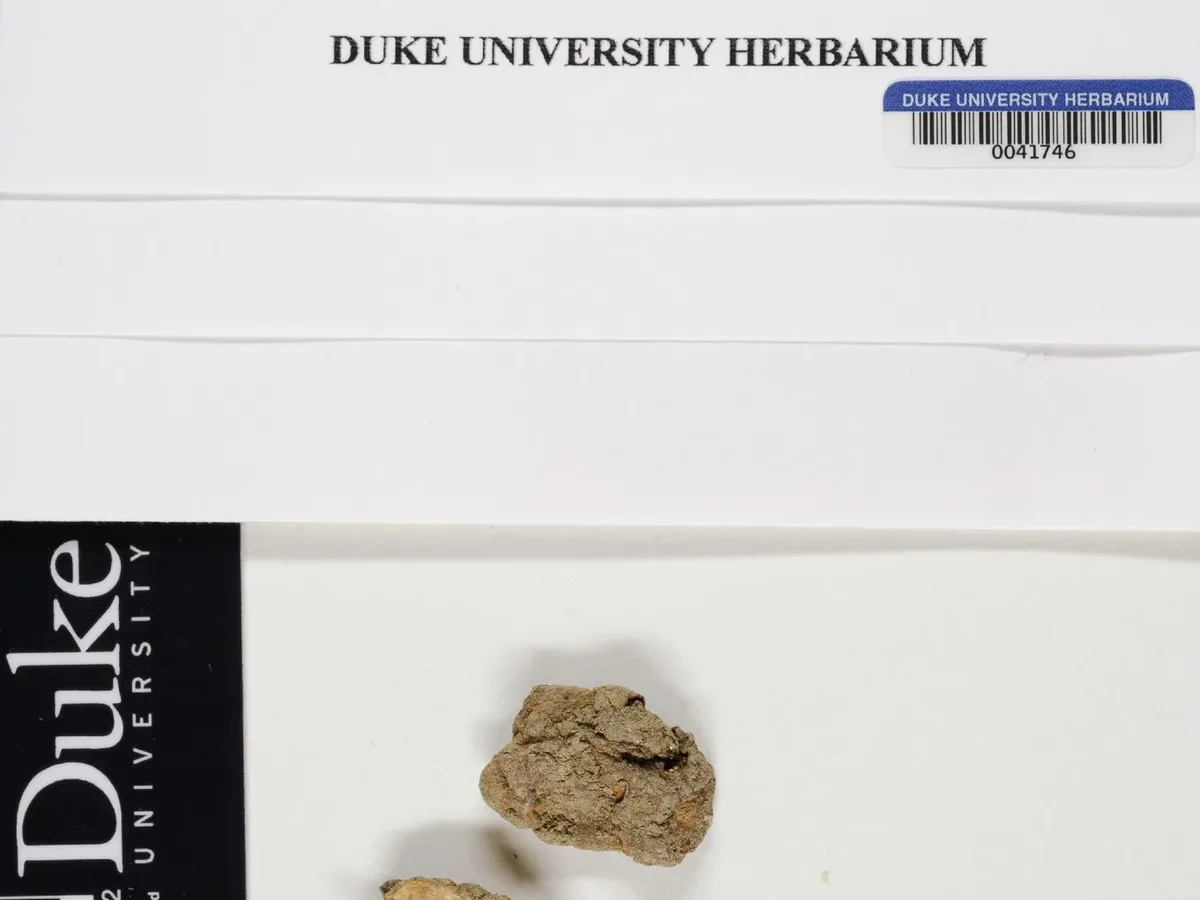
Milder aroma and a smoother, reddish-brown surface; common in counterfeits passed off as black truffle.
Grey-black gleba with white veins that do not darken on exposure to air.
Grey-black gleba with white veins that do not darken on exposure to air.
 Alba white truffle
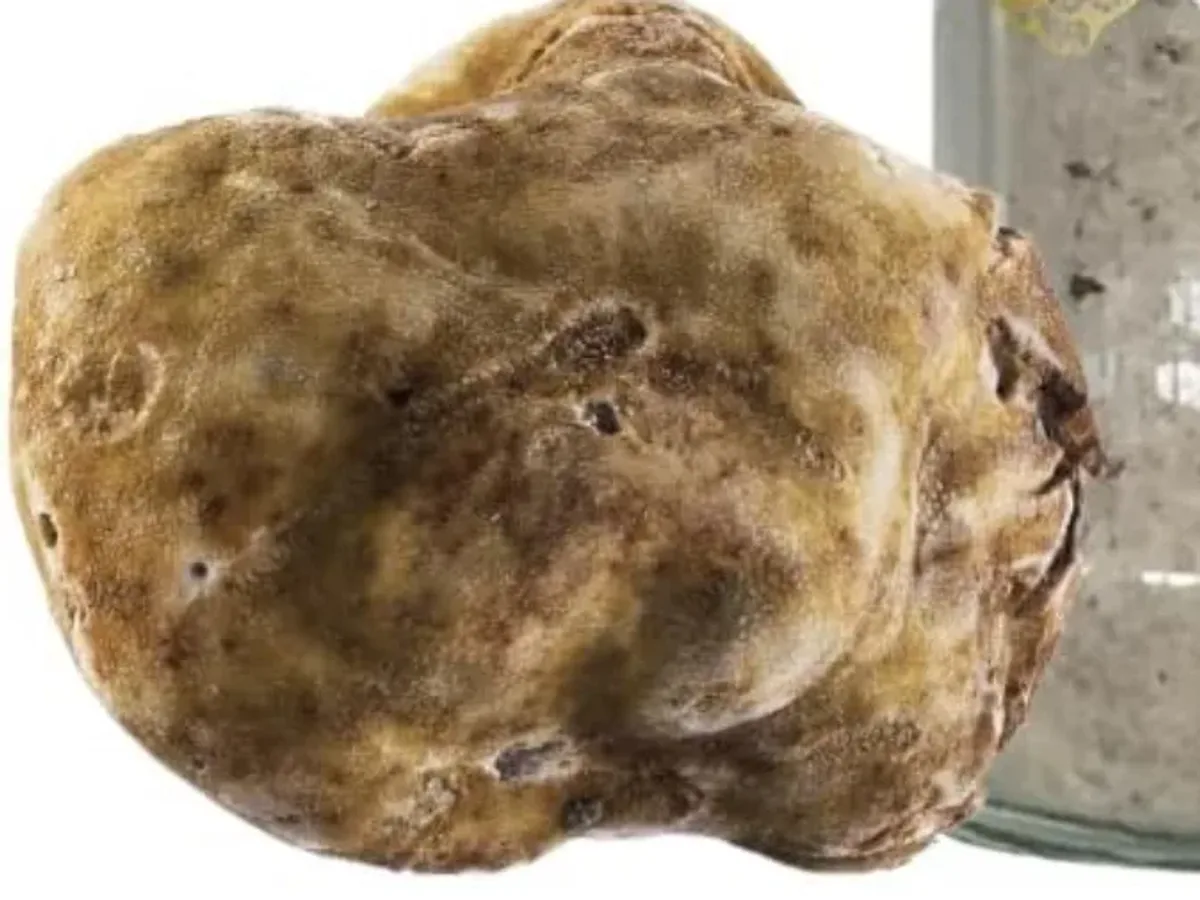 Alba white truffleAlba white truffleAlba white truffle
Alba white truffle
Tuber magnatumThe queen of truffles, the world's most expensive mushroom, always served raw.
How to recognise it
Irregular and smooth-skinned, with a pale ochre-yellow to greenish-yellow surface free of warts. Cut open, the gleba (interior flesh) reveals a cream to brownish ground crossed by white veins - a marbled pattern unique to each specimen. The aroma is unmistakable: powerful, penetrating, and complex, with notes of garlic, honey, lime blossom, and hay. Most truffles are palm-sized or smaller, though exceptional specimens reach 12 cm and 500 g. Notably, Tuber magnatum contains roughly twice the zinc of other truffle species.
Where it grows
Lives underground in moist, neutral to slightly alkaline soils (pH around 7.7), almost always close to watercourses. Like all truffles it is ectomycorrhizal, forming quiet partnerships with the roots of oak, poplar, willow, and lime - relationships that can persist for years beneath the forest floor without a single fruiting body appearing above ground. Found mainly around Alba in Piedmont (the Langhe), and also in Lombardy, Tuscany, Umbria, Marche, and across the Balkans and Pannonia. Attempts at cultivation have so far failed to produce reliable yields, so virtually every specimen you encounter was hunted wild.
Cooking
Always served raw, shaved into thin slices over warm pasta (tajarin), risotto, eggs or cheeses; it is never heated.
Look-alikes
A cheaper species frequently sold fraudulently as Tuber magnatum. Origin and species can be confirmed by isotope analysis.
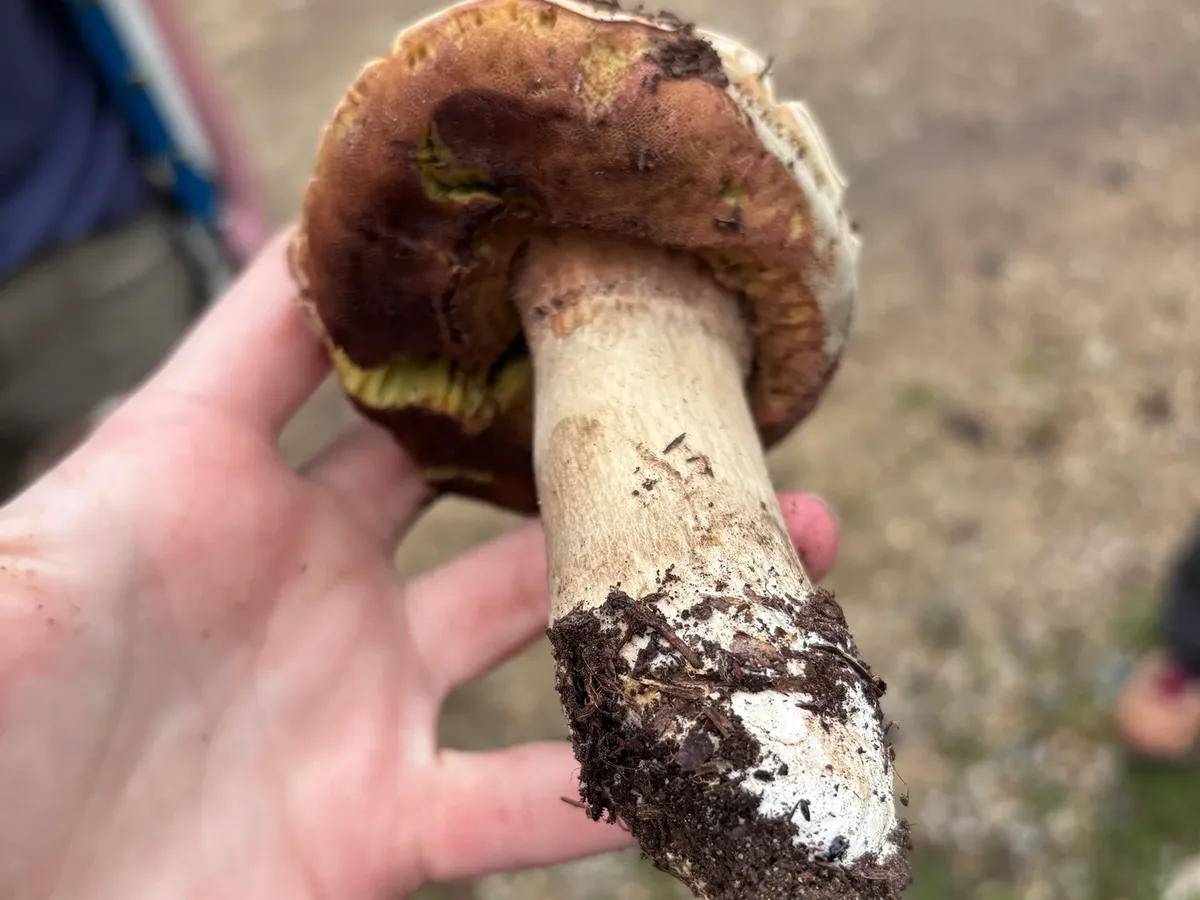 Cep
Cep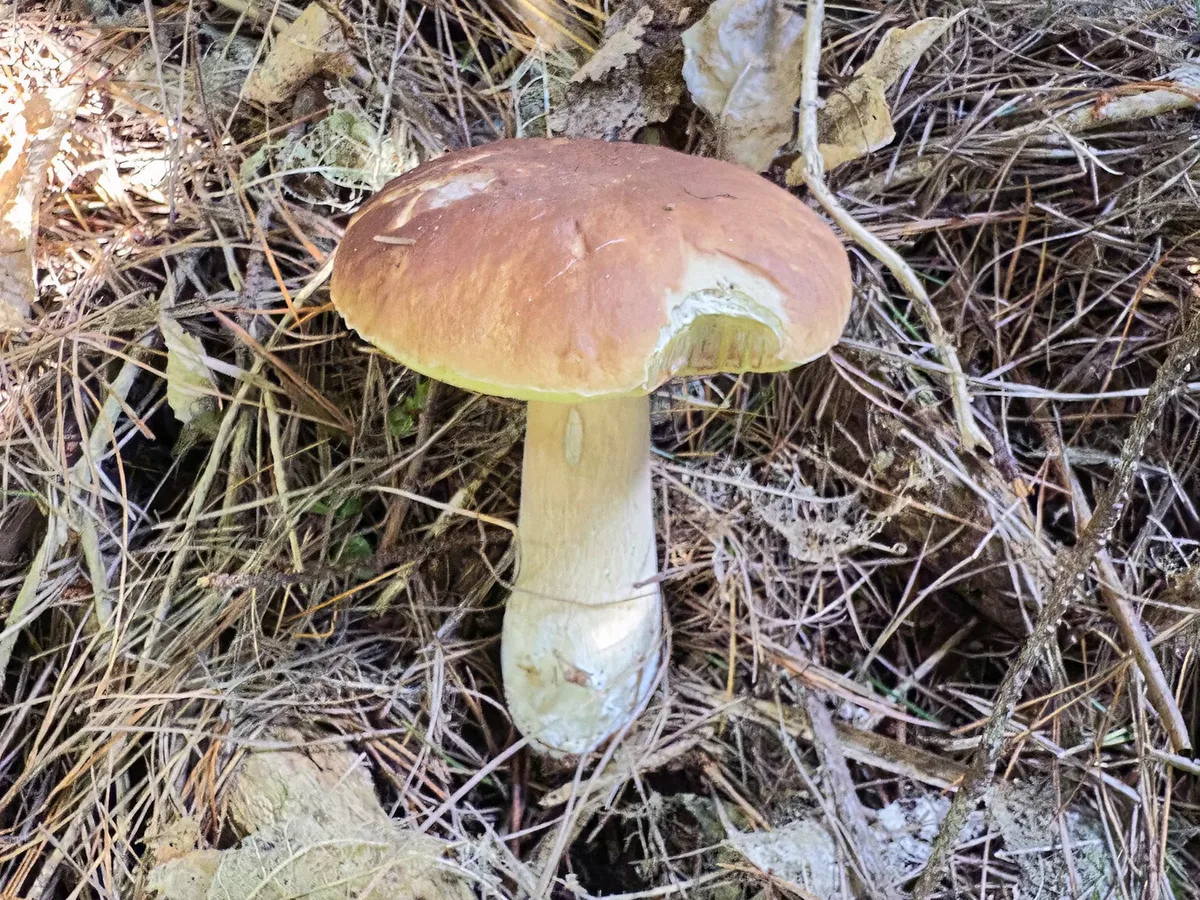 Cep
Cep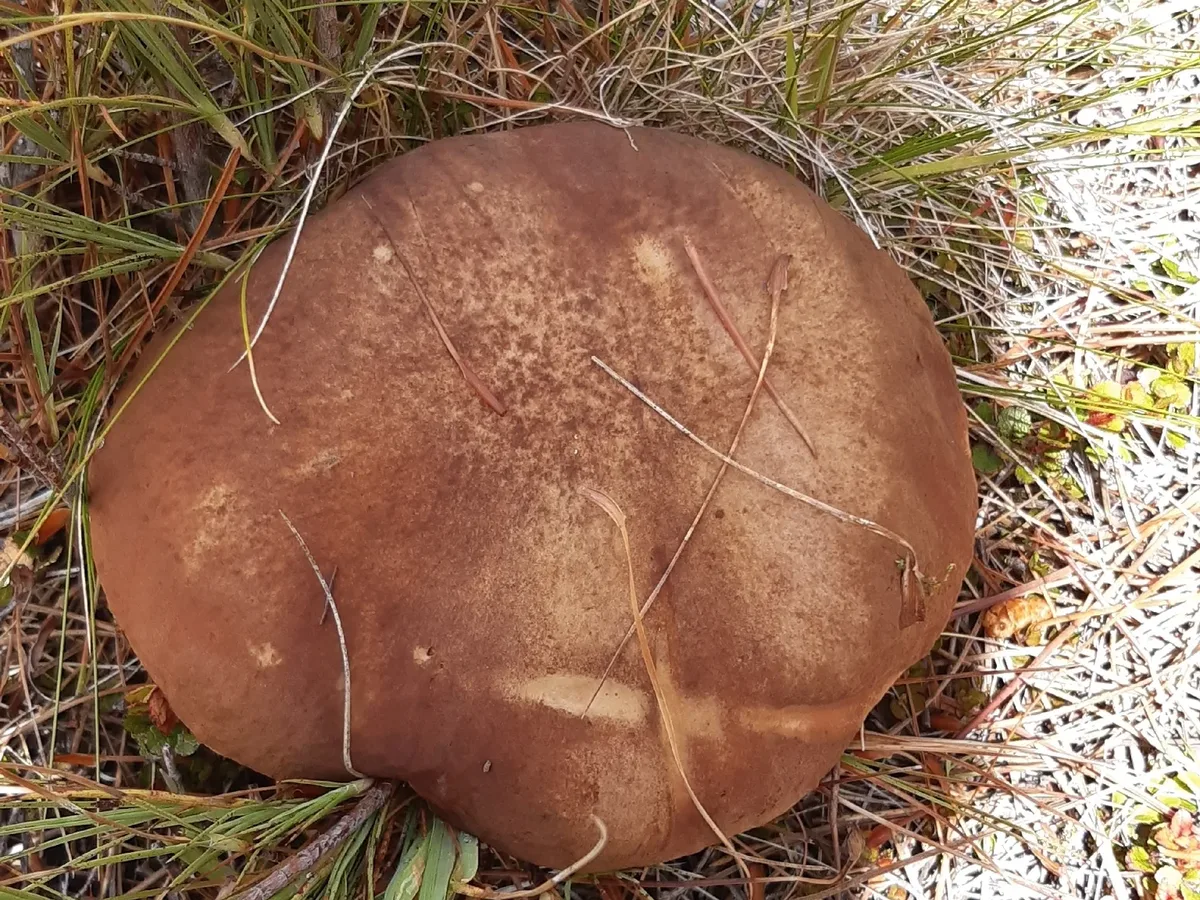 CepCepCep
Porcino / cep
Boletus edulisPale pores and white flesh that does not turn blue mark the true, beloved bolete.
How to recognise it
Cap 7-30 cm, brown (penny-bun coloured), slightly tacky when wet, domed when young and flattening out. Instead of gills there is a tube layer (pores) under the cap: white when young, turning yellow-green with age. Stem stout, white to pale brown, club-shaped or bulbous, with a pale net pattern (reticulation) at the top - a key identifying feature. Flesh white, unchanging when cut, with a mild nutty smell and taste. Spore print olive-brown. B. aereus is darker (almost black-brown cap), firmer, and grows in warmer oak/chestnut woodland.
Where it grows
Mycorrhizal with both broadleaf and conifer trees: oak, beech, chestnut, hazel as well as spruce and pine. Thrives at forest edges and in clearings. B. aereus is bound to oak and chestnut on warm, often lime-rich ground in southern/central Europe.
Cooking
Fried in butter is classic. Excellent dried - the aroma intensifies (dry in the oven at 25-30 C for a few hours, then raise to about 50 C until crisp; store airtight). Dried cep is soaked for 15-20 minutes; save the soaking water for stock/risotto. The basis of cepes a la bordelaise and Steinpilzrisotto.
Look-alikes
Bitter taste; dark net pattern on a pale stem and pink pores (the cep has a pale net on a brownish stem with white/yellow pores). Tasting a small piece reveals its bitterness.
Red pores and red stem, bruises blue; poisonous. General rule: avoid boletes with red pores or that bruise strongly blue.
Blues immediately when cut and has red/orange pores. Porcini flesh stays white and does not change.
The white net pattern (reticulation) on the upper stalk and the non-bluing pores distinguish Boletus edulis.
Much of the commercial Chilean "porcini" export is actually Suillus and native boletes rather than true B. edulis; the trade name is applied broadly.
 King oyster mushroom
 King oyster mushroomKing oyster mushroom
 King oyster mushroomKing oyster mushroomKing oyster mushroom
King oyster mushroom
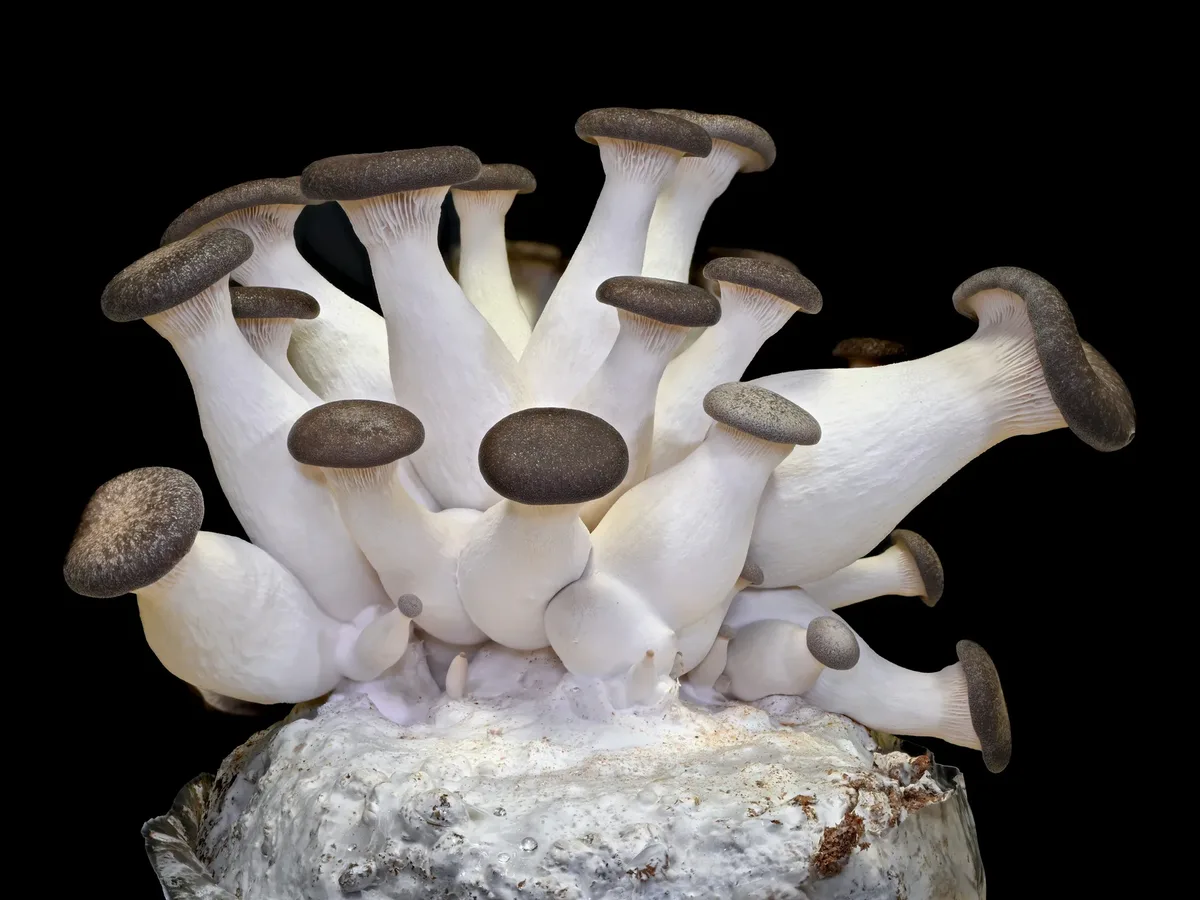
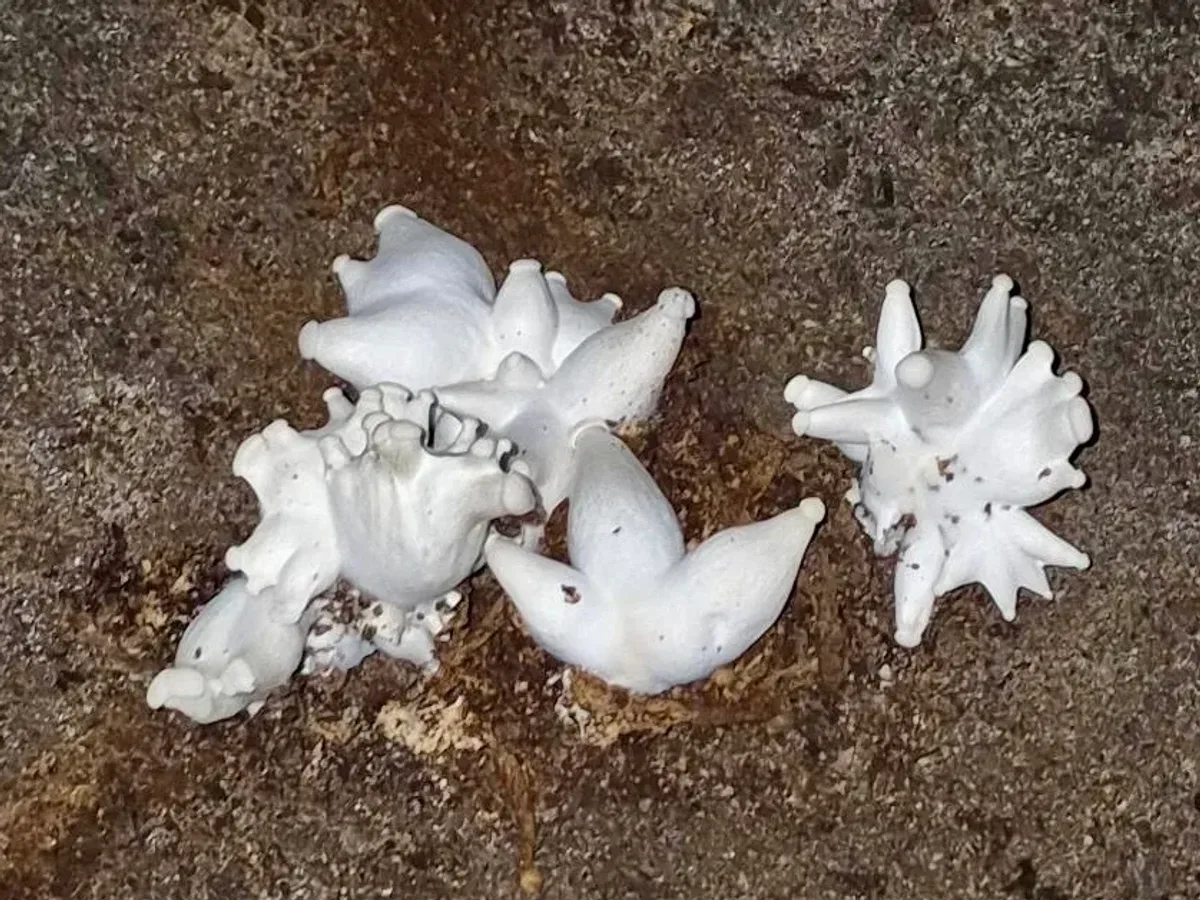
Pleurotus eryngiiGrows from buried sea-holly roots in open ground, with decurrent gills and no ring or volva.
How to recognise it
Cap up to 14 cm across, fleshy and firm, brown to grey-beige. Gills white to cream, distinctly decurrent, running well down the stem. The stem is the standout feature - massive, cylindrical, often eccentric, with no ring and no volva; it accounts for much of the mushroom's considerable bulk. Flesh white throughout, firm and elastic. Spore print white to cream-white. Smell mild and pleasantly mushroomy.
Where it grows
Found on open, sunny ground - pasture, roadsides, clearings - on calcareous, well-drained soil across Mediterranean climates. It grows as a saprotroph or weak parasite on the dead roots of field eryngo (Eryngium campestre, "cardo corredor") and related umbellifers. The mushroom pushes up from the soil, connected to buried roots well below the surface; there is no visible wood.
Cooking
The dense, elastic flesh holds its shape under heat far better than most mushrooms. Excellent grilled or pan-fried whole or in thick slices with garlic and parsley, and equally good in stews, rice dishes, and salads. The stem is just as good as the cap - use all of it.
 Desert truffle
Desert truffle
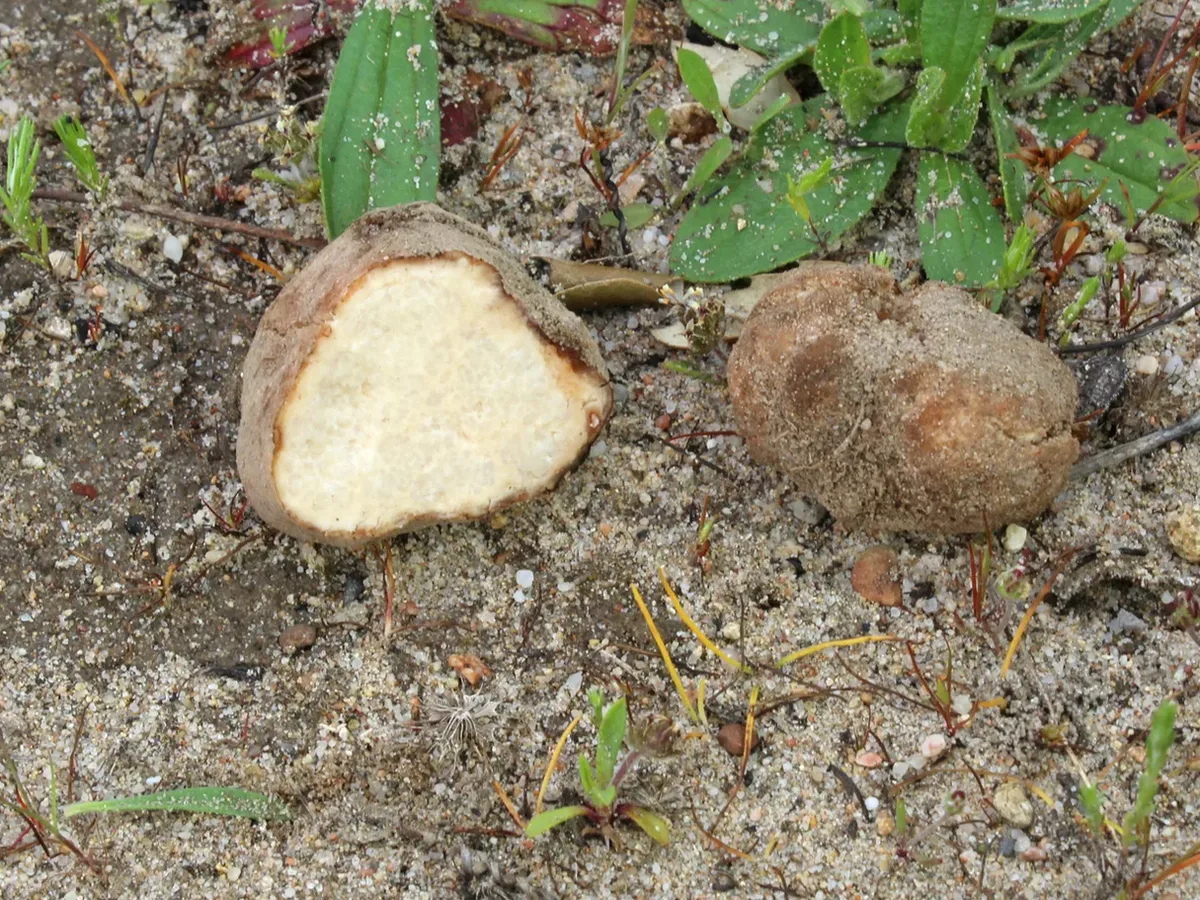
Terfezia arenariaSpring's potato-like treasure of arid, sandy ground, with no poisonous double, but very gritty to clean.
How to recognise it
Irregular and potato-like, 3-12 cm across and 30-300 g, occasionally reaching half a kilo. The thin outer skin (peridium) ranges from pinkish-white to brown-black and darkens where handled. Inside, the flesh (gleba) is compact and marbled: pale sterile veins running through pink to brown fertile tissue. Smell mild, taste pleasant.
Where it grows
Grows semi-buried in sandy or clayey soils, often lime-rich, across arid and semi-arid ground in Murcia, Andalusia (Granada, Huelva), Extremadura, Aragon, the Canary Islands, as well as North Africa and the Middle East. Forms mycorrhizal partnerships with rock-roses - above all Helianthemum almeriense and Tuberaria guttata (known in Spanish as "madre de la criadilla", the truffle's mother plant) - as well as cistus, pine, and oak.
Cooking
The desert truffle has a mild flavour of its own but takes on surrounding aromas readily, which makes it at home in rich, spiced dishes. In Spain it appears as a revuelto - sliced and fried in olive oil with garlic and onion, then a beaten egg added and pulled off the heat while still soft - and as frite extremeño, a quick ten-to-fifteen-minute stew with lamb liver, paprika, garlic, and bay leaf (a signature of the Cofradía Extremeña de Gastronomía). Across North Africa and the Middle East it goes into tagine with lamb (simmered about 15 minutes before joining the stew), kamah salad (boiled, sliced, dressed with garlic, olive oil, and lemon), and Emirati machboos/majboos with rice. Market price runs 20-60 EUR/kg in the Mediterranean; in the Gulf states demand pushes it to 100-220 EUR/kg.
Look-alikes
All desert truffle species are good edibles - there is no poisonous double among them.
An entirely different genus; the desert truffle should not be confused with it.
 Gurumelo
Gurumelo
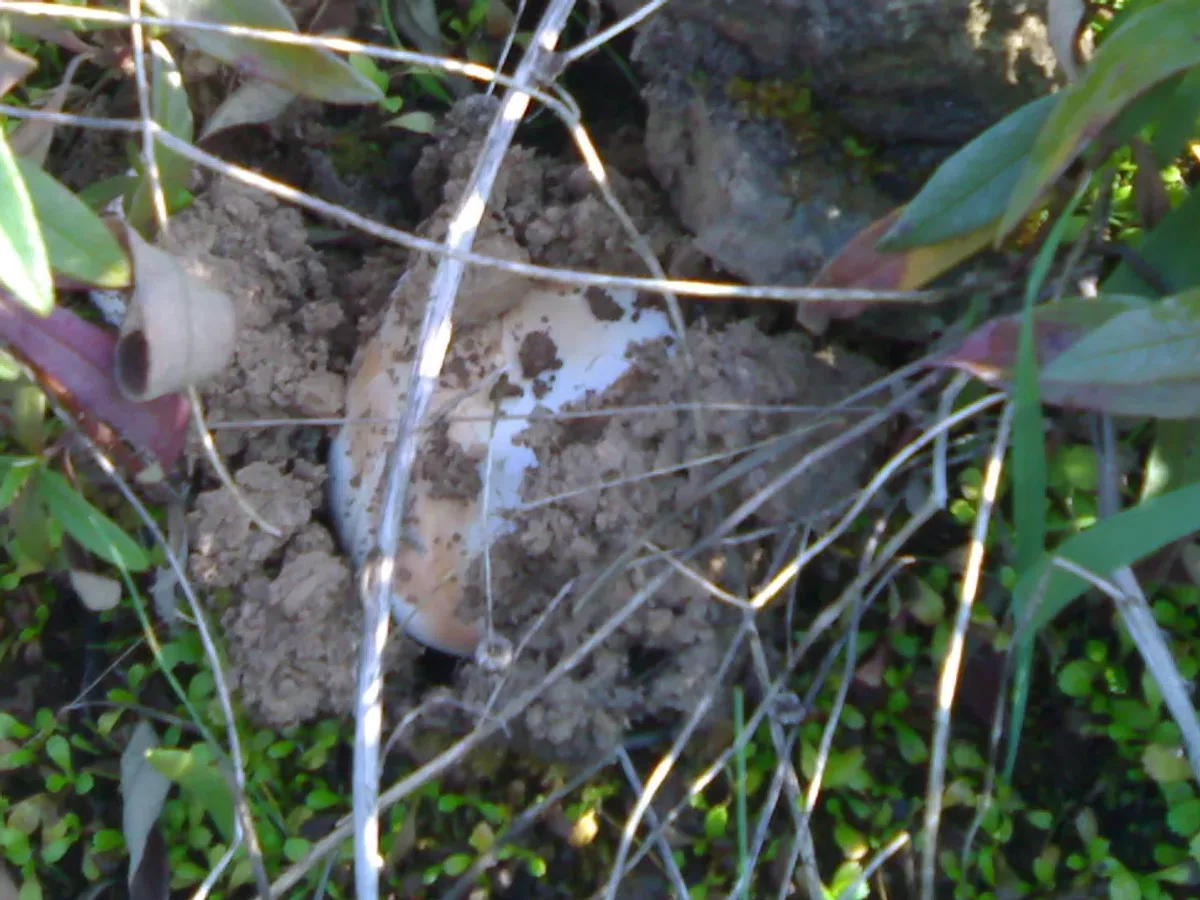
Amanita ponderosaIts flesh reddens and smells of damp earth when scraped, the test that separates it from a deadly white Amanita.
How to recognise it
A substantial, heavy mushroom that feels solid in the hand. The cap is whitish to pale brown-beige, and the gills start white before gradually turning cream - an unusual trait within the Amanita genus. The stem is thick and massive, often developing characteristic brown banding as it matures. The ring is white but short-lived and easily missed. Most importantly: a large, sack-like white volva sits buried in the soil at the base. Cut into the white flesh and watch - it slowly reddens to a pink-salmon colour when exposed to air. That colour change is your most reliable field confirmation. The whole mushroom carries an intense, pleasant scent of damp earth.
Where it grows
This is a warmth-loving Mediterranean species that lives its hidden life as mycelium threaded through the roots of holm oak and cork oak, forming the kind of mycorrhizal partnership that can persist for decades. It fruits in the open dehesa and montado woodlands of the southwestern Iberian Peninsula - Huelva, Sevilla, Cordoba, Jaen (Andalusia), Badajoz (Extremadura) and southern Portugal (Ribatejo, Alentejo) - and across into Morocco. Look for it among Cistus scrub on the acidic schist and granite soils typical of this landscape.
Cooking
The emblematic dish is revuelto de gurumelos (lightly fried in olive oil with garlic, then beaten egg, taken off early to keep it juicy), a la plancha / a la brasa over holm oak wood with oil and salt, as well as arroz con gurumelos and stews with Iberian pork. The town of Paymogo (Huelva) holds an annual gurumelo festival in March. (Note: documented gurumelo recipes are overwhelmingly Spanish; the species is also eaten in adjacent southern/eastern Portugal but dedicated Portuguese recipes were hard to verify.)
Look-alikes
A confirmed amatoxin-bearing destroying angel (Univ. of Alcala/Sevilla) with documented poisoning cases. Three field characters separate it from the gurumelo: (1) Flesh reddening - the gurumelo's flesh and gills turn pink-salmon within minutes of being scraped or cut; A. vidua flesh does not redden. (2) Cap colour in early stages - young A. vidua fruiting bodies show an early ochraceous tinge at the centre of the cap (a pale brownish-ochre umbo); gurumelo caps are uniformly whitish to pale beige without that central warm tone. (3) KOH reaction - a drop of 10% KOH on A. vidua cap surface produces a yellow to yellow-ochre stain; the gurumelo cap does not react (no colour change). If the flesh does not redden on exposure, do not eat the specimen.
Grows in the same place and season. A single specimen can poison a whole family. The gurumelo's flesh oxidizes and reddens when scraped and has an intense earthy scent; A. verna stays unchanged white and lacks that earthy smell.
 Green-cracking russula
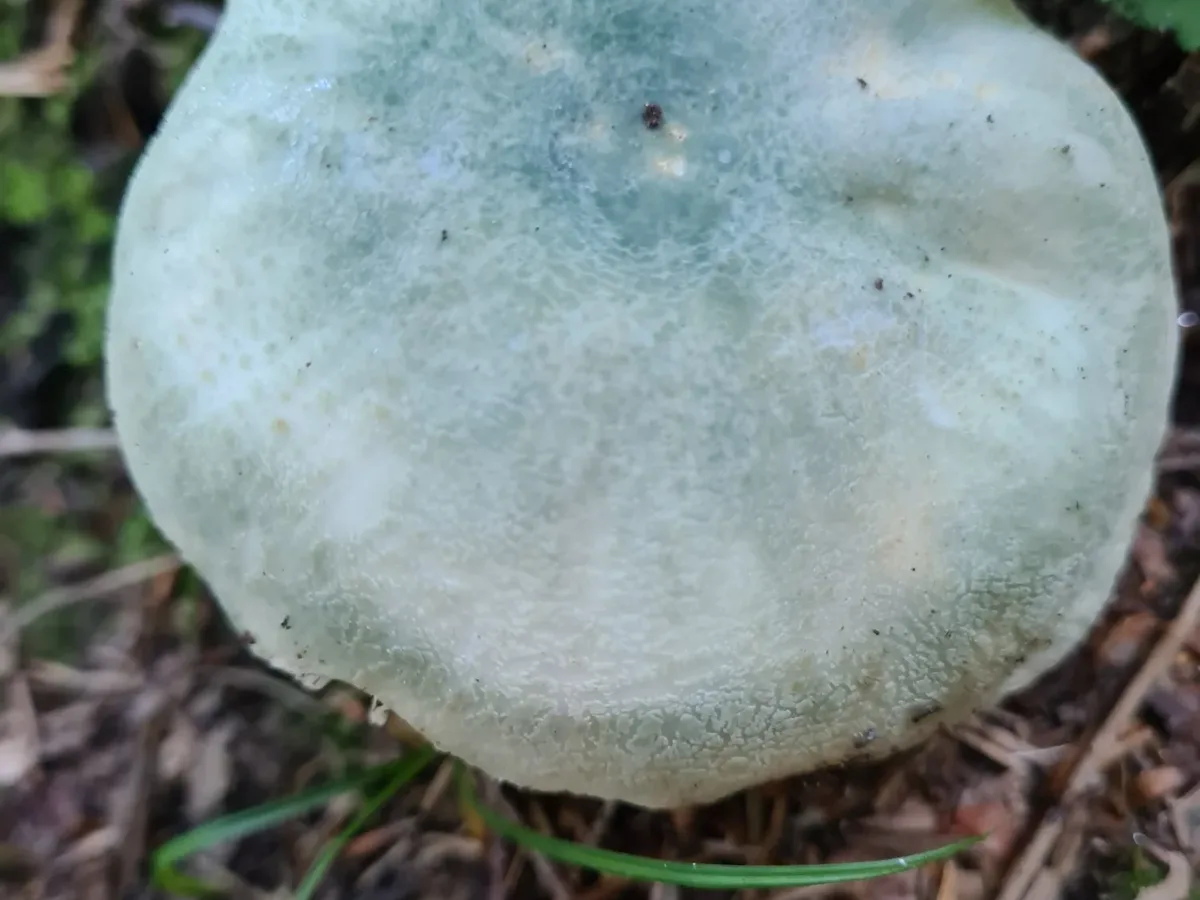 Green-cracking russula
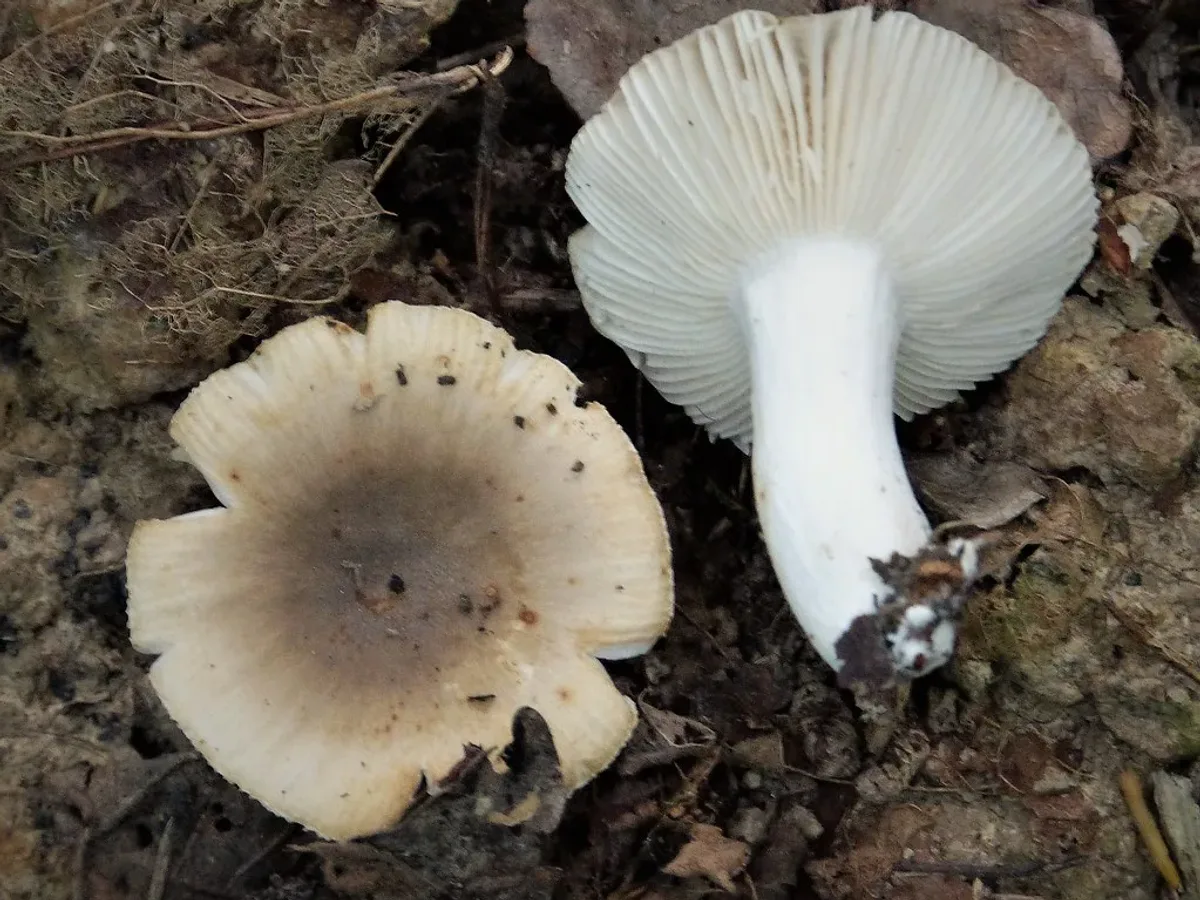 Green-cracking russulaGreen-cracking russulaGreen-cracking russula
Green-cracking russula
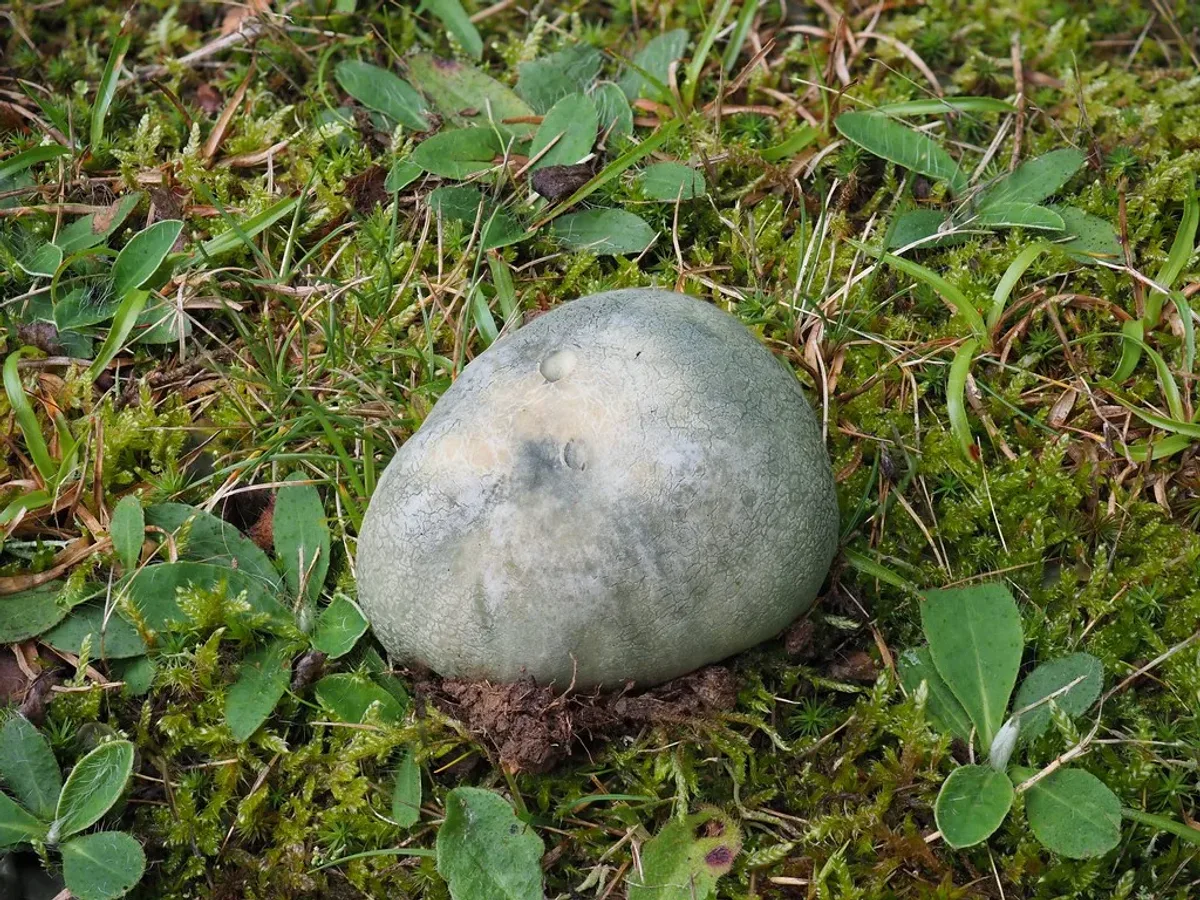
Russula virescensA fine edible with brittle flesh and no ring or volva, but only for those who can rule out the death cap.
How to recognise it
Russulas come in almost every color - green, red, yellow, brown - but share a distinctive trait: the flesh is genuinely brittle and crumbles when broken, like dry chalk. Gills are straight and typically white. There is no milky latex, no skirt-like ring, and no volva at the base.
Where it grows
Ectomycorrhizal partners of forest trees - they live woven into the roots of both conifers and broadleaves and appear wherever there are trees, making them one of the most widespread and numerous genera in European forests.
Cooking
Fried; mild ones are salted or boiled; often mixed into mushroom dishes.
Danger
Deadly confusion risk: Russula subnigricans causes rhabdomyolysis. Russulas as a group demand great experience to identify, and green amanitas can also be mistaken for this mushroom.
Look-alikes
Green amanitas can be confused with the green russula; amanitas have a volva and/or ring and are not brittle like russulas.
The death cap can also have a greenish cap, but it has both a skirt-like ring and a sac-like volva, plus fibrous flesh; the russula has neither ring nor volva and brittle flesh that snaps like chalk.
Deadly; causes rhabdomyolysis. R. subnigricans has a dull gray-brown cap (not green) and flesh that reddens when broken before eventually darkening - absent the pale sea-green color and angular mosaic patch pattern of the green russula. Always confirm the distinctive cracked-mosaic cap and verify the stem base has no ring or volva.
Poisonous blackening russulas resemble the green russula; the green color and mosaic pattern are the distinguishing clue, but russulas as a group require great experience.
A harmless green russula.
A harmless green russula.
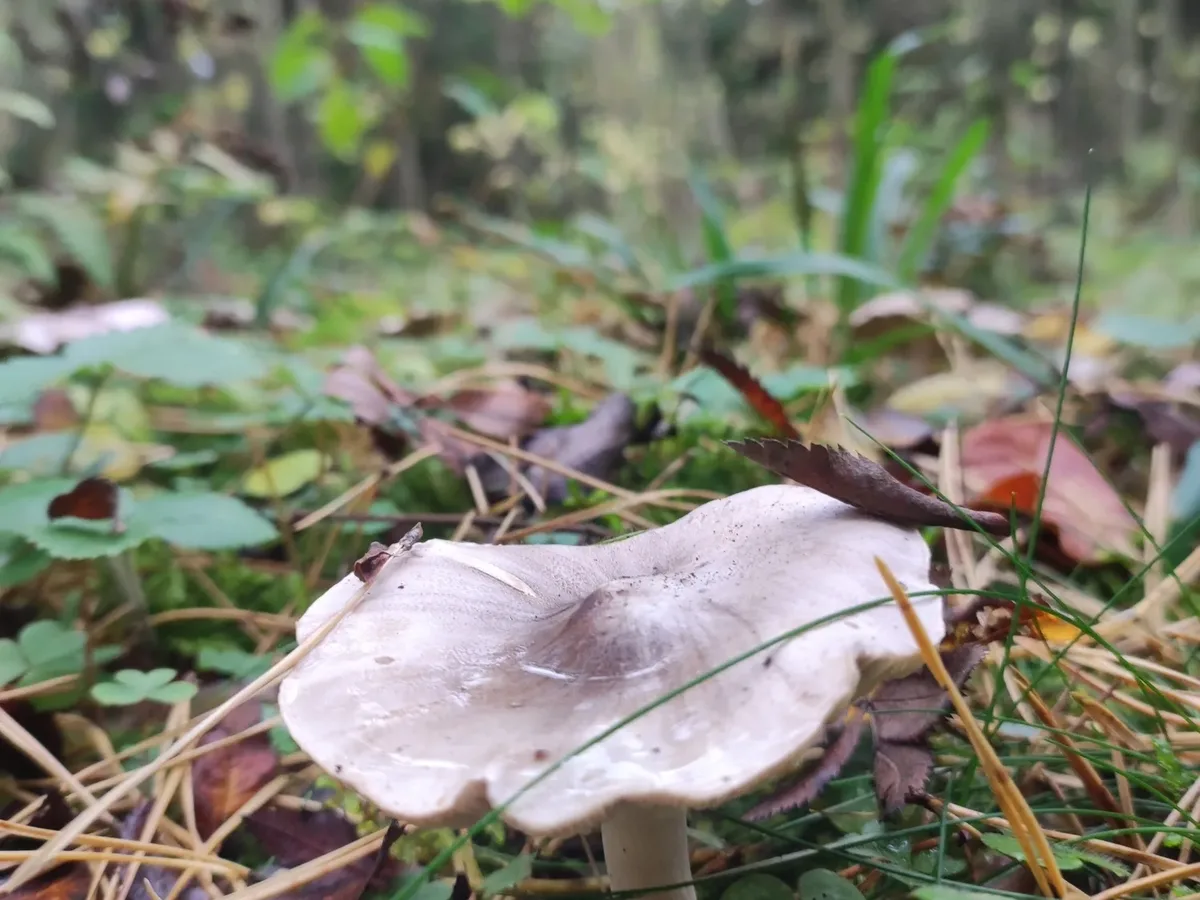 Sticky grey knight
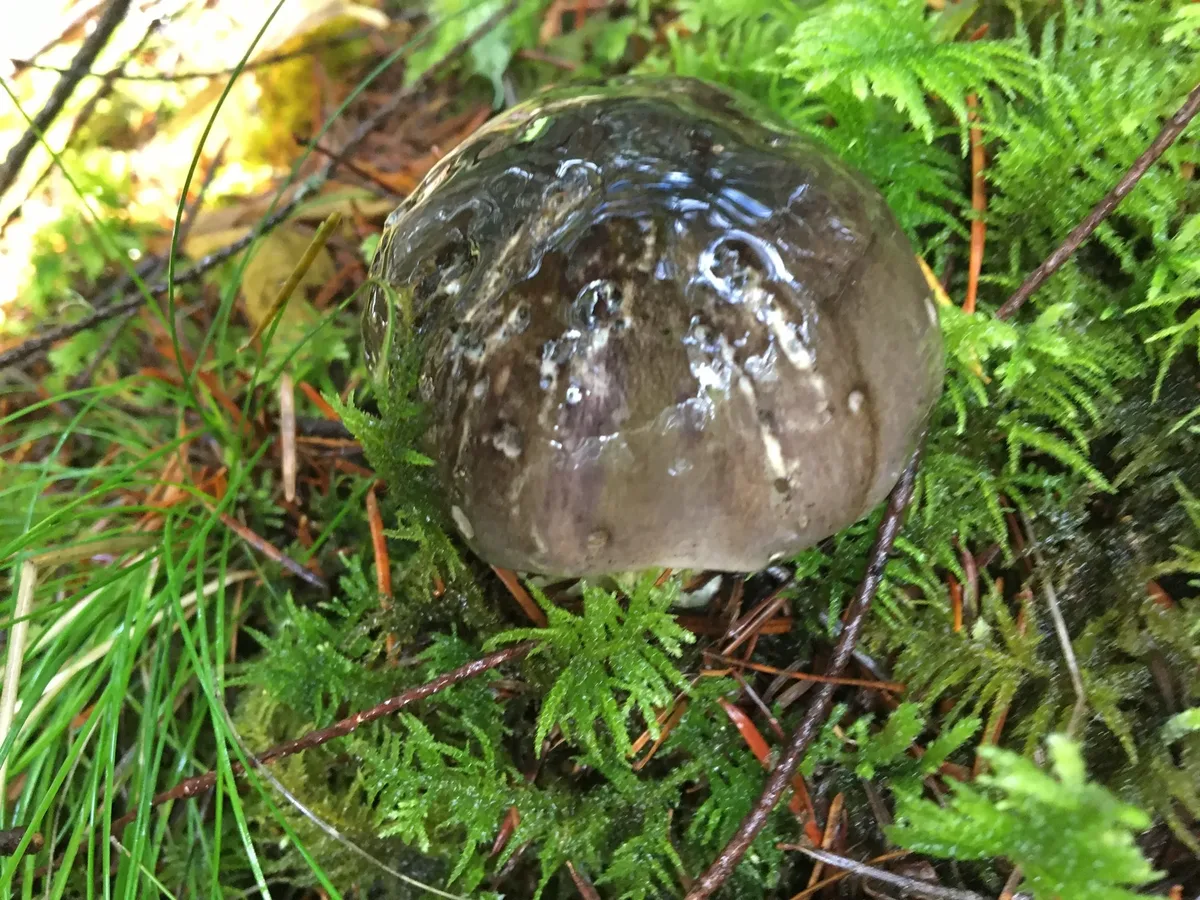 Sticky grey knight
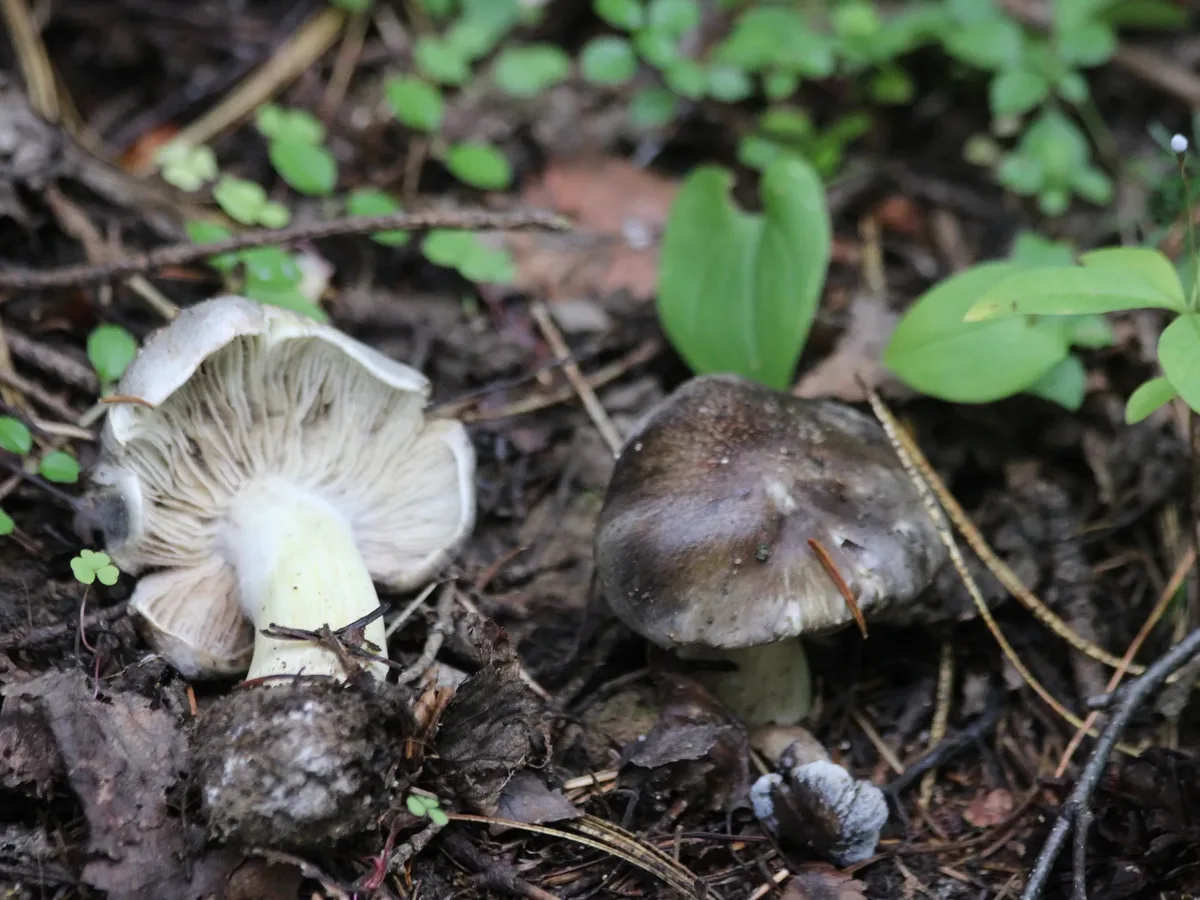 Sticky grey knight
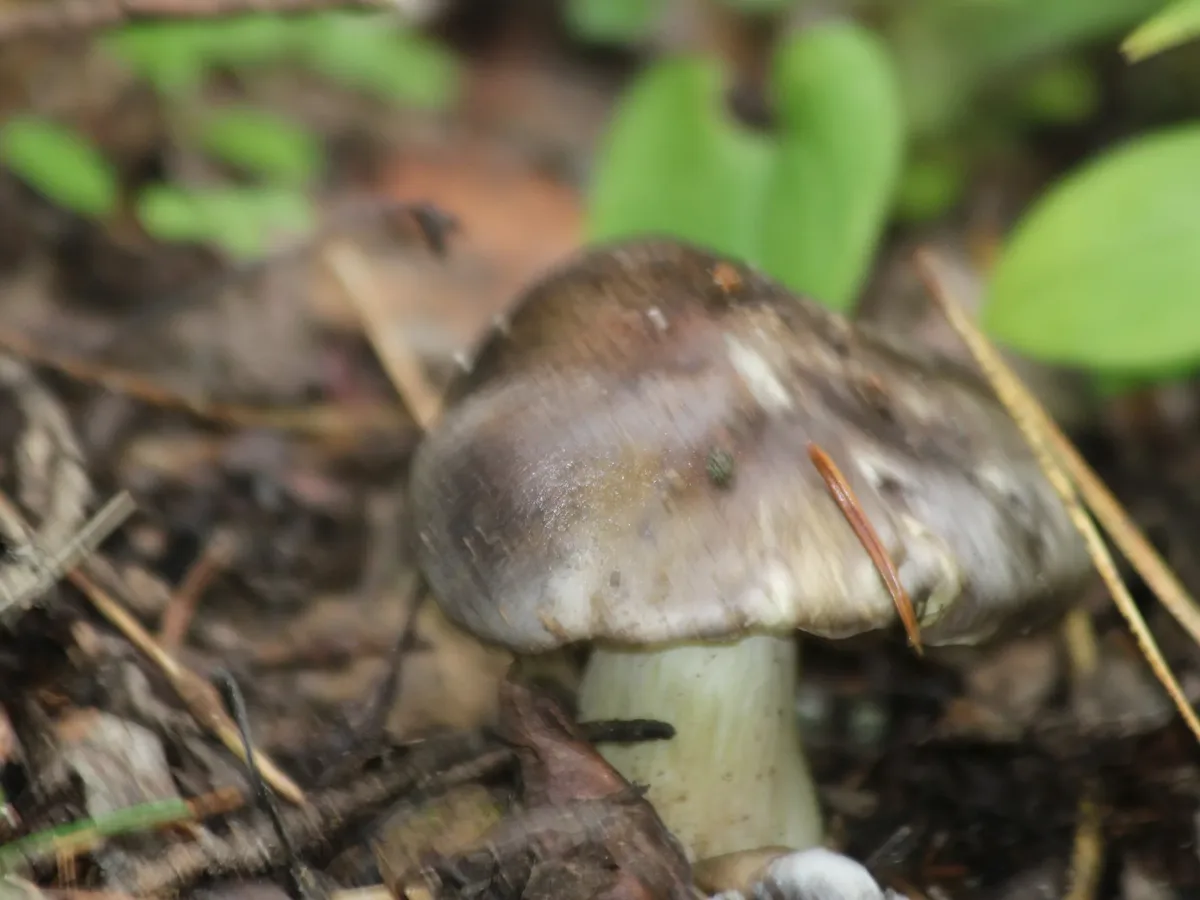 Sticky grey knightSticky grey knightSticky grey knight
Grey knight (fredolic)
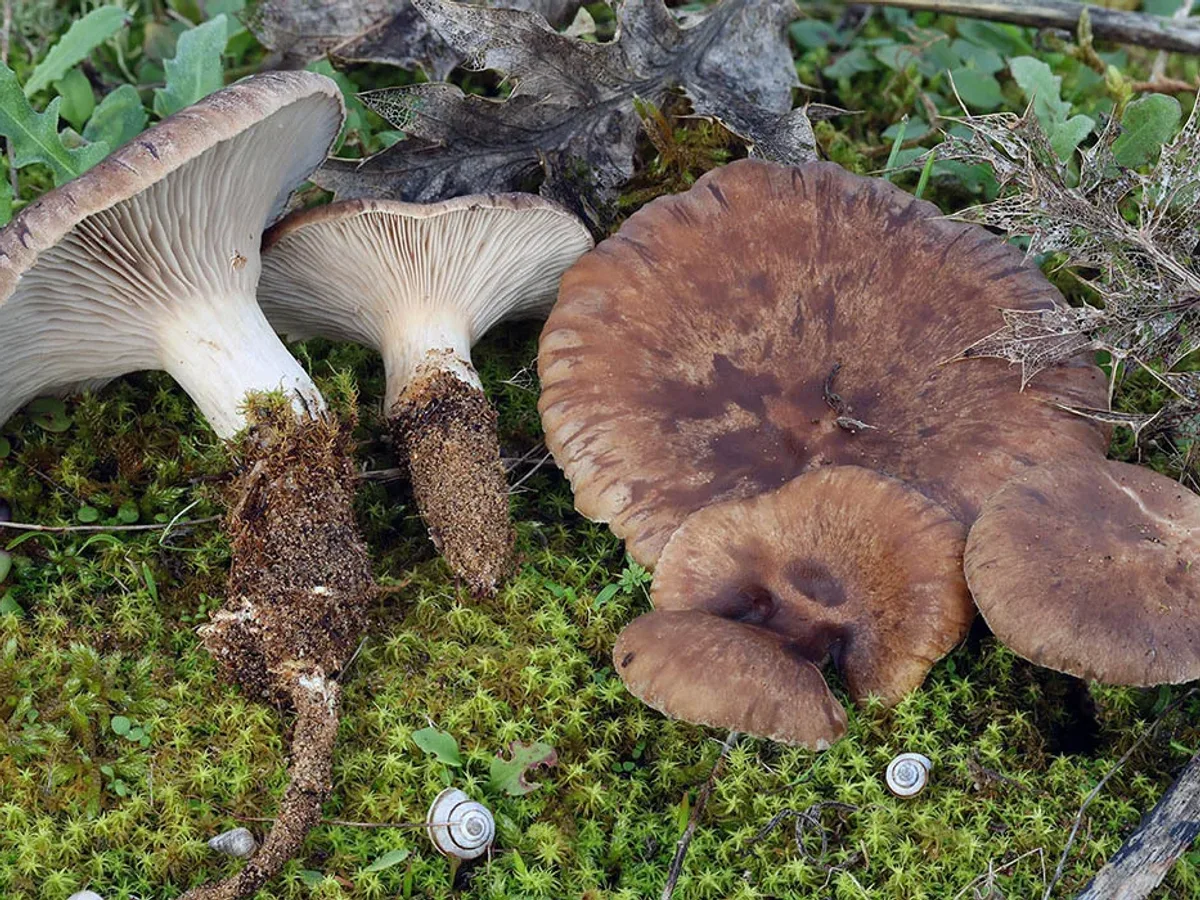
Tricholoma portentosumA good pine-wood mushroom that endures the first frosts; avoid all yellow Tricholoma.
How to recognise it
Tricholoma portentosum has a medium-to-large cap (5-12 cm) that is grey to dark grey with distinctive dark radial fibres running from centre to edge. The gills are white, sometimes developing a faint yellow tinge with age, and the robust stem is whitish with yellowish tones. No ring, no volva. Spore print white; smell mild and faintly mealy. The closely related T. terreum is smaller (cap 4-8 cm), mouse-grey, fibrillose and dry with a small umbo, and keeps pure white gills throughout.
Where it grows
Forms mycorrhizal partnerships with pine trees (Pinus), threading the sandy, acidic soils of open pine forests with its mycelium. Often fruits alongside saffron milk caps in the same stands.
Cooking
Mild and faintly mealy in flavour, it suits creamy, gentle preparations: soups, omelettes, scrambled eggs and slow-cooked stews. In Catalonia it is the centrepiece of the classic sopa de fredolic.
Look-alikes
Causes severe gastrointestinal poisoning. More robust, with a thick stem and a distinctly scaly/streaked cap pattern; grows in spruce/beech forest rather than pine forest.
Bitter-tasting.
Now considered risky: linked to cases of rhabdomyolysis (some fatal) after repeated consumption. Recognised by its yellow colouring; avoid yellow Tricholoma.
The dangerous ones
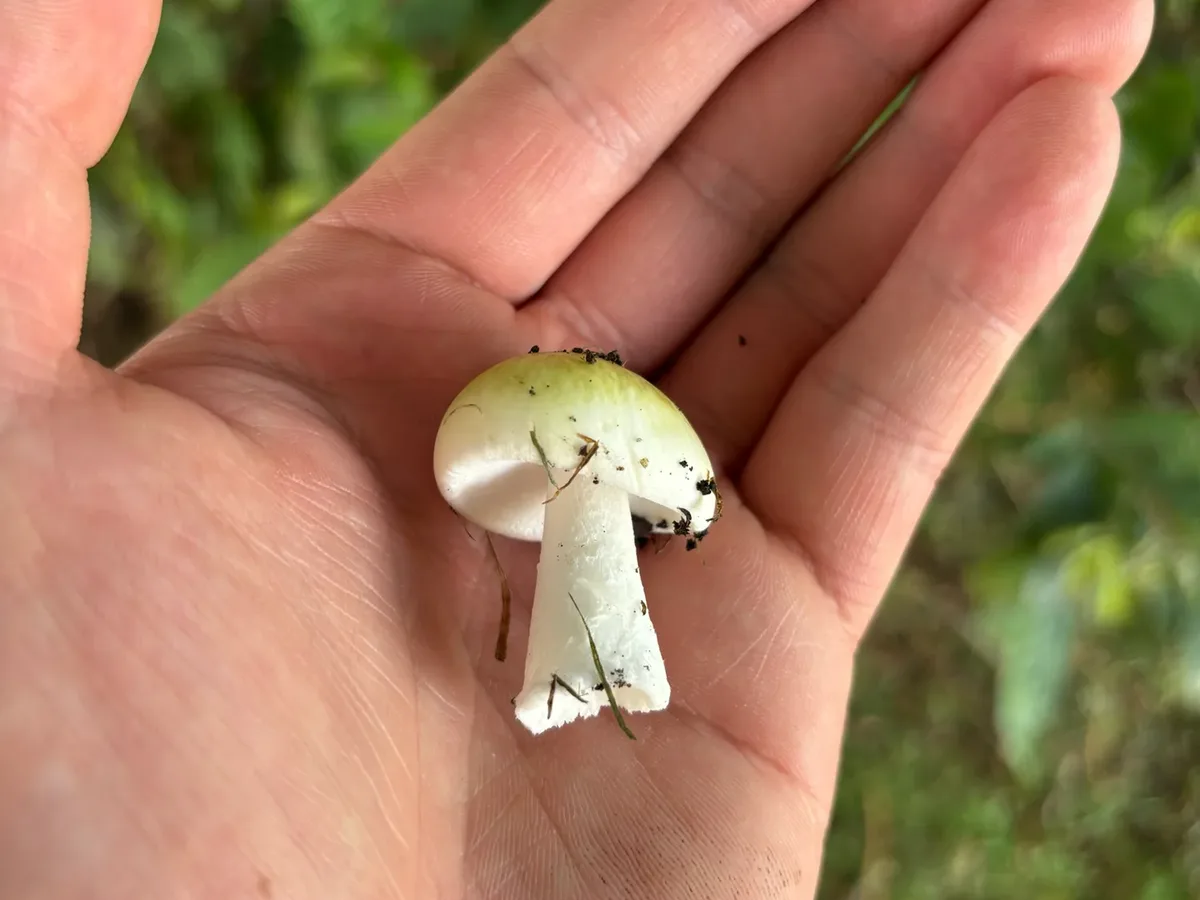
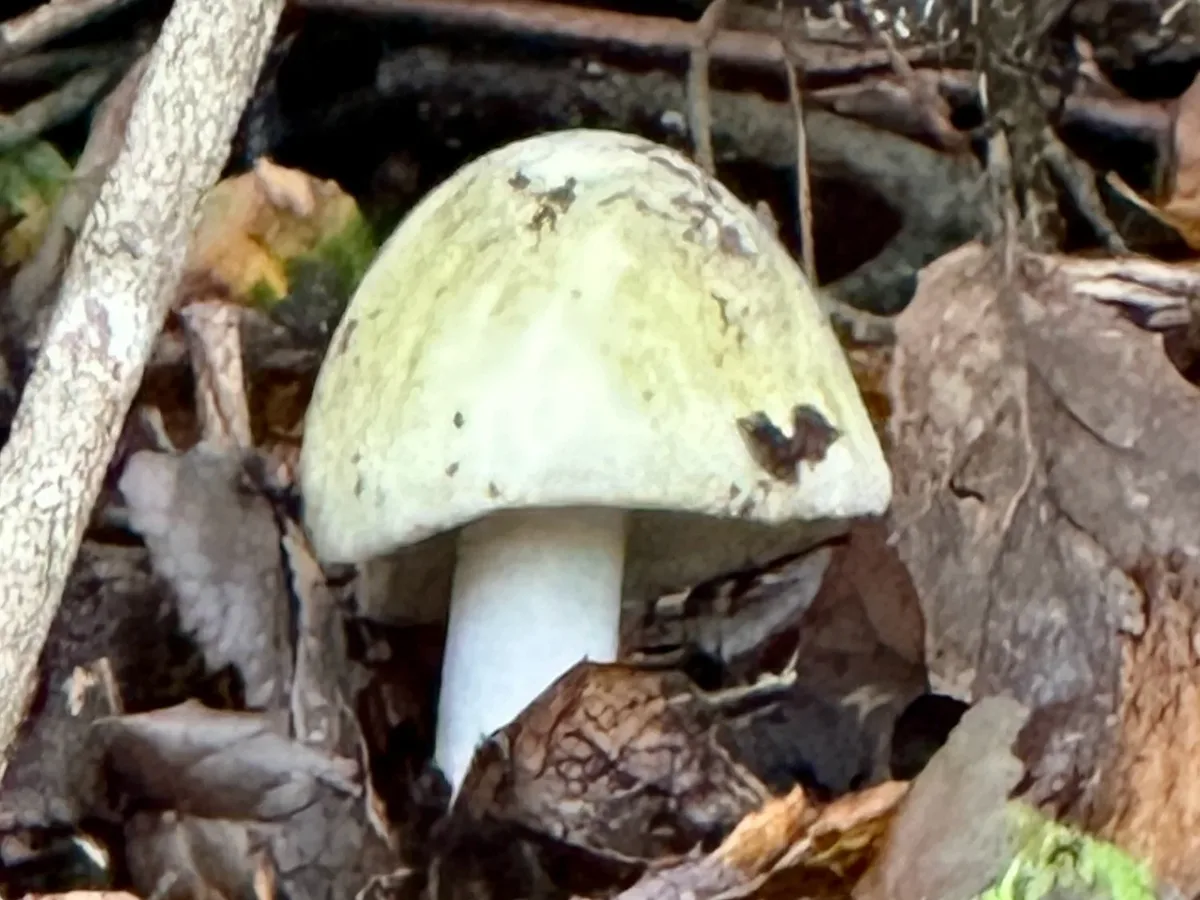 Death cap
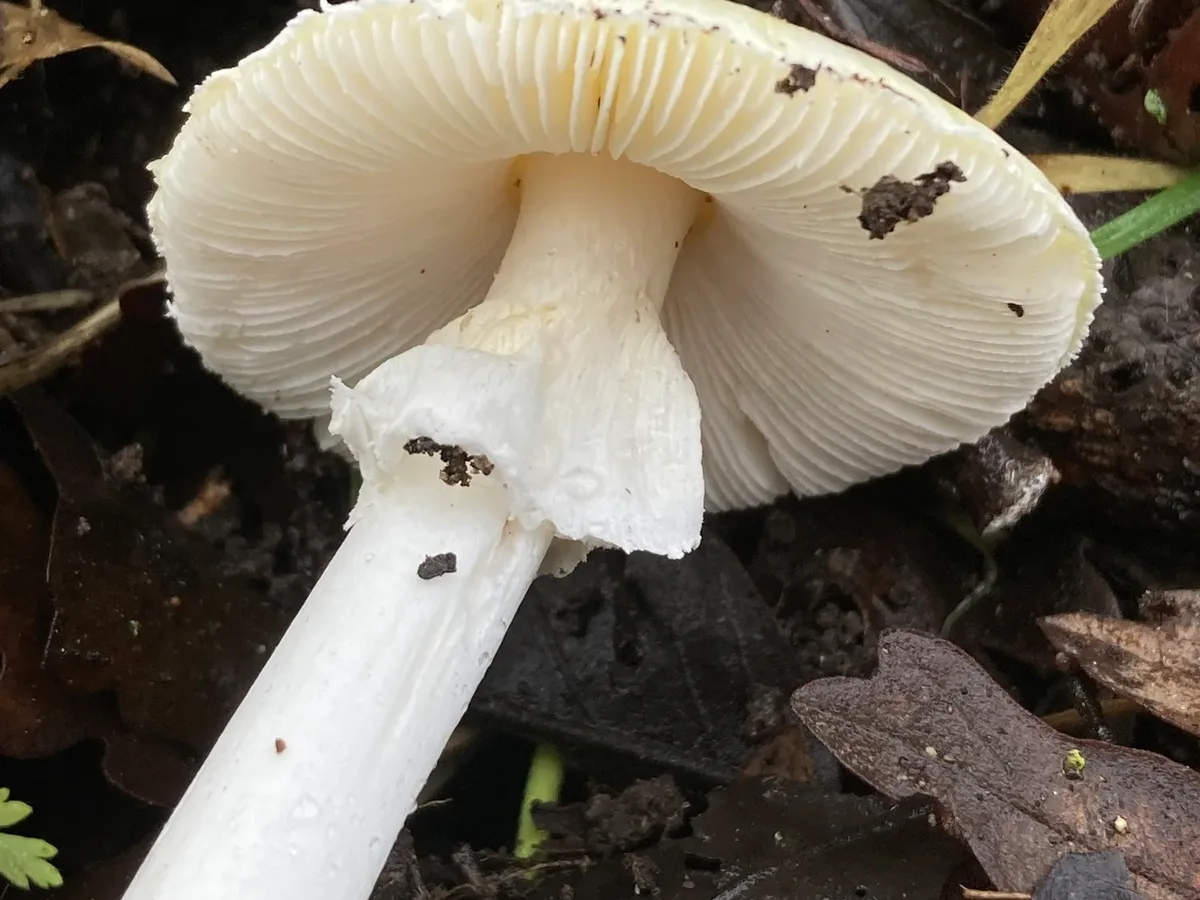 Death cap
 Death capDeath capDeath cap
Death cap
Amanita phalloidesWhite gills, white ring and white sac volva in the oak woods: the single most common cause of fatal mushroom poisoning.
How to recognise it
Cap 40-160 mm, hemispherical, becoming convex, then flat, smooth, slimy in wet conditions and glossy when dry; most often pale yellow/greenish to pale brown, but can be almost white (colour is not a reliable feature). White gills, a white stem, a membranous ring, and a sac-like volva at the base. Amyloid spores (white spore print).
Where it grows
Found only under exotic/introduced trees, especially oak (Quercus), also in gardens, lawns and parks. In Australia it has only been recorded in SA, Victoria and the ACT (Canberra). In Victoria it is widespread across Melbourne (Kew, Camberwell, South Yarra and others) and regionally (Bendigo, Bright, Castlemaine). In New Zealand it grows under introduced oaks and chestnuts; it has also been reported in association with Leptospermum/Kunzea (potentially invasive). There are no confirmed finds in undisturbed native forest.
Cooking
Not edible under any circumstances. The toxins are not inactivated by cooking, drying, freezing or soaking.
Danger
World's deadliest mushroom; as little as half a cap can kill an adult human. Documented fatalities: Canberra, New Year's Eve 2011/2012 - cook Liu Jun picked death caps in Braddon (mistaking them for straw mushrooms) and put them in a stir fry; he and the kitchen hand Tsou Hsiang (a 52-year-old Chinese national) died, of four poisoned. According to the Canberra Times there have been in total "four fatalities and 12 reported incidents of poisoning associated with death cap mushrooms in the ACT". Of nine poisoned in the Canberra region 1988-2011, three were from Laos and two from China. Leongatha, Victoria, July 2023: Erin Patterson, 50, served death caps in individual Beef Wellingtons; Don Patterson, Gail Patterson and Heather Wilkinson died, while Ian Wilkinson survived. She was convicted on 7 July 2025 of three murders and one attempted murder, and on 8 September 2025 sentenced by Justice Christopher Beale to three concurrent life sentences with a 33-year minimum (plus 25 years for the attempted murder), parole no earlier than 2056; Beale found the murders required "substantial premeditation" and an "elaborate cover-up". (The conviction is under appeal.)
Look-alikes
The fully white form of the death cap resembles the white Amanita; both are deadly. Treat any white gilled mushroom with a ring and a sac-like volva as lethal.
Edible Asian mushroom that has caused several deaths among East/Southeast Asian migrants through confusion with the death cap. Both have a volva; check gill colour (straw mushroom develops pink to brown gills and a pink spore print, whereas the death cap has white gills and a white amyloid spore print).
Edible Amanita that can be confused with the death cap; distinguish by colour and spore features, but never rely on colour alone.
Agaricus species have pink-to-brown gills and a dark spore print and lack a volva, whereas the death cap has white gills, a white spore print and a sac-like volva at the base.
Native species (A. austrophalloides, A. marmorata, A. murina, A. murinaster) with a sac-like volva, ring and amyloid spores are untested but likely toxic; do not eat.
Young death cap buttons resemble Agaricus and puffballs, but Agaricus has pink to chocolate-brown gills, a brown spore print and no volva; the death cap always has white gills, a white spore print and a sac-like volva.
The green/greenish-yellow death cap form can be confused with green Russula species; check for the white free gills, ring and sac-like volva, which Russula lacks.
Russulas lack a volva and a ring; always dig up the base to check for the sac-like volva and look for the skirt-like ring and white free gills of the Death Cap.
Agaricus has pink to brown gills (not white) and no volva; the Death Cap has white free gills and a sac-like volva at the stem base.
Agarics lack a sac-like basal volva and have pink-to-brown gills and a brown spore print; the death cap has white free gills, a white spore print, and a volva in the soil.
The pale form of the death cap can be mistaken for puffballs; cutting a puffball reveals uniform white flesh, whereas a young death cap button shows the outline of a developing capped mushroom.
Green russulas lack a ring and volva and have brittle flesh.
Easily confused at the young, egg-like stage; always dig up the base and check the diagnostic combination of white gills + white ring + white sac-like volva.
Field mushrooms have pink to brown gills (not the death cap's white gills) and lack a basal volva/sac.
Distinguished by the death cap's combination of ring plus volva and its olive-green cap colour.
Young egg-stage Death Caps can resemble puffballs; always slice any 'puffball' in half - a developing mushroom with cap, gills and stem inside means it is not a puffball.
In Chile, warnings are given about confusing the death cap with Macrolepiota; look for the death cap's volva, ring and greenish cap with white gills.
In Chile, warnings are given about confusion with Russula; Russula lacks a ring and volva.
In Chile, warnings are given about confusion with Agaricus; Agaricus has a ring but no volva and develops pinkish-to-brown gills with a brown spore print, unlike the death cap's persistently white gills.
In Chile, warnings are given about confusion with Tricholoma; Tricholoma lacks the ring and volva of the death cap.
Locally eaten edible Amanita (also A. loosii); the central confusion in African ethnomycology - the deadly white Amanita are mistaken for these.
An unopened white egg-stage deadly Amanita can resemble a puffball; cut it in half - a developing capped mushroom outline reveals the Amanita.
A globally risky lookalike that also has a volva; check for the ring (present in Amanita, absent in Volvariella) and spore colour (white in Amanita, pinkish in Volvariella).
Same deadly section (Phalloideae) by appearance but lacks the toxins and is eaten locally in Rwanda/Burundi/Tanzania; cannot be told apart by eye alone, underscoring why species-level knowledge is essential.
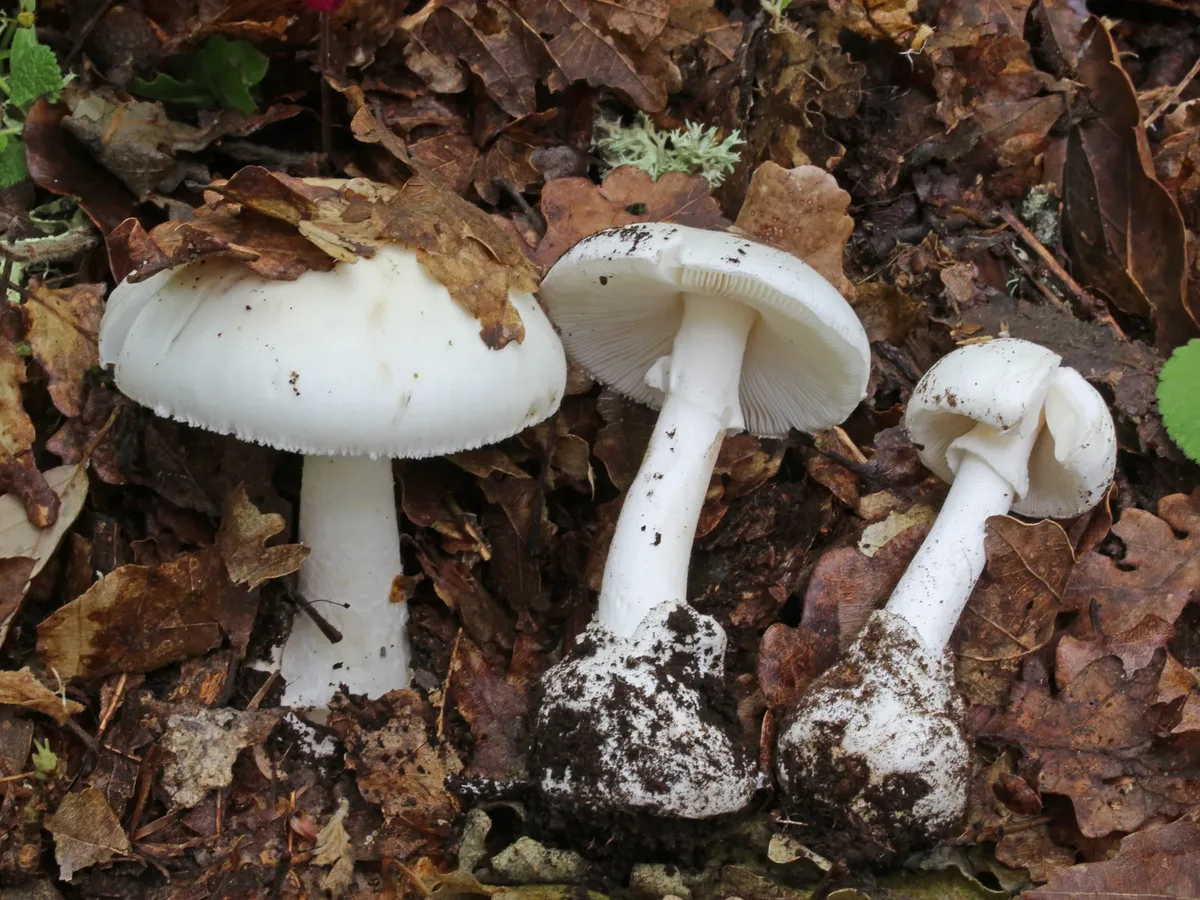 Fool's mushroom
Spring destroying angel
Amanita vernaAn all-white spring Amanita sharing gurumelo's ground and season, carrying the same deadly amatoxins.
How to recognise it
Pure white from cap to volva: a smooth white cap 5-11 cm, white free gills, and a white stem carrying a fragile skirt-like ring above a sac-like volva at the base. It is all but identical to the destroying angel, but fruits in spring and has a smoother, less fibrous cap.
Where it grows
Mycorrhizal with oak and other broadleaf trees on warm, well-drained, often lime-rich soils around the Mediterranean and warm-temperate Europe.
Cooking
Not applicable - deadly poisonous and never eaten. Cooking, drying and freezing do nothing to the toxin, and even the water it was boiled in is lethal.
Danger
As deadly as the death cap and destroying angel - a single cap carries enough amatoxin to kill an adult. Its danger in the Mediterranean is timing and place: it fruits in spring in the very oak woods where people gather the edible gurumelo (Amanita ponderosa), and the two can grow side by side.
Look-alikes
Also pure white and lethal, but fruits in summer and autumn rather than spring; both must be avoided.
The prized edible it grows beside: gurumelo's flesh reddens and smells of damp earth when scraped, while the fool's mushroom stays white. Check every single specimen.
Agaricus has pink-to-brown gills and a brown spore print and lacks the sac-like volva.
 Deadly dapperling
 Deadly dapperling
 Deadly dapperlingDeadly dapperlingDeadly dapperling
Deadly dapperling
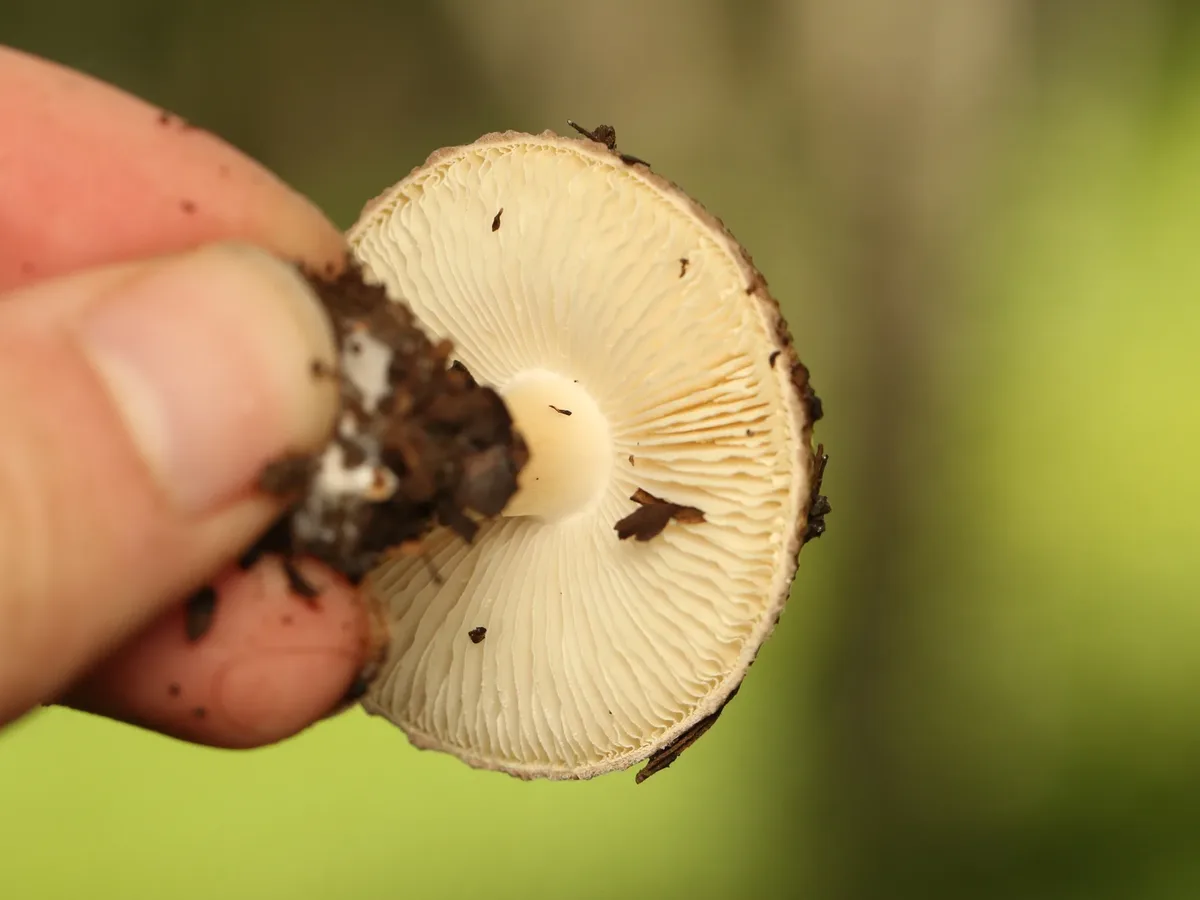
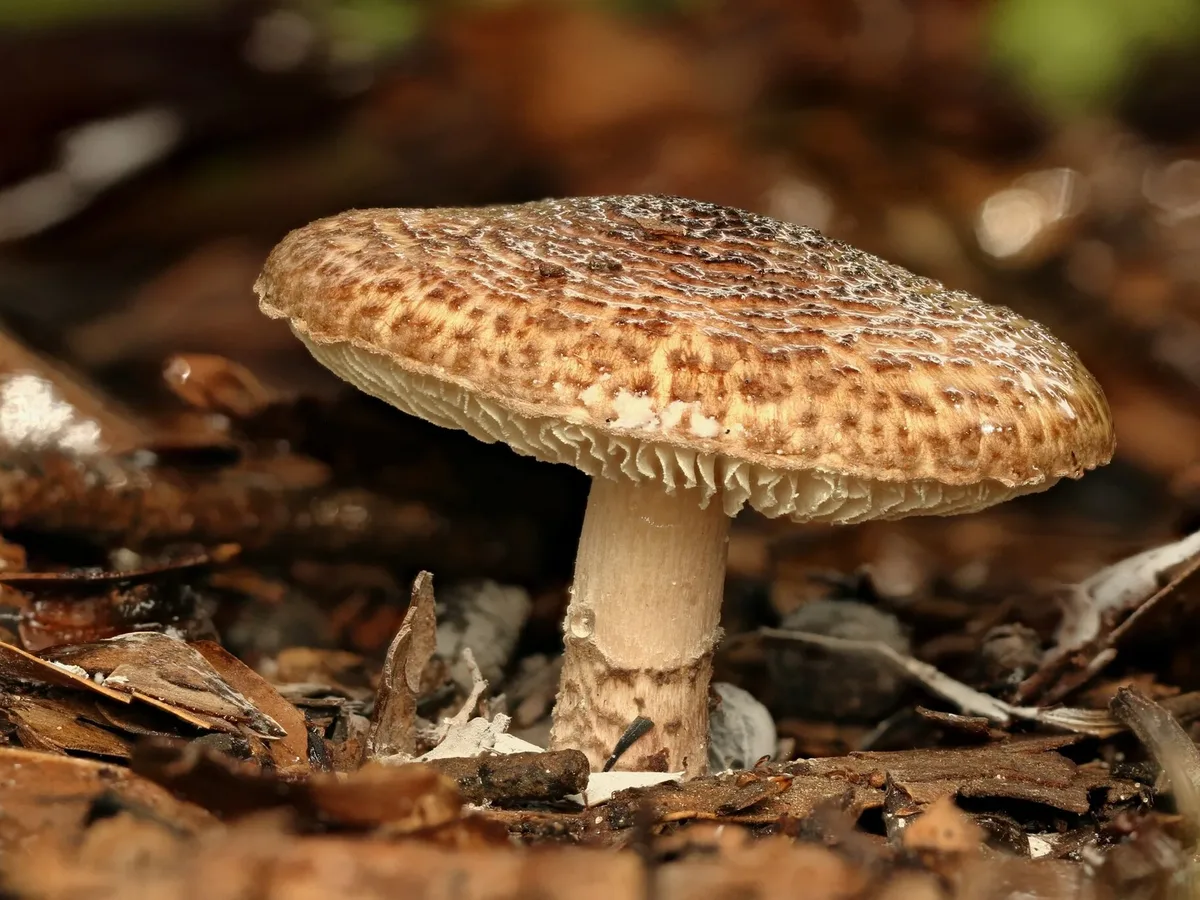
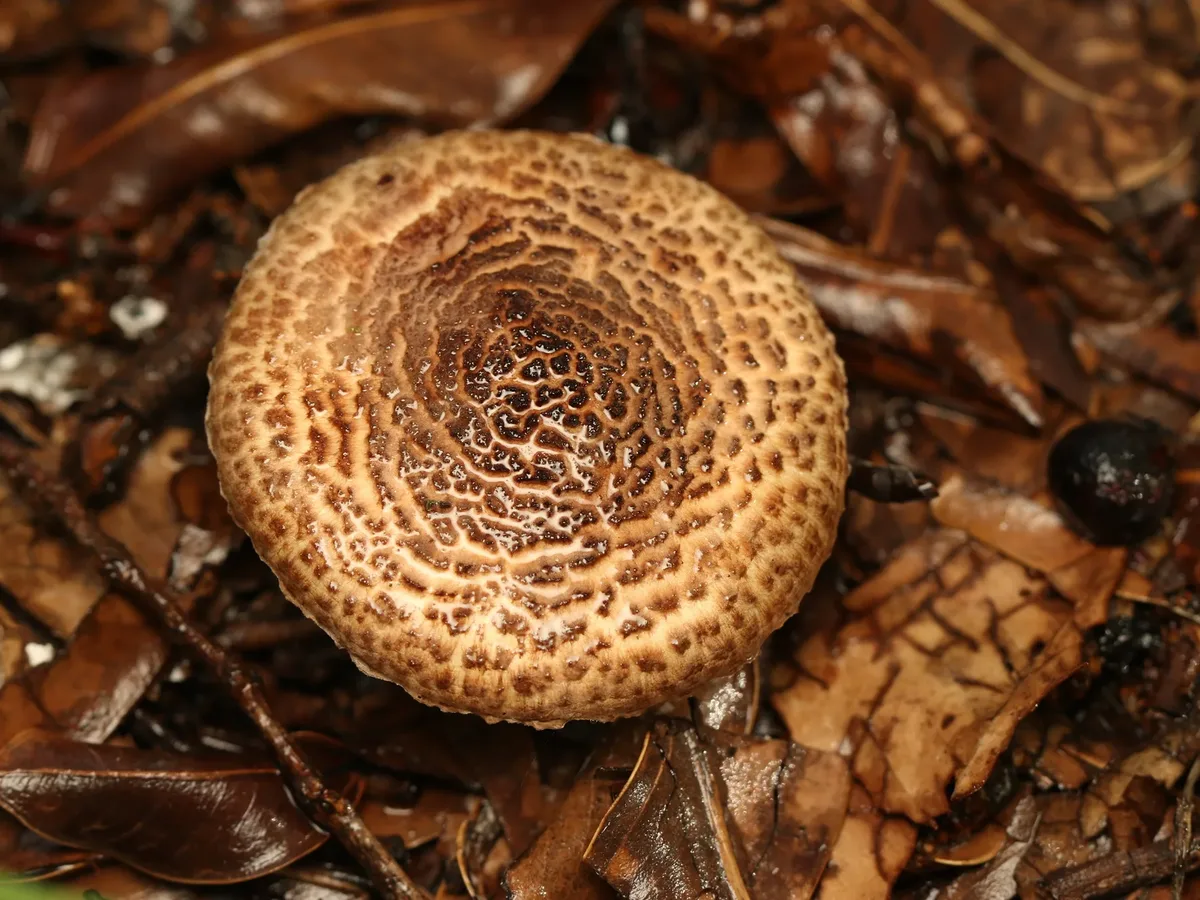
Lepiota brunneoincarnataA small brown-scaled mushroom of lawns and verges; as little as 30 grams can be a lethal dose.
How to recognise it
A small, deceptively ordinary-looking mushroom. The cap is 2-6 cm across, convex with a gentle central bump, and pale whitish-pink to pale brown beneath a covering of felty brown scales typically arranged in concentric rings. Gills are free of the stem, crowded, and cream-white. The stem runs 2-6 cm and carries a woolly ring zone with dark brown fibrous scales below it. Spore print white. A faint, mildly fruity smell.
Where it grows
Saprotroph in grassland - meadows, parks, lawns, roadsides, gardens, often near broadleaf/hardwood trees and in disturbed ground; common in Mediterranean environments.
Cooking
Never edible - deadly.
Danger
About 100 g can cause severe liver damage; as little as ~30 g has corresponded to a lethal dose in several cases. The most common deadly Lepiota poisoner. Deaths in Spain in 2002, four children in the same family in Tunisia in 2010, and an outbreak in Iran in 2018. In Spain, Ramírez et al. (1993) reported 10 Lepiota cases with fatalities.
Look-alikes
Small Agaricus species share the grassland habitat and small size; the deadly dapperling has free cream-white gills and a white spore print, whereas Agaricus develops pink to chocolate-brown gills and a brown spore print.
The danger is the SMALL Lepiota, not the large edible parasol (Macrolepiota procera). Small scaly Lepiota in grassland should never be eaten - never try to distinguish small parasol-like species for the table.
 Livid pinkgill
 Livid pinkgill
 Livid pinkgill
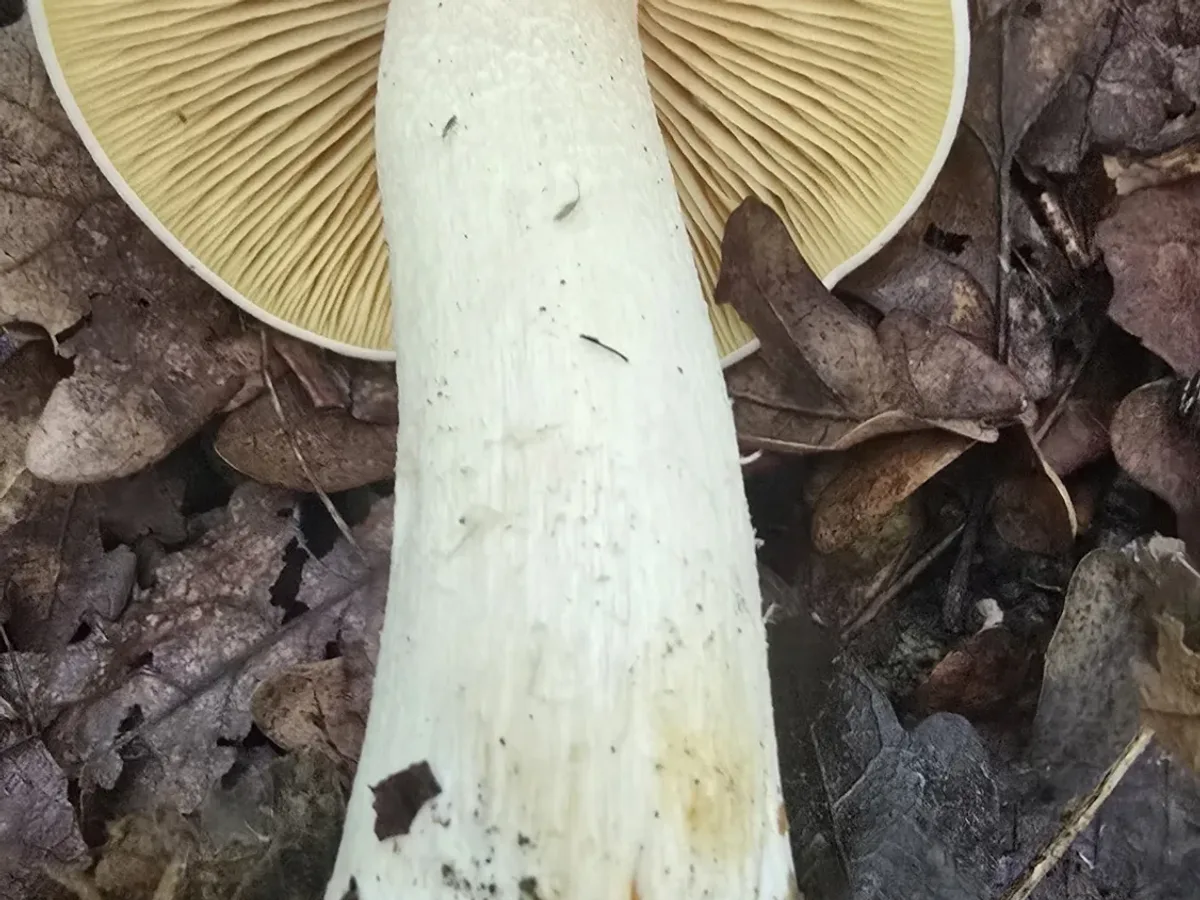 Livid pinkgillLivid pinkgillLivid pinkgill
Livid pinkgill
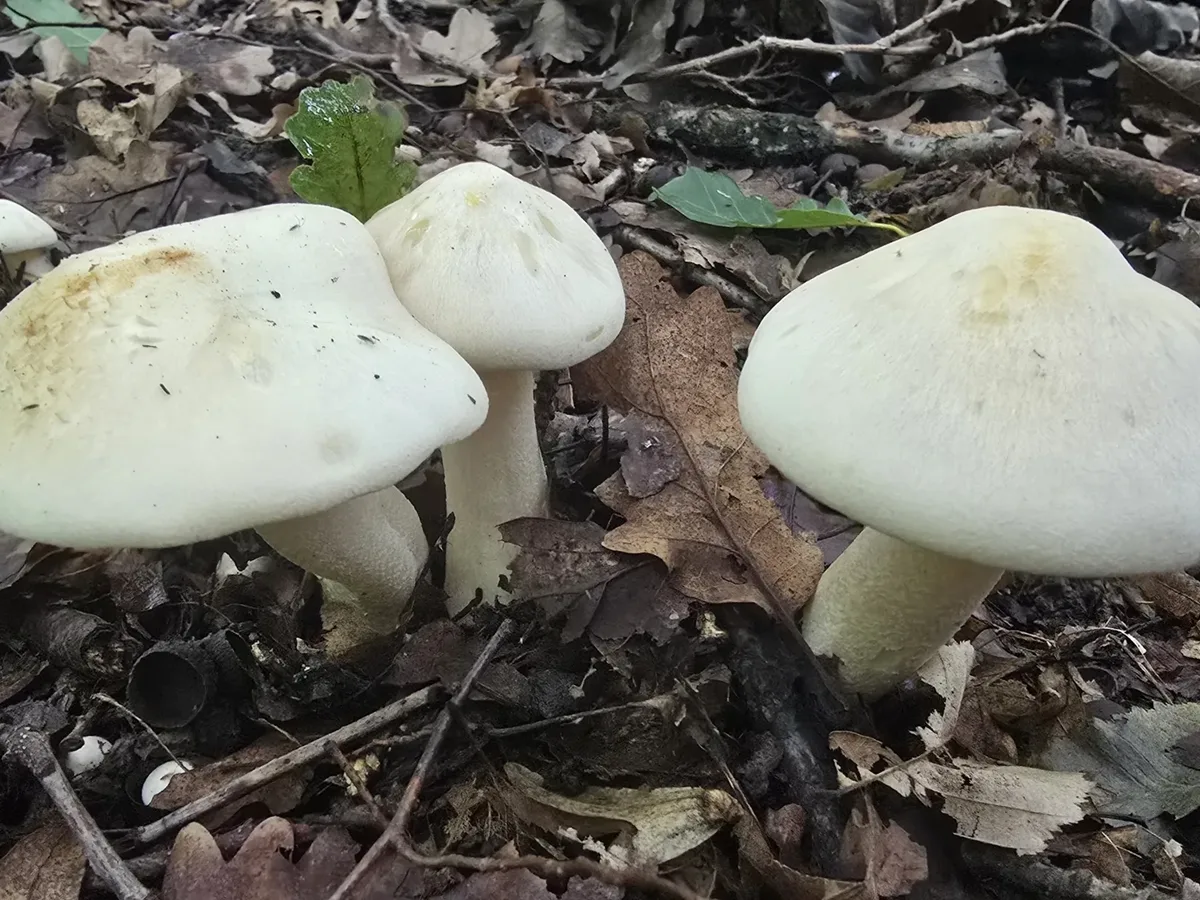
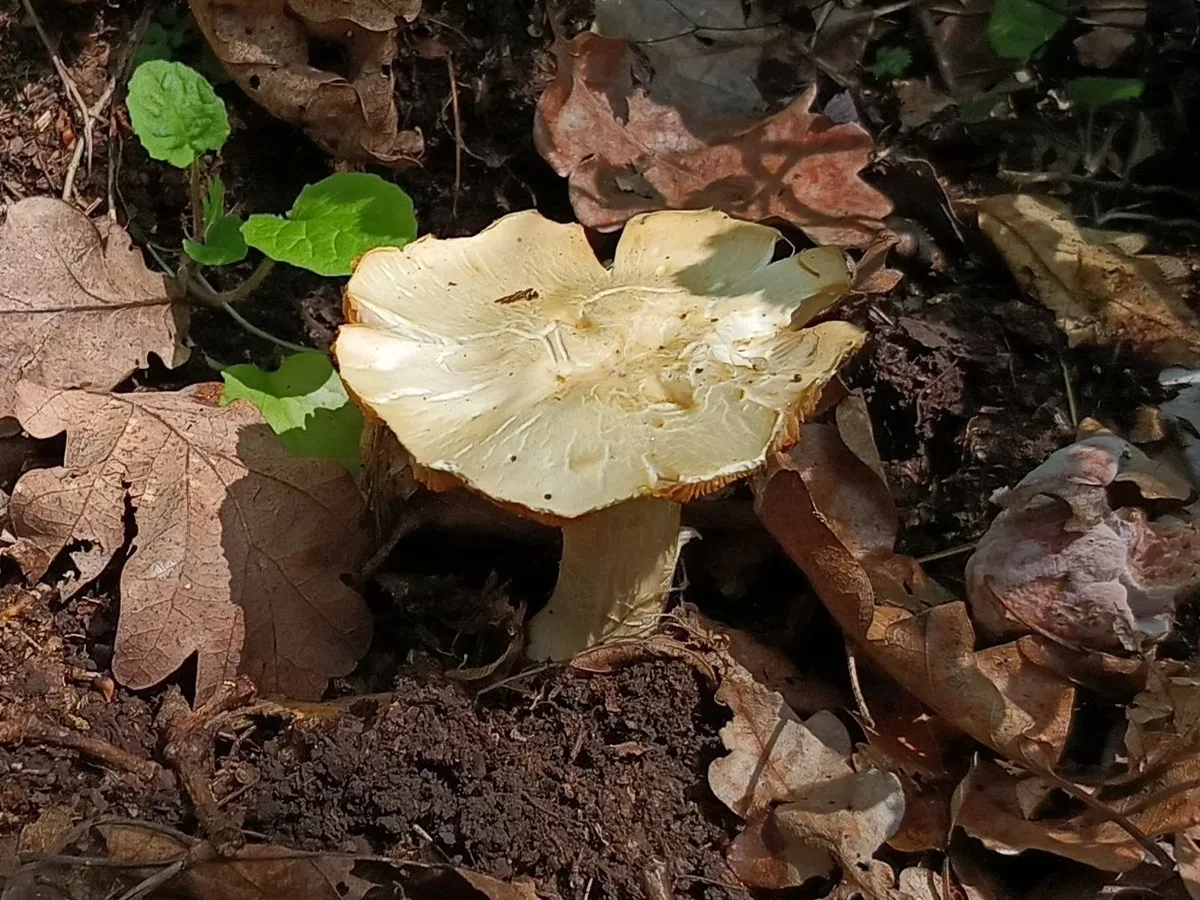
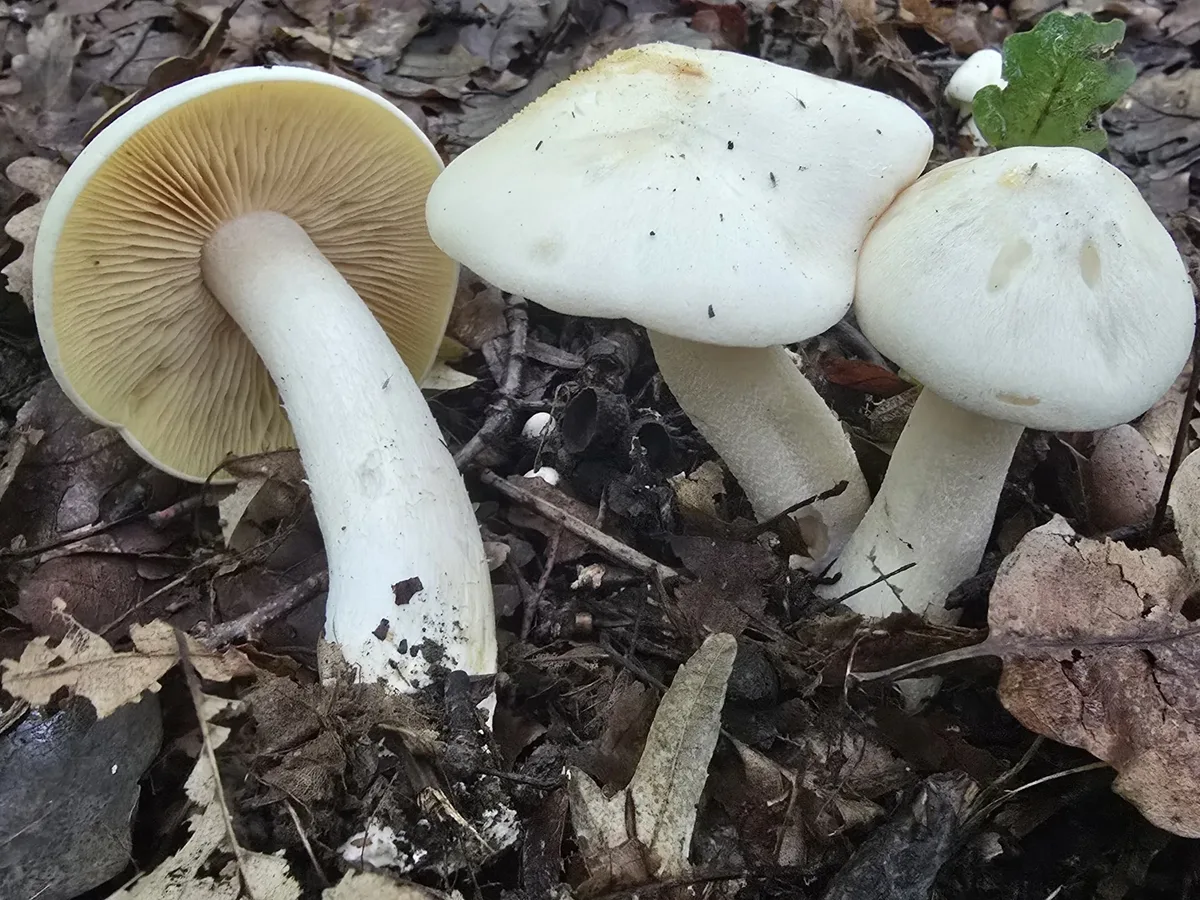
Entoloma sinuatumA large pale cap whose gills turn pink as the spores ripen, mistaken for St George's and miller mushrooms.
How to recognise it
A large, solidly built mushroom with a cap that can reach 20 cm across - ivory-white to pale greyish-brown, with an inrolled margin that gives it a chunky, Tricholoma-like silhouette. The gills start pale yellow and gradually flush pink as the spores ripen, leaving a cream-pink print. The stem is thick and whitish, with no ring. Cut or crushed flesh releases a distinct mealy, floury smell - almost like raw wheat.
Where it grows
Deciduous woodland and parks - most at home where the soil is heavy clay or underlain by limestone. Can appear in open grassy areas and sometimes forms fairy rings.
Cooking
Entoloma sinuatum must never be eaten. No method of preparation - boiling, parboiling, long cooking, drying, or discarding the water - removes the gastrointestinal toxins responsible for entoloma-type gastroenteritis. The toxins are not destroyed by heat and are not leached out by blanching. Eating even a modest quantity causes violent vomiting, profuse diarrhoea, and severe abdominal cramps within one to three hours. The illness is rarely fatal in healthy adults but can be life-threatening in children, the elderly, and anyone with a compromised immune system or underlying health condition, and can require hospitalisation. There is no culinary use for this species.
Danger
One of the most common severe poisonings in the Mediterranean. Rarely life-threatening but very distressing, and can be dangerous for children, the elderly and weakened individuals.
Look-alikes
The miller has a greyish-white downy cap and decurrent gills that turn pale pink; a very common cause of poisoning by confusion (especially in France).
St George's mushroom has crowded cream-coloured gills and a white spore print, whereas Entoloma has a pink spore print and sinuate (notched) gills.
Agaricus species have a ring on the stem and dark brown spores; Entoloma sinuatum has no ring and a pink spore print.
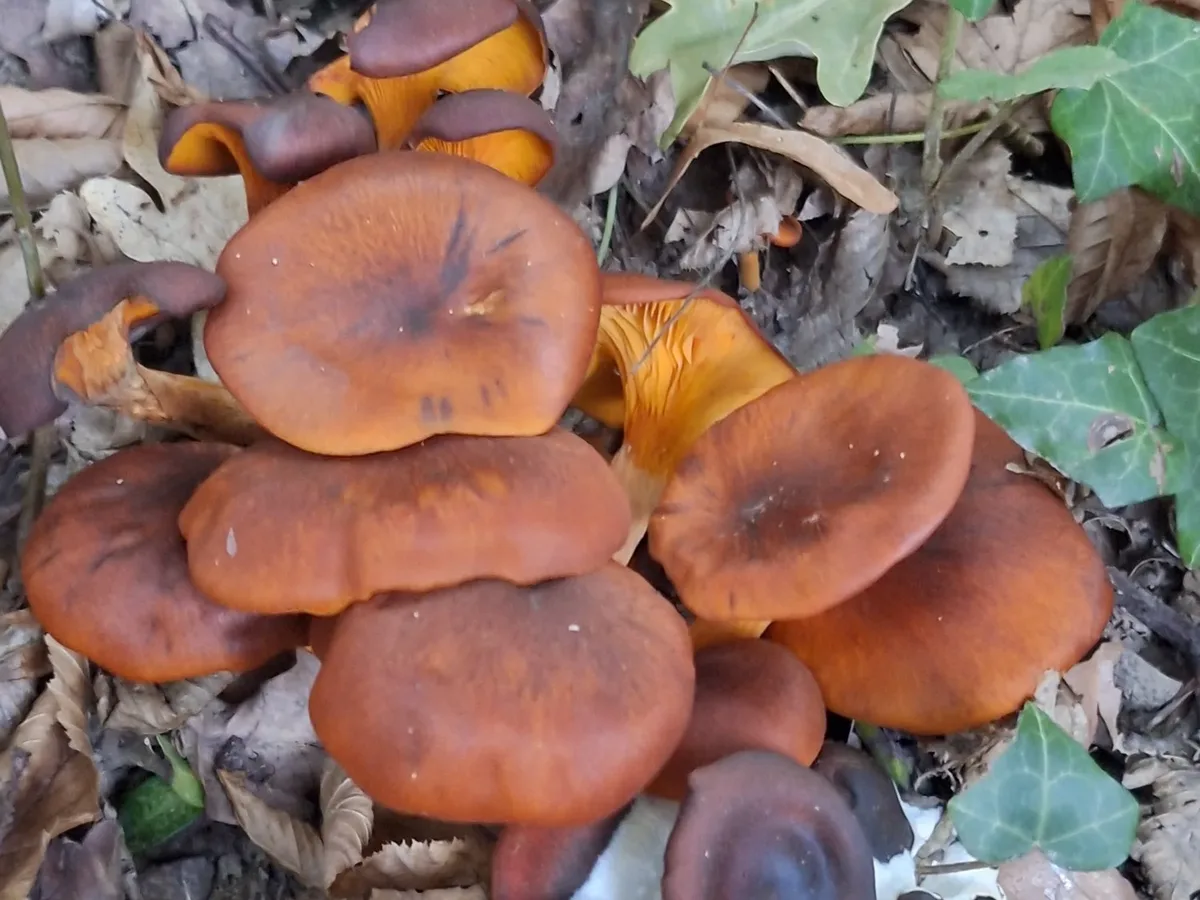 Jack-o'-lantern mushroom
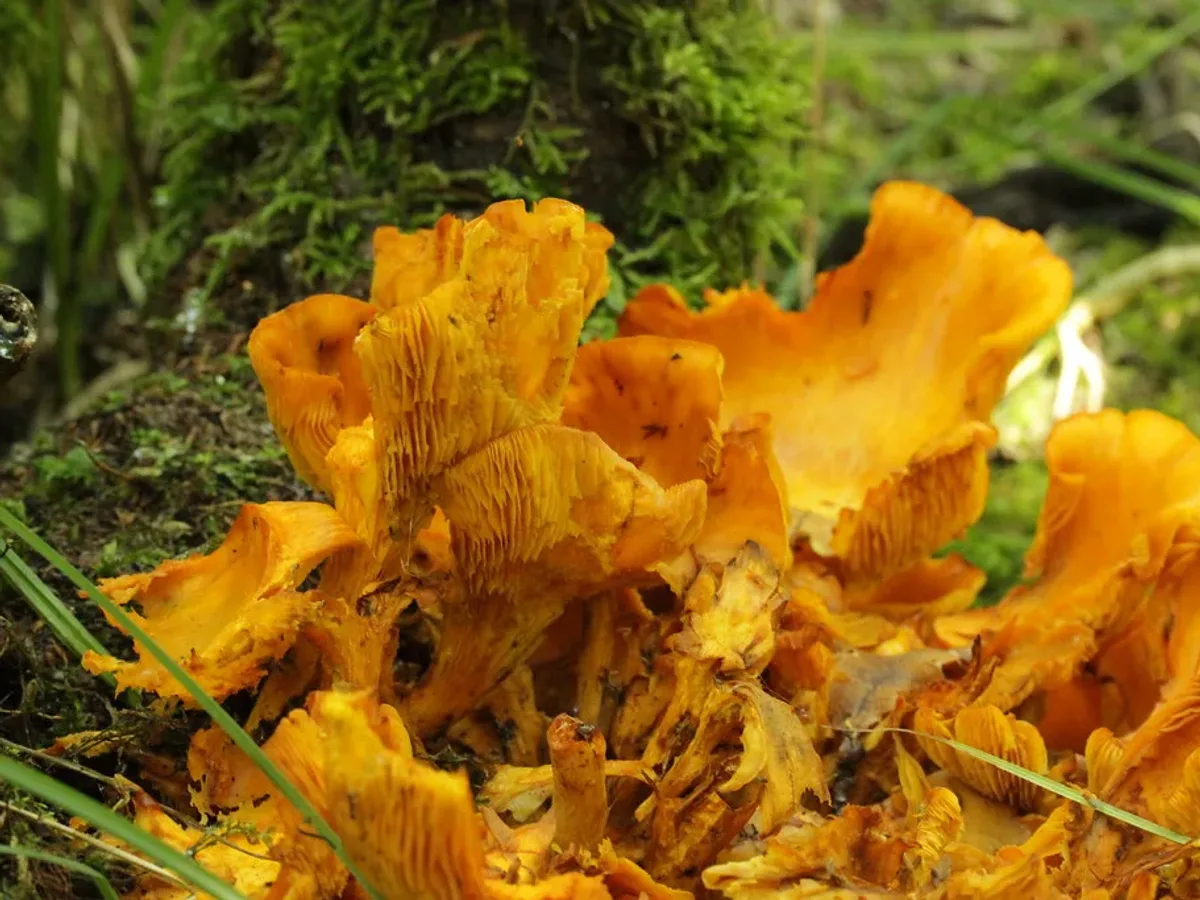 Jack-o'-lantern mushroom
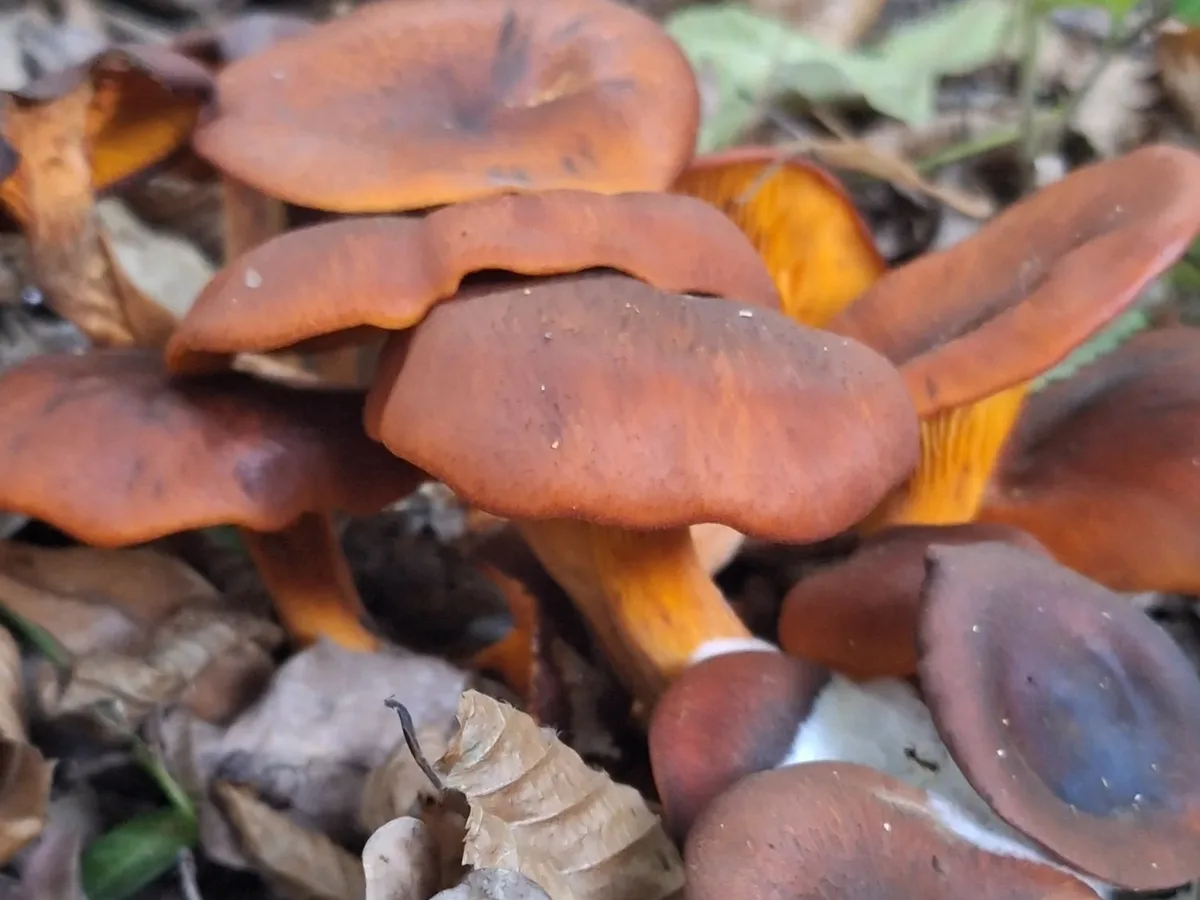 Jack-o'-lantern mushroom
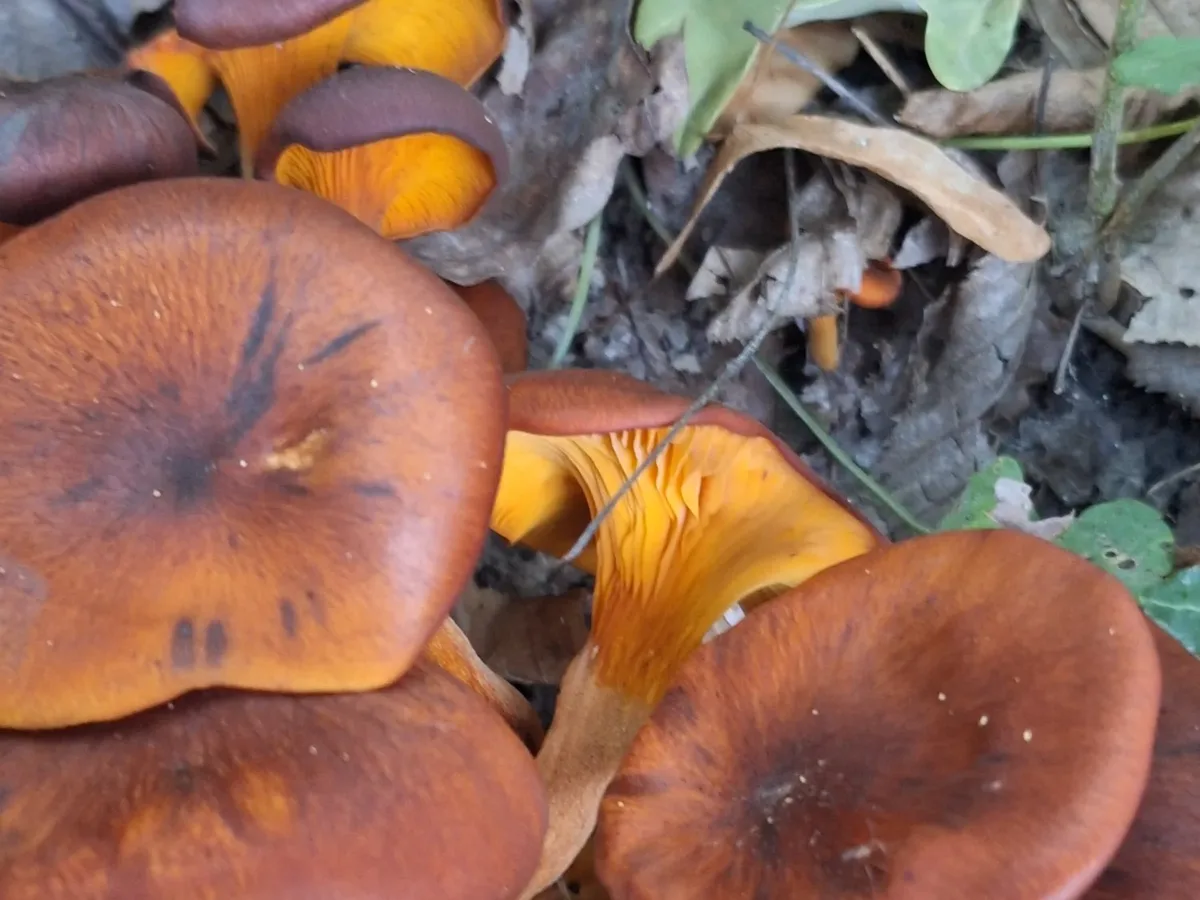 Jack-o'-lantern mushroomJack-o'-lantern mushroomJack-o'-lantern mushroom
Jack-o'-lantern
Omphalotus oleariusGlowing orange clumps on wood with true sharp gills, mistaken for chanterelles.
How to recognise it
Brilliant orange to orange-brown, cap 4-18 cm, becoming funnel-shaped with age. True, sharp, decurrent, unforked gills of the same orange color, which glow faintly green in the dark (bioluminescence). The stem is orange inside too when cut. Grows in dense clusters.
Where it grows
Saprophyte on buried or exposed hardwood - especially olive, but also oak, chestnut, and beech. Sometimes appears to grow out of the ground but is always attached to wood.
Cooking
Omphalotus olearius must never be eaten. No cooking method - boiling, frying, drying, parboiling, or prolonged heat - makes it safe. The primary toxin, illudin S, is a heat-stable sesquiterpene that is not destroyed by culinary temperatures, and the muscarine content adds an additional layer of toxicity. People who have cooked and eaten it mistaking it for chanterelle typically begin vomiting within one to two and a half hours; the gastrointestinal symptoms (severe nausea, vomiting, cramps, profuse diarrhea) can last 24 hours or longer and, while rarely directly fatal in healthy adults, can cause dangerous dehydration requiring hospital treatment. If you or someone you are with has eaten this species, contact a poison control centre immediately - even if symptoms have not yet started, as early medical attention can reduce their severity.
Danger
Rarely fatal but serious. One of the mushrooms most frequently involved in poisonings because it is confused with the chanterelle. Never edible.
Look-alikes
The chanterelle has blunt, forked false gills (ridges), grows solitary/scattered rather than in dense clusters, and is mycorrhizal (grows from soil, not on wood). The jack-o'-lantern has true, sharp, paper-like, unforked gills, grows in clumps on wood, and glows faintly green in the dark.
Compared to the jack-o'-lantern by its orange coloring, but Laetiporus is a bracket/shelf fungus with pores on the underside rather than gills.
 Devil's bolete
 Devil's bolete
 Devil's bolete
 Devil's boleteDevil's boleteDevil's bolete
Devil's bolete
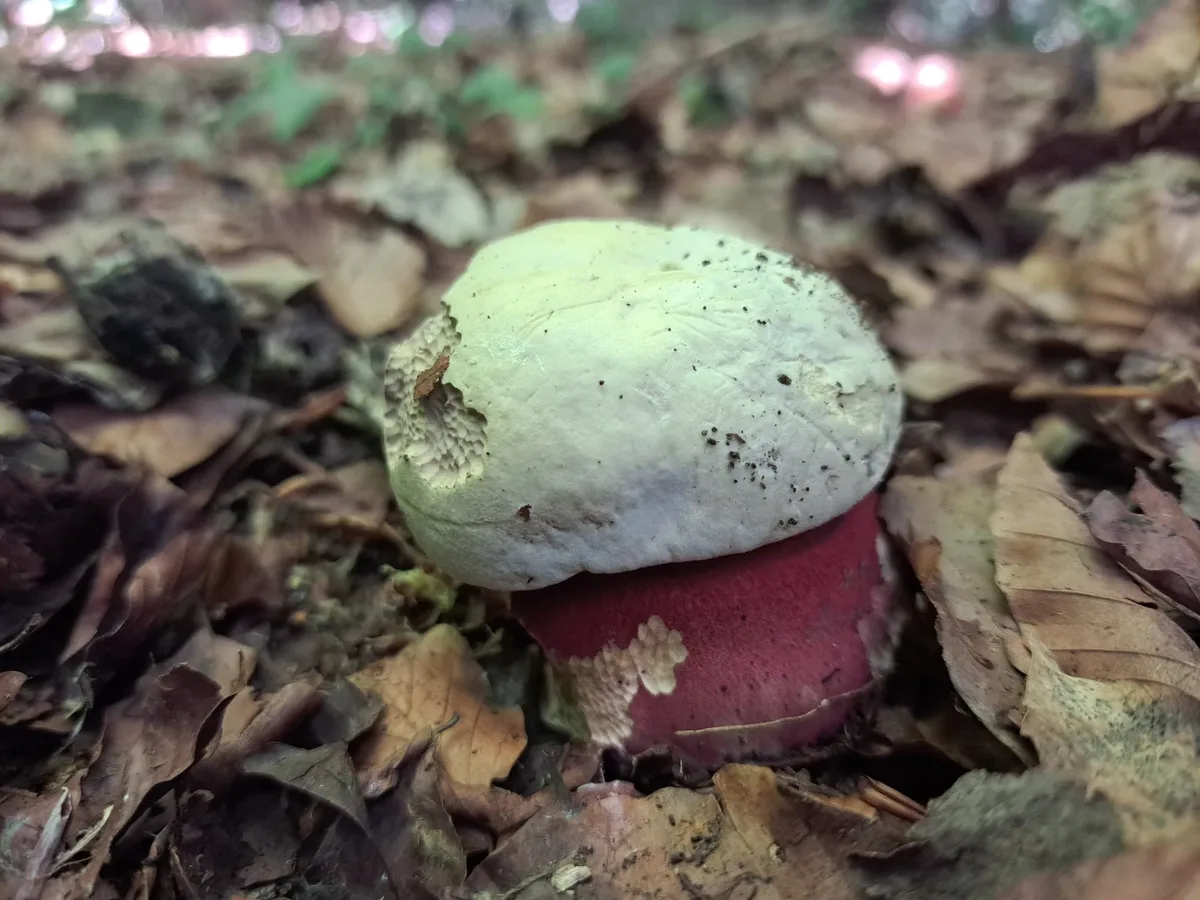
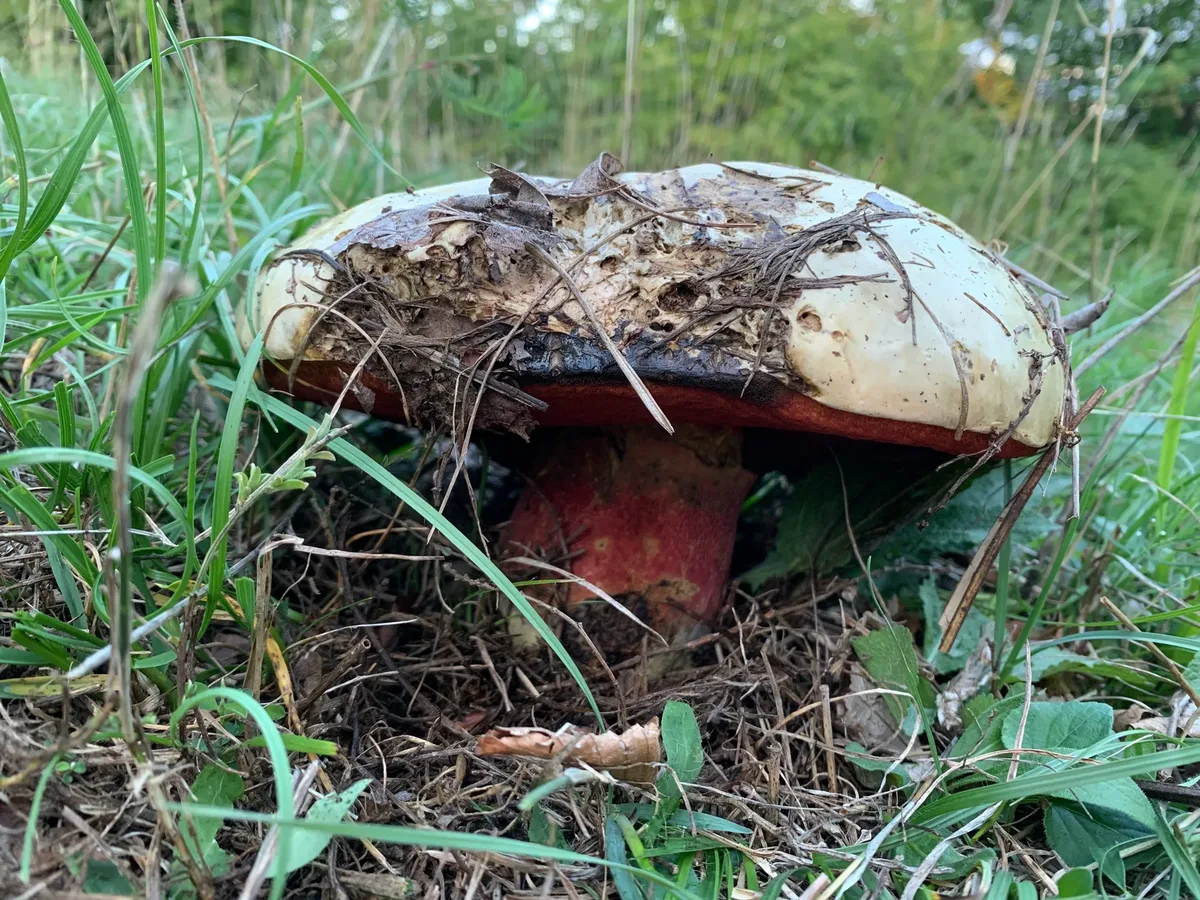
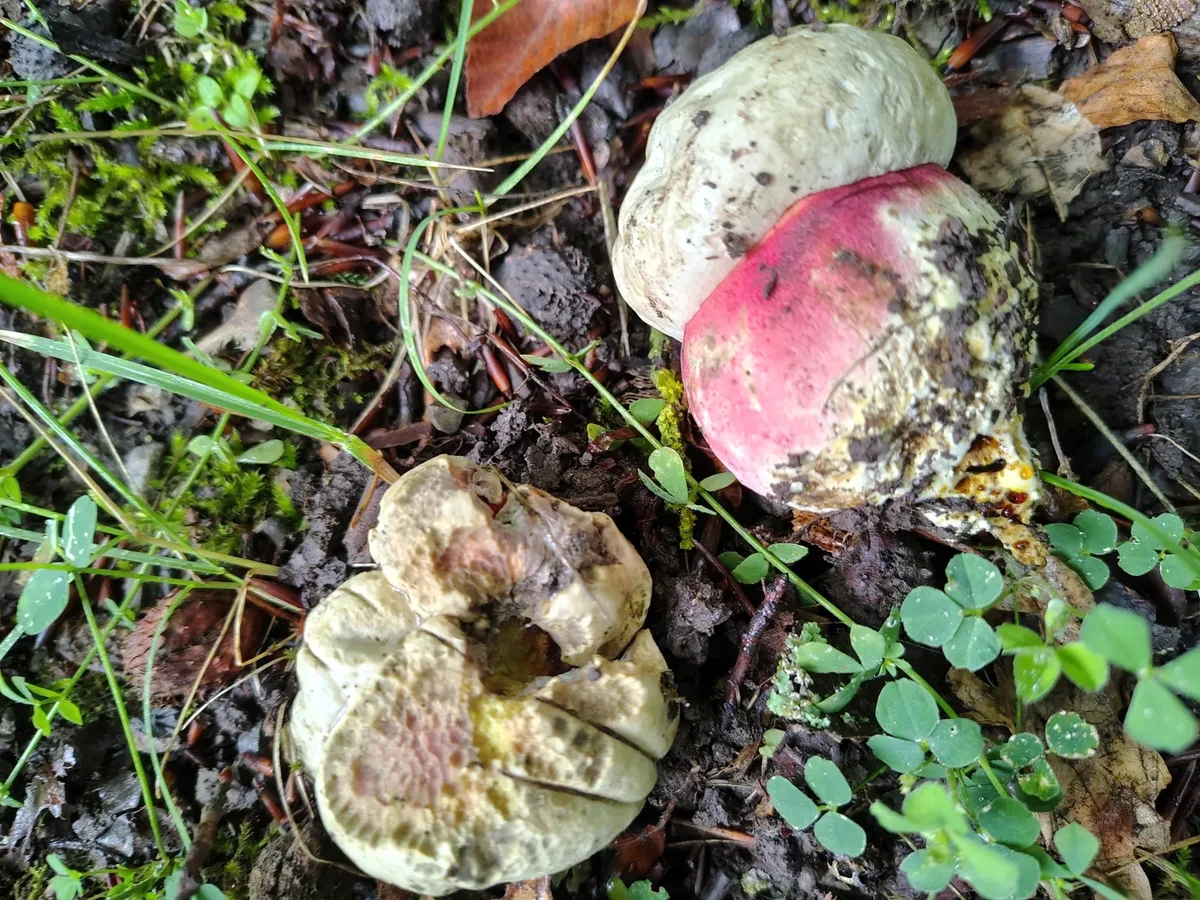
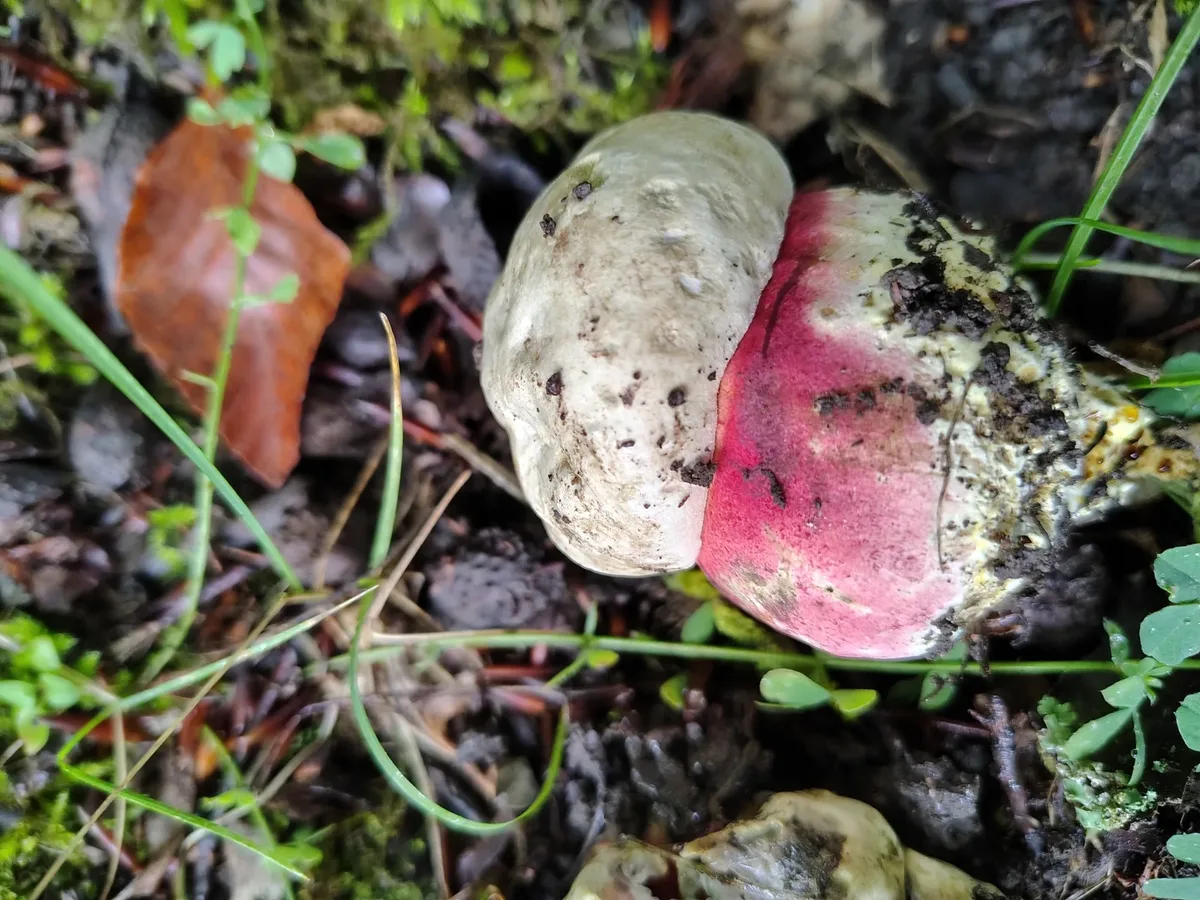
Rubroboletus satanasRed pores and flesh that turns blue when cut: the warning that separates it from porcini.
How to recognise it
One of Europe's most imposing boletes: cap 8-30 cm (occasionally to 50 cm), pale greyish-white to beige, with a smooth, dry, velvety surface. The pores are a vivid red to orange-red - a striking contrast to the pale cap - and the stem is thick, bulbous and covered in a crimson net-like pattern (reticulation). Cut the flesh and it stains blue almost instantly, a reaction caused by oxidation of the pigment variegatic acid. Older specimens develop a distinctive, unpleasant smell of carrion. Spore print olive-brown.
Where it grows
A thermophilic mycorrhizal partner of oak, beech and chestnut, rooted in warm, calcareous (lime-rich) soil. Largely a species of southern and central Europe; in the UK confined to southern England, absent from colder northern forests.
Cooking
Not a food mushroom. This species is poisonous and should not be eaten.
Danger
Causes severe gastroenteritis with violent vomiting, abdominal pain and sometimes bloody diarrhoea within hours. Especially poisonous raw. According to Oberlin et al. (Ann Toxicol Anal 25(1):13-16, 2013), in summer 2011 in southern France "184 cases of Devil's bolete poisoning... called into Poison Control" were reported. No confirmed deaths in the UK, but serious.
Look-alikes
The cep has white/yellow pores, a light-coloured net, and does not blue; the devil's bolete has red pores, a red net-stem and blueing flesh.
Another red-pored bolete; avoid all boletes with red pores that blue strongly.
Another red-pored bolete; avoid all boletes with red pores that blue strongly.
Inexperienced foragers may mistake the pale cap for a porcini until they notice the red pores; the porcini has whitish to olive (never red) pores and does not have a red-networked stem.
Edible porcini have pale pores, a pale stem, and white flesh that does not turn blue. Red pores plus blue-staining flesh indicate the devil's bolete.
 Fool's webcap
 Fool's webcap
 Fool's webcapFool's webcapFool's webcap
Deadly webcap
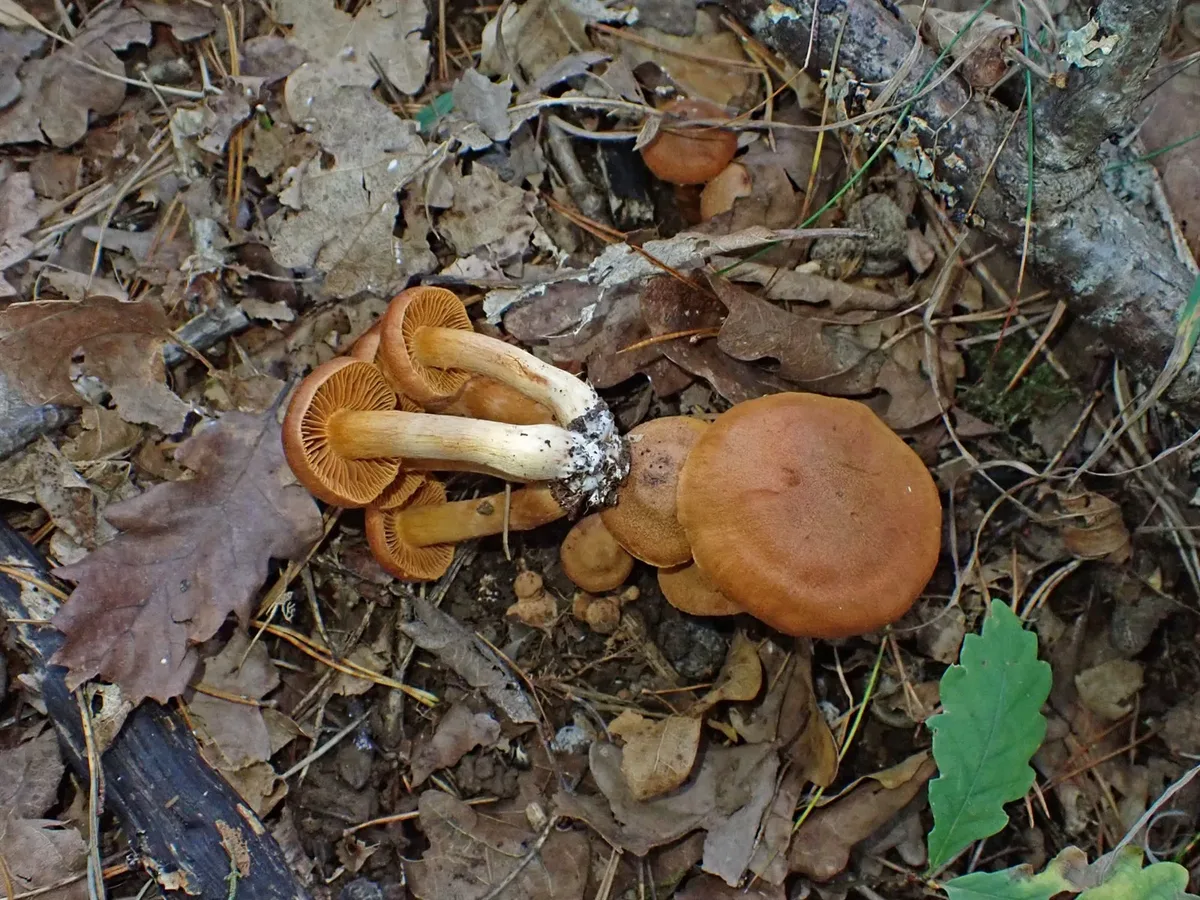
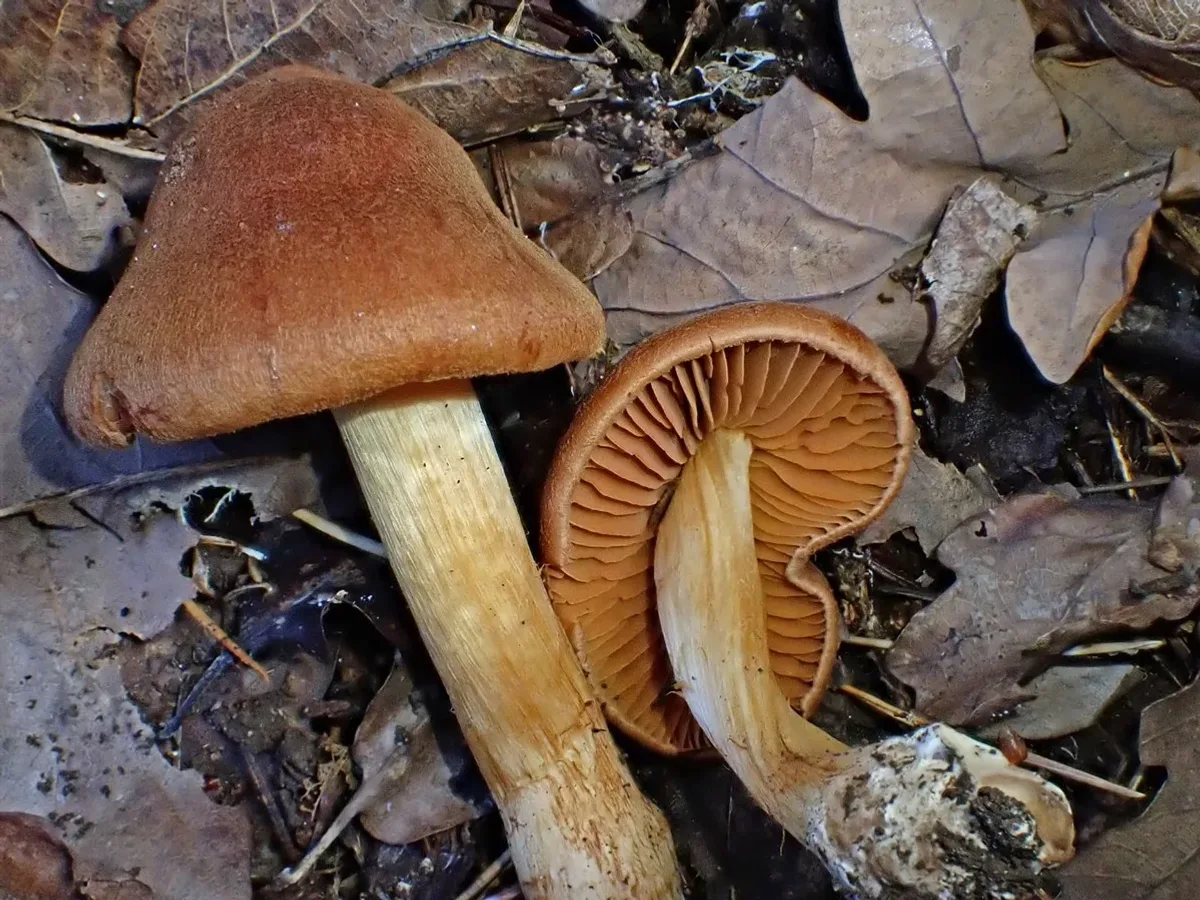
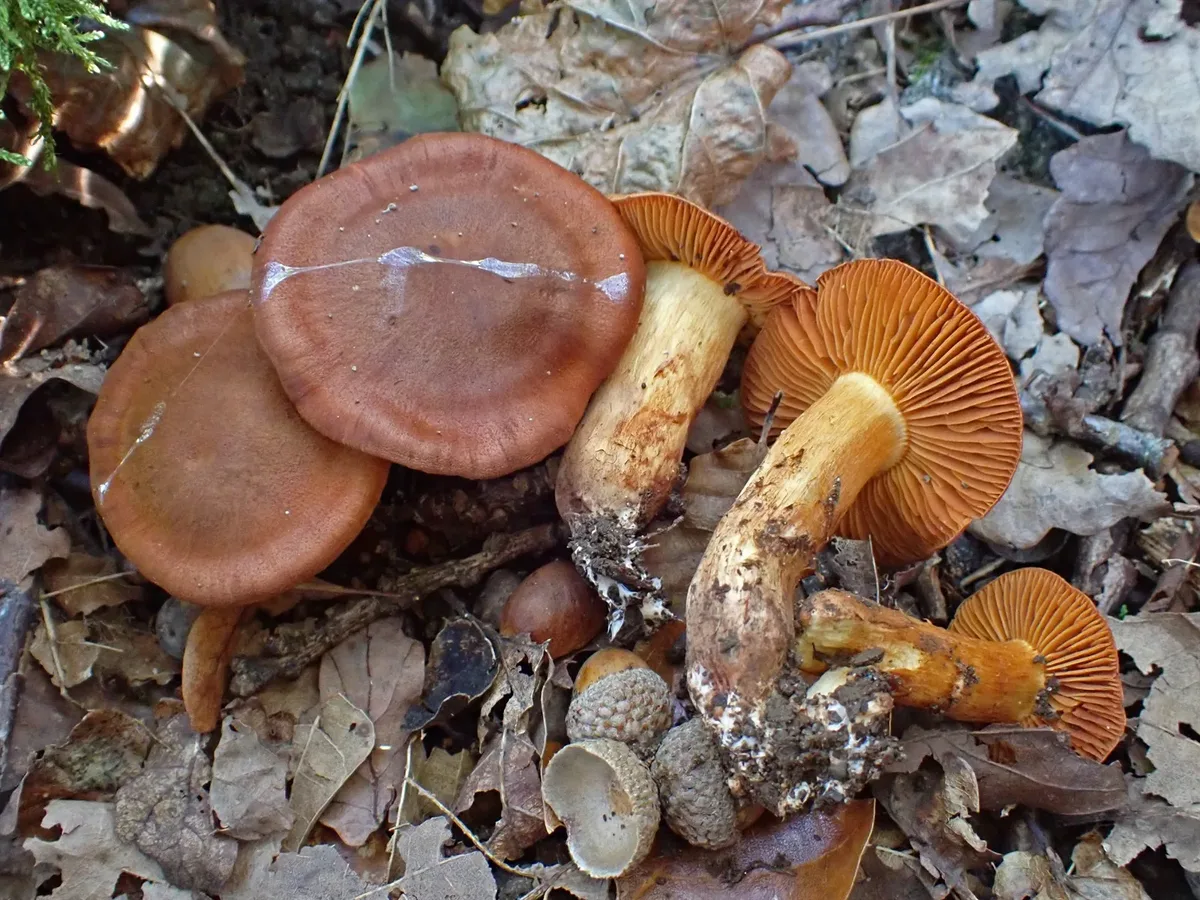
Cortinarius orellanusOrellanine destroys the kidneys, and symptoms may not appear for one to two weeks.
How to recognise it
A medium-sized autumn mushroom with a reddish-brown to rust-orange cap and rust-brown gills - those rust tones run through the whole fruiting body. In young specimens, a fine cobweb-like veil called the cortina stretches between cap edge and stem; as the cap opens and the cortina breaks, it leaves a rusty girdle on the stem. The related C. rubellus (sometimes treated as a synonym) has a noticeably conical cap.
Where it grows
Grows in coniferous and mixed forest, living as a mycorrhizal partner with trees. The partnership can be long-lived; the mycelium threads through the soil for years, returning each autumn when conditions are right.
Cooking
Cortinarius orellanus must never be eaten under any circumstances. No cooking technique - boiling, frying, drying, parboiling, or prolonged heating - destroys or neutralises orellanine. The toxin is a highly stable dipyridyl compound that is heat-resistant and water-soluble only to a limited degree; discarding cooking water does not make the mushroom safe. There is no antidote, and by the time symptoms of kidney damage appear (typically four to fifteen days after eating), significant and often irreversible nephrotoxic injury has already occurred. Treatment is supportive: dialysis for weeks or months, and in severe cases a kidney transplant. Because of the extreme latency, victims rarely connect the meal to the illness without a careful dietary history taken in hospital. The lesson is not 'cook it differently' - the lesson is that this species is incompatible with food, full stop.
Danger
Confused with chanterelles and brittlegills (Russula) by inexperienced foragers; has led to deaths. The long latency makes the link to the mushroom easy to overlook.
Look-alikes
Confused with chanterelles by inexperienced foragers; chanterelles have blunt forked false gills (ridges) and a fruity smell, never the rust-brown gills and cobweb cortina of a webcap. This confusion has led to deaths.
Confused with Russula species by inexperienced foragers; brittlegills have brittle white-to-cream gills and no cortina, unlike the rust-brown gills and cobweb veil of the webcap. This confusion has led to deaths.
Various edible brown-spored agarics are confused with this species; check for the rust-brown gills and cortina, and never eat brown webcaps.
Dangerously confused with hallucinogenic mushrooms by foragers seeking them out; orellanine poisoning can result instead.
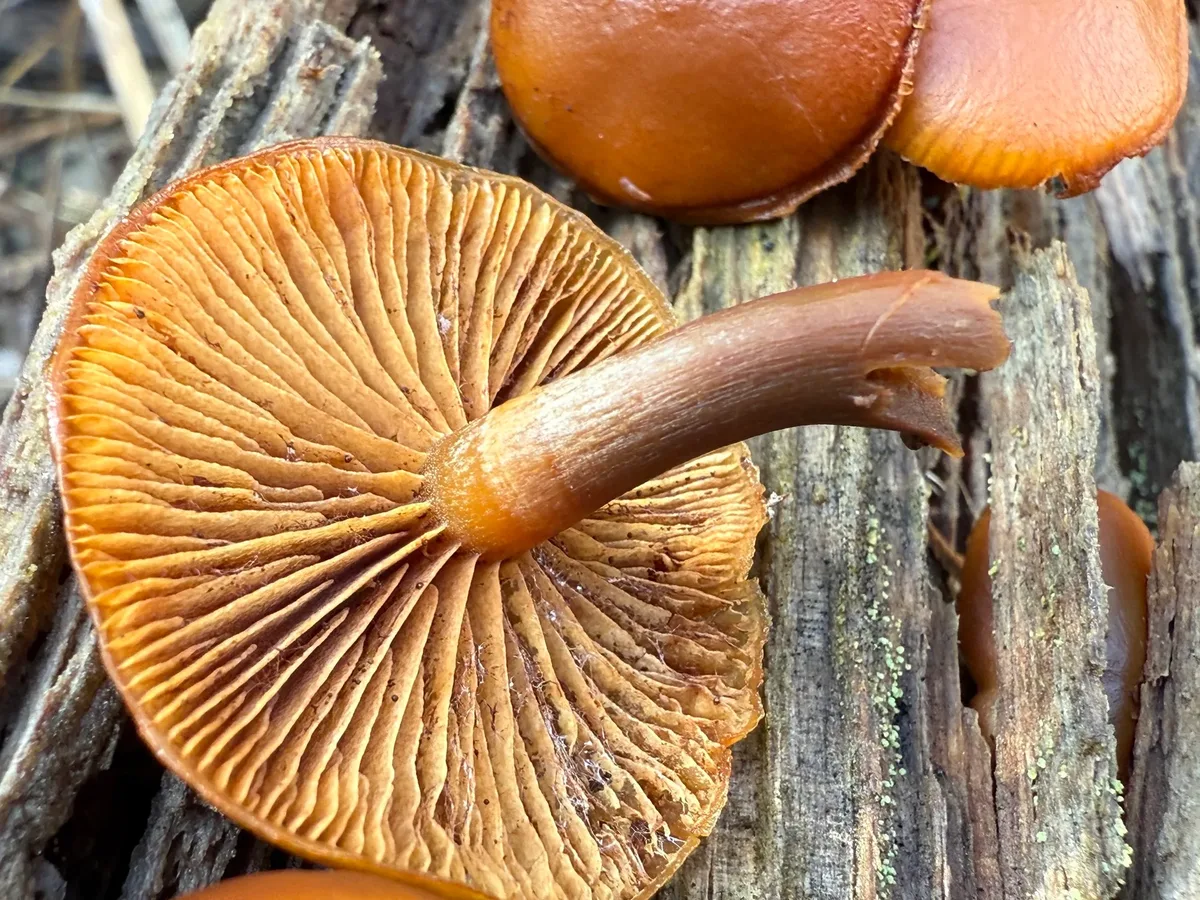 Funeral bell
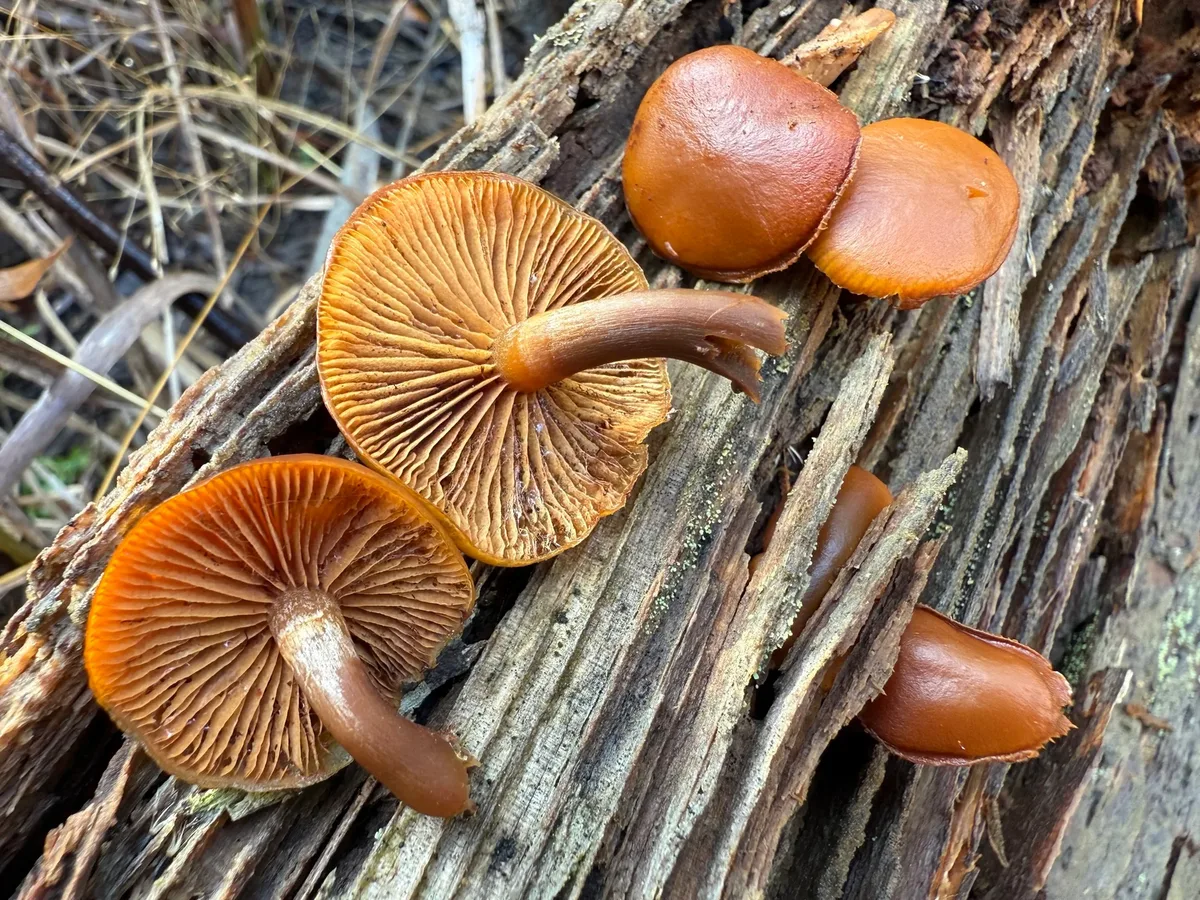 Funeral bell
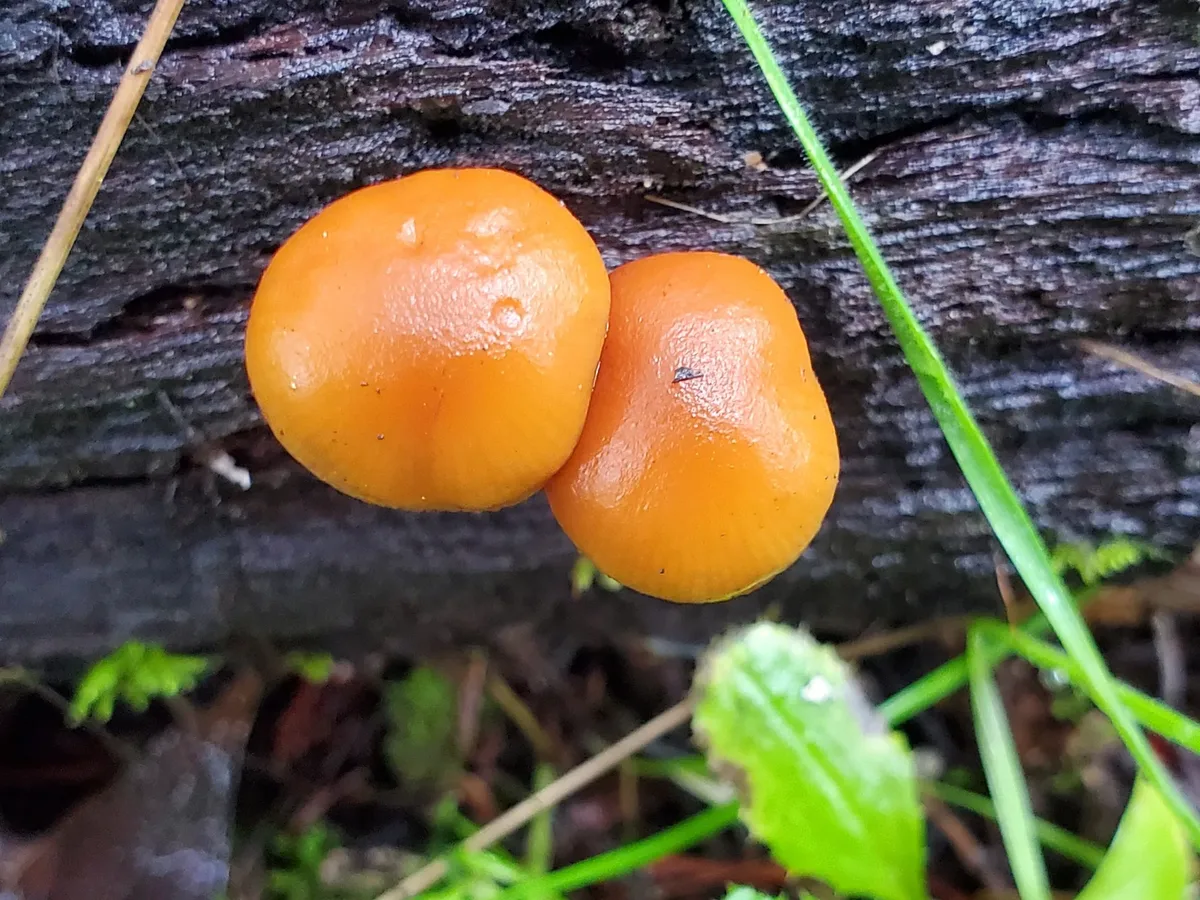 Funeral bellFuneral bellFuneral bell
Funeral bell
Galerina marginataA small brown mushroom on dead wood carrying the same deadly amatoxins as the death cap.
How to recognise it
Small - cap 1-4 (-5) cm, honey- to yellow-brown, hygrophanous (dark brown when moist, pale yellow when dry), smooth. Gills brownish, giving a rust-brown spore print. Stem thin with a (often disappearing) ring; darkens towards the base. Grows on wood.
Where it grows
Saprotroph on dead wood (deciduous and coniferous), on rotting logs and stumps, often in moss; from the lowlands to alpine settings.
Cooking
Galerina marginata must never be eaten. There is no preparation method - boiling, parboiling, frying, drying, or any other technique - that destroys or neutralises its amatoxins. Alpha- and beta-amanitin are heat-stable proteins: they survive cooking temperatures completely intact and are absorbed unchanged through the gut. Eating even a single cooked cap can cause fatal liver and kidney failure. The insidious danger is a deceptive latency period of 6-24 hours during which no symptoms appear, followed by violent gastrointestinal illness, a brief false recovery, and then organ failure within days. By the time symptoms are undeniable, irreversible damage has already begun. This species has killed people who deliberately ate what they believed were edible wood-growing mushrooms and who had removed or discarded the ring as an unimportant detail. If there is any possibility that this species entered a dish, seek emergency medical care immediately - do not wait for symptoms.
Danger
Contains the same amatoxins as the death cap; a single cap can be fatal.
Look-alikes
Edible; grows on wood but gives a white spore print, whereas funeral bell gives a rust-brown spore print.
Edible; also grows on wood. Distinguish by spore print (rust-brown in funeral bell) and overall features. Many fatalities have occurred from picking funeral bell along with this species.
Edible wood-growing mushroom that can be confused with Galerina marginata; lacks the fragile ring and has white spore powder rather than rust-brown.
Wood-dwelling like Galerina; very different in appearance, but beginners can mistake it.
Small brown hallucinogenic mushrooms that can be dangerously confused with deadly Galerina.
Edible small brown-gilled mushrooms can resemble Galerina marginata; confirm features carefully before eating any small brown mushroom from wood.
Psilocybe has a purple-brown to black spore print and bruises blue; galerina has a rust-brown print and does not bruise blue. At least one death in the PNW resulted from confusing galerina with Psilocybe stuntzii.
Flammulina velutipes has a white spore print.
The rules that save lives
- The death-cap rule for oak mushrooms: before picking Caesar's mushroom or green russulas, first learn to recognise Amanita phalloides. Always dig out the whole base. White gills + white ring + sac volva = mortal danger; yellow gills, stem and ring = Caesar's; brittle flesh with no ring or volva = russula.
- Beware the small mushrooms: never pick small scaly mushrooms in grass to eat. Lepiota brunneoincarnata is deadly and tiny; only the large parasol (Macrolepiota procera) is a safe dapperling, and only for the knowledgeable.
- Entoloma versus the millers: be extremely careful with large grey-white mushrooms in spring and autumn. A pink spore print means livid pinkgill.
- Chanterelle versus jack-o'-lantern: clumps of glowing orange mushrooms on wood with sharp true gills are jack-o'-lantern, not chanterelle.
- Desert-truffle safety: desert truffles have no toxic doubles but are very sandy, so clean them thoroughly, and do not confuse them with other hypogeous fungi unchecked.
- The gurumelo rule: the scrape test is decisive. Gurumelo's flesh reddens and smells of earth; the deadly Amanita verna stays white. Check every single specimen.
- Delayed-onset poisons: stomach trouble starting 6 to 24 hours (amatoxin) or days to weeks (orellanine) after a meal is an alarm sign. Seek emergency care and bring a sample of the mushroom.
- In general: eat only well-identified mushrooms, in moderation, well cooked (except those traditionally eaten raw by experts); use a stiff basket, not a plastic bag; and leave any uncertain specimen behind.