Sticky grey knight
Tricholoma portentosumsyn. Tricholoma terreum
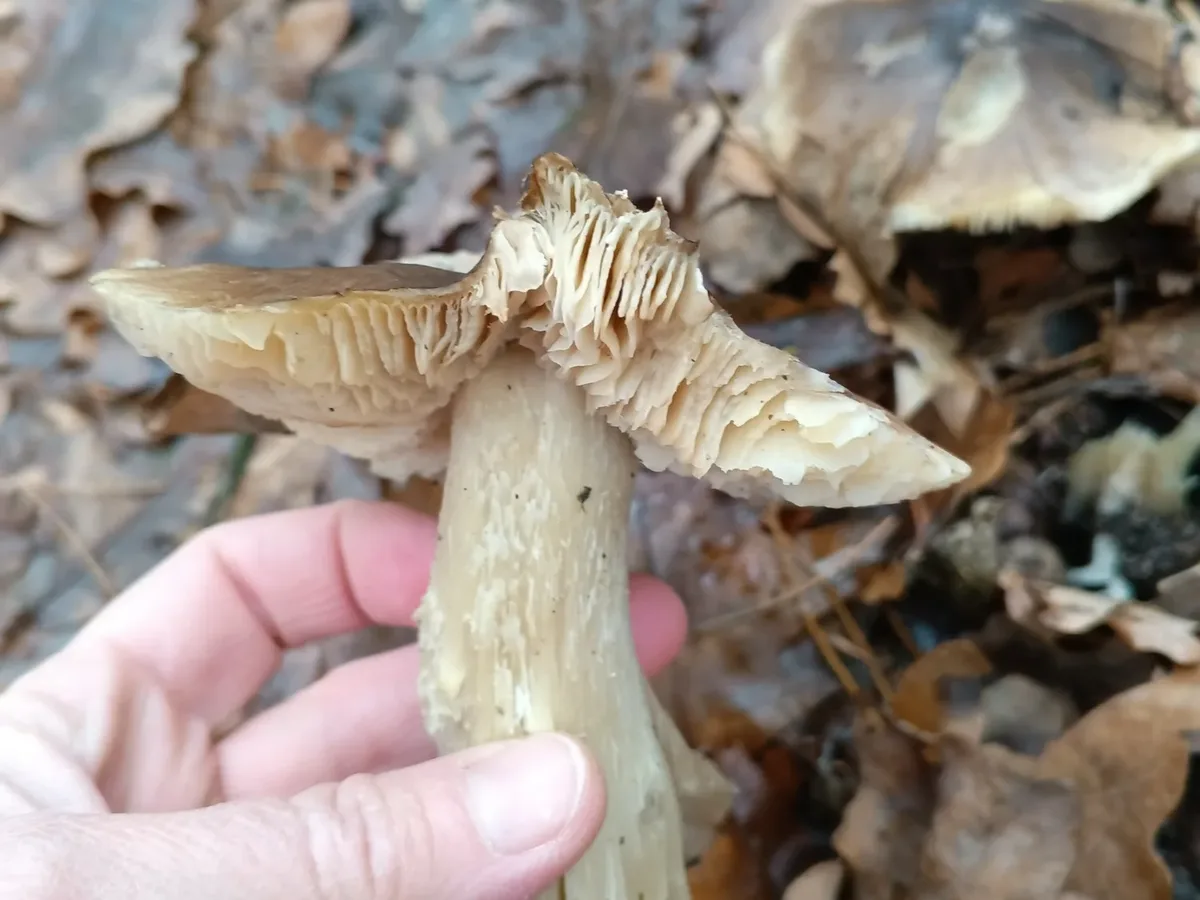 © Maria Kohanovskaya (CC BY 4.0)
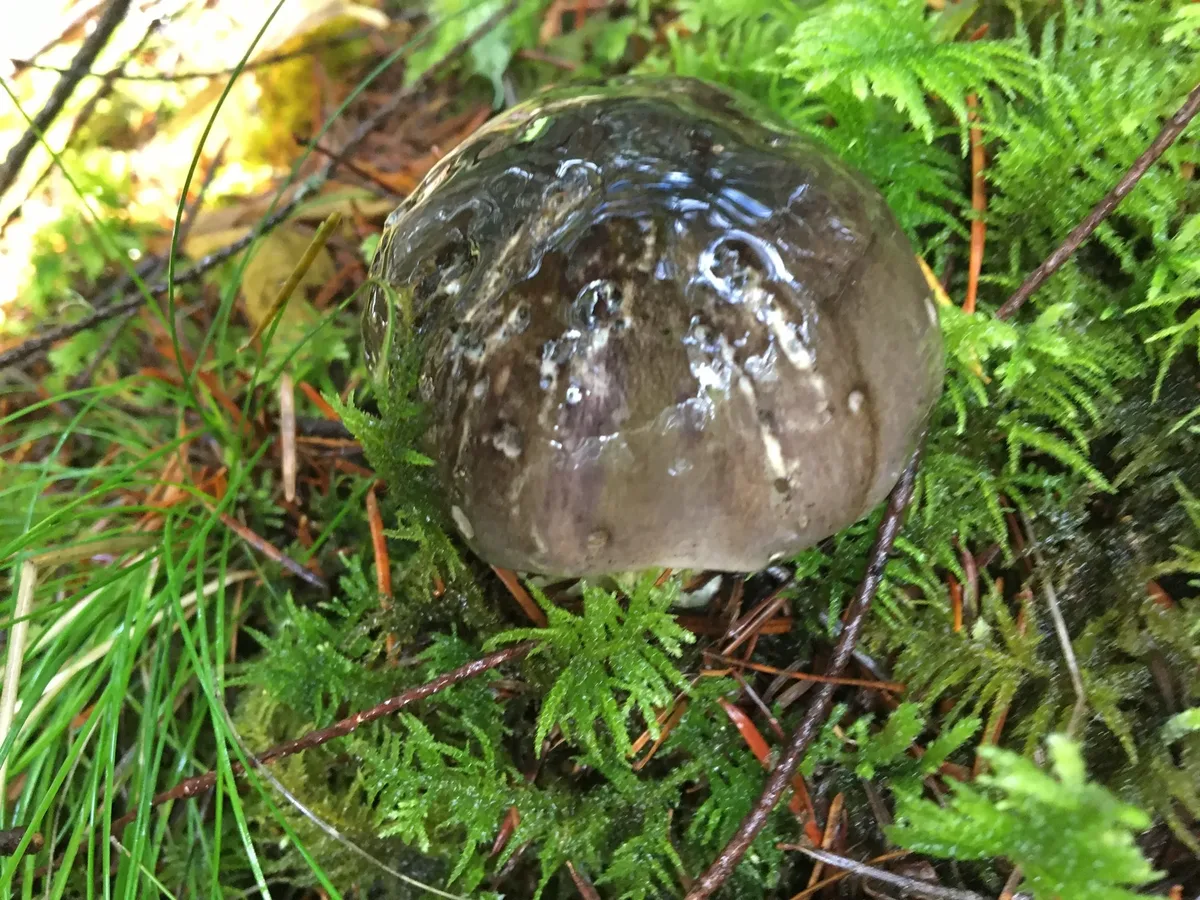 © Hilary Rose Dawson (CC BY 4.0)
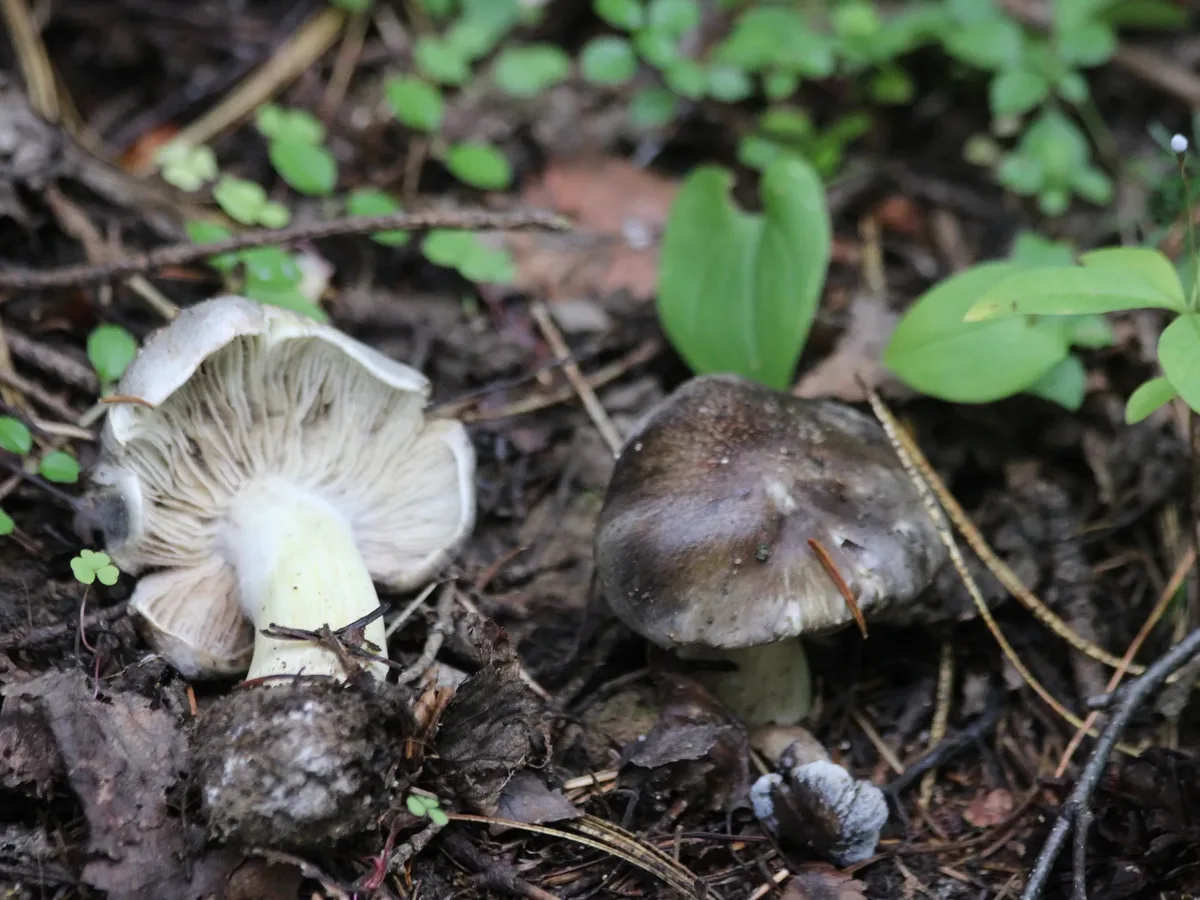 © Tatiana Strus (CC BY)
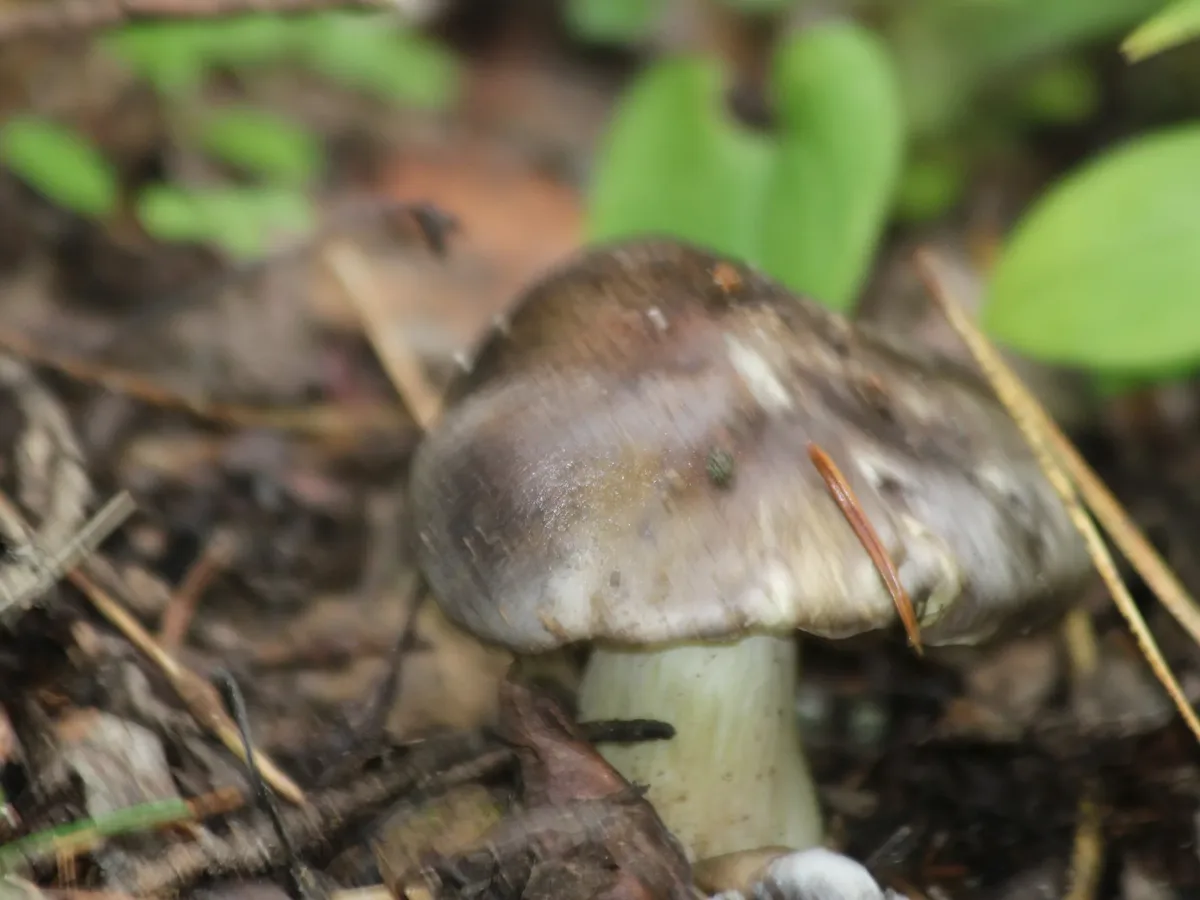 © Tatiana Strus (CC BY)
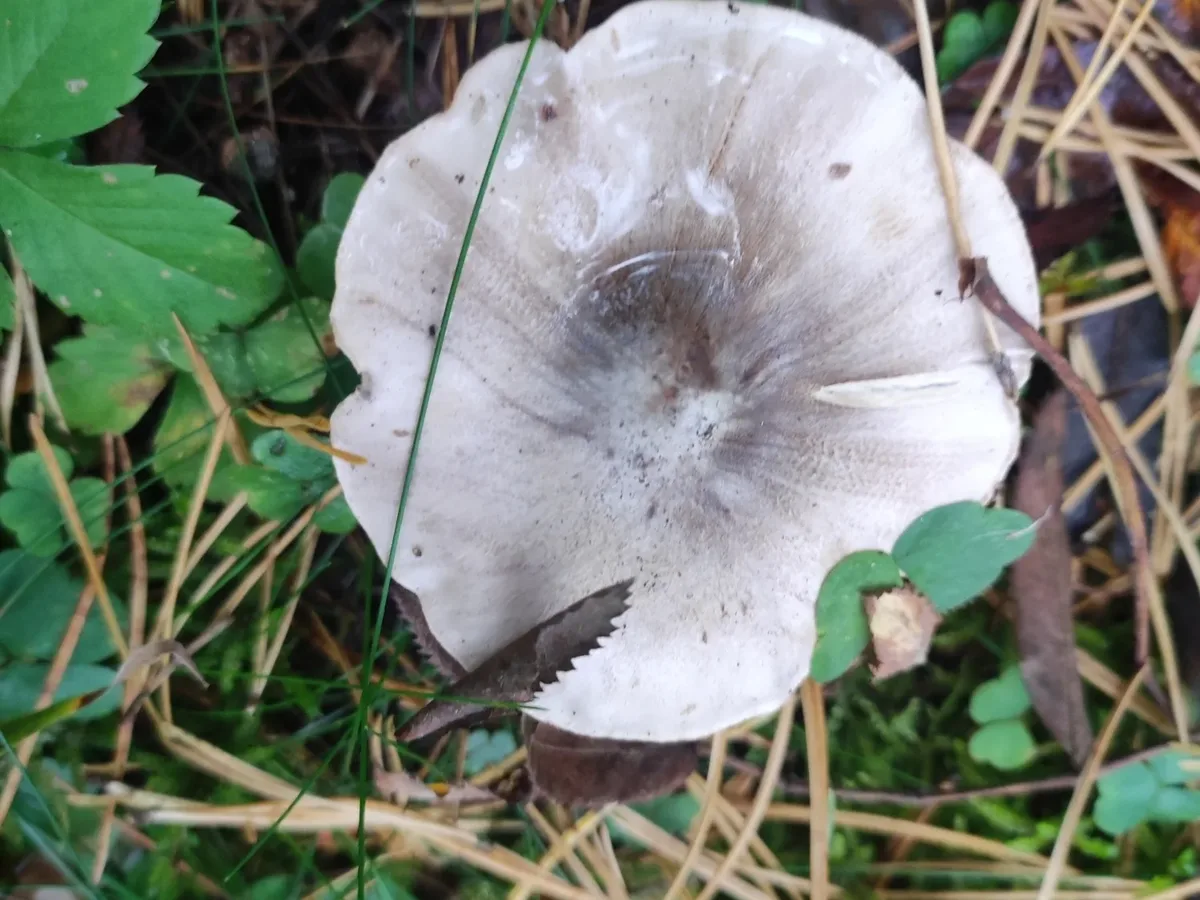 © Anastasiia Samokhvalova (CC BY)
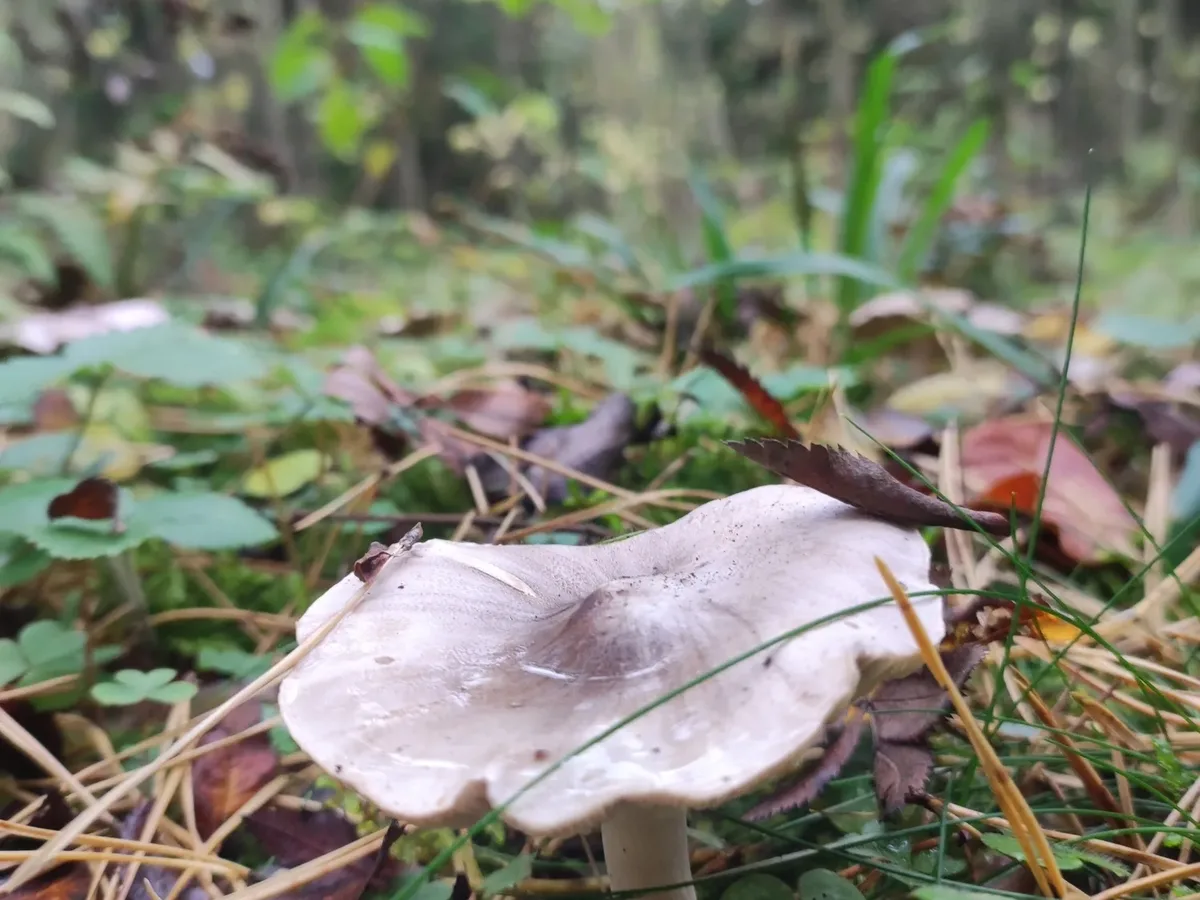 © Anastasiia Samokhvalova (CC BY)
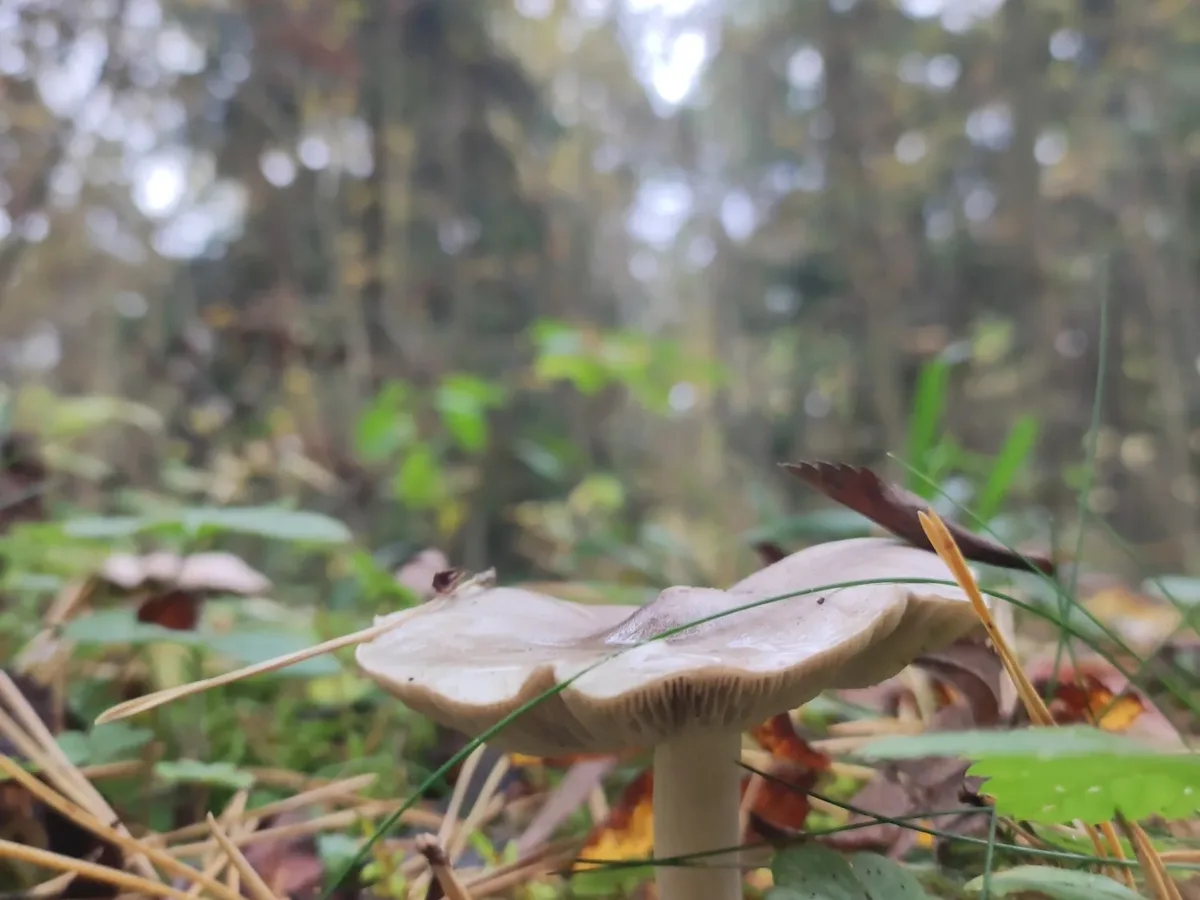 © Anastasiia Samokhvalova (CC BY)
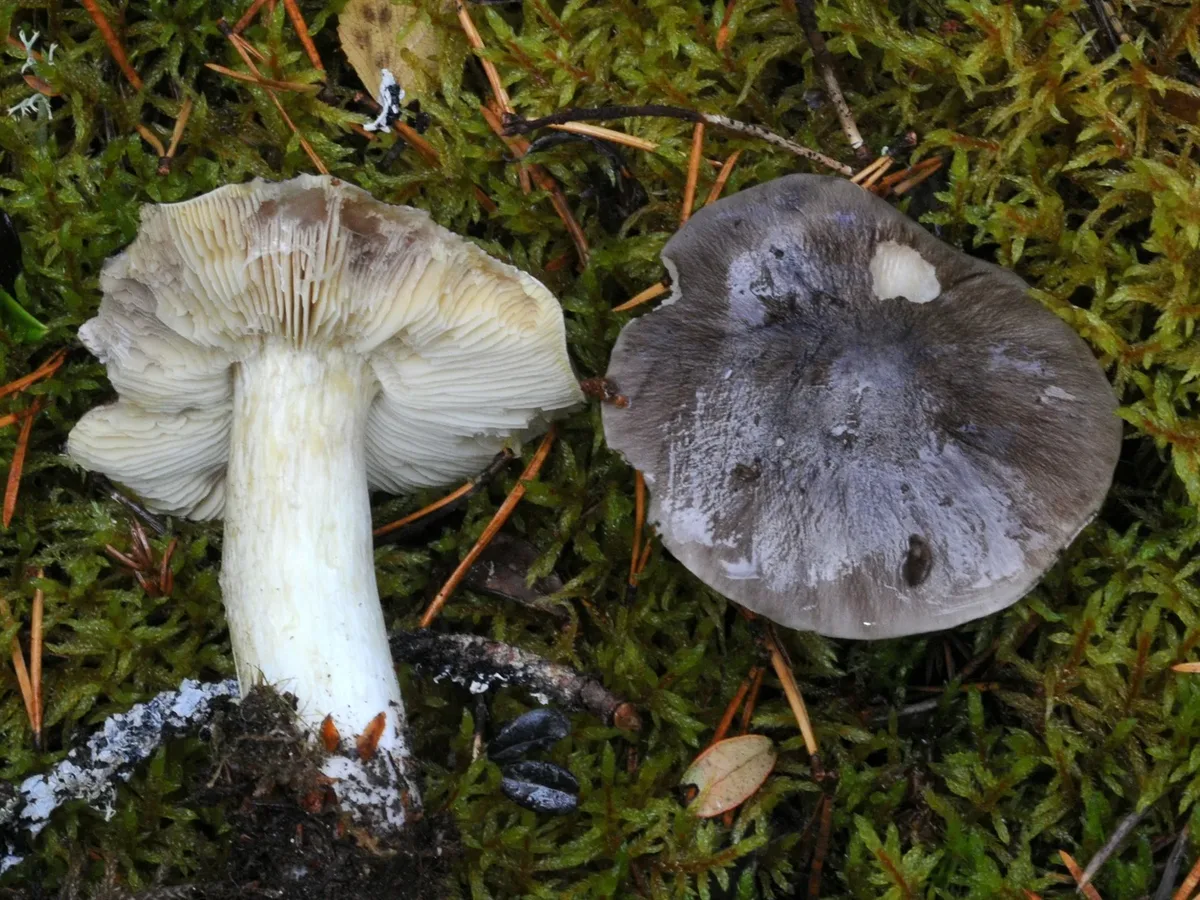 © Perry Gunnar Larsen (CC BY)
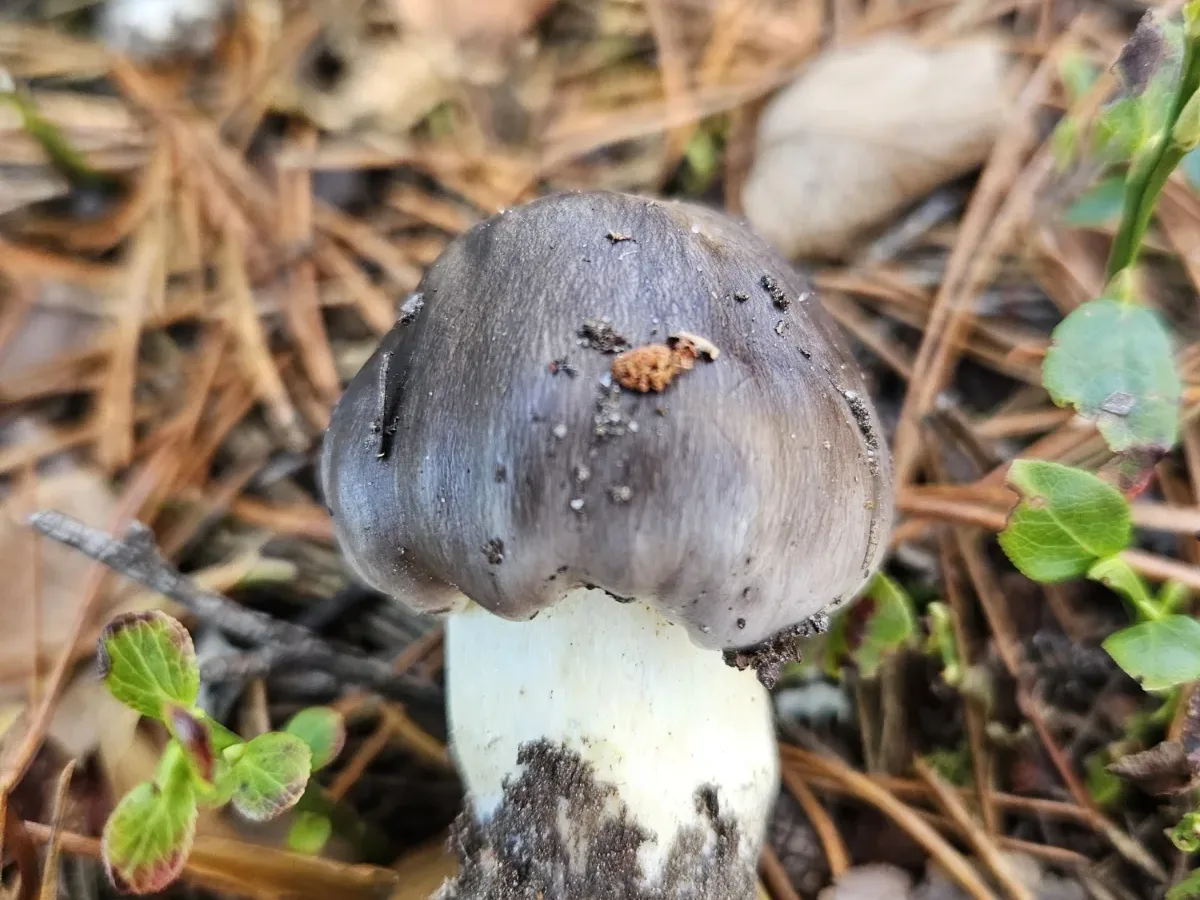 © Bente Rian (CC BY)
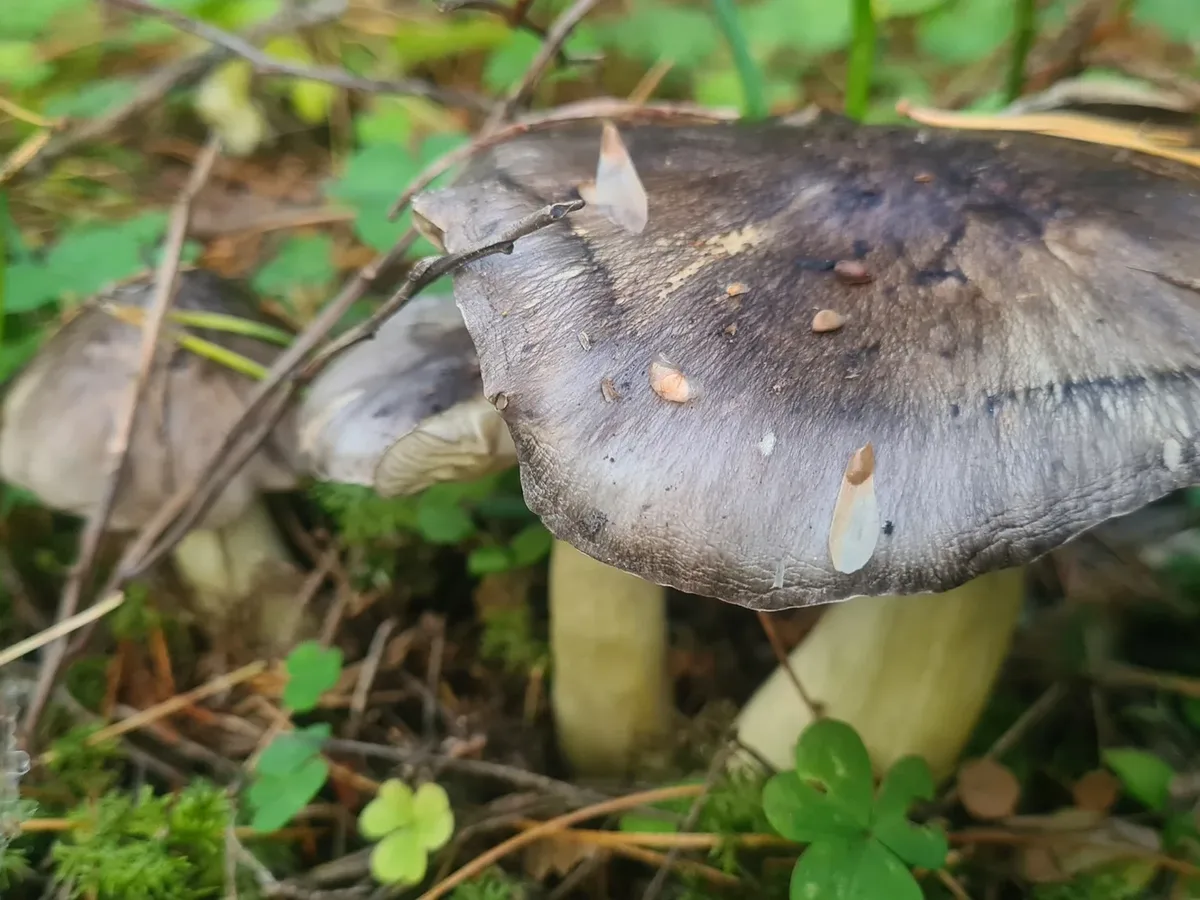 © Tatiana Strus (CC BY)
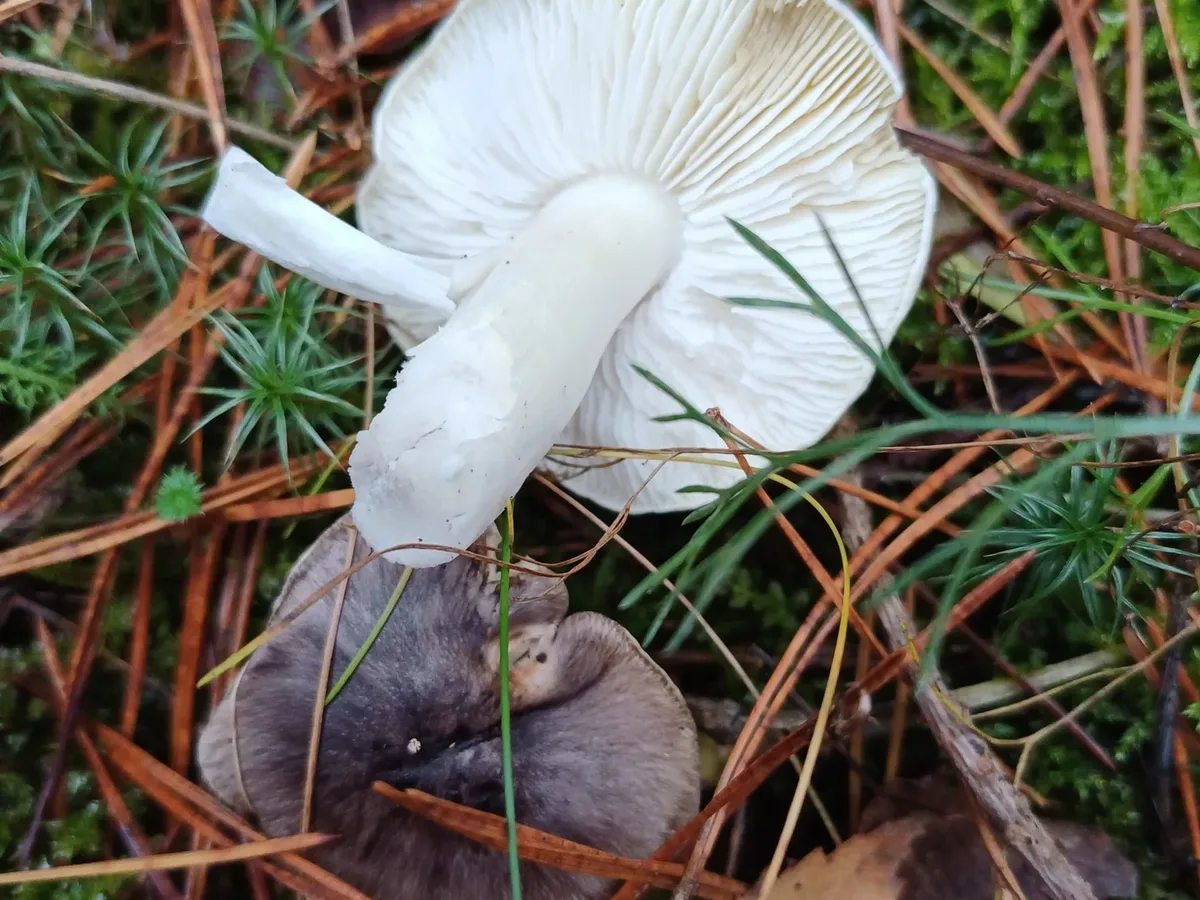 © Ewa Olchanowska (CC BY 4.0)
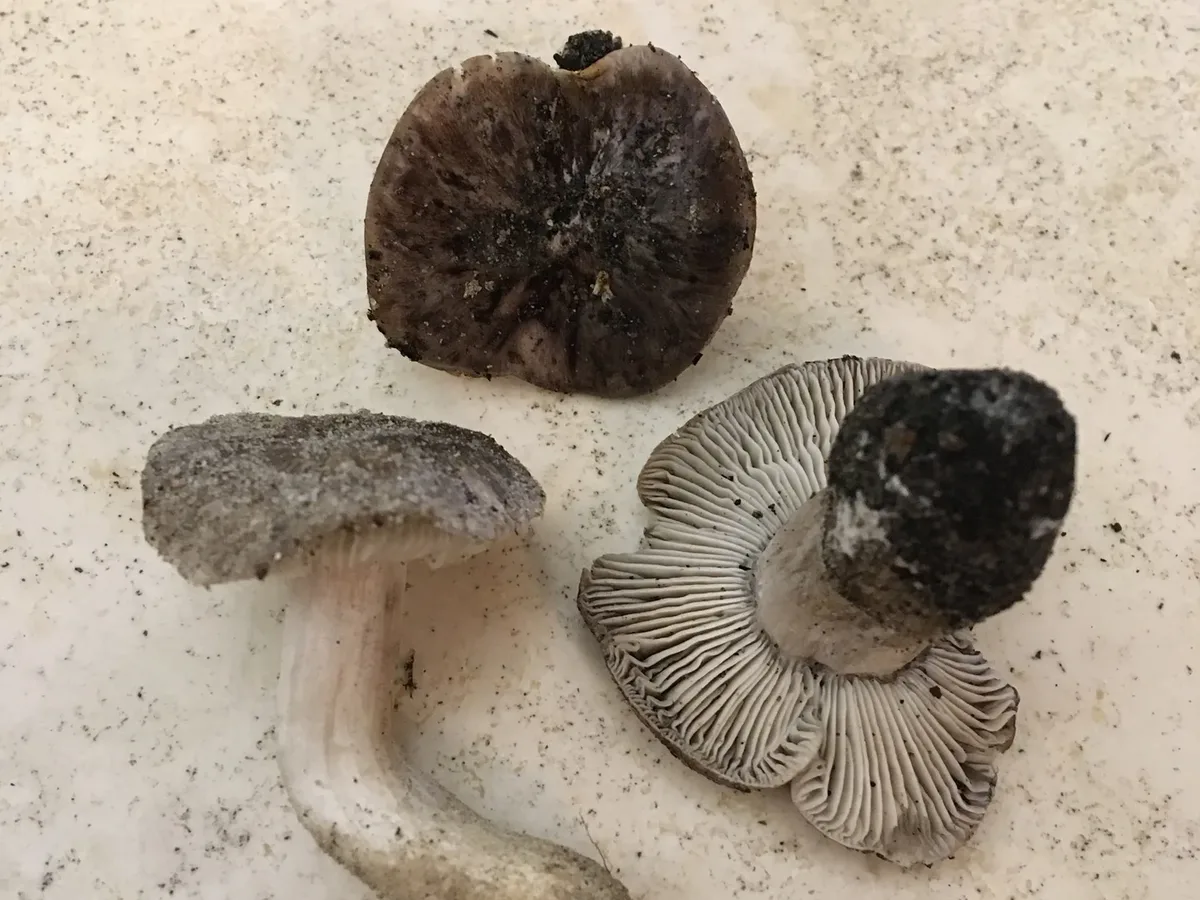 © Sigrid Jakob (CC BY 4.0)
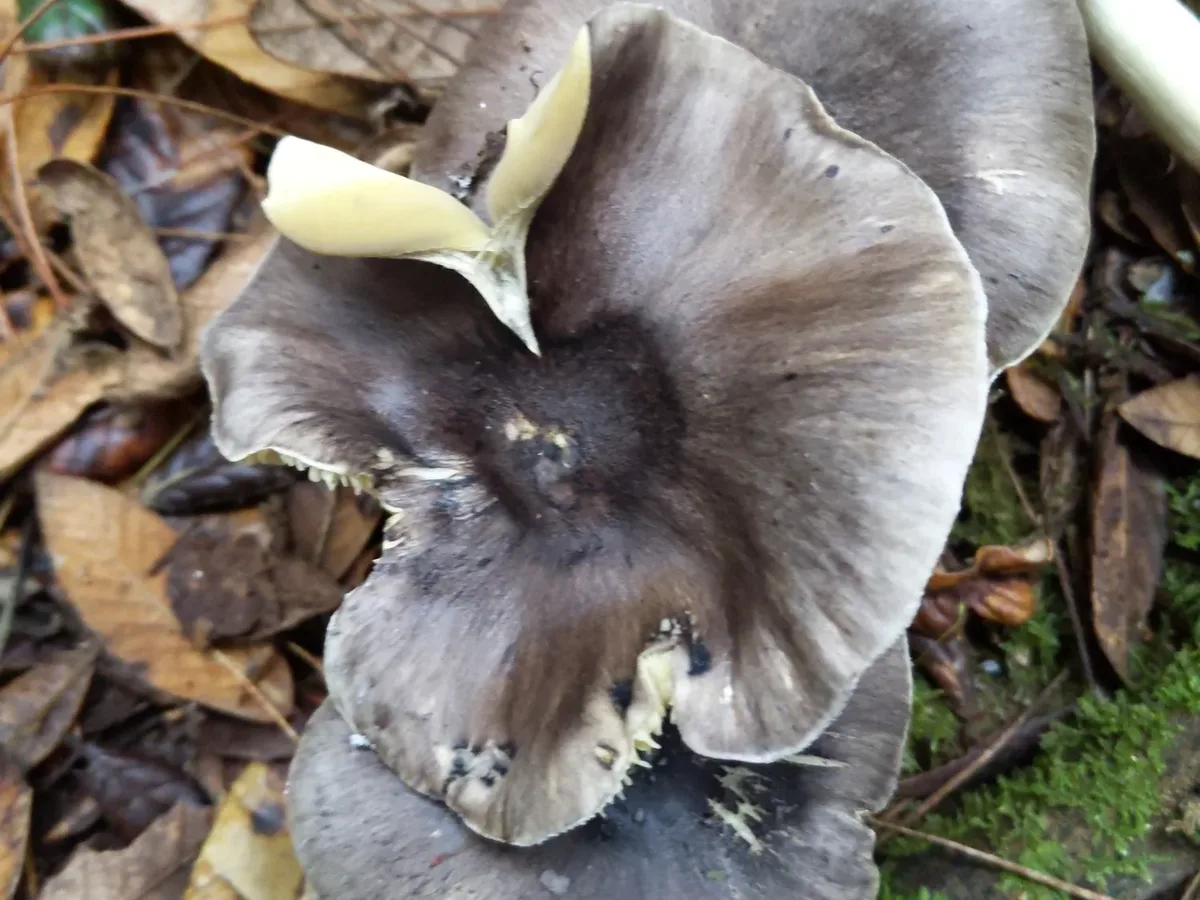 © Alan Rockefeller (CC BY 4.0)© Maria Kohanovskaya (CC BY 4.0)© Hilary Rose Dawson (CC BY 4.0)
Good to eat, once you have identified it with certainty and cooked it through.
How to recognise it
Tricholoma portentosum is a study in understatement.
Cap
The cap begins convex and dome-like, then slowly flattens and eventually develops a broad, shallow boss at the centre; mature specimens can reach 12 cm across.
The ground colour is grey to dark grey - not the even mouse-grey of its cousin T. terreum but something with more depth, as if the pigment has been drawn outward from the centre in dark radial fibres that streak the surface like ink brushed through wet paper.
These streaks are perhaps the single most useful field mark: they persist even after rain, since the cap surface is slightly viscid when moist, a thin gelatinous pellicle giving it a subtle sheen under autumn light. The margin can be slightly wavy or irregular, especially in older caps.
Gills
Gills are white to ivory, crowded, and attached to the stem with a small sinuate notch; in age a faint sulphur-yellow flush can appear, particularly toward the cap margin - a point worth noting when separating it from other grey knights.
Stem
The stem is robust, 4-10 cm tall by 1-3 cm across, whitish to very pale yellow, solid, and fibrous. There is no ring and absolutely no volva.
Flesh
Flesh is white throughout, firm, and does not discolour on cutting. Spore print white.
Smell & taste
The smell is mild and faintly mealy - reminiscent of raw flour - and the taste is similarly gentle, which helps distinguish it from the bitter T. virgatum.
Where & when it grows
Habitat
Tricholoma portentosum is an obligate ectomycorrhizal partner of Pinus, and almost all records in the Mediterranean and Atlantic zones come from under pines - particularly on sandy, well-drained, acidic soils: coastal dune ridges, inland sandy plateaus, and the lightly shaded floors of open pine plantations.
The mycelium threads through the top 5-20 cm of soil, wrapping individual pine rootlets in a dense sheath of fungal tissue that dramatically increases the tree's reach for water and mineral nutrients - phosphorus most importantly - in exchange for photosynthate the tree cannot produce underground.
This partnership runs deep: the same mycelial network can persist for decades, fruiting year after year from the same patch of ground.
In Catalonia and the Spanish Meseta the species is a signature mushroom of Pinus pinaster and Pinus sylvestris stands. It often grows in the company of other pine associates: Lactarius deliciosus (saffron milk cap) and Suillus species frequently share the same fruiting grounds, a useful contextual clue.
The species is absent from purely deciduous woodland; any grey Tricholoma found under beech or spruce should raise immediate suspicion of T. pardinum.
When
Tricholoma portentosum is a late-season specialist, arriving as most other edible species have finished and persisting well into the cold months - a quality that has made it economically important in regions where the autumn mushroom season is otherwise brief.
Fruitbodies typically emerge from mid-October onward in Mediterranean climates, triggered by the first significant autumn rains after the summer drought, once soil temperatures drop to roughly 5-12 °C.
The species is remarkably frost-tolerant: caps that have frozen solid overnight will often thaw undamaged and continue developing, a resilience that extends its window into December and occasionally January at lower altitudes. Peak harvest in Catalonia, where the species is commercially collected, usually falls between late October and mid-November.
The mycelium has spent the warm, dry summer dormant in the soil - not dead, but metabolically quiet, waiting for the thermal and moisture cues that trigger fruiting. When conditions align, dozens of primordia can push through the pine needles simultaneously, which is why foragers who know a patch will revisit it repeatedly over several weeks rather than harvesting once.
How it grows
Like all ectomycorrhizal fungi, Tricholoma portentosum cannot be cultivated in the conventional sense - it requires a living pine root partner to complete its life cycle. This means it has never been commercially farmed and is available only from the wild or from forest floor inoculation programs that remain largely experimental.
The mycelium forms a visible network in the uppermost soil and litter layer. Experienced foragers sometimes notice the pine needles sitting slightly differently over a fruiting patch, as if the soil beneath has shifted.
Fruitbodies typically emerge in groups or loose rings - not the tight fairy rings of grassland species, but irregular mats where several individuals arise from the same mycelial sheet. Development from pin-stage to harvestable cap takes roughly 5-10 days depending on temperature and humidity.
Individual fruitbodies that are not picked will continue enlarging for another week or two, caps flattening and sometimes cracking at the margin, until the gills release their white spores in a fine dust that the wind carries to new hosts.
A single productive patch may fruit multiple times in a season if rain returns after a dry spell, the mycelium apparently able to initiate new primordia while the first flush is still standing.
Fruiting conditions
Cool-season fruiter that tolerates the first autumn frosts; flushes follow autumn rains in sandy pine woods.
Look-alikes
Three species require careful attention.
- 1Tiger knight (Tricholoma pardinum) - the most important. It causes severe gastrointestinal poisoning beginning 30 minutes to 2 hours after eating, with profuse vomiting, diarrhoea, and abdominal cramps that can require hospitalisation. T. pardinum is a more robust mushroom - heavier stem, more pronounced cap scaling with a distinctly scaly or streaked pattern in concentrically arranged fibres rather than radially spreading ones - and it grows in deciduous and mixed forest (spruce, beech, fir), not in pure pine. Any grey Tricholoma found under beech should be set aside.
- 1Ashen knight (Tricholoma virgatum) - grows under conifers and can resemble T. portentosum in colour, but it has a sharp, persistent bitter taste detectable even from a small piece of raw cap held briefly on the tongue. It is not known to be dangerously toxic but is inedible.
- 1Yellow knight or man-on-horseback (Tricholoma equestre / flavovirens) - distinguished by unmistakable yellow gills and a yellow-tinted cap and stem, so there should be no colour confusion with T. portentosum. But the species is relevant context because it grows in the same sandy pine habitats and was linked to a cluster of rhabdomyolysis cases in France (Bedry et al., NEJM 2001; 12 cases, 3 fatal, after repeated consumption). Any yellow Tricholoma from pine forest should be avoided.
The reliable confirmation signs for T. portentosum are:
- grey cap with radial dark fibres (not scales)
- white spore print
- white gills (faint yellow only in age)
- mealy smell
- pine forest habitat
Bitter-tasting.
Now considered risky: linked to cases of rhabdomyolysis (some fatal) after repeated consumption. Recognised by its yellow colouring; avoid yellow Tricholoma.
Causes severe gastrointestinal poisoning. More robust, with a thick stem and a distinctly scaly/streaked cap pattern; grows in spruce/beech forest rather than pine forest.
In the kitchen
Picking & cleaning
Tricholoma portentosum caps are structurally fragile for their size - the flesh, though firm, fractures cleanly and the margin breaks easily if handled roughly.
In the field:
- Cut at the base of the stem rather than twisting and pulling, so the mycelial attachment to the soil is minimally disrupted.
- Shake or brush loose soil and pine needles from the stem, then place the cap gills-down in a basket; stacking caps gill-up risks pressing debris into the lamellae and accelerating moisture loss.
- Because the cap is slightly viscid, it picks up sand and pine debris readily - brushing in the field saves significant cleaning time later.
The species keeps reasonably well for a wild mushroom, but two days is the practical maximum at refrigerator temperature (2-4 °C); beyond that the gills yellow further and a mild bitterness develops.
Avoid picking specimens that are waterlogged after heavy rain or that show any orange-brown discolouration of the gills, which can indicate bacterial spoilage in cold, wet conditions. The best specimens are firm, relatively young caps that still show the characteristic grey streaking clearly.
Cooking
Tricholoma portentosum has a mild, faintly mealy flavour - closer to a subtle earthiness than anything sharp or pungent - and a firm texture that holds well through gentle heat.
It suits preparations that let that quietness show rather than masking it: slow-cooked soups, creamy scrambled eggs, and egg-based dishes like omelettes are traditional uses across its Catalan and Spanish range.
The Catalan sopa de fredolic is perhaps its most famous application - a simple broth enriched with the mushroom and often finished with a whisked egg - and it illustrates perfectly the species' disposition: it contributes depth without dominance.
The slight viscidity of the raw cap disappears entirely during cooking. Slicing caps into pieces of roughly equal thickness ensures even cooking; very thin slices will dissolve in a broth, which is actually desirable in soup.
The species also works well in rice dishes (arrós de fredolics) and as a component of mixed mushroom stews alongside Lactarius deliciosus and Boletus species.
Avoid prolonged high-heat frying, which can produce a slightly bitter note and causes the gills to dry and curl before the cap flesh has fully softened. Butter or good olive oil are the natural fats; heavy cream sauces can overwhelm the flavour. Dried T. portentosum loses much of its character and is rarely used in that form.
Good to know
Tricholoma portentosum has a long and well-documented history as an edible species across Spain, France, and Sweden, and is commercially harvested at scale in Catalonia. No confirmed poisoning attributable to correctly identified T. portentosum is recorded in the mycological literature.
The primary risk, as with many edible wild mushrooms, lies in misidentification - specifically confusion with:
- Tricholoma pardinum, which causes severe gastrointestinal poisoning
- Tricholoma equestre, now considered risky after reports of rhabdomyolysis following repeated heavy meals
Both are distinguishable from T. portentosum by habitat (T. pardinum prefers deciduous trees) and colouration (T. equestre shows clear yellow tones).
Moderate portions are recommended on first encounter, as individual sensitivity to wild mushrooms varies; some foragers experience mild gastrointestinal discomfort from any Tricholoma in large quantities.
The caps are fragile and deteriorate quickly, so freshness at the time of consumption matters - do not eat specimens that have been stored for more than two days or that show signs of discolouration or spoilage.
A reference guide - never an edibility guarantee. When in doubt, leave it out.