Deadly dapperling
Lepiota brunneoincarnata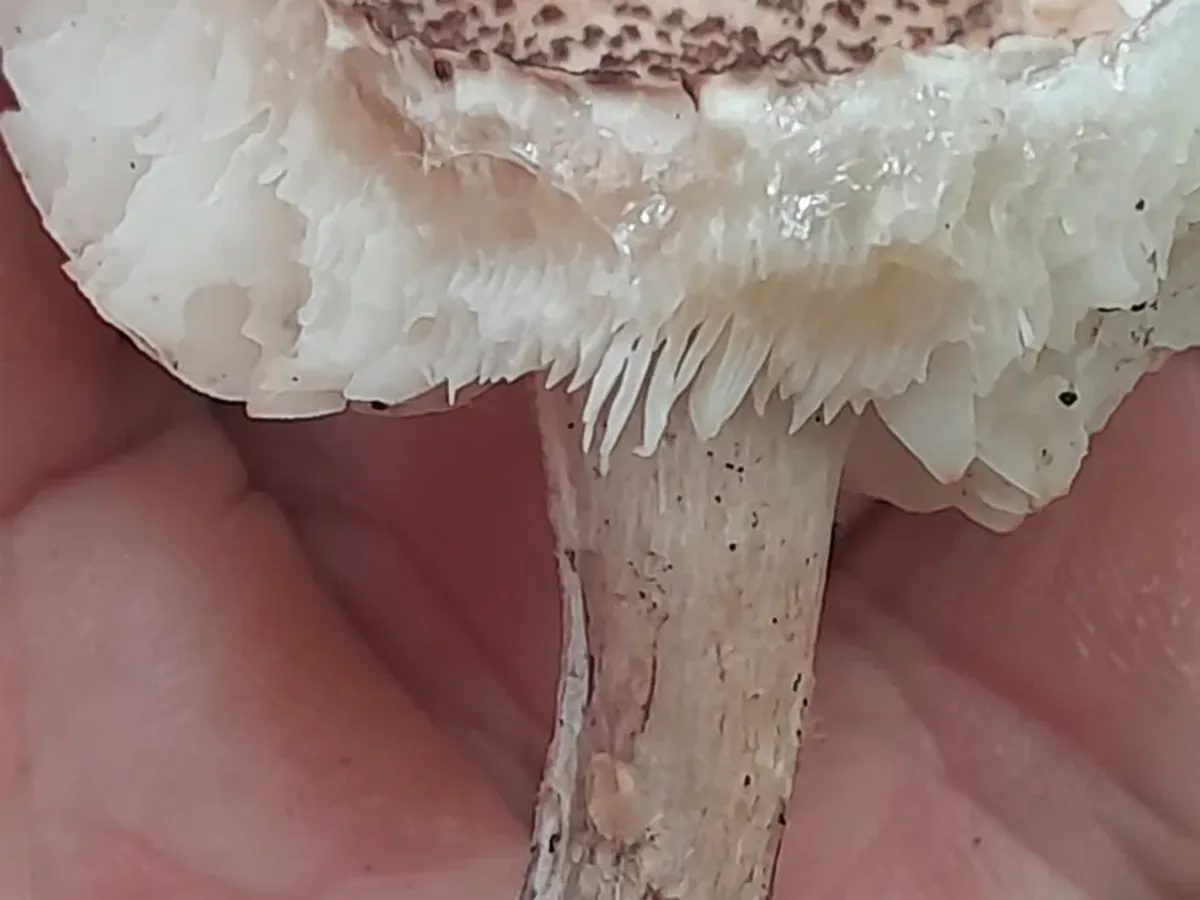 ÖkopatóPál (CC0)
 © Chaym Turak (CC BY-SA)
 © Chaym Turak (CC BY-SA)
 © Chaym Turak (CC BY-SA)
 © Chaym Turak (CC BY-SA)
 © Chaym Turak (CC BY-SA)
 © Chaym Turak (CC BY-SA)
 © Chaym Turak (CC BY-SA)ÖkopatóPál (CC0)© Chaym Turak (CC BY-SA)
Toxic - and the most serious cases can be fatal. Never eat it, and wash your hands after handling.
Never eat a mushroom you are not 100% sure of - check the look-alikes below, and always cook wild mushrooms.
How to recognise it
Lepiota brunneoincarnata is the kind of mushroom that a non-forager glances at and immediately forgets - a small, brownish thing in the grass, easily mistaken for a bit of debris. That ordinariness is the real hazard.
Cap
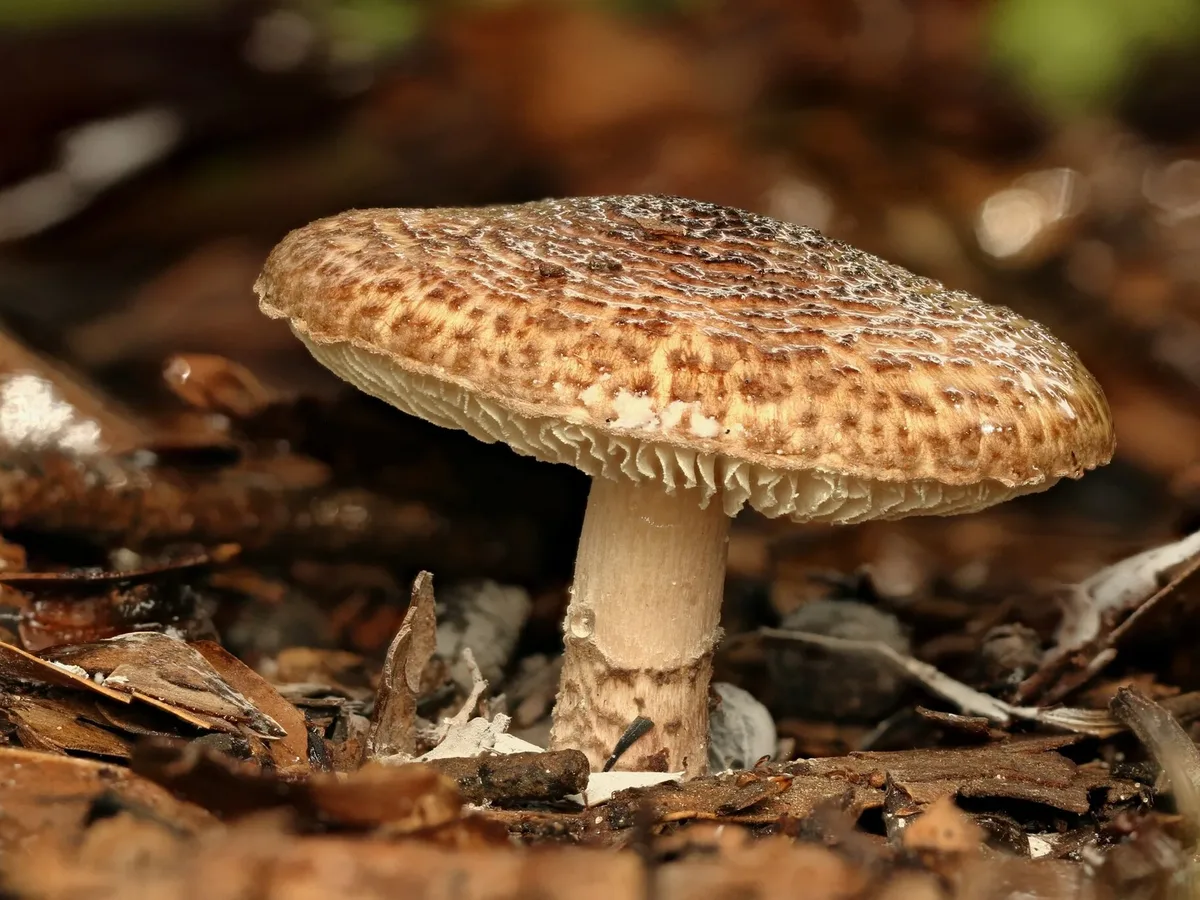
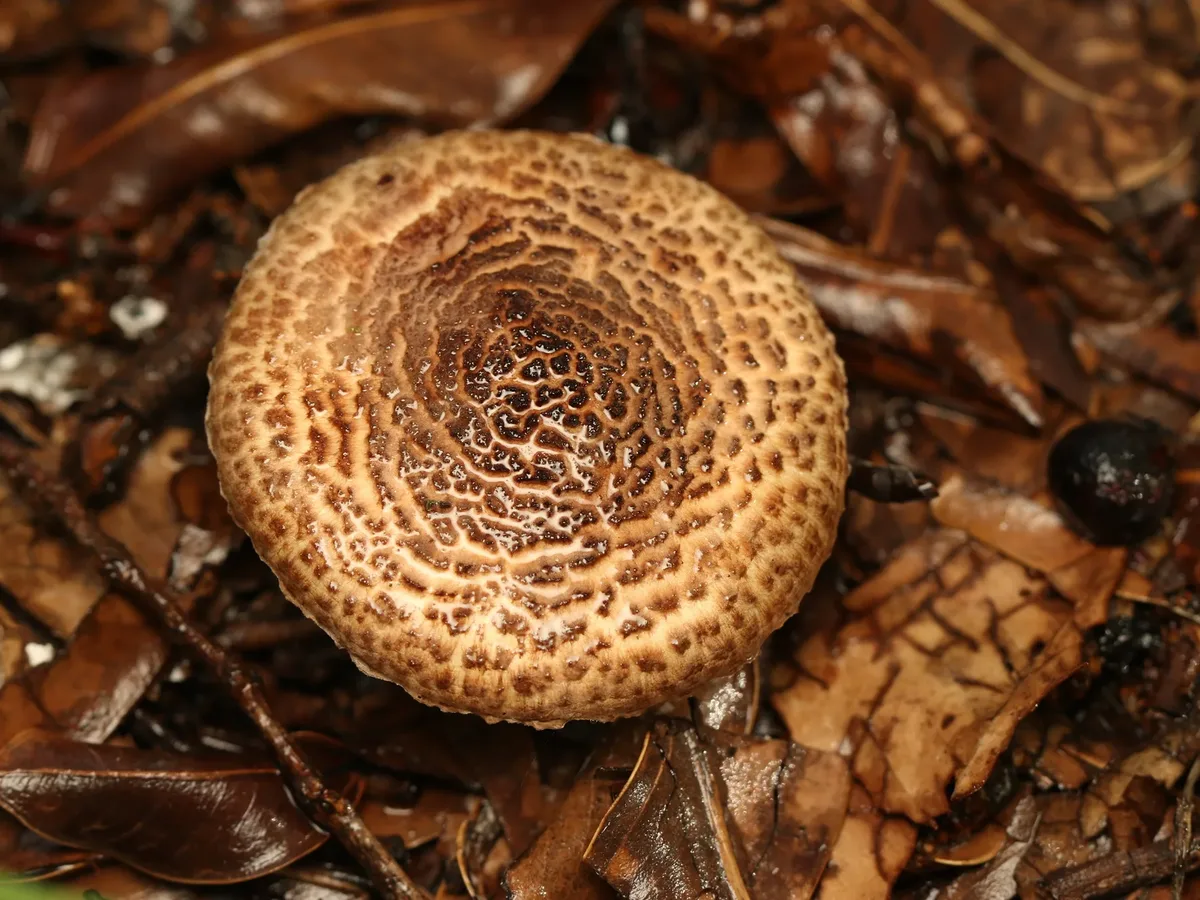
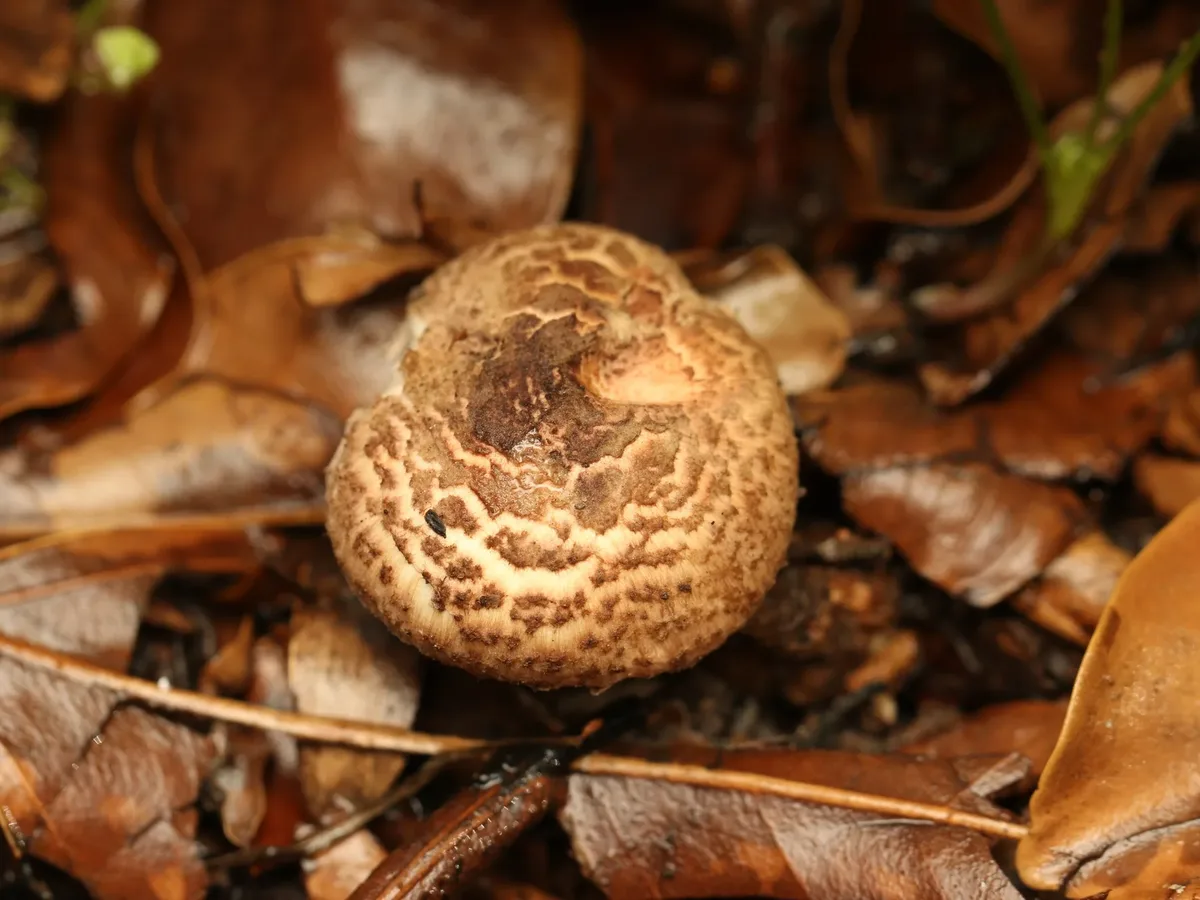
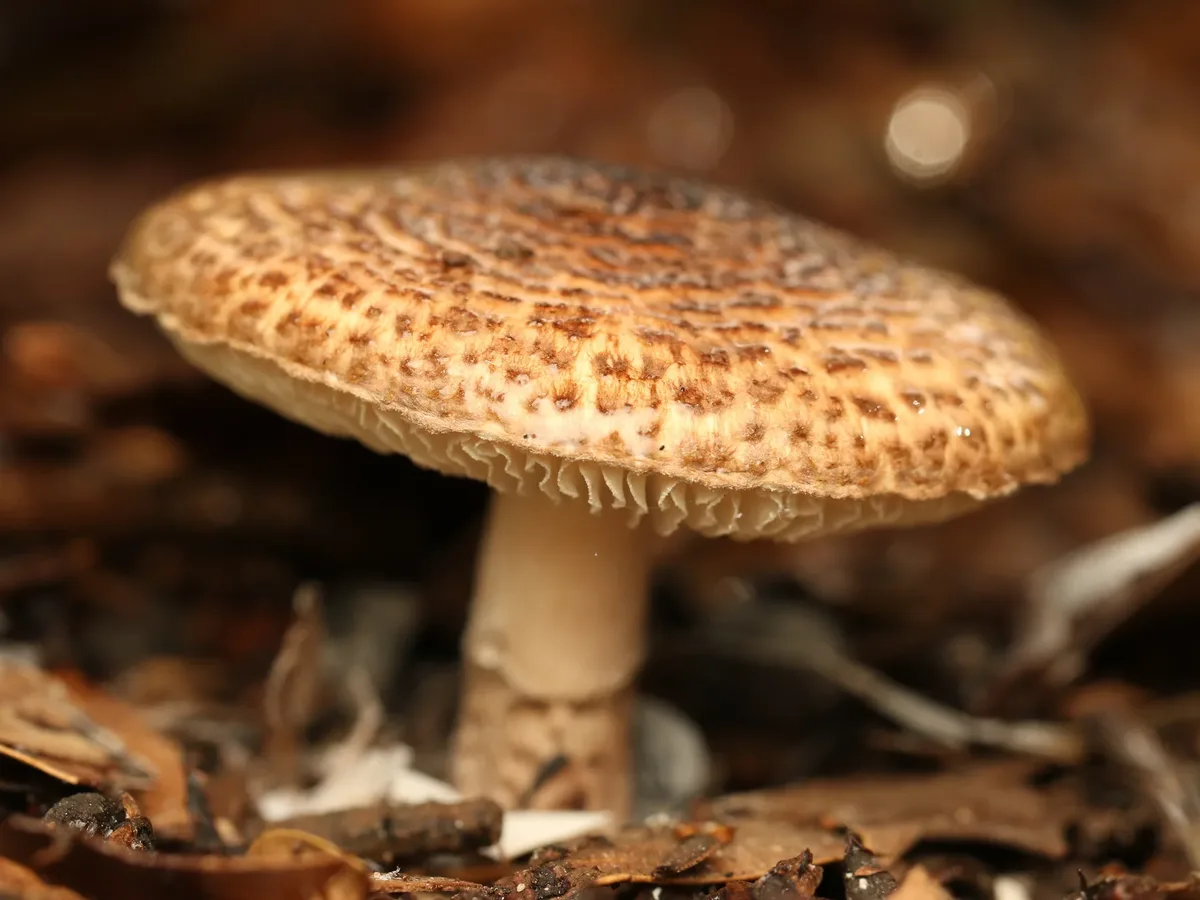
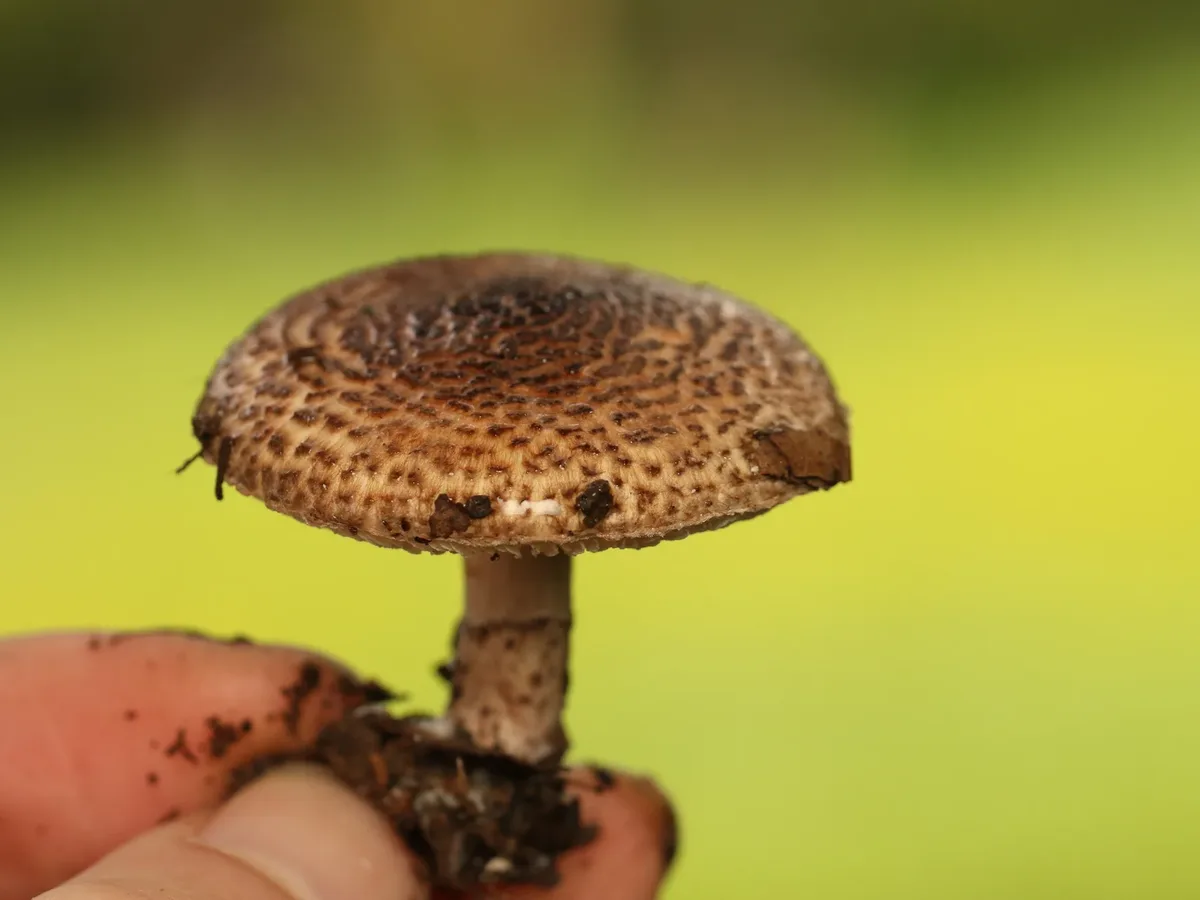
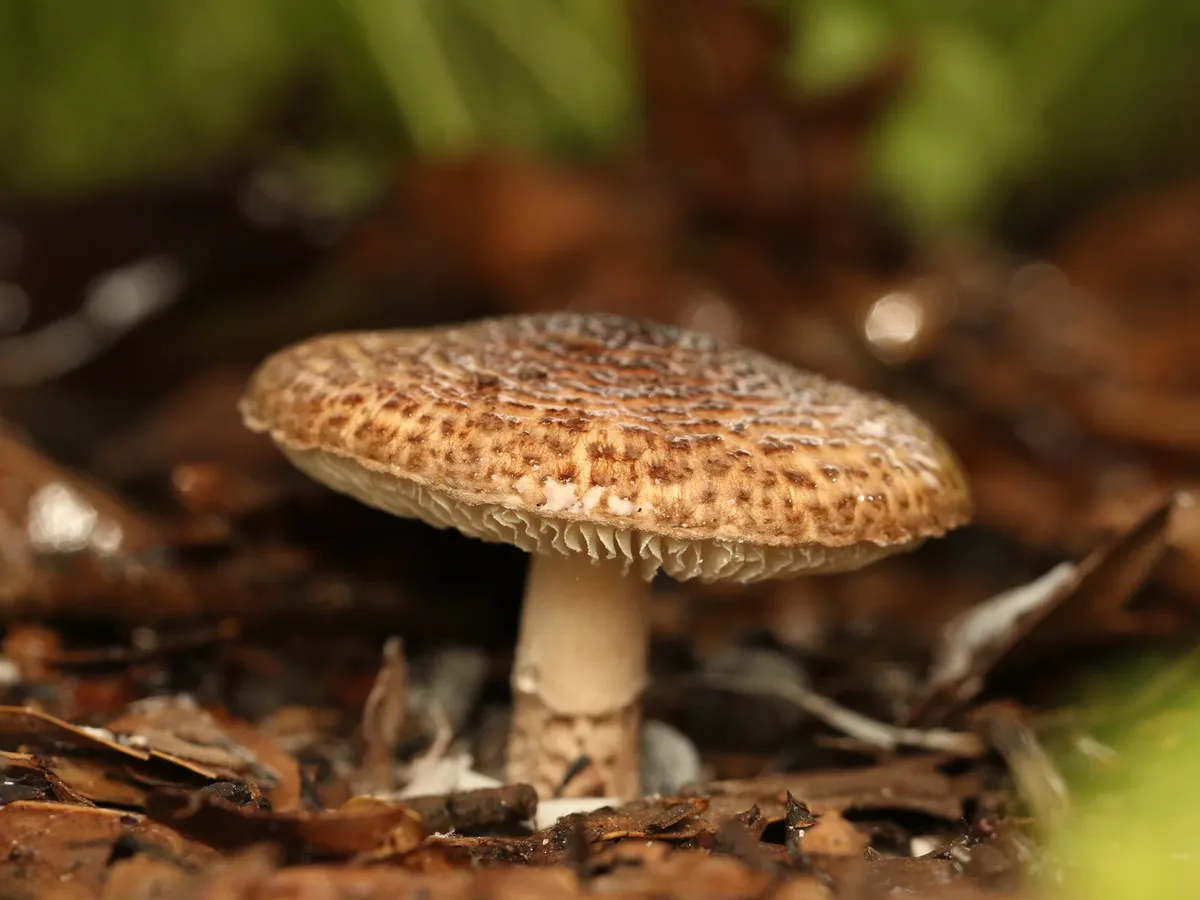
The cap opens from a pale, buff-coloured button, 2-6 cm at maturity, staying broadly convex with a low, rounded central umbo. The ground colour is whitish-pink to pale biscuit-brown, and across this background the cuticle breaks up into concentric zones of felty, chocolate-to-dark-brown fibrous scales as the cap expands.
These scales are denser at the centre - forming an almost uniform dark patch - and thinner toward the margin, which may remain partly smooth and paler. In dry conditions the scales can flatten and the cap looks almost uniform buff-brown; in damp weather they raise and look distinctly woolly.
Gills
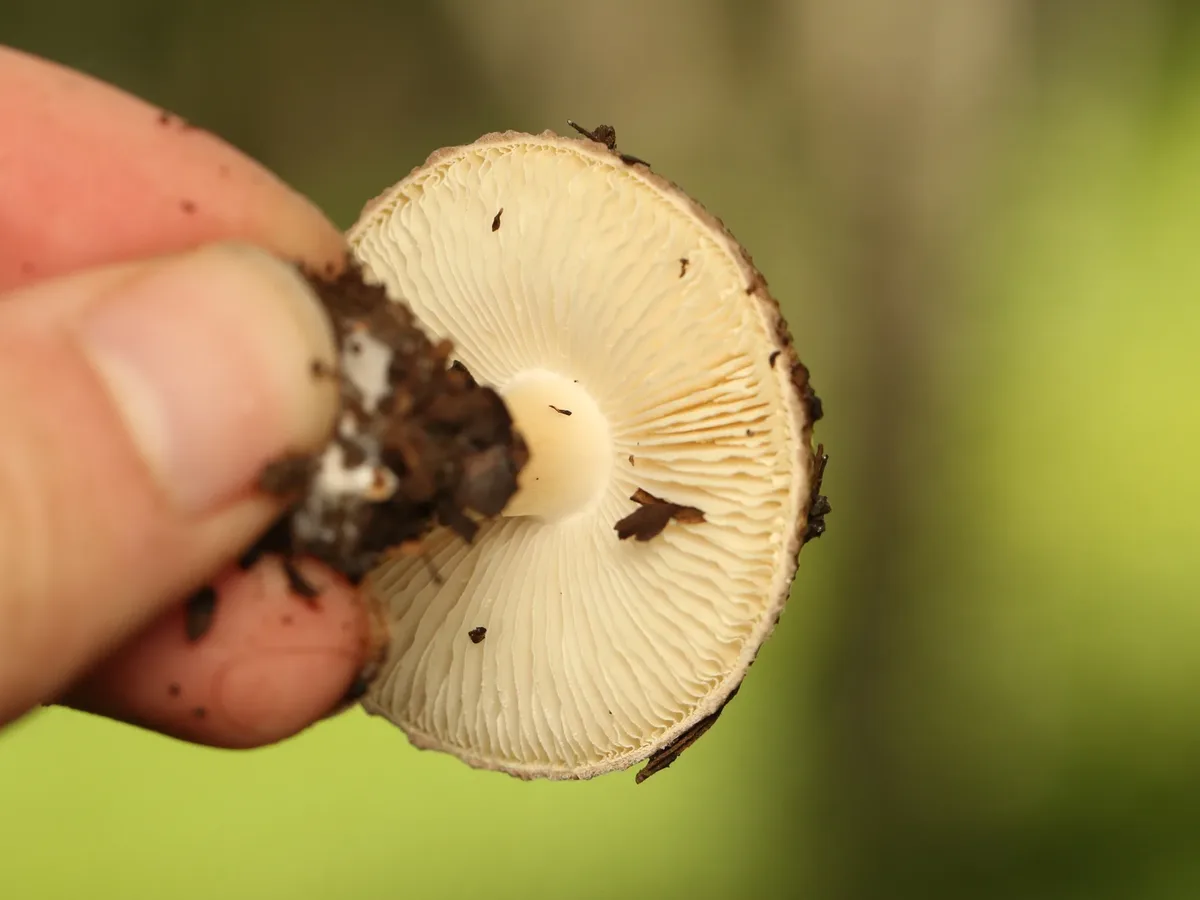
Gills are free of the stem, closely spaced, and consistently cream-white regardless of age - they do not pink or brown.
Stem
The stem is 2-6 cm tall and slender relative to the cap, with a cortinate or woolly ring zone that is often reduced or difficult to spot clearly. The lower stem below this zone is covered in fibrous, dark brown scales arranged in an upward-pointing chevron pattern.
Flesh
Flesh is white throughout and does not change colour on cutting. Spore print is white.
Smell & taste
There is a mild, faintly fruity or unspecific odour - nothing alarming, nothing distinctive. Nothing about this mushroom announces danger.
Why it's dangerous
Lepiota brunneoincarnata is responsible for a disproportionate share of fatal mushroom poisonings in southern Europe and the Mediterranean basin, precisely because it occupies domestic environments where people feel safe picking.
Documented fatalities include:
- an outbreak in Spain (Ramírez et al., 1993 reported 10 cases with deaths)
- four children in the same Tunisian family in 2010 (all died)
- a cluster of deaths in Iran in 2018
The lethal dose in adults is estimated at approximately 30-50 g of fresh mushroom - roughly one to three average-sized fruitbodies. At 100 g, severe irreversible liver damage is virtually certain. For children, a single fruitbody can be sufficient for a fatal dose given the lower body mass.
The amatoxin content is not reduced by any form of preparation. Amatoxins are not detectable by smell, taste, or appearance. The delayed symptom onset means patients rarely arrive at hospital during the window where early intervention is most effective.
There is no antidote; treatment is supportive (silibinin, N-acetylcysteine, forced diuresis, liver transplant in severe cases) and must begin as early as possible after suspected exposure - ideally before symptoms appear.
If any ingestion of this species or any unidentified small scaly grassland mushroom is suspected:
- call emergency services immediately
- bring a photograph or sample to hospital
- do not wait for symptoms
Time from ingestion to call is the single most important variable in survival outcome.
Toxin
Lepiota brunneoincarnata produces amatoxins, the same class of cyclic peptide toxins found in Amanita phalloides (Death Cap) and Amanita virosa (Destroying Angel). The primary compound is α-amanitin, measured in field studies at up to approximately 2.4 mg per gram of dry cap tissue - comparable to, and in some samples exceeding, those found in Amanita phalloides. β-amanitin and phallotoxins are also present.
α-amanitin acts by selectively and irreversibly inhibiting RNA polymerase II, the enzyme responsible for transcribing messenger RNA in eukaryotic cells. Without functioning mRNA production, protein synthesis in hepatocytes (liver cells) and renal tubular cells ceases, leading to cell death.
The inhibition begins within minutes of absorption through the gut wall, but symptom onset is delayed by many hours, creating the dangerous illusion that no poisoning has occurred. Because the toxin is water-soluble, it is rapidly absorbed and distributed; once bound to RNA polymerase II inside cells, no intervention can reverse the molecular damage already done.
The cap tissue contains the highest concentration; the stem and gills also carry significant toxin loads. There is no non-toxic part of this mushroom.
Symptoms
Amatoxin poisoning from Lepiota brunneoincarnata follows a characteristic four-phase timeline that is clinically identical to Amanita phalloides poisoning.
- 1A latent period of approximately 8-24 hours after ingestion, during which the patient feels normal. This delay, longer than most other mushroom poisonings, is the feature that most often prevents early medical intervention, as the person may not associate the later illness with a meal eaten the day before.
- 2An acute gastrointestinal syndrome: severe, watery - sometimes bloody - diarrhoea, profuse vomiting, intense abdominal cramps, and severe dehydration. This phase lasts 1-3 days and can itself cause dangerous fluid and electrolyte loss.
- 3A deceptive apparent clinical improvement lasting 1-2 days, during which gastrointestinal symptoms reduce and the patient may feel they are recovering; meanwhile, amatoxin is actively destroying liver and kidney cells.
- 4Fulminant hepatic failure and acute kidney injury, beginning approximately 4-9 days after ingestion: jaundice, coagulopathy, encephalopathy, and multi-organ failure. Without intensive care and potentially a liver transplant, death follows.
Children and elderly patients are at higher risk of rapid deterioration due to smaller body mass and lower functional reserve. Any suspected ingestion must be treated as a medical emergency before phase two begins.
Staying safe
Lepiota brunneoincarnata is, by any measure, one of the most dangerous fungi in Europe. Its hazard profile combines maximal toxicity (amatoxin concentrations matching the Death Cap), an ordinary and easily overlooked appearance, a domestic habitat (lawns, parks, gardens), and a deceptive symptom delay that systematically prevents prompt treatment.
Every one of these factors amplifies risk; together they explain why this small, unremarkable mushroom has killed more people relative to its abundance than almost any other European species.
The overarching safety rule is simple and admits no exceptions: never eat any small Lepiota or Lepiota-like mushroom found in grassland, a garden, a park, or similar open ground.
The deadly small Lepiota species - brunneoincarnata, helveola, josserandii, subincarnata, and a handful of others - cannot be reliably separated from one another in the field even by experts. They share a common morphology: small cap, brown concentric scales on a pale background, cream-white gills, white spore print, ring zone on a scaly stem.
None of them is edible; none of them is worth attempting to identify for the table.
- Do not pick them.
- Do not keep them.
- Do not allow children to handle them.
If a child or pet ingests any part of an unidentified small scaly mushroom from a lawn or garden, call emergency services immediately and request toxicological guidance. Bring a specimen or photograph. Do not induce vomiting without medical instruction.
Do not wait for symptoms - the 8-24 hour latent period is the most dangerous feature of amatoxin poisoning, and every hour of delay before treatment reduces survival probability.
Where & when it grows
Habitat
Lepiota brunneoincarnata is a saprotrophic grassland fungus - it decomposes organic matter in soil rather than forming mycorrhizal partnerships with tree roots, which is part of why it colonises such accessible, human-inhabited spaces.
Its preferred substrates are nutrient-enriched, compacted, or disturbed soils in open sunny ground: garden lawns, public parks, roadside verges, olive groves, vineyards, orchards, cemeteries, and grazed meadows.
It is especially associated with calcareous or well-drained Mediterranean soils and is found across southern Europe - Spain, France, Italy, Greece - into North Africa (Tunisia, Morocco, Algeria) and through Turkey and the Middle East.
Across its range it consistently favours the edge between cultivated and semi-wild ground: the lawn that backs onto an old olive grove; the park where hardwood trees drop leaf litter into short grass. Single fruitbodies or small scattered groups emerge directly from the soil with no obvious woody substrate.
The Mediterranean climate - hot, dry summers with sporadic rain events and mild wet autumns - shapes its fruiting timing, but locally it can appear wherever the soil stays warm and moisture briefly arrives. Its tolerance of human disturbance means it is more likely to be encountered in inhabited settings than most deadly species.
When
In Mediterranean climates the fruiting season runs from early summer (June) through to late autumn (November), with activity concentrated in two broad pulses.
The first flush often appears in late June or July following early summer rain events on already-warm soil, which allows the waiting mycelium to respond rapidly. Activity may pause during the driest and hottest weeks of high summer.
A second and usually more sustained flush occurs in September through November, when autumn rain arrives while soil temperatures remain above about 14°C - the same warm-wet window that triggers many Mediterranean grassland fungi.
In cooler parts of the range (northern Spain, northern Italy, higher elevations) the season compresses toward autumn; in warmer coastal and North African sites it can extend into December.
The flush timing follows rain events closely: fruitbodies typically emerge 5-12 days after significant rainfall (≥15 mm over 14 days) while soil temperatures remain in the 14-26°C window.
Because the mushroom appears in gardens and parks during periods when families are outdoors - summer barbecues, autumn walks - the seasonal timing compounds the human exposure risk.
How it grows
As a saprotroph, Lepiota brunneoincarnata draws its energy entirely from the breakdown of soil organic matter - decaying grass roots, incorporated leaf litter, compost residues in garden soils.
The mycelium forms a relatively localised network in the upper soil layer rather than the wide-ranging mats of some grassland fungi. This is why fruitbodies tend to appear in small groups of two to eight or scattered singles over a few square metres, rather than in large fairy rings or dense clusters.
The mycelium persists through hot, dry periods as compressed cords or resting structures, resuming growth and eventually fruiting within days of sufficient rain arriving on warm soil.
The fruitbody itself develops rapidly: the primordium pushes through the soil surface as a small pale button, reaches near-full size in 24-72 hours, and degrades quickly in warm conditions, collapsing and browning within a week.
Because fruitbody development is so fast and the mushroom is small, it is easily overlooked until it is already mature and spreading spores. Dead, browned specimens - still containing full amatoxin concentrations - can remain partially recognisable in the grass for one to two weeks before disappearing.
Fruiting conditions
Warm-season grassland saprotroph; flushes follow rain on disturbed, grassy ground during the warm Mediterranean summer-to-autumn period.
Look-alikes
Lepiota brunneoincarnata is most consistently confused with small species of Agaricus that share the same grassland habitat: small button mushrooms, immature field mushrooms (Agaricus campestris), and xanthodermus-group Agaricus found in parks and gardens.
The reliable separation is the gill and spore-print colour: Agaricus species always develop pink gills that mature to chocolate-brown, and their spore print is brown - never white. Lepiota brunneoincarnata has cream-white gills that stay white throughout its life and a white spore print.
The two characters together are the clearest distinguishing feature, but the spore print requires an overnight wait, and gill inspection demands picking the mushroom.
The safest rule is: in grassland, if the cap is small (under ~8 cm), covered in brown concentric scales on a paler background, and has white gills, treat it as a deadly Lepiota regardless of any other feature.
Some pickers also confuse small specimens with immature Macrolepiota (parasol mushrooms), but mature Macrolepiota procera is very large (cap 10-30 cm) with a snakeskin-patterned stem and a moveable double ring - completely different at full size.
The risk is with the small-capped, small-ringed species: Lepiota brunneoincarnata, L. helveola, L. josserandii, and related taxa cannot be reliably distinguished from one another in the field, and none of them should ever be eaten. If there is any doubt - do not eat it.
Small Agaricus species share the grassland habitat and small size; the deadly dapperling has free cream-white gills and a white spore print, whereas Agaricus develops pink to chocolate-brown gills and a brown spore print.
The danger is the SMALL Lepiota, not the large edible parasol (Macrolepiota procera). Small scaly Lepiota in grassland should never be eaten - never try to distinguish small parasol-like species for the table.
A reference guide - never an edibility guarantee. When in doubt, leave it out.