King oyster mushroom
Pleurotus eryngii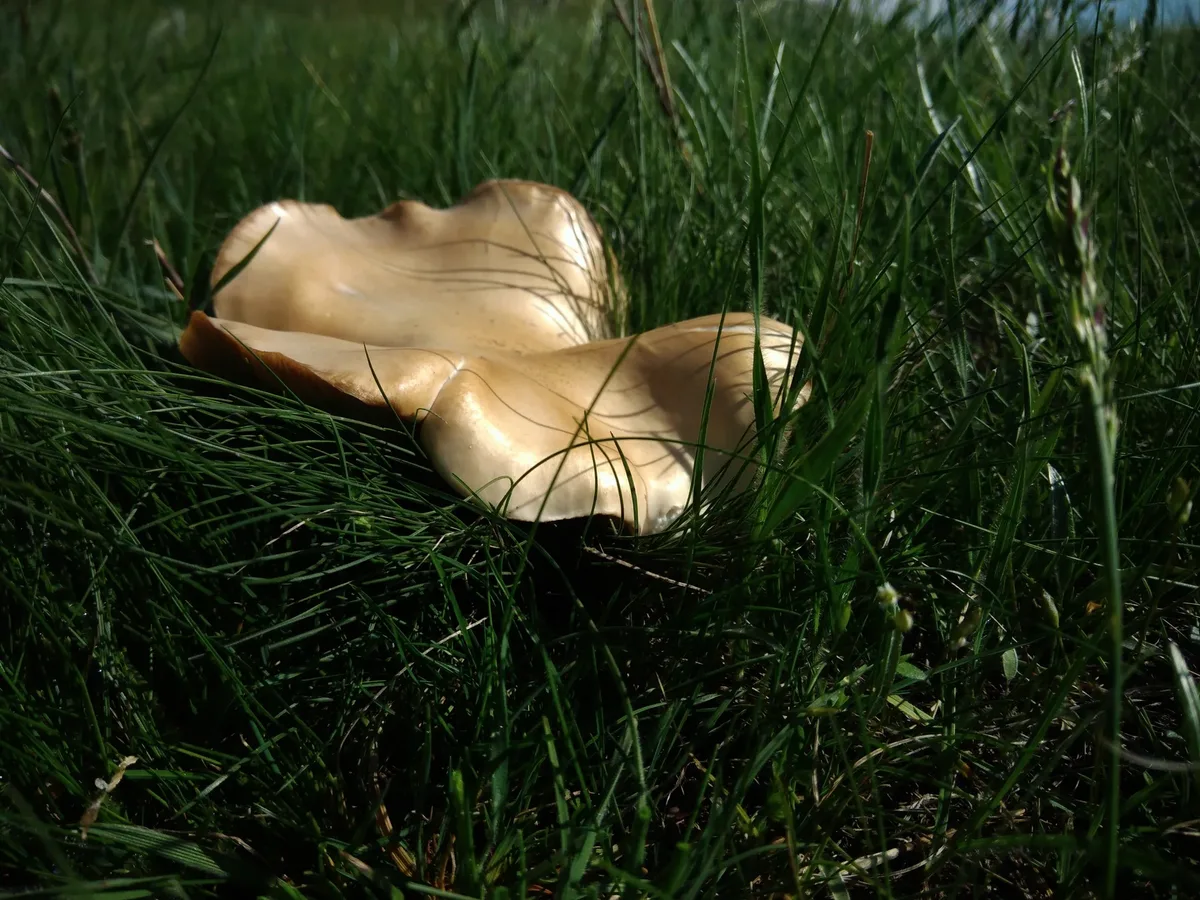 © Valerii Darmostuk (CC BY 4.0)
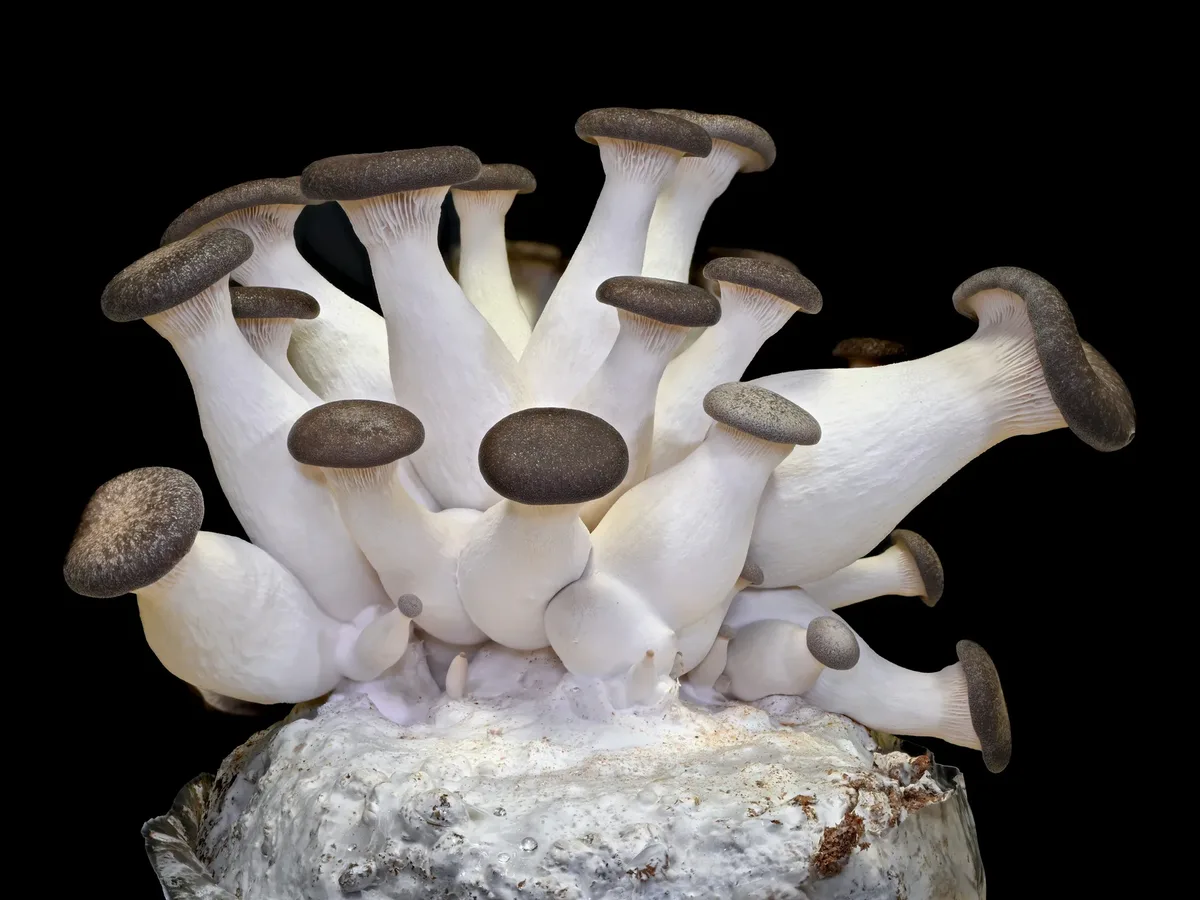 © Alan Rockefeller (CC BY 4.0)
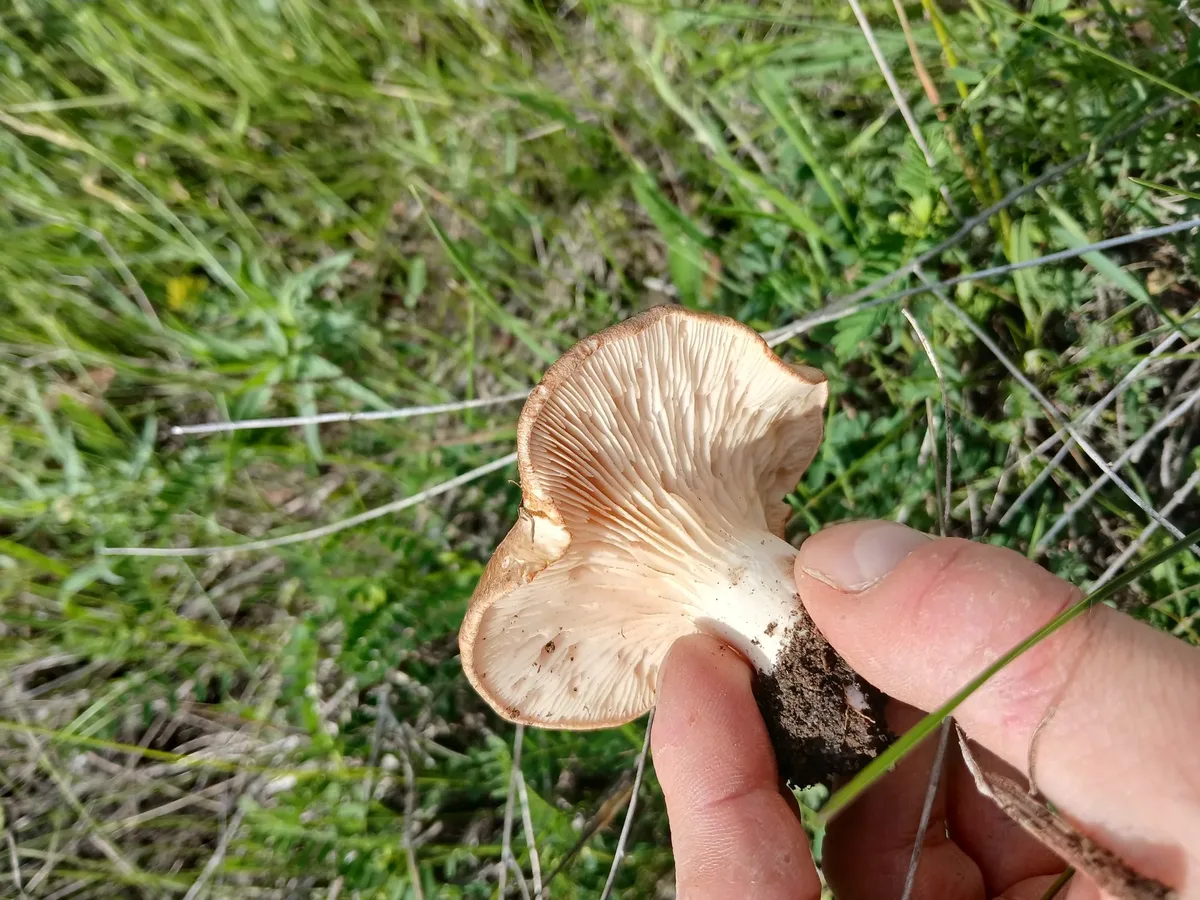 © Oleksii Vasyliuk (CC BY)
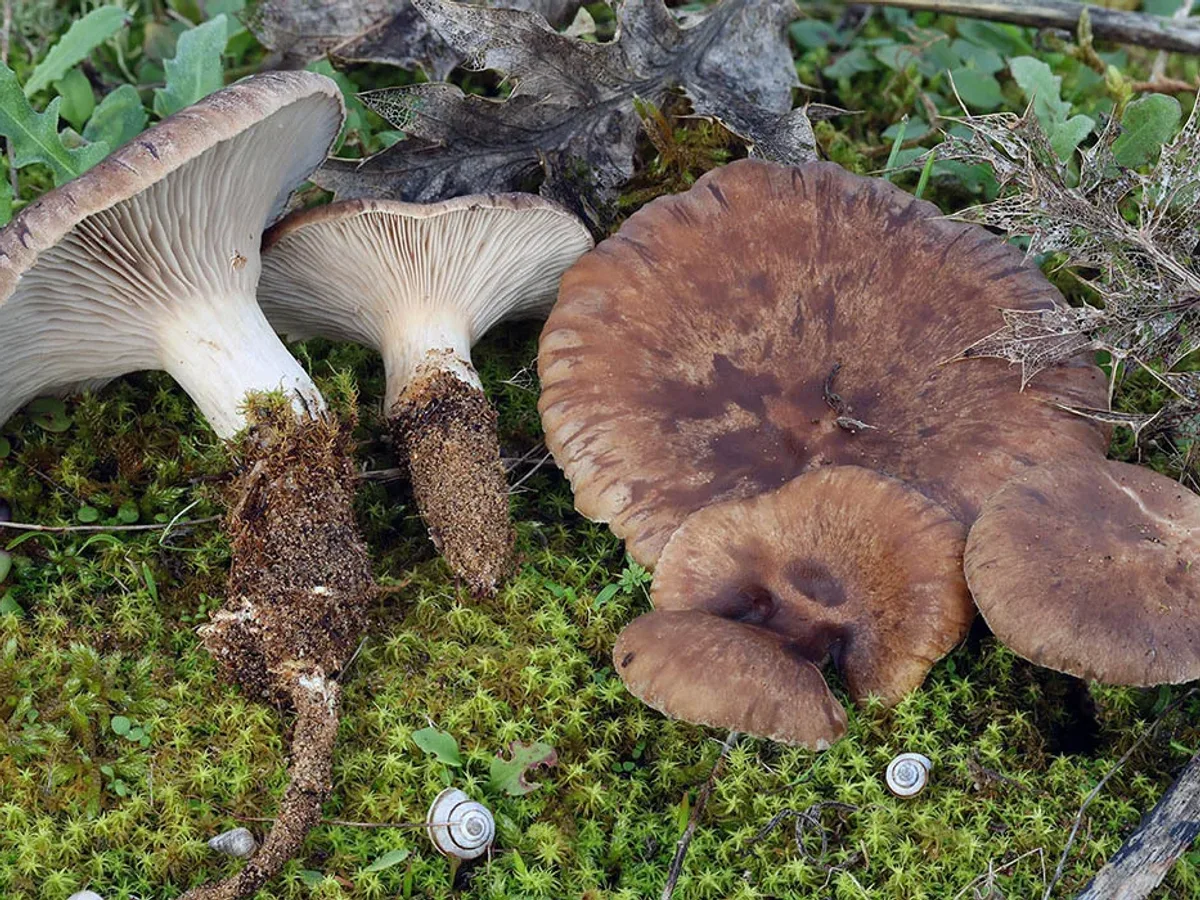 © Daniel Ghyselinck (CC BY)
 © Katrin Simon (CC BY)
 © Cenaida (CC BY)
 © Cenaida (CC BY)
 © Riccardo Rocca (CC BY)
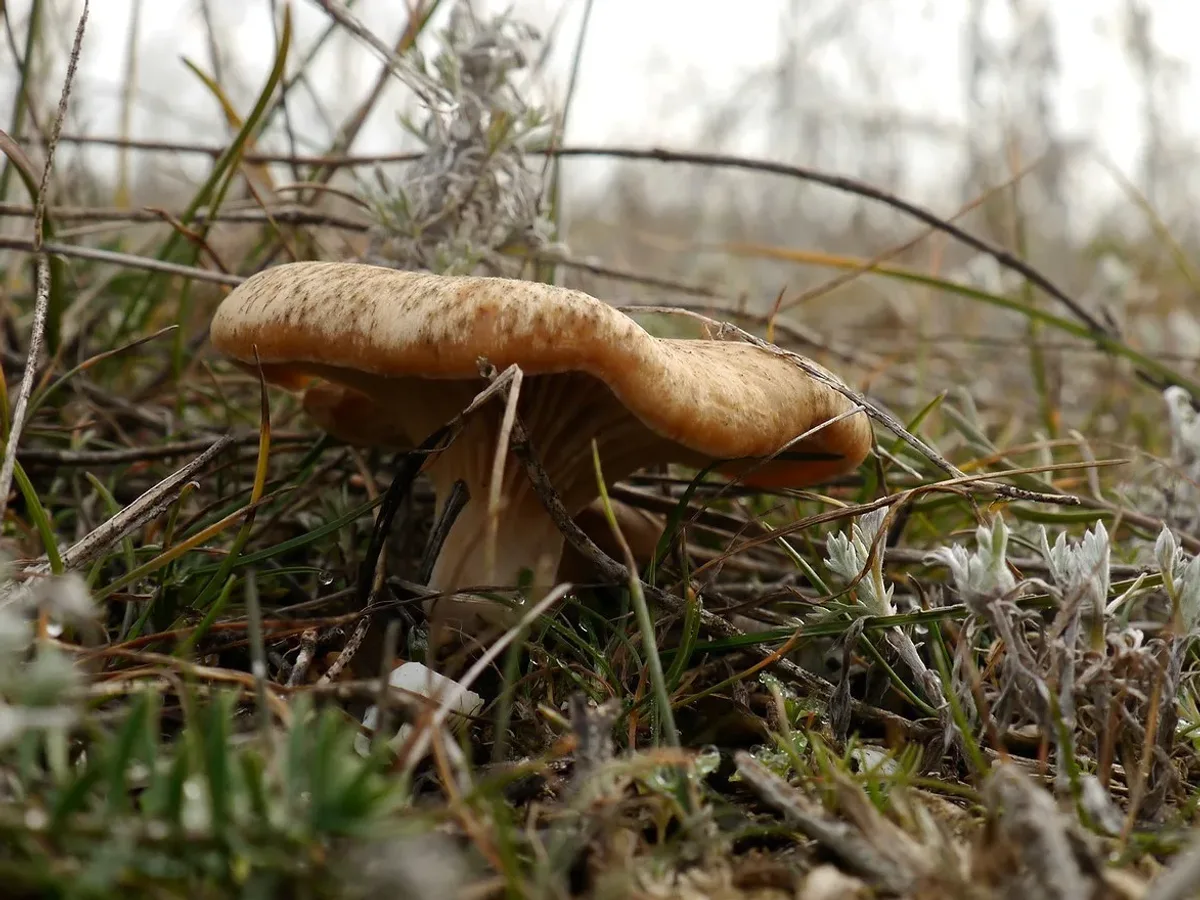 © Roman (CC BY 4.0)
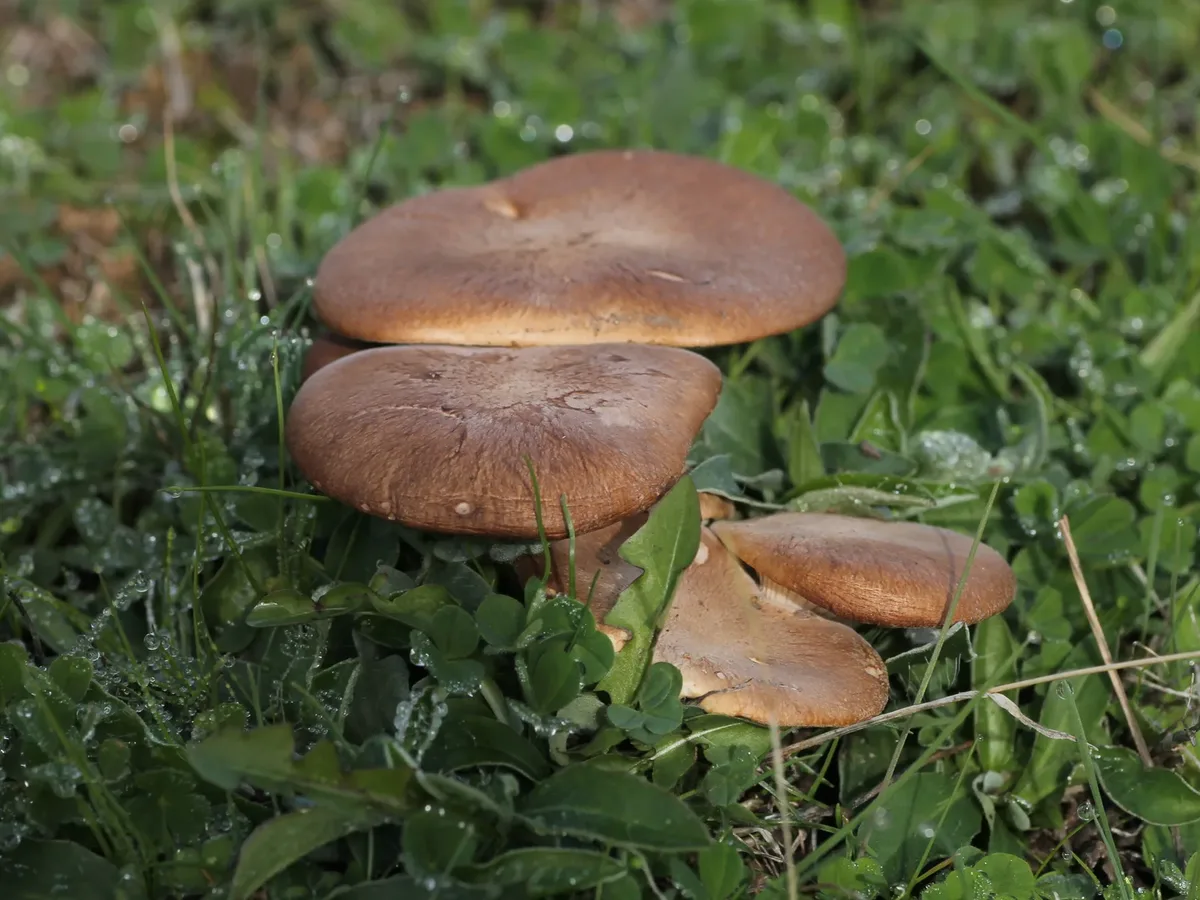 © Pablo de la Fuente Brun (CC BY 4.0)© Valerii Darmostuk (CC BY 4.0)© Alan Rockefeller (CC BY 4.0)
One of the best mushrooms you can bring home - once you are certain of the identification.
How to recognise it
Pleurotus eryngii is immediately recognizable once you have met it in the field.
Cap
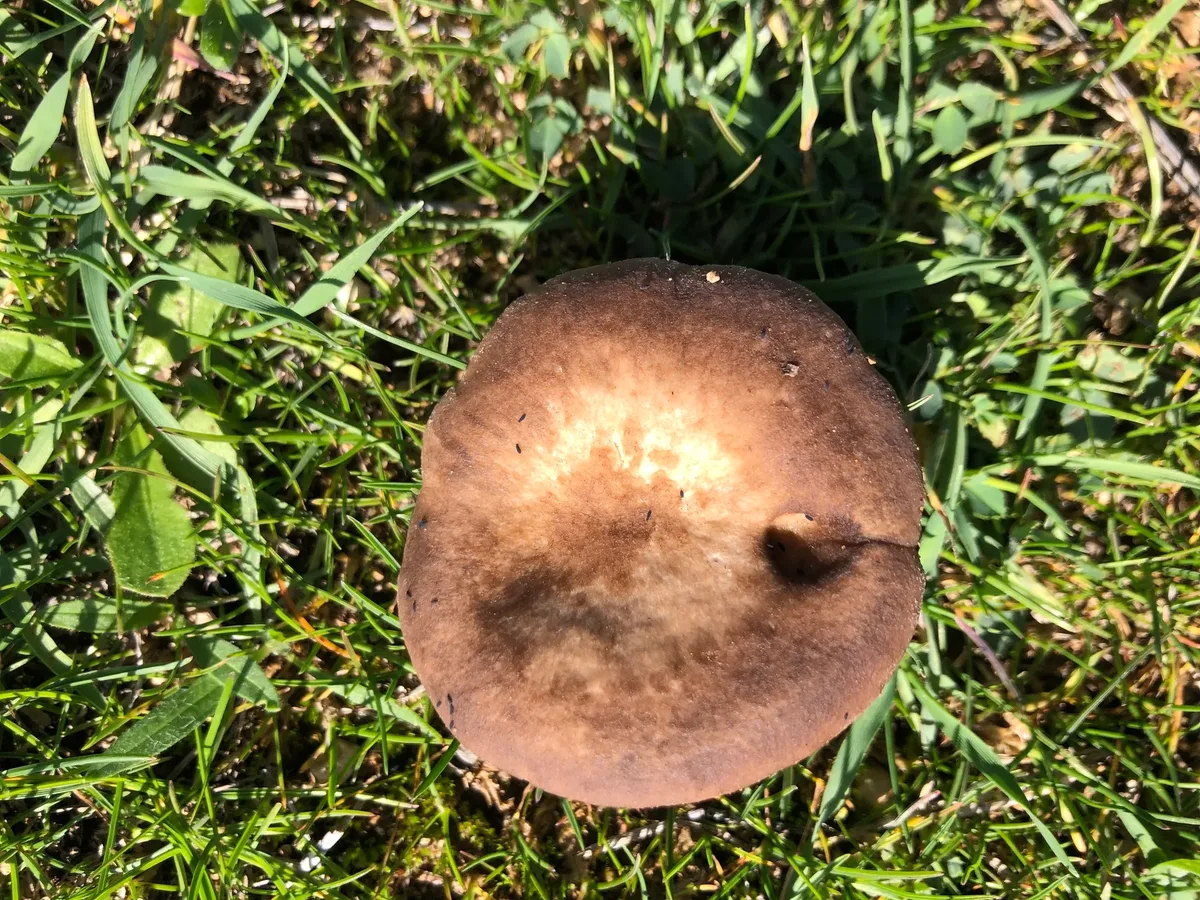
The cap starts convex and pale grey-brown, darkening toward a richer umbrous brown at the disc, then flattens and finally develops a shallow, irregular depression in older specimens - sometimes with a subtly wavy or lobed margin.
Diameters of 8-14 cm are common; old, waterlogged individuals in sheltered hollows can push beyond that.
The cuticle is dry and matte in fresh air, fibrous-silky when rubbed, and it does not peel easily.
Gills
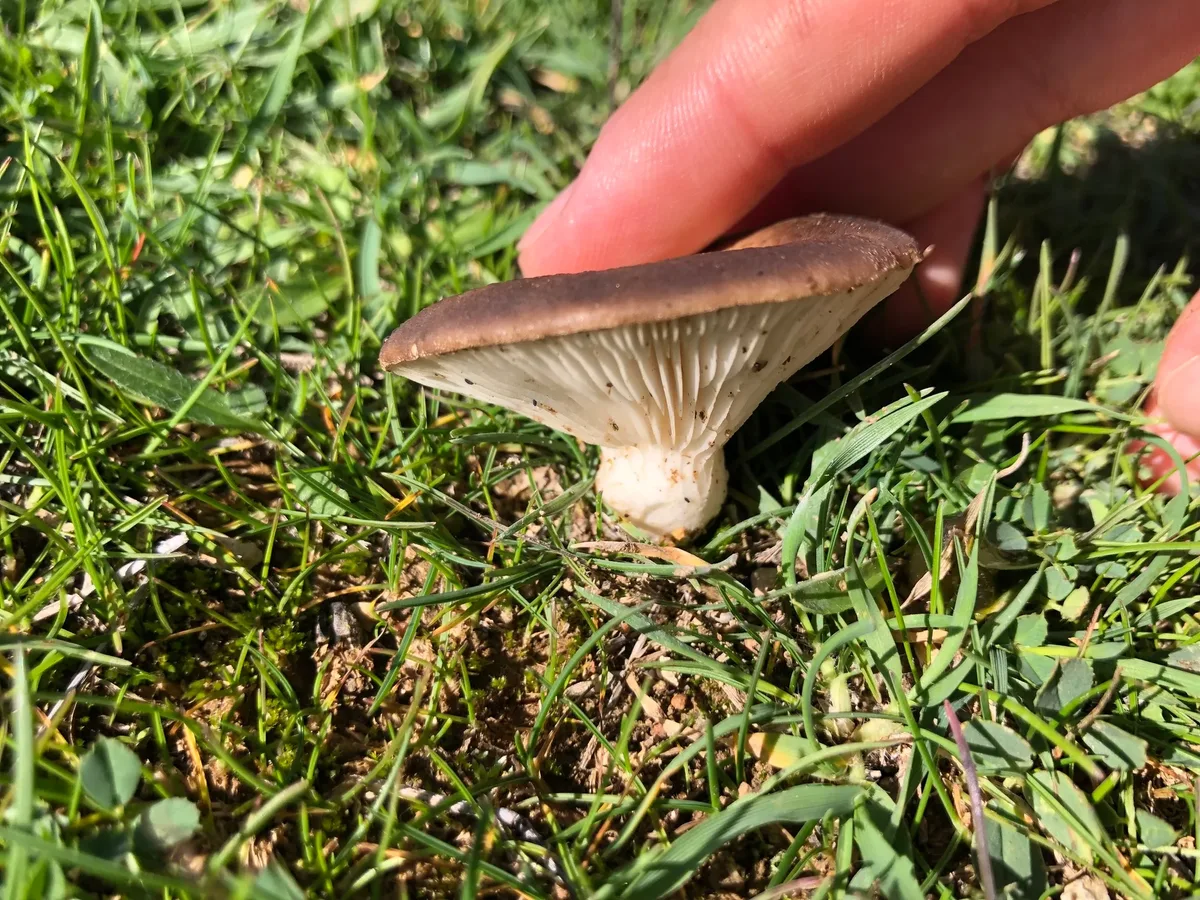
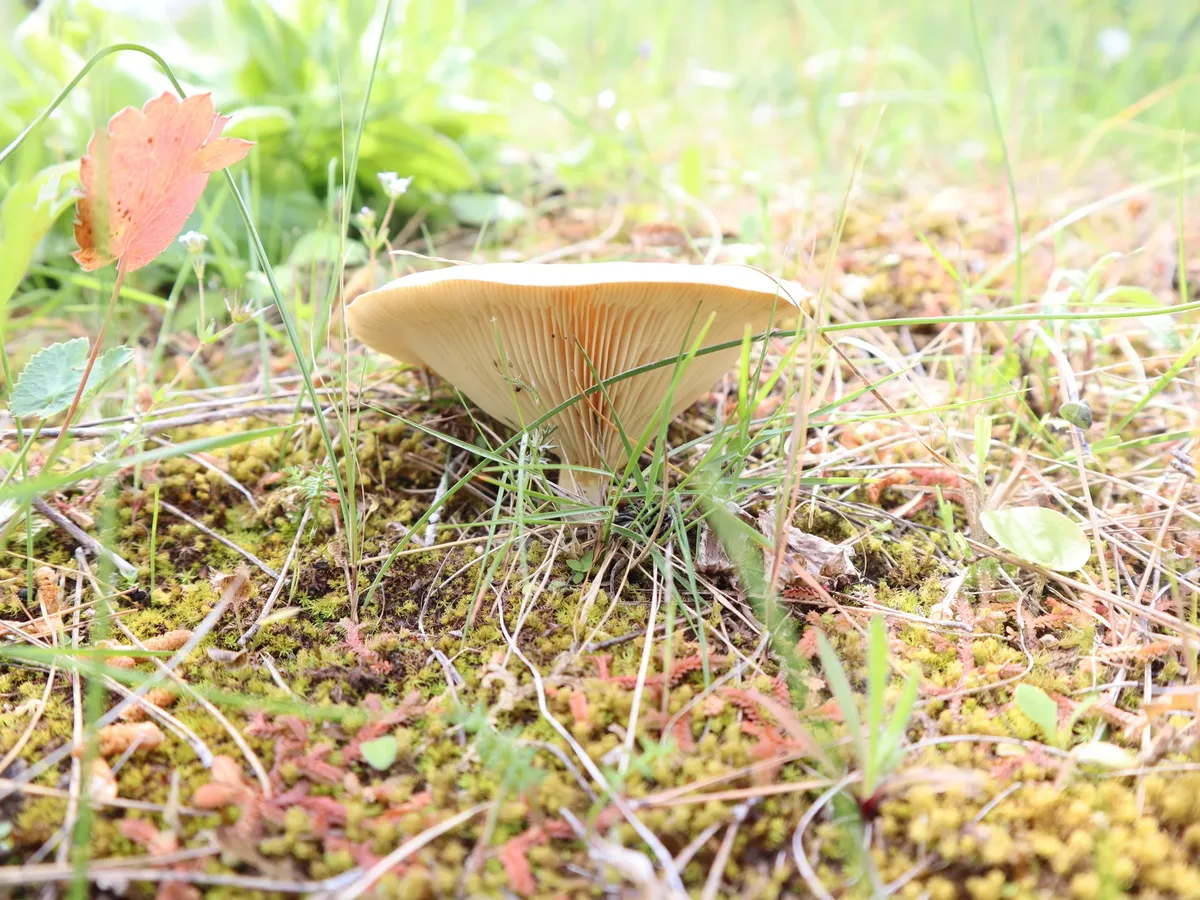
Beneath the cap, the gills are crowded, white to cream, and strongly decurrent - they run a conspicuous distance down the upper stem, which is one of the cleanest field marks.
Spore print white to pale cream-white.
Stem
The stem itself is the defining structure: thick, solid, white to ivory, often eccentric relative to the cap center, and frequently compressed or irregular in outline rather than a perfect cylinder. It carries no ring and no volva, and the base tapers slightly rather than swelling.
Flesh
Flesh is white throughout, firm and quite dense, with a characteristic elastic snap when bent - far firmer than most gilled mushrooms of this size.
Smell & taste
The odor is mild, clean, pleasantly fungal without any pronounced chemical or anise note.
In the field, the combination of brown cap, cream decurrent gills, and that disproportionately massive white stem on open non-wooded ground is essentially diagnostic.
Where & when it grows
Habitat
King oyster is unusual among Pleurotus species in being a ground-dweller rather than a wood-dweller. Its ecological role is that of a saprotrophic or weakly parasitic decomposer of the underground roots - particularly the thick, carrot-like taproot - of field eryngo (Eryngium campestre) and other large-rooted umbellifers (Apiaceae) such as Ferula and Thapsia.
These plants colonize open, seasonally dry calcareous grassland and waste ground in Mediterranean regions: roadsides, old cereal field margins, overgrazed pastures, stony hillsides.
The mycelium is invisible above ground; it lives inside and around the buried dead root mass, which may persist in the soil for years after the plant itself has died.
Because the host root systems cluster in specific patches - and because cattle and sheep historically disturbed and enriched the soil in these same areas - productive spots tend to be discrete and semi-permanent, returning season after season until the buried root material is exhausted.
The soil chemistry matters: a relatively alkaline, free-draining, often stony Mediterranean limestone soil is the consistent thread across productive sites.
When
The main fruiting window runs from September through November, tightly linked to the first significant autumn rains breaking the summer drought. In a typical Mediterranean year the soil surface becomes bone dry by July and August, and the mycelium waits dormant through the heat.
When soil moisture rises again - usually after 25 mm or more of rain over two weeks - and soil temperatures settle in the 10-20 °C band, fruiting bodies push up within roughly one to two weeks.
A second, smaller flush is possible in mild winters (December-January) and a third in spring (March-April) if winter rains have been generous. The autumn flush is generally the largest and most reliable.
Elevation plays a role: sites above 400-600 m in the Iberian Peninsula may fruit two to three weeks earlier in autumn than coastal lowland sites because soils cool more quickly.
A late, dry autumn can suppress fruiting almost entirely; a wet, warm winter can extend it well into January.
How it grows
The mycelium of Pleurotus eryngii threads through the cortex and pith of eryngo taproots, digesting the lignocellulose and structural carbohydrates within the dead root tissue. A single large taproot - which can reach 60-80 cm depth in old plants - may sustain mycelium for several years.
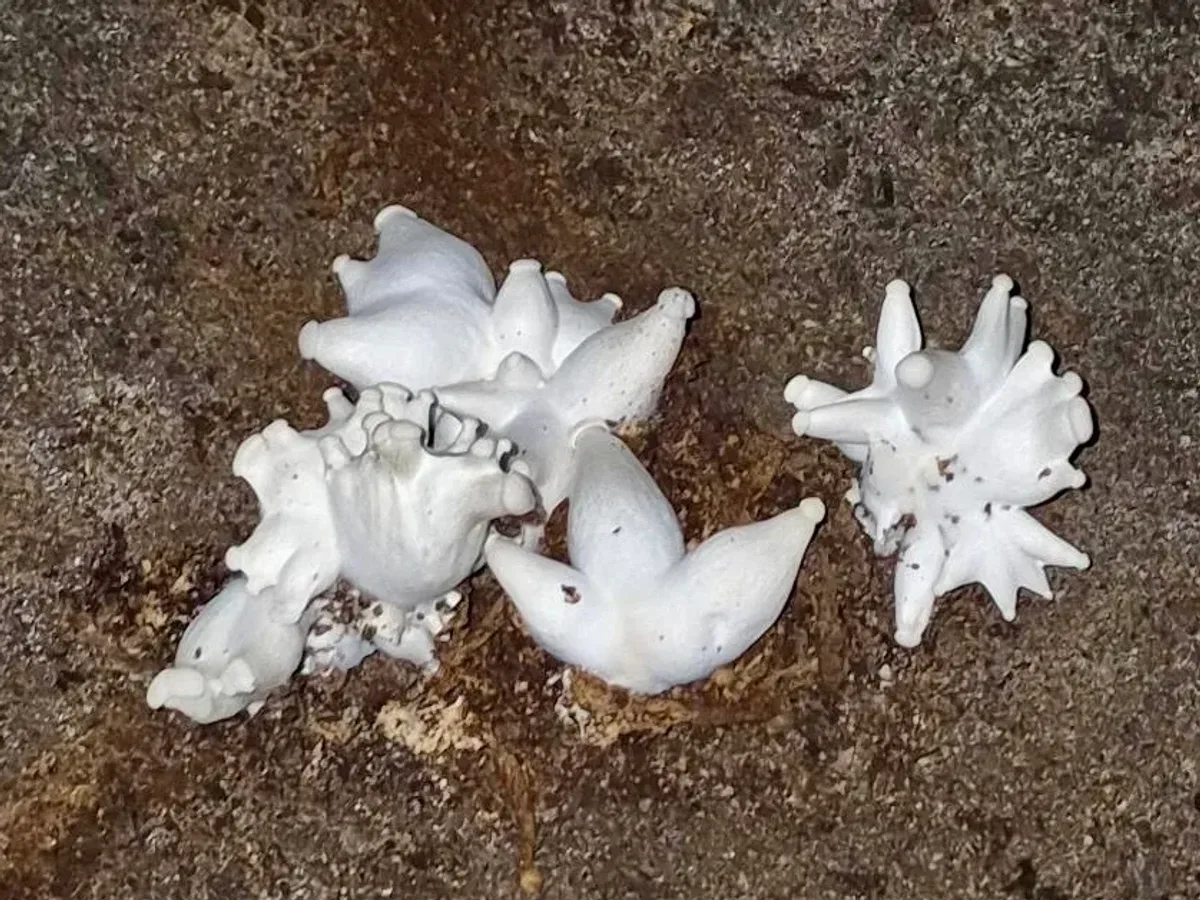
Fruiting bodies emerge singly or in small clusters of two to five at the soil surface, pushed up through a cm or two of soil from the buried root attachment point. The primordia (pin-stage initials) are white and button-like, appearing in the soil crack or at the surface above the root after soil moisture and temperature conditions become favorable.
Growth from first emergence to harvestable size typically takes five to ten days. The fruitbody is notably drought-resistant once it has emerged: a dry spell after initial emergence slows rather than stops development, and specimens can remain harvestable for longer than more delicate species.
Where grazing animals have historically trampled and fertilized the ground around eryngo stands, fruiting tends to be denser - possibly because compaction and nutrient enrichment from dung accelerate root senescence and thus create more substrate for the mycelium.
Fruiting conditions
Fruits mainly in autumn following rain; tied to buried dead eryngo roots, so flushes follow soil-moisture pulses in mild Mediterranean conditions.
Look-alikes
Pleurotus eryngii has very few dangerous lookalikes, and none that share all its key features simultaneously.
- In Mediterranean grassland, no deadly Amanita species grow on open, tree-free ground with the same combination of decurrent gills, no ring, no volva, and a massive eccentric stem.
- Agaricus species that share open ground habitat have free gills (not decurrent) and produce a chocolate-brown to purple-brown spore print (not white).
- Some Clitocybe species grow on similarly open ground and have decurrent gills, but their caps are much thinner and their stems are slender; several Clitocybe are toxic (notably C. dealbata, which causes muscarinic poisoning), so any small pale funnel-shaped mushroom in the same habitat should be avoided.
The combination of cap size (8-14 cm), robust eccentric white stem, white decurrent gills, white spore print, no ring, no volva, and growth directly from open soil above a buried eryngo root is essentially unique in the Mediterranean flora.
If no eryngo plants are visible nearby, and especially if any dead wood or stump is in the vicinity, treat the identification with additional caution.
In the kitchen
Picking & cleaning
Cut the stem cleanly at soil level with a knife; do not pull or lever, and do not dig down to expose the root attachment.
The spawn site - the piece of colonized root just below the surface - is the living seed bank for future flushes, and disturbing it or exposing it to desiccation can eliminate the spot for that season and potentially longer.
The stem is one of the best parts of the mushroom gastronomically, so trim as little off the base as possible. Remove loose soil with a soft brush or cloth rather than rinsing in the field.
Pick at the stage when the cap is still broadly convex to nearly flat: once the cap becomes deeply depressed and the margin starts to fray, the flesh softens and its keeping quality drops sharply.
Specimens found growing close together around one root system should not all be taken at once - leaving one or two allows them to sporulate and may inoculate nearby soil.
Cooking
The dense, collagen-like texture of king oyster flesh is its defining culinary property: it holds its shape, resists waterlogging, and develops a firm, almost meaty bite under heat rather than shrinking to a limp fraction of its raw volume.
The stem is gastronomically equal to or better than the cap - unlike most mushrooms where the stem is merely functional - and should always be used.
For the simplest preparation:
- 1Slice the stem into rounds 1-1.5 cm thick.
- 2Dry the cut faces with paper.
- 3Sear in a hot dry or lightly oiled pan until each face is deep golden-brown before adding any fat or seasoning.
The Maillard crust that forms concentrates the umami and produces a nutty, subtly sweet flavor that raw or gently cooked specimens do not hint at. Garlic, parsley, and a splash of white wine is the classic Iberian finish.
Grilling whole or halved over charcoal - common in southern Spain and Italy - produces a smoky, slightly chewy result that pairs well with alioli.
The firm flesh makes it well-suited for slow-cooked dishes: it can be added to rice (paella or arroz con setas), stews, and bean dishes early without disintegrating.
It also holds up to pickling in oil and vinegar, a traditional preservation method across southern Europe. Dried king oyster rehydrates well, and the soaking liquid carries good flavor for use in sauces and broths.
Because the wild form from calcareous Mediterranean soils tends to have a more pronounced flavor than cultivated product, seasoning should be light to let the mushroom speak.
Good to know
Pleurotus eryngii is a well-established, widely consumed edible mushroom with no known toxic compounds. It is industrially cultivated at large scale across Europe, Asia, and North America, and the cultivated form is sold in supermarkets worldwide - which gives foragers a useful reference for appearance and smell.
There are no documented poisonings from correctly identified wild king oyster.
The main practical safety concern is overharvesting: populations on natural eryngo root systems are limited and some sites in Spain, Italy, and Greece have been stripped by commercial picking. In some Mediterranean countries the species is legally protected or subject to harvest limits precisely because of this pressure.
As always, apply the standard rule for any new species: eat a small amount on first contact and wait 24 hours before eating a larger quantity, as individual sensitivities are always possible even with confirmed edible species.
A reference guide - never an edibility guarantee. When in doubt, leave it out.