Caesar's mushroom
Amanita caesarea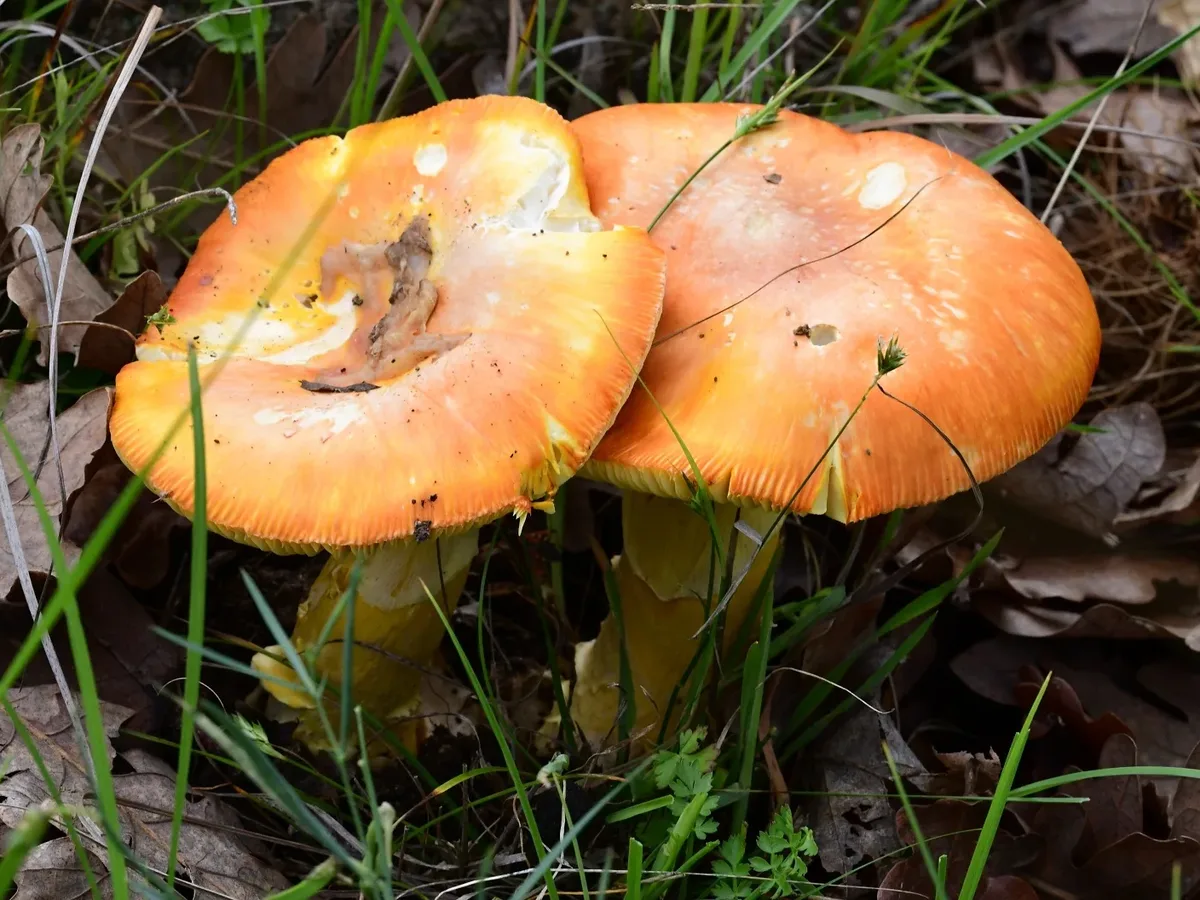 © milan kořínek (CC BY 4.0)
 © Dimitǎr Boevski (CC BY 4.0)
 © gerardbertrand (CC BY)
 © victor laborde (CC BY)
 © victor laborde (CC BY)
 © victor laborde (CC BY)
 Michael Pongratz (CC0)
 Michael Pongratz (CC0)
 © Jason Grant (CC BY 4.0)
 © Louis Aureglia (CC BY 4.0)© milan kořínek (CC BY 4.0)© Dimitǎr Boevski (CC BY 4.0)
One of the best mushrooms you can bring home - once you are certain of the identification.
Never eat a mushroom you are not 100% sure of - check the look-alikes below, and always cook wild mushrooms.
How to recognise it
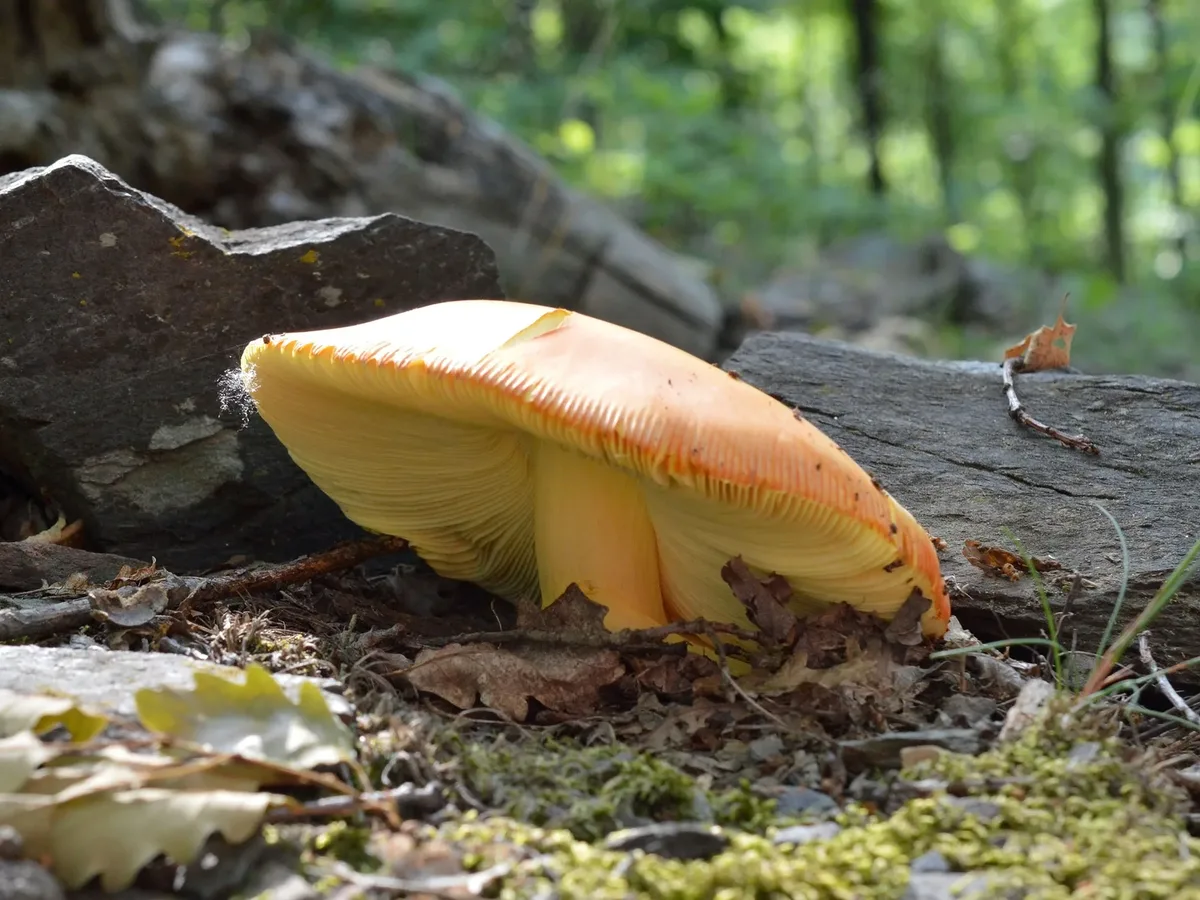
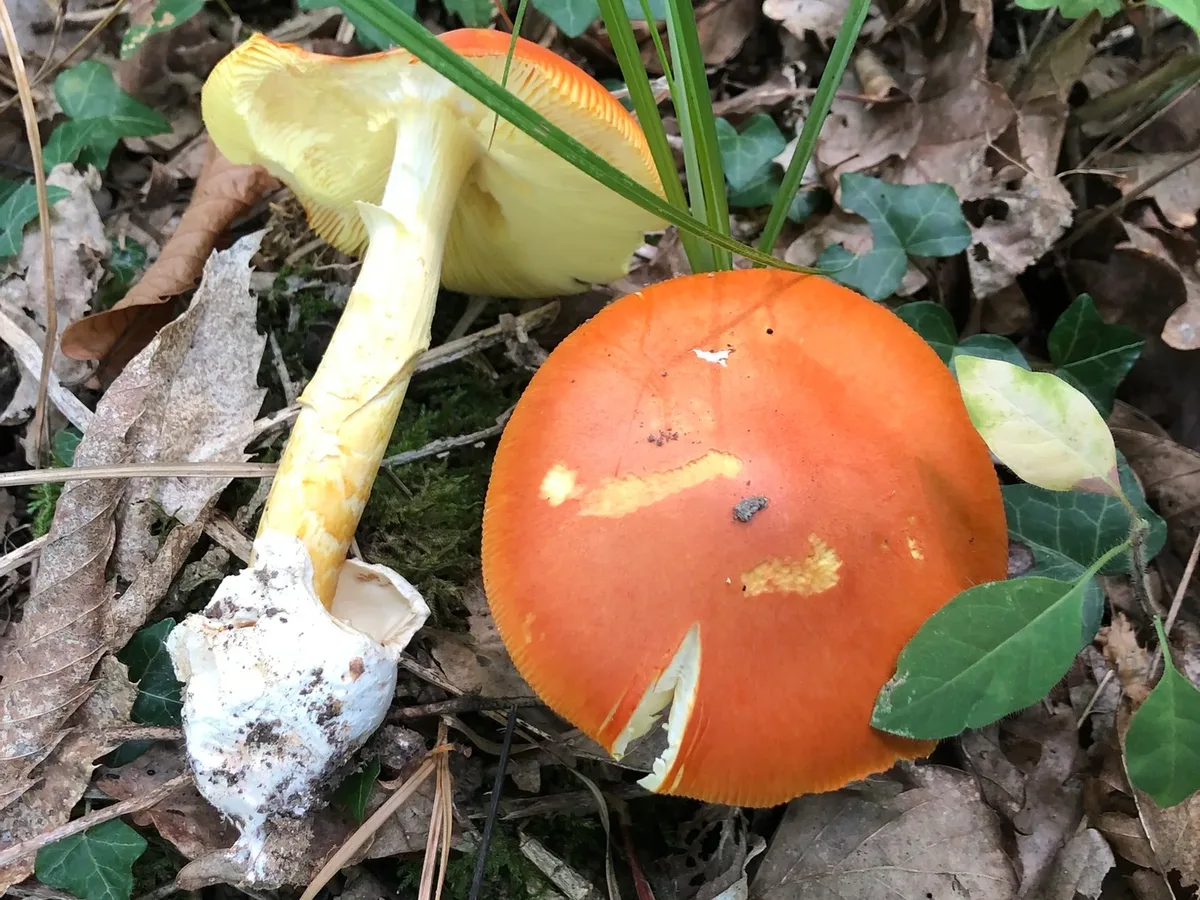
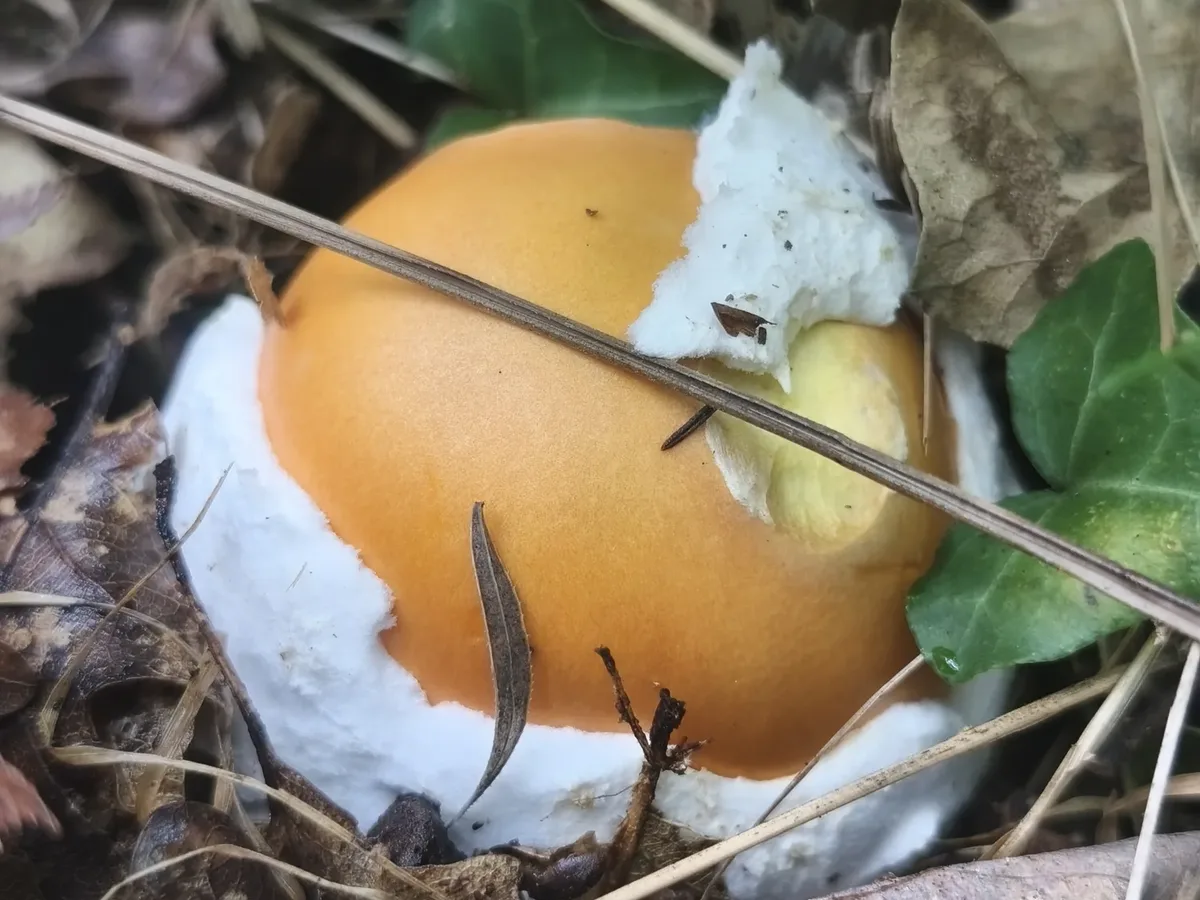
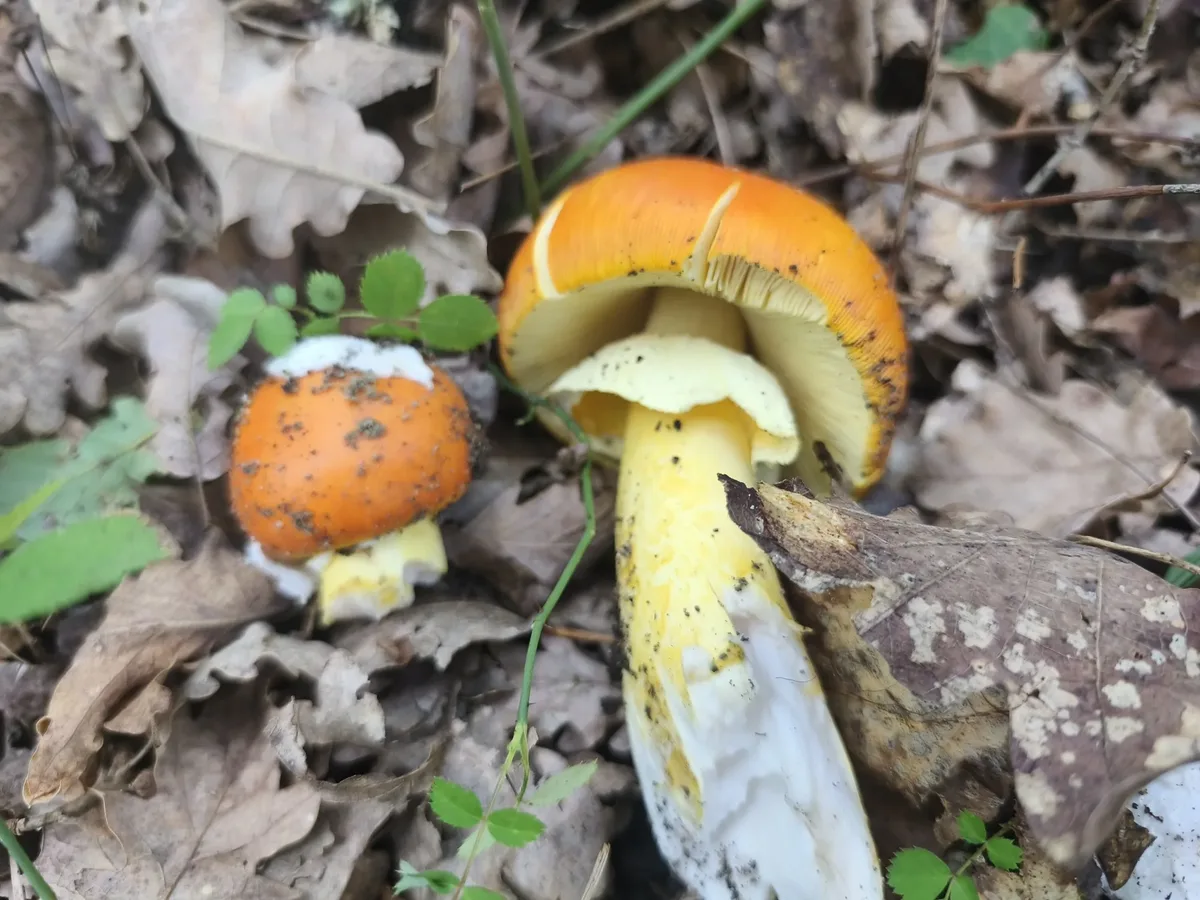
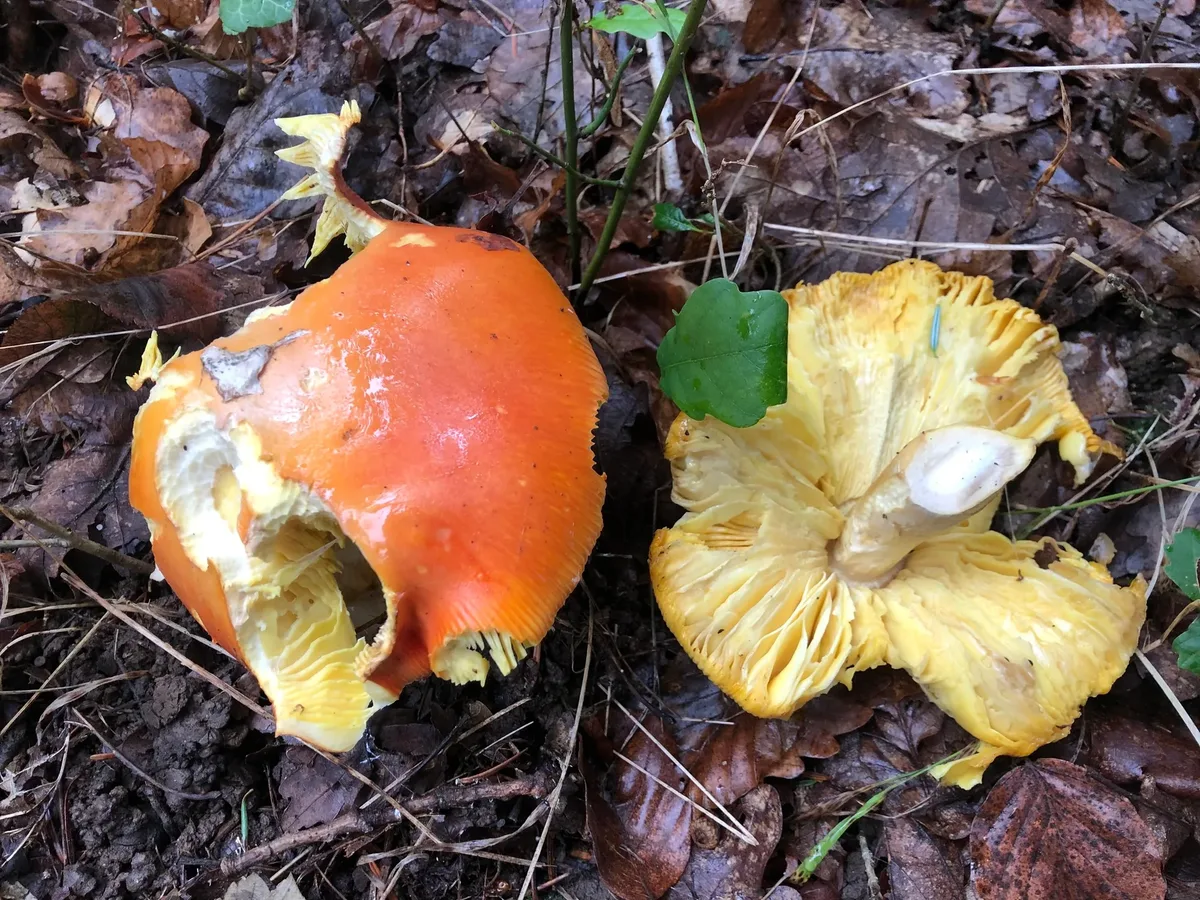
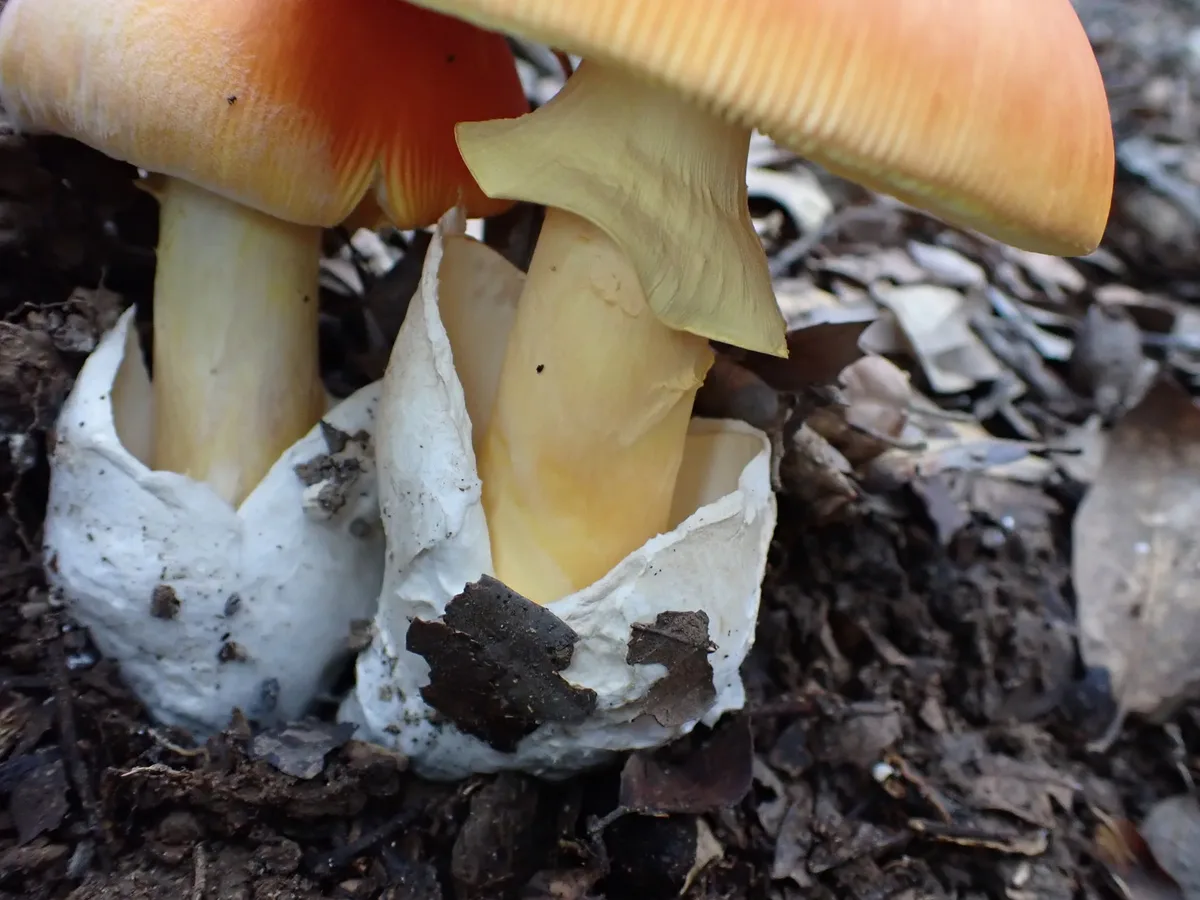
Caesar's mushroom announces itself through a colour combination that is essentially unique among European amanitas: a vivid orange to orange-red cap, bright sulphur-yellow gills and stem, and a large, white, sack-like volva wrapped around the base.
Cap
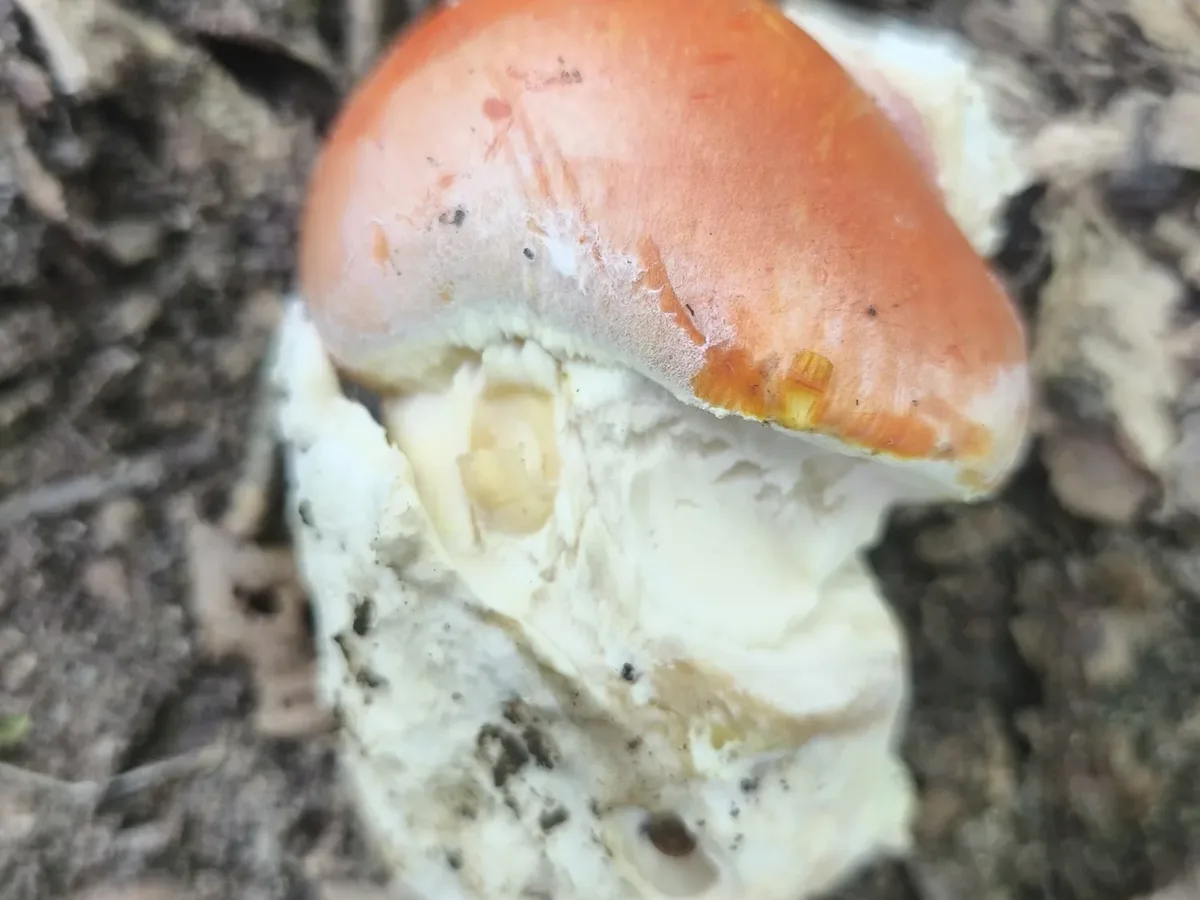
The cap begins life as a perfect sphere - a white, egg-like structure up to 6-8 cm across - entirely enclosed within that membranous volva. As the stem elongates, the egg splits and the cap pushes free, revealing the vivid orange surface beneath.
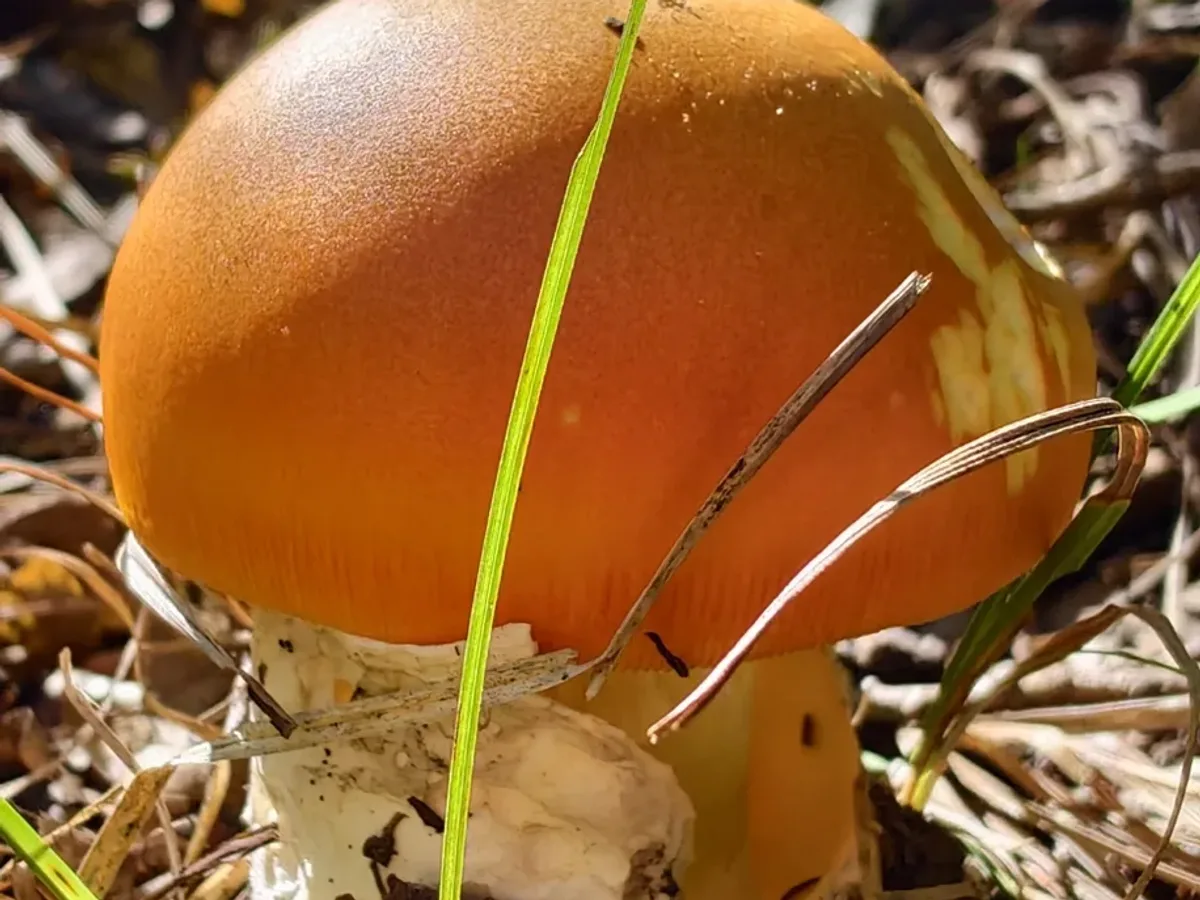
In its early button stage the cap is hemispherical; it gradually expands to broadly convex and eventually almost flat at full maturity, reaching 8-15 cm across, occasionally up to 18 cm.
The cap surface is smooth, dry, and orange to orange-red - more saturated toward the centre, fading slightly at the finely grooved (striate) margin.
Gills
Gills are free from the stem, crowded, and consistently bright yellow even in fully expanded specimens.
Stem
The stem is 6-15 cm tall and 2-3 cm wide, yellow, tapering slightly upward, and adorned with a large, pendulous ring (skirt) that is white on top and yellow on the underside.
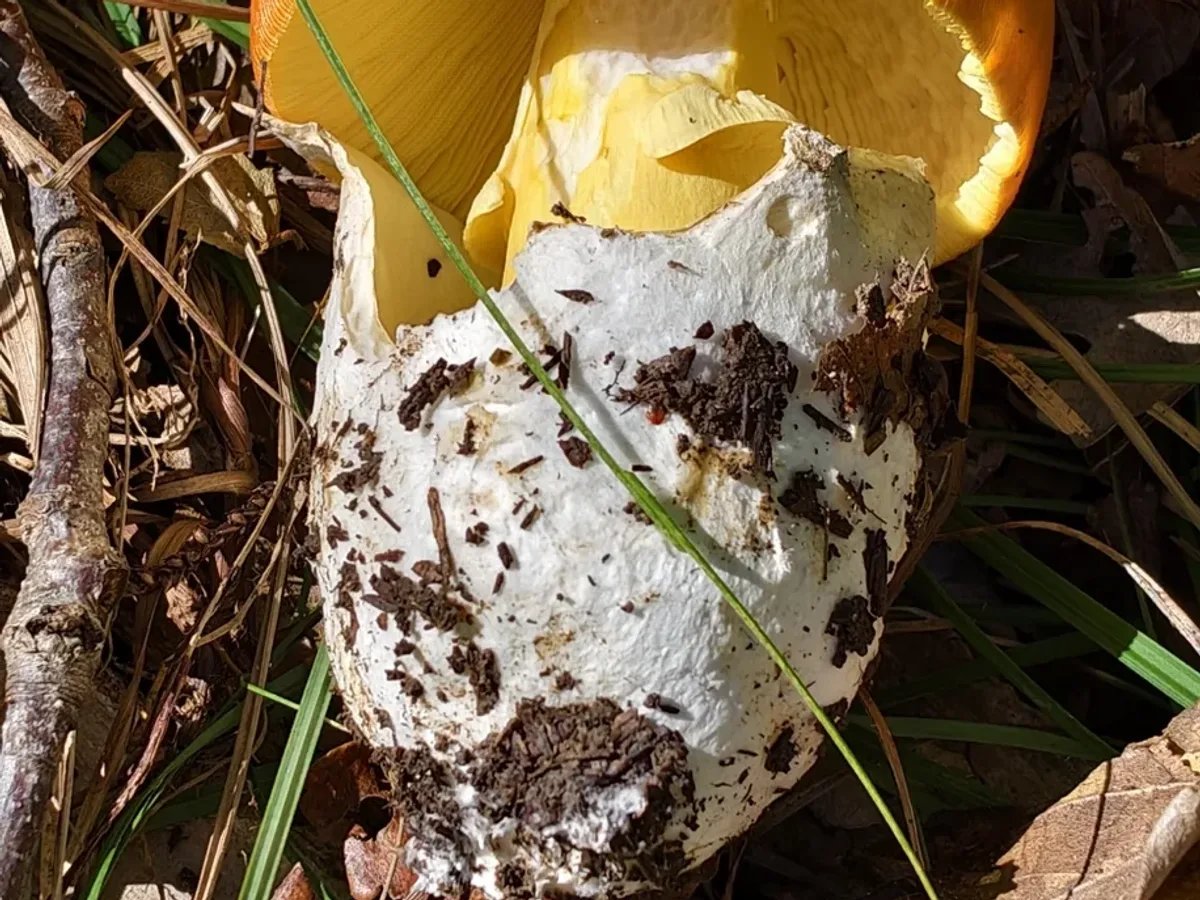
At the base, the volva persists as a fleshy, white, cup-like sack that is partially buried in the soil - always dig it out and inspect it.
Flesh
The flesh is white throughout, with a thin yellowish layer just beneath the cap cuticle.
Smell & taste
Smell is mild and pleasant, slightly nutty or mealy.
Spore print is white. The three-colour triad - orange cap, yellow gills/stem/ring, white volva - is diagnostic.
Where & when it grows
Habitat
Caesar's mushroom is a strictly mycorrhizal species bound to warm, sun-drenched Mediterranean woodlands.
Its primary hosts are the oaks of the Mediterranean basin: holm oak (Quercus ilex), pedunculate oak (Q. robur), cork oak (Q. suber), and pubescent oak (Q. pubescens). It also partners with chestnut (Castanea sativa), hazel (Corylus avellana), and sometimes beech (Fagus sylvatica) at higher elevations.
The mycorrhizal network it forms exchanges mineral nutrients - particularly phosphorus and water - from fungal hyphae in the soil for photosynthetic sugars from the tree. This partnership is highly specific: the fungus cannot fruit without its host, and isolated trees rarely produce fruit bodies.
Soils need to be acidic, siliceous (granite, schist, sandstone parent rock), and well-drained. The species is intolerant of waterlogged or calcareous (limestone) soils. It strongly prefers south- and southwest-facing slopes that accumulate heat and light across the summer months.
In Italy it is found from near sea level up to about 1,200 m; in the Iberian Peninsula it is concentrated in the Pyrenean foothills, Catalonia, Basque Country, and Galicia. It is absent from northern and central Europe, and extremely rare north of the Alps.
When
Fruit bodies emerge from late summer into early autumn, spanning roughly August through October depending on latitude and elevation. The trigger is reliable summer rainfall following the dry Mediterranean season - typically heavy thunderstorms in late August or September.
The mycelium has been dormant underground through the arid summer months, waiting. Once soil moisture rises sufficiently, the developmental process begins, and a mature fruit body appears 18-22 days after substantial rain.
A second, smaller flush can follow early autumn rains in October.
The season is short compared to northern fungi: a single site may fruit for no more than three to four weeks. Picking windows are often defined by the window between the first post-drought rains and the onset of night frosts.
Experienced foragers track local thunderstorm events and return to known spots 18-20 days later.
How it grows
The mycelium of Caesar's mushroom threads through the soil in intimate contact with oak and chestnut roots. It forms ectomycorrhizal tips - short branched root-endings sheathed by fungal tissue - that collectively give the tree access to a far larger soil volume than roots alone.
These partnerships are long-lived: the same network may persist for decades beneath a mature oak grove, passing through many seasons without producing a single fruit body.
Fruiting depends on a threshold of soil moisture and temperature arriving together. The first visible sign is a white egg pushing up through the leaf litter, sometimes partially concealed under soil.
That egg is complete: the stem, cap, gills and ring are all pre-formed inside the volva, compressed and vivid orange, invisible from outside.
Over three to five days the stem extends, the volva splits, and the cap unfolds. Growth rate accelerates sharply in warm, humid conditions - a fruit body can expand by several centimetres per day in optimal weather.
Caesar's mushroom fruits solitary or in very small groups of two to four, never in large clusters or troops. Individual fruit bodies are heavy and substantial; a mature specimen can weigh 200-400 g.
Fruiting conditions
Fruit bodies form about 18-22 days after substantial rain (summer thunderstorms or early autumn rains).
Look-alikes
Caesar's mushroom has one absolute safety rule: never harvest a closed white egg from the genus Amanita without exposing the cap colour and gill colour.
In the button stage, the death cap (Amanita phalloides) and the destroying angels (Amanita virosa, A. verna, A. bisporigera) are enclosed in a similar white volva and are externally indistinguishable from a Caesar's mushroom egg.
Once exposed, the difference is unambiguous:
- Deadly white amanitas have white gills, white flesh and a white or greenish-white (death cap) to pure white (destroying angels) cap.
- Caesar's mushroom has bright yellow gills and a yellow stem interior - both visible the moment the egg is opened.
The fly agaric (Amanita muscaria) differs conspicuously: red cap with white warts (remnants of the universal veil), white gills, white ring, and a bulbous base with concentric wart rings - not a free sack volva. The fly agaric is not deadly in normal foraging quantities but is toxic and psychoactive and must not be consumed.
No other common Mediterranean mushroom shares the three-colour combination of orange cap, yellow gills and white sack volva simultaneously.
The spore print of Caesar's mushroom is white, consistent with all Amanita species and therefore not a distinguishing feature between them; gill and flesh colour remain the reliable separator.
In the egg/button stage its gills and flesh are white, never yellow. Caesar's mushroom has bright yellow gills, stem and ring.
White gills and flesh in the egg/button stage, never the yellow gills, stem and ring of Caesar's mushroom.
Red cap with white warts, white gills and white ring, and a bulbous warty base - not a sack-like volva. Caesar's mushroom has yellow gills/ring and a white sack volva.
In the kitchen
Picking & cleaning
Select only specimens where the cap has already emerged from the volva and the orange colour and yellow gills are fully visible.
Never harvest a closed egg without exposing the base to confirm the yellow gills, yellow stem and white sack volva - this is the step that separates Caesar's mushroom from deadly white amanitas, which can appear as identical white eggs.
Dig gently around the base of each egg with a knife rather than pulling, to extract the full volva intact. This is both a safety check and legally mandated at some sites in Italy, where harvesting closed eggs is restricted or prohibited to protect the population and prevent misidentification.
Brush the base free of soil and inspect the volva and gill colour before placing the specimen in a wide basket - never a plastic bag, which traps moisture and accelerates deterioration.
Carry specimens separately so bruising does not obscure their colour. Use within 24-48 hours of collection, as the flesh softens rapidly. Do not wash; clean with a dry cloth or soft brush.
Cooking
Caesar's mushroom has been prized since antiquity - the Roman naturalist Pliny the Elder recorded it as the finest of all fungi, and it appears in cookbooks and market records continuously since the Renaissance.
Its flavour is mild, delicate, sweet and slightly nutty; the texture of young specimens is firm and almost creamy.
Young eggs and recently opened buttons are eaten raw: thinly sliced with a sharp knife or mandoline and dressed simply with extra-virgin olive oil, lemon juice, flaked sea salt, black pepper and shaved parmesan (insalata di ovoli crudi in Italian, carpaccio d'ou de reig in Catalan). Raw preparation preserves the flavour compounds most completely and is considered the definitive treatment by Mediterranean foragers.
Older, fully expanded caps are better cooked:
- sautéed briefly in olive oil or butter over high heat,
- grilled over charcoal,
- or incorporated into risotto or pasta toward the end of cooking to preserve flavour.
The gills are delicate and break down quickly with extended heat. No additional spicing is needed; simple preparations let the flavour speak.
Caesar's mushroom does not dry well and loses much of its character when preserved; fresh use within 48 hours of harvest is strongly preferred.
Good to know
Caesar's mushroom is a choice edible species with no toxic compounds, but it grows in the company of some of the most dangerous fungi in the world. The death cap (Amanita phalloides) and destroying angels (Amanita virosa and relatives) cause the majority of fatal mushroom poisonings worldwide.
They occupy the same habitat, fruit at the same season, and in the closed egg stage are visually identical to Caesar's mushroom eggs.
The only reliable separation is internal: open the egg, expose the gills and stem.
- Yellow gills and yellow stem confirm Caesar's mushroom.
- White gills and white or greenish flesh indicate a deadly species.
This check must be performed on every specimen individually, regardless of how confident you are about the site. Experienced foragers who collect here year after year still cut and inspect each egg.
Do not allow less experienced companions to rely on your identification without performing their own visual check.
Given the non-trivial risk of confusion, Caesar's mushroom is not recommended for beginners regardless of its gastronomic reputation.
A reference guide - never an edibility guarantee. When in doubt, leave it out.