The great South America mushroom guide
10 edibles to fill your basket with, 5 to recognise
The great South America mushroom guide

 Darwin's fungus
 Loyo
Loyo
 Gargal
 Death cap
 Darwin's fungus
From the ancient Nothofagus forests of Patagonia and the Andes to the Amazon, South America holds three separate fungal worlds and around 53 edible wild species in Chile alone. Here are ten edibles worth knowing and five dangerous species to recognise. This is a calm, honest companion, not a guarantee: when in doubt, never eat.
What matters most
- The beginner-safe edibles are introduced, not native: the saffron milk cap (orange latex, greening flesh) and Suillus (slimy cap, yellow pores) under planted pines are easy and safe.
- The deadliest trap is also introduced: the death cap, Amanita phalloides, arrived with imported European oaks and pines and now kills people in Chile and Argentina.
- The native treasures are at risk: loyo (Butyriboletus loyo) and gargal (Grifola gargal) are classed as Endangered through overpicking and logging - pick sparingly or buy from local foragers.
- Cyttaria - digueñe, llao llao, pan de indio - are the region's signature: golf-ball-like parasites of southern beech, harmless, and an ancient Mapuche and Yamana food.
- Main toxin groups to fear: amatoxins (liver/kidney), orellanine in some Cortinarius (kidneys), and gyromitrin in false morels.
- Handling and storage matter: Cyttaria keep only 1-2 days and must be cooked or eaten the same day; morels and false morels must always be cooked, never raw.
The great toxin groups
A few chemical families account for nearly all the serious danger here. Knowing what they attack, and how slowly they show themselves, can save a life.
Found in the death cap (Amanita phalloides) and likely in Galerina patagonica. Alpha-amanitin shuts down RNA polymerase II and destroys the liver and kidneys; about 5 mg can kill an adult and a single cap holds 30-90 mg. Heat-stable, so cooking, drying or pickling does not help. Symptoms come deceptively late, 6-12 hours after eating, then a false 'recovery' phase before liver failure.
Present in Amanita gemmata, one of only two species Chilean mycologists flag as potentially deadly alongside the death cap. Confused with pale edible mushrooms; avoid and seek care if eaten.
Carried by some Cortinarius (webcaps), a large genus needing expert knowledge. This kidney toxin is notorious for extremely delayed onset, so the whole genus should be avoided unless you are certain.
Found in Gyromitra (chicharron, Gyromitra antarctica) - the brain-like false morels that can occasionally kill. The Chilean species is lower in toxicity and loses poison with thorough cooking or drying, but never eat it raw; treat as toxic if unsure.
Chlorophyllum molybdites (green-spored parasol), the most common cause of mushroom poisoning in Argentina, plus Agaricus xanthodermus and some Ramaria. Violent vomiting, diarrhoea and cramps come 1-3 hours after eating; rarely fatal but dangerous through dehydration, especially in children.
The edibles
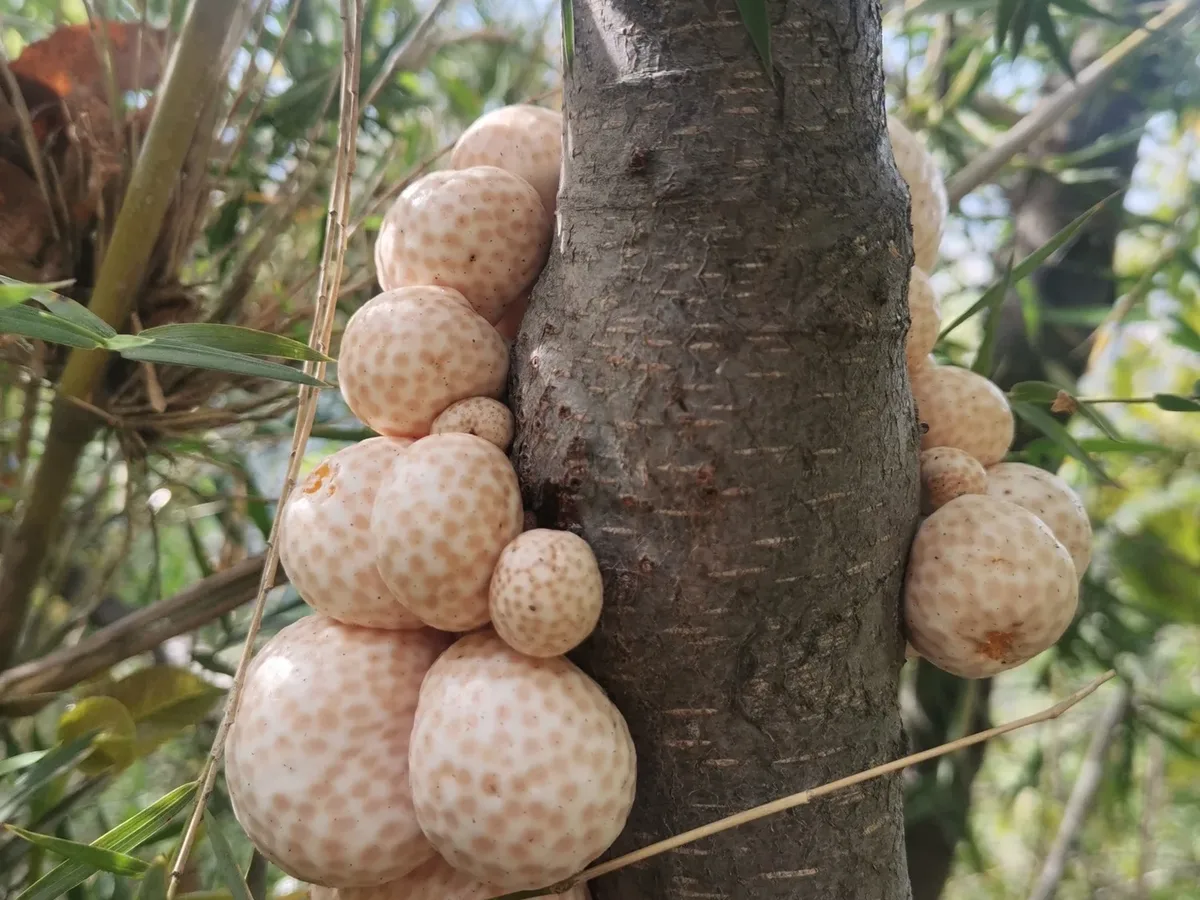 Darwin's fungus
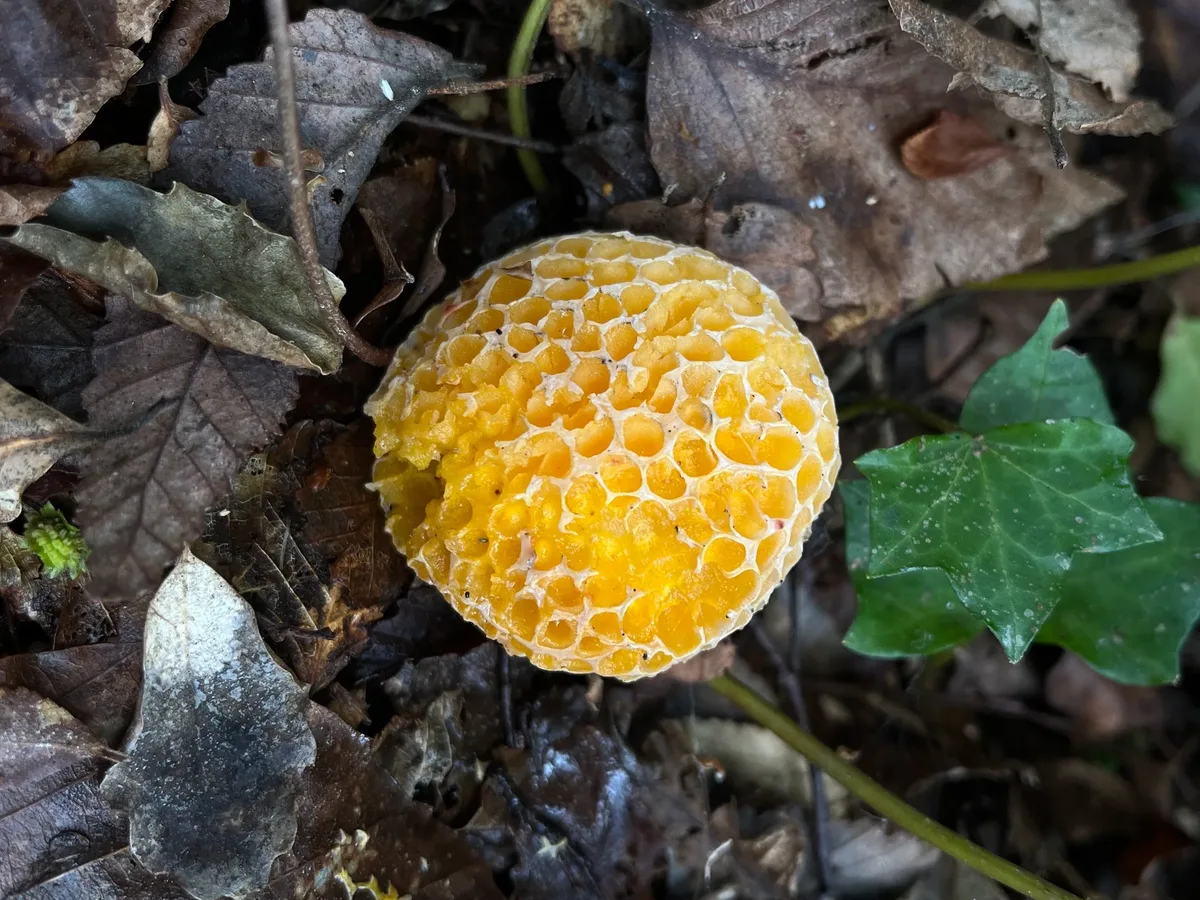 Darwin's fungusDarwin's fungus
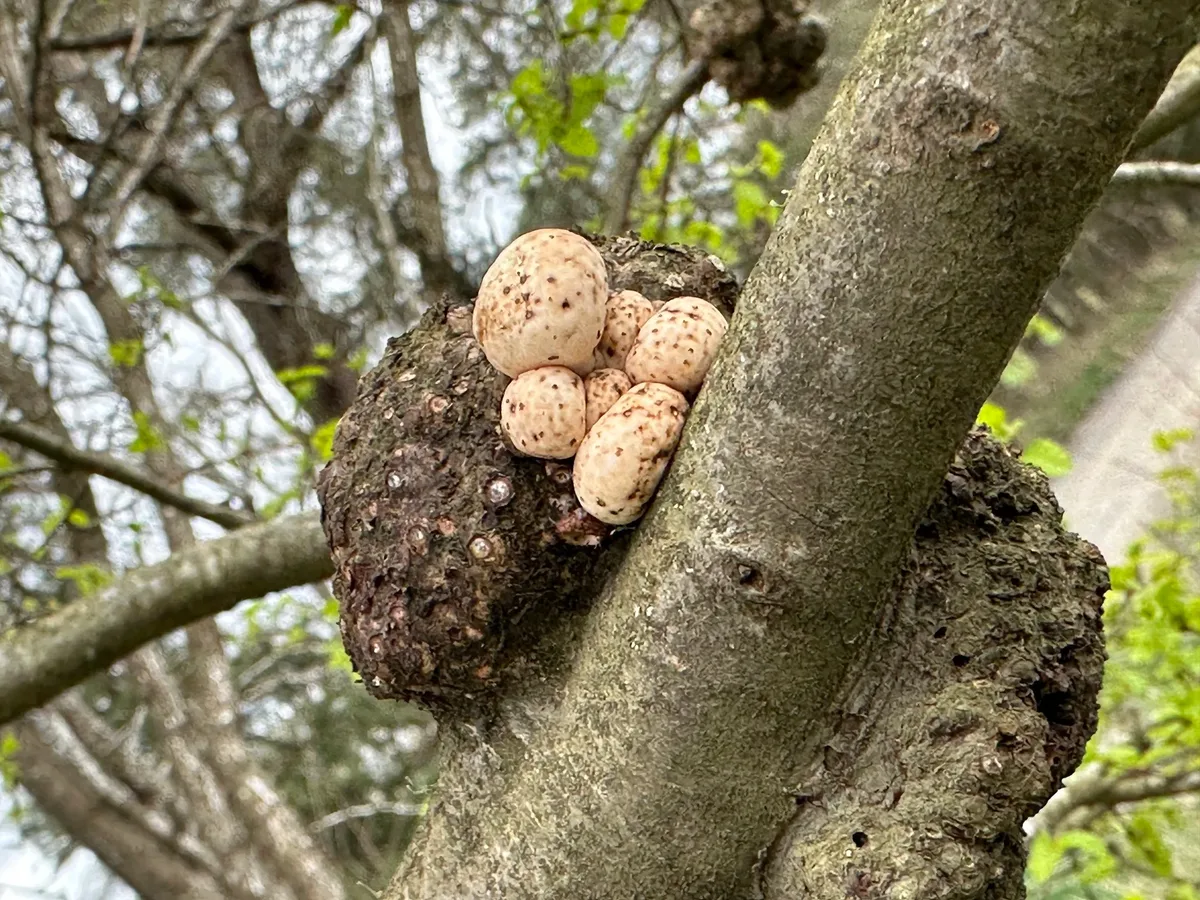 Darwin's fungusDarwin's fungusDarwin's fungus
Digueñe
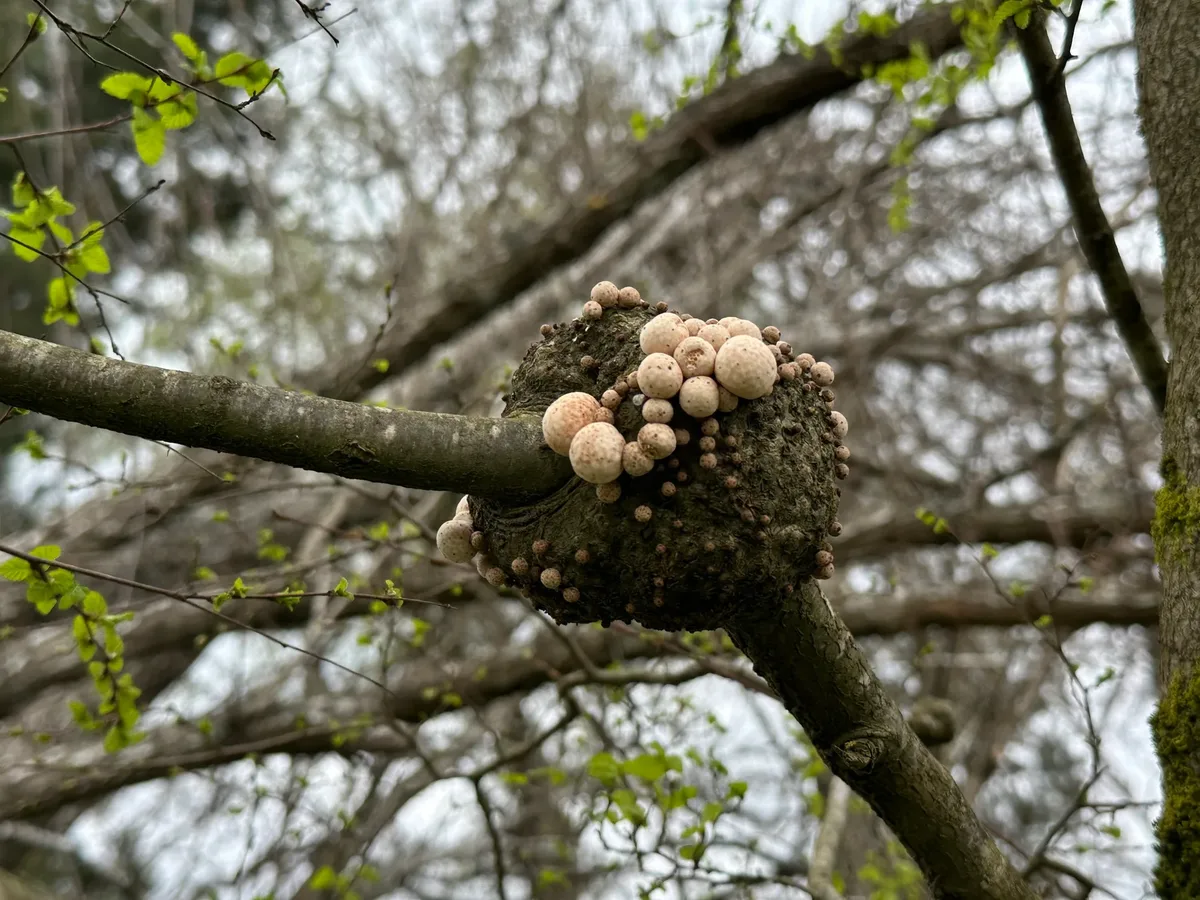
Cyttaria espinosaeClusters of orange-white spheres bursting from southern beech - Chile's most beloved spring mushroom, eaten raw the same day it is picked.
How to recognise it
Rounded, fleshy fruiting bodies (stromata) 1.5-5 cm across, growing in tight clusters from galls on southern beech bark. Young specimens are nearly smooth and pale - cream to apricot-orange - then the surface pits and opens into a honeycomb pattern as they ripen. The flesh is gelatinous with a faint, pleasant mushroomy smell and a mild flavour somewhere between sweet and neutral.
Where it grows
Lives exclusively as a parasite on Nothofagus (southern beech), particularly roble or hualle (Nothofagus obliqua), in the cool temperate forests of south-central Chile and Argentine Patagonia. The fungus establishes itself in the tree's living tissue; the tree responds by forming swollen galls on its branches, and each spring these galls burst open with clusters of fruiting bodies. A relatively gentle parasite - it can damage individual branches but rarely kills the tree.
Cooking
Most often enjoyed raw in a simple salad with cilantro, onion, and a squeeze of lemon or a dash of vinegar. Also popular fried with eggs (revueltos), prepared a la parmesana, folded into empanadas, or served as a side dish. The mild, slightly sweet flavour pairs well with acidic and herby accompaniments.
Look-alikes
Other Cyttaria species growing on southern beech are all edible; the yellow cluster form on Nothofagus is unmistakable, with practically no dangerous look-alikes.
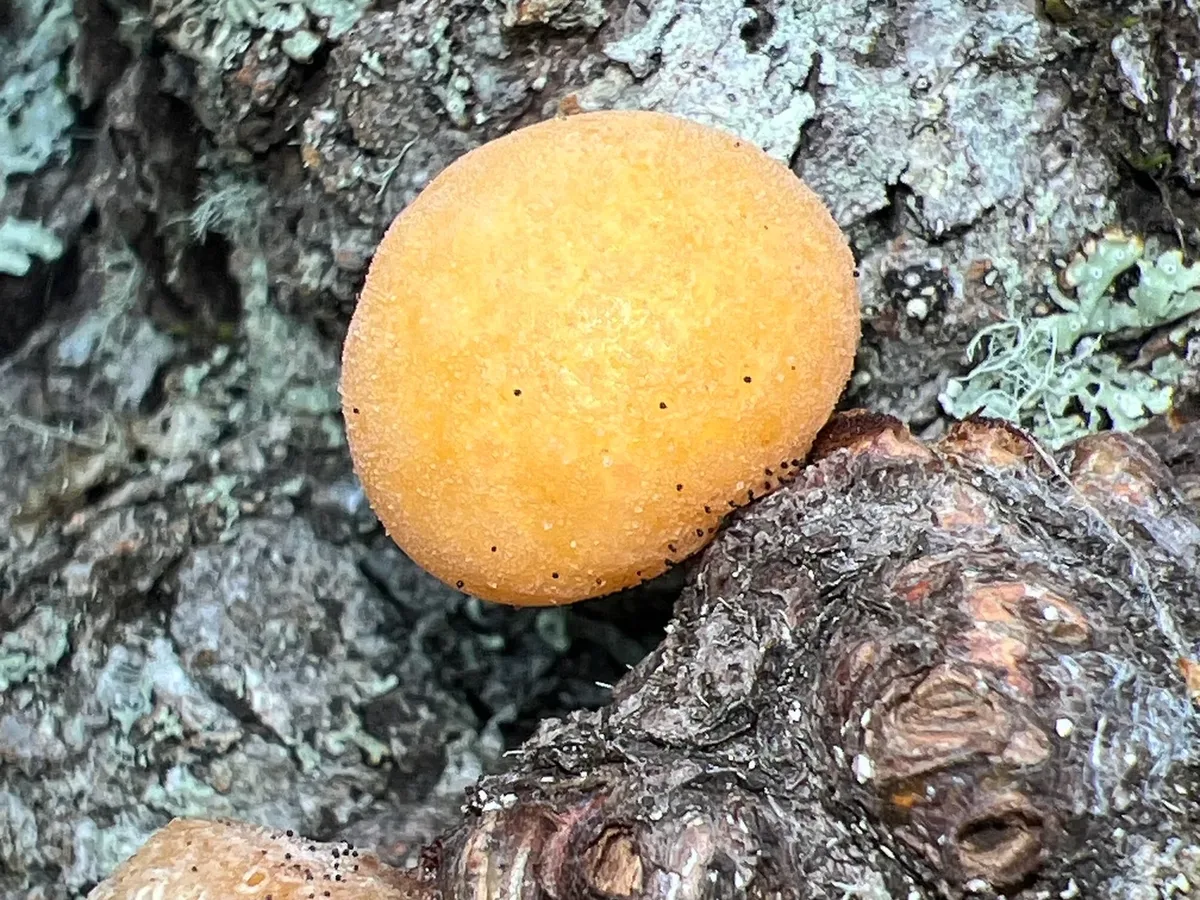 Llao llao
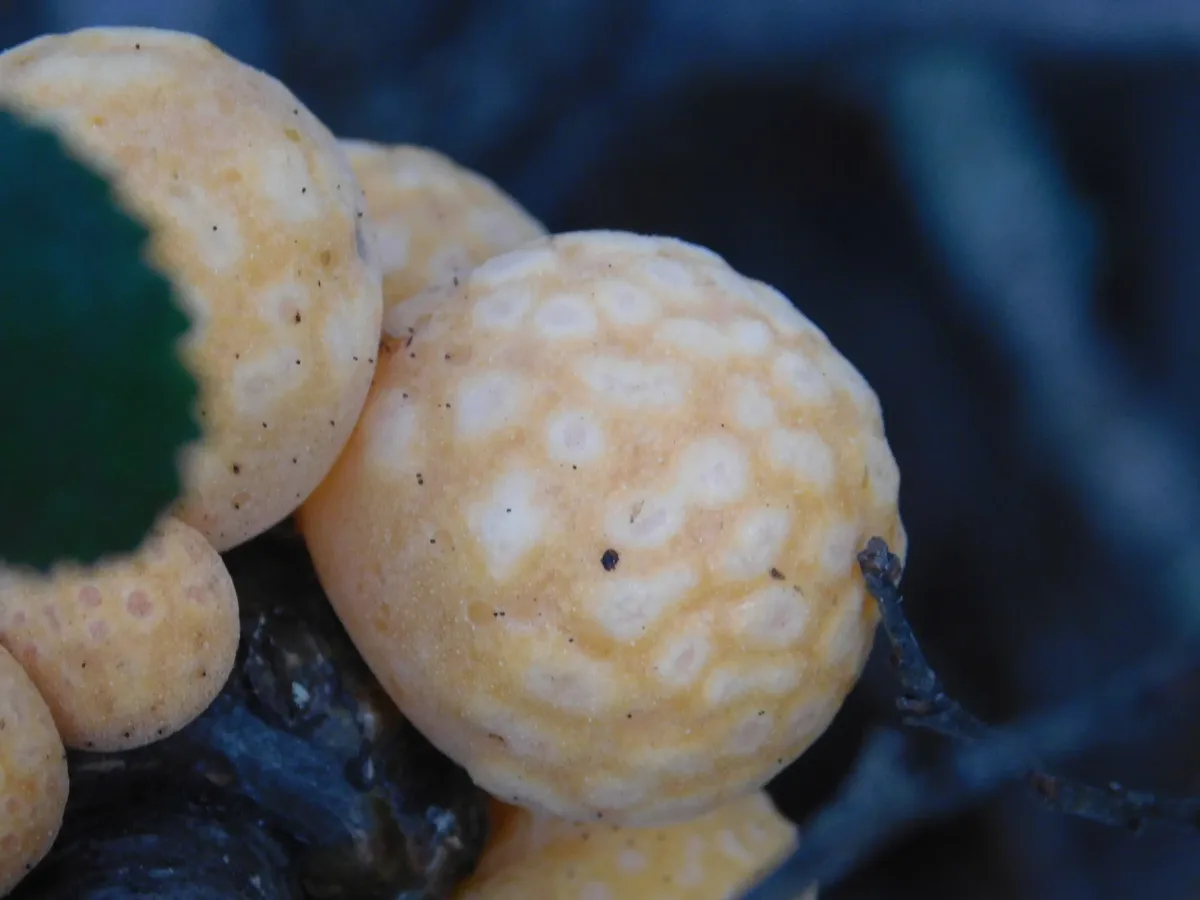 Llao llao
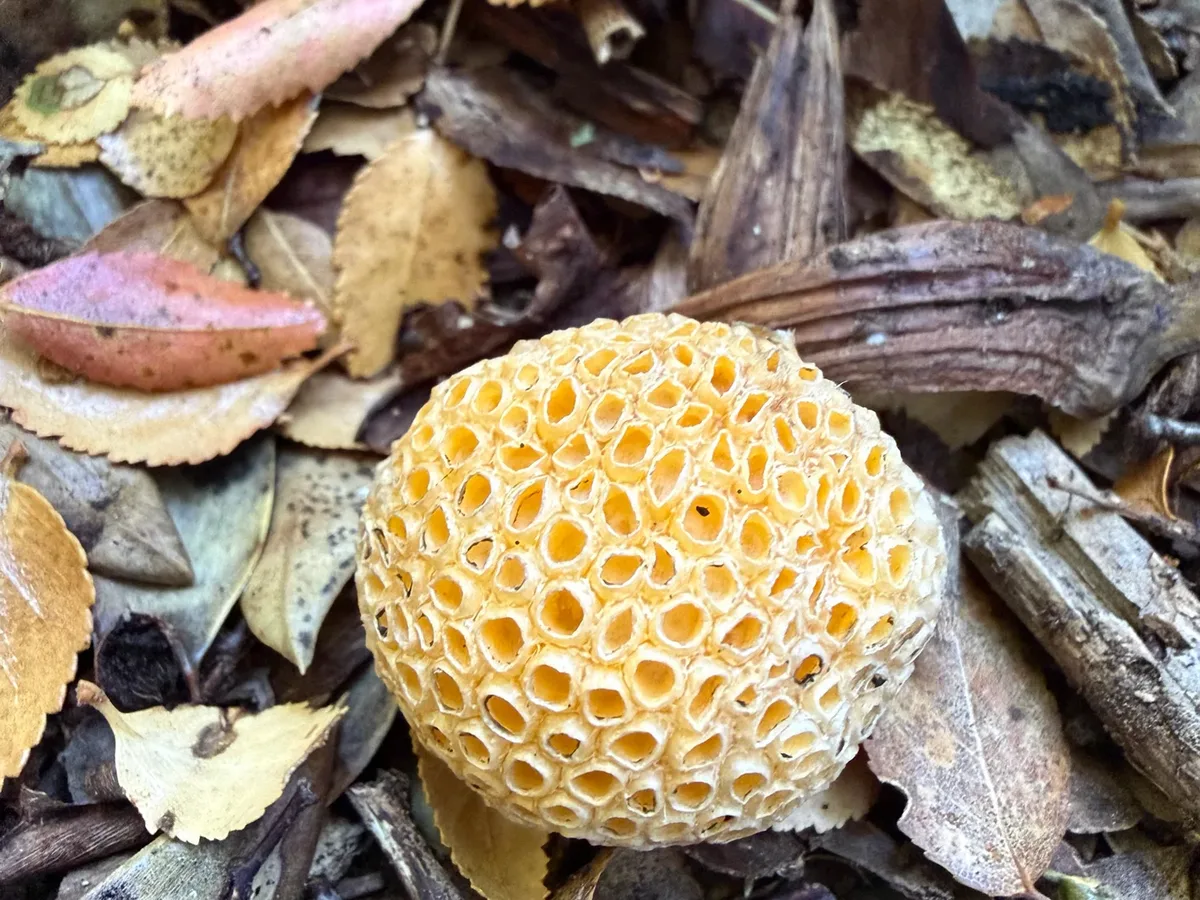 Llao llao
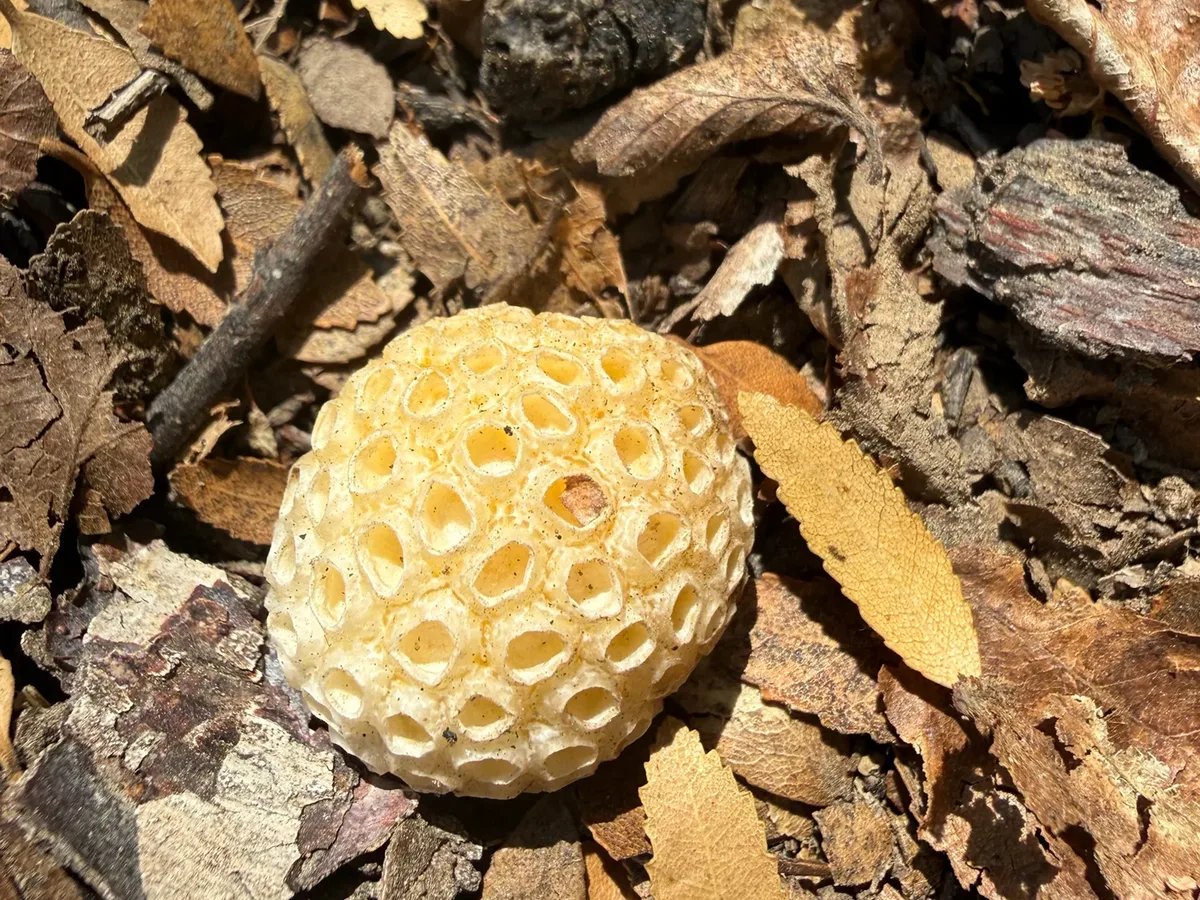 Llao llaoLlao llaoLlao llao
Llao llao (Indian bread)
Cyttaria hariotiiThe commonest Cyttaria of the Andean-Patagonian forests, sweet enough that the Mapuche once fermented it into a chicha-like drink and modern cooks use it in desserts.
How to recognise it
Tight clusters of globe-shaped, fleshy spheres bursting from beech bark - a vivid, intense orange that is noticeably deeper than the closely related C. darwinii, especially when young. At maturity, each sphere is studded with smaller and more densely packed cup-like pits (apothecia). The flesh is mild and sweet.
Where it grows
A biotrophic parasite on five Nothofagus species - ñire, lenga, coihue, guindo, and N. nitida - in the Andean-Patagonian forests of southern Chile and Argentina. It takes up residence as a gall in living branch and trunk tissue, where the same woody knot (nudo) can persist for years before fruiting bodies emerge.
Cooking
Fresh in salad, pickled, or sweet in desserts, jam and ice cream - one of the few edible mushrooms used in confectionery.
Look-alikes
Harmless. C. hariotii has a more intense orange colour and smaller, more densely packed apothecia.
All harmless; differ in colour intensity and apothecial size/density.
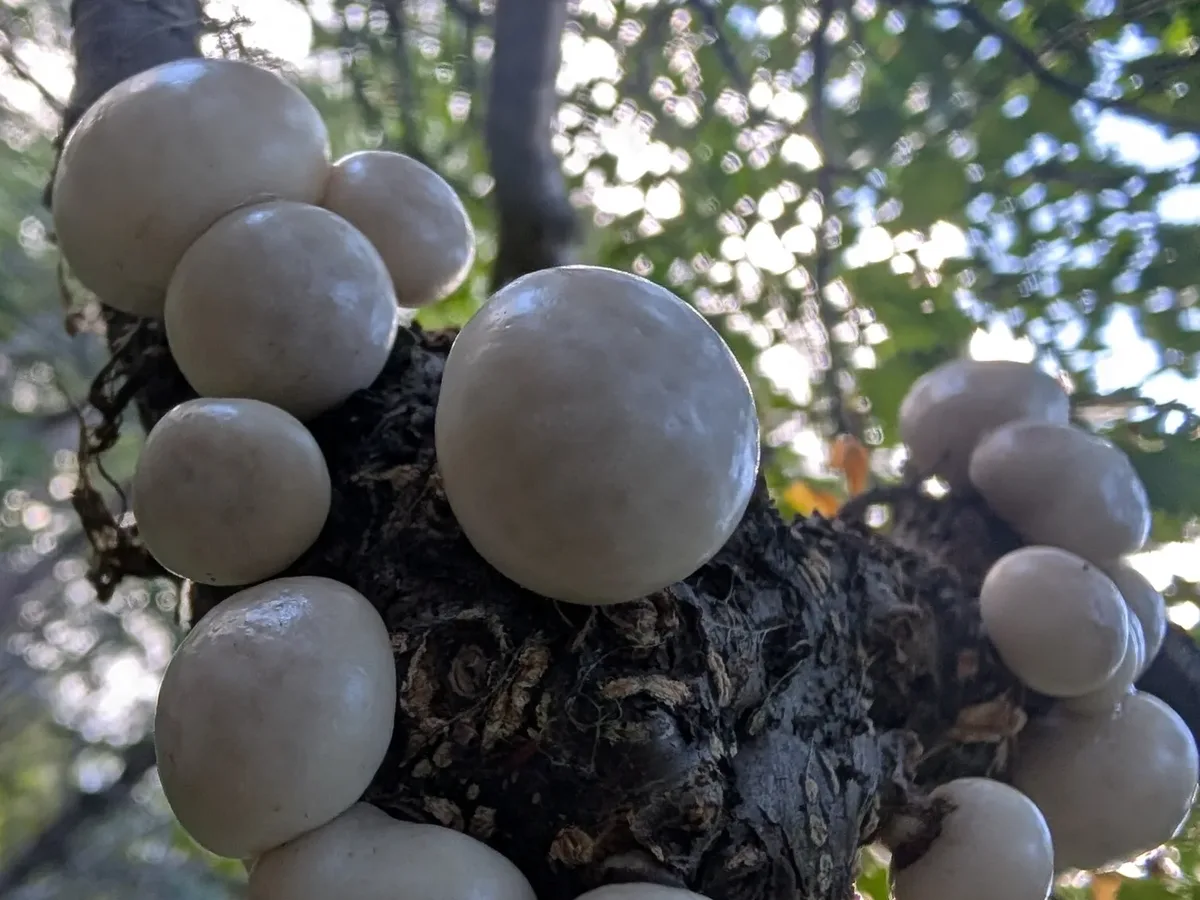 Darwin's fungus
 Darwin's fungus
 Darwin's fungus
 Darwin's fungusDarwin's fungusDarwin's fungus
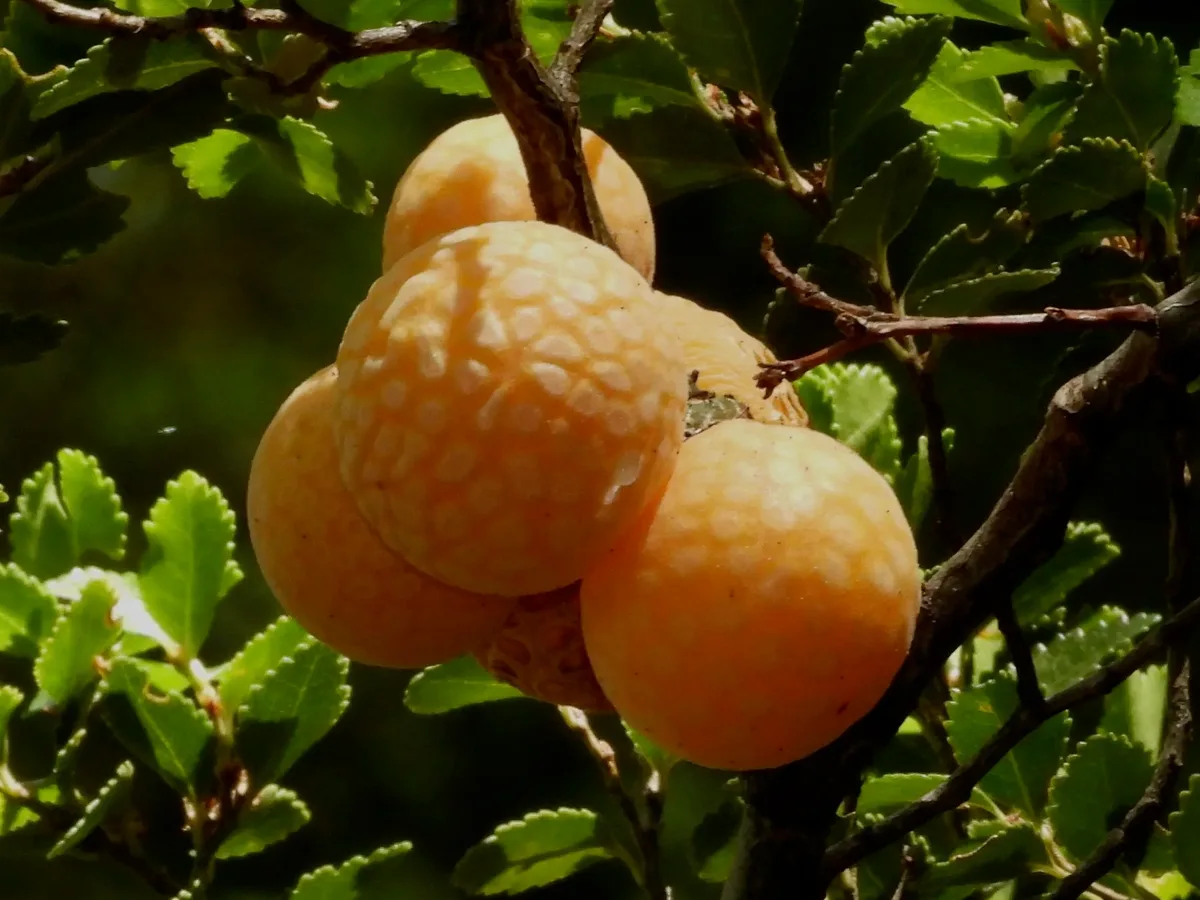
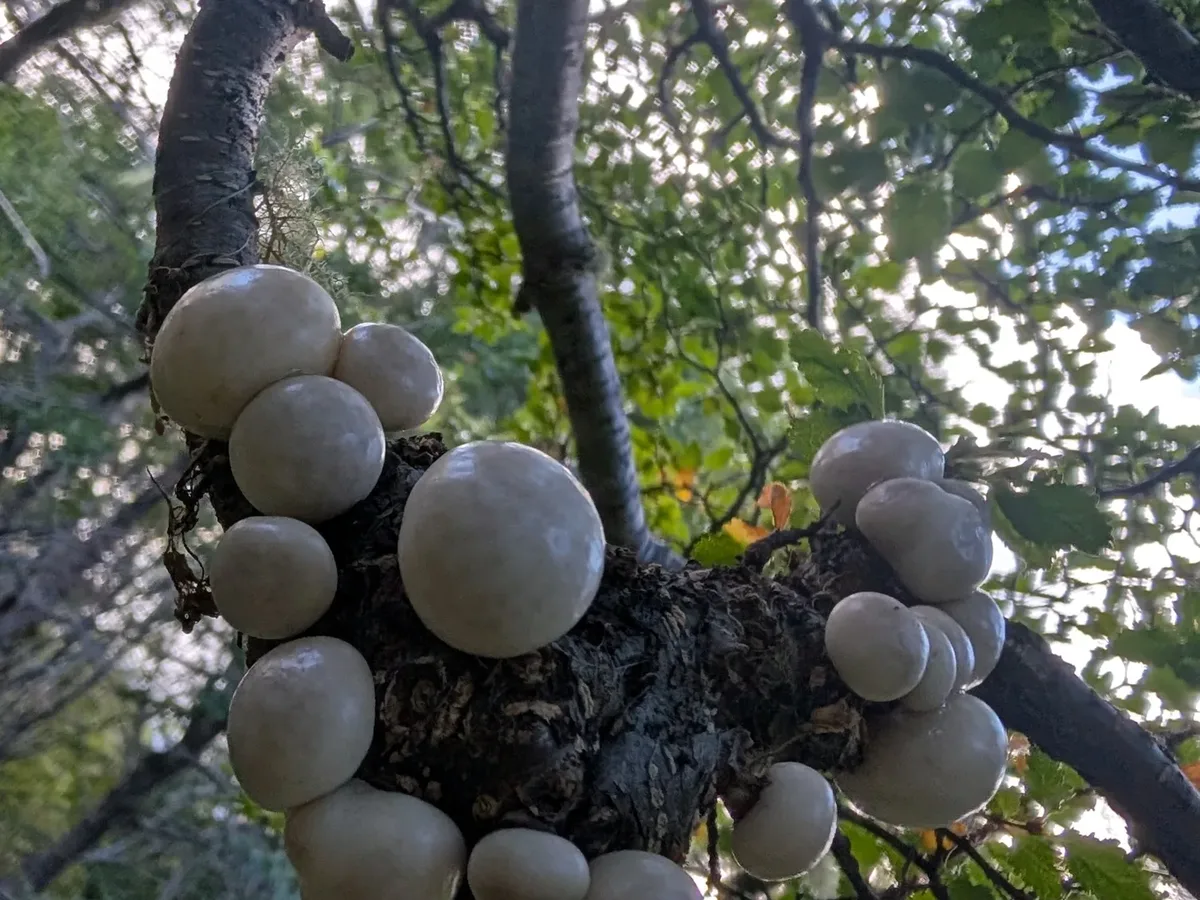
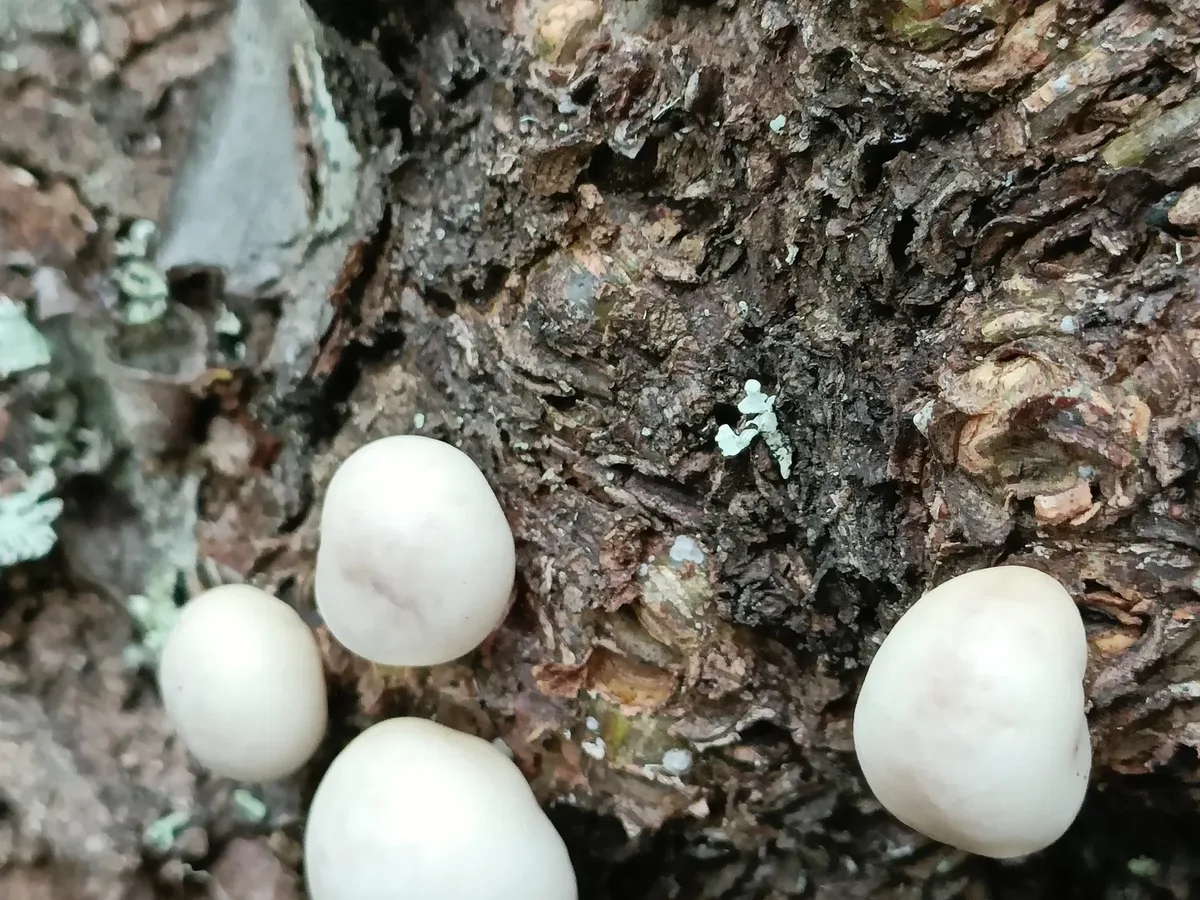
Darwin's fungus
Cyttaria darwiniiThe bright-yellow beech ball Darwin collected in Tierra del Fuego in 1832, recording it as the Fuegians' only vegetable food.
How to recognise it
Bright yellow, globular fungus; when young it is elastic and taut with a smooth surface, when mature it shrinks, becomes tougher, and the whole surface turns deeply pitted/honeycomb-like (Darwin's own description). Gelatinous texture, with a somewhat sweet taste.
Where it grows
On southern beech in the southernmost forests - Tierra del Fuego, Aysen, Magallanes. Endemic to southern South America.
Cooking
Traditionally raw, often together with fish (as the Fuegians ate it); today in salads and pickled like the other Cyttaria.
Look-alikes
Other Cyttaria are harmless.
 Gargal
 GargalGargal
 GargalGargalGargal
Gargal
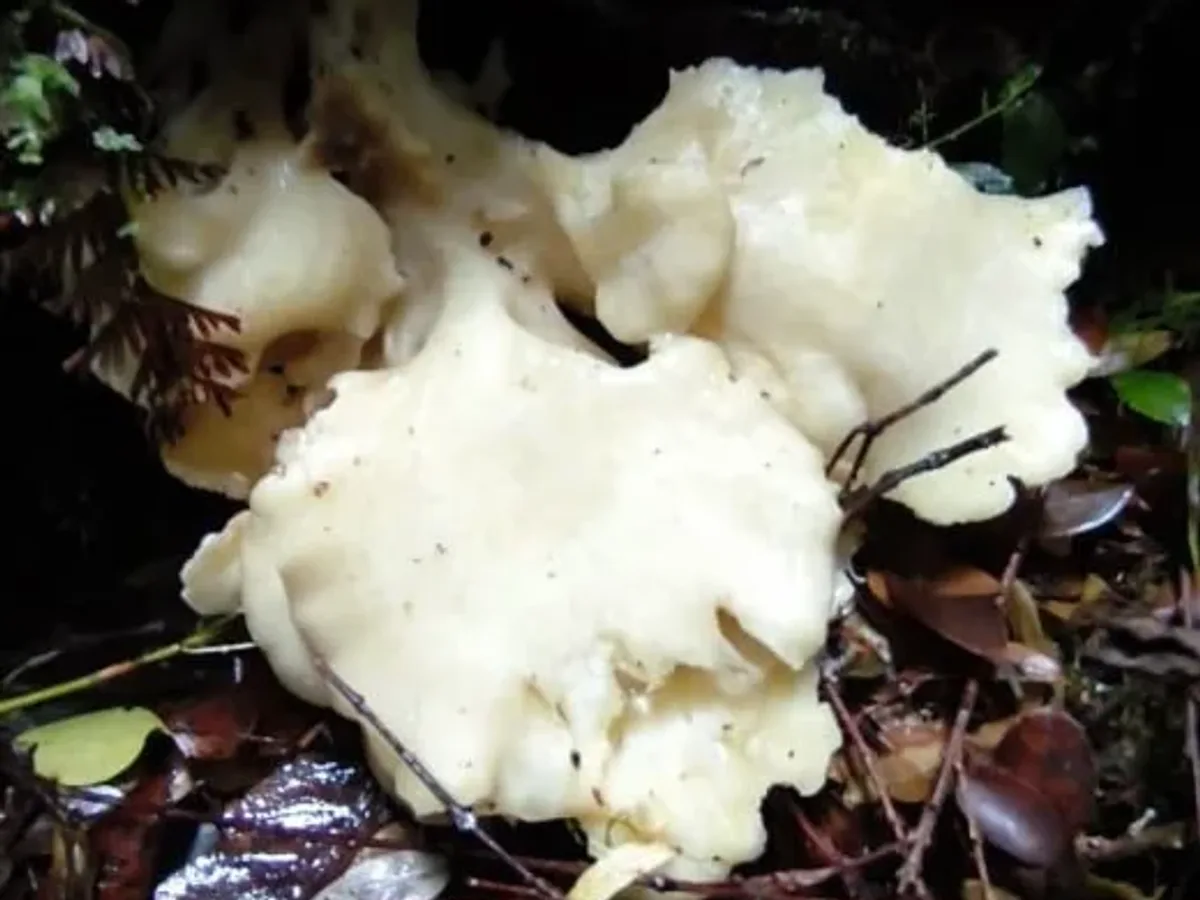
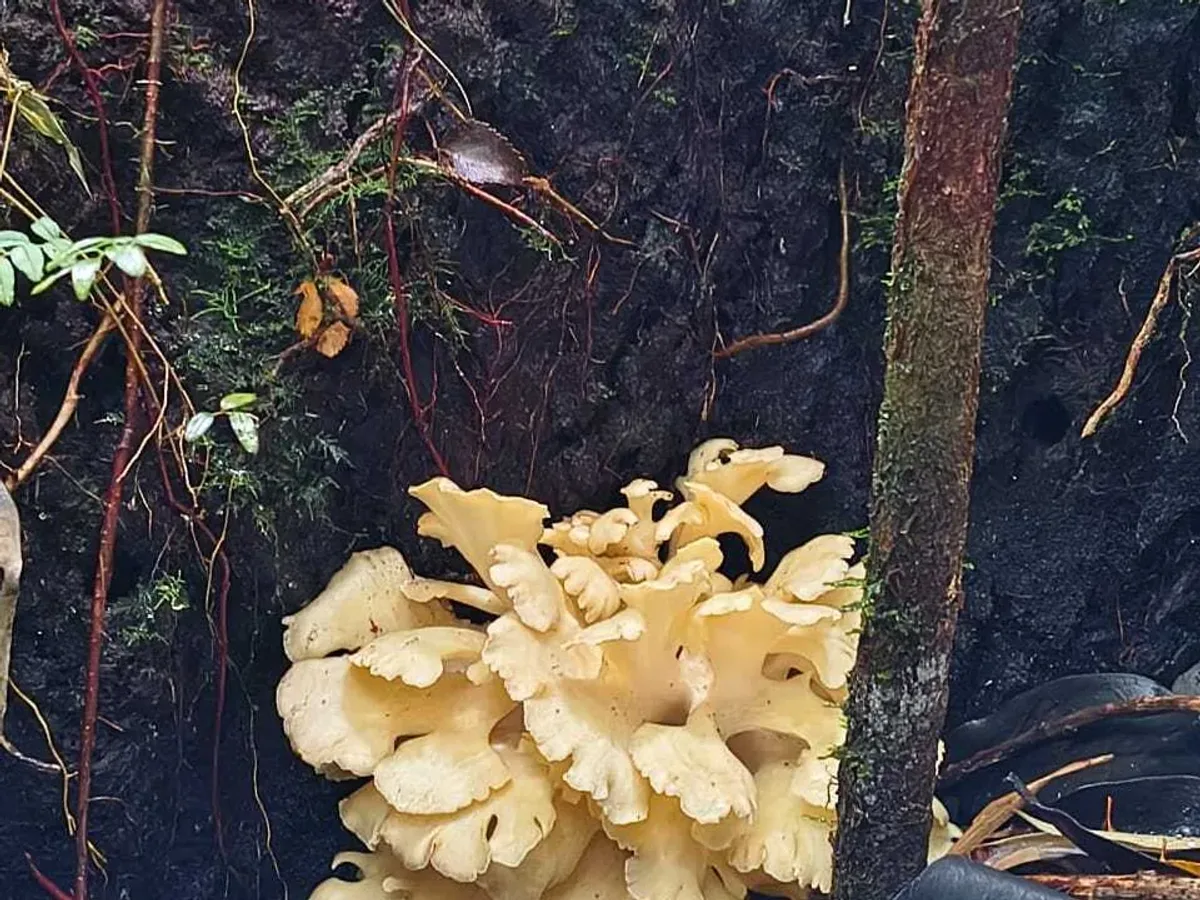
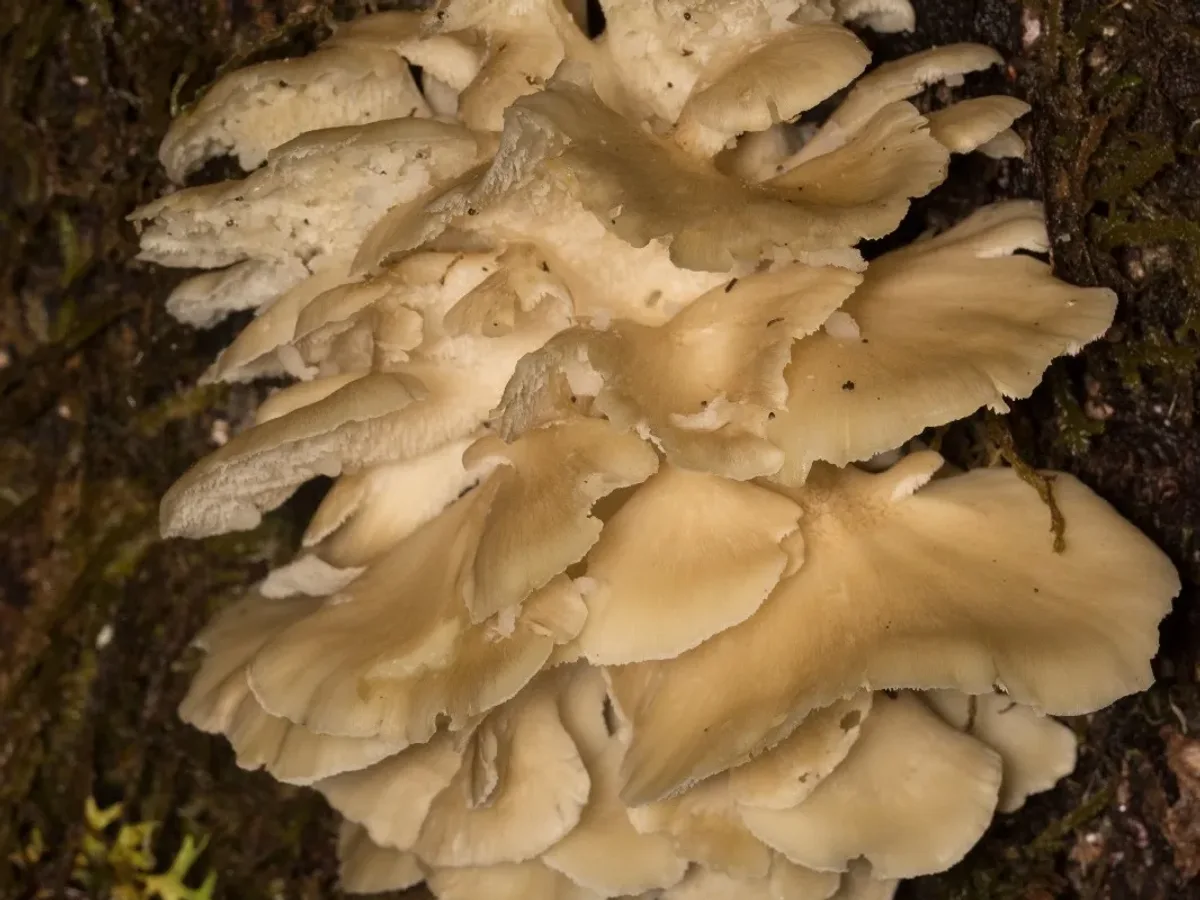
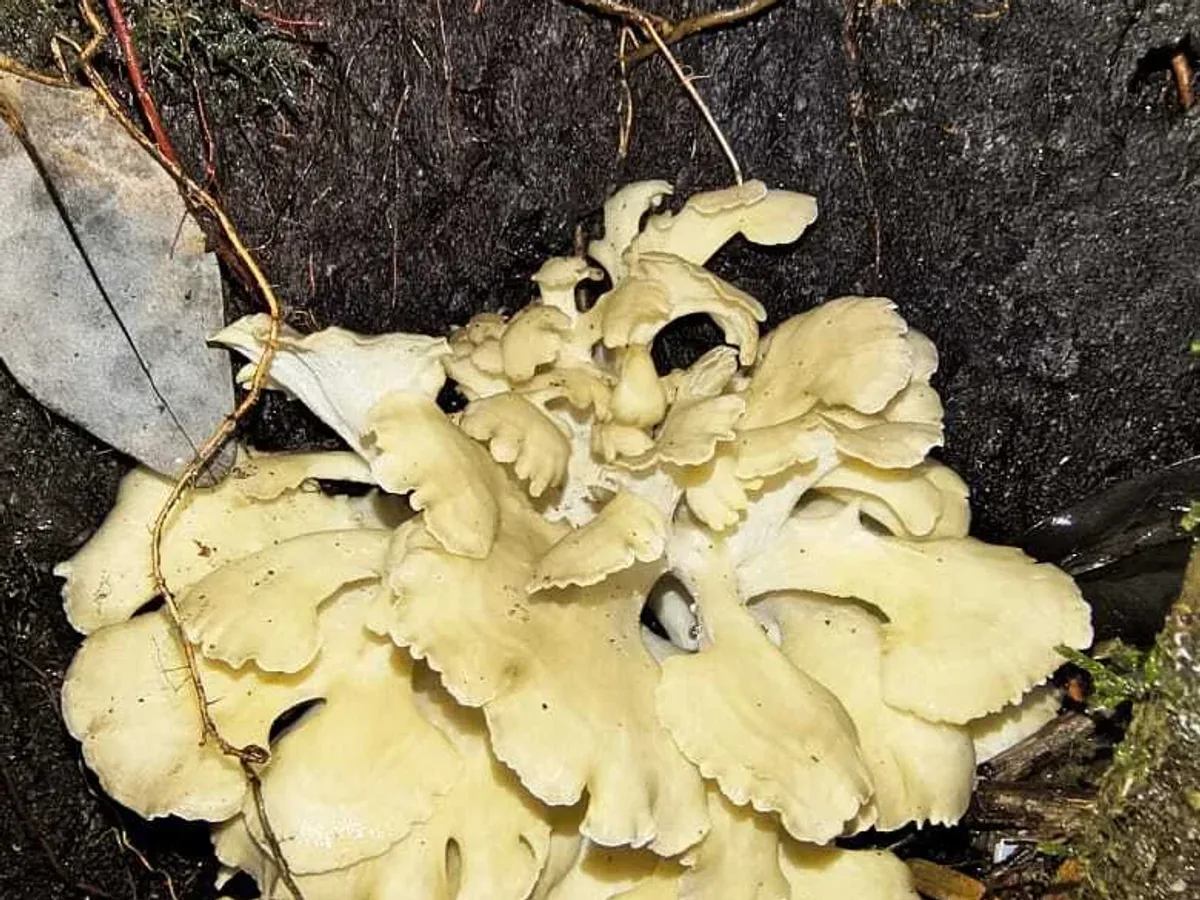
Grifola gargalA fleshy bracket on ageing roble that releases a marzipan-almond scent surviving the pan - one of Patagonia's finest, but Endangered, so pick sparingly.
How to recognise it
A hefty bracket fungus that emerges in overlapping, shelf-like clusters high on the trunk of aging southern beech. The caps are cream to whitish-yellow and fleshy, with a pale porous underside in place of gills. Its most arresting feature is its scent: a strong, sweet almond-and-marzipan aroma that fills the air around the tree and survives the pan.
Where it grows
Grows on aging Nothofagus obliqua (roble) in the cool, wet Andean-Patagonian forests of Chile and Argentina. Look for it on standing trunks and large branches in the humid valleys of the Biobío, Araucanía, Los Lagos, and Aysén regions in Chile, and near Bariloche in Argentina.
Cooking
Fried/sautéed so the almond aroma comes through, in creamy sauces, soups, and risotto; treated culinarily like maitake. In Bariloche it appears in dishes at high-end restaurants (ragù, even panna cotta and gin infusion in modern kitchens).
Look-alikes
A close relative; gargal is distinguished by its strong almond/marzipan aroma and its habit of growing on southern beech (Nothofagus).
Closely related sister species; gargal's strong almond scent and growth on southern beech are characteristic.
 LoyoLoyo
 LoyoLoyoLoyo
Loyo
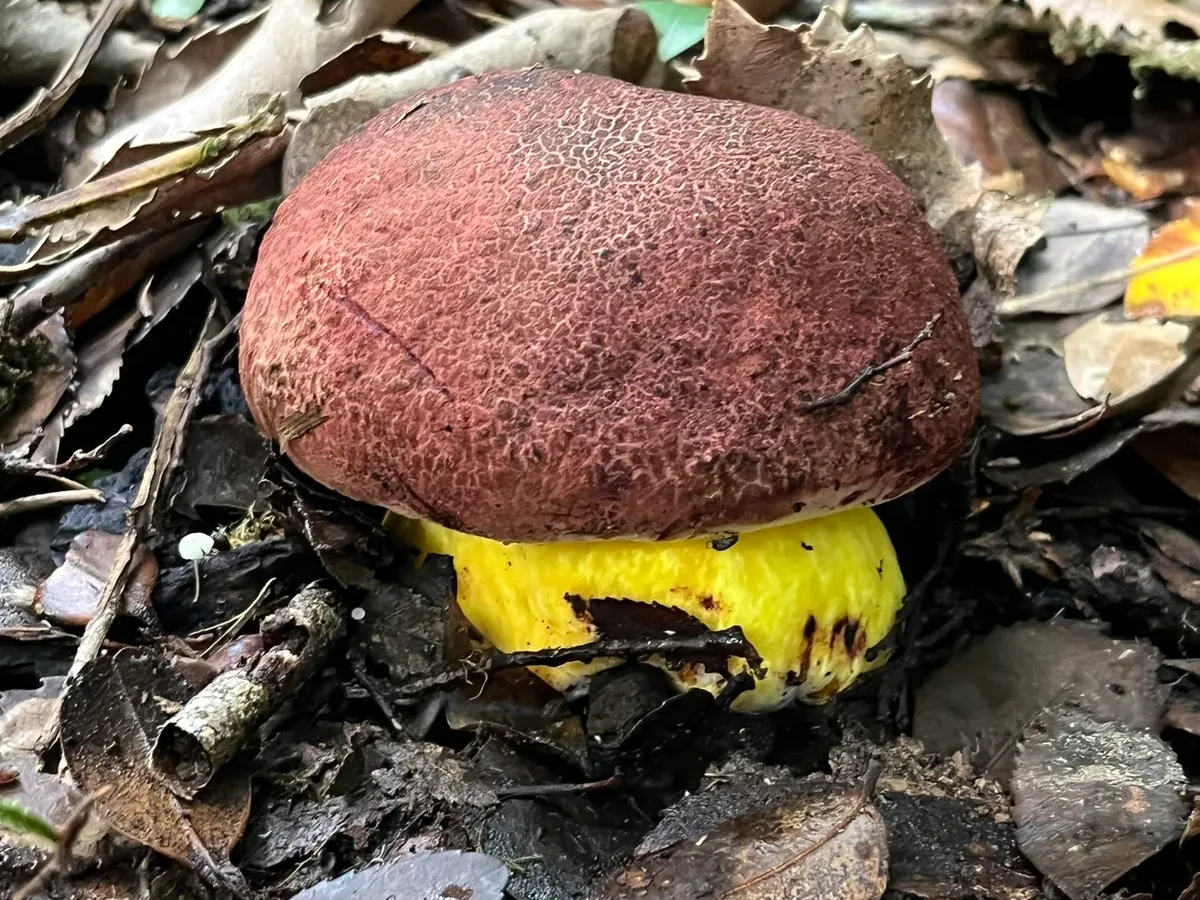
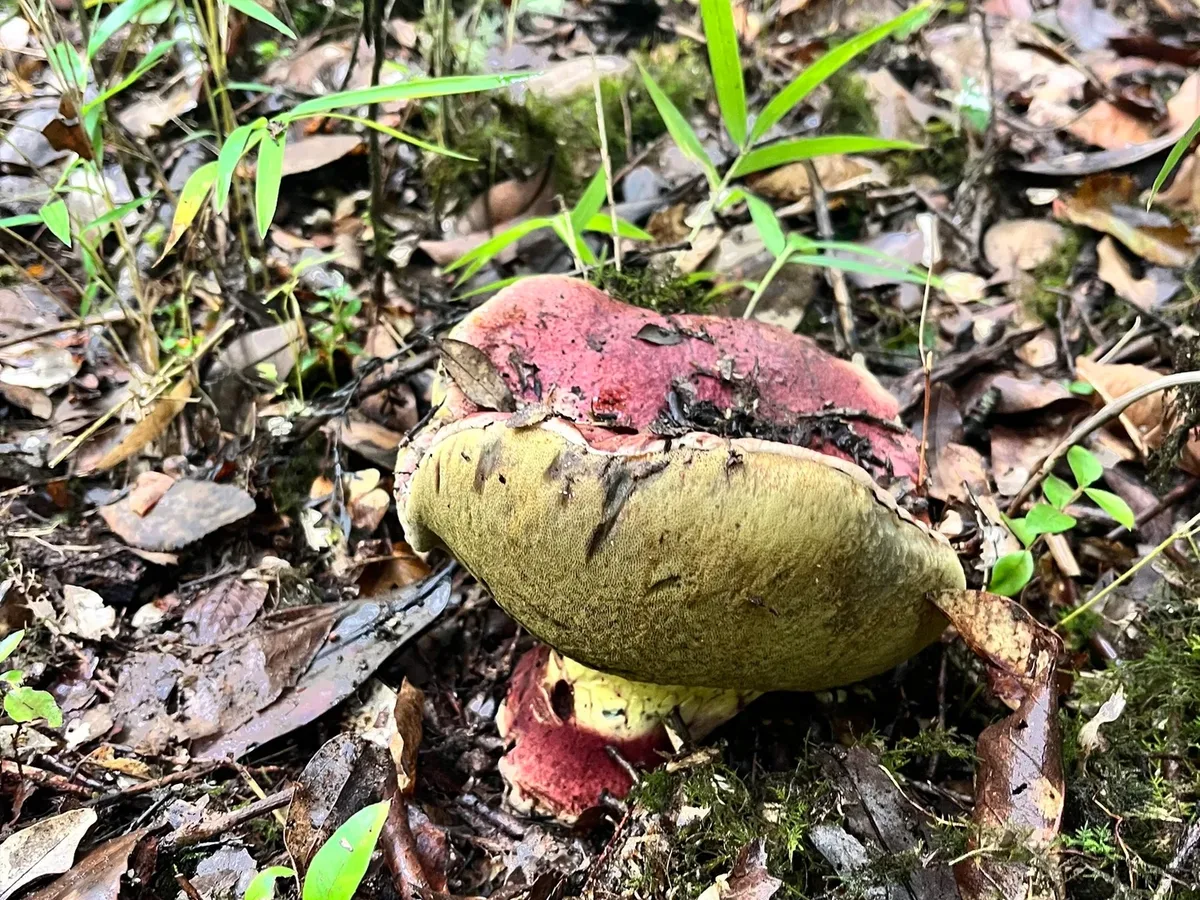
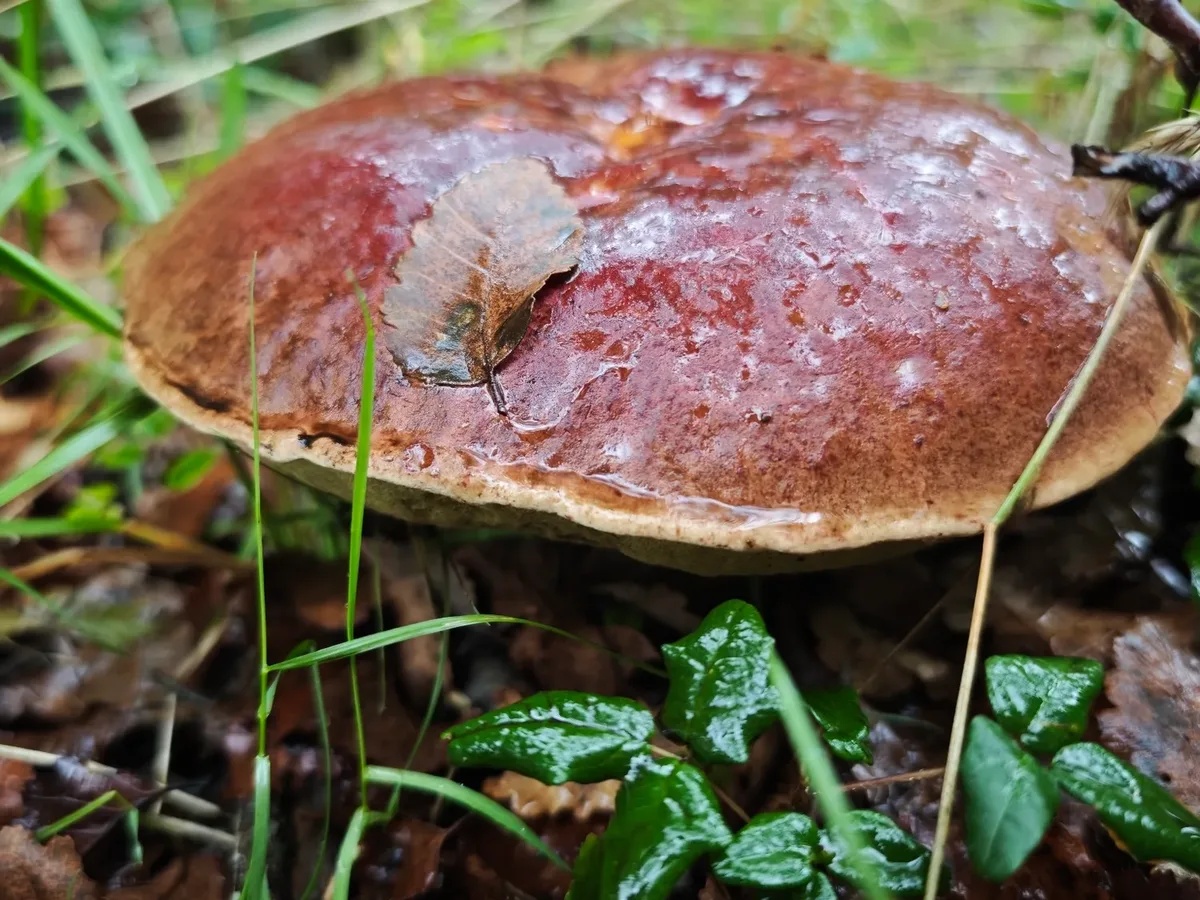
Butyriboletus loyoChile's 'porcini of the south,' a huge dark-red bolete sacred to the Mapuche - but Endangered and impossible to cultivate, so pick very sparingly or not at all.
How to recognise it
A hefty, cushion-capped bolete reaching 6-35 cm across - sometimes weighing several kilograms. The cap is smooth and dark reddish-brown with a pale yellowish base, turning slightly sticky in wet weather. Cut the flesh and it may flush blue within seconds: a reliable if startling field mark.
Where it grows
Grows only in Chile - from the Maule region south to Los Lagos - living as an ectomycorrhizal partner with Nothofagus southern beeches: roble/hualle (N. obliqua), coihue (N. dombeyi), raulí (N. alpina), and hualo (N. glauca). This long-running root partnership ties the loyo completely to these native forests; it cannot survive or be cultivated outside them. Groups sometimes arrange themselves in fairy rings.
Cooking
Treated much like porcini: fry fresh slices in butter, fold into stews, or work into sauces. Traditionally gathered and eaten by Mapuche communities, who have prized it for generations.
Look-alikes
Harmless. The loyo's blue-staining flesh and its growth habit under southern beech (Nothofagus) are characteristic.
 Slippery jack
 Slippery jack
 Slippery jack
 Slippery jackSlippery jackSlippery jack
Slippery jack (callampa de pino)
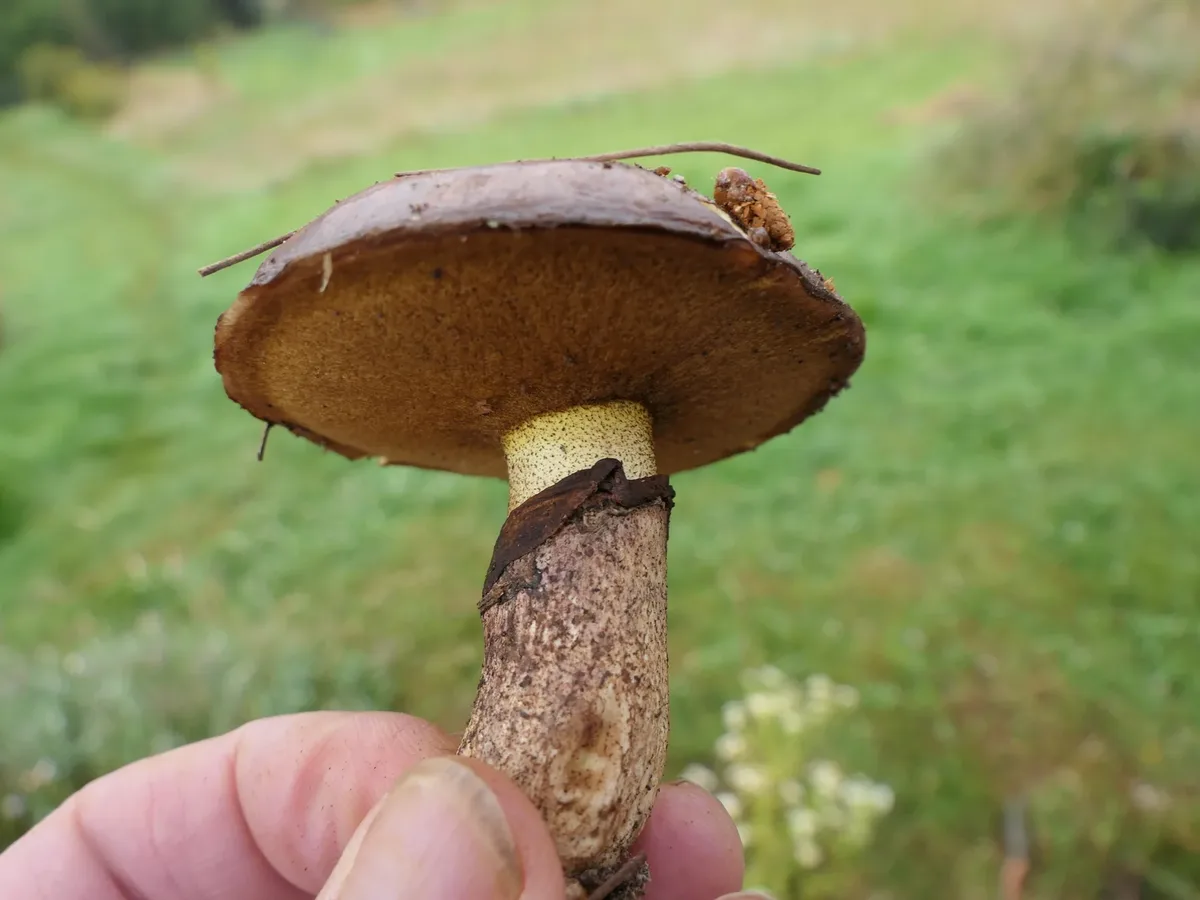
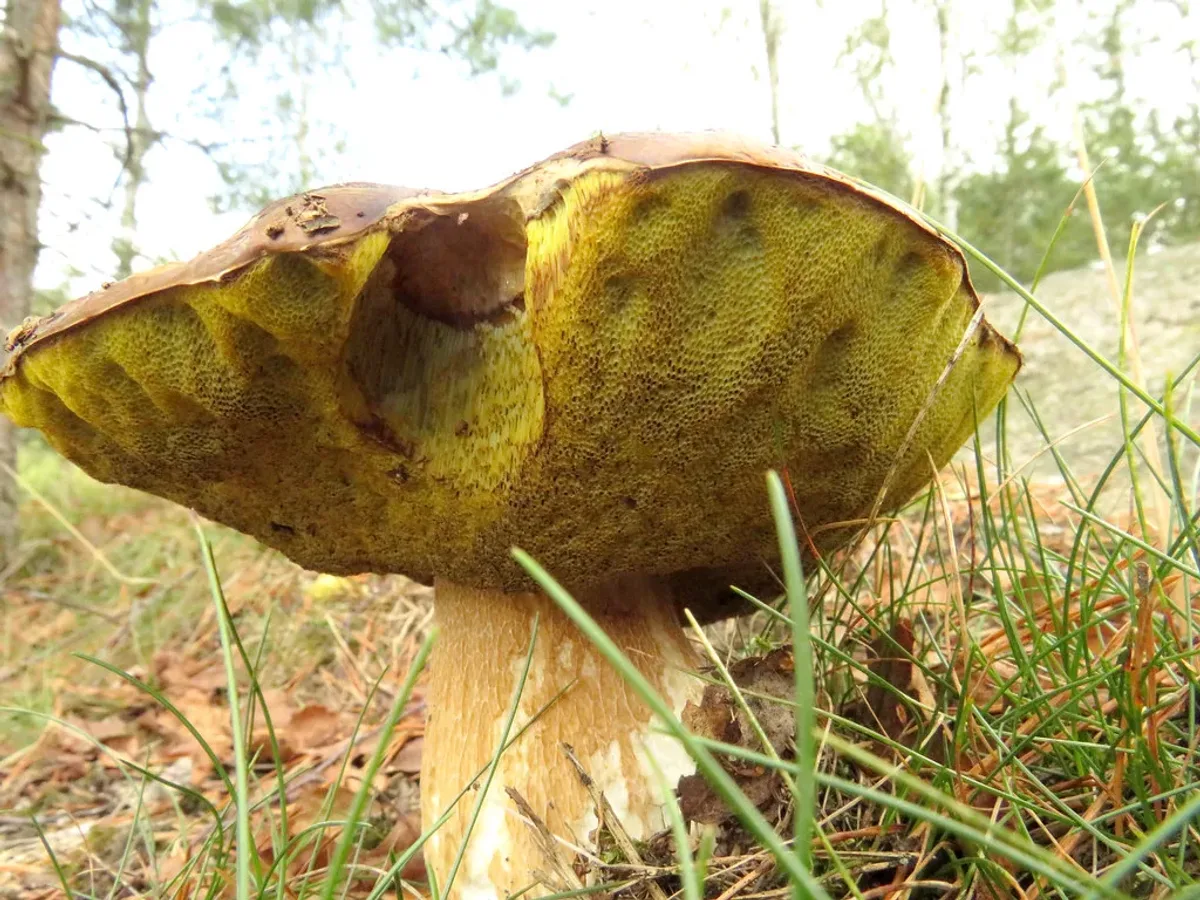
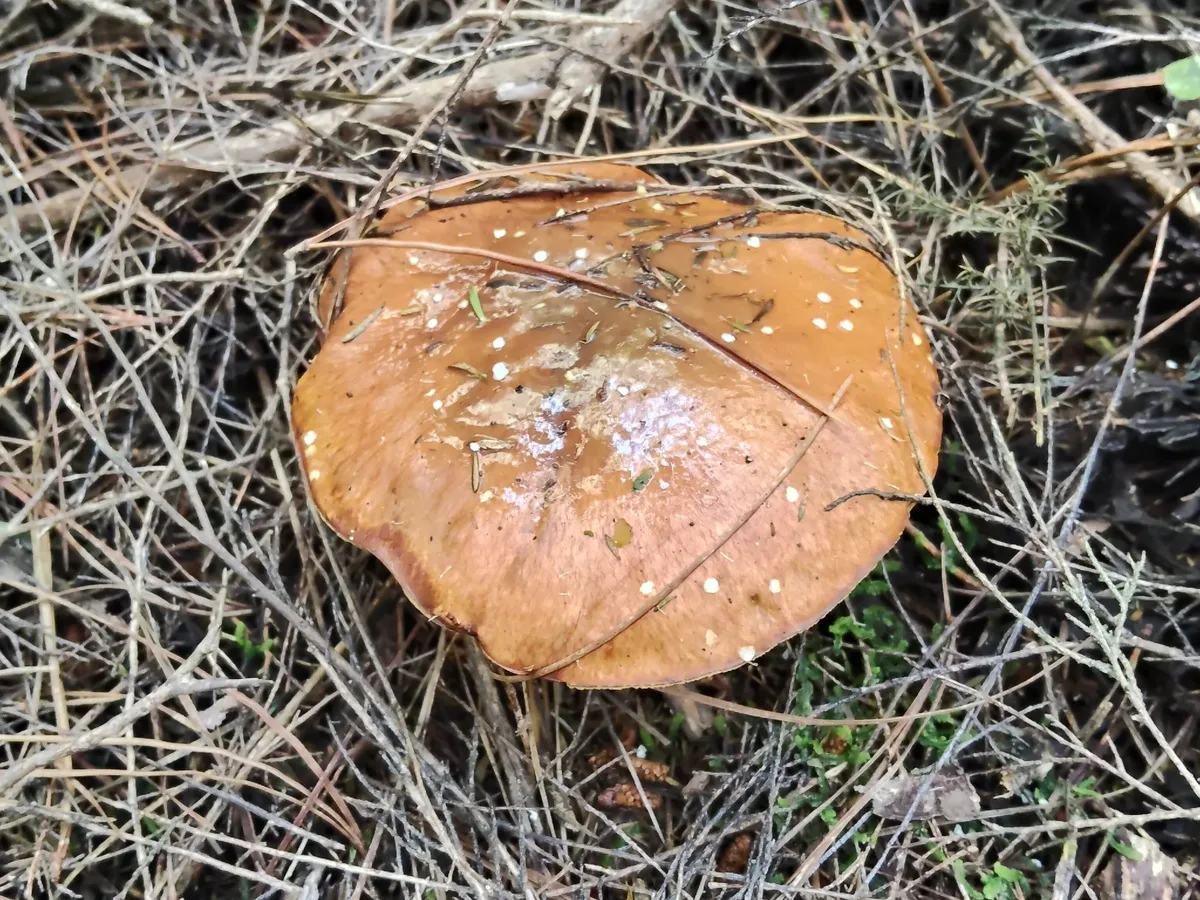
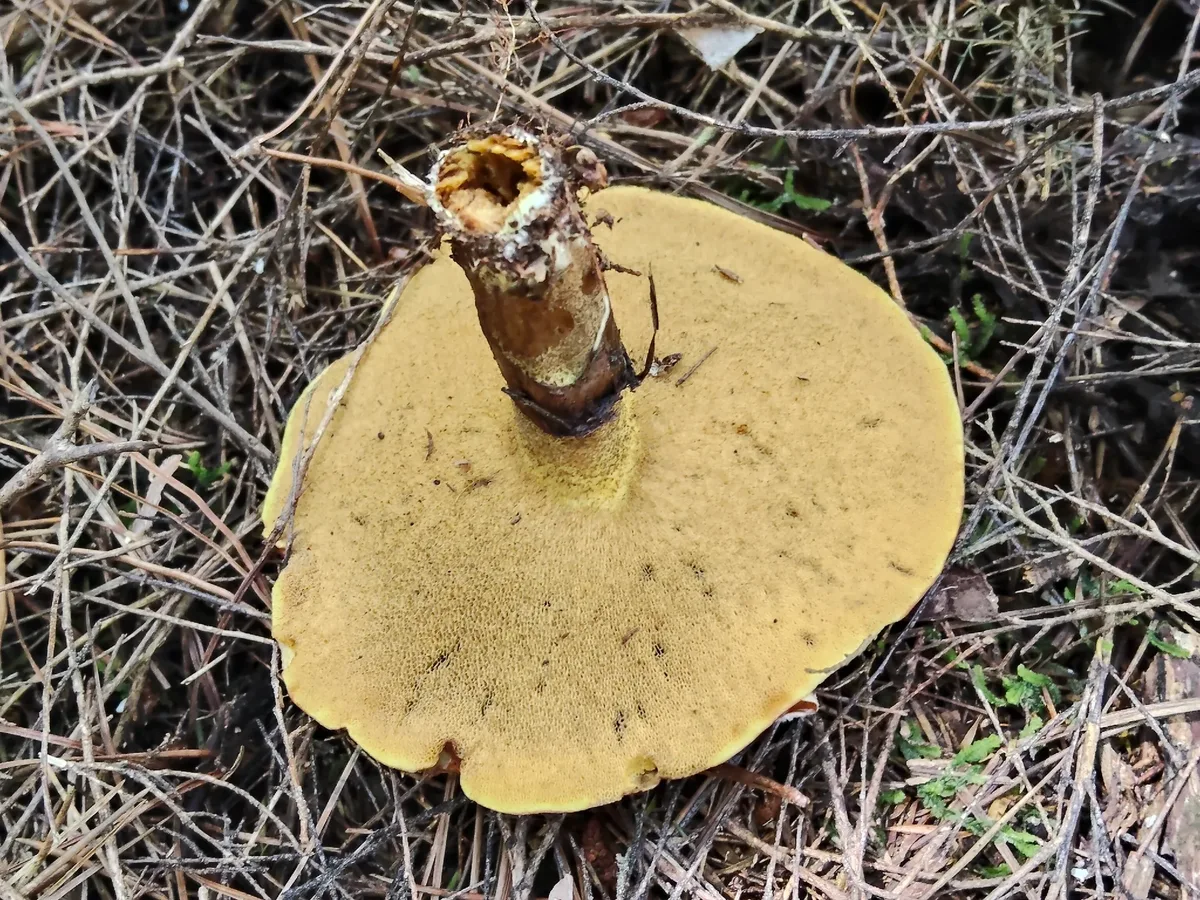
Suillus luteusThe introduced workhorse of Chile's export trade - slimy brown cap and yellow pores under planted pines; peel the slippery skin and dry it like porcini.
How to recognise it
Cap 5-12+ cm, brown to grey-brown or purple-chestnut, the surface very slimy and glossy even in dry weather. Instead of gills it has pores - a sponge-like layer that is pale yellow when young and turns olive-yellow with age. Suillus luteus carries a purple ring on the stem; S. granulatus lacks the ring and weeps white latex droplets from its pores when fresh; S. bovinus has larger pores and less slime. Pale yellow flesh that does not bruise blue.
Where it grows
Found under introduced pines in plantations across south-eastern and south-western Australia - often sharing ground with the saffron milkcap at forest edges - and in New Zealand. The fungus arrived with its pine host and has no natural foothold here without it. S. granulatus favours calcareous ground under Pinus halepensis and Pinus pinea.
Cooking
Peeled and chopped in Asian-inspired soups, fried in butter, in omelettes, pasta, pies. Well suited to drying (crispy golden "half-moons") and blending into umami powder; suitable for pickling.
Look-alikes
Deadly Amanita species can grow under the same introduced trees in plantations. Unlike the bolete-type Suillus (which has yellow pores under the cap and a slimy brown cap), Amanita have gills, a ring and a basal volva.
The combination of a slimy brown cap, yellow pores and pine habitat is distinctive for the slippery jacks; following the beginner rule of picking nothing else avoids confusion.
Other Suillus boletes are also edible; the guide notes there are no dangerous lookalikes.
Edible Suillus that lacks a ring on the stem.
Edible Suillus that grows with spruce.
Edible Suillus that grows with larch.
Edible Suillus with a dry, matte cap and no ring.
 Saffron milk cap
 Saffron milk cap
 Saffron milk cap
 Saffron milk capSaffron milk capSaffron milk cap
Saffron milk cap
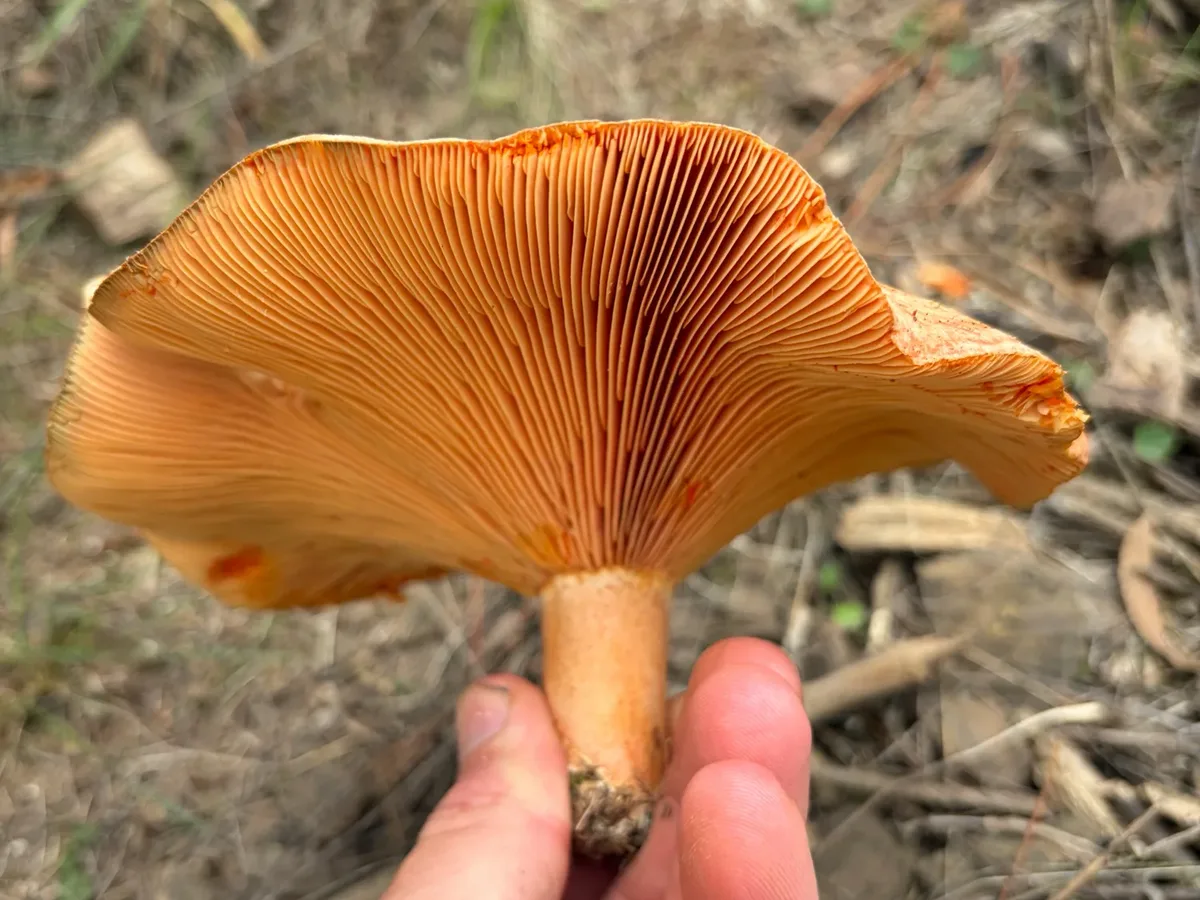
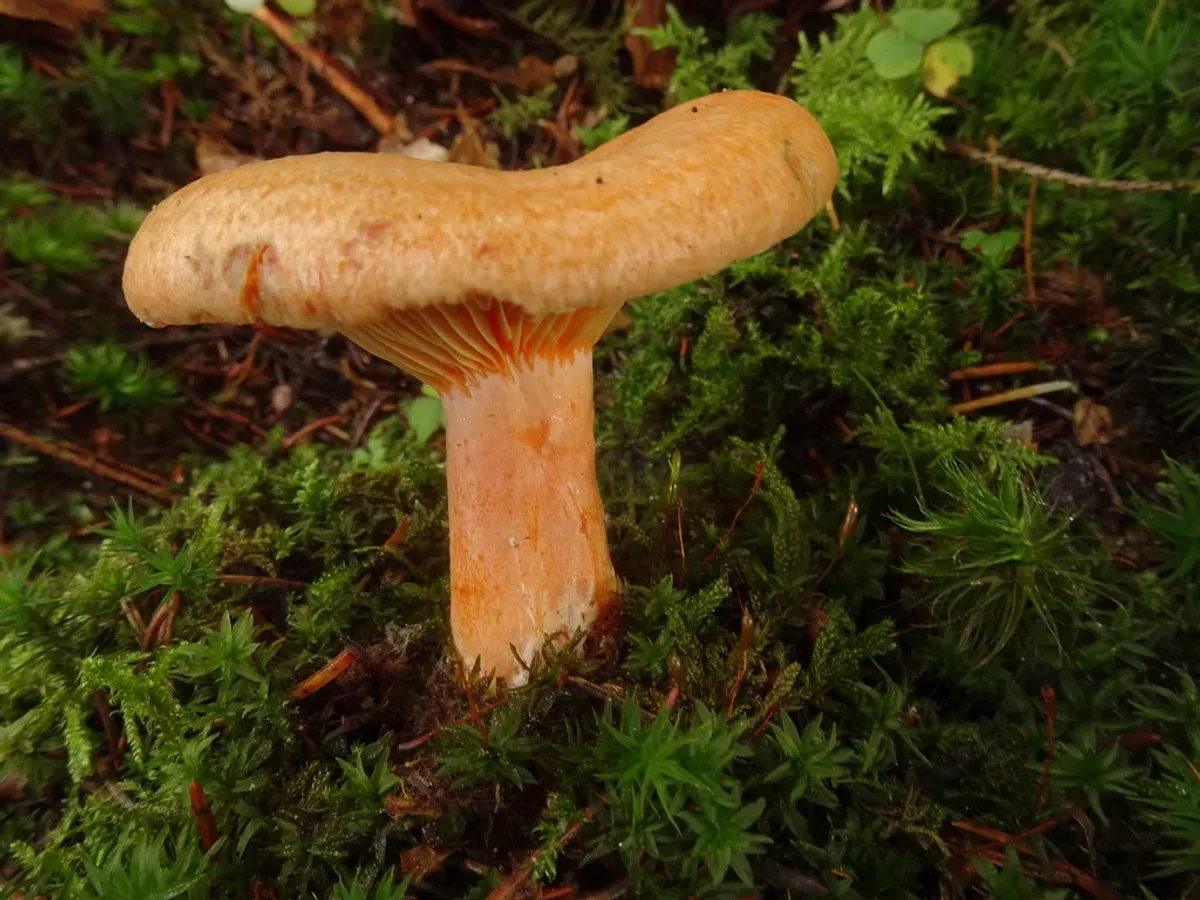
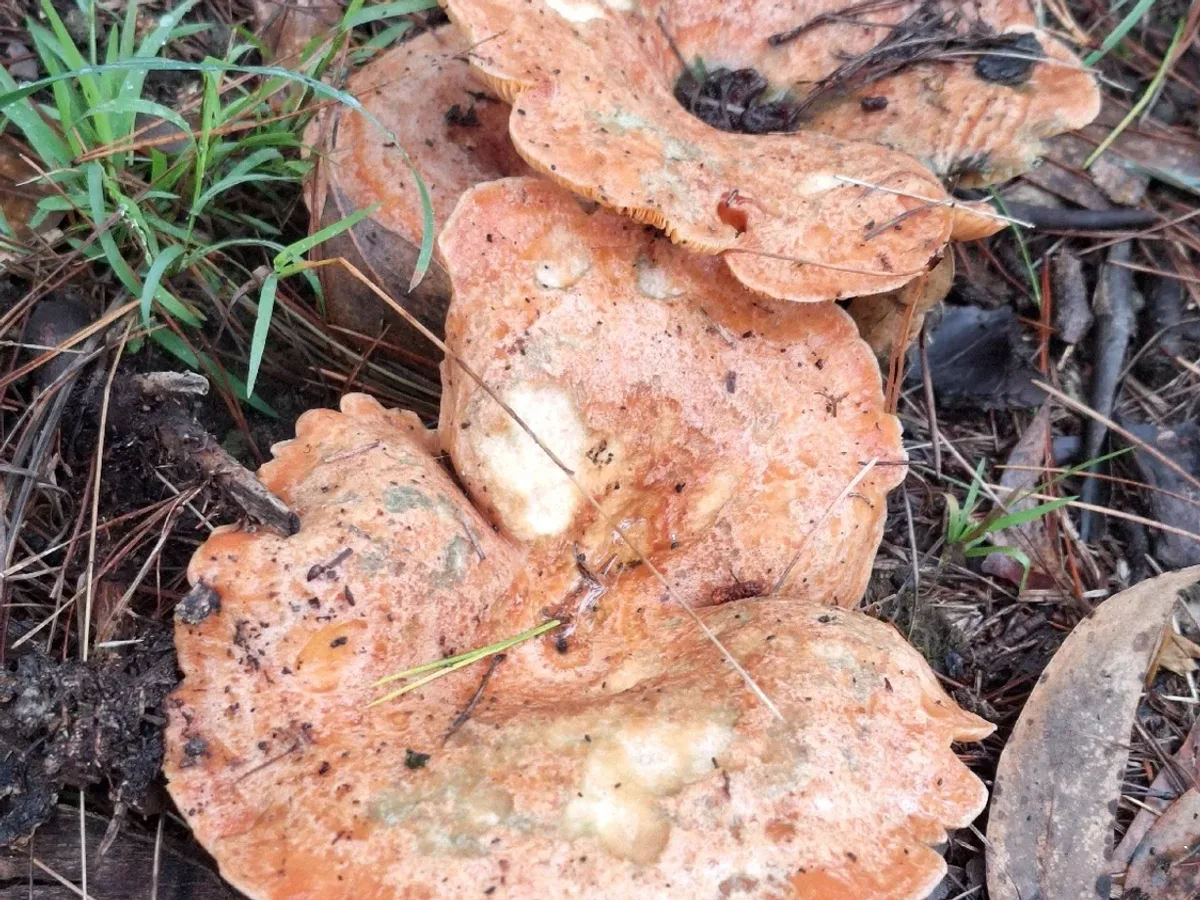
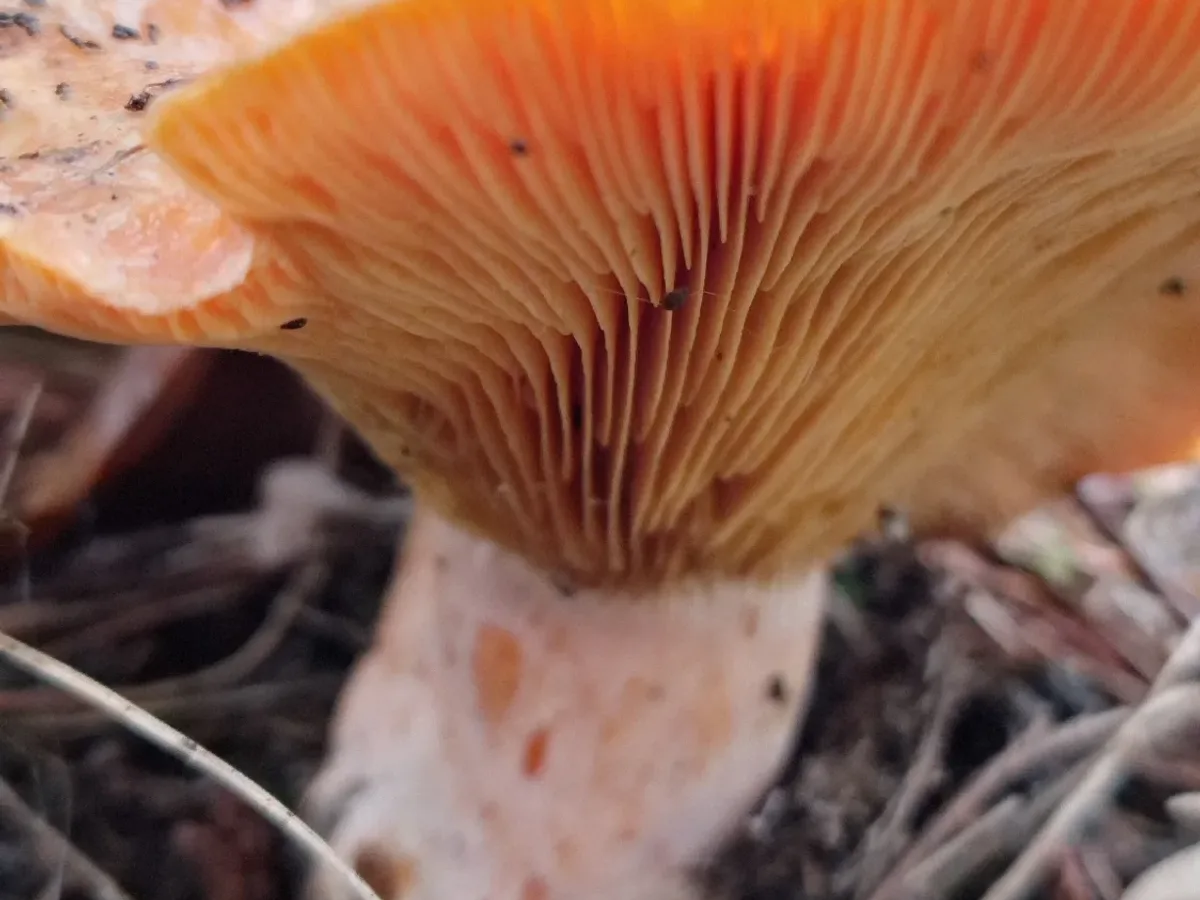
Lactarius deliciosusSafe and easy for beginners: orange cap with concentric rings, bleeding orange latex that slowly turns green - perfect grilled in a pine plantation.
How to recognise it
Cap 6-20 cm, bright orange-gold with darker concentric rings - striking even under the pine litter. Young specimens are convex with the margin curled under; with age the cap opens out to a funnel or vase shape. Gills are orange and densely packed. Cut the stem or break a gill and it immediately bleeds a clear, carrot-orange milk (latex) - the species' unmistakable calling card. Any bruising produces a telltale green discoloration. Stem hollow, 5-8 cm, pitted with orange dimples (scrobiculations). Mild, slightly peppery taste and a pleasant aromatic smell.
Where it grows
Found exclusively under introduced pines (Pinus radiata, P. pinea, P. halepensis) in plantations and pine plantings, on moist but well-drained ground beneath thick pine-needle litter. Key locations: NSW (Oberon, Blue Mountains/Hampton, Jenolan, Vulcan State Forest), Victoria (Macedon Ranges, Mornington Peninsula, Bright), SA (Mt Crawford/Adelaide Hills), Canberra; and in New Zealand under introduced pines. It arrived with the trees and has colonised wherever they were planted.
Cooking
Grill/fry quickly over high heat (otherwise they become "stewed"/tough). A classic Australian preparation: BBQ'd in a forest picnic area with olive oil, garlic, chili, parsley, served with sourdough bread. Also risotto, soup, pie, schnitzel (dipped in egg and breadcrumbs), pickling in oil/brine, drying into mushroom powder/mushroom salt.
Look-alikes
Amanita species lack the saffron-orange milk and have a volva. If the cap spots wash off and there is no orange milk, do not eat.
These lack the clear saffron color and the combination of orange latex, pine habitat and green bruising.
Greenish-tinged and less tasty, but harmless.
All edible. Only milkcaps with orange/red milk are safe here; those with white, burning milk should be avoided.
Lacks milk and grows on wood.
Also edible; like L. deliciosus it shows orange milk, which distinguishes it from bitter milk caps.
Also edible; distinguished from bitter milk caps by the orange milk.
Distinguish the edible saffron milk caps from bitter milk caps by the carrot-orange milk.
Has white/pink latex and a woolly (shaggy) cap margin, unlike the orange/red milk and smooth margin of the edible milk caps. Avoid it.
The orange latex and its greening reaction are reliable distinguishing features.
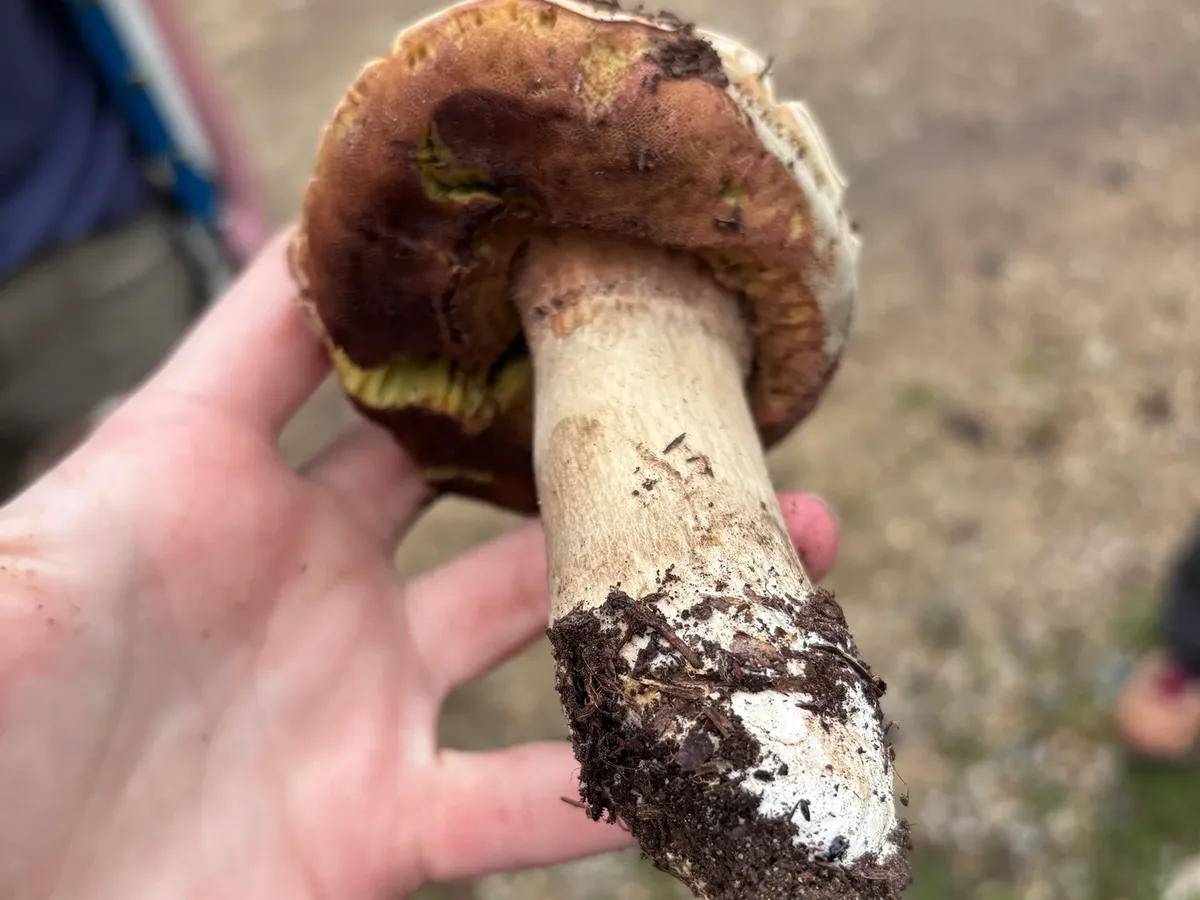 Cep
Cep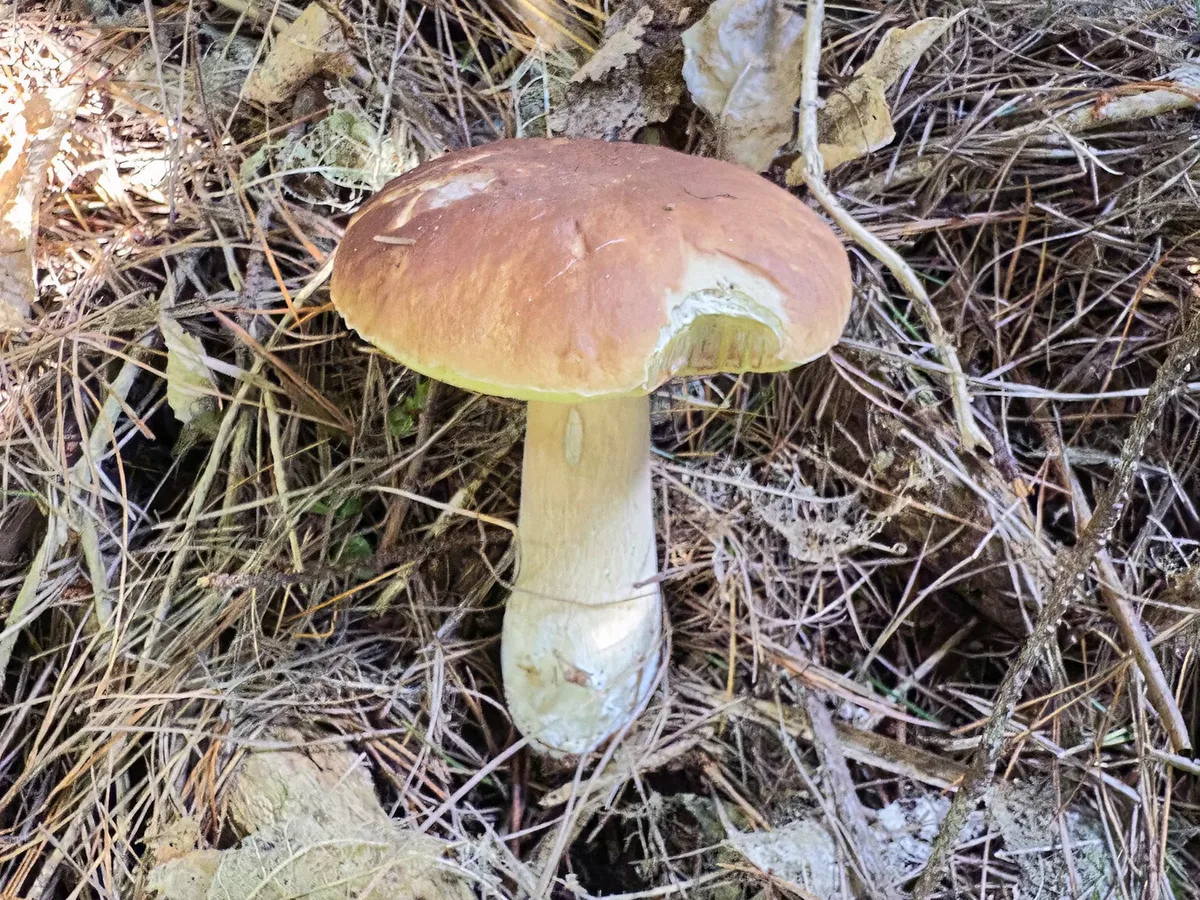 Cep
Cep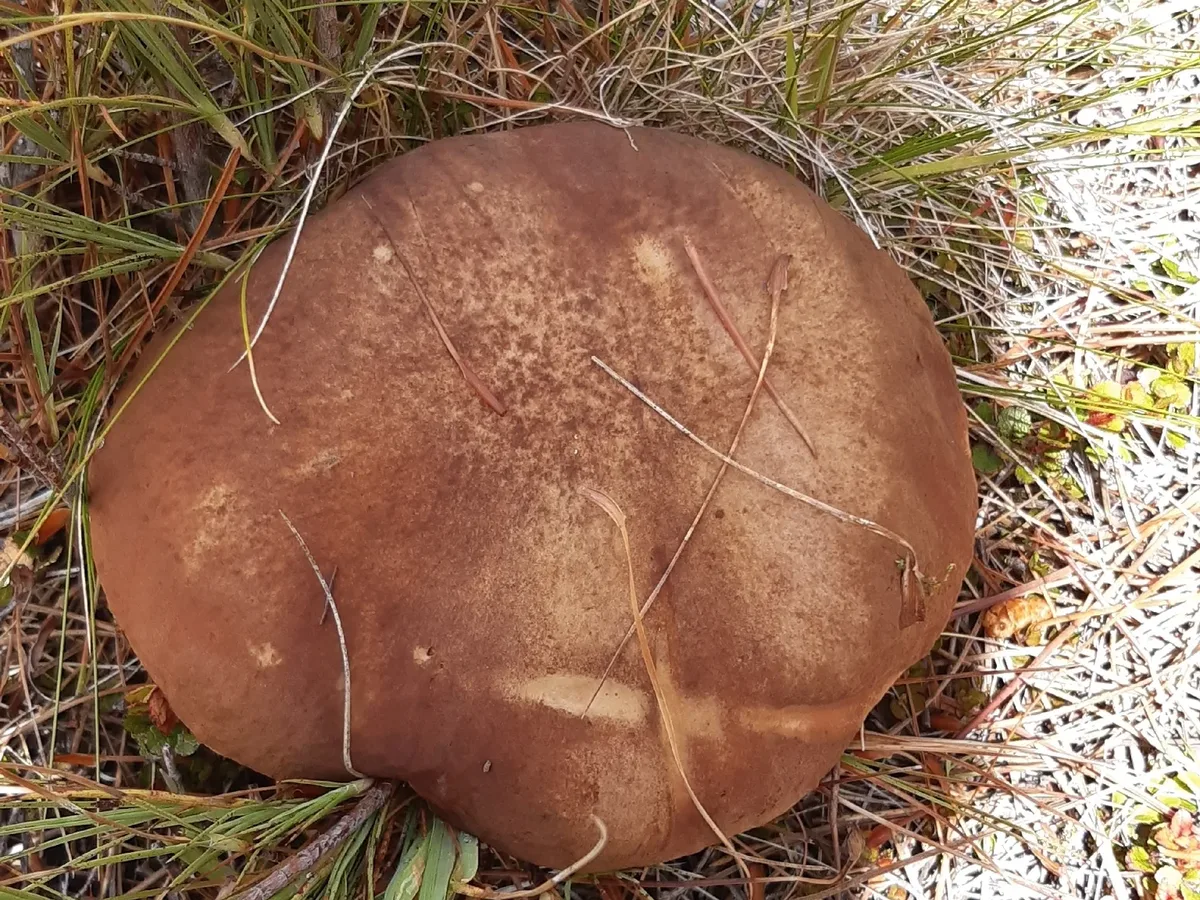 CepCepCep
Porcini
Boletus edulisIntroduced via plantations around Bariloche; the white net on the stem and non-bluing pores tell it apart from look-alikes.
How to recognise it
Cap 7-30 cm, brown (penny-bun coloured), slightly tacky when wet, domed when young and flattening out. Instead of gills there is a tube layer (pores) under the cap: white when young, turning yellow-green with age. Stem stout, white to pale brown, club-shaped or bulbous, with a pale net pattern (reticulation) at the top - a key identifying feature. Flesh white, unchanging when cut, with a mild nutty smell and taste. Spore print olive-brown. B. aereus is darker (almost black-brown cap), firmer, and grows in warmer oak/chestnut woodland.
Where it grows
Mycorrhizal with both broadleaf and conifer trees: oak, beech, chestnut, hazel as well as spruce and pine. Thrives at forest edges and in clearings. B. aereus is bound to oak and chestnut on warm, often lime-rich ground in southern/central Europe.
Cooking
Fried in butter is classic. Excellent dried - the aroma intensifies (dry in the oven at 25-30 C for a few hours, then raise to about 50 C until crisp; store airtight). Dried cep is soaked for 15-20 minutes; save the soaking water for stock/risotto. The basis of cepes a la bordelaise and Steinpilzrisotto.
Look-alikes
Bitter taste; dark net pattern on a pale stem and pink pores (the cep has a pale net on a brownish stem with white/yellow pores). Tasting a small piece reveals its bitterness.
Red pores and red stem, bruises blue; poisonous. General rule: avoid boletes with red pores or that bruise strongly blue.
Blues immediately when cut and has red/orange pores. Porcini flesh stays white and does not change.
The white net pattern (reticulation) on the upper stalk and the non-bluing pores distinguish Boletus edulis.
Much of the commercial Chilean "porcini" export is actually Suillus and native boletes rather than true B. edulis; the trade name is applied broadly.
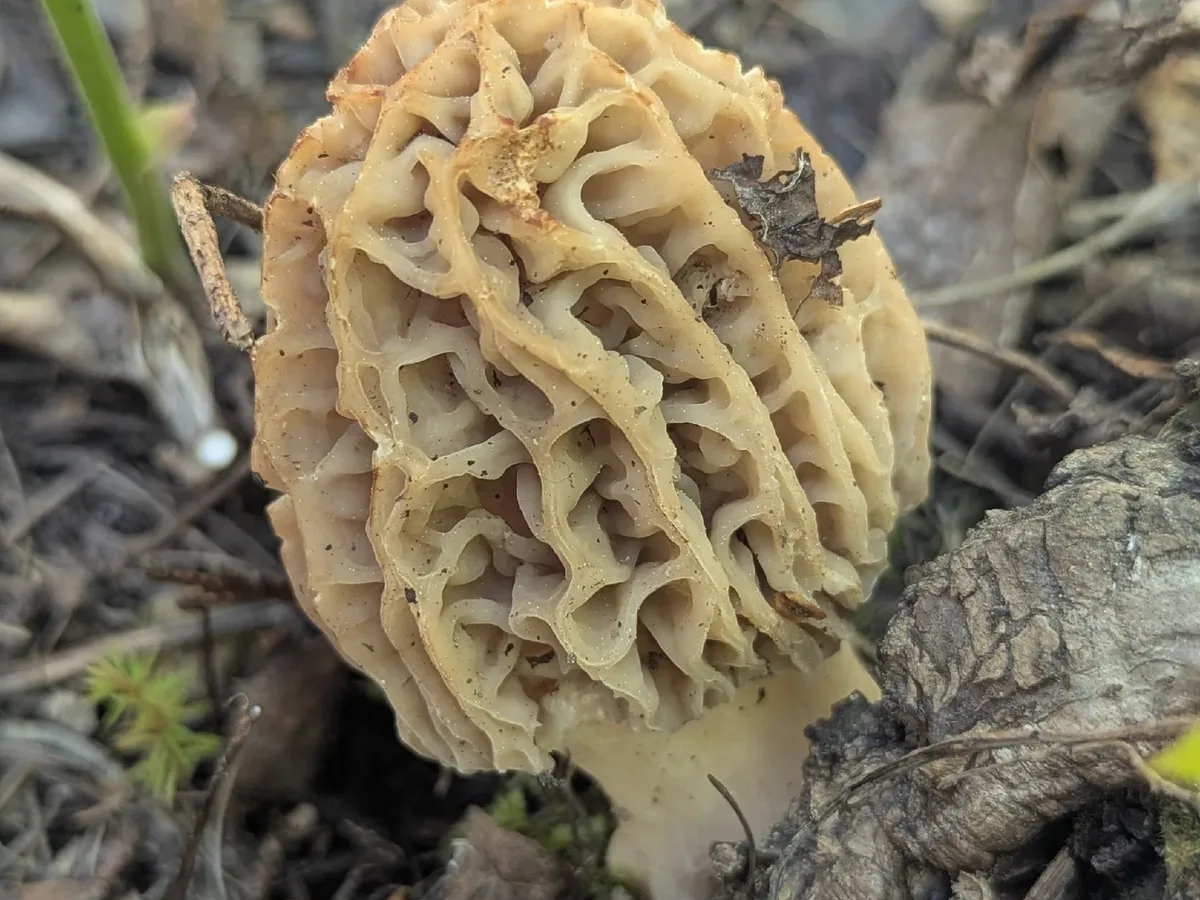 Morel
Morel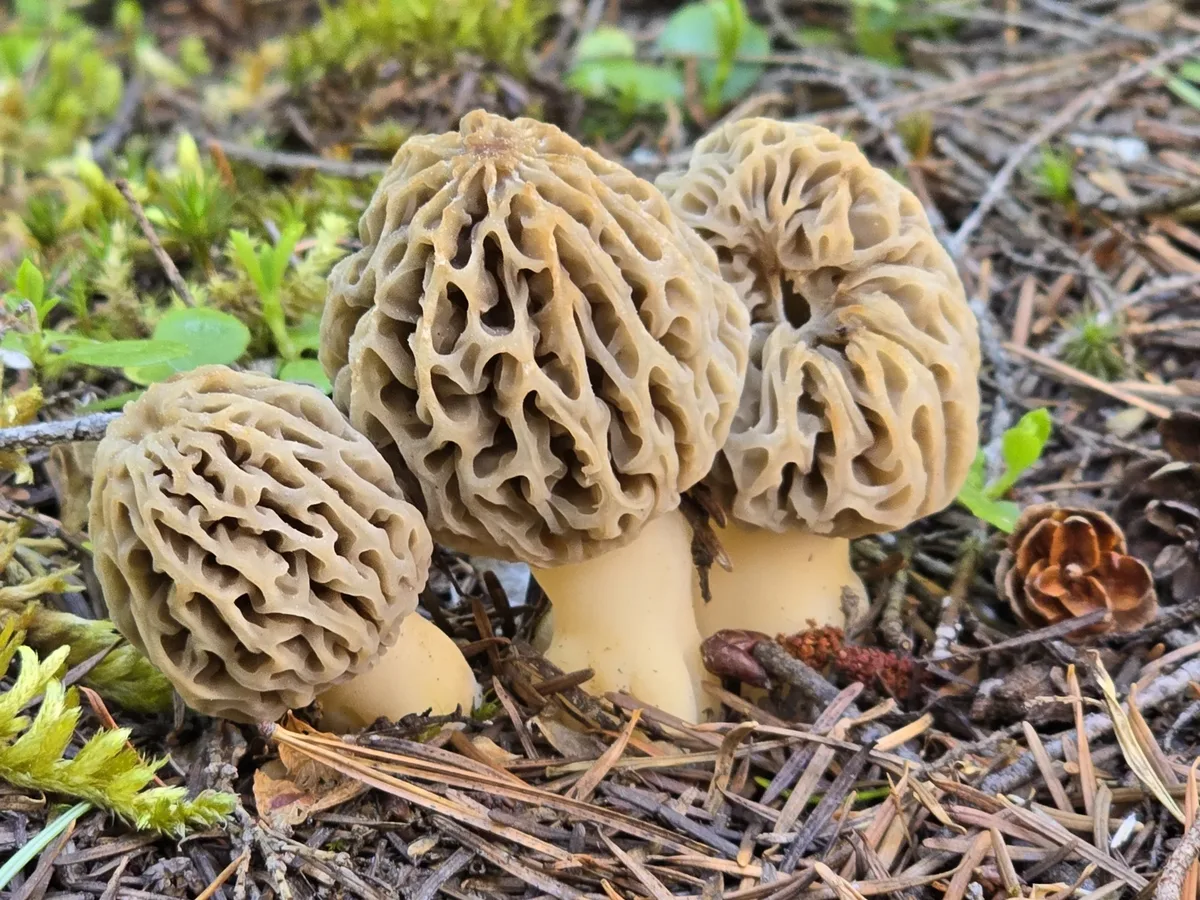 Morel
Morel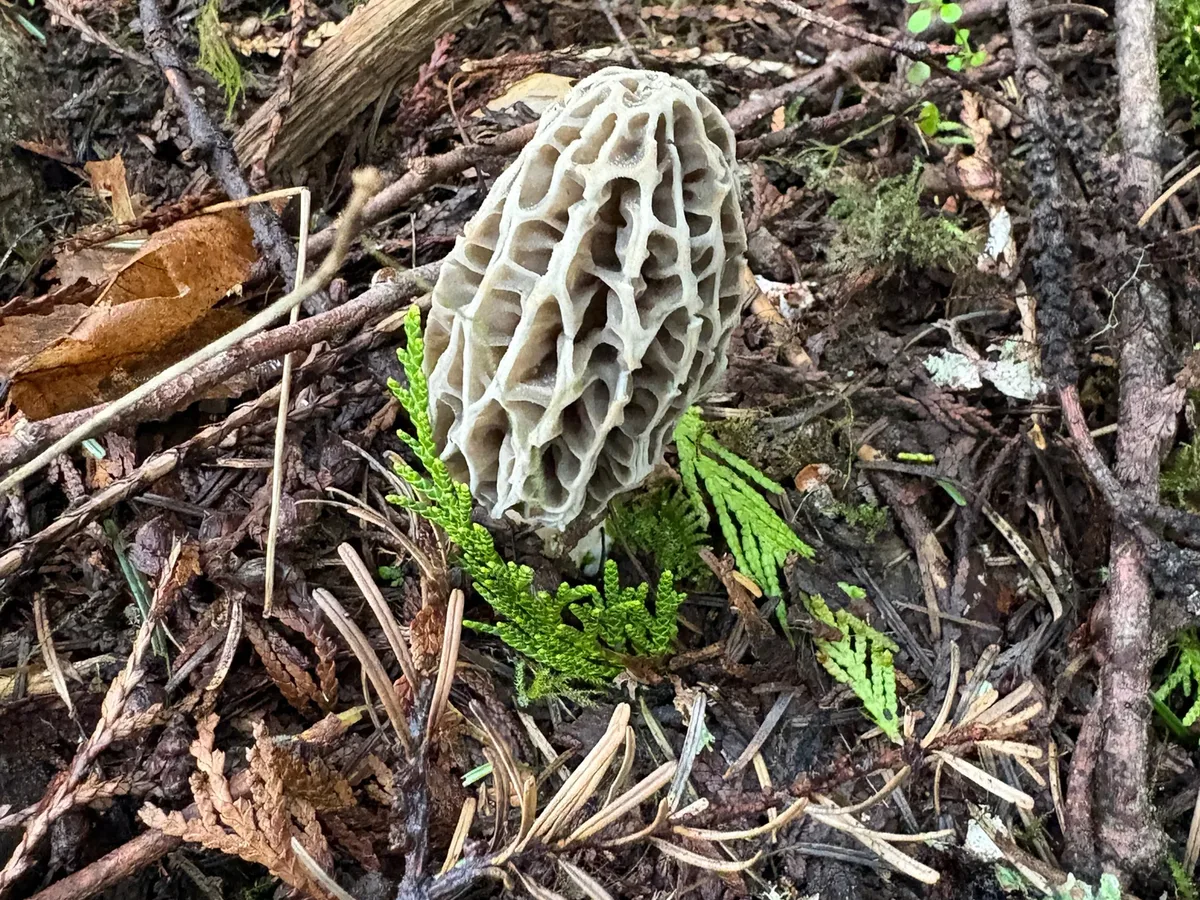 Morel
Morel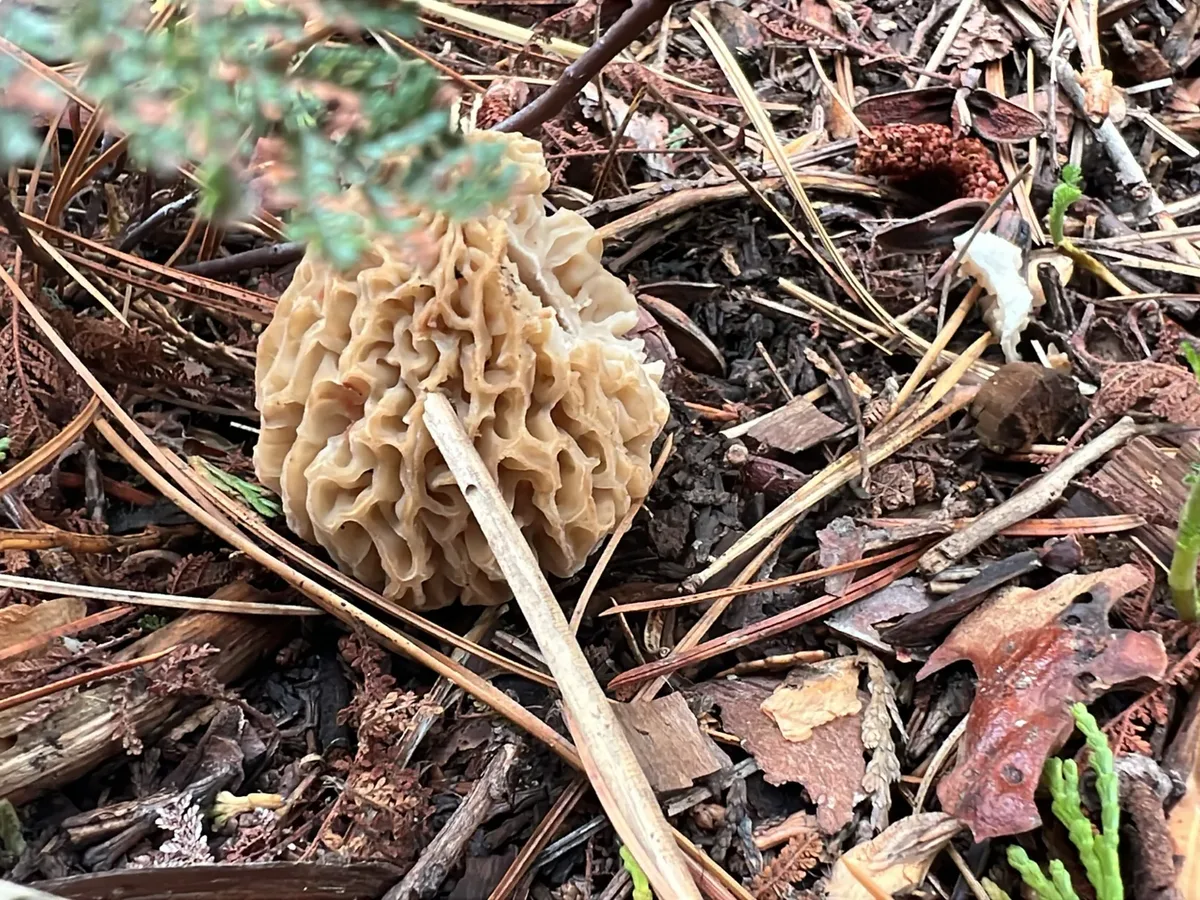 MorelMorelMorel
Morel (colmenilla)
Morchella tridentinaHoneycombed Patagonian morels prized for their beech-linked aroma - always cook them well, and never pick from deliberately burned ground.
How to recognise it
A conical, honeycomb-textured cap covered in deep pits and ridges - colour ranging from pale blond to near-black depending on age and conditions. The cap is fully hollow and attached directly to the stalk, with no loose skirt. The whole mushroom is hollow from tip to base.
Where it grows
In the Patagonian Nothofagus forests (Aysen, Magallanes, the Argentine Andes around El Bolson / Cholila) - often in cypress (Austrocedrus) and southern beech woodland; abundant after forest fires.
Cooking
Always cooked - in cream with tagliatelle, in creamy soups, in stuffed pasta dishes; dried and rehydrated for fish, poultry and meat.
Look-alikes
Poisonous (contains gyromitrin). Resembles a morel but has a brain-like, lobed cap rather than the honeycomb-shaped, pitted cap of a true morel.
 Cow tongue mushroom
 Cow tongue mushroom
 Cow tongue mushroom
 Cow tongue mushroomCow tongue mushroomCow tongue mushroom
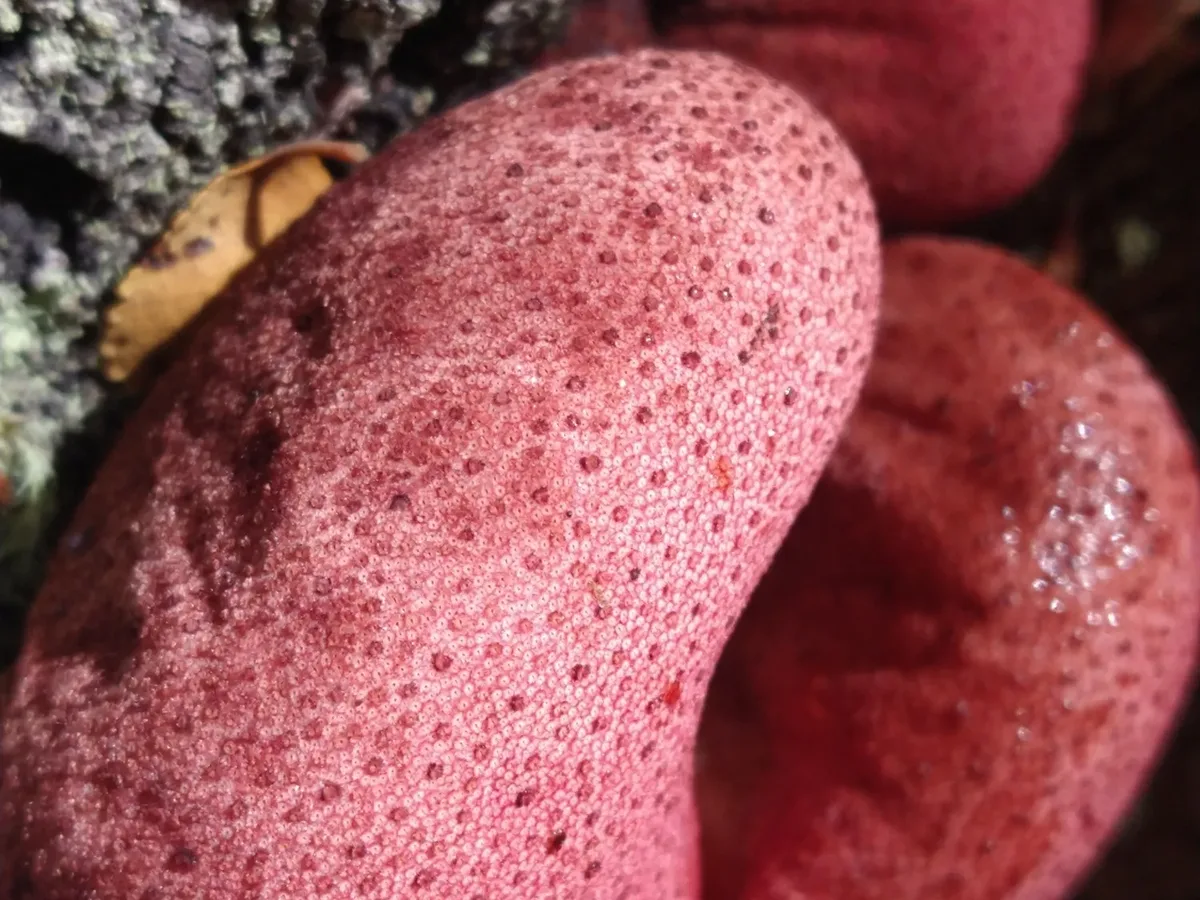
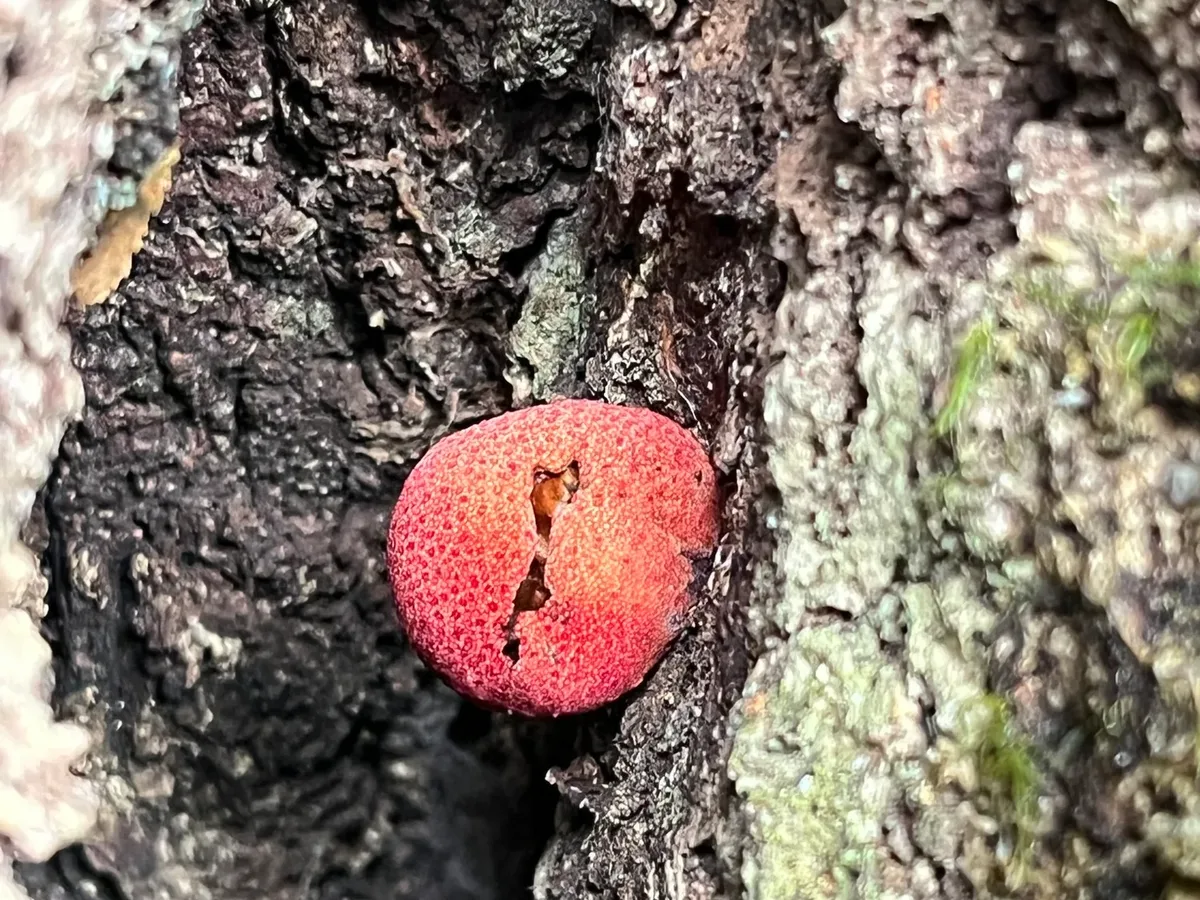
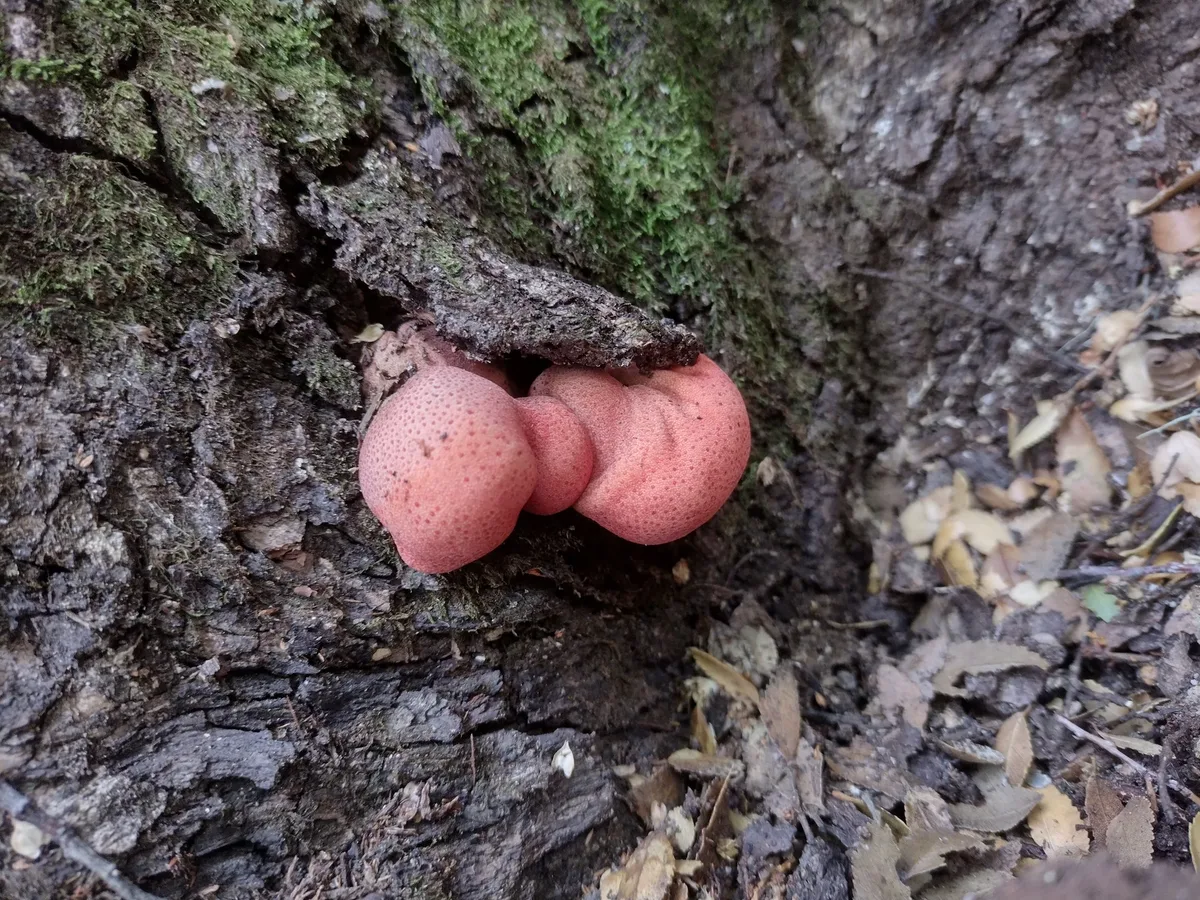
Beef tongue (lengua)
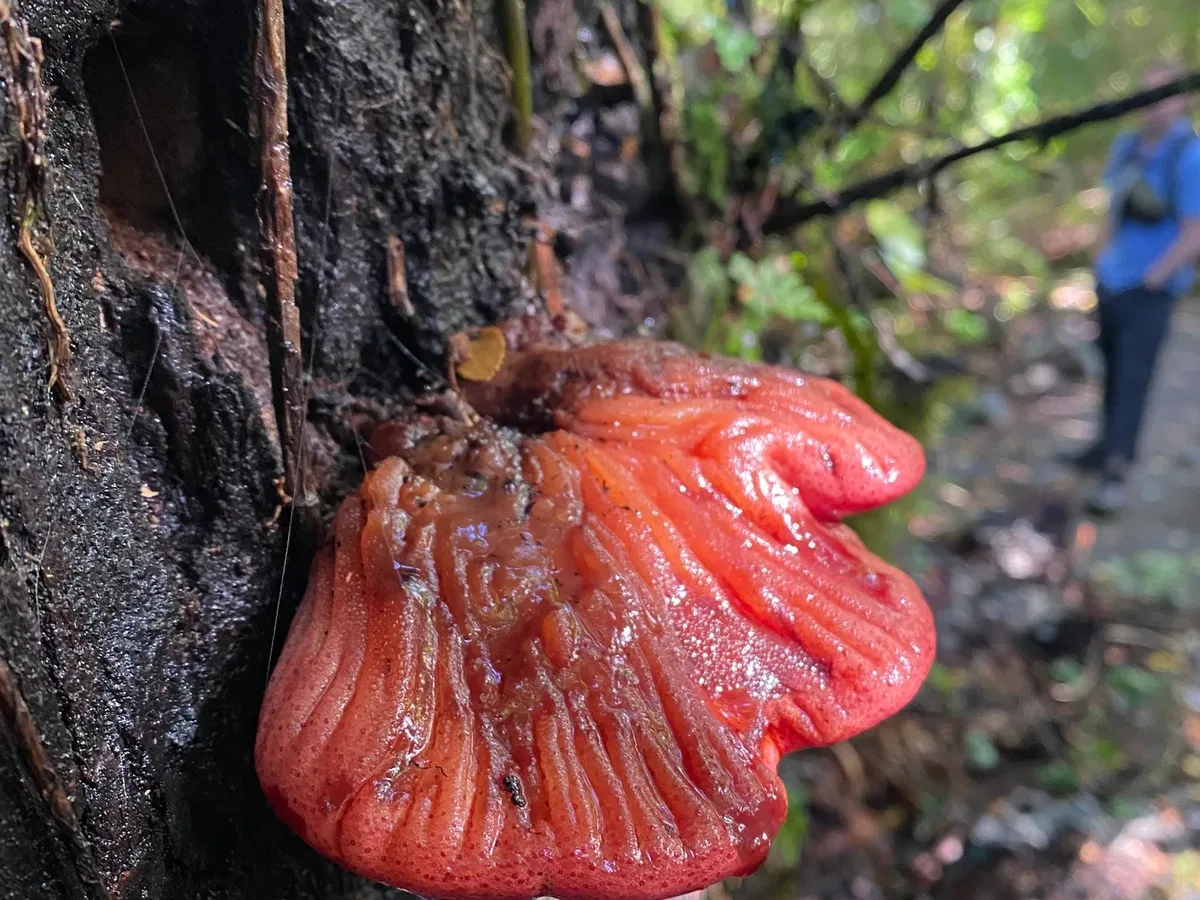
Fistulina antarcticaA reddish, tongue-like wood mushroom that 'bleeds' when cut and is cooked like a steak; soak it first to soften the tartness.
How to recognise it
Changle is a cauliflower- or coral-shaped fungus with vivid yellow branching - hard to mistake for anything dull. Fistulina is a different creature entirely: it clings to the bark like a fleshy tongue or slab of meat, reddish and gelatinous, and when you cut it, it bleeds a deep-red juice. Mild mushroom smell, sweet and slightly acidic taste.
Where it grows
Changle grows in the native forests of southern Chile, from the Biobío region through Los Lagos and southward into Patagonia. Fistulina attaches itself to living or dying Nothofagus trees - roble, raulí, coihue, ñire, and lenga - causing brown rot in the heartwood.
Cooking
Changle is briefly boiled first, then fried with egg, or simmered with onion, chives, cream and white wine; it also turns up stuffed into empanadas. Fistulina's acidity benefits from soaking in water before cooking - after that it handles like a thick slice of meat, whether pan-fried as a steak or added to a slow stew.
Look-alikes
A look-alike of changle (Ramaria flava) that causes gastrointestinal upset. Boil changle for 15 minutes before cooking; correct species identification is required, as some Ramaria cause stomach trouble.
The dangerous ones
 Death capDeath cap
 Death capDeath capDeath cap
Death cap
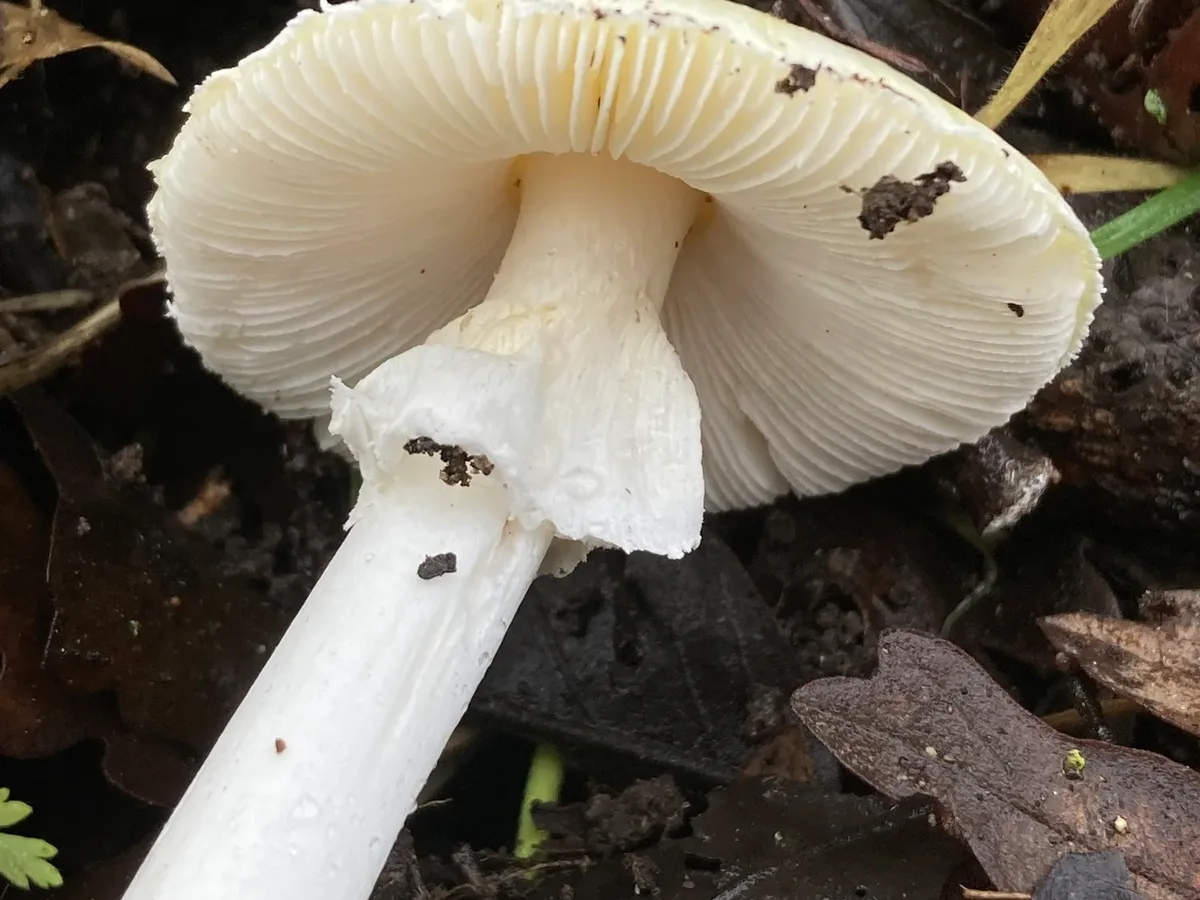
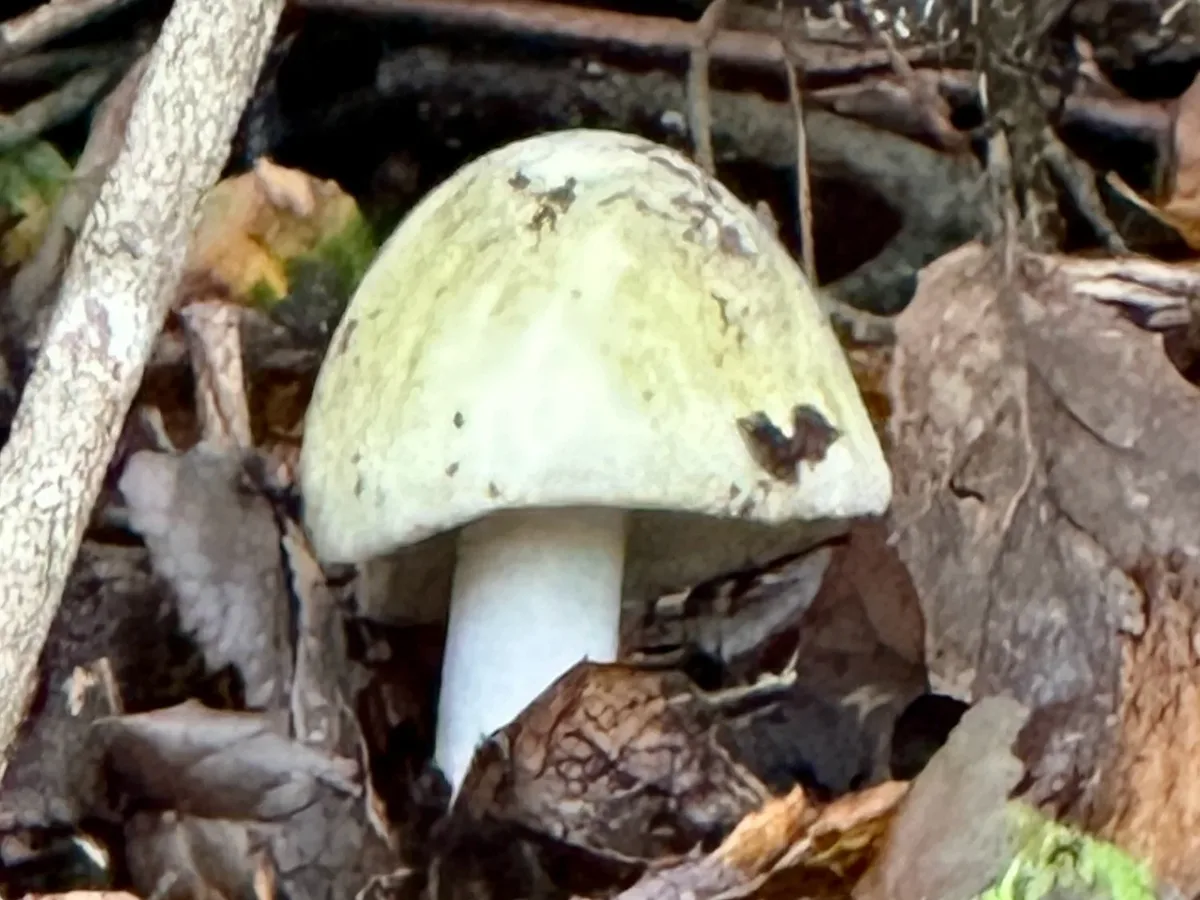
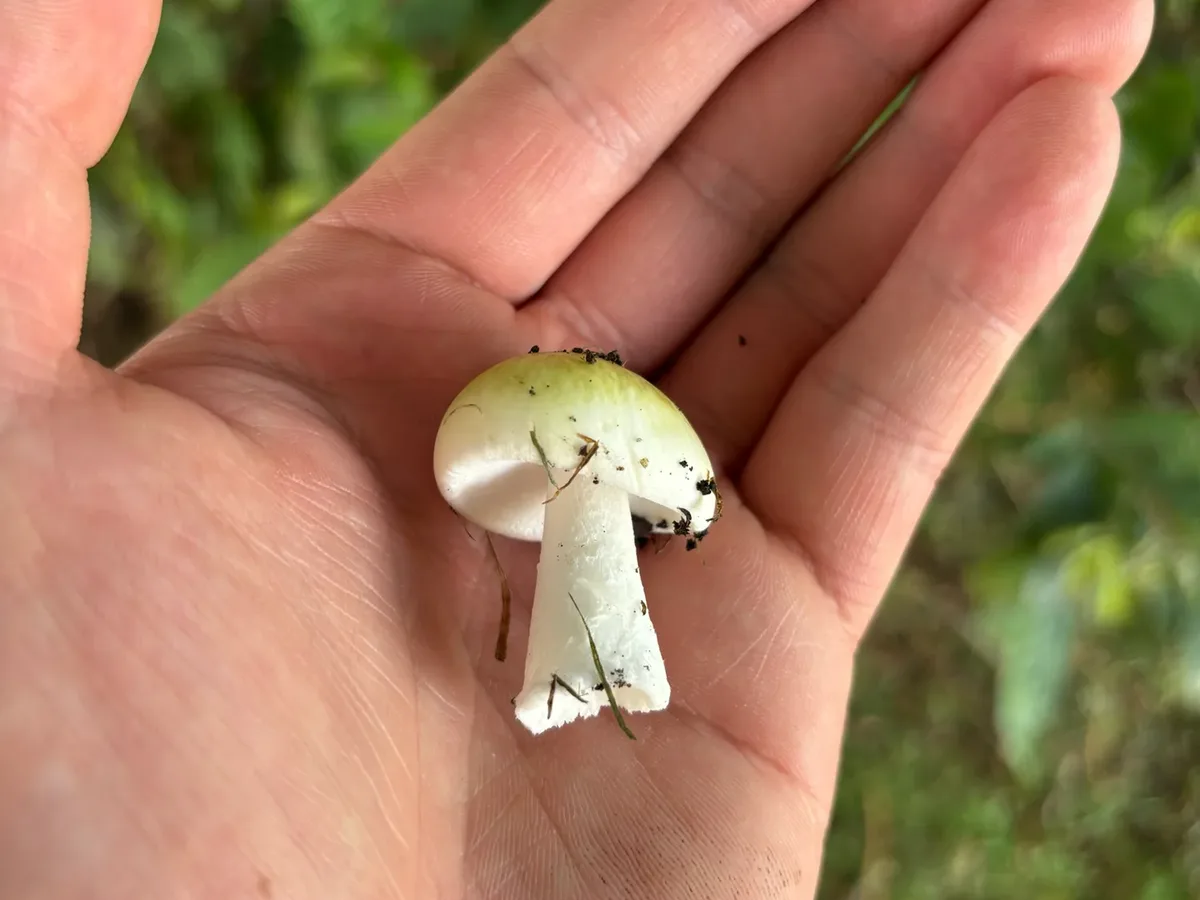
Amanita phalloidesDeadly and introduced: a greenish cap, white gills, a ring and a sac-like volva at a bulbous base. Amatoxins survive all cooking, and symptoms arrive only after a deceptive delay.
How to recognise it
Cap 40-160 mm, hemispherical, becoming convex, then flat, smooth, slimy in wet conditions and glossy when dry; most often pale yellow/greenish to pale brown, but can be almost white (colour is not a reliable feature). White gills, a white stem, a membranous ring, and a sac-like volva at the base. Amyloid spores (white spore print).
Where it grows
Found only under exotic/introduced trees, especially oak (Quercus), also in gardens, lawns and parks. In Australia it has only been recorded in SA, Victoria and the ACT (Canberra). In Victoria it is widespread across Melbourne (Kew, Camberwell, South Yarra and others) and regionally (Bendigo, Bright, Castlemaine). In New Zealand it grows under introduced oaks and chestnuts; it has also been reported in association with Leptospermum/Kunzea (potentially invasive). There are no confirmed finds in undisturbed native forest.
Cooking
Not edible under any circumstances. The toxins are not inactivated by cooking, drying, freezing or soaking.
Danger
World's deadliest mushroom; as little as half a cap can kill an adult human. Documented fatalities: Canberra, New Year's Eve 2011/2012 - cook Liu Jun picked death caps in Braddon (mistaking them for straw mushrooms) and put them in a stir fry; he and the kitchen hand Tsou Hsiang (a 52-year-old Chinese national) died, of four poisoned. According to the Canberra Times there have been in total "four fatalities and 12 reported incidents of poisoning associated with death cap mushrooms in the ACT". Of nine poisoned in the Canberra region 1988-2011, three were from Laos and two from China. Leongatha, Victoria, July 2023: Erin Patterson, 50, served death caps in individual Beef Wellingtons; Don Patterson, Gail Patterson and Heather Wilkinson died, while Ian Wilkinson survived. She was convicted on 7 July 2025 of three murders and one attempted murder, and on 8 September 2025 sentenced by Justice Christopher Beale to three concurrent life sentences with a 33-year minimum (plus 25 years for the attempted murder), parole no earlier than 2056; Beale found the murders required "substantial premeditation" and an "elaborate cover-up". (The conviction is under appeal.)
Look-alikes
The fully white form of the death cap resembles the white Amanita; both are deadly. Treat any white gilled mushroom with a ring and a sac-like volva as lethal.
Edible Asian mushroom that has caused several deaths among East/Southeast Asian migrants through confusion with the death cap. Both have a volva; check gill colour (straw mushroom develops pink to brown gills and a pink spore print, whereas the death cap has white gills and a white amyloid spore print).
Edible Amanita that can be confused with the death cap; distinguish by colour and spore features, but never rely on colour alone.
Agaricus species have pink-to-brown gills and a dark spore print and lack a volva, whereas the death cap has white gills, a white spore print and a sac-like volva at the base.
Native species (A. austrophalloides, A. marmorata, A. murina, A. murinaster) with a sac-like volva, ring and amyloid spores are untested but likely toxic; do not eat.
Young death cap buttons resemble Agaricus and puffballs, but Agaricus has pink to chocolate-brown gills, a brown spore print and no volva; the death cap always has white gills, a white spore print and a sac-like volva.
The green/greenish-yellow death cap form can be confused with green Russula species; check for the white free gills, ring and sac-like volva, which Russula lacks.
Russulas lack a volva and a ring; always dig up the base to check for the sac-like volva and look for the skirt-like ring and white free gills of the Death Cap.
Agaricus has pink to brown gills (not white) and no volva; the Death Cap has white free gills and a sac-like volva at the stem base.
Agarics lack a sac-like basal volva and have pink-to-brown gills and a brown spore print; the death cap has white free gills, a white spore print, and a volva in the soil.
The pale form of the death cap can be mistaken for puffballs; cutting a puffball reveals uniform white flesh, whereas a young death cap button shows the outline of a developing capped mushroom.
Green russulas lack a ring and volva and have brittle flesh.
Easily confused at the young, egg-like stage; always dig up the base and check the diagnostic combination of white gills + white ring + white sac-like volva.
Field mushrooms have pink to brown gills (not the death cap's white gills) and lack a basal volva/sac.
Distinguished by the death cap's combination of ring plus volva and its olive-green cap colour.
Young egg-stage Death Caps can resemble puffballs; always slice any 'puffball' in half - a developing mushroom with cap, gills and stem inside means it is not a puffball.
In Chile, warnings are given about confusing the death cap with Macrolepiota; look for the death cap's volva, ring and greenish cap with white gills.
In Chile, warnings are given about confusion with Russula; Russula lacks a ring and volva.
In Chile, warnings are given about confusion with Agaricus; Agaricus has a ring but no volva and develops pinkish-to-brown gills with a brown spore print, unlike the death cap's persistently white gills.
In Chile, warnings are given about confusion with Tricholoma; Tricholoma lacks the ring and volva of the death cap.
Locally eaten edible Amanita (also A. loosii); the central confusion in African ethnomycology - the deadly white Amanita are mistaken for these.
An unopened white egg-stage deadly Amanita can resemble a puffball; cut it in half - a developing capped mushroom outline reveals the Amanita.
A globally risky lookalike that also has a volva; check for the ring (present in Amanita, absent in Volvariella) and spore colour (white in Amanita, pinkish in Volvariella).
Same deadly section (Phalloideae) by appearance but lacks the toxins and is eaten locally in Rwanda/Burundi/Tanzania; cannot be told apart by eye alone, underscoring why species-level knowledge is essential.
 Gemmed Amanita
Gemmed Amanita
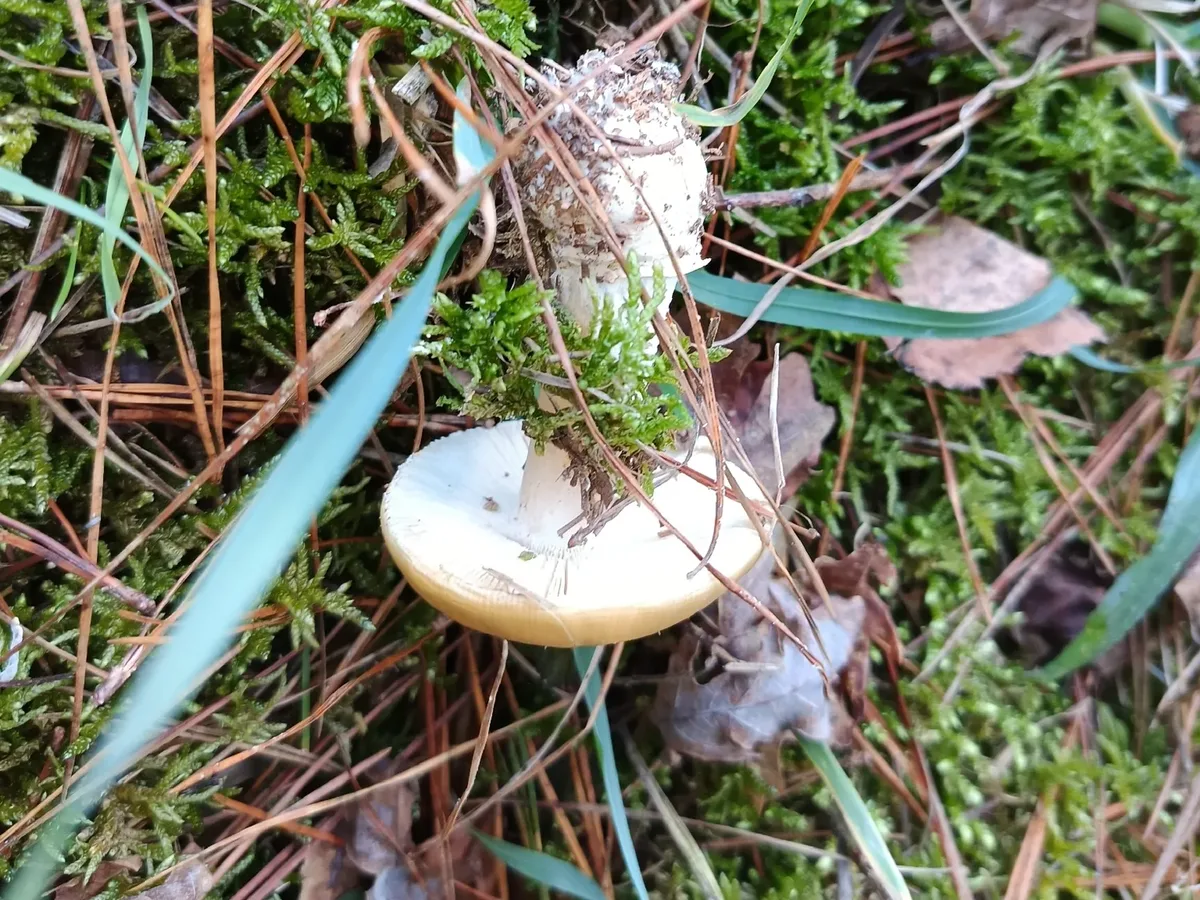
Amanita gemmataYellow-ochre cap with white warts, a ring and a bulbous base - one of only two species Chilean experts call potentially deadly; not a food mushroom.
How to recognise it
A pale yellowish to ochre cap decorated with white warty patches - the torn remains of the universal veil it emerged from. The underside has crowded white gills that do not reach the stem. The stem is slender and whitish, carries a floppy ring near the top, and widens into a distinct bulb at the base where a cup-like volva is buried in the soil. The overall impression is delicate, almost gem-like - which makes it no less dangerous.
Where it grows
Mycorrhizal, living in an underground partnership with the roots of living trees. In South America it appears under both introduced species - plantation conifers and eucalypts are characteristic hosts around Santiago and Buenos Aires - and native Nothofagus (southern beech) forest further south. Wherever suitable ectomycorrhizal hosts grow, this species can establish.
Cooking
Never eat this species. It is not a culinary mushroom under any circumstances, and no cooking, drying, soaking, or other preparation renders it safe - the isoxazole toxins are not reliably destroyed by heat. Its dangerous resemblance to edible Amanita species (such as the Caesar's mushroom group) means it should be treated as off-limits in the kitchen entirely.
Danger
One of only two species that Chilean mycologists (Goetz Palfner) single out as potentially deadly in the country (alongside A. phalloides).
Look-alikes
The text warns it is confused with edible light/pale-coloured mushrooms; verify the yellowish cap with white warts, ring, and bulbous base of Amanita gemmata before eating any pale mushroom.
 Patagonian skullcap
 Patagonian skullcap
 Patagonian skullcapPatagonian skullcapPatagonian skullcap
Patagonian skullcap
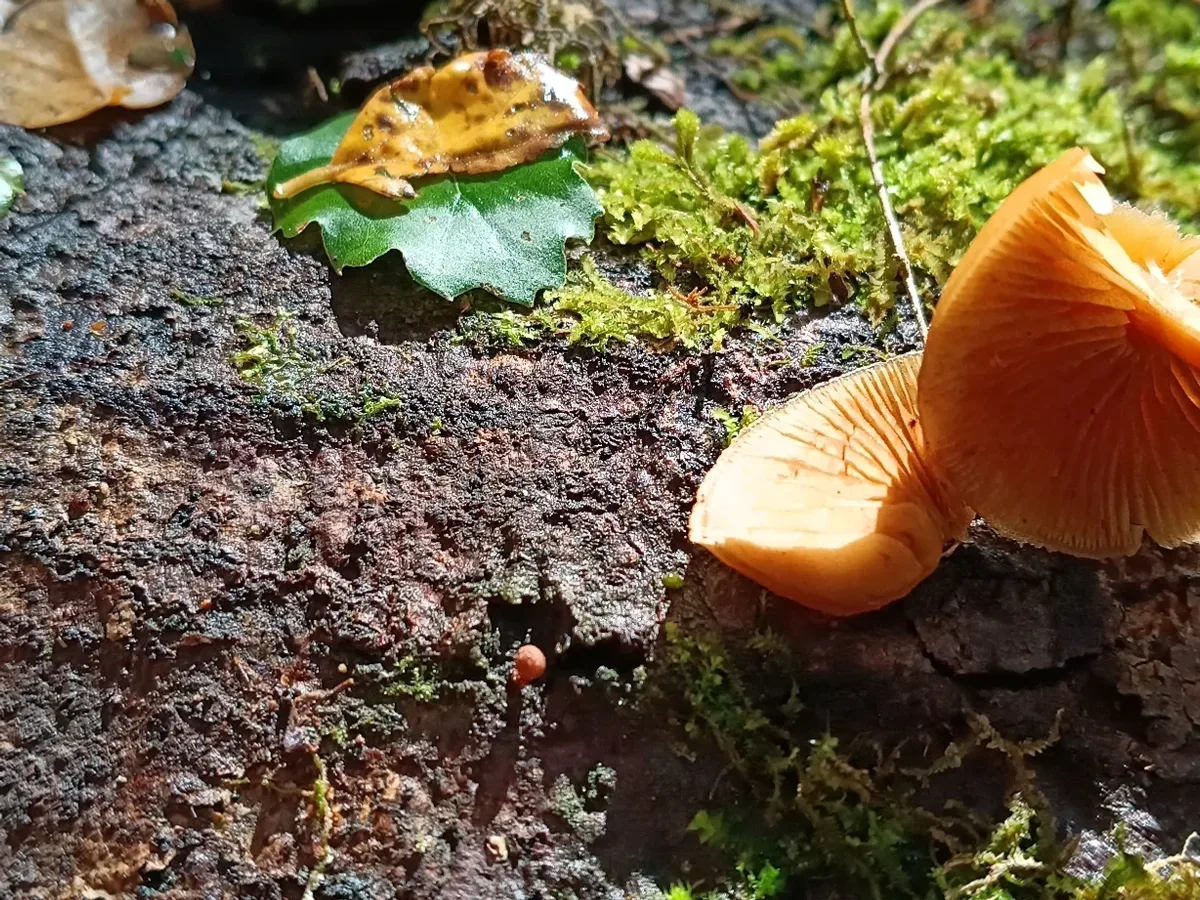
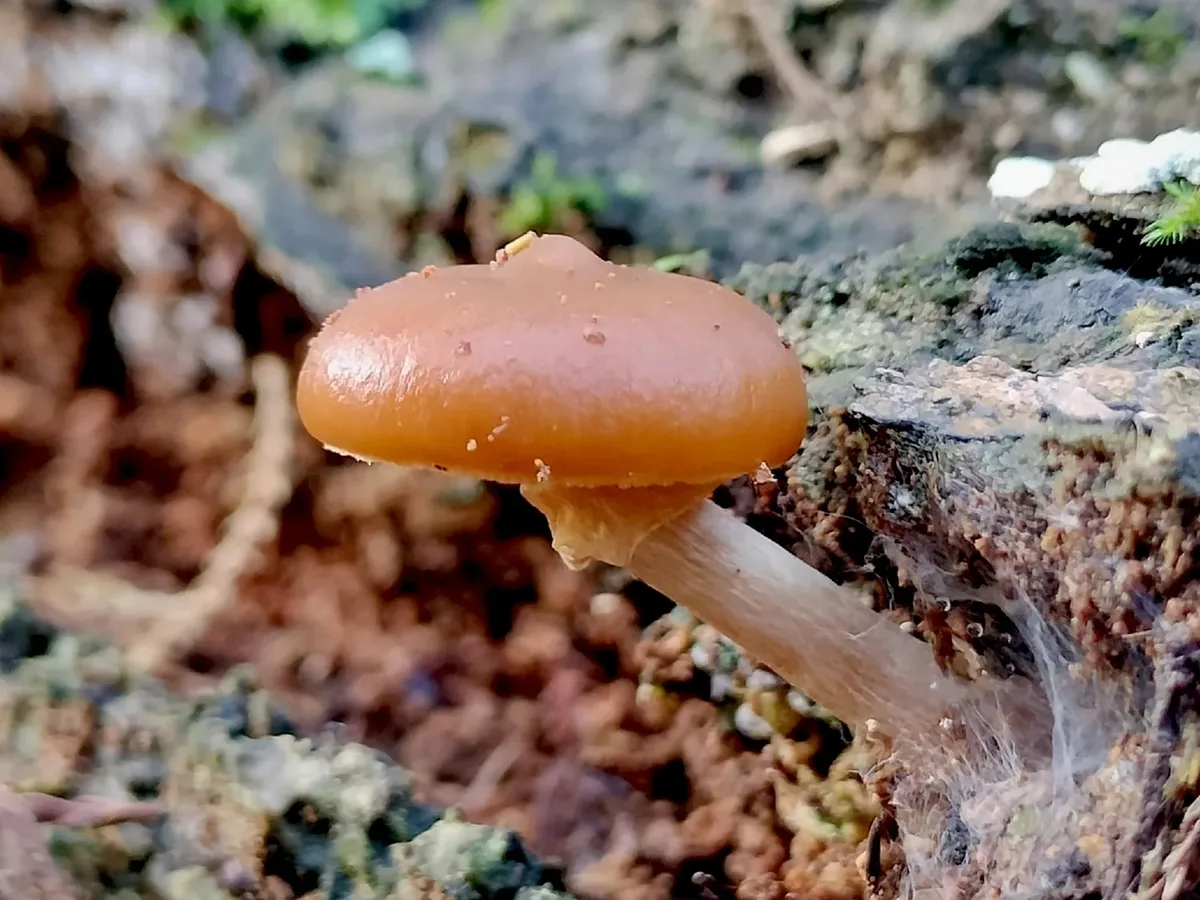
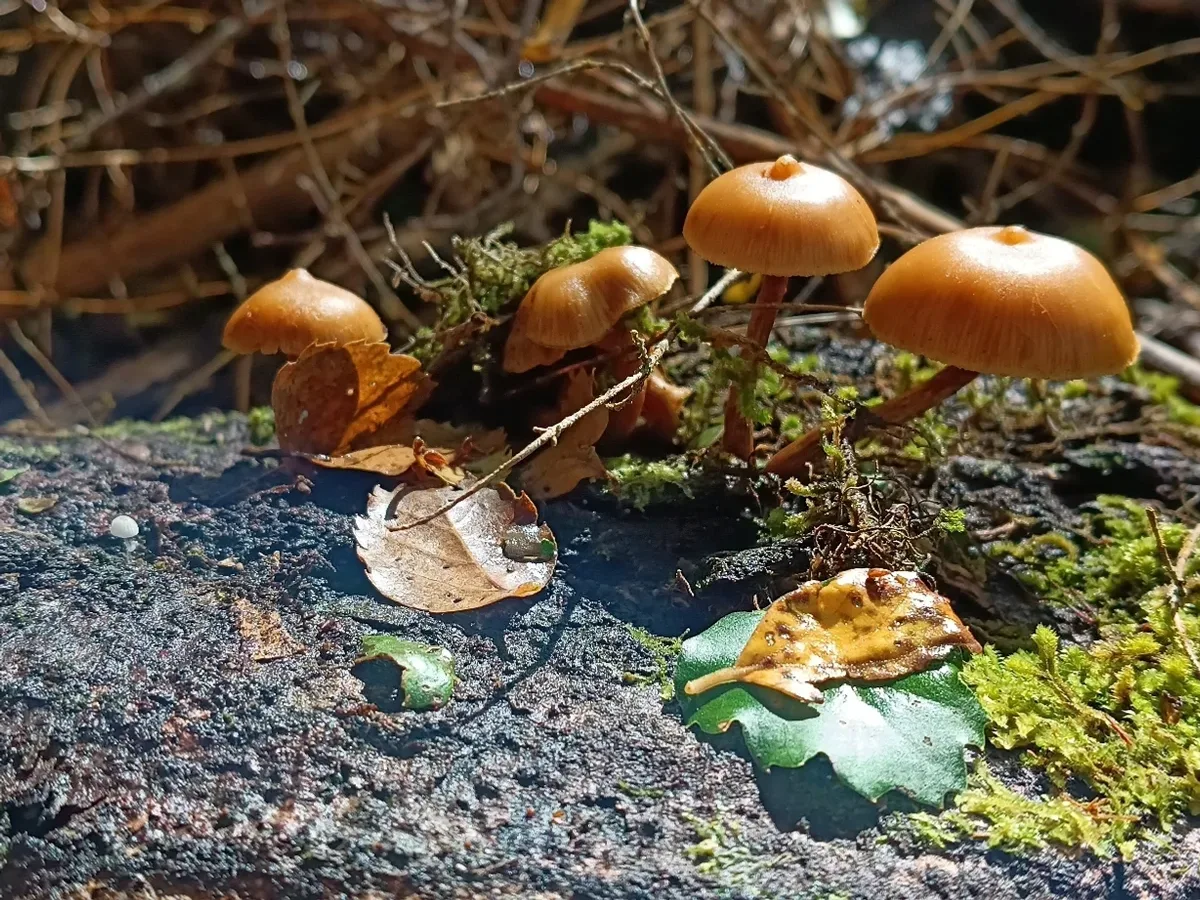
Galerina patagonicaA small brown mushroom on rotten wood, within the deadly Galerina marginata complex and likely amatoxic - never eat little brown mushrooms growing on wood.
How to recognise it
A classic "little brown mushroom" (LBM): cap 0.8-6 cm, chestnut-brown to pale ochre, hygrophanous - it fades noticeably as it dries, developing translucent striations near the margin when wet. Gills are adnate, a persistent fibrous ring sits on the stem, and the spore print is rusty brown.
Where it grows
Grows in clusters on decaying wood of conifers and southern beeches, particularly Nothofagus dombeyi and Austrocedrus chilensis in Patagonia. Part of a striking Gondwanan pattern - closely related forms appear in Australia and New Zealand, a remnant of the ancient southern supercontinent.
Cooking
This mushroom must never be eaten. No method of preparation - boiling, parboiling and discarding the water, drying, frying, pickling, or any other technique - destroys or removes amatoxins. Alpha-amanitin is heat-stable, water-soluble only in part, and is fully absorbed through the gut wall even from cooked tissue. A single small cap can contain a lethal dose. If a specimen has been mixed into a dish with other foraged mushrooms, the entire dish must be discarded.
Danger
Likely deadly. Treat as Amanita phalloides - requires acute medical care.
Look-alikes
Some Psilocybe bruise blue; Galerina patagonica does not bruise blue. Substrate (rotten wood) and persistent ring are further clues.
 Green-spored parasol
 Green-spored parasol
 Green-spored parasol
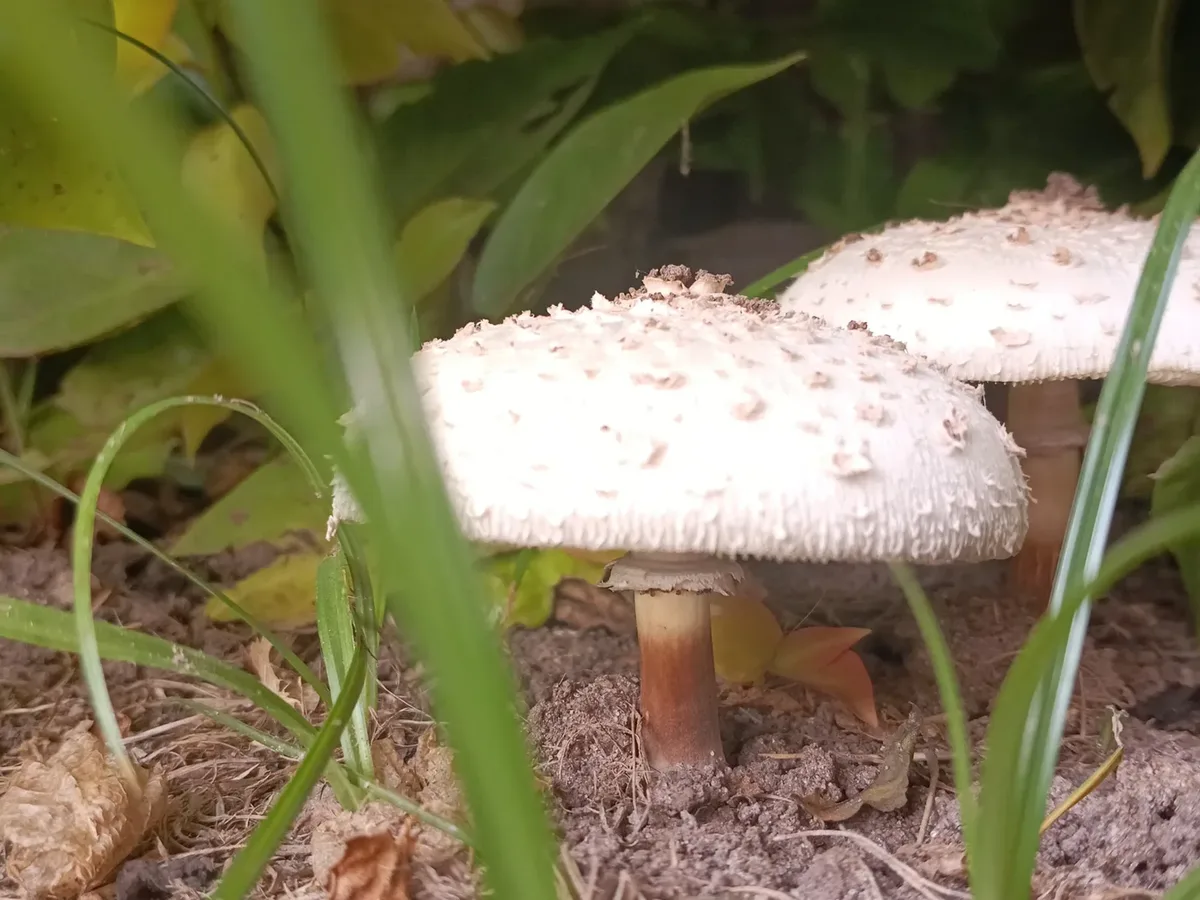 Green-spored parasolGreen-spored parasolGreen-spored parasol
Green-spored parasol
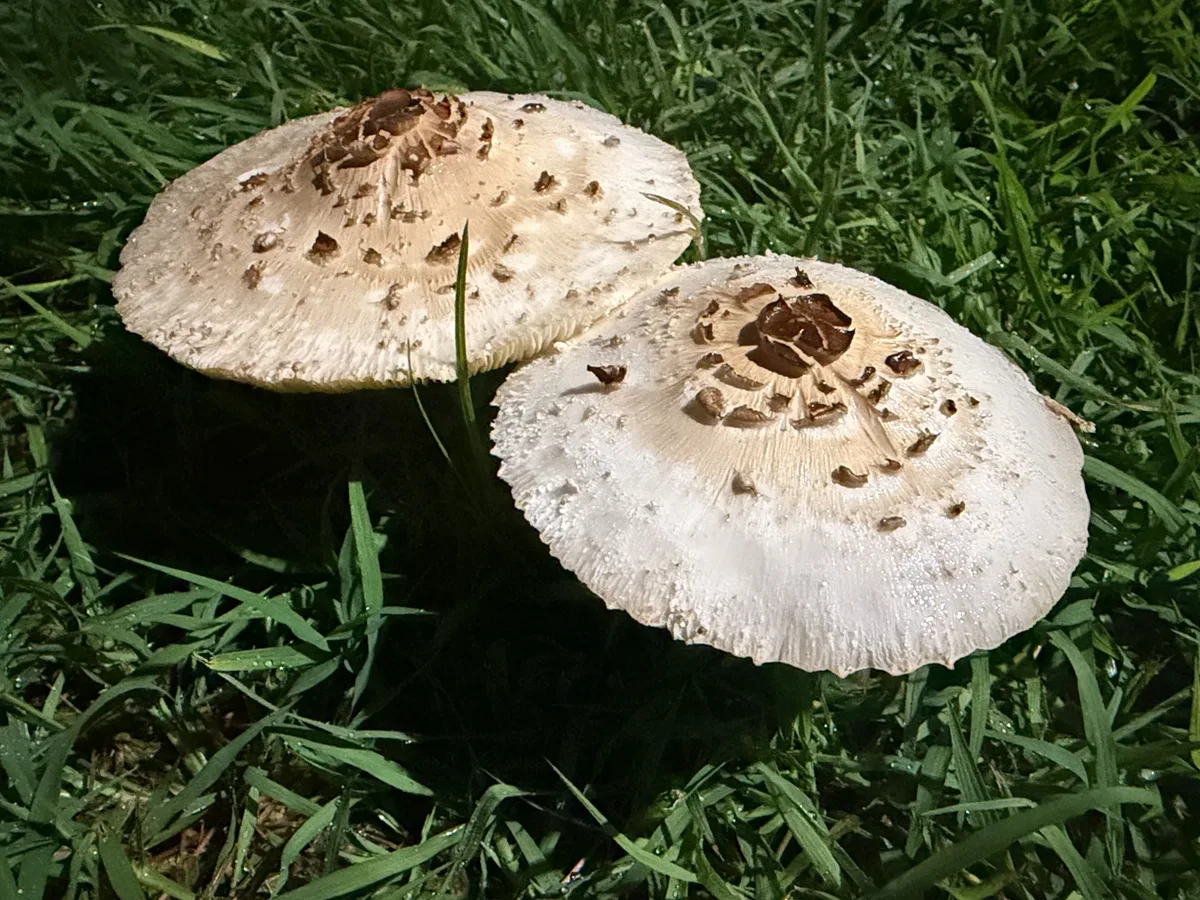
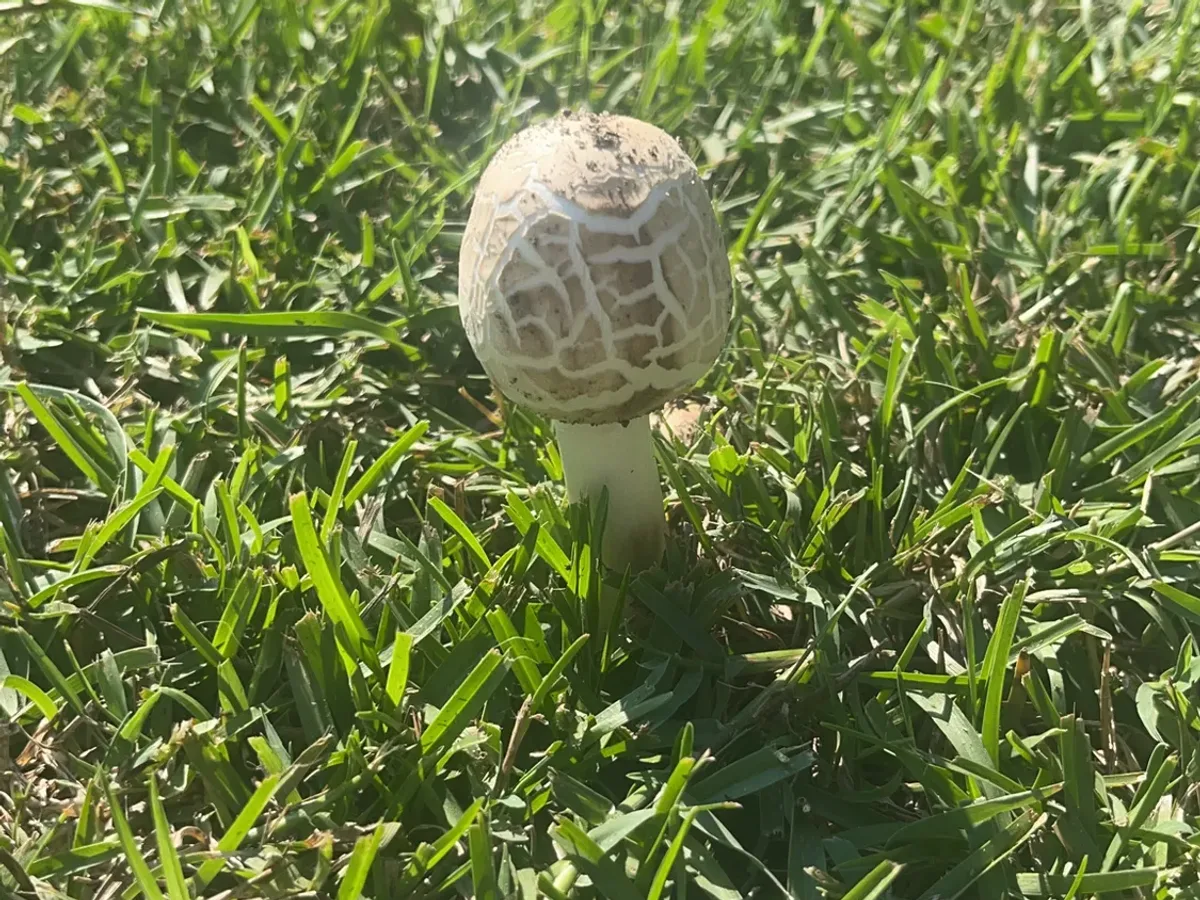
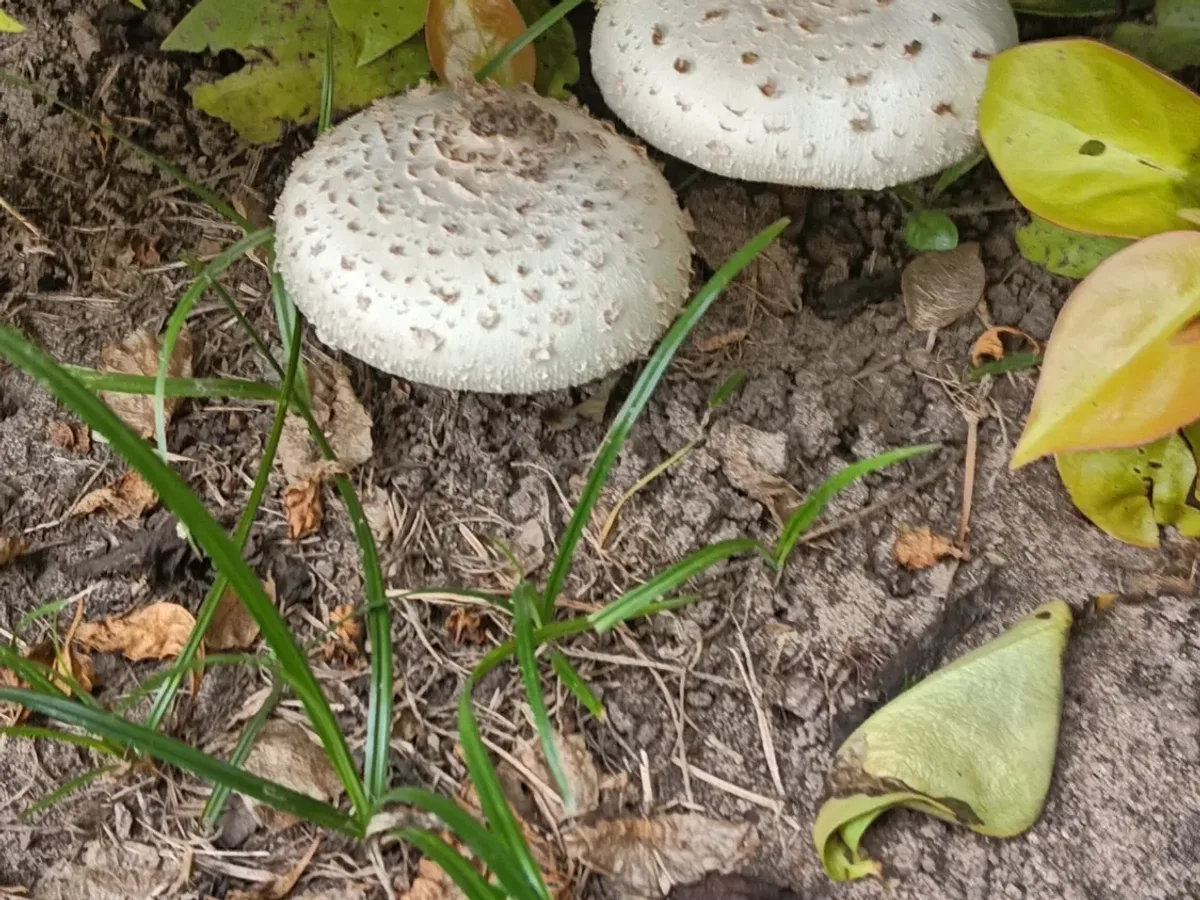
Chlorophyllum molybditesSouth America's most frequent poisoning: a lawn parasol whose green-grey gills and green spore print betray it from edible Macrolepiota - always take a spore print.
How to recognise it
Large, stately, white cap with brown scales toward the center, at first drumstick-shaped then broad and flat. The gills are white in young specimens but turn grayish-green to green at maturity, and the spore print is green (very unusual, diagnostic). Free gill attachment, ring around the stem. The flesh may blush faintly. Often grows in fairy rings on lawns.
Where it grows
Lawns, pastures, parks, open grassy surfaces, and near human habitation. Common in Florida and the southeastern/southern USA, less common in the north.
Cooking
Not applicable - poisonous even when cooked.
Danger
Causes the most mushroom poisonings in North America, leading to severe gastrointestinal distress, sometimes with blood in the vomit and excrement. Rarely fatal, but children, the elderly, and pets can become seriously dehydrated and need hospital care. Especially risky because it grows where children and dogs play.
Look-alikes
The edible parasol has white gills and a white spore print; Chlorophyllum molybdites develops grayish-green to green gills and a green spore print at maturity.
The shaggy parasol has white gills and a white spore print, not the green gills/green spore print of Chlorophyllum molybdites.
Shaggy mane gills turn black and deliquesce (dissolve into ink) rather than turning green, and it produces a black spore print.
The green spore print distinguishes C. molybdites from related Chlorophyllum species.
Edible termite-associated mushrooms; confusion documented especially in Asia, and considered a risk even for T. titanicus per field guides. Check for the green spore print of C. molybdites.
True parasol mushrooms have a white spore print and white gills; Chlorophyllum molybdites has a greenish to grey-green spore print and greenish gills in age.
Distinguish by spore print colour and the presence of a stem ring (Volvariella lacks one and has a volva).
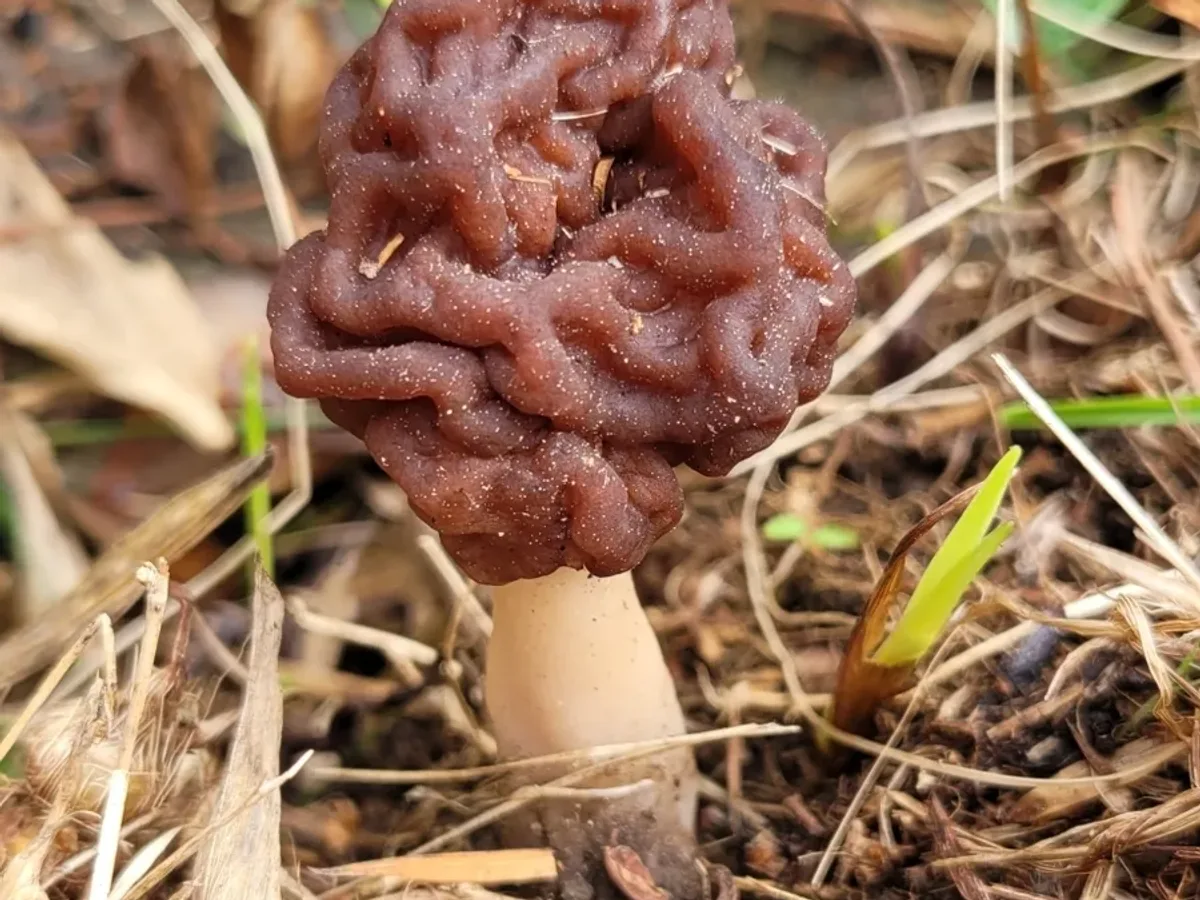 Southern False Morel
False morel (chicharron)
Gyromitra antarcticaA brain-like false morel containing gyromitrin; the Chilean form is low in toxicity and is dried for export, but it can occasionally kill - never eat it raw.
Look-alikes
Patagonian Nothofagus forest harbours other poorly characterised Gyromitra-group fungi. Gyromitra patagonica and additional undescribed or incompletely resolved taxa occur in the same habitat. All should be treated as equally deadly; distinguishing between them in the field has no practical safety value, as all Gyromitra-group fungi in the region must be considered toxic.
True morels have a clearly honeycomb-pitted (alveolate) cap with angular pits bounded by raised ridges - never the smooth rounded lobes and wrinkled folds of Gyromitra. The interior of Morchella is completely hollow (cap and stipe form a single continuous hollow chamber); Gyromitra has partial internal chambers. Morchella are edible when thoroughly cooked, but must never be eaten raw, and deserve careful species confirmation in their own right.
Discina perlata is in the same family (Discinaceae) and similarly reddish-brown, but has a disc- or cup-shaped (not saddle-lobed) fertile surface and is nearly sessile or has a very short, thick stipe. Some Discina species contain gyromitrin-related compounds and should also be treated with caution. The concave cup form is clearly different from Gyromitra's lobed saddle cap.
Large Peziza species can be brown and grow in similar forest floor habitats, but are clearly cup-shaped (concave bowl) rather than lobed or saddle-shaped. They lack the stipe structure and lobed architecture of Gyromitra. Some Peziza contain low-level toxins; none are recommended for raw consumption.
The rules that save lives
- Never eat a mushroom you are not 100% sure of - the deadliest species here are introduced or inconspicuous, and they kill.
- Volva + ring + white gills = mortal danger; always dig up the whole stem to check for a volva.
- Take a spore print on large parasols - a green spore print means poisonous Chlorophyllum molybdites.
- Never pick small brown mushrooms growing on wood (Galerina risk).
- Amatoxins are not destroyed by cooking, drying or pickling.
- Morels and chicharron (Gyromitra) must always be well cooked - never eaten raw.
- Symptoms can take 6-24 hours; do not wait - seek care and keep a sample of the mushroom.
- Respect Endangered native species (loyo, gargal, digueñe): pick sparingly, cut the stem and leave the mycelium, never take immature specimens.
- Do not forage in national parks (CONAF bans mushroom collection in Chile's protected areas), and never pick on deliberately burned ground.