Morel
Morchella tridentinasyn. Morchella andinensis, Morchella aysenina, Morchella eximia, Morchella importuna, Morchella sextelata
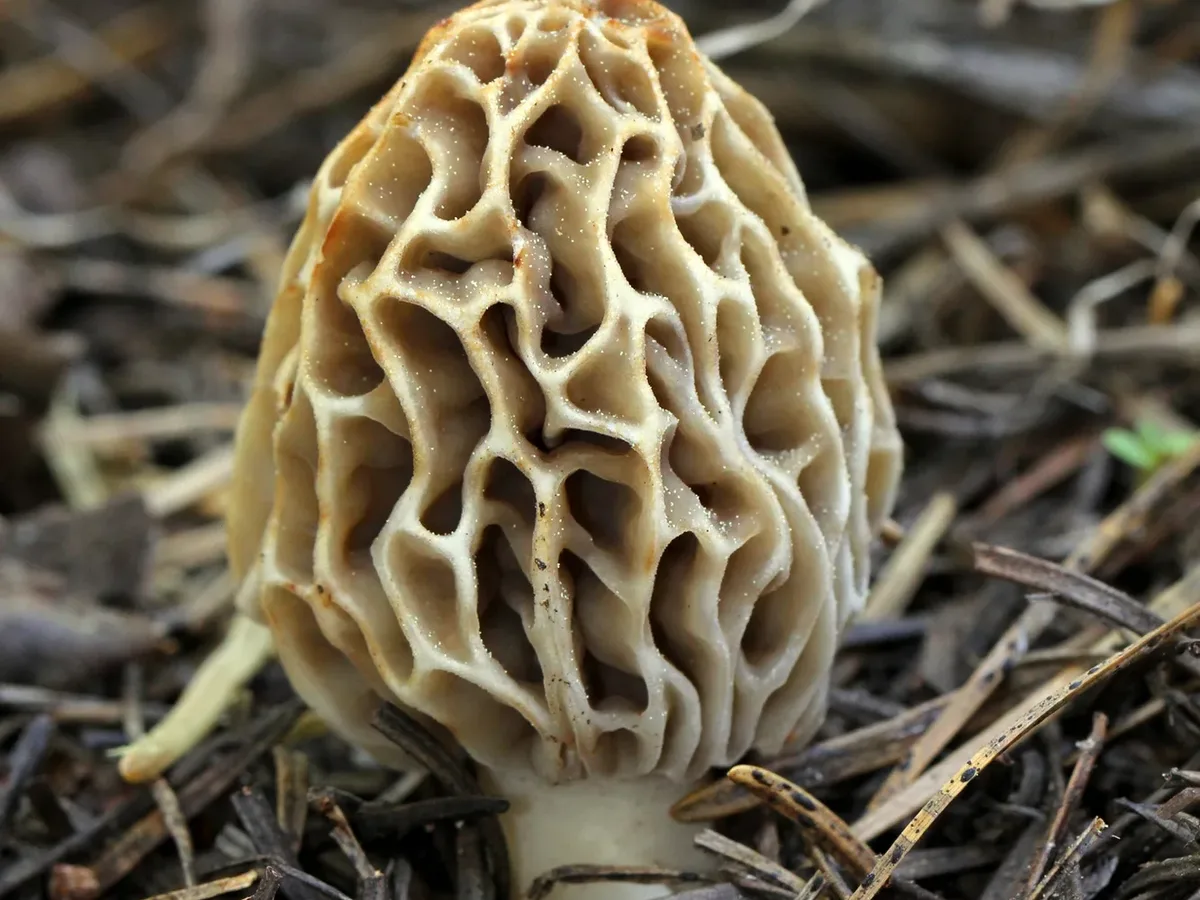 © Alan Rockefeller (CC BY 4.0)
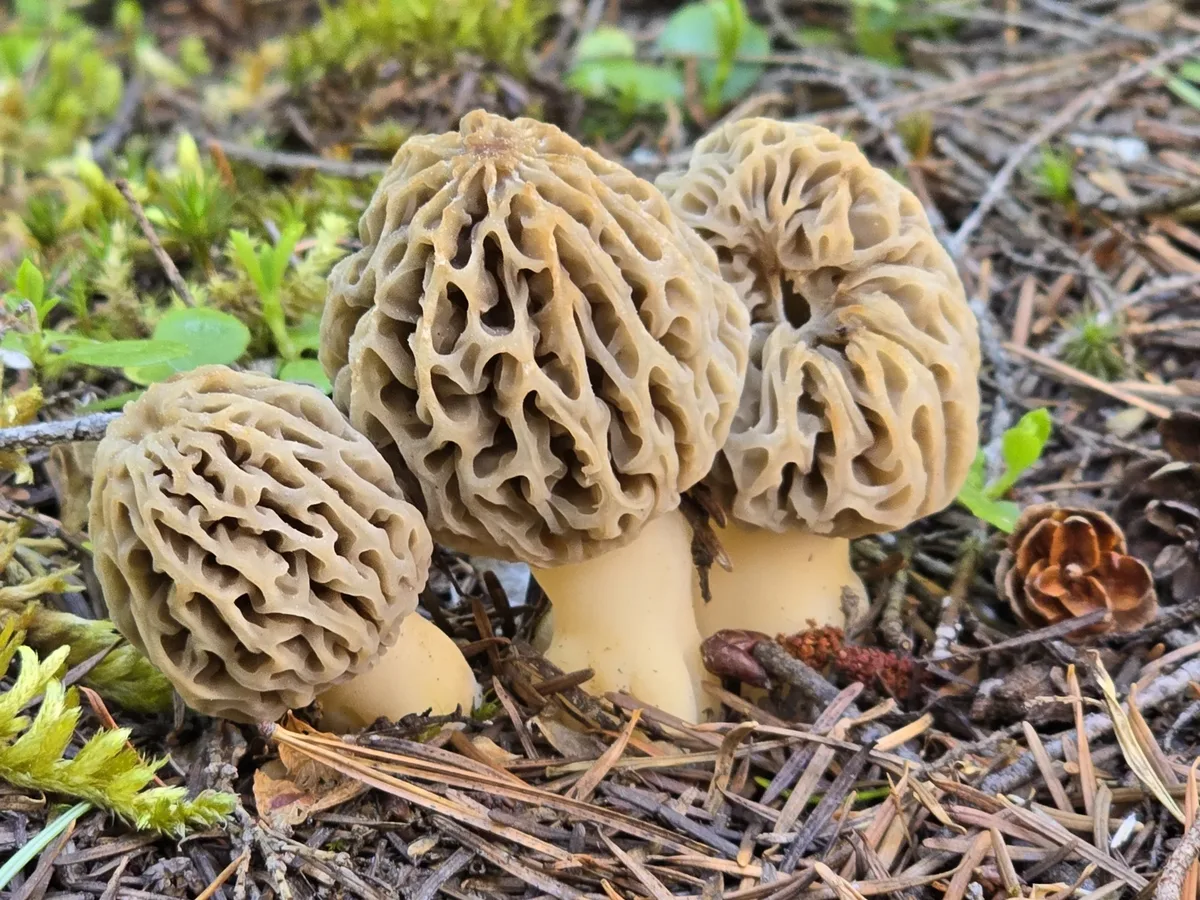 © Alan Rockefeller (CC BY 4.0)
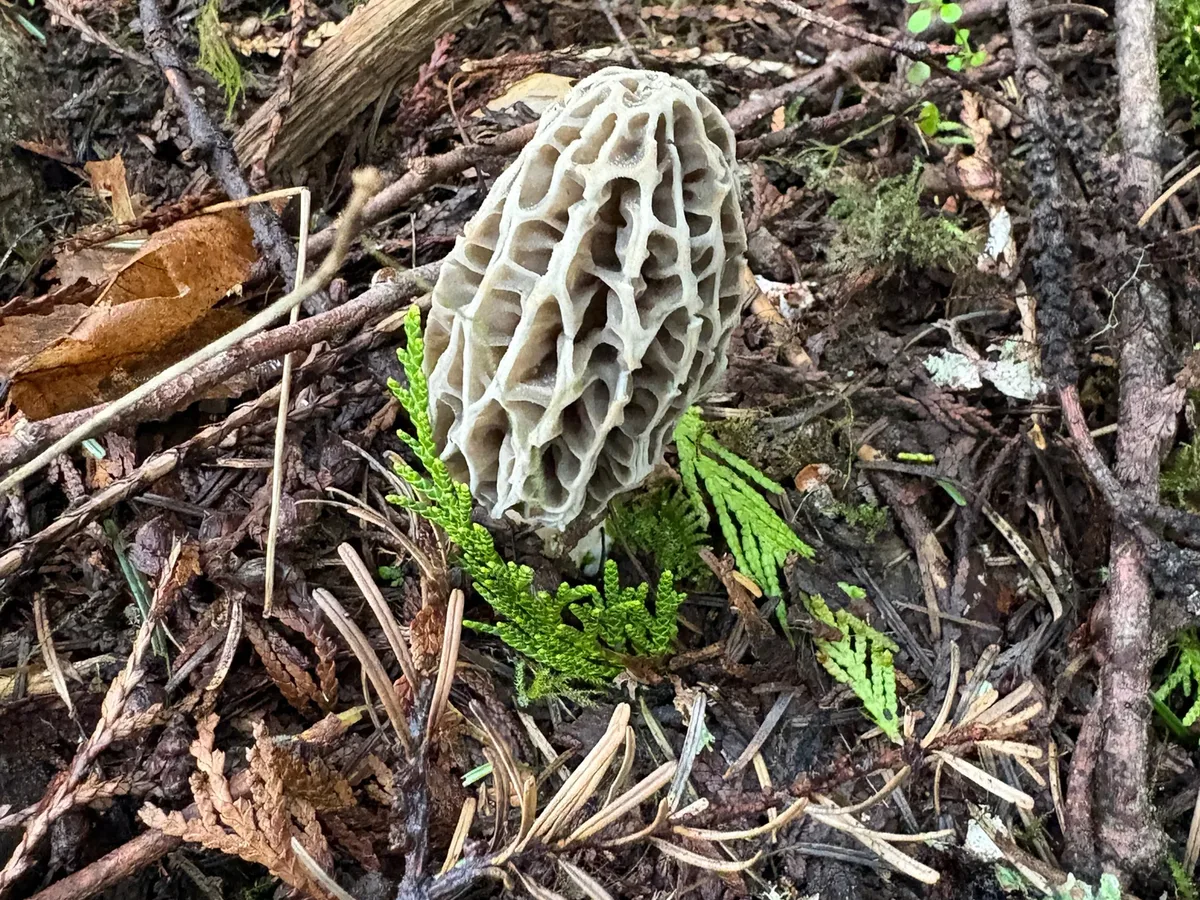 © Aerin Jacob (CC BY)
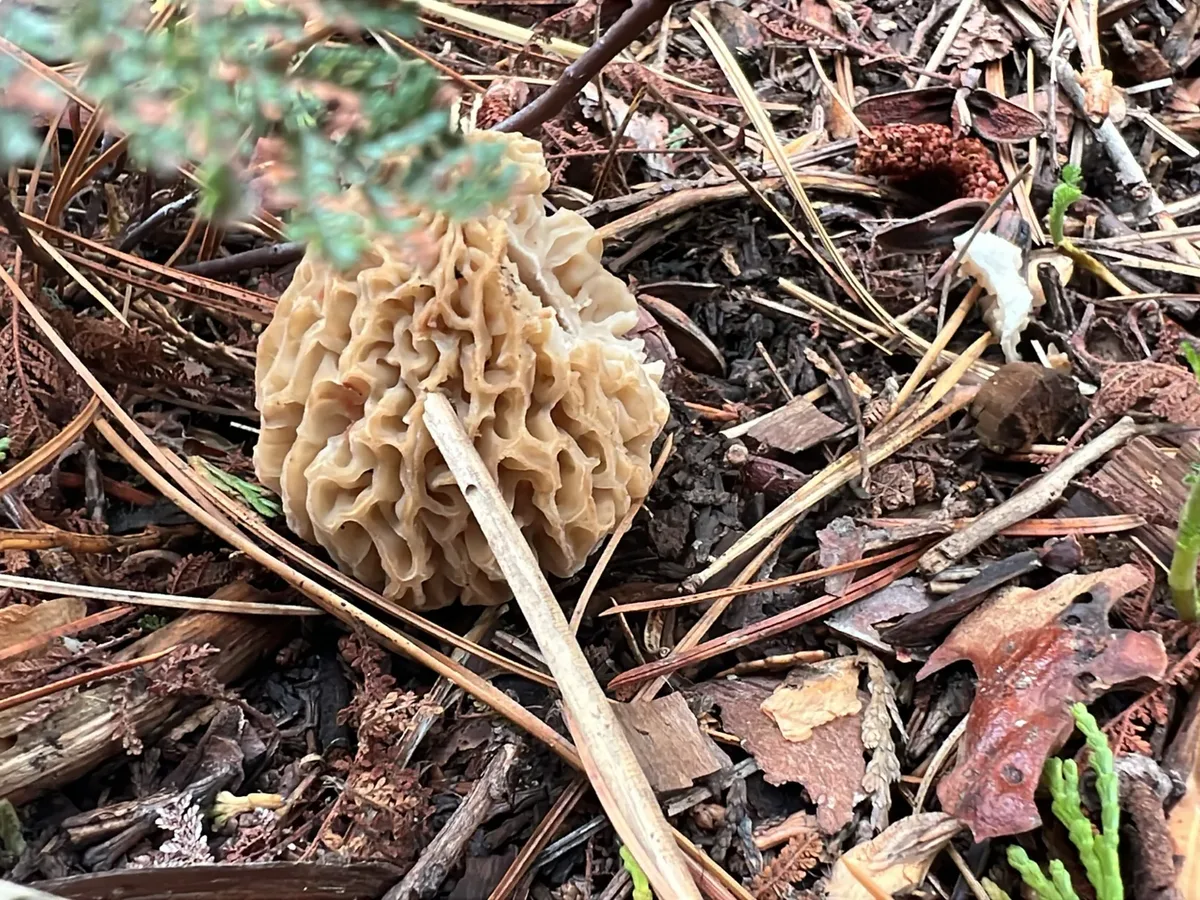 © Katy Swiere (CC BY)
 Ben Keen (CC0)
 Ben Keen (CC0)
 © Simone Littledale (CC BY)
 Lauren Bosch (CC0)
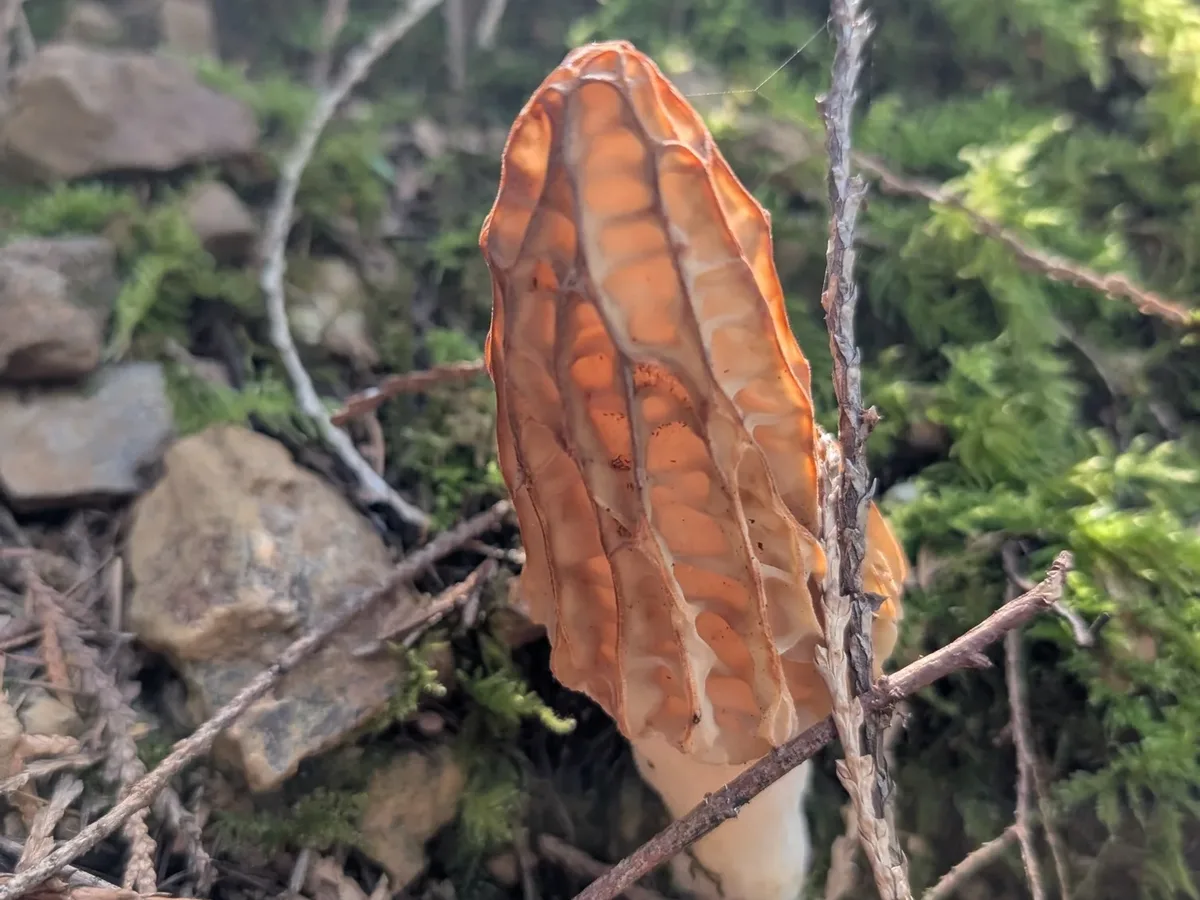 Lauren Bosch (CC0)
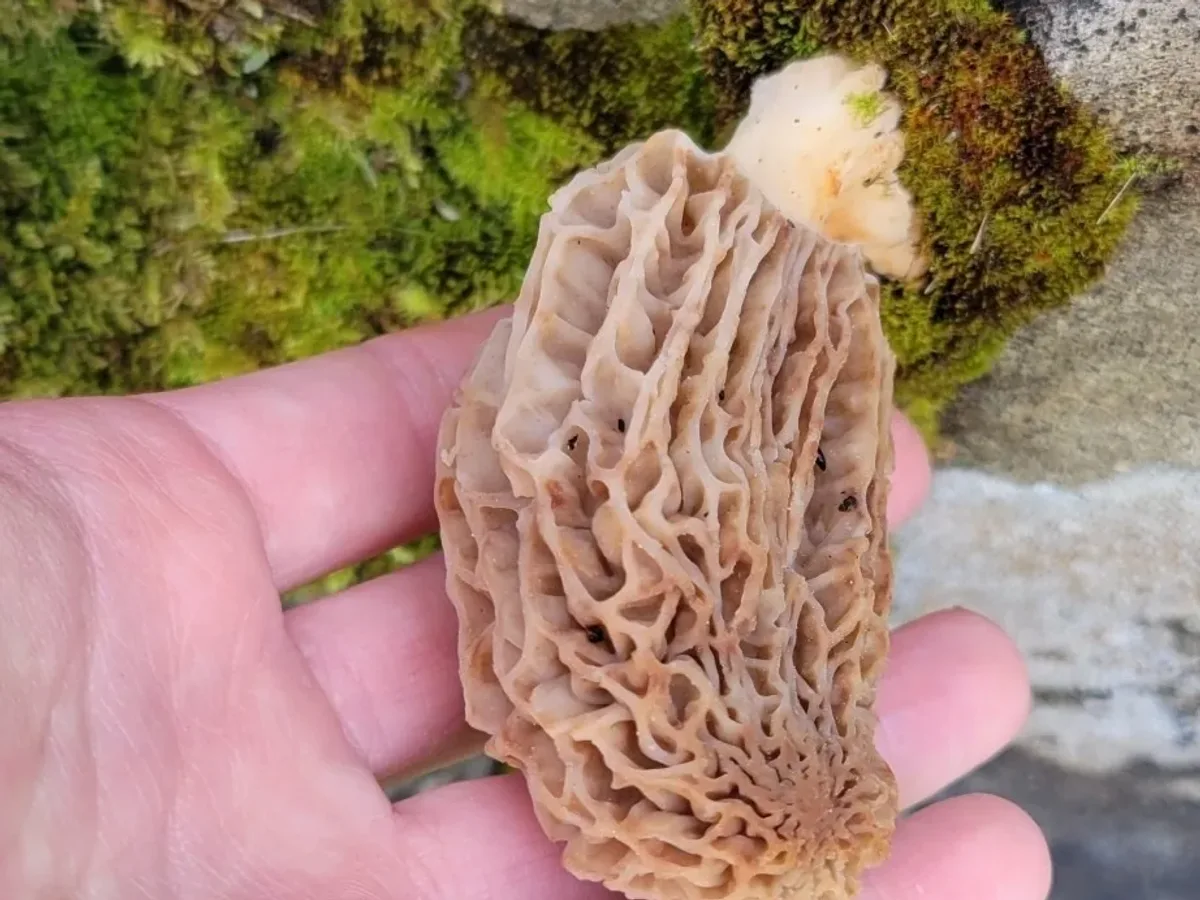 Joshua (CC0)
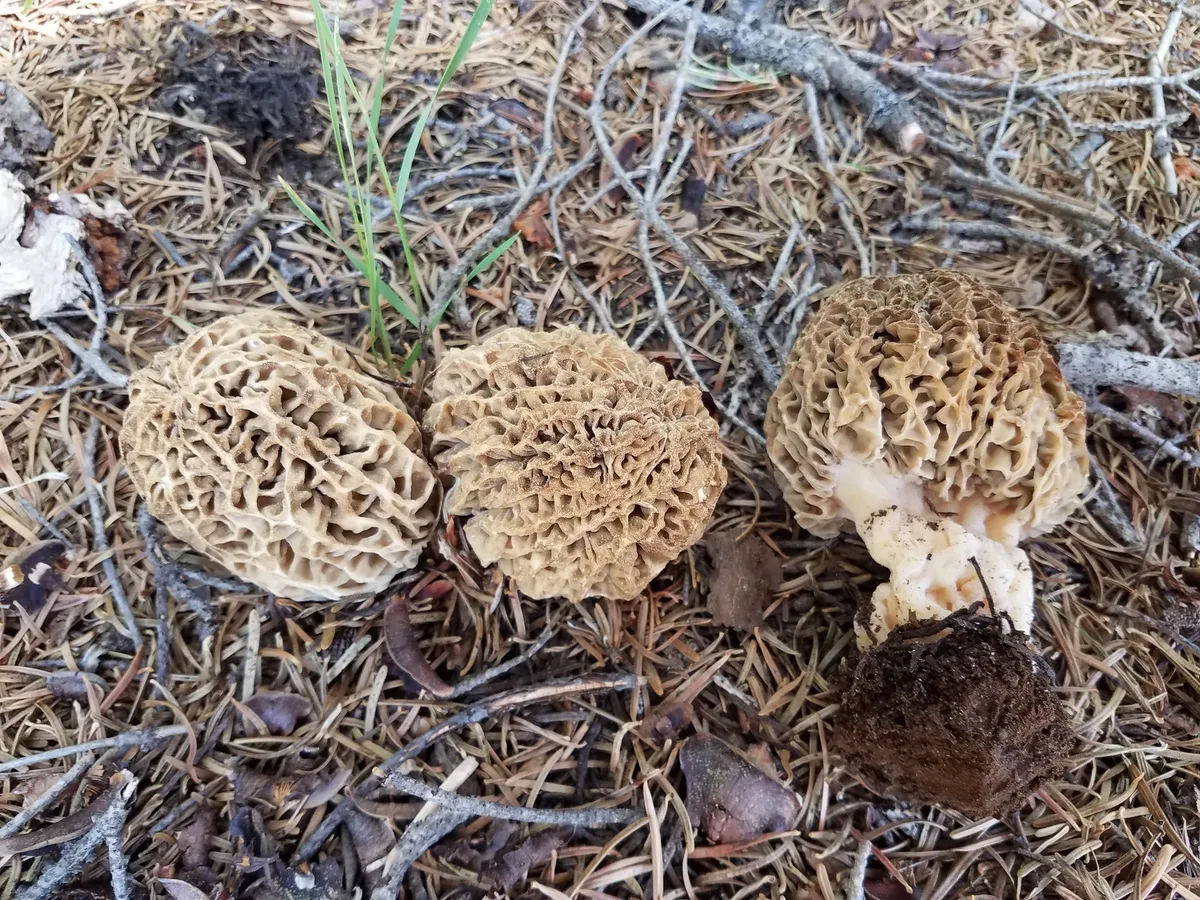 © Alan Rockefeller (CC BY 4.0)
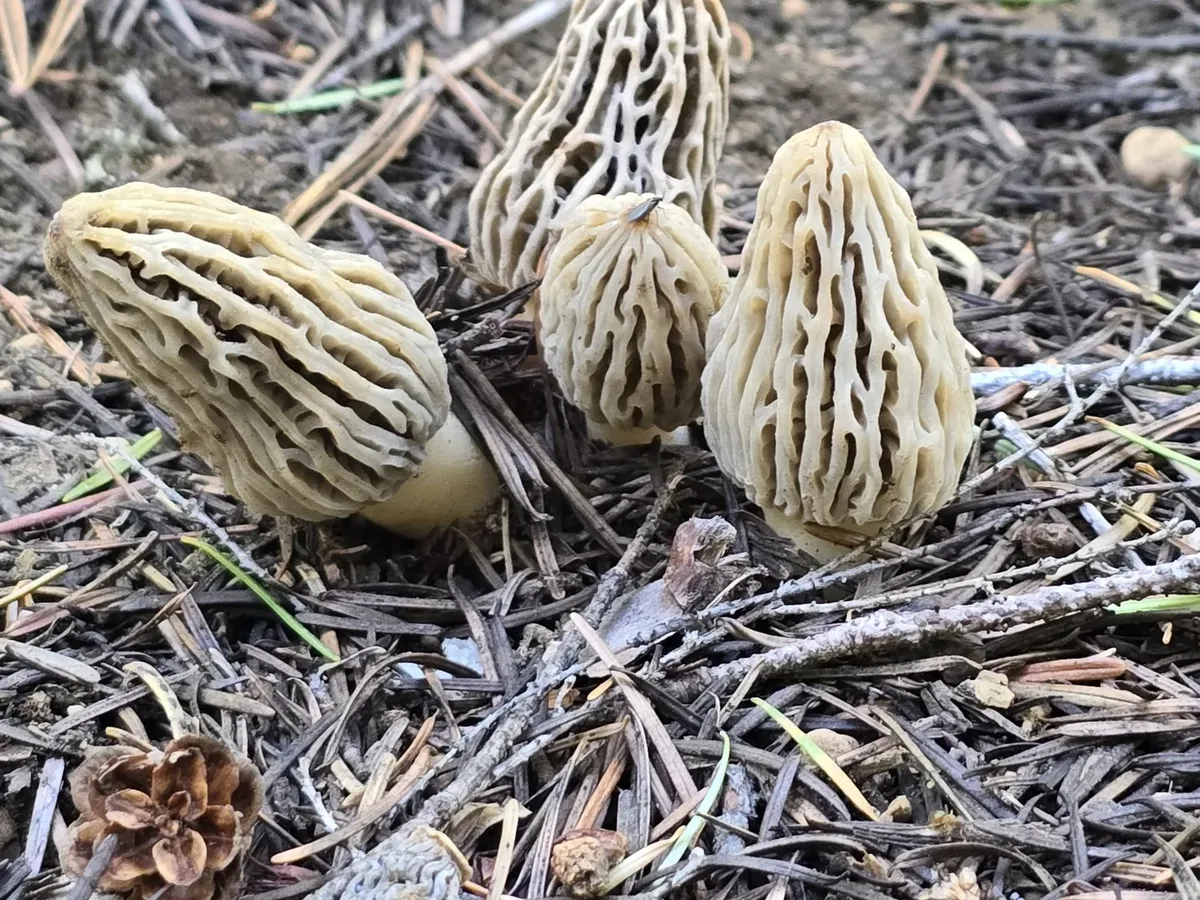 © Alan Rockefeller (CC BY 4.0)
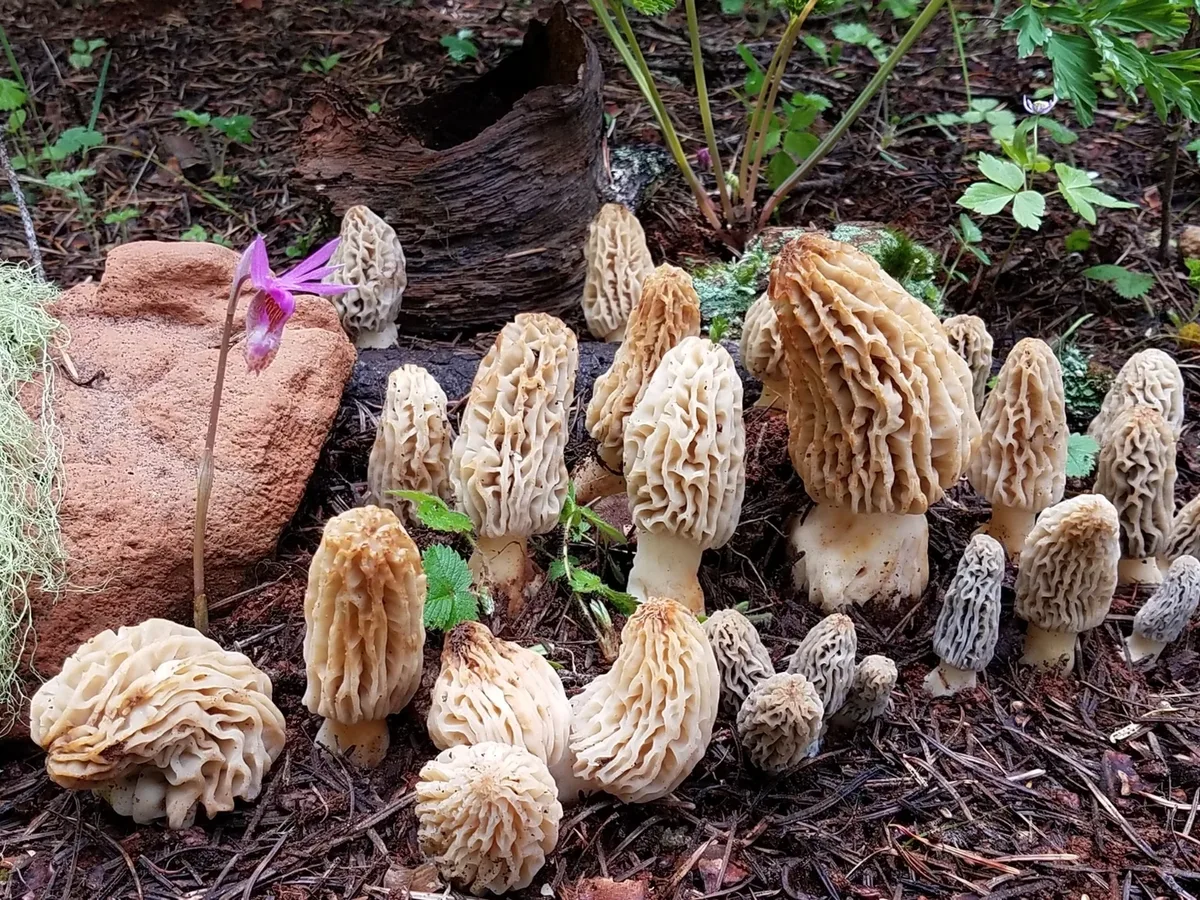 © Alan Rockefeller (CC BY 4.0)© Alan Rockefeller (CC BY 4.0)© Alan Rockefeller (CC BY 4.0)
One of the best mushrooms you can bring home - once you are certain of the identification.
Never eat a mushroom you are not 100% sure of - check the look-alikes below, and always cook wild mushrooms.
How to recognise it
Morchella tridentina is built on the classic morel plan but expresses it with a distinctly Patagonian character.
Cap
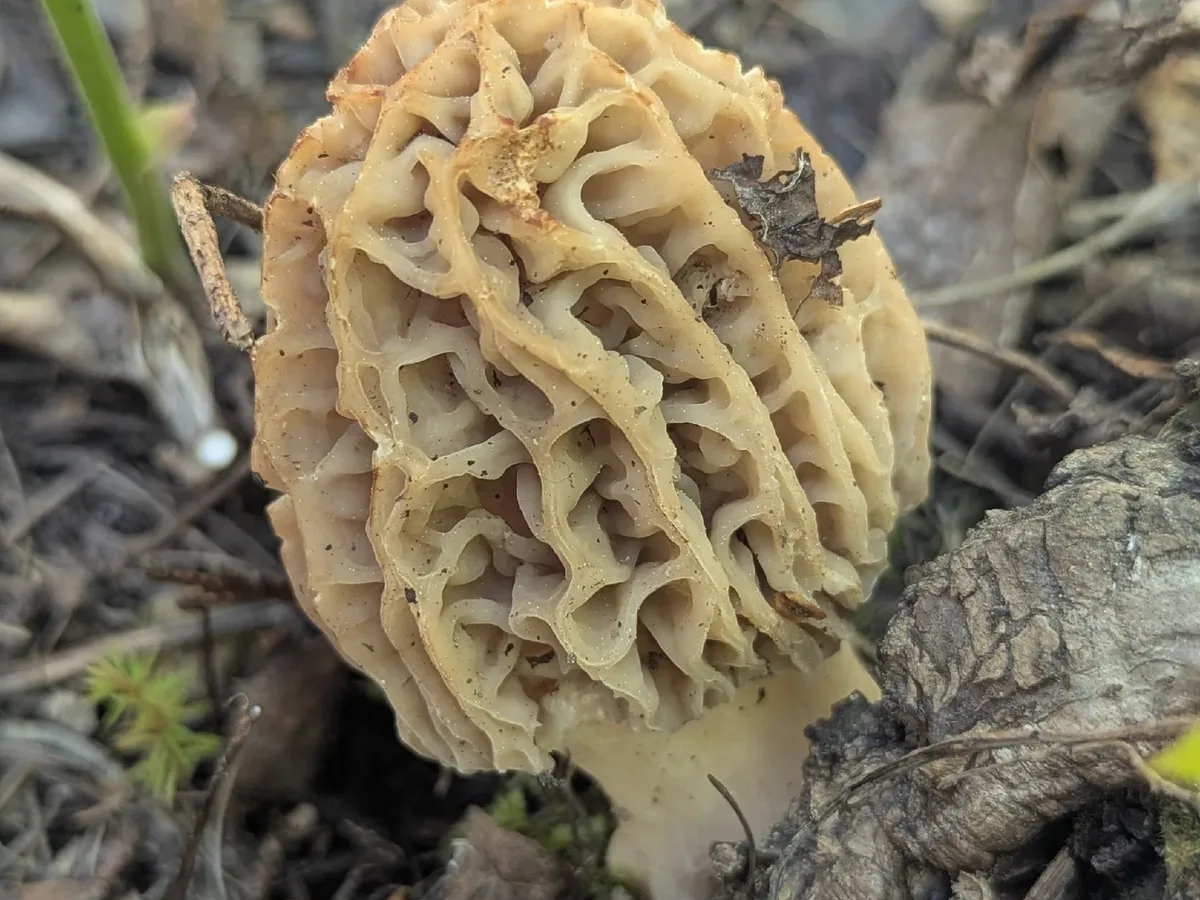
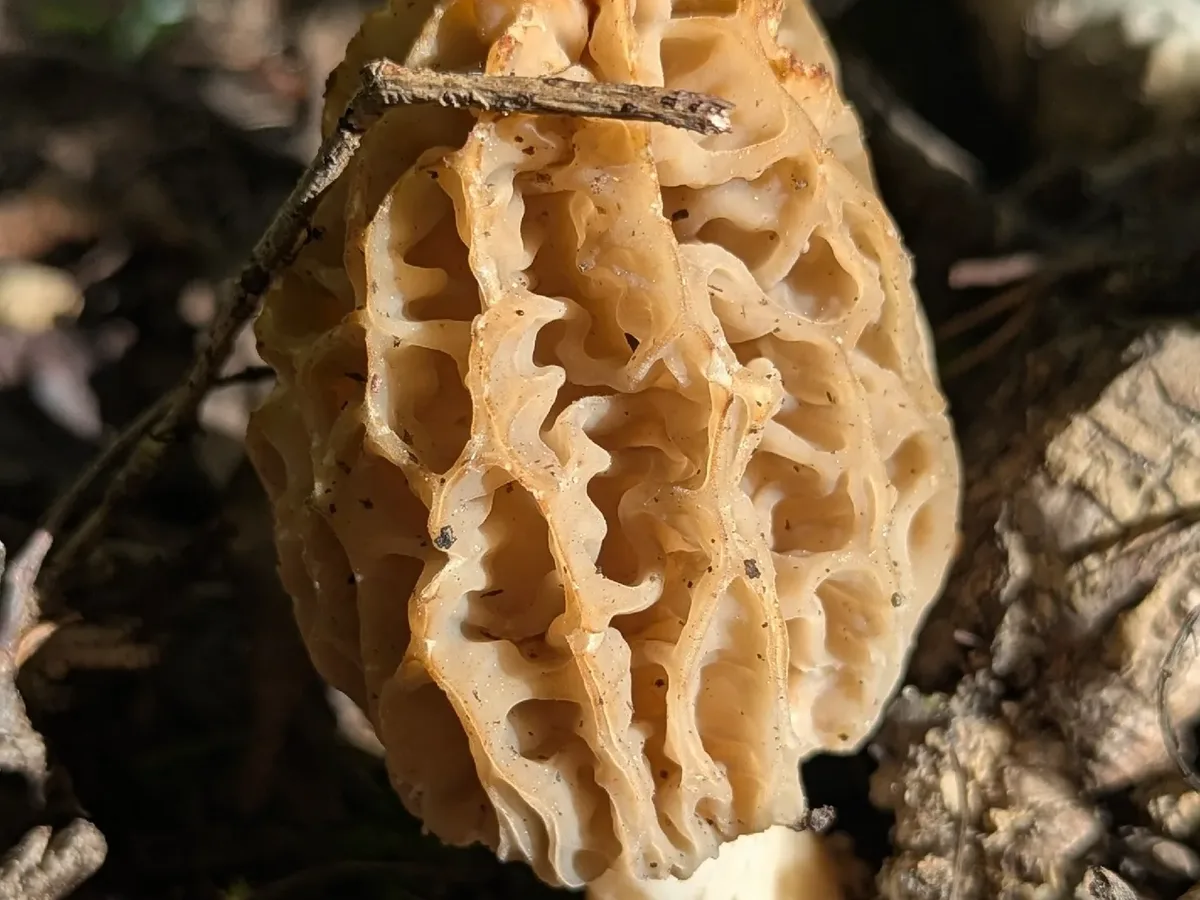
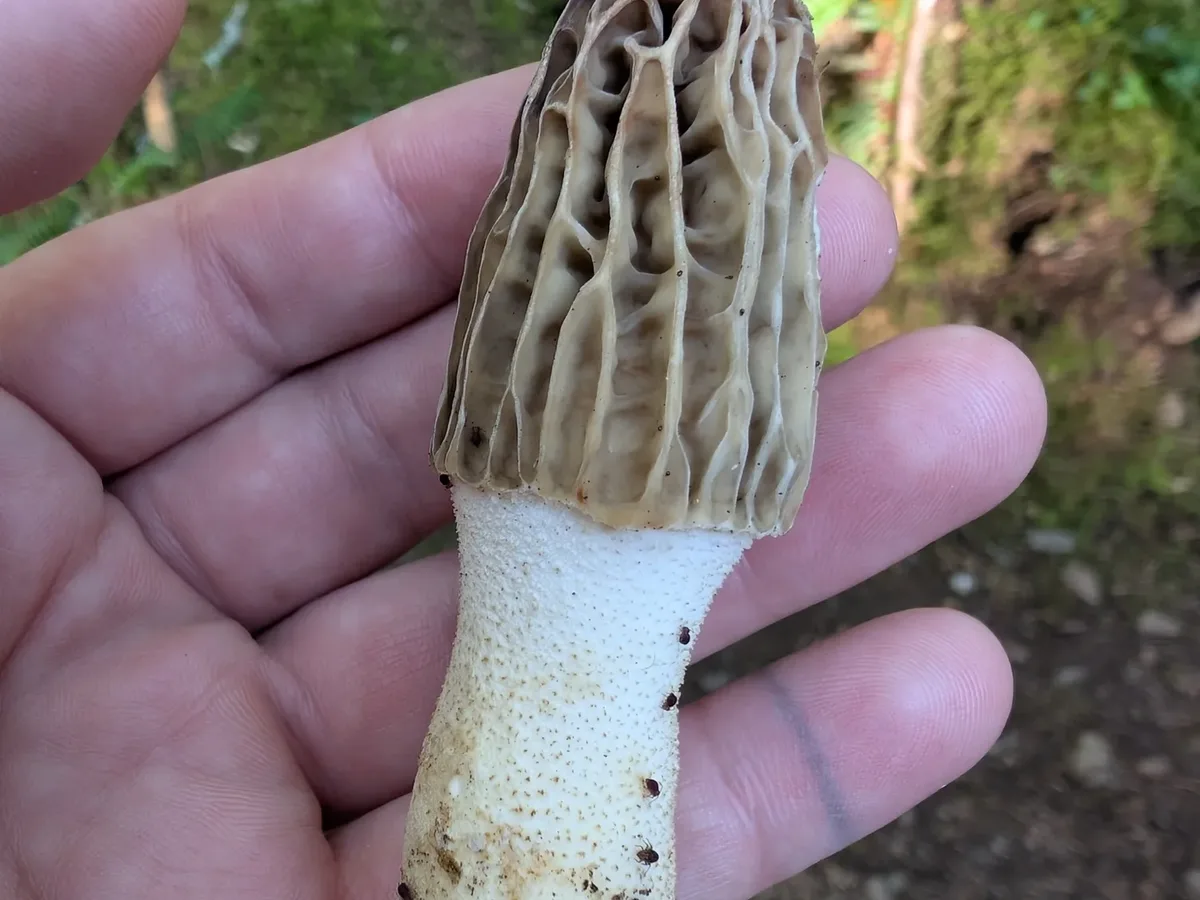
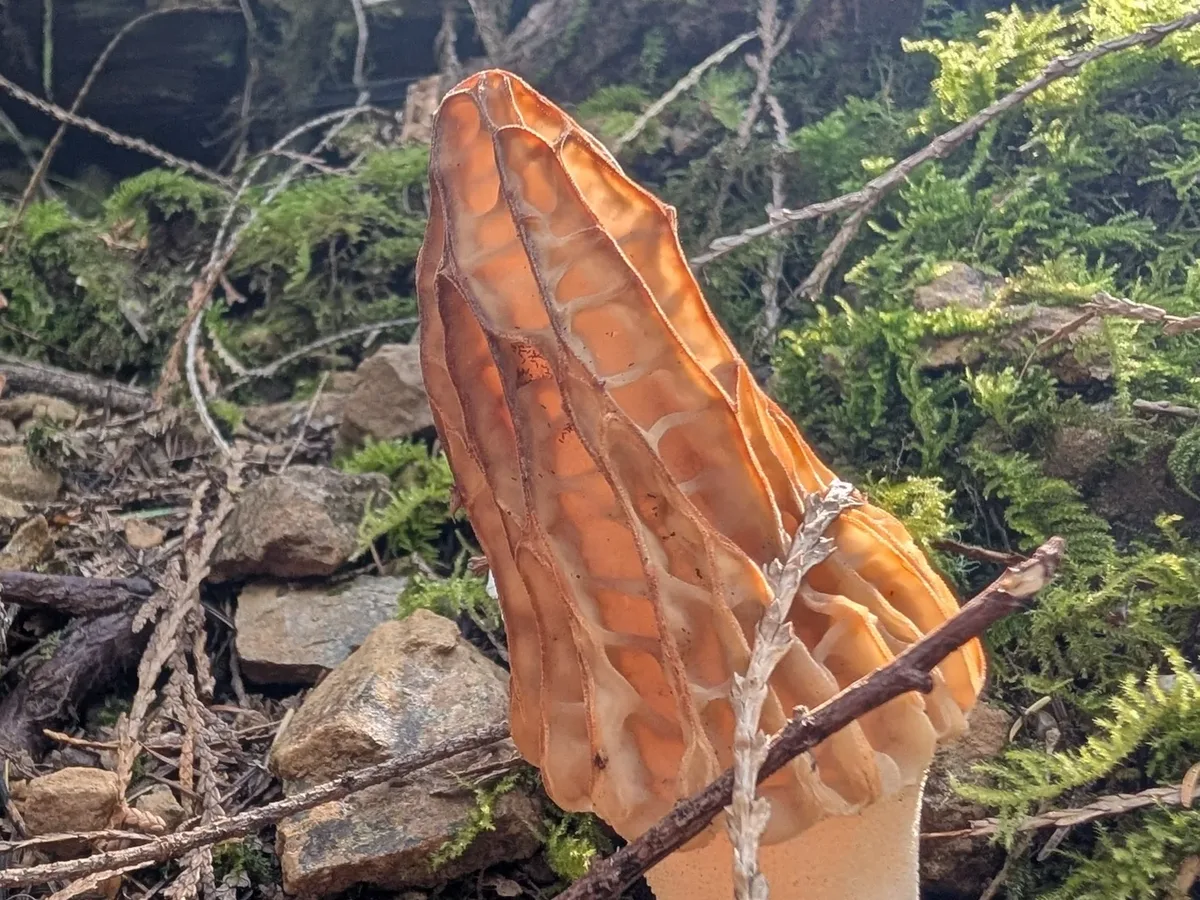
Conical to ovoid, typically 3-8 cm tall, its surface sculpted into a maze of deep, vertical pits separated by pale, anastomosing ridges - the architecture that gives the morel its unmistakeable silhouette.
Colouring is highly variable and shifts with age and microhabitat: young specimens flushed a warm blond or ochre-grey; mature ones darkening through hazel and umber to near-black after fire, while the intervening ridges stay a shade or two paler, throwing the honeycomb relief into sharp contrast.
Flesh
Thin, cream-white, and entirely hollow - slice one from tip to base and the interior is a single chamber with no membranous partitions.
Stem
2-5 cm tall and 1-3 cm wide, pale cream, smooth or finely granular, and fused directly to the base of the cap with no collar, ring, or free border between them. The base occasionally shows slight ribbing.
The entire fruiting body - cap and stalk - is one continuous hollow tube, a structural fact that matters enormously for separating it from any false morel.
Where & when it grows
Habitat
This species is centred on the temperate rainforests and montane woodlands of Chilean and Argentine Patagonia - Aysén, Magallanes, and the Argentine Andean foothills around El Bolsón and Cholila.
The dominant habitat is Nothofagus forest: the southern beeches (N. pumilio, N. antarctica, N. dombeyi) that clothe the wet Andean slopes form the ecological backbone of the morel community here.
Austrocedrus chilensis (Patagonian cypress) is a second key associate, particularly on drier, rocky hillsides in the rain-shadow zone east of the main cordillera.
The fungus grows from the mineral-rich, humus-thin soils typical of these cool temperate woodlands, at elevations from near sea level in Magallanes up to treeline.
It is not a mycorrhizal partner: it breaks down dead organic matter rather than linking into root networks.
Critically, it is a fire-follower. Post-burn sites - where heat has mineralised the litter layer, released nutrients, and opened the canopy - can produce extraordinary flushes, and this is both the ecological story of the species and the source of a serious conservation crisis in the region.
When
The Patagonian morel is a spring fruiter timed to snowmelt, which places its main season from September through November in the Southern Hemisphere.
The trigger is the combination of rising soil temperatures crossing roughly 10 °C and the sustained moisture that snowmelt delivers to the soil column over weeks rather than days - conditions very different from a single rain event.
In higher-elevation Nothofagus stands, fruiting may not begin until late October and can extend into December in a cold year.
Post-fire flushes follow a different calendar: burns from the preceding southern-summer (January-March) can produce extraordinary flushes the very next spring, sometimes before surrounding unburned forest produces a single fruiting body. A burn that does not fruit in year one will often fruit again in year two.
Experienced harvesters track fire history across the landscape precisely because the lag between fire and first flush is predictable enough to plan an expedition around.
Outside post-fire contexts, the season is comparatively brief - two to four weeks at any given elevation - and is strongly compressed in years when warming is rapid.
How it grows
Morchella tridentina is a saprotrophic decomposer, fruiting from soil enriched by decaying wood, leaf litter, and - most dramatically - the charred organic debris of burnt forest.
Unlike the mycorrhizal morels of the northern hemisphere that depend on living tree partners and are almost impossible to cultivate, this species lives by breaking down dead plant material.
Its mycelium threads through the topsoil and duff layer year-round, invisible and patient, accumulating the carbon and nitrogen reserves needed to push up a fruiting body when conditions align.
Fire is the great accelerator. A burn:
- mineralises accumulated nutrients at once
- temporarily raises soil pH
- floods the surface with potassium, phosphorus, and soluble nitrogen
This sudden banquet the fungus exploits by fruiting profusely. In undisturbed forest, flushes are sparser and more scattered.
The fruiting bodies emerge rapidly once soil temperatures and moisture thresholds are crossed - harvesters describe finding bare ground one morning and a full flush of morels by the next. Growth from primordia to a pickable fruiting body can take as little as 48-72 hours in optimal spring warmth.
The species cannot be cultivated commercially in Chile; the entire harvest is wild-collected.
Fruiting conditions
Spring fruiter triggered by snowmelt and warming soil; strongly stimulated by recent burns of the host forest.
Look-alikes
The only dangerous lookalike in this region is the false morel - species of the genus Gyromitra, particularly G. antarctica and related taxa found in Patagonian conifer and beech forests.
Gyromitra is poisonous: it contains gyromitrin, a volatile hydrazine compound that the body converts to monomethylhydrazine (MMH), causing haemolytic anaemia, liver failure, and in severe cases death.
The structural difference is decisive and learnable:
- Cap: a true morel is a honeycomb of vertically oriented, clearly defined pits and ridges - orderly, pitted, regular. A Gyromitra cap is brain-like, lobed, and irregularly wrinkled, with no true pits.
- Interior (cut in half lengthwise): a true morel is completely hollow from tip to base, one clean chamber. Gyromitra often shows internal chambers, cotton-like stuffing, or a chambered stalk.
- Attachment: the cap of Gyromitra is typically not fused to the stalk for its full length - there is usually a visible gap or loose attachment near the base of the cap.
In the field, if the cap does not look like a honeycomb of pits and the interior is not a clean single hollow space, do not eat it.
Poisonous (contains gyromitrin). Resembles a morel but has a brain-like, lobed cap rather than the honeycomb-shaped, pitted cap of a true morel.
In the kitchen
Picking & cleaning
Morchella tridentina is harvested entirely by hand in wild Patagonian forest - there is no commercial cultivation, and the species resists all attempts to reliably propagate it outside its native habitat.
The harvest window at any one site is short, often two to three weeks, so experienced collectors monitor a network of known sites rather than relying on a single location.
Fruitbodies are cut at the base with a knife rather than pulled, to avoid disturbing the mycelium, though whether this makes a practical difference in saprotrophic species is debated.
Fresh morels must be transported carefully - the hollow cap is fragile, and crushing releases moisture that leads to rapid deterioration.
The vast majority of the commercial harvest is dried immediately after picking: dehydration at low temperatures concentrates the aroma compounds and allows export.
In Chile the morel is among the most commercially important wild mushrooms, exported primarily to Europe and North America.
Because fire-set for commercial gain has caused serious ecological damage (830 hectares of native Nothofagus forest destroyed in a documented 2015 case in Palena), responsible picking includes a firm rule: never harvest from sites that show signs of deliberate burning.
Cooking
Morchella tridentina is ranked among the world's most flavourful wild mushrooms. Its aroma - earthy, nutty, faintly smoky, with a haunting depth described as uniquely intensified by the southern beech terroir - drives export demand from European and North American kitchens.
Fresh morels, when available, should be halved lengthwise, briefly checked for insects sheltering in the hollow cap, and cooked in butter or cream over medium heat until their moisture releases and concentrates.
Classic pairings include:
- tagliatelle in a reduced cream sauce with shallots and white wine
- stuffed pasta
- pan-seared white fish or poultry, where the morel sauce is the centrepiece
The dried form - which represents nearly all commercial export - must be rehydrated in warm water for 20-30 minutes; the soaking liquid is flavour-rich and should be strained through a fine cloth and added to the dish. Drying intensifies the aromatics significantly.
Both fresh and reconstituted morels tolerate gentle, extended cooking better than most mushrooms and benefit from a knob of butter added at the end to carry the fat-soluble aroma compounds.
Never use them raw: thorough cooking is mandatory both for safety and to fully express the flavour.
Good to know
Morchella tridentina is edible and choice-grade when properly prepared, but it must always be cooked thoroughly before eating. Raw morels contain heat-labile compounds (likely a haemolysin) that cause gastrointestinal distress including nausea, vomiting, and abdominal cramps.
These compounds are reliably destroyed by cooking; there is no safe way to eat this species raw or only lightly heated.
Drying and rehydration does not substitute for cooking: dried morels must still be cooked in the dish.
Be especially cautious of Gyromitra (false morel), which co-occurs in Patagonian forests and is genuinely dangerous; see the lookalikes section for the distinguishing features.
An additional regional caution applies: avoid picking from areas that appear to have been deliberately or recently burned specifically for the morel harvest. Besides the conservation damage, such sites can carry ash-borne contaminants and the fire-stressed surrounding soil may support atypical fungal communities.
Stick to established, naturally fruiting sites with known histories.
A reference guide - never an edibility guarantee. When in doubt, leave it out.