Loyo
Butyriboletus loyosyn. Boletus loyo
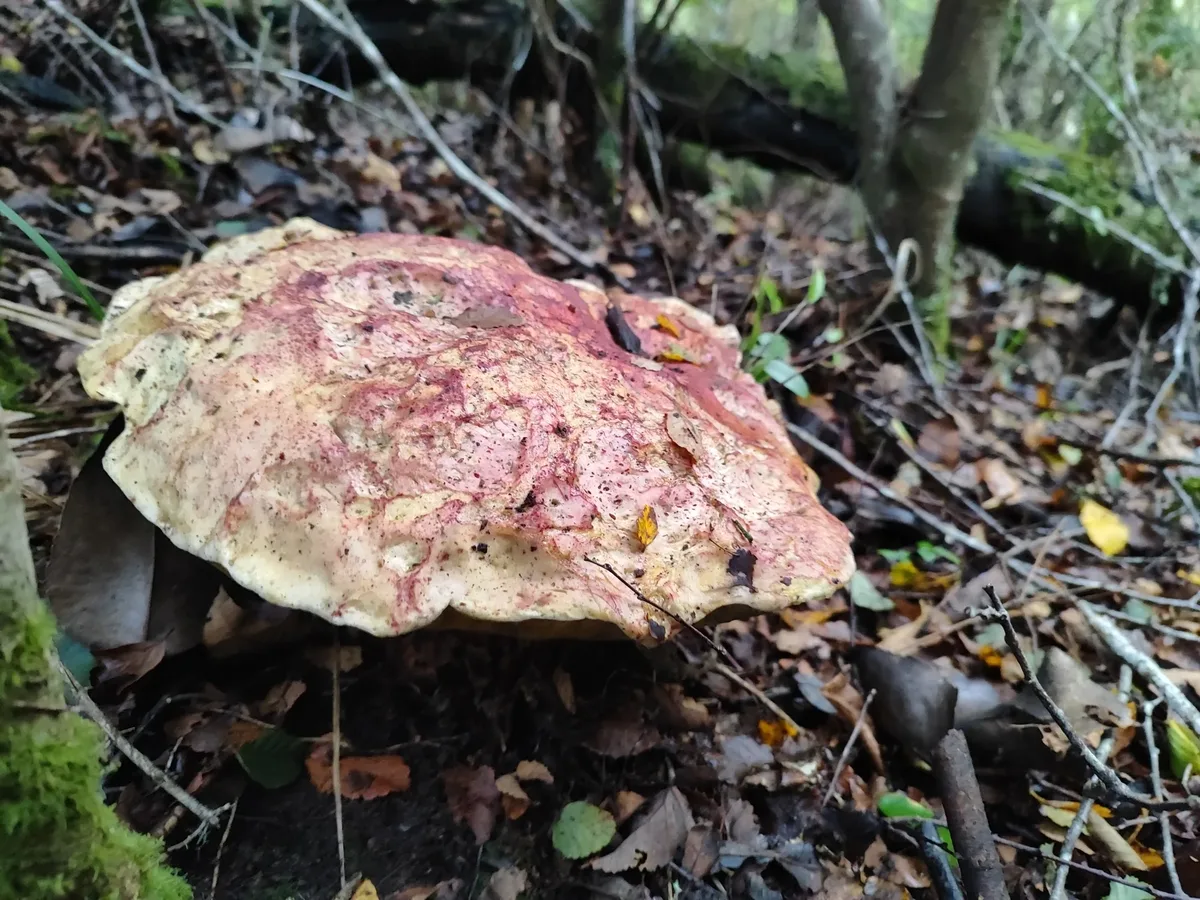 © salvador camaño (CC BY 4.0)
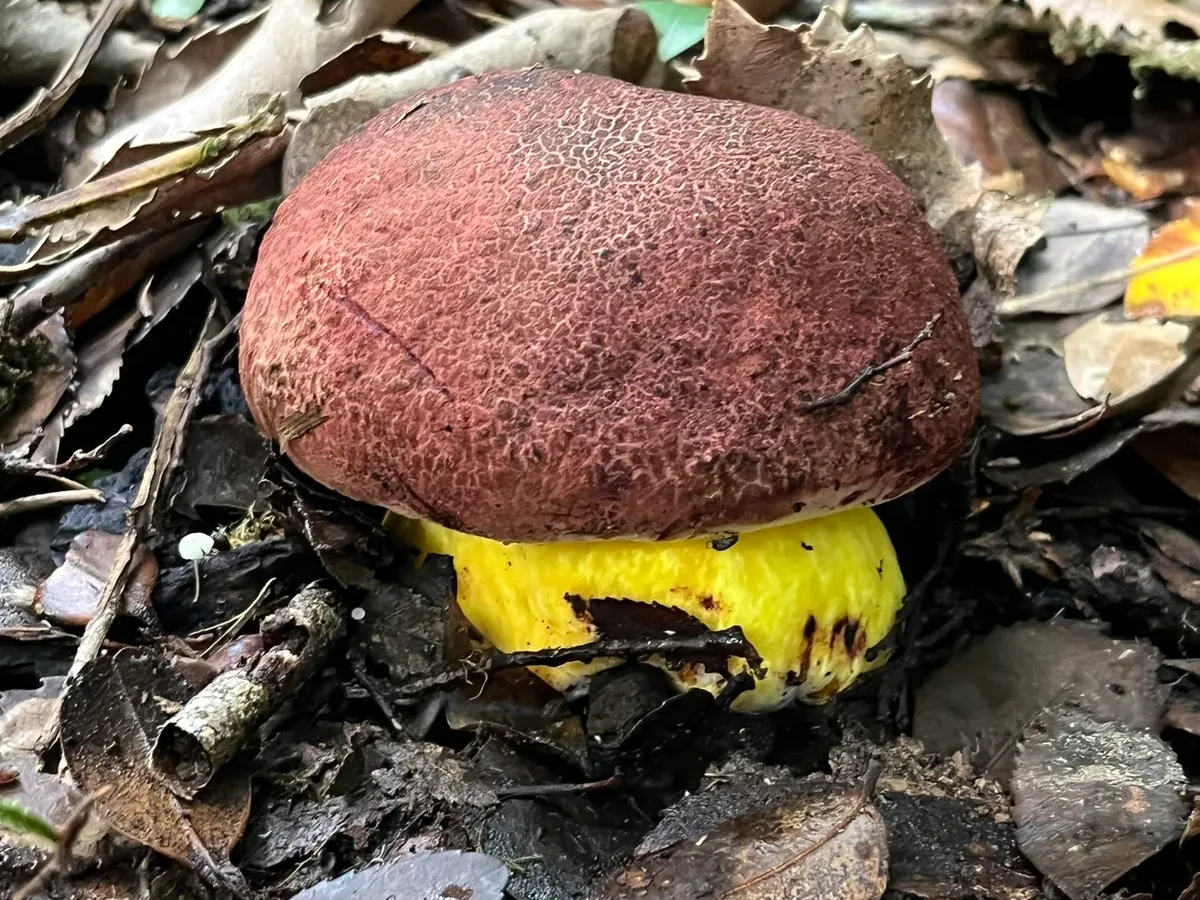 © Pablo Silva (CC BY)
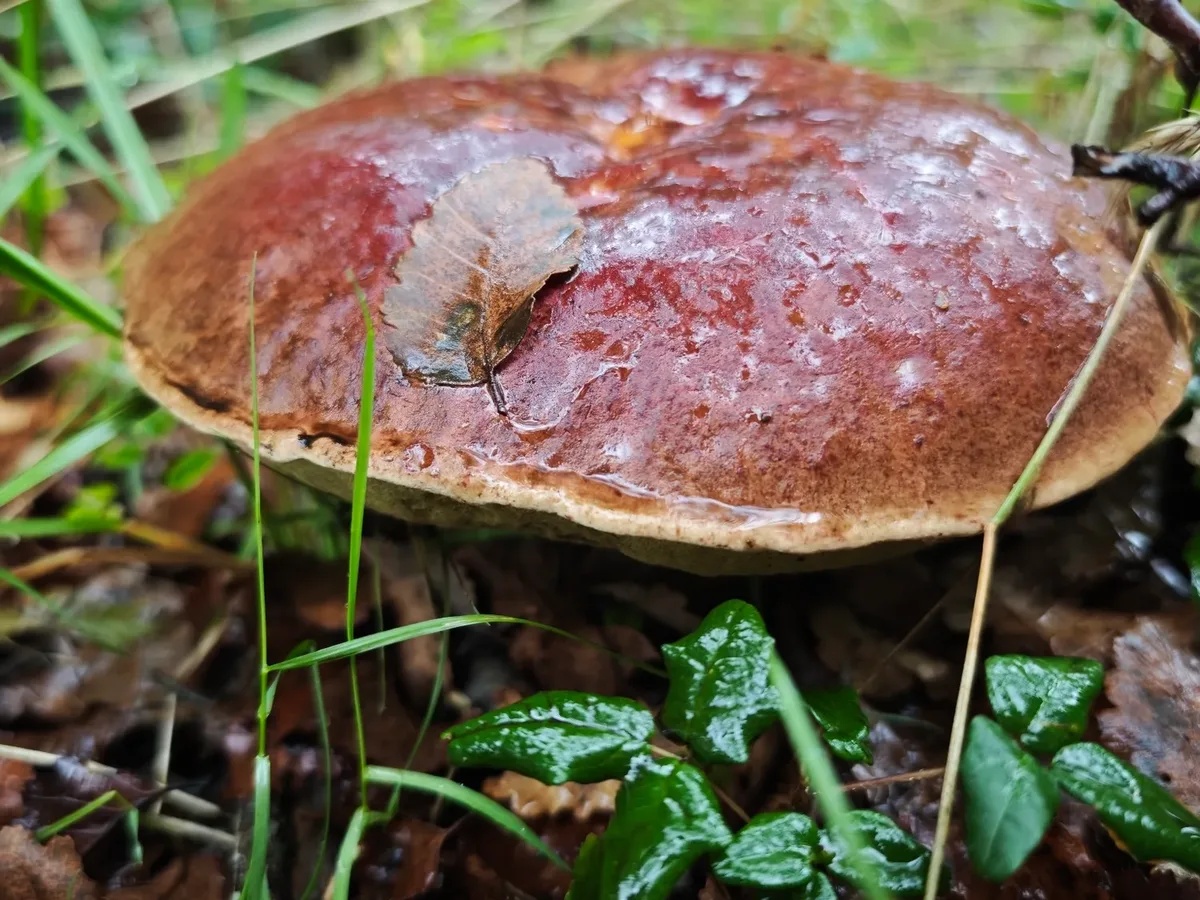 © Salvador Camaño (CC BY)
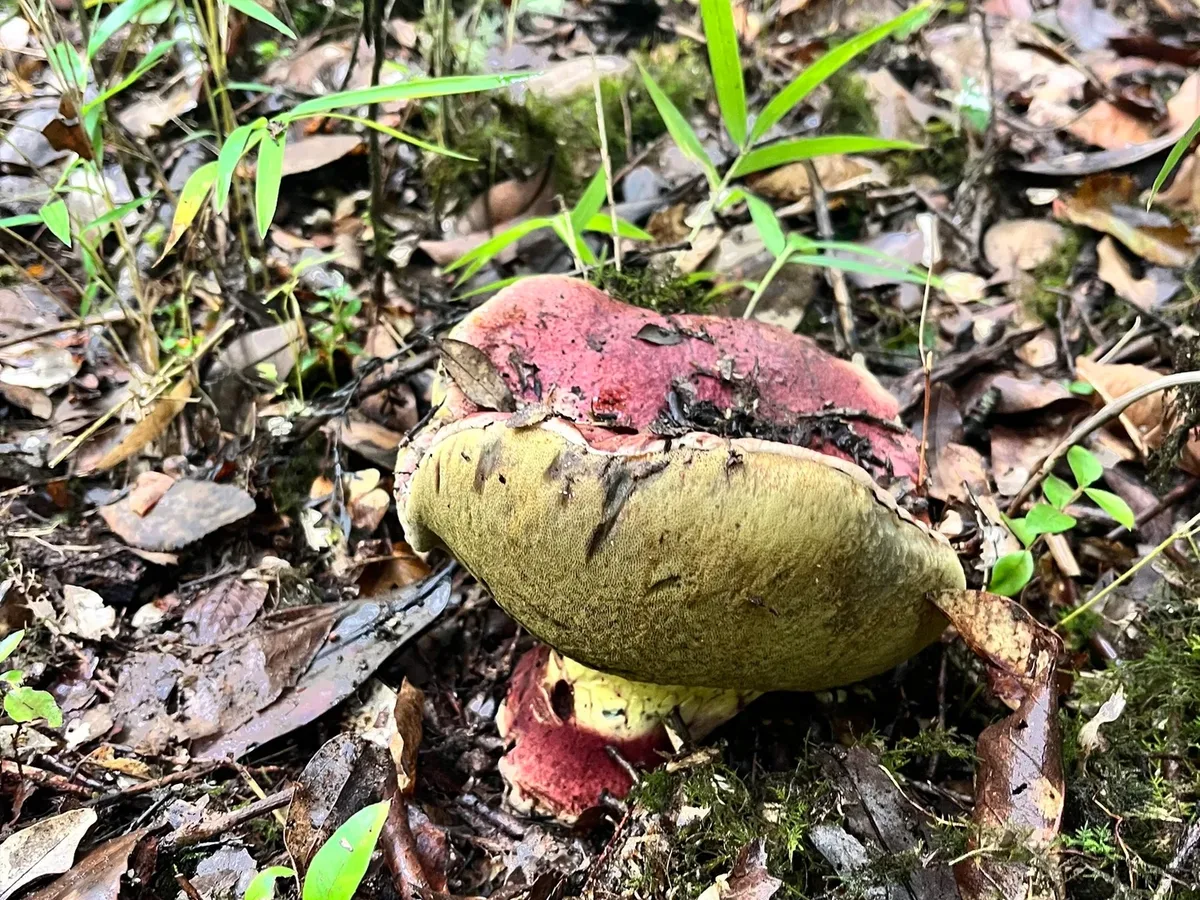 © Pablo Silva (CC BY)
 © nitsuga74 (CC BY)
 © Pablo Silva (CC BY)
 © Cristian Riquelme (CC BY)
 © Salvador Camaño (CC BY)
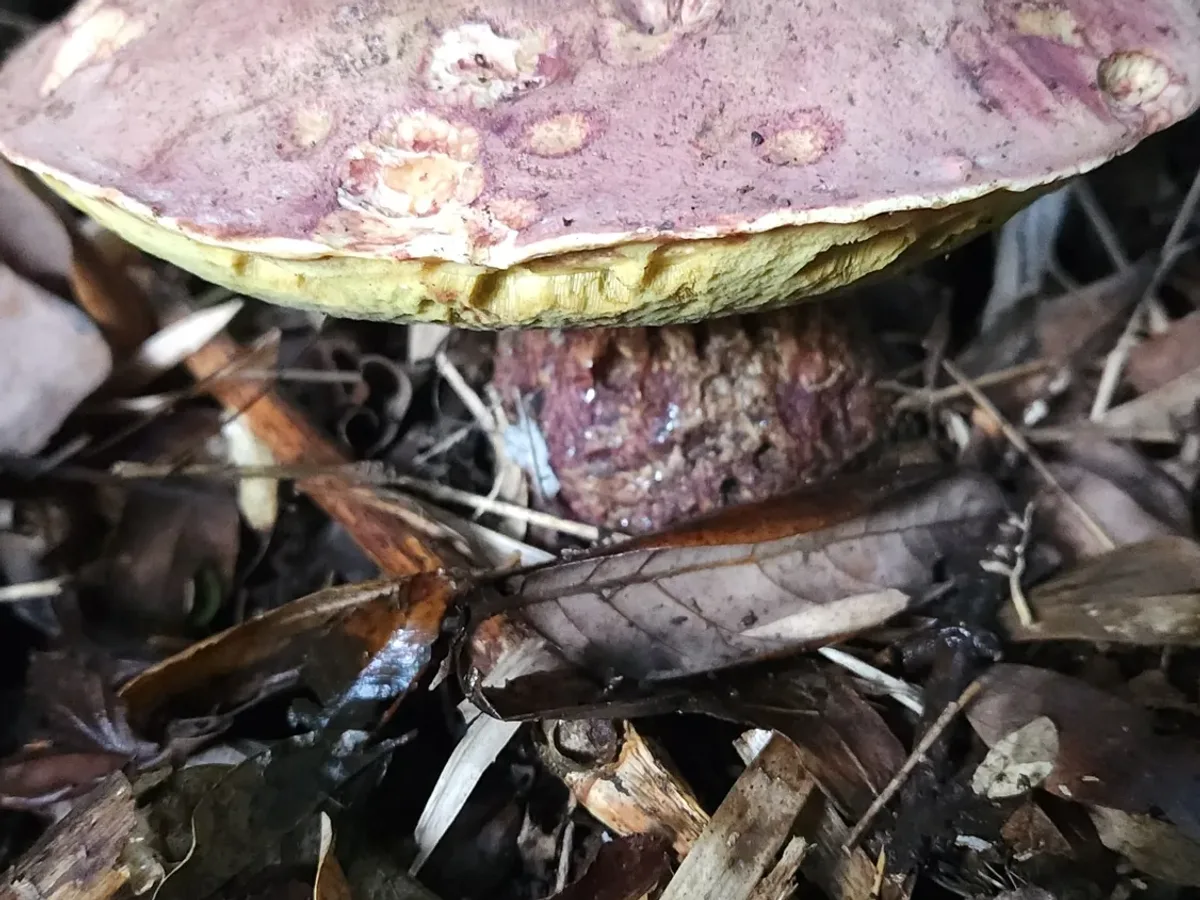 © La florifunga🌱 (CC BY)
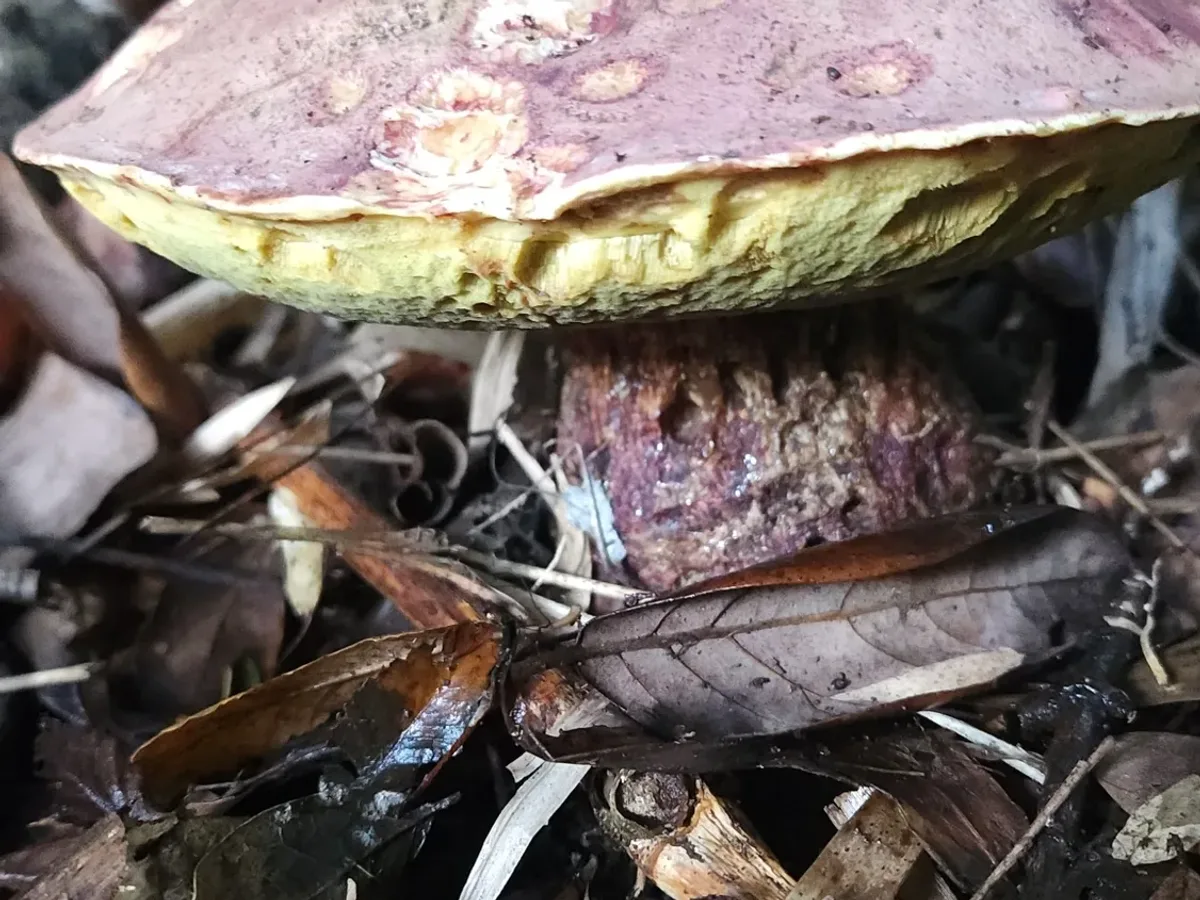 © La florifunga🌱 (CC BY)
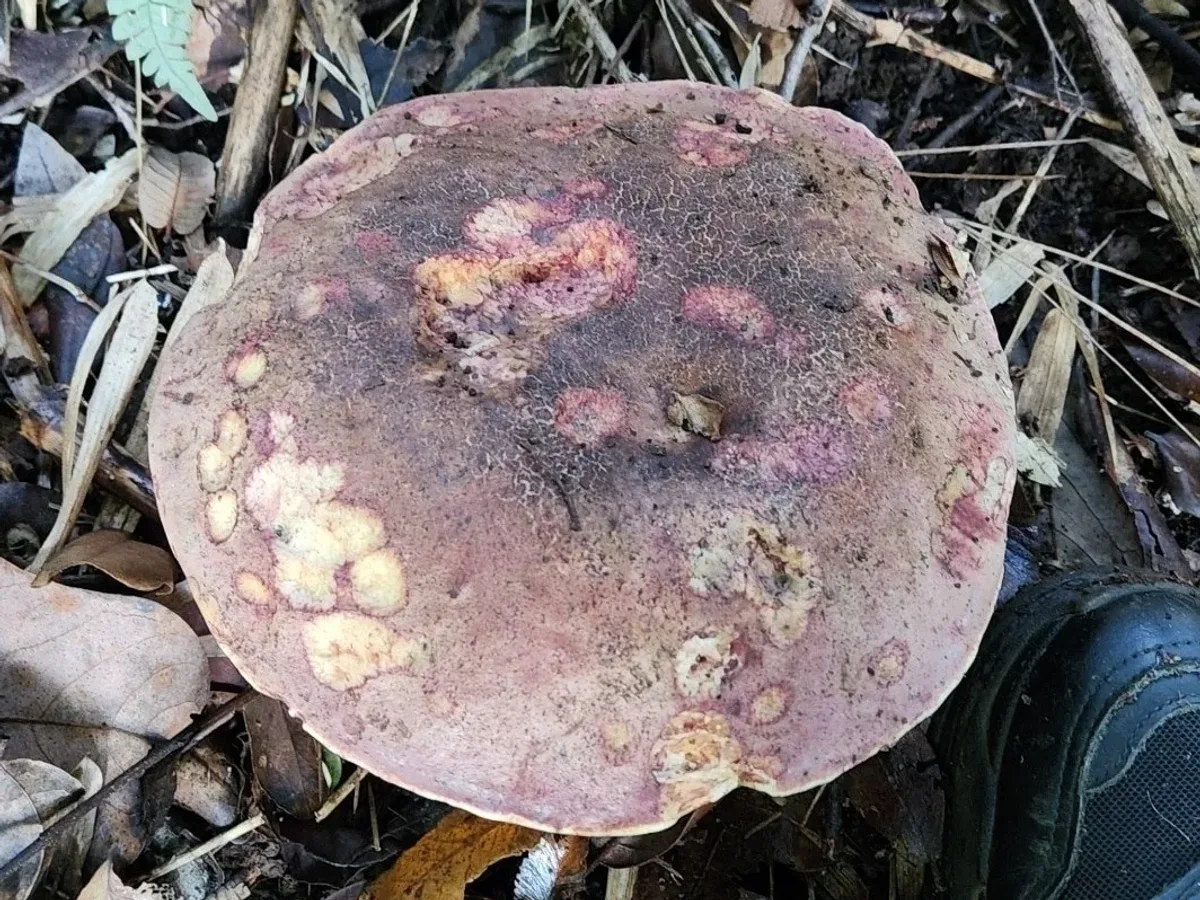 © La florifunga🌱 (CC BY)
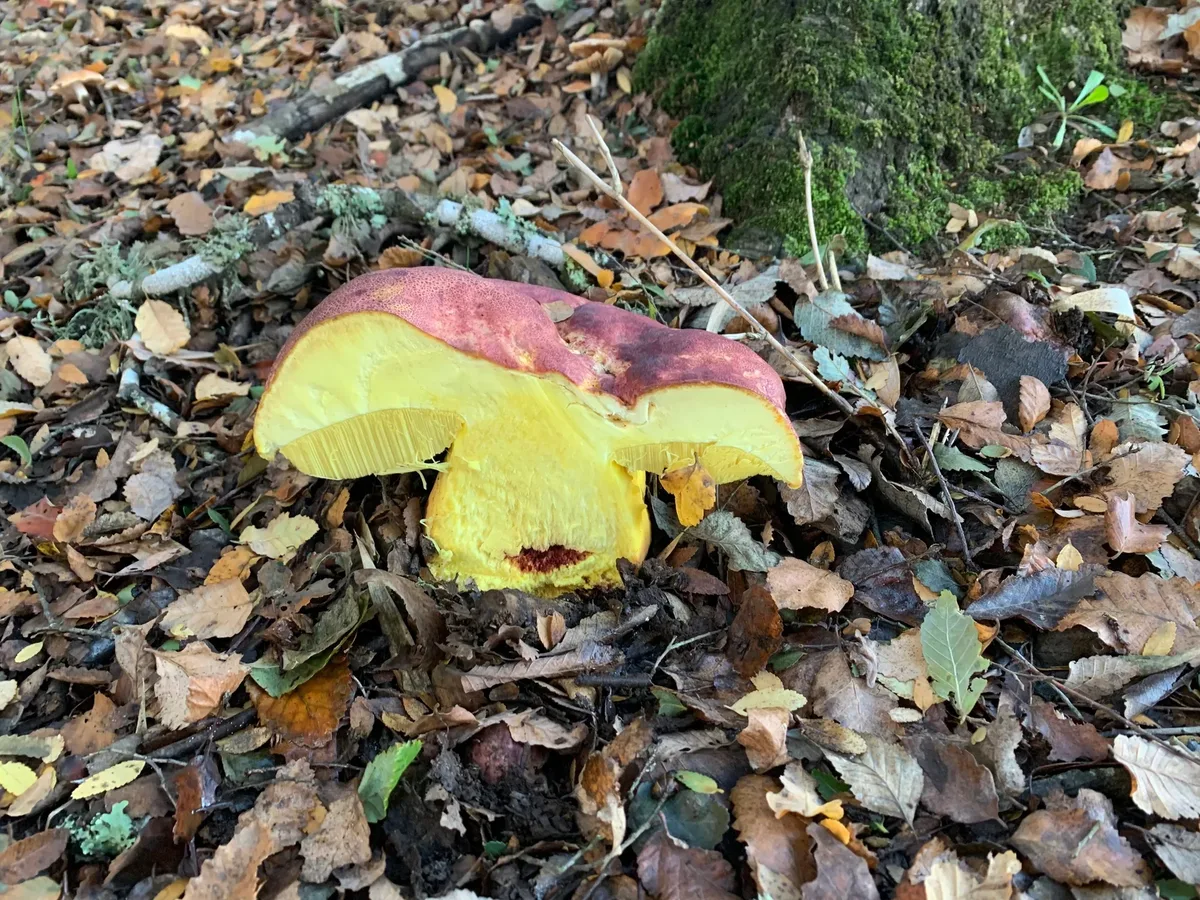 © nitsuga74 (CC BY 4.0)
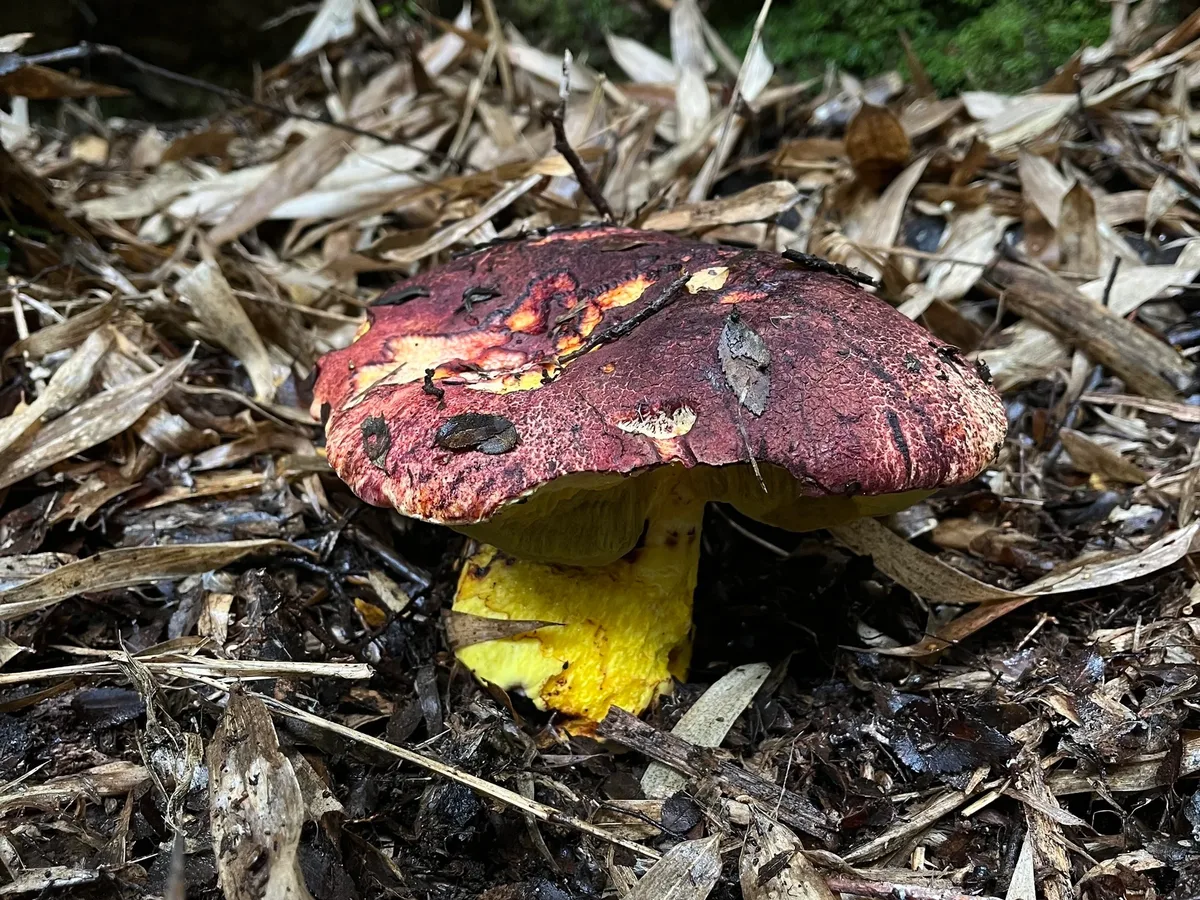 © Cristian Riquelme (CC BY 4.0)
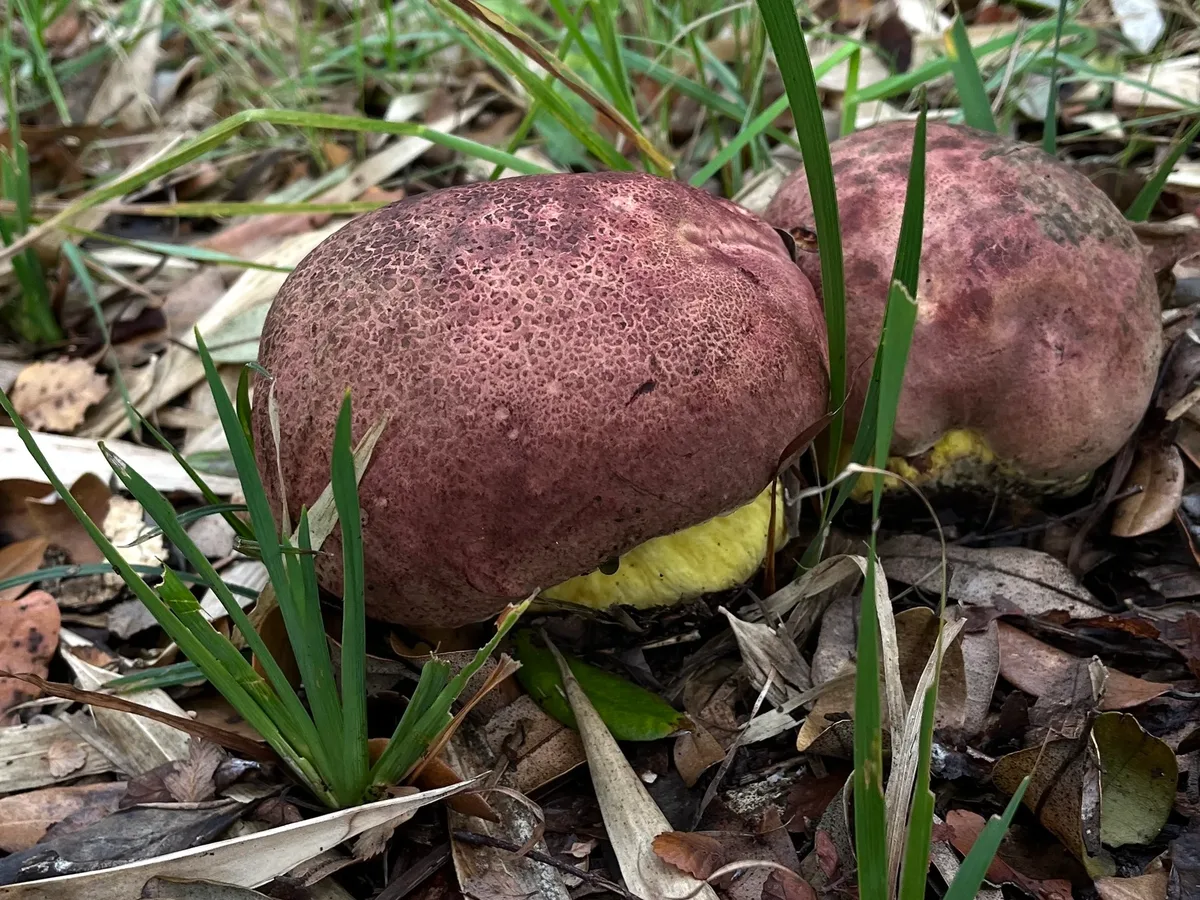 © Cristian Riquelme (CC BY 4.0)
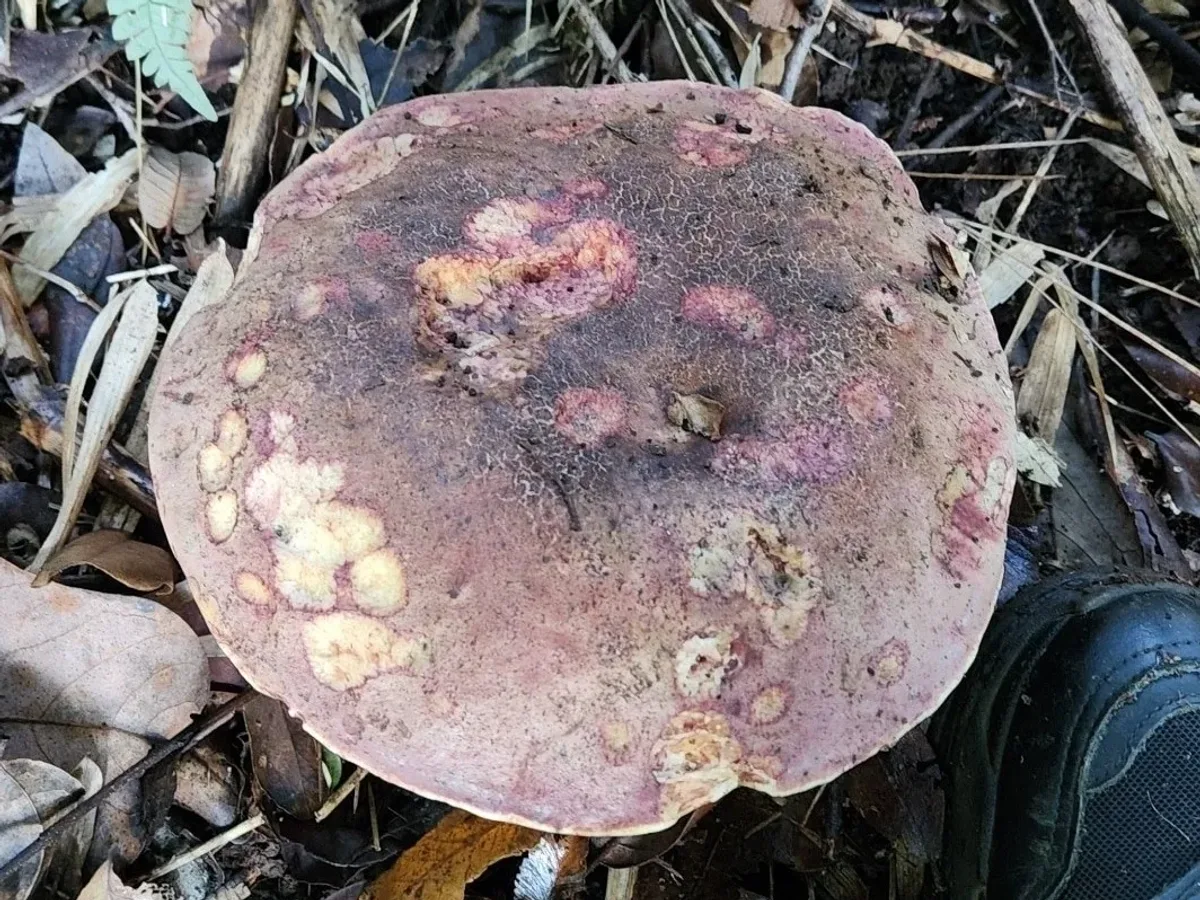 © La florifunga🌱 (CC BY 4.0)© salvador camaño (CC BY 4.0)© Pablo Silva (CC BY)
One of the best mushrooms you can bring home - once you are certain of the identification.
How to recognise it
Butyriboletus loyo is a bolete of striking proportions.
Cap
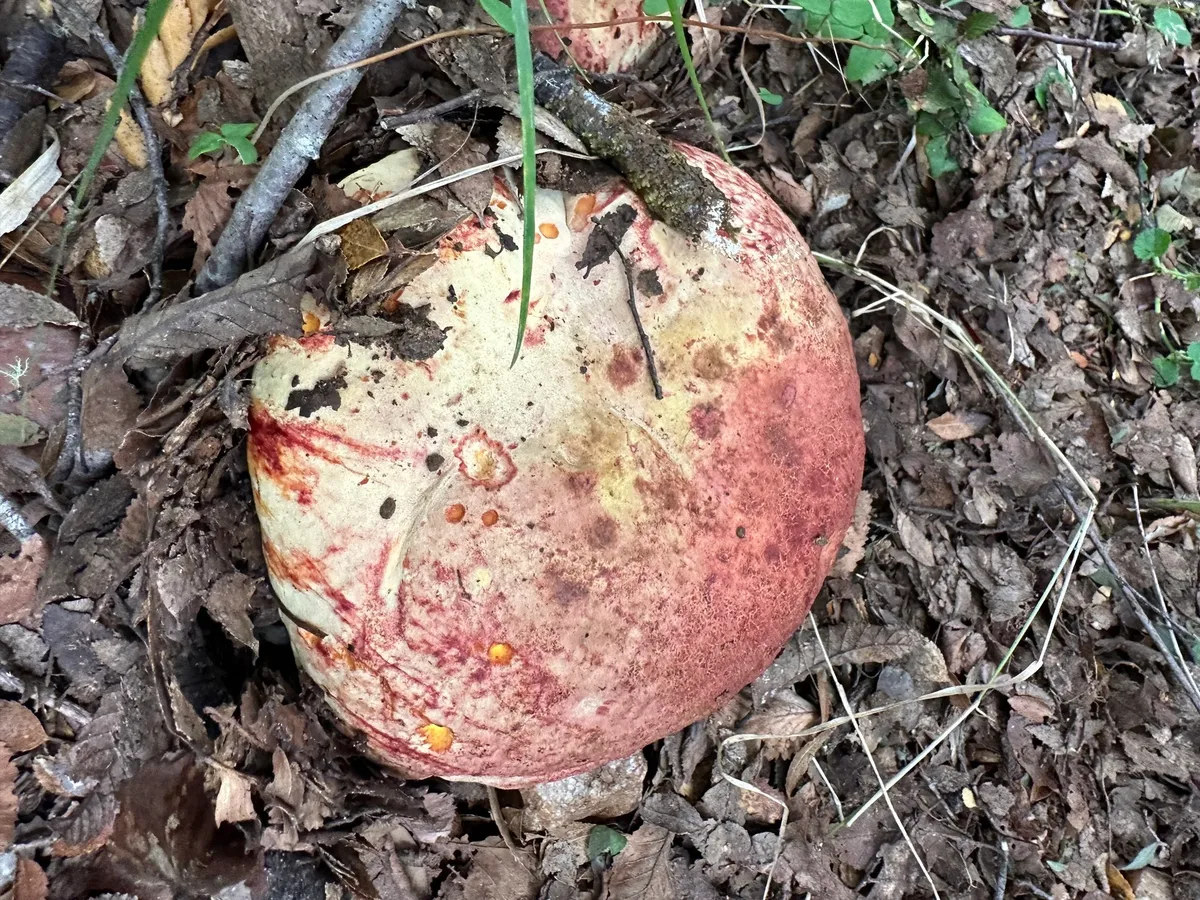
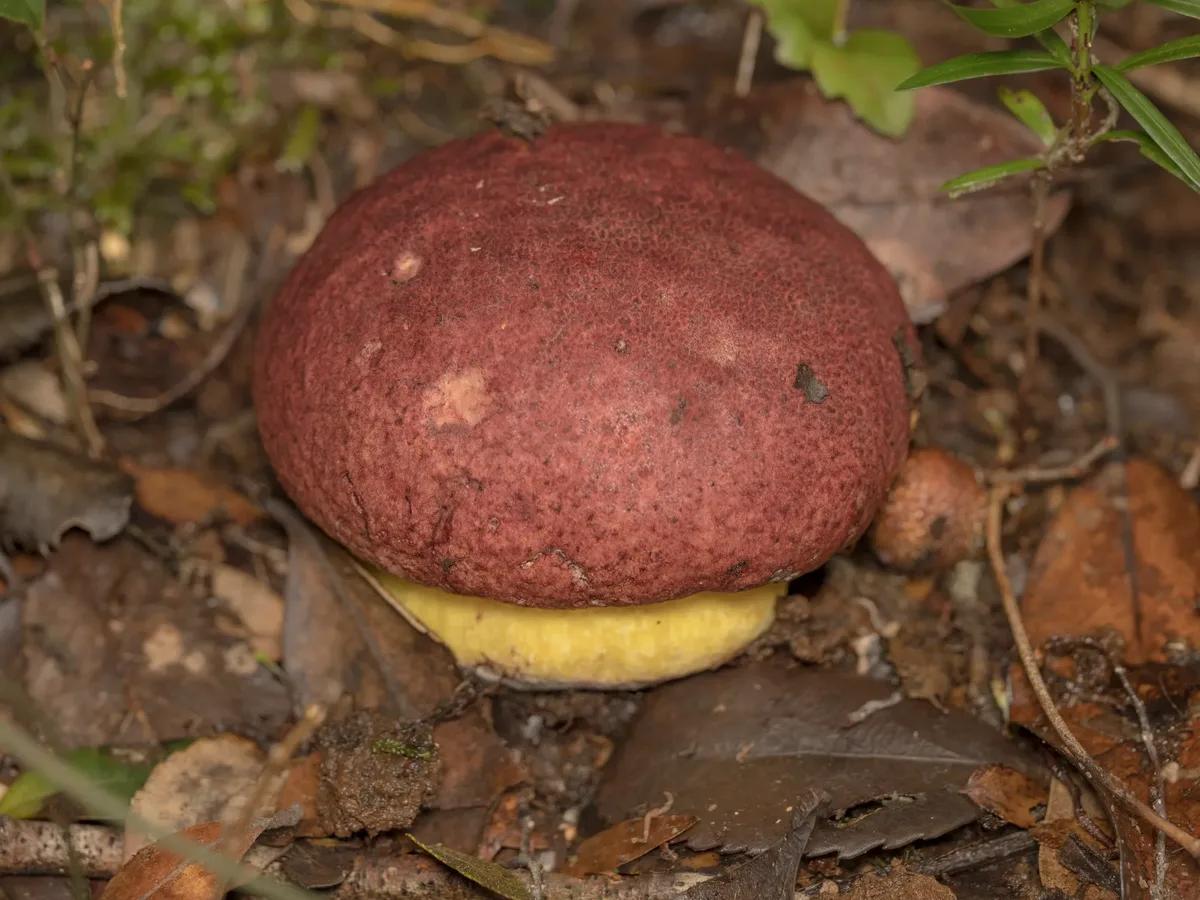
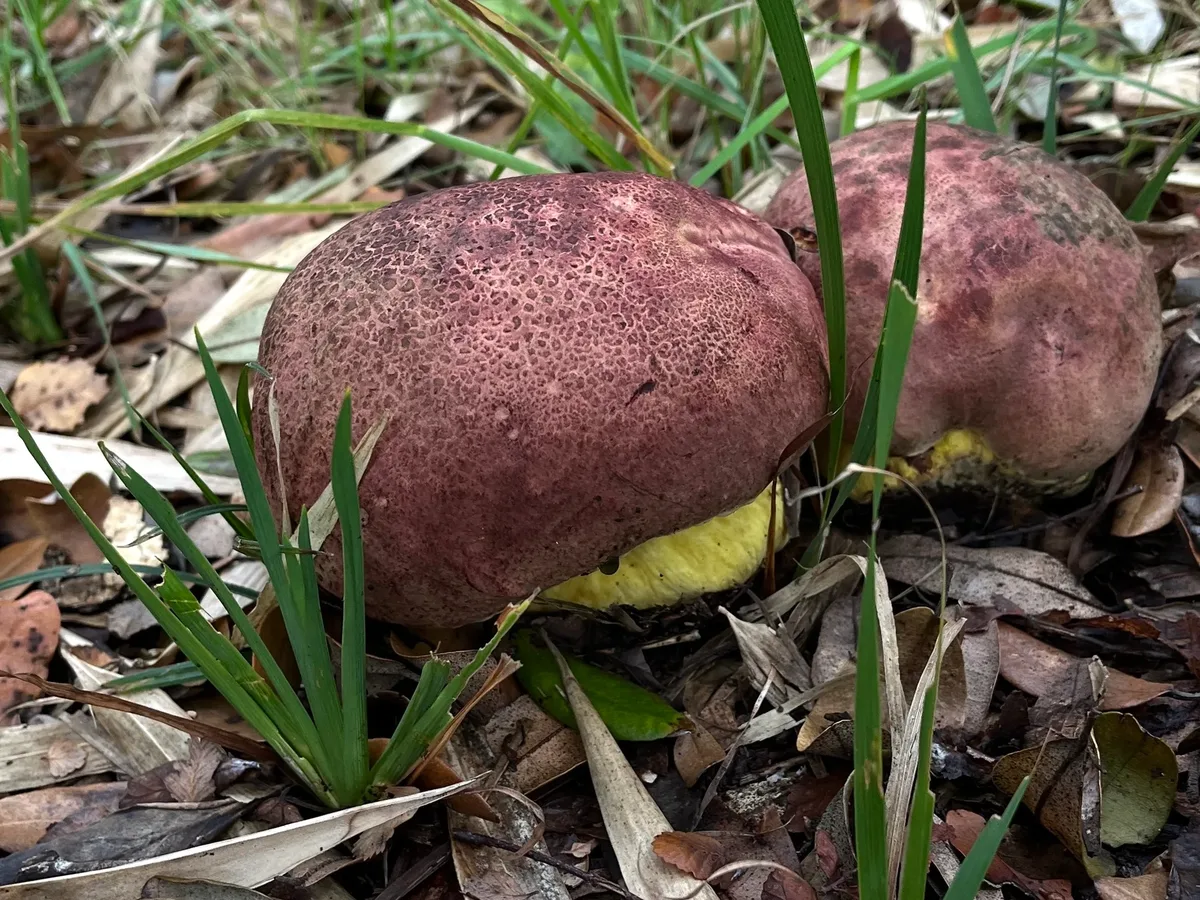
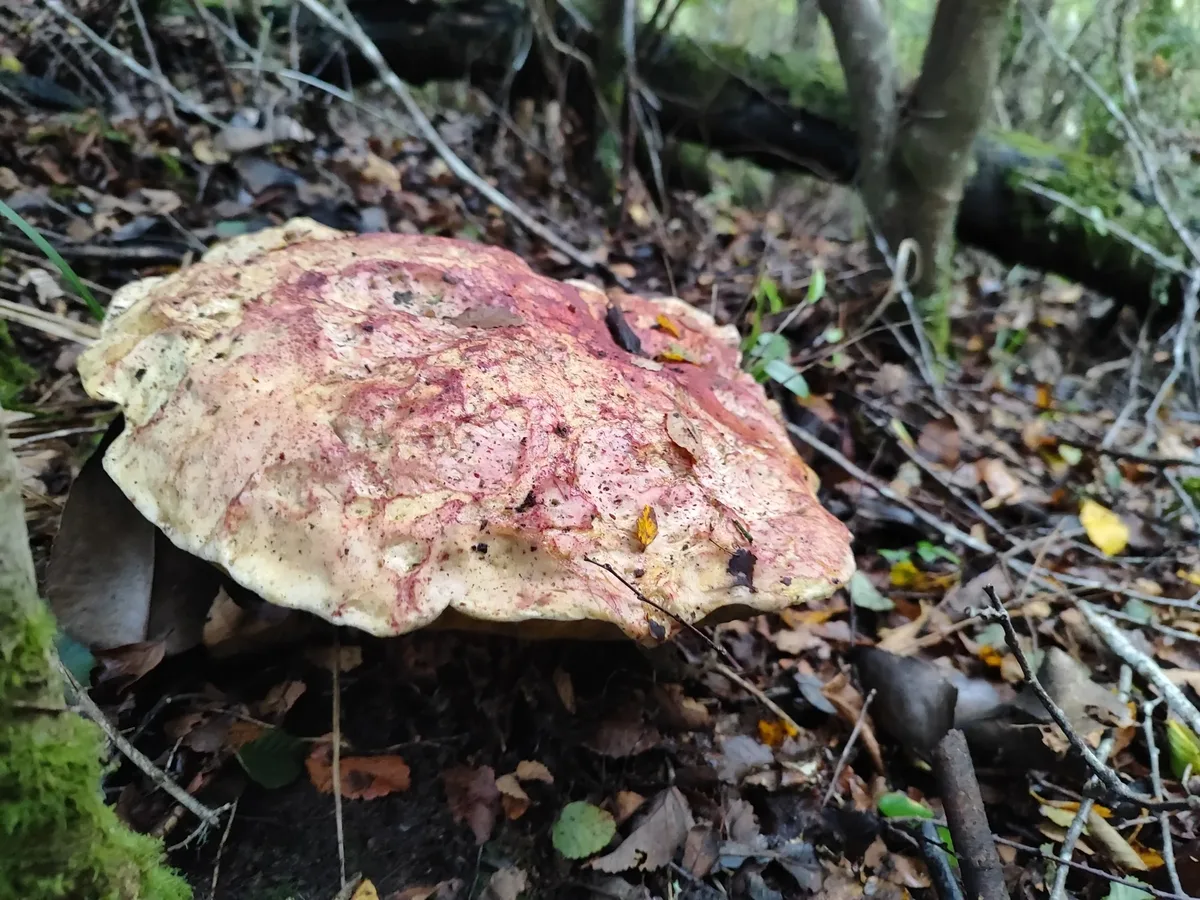
The cap begins as a tight hemisphere - almost a dome - then flattens to a broad cushion that can reach 35 cm across. Individual fruitbodies occasionally tip the scales at two or three kilograms, making the loyo one of the heaviest boletes in the world.
The surface is smooth and dry when conditions are arid, becoming faintly tacky after rain. The colour runs from deep mahogany to dark reddish-brown, sometimes with a paler, ochre-tinged margin.
Flesh
The flesh is white to pale yellow, firm and dense when young, softening slightly at full maturity. Cut or bruise the cap and the exposed flesh will often flush blue within seconds - a reaction driven by the oxidation of variegatic acid and oxygenases, the same biochemistry seen in many European porcini relatives.
Gills / Pores
The pores on the underside are small and fine, initially white to pale yellow, ripening to a greenish-olive tone as spores mature - that colour shift is the most reliable cue that the mushroom is ready to release its spores.
Stem
The stout stipe is pale yellowish-white to buff, typically decorated with a fine reddish reticulum (a network of raised ridges) that is more pronounced toward the apex, another characteristic shared with Boletus sensu lato relatives worldwide.
Where & when it grows
Habitat
The loyo exists only within a narrow arc of temperate Valdivian forest in south-central Chile, from the Maule region southward into Los Lagos - a range that mirrors almost exactly the distribution of its host trees in the genus Nothofagus, the southern beeches.
This geographic fidelity is not incidental: the loyo is strictly ectomycorrhizal, meaning its underground mycelium forms intimate, mutually beneficial unions with the fine root tips of Nothofagus trees.
The fungus wraps each feeder root in a sheath of hyphae, extending a dense network out into the surrounding soil to mine for water, nitrogen, and phosphorus; in return, the tree feeds the mycelium photosynthetically fixed carbon sugars it cannot produce itself.
This partnership is estimated to have roots (literally and figuratively) spanning decades - the mycelium in the soil beneath a mature forest can be far older than any single fruitbody, quietly persisting through seasons when conditions never trigger the production of visible mushrooms.
Loyo is found in native forest - not in plantations of introduced species - and it sometimes congregates in partial arcs or full fairy rings where the underground mycelium has expanded outward over many years from a central origin point.
When
In the Southern Hemisphere, loyo fruits in late summer and autumn, roughly February through May, with peak abundance typically in March and April.
This window is governed by falling air temperatures, seasonal rainfall, and soil temperature dropping into the narrow range that triggers fruiting - roughly 8-18 °C at root depth.
The visible fruitbodies can appear surprisingly quickly after triggering rains following a dry spell, rising from soil that shows no surface sign of fungal activity.
The mycelium does not die between seasons; it simply ceases to invest energy in the costly production of fruitbodies when conditions are unfavourable, persisting invisibly underground through the dry Chilean summer and the brief austral winter until temperature and moisture align again.
Collectors who have worked the same forest stands over many years report that the timing of first flush, and the specific spots where loyo appears, tend to repeat with remarkable consistency from one season to the next - a reflection of how stable the underlying mycorrhizal network is.
How it grows
Loyo is an obligate ectomycorrhizal species: every fruitbody you see above ground is the reproductive structure of a subterranean mycelial network that is physically fused with Nothofagus root tips.
This relationship is permanent for the life of both partners. It cannot be:
- separated
- replicated in sterile culture
- transferred to a foreign host
Fruitbodies push up singly or in scattered small groups directly from mineral soil beneath the canopy, usually within a few metres of the base of the host tree where fine root density is highest.
The groups occasionally arrange themselves in arcs or full rings - fairy rings - that trace the outermost edge of the mycelium's outward expansion. Because each year's growth adds only a modest annular band to the colony, a large fairy ring indicates a genuinely long-lived colony.
Sporulation is triggered by a combination of soil temperature and adequate soil moisture. The fruitbody is fully formed in compressed, undeveloped form inside the soil before conditions are right, allowing it to erupt and expand rapidly once triggered - which is why loyo can seem to appear almost overnight after the first autumn rains.
Fruiting conditions
Conservative mycorrhizal-bolete estimates; the source specifies only late summer to autumn fruiting under Nothofagus and gives no quantitative fruiting triggers.
Look-alikes
Within its restricted Chilean range, the loyo has no confirmed dangerous lookalikes in the scientific literature.
Other boletes may grow in the same Nothofagus forests, but none are known to be toxic in South America. The following combination is sufficiently distinctive to separate it from any plausible candidate:
- large size
- dark reddish-brown cap
- blue-staining flesh
- fine reticulate stipe
- growth exclusively under Nothofagus
The blue-staining reaction is particularly useful: squeeze a sliver of cap flesh between your fingers and watch for rapid bluing. However, that reaction alone is not an absolute safety guarantee in all parts of the world - some blue-staining European boletes are mildly toxic - so context matters.
In Chile under southern beech, a large dark-capped bolete with bluing flesh and an olive pore surface at maturity is virtually certain to be loyo.
If the pores are bright red or orange-red, do not eat it, though no such species is currently recorded growing alongside loyo in these forests.
Harmless. The loyo's blue-staining flesh and its growth habit under southern beech (Nothofagus) are characteristic.
In the kitchen
Picking & cleaning
The Fungi Foundation, in collaboration with indigenous Mapuche communities and Chile's forestry authority (CONAF), has developed a sustainable harvest protocol specifically for loyo, given its IUCN Endangered status and history of commercial overexploitation.
The key guidance: do not select by size. Instead, assess the colour of the pore surface - when the hymenophore has turned a definite olive-green, the spores are mature and have already begun to disperse, meaning the mushroom has fulfilled its reproductive function. At this stage it is ecologically acceptable to harvest.
Picking before the pores turn olive removes the mushroom before spore dispersal is complete.
When cutting:
- use a clean knife
- sever the stipe cleanly at or just below soil level
- fill the cut with loose soil or leaf litter to protect the exposed mycelium
Do not use a pulling or twisting motion that tears the mycelial network. Brushing away soil to expose and then rebury the mycelium is unnecessary and damaging.
Given the species' endangered status, restraint is the most important rule: if in doubt, leave it. Only harvest from healthy, abundant patches, and take one fruitbody from each ring or group rather than clearing the flush entirely.
Cooking
Loyo is frequently compared to the Italian porcini (Boletus edulis) in flavour and texture, and the comparison is apt: the flesh is dense, meaty, and carries a deep, nutty, umami-rich savour that holds up well to heat without becoming watery or bitter.
In Mapuche tradition it is eaten fresh, simply roasted or cooked over a wood fire, sometimes dried for storage and rehydrated through the winter months.
In contemporary Chilean cooking it is treated as a premium ingredient: thick slices fried in butter or olive oil with garlic develop a golden crust while the interior stays firm. It pairs naturally with roasted meats, egg dishes, and risotto.
The bluing flesh is cosmetically alarming when raw but disappears on heating - cooked loyo is pale and appetising.
Drying concentrates its flavour significantly, and the rehydration liquid is aromatic and worth adding to the dish.
Because the species is endangered, using every part of any specimen harvested responsibly is both ethically and gastronomically appropriate: stems included, trimmed clean and cooked the same way as the cap.
Good to know
Butyriboletus loyo is a celebrated edible mushroom, considered choice by everyone who has eaten it, and it sits at the centre of Mapuche food culture in Chile. It is not poisonous and has no known toxins.
The safety concern is not personal - it is ecological. The IUCN assessed the species as Endangered in 2019 (criterion A2cd+3cd+4cd), citing indiscriminate overexploitation driven by its high commercial value and cultural importance.
Chilean decree DS 38/2015 provides some legal protection, but enforcement is difficult across large forest areas. Because the species is strictly mycorrhizal and cannot be cultivated, every kilogram harvested is taken permanently from a wild population that cannot be replenished by farming.
Some buyers and restaurants have added to pressure by sourcing without regard to maturity or sustainable limits.
The ethical position of the Fungi Foundation and Mapuche harvesters is clear: if you are not harvesting within the protocol, you should abstain. The protocol:
- mature spores confirmed
- single specimen per group
- clean cut
- hole covered
The mushroom is remarkable, but the right response to rarity is restraint, not urgency.
A reference guide - never an edibility guarantee. When in doubt, leave it out.