Darwin's fungus
Cyttaria darwinii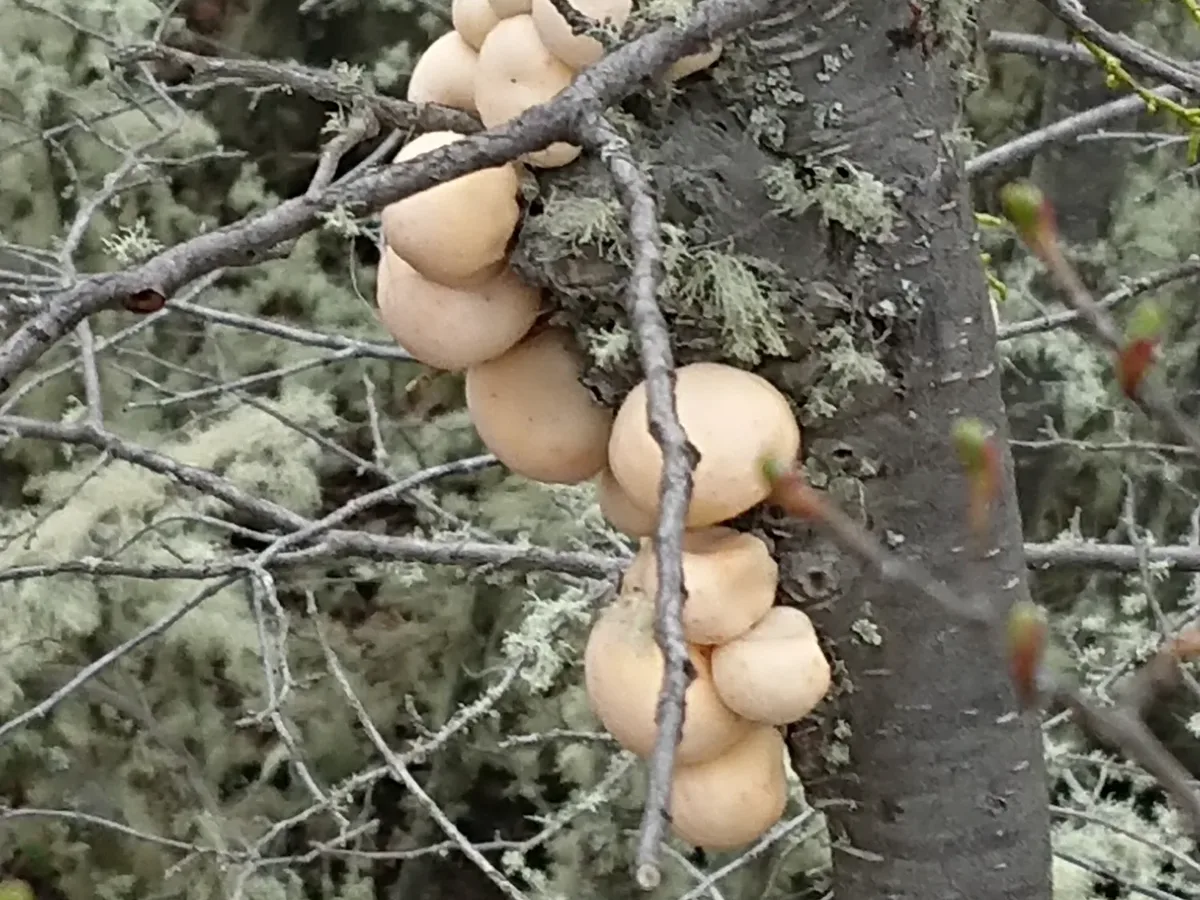 © María Regina Silva (CC BY 4.0)
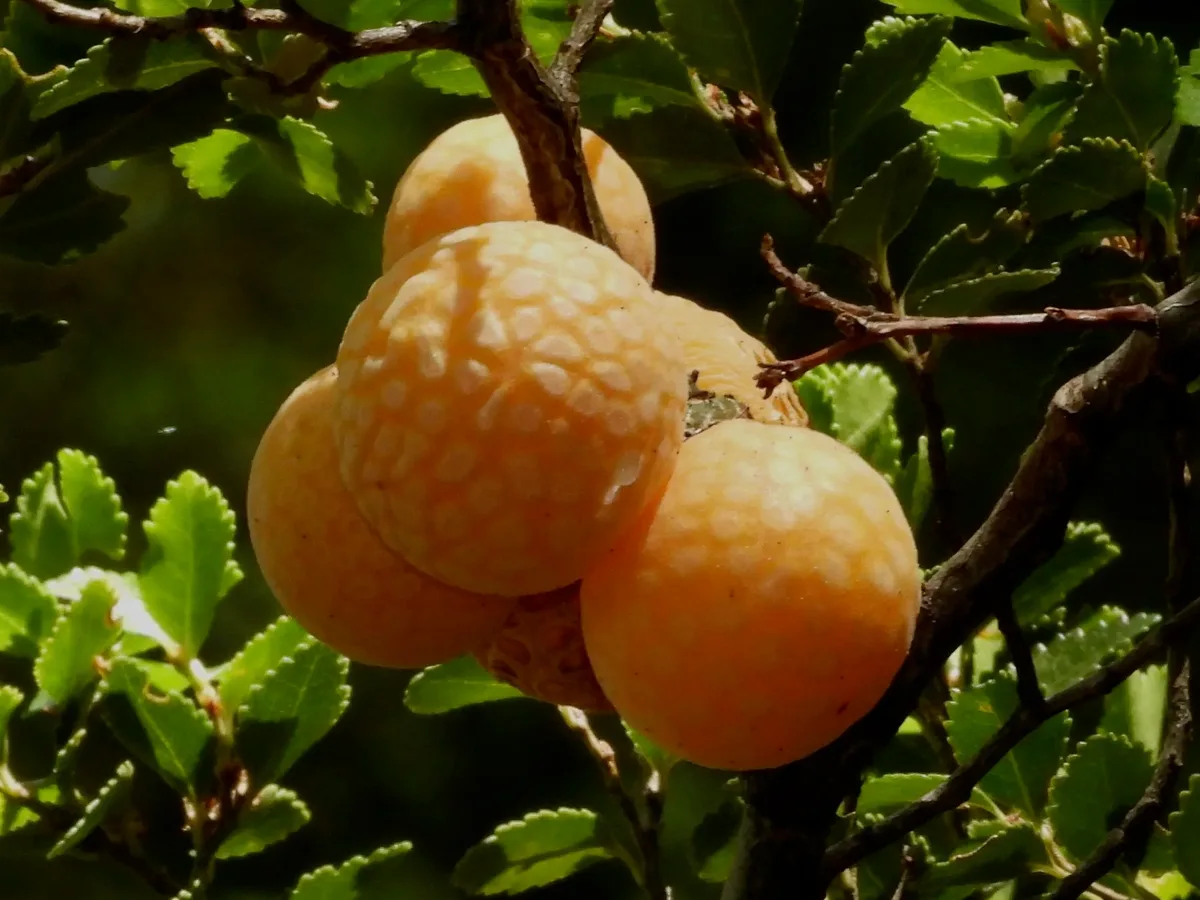 © desertnaturalist (CC BY 4.0)
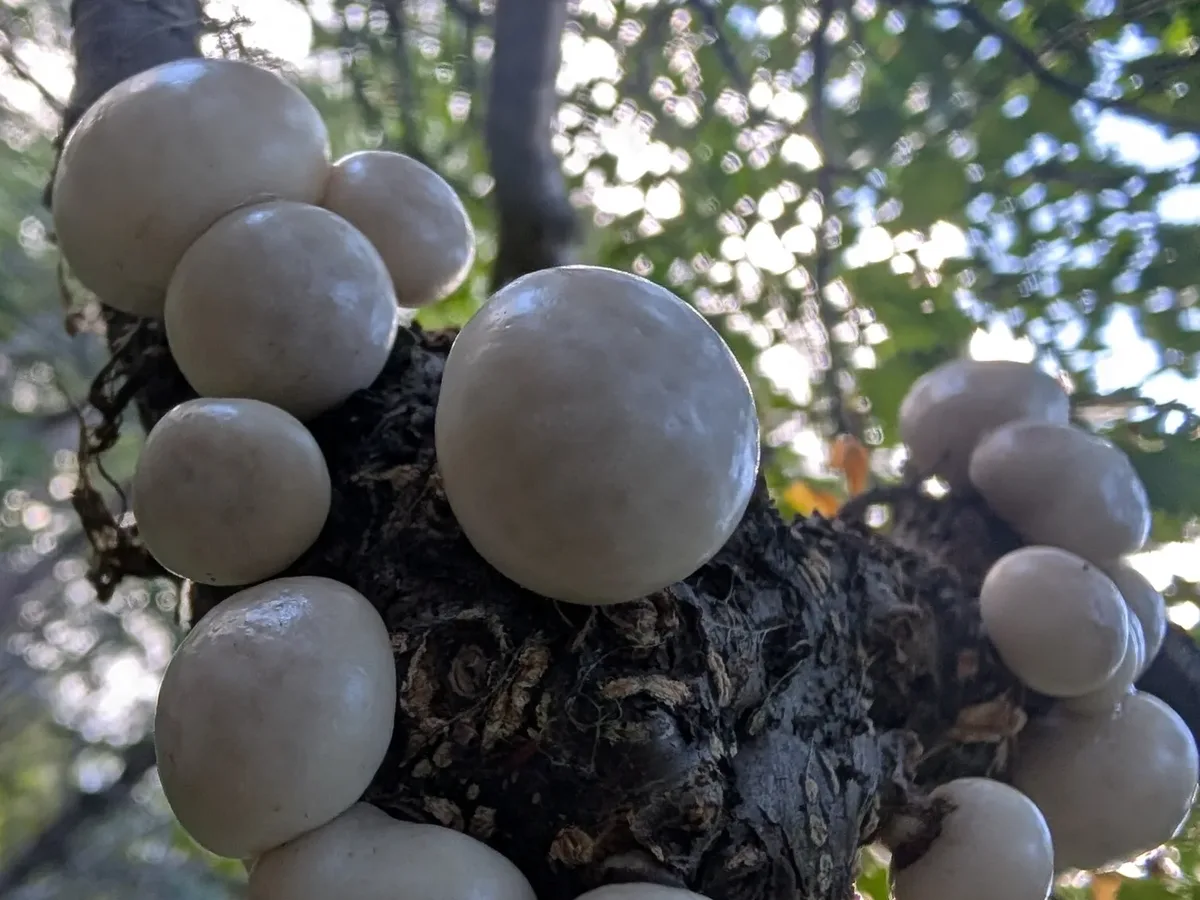 © Charlotte Kirchner (CC BY)
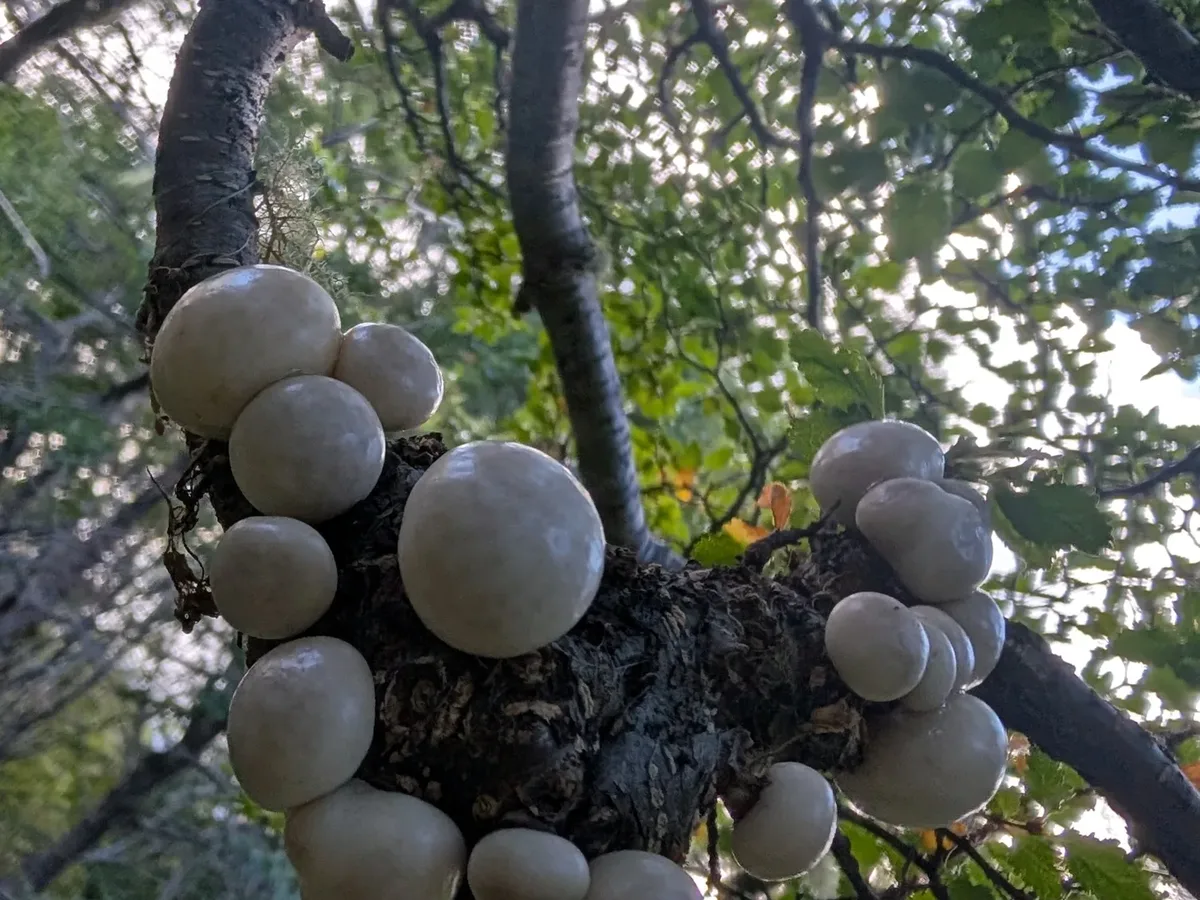 © Charlotte Kirchner (CC BY)
 Philip Precey (CC0)
 © Romi Galeota Lencina (CC BY)
 © Romi Galeota Lencina (CC BY)
 © Romi Galeota Lencina (CC BY)
 © Santiago Martín-Bravo (CC BY 4.0)
 © Natasha Haggard (CC BY 4.0)© María Regina Silva (CC BY 4.0)© desertnaturalist (CC BY 4.0)
Good to eat, once you have identified it with certainty and cooked it through.
How to recognise it
Cyttaria darwinii is immediately recognisable in the Nothofagus groves of southern South America.
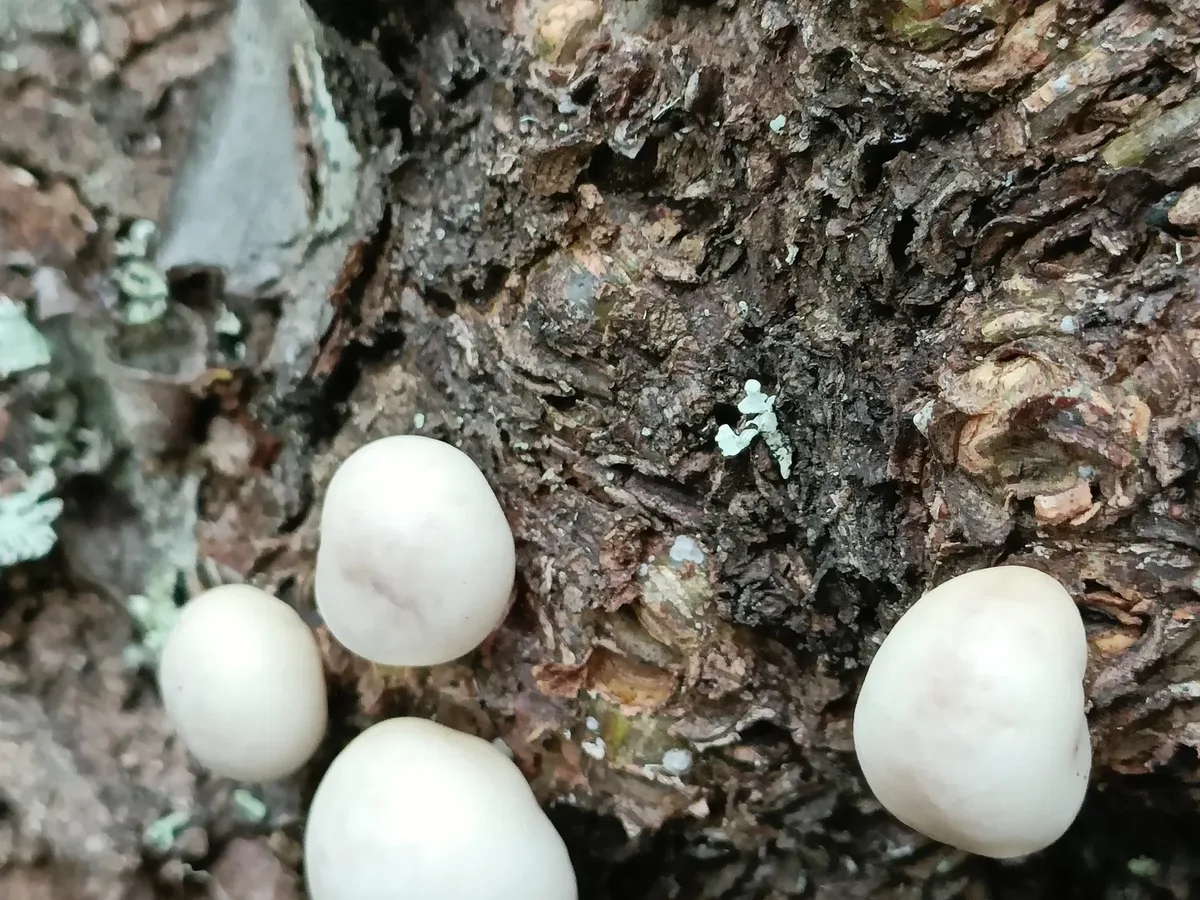
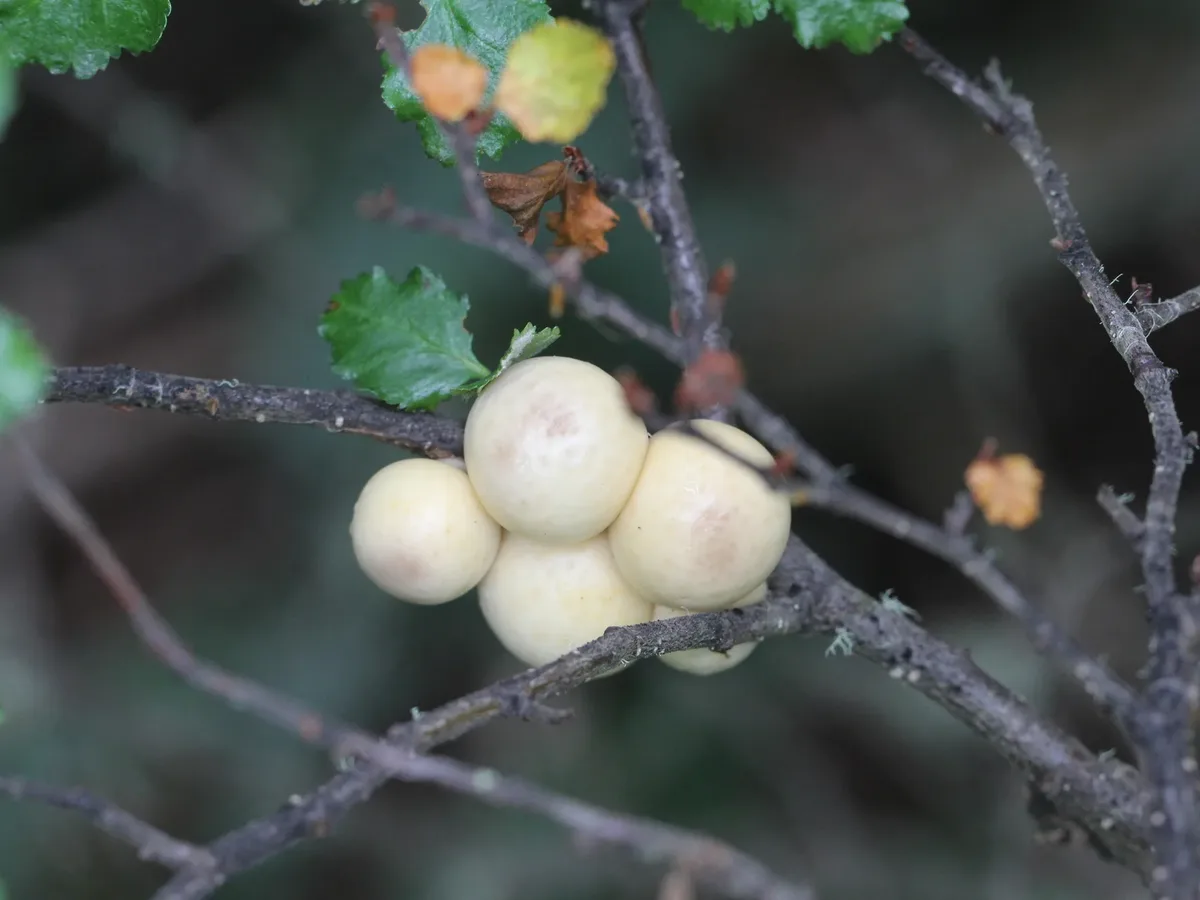
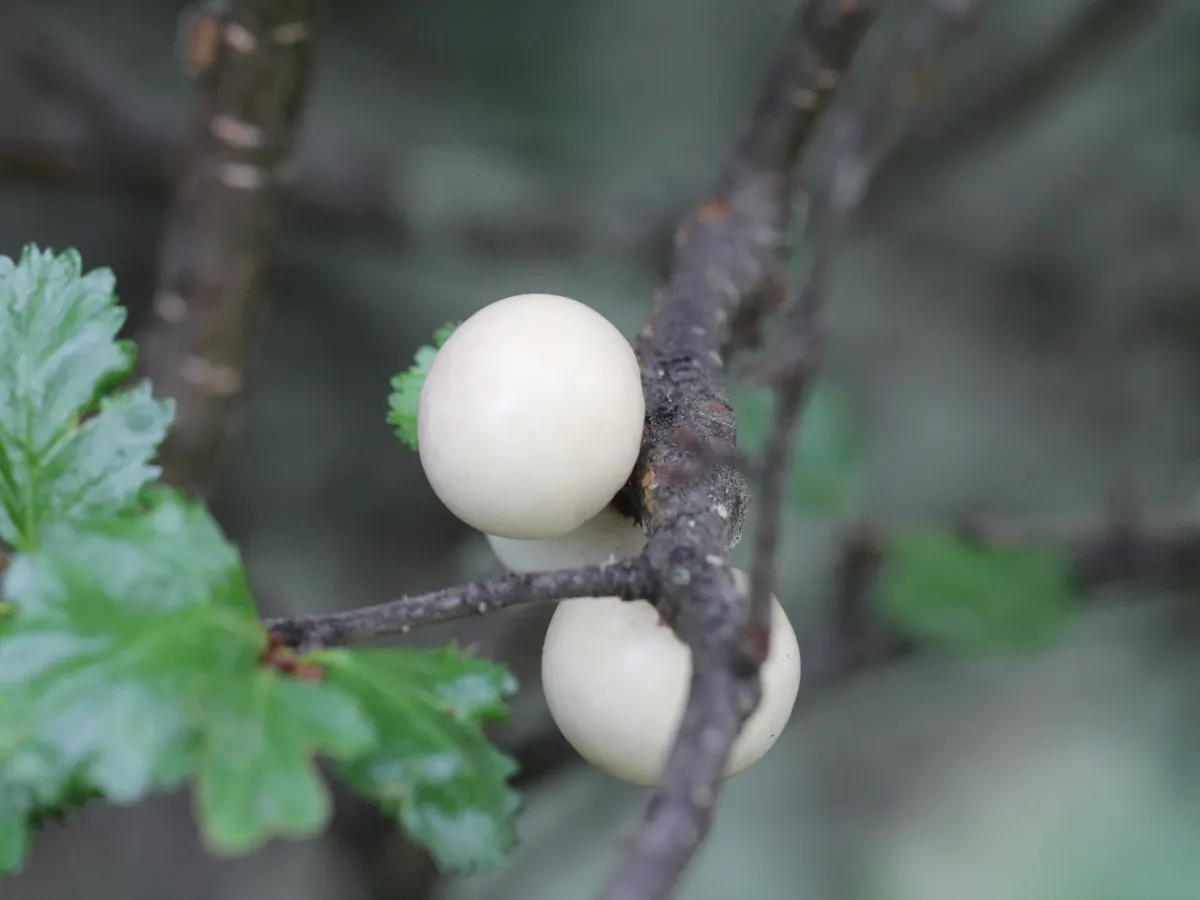
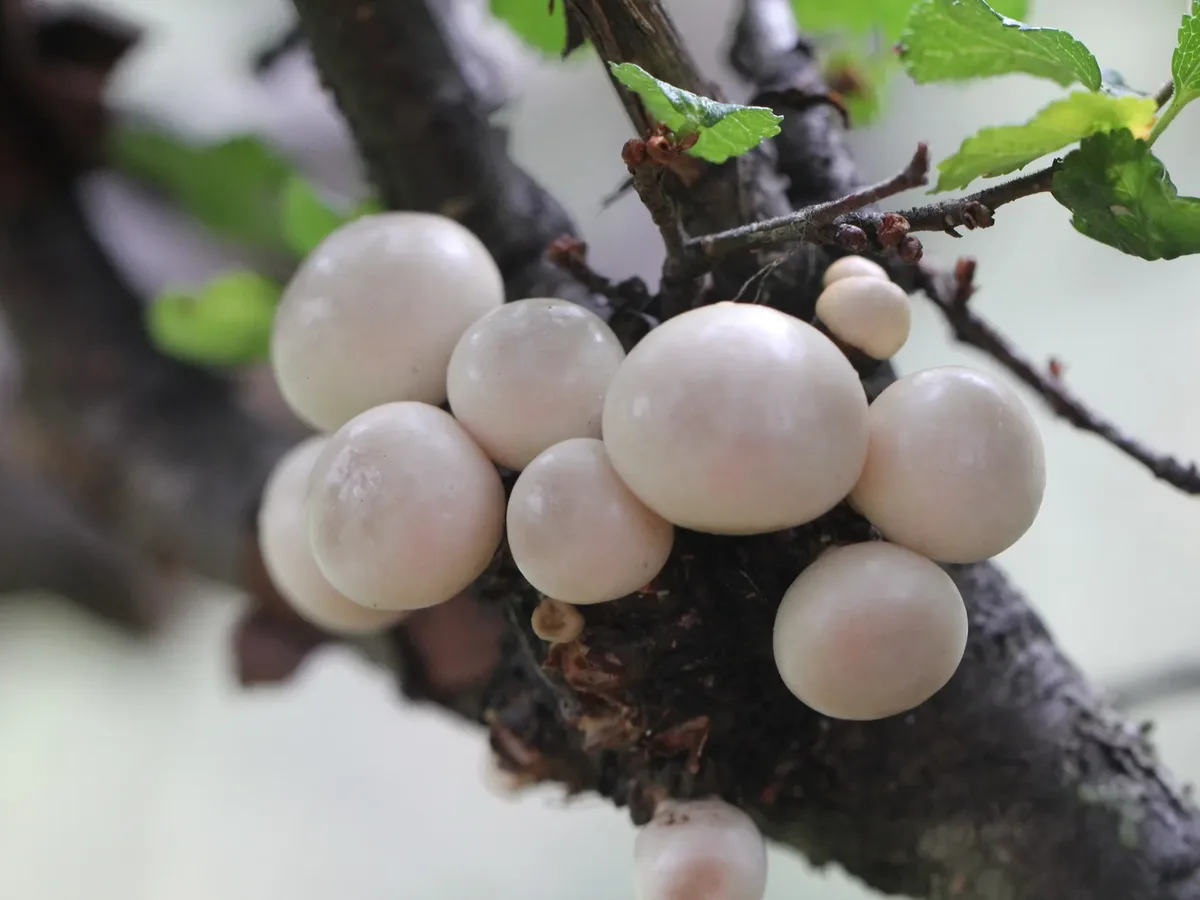
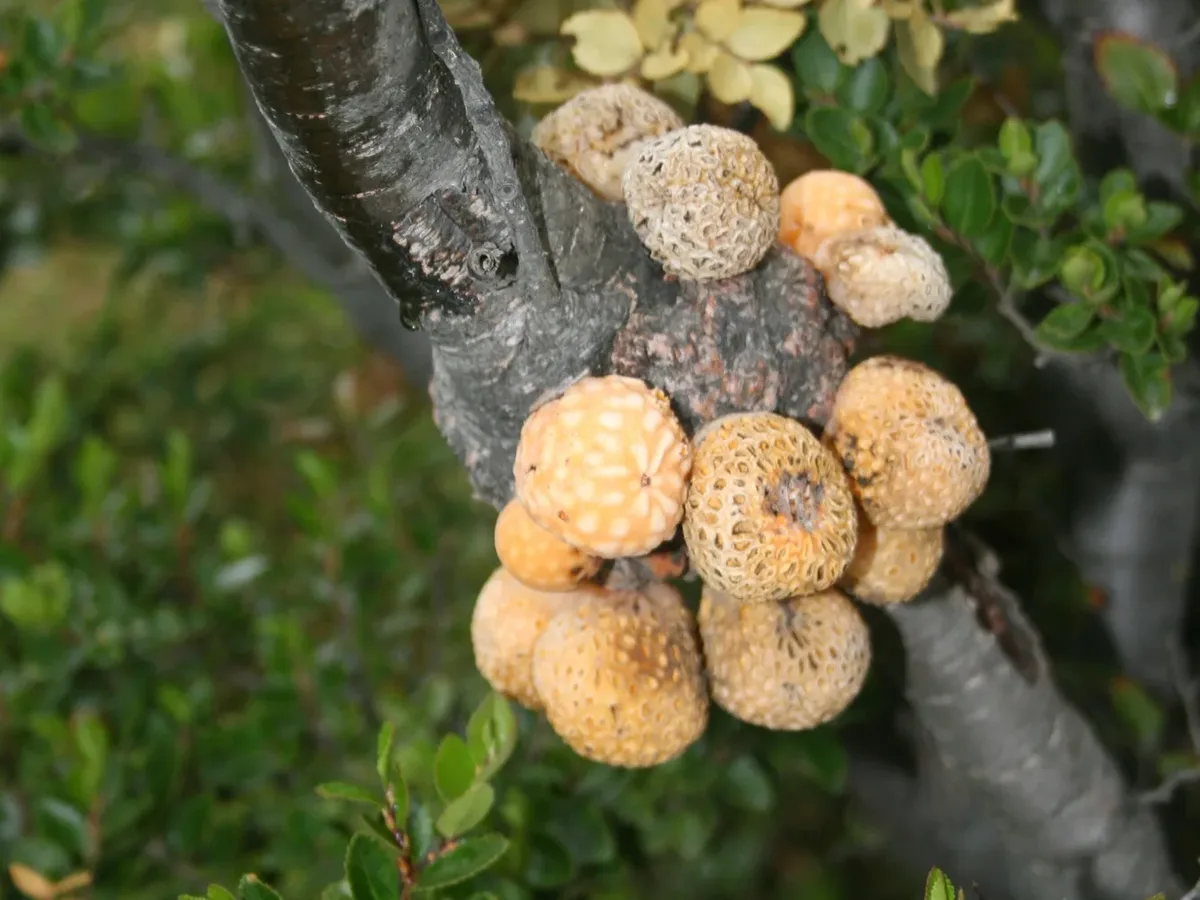
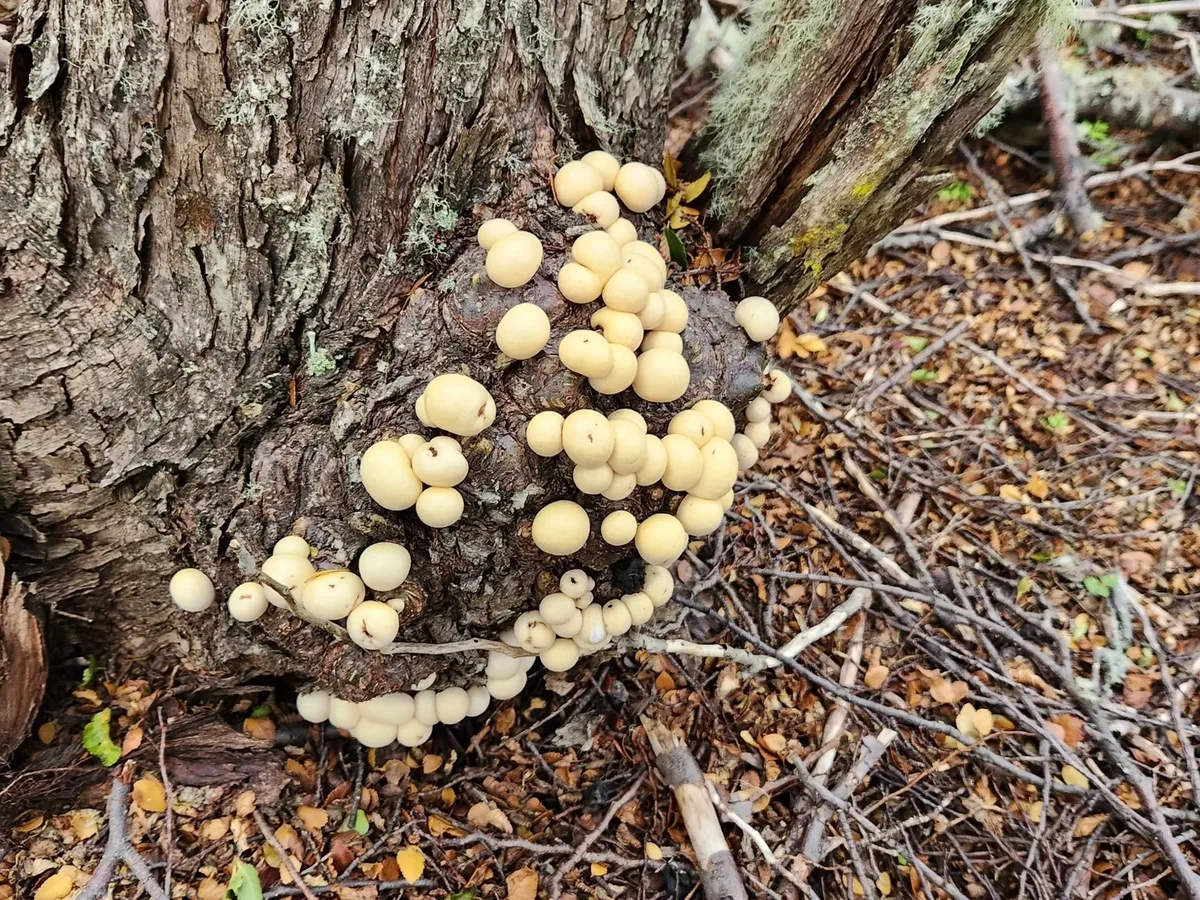
Young fruitbodies are spherical to slightly flattened, typically 2-6 cm across, and emerge from woody galls on living beech branches. The surface is smooth, taut, and an intense egg-yolk yellow - sometimes shading toward orange-yellow as they mature.
The interior is gelatinous and watery, pale yellowish-white, with no true gills or pores in the conventional mushroom sense. Cyttaria is an ascomycete, and its fertile tissue (the hymenium) develops inside shallow, cup-shaped depressions called ascomata that cover the whole outer surface.
As the fruitbody matures these depressions deepen into the honeycomb pitting Darwin famously described - a lattice of irregular polygonal pits separated by bright ridges.
Fully ripe specimens feel softer, lose elasticity, and become increasingly hollow; the flesh can become almost translucent in very old bodies.
The sweet, faintly mucilaginous taste noted by Darwin is consistent in fresh young specimens across multiple accounts.
There is no stalk; fruitbodies are sessile, pressed tightly against or half-embedded in the gall tissue from which they arise.
Where & when it grows
Habitat
Cyttaria darwinii grows exclusively on southern beech trees of the genus Nothofagus, the dominant broadleaved trees of the cool temperate forests at the southern tip of South America.
Its known range covers Tierra del Fuego, Isla Navarino, the Magallanes region of southern Chile, and adjacent Argentine Patagonia - one of the world's most southerly forest ecosystems, shaped by wind, cold, and oceanic moisture.
The host trees most frequently recorded include:
- Nothofagus antarctica (ñire)
- N. pumilio (lenga)
- N. betuloides (coigüe de Magallanes)
The fungus produces conspicuous woody or corky galls on living branches and sometimes trunks; these galls are the permanent residence of the mycelium and can persist for many years, with the seasonal fruitbodies emerging from them each spring.
Within those forests the species tends to be concentrated on mid-to-lower branches where humidity is highest, and is often most abundant in gallery strips along rivers and lake shores where beech grows dense and the canopy stays humid. It does not occur on dead or fallen wood.
When
The fruiting season follows the Southern Hemisphere spring and summer, running from roughly September through February, with peak abundance in October-December when Nothofagus is fully in leaf and the galls are biologically most active.
Unlike many soil-fruiting fungi whose emergence is triggered by rainfall or soil temperature after dry spells, Cyttaria darwinii is tied directly to host phenology - it lives within living tree tissue year-round, and the cue to produce fruitbodies appears to be the hormonal and vascular changes in the beech as it breaks dormancy.
Fruiting can therefore be quite synchronous across a beech stand: when conditions are right, dozens of galls on neighboring trees may all produce clusters simultaneously.
In seasons of extended warmth or where the canopy is sheltered, fruitbodies persist longer into February. Cold snaps at the tail end of the Patagonian spring can delay emergence noticeably.
How it grows
Cyttaria darwinii belongs to the family Cyttariaceae within the Ascomycota - a small, ancient lineage with no close relatives in the Northern Hemisphere.
It is an obligate parasite: its mycelium penetrates and colonises the living cambial and woody tissue of Nothofagus, inducing the host to form characteristic woody galls that can reach the size of a clenched fist after years of growth.
The relationship is one-sided - there is no evidence of any mutualistic benefit to the beech. Heavily infected branches sometimes show reduced vigour, though the trees can carry galls for decades without dying.
The ascomata (fruitbodies) burst through the surface of the gall in clusters of 2-20 or more, expanding over a period of days to weeks as they fill with gelatinous tissue and ripen their spores.
Spores are released from the shallow ascomata when mature; wind and moisture are the probable dispersal vectors.
The mycelium within the gall overwinters and regenerates new fruitbodies the following spring, meaning a single large gall can fruit repeatedly for years.
The Cyttariaceae are thought to have coevolved with Nothofagus over tens of millions of years - a parasitic partnership that predates the fragmentation of Gondwana.
Fruiting conditions
Fruits in spring and summer as galls on living Nothofagus; tied to host phenology rather than soil rainfall/temperature triggers.
Look-alikes
The only realistic lookalikes are other Cyttaria species, all of which are harmless. In southern South America two other species occur:
- Cyttaria harioti, which fruits on the same Nothofagus hosts and is morphologically very similar (also bright yellow, globular, honeycomb-pitted when ripe).
- Cyttaria espinosae, found further north into central Chile.
Both are considered edible and are used in the same ways as C. darwinii.
Distinguishing them in the field is difficult without microscopy - spore size and ascoma arrangement differ at the microscopic level - but this is of no practical concern because all known Cyttaria species are edible and none produce toxic compounds.
No dangerous or toxic fungi share the combination of habitat (on living Nothofagus galls), form (sessile, globular, honeycomb-surfaced ascomycete), and colour that characterise the Cyttaria group.
The bright yellow colour, distinctive honeycomb surface, and exclusive association with beech galls make this group unmistakable in context. There is no credible danger of confusion with any harmful species.
Other Cyttaria are harmless.
In the kitchen
Picking & cleaning
Select firm, taut fruitbodies that have not yet developed deep pitting - these are the youngest stage and have the best texture and the most pronounced sweet flavour.
The bodies grow in clusters on galls anywhere from knee-height to several metres up the trunk or branches; low branches and small galls near ground level are the easiest to harvest.
Detach each body cleanly with a twist or a small knife at the base, leaving the gall intact so it can continue to fruit in subsequent years.
Very ripe specimens that have already softened and pitted extensively are still edible but lose much of their texture and can become watery.
Cyttaria darwinii was historically harvested in large quantities by the Yahgan (Yaghan/Yámana) people - women and children would collect whole basketfuls from accessible branches, and it formed one of the primary plant-derived foods in an otherwise almost entirely marine diet.
Because the galls are perennial structures and the fungus re-fruits each year from the same sites, returning to known productive trees is a reliable harvesting strategy. Handle gently; the gelatinous flesh bruises easily.
Cooking
The Yahgan ate Cyttaria darwinii raw, often alongside shellfish and fish, with no preparation beyond rinsing off any debris from the gall surface. Darwin himself tasted it and confirmed the slightly sweet, mucilaginous flavour that makes it palatable fresh.
Contemporary cooks in southern Chile and Argentina have explored a wider range of preparations:
- The firm young bodies hold their shape well in salads, where their mild sweetness and slight jelly-like bite work alongside acidic dressings.
- Pickling in light vinegar brine preserves them for months and concentrates the flavour slightly; this is broadly the same treatment applied to Cyttaria harioti ('llao-llao') further north in Chilean food culture.
Because the flesh is mostly water and gelatinous carbohydrates, it does not benefit from prolonged cooking - prolonged heat causes it to collapse and release liquid.
If cooked, brief exposure works best: added at the last moment to stews, or lightly sautéed in butter or olive oil just until warmed through. Their gelatinous texture means they absorb surrounding flavours readily.
Nutritional content is modest - primarily water, some carbohydrates, and small amounts of protein - consistent with their role as a supplementary food rather than a calorically dense staple, even in the Yahgan diet.
Good to know
Cyttaria darwinii has been eaten safely by indigenous peoples of Tierra del Fuego for thousands of years and is considered an entirely safe edible. No toxic compounds have been identified in any Cyttaria species.
Charles Darwin recorded its consumption in 1832 with no reports of ill effects - it was a staple food, not an occasional delicacy, which is among the strongest empirical endorsements of safety a wild food can have.
The species was formally described in 1842 by the Reverend Miles Joseph Berkeley in his paper 'On an edible fungus from Tierra del Fuego, and an allied Chilian species' (Transactions of the Linnean Society of London 19:37-43), making it one of the earlier South American fungi to be scientifically documented. The type specimen is held in the mycological herbarium at the Royal Botanic Gardens, Kew.
Modern ethnobotanical and food-safety literature records no allergic or adverse reactions attributable specifically to Cyttaria. As with any foraged food, individuals with general mushroom sensitivities should exercise their usual caution, but there is no known specific risk associated with this species.
The only practical safety consideration is correct identification - which, given the distinctive combination of host, form, and colour, is straightforward in its native range.
A reference guide - never an edibility guarantee. When in doubt, leave it out.