Llao llao
Cyttaria hariotii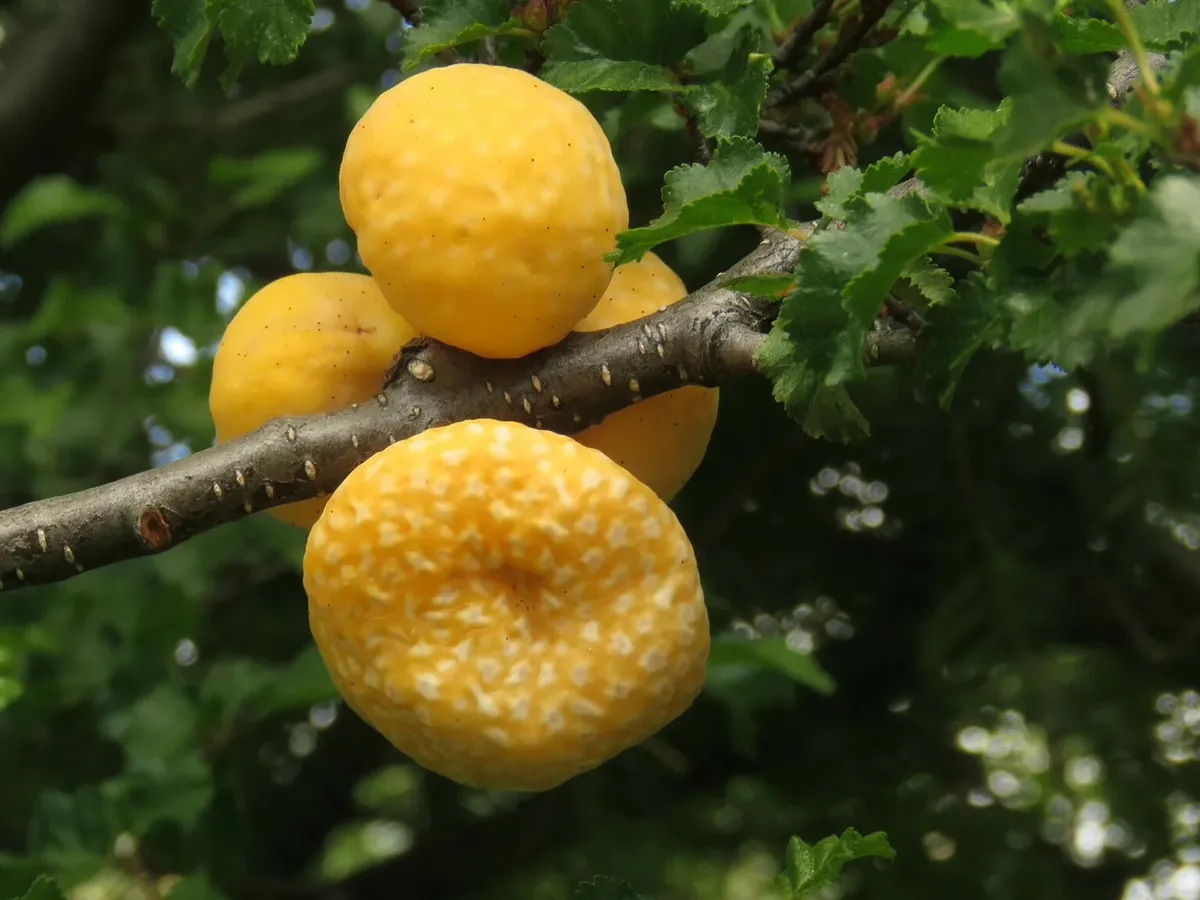 © Ariadna Tripaldi (CC BY 4.0)
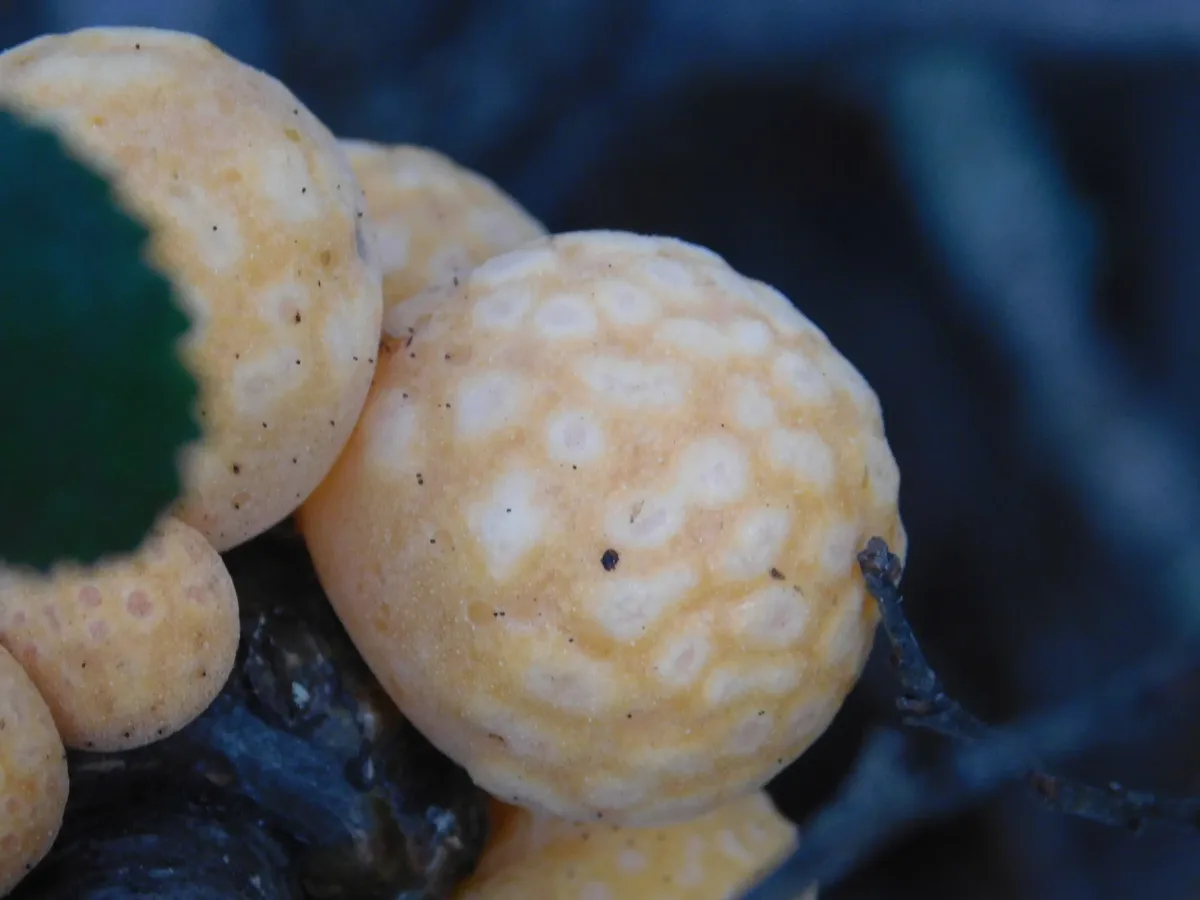 Pablo Bombín (CC0)
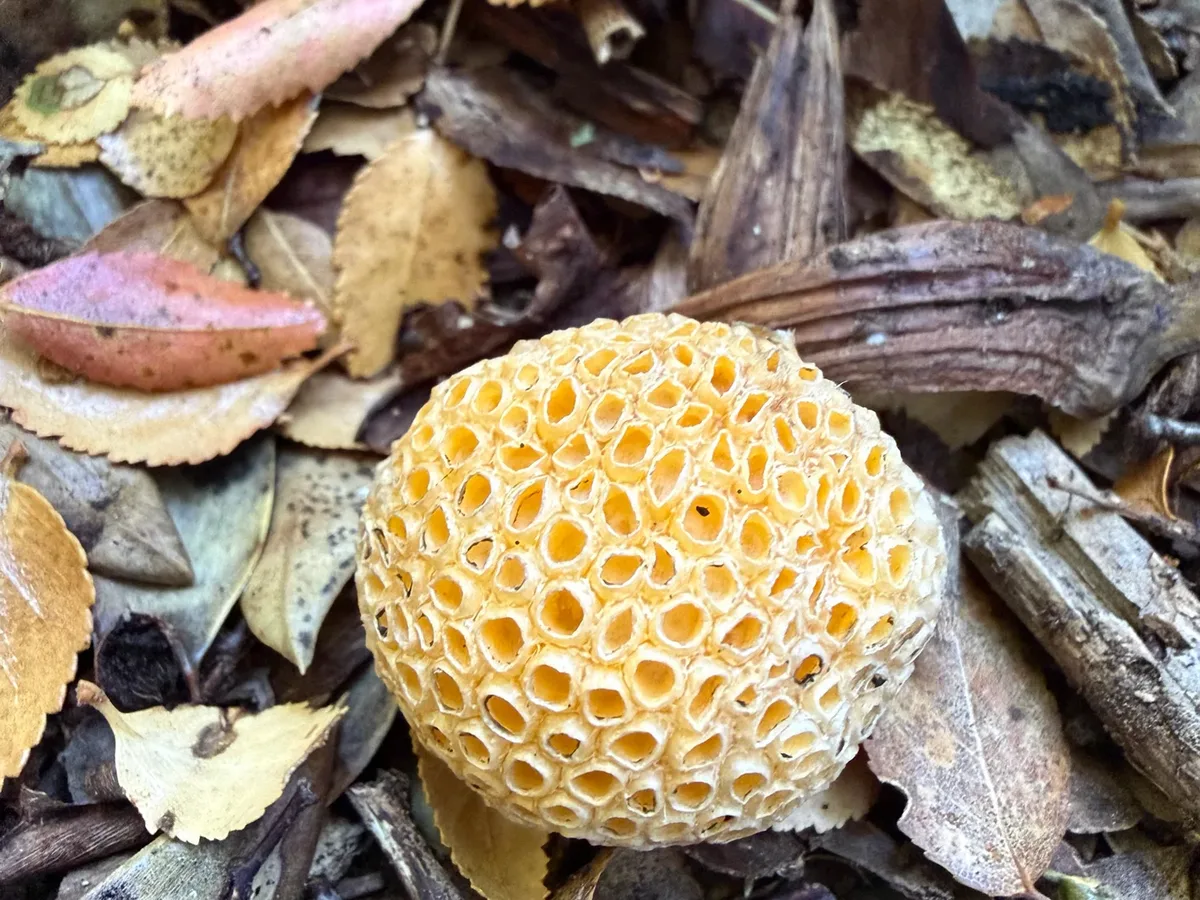 © Francisco E. Fonturbel (CC BY)
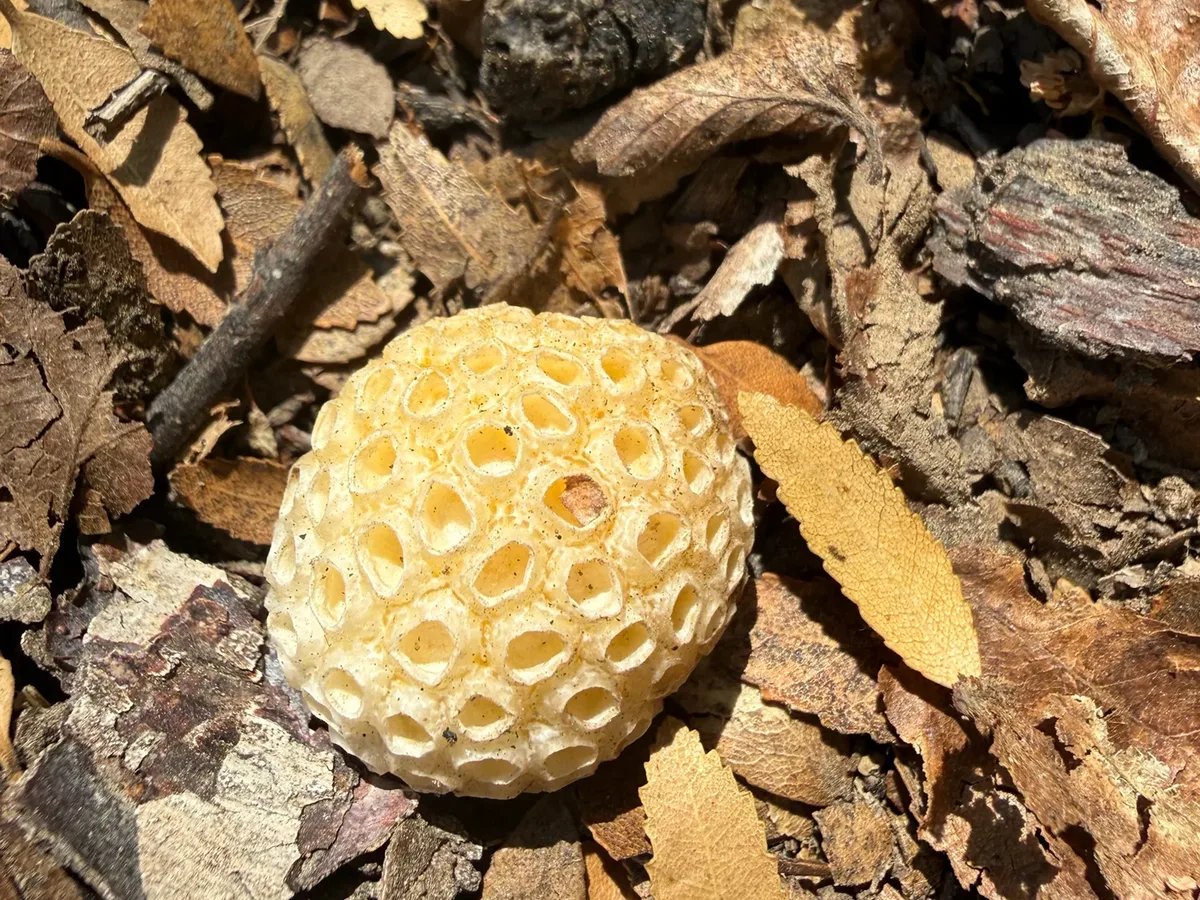 © Francisco E. Fonturbel (CC BY)
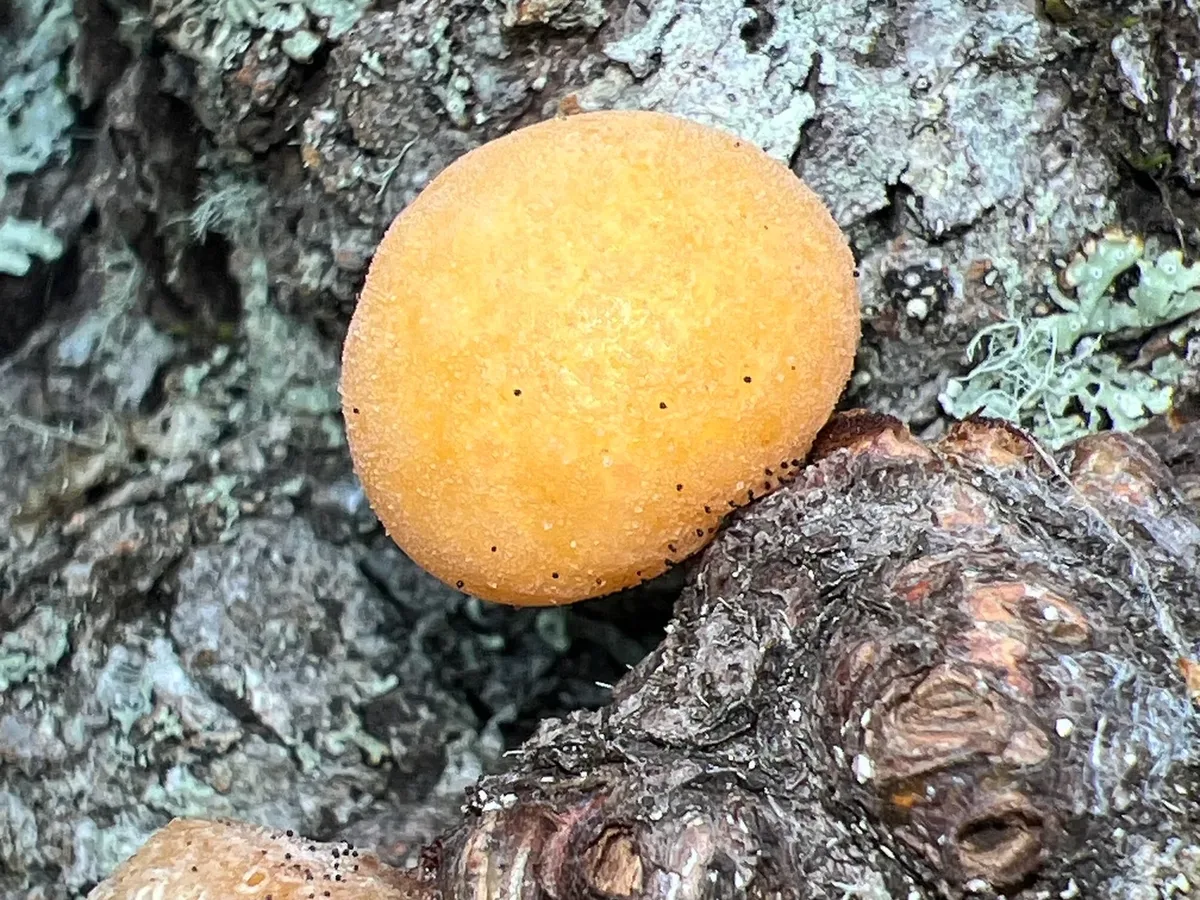 © Andy Jordan (CC BY)
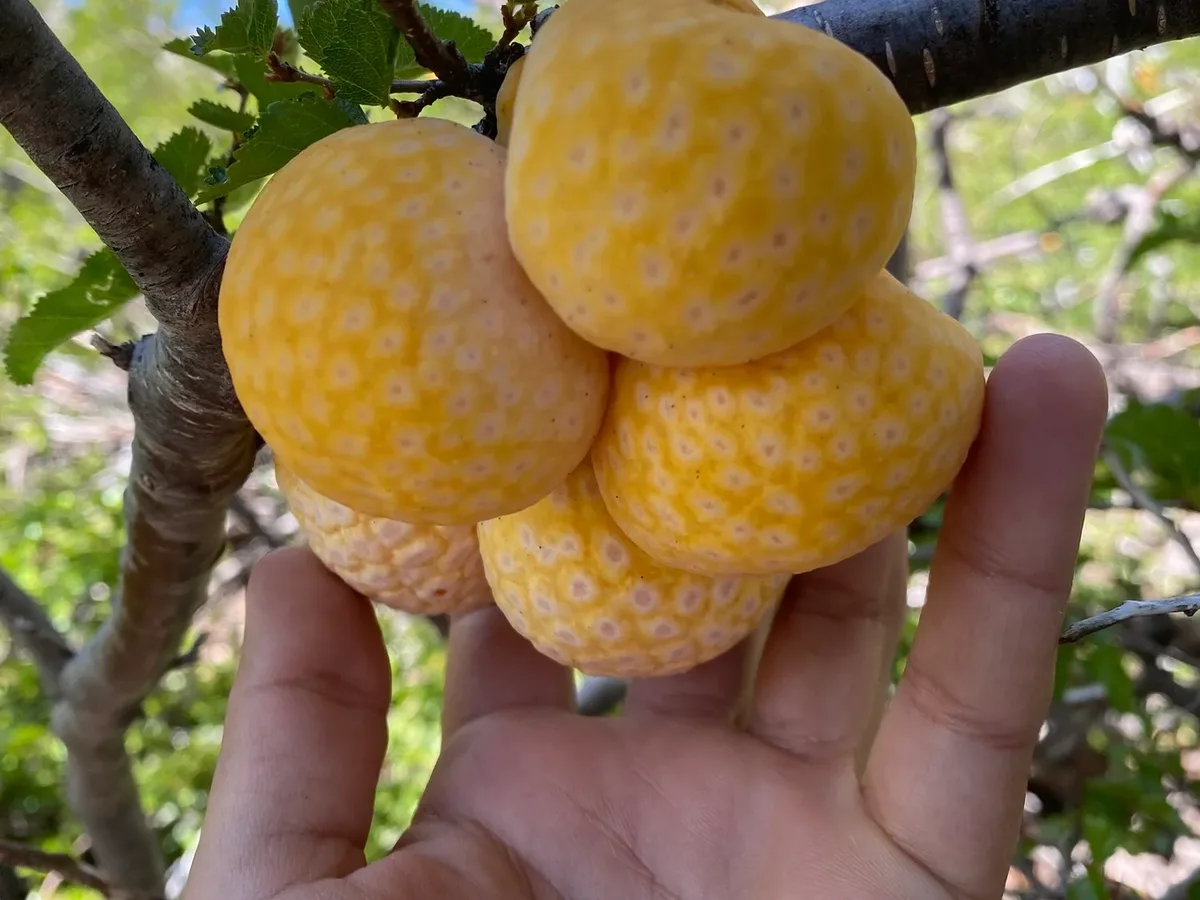 Julia Ariadna (CC0)
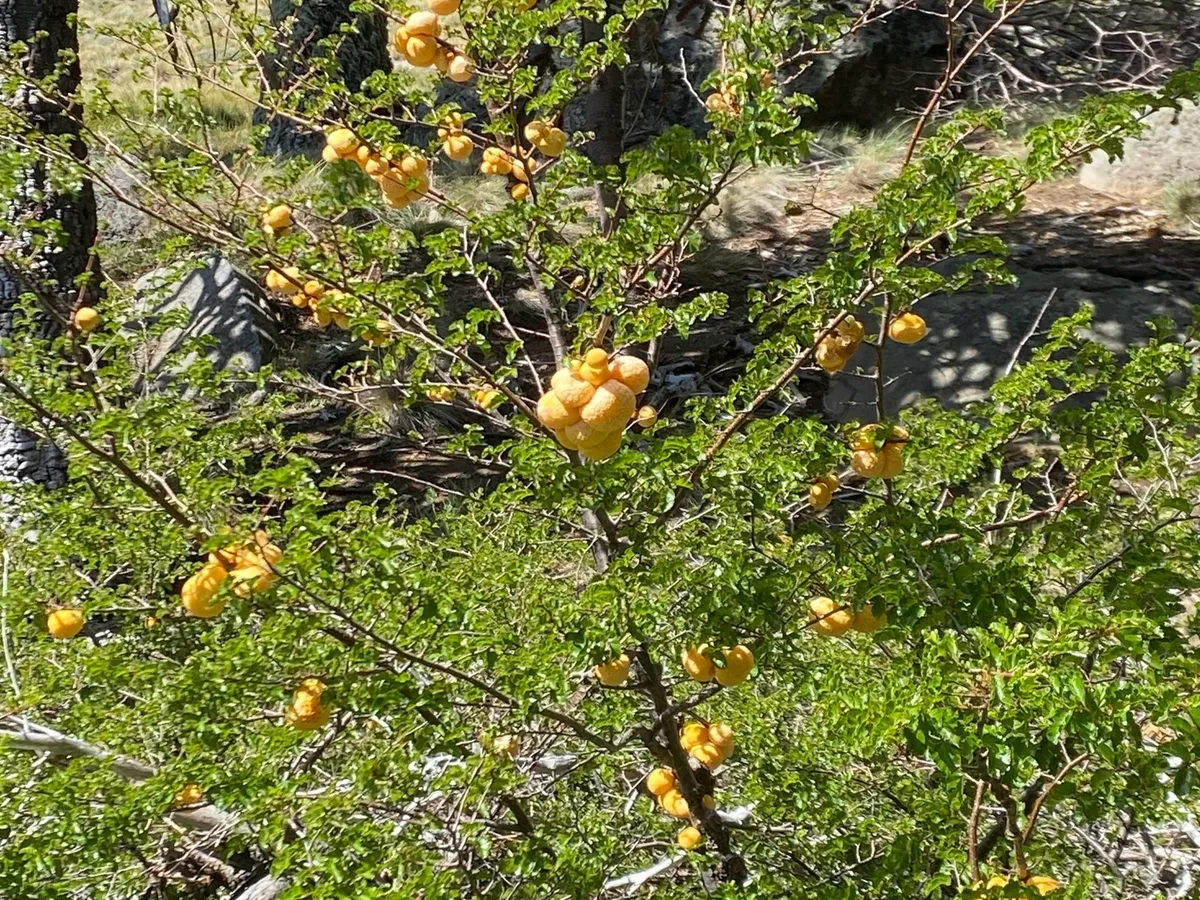 Julia Ariadna (CC0)
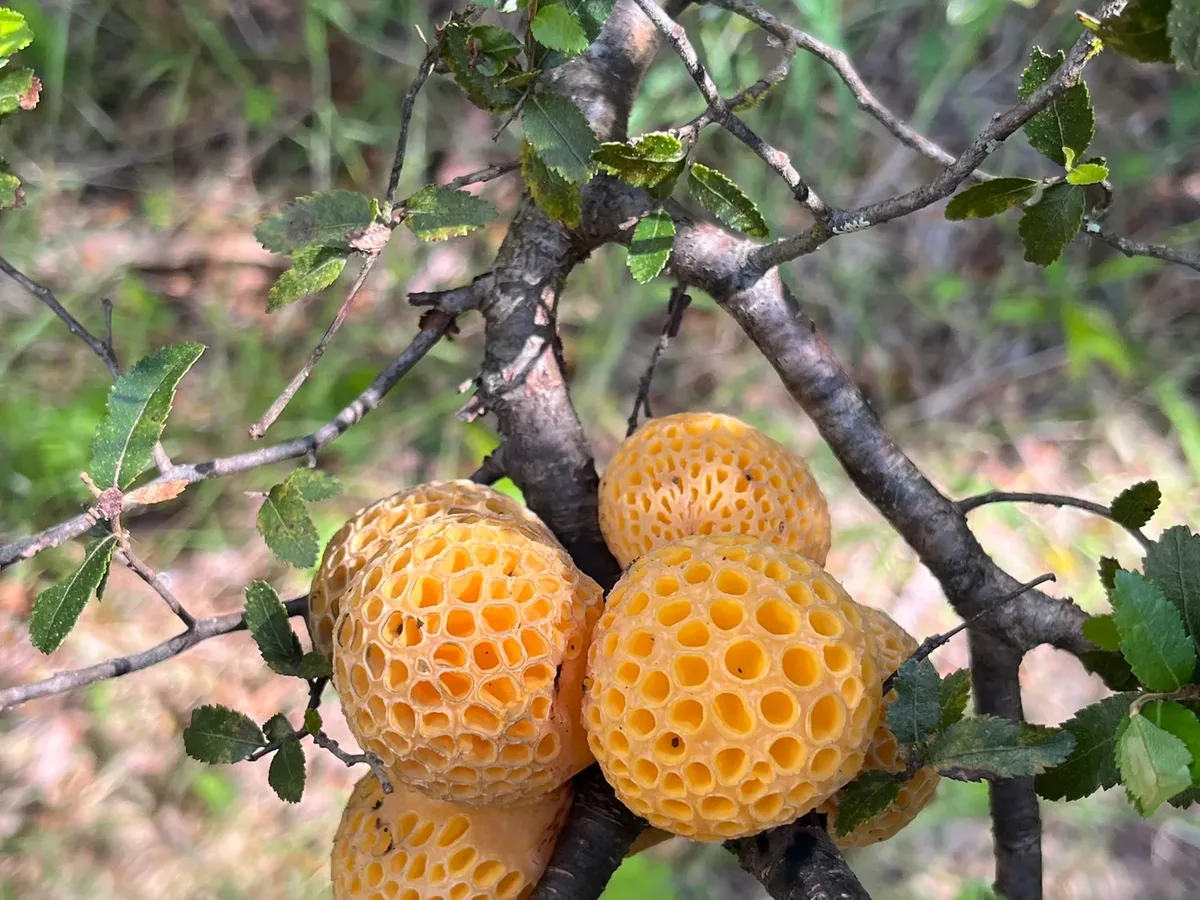 © Pablo Silva (CC BY)
 © Lauu (CC BY 4.0)
 © nitsuga74 (CC BY 4.0)
 © Ben Hayden (CC BY 4.0)© Ariadna Tripaldi (CC BY 4.0)Pablo Bombín (CC0)
Good to eat, once you have identified it with certainty and cooked it through.
How to recognise it
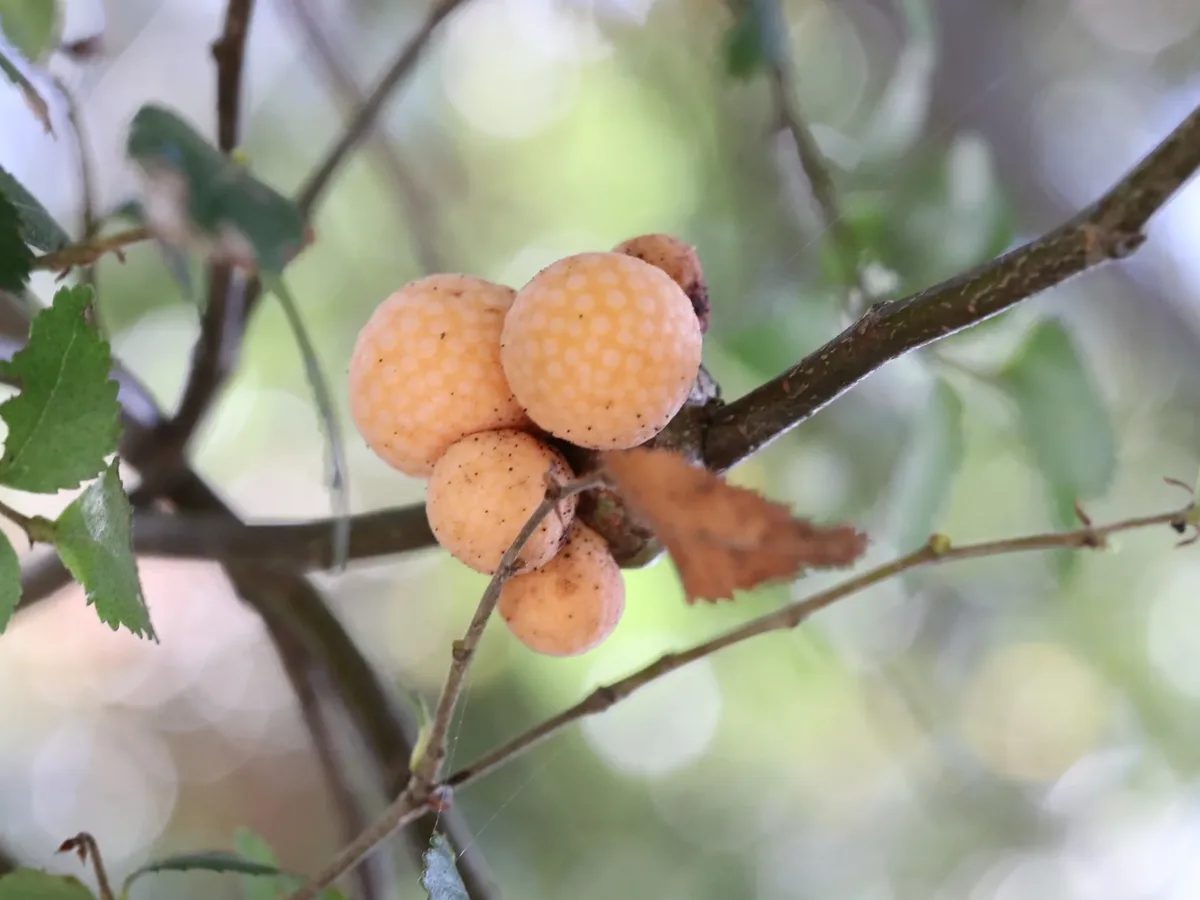
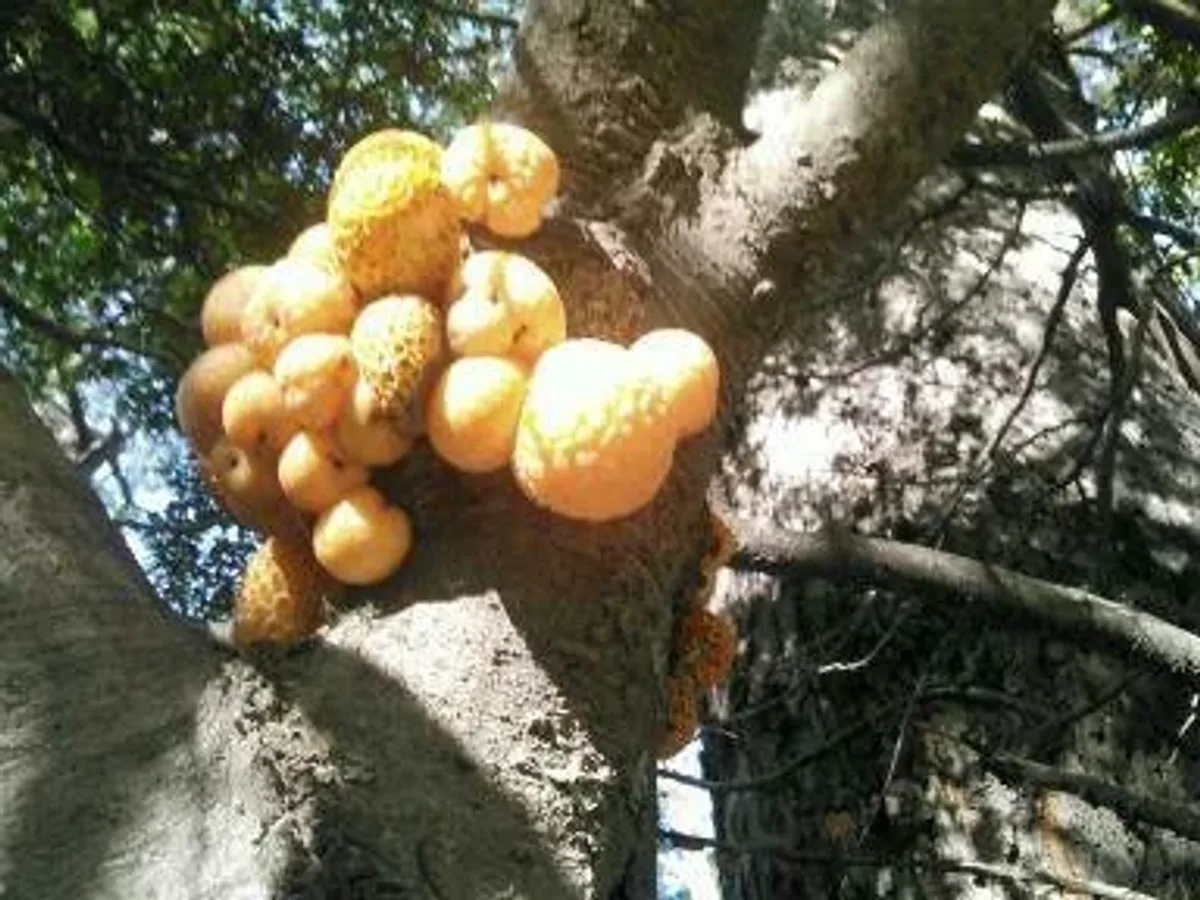
Cyttaria hariotii announces itself with colour before anything else. Emerging from the bark of living Nothofagus branches, each sphere starts as a tight, smooth globe - almost luminous in the spring light - in a shade of orange that sits noticeably deeper and more saturated than its closest relative, C. darwinii.
The difference is not subtle: hariotii leans toward amber-tangerine, while darwinii tends toward a softer, paler ochre-yellow.
As the fruitbody matures, the outer surface resolves into a patchwork of small, cup-shaped depressions, each one a discrete apothecium where spores are produced. In hariotii, these pits are distinctly smaller and more densely packed than in darwinii - a consistent and reliable character once you have seen both species side by side.
The flesh inside is firm, moist, and white to pale cream, with a mild sweetness and virtually no fungal earthiness.
Clusters can span 5-15 cm across the gall surface, each individual sphere typically 1-4 cm in diameter. Older specimens soften and lose their sheen, eventually collapsing as the season closes.
There is no ring, no volva, no gills - the entire structure is a compact ascomycete fruitbody unlike anything you will encounter in the temperate mushroom world.
Where & when it grows
Habitat
Cyttaria hariotii occupies one of the most architecturally distinctive forest systems in the Southern Hemisphere: the Andean-Patagonian Nothofagus belt, a mosaic of southern beech woodland that follows the Andes from roughly 35°S down to Tierra del Fuego and mirrors itself across the Strait into southern Chile.
The species is a biotrophic parasite - meaning it lives inside and extracts nutrients from a living host - rather than a saprobe or mycorrhizal partner.
It has a documented host range of five Nothofagus species:
- N. antarctica (ñire, the multi-stemmed scrub beech of exposed ridges)
- N. pumilio (lenga, the deciduous high-altitude beech)
- N. dombeyi (coihue, the dominant evergreen of wetter valleys)
- N. betuloides (guindo, coastal and island beech)
- N. nitida
The fungus penetrates the cambium and woody tissue of branches and trunks, reorganising the host cells into a hard, irregular swelling - the nudo or gall - that can persist on the tree for decades. Within this gall the mycelium waits, largely invisible, until the southern spring triggers the emergence of fruitbodies.
The relationship does not kill the tree outright, though heavily infected branches weaken over time. Forests dominated by old, multi-stemmed ñire and lenga on Andean slopes between roughly 700 m and 1,500 m elevation are the most reliable sites.
When
The Southern Hemisphere spring drives a tight and predictable fruiting window.
- November: fruitbodies begin to emerge as day length increases and temperatures climb above freezing at the Andean mid-elevations.
- December: peak abundance, when the fruitbodies reach their fullest size and densest clustering.
- January: the tail end - spheres that fruited early begin to soften and collapse, while later galls on shadier aspects may still be producing fresh clusters.
- February: the season is effectively over at most elevations, though isolated high-altitude sites at the lenga tree line may extend into late January at best.
Because fruiting is coupled to host-tree phenology rather than to episodic rain events, the timing is considerably more consistent year to year than it is for soil-rooted mushrooms that depend on moisture pulses.
A warm, dry November can compress the window; a cool, late spring can delay it by two to three weeks.
The spring snowmelt is the practical cue for foragers: when valley snow retreats from the lower beech forest and the ñire branches flush with new leaf buds, the galls have usually begun to swell with emerging fruitbodies.
How it grows
The life history of Cyttaria hariotii revolves around the nudo - a hard, rounded gall that the fungus induces on the wood of its Nothofagus host.
Infection is thought to begin when ascospores land on young bark and germinate, penetrating the outer layers and colonising the cambium. The fungus then redirects host-cell growth, producing a proliferating mass of modified woody tissue that forms the persistent gall structure.
This process unfolds slowly. Established nudos may be years old before the mycelium within reaches the critical density and developmental state to initiate fruitbodies.
When the spring trigger arrives - increasing photoperiod and rising temperature - the hyphal mass within the gall differentiates outward, pushing through the bark surface in small knobs that rapidly expand into the characteristic spherical ascocarps. The entire above-surface development from bud to mature spore-bearing fruitbody occurs over roughly two to four weeks.
Spore release from the cup-shaped apothecia happens passively. The ascospores are not forcibly ejected to any great distance, and dispersal is thought to rely primarily on insects and birds that visit the sweet fruitbodies.
Multiple galls can occur on the same tree, and a single large gall may support dozens of fruitbodies simultaneously. The parasite does not kill the host rapidly; infected trees often carry nudos at several points along their branches while continuing to grow normally.
Fruiting conditions
Biotrophic gall parasite on living Nothofagus; fruiting is tied to host phenology in spring-summer rather than to soil moisture/temperature flushes.
Look-alikes
All known lookalikes belong to the same genus, Cyttaria, and all are harmless edible species.
The most frequently confused species is Cyttaria darwinii, which shares the same Nothofagus host requirement and overlaps in range across southern Chile and Argentina.
The reliable separation characters are colour and apothecial density:
- Colour: hariotii produces a noticeably more intense, deeper orange, while darwinii tends toward a paler ochre or yellow-orange.
- Apothecial density: hariotii's surface pits (apothecia) are smaller and more densely packed than the larger, more widely spaced cups of darwinii.
In practice the two species are sometimes found on the same tree or in the same forest stand, so direct comparison is often possible.
Other Cyttaria species recorded from the region - including C. johowii and C. espinosae - are similarly harmless and differ in host preference or subtle morphological details.
No dangerous species resembles Cyttaria in the Andean-Patagonian forest context: the round, bright orange, gall-attached fruitbodies emerging from living beech bark have no poisonous counterpart in this habitat.
Collectors new to the genus should nonetheless confirm the Nothofagus host and the characteristic gall attachment before eating, as confirmation of genus is straightforward and eliminates any doubt.
Harmless. C. hariotii has a more intense orange colour and smaller, more densely packed apothecia.
All harmless; differ in colour intensity and apothecial size/density.
In the kitchen
Picking & cleaning
Identifying the right moment to harvest is the key skill. The ideal window is when the spheres are firm and springy to gentle pressure, the surface still smooth or only faintly pitted, and the colour at its most vivid orange. At this stage the flesh is at its sweetest and densest, and the texture holds well in cooking.
Overripe specimens feel noticeably soft underfoot - the outer skin gives way easily and the interior has begun to liquefy slightly - and these are best left for the insects and birds that disperse the spores.
Harvest by hand. The clusters pull away from the gall cleanly with a gentle lateral tug, or can be cut with a small knife at the point where the sphere attaches to the bark surface.
There is no need to disturb the gall itself; leaving the nudo intact allows further fruitbodies to emerge from the same structure in subsequent seasons and years.
A wicker basket or cloth bag is ideal for transport - the spheres bruise if compressed in a plastic bag.
Because the trees that carry productive galls can be identified in advance (the hard woody swelling is visible year-round on the branches), experienced foragers often maintain a mental map of reliable gall-bearing trees within their area and return to them each spring.
Cooking
The flavour of freshly harvested C. hariotii is mild, lightly sweet, and almost gelatinous in texture - closer to a firm fruit than to the savoury, umami depth of most culinary mushrooms. This positions it uniquely in the edible fungus world: it works as a confectionery ingredient and a dessert component in ways that no other common mushroom does.
- Fresh spheres can be sliced and added to fruit salads, where their colour and mild sweetness complement acidic berries.
- They are commonly pickled in the Patagonian tradition - a light brine or vinegar solution preserves the texture and introduces a pleasant sharpness that balances the natural sweetness.
- Jam and preserves made from llao llao have been produced in the region for generations.
- Contemporary Patagonian chefs have incorporated it into ice cream, panna cotta, and fruit-forward desserts.
- The flesh can also be eaten raw directly in the field - many foragers simply sample young spheres as they pick, in the same way one might taste a ripe berry.
For savoury applications, light sautéing in butter with a little salt allows the sweetness to caramelise gently, and the texture firms slightly on heat. Long cooking is generally unnecessary and tends to diminish the delicate flavour.
Pairing with lamb (a Patagonian staple), fresh cheese, or acidic fruits makes the most of its unusual flavour profile.
Good to know
Cyttaria hariotii has a long and well-documented history of safe human consumption across multiple indigenous cultures of Patagonia and Tierra del Fuego.
- The Mapuche harvested it extensively, particularly the form growing on coihue (N. dombeyi), using it both as fresh food and as a fermentation substrate for a chicha-like alcoholic drink.
- The Yámana (Yahgan) of the Beagle Channel and Tierra del Fuego consumed it fresh, raw, as a significant seasonal food source - its sweetness and caloric density making it a notable supplement in an otherwise marine-dominated diet.
- Charles Darwin noted the Yámana eating it during the Beagle voyage and described it as resembling a bland, sweet jelly.
No toxicity has been documented for C. hariotii in the scientific or ethnobotanical literature, and no adverse reactions are associated with normal consumption.
The only practical caution relates to freshness. Like any fleshy fruitbody, overripe or damaged specimens can harbour bacterial growth if left in warm conditions, so harvest firm, fresh material and process it the same day or refrigerate promptly.
Individuals with general mushroom sensitivities or latex/fungal allergies should apply the same precautions they would to any novel species.
A reference guide - never an edibility guarantee. When in doubt, leave it out.