Slippery jack
Suillus luteussyn. Suillus granulatus, Suillus bovinus, Boletus portentosus
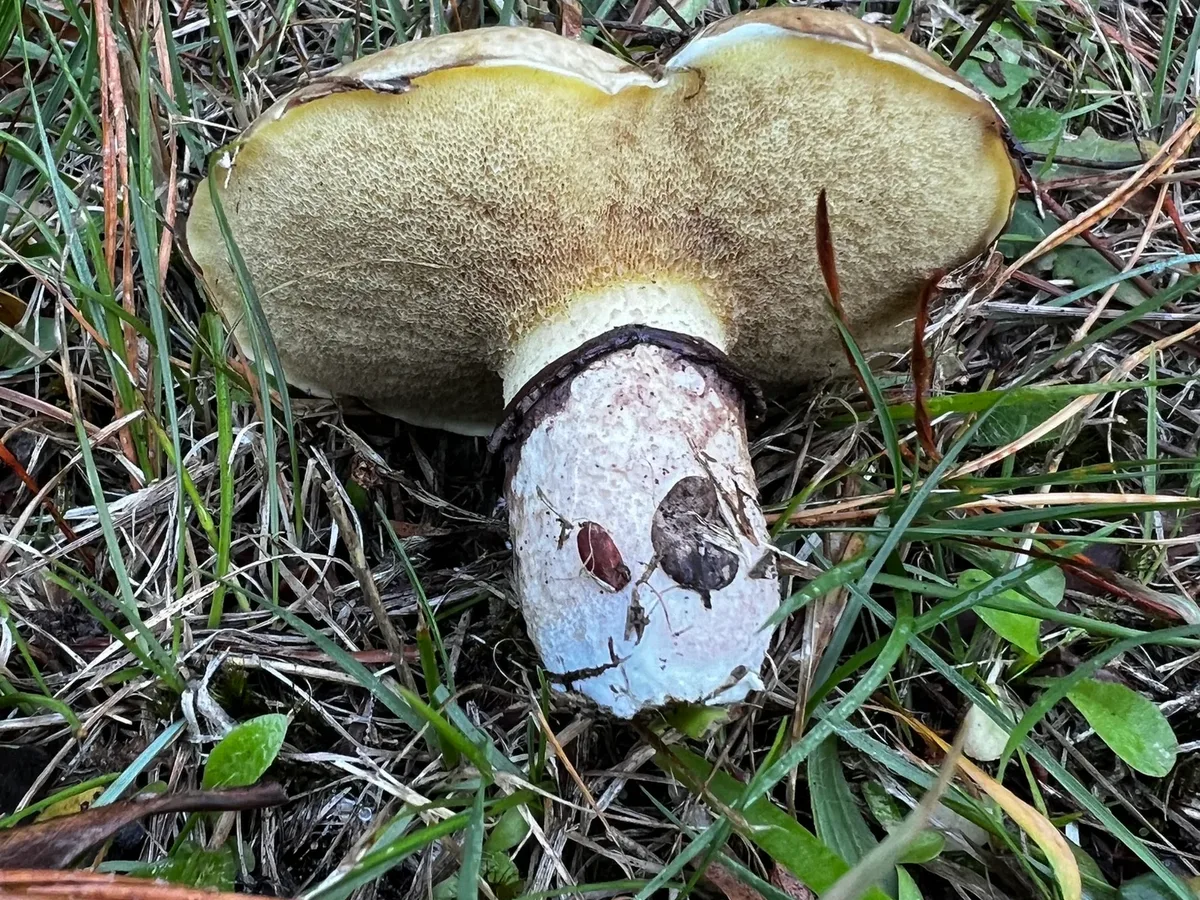 © Sigrid Jakob (CC BY 4.0)
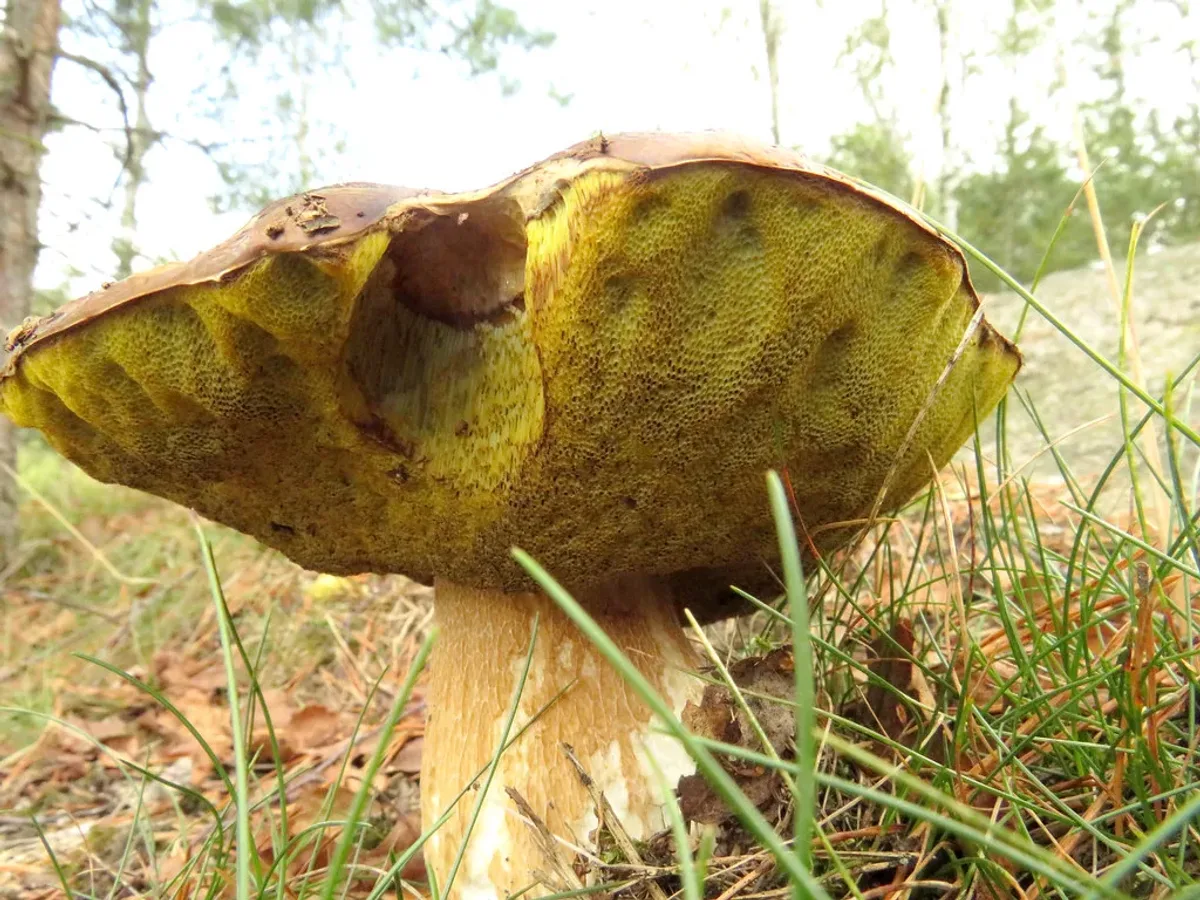 © blondinrikard (CC BY 2.0)
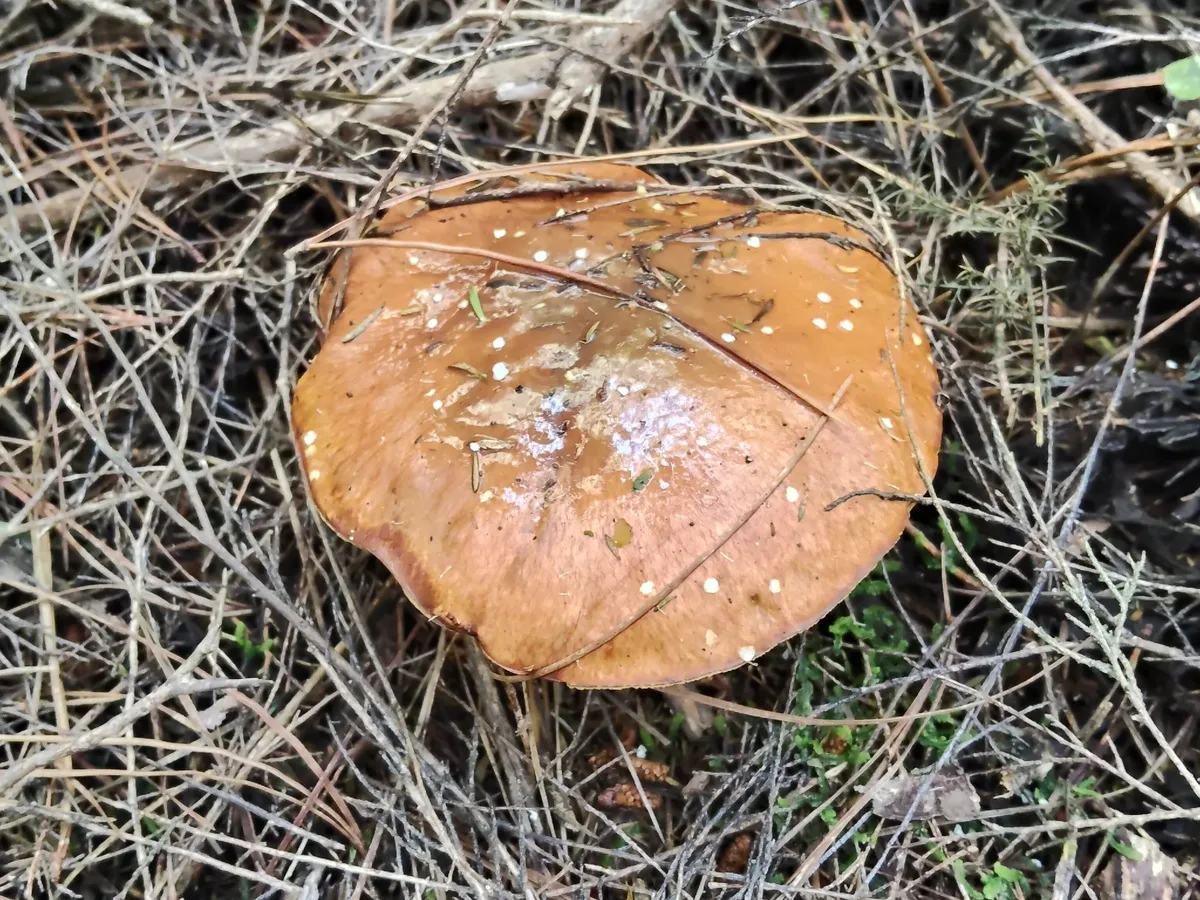 © John Barkla (CC BY)
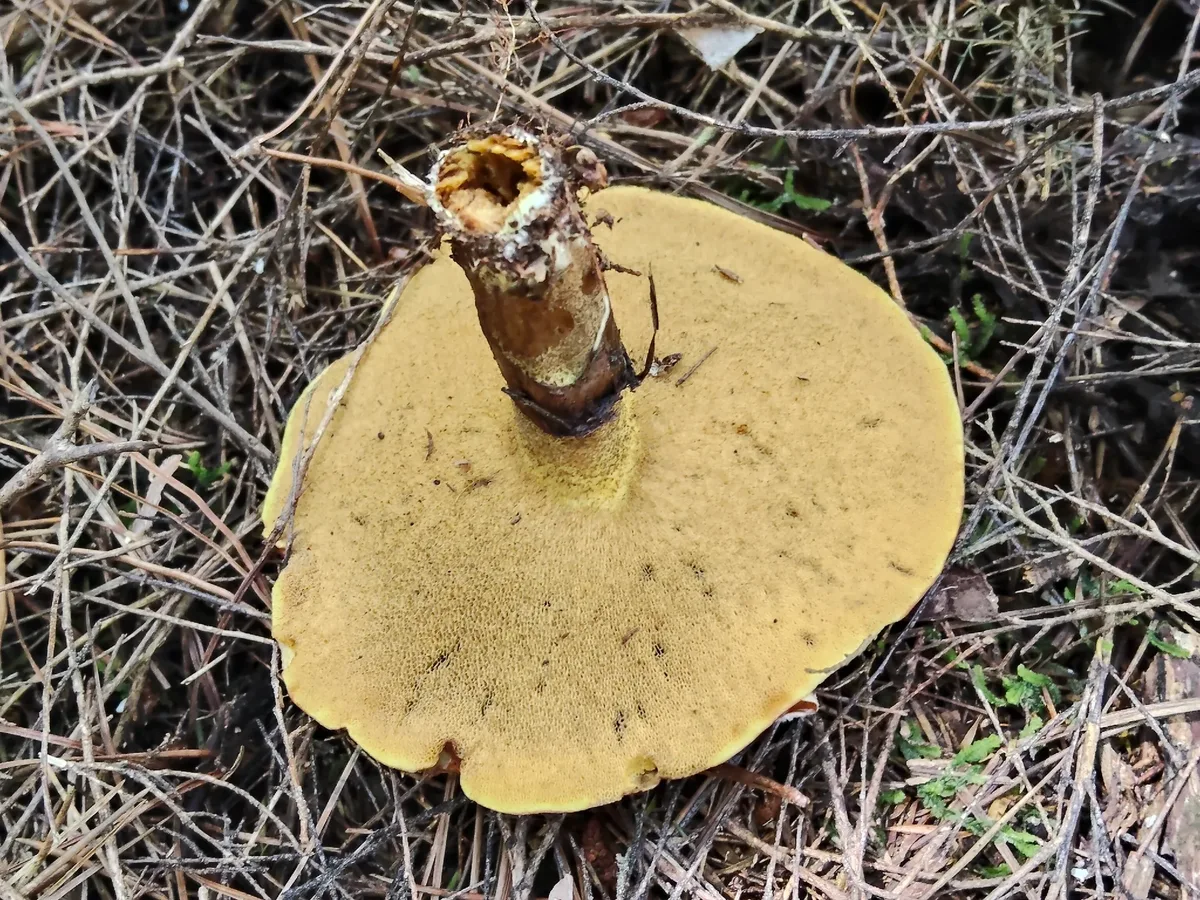 © John Barkla (CC BY)
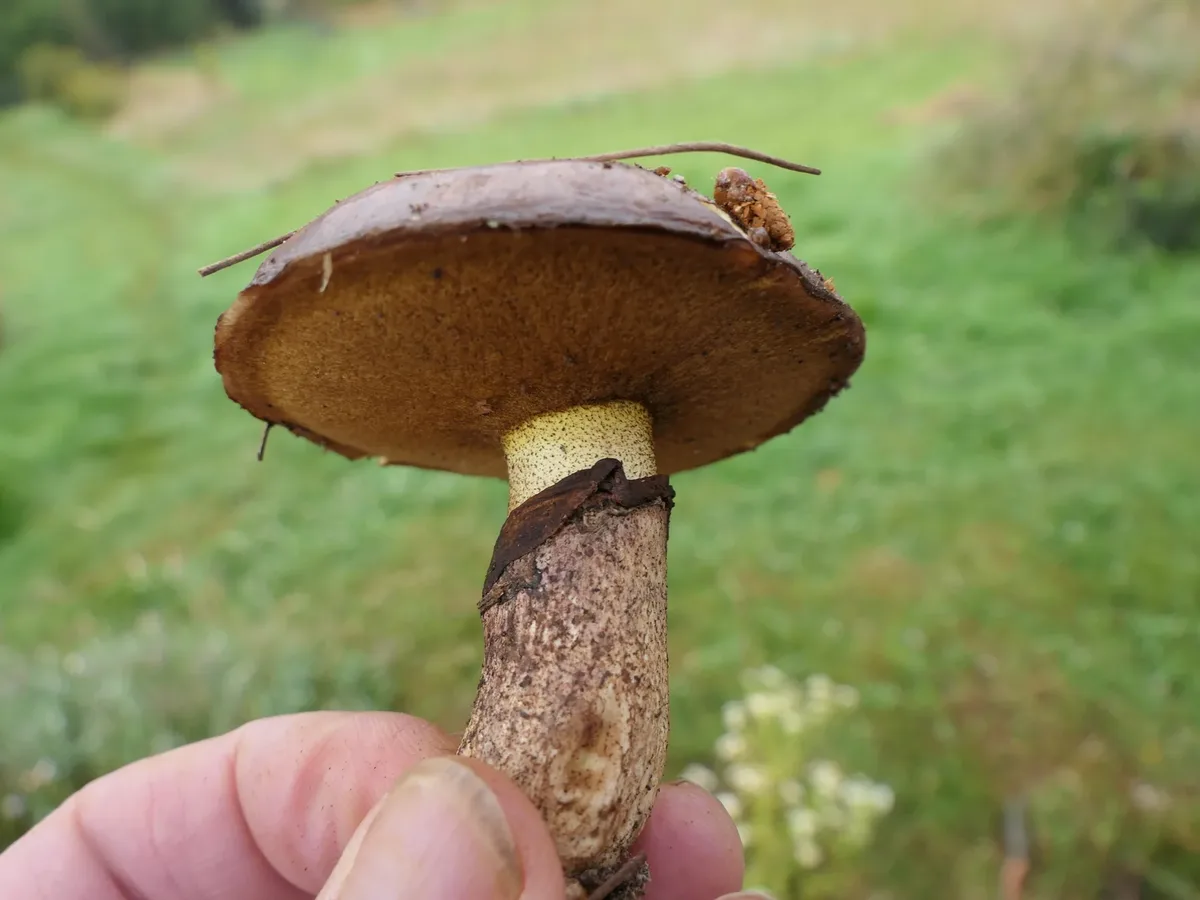 © derek_onley (CC BY)
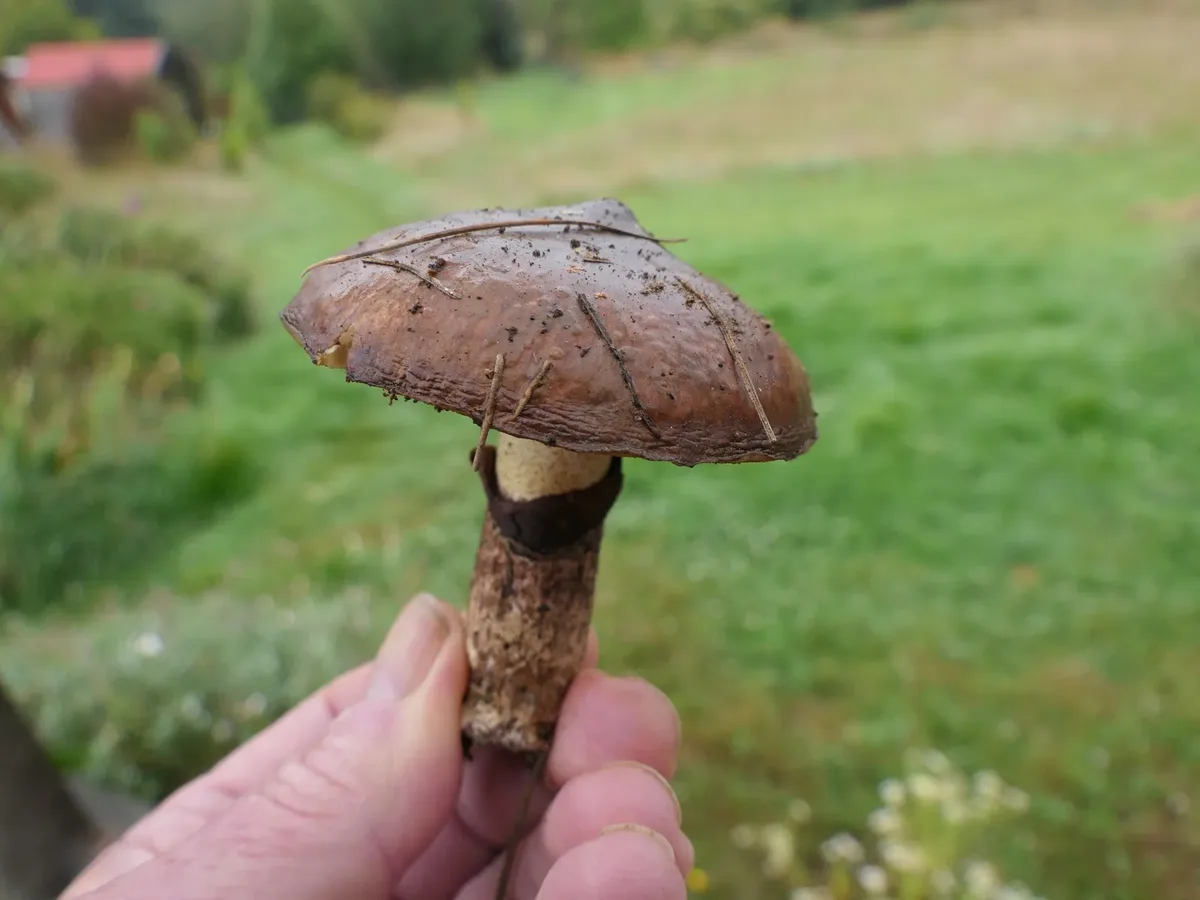 © derek_onley (CC BY)
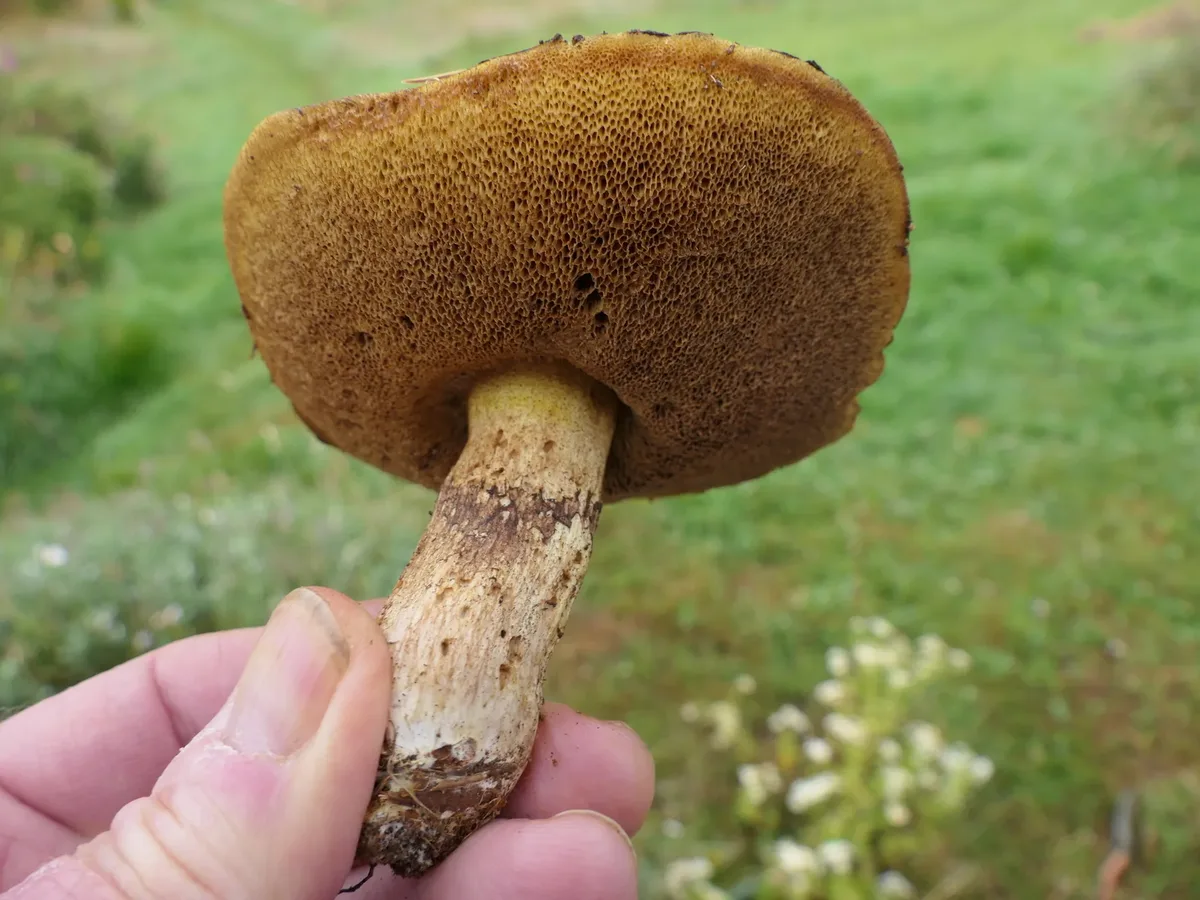 © derek_onley (CC BY)
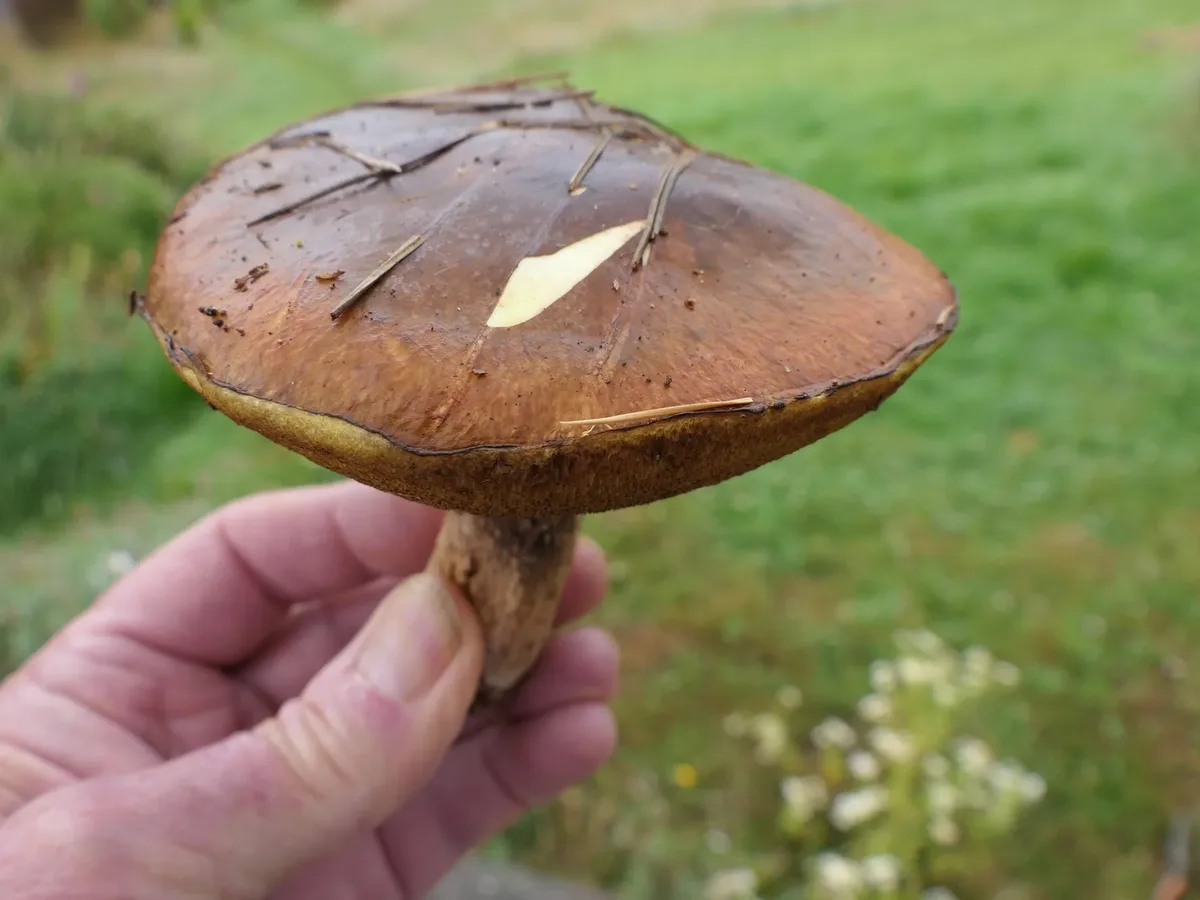 © derek_onley (CC BY)
 Max Elysian (CC0)
 Max Elysian (CC0)
 © blondinrikard (CC BY 2.0)
 © blondinrikard (CC BY 2.0)
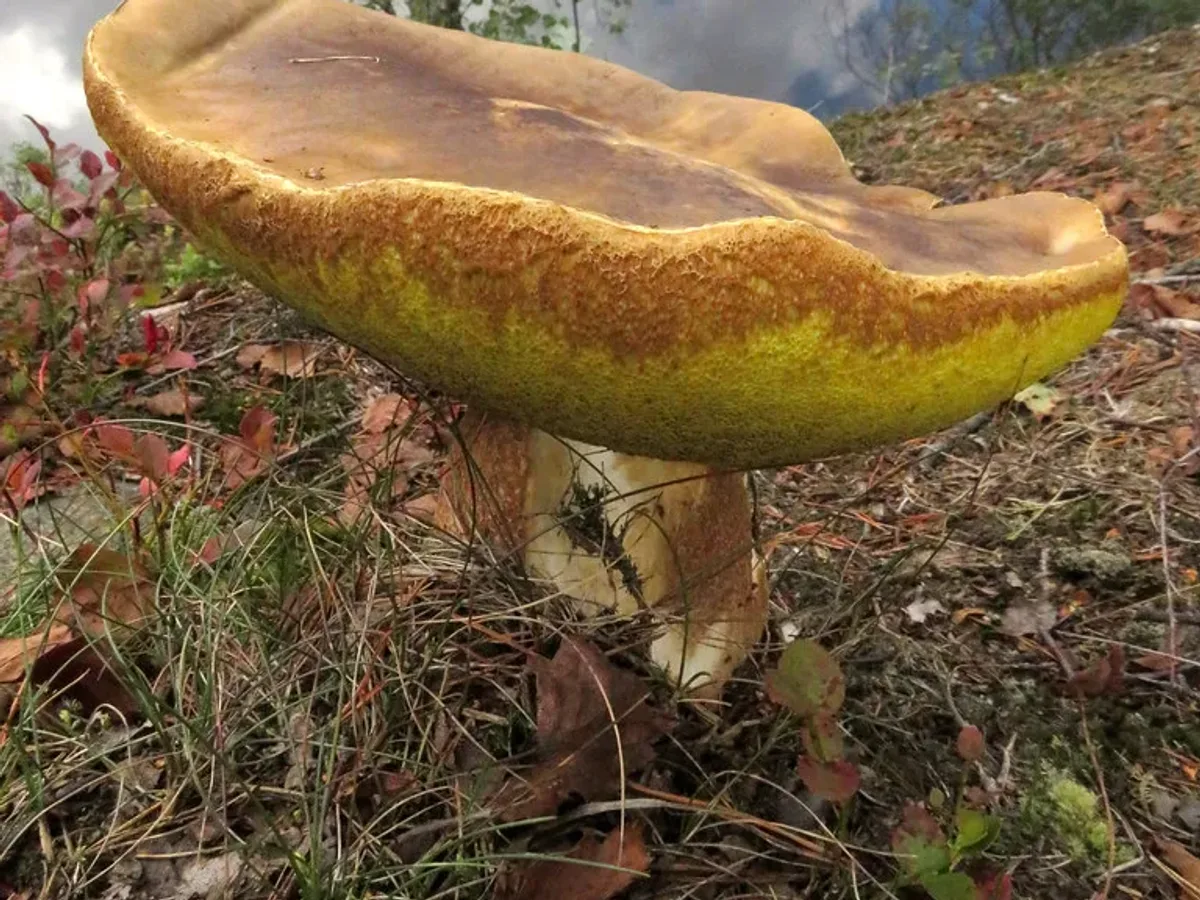 © blondinrikard (CC BY 2.0)
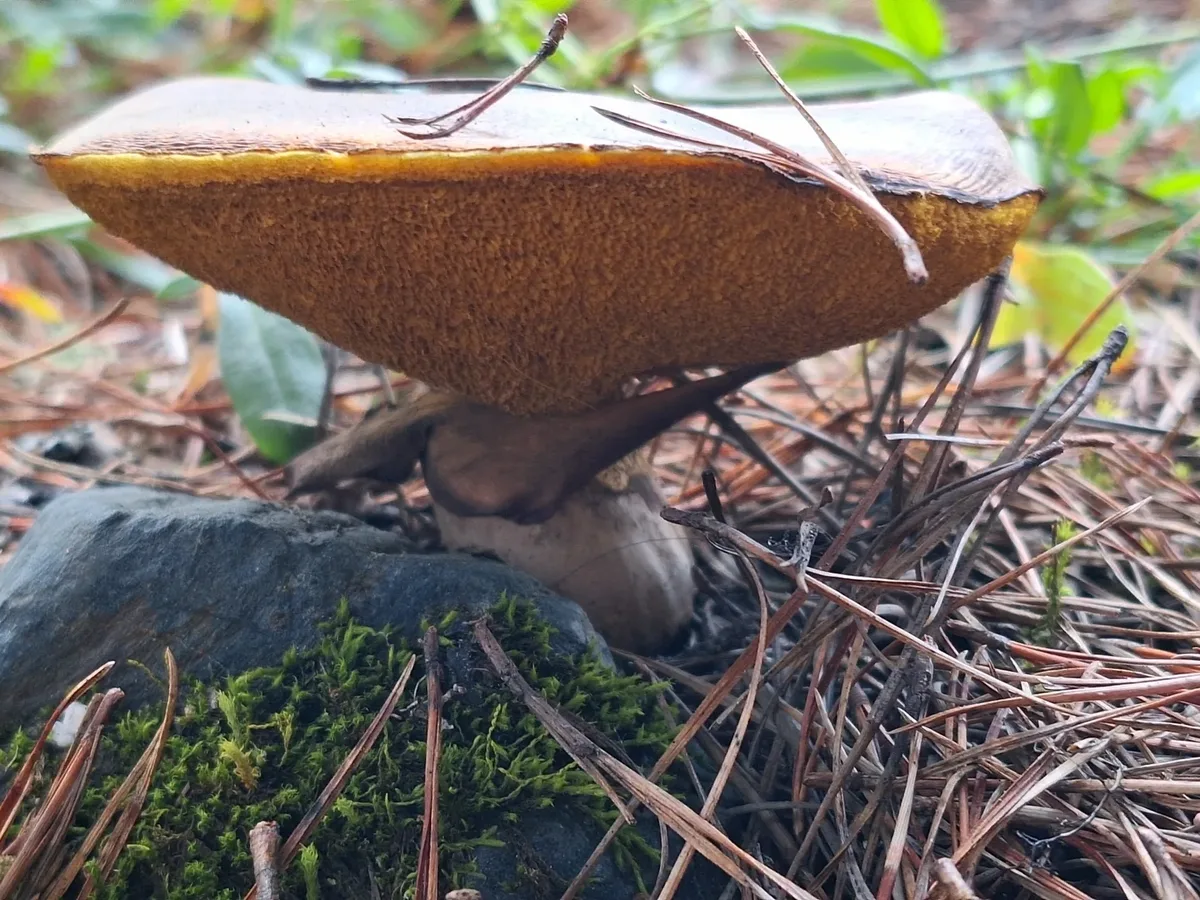 © Abby Hurtado (CC BY 4.0)
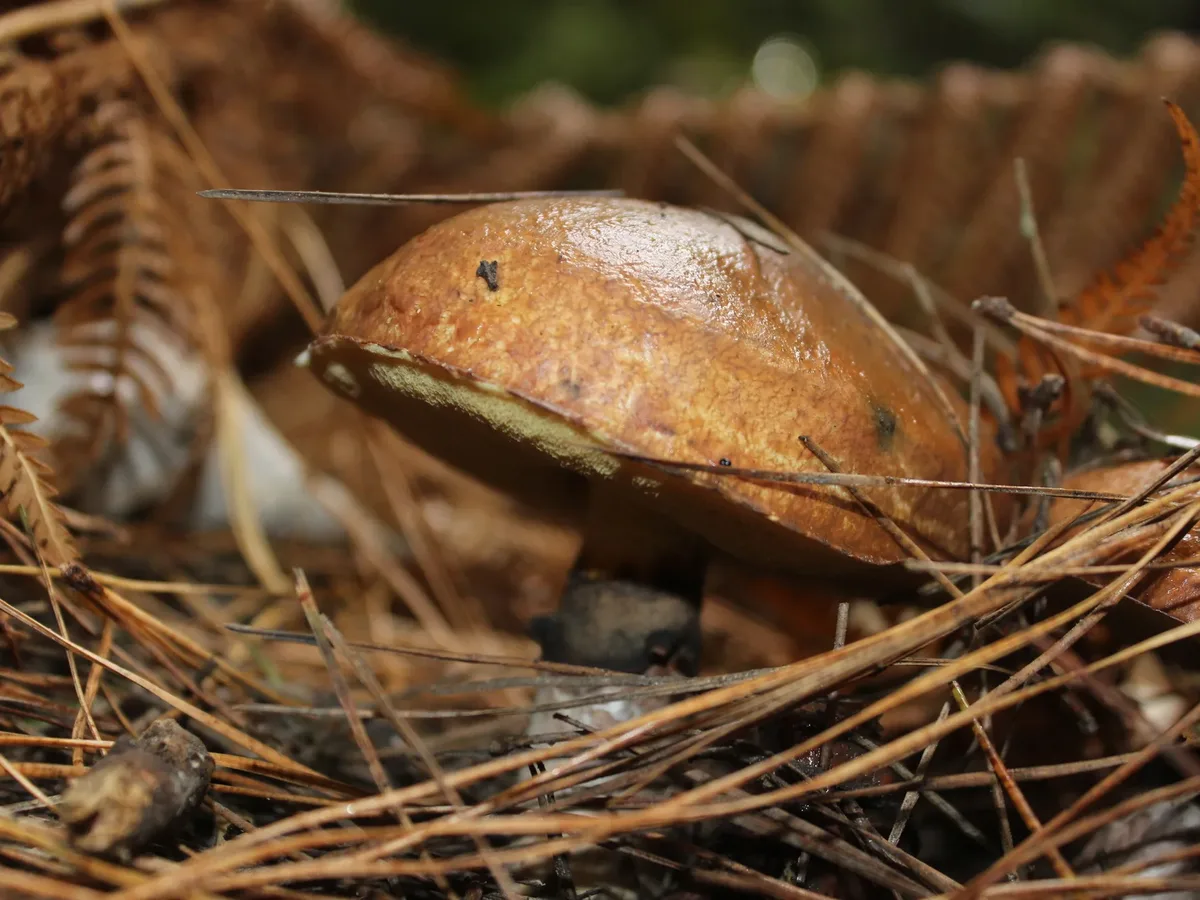 © Joe Dillon (CC BY 4.0)© Sigrid Jakob (CC BY 4.0)© blondinrikard (CC BY 2.0)
Good to eat, once you have identified it with certainty and cooked it through.
Never eat a mushroom you are not 100% sure of - check the look-alikes below, and always cook wild mushrooms.
How to recognise it
Suillus luteus is unmistakable to anyone who has spent an afternoon in a pine plantation after rain.
Cap
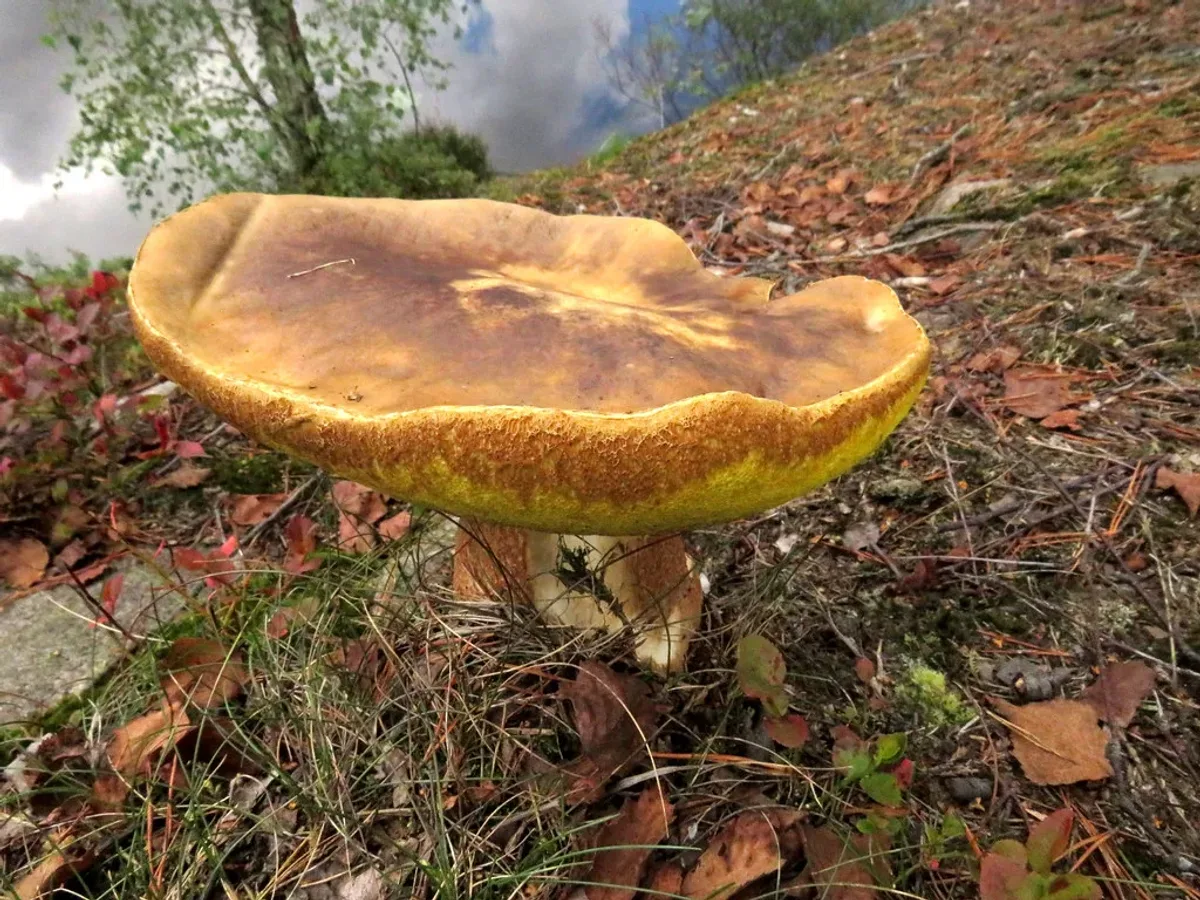
The cap begins as a domed hemisphere - tightly rounded, almost like a brown bun - and flattens to a broad, gently convex disc as it matures, reaching 5 cm to well over 12 cm across in vigorous specimens.
The surface colour ranges from warm chocolate-brown through grey-brown to a distinctive purple-chestnut in fresh young caps. In every phase it is coated in a thick, glistening mucilage that clings to fingers and picks up pine needles with equal enthusiasm. Even in dry weather the gloss persists.
Gills / Pores
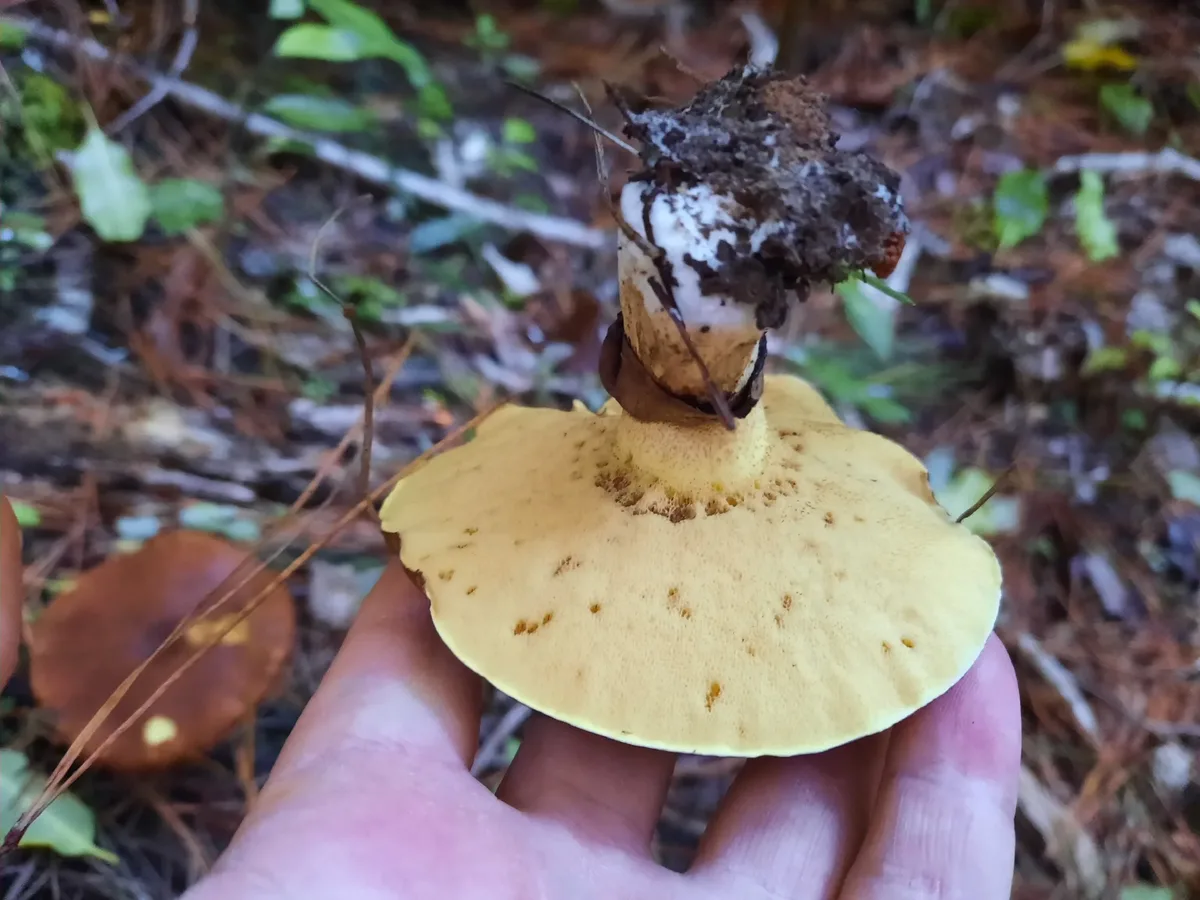
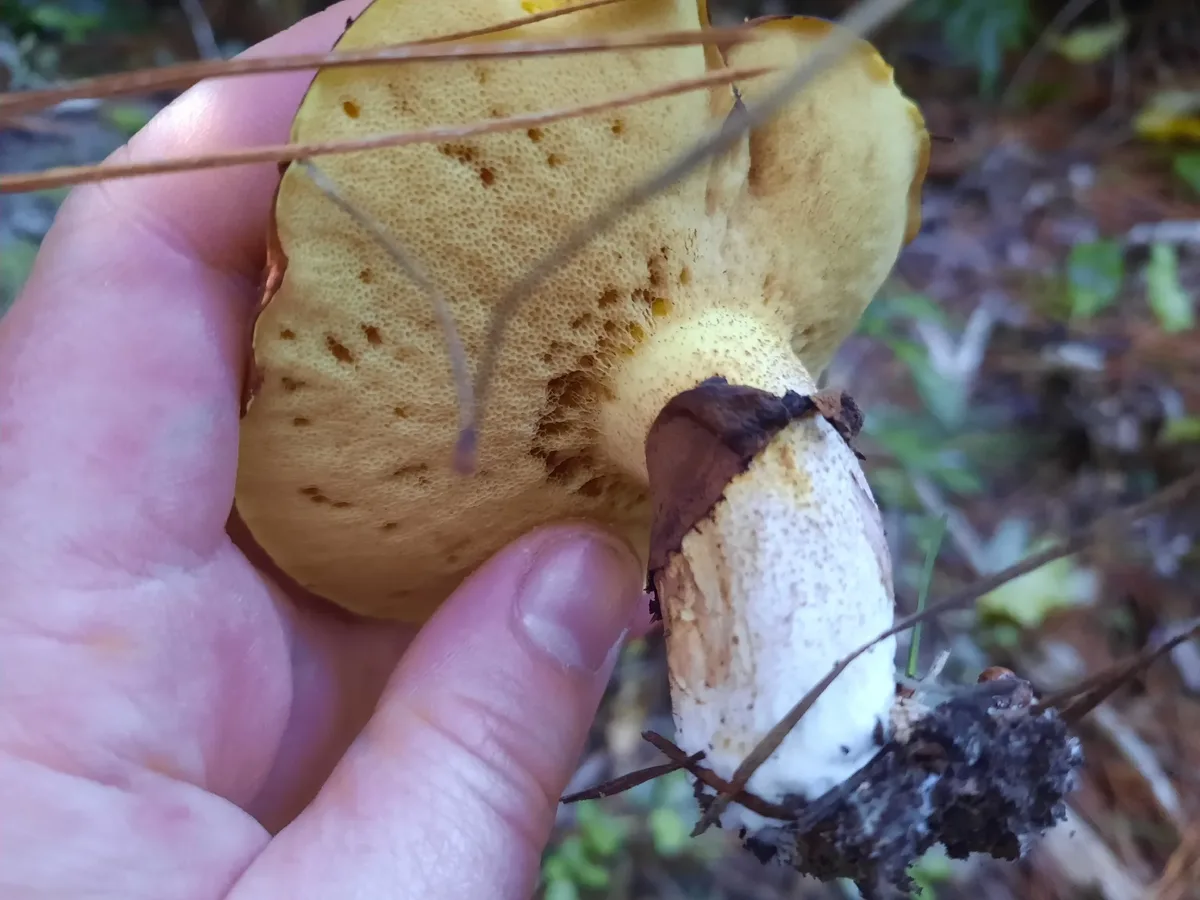
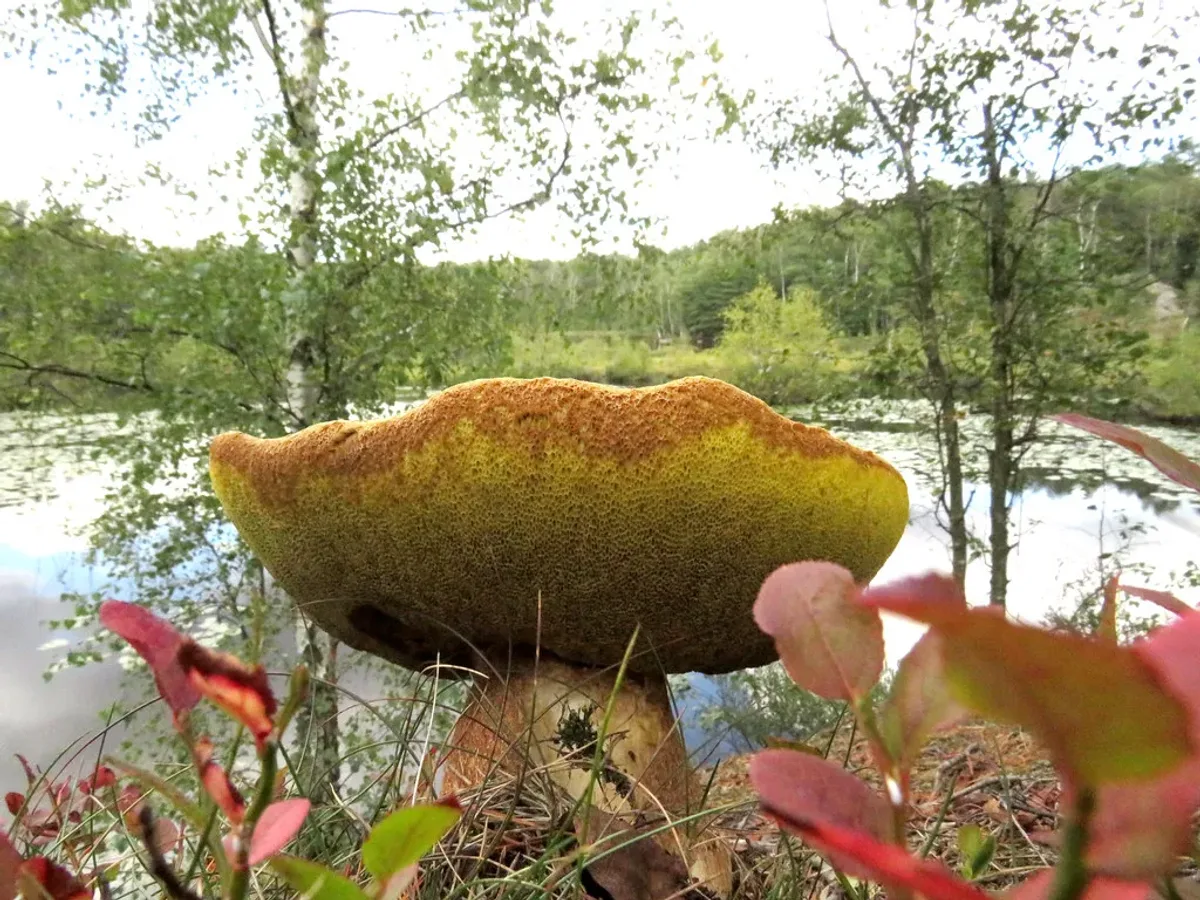
Beneath the cap lies the pore layer rather than gills: a dense, sponge-like surface of tiny tubes packed side by side, pale lemon-yellow when young and gradually deepening to olive-yellow as spores mature. The tubes are short and do not run down the stem.
Stem
The stem is stout and cream-coloured, dotted with dark brown granules above the ring - a structural feature called a glandular dot pattern that seeps liquid in youth - and paler or even whitish below.
The ring itself is one of the defining characters of this species within the slippery-jack group: a broad, purple-tinted, skirt-like membrane that wraps around the upper stem and remains attached throughout the fruitbody's life.
Flesh
Flesh is pale yellow, firm and odourless when young, softening and becoming more watery with age. It does not bruise blue on cutting or pressing - an important distinction from many toxic boletes.
Where & when it grows
Habitat
Suillus luteus is a creature of the planted forest - a bolete that arrived in Australia and New Zealand tucked invisibly inside the root systems of introduced pines. It has no native range in the Southern Hemisphere; its entire presence here is a consequence of colonisation-era forestry.
Wherever Pinus radiata, Pinus sylvestris, or other two- and three-needled pines were established in plantations from the nineteenth century onward, slippery jacks followed. Today dense populations occur in the pine forests of Victoria, the Adelaide Hills, the south-west of Western Australia, Tasmania, and across New Zealand's plantation zones in the North and South Islands.
Within those forests the fungus tends to concentrate at the edges where canopy breaks let in more light, and it shares the ground comfortably with the saffron milkcap (Lactarius deliciosus), another introduced-pine associate.
The related Suillus granulatus occupies a slightly different niche on calcareous soils under the Mediterranean pines Pinus halepensis and Pinus pinea in Australia.
Both species grow where their hosts grow and nowhere else - there is no foraging for slippery jacks in native eucalypt bush or rainforest. This strict host fidelity makes the habitat identification simple and reliable, and it is part of what makes the species relatively safe for foragers: if you are not under pines, it cannot be a slippery jack.
When
Slippery jacks fruit in the cooler, wetter half of the year in the Southern Hemisphere, corresponding broadly to autumn and early winter - April through June in most Australian and New Zealand localities. The trigger is a combination of falling soil temperatures and adequate rainfall.
Fruiting typically requires at least 20 mm of rain in the preceding two weeks and soil temperatures that have dropped into the 7-18 °C range. Once those conditions coincide, fruitbodies can appear within five to fourteen days.
In good years, when autumn rain arrives promptly, the season in south-eastern Australia can begin as early as late March in higher-elevation sites and extend into July along the cool southern coast. At higher elevations in the Victorian ranges or the Southern Alps of New Zealand, fruiting can be compressed into a few intense weeks in May and June.
In dry autumns the season may barely register - the mycelium waits underground for as long as necessary, drawing on carbohydrates supplied by the living pine roots.
Single good flushes can fill a basket in an afternoon; in a dry year the same trees may yield almost nothing. The seasonality is therefore more variable than the calendar suggests, and local rainfall in the weeks before a foraging trip is the most reliable predictor.
How it grows
Suillus luteus is an obligate mycorrhizal partner of pines, meaning neither the fungus nor its host can thrive without the other in this relationship.
The fungus wraps a sheath of hyphae - the ectomycorrhizal mantle - around fine pine rootlets and weaves threads between the outermost root cells (the Hartig net). This creates a living interface through which the tree feeds the fungus with sugars from photosynthesis, and the fungus returns phosphorus, nitrogen and water to the tree.
In a young plantation this network establishes within a few years of planting and can endure for the full commercial rotation of the trees, decades at a stretch.
The mycelium itself remains entirely invisible during dry periods - a white hyphal mat spreading through the duff layer and the upper centimetres of mineral soil, drawing nothing from the outside observer.
After sufficient rain the first sign is a small, pointed bulge in the needle litter that pushes upward over a day or two, becoming recognisable as a bolete cap within forty-eight to seventy-two hours of first breaking the surface.
Groups of fruitbodies often emerge in a cluster, several caps pressed against one another as the underground mycelium routes resources to multiple fruiting points at once.
The purple ring - actually the remnant of a veil that enclosed the pore layer in the button stage - tears free from the cap margin as the cap expands and remains as a distinct skirt on the stem.
Fruiting conditions
Fruits in cool, wet autumn-winter conditions after rain; needs established mycorrhizal pine hosts. Conservative standard-mycology estimate.
Look-alikes
Within Australia and New Zealand the slippery-jack group is internally variable but collectively easy to recognise: slimy or glutinous brown cap, yellow to olive pores, stout ringed or unringed stem, pine habitat.
Suillus granulatus (granulated bolete) is the most common companion species; it lacks the ring entirely and exudes milky white droplets from its pores when fresh, but shares the same edibility and habitat.
Suillus bovinus (cow bolete) has larger, more angular pores and less glutinous cap skin. None of these close relatives are dangerous.
The real concern is the broader category of Australian boletes, some of which are inedible or mildly toxic. The advice that has guided Australian pine-forest foraging for decades - pick saffron milkcaps and slippery jacks, nothing else - remains sound beginner practice.
No bolete in Australia matches the full combination of slimy brown cap, tube layer (not gills), purple-tinged ring on the stem, and strict pine association.
Blue-staining boletes, including some potentially toxic species, bruise instantly blue in the flesh when cut - Suillus luteus does not.
If any doubt exists, cut the flesh and press. The four-point check:
- 1No blueing
- 2No gills
- 3Ring present
- 4Under pines
Deadly Amanita species can grow under the same introduced trees in plantations. Unlike the bolete-type Suillus (which has yellow pores under the cap and a slimy brown cap), Amanita have gills, a ring and a basal volva.
Edible Suillus that grows with larch.
The combination of a slimy brown cap, yellow pores and pine habitat is distinctive for the slippery jacks; following the beginner rule of picking nothing else avoids confusion.
Other Suillus boletes are also edible; the guide notes there are no dangerous lookalikes.
Edible Suillus that grows with spruce.
Edible Suillus with a dry, matte cap and no ring.
Edible Suillus that lacks a ring on the stem.
In the kitchen
Picking & cleaning
Slippery jacks reward the forager who moves quickly. The fruitbodies age rapidly, and a cap that was prime yesterday can be waterlogged and wormy by tomorrow after overnight rain.
Young to medium specimens - caps still domed or just flattening, ring clean and intact, pore layer pale yellow - are far superior to older ones with olive-tinted tubes and softening flesh.
Bring a small knife and a basket or paper bag; plastic traps moisture and accelerates deterioration. Trim each stem at the base rather than pulling, to leave the mycelial mat intact. In the field, wipe the cap clean of pine needles and debris.
The slimy cap skin must be removed before cooking: grip the edge and peel it back toward the centre in strips. This is easier when the mushroom is fresh and slightly dry on the surface - a few hours at room temperature or a brief rest in a cool, airy spot helps.
After peeling, cut the cap in half to check for insect larvae, which work inward from the base of the stem. Heavily infested specimens are best left behind.
In older caps the pore layer becomes spongy and absorbs cooking liquid without contributing flavour; remove it by scraping or slicing the tubes free from the cap flesh.
Processed promptly, slippery jacks keep refrigerated for two to three days. For longer storage, slice thin and dry at low heat until crisp, then seal in an airtight container.
Cooking
Once peeled and trimmed, slippery jacks are genuinely useful kitchen mushrooms - not the most intensely flavoured bolete, but meaty, substantial, and versatile. The texture holds up to longer cooking times, making them well suited to braises, soups, and stews where more delicate mushrooms would dissolve.
Sliced and fried in butter or olive oil over moderate heat they caramelise to a golden edge without releasing excessive moisture, provided they are not overcrowded in the pan. Their mild, earthy flavour takes seasoning well and pairs naturally with thyme, garlic, soy, miso, and white wine.
In Australia the classic preparation is a simple stir-fry or omelette filling; in New Zealand they appear in pies and pasta sauces.
Several methods preserve a large autumn harvest:
- Drying transforms slippery jacks significantly: sliced 3-4 mm thick and dried at 50-60 °C until rigid, the slices develop a more concentrated, nutty flavour and can be powdered into an umami-rich seasoning. Dried slippery jack powder blended with salt and dried herbs makes a useful all-purpose savoury condiment.
- Pickling in a light vinegar brine with bay and peppercorn is another excellent preservation method; the acidity firms the texture and the flavour keeps for months.
- Freezing: blanch briefly in boiling water, drain, and freeze flat - the texture suffers somewhat but the flavour is largely retained, making this a workable option for large autumn harvests.
They are not eaten raw under any circumstances.
Good to know
Suillus luteus is edible and widely eaten across Europe, Australia, and New Zealand, but it requires consistent preparation.
The slimy pellicle - the gelatinous skin covering the cap - contains compounds that cause gastrointestinal distress in a proportion of people, even after thorough cooking. The reaction is not an allergy in the classical sense but a sensitivity that varies considerably between individuals; some people eat unpeeled slippery jacks without consequence while others feel nausea or loose stools after a small amount.
Peeling the cap before cooking eliminates this risk reliably.
First-time eaters should apply the same discipline as with any new wild mushroom:
- Peel meticulously
- Cook thoroughly
- Eat a conservative portion the first time
- Wait twenty-four hours before eating more
Children and people with sensitive digestive systems should be especially careful.
The pore layer of old specimens, being spongy and degraded, can cause stomach upset independently of the cap skin; removing it in mature caps is good practice.
Suillus luteus should never be eaten raw.
No life-threatening compounds have been identified in this species, and serious poisoning is not recorded; the risk is gastrointestinal discomfort, not systemic toxicity.
A reference guide - never an edibility guarantee. When in doubt, leave it out.