Gargal
Grifola gargal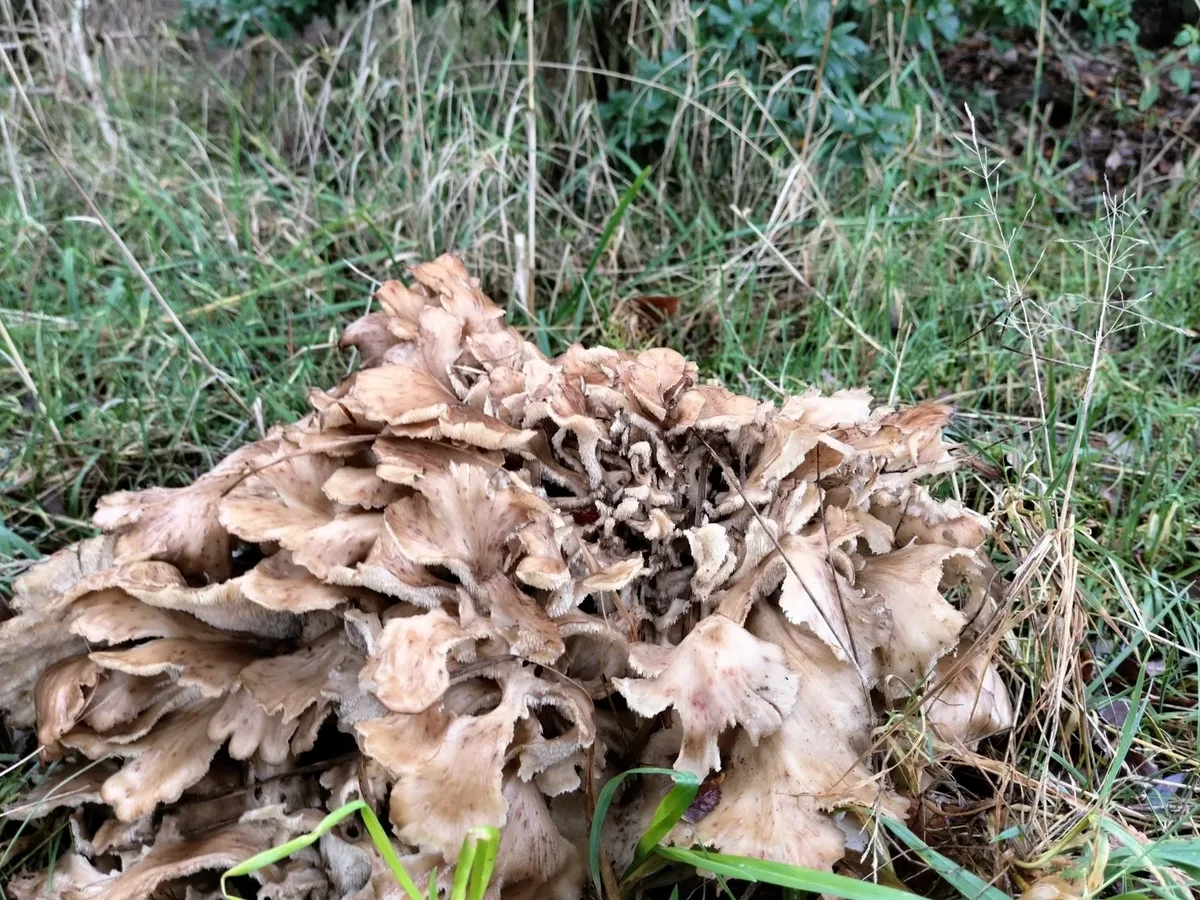 © Diego González (CC BY 4.0)
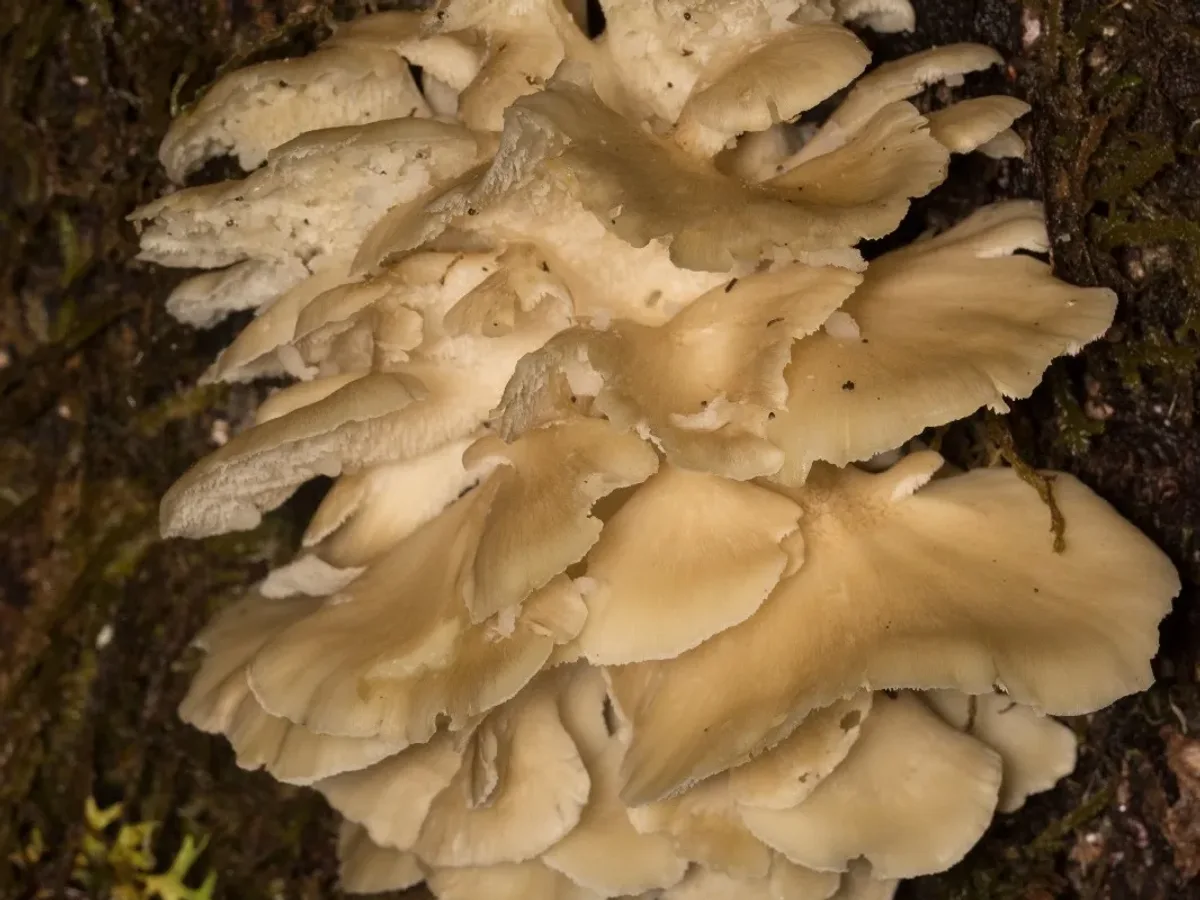 © Pablo Silva (CC BY 4.0)
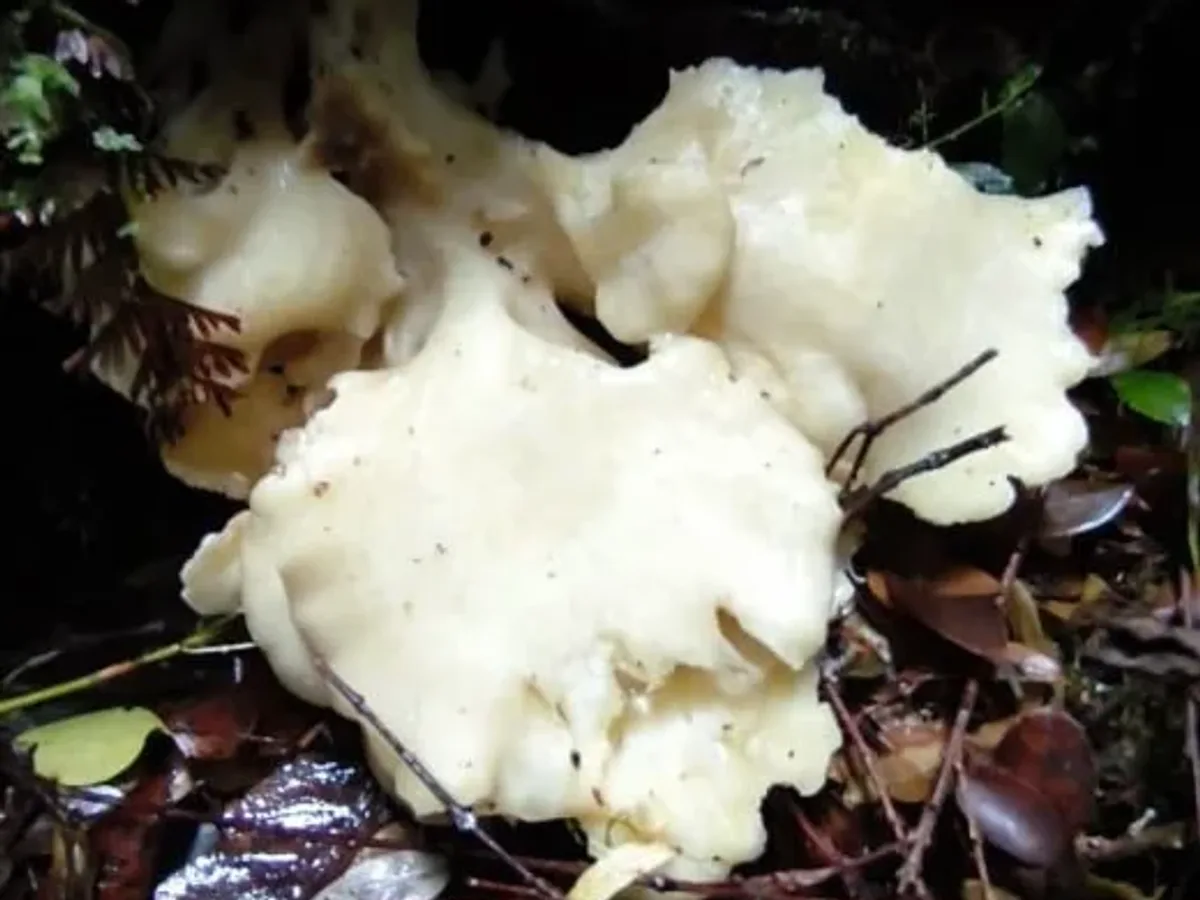 Ricardo Barrientos (CC0)
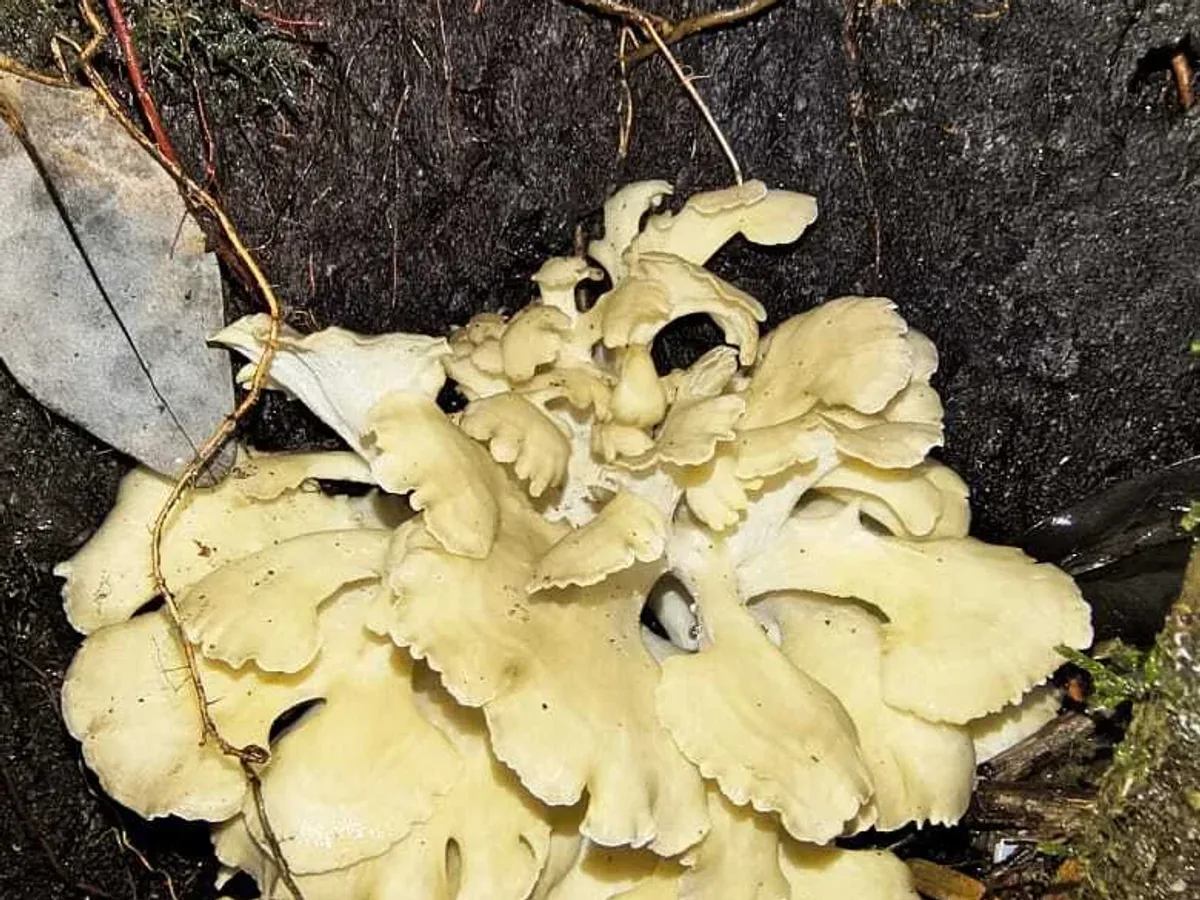 Ricardo Barrientos (CC0)
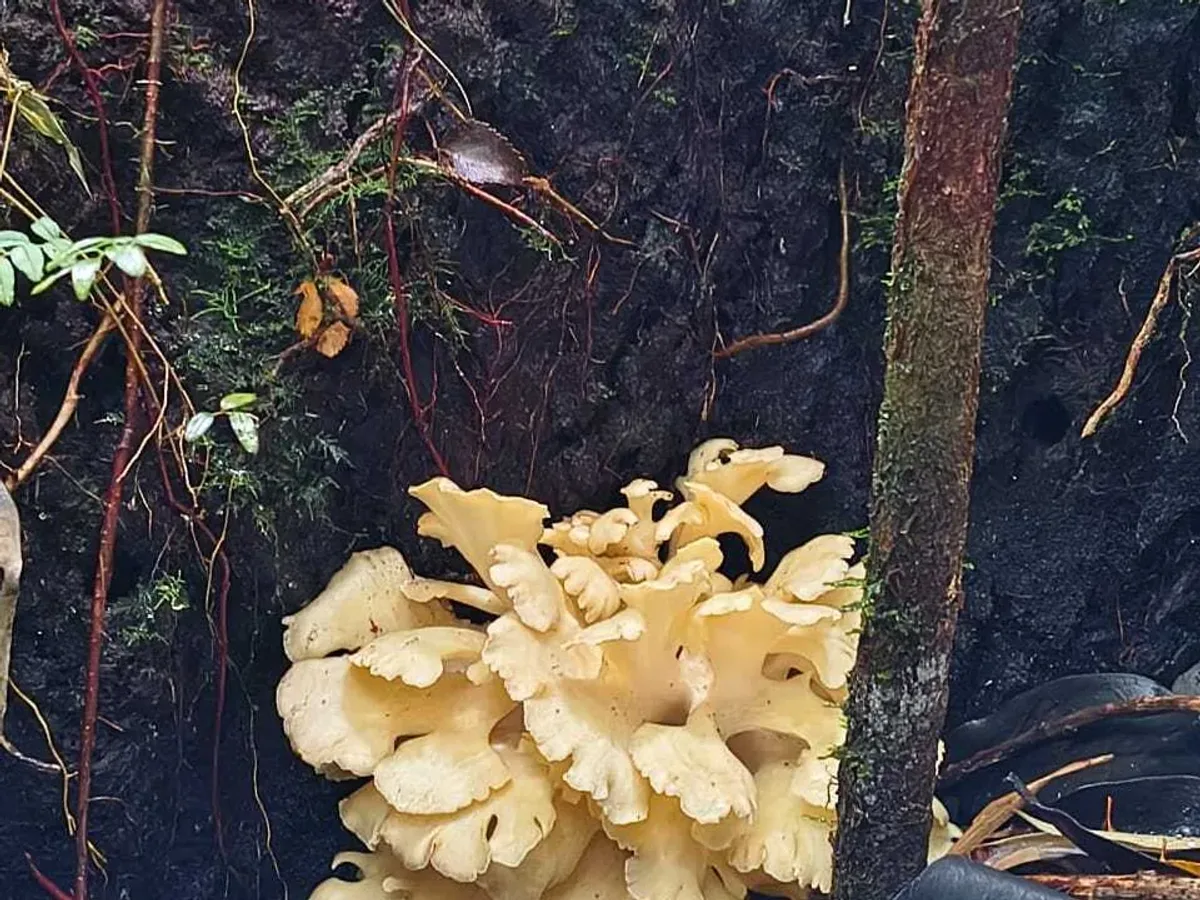 Ricardo Barrientos (CC0)
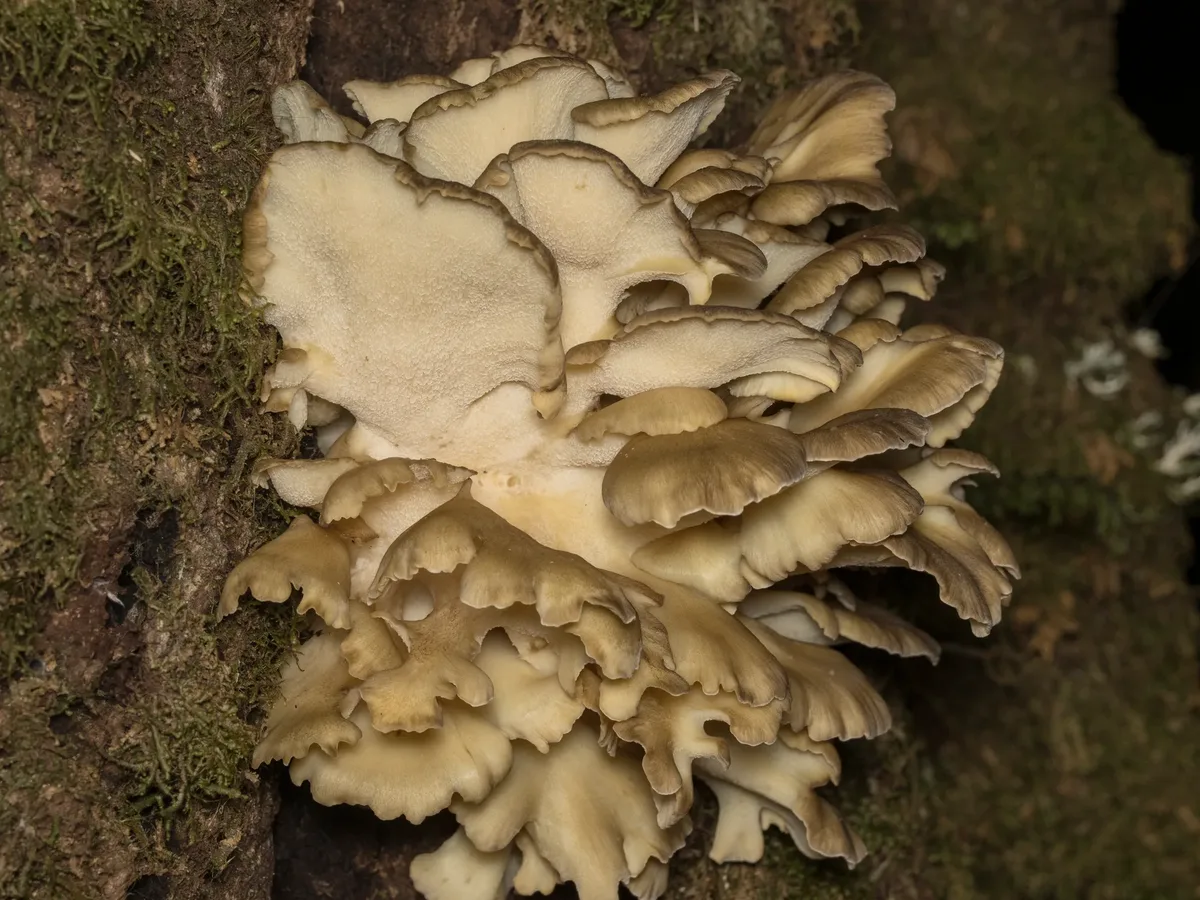 © Pablo Silva (CC BY)
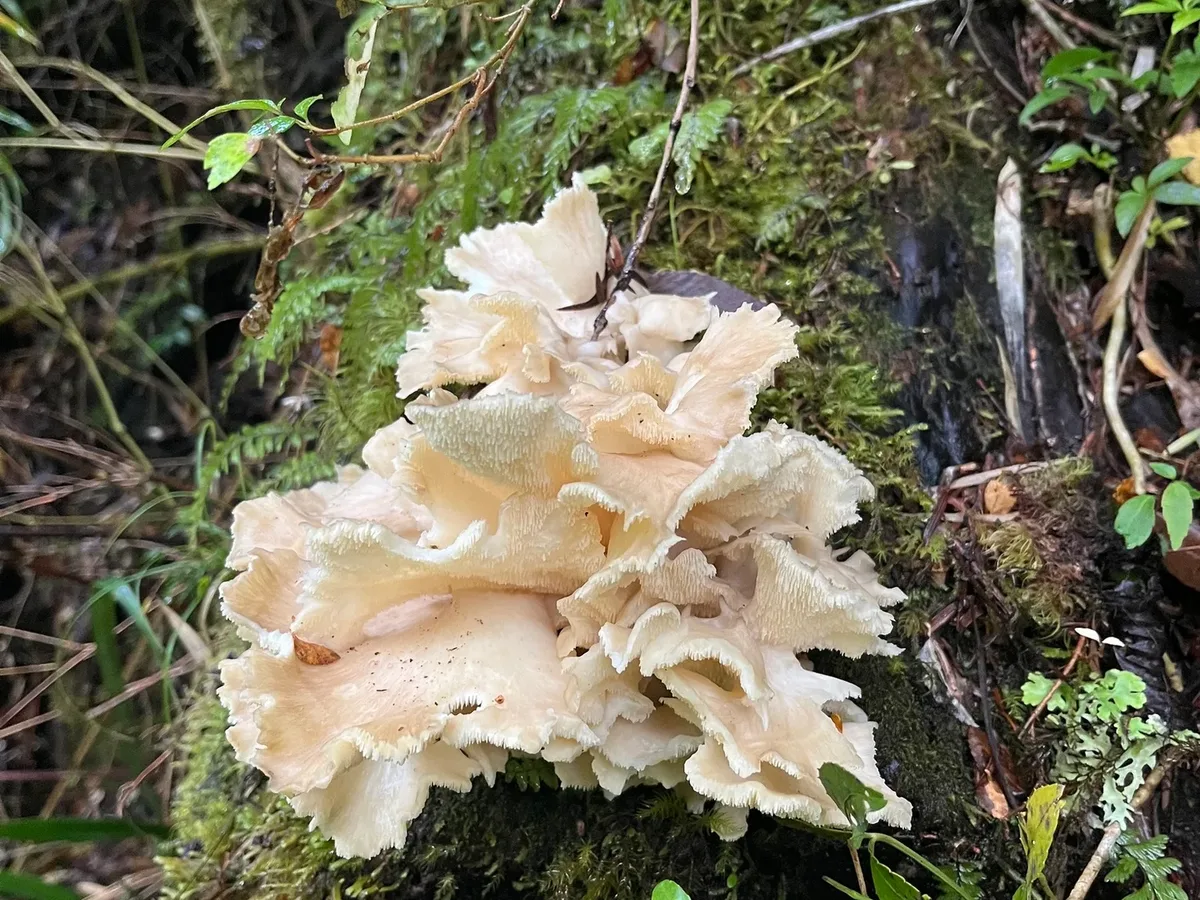 © Pablo Silva (CC BY)
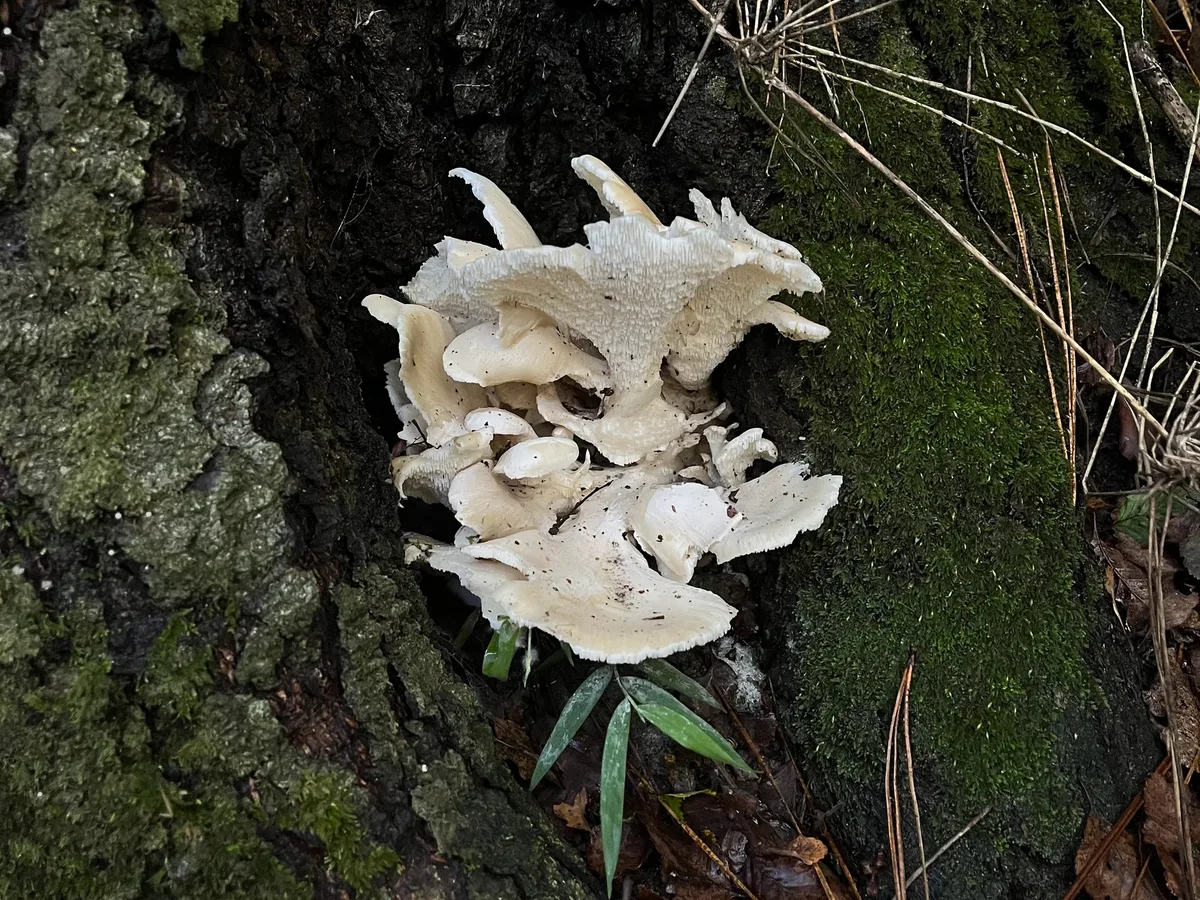 © Cristian Riquelme (CC BY)
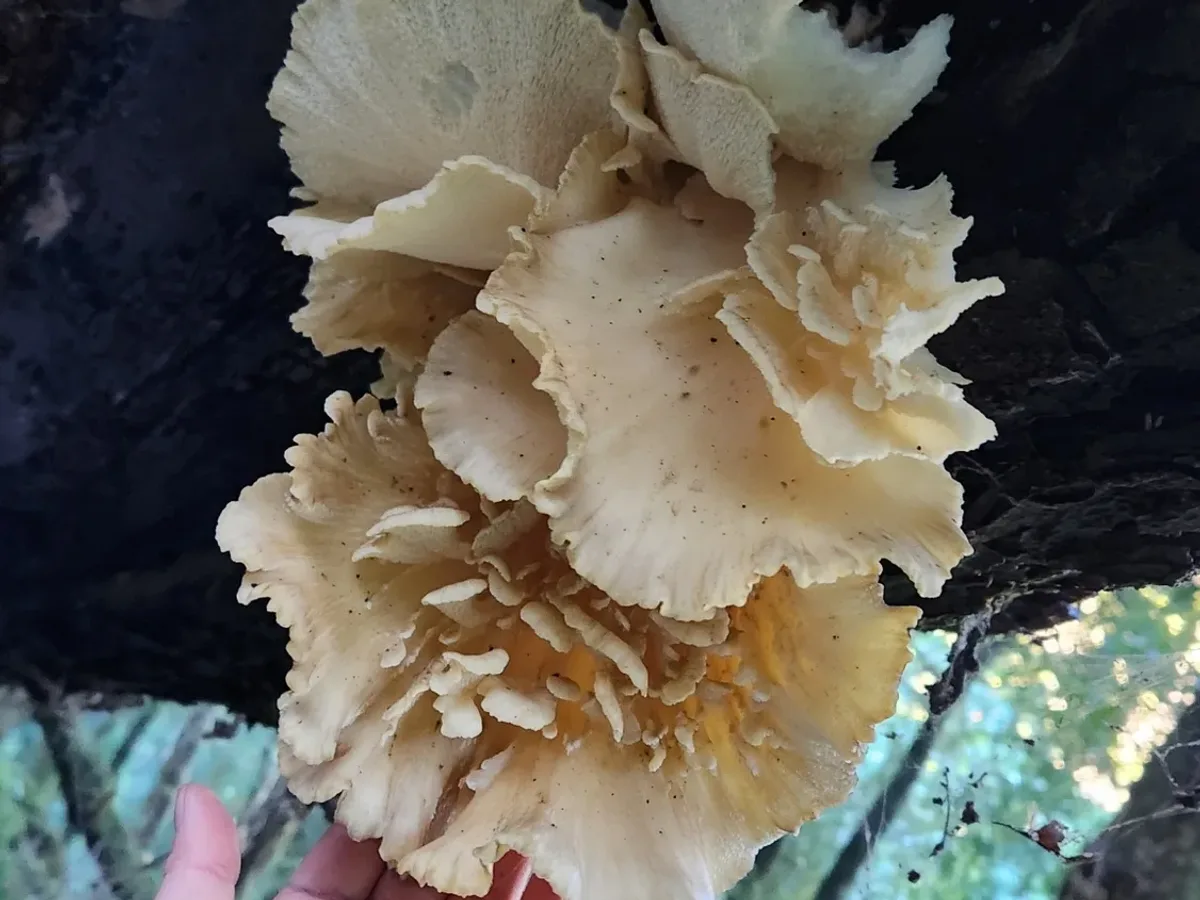 © La florifunga🌱 (CC BY)
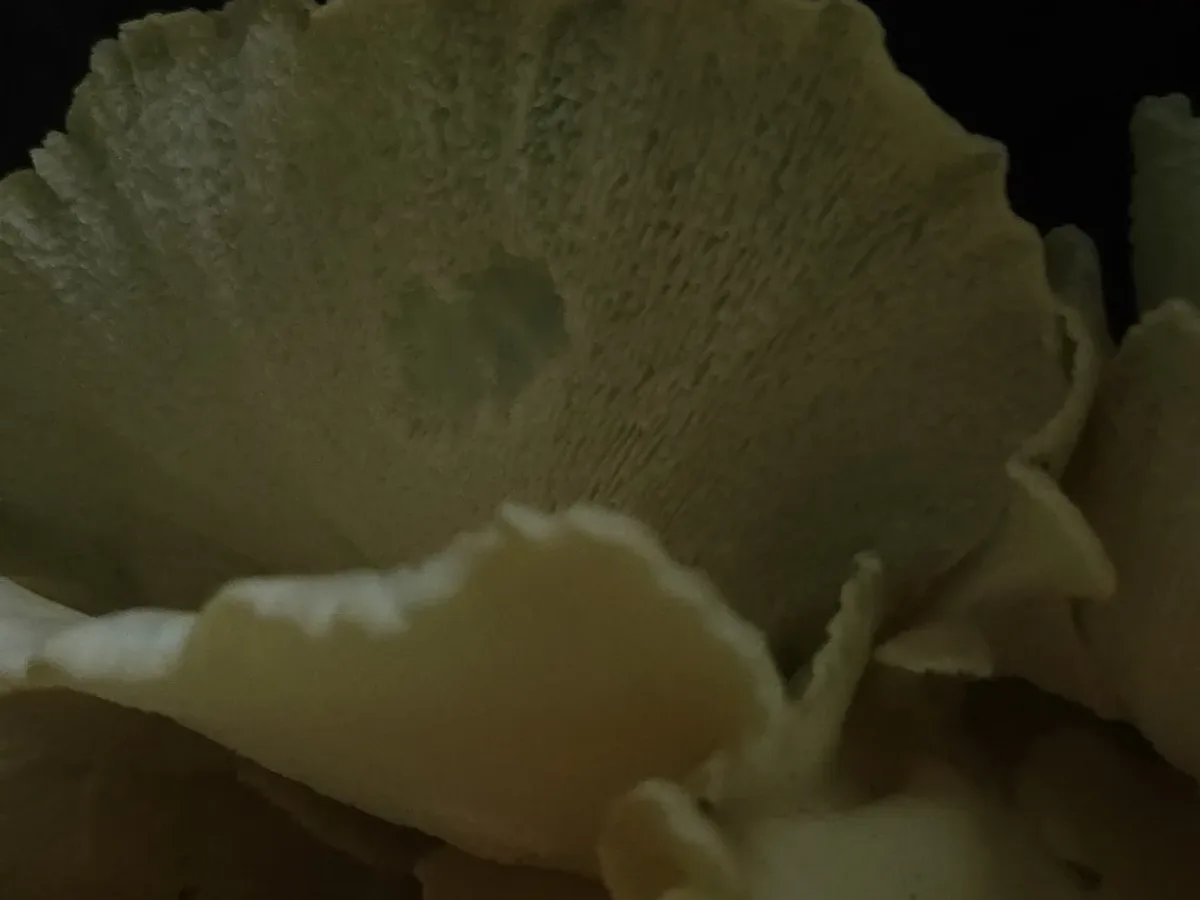 © La florifunga🌱 (CC BY)
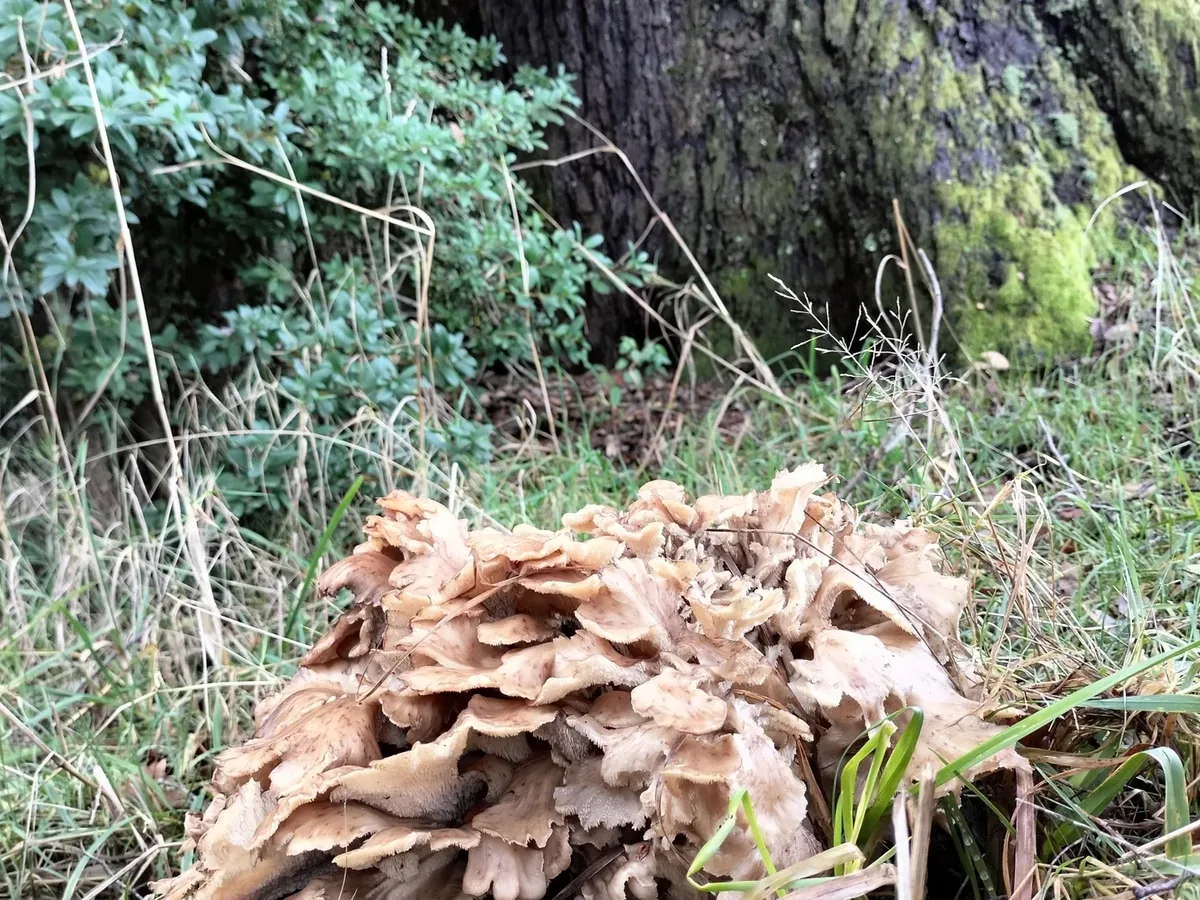 © Diego González (CC BY 4.0)© Diego González (CC BY 4.0)© Pablo Silva (CC BY 4.0)
One of the best mushrooms you can bring home - once you are certain of the identification.
How to recognise it
Grifola gargal is a polypore - a bracket fungus that produces a compound fruitbody of multiple overlapping, fan- or tongue-shaped caps fused at a shared base.
The overall cluster can be substantial - multiple kilograms in a productive year - and it grows high enough on the trunk that harvesters sometimes need a pole or a well-placed branch to reach it.
Cap
Individual caps are typically 5-15 cm across, cream to pale ochre-yellow, smooth to finely fibrous on the upper surface, and become slightly wavy or lobed at the margin as they mature.
Flesh
The flesh is white, firm, and surprisingly dense for its shelf-like growth habit, with a texture somewhere between chicken-of-the-woods and firm tofu - springy when fresh, fibrous when cooked.
Gills / Pores
The underside bears fine, cream-white pores rather than gills; the pore surface is characteristic of the Grifolaceae and distinguishes the species from any gilled lookalike at a glance. There are no gills, no ring, and no volva.
Smell & taste
By far the most distinctive trait is olfactory: a strong, sweet almond-and-marzipan scent is detectable from several metres away and is unmistakable once you have encountered it.
The scent derives from benzaldehyde, the same volatile compound responsible for the aroma of bitter almond and marzipan, and it intensifies when the flesh is cut or bruised. It persists through cooking - a rare quality in aromatic fungi - making gargal one of the most flavour-stable edible species in the southern forests.
Where & when it grows
Habitat
Grifola gargal is tied, with unusual fidelity, to a single host: Nothofagus obliqua, known locally as roble (southern beech). This is not a mycorrhizal relationship but a saprotrophic-parasitic one - the fungus colonises the heartwood and weakened sapwood of aging, stressed, or recently dead trees, gradually causing a white rot that bleaches and softens the wood fibres.
It occupies the cool, humid Andean-Patagonian forests of Chile and adjacent Argentina, with documented populations in Chile's Biobío, Araucanía, Los Lagos, and Aysén regions and in the forests surrounding Bariloche, Argentina. The habitat is characterised by high annual rainfall, cool summers, and the mixed Nothofagus canopy that defines southern Chile's temperate rainforest belt.
Within that zone, gargal prefers old-growth or mature secondary forest where large N. obliqua trunks are present. It rarely appears in recently managed or heavily logged stands, partly because those operations remove the aged, structurally compromised trees that the fungus favours.
The species' narrow host specificity - N. obliqua rather than other southern beech species - combined with decades of lowland forest clearing for agriculture and plantation forestry has made suitable habitat increasingly fragmented. Finding gargal today often means walking into the remaining old-growth pockets or privately owned forest fragments that escaped the twentieth-century logging wave.
When
In the Southern Hemisphere, Grifola gargal fruits during the spring flush that follows the cold, wet Patagonian winter - roughly September through November, though the window shifts by a week or two depending on altitude and aspect.
At lower elevations in Biobío and Araucanía it may appear as early as late August; at higher sites in Los Lagos and Aysén the peak is October to November. Some field sources and local foragers also record autumn fruiting (March-May in the Southern Hemisphere), but spring is the primary and most reliable season.
The trigger is the combination of warming soil temperatures, which climb above roughly 8°C after the winter minimum, and sustained rainfall that saturates the substrate around the host tree's root zone and trunk.
Because gargal grows on standing wood rather than soil, the relevant moisture is within the wood itself - the mycelium responds to rehydration of the host after a dry period or following rainfall that exceeds about 30 mm over two weeks.
Once conditions are met, fruitbodies can develop quickly, though the heavy, dense clusters of this species take somewhat longer to reach maturity than lighter-fleshed polypores.
Timing visits to immediately after rain events in September and October, particularly in the mid-elevation mixed Nothofagus forests, gives the best chance of finding it at prime condition.
How it grows
Grifola gargal is a wood-decay fungus that causes white rot. It produces extracellular enzymes, principally laccases and peroxidases, that selectively break down lignin while leaving some of the cellulose intact.
This is the opposite of the brown rots produced by species like Laetiporus and many bracket fungi: white rot leaves pale, soft, fibrous wood rather than the crumbly brown cuboid fragments of a brown rot.
The mycelium permeates the heartwood and inner sapwood of its Nothofagus obliqua host, operating as both saprotroph and weak parasite. It can colonise living but compromised trees - those with root damage, basal wounds, or advanced heartwood decay - and continues after the tree dies.
The visible fruitbody is only the reproductive tip of an extensive mycelial network that may have been established inside the wood for years before conditions favourable for sporulation are met.
Spore release occurs from the pore surface on the underside of the caps. The white, cylindrical basidiospores are wind-dispersed and germinate on exposed wood surfaces where fresh lignin is available.
The fungus belongs to the family Grifolaceae alongside its close relative Grifola frondosa (maitake), which has an analogous life history on temperate oaks and beeches in the Northern Hemisphere.
Cultivation on hardwood substrate (oak sawdust supplemented with rice bran) has been achieved experimentally, notably in Japan. This demonstrates that the fungus can complete its life cycle outside its native host - a finding with real conservation relevance given the species' threatened status in the wild.
Fruiting conditions
Wood-decay bracket on living/aging southern beech; fruits in the cool, moist Southern-Hemisphere spring. Values are conservative standard-mycology estimates, not stated in the source.
Look-alikes
Grifola gargal belongs to a small genus, and its lookalikes are relatives rather than dangerous impostors.
The closest is Grifola frondosa - maitake or hen of the woods - a Northern Hemisphere species that grows on oak and other hardwoods and is well-known in Japanese and European cuisine. Grifola frondosa has a broadly similar compound bracket structure and pore surface, but lacks the defining almond-marzipan scent of gargal; its caps are typically more grey-brown, and it does not occur naturally in South America. Anyone familiar with maitake will recognise the structural similarity immediately.
Within South America, Grifola sordulenta is a closely related sister species recorded from similar southern beech forests. It is also a white-rot polypore on Nothofagus, but again lacks the strong almond scent and tends toward a darker, more greyish or brownish cap surface.
No dangerous or deadly lookalikes are known for gargal in its range. The combination of overlapping shelf-like pored caps on a Nothofagus trunk, cream-to-pale-ochre colouration, firm white flesh, and a pronounced sweet almond aroma is sufficient to identify it with confidence.
Neither Grifola frondosa nor Grifola sordulenta is hazardous; the distinction is gastronomic rather than a safety matter. There are no Amanita species that mimic the compound-bracket polypore growth form, so the structural features alone exclude the most dangerous genera.
A close relative; gargal is distinguished by its strong almond/marzipan aroma and its habit of growing on southern beech (Nothofagus).
Closely related sister species; gargal's strong almond scent and growth on southern beech are characteristic.
In the kitchen
Picking & cleaning
Because Grifola gargal is classified as Endangered on the IUCN Red List (criterion A2cd, Furci et al. 2020) - with the wild population estimated to have declined by more than 50% over the last three generations due to logging and habitat fragmentation - the ethics of harvesting require particular care.
- Where collecting is permitted, cut the fruitbody cleanly from the trunk with a sharp knife rather than tearing it, and leave the attachment point and any small emerging lobes intact to allow the mycelium to attempt a second flush.
- Take only what you can use immediately; gargal does not dry as gracefully as many polypores, and the almond aroma fades within a day or two of harvest.
- Collect only from stands where the host tree population is healthy and the fungus is visibly abundant - do not take from sites where you see only one or two fruitbodies on a single tree.
- Check local regulations: in Chile, collecting wild fungi on public land is regulated and on private land requires landowner permission; in Argentina, Nothofagus forest management is subject to provincial forestry law.
The species can be cultivated on hardwood sawdust blocks, and commercial cultivation from Chilean or Argentine producers, if available, is a conservation-neutral alternative to wild harvest.
Cooking
The almond-marzipan aroma of Grifola gargal - driven by benzaldehyde in the fresh flesh - is the feature that defines its culinary identity, and the best cooking methods are those that concentrate rather than dilute it.
High, dry heat is the first tool. Slice or tear the caps into pieces 1-2 cm thick and sear them in a very hot, dry or lightly oiled heavy pan without crowding. The firm, dense flesh releases little water compared with many polypores, browns readily, and develops a nutty, slightly sweet depth.
Once golden, add butter and aromatics - thyme, garlic, or, reinforcing the almond note, a splash of dry sherry or Amaretto.
In the Bariloche kitchen tradition the species appears in rich ragùs alongside game and lamb, in creamy sauces for fresh pasta, and in soups where the broth picks up both the savoury umami and the sweet top note.
Japanese-influenced preparations - a tradition that exists because the fungus attracted serious culinary attention in Japan, where related Grifola frondosa is prized - include tempura, where the lacy pore surface crisps beautifully, and dashi-based soups. For risotto, add gargal midway through cooking rather than at the start, to preserve textural integrity.
The species does not dry as reliably as boletes or morels - the benzaldehyde volatiles dissipate with prolonged heat - but brief dehydration at 45-50°C followed by rehydration in warm water preserves some aroma and concentrates the savoury notes.
If cultivated gargal is available from local producers it is worth seeking out: the flavour profile is similar to wild, and the harvest carries no conservation burden.
Good to know
Grifola gargal is regarded as one of the finest edible fungi in South America and carries no known toxicity. It has been eaten in the Andean-Patagonian region for generations and features prominently in the restaurant kitchens of Bariloche, Argentina, where it commands a high market price.
No adverse reactions attributable to the species appear in the mycological or medical literature, and it tolerates thorough cooking without producing harmful breakdown products.
The safety concern with gargal is not toxicological but ecological. The species is formally classified as Endangered (IUCN Red List, criterion A2cd; Furci, G. 2020), with a documented population decline exceeding 50% over approximately three generations, driven by logging of Nothofagus obliqua forests and associated habitat fragmentation.
Responsible use therefore means treating wild harvest as a privilege rather than a routine resource.
- Individuals with known sensitivities to polypore fungi - or who are eating any new wild mushroom for the first time - should try a small amount initially, as with any wild species.
- Pregnant individuals and those with immunocompromising conditions should consult a healthcare provider before eating wild fungi generally.
- Store fresh gargal refrigerated and use within two days; the firm flesh can harbour moisture that promotes bacterial growth if left at room temperature.
There is no known risk of misidentification with a dangerous species in its native range, given the species' distinctive combination of pored surface, host specificity, and almond scent.
A reference guide - never an edibility guarantee. When in doubt, leave it out.