Red cracking bolete
Xerocomellus chrysenteronsyn. Boletus chrysenteron, Xerocomus chrysenteron, Boletus subtomentosus var. chrysenteron
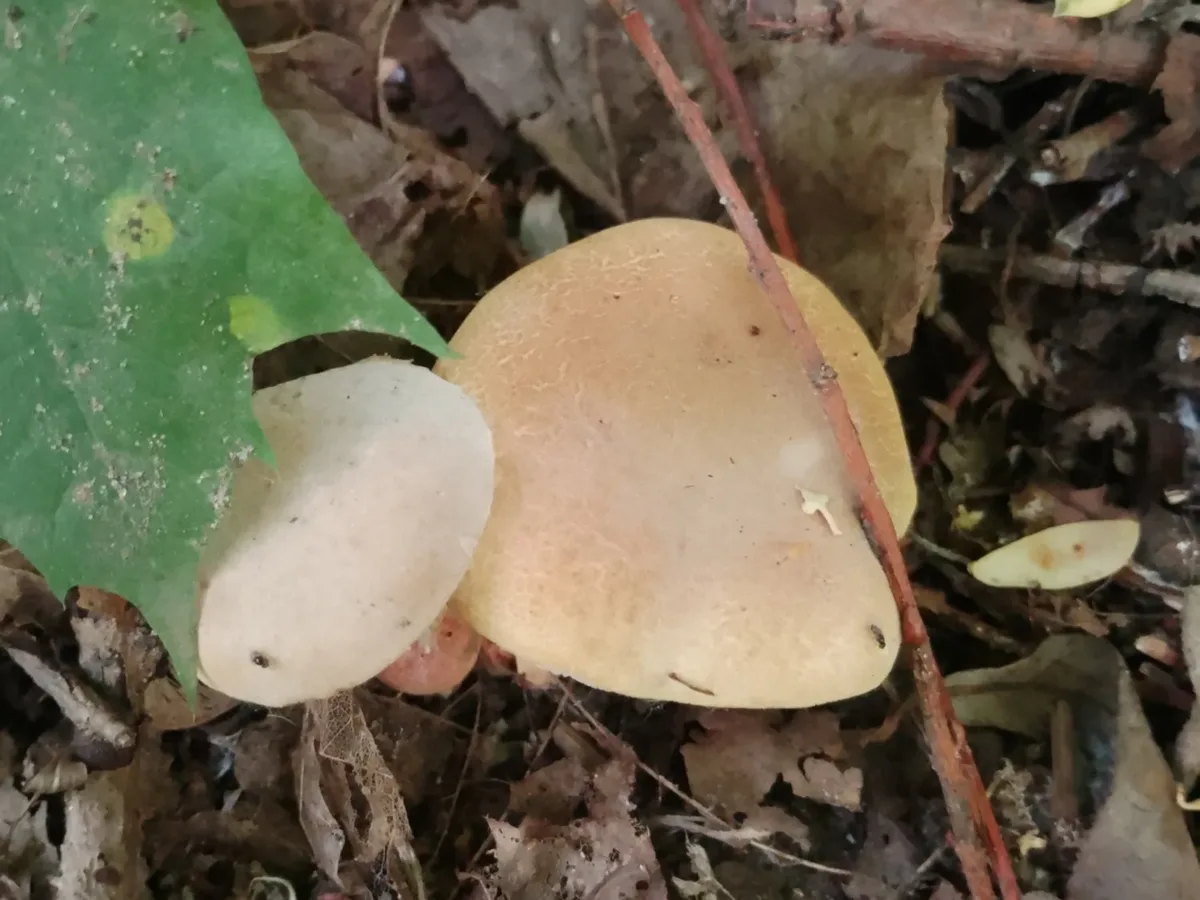 © Мирослав Соболев (CC BY)
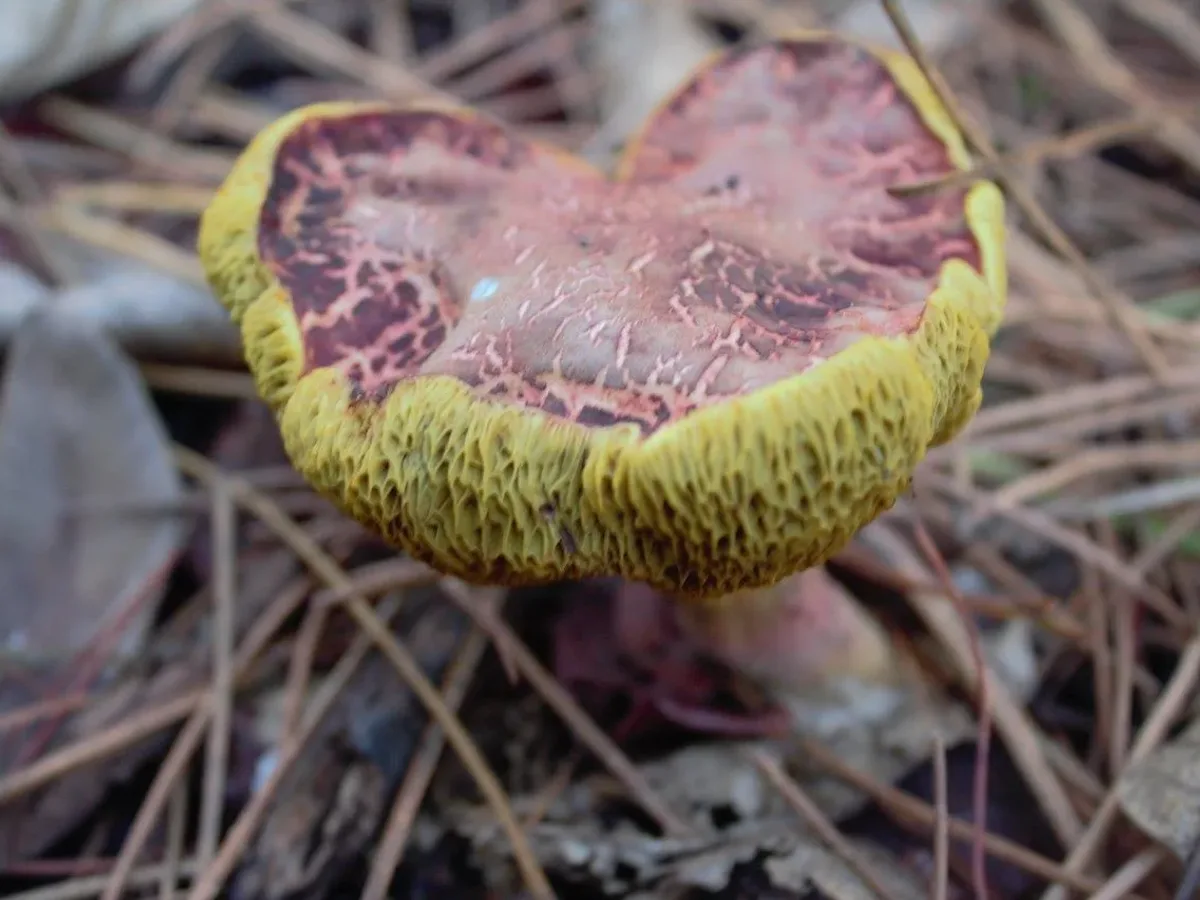 Jean-Max Van Pul (CC0)
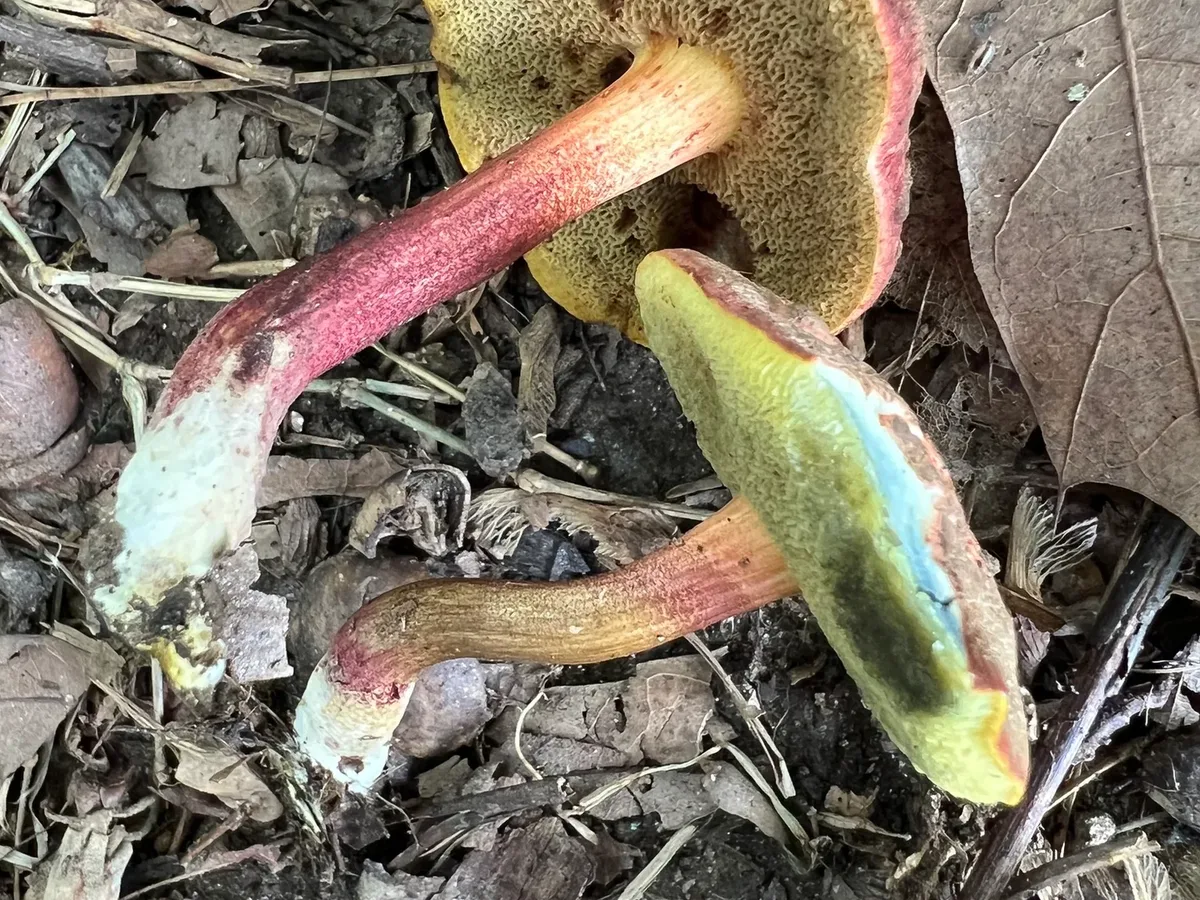 Bethany Teigen (CC0)
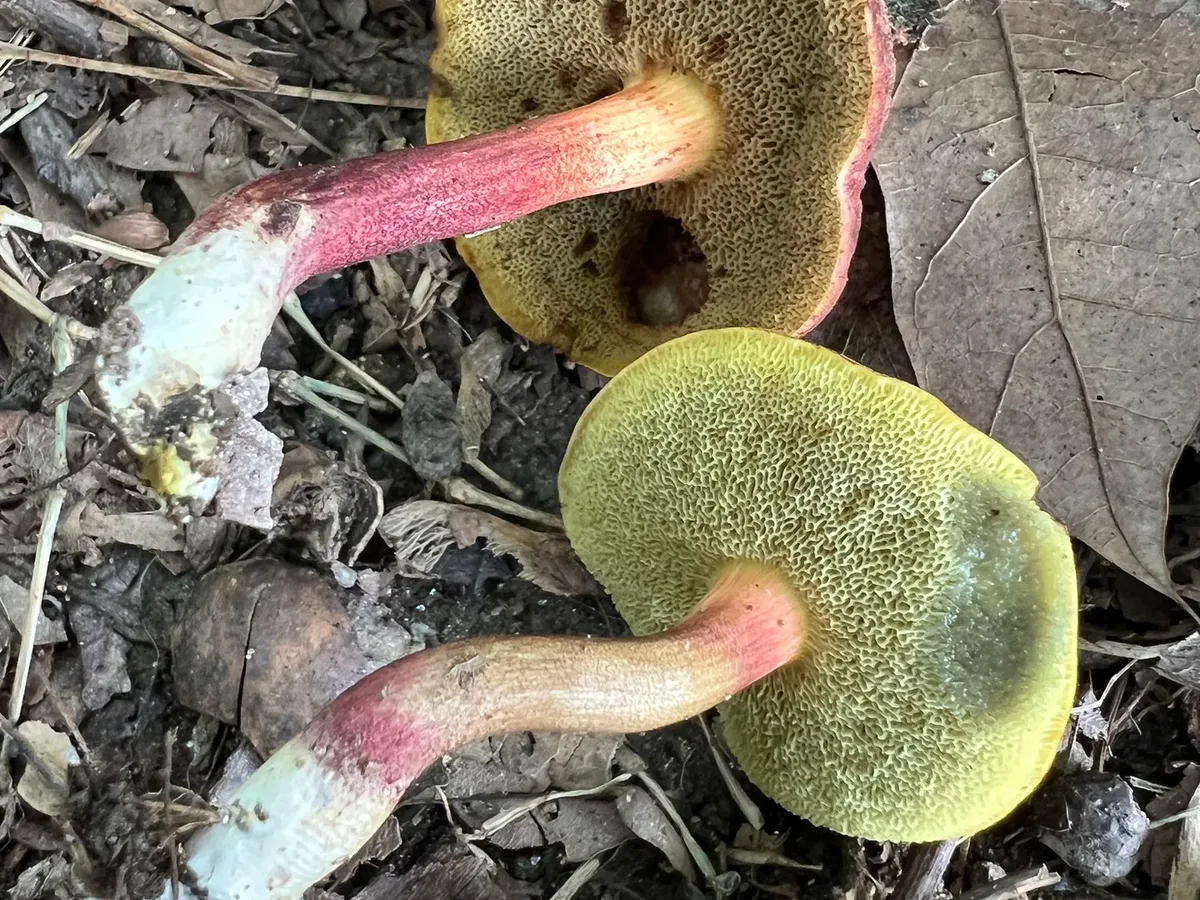 Bethany Teigen (CC0)
 Bethany Teigen (CC0)
 Евгения (CC0)
 Евгения (CC0)
 © Bjørn Eidhammer (CC BY)
 © Bjørn Eidhammer (CC BY)© Мирослав Соболев (CC BY)Jean-Max Van Pul (CC0)
Edible only with the right preparation - or safe for some people but not others. Learn the caveats first.
Never eat a mushroom you are not 100% sure of - check the look-alikes below, and always cook wild mushrooms.
How to recognise it
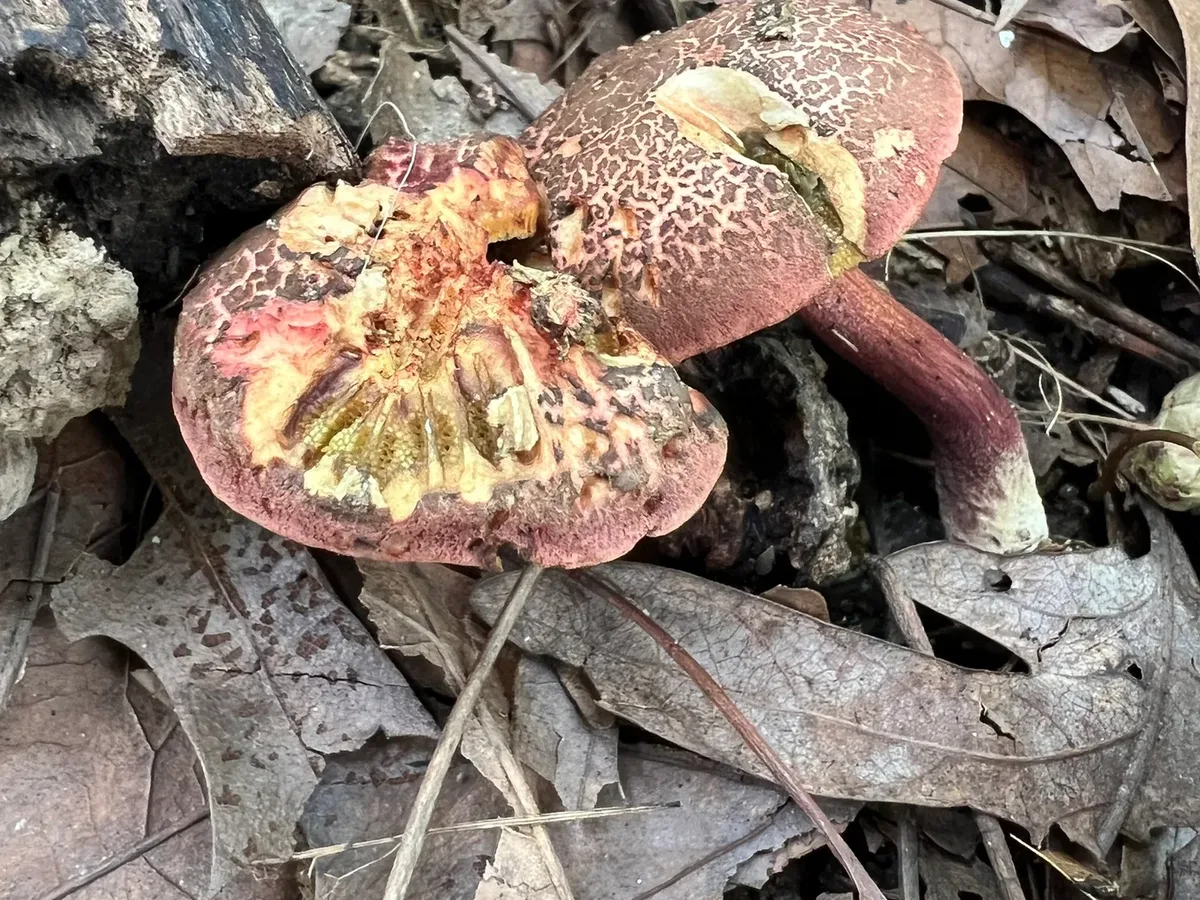
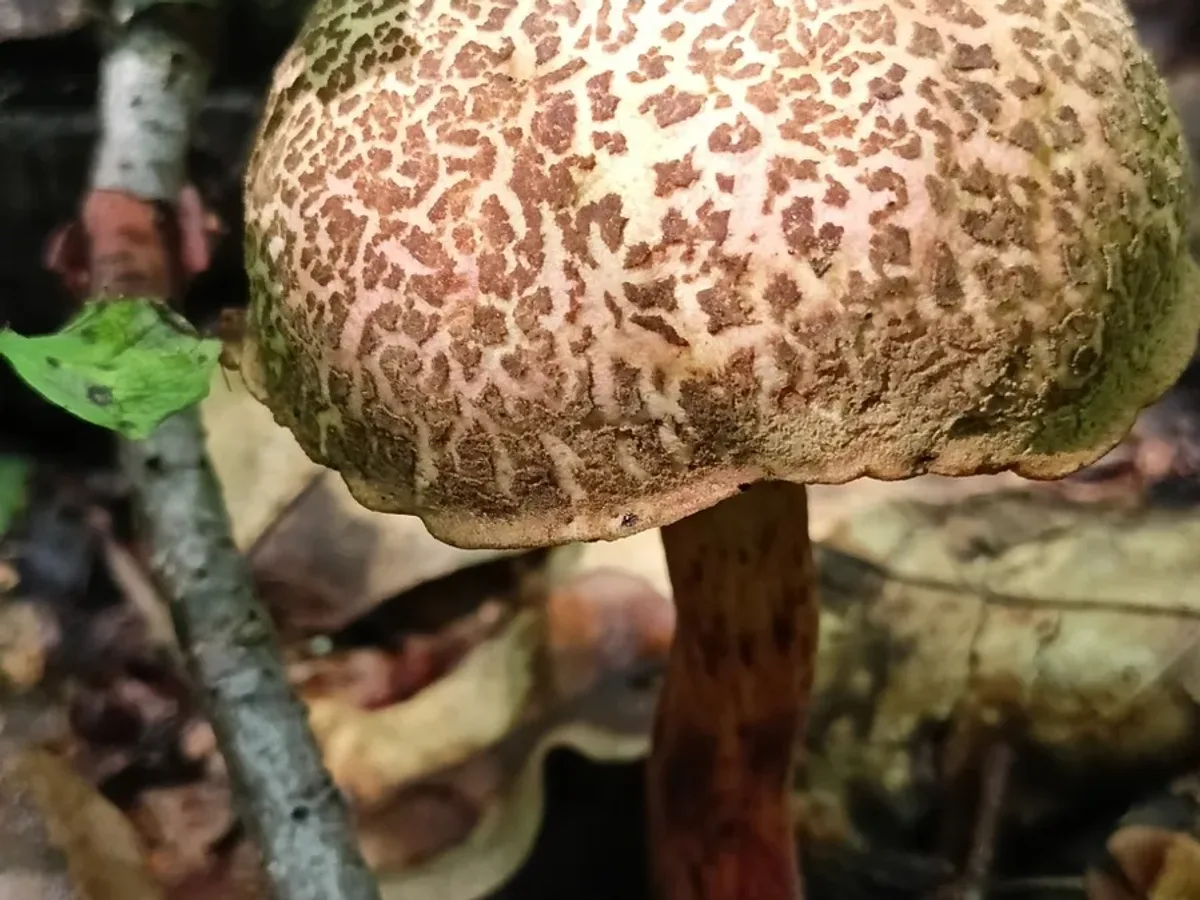
The red cracking bolete announces itself with a cap that looks like dried earth after a hot spell - the olive-brown to chestnut surface splits into an irregular mosaic of polygonal cracks, each one revealing a flush of reddish-pink beneath.
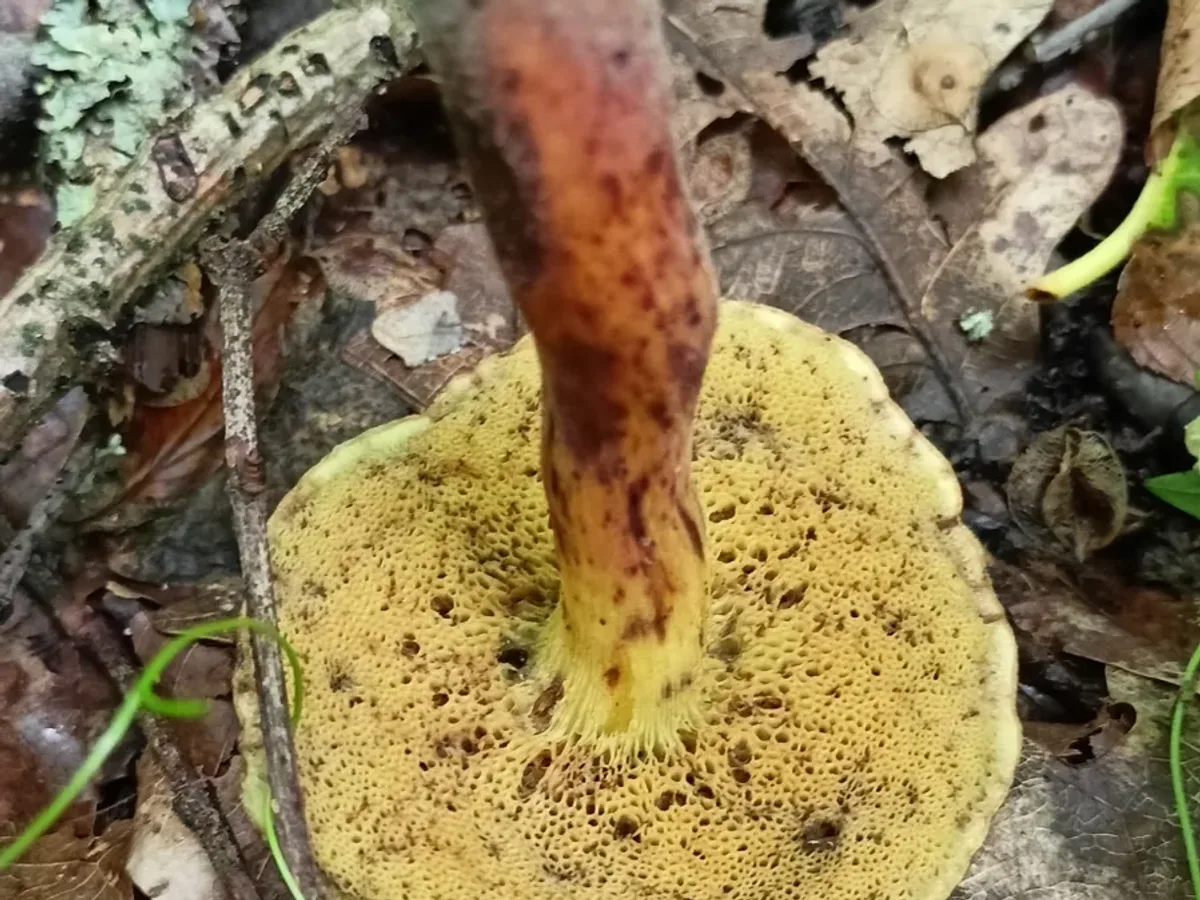
This cracking pattern, combined with large angular yellow pores and a stem that shades from pale yellow at the top to wine-red at the base, makes it one of the more distinctive common boletes once you've seen it a few times.
Cap
Caps run 3-8 cm across, starting out convex with a suede-like surface and broadening as the cracks deepen.
Gills / Pores
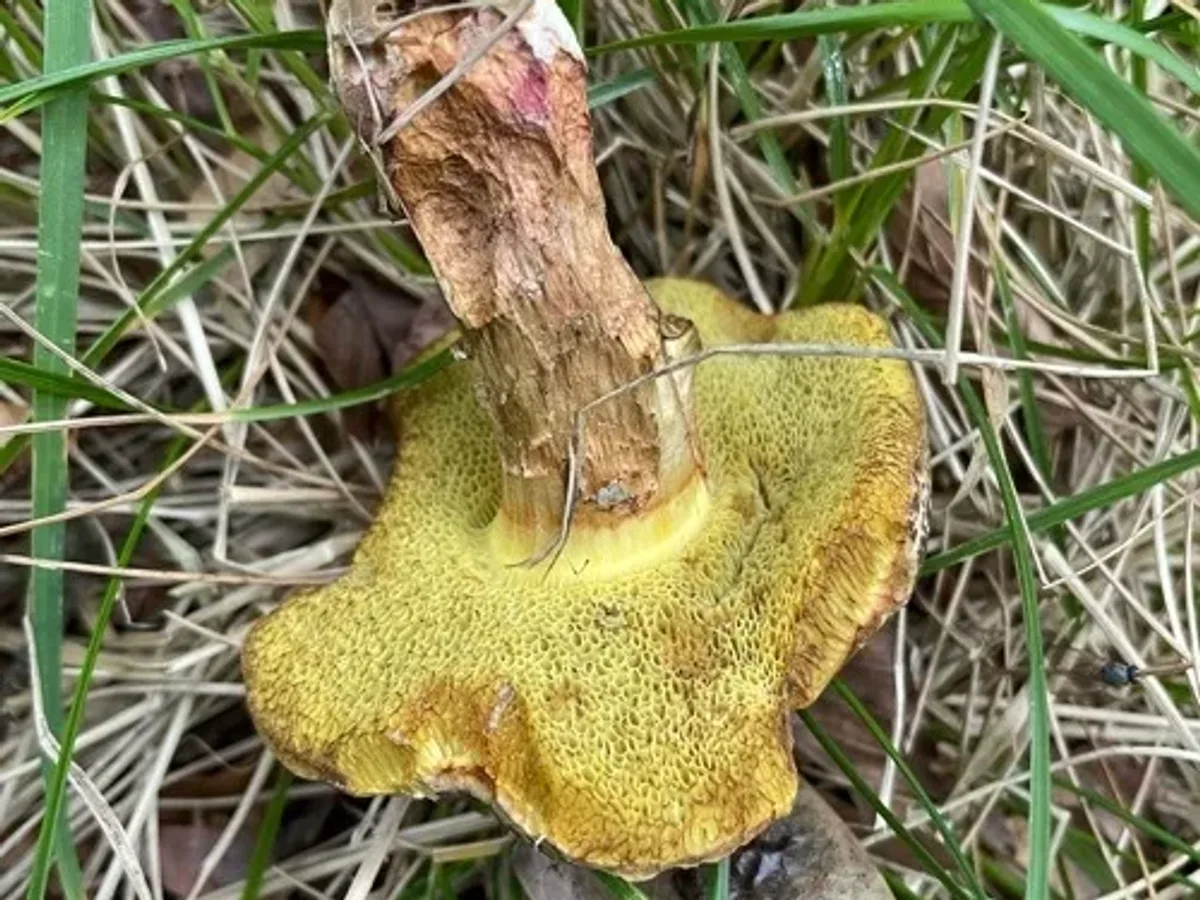
The pores are noticeably coarser than those of a cep - roughly 1-2 per mm, angular and irregular - and start lemon-yellow before aging to a dull greenish-olive.
Stem
The stem carries no net-like reticulation.
Flesh
Cut any part of the fresh fruitbody and the pale yellow flesh turns blue within 10-30 seconds: a real and reliable reaction, though moderate - not the near-instant, intense blue-black of Rubroboletus satanas or Neoboletus luridiformis.
If the flesh blues instantly and violently throughout, reconsider your identification.
Spore print is olive-brown.
Where & when it grows
Habitat
This is a mycorrhizal species with a broad palate: it threads its mycelium beneath oaks, beech, hazel, hornbeam, sweet chestnut, and birch, and occasionally forms partnerships with spruce or pine.
The underground network can persist for years beneath a woodland's leaf litter, quietly exchanging nutrients with its tree partners and waiting for the right conditions.
It favors sandy to loamy, slightly acidic, well-drained soils, but is notably tolerant of disturbed edges, parkland, and hedgerow scrub where many boletes won't venture.
You'll find it singly or in loose groups, half-hidden among fallen leaves and moss. In suitable lowland woodland it can be the most frequently encountered bolete of the season.
When
One of Europe's longer-season boletes, the red cracking bolete can appear as early as June after warm summer rains and linger well into November in mild autumns - a span of nearly half the year.
The main flush runs from late August through October across central and western Europe. In southern and Mediterranean areas, fruiting can start in May.
Like most boletes, it tracks rainfall closely: expect fruitbodies roughly 7-14 days after a meaningful wet spell (around 10 mm over three days) when soil temperatures sit between 8°C and 20°C. During dry stretches the mycelium simply waits.
How it grows
Fruitbodies arise singly or in scattered groups, occasionally in loose clusters of two to five.
Caps expand over roughly 5-10 days, but this species ages quickly. As it does:
- The surface cracks deepen dramatically
- The pores turn spongy and dull olive
- The stem base softens
Maggot infestation (mainly mycetophilid fly larvae) is common and accelerates fast in warm weather.
The window of quality is short: young, firm buttons with still-yellow pores are the right moment to harvest. It's worth checking a day later to see how quickly the population has moved on.
Fruiting conditions
Flushes follow warm, moist periods; optimal soil temperature 10-16°C. Drought causes prolonged absence even in peak months. In warm autumns fruiting extends well into November.
Look-alikes
Several related Xerocomellus and Xerocomus species grow in the same habitats and share some features.
- Xerocomellus pruinatus (Matt bolete) has a similar cracking cap, but the cracks are bluish-grey rather than reddish-pink, the stem lacks the reddish-wine base coloration, and it tends to grow later in the season.
- Xerocomus subtomentosus (Suede bolete) has a similar velvety cap but does not crack conspicuously; the pores are bright yellow and larger, and the flesh bluing reaction is absent or very faint.
- Hortiboletus rubellus (Ruby bolete) is especially similar: it also has a red-cracking cap, yellow pores, and a bicoloured stem, but the cap colour is a deeper blood-red to brick-red (not brownish-olivaceous), and the bluing reaction is typically absent or only faintly present in X. chrysenteron but more evident in H. rubellus. H. rubellus is caution-rated and not deadly, but the two have long been confused in the literature and the separation requires careful attention to cap hue and bluing intensity.
- Imleria badia (Bay bolete) has a smooth, bay-brown cap without red cracks, cream-white to pale yellow pores that blue on bruising, and a plain brown stem without red colorations - edible and choice.
- Neoboletus luridiformis (Scarletina bolete) blues intensely and has red pores, but this is a robust, large bolete with no surface cracking and vivid red pores, easily distinguished.
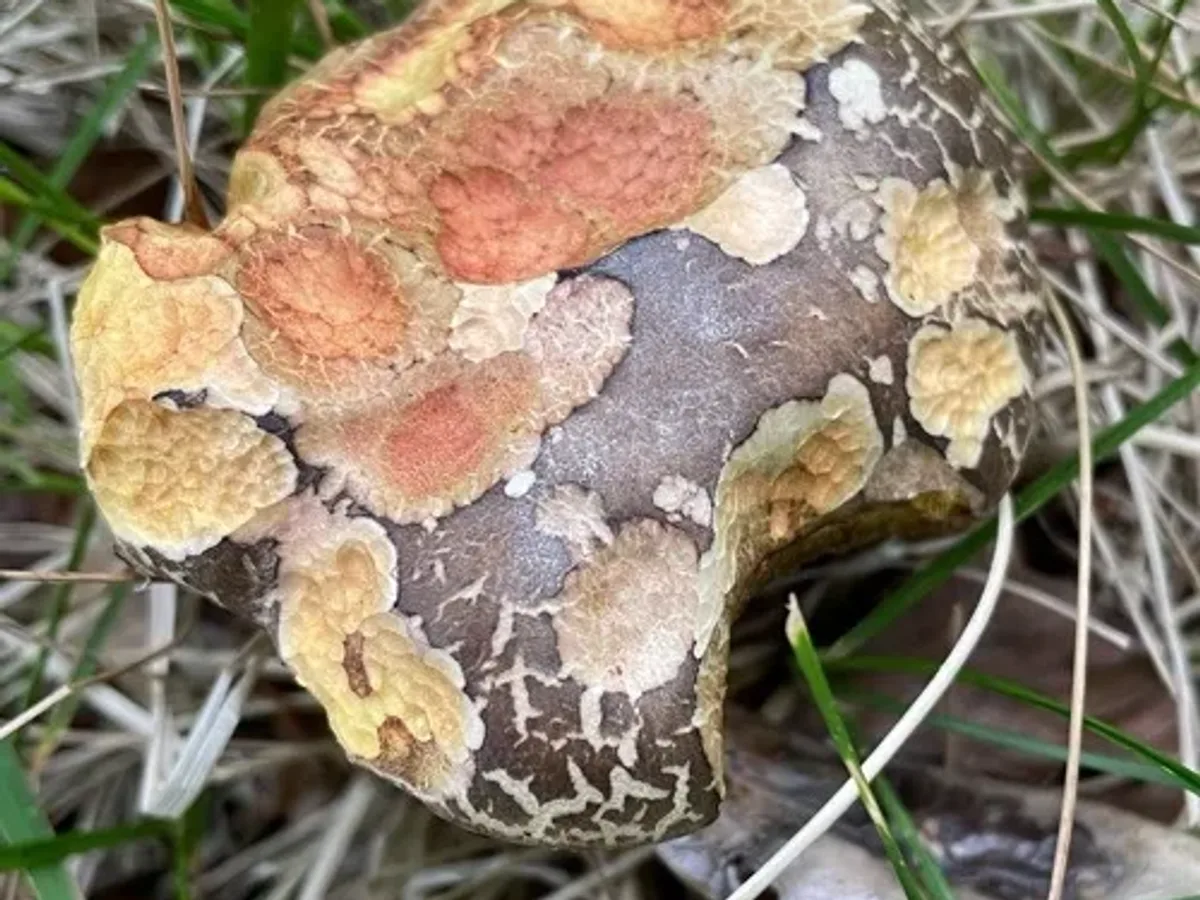
- Rubroboletus satanas (Satan's bolete) has a large pale whitish-grey cap, vivid red-to-orange pores, and intensely bluing flesh - it is toxic and causes severe gastrointestinal poisoning, but it is morphologically very different from X. chrysenteron in cap colour, pore colour, and stature.
- Suillellus luridus (Lurid bolete) has red pores and a reticulate stem.
Any bolete with red or orange pores must be excluded before collecting anything in this group. If pores are not clearly yellow, do not collect.
Pale whitish-grey cap (not olive-brown cracking), vivid red-to-orange pores (not yellow), strongly and instantly bluing flesh throughout, large and stout fruitbody with a red reticulate stem; toxic causing severe gastrointestinal illness requiring hospitalisation; separated from X. chrysenteron by pore colour (red vs. yellow), cap colour, stem reticulation, and size - if pores are not clearly yellow, do not collect
Cap smooth and bay-brown, no surface cracking, no red tones on cap or stem; pores cream-white to pale yellow turning olive, blue strongly on bruising; stem plain brown, not reddish at base; edible and choice
Large bolete with orange-red pores (not yellow), strongly reticulate stem with reddish network, intensely and instantly bluing flesh; cap not cracking; toxic when raw or undercooked - causes severe GI illness; easily separated from X. chrysenteron by orange-red pore colour and reticulate stem
Cap cracks reveal grey-blue or whitish flesh rather than reddish-pink; stem base lacks the wine-red coloration of X. chrysenteron; tends to fruit later in autumn; pores bruise blue but flesh bluing is similar
Very similar overall - red-cracking cap, yellow pores, bicoloured stem without reticulum - but cap colour is a deeper, more saturated blood-red to brick-red (less brownish-olivaceous); bluing is usually negligible or absent in X. chrysenteron and more present in H. rubellus; H. rubellus prefers open parkland and grassy woodland margins. Caution-rated but not deadly; the two species have long been confused.
Large robust bolete with vivid red pores (not yellow), intense and near-instantaneous bluing of all parts, no cracking cap, stem with granular red dots (not smooth bicoloured); edible when thoroughly cooked but toxic raw; stature and red pores immediately distinguish it from X. chrysenteron
Cap surface velvety but does not develop the characteristic reddish cracking pattern; pores bright yellow and larger, bluing reaction absent or very weak; stem uniform yellowish-brown without reddish base
In the kitchen
Picking & cleaning
Select only young, firm specimens with pores still yellow or pale yellow-green and flesh that stains blue vigorously - dull, slow bluing often indicates deterioration or misidentification.
In the field:
- Twist gently from the base or cut at soil level
- Discard wormy, soft, or old specimens
- Because flesh is soft, carry in a wide, flat basket without stacking
- Clean debris before packing
Verify identification: check for the red-cracking cap, blue staining, and reddish stem base before collecting.
Cooking
Edible after thorough cooking, but the red cracking bolete is genuinely inferior to ceps or bay boletes - its flesh is soft, watery, and often heavily maggoty by the time you find it. Young, firm specimens are the only worthwhile harvest.
To prepare:
- Peel the cap cuticle if the flesh seems soft
- Always discard the spongy tube layer, which turns bitter with age
- Slice thinly and sauté over high heat in butter or oil until the moisture drives off and the flesh takes on a little colour
The pale blue-stained flesh normalizes to grey-yellow on cooking.
It works well enough in mixed mushroom sautés, soups, and risottos where stronger flavours carry the dish. Drying concentrates the flavour but yields little given the watery texture. Not recommended for pickling or eating in large quantities.
Good to know
Xerocomellus chrysenteron is considered edible but of mediocre quality, and should be approached with caution for several reasons:
- 1Individual intolerance is reported: some people experience mild gastrointestinal upset (nausea, stomach cramps) even from well-cooked specimens, possibly due to poorly characterised thermolabile compounds or individual sensitivity to bolete lectins.
- 2The soft flesh makes rapid deterioration and significant maggot infestation very common; consuming heavily wormy or decomposed specimens can cause illness independent of the species' inherent toxicity.
- 3Confirmation of identification is essential: beginners should verify all three key marks (cracking reddish cap, yellow-pored underside that blues moderately, reddish stem base without reticulation) before consuming.
Some older field guides describe mild poisoning cases, though this may partly reflect misidentification.
Always cook thoroughly - never eat raw. As a precaution, first-time tasters should consume only a small portion and wait 24 hours before eating more.
Never collect any bolete with red or orange pores and intense blue staining - those features rule out X. chrysenteron and indicate potentially toxic species.
A reference guide - never an edibility guarantee. When in doubt, leave it out.