Reddish-brown bitter bolete
Tylopilus rubrobrunneus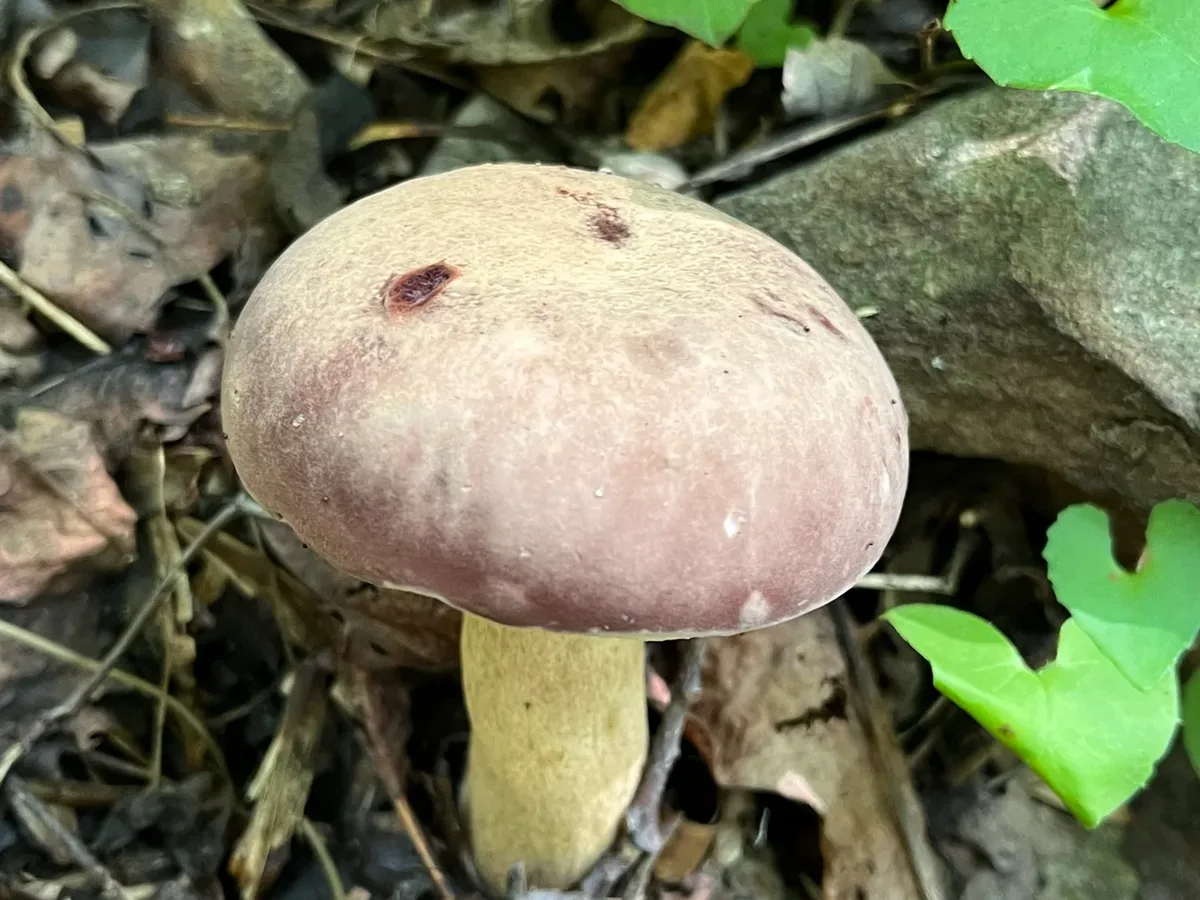 © Joey M (CC BY)
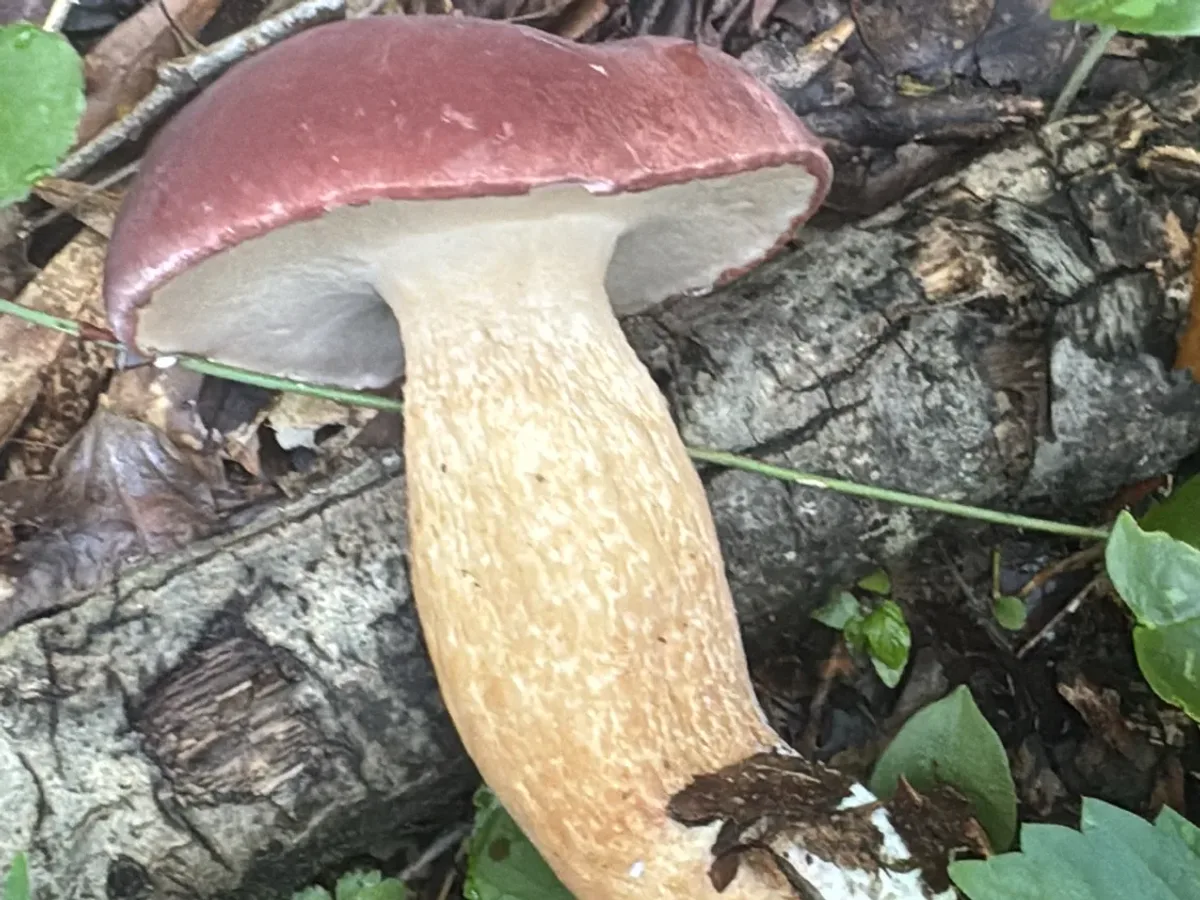 decaturjosh (CC0)
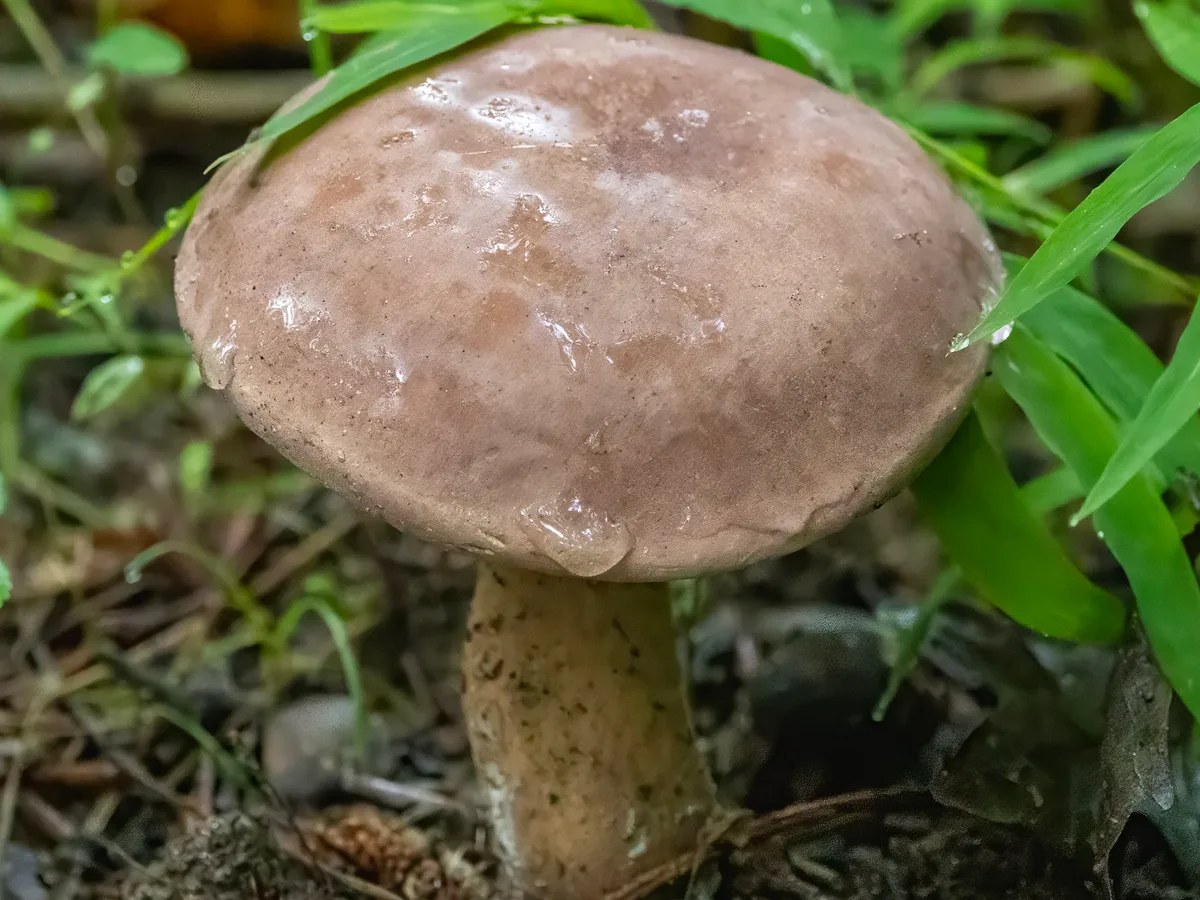 © Dan Vickers (CC BY)
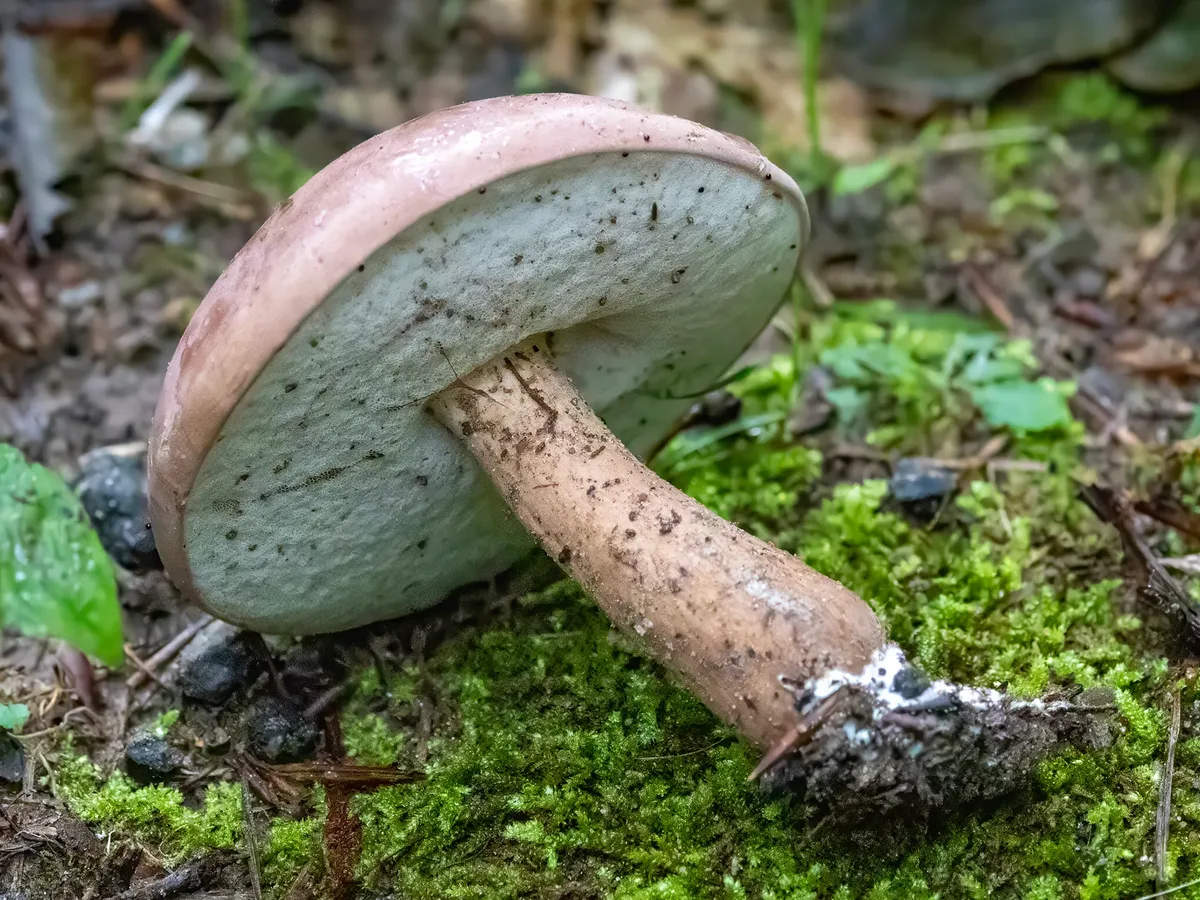 © Dan Vickers (CC BY)
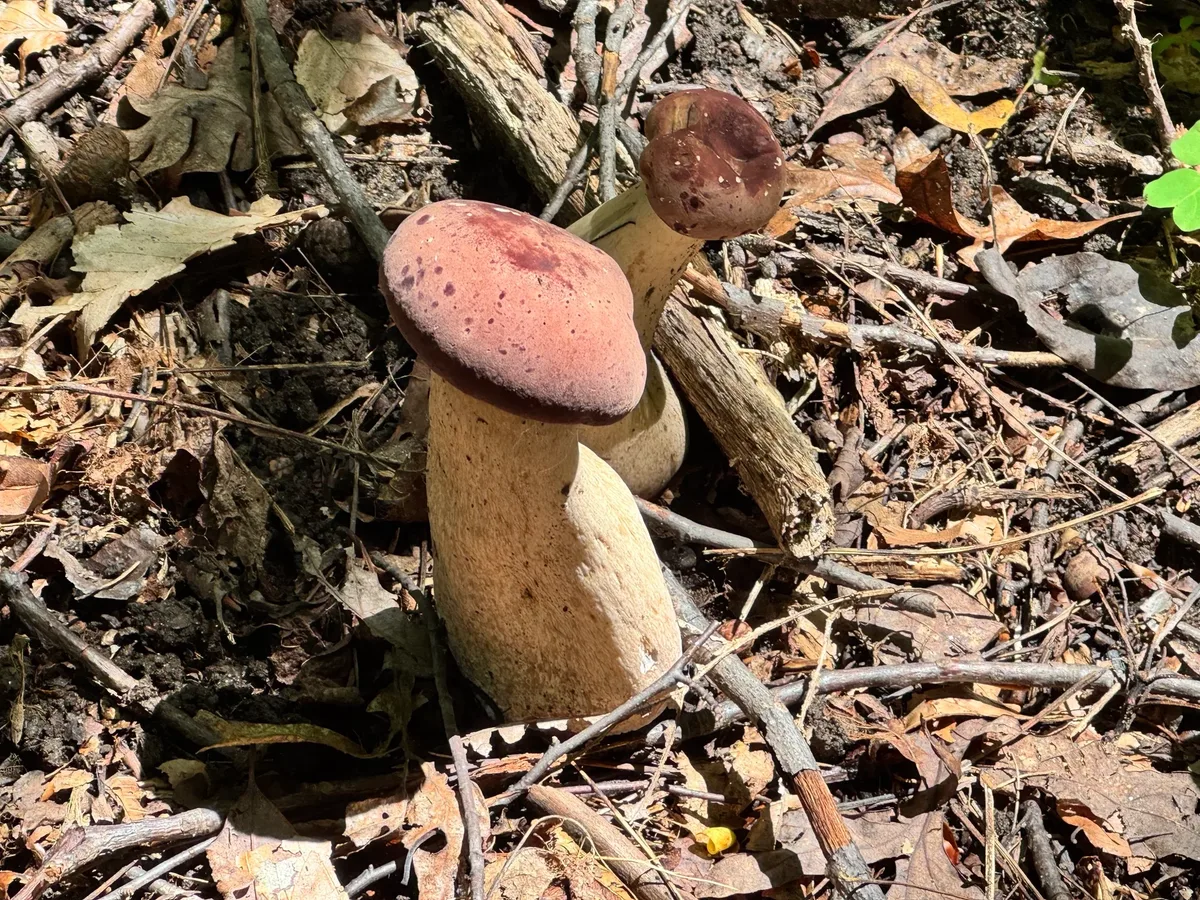 © Annie Weissman (CC BY)
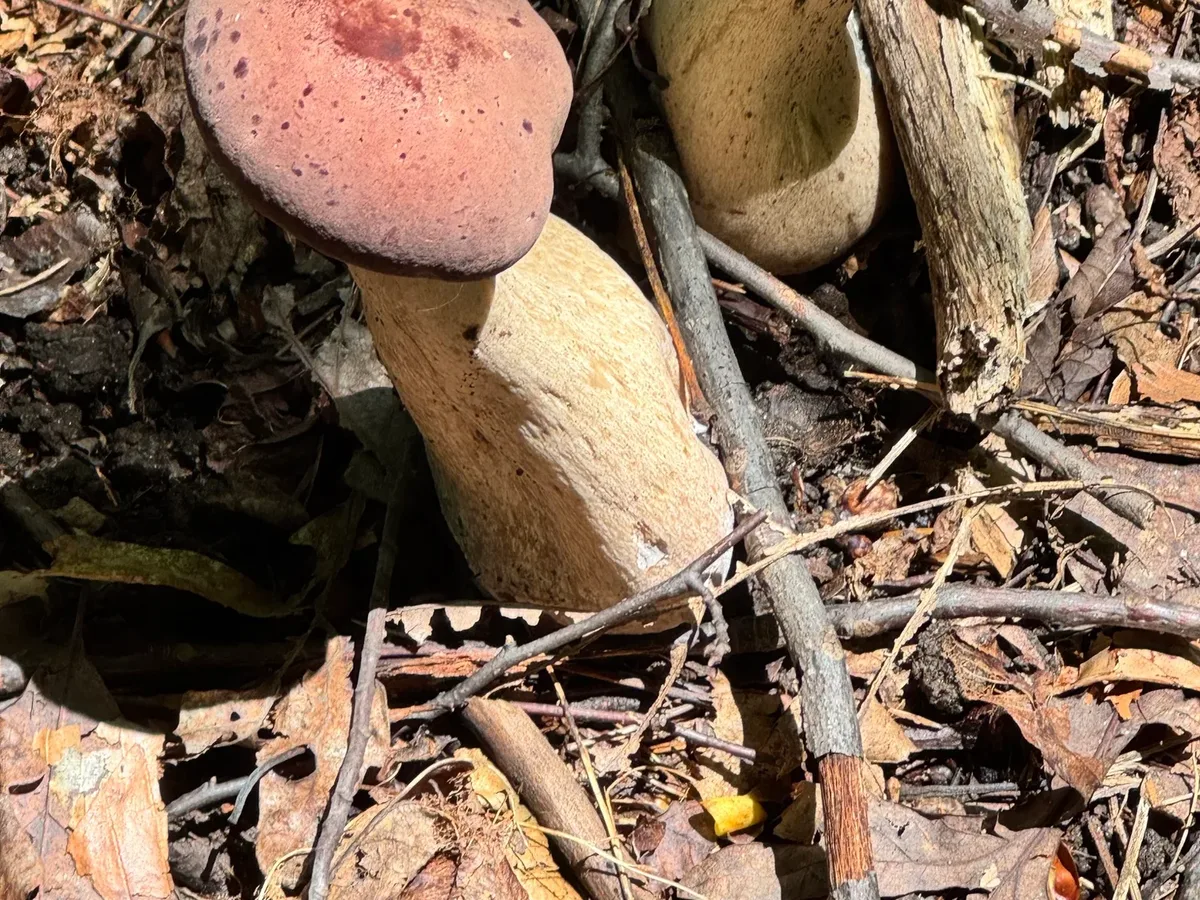 © Annie Weissman (CC BY)
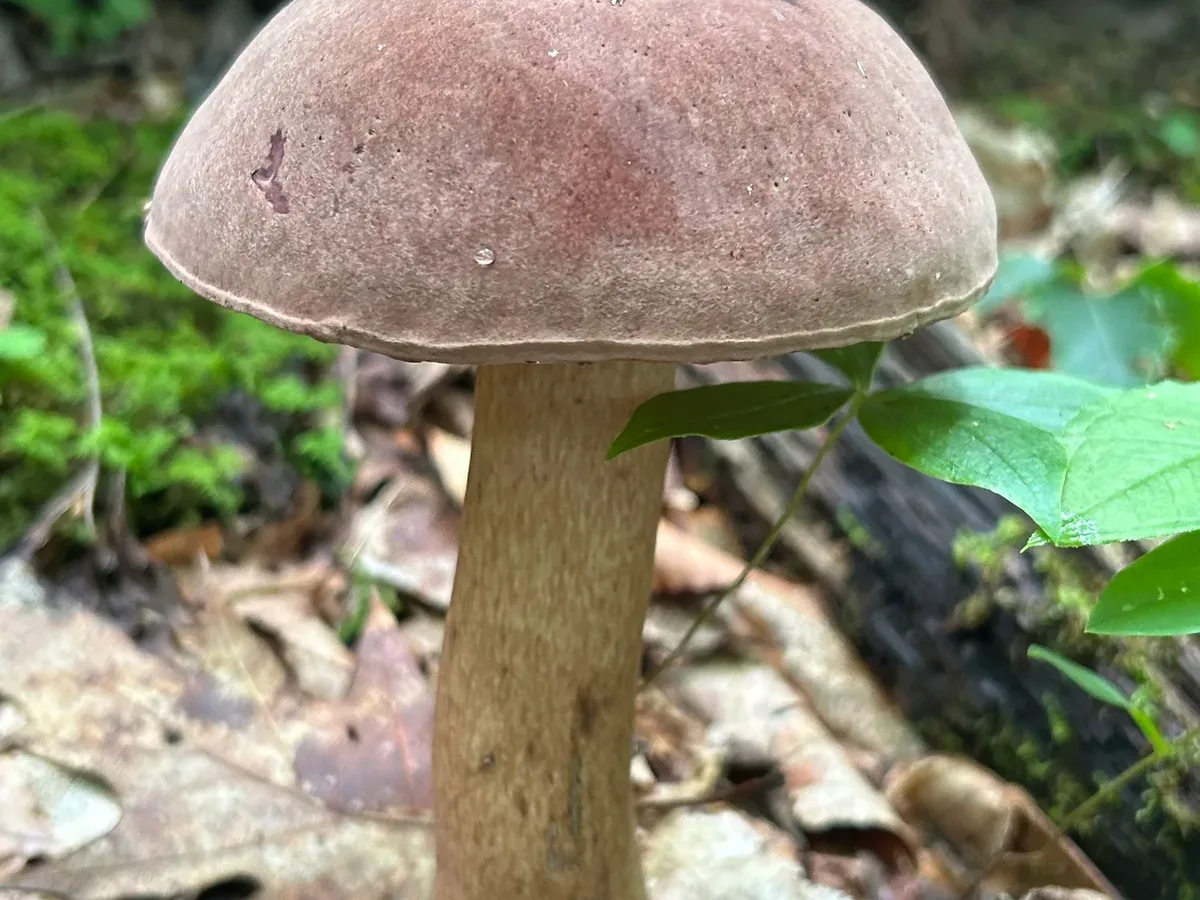 Andrea Kautz (CC0)
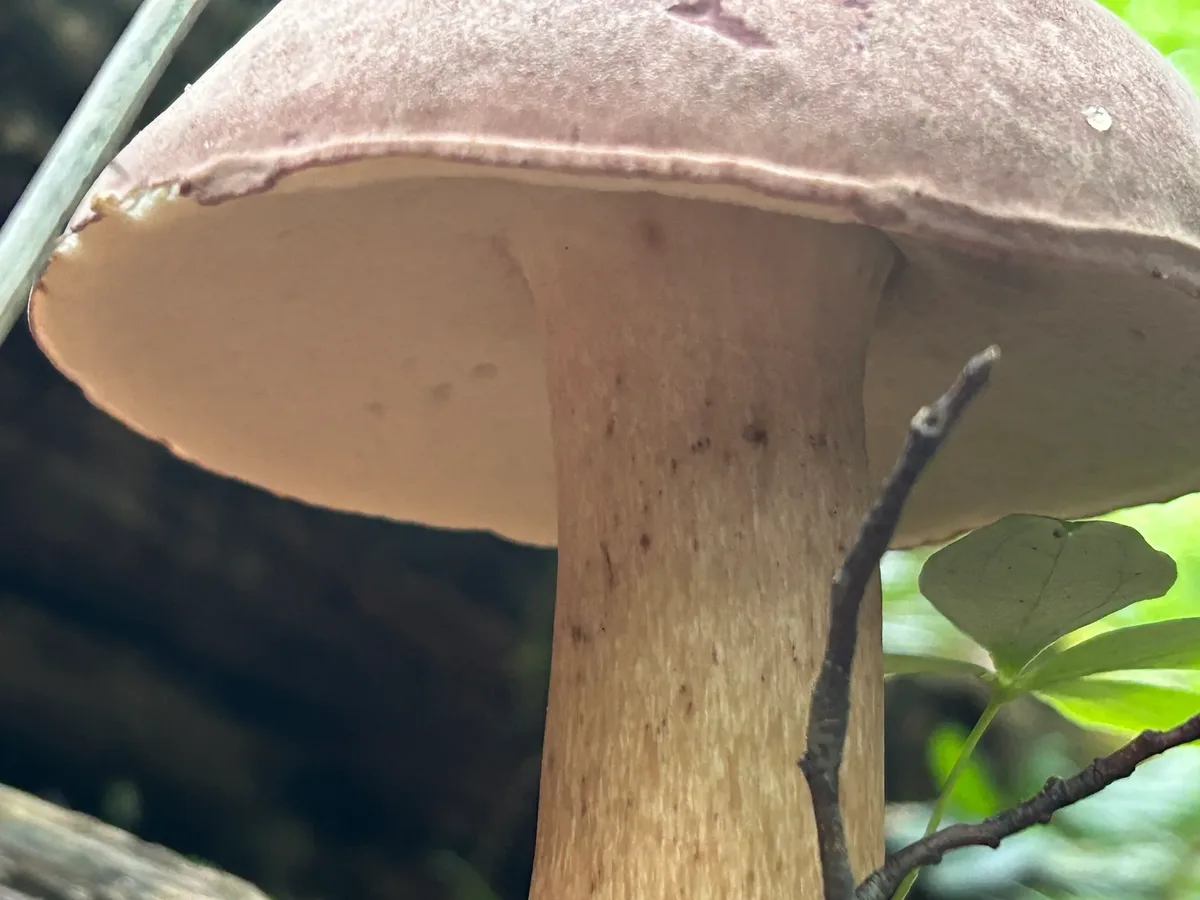 Andrea Kautz (CC0)
 Andrea Kautz (CC0)© Joey M (CC BY)decaturjosh (CC0)
Not poisonous, but not worth eating - too tough, bitter, or bland for the pot.
How to recognise it
Tylopilus rubrobrunneus is a substantial, handsome bolete - the kind of find that stops you in your tracks on the forest floor.
Cap
The cap runs 5 to 18 cm across, starting out plump and convex, then broadening and flattening with age.
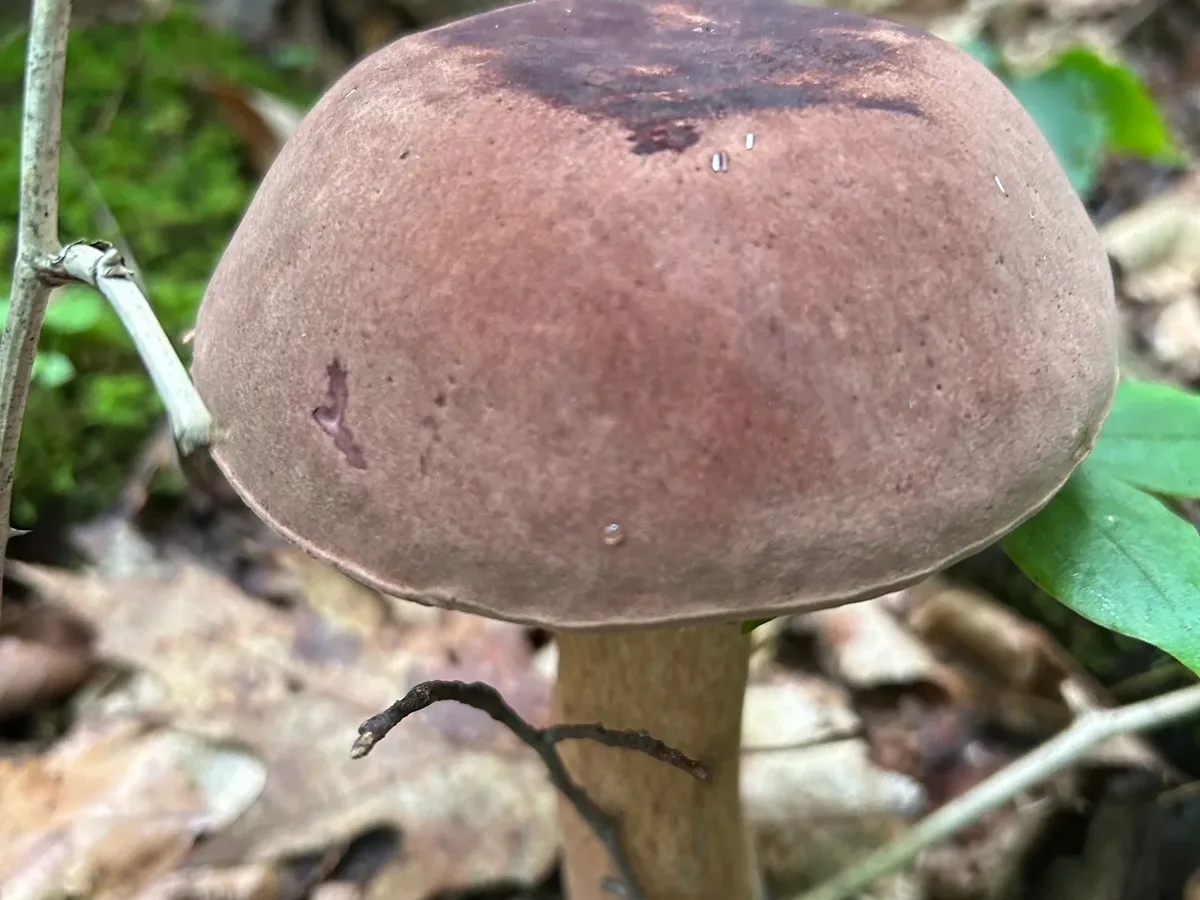
Its surface is dry and slightly velvety when fresh, especially in younger specimens, settling into a smooth, polished finish at maturity.
The colour is a warm, rich reddish-brown to bay-brown - darker at the centre, sometimes fading toward the margin on older caps - which is exactly where the species gets both its scientific and common names.
Gills / Pores
The pore surface is the most useful field character for the genus as a whole. In T. rubrobrunneus the pores open white to cream or pale buff while the cap is still partially closed, then slowly pick up a pinkish to pinkish-buff flush that deepens to a dull pinkish-tan at full maturity. Pressing or bruising the pores stains them brownish.
That pink-to-flesh pore colour, paired with a cinnamon-brown spore print, is the critical marker that separates Tylopilus from the edible porcini and related boletes - those have yellow, olive-yellow, or white pores with olive-brown spore prints.
Flesh
The flesh is thick, white to pale buff throughout, and does not reliably blue when cut. A faint, transient bluing occurs in some specimens, but it fades quickly and cannot be counted on.
What the flesh does reliably is taste appalling: intensely, persistently, and unmistakably bitter - often cited as one of the most acrid flavours among North American mushrooms. That bitterness runs through every part of the fruitbody and is not diminished by cooking, blanching, or soaking.
Stem
The stem is 5-14 cm tall, stout, and solid - whitish near the apex shading into reddish-brown or vinaceous tones downward.
A faint reticulum (network of raised ridges) may be visible near the top, but it is typically far less developed than in porcini. Spore print: cinnamon-brown to pinkish-brown.
Where & when it grows
Habitat
Tylopilus rubrobrunneus is a mycorrhizal bolete of eastern North American deciduous and mixed forests, building long-term root partnerships with oaks (Quercus spp.) and, to a lesser extent, beech (Fagus grandifolia), hickory (Carya spp.), and other broadleaved trees.
Like many mycorrhizal fungi, this species cannot live apart from its tree partners - the mycelium threads through the soil in a quiet, years-long alliance, exchanging mineral nutrients for the sugars the tree photosynthesises overhead.
It occupies the same forest types as many sought-after edible boletes - oak-hickory woods, northern hardwood forest, and transitional mixed stands along the Appalachian corridor - which is precisely why foragers searching for porcini and other choice species encounter it so often.
It favours well-drained, acidic, humus-rich soils, appearing singly or in small scattered groups on the forest floor, occasionally partly buried in leaf litter.
The geographic range spans the northeastern and mid-Atlantic United States and adjacent Canada: New England, the Great Lakes region, and south through the Appalachians into the upper South. It does not occur in the Pacific Northwest, the Rocky Mountain region, or Europe.
When
The fruiting season runs from mid-summer through mid-autumn - roughly July through October in most of eastern North America - with the main flush in August and September (ISO weeks 31-39).
Optimal conditions are warm days (20-28 °C), mild nights, and meaningful rainfall in the two weeks prior. The season winds down when overnight temperatures settle consistently below 5-8 °C.
Timing overlaps almost exactly with the prime season for edible boletes in the same region, which is one reason novice foragers encounter it regularly while hunting porcini.
How it grows
As a mycorrhizal species, T. rubrobrunneus cannot be cultivated and fruits only in established forest where its tree partners are already rooted.
Fruitbodies develop from the underground mycelial network, typically pushing up 10-21 days after a significant rainfall event once soil temperatures are adequate.
Individual caps expand over several days and can persist for one to two weeks before insects move in or decay sets in.
The species is not typically abundant - it appears sporadically - though in a good wet summer multiple individuals may rise from the same patch of ground.
Fruiting conditions
Requires warm, humid conditions typical of eastern North American summer. Optimal soil temperatures are 14-22 °C. Fruiting is triggered by significant summer rainfall events with a lag of 10-21 days. Season ends with consistent autumn cooling below 8 °C.
Look-alikes
The primary foraging hazard of Tylopilus rubrobrunneus is its potential confusion with edible boletes of similar stature and colouration. The most significant overlapping species in eastern North America are:
- Boletus edulis and the porcini group: King bolete and its relatives have white to yellowish pores (never pinkish), a prominent white reticulum on the stem, and mild, pleasant-tasting flesh. Tasting the flesh in the field is the most reliable check - porcini is never bitter.
- Tylopilus plumbeoviolaceus (violet-grey bitter bolete): Another Tylopilus with pinkish pores, but with a distinctly violet-grey to plum-coloured cap and stem, and equally bitter flesh. Also inedible but not dangerous.
- Tylopilus alboater (blackening bitter bolete): Has a very dark brown to black cap and blackens markedly when cut; also bitter. Edibility reports vary (some sources list it as edible after prolonged cooking, but bitterness is still a problem). Not dangerous.
- Tylopilus chromapes (chrome-footed bolete): Has a yellow-chrome base to the stem - a distinctive and diagnostic feature absent in T. rubrobrunneus - and is considered edible.
- Tylopilus felleus (bitter bolete): The most commonly mistaken species in Europe and North America. Very similar in general appearance but typically has a paler, more tan or honey-brown cap and more conspicuous pink pore colour. Also intensely bitter and inedible, but not toxic.
None of these lookalikes are deadly. The genuinely dangerous boletes in eastern North America - principally Rubroboletus eastwoodiae (Satan's bolete, eastern) and related species - have red to orange-red pores, strongly bluing flesh, and unpleasant smells, making confusion with T. rubrobrunneus unlikely in practice.
Very similar bitterness and pinkish pores; T. felleus tends to have a paler tan to honey-brown cap and a more conspicuous reticulum. Both are inedible; confusion is not dangerous. Tasting confirms bitterness in both.
Very dark brown to black cap, and flesh blackens markedly when cut or exposed. T. rubrobrunneus does not blacken appreciably. T. alboater is sometimes listed as marginally edible but is still bitter.
Has a diagnostic chrome-yellow base to the stem - absent in T. rubrobrunneus. Considered edible, so accurate separation matters. Look at the stem base carefully.
Boletus edulis has white to yellowish (never pinkish) pores, a prominent white reticulum on the stem, mild pleasant-tasting flesh, and an olive-brown spore print. T. rubrobrunneus pores are white turning pinkish-buff, and the flesh is intensely bitter. Taste the flesh - porcini is never bitter.
Cap and stem are distinctly violet-grey to plum-coloured in T. plumbeoviolaceus, contrasting with the reddish-brown of T. rubrobrunneus. Also bitter and inedible. Not dangerous.
In the kitchen
Picking & cleaning
Tylopilus rubrobrunneus should not be harvested for eating. Its extreme and persistent bitterness makes it completely unpalatable - a single piece mixed into a dish will ruin the entire meal - and no preparation method changes this. The bitterness is not reduced by cooking, soaking, blanching, parboiling, or any other technique.
If you encounter it in the field, it is well worth tasting a tiny piece of raw flesh to confirm the identification: the bitterness is unmistakeable and will hit within seconds (spit it out immediately). This is also the definitive check that separates T. rubrobrunneus from edible boletes.
The experience of returning home with a basket of what looked like promising porcini, only to discover one bitter specimen ruined the lot, is one of the more memorable lessons in foraging literature.
Once identified, leave specimens in place. They play a genuine ecological role as mycorrhizal partners with the surrounding trees, and they harm nothing by being there.
Cooking
No preparation method renders Tylopilus rubrobrunneus palatable. The bitterness runs through every part of the fruitbody - cap flesh, tubes, pores, and stem - and is chemically resistant to heat, acid, and prolonged soaking.
The usual remedies all fail:
- Parboiling and discarding the water - a technique that genuinely reduces bitterness in some other mushrooms (notably certain Lactarius species) - has no meaningful effect: the bitter compounds are not leached out at cooking temperatures.
- Repeated blanching cycles are equally ineffective.
- Acidic marinades and prolonged soaking in salted water, sometimes suggested as remedies for bitter boletes in older foraging manuals, also fail.
Because the bitterness is so extreme, a single piece accidentally added to a dish will make the entire meal inedible - the flavour spreads readily through broths, sauces, and risottos. If a specimen has been mixed in, discard the whole dish. There is no remedy; trying to mask the bitterness with salt, cream, or competing flavours will not work.
Fortunately, ingesting this species carries no known medical risk. There are no recognised toxins in T. rubrobrunneus, so accidental consumption, while deeply unpleasant, will not cause poisoning or gastrointestinal harm.
The reliable prevention is simple: taste a small piece of raw flesh before any bolete goes into the basket, and spit it out immediately. The bitterness of T. rubrobrunneus will be obvious within seconds.
On finding the species, the sensible move is to leave it where it is - it is doing useful work underground as a mycorrhizal partner - or to set it aside for spore-print study if you are working on your identification skills.
Good to know
Tylopilus rubrobrunneus is not known to be toxic and does not contain recognized mushroom toxins. Its only threat to the forager is that its extreme bitterness will ruin any dish it enters. There is no documented record of poisoning from this species.
However, its importance in foraging safety stems from it being a convincing field lookalike for desirable edible boletes, particularly porcini, in the same habitat and season.
The taste test is the definitive safeguard: a tiny bite of raw flesh will immediately reveal the intense bitterness that makes T. rubrobrunneus unmistakable - and edible boletes should taste mild or pleasant.
Always taste a small piece of a bolete before adding it to the basket; never skip this step on unfamiliar collections. No deadly lookalikes are known for this species.
A reference guide - never an edibility guarantee. When in doubt, leave it out.