Violet-grey bolete
Tylopilus plumbeoviolaceussyn. Boletus plumbeoviolaceus
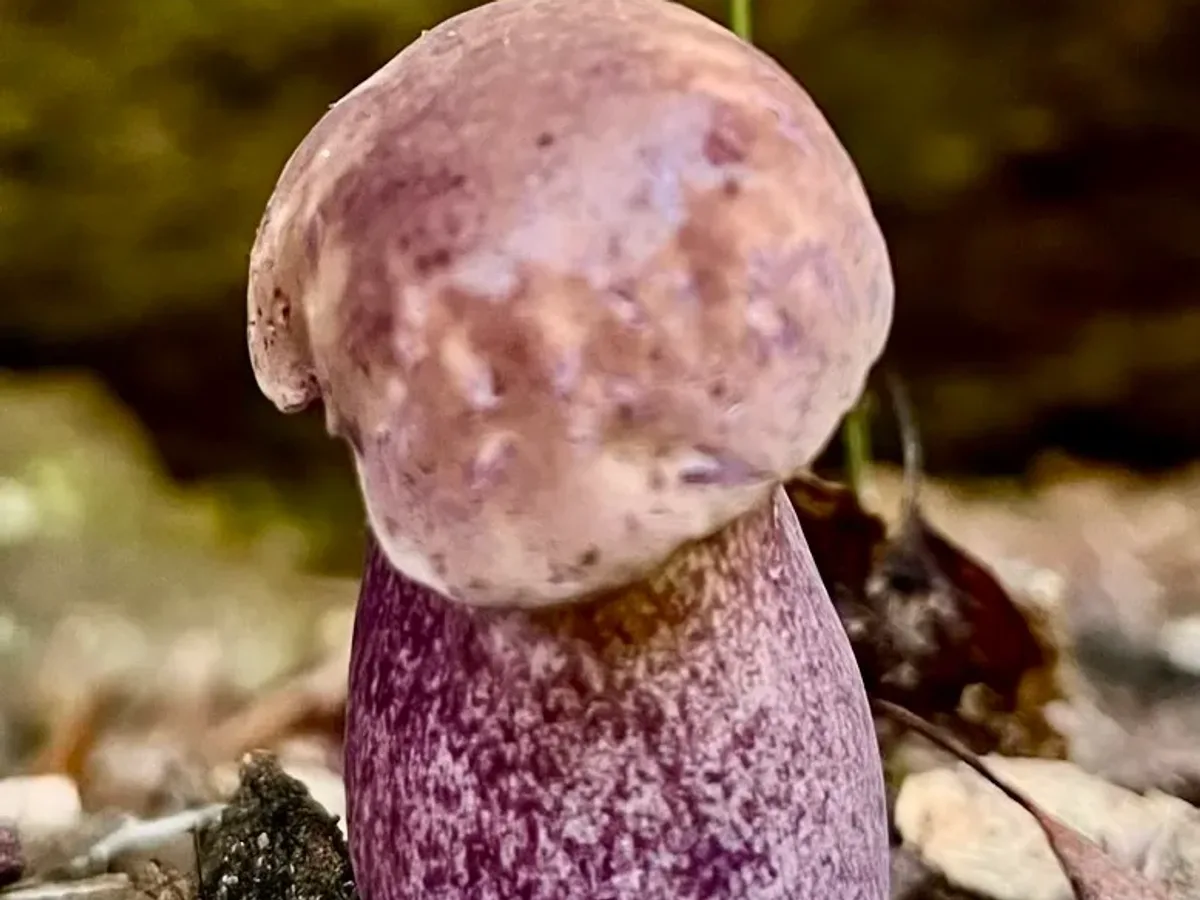 © martin_livezey (CC BY)
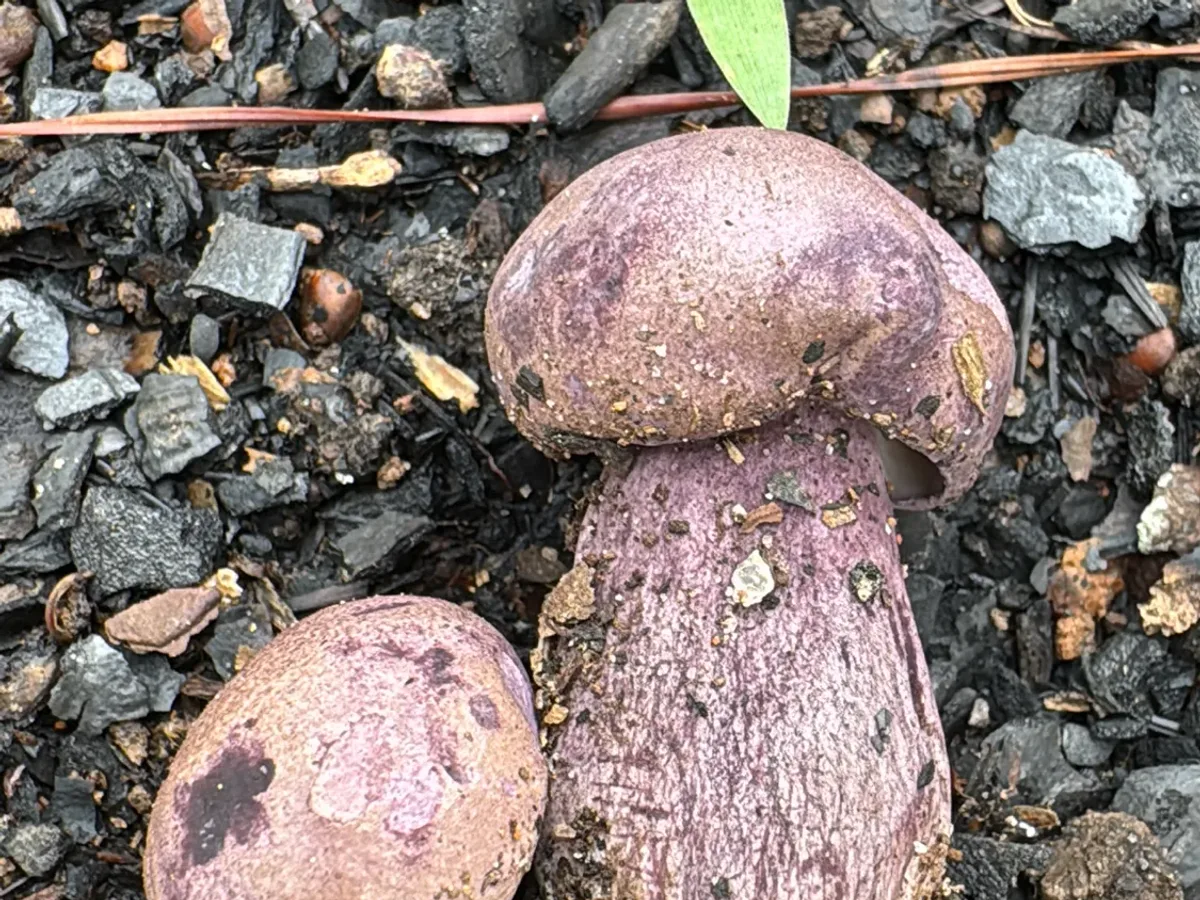 decaturjosh (CC0)
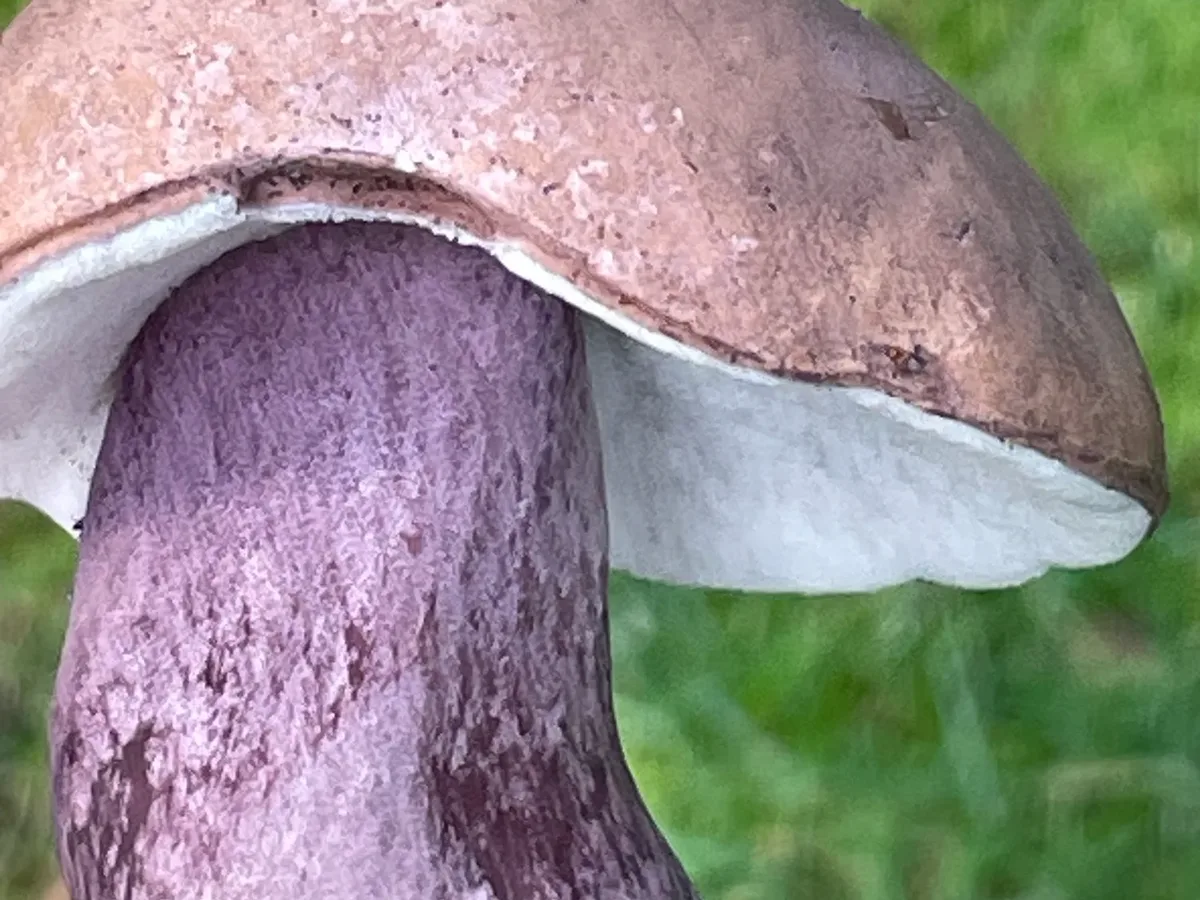 Nathan Cobbett (CC0)
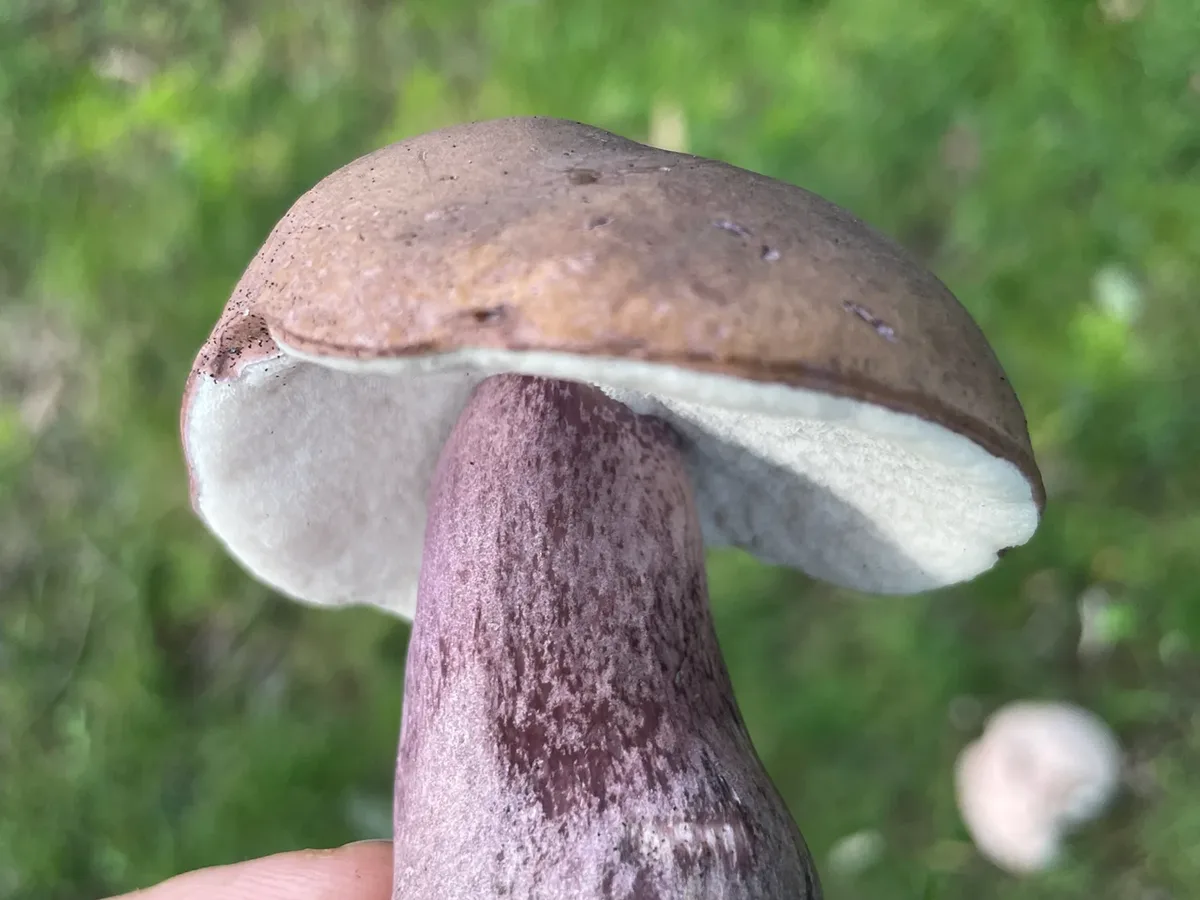 Nathan Cobbett (CC0)
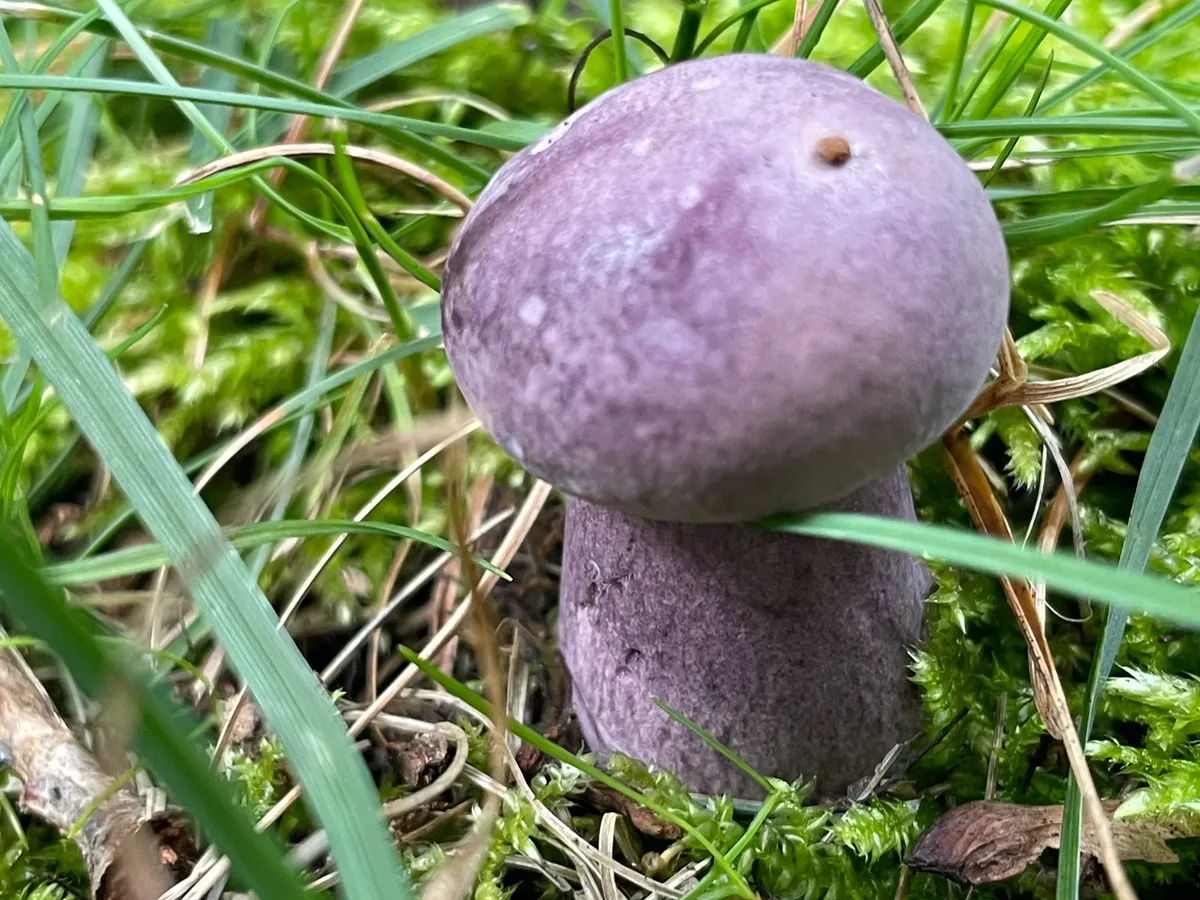 Nathan Cobbett (CC0)
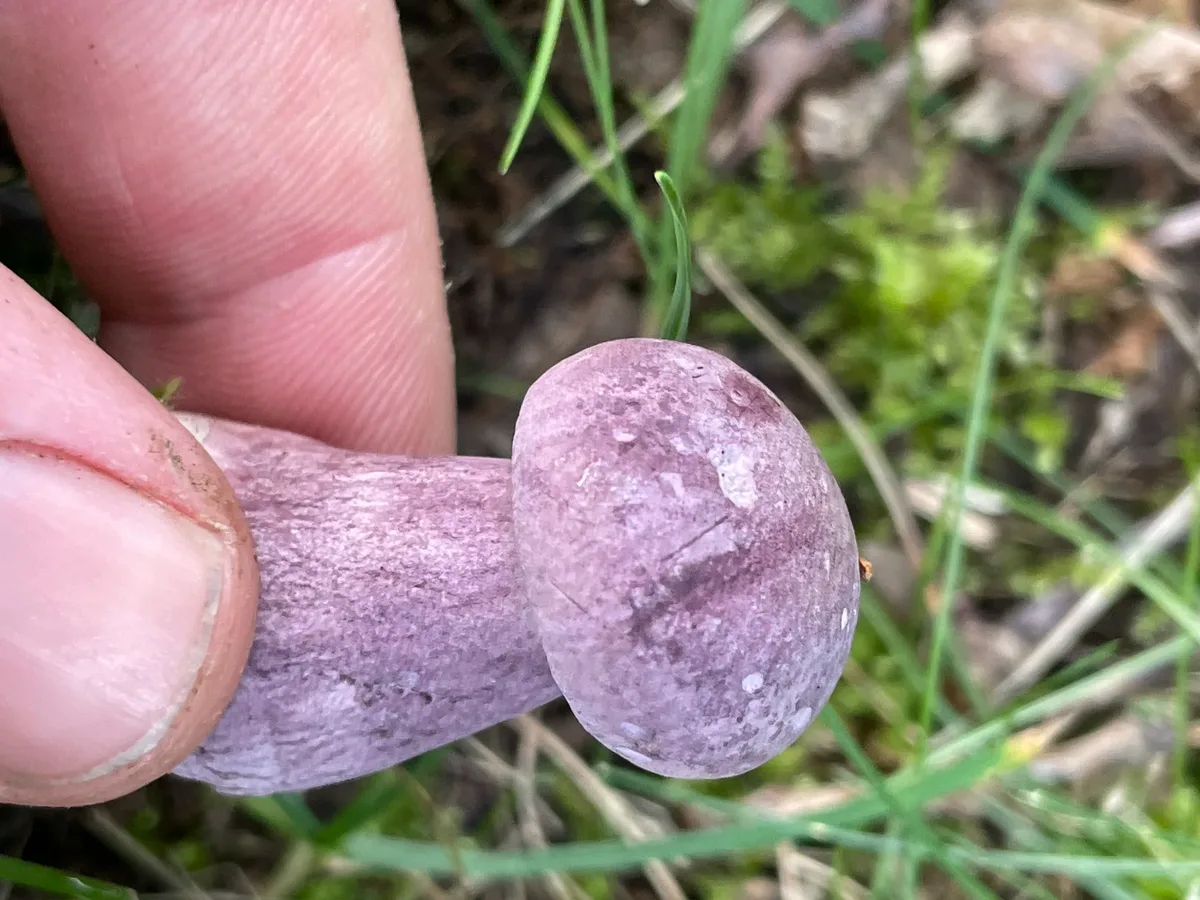 Nathan Cobbett (CC0)
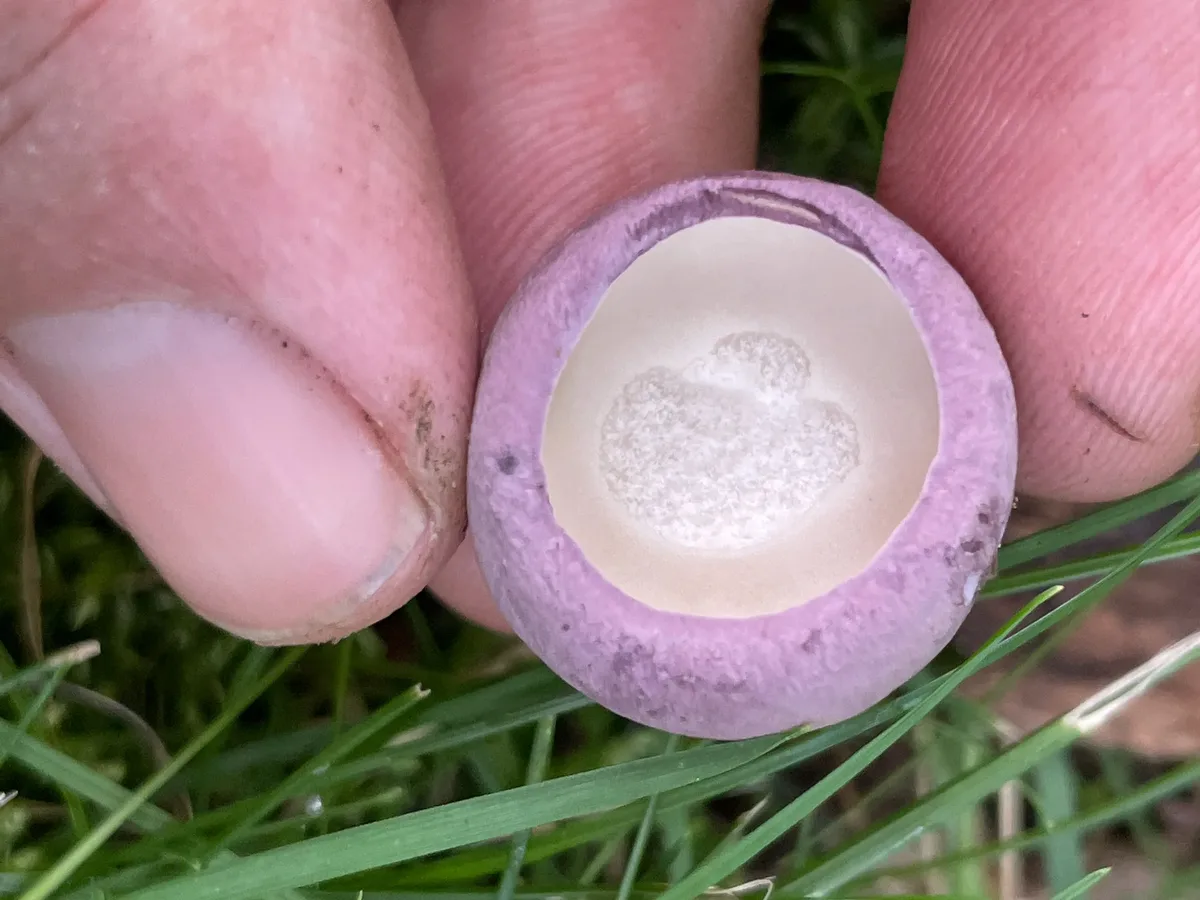 Nathan Cobbett (CC0)
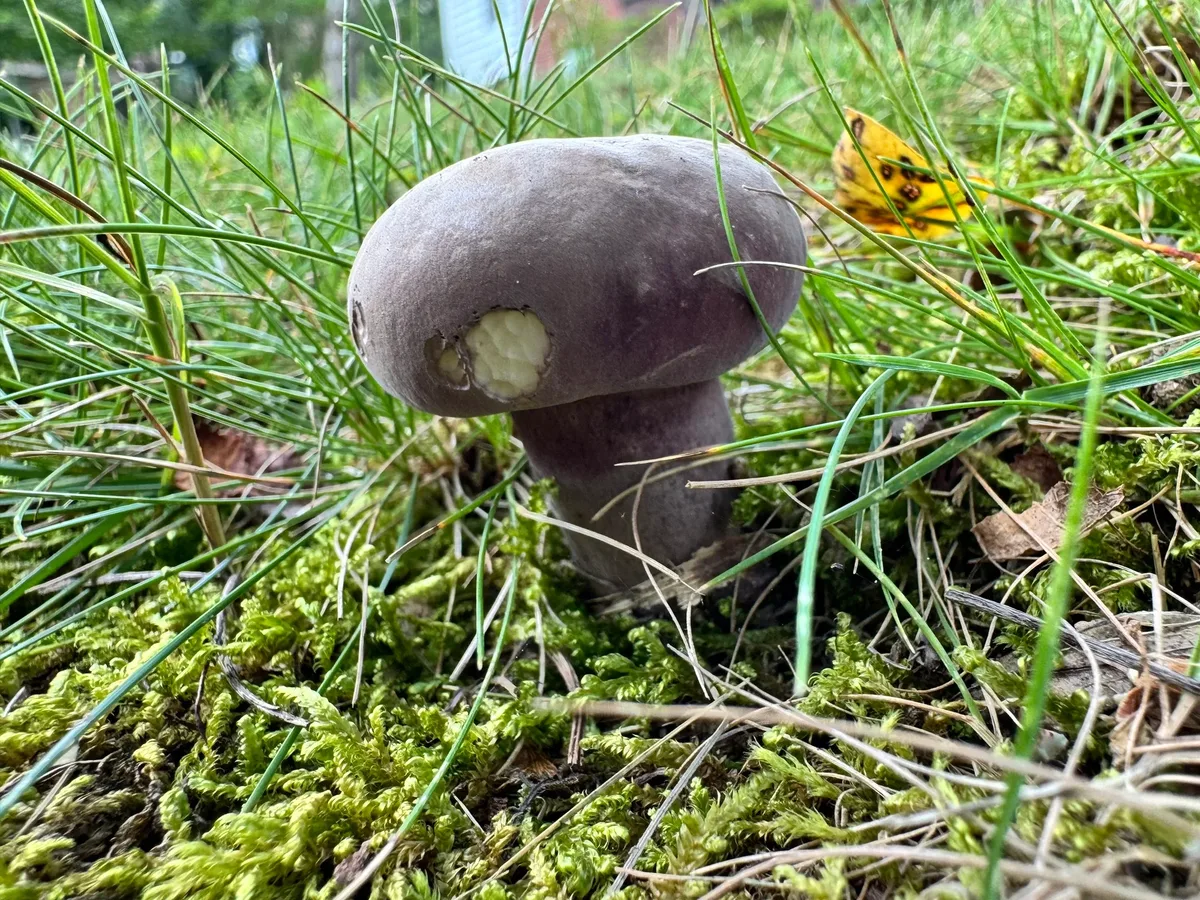 © Annie Weissman (CC BY)
 © Annie Weissman (CC BY)© martin_livezey (CC BY)decaturjosh (CC0)
Not poisonous, but not worth eating - too tough, bitter, or bland for the pot.
How to recognise it
Tylopilus plumbeoviolaceus is one of the most visually distinctive boletes of eastern North America.
Cap
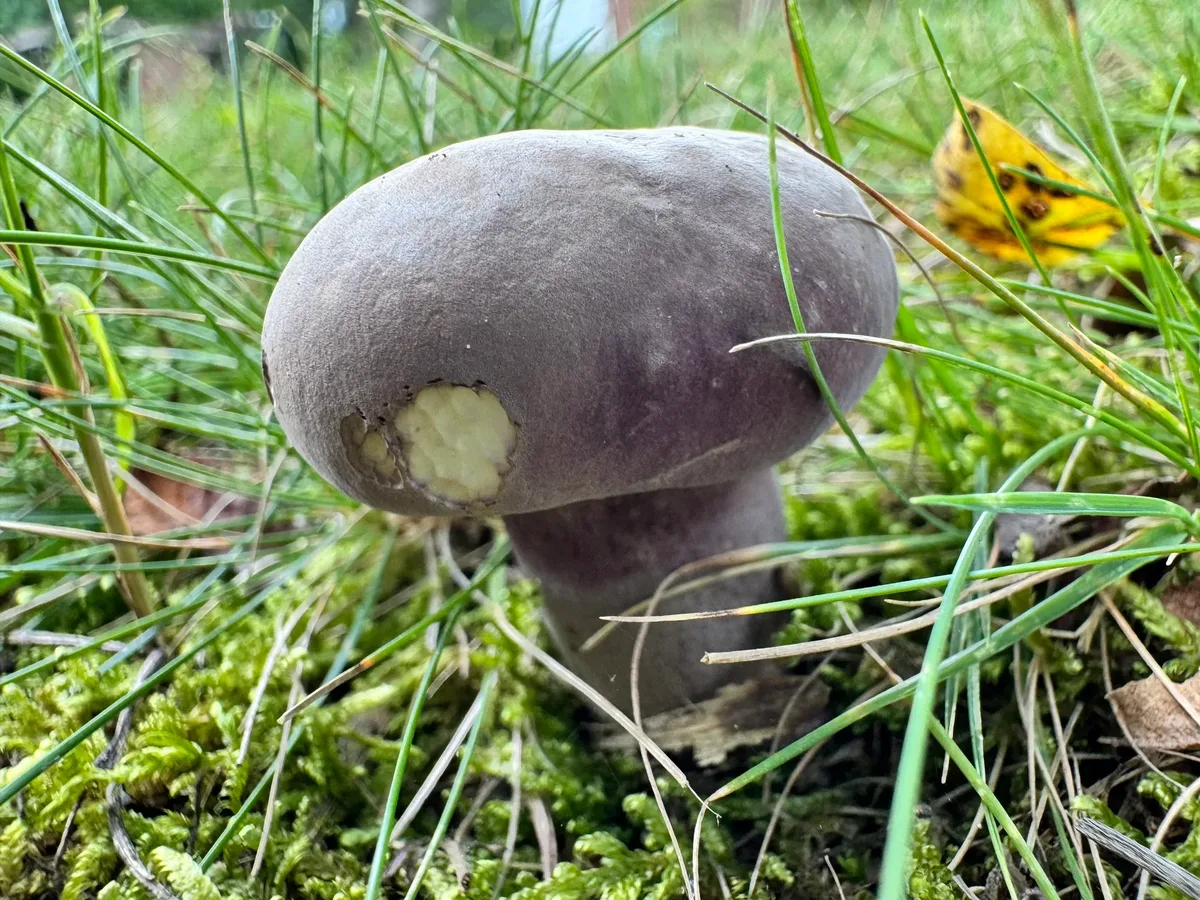
The cap (5-15 cm) is a memorable violet-grey to purplish-brown or grayish-lavender, smooth and dry, convex then flattening, often with a browner centre in older specimens.
Gills / Pores
Below the cap, the pore surface is white in young buttons, aging to pale pinkish-buff, and staining slowly brown when pressed - never bluing, which is a critically important field character.
Stem
The stem is robust, 5-12 cm tall, similarly tinted in pale violet to grey-violet, and covered with a distinct whitish to pale lavender reticulum (raised network of ridges) over much of its length.
Flesh
The flesh is white throughout, firm, and does not change colour when cut. The spore print is pinkish to pinkish-brown.
Smell & taste
If you taste a tiny fragment (spitting it out), you will encounter an intensely bitter flavour that distinguishes this species from virtually all nearby edible boletes.
Where & when it grows
Habitat
Found in mature deciduous and mixed forests across eastern North America, from the Mid-Atlantic states south through the Appalachian Mountains to the Gulf states, and west into the Midwest.
Like all Tylopilus, it lives underground as mycelium woven through the roots of hardwood trees - primarily oaks and beeches, and occasionally American chestnut where that tree still persists.
This ectomycorrhizal partnership, invisible for most of the year, is what quietly sustains both the fungus and its tree host.
Look for it on well-drained, acidic forest soils, often on slopes and ridges under a full canopy.
When
Fruits in summer and early autumn, primarily July through October, with peak fruiting in August and September.
Fruiting is triggered by warm, moist conditions - typically 7-14 days after significant rainfall when soil temperatures are above 15°C.
In the southern Appalachians, it may appear as early as late June in warm years.
How it grows
Typically grows singly or in loose, scattered clusters - rarely in dense groups.
Young buttons emerge with the cap tightly inrolled, the violet-grey surface sometimes flushed with purple. The cap gradually expands and flattens with age, often developing a slight central hump (umbo).
Mature fruiting bodies are impressively stout - a large specimen with a 15 cm cap and a thick, reticulate stem can look like a prize find until you take a taste.
Fruiting conditions
Warm-season ectomycorrhizal bolete; fruiting follows substantial rainfall (30+ mm over 14 days) when soil temperatures exceed 15°C. Peak fruiting in August-September in the southern Appalachians.
Look-alikes
Several confusion species deserve attention.
- Tylopilus felleus (bitter bolete) shares the bitter taste and white-to-pink pores, but has a tan to brown cap without the characteristic violet-grey colouration, and its stem reticulum is typically darker brown on a brown background.
- Boletus edulis and related porcini-type boletes (king boletes) can appear superficially similar in shape and stem reticulum, but have brown caps and cream-white pores that do not age pink; the flesh of B. edulis is mild and nutty, never bitter - a tiny taste test distinguishes them immediately.
- Tylopilus alboater (blackening bolete) is blackish to dark grey and lacks the violet tones.
There are no deadly species that closely mimic T. plumbeoviolaceus in eastern North America, but beginners should exercise caution around any unfamiliar bolete.
The king bolete has a brown cap and a whitish stem with a pale brown reticulum; pores age from white to cream-yellow but never pink; flesh is mild and nutty, never bitter. The absence of violet tones and the lack of bitterness are definitive.
The blackening bolete is overall dark blackish-grey without the distinctive violet-lavender hues; cap and stem surfaces are darker and dull-grey. Also bitter and inedible.
The bitter bolete shares the intense bitterness and pink-ageing pores, but its cap is tan to brown rather than violet-grey, and the stem reticulum is dark brown on a brown background rather than pale on a violet stem.
In the kitchen
Picking & cleaning
Worth collecting for study, but not for the table.
If you want a specimen:
- 1Cut cleanly at the base to preserve the full stem and its reticulum.
- 2Slice through the flesh and check that it stays white - no blue or green staining, which is a key field character.
- 3Take a tiny fragment and taste it: the bitterness is immediate and unmistakable.
That combination - violet-grey cap, non-bluing white flesh, and intense bitterness - confirms the identification.
Do not collect for eating; no preparation makes this species palatable.
Cooking
Leave this one in the forest.
The bitterness in T. plumbeoviolaceus comes from heat-stable compounds - alkaloids and terpenoids - bound throughout the flesh, pores, and stem.
Boiling, frying, drying, and parboiling with multiple changes of water all fail to remove it.
Even a single cap accidentally added to a pot of soup or risotto will make the entire dish inedibly bitter. There is no culinary workaround.
Good to know
Tylopilus plumbeoviolaceus is not known to be toxic or poisonous, but it is thoroughly inedible due to its extreme bitterness.
The bitterness is caused by alkaloid compounds concentrated throughout the flesh. It does not break down with heat and persists through all cooking methods - frying, boiling, or even drying and rehydrating.
Even a small amount added to a dish will make the entire preparation unpalatably bitter.
The species has no known lethal lookalikes, but any forager who encounters a violet-grey bolete in eastern North America should confirm the bitter taste (tiny sample, spit out) before assuming identity.
As a general rule, white- to pink-pored boletes in the genus Tylopilus are predominantly bitter and inedible.
A reference guide - never an edibility guarantee. When in doubt, leave it out.