Bitter bolete
Tylopilus felleus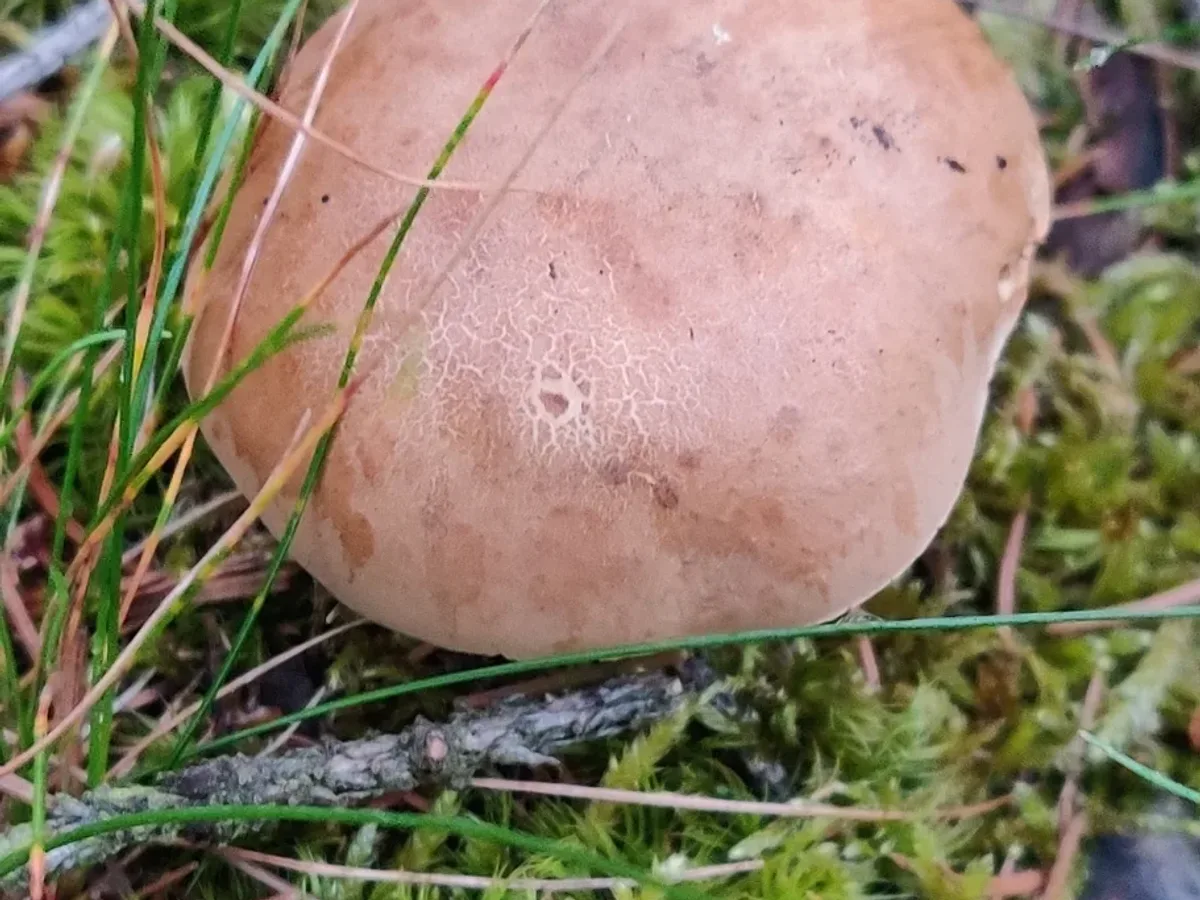 © Ondřej Křivan (CC BY)
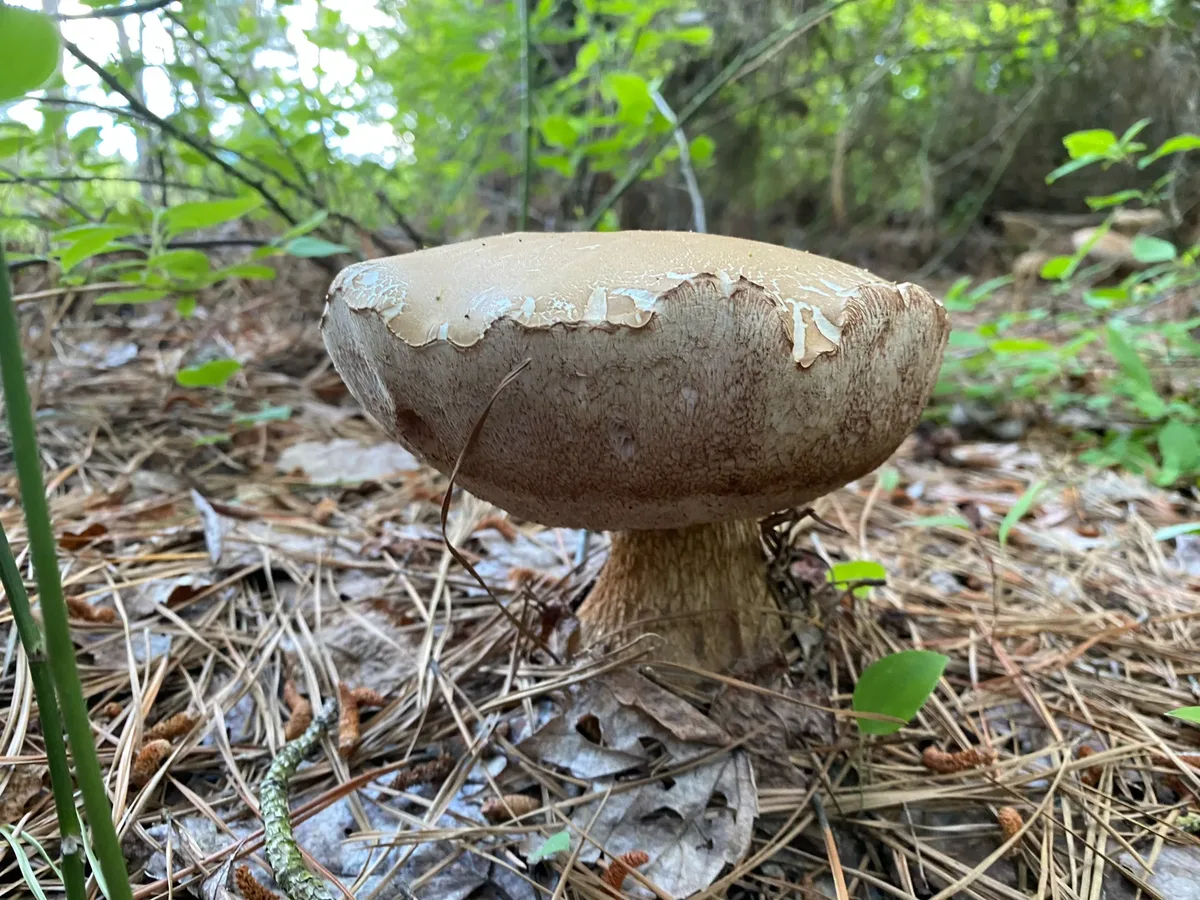 Aubrey Inkster (CC0)
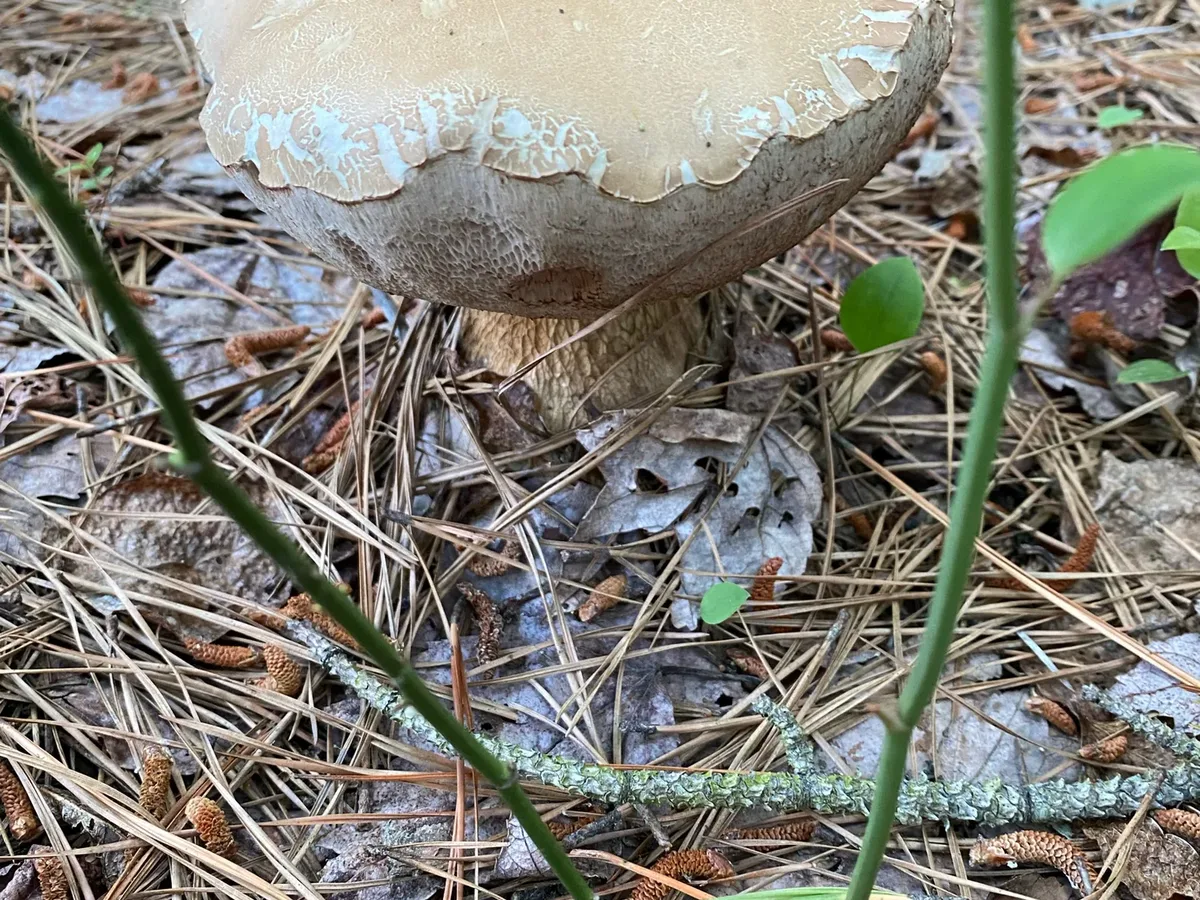 Aubrey Inkster (CC0)
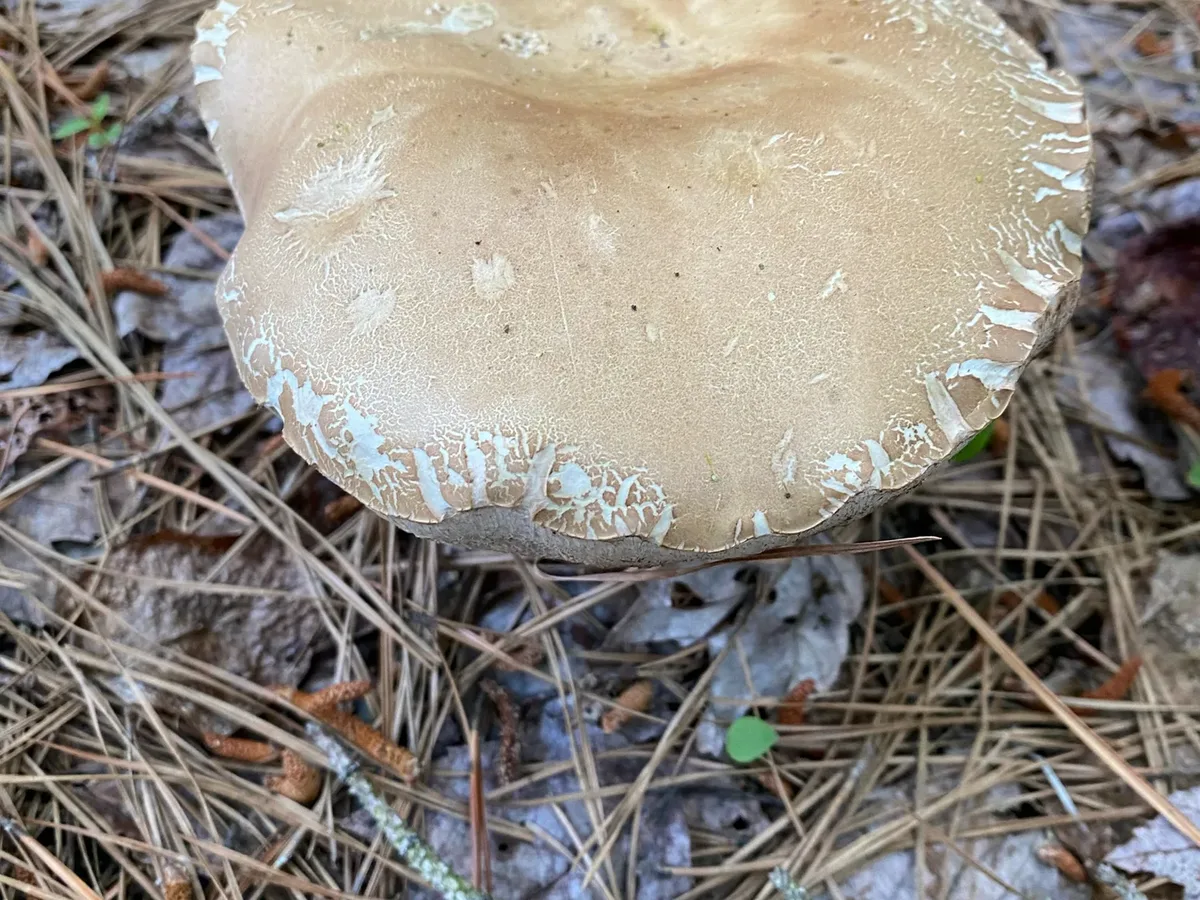 Aubrey Inkster (CC0)
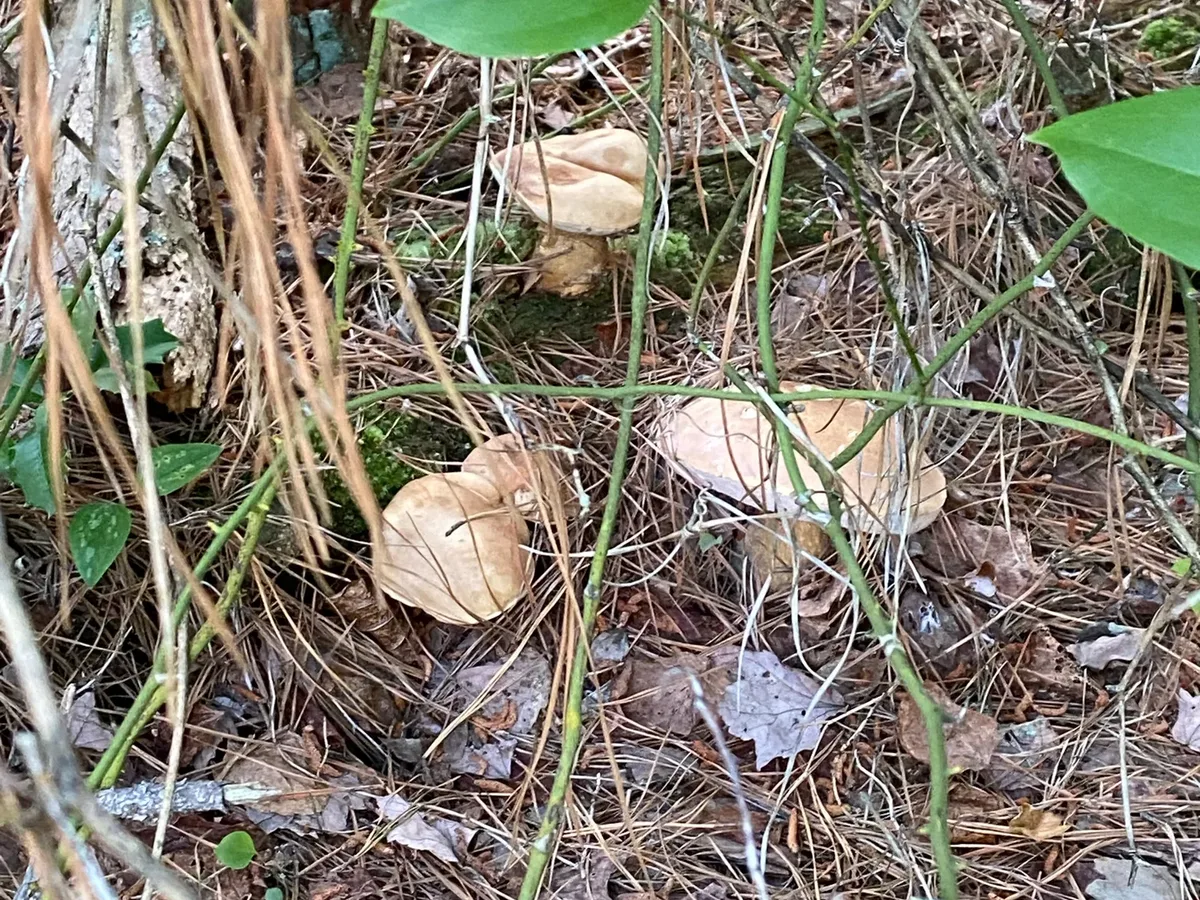 Aubrey Inkster (CC0)
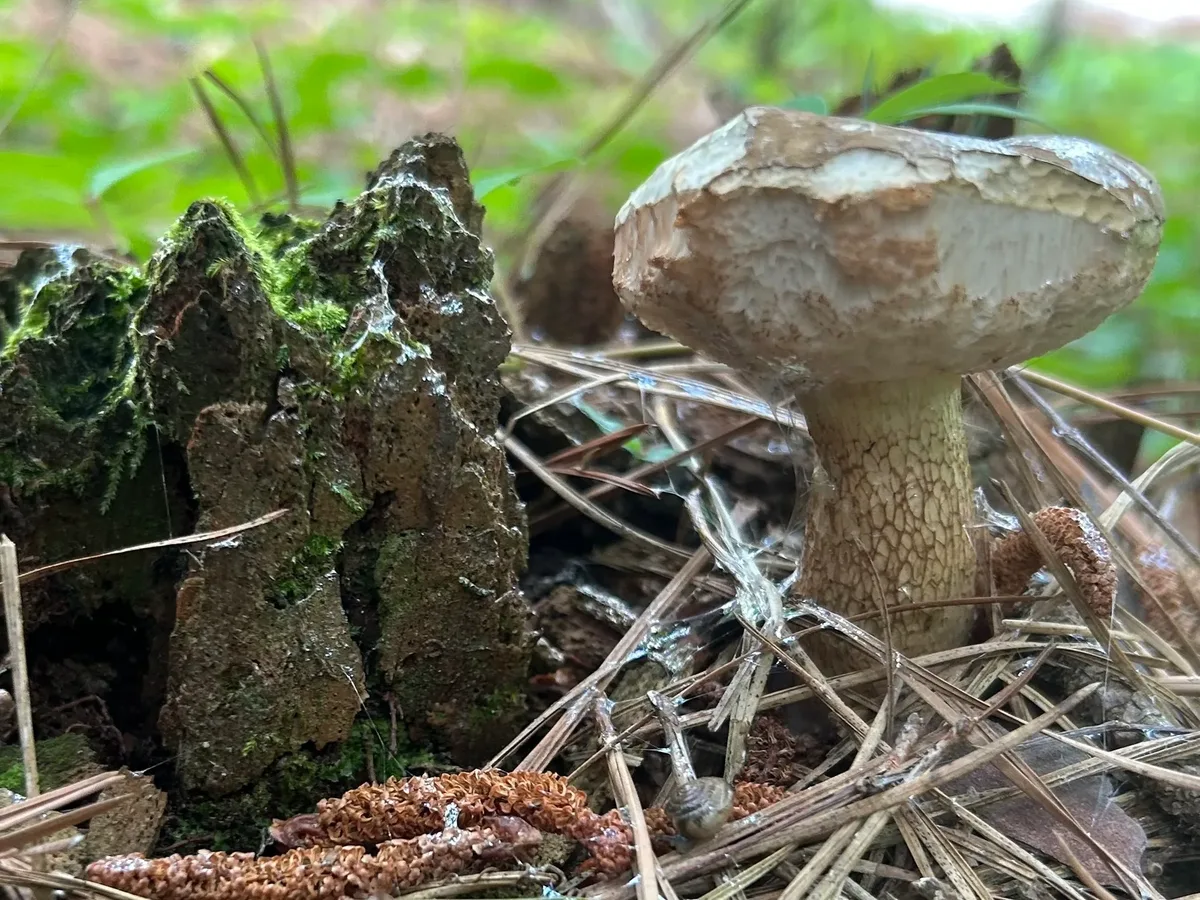 © martin_livezey (CC BY)
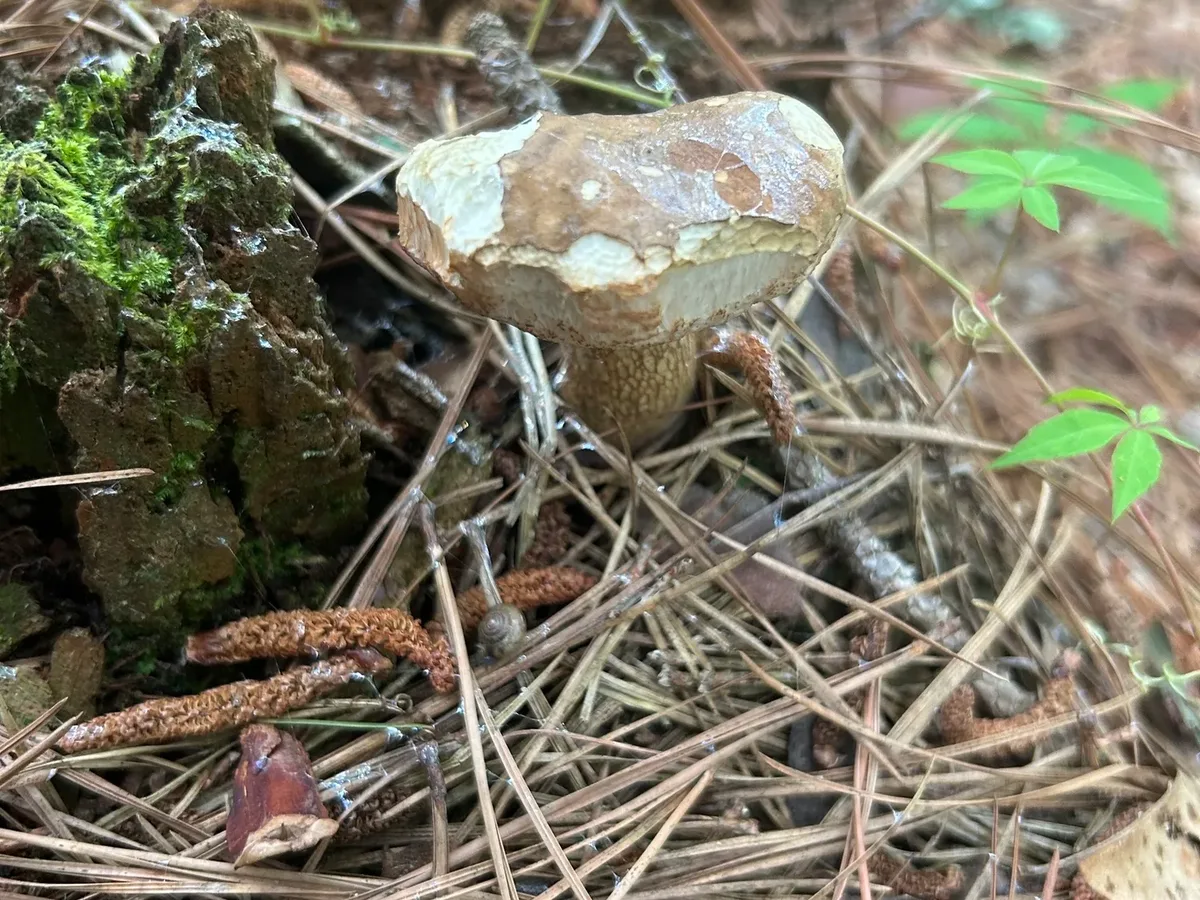 © martin_livezey (CC BY)
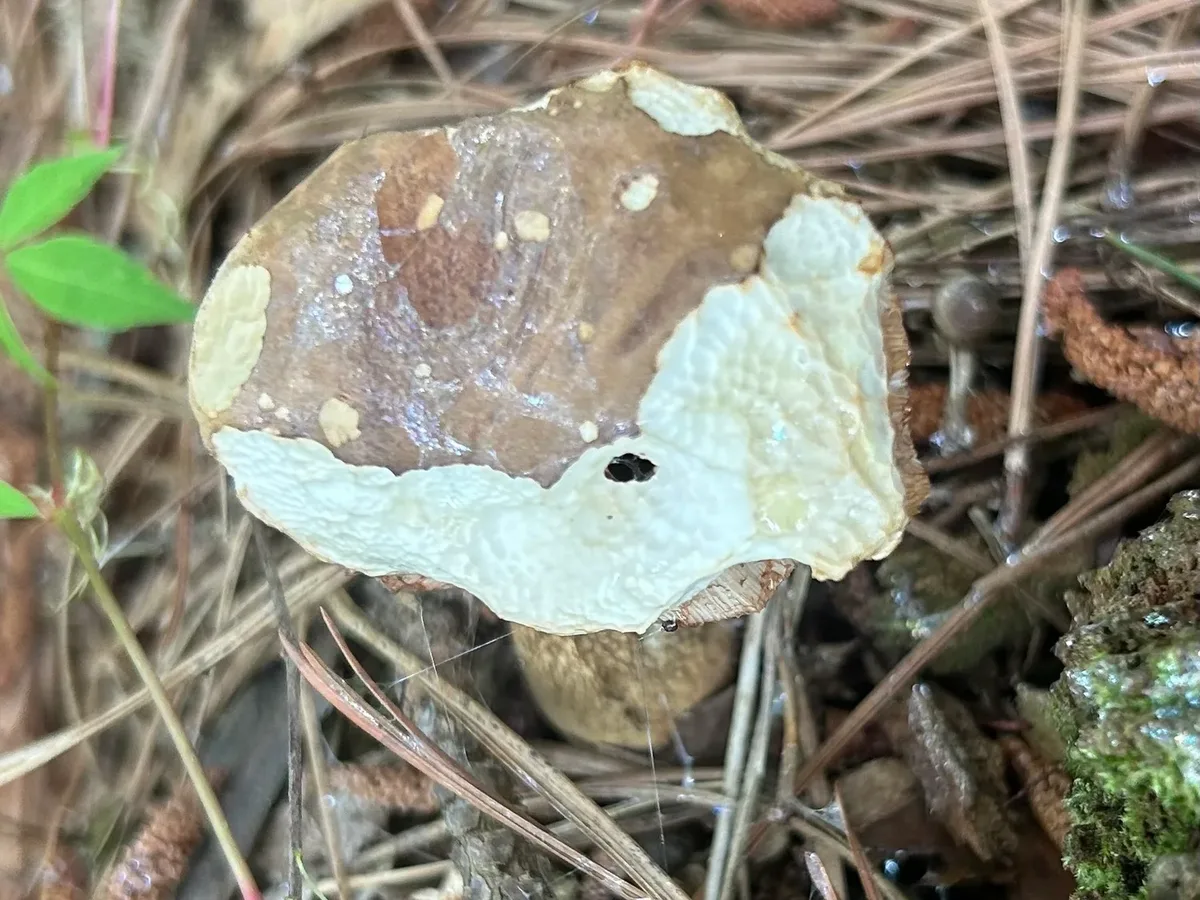 © martin_livezey (CC BY)
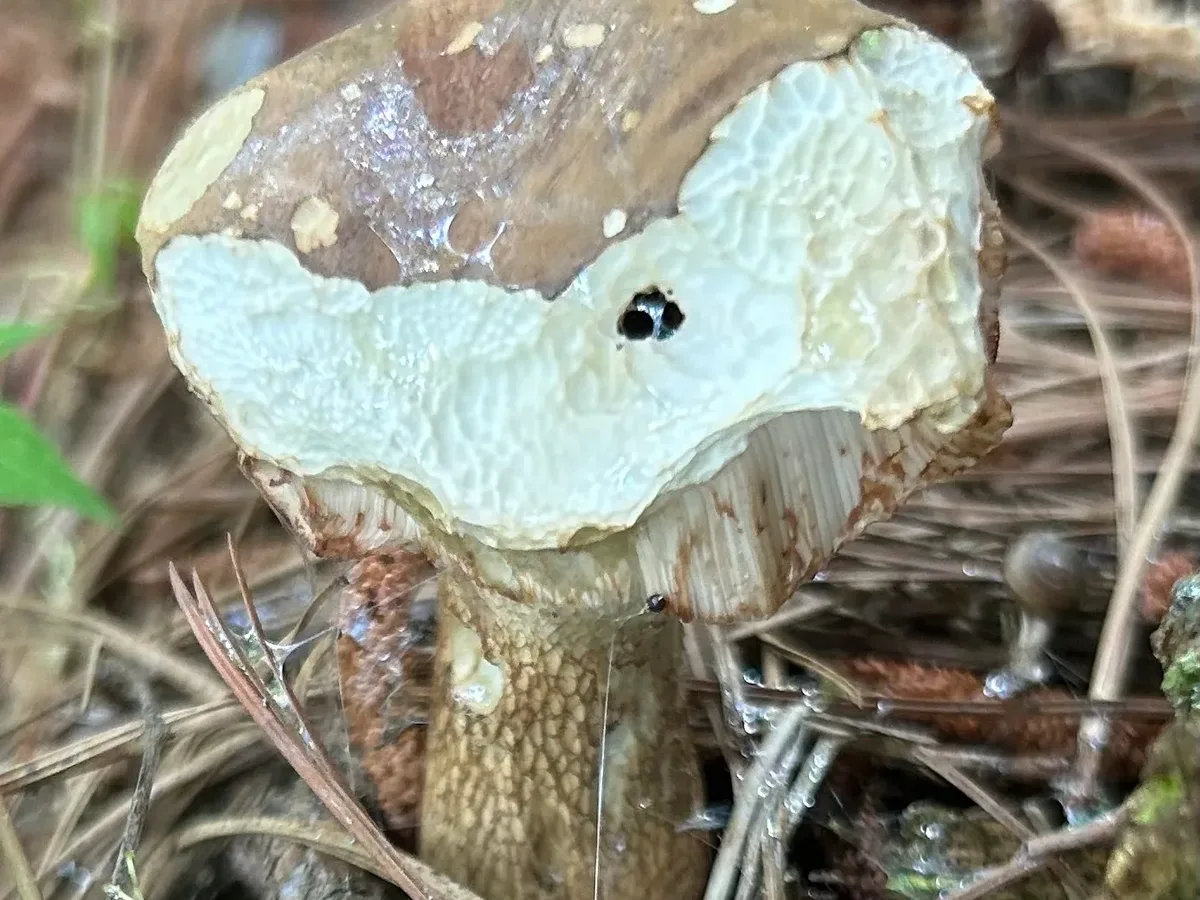 © martin_livezey (CC BY)© Ondřej Křivan (CC BY)Aubrey Inkster (CC0)
Not poisonous, but not worth eating - too tough, bitter, or bland for the pot.
How to recognise it
Tylopilus felleus is built on the same architectural blueprint as a porcini, and that structural mimicry is the entire source of its reputation as a nuisance mushroom.
Cap
The cap begins as a firm, rounded hemisphere - tan, buff, or warm hazel-brown, its surface dry and slightly felted to the touch when young. As the cap expands it flattens toward a broad convex disc, sometimes reaching 15 cm across, and the colour can deepen to a richer chestnut toward the centre.
Pores
Beneath the cap lies the feature that most reliably names the species: a pore surface that opens white and clean, then - as the fruitbody ages past its earliest days - develops an unmistakable pinkish or rose-blush tint that no true porcini ever shows. The pores are small and angular, and in older specimens the pink is quite obvious.
Stem
The stem is sturdy and club-shaped, particularly swollen at the base in young fruitbodies, and it carries the species' most visible calling-card: a bold reticulate net of dark ridges impressed onto a pale, cream-coloured ground. This is the opposite of the porcini's net, which is pale and subtle.
Flesh
The flesh is pure white throughout, firm and fine-textured, and it does not blue or discolour when cut - another bolete feature that the uninitiated might read as a reassuring sign of safety.
Smell & taste
Smell is faintly pleasant and mushroomy. The surface of the flesh conceals nothing; it is the taste that tells everything.
Where & when it grows
Habitat
Tylopilus felleus is a forest mushroom in the fullest sense, depending entirely on living tree roots for its nutrition, and it is almost never found in open or disturbed ground.
It grows across mixed temperate woodland from the Atlantic coasts of Europe through Poland, the Baltic states, Russia, and east into Siberia. It shows a marked preference for soils that are slightly acid and well-drained - the same sandy or loamy substrates favoured by its look-alike, Boletus edulis.
It forges mycorrhizal associations principally with oak, beech, and spruce, and is therefore at home in the ancient mixed forests of the East European plain as much as in the birch-spruce belt of the Russian taiga edge.
Within a given forest it occupies the same ecological niche as porcini almost precisely: same soil horizon, same host tree genera, same shaded and semi-shaded spots beneath a canopy.
Collectors in the mushroom-rich forests of central Russia and Poland regularly encounter Tylopilus felleus growing within metres - sometimes centimetres - of Boletus edulis, fruiting at the same time on the same ground.
This perfect habitat overlap, combined with the near-identical silhouette, makes misidentification a routine hazard rather than a rare accident.
When
The bitter bolete appears from midsummer through autumn. First fruitbodies emerge around June, when soils have warmed above 10 °C after adequate rain, and the season extends into October as temperatures fall.
The peak, in most regions of Eastern Europe and western Russia, falls between late July and September - the same core window that defines the best porcini season in these forests.
Individual fruitbodies develop quickly after a wet spell: the mycelium, established years or decades earlier as a root partner, can push a button to a mature cap within five to seven days of triggering rain.
In dry or cool summers the species may be scarce, appearing only as isolated fruitbodies. But in favourable seasons - warm nights, good soil moisture, 14-day rainfall totals above 20 mm - it can be abundant, dotting the forest floor wherever its host trees stand.
Because the fruitbodies develop on the same rhythm and in the same flush-and-fade pattern as porcini, the two species typically appear, peak, and fade together through the season.
How it grows
Tylopilus felleus is obligately mycorrhizal, which means the visible fruitbody is only the reproductive tip of a much larger, longer-lived organism.
The mycelium threads through the soil and duff layer for metres in every direction from each fruiting point, forming intimate physical connections with the fine feeder roots of its host trees. Oak, beech, and spruce are the primary partners in Eastern Europe and Russia, though birch and pine associations are reported in more northern or boreal habitats.
In these partnerships the fungus wraps around or penetrates the outermost root cells, trading phosphorus and water drawn from the mineral soil for photosynthetic sugars the tree produces above ground.
The mycelium can persist in the soil for decades, outlasting individual fruitbodies by many years - lying largely dormant through dry or cold periods and resuming rapid growth when soil temperature and moisture align.
The signal to fruit - to invest energy in producing a spore-bearing body above ground - is thought to involve a combination of:
- soil temperature crossing a threshold
- soil moisture following a sustained rain event
- possibly day-length or seasonal cues
Once the flush begins the fruitbody develops rapidly, the cells pre-formed in the primordia expanding mostly by water uptake - which is why a single rainy week can transform bare soil into a scattered display of fully formed boletes.
Fruiting conditions
Mycorrhizal bolete; fruits after warm summer-to-autumn rains, following the same conditions as Boletus edulis with which it associates.
Handle with care
Toxin
Tylopilus felleus does not contain a true mycotoxin. The bitter taste is caused by a mixture of terpenoid-class compounds - tentatively identified in research as including compounds structurally related to sesquiterpenes and labdane diterpenes - that are biologically inert at culinary exposure levels.
These compounds are:
- not cytotoxic
- not nephrotoxic
- do not share mechanisms with the amatoxins, orellanine, gyromitrin, or other genuinely dangerous fungal toxins
Their evolutionary function is likely defensive: an intensely bitter flesh deters most invertebrate and mammalian herbivores from consuming the fruitbody before it can sporulate.
The bitterness mechanism involves binding to bitter-taste receptors (TAS2R family) on the tongue - the same receptor class stimulated by quinine or centaurin. That is why the sensation is immediate and persistent even from a tiny fragment of raw flesh.
Symptoms
Consumption of small amounts of Tylopilus felleus - as might happen when a single fruitbody is accidentally mixed into and cooked with a porcini dish - does not cause significant symptoms beyond the sensory experience of intense bitterness.
There are no documented cases of systemic toxicity, organ injury, or neurological effects attributable to Tylopilus felleus.
Ingestion of larger amounts, particularly raw, may cause nausea and mild gastric discomfort in sensitive individuals - a response consistent with the ingestion of any strongly bitter substance rather than a specific toxic mechanism. The discomfort is self-limiting and resolves without treatment.
If a dish is prepared with contaminated mushrooms and tasted, the bitterness is so pronounced that most people will not eat enough to cause even mild gastric upset - the flavour itself is the most effective deterrent.
Look-alikes
The only lookalike that matters in practice for Tylopilus felleus in Eastern Europe and Russia is Boletus edulis, the porcini or king bolete (belyy grib in Russian).
The two species share:
- cap colour range (buff, tan, hazel-brown)
- cap shape
- flesh colour (white)
- flesh non-bluing on cut
- habitat (under the same tree genera)
- fruiting season
The differences are consistent and reliable when you know where to look:
- The stem net: on Boletus edulis the reticulation is pale - white or cream ridges that are fine and often faint, especially in the lower portion of the stem; on Tylopilus felleus the net is dark - brown ridges on a cream or pale ground, bold and obvious on the upper third of the stem, often extending further down.
- The pore surface: Boletus edulis opens with white pores that age through cream to pale yellow-green; Tylopilus felleus opens white but ages to a distinctive rosy or pinkish hue.
- The taste: porcini flesh is mild; Tylopilus felleus is immediately and sharply bitter.
All three checks point in the same direction. No amount of patchy lighting, unusual developmental stage, or wishful thinking changes the bitter taste, which is the definitive confirmation.
There are no deadly lookalikes involved: even if the taste check is skipped and a bitter bolete reaches the pot, the consequence is a ruined dish, not serious illness.
Why it matters
The practical danger from Tylopilus felleus is culinary and economic rather than medical. One bitter bolete, undetected in a mixed bolete harvest, can irreversibly ruin a dish prepared from an otherwise excellent haul of porcini - the bitterness diffuses through stock, oil, or sauce and cannot be removed once introduced.
In regions where porcini picking is both culturally significant and economically important - as in rural Poland, Ukraine, and western Russia - contaminated batches of dried or pickled boletes represent a real quality problem at both household and small-commercial scale.
Identification discipline - checking stem net, pore colour, and taste before any specimen enters the basket - is the only effective control.
There is no medical danger requiring emergency response: the bitter bolete is not poisonous, and accidental ingestion of a prepared dish that contains it does not require medical attention.
The porcini has a pale net on the stem and pores that stay white to yellow-green; the bitter bolete has a dark net on the stem and pores that turn pinkish, plus an extremely bitter taste.
In the kitchen
Picking & cleaning
The bitter bolete is not worth picking for the table, and the reason matters practically: its bitterness is waterproof, heat-stable, and concentration-independent, in the sense that no culinary technique removes it.
The bitter compound - likely a terpenoid or a related phenolic - is distributed through the flesh and intensifies rather than dissipates with cooking.
A single bitter bolete cap mixed into a basket of genuine porcini will taint the entire preparation once heat is applied, making an otherwise fine dish unpleasant or inedible.
For this reason the most important picking skill for anyone hunting porcini in Eastern European or Russian forests is learning to reject Tylopilus felleus in the field, before it reaches the basket.
The field check is reliable when applied consistently:
- 1Examine the stem net (dark ridges on a pale ground, not pale ridges on a pale ground).
- 2Examine the pore surface for any pink tint if the specimen is past the button stage.
- 3If either of those checks leaves doubt, touch the tip of your tongue to a small fragment of cap flesh and spit immediately.
A porcini tastes mild, slightly nutty, clean. Tylopilus felleus tastes intensely, lastingly bitter within a second of contact.
Because the bitterness is so definitive, experienced foragers in the region use the taste test as a last-resort confirmation rather than a primary identifier, keeping the two morphological checks (stem net, pore colour) as the first line of defence.
Cooking
There is no cooking preparation that rehabilitates Tylopilus felleus for the table. This is worth stating plainly, because the bitter compound behaves unusually compared with the bitterness in, say, chicory or radicchio, where blanching or cooking mellows the flavour.
In Tylopilus felleus the bitter substance is heat-stable, and at high temperatures the volatile aromatics that might have partially masked it are driven off, leaving the bitterness more exposed, not less.
- Soaking in salted or acidulated water does not reliably extract it.
- Drying concentrates it.
- Prolonged simmering does not neutralise it.
In the culinary traditions of Poland and Russia, where porcini picking is culturally significant and confusion with the bitter bolete is a known annual event, the consensus is unambiguous: if a bolete is bitter when raw, discard it.
A handful of traditional recipes - primarily for strongly spiced or preserved preparations - call for a tiny amount of bitter bolete as a deliberate bittering agent in brines or pickles, in the same way that a small amount of a bittering herb might be used in a recipe.
But this is a specialist and minor use. For general foraging and cooking purposes the bitter bolete has no role in the kitchen, and the safest habit is to identify and set aside any specimen that shows the characteristic dark stem net or pink pores before it reaches the preparation area.
Good to know
Tylopilus felleus is not poisonous in the toxicological sense. It contains no known compounds that cause organ damage, neurological effects, or significant gastrointestinal toxicity at culinary quantities.
The hazard it presents to a forager is entirely practical: its intense bitterness, distributed uniformly through the flesh and stable to heat, can contaminate and render inedible an entire batch of wild mushrooms when even one fruitbody is mixed into a porcini haul.
The bitter compound is not destroyed by drying, parboiling, or prolonged cooking; it is, if anything, concentrated as liquid reduces.
Consumption of a significant quantity of bitter bolete may cause mild gastric discomfort or nausea - a consequence of ingesting an intensely bitter substance rather than a true toxic mechanism - but this is not a medical emergency.
The real safety lesson is one of identification discipline rather than toxicology. Three field checks, applied consistently, will prevent the bitter bolete from reaching the basket:
- stem net colour
- pore surface colour
- taste
The taste test, applied to a tiny fragment of raw flesh and immediately spat out, is decisive and carries no risk.
A reference guide - never an edibility guarantee. When in doubt, leave it out.