Aquatic Bitter Bolete
Tylopilus aquarius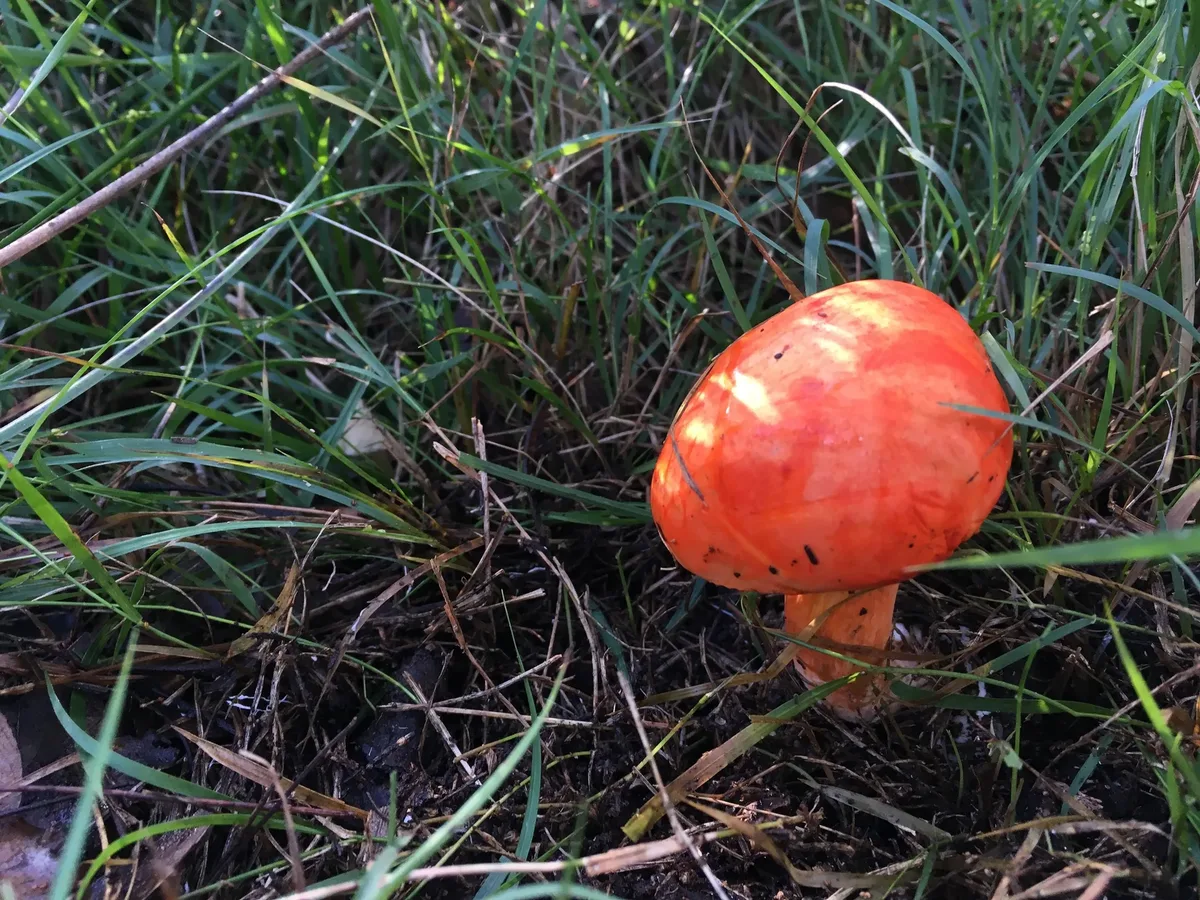 Atlas of Living Australia (CC0)
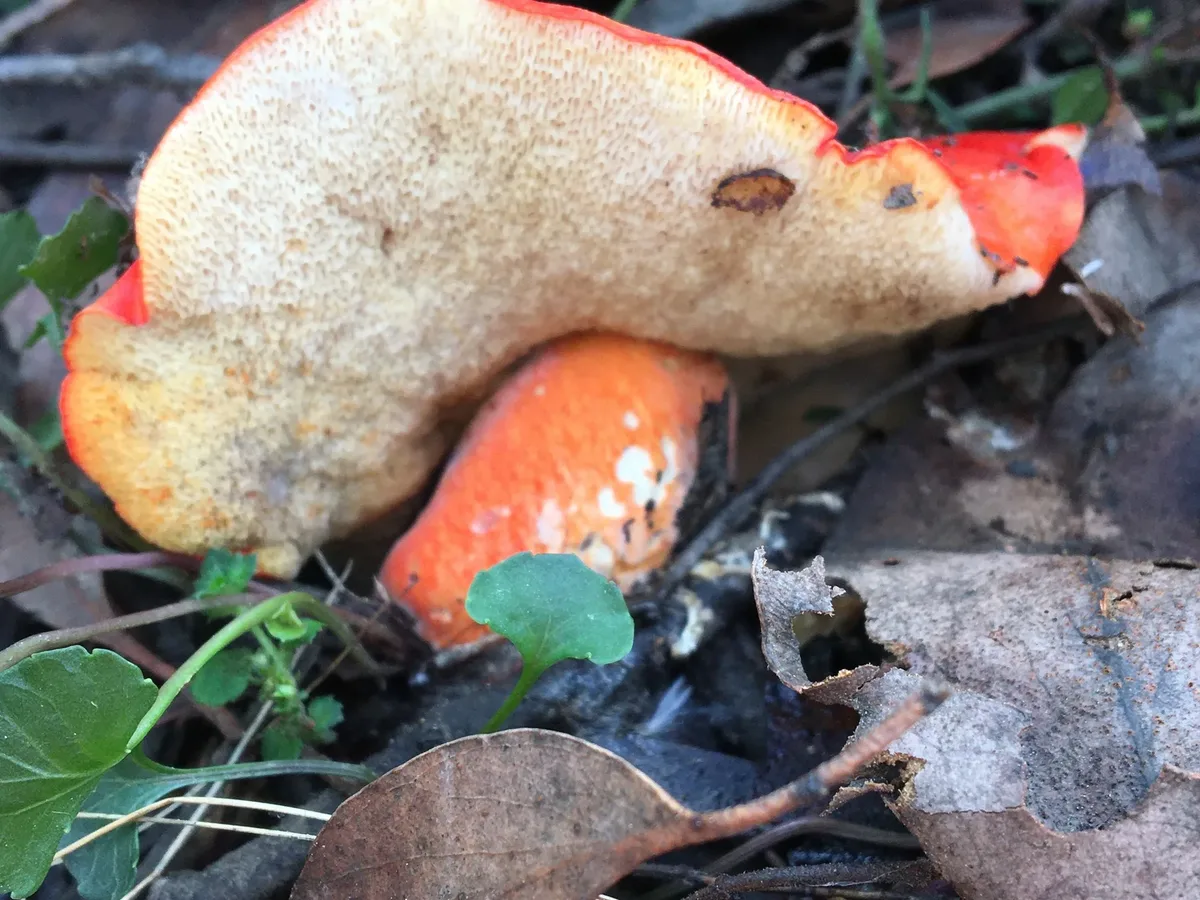 Atlas of Living Australia (CC0)Atlas of Living Australia (CC0)Atlas of Living Australia (CC0)
Edible only with the right preparation - or safe for some people but not others. Learn the caveats first.
How to recognise it
Tylopilus aquarius has the solid, dependable architecture of a forest bolete - a broad cap above a stout reticulate stem, planted firmly in the moss and leaf litter of the Nothofagus forest floor.
Cap
The cap ranges from medium to dark brown, the dry felted surface giving it a matte, suede-like look that distinguishes it from any slimy cap species. In youth it is convex and compact; by maturity it flattens to a broad, open dome reaching up to 12 cm across.
The colour is warm umber to hazel-brown, sometimes slightly paler at the margin, and the cap does not crack or dry out to a pale ochre the way a dry-weather porcini might.
Pores
The decisive feature, as with every Tylopilus, arrives when you flip the cap and examine the pore surface. In very young, just-emerged fruitbodies the pores are white and would fool anyone familiar only with porcini.
But within days the pores develop an unmistakable pinkish to pale rose-pink flush - a colour that no edible porcini relative ever shows, and that is the genus's most reliable calling card. If you press the pores or bruise them, they stain pinkish-buff. There is no bluing reaction, no darkening to blue or navy - the flesh and pores remain white and pink throughout.
Stem
The stem is sturdy and pale - whitish-buff with a faint pinkish or warm-brown tint - carrying a raised reticulate net of ridges that is particularly clear in the upper portion, the meshwork generally paler to medium-toned against the stem background.
Flesh
The flesh is firm, white, and completely unchanged when cut.
Smell & taste
The taste is the surest test of all: a tiny fragment of raw flesh on the tip of the tongue yields an immediate, clean, persistent bitterness that settles the identification without ambiguity. Spit the fragment out and rinse.
Where & when it grows
Habitat
Tylopilus aquarius lives as an obligate ectomycorrhizal partner of Nothofagus, the southern beech genus that dominates temperate South America's most distinctive forest landscapes.
The Nothofagus forests of southern Chile and adjacent Argentina stretch from the Araucanía region south through the Lakes District and into Patagonia, forming a green wall of broadleaved and mixed deciduous-evergreen forest along the Andean foothills and their Pacific-facing slopes.
Within this landscape, T. aquarius shows a particular affinity for the wettest, most moss-carpeted settings: riparian forest alongside rivers and streams, valley bottoms fed by seeps, and the permanently humid microhabitats that give the species its epithet - 'aquarius,' the water-bearer.
Understanding why the species gravitates to these settings is rooted in the biology of ectomycorrhizal fungi: their mycelial networks spread through the soil for metres around each fruiting point, and in consistently moist soil they are buffered from the drying that limits productivity on drier slopes.
The result is a fungus that is both a forest specialist and a microhabitat specialist - look for it in Nothofagus forest, and within that forest, look to the stream-side corridors, mossy gullies, and valley-bottom flats where the litter stays moist even between rain events.
When
The fruiting season falls in the austral autumn - the South American equivalent of the northern European bolete season, running from roughly March through June as the southern winter approaches.
The biological trigger follows the same logic as Tylopilus species elsewhere in the world: the mycelium waits for a combination of cooling soil temperature and the arrival of meaningful rainfall after the drier austral summer.
In the Valdivian and sub-Antarctic temperate rainforest zones - among the wettest non-tropical forests on Earth - rainfall is rarely limiting, and the fruiting trigger is primarily thermal: the soil cooling through the 8-14 °C range after the austral summer. Once temperatures and moisture align, fruitbodies typically emerge 8-14 days after the triggering conditions, developing from buried buttons to mature caps over the following week.
Peak fruiting in most of the primary range (Araucanía through Los Lagos) falls in April-May. At higher Andean elevations - in the lenga beech (Nothofagus pumilio) and Antarctic beech (N. antarctica) belts above about 800 m - the season begins and ends earlier; at low-elevation coastal and lakeside sites it extends somewhat later.
The forests this species inhabits are among the most biologically rich temperate ecosystems in the Southern Hemisphere, and fruiting boletes in the litter layer of a southern Chilean Nothofagus forest in April are part of a rich community that includes multiple other ectomycorrhizal species all responding to the same seasonal cues.
How it grows
Tylopilus aquarius is strictly ectomycorrhizal, its entire biology pivoting on a living root partnership with Nothofagus trees. The mycelium forms a sheath around the fine absorptive root-tips of host trees - Nothofagus obliqua, N. dombeyi, N. nervosa, and their relatives - weaving through the surrounding humus and mineral soil for potentially many metres in each direction.
Through this network it acquires phosphorus and water from the soil and delivers photosynthetic sugars from the tree's canopy in return.
This partnership is perennial: the mycelial network persists for years or decades beneath the forest floor, while the visible fruitbodies are an ephemeral annual event - the reproductive tip of a much larger hidden organism.
Fruitbodies emerge singly or in small scattered groups, typically appearing at the same sites from one autumn to the next as the stable mycelial network revisits its established fruiting points. Dense clusters are not characteristic; a productive site might yield one to four fruitbodies in a flush, the same patch reliable year after year for as long as the Nothofagus canopy remains intact.
Development from button to mature cap takes roughly one to two weeks once the mycelium commits to fruiting.
Fruiting conditions
Southern Hemisphere autumn ectomycorrhizal bolete. In the humid Valdivian and Patagonian Nothofagus rainforest zone, rainfall is rarely limiting; the primary fruiting trigger is soil temperature cooling through the 6-14 °C range after the austral summer. A minimum of roughly 15 mm of rainfall over the preceding 14 days activates the mycelium, and fruitbodies emerge 8-16 days after the triggering conditions align. Peak fruiting April-May. Season opens earlier at higher Andean elevations and on south-facing slopes; extends later at low-elevation coastal and lakeside Nothofagus sites. Does not fruit in the austral summer or during winter cold below approximately 4 °C soil temperature.
Handle with care
Toxin
Tylopilus aquarius does not contain confirmed lethal mycotoxins. The caution classification derives from heat-stable terpenoid-class bitter compounds distributed through the flesh - the same compound class implicated in the bitterness of the well-studied European Tylopilus felleus.
These compounds are biologically inert at the molecular level in the sense of lacking the cytotoxic, nephrotoxic, or hepatotoxic mechanisms of genuinely dangerous mycotoxins such as amatoxins, orellanine, or gyromitrin.
Their physiological effect at culinary exposure levels is gastrointestinal irritation, mediated by the irritant action of concentrated bitter terpenoids on the digestive mucosa, not systemic organ toxicity.
The specific bitter compounds in T. aquarius have not been fully characterised in published literature, and the species has not been the subject of detailed phytochemical or toxicological investigation.
Symptoms
In individuals who consume specimens containing significant bitter compound concentrations, symptoms consistent with gastrointestinal irritation may occur: nausea, stomach cramping or discomfort, vomiting, and diarrhoea.
Onset is typically 30 minutes to 3 hours after consumption. Symptoms are self-limiting in most cases and resolve within 12-24 hours with supportive care - rest and adequate fluid intake.
There are no documented neurological, renal, hepatic, or cardiovascular effects attributable to this species. Raw consumption or consumption of large quantities increases risk.
Severe, persistent, or unusual symptoms - particularly any neurological signs - should prompt immediate medical attention and suggest the possibility of misidentification with a more toxic species.
Look-alikes
The most significant lookalike risk in South American Nothofagus forest is confusion with native edible bolete species. In southern Chile and Argentina, several boletes fruit under the same Nothofagus trees in the same autumn season. Distinguishing T. aquarius from these requires consistent application of the pore-colour and taste checks.
Rubroboletus (red-pored boletes) and any bolete with red or orange pore surfaces are in a different danger class entirely and should never be eaten as a universal bolete safety rule - T. aquarius has white-to-pink pores, not red. Any bolete whose flesh instantly turns vivid blue when cut is similarly a firm leave-it-alone species. T. aquarius shows neither feature, but knowing these rules protects against a wider set of errors.
The closely related Tylopilus felleus (bitter bolete) of the Northern Hemisphere is ecologically equivalent - the same bitter flesh, the same pink pores, the same architectural blueprint - but is not established in native South American Nothofagus forest. In the Nothofagus forest context, T. aquarius is essentially the Southern Hemisphere representative of this ecological role.
Native edible or putatively edible boletes recorded from Chilean and Argentine Nothofagus forest are less well-studied than their Northern Hemisphere counterparts, but species in the Boletus/Neoboletus and Suillus genera do occur, often at lower elevations or in areas with planted Pinus.
Any of these that are genuinely edible will have pores that age white to yellowish-green rather than pinkish, and mild to pleasant-tasting flesh. The taste test remains the most reliable single discriminator between T. aquarius and any edible bolete in this region.
Why it matters
Low to moderate, depending on specimen bitterness, quantity consumed, and individual sensitivity. Tylopilus aquarius is not capable of causing serious systemic poisoning or death. The realistic risk is limited to gastrointestinal discomfort.
The greatest practical danger is misidentification: a forager in South American Nothofagus forest who collects what they believe to be an edible bolete, and does not apply the pore-colour and taste checks, may inadvertently gather T. aquarius and consume it in a dish.
Applying the three field checks consistently before any bolete enters the basket effectively eliminates this risk:
- pinkish pore surface in mature specimens
- no bluing of flesh
- intensely bitter raw taste
If any bolete gathered in this region shows intense bitterness when raw, discard it before cooking.
If symptoms occur after consuming boletes from southern Chilean or Argentinian Nothofagus forest, seek medical advice and, if possible, retain or photograph a sample of the mushroom for identification.
Tylopilus felleus is the Northern Hemisphere ecological counterpart of T. aquarius - sharing the bitter flesh, pinkish pore surface, and reticulate stem of the genus. T. felleus is not established in native South American Nothofagus forest, but in areas where European trees have been introduced (pines, oaks in plantations or parks), it may theoretically occur. The two species are so similar in appearance, taste, and safety profile that distinguishing them matters less than identifying them both as Tylopilus and applying the same cautionary approach.
Boletus loyo and other native edible boletes of southern Chilean and Argentine Nothofagus forest have pores that are white when young and age to yellow or olive-yellow, never pinkish. Their raw flesh is mild or pleasant-tasting, without the sharp bitterness of Tylopilus. Confirm pore colour and taste before any collection decision - both checks point in the same direction and together are reliable.
Boletus edulis and related porcini-type boletes develop pores that age from white through cream to yellowish-green - they never develop the pinkish flush of a mature Tylopilus. Porcini flesh is mild, pleasant, and faintly nutty; T. aquarius is intensely bitter when a tiny raw fragment is tasted. The stem reticulation of porcini is pale cream to white. Any pinkish pore colour or persistent bitter taste directs you unambiguously to Tylopilus rather than an edible porcini relative.
Any bolete in the Nothofagus forest zone with RED or ORANGE pore surfaces is a strict leave-it-alone as a universal bolete safety rule, regardless of other features. T. aquarius has white-to-pinkish pores, not red. Similarly, any bolete whose flesh turns vivid dark blue instantly when cut must not be eaten. These two visual checks are the first lines of defence against the most dangerous bolete genera globally, and should be applied before any other identification feature is considered.
In the kitchen
Picking & cleaning
Tylopilus aquarius should be collected with caution and only by foragers who are confident in their identification skills. The species is classified under caution rather than edible: its edibility is not confirmed at culinary levels, and the bitter terpenoid compounds responsible for the genus's characteristic taste can cause gastrointestinal irritation in susceptible individuals even after thorough cooking, because the compounds are substantially heat-stable.
If you gather it for study or cautious tasting, apply the three non-negotiable field checks before any specimen enters the basket:
- 1Examine the pore surface of mature specimens: a clear pinkish blush on the pores is Tylopilus, not a porcini relative - if the pores are white and aging to yellowish or olive, you may have a different species.
- 2Confirm the flesh does not blue when cut.
- 3Most decisively, taste a tiny fragment of raw cap flesh, chew briefly, and spit it out with a rinse: intense and lasting bitterness means this is unambiguously Tylopilus, and the specimen is unlikely to cook into a pleasant meal.
Mild or barely noticeable bitterness on the raw taste test suggests better culinary potential, but even then individual variation in these compounds means cooking outcome is unpredictable.
Select only young to mid-maturity specimens and handle them cleanly:
- Select only young to mid-maturity fruitbodies with firm, white flesh and clean pore surfaces.
- Trim the stem base cleanly.
- Carry in a mesh basket.
- Do not mix with edible boletes until every specimen in the basket has been individually confirmed.
The species is not abundant - collect sparingly and leave small buttons to complete their life cycle.
Cooking
When a specimen of Tylopilus aquarius passes the raw taste test - showing mild or only faint bitterness rather than the sharp, lingering bitterness characteristic of the genus - it can potentially be cooked and eaten as a modest wild mushroom, though the flavour is unremarkable and the result unpredictable.
Young, firm specimens with white flesh give the best outcomes. Clean by brushing; avoid soaking, as the pore tubes absorb water readily and become mushy.
Sauté over high heat in butter or olive oil until well browned - the Maillard reaction and high-heat cooking do the most to develop any positive flavour. Garlic, thyme, and black pepper complement the earthy character.
Be aware that even specimens that taste mild raw may develop perceptible bitterness on the plate once heat concentrates the residual bitter compounds. If a bitter aftertaste is noticed during cooking or at the table, do not continue eating - the bitterness will not diminish with further cooking and the compounds can irritate the gut in quantity.
The culinary reality is that T. aquarius sits well below choice edible boletes in eating quality, and most foragers in its range will find better-tasting options in the same forest. Its primary value is ecological and mycological rather than gastronomic.
Good to know
Tylopilus aquarius is classified as caution rather than edible for several compounding reasons, and the assessment should be read conservatively, especially for less experienced foragers.
The species is not known to carry confirmed lethal mycotoxins, and there are no documented cases of serious or fatal poisoning attributable to it. However, 'no documented cases' in a species that is poorly characterised and not commonly collected for food is weak evidence of safety rather than positive evidence of it.
The bitter terpenoid-class compounds pervasive in Tylopilus flesh are substantially heat-stable, meaning cooking does not reliably neutralise them. In quantity these compounds act as gastrointestinal irritants, capable of producing nausea, stomach cramping, vomiting, and diarrhoea in susceptible individuals - the same mechanism and symptom set documented for other Tylopilus species.
Individual sensitivity varies considerably: some people may consume a mildly bitter Tylopilus specimen without consequence; others, or the same person on a different occasion, may experience significant distress.
Additionally, the bolete fauna of South American Nothofagus forest is substantially less studied taxonomically than that of Europe or North America, and field identification of individual species within this community is correspondingly less certain. This taxonomic uncertainty is itself a safety reason to classify cautiously: a forager who believes they have identified T. aquarius may in fact have a closely related or superficially similar species whose safety profile is even less well characterised.
Recommendation - if you collect T. aquarius for the table:
- 1taste-test every specimen raw and discard any that is intensely bitter;
- 2cook thoroughly;
- 3eat a small trial portion on the first occasion and wait at least four hours before eating more;
- 4do not serve to children, pregnant individuals, or those with gastrointestinal sensitivities.
This is a species for experienced foragers in the region, not a casual choice.
A reference guide - never an edibility guarantee. When in doubt, leave it out.