Chinese Black Truffle
Tuber indicumsyn. Tuber himalayense, Tuber sinense, Tuber indicum var. piceum, Tuber indicum var. villosum
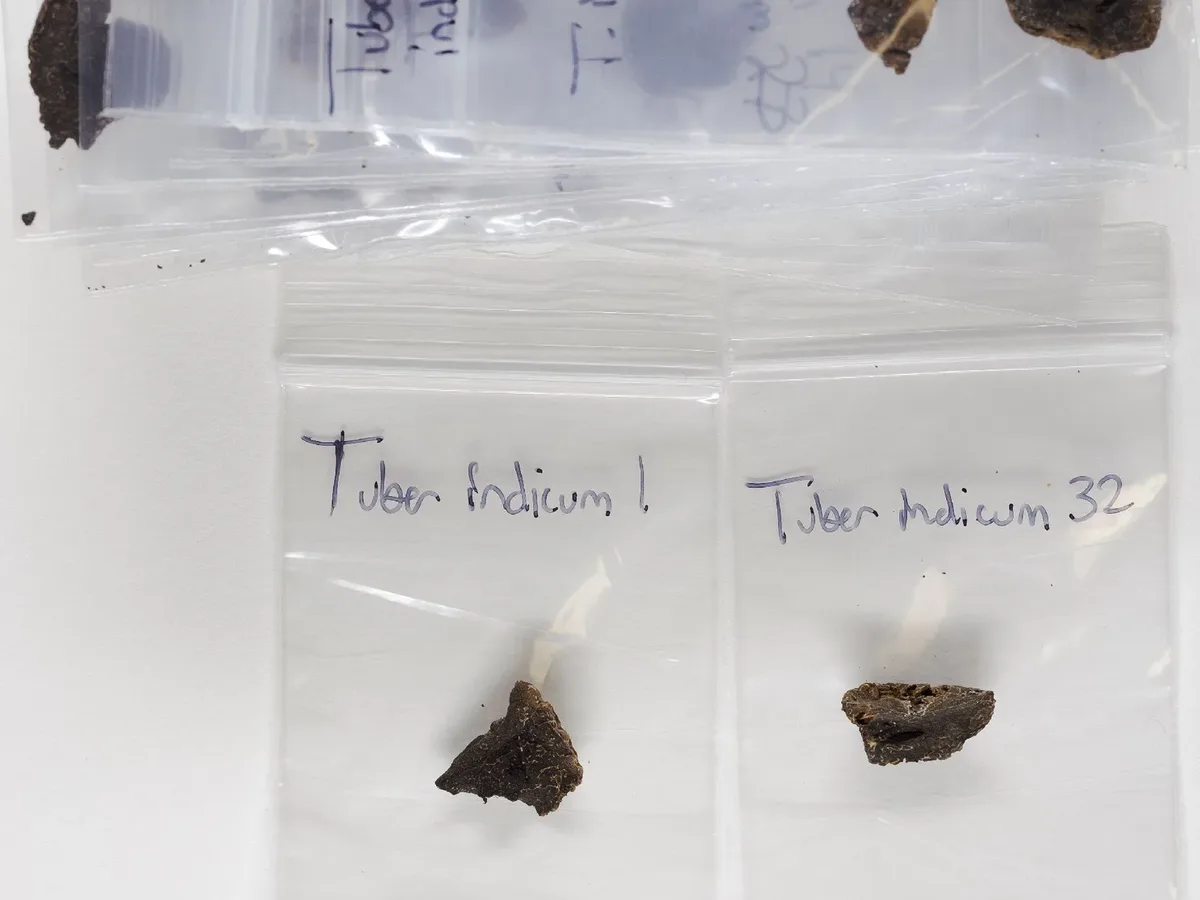 Duke University Herbarium Fungal Collection (DUKE-) (CC0)
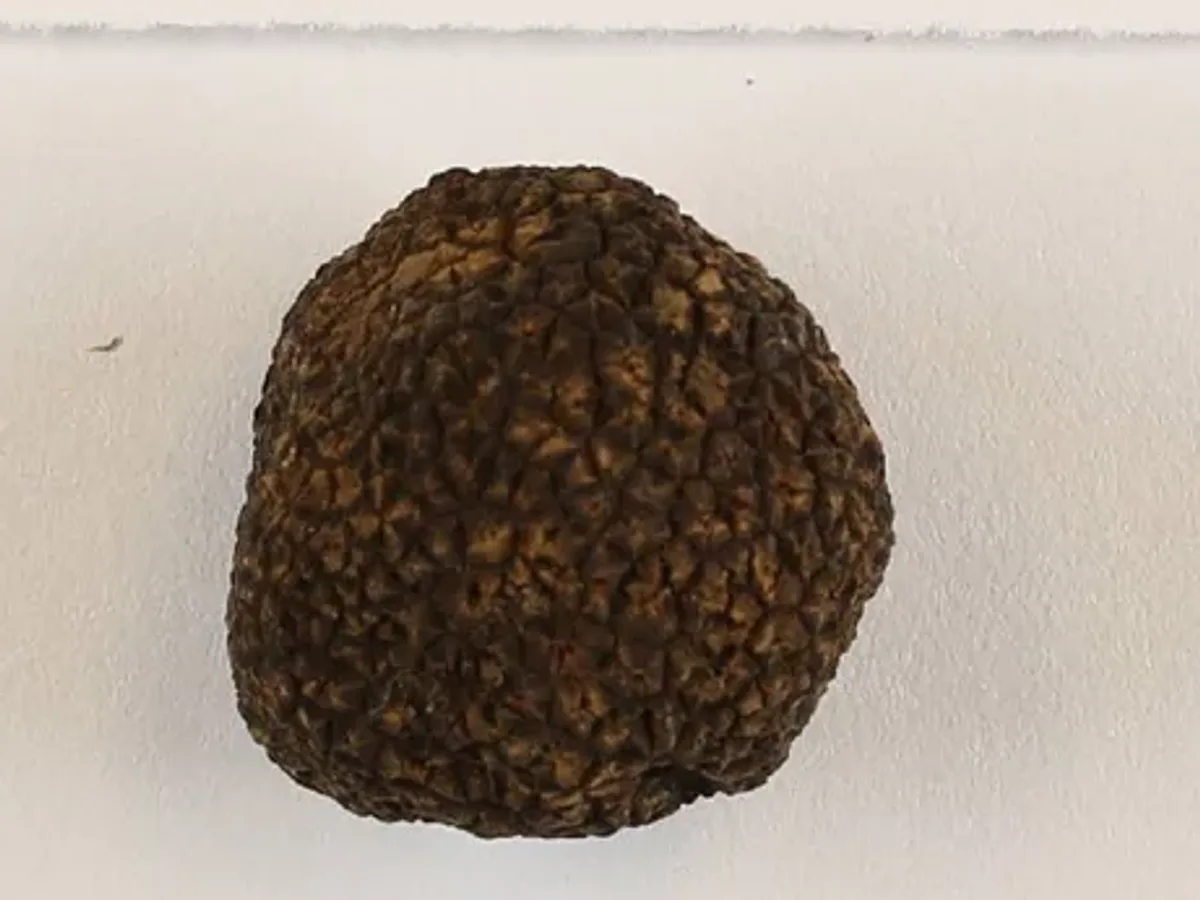 University of North Carolina at Chapel Hill Herbarium: Fungi (NCU-Fungi) (CC0)
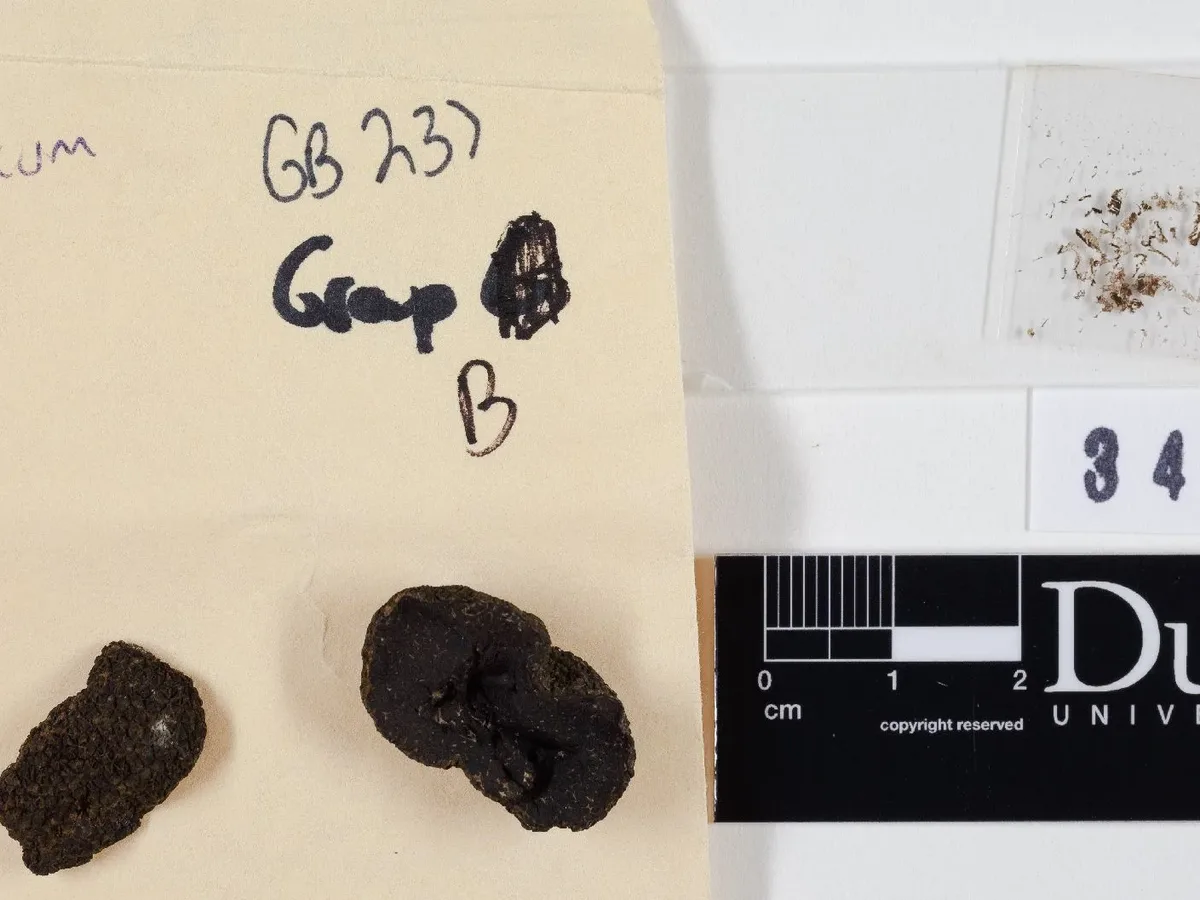 Duke University Herbarium Fungal Collection (DUKE-) (CC0)
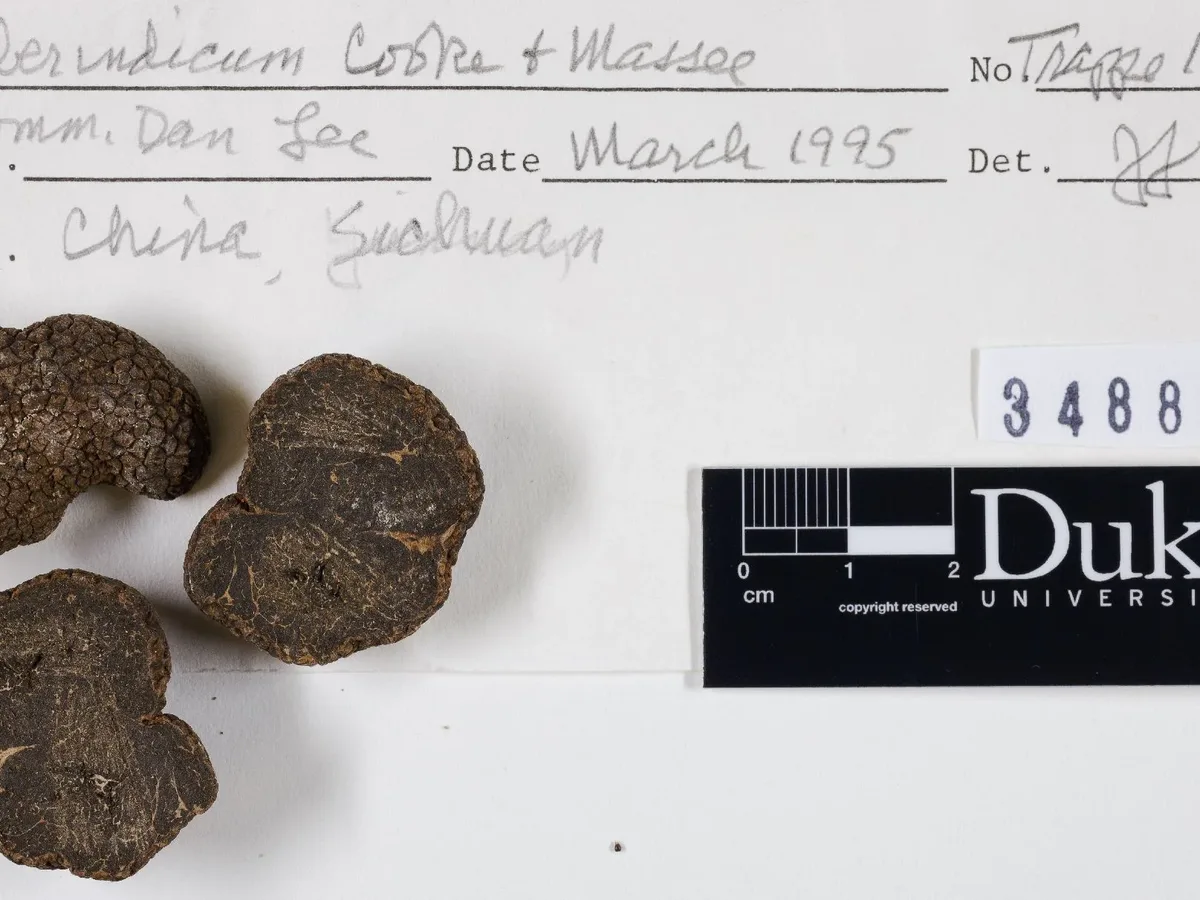 Duke University Herbarium Fungal Collection (DUKE-) (CC0)
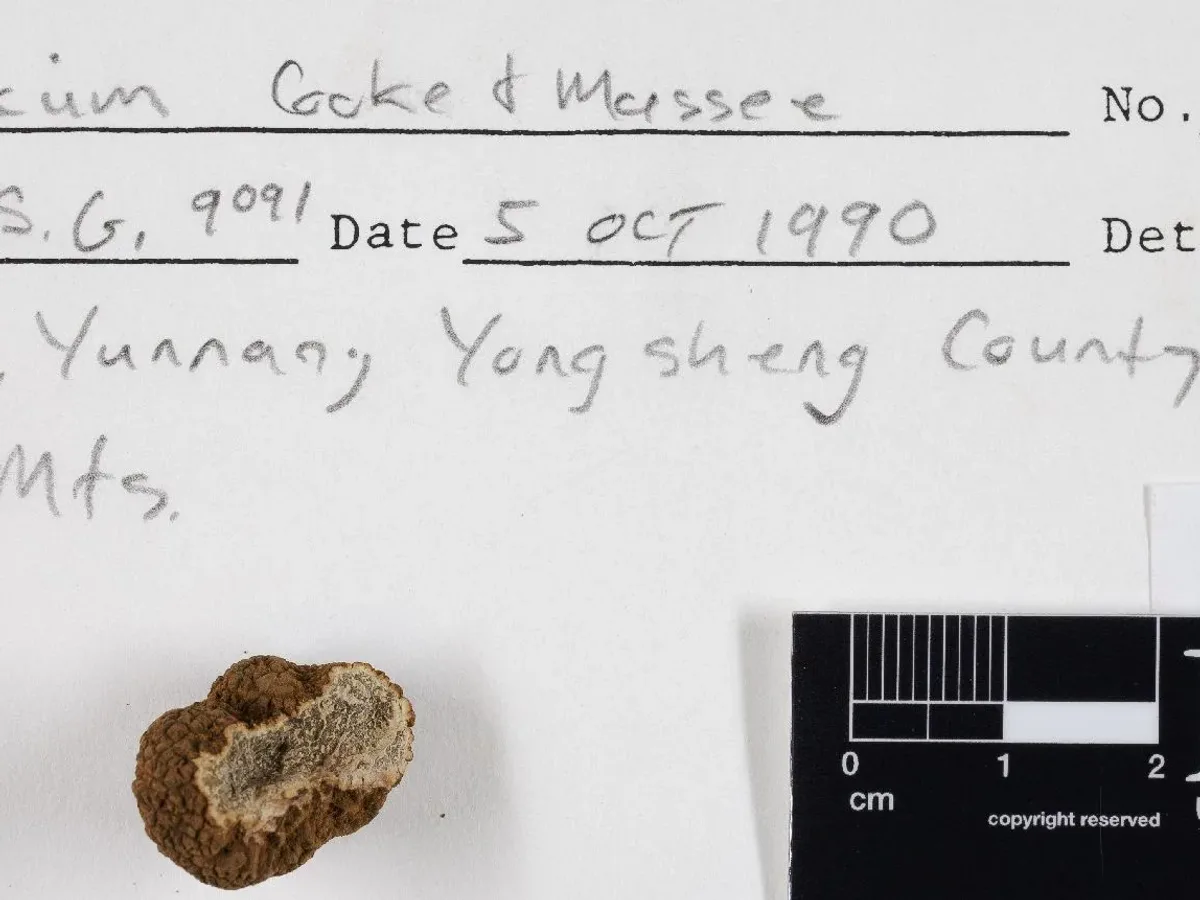 Duke University Herbarium Fungal Collection (DUKE-) (CC0)
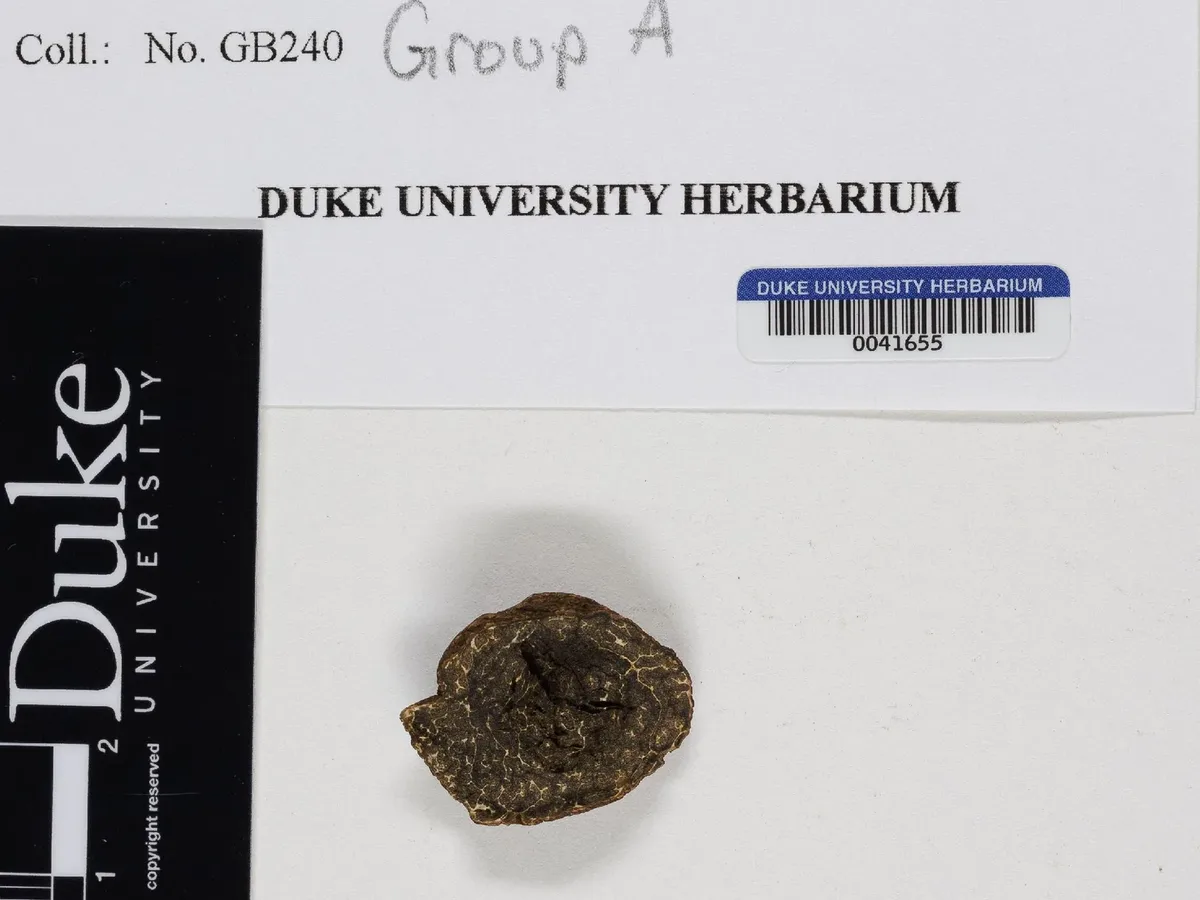 Duke University Herbarium Fungal Collection (DUKE-) (CC0)
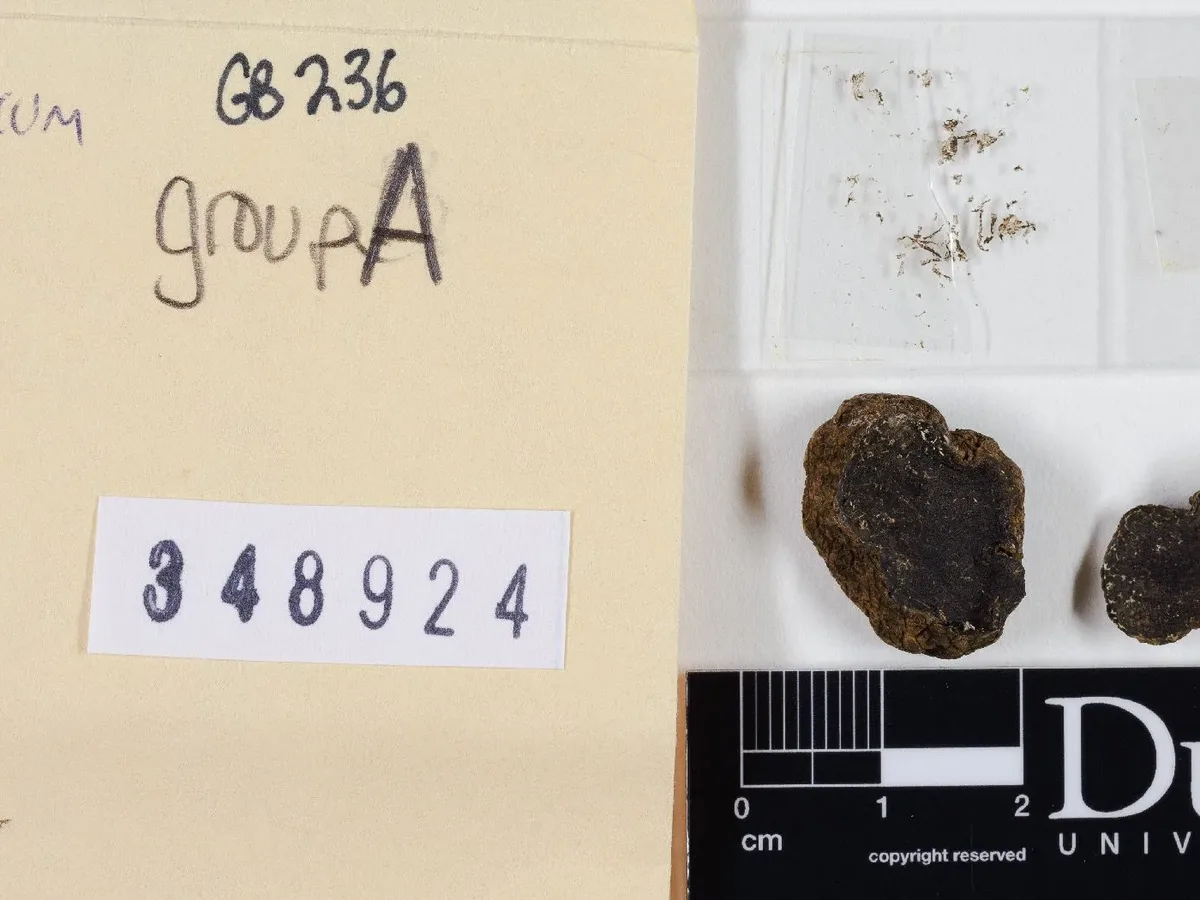 Duke University Herbarium Fungal Collection (DUKE-) (CC0)
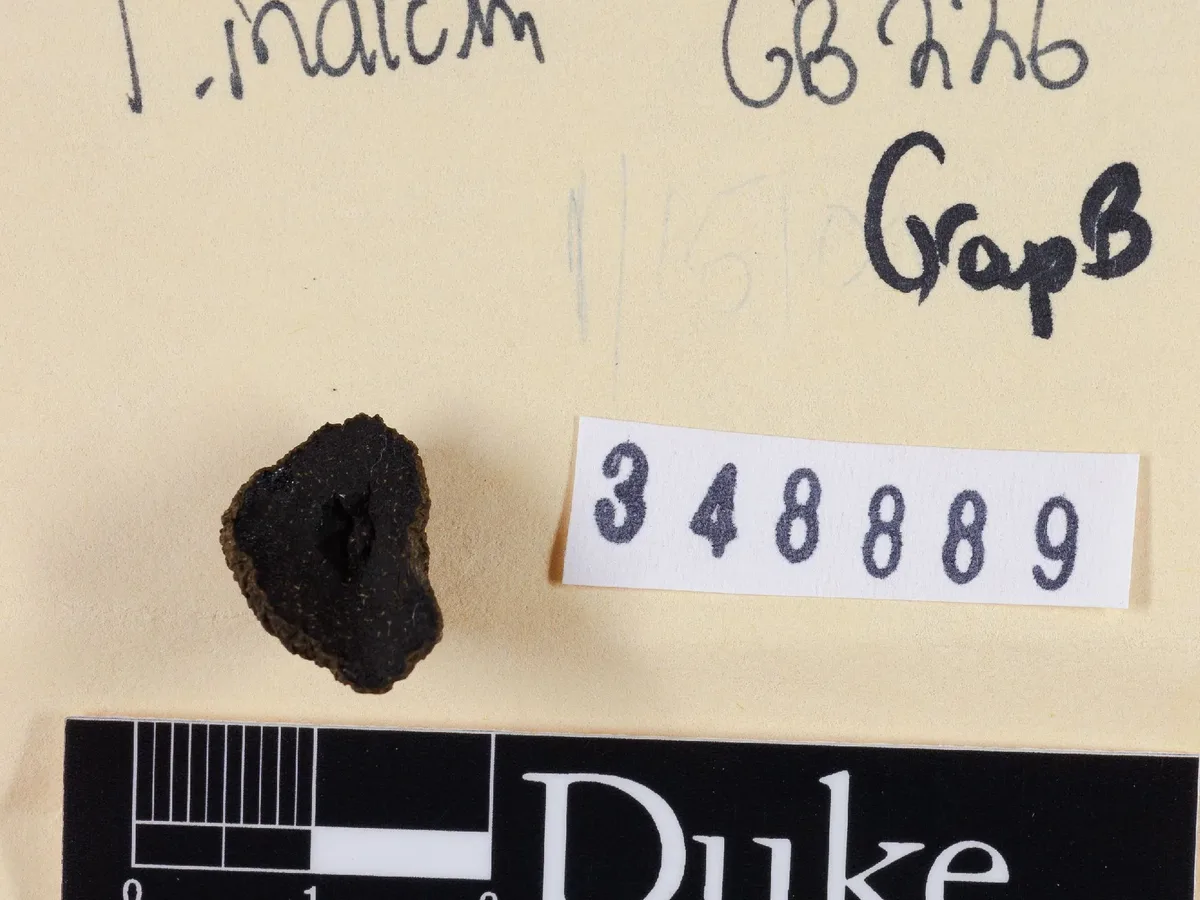 Duke University Herbarium Fungal Collection (DUKE-) (CC0)Duke University Herbarium Fungal Collection (DUKE-) (CC0)University of North Carolina at Chapel Hill Herbarium: Fungi (NCU-Fungi) (CC0)
Good to eat, once you have identified it with certainty and cooked it through.
How to recognise it
Tuber indicum is a true truffle - a subterranean sac fungus spending its entire life below ground - and to the untrained eye it looks strikingly similar to the celebrated European black truffles that command extraordinary prices.
The fruiting body is rounded to lumpy, usually between a golf ball and a tennis ball in size (2-8 cm), with a black warted exterior that immediately signals 'black truffle' to anyone who knows the genus.
Look more closely at the warts and you will notice that they are, on average, slightly smaller, less boldly pyramidal, and arranged in a marginally less dramatic cobblestoned mosaic than in Tuber melanosporum (Périgord truffle) or T. aestivum (summer truffle). The furrows between warts tend to be shallower.
Flesh
Slice a specimen in half and the interior (gleba) is the most informative page: in a fully ripe T. indicum the flesh is dark grey-brown to near-black, threaded with a network of pale white veins - the classic truffle marble.
Those veins are noticeably narrower and more densely packed, and the overall contrast between vein and dark flesh is less vivid and striking than in European counterparts.
Critically, the white veins remain white throughout; they do not turn pinkish-red on exposure to air as they do in T. melanosporum.
Smell & taste
The aroma of a ripe T. indicum is earthy and faintly mushroomy, but unmistakably weaker and less complex than a European black truffle - lacking the fruity, spicy, heady depth that makes T. melanosporum and T. magnatum so prized.
This difference in fragrance is the most immediately tangible distinction, and it explains why T. indicum, while genuinely edible, commands a fraction of the price of its European relatives.
Where & when it grows
Habitat
Unlike the European black truffles that demand alkaline, calcareous chalk and limestone soils, Tuber indicum is an ecological generalist within its mountain domain.
It forms ectomycorrhizal partnerships with a wide range of host trees - conifers (pine, fir, spruce) and oaks, chestnuts, and other broadleaved trees all serve as hosts - in the cool-temperate to subalpine montane forests of the Hengduan Mountains (Yunnan, Sichuan, Tibet) and the broader eastern Himalayan region.
It is typically found at 1500-3500 m elevation, in soils that are moderately acid to neutral (pH 5.5-7.5), well-drained, and often mixed mineral-humus in character.
Although the species tolerates a range of soil types, it does not produce the dramatic 'brûlé' (bare suppression zone) that characterises active T. melanosporum sites in Europe.
In the field, productive sites tend to be beneath mature mixed forest, often on gently sloping terrain where drainage is good, and within the rooting zone of established host trees.
The regional trade centres on the western Sichuan plateau (Garzê prefecture, particularly around Kangding and Yajiang), Yunnan's Diqing and Lijiang prefectures, and parts of Tibet. Locally this is a well-known and economically significant wild product, and experienced local harvesters use trained dogs or deep familiarity with productive sites to locate ripe bodies.
When
Tuber indicum is an autumn-to-winter truffle. Fruiting body development begins in late autumn, with bodies becoming harvestable from October onward and the commercial season running in earnest from November through February, peaking in December and January.
At higher elevations the window may start a little later and run toward March as winter cold slows maturation.
Ripeness is the key variable: the gleba should be dark grey-brown to near-black, with well-developed white venation and an earthy aroma that can be detected by pressing a thumb into the surface and bringing it to the nose.
Bodies harvested earlier in autumn often have pale cream-grey interiors, little aroma, and essentially no flavour - a practice common in the export trade that has given T. indicum a reputation for disappointment not always warranted by a genuinely ripe specimen.
At its best, properly ripe T. indicum is a pleasantly earthy, subtly flavoured truffle, best understood on its own terms rather than as a substitute for T. melanosporum.
How it grows
Like all true truffles, T. indicum is an obligate ectomycorrhizal organism: the mycelium forms an intimate association with its host tree's fine root tips, exchanging mineral nutrients (particularly phosphorus) for plant-derived carbohydrates.
This fundamental dependence on a living host means that T. indicum cannot be cultivated by simple substrate inoculation in the way edible saprophytic mushrooms can.
Chinese researchers have made significant advances in T. indicum cultivation using host-tree seedlings inoculated with T. indicum spores, and small-scale experimental orchards exist in Yunnan and Sichuan.
Fruiting bodies develop slowly, reaching harvestable size over a period of weeks to months, entirely invisible below the soil.
Established mycelial networks associated with mature trees can be productive for many years and even decades. The same terrain in Sichuan and Yunnan often reliably produces truffles annually, which is why the trade is organised around known collection areas.
Fruiting conditions
Truffle maturation is fundamentally unlike epigeous mushroom fruiting: primordium initiation occurs weeks to months before harvest. T. indicum primordia are thought to initiate in late summer and early autumn under still-warm soils, then mature slowly through autumn and into winter as temperatures cool. Adequate soil moisture from autumn rain is required to sustain development; severe drought during September-October may abort or reduce the crop. Maturation is complete in December-January at peak season temperatures (2-10°C soil at 10 cm depth). Unlike European truffles, there is less evidence of a distinct rainfall-triggered flush lag; maturation is a continuous slow process tied more to cumulative cooling than to a single rainfall event. Soil temperatures below 0°C halt development; bodies are freeze-damaged at sustained ground frost.
Look-alikes
The greatest practical lookalike risk for T. indicum is not safety-related but commercial: T. indicum is the world's primary source of fraudulently sold 'black truffle', routinely substituted for the far more valuable Tuber melanosporum (Périgord truffle) and T. aestivum (summer/Burgundy truffle) in both European and global markets.
Externally the species are remarkably similar. The decisive separating features are:
- 1Gleba venation pattern: T. melanosporum has broader, more spaced white veins that turn pinkish-red on air exposure; T. aestivum has hazel-brown gleba with bold white veins and a pleasantly nutty aroma; T. indicum has narrower, denser veins that remain white, and a notably weaker, flatter aroma.
- 2Aroma: the aromatic complexity of T. melanosporum is simply not replicable in T. indicum - a side-by-side comparison is immediately decisive.
- 3Molecular identification: definitive species-level verification in processed or degraded material requires DNA analysis (ITS sequencing).
No species in the native T. indicum range is known to be toxic or deadly, and there are no documented instances of T. indicum being confused with any dangerous fungus.
Scleroderma species (earthballs) are broadly similar in size and grow partially or shallowly subterranean, but they have a thick, yellowish, scaly exterior and a purple-black powdery interior entirely unlike truffle gleba, and are mildly toxic (gastrointestinal irritants). The distinction is obvious on inspection.
Mildly toxic (gastrointestinal irritant; not lethal). Grows epigeous or shallowly hypogeous, not deeply buried; exterior is thick, yellowish-buff with a cracked, scaly surface (not pyramid-warted); interior is solid purple-black and powdery - a mass of dry spores with no resemblance to truffle gleba. Distinguished immediately on slicing. The toxic risk is low but real, and Scleroderma is not edible.
Small (1-3 cm), very rough black exterior might superficially suggest a truffle to a novice. Interior is entirely powdery and purple-brown - a mass of loose dry spores - bearing no resemblance to the marbled, firm flesh of T. indicum. Inedible. Found in conifer-dominated forest. Distinction is immediate on slicing open.
A closely related species from the same Himalayan-Hengduan region, sometimes treated as a synonym of T. indicum and sometimes as a distinct taxon. Morphologically very similar; separation requires microscopic examination of spore ornamentation and molecular analysis. The practical distinction for foragers is negligible as both are edible Tuber species from the same region.
Another commercially significant black truffle; gleba is grey-violet to dark brown with fewer, wider white veins; strong, distinctive musky odour (not flat earthiness); smaller on average (1-5 cm); European distribution; season November-March. T. indicum occurs in East Asia, not Europe. Aroma profile is the easiest field distinction.
The gold-standard black truffle and the primary target of T. indicum fraud. T. melanosporum has slightly smaller, more rounded warts; gleba is very dark blackish-violet with white veins that turn distinctly pinkish-red on exposure to air; the aroma is intensely spicy, fruity, and complex - unmistakably superior to T. indicum at maturity; season is November-March in southern Europe. T. indicum veins remain white (do not redden on air exposure) and the aroma is noticeably weaker and flatter. Definitive separation in processed products requires ITS DNA sequencing.
T. aestivum has larger, bolder pyramidal warts in a more dramatic cobblestoned pattern; gleba matures to a warm hazel-brown with well-spaced, broader, more distinct white veins producing a bold marble; aroma is earthy, nutty, and faintly garlicky, more complex than T. indicum; European distribution; seasons May-November. T. indicum warts are somewhat smaller and flatter on average; gleba is darker grey-brown with narrower, denser venation; aroma unmistakably weaker.
In the kitchen
Picking & cleaning
In China the harvest is conducted primarily by local villagers using trained dogs, probing sticks, and intimate long-term knowledge of productive sites.
Harvesting with dogs (principally local shepherd breeds trained to the T. indicum scent) is the most sustainable approach, as dogs can detect ripe bodies without the indiscriminate soil-raking that damages non-harvestable immature bodies and mycelial networks.
In the commercial trade, significant quantities are raked aggressively from known sites regardless of ripeness, which has prompted concerns from Chinese mycologists about long-term sustainability.
If you find T. indicum in the wild, verify ripeness before harvesting: the gleba must show dark grey-brown to near-black coloration and produce a perceptible earthy aroma when gently scratched. Pale cream-grey interiors indicate immaturity; such specimens should be reburied or left in place.
After harvest:
- brush off loose soil with a soft brush;
- wrap individually in paper (not plastic);
- refrigerate at 2-4°C.
T. indicum is best used within 5-7 days of harvest as the aroma fades quickly.
Because this species is primarily known from commercial trade, any wild collection should be verified by an expert familiar with regional Tuber species.
Cooking
Tuber indicum is a perfectly genuine edible truffle, and when fully ripe it delivers a pleasant, subtle earthiness - though it is emphatically not a substitute for the aromatic intensity of Périgord truffle, and treating it as one leads to inevitable disappointment.
Its best uses are preparations that highlight its mild character rather than demanding the aromatic power it does not possess:
- chopped or sliced into warm rice, noodle soups, or simple broths where its earthiness complements without overwhelming;
- folded into scrambled eggs or omelettes;
- shaved over mild pasta with olive oil;
- incorporated into Asian-style sauces and hot-pot broths.
Because its terpene content is lower than in European truffles, brief gentle heating is appropriate rather than counterproductive - a short simmer in broth or sauce actually helps release available aroma rather than destroying it, unlike T. melanosporum where heat is minimised.
It is sometimes fermented or preserved in salt in Chinese culinary tradition to concentrate flavour.
The species pairs well with pork, chicken, mild tofu, egg, and light broths - dishes from the cuisines of Yunnan and Sichuan where this truffle is a traditional ingredient and where recipes are calibrated to its actual character.
Avoid pairing it with strongly aromatic or competing flavours that will simply mask its subtle earthiness.
Good to know
Tuber indicum has a long documented history of consumption in China and the broader Himalayan region and is considered safe to eat. No toxins have been identified in the species, and there are no documented cases of poisoning attributable to it.
The key concerns around T. indicum are not safety in the conventional toxicological sense but rather:
- 1Commercial fraud - it is the most widely used species in adulteration of European truffle products globally; buyers of 'black truffle' should be aware that without molecular analysis, T. indicum cannot be reliably separated from T. melanosporum by sight alone.
- 2Harvest of immature bodies - a large proportion of commercially traded T. indicum is harvested before full ripeness, resulting in products with minimal flavour and aroma; ripe gleba (dark grey-brown, distinctly aromatic) is the only form worth consuming.
- 3Ecological pressure - aggressive over-harvesting threatens long-term population viability at productive sites.
Cook T. indicum as you would any edible truffle. It is not known to cause problems when eaten raw in small quantities as a condiment but is best used briefly cooked or as a flavouring.
As with all wild fungi, individuals with known fungal protein sensitivities should exercise normal precaution.
A reference guide - never an edibility guarantee. When in doubt, leave it out.