Summer truffle
Tuber aestivumsyn. Tuber uncinatum, Tuber aestivum var. uncinatum, Tuber mesentericum auct. (misapplied)
 © gerardbertrand (CC BY)
 © Umut Nuri Erdoğan (CC BY)
 © Umut Nuri Erdoğan (CC BY)
 © Umut Nuri Erdoğan (CC BY)
 © Umut Nuri Erdoğan (CC BY)
 © Umut Nuri Erdoğan (CC BY)
 © Umut Nuri Erdoğan (CC BY)
 © Umut Nuri Erdoğan (CC BY)
 © Umut Nuri Erdoğan (CC BY)
 © gerardbertrand (CC BY)© gerardbertrand (CC BY)© Umut Nuri Erdoğan (CC BY)
One of the best mushrooms you can bring home - once you are certain of the identification.
How to recognise it
Tuber aestivum is an underground sac fungus - it spends its entire life below the soil, never breaking the surface.
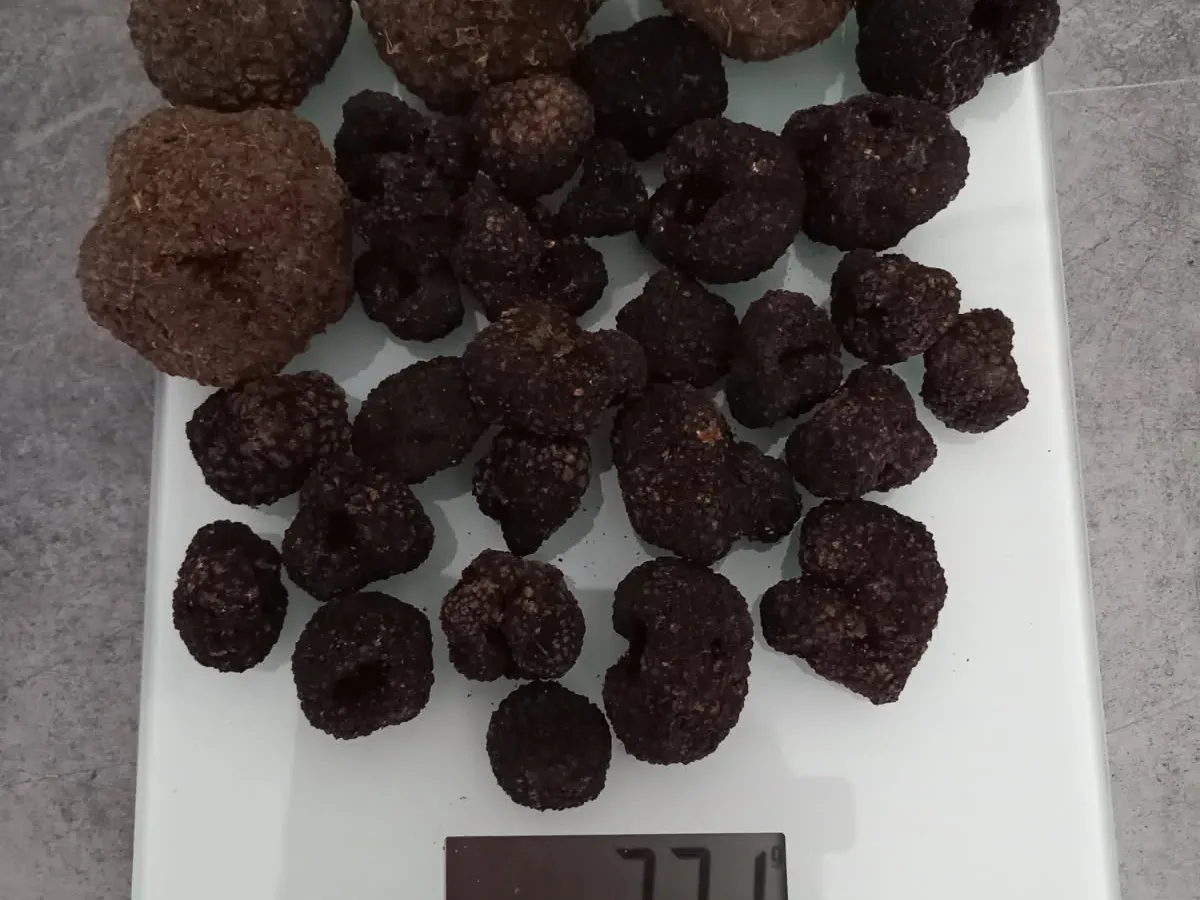
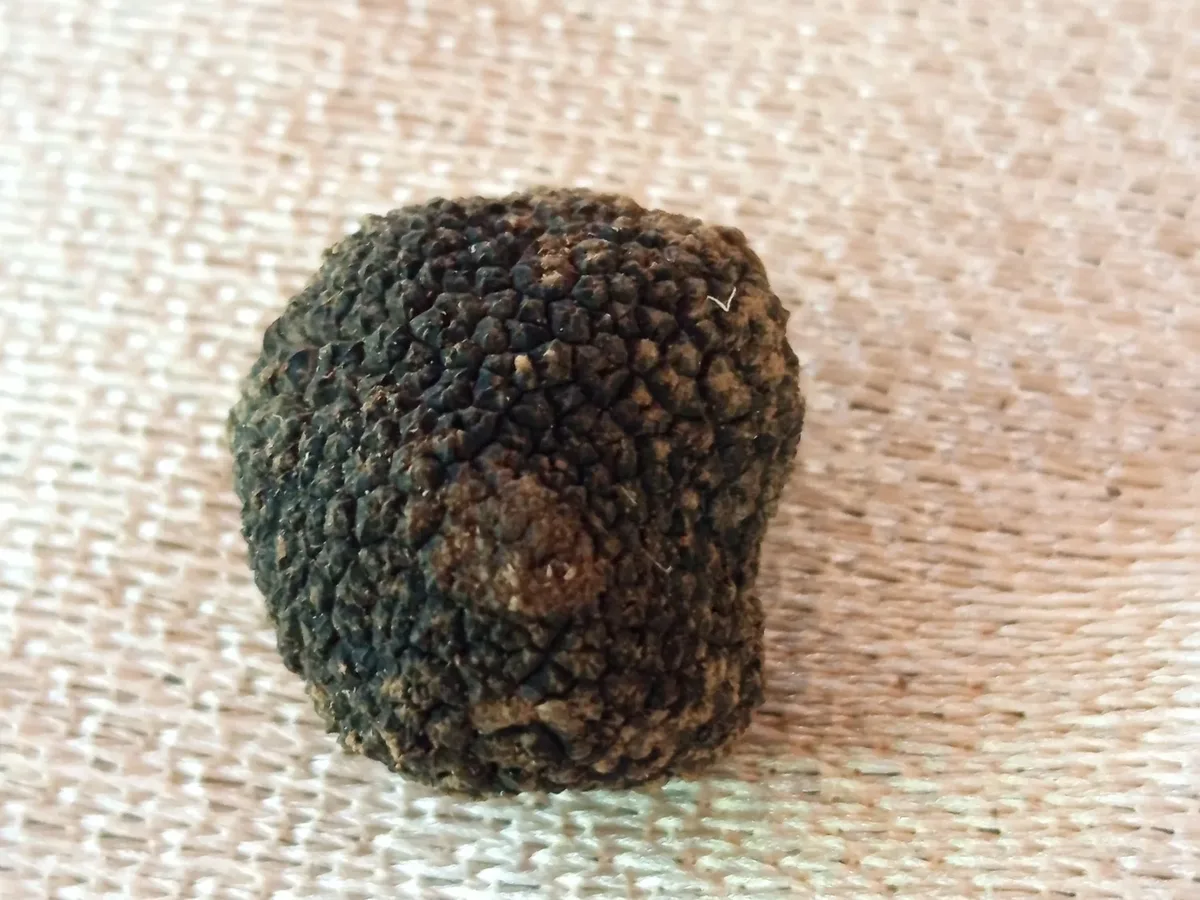
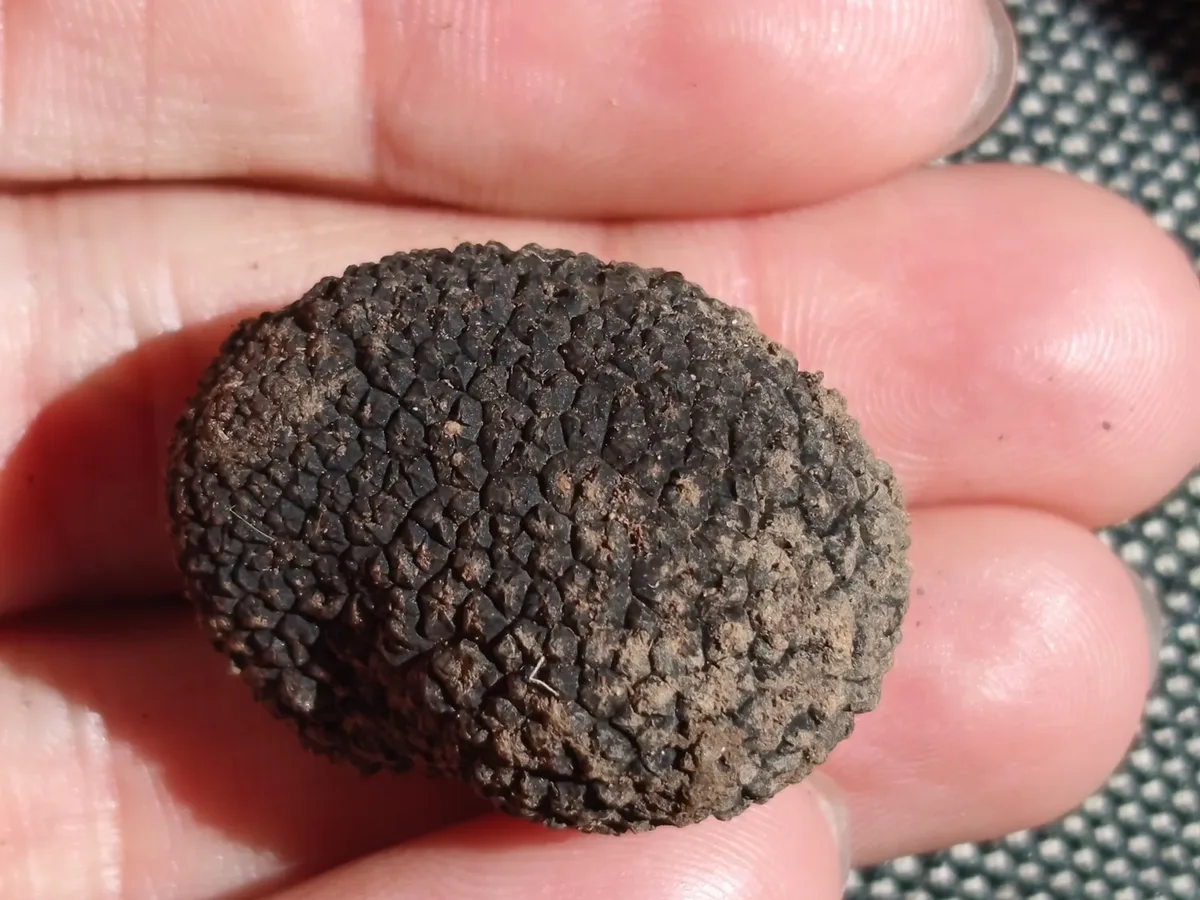
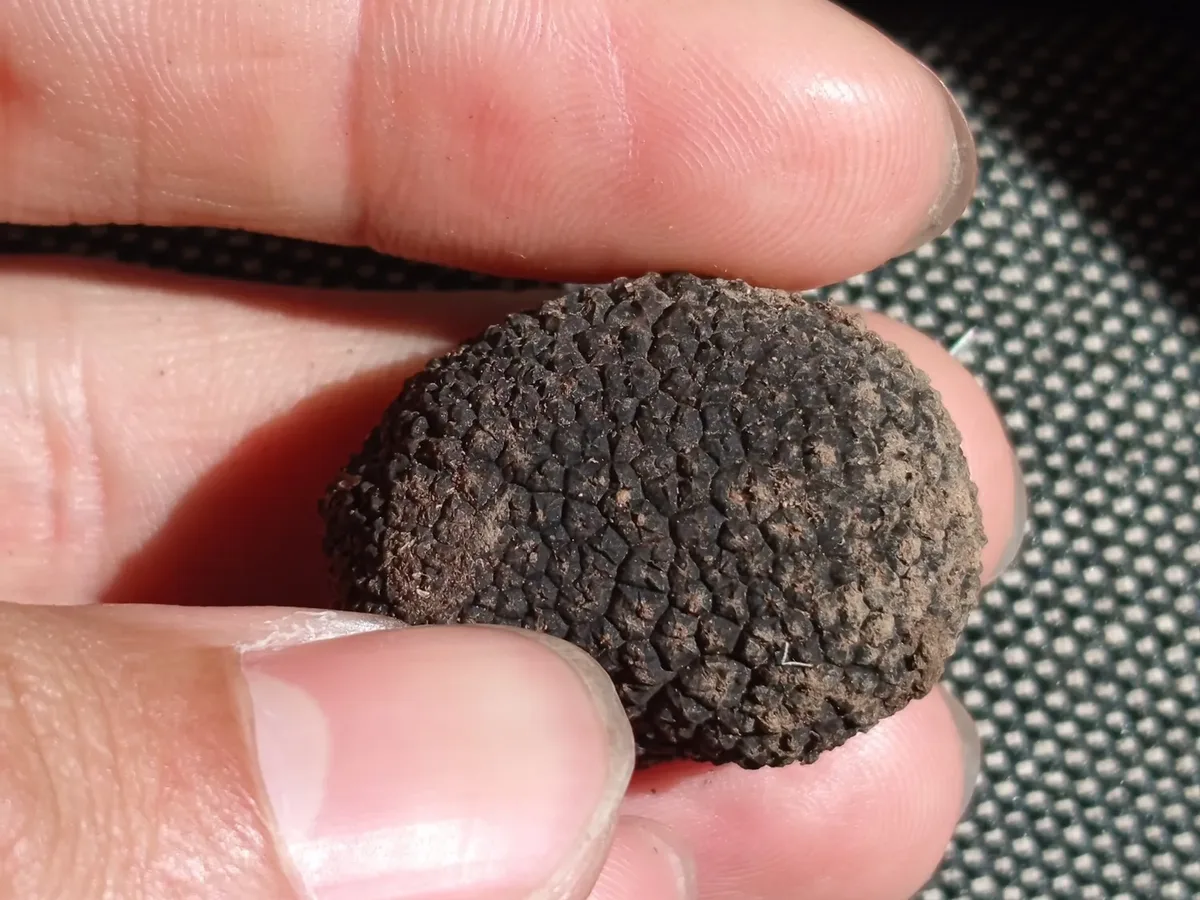
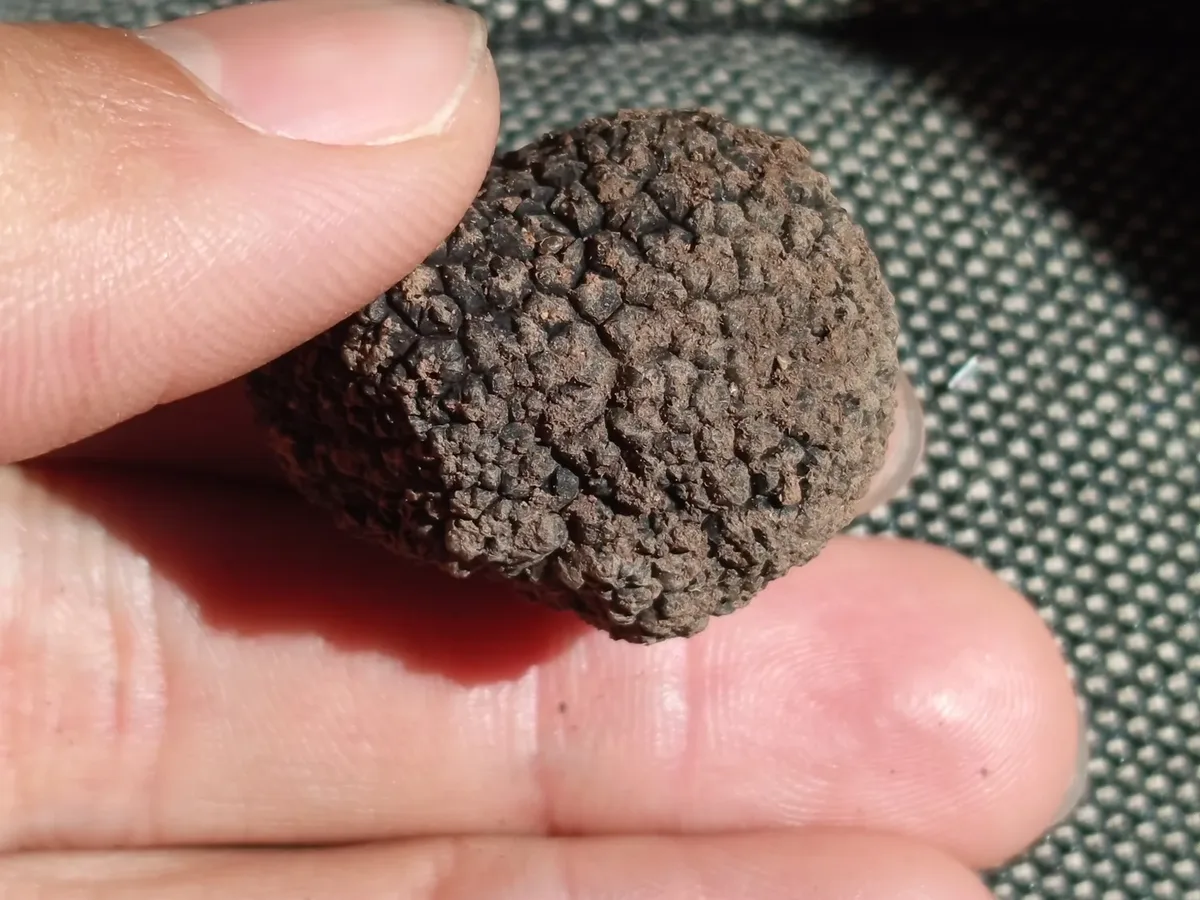
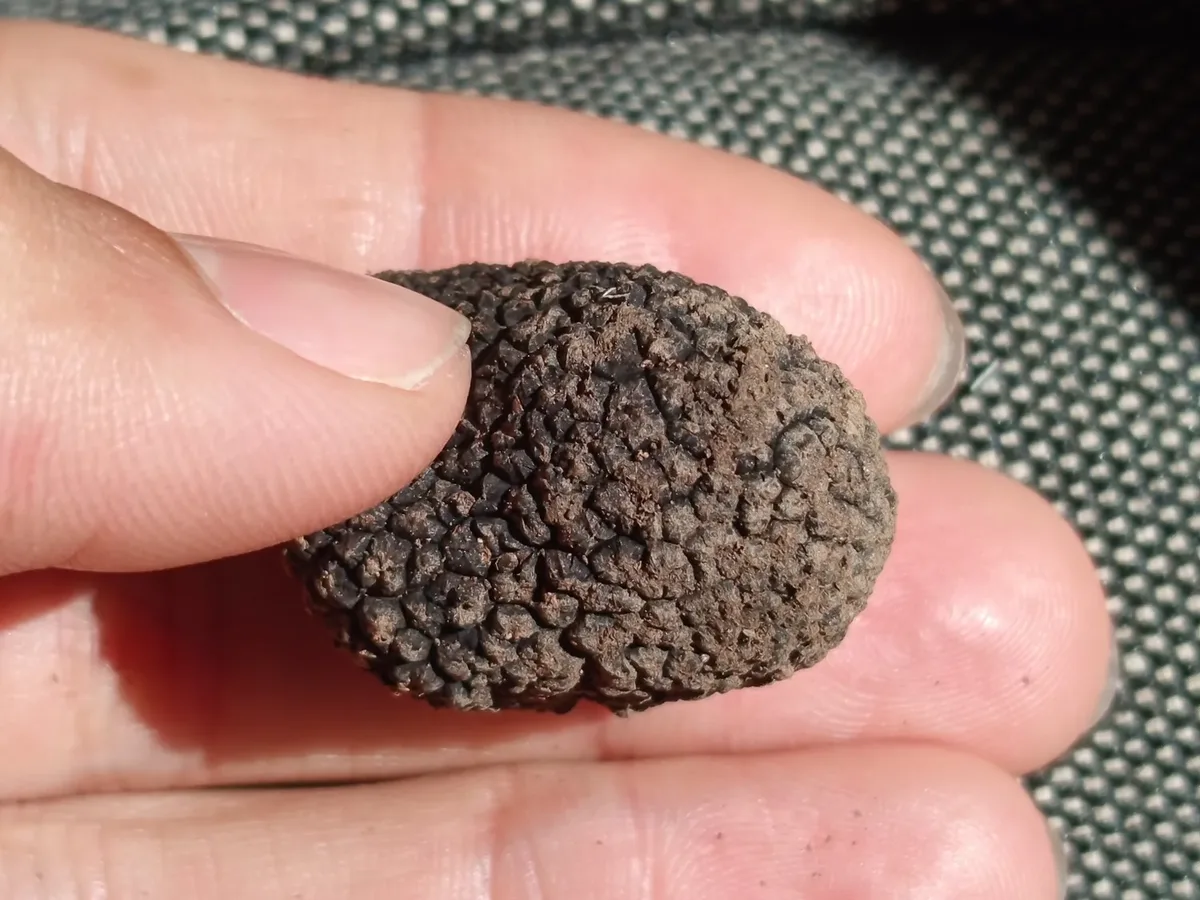
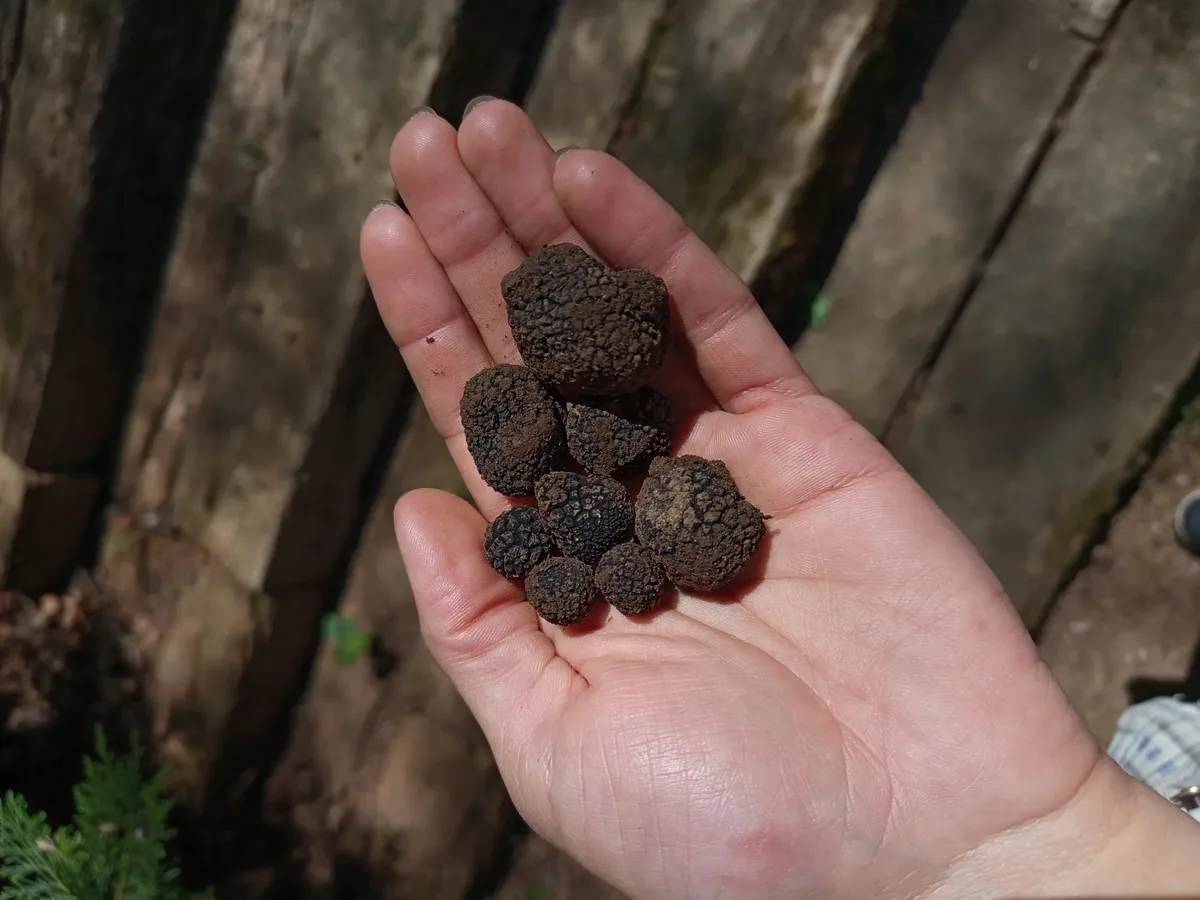
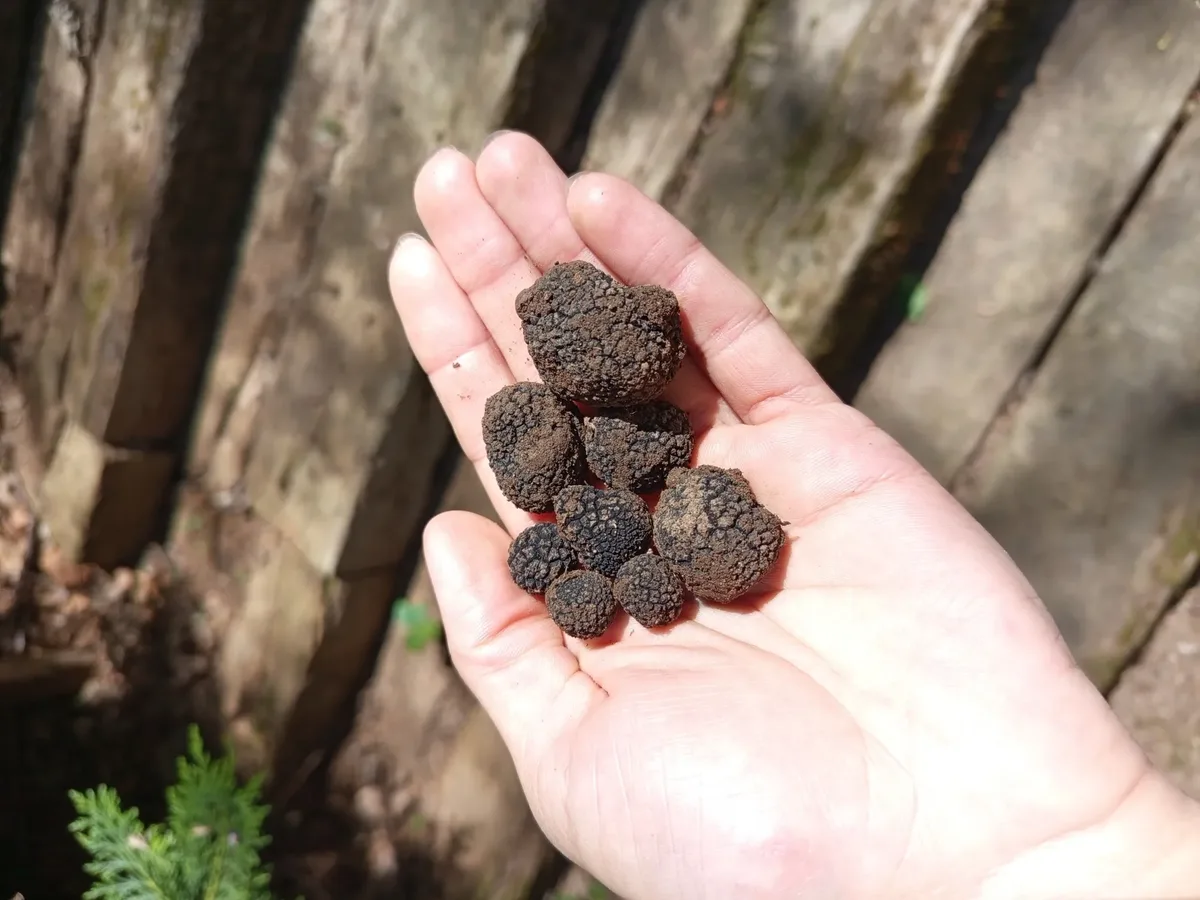
The fruiting bodies are rounded to irregularly lumpy, typically 3-10 cm across, and can occasionally reach the size of a tennis ball.
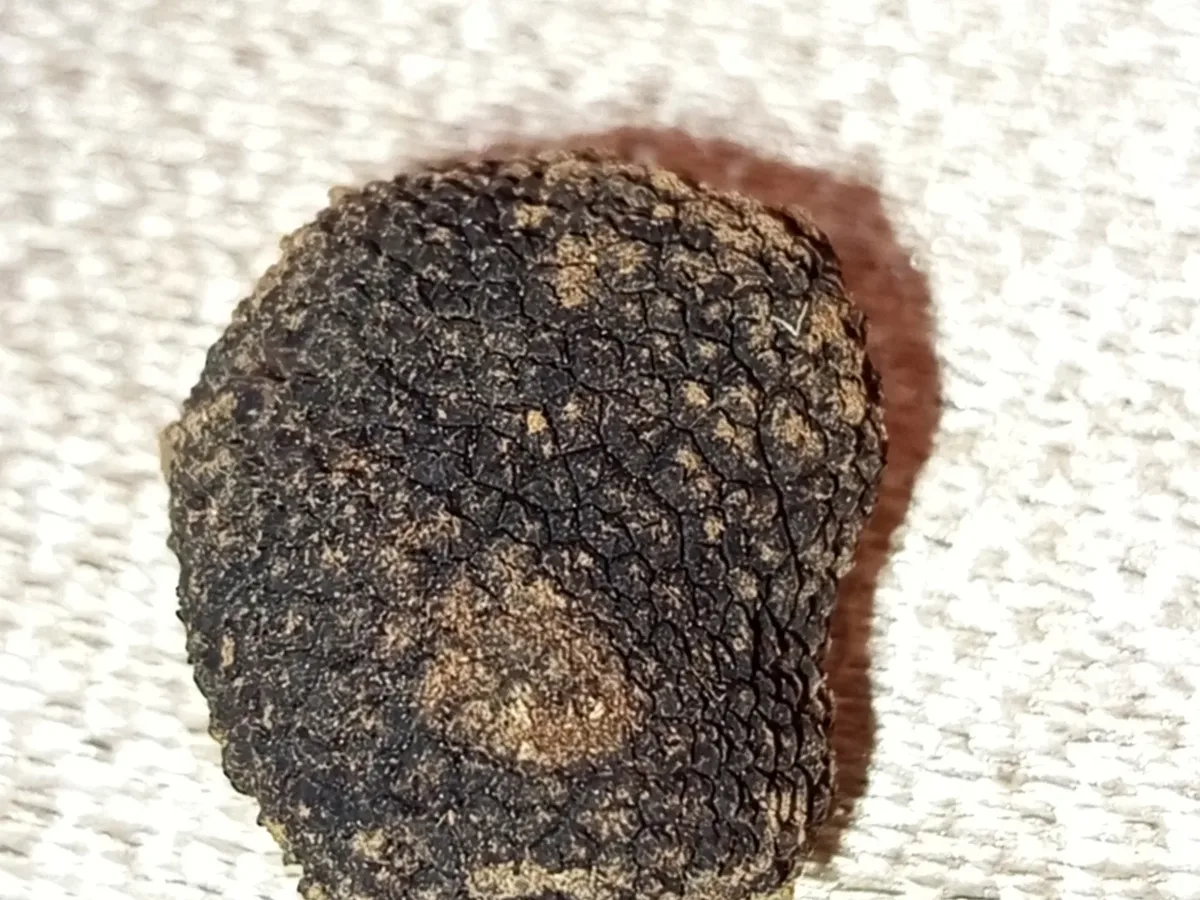
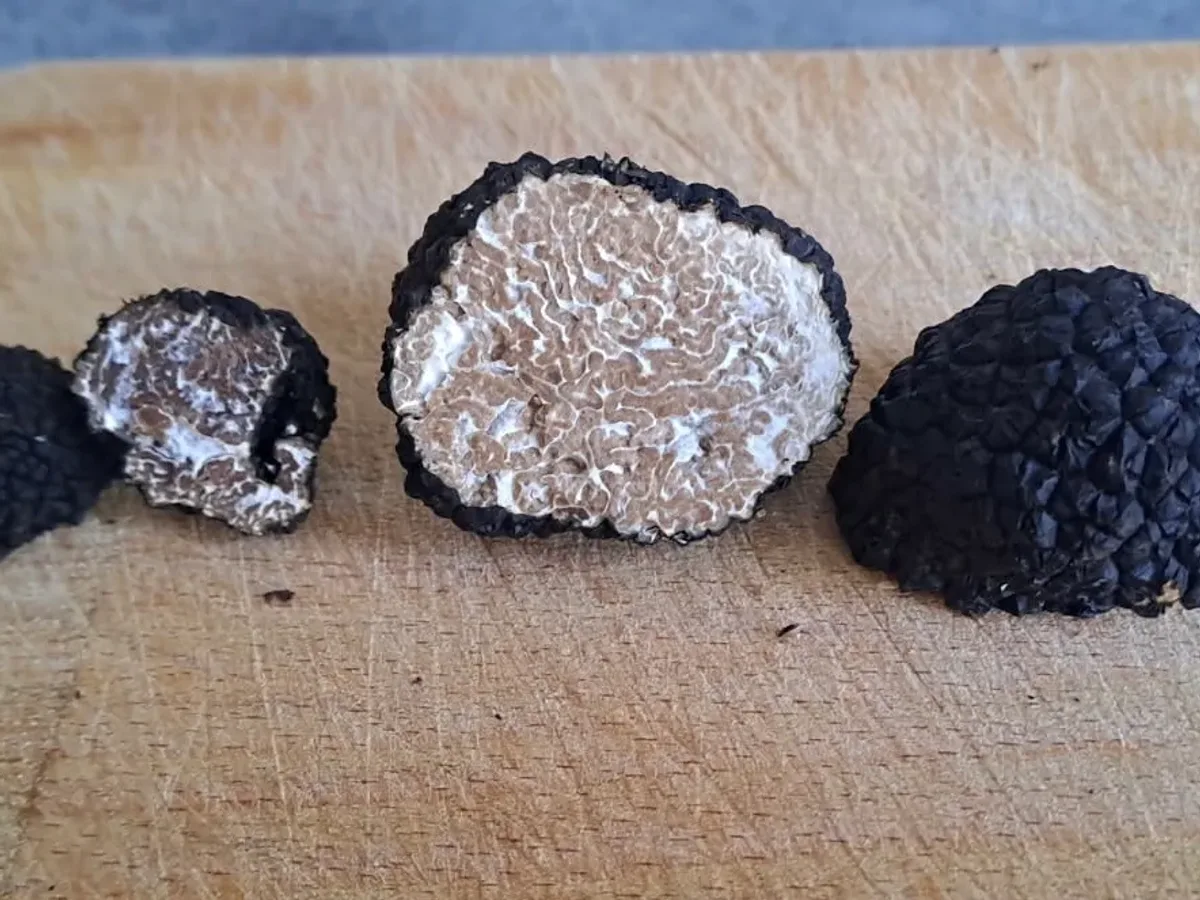
What gives them away on sight is the outer skin (peridium): jet-black and tiled with large pyramidal warts arranged in a bold polygonal mosaic, each wart roughened and ridged, giving the whole fungus a distinctly cobblestoned or armoured look. This is the most reliable field mark separating T. aestivum from the common European false truffles.
Slice one open and you find another diagnostic layer: firm white flesh in young specimens, progressively warming to ivory and then hazel-brown at maturity, laced throughout with a meandering network of white veins. The contrast between those pale veins and the surrounding darker flesh - the classic truffle marble - is what you are looking for on any cut face.
A ripe specimen has an earthy, pleasantly nutty, faintly garlicky aroma; the autumn Burgundy crop carries a noticeably stronger version of the same scent. Immature bodies are odourless.
Individual truffles range from around 20 g up to 300 g or more; most commercial specimens fall between 30 and 80 g.
Where & when it grows
Habitat
Summer truffle grows exclusively underground on calcareous soils - chalk downs, limestone pavements, oolitic limestone, marl - wherever base-saturated conditions (pH 7.5-8.5) allow ectomycorrhizal symbiosis with suitable deciduous or mixed trees.
In Britain it is closely associated with ancient beech-and-chalk landscapes on the South Downs, Chiltern Hills, and North Downs. On the European continent it extends from Spain, France, and Italy northward through Germany, Poland, and the Czech Republic, and eastward to the Caucasus.
Classic sites include oak-hazel coppice, open beech-lime woodland, calcareous scrub, and historic parkland; it also fruits reliably in cultivated truffle orchards ('truffières') planted with inoculated oak or hazel.
The brûlé - a bare, yellowish arc of scorched-looking vegetation caused by allelopathic truffle exudates - is a reliable surface indicator.
Bodies are typically found 5-15 cm below the mineral soil surface, often loosening the soil slightly above them as they swell. Depth can reach 30 cm in sandy substrates.
Avoid searching waterlogged or acidic forest floors.
When
T. aestivum fruits in two seasonal pulses shaped by regional climate.
In southern Europe - the Mediterranean basin, central France, Italy - the first crop surfaces from late May through August, which is how the name 'summer truffle' was earned.
Further north, in the cooler Atlantic and central European belt, the same species delays until September-November, producing the autumn 'Burgundy truffle' crop with noticeably richer aroma.
For the summer crop, July-August is the sweet spot for flavour and fragrance; for the Burgundy harvest, mid-October through early November is best.
One of the most common commercial errors is harvesting in June before the gleba has had time to mature: bodies with a white interior have no aroma and no flavour, and selling them damages the reputation of the species.
A ripe truffle yields slightly under thumb pressure and gives off a clear earthy-hazelnut scent.
Season length and intensity are closely tied to summer rainfall - a dry summer can delay or suppress the summer crop significantly, while a wet August followed by a warm September often produces exceptional Burgundy yields.
How it grows
T. aestivum is an obligate ectomycorrhizal fungus, meaning it cannot grow without a living host tree. The mycelium wraps around the fine root tips of oaks, beeches, hazels, and other compatible partners, forming an intimate sheath (the Hartig net) while threading hyphal networks outward through the surrounding soil.
This partnership can quietly persist and produce for decades if the tree remains healthy and the ground undisturbed.
Fruiting bodies begin as tiny white pinheads, less than a millimetre across, in late spring, then swell slowly over 4-8 weeks as the photosynthesising tree pumps carbohydrates downward. Full maturation from primordium to harvestable size takes 60-120 days - far longer than any epigeous mushroom.
This is a fungus that operates on its own unhurried timescale, hidden from view the whole time.
Trampling, soil compaction, deep cultivation, and any pH drop below 7.0 are the chief threats to established networks.
Cultivated orchards use oak (particularly Quercus pubescens) or hazel seedlings pre-inoculated with T. aestivum spores; these truffières typically enter production after 4-7 years and can remain productive for 30 years or more.
Fruiting conditions
Primordium initiation requires sustained soil moisture after spring/summer rains and soil temperature above ~10°C. Full maturation from primordium to harvestable body is exceptionally slow (60-120 days), unlike epigeous mushrooms. Drought in June-July suppresses or aborts the summer crop entirely; compensatory autumn rains can trigger a late season but not fully recover a lost summer cohort. Optimal soil temperature for peak fruiting is 14-20°C at 10 cm depth. Excessively hot, dry summers (>25°C soil surface) retard maturation. Burgundy/autumn crop is less drought-sensitive because it matures during the generally wetter September-November window.
Look-alikes
The pyramidal-warted black peridium is diagnostic for T. aestivum and separates it from all common European hypogeous fungi reliably. However, several superficially similar species warrant attention:
- 1Tuber melanosporum (Périgord/black truffle) - the warts are smaller, flatter, and more rounded; the gleba is very dark blackish-violet with white veins that redden on exposure to air; the aroma is far more intense; fruiting is Nov-March.
- 2Tuber brumale (musky truffle) - smaller (1-5 cm), warted exterior similar in size but gleba is grey-violet with sparse, wider veins; strong musky odour distinct from earthy hazelnut aroma of T. aestivum; frequently adulterates T. melanosporum in commerce.
- 3Tuber mesentericum (Bagnoli truffle) - similar warted exterior, but interior gleba is dark brown to blackish-violet with white veins turning yellowish; strong bitter phenol or tar-like smell; from southern Italy and Mediterranean.
- 4Elaphomyces granulatus (false truffle, hart's truffle) - small (1-3 cm), wartier exterior, but interior is powdery and purple-brown (mass of spores), not marbled; entirely inedible, found associated with conifer roots.
- 5Tuber excavatum - small, 1-3 cm, with a deep basal cavity; gleba is ochre-brown; inedible.
- 6Sclerotia of Cenococcum geophilum - tiny (< 5 mm) black nodules in soil; easily distinguished by minute size.
- 7Tuber indicum (Chinese truffle) - very similar externally; the primary commercial fraud species; gleba is darker grey-brown with less distinct marbling and the aroma is markedly weaker and less complex.
No dangerous or toxic lookalikes are known in the European hypogeous fungal flora; the main risk is commercial fraud.
Very similar warted exterior; gleba darkens to blackish-violet at maturity with yellowish veins; strong, bitter phenol-like or tar-like smell entirely unlike T. aestivum's pleasant earthiness; primarily southern Italy and central Mediterranean. Less valued commercially.
Externally very similar to T. aestivum and T. melanosporum; the dominant commercial fraud species worldwide. Gleba is darker grey-brown with less distinct, finer marbling; aroma is markedly weaker, flatter, and lacks the complex earthy-hazelnut character of T. aestivum. Sold fraudulently as European truffles; molecular or chemical analysis required for definitive identification in processed products.
Grows epigeous (at or above ground), not deeply buried; exterior is thick, yellowish-buff, cracked in a scaly mosaic (not pyramid-warted); interior is solid purple-black - never creamy-white or marbled. Mildly toxic (causes gastrointestinal upset). Distinguished immediately by colour and above-ground habit.
Small (1-3 cm) with a characteristic deep basal cavity; ochre-brown granular gleba without attractive white veining; weak, unremarkable odour; inedible.
Small (1-3 cm), very rough peridium, but interior is entirely powdery and purple-brown - a mass of loose dry spores, not marbled flesh. Has no culinary value and is inedible. Often found near conifer roots; no edible lookalike confusion in practice once interior is inspected.
Smaller (1-5 cm) with similar wart shape; gleba is grey-violet to dark with fewer, wider white veins; strong musky, somewhat unpleasant odour quite different from T. aestivum's mild nutty earthiness; fruits November-March. Common adulterant in black truffle commerce.
T. melanosporum warts are smaller, flatter, and more rounded; gleba is dark blackish-violet (not hazel-brown) with white veins that turn pinkish-red when cut and exposed to air; aroma is intensely spicy and fruity, not mild earthy-hazelnut; season is November-March (winter). T. aestivum gleba remains white to hazel-brown, veins stay white throughout.
In the kitchen
Picking & cleaning
Legal and sustainable harvest requires a trained dog (dogs are now universal; pigs are rarely used due to their tendency to consume the truffle). The dog locates ripe bodies by scent; the harvester then gently probes with a smooth-tipped vanghetto (truffle spade) or screwdriver-like tool, exposing the body without severing adjacent mycelium.
Unripe, adjacent bodies discovered during extraction should be reburied at their exact depth to continue maturation.
Never harvest immature white-centred bodies - they are commercially worthless and damage the mycelial network's future productivity.
Ripe specimens should be wrapped individually in paper (never plastic) and stored in the refrigerator at 2-4°C for up to 10 days; aroma is best within the first 3-5 days post-harvest.
Brush off loose soil with a soft brush just before use; never peel.
In most European jurisdictions, truffle harvesting on private land requires landowner permission; several countries have specific truffle-protection legislation.
Cooking
Summer truffle is one of Europe's most celebrated culinary fungi - used as a flavouring and aroma agent rather than a bulk vegetable. Its earthiness is subtler than Périgord truffle but distinctly more aromatic than most other edible fungi, with a warm, nutty, slightly garlicky character that can transform simple dishes.
It works best:
- Shaved raw over pasta, risotto, scrambled eggs, or carpaccio immediately before serving.
- Tucked in thin slices under poultry skin before roasting.
- Folded into warm butter or cream sauces at the very last moment.
- Left sealed with whole eggs for 24 hours to let the aroma migrate through the porous shells.
The key limitation is heat: T. aestivum's terpene aroma compounds volatilise more readily than those of T. melanosporum, so cooking contact should always be brief and low-temperature - add the truffle off-heat, or at the very end.
The flavour pairs best with mild, fatty, neutral substrates - butter, eggs, cream, mild cheese - that amplify the earthy hazelnut notes rather than compete with them.
The autumn Burgundy crop has greater aromatic intensity at harvest and can tolerate slightly more cooking than the summer fruit.
Good to know
Tuber aestivum is entirely safe to eat and has no known toxins. There are no documented cases of poisoning attributable to this species.
The key safety considerations are:
- Commercial fraud - inferior species or chemically flavoured cheaper truffles sold as T. aestivum or T. melanosporum.
- The rare possibility of allergic reaction in individuals sensitive to fungal proteins, which applies to all edible fungi.
Raw truffle is consumed in small quantities as a condiment, not in large quantities as a bulk food, so cumulative toxin concerns that apply to some edible species are irrelevant here.
Ensure the fruiting body is ripe (hazel-brown marbled gleba, earthy aroma) before consumption - unripe specimens taste of nothing and are a waste of a valuable find.
A reference guide - never an edibility guarantee. When in doubt, leave it out.