Little white mushroom
Trogia venenata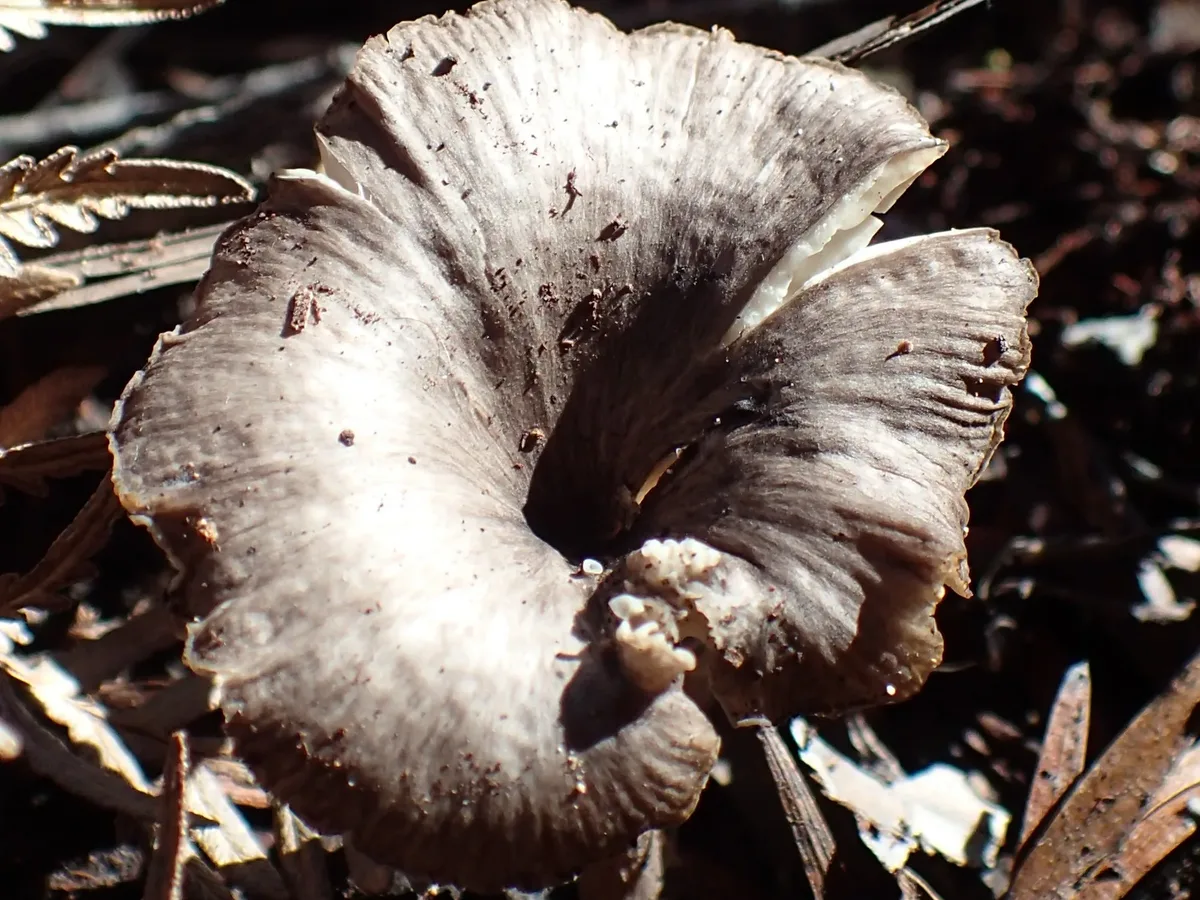 Atlas of Living Australia (CC0)
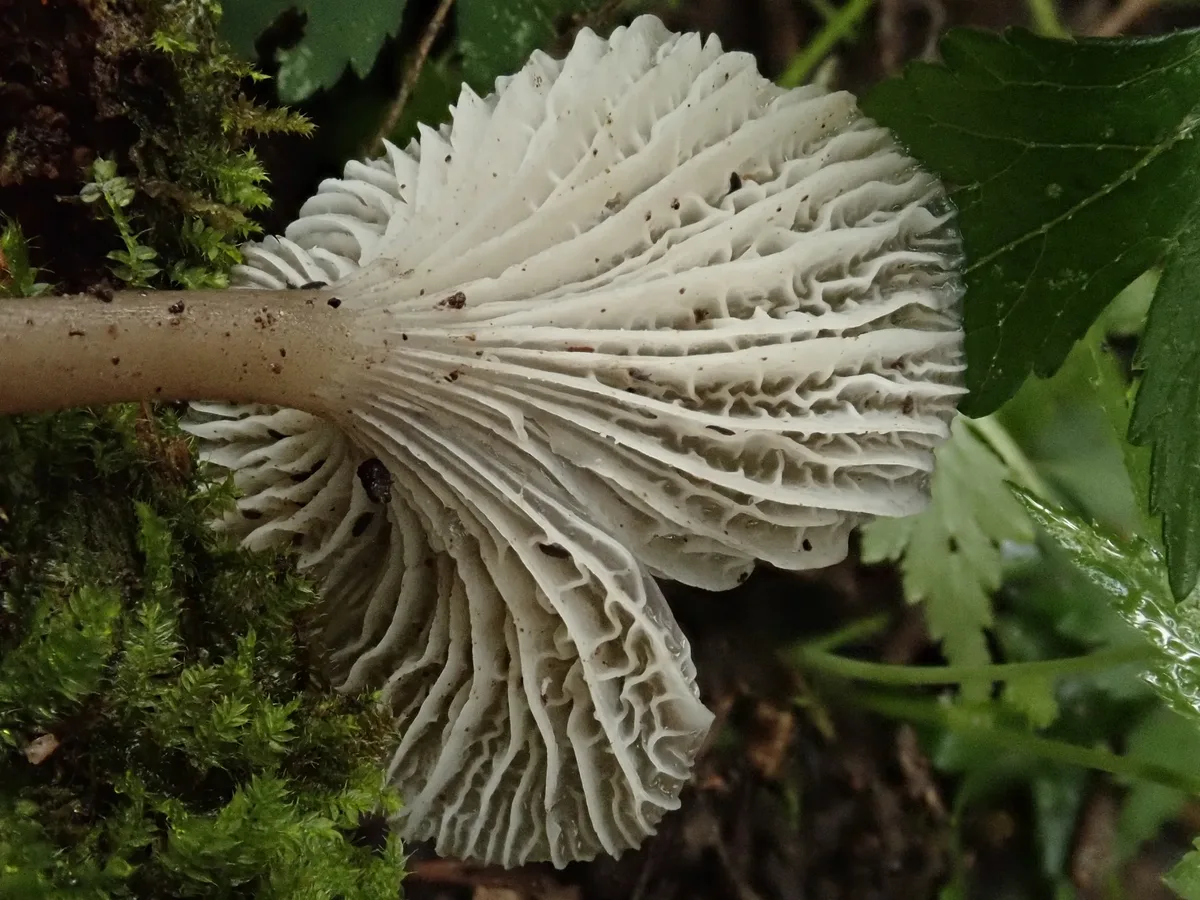 Atlas of Living Australia (CC0)
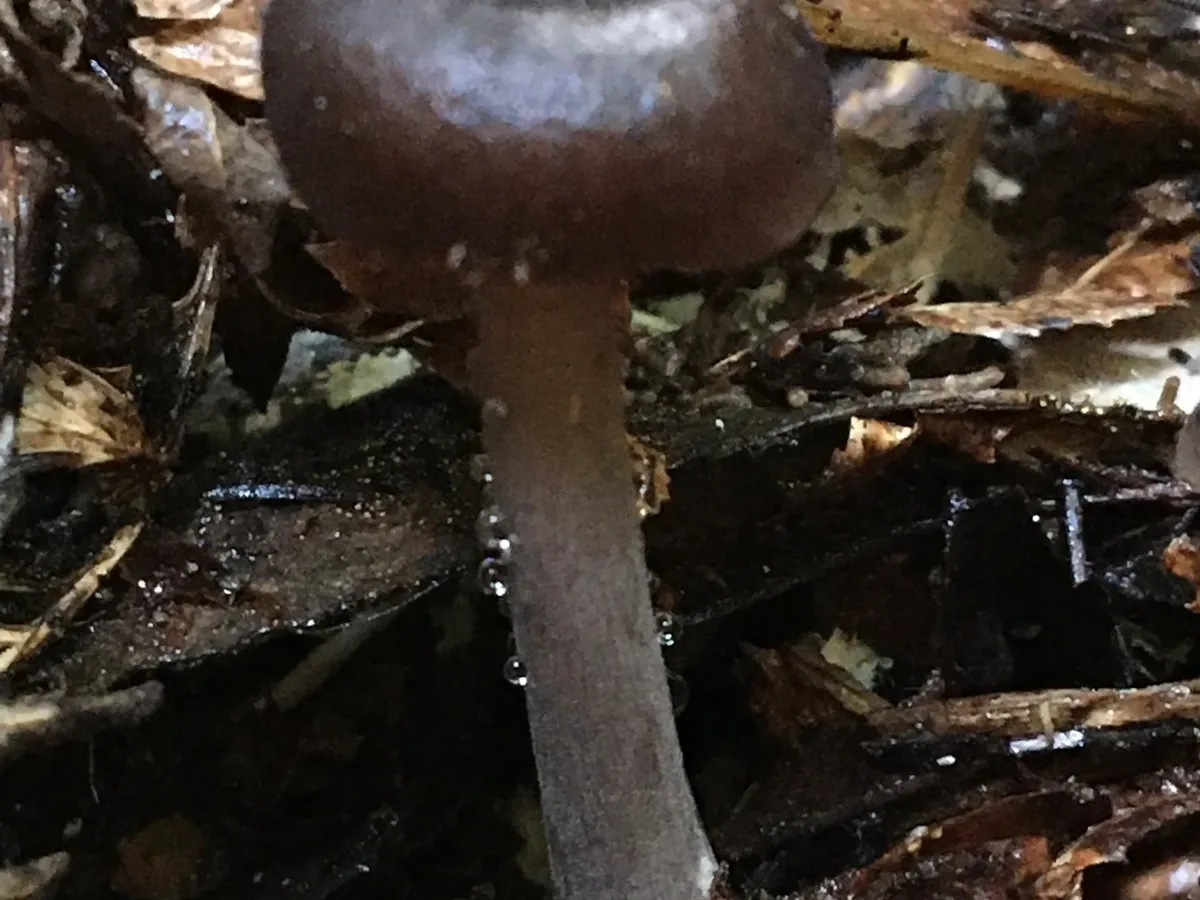 Atlas of Living Australia (CC0)
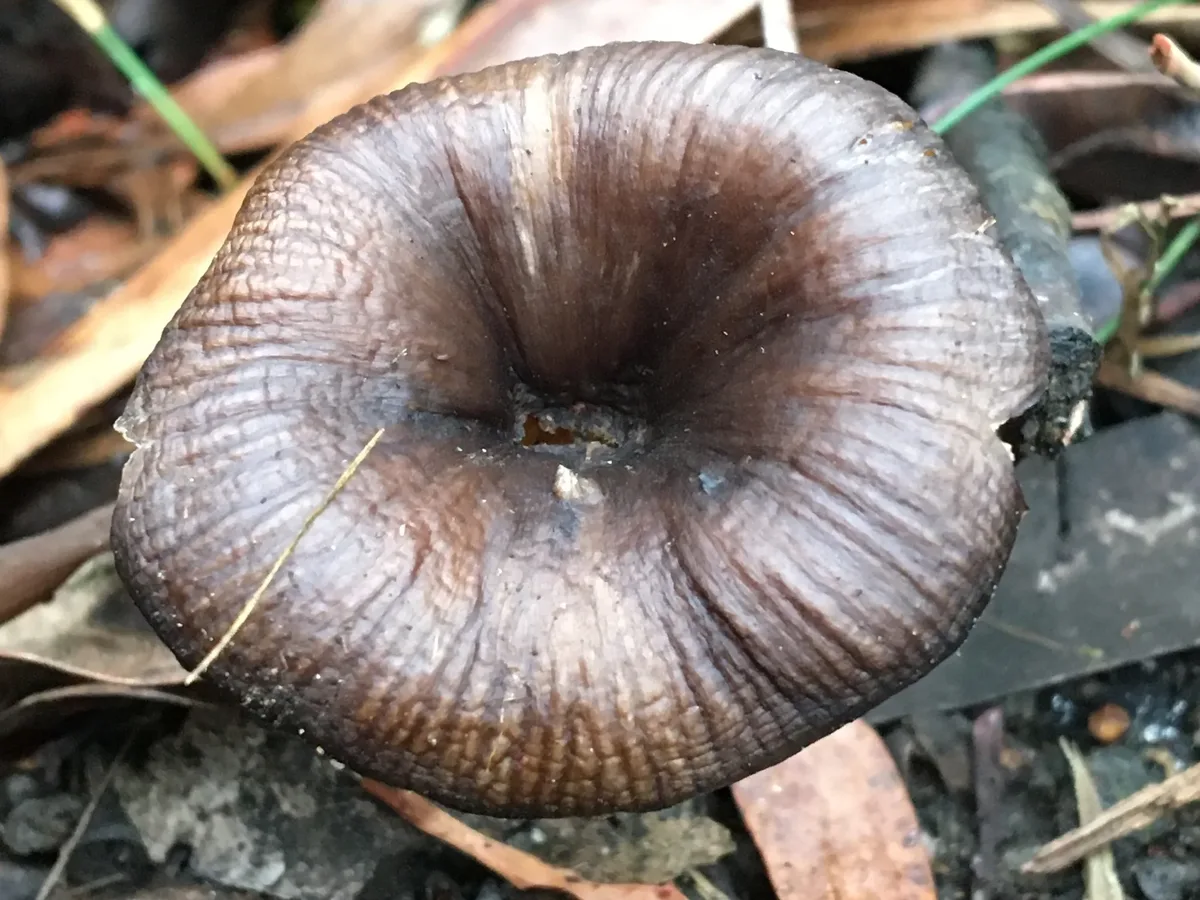 Atlas of Living Australia (CC0)Atlas of Living Australia (CC0)Atlas of Living Australia (CC0)
Toxic - and the most serious cases can be fatal. Never eat it, and wash your hands after handling.
How to recognise it
Trogia venenata is a small, fragile gilled mushroom belonging to family Marasmiaceae.
Cap
The cap typically measures 0.5-3 cm across, begins convex and slowly flattens or develops a shallow central depression with age.
Its surface is dry, smooth, and uniformly pale - white to creamy-white or ivory - without distinct markings, zonation, or colour change on handling.
Gills
The gills are white, crowded, and adnate to slightly decurrent, so pale they are almost invisible against the cap at a glance.
Stem
The stipe is slender, white, 1-4 cm tall, sometimes hollow, and lacks a ring (annulus) or a basal volva.
Flesh
No latex is produced when broken. The spore print is white.
There is no distinctive odour, no unusual surface texture, no partial veil remnant.
It is, by every measure, an unremarkable small white mushroom - and in a region where several such species grow together in the understorey, that ordinariness is the core of its danger.
Critically, the absence of an annulus and volva does not help here, because the dangerous lookalikes (edible wild little whites gathered by locals) also lack these features. Macroscopic appearance alone cannot separate this species from its harmless neighbours.
Why it's dangerous
Trogia venenata is responsible for one of the largest documented wild-mushroom poisoning death tolls on record.
Shi et al. (PLOS One, 2012) - a collaboration between the Chinese CDC and the Kunming Institute of Botany - identified 395 Yunnan SUD cases between 1975 and 2009. These were concentrated in a cluster of villages in northwestern Yunnan at 1,800-2,400 m elevation during the June-August monsoon season.
The average was approximately 21 deaths per year during the peak period (1990-2005).
The deaths had been recorded for decades before the fungal cause was identified, classified under various non-specific diagnoses including metabolic disease and unexplained cardiac events.
Following formal identification and a targeted public-health campaign in affected counties, SUD cases dropped by approximately 73% in the 2006-2009 period compared to the preceding four years.
This is a confirmed deadly species with:
- no safe dose
- no antidote
- no reliable field identification method to separate it from harmless lookalikes
The only protection is avoidance of all unknown small white mushrooms in the affected region during the rainy season.
Toxin
Trogia venenata contains at least three toxic non-proteinogenic amino acids, isolated and characterised by the Kunming Institute of Botany team:
- 12R-amino-4S-hydroxy-5-hexynoic acid (an unusual hydroxy-alkyne amino acid).
- 22R-amino-5-hexynoic acid (an unsaturated amino acid).
- 3gamma-guanidinobutyric acid (a guanidinium compound with convulsant properties known from other biological contexts).
These compounds are not found in common edible mushrooms.
The first two amino acids appear to be structurally novel natural products. Their precise mechanism of cardiac toxicity is not yet fully characterised in the published literature as of 2012, though animal testing confirmed lethality.
Gamma-guanidinobutyric acid is a known convulsant that acts on the central nervous system, consistent with the convulsions reported in some SUD victims.
The co-occurrence of cardiovascular and neurological toxins in one small fruitbody explains the rapid, multi-system collapse observed clinically.
Symptoms
Poisoning by Trogia venenata produces what Chinese investigators called Yunnan Sudden Unexplained Death (SUD).
Approximately two-thirds of victims experienced a prodrome of warning symptoms before cardiac arrest:
- nausea
- dizziness
- palpitations
- chest tightness
- fatigue
- in some cases, convulsions
The remaining victims died suddenly without recognisable premonitory symptoms, which is what made the syndrome so alarming and so difficult to attribute to a dietary cause.
Onset appears to occur within hours of ingestion.
Death results from sudden cardiac arrest. The specific mechanism at the cardiomyocyte level had not been fully elucidated in the primary literature by the time of publication.
Survival was observed in some cases, particularly when victims received emergency medical care before cardiac arrest became irreversible. There is no specific antidote.
Staying safe
Trogia venenata is deadly.
It has been responsible for hundreds of deaths in Yunnan over several decades under the name 'Yunnan Sudden Unexplained Death' (SUD), a syndrome investigated by Chinese CDC and the Kunming Institute of Botany before the mushroom cause was established.
The species was formally identified as the causative agent in 2012 (Yang et al., Mycological Progress; Shi et al., PLOS One).
After an intensive public-education campaign in affected counties, the annual SUD case count fell by approximately 73% between the 2002-2005 and 2006-2009 periods. The campaign involved:
- distributing posters
- running village meetings
- broadcasting warnings about little white mushrooms during the summer season
This reduction, achieved without any change in the local ecology, is strong epidemiological evidence that T. venenata was the cause.
The lesson is stark: education works, but only when the hazard is known. For decades before identification, the deaths were attributed to lightning, infectious disease, and metabolic conditions, and the real cause went unrecognised.
Where & when it grows
Habitat
Trogia venenata grows exclusively in the mountain forests of northwestern Yunnan Province, China, at elevations between roughly 1,800 and 2,400 metres above sea level. The terrain is high enough to intercept the summer monsoon, creating a humid microclimate under broadleaf and mixed conifer-broadleaf forest canopy.
The species has not been recorded elsewhere in China or elsewhere in the world - its range appears genuinely narrow, constrained by a specific combination of altitude, humidity, and forest type.
It fruits on the forest floor, often among leaf litter and decaying woody debris, sometimes in loose clusters or scattered groups.
Because it is saprophytic rather than mycorrhizal, it is not tied to the root systems of particular trees. Instead it depends on a supply of dead plant material - fallen leaves, wood fragments, humus - that accumulates readily in these cool, moist forests.
Villages that have historically suffered the highest rates of unexplained sudden death are concentrated in this precise elevational band, corroborating the ecological distribution determined by later scientific surveys.
When
The fruiting season of Trogia venenata is tightly governed by the East Asian summer monsoon. Fruitbodies appear from June through August, when heavy rainfall saturates the forest floor and daily temperatures remain cool enough at altitude to sustain moisture.
Peak fruiting tracks the monsoon pulse: a flush can emerge within days of a sustained rainfall event, and the mushrooms persist for a short window before desiccating or collapsing.
Outside the monsoon months the species is essentially absent above ground - mycelium overwinters in the soil and debris layer, waiting for the next season's rains.
This narrow seasonal window meant that poisoning events were tightly clustered. Case records from CDC surveillance consistently showed a spike in unexplained sudden deaths during June-August, almost exclusively in villages at the affected elevations - a pattern that ultimately led investigators to hypothesise an environmental or dietary cause before the mushroom connection was formally established.
How it grows
Trogia venenata is a saprotrophic fungus: its mycelium colonises dead and decaying plant material, secreting enzymes that break down cellulose and other organic compounds in leaf litter and woody debris.
This life strategy is shared by many small marasmioid mushrooms and explains its broad but superficially unremarkable niche on the forest floor - it is doing the quiet, essential work of decomposition alongside dozens of other species.
Fruitbodies emerge rapidly after rainfall, sometimes appearing overnight from mycelium that has been quietly metabolising debris through the preceding dry period.
The genus Trogia itself is small and understudied. When Yang et al. formally described this species in 2012 in Mycological Progress, they named it venenata (from Latin, meaning 'poisoned' or 'venomous') in reference to its toxic properties.
The formal description came decades after the first reported poisoning deaths, because connecting a nondescript saprobe to a pattern of cardiac mortality required painstaking epidemiological and chemical detective work across multiple Chinese government agencies and research institutes.
Fruiting conditions
Fruits during the summer monsoon rains in high-elevation Yunnan forests.
Look-alikes
The principal danger of Trogia venenata is that it closely resembles several edible small white mushrooms (collectively called 'little white mushrooms' by local Yunnan foragers) that have been harvested and eaten in the region for generations.
Neither the investigators who identified the species nor the local communities were able to produce a single reliable macroscopic character that distinguishes T. venenata from its edible neighbours: cap colour, gill arrangement, stipe shape, odour, and texture overlap too completely.
Because the species lacks a volva, a ring, coloured pigmentation, distinctive odour, or any structural oddity, the standard field-guide advice of 'look for a volva' or 'avoid mushrooms with a ring' does not apply here.
Microscopic or chemical analysis is the only reliable identification method.
The public-health response was therefore to treat the entire group - all unknown small white mushrooms from these forests during the summer rainy season - as potentially hazardous, rather than attempting to teach visual separation.
Locals mistook it for an edible small white mushroom; because it is genuinely hard to distinguish, the public-health advice became simply to never eat unknown small white mushrooms.
A reference guide - never an edibility guarantee. When in doubt, leave it out.