Olive-green knight
Tricholoma viridiolivaceum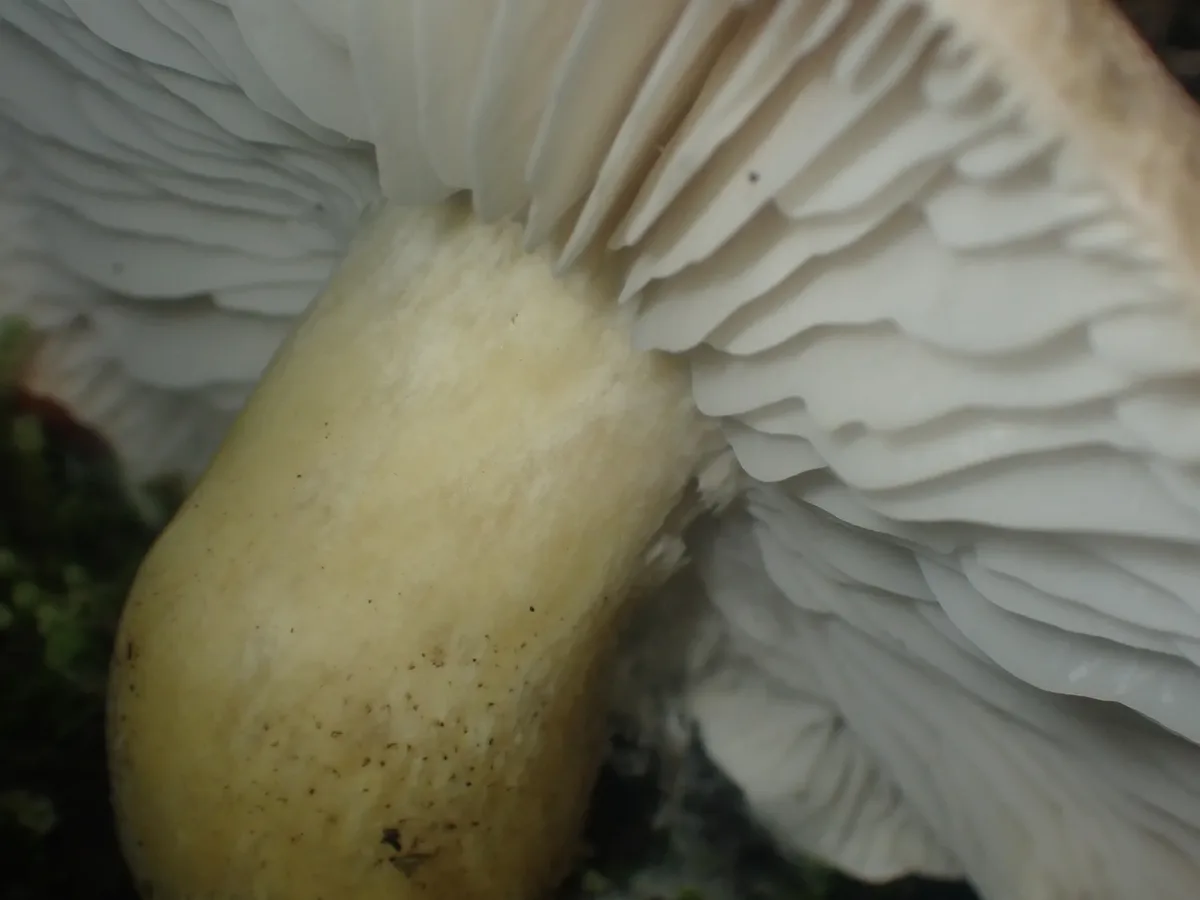 © Paul Bell-Butler (CC BY)
 © Brendan Costello (CC BY)
 © claire (CC BY)
 © claire (CC BY)
 © claire (CC BY)
 © Paul Bell-Butler (CC BY)
 © Paul Bell-Butler (CC BY)© Paul Bell-Butler (CC BY)© Brendan Costello (CC BY)
Edible only with the right preparation - or safe for some people but not others. Learn the caveats first.
Never eat a mushroom you are not 100% sure of - check the look-alikes below, and always cook wild mushrooms.
How to recognise it
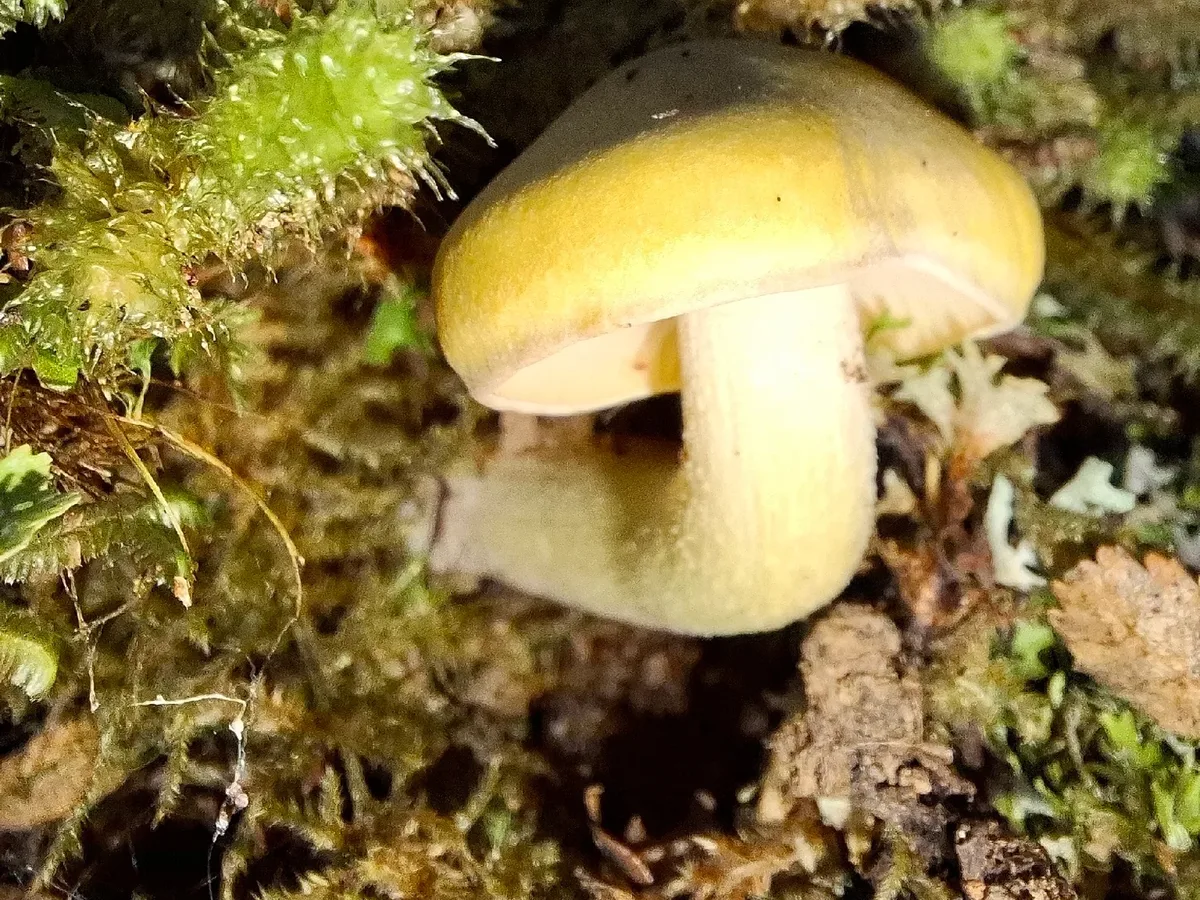
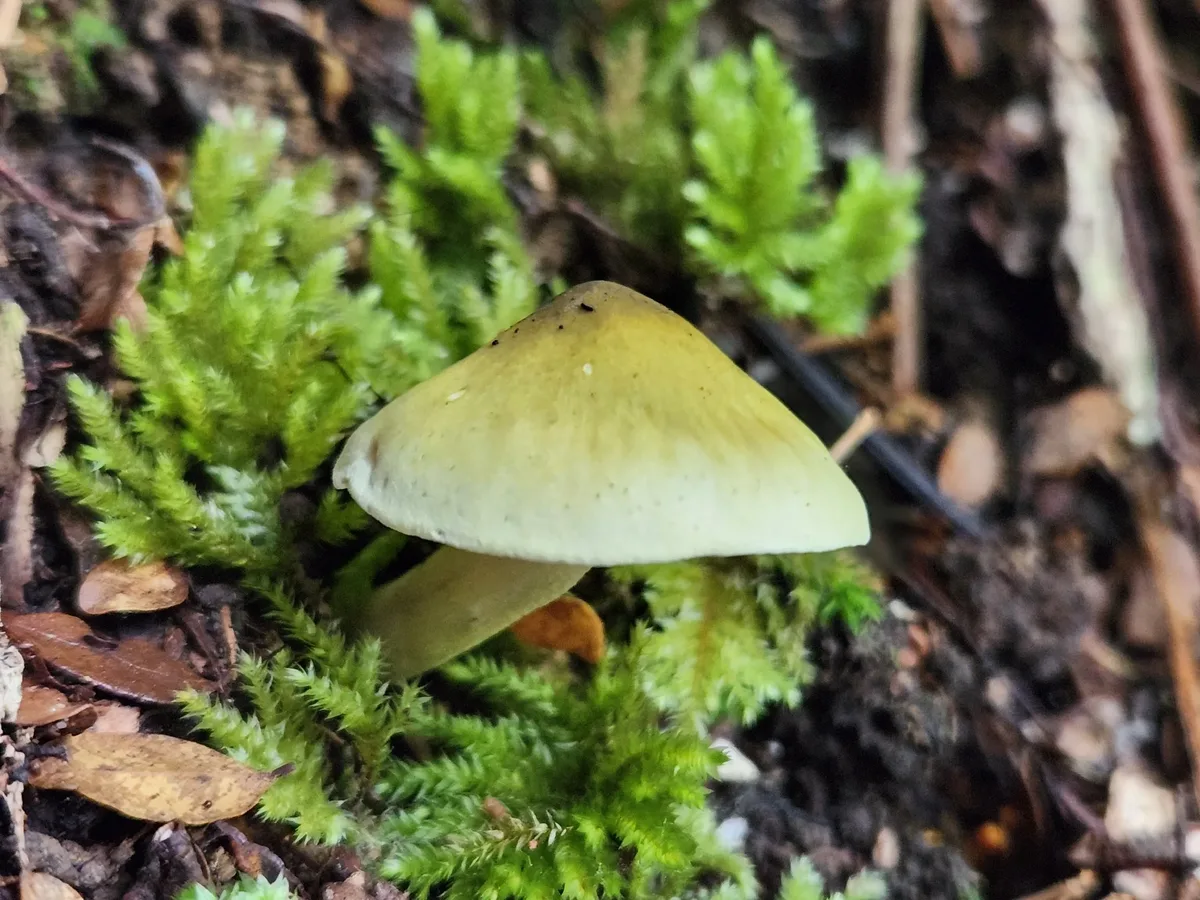
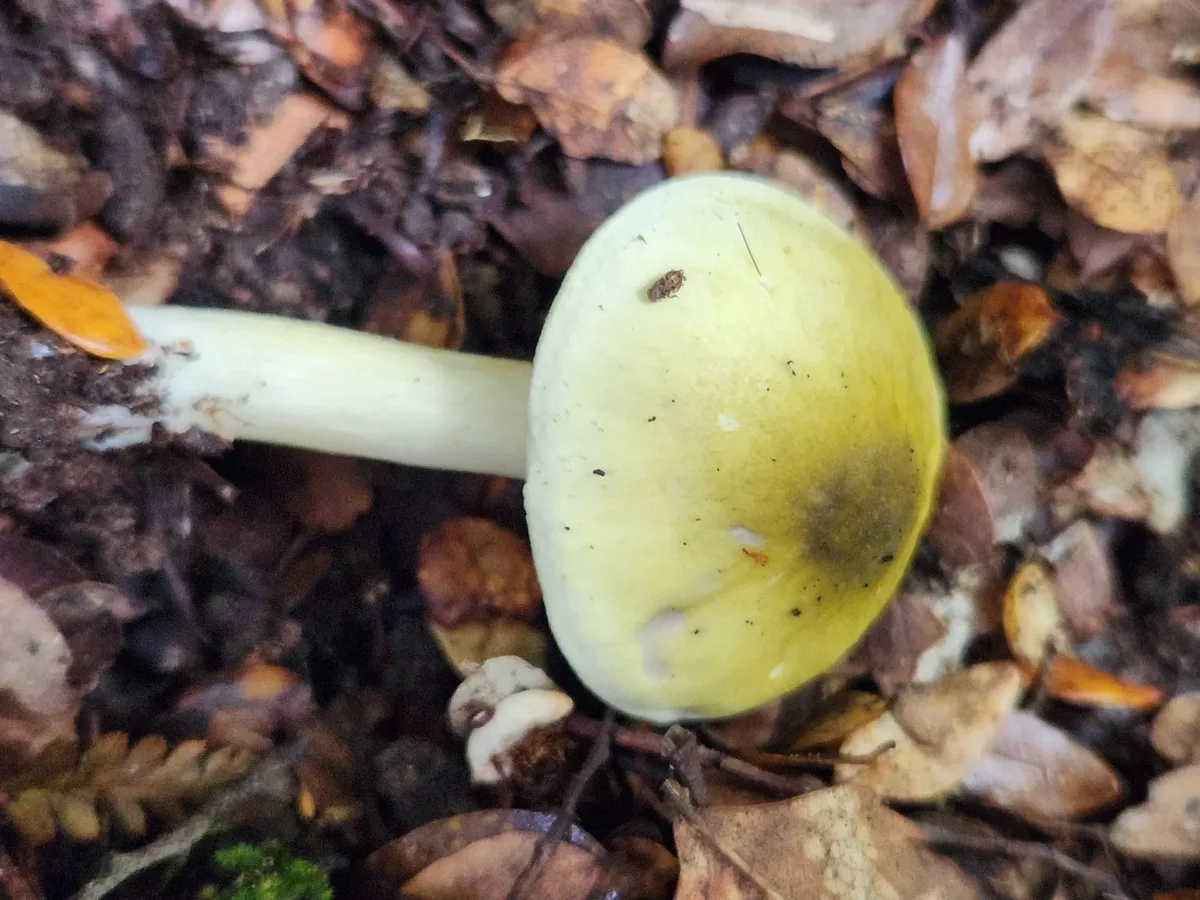
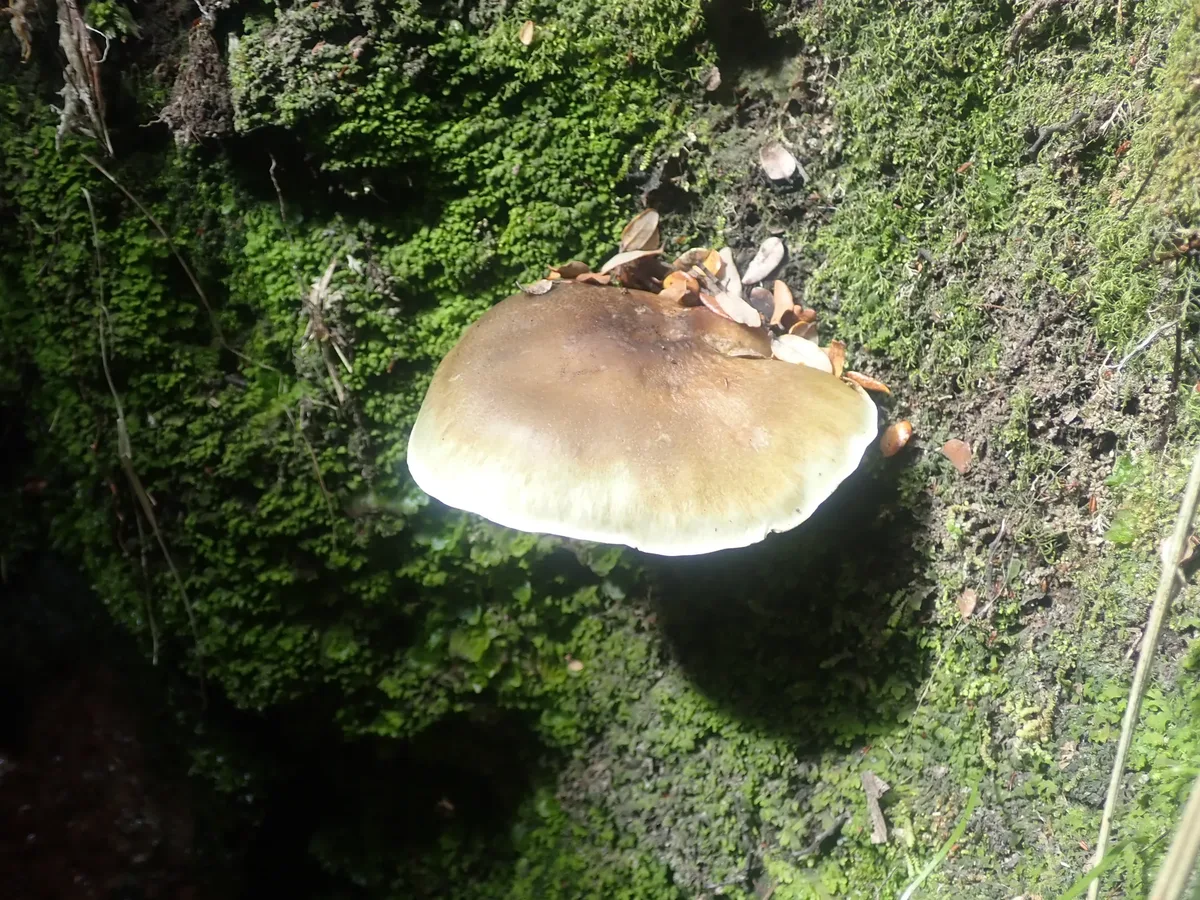
Tricholoma viridiolivaceum is a medium-sized woodland mushroom with a distinctively olive-green to olive-brown cap - the colour being its most immediately recognisable feature.
Cap
Starts convex and expands to broadly flat or slightly wavy, 4-10 cm across, with the colour deepest at the centre and tending to yellow-olive at the margins. The surface is dry and silky-fibrous except when wet, when it becomes slightly sticky.
Gills
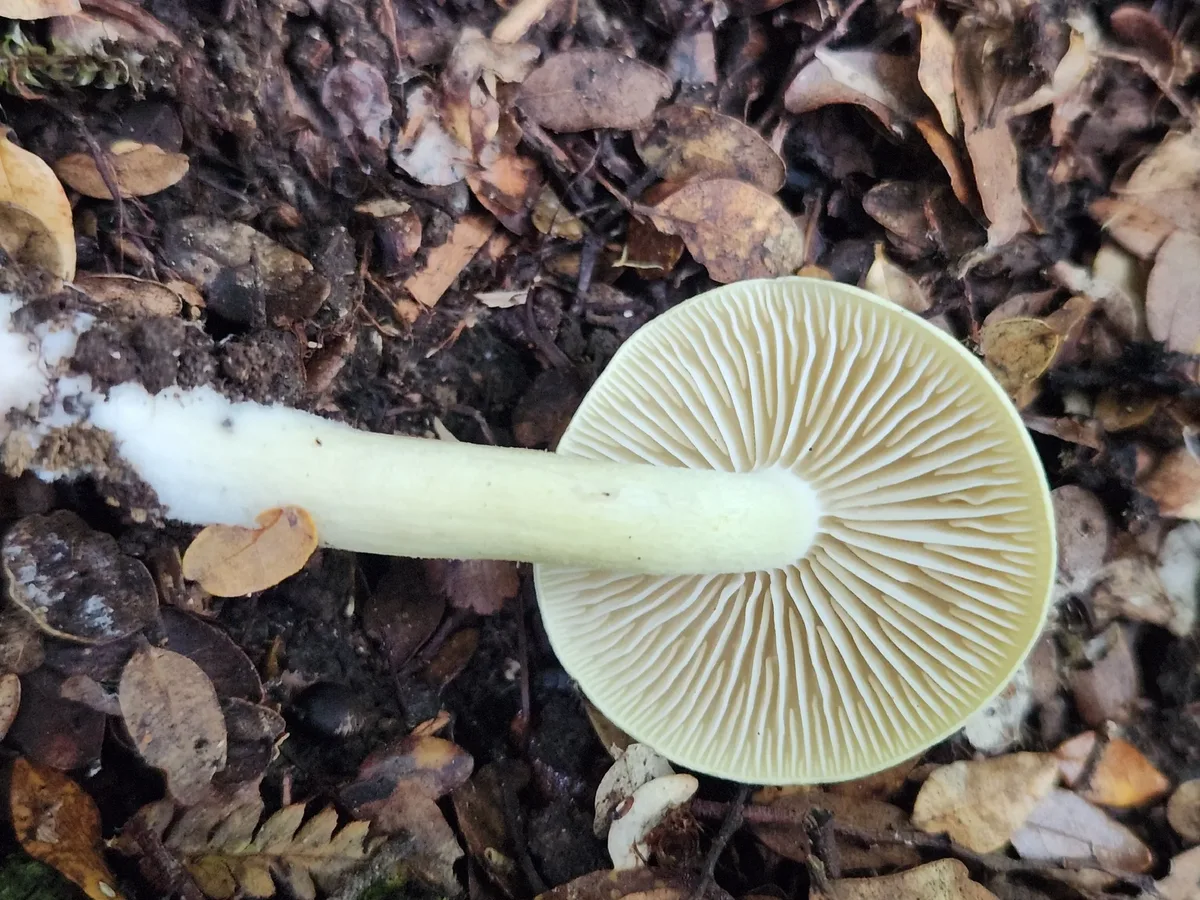
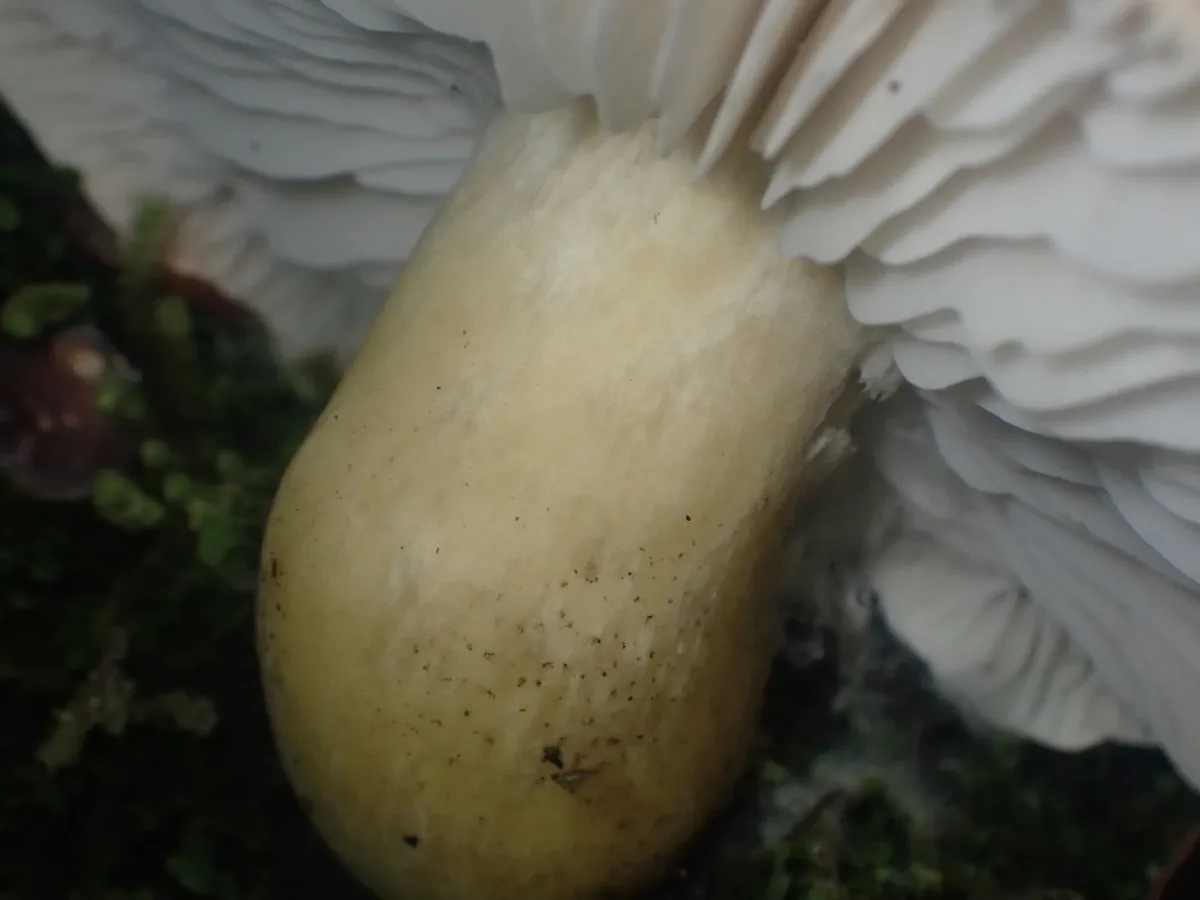
White to cream, crowded, and sinuate - that is, they curve up slightly just before attaching to the stem (a Tricholoma hallmark).
Stem
White to pale, solid, and firm, with no ring and no volva whatsoever. These two absences matter: the presence of either would strongly indicate an Amanita species rather than a Tricholoma.
Flesh
White, does not change colour when cut, and has a mealy or faintly unpleasant odour. Spore print is white.
Where & when it grows
Habitat
This species lives as a mycorrhizal partner - quietly threaded through the rootlets of its host trees, trading mineral nutrients for sugars in an association that can persist for years without producing a single visible fruitbody.
In Australia that means eucalypts in sclerophyll woodland and dry eucalypt forest; in New Zealand, southern beech (Nothofagus) in mixed forest stands.
It fills the ecological niche that European Tricholoma species occupy under oak and beech in the Northern Hemisphere. Look for it on well-drained mineral soils under the leaf litter of its host trees.
When
Fruiting runs from Austral autumn into early winter - broadly March through June - prompted by cooling soil temperatures and the first reliable autumn rains breaking the dry summer.
Those conditions can coax fruitbodies up within a week or two of a good rain event. Peak is typically April-May in temperate southeastern Australia and New Zealand, after which the species goes quiet until the following year.
How it grows
Ectomycorrhizal; forms intimate associations with the rootlets of eucalypts and southern beech.
Fruitbodies emerge singly or in small scattered groups, never in tight clusters, usually partially buried in leaf litter with only the cap visible at first.
Growth rate is moderate; the firm flesh means specimens last several days in good condition if conditions remain dry.
Fruiting conditions
Austral autumn fruiting pattern: initiated by cooling soil temperatures (dropping below ~15 °C) following summer, combined with adequate autumn rainfall. Flush typically appears 7-14 days after sufficient rain event when soil temperature is in the 8-15 °C range.
Handle with care
Toxin
No confirmed toxins have been identified in Tricholoma viridiolivaceum itself. However, several other Tricholoma species of similar appearance (including some Australian taxa) cause gastrointestinal illness via uncharacterised irritants.
The primary hazard is misidentification. Amanita phalloides, which can resemble this species, contains potent amatoxins (alpha-amanitin chief among them) that inhibit RNA polymerase II, causing irreversible liver and kidney failure.
Symptoms of amatoxin poisoning are delayed 6-24 hours after ingestion, by which time substantial organ damage has already occurred.
Symptoms
If amatoxin poisoning from a misidentified Amanita phalloides is suspected:
- 1Initial gastrointestinal phase (6-24 h post-ingestion): violent vomiting, diarrhoea, and cramps.
- 2Apparent recovery phase (24-72 h): the patient feels better but organ damage continues.
- 3Final hepatorenal failure phase (3-7 days): can be fatal without liver transplantation.
Seek emergency medical care immediately if death cap ingestion is possible - do not wait for symptoms.
If only a Tricholoma species was eaten and gastrointestinal symptoms appear, they are typically self-limiting but still warrant medical evaluation.
Look-alikes
The most dangerous confusion is with Amanita phalloides (death cap), which has been introduced to Australia and New Zealand and has caused lethal poisonings there. The death cap has an olive-green to yellowish cap of similar colour and size.
The critical differences - Amanita phalloides has:
- a prominent membranous ring (skirt) on the stem
- a cup-shaped volva at the bulbous base (often buried - always dig to check)
- white gills that remain pure white
- an intensely sweet, honey-like or faintly sickly smell in fresh specimens
By contrast, T. viridiolivaceum has no ring, no volva, sinuate (notched) gills, and a mealy smell.
Tricholoma josserandii (a toxic species in Australia) is another olive-brown Tricholoma that causes gastrointestinal illness and cannot safely be distinguished from T. viridiolivaceum by the casual forager.
Various other introduced and native Amanita species in Australasia also present with olive-toned caps and demand the same ring-and-volva check.
Why it matters
The danger from T. viridiolivaceum itself is low to unknown, but the danger from mistaking it for Amanita phalloides is potentially fatal.
In Australia and New Zealand, where the death cap is an introduced species in expanding range, any olive-green gilled mushroom must be treated with the highest caution.
Multiple fatalities have occurred in Australia from death cap ingestion, including among immigrants unfamiliar with the species. Do not eat this mushroom.
Olive-green to yellowish-green cap of similar size and colour introduced to Australia and New Zealand. The death cap has a membranous ring (skirt) hanging from the stem, a cup-shaped volva at the bulbous base (often buried - always dig to expose it), a slightly sweetish sickly odour, and free (non-sinuate) gills. Tricholoma viridiolivaceum has absolutely no ring, no volva, sinuate (notched) gills, and a mealy rather than sweet smell. The volva check is the non-negotiable safety step: if any trace of a bag or cup is present at the base, do not touch further.
Another Australian eucalypt-associated Tricholoma with olive to brownish tones. T. eucalypticum is typically paler olive with a more distinctly mealy smell; field separation from T. viridiolivaceum is unreliable for non-specialists. Neither species is established as safely edible, and both should be left uncollected.
An Australian Tricholoma with olive-brown tones that causes gastrointestinal illness. Field separation from T. viridiolivaceum is difficult for non-specialists; both lack ring and volva, and both occur in eucalypt woodland. Because reliable visual distinction in the field is uncertain, both should be treated as inedible.
In the kitchen
Picking & cleaning
This species is not recognised as an edible mushroom in Australian or New Zealand foraging literature and should not be collected for eating.
Its olive-green colouration makes it a plausible visual confusion for Amanita phalloides (the death cap), which has been introduced to Australia and New Zealand (mainly under planted oaks and pines) and is responsible for fatal poisonings in the region.
The absence of a ring and volva in T. viridiolivaceum is the critical diagnostic separator from Amanita, but distinguishing these features demands confident hands-on experience.
No reliable shortcuts exist: always dig up the base of any olive-green mushroom to inspect for a volva before handling further.
Cooking
Tricholoma viridiolivaceum is not recommended for the table. No reliable culinary tradition exists for this species in Australian or New Zealand foraging practice, and its edibility has not been established in any recognised authority.
The combination of unestablished edibility and close visual resemblance to Amanita phalloides - the death cap, a deadly species established in the same region - means the only safe advice is to leave it uncollected and uneaten.
Good to know
Tricholoma viridiolivaceum has no documented toxins and no confirmed history of poisoning, but it is not established as edible in any recognised Australian or New Zealand foraging authority, and it lacks any tradition of human consumption.
The primary safety concern is severe: its olive-green colouration closely mimics Amanita phalloides (death cap), which is established in southeastern Australia and parts of New Zealand, most commonly under ornamental oaks, pines, and European trees in parks and gardens. The death cap causes fatal amatoxin poisoning.
Anyone who finds an olive-green mushroom in the Australian/New Zealand environment must assume it could be a death cap until proven otherwise, by thorough inspection of the base for a volva.
Do not eat T. viridiolivaceum: the risk-benefit calculation strongly disfavours it when confusion with a lethal species is plausible.
A reference guide - never an edibility guarantee. When in doubt, leave it out.