Ashen knight
Tricholoma virgatumsyn. Agaricus virgatus Fr., Gyrophila virgata (Quel.) Quel., Tricholoma virgatum var. virgatum
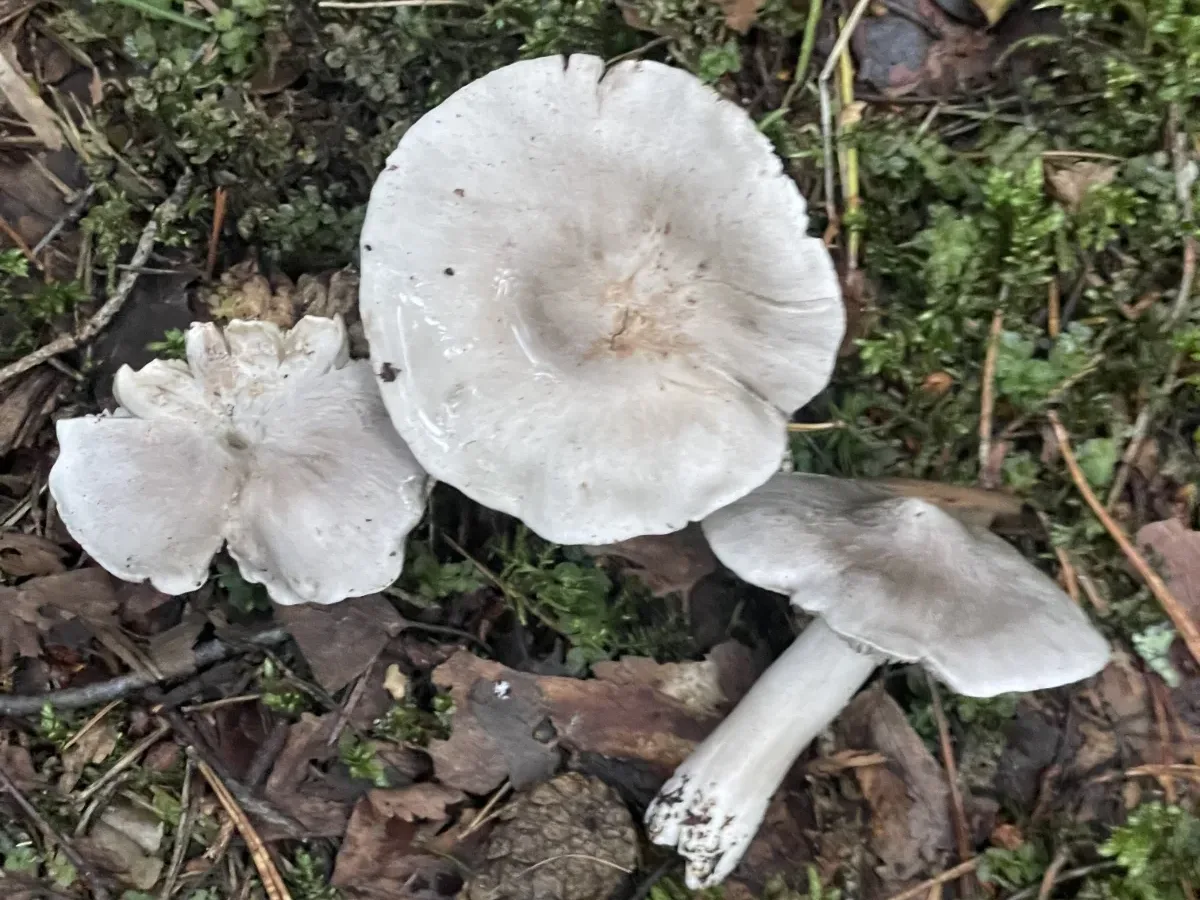 © Martin Paliocha (CC BY)
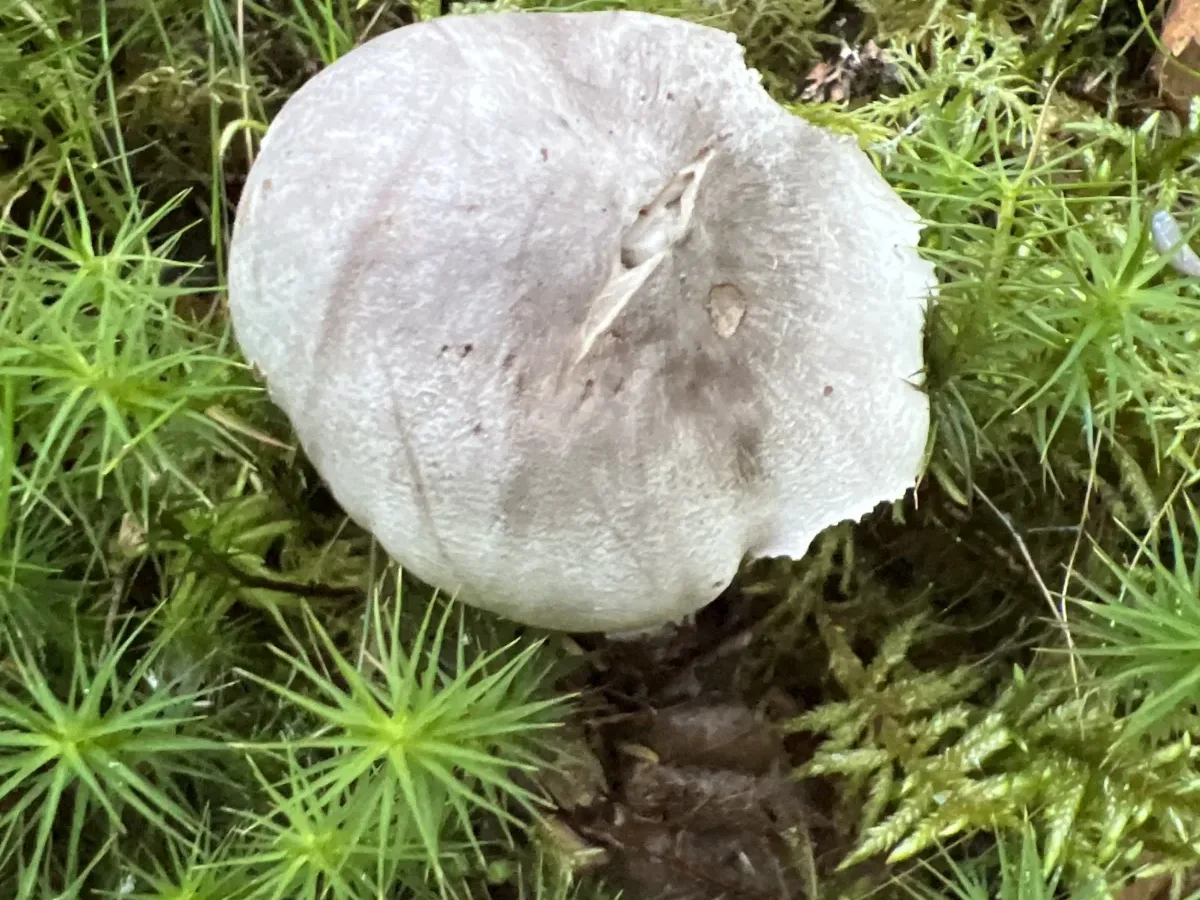 © Ulrik Andreassen (CC BY)
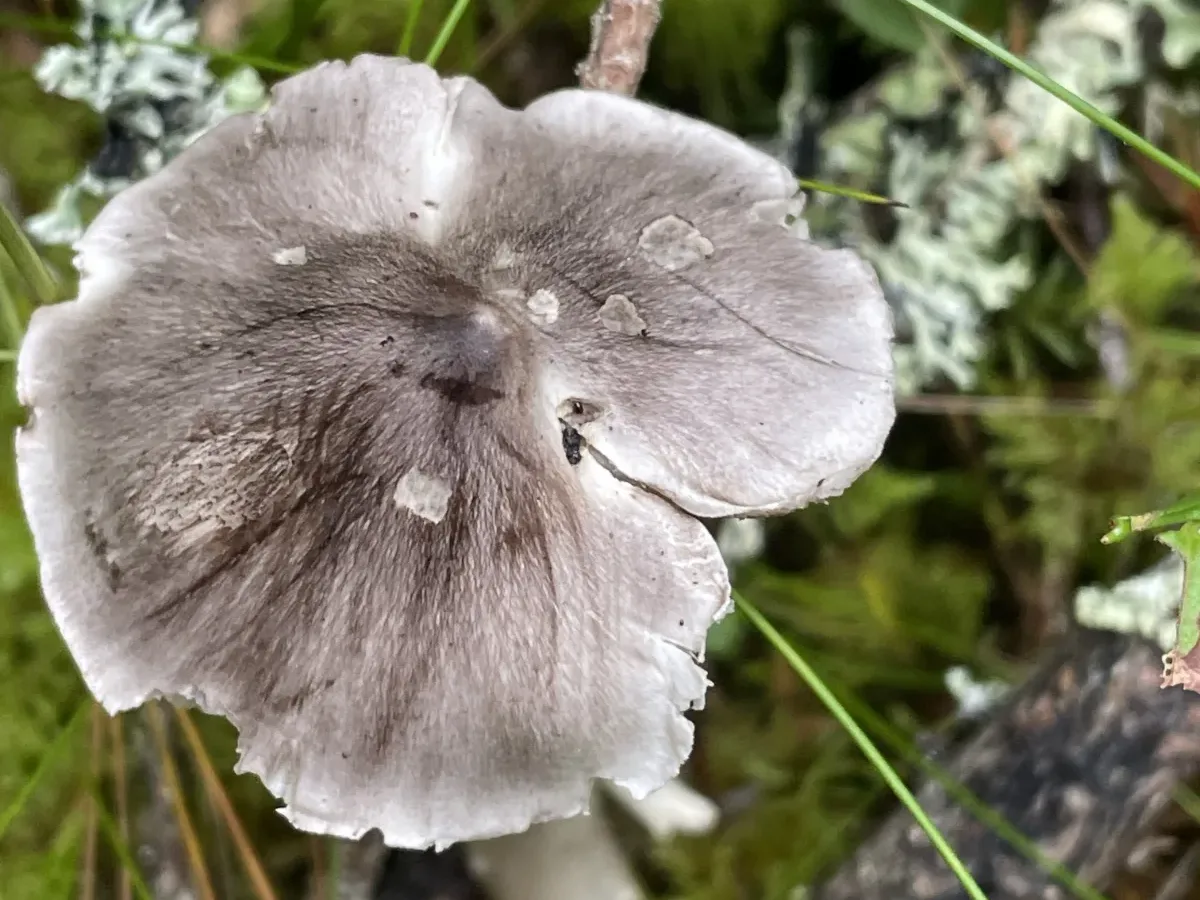 © Marte Kristoffersen (CC BY)
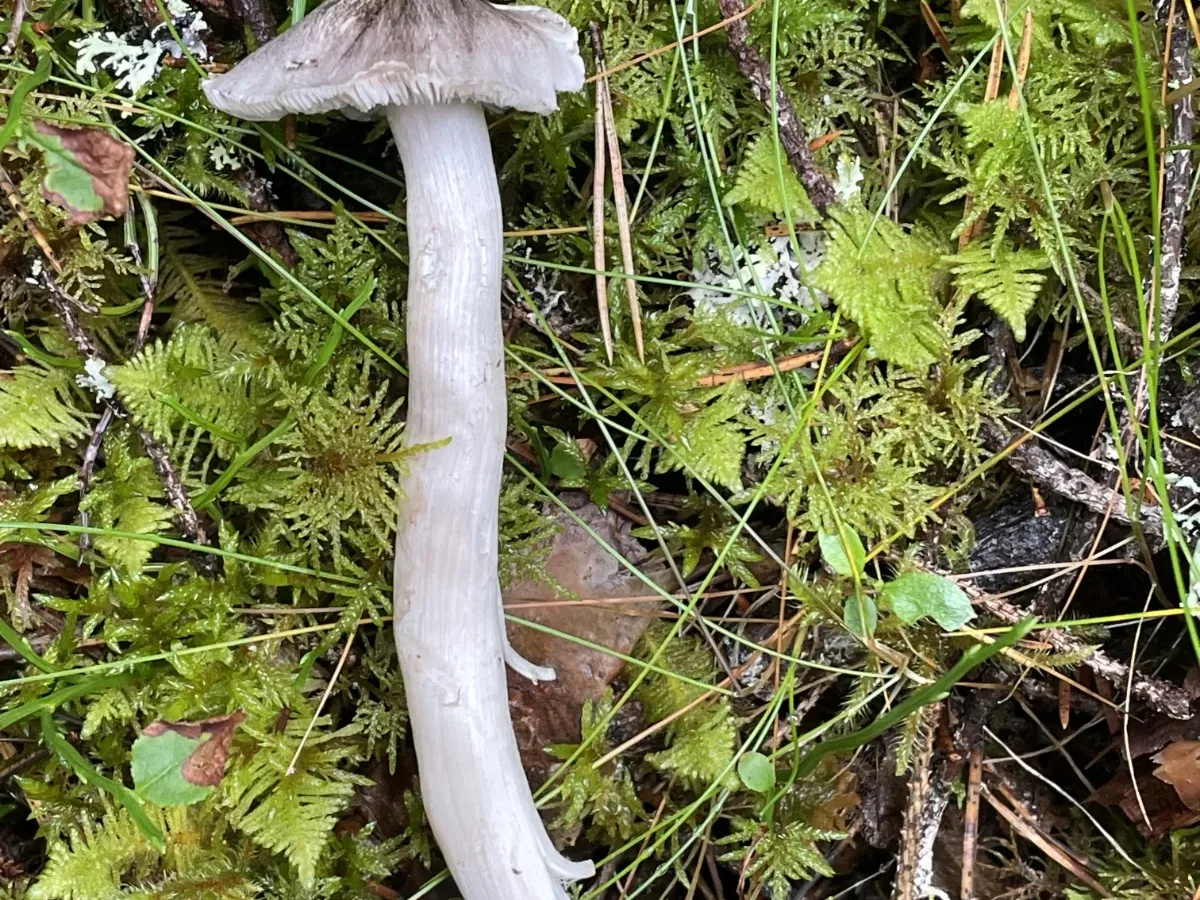 © Marte Kristoffersen (CC BY)
 © Marte Kristoffersen (CC BY)
 © Morten Pettersen (CC BY)© Martin Paliocha (CC BY)© Ulrik Andreassen (CC BY)
Edible only with the right preparation - or safe for some people but not others. Learn the caveats first.
Never eat a mushroom you are not 100% sure of - check the look-alikes below, and always cook wild mushrooms.
How to recognise it
The Ashen knight is a visually distinctive Tricholoma once the key features are noted.
Cap
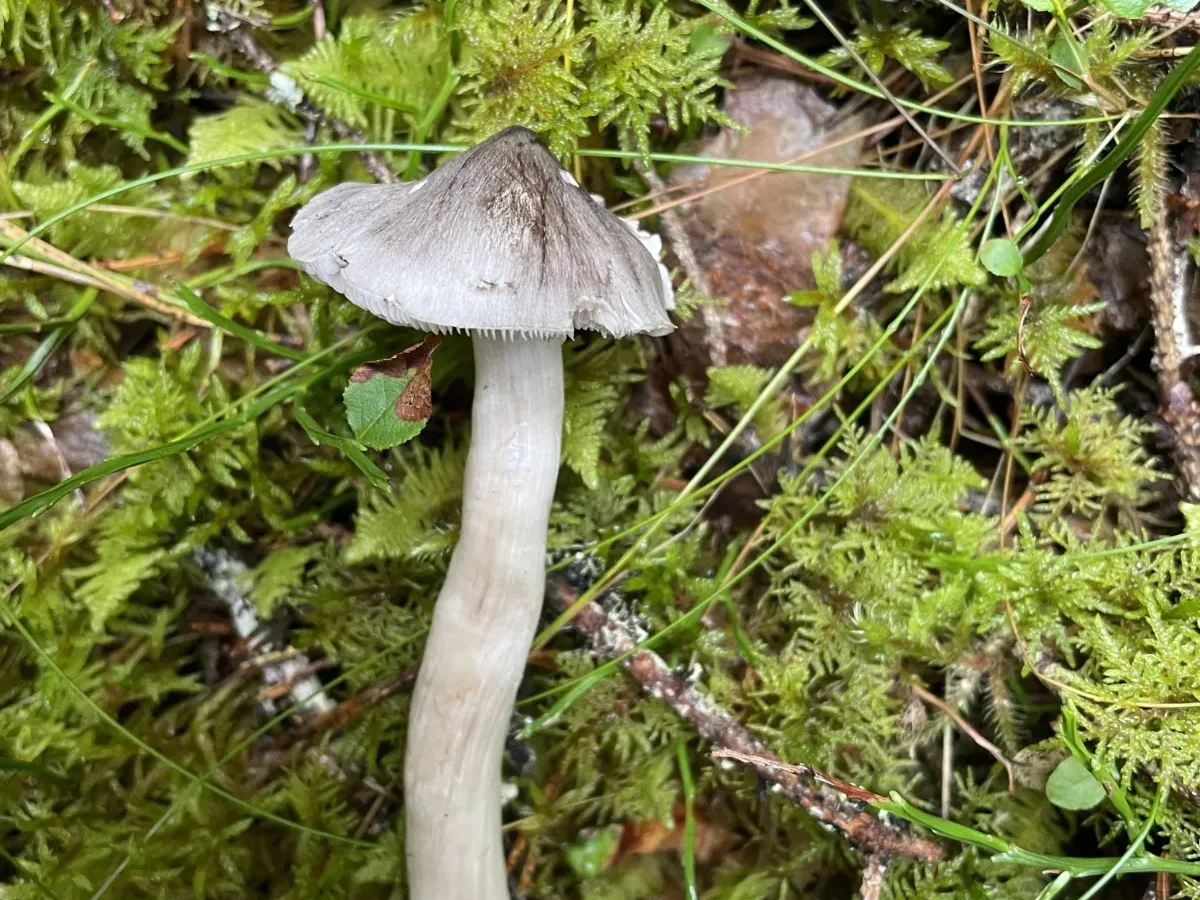
The cap is the diagnostic centrepiece. It remains conical or broadly campanulate with a sharply pointed central umbo that persists well into maturity, giving the mushroom a characteristic spired look not shared by most grey relatives.
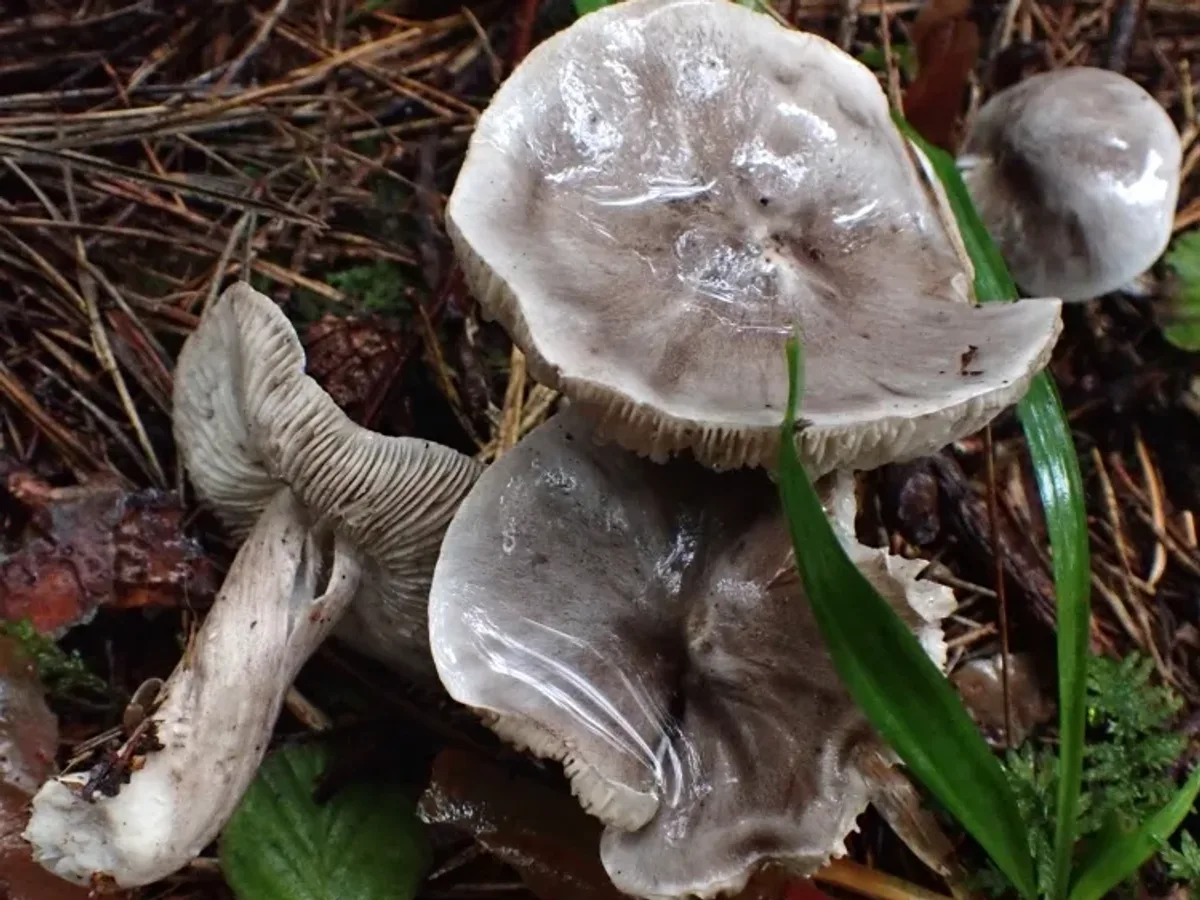
The cap surface is dry, smooth to silky, and silvery-grey to ash-grey. The defining character is the pattern of fine, dark radial silky streaks: fibrillose lines that fan outward from the umbo like pencil marks on pale grey paper. This streaked, almost brushed look separates T. virgatum from other grey knights at a glance.
Gills
The gills are sinuate (the notch where they meet the stem is a Tricholoma hallmark), white to pale grey, moderately crowded, with entire even edges.
Stem
The stem is greyish-white, slender, dry, ringless, and gradually becomes hollow with age.
Flesh
The flesh is white, firm, and does not discolour on cutting.
Smell & taste
The smell is mild, perhaps faintly floury, and gives no warning. The taste, however, is unmistakable: acrid, burning, and sharply peppery, developing within seconds and persisting long after spitting the piece out.
Spore print white.
Why it's dangerous
The direct danger from correctly identified T. virgatum is proportional to the amount consumed. The acrid taste is so strong that accidental large-quantity ingestion is unlikely, and the mushroom is essentially self-protecting against casual eating.
The greater danger is confusion with the severely poisonous Tricholoma pardinum (Tiger Knight) by foragers collecting grey Tricholoma species who do not taste-test carefully. T. pardinum causes serious, prolonged gastrointestinal poisoning sufficient to require hospitalisation, and deaths have been recorded in exceptional cases.
Additionally, grey Entoloma pinkgills (such as Entoloma sinuatum, the Livid Pinkgill) can cause severe and rarely fatal poisoning.
Any collector working in the grey Tricholoma group must develop two habits before any consumption:
- Taste and spit every specimen.
- Make a white spore print.
Grey-capped woodland mushrooms should never be eaten without confident positive identification by an experienced mycologist.
Toxin
The chemical basis of the acrid taste in T. virgatum is not fully characterised in the published literature.
The burning compounds are presumed to be heat-labile phenols, sesquiterpenes, or related volatile terpenoids, structurally similar to the acrid principles found in hot-tasting Lactarius and some Tricholoma species.
These irritant substances act on the oral and gastrointestinal mucosa and can provoke nausea and vomiting when the mushroom is ingested, especially raw or in quantity.
No specific named toxin of high acute lethality has been isolated from T. virgatum, distinguishing it from amatoxin- or orellanin-containing deadly species. But the irritant load is sufficient to classify it as a gastrointestinal irritant rather than an edible.
Symptoms
If ingested, expect burning and irritation of the mouth, throat, and oesophagus within minutes.
Gastrointestinal symptoms (nausea, vomiting, abdominal cramping, and diarrhoea) may follow within 30 minutes to 2 hours, with severity depending on quantity consumed and whether the mushroom was cooked (heat may partially reduce the irritant compounds).
Symptoms are generally self-limiting in healthy adults who consume small amounts, but significant ingestion can lead to more persistent vomiting and dehydration.
If symptoms are severe or prolonged, seek medical advice and inform clinicians which mushroom was consumed.
Staying safe
Tricholoma virgatum is not edible. The intense burning, acrid taste is caused by irritant compounds in the flesh that make the mushroom unpalatable and potentially harmful to the gastric mucosa, particularly if consumed in any quantity or raw.
While T. virgatum is not documented as causing life-threatening poisoning in the manner of the most dangerous mushrooms, it is classed as a gastrointestinal irritant, and eating it may cause nausea, vomiting, and gastric distress.
The burning taste is itself a natural deterrent and a safety cue. Always taste and spit when examining grey knights, and never swallow even a small amount.
The more pressing safety concern is misidentification: the grey-capped Tricholoma group contains Tricholoma pardinum (Tiger Knight), which causes severe, potentially fatal gastrointestinal poisoning. Any grey-capped Tricholoma that cannot be identified with certainty should never be eaten.
This guide classes T. virgatum as CAUTION with isPoisonous true to reflect its irritant nature and the serious hazards associated with the lookalike complex.
Where & when it grows
Habitat
The Ashen knight is primarily a conifer mycorrhizal partner, with its strongest allegiance to Norway spruce and silver fir in montane and submontane European forests.
It also forms associations with pine, and occasionally occurs at the edge of beech-dominated stands where conifers intermingle.
Look for it on the forest floor amid needle litter and mosses in mature, relatively undisturbed coniferous woodland, often on well-drained, calcareous to mildly acidic soils.
It favours the montane and submontane belt (roughly 400-1600 m in the Alps and Carpathians) but occurs at lower elevations in Scandinavia and northern Germany where spruce grows at sea level.
Within a stand it tends to be gregarious, fruiting in loose scattered groups that may recur in the same patch annually.
When
Fruiting spans late summer through autumn, typically from August to November, with a clear peak in September and October when soil temperatures in conifer woods drop into the 6-12 degrees C range and autumn rains have moistened the ground.
At higher elevations or in the north the season can start as early as late July.
The mushrooms are reasonably cold-tolerant, but a sustained hard frost ends fruiting quickly.
The autumn flush pattern is typical of mycorrhizal conifer associates that track the cooling of soils rather than peak summer warmth.
How it grows
Like all true Tricholoma species, T. virgatum is an obligate mycorrhizal symbiont. It cannot be grown in isolation and always fruits from the mycelium network woven around living conifer roots.
Fruit bodies emerge singly or in scattered groups from below the needle litter, often with only the conical grey cap tip initially visible.
Flushes are triggered by the combination of soaking autumn rain and a drop in soil temperature. A useful rule of thumb: a flush may appear roughly 7-14 days after 20 mm or more of rainfall when soils are between about 5 and 13 degrees C.
The same mycelial mat may produce fruit bodies in the same patch for many consecutive years if the host trees remain healthy and the soil is undisturbed.
Fruiting conditions
Flushes in autumn once soils cool below approximately 13 degrees C and 20 mm or more of rain has fallen in the preceding fortnight. A spruce and fir associate, most productive on the cooler, moister soils of montane and submontane conifer stands. Rarely fruits after hard frost.
Look-alikes
The grey-capped Tricholoma complex is one of the most dangerous groups for beginners because many species look superficially similar and some are severely poisonous.
The most important and dangerous lookalike is Tricholoma pardinum, the Tiger Knight. T. pardinum is robustly built, with a paler grey-brown cap broken into concentric greyish-brown scaly patches (not fine radial silky fibrils), thick firm flesh, a pronounced floury or mealy smell, and a preference for beech and fir on lime-rich soil.
It causes one of the most serious gastrointestinal poisonings in European mycology: violent, prolonged vomiting and diarrhoea beginning within 15 minutes to 4 hours, sometimes leading to life-threatening dehydration and in exceptional cases death.
T. virgatum differs from T. pardinum by three features:
- Retaining a sharply pointed umbo.
- Its finely silky-streaked (not scaly-patched) cap surface.
- Above all, its intensely burning-acrid taste (T. pardinum tastes mild to mealy).
Other grey look-alikes to know:
- Tricholoma terreum (Grey Knight): a fine-fibrillose (not silky-streaked) grey cap that becomes broadly flat without retaining a sharp pointed umbo, and critically it tastes MILD. T. terreum grows preferentially with pine.
- Tricholoma scalpturatum (Yellowing Knight): resembles the grey knights but differs by its cap and gills yellowing distinctly with age and its mealy smell.
- Small grey-capped Inocybe species (muscarine-toxic): can resemble a young Ashen Knight from above but have a brown spore print, often a radially split cap, and an unpleasant spermatic smell.
- Dull grey Entoloma pinkgills: may resemble a flattened old specimen but have pink to salmon spore prints and gills that pink with maturity.
Always take a spore print (white excludes Entoloma and Inocybe), and always taste a tiny piece and spit it immediately: if it burns, it is T. virgatum or another acrid species, not an edible grey knight.
Large grey-capped woodland pinkgills share sinuate gills and a similar colour palette. Entoloma sinuatum (Livid Pinkgill) causes severe gastrointestinal poisoning, occasionally fatal. Separated by their spore print: salmon-pink to pinkish-brown (never white), and by mature gills turning pinkish. T. virgatum always drops a white spore print and gills remain grey-white. Take a spore print before any consumption.
The most dangerous member of the grey Tricholoma complex. Larger and more robust, with a broadly convex to flat cap (not retaining a sharply pointed umbo), surface grey-brown broken into distinct concentric scaly or floccose patches (not fine silky radial streaks), firmer thicker flesh, and a pronounced mealy or floury smell. Taste mild to mealy, NOT acrid or burning. Grows on calcareous soil under beech, fir, and spruce. Causes severe, prolonged gastrointestinal poisoning (violent vomiting and diarrhoea, onset 15 min to 4 h) that frequently requires hospitalisation; deaths reported in exceptional cases. The burning acrid taste of T. virgatum is the clearest separator: T. pardinum never tastes burning.
Several small grey-brown Inocybe species contain dangerous muscarine and can appear grey-capped in woodland. Distinguished by a brown (not white) spore print, usually a radially fibrous or split cap, and a distinct spermatic or earthy-unpleasant smell. Always make a spore print: T. virgatum is white-spored.
The closest lookalike in overall colour and size. Cap fine-fibrillose (felted or mousy rather than silvery silky-streaked) and becomes broadly convex to nearly flat, losing the sharply pointed umbo. Critically, the taste is MILD - not acrid or burning at all. Grows primarily with pines rather than spruce. Regarded as edible by many European authorities; its mild taste is the clearest practical separator from T. virgatum.
Very variable in colour (grey-green, brownish-grey, olive-grey) with a cap that typically lacks a sharp persistent umbo and often has a cracking surface. Distinguished by a characteristic soapy or perfumed smell absent in T. virgatum. Taste bitter-soapy rather than burning-acrid. Also inedible.
Similar grey-brown colour when young but cap and gills yellow distinctly with age and on handling. Smells mealy. Often found under deciduous trees (lime, elm, poplar). T. virgatum stays grey-to-ashen, does not yellow, and tastes acrid rather than mealy.
A reference guide - never an edibility guarantee. When in doubt, leave it out.