Scaly Knight
Tricholoma vaccinumsyn. Agaricus vaccinus Schaeff., Gyrophila vaccina (Schaeff.) Quel., Tricholoma vaccinum var. vaccinum
 © W Rao (CC BY)
 © Manuela Fiorini (CC BY)
 © Marte Kristoffersen (CC BY)
 © Marte Kristoffersen (CC BY)
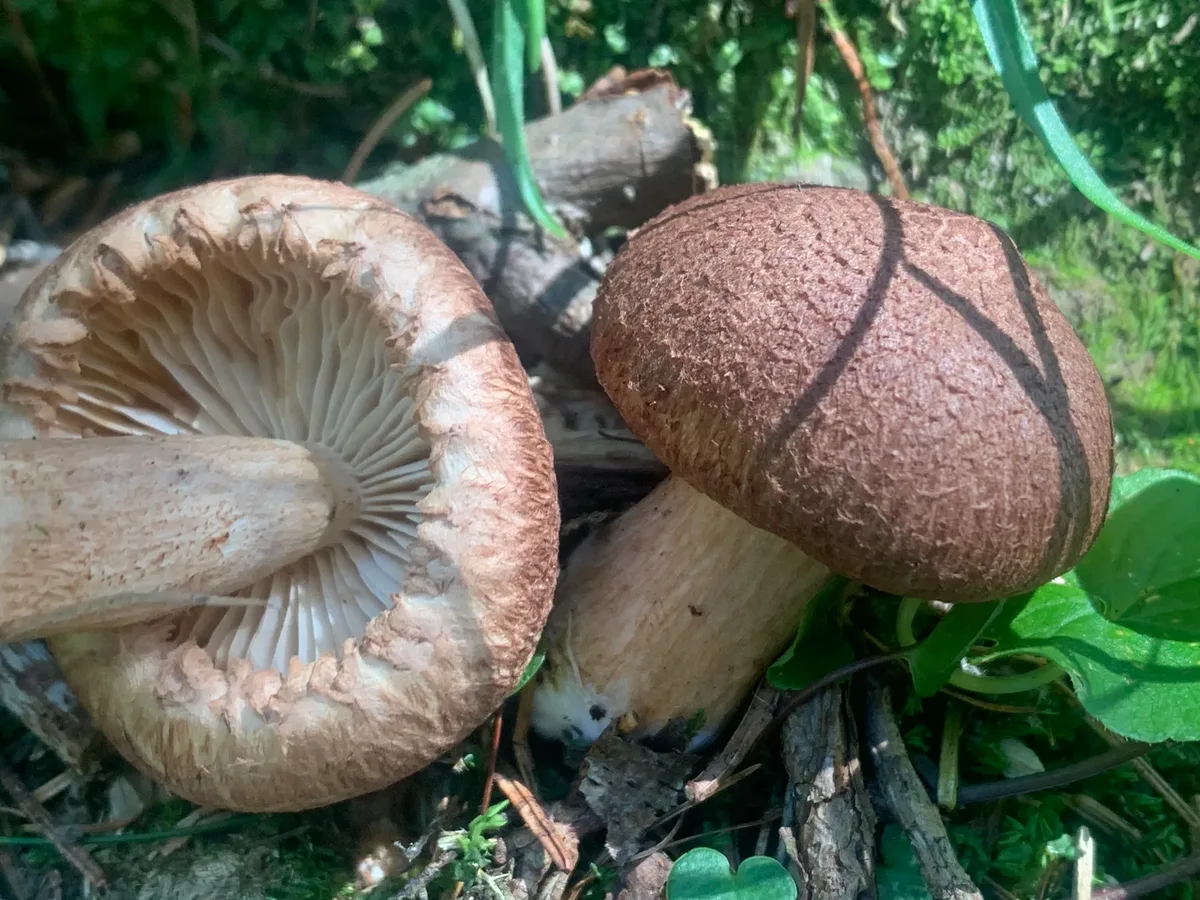 © Manuela Fiorini (CC BY)
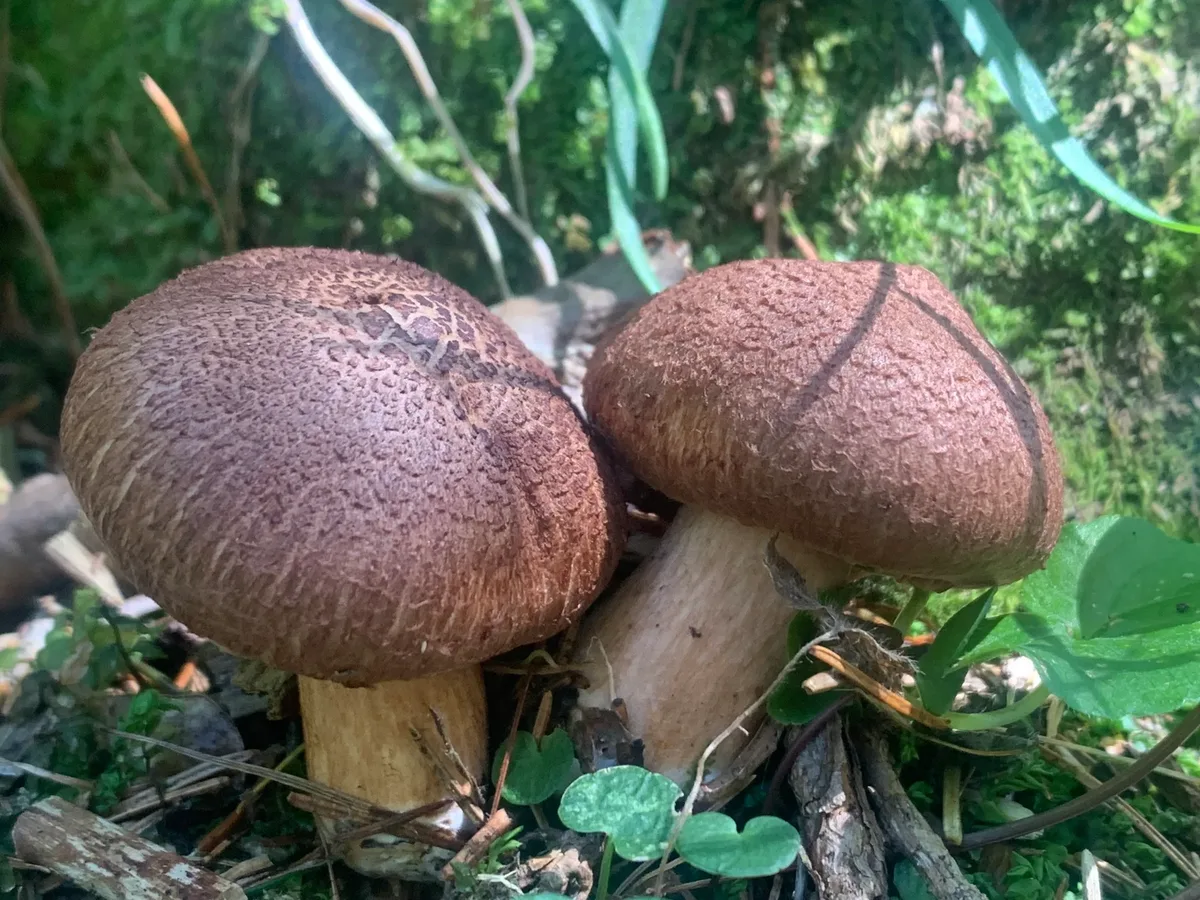 © Manuela Fiorini (CC BY)
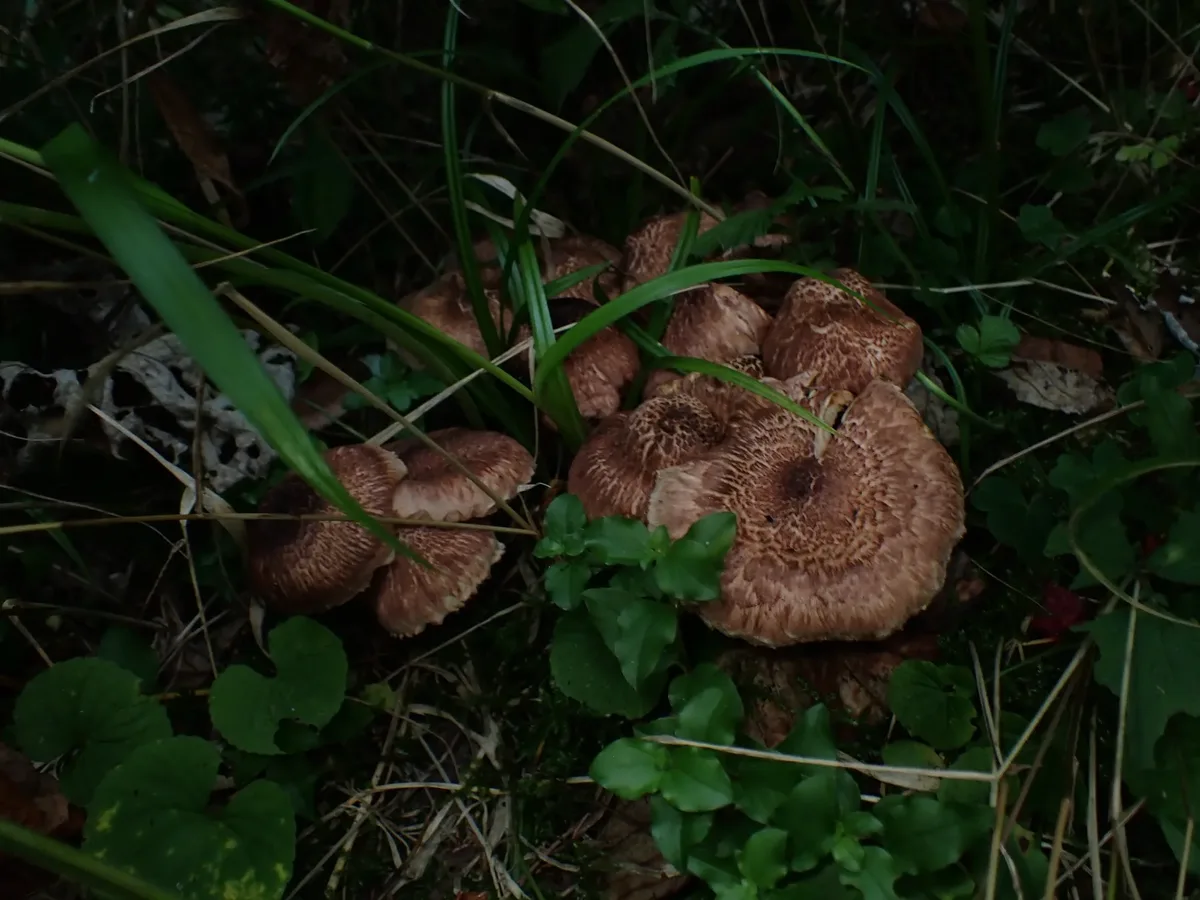 © W Rao (CC BY)
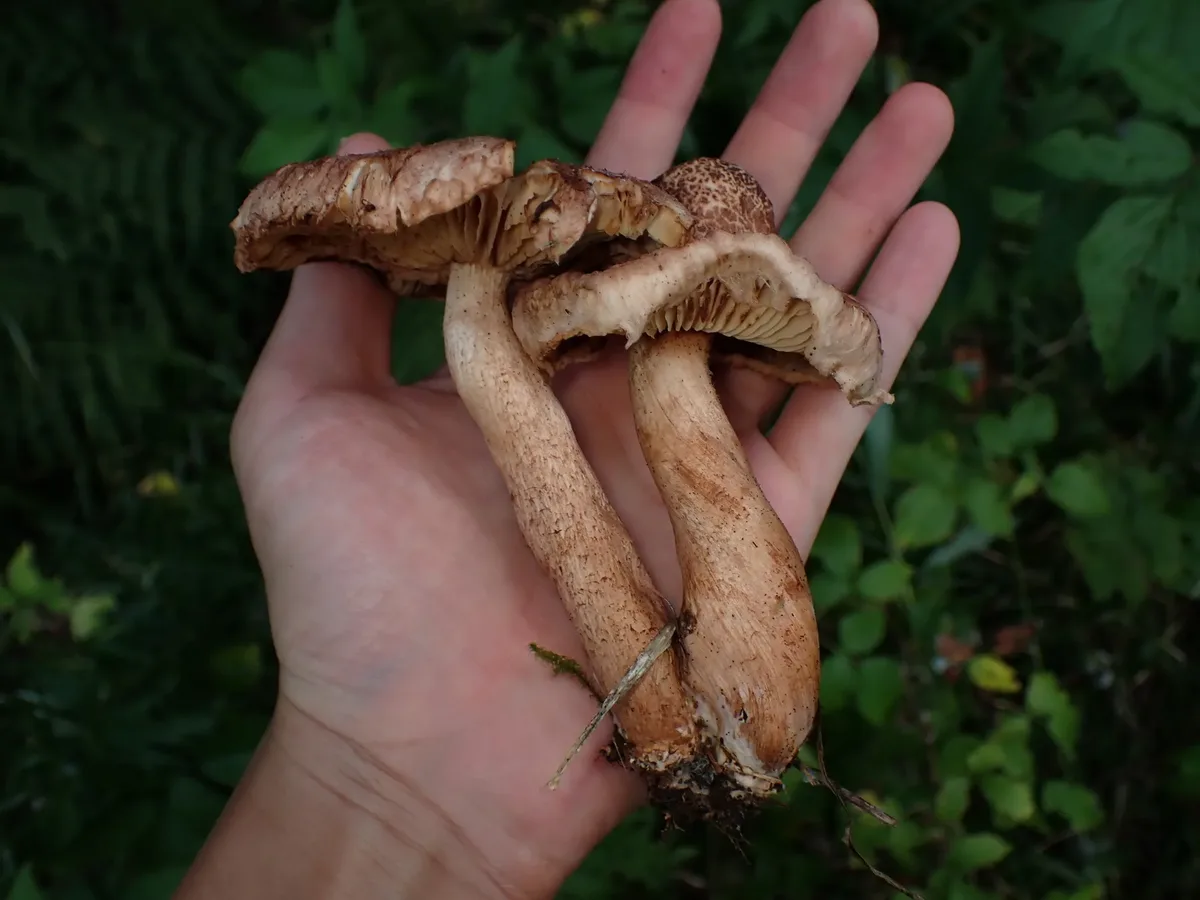 © W Rao (CC BY)
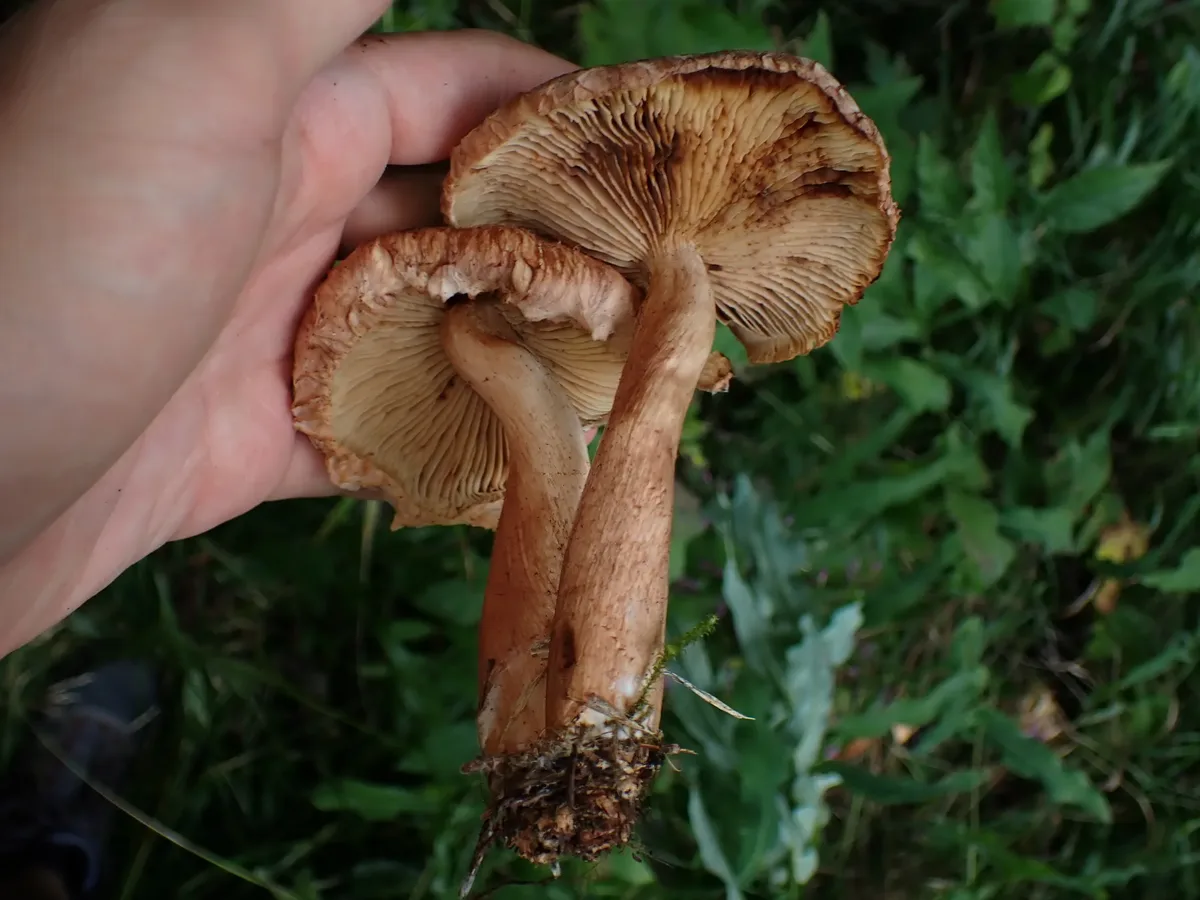 © W Rao (CC BY)
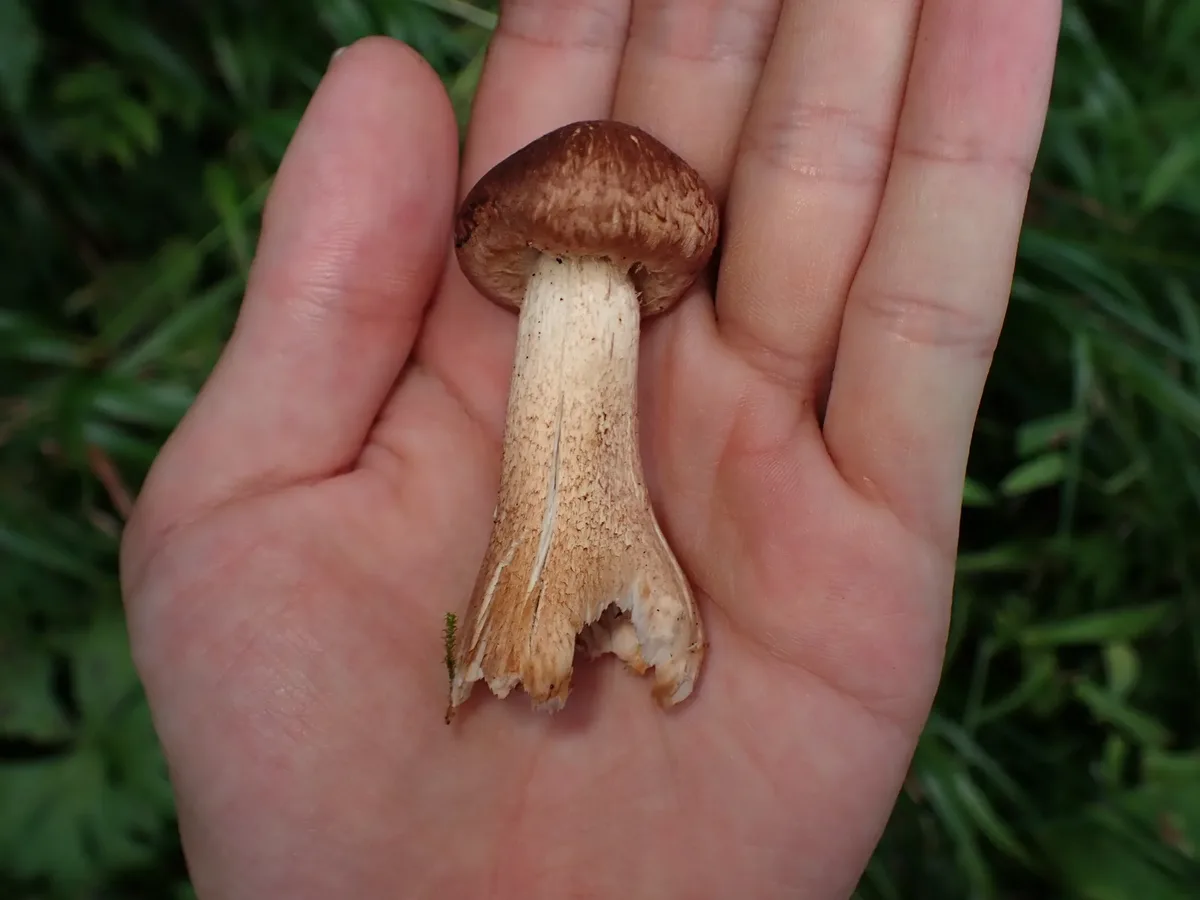 © W Rao (CC BY)© W Rao (CC BY)© Manuela Fiorini (CC BY)
Edible only with the right preparation - or safe for some people but not others. Learn the caveats first.
Never eat a mushroom you are not 100% sure of - check the look-alikes below, and always cook wild mushrooms.
How to recognise it
The Scaly Knight is one of the more visually distinctive Tricholoma species, its shaggy, warm-coloured cap setting it apart from the smoother or more finely fibrillose grey knights that dominate the same spruce-fir forests.
Cap
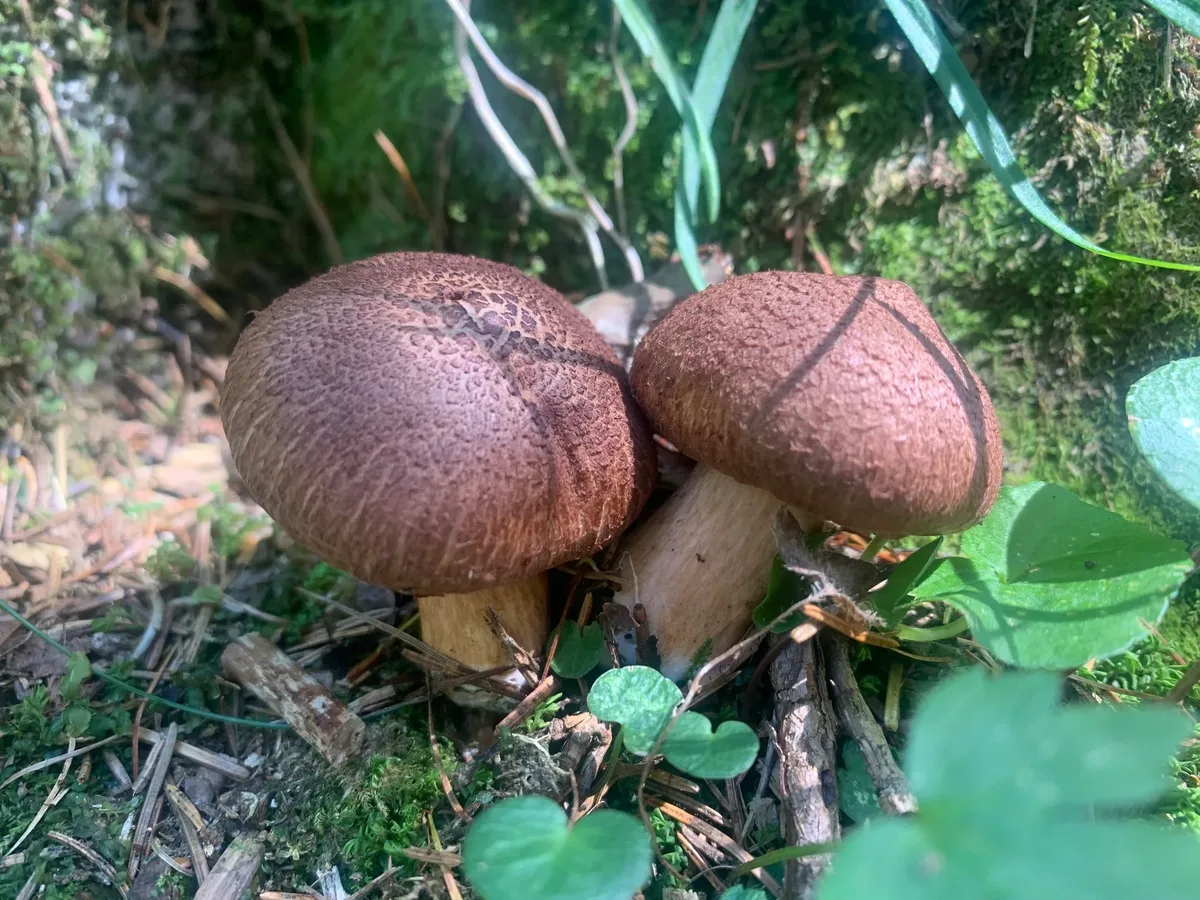
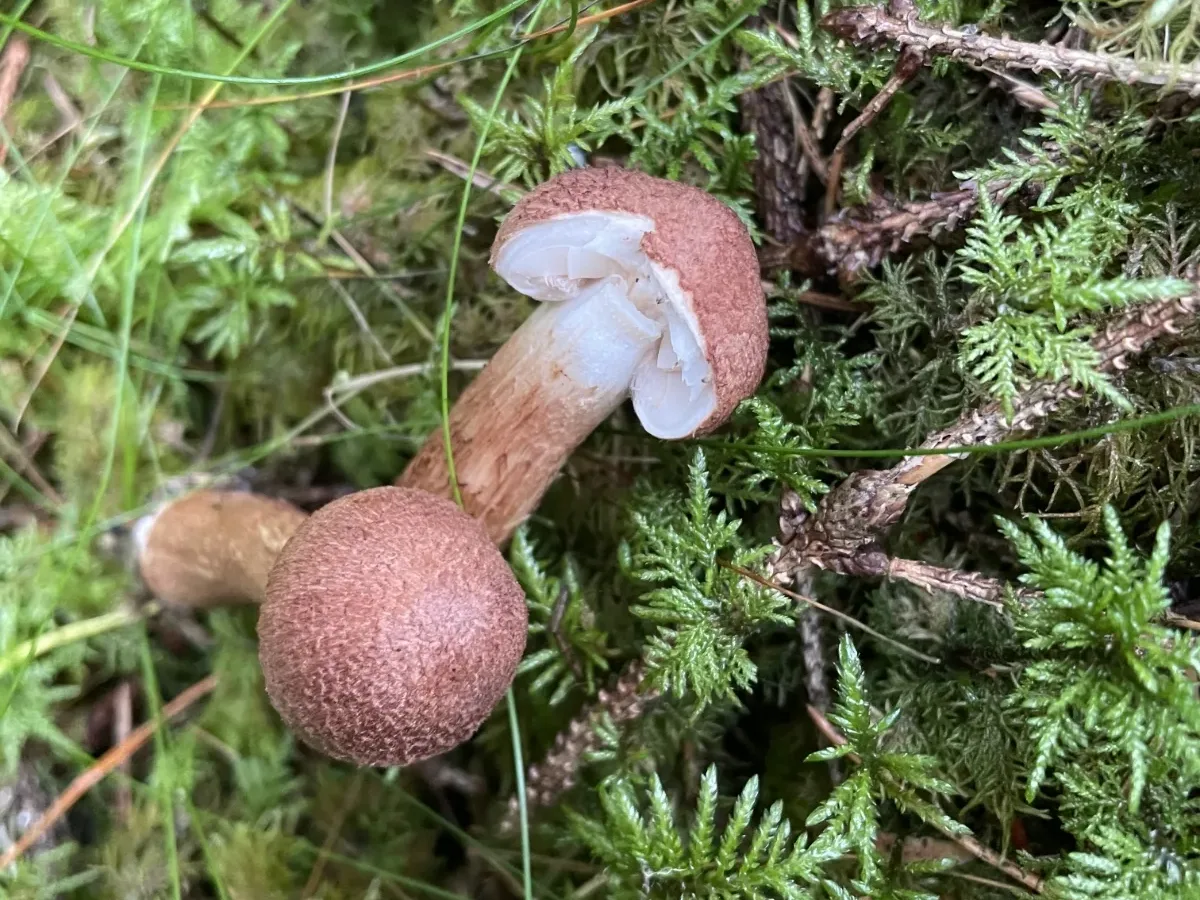
Warm rust-brown to reddish-tawny, covered in upright or tufted fibrous scales that give it a conspicuously shaggy, woolly appearance. It opens from broadly conical to broadly convex and usually retains a central bump (umbo).
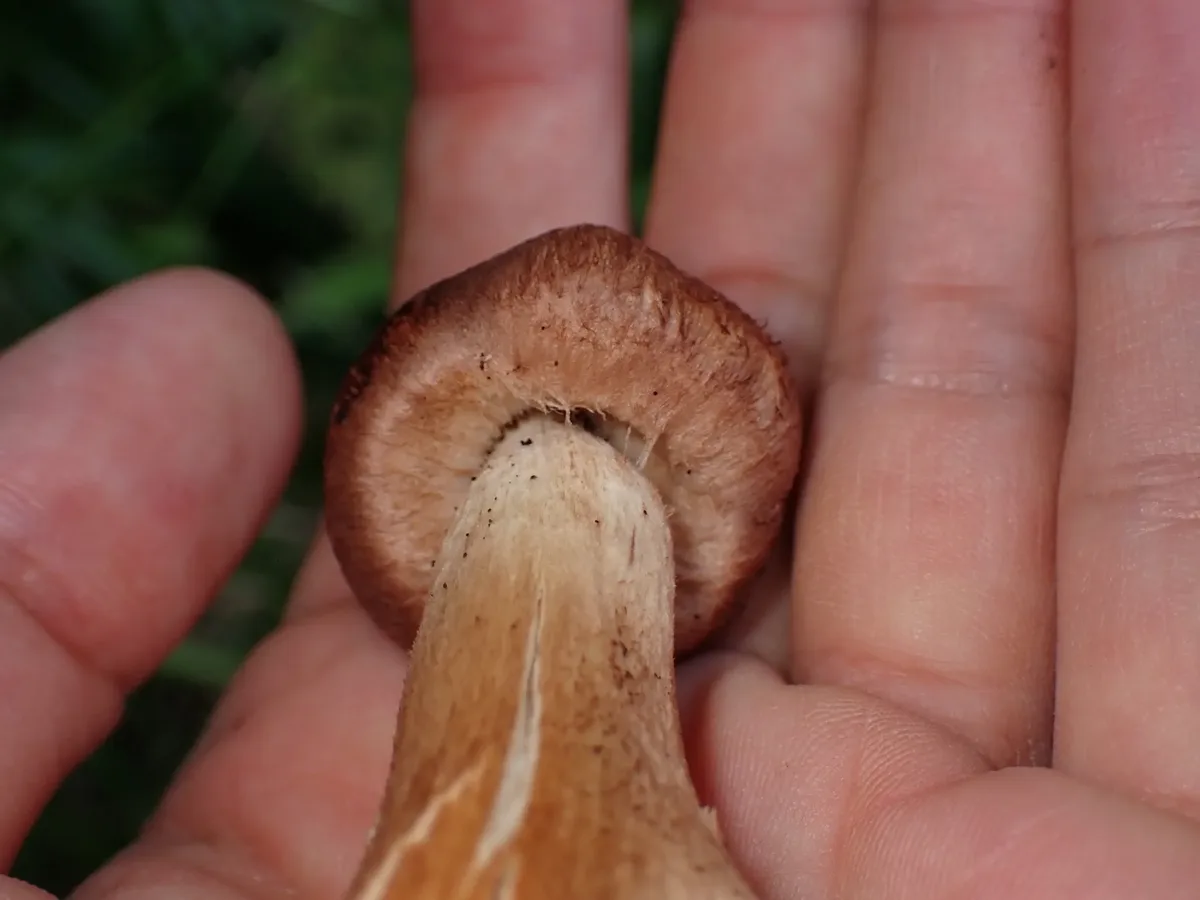
The margin remains strongly inrolled for much of development. When the mushroom is young, this margin carries a white or buff cottony fringe of fibres from the partial cortinate veil - a detail worth looking for on fresh specimens.
Gills
Sinuate (the characteristic notch at the stem is shared by all true Tricholoma), white to pale cream when fresh. Over time they develop reddish-ochre or rust-stained blotches, adding to the overall warm-russet colour palette.
Stem
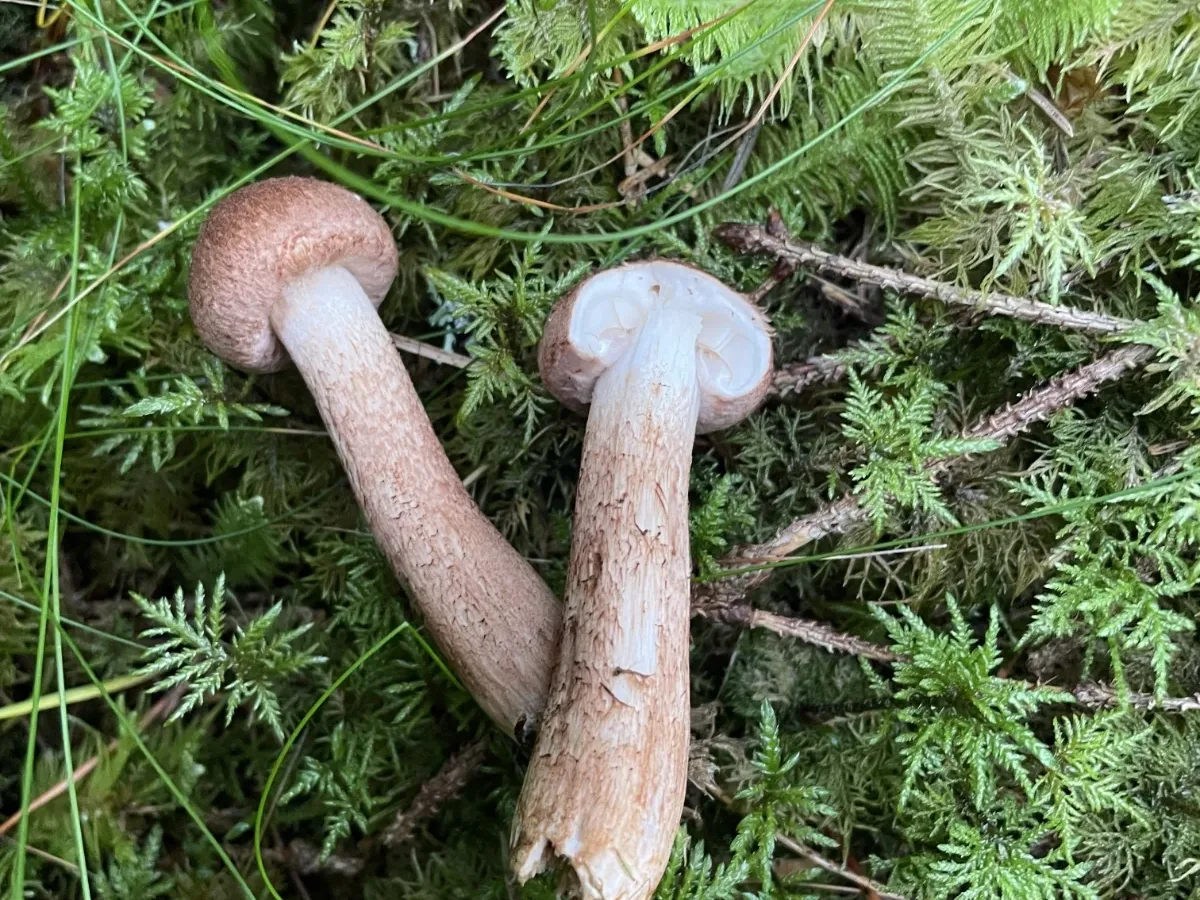
Matches the cap in colour and texture - fibrillose and somewhat scaly, lacking a ring.
Flesh
Cut flesh is white with a faint reddish tinge just under the cap skin, without dramatic colour change.
Smell & taste
Smell is the critical field character: a pronounced mealy or floury odour, strong enough to notice from a short distance and lingering on hands after handling. Taste follows suit - bitter, mealy, and persistently unpleasant.
Spore print white.
Why it's dangerous
The primary danger from correctly identified Tricholoma vaccinum is gastrointestinal illness - usually self-limiting but unpleasant, and in vulnerable individuals it may require medical care. The mushroom should simply not be eaten.
The greater field danger, as across the Tricholoma genus, is the risk of confusing it with Tricholoma pardinum (Tiger Knight), which causes one of the most severe purely gastrointestinal poisonings known from North American or European fungi, with documented hospitalisations and rare fatalities.
T. pardinum grows in the same conifer forest habitats and can be confused with robust, warm-coloured, scaly Tricholoma by inexperienced collectors. The greyish Entoloma pinkgills present a secondary identification hazard.
Anyone who experiences vomiting, severe abdominal pain, or dark urine after eating any wild Tricholoma from a conifer forest should treat this as a medical emergency until the species involved can be definitively excluded as something more dangerous - contact poison control or emergency services.
Toxin
The specific toxic compounds in Tricholoma vaccinum have not been fully chemically characterised in the primary literature. The species is thought to contain irritant terpenoids or related compounds responsible for both the bitter-acrid taste and the gastrointestinal toxicity.
A mild haemolytic activity (red blood cell lysis) has been reported in some experimental tests, consistent with the presence of saponin-like compounds.
These are not amatoxins, and the toxicological profile is categorically different from the hepatotoxic and nephrotoxic deadly species. Nonetheless the compounds reliably produce gastrointestinal illness in humans who consume the mushroom.
Symptoms
Gastrointestinal symptoms typically develop within 30 minutes to 3 hours of ingestion: nausea, vomiting, abdominal cramping, and diarrhoea.
Symptoms are generally self-limiting in healthy adults and resolve within 12-24 hours, but significant ingestion (particularly in children, the elderly, or immunocompromised individuals) can cause dehydration requiring medical attention.
If a haemolytic component is clinically relevant, this may manifest as pallor, weakness, or dark urine, though severe haemolysis in humans from this species is not well-documented.
Anyone experiencing symptoms after eating a Tricholoma from a conifer forest should seek medical advice and report the species involved, since misidentification of T. pardinum (Tiger Knight) cannot be excluded without expert verification of remaining specimens.
Staying safe
Tricholoma vaccinum is consistently listed as toxic in North American and European mycological literature. Although it is not documented as a cause of acute life-threatening poisoning in the manner of amatoxin- or orellanin-containing species, it causes gastrointestinal illness (nausea, vomiting, diarrhoea, abdominal cramps) and may also exert a mild haemolytic effect.
The bitter, mealy, and acrid taste is itself a chemical signal of irritant compounds in the flesh.
Some older European field guides hedged the toxicity with phrases like 'of no culinary value' or 'inedible due to taste', but modern North American and European poison-centre literature treats the species as reliably toxic and not simply unpalatable. No preparation method (parboiling, prolonged cooking, drying) has been established as making it safe.
This guide therefore classes it as CAUTION with isPoisonous true.
The equally important safety concern is misidentification. The genus Tricholoma in conifer forest contains Tricholoma pardinum, one of the most severely gastrointestinally toxic mushrooms in the temperate mycota, and any russet or scaly Tricholoma that cannot be positively identified should be left alone.
Where & when it grows
Habitat
Tricholoma vaccinum is a boreal and montane conifer specialist, forming mycorrhizal partnerships almost exclusively with spruce and fir.
In eastern North America, look for it in:
- The spruce-fir zone of the northern Appalachians
- The boreal mixed forests of New England and Quebec
- The Great Lakes boreal fringe
- The Acadian forest zone of the Maritime provinces
In Europe it inhabits the montane spruce-fir belt of the Alps, Carpathians, Pyrenees, and the vast boreal conifer zone of Scandinavia and Russia.
It grows on the forest floor among needle litter, moss, and humus, on moderately acidic to neutral well-drained soils, and typically at higher elevations or higher latitudes than spruce associates that prefer warmer lowland conditions.
The species is locally distributed and not encountered on every excursion even in seemingly appropriate forest. When it does appear, it is usually in small numbers scattered across a patch of mature, dense spruce-fir.
When
Fruiting runs from late summer through autumn, spanning August to November across most of the range, with the productive window for eastern North America concentrated in September and October.
The onset of fruiting tracks the cooling of soils as summer warmth yields to autumn. Soil temperatures in the 5-13 degrees C range, combined with adequate moisture from autumn rains, are the key triggers. At higher elevations and in the boreal north, fruiting can begin as early as August.
The shaggy fruit bodies are fairly resistant to the first light frosts and may persist briefly after a light freeze, but sustained hard frost ends the season.
Because it is mycorrhizal, the same patch of forest floor may produce fruit bodies in successive autumns from the same perennial mycelial network.
How it grows
Like all Tricholoma, the Scaly Knight is an obligate mycorrhizal symbiont that cannot complete its life cycle without living conifer host roots. The underground mycelium weaves through the soil around spruce and fir rootlets, exchanging mineral nutrients (particularly phosphorus and water) for photosynthate from the tree.
Fruit bodies emerge from below the needle litter 7-14 days after adequate soaking rain, when soils are in the appropriate temperature window. As with other mycorrhizal species, the mycelium is perennial and the same microsites may be productive across many consecutive autumns.
This predictability makes careful note-keeping in a spot journal particularly worthwhile for any forager who visits the same boreal or montane forest repeatedly. For this species, though, the notes serve observation and documentation purposes rather than harvesting, given its toxicity.
Fruiting conditions
A cool-season conifer associate. Flushes follow autumn rains once soils cool into the 5-13 degrees C range; most productive in the September-October window across eastern North America and temperate Europe. The firm fruit bodies are modestly frost-tolerant. Best on well-drained, moderately acidic soils under mature spruce and fir.
Look-alikes
The Scaly Knight is visually distinct from most grey-capped Tricholoma species, but care is needed with other warm-coloured, scaly, or fibrillose species growing in conifer forest.
The single most dangerous lookalike in North America is Tricholoma pardinum (Tiger Knight / Tiger Tricholoma): a broader, more robust, pale grey-brown to buffish Tricholoma with concentric scaly patches on the cap, firm thick flesh, a strong mealy smell, and mild-to-mealy taste.
T. pardinum causes one of the most severe gastrointestinal poisonings of any agaric in temperate forests (violent prolonged vomiting and diarrhoea, potentially requiring hospitalisation; fatalities rare but recorded) and is given a deadly lookalike flag here.
The Scaly Knight differs from T. pardinum by its distinctly reddish-russet-brown cap colour, more pronounced and erect woolly-scaly texture, and the bitter-acrid rather than mild-mealy taste - but a tired or hasty forager could make this mistake.
Tricholoma imbricatum (Mat Knight / Roof-scale Tricholoma) is another reddish-brown, dry, scaly Tricholoma of conifer woods, considered inedible to mildly toxic with an unpleasant taste and similar mealy smell. It is smaller-scaled and more broadly umbonate with a less shaggy surface; its edibility status is disputed and it should also be avoided.
Tricholoma focale (Booted Knight) is a related reddish-brown conifer associate with a persistent ring zone and fibrils on the stem in a 'boot' pattern - it is more robust, has a pronounced ring or ring-zone, and is poisonous.
Among boletes, a newly emerging, dark-capped porcini (Boletus edulis) might superficially attract the attention of an inexperienced picker in the same conifer forest, but the bolete tube layer on the underside (pores, not gills) makes confusion easily avoided with a brief look.
Grey Entoloma pinkgills (including Entoloma sinuatum, the Livid Pinkgill) can occasionally appear in mixed forest understory and are separated by their salmon-pink spore print and pinking gills - always take a spore print.
Large grey-to-buff-brown pinkgills in mixed woodland share sinuate gills with Tricholoma and can be overlooked at a glance. Entoloma sinuatum causes severe gastrointestinal poisoning and has caused fatalities. Separated definitively by spore print: salmon-pink to pinkish-brown (never white), and by gills becoming distinctly pink with maturity. T. vaccinum always drops a pure white spore print. Take a spore print from every Tricholoma before any consumption decision.
The most dangerous confusion risk in conifer forest. Larger and more robust than T. vaccinum, with a pale grey-brown to buffish cap broken into concentric flat or slightly raised scaly patches rather than the pronounced erect woolly tufts of T. vaccinum. Cap is paler - grey-brown, not reddish-russet. Flesh firmer and thicker. Smell strongly mealy or floury; taste mild to mealy (NOT bitter or acrid). Causes severe, violent gastrointestinal poisoning (vomiting, diarrhoea, onset 15 min to 4 h) requiring frequent hospitalisation; fatalities recorded in rare cases. The reddish-russet cap colour and the bitter-acrid taste of T. vaccinum are the clearest separators - but never eat any scaly Tricholoma from conifer forest without expert confirmation.
Another reddish-brown conifer-associated Tricholoma, poisonous. Distinguished from T. vaccinum by a clearly developed ring or prominent ring-zone on the upper stem (a persistent 'boot' cuff of fibres), more robust stature, and a cap that is less obviously shaggy-scaly. Smell mealy. Toxic - causes gastrointestinal illness. Do not eat.
Some dull reddish-brown to ochre-brown Inocybe species grow in conifer litter and may be noticed in passing as Tricholoma-like. Distinguished by a brown (not white) spore print, usually a radially split or fibrous cap (not broadly scaly-woolly), smaller stature, and often a spermatic or unpleasant smell. Many Inocybe contain dangerous muscarine. Always make a spore print: T. vaccinum's is white.
Closely related reddish-brown conifer associate, also in pine and spruce woods. Cap similarly dry, reddish-brown, but with smaller, flatter, more tile-like or appressed scales rather than the shaggy erect woolly tufts of T. vaccinum; the cap is broader and more uniformly convex with a less pronounced umbo; the margin is less fringed. Smell also mealy; taste unpleasant but usually described as more bitter than acrid. Also regarded as inedible to mildly toxic - do not eat.
Variable in colour (brownish, grey-green, olive-buff) but typically lacks the warm reddish-russet tones and the shaggy woolly scale pattern of T. vaccinum. Distinguished by a distinctive soapy or perfumed smell (resembling cheap soap or cleaning products), quite unlike the mealy smell of T. vaccinum. Cap surface tends to crack in a more regular geometric pattern rather than forming tufted wool. Also inedible.
A reference guide - never an edibility guarantee. When in doubt, leave it out.