Sulphur knight
Tricholoma sulphureumsyn. Agaricus sulphureus Bull., Gyrophila sulphurea (Bull.) Quél., Tricholoma bufonium (Pers.) Gillet
 © Michel Langeveld (CC BY)
 © Petri Roponen (CC BY-SA)
 © Mandy Hackney (CC BY)
 © Mandy Hackney (CC BY)
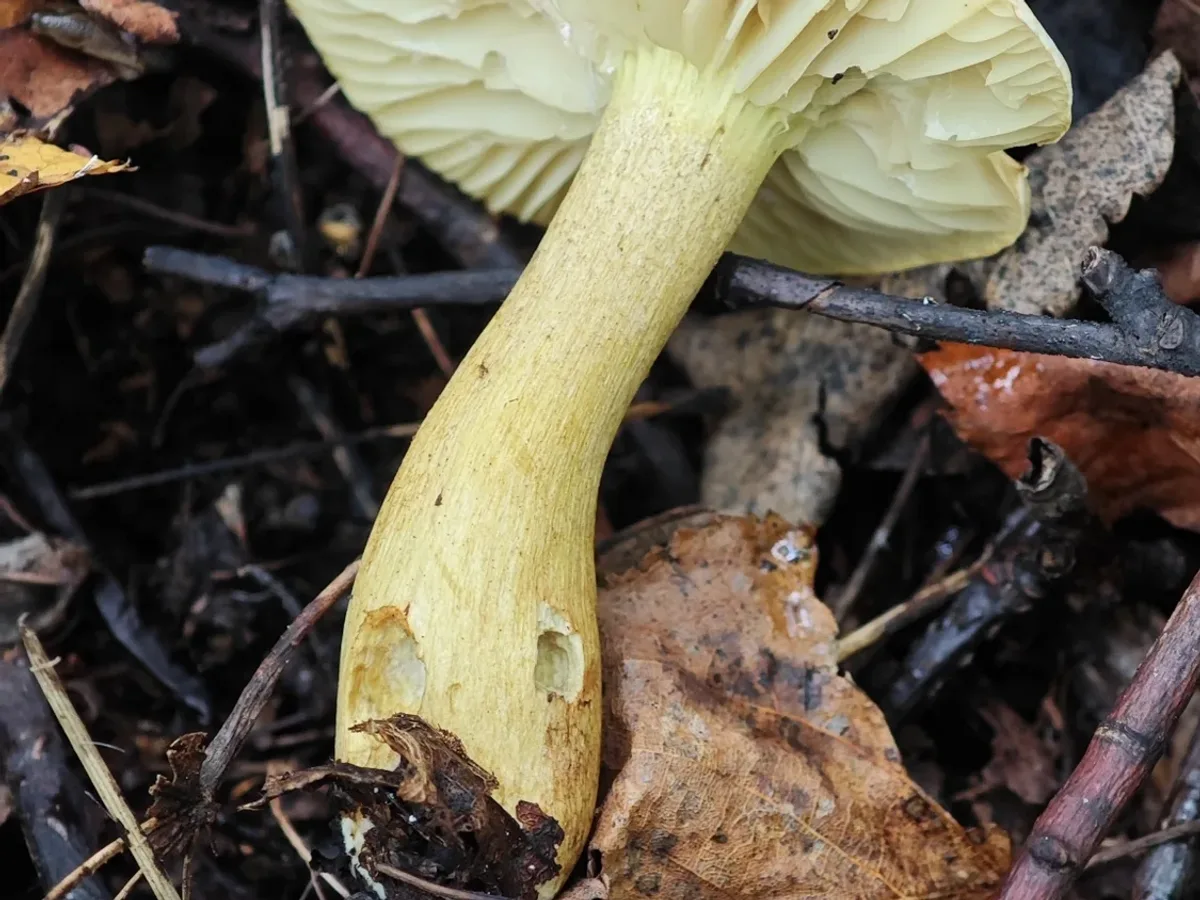 © relew (CC BY)
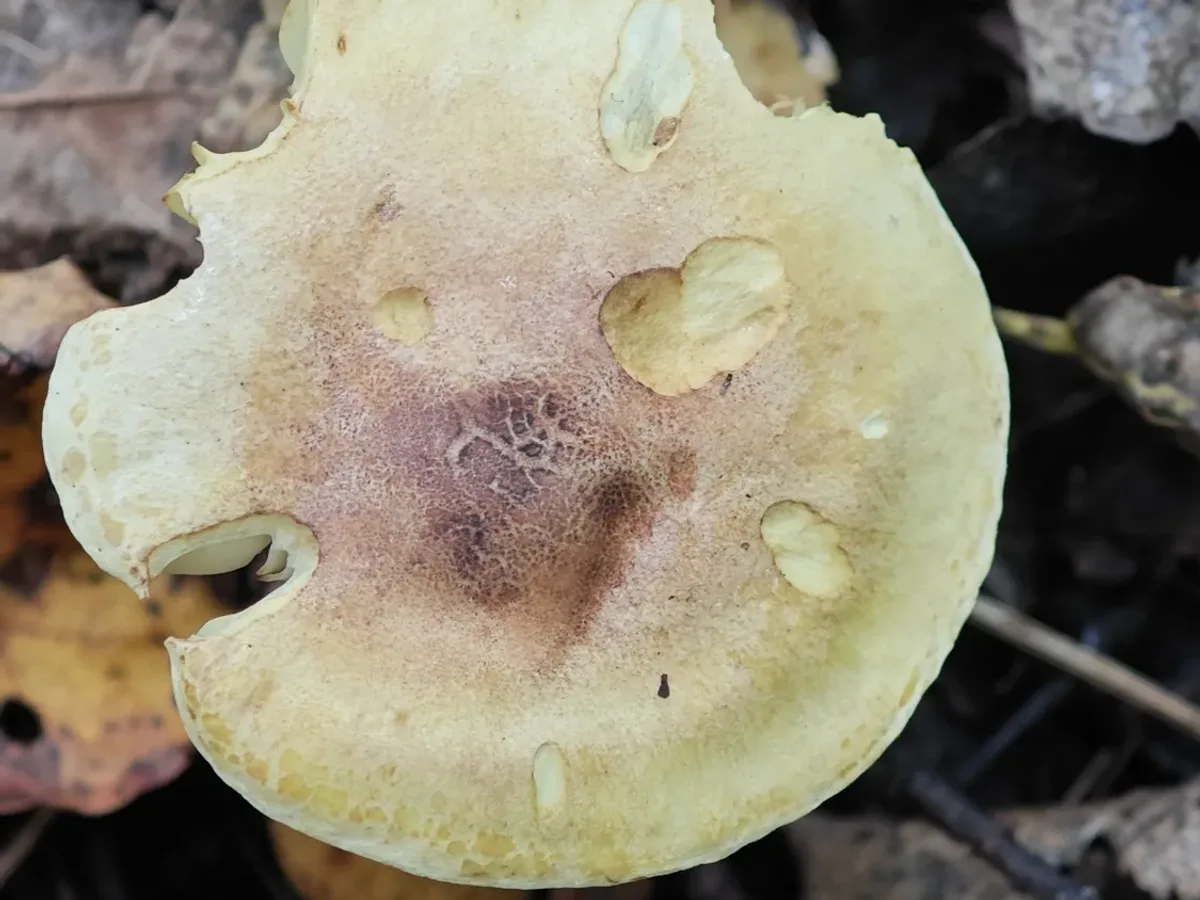 © relew (CC BY)
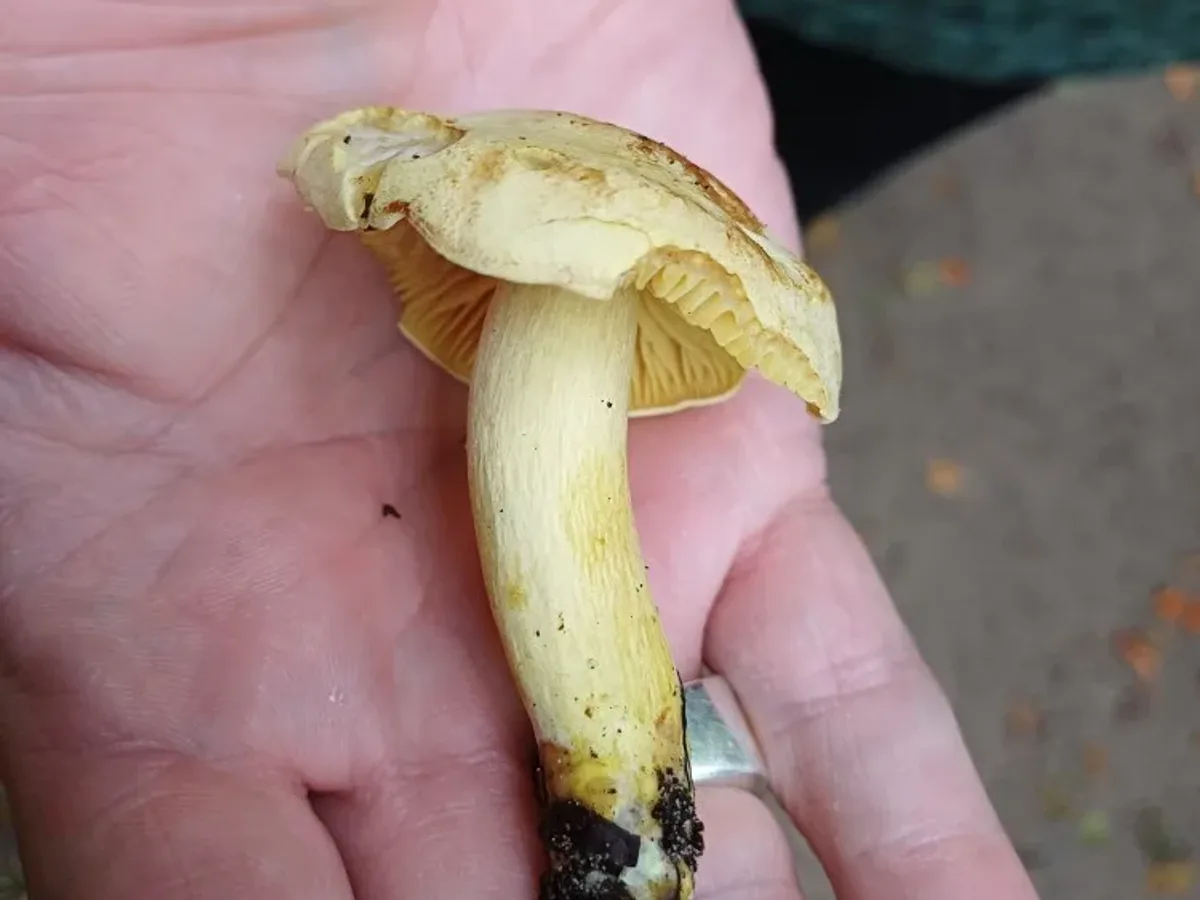 © gees de vries (CC BY-SA)
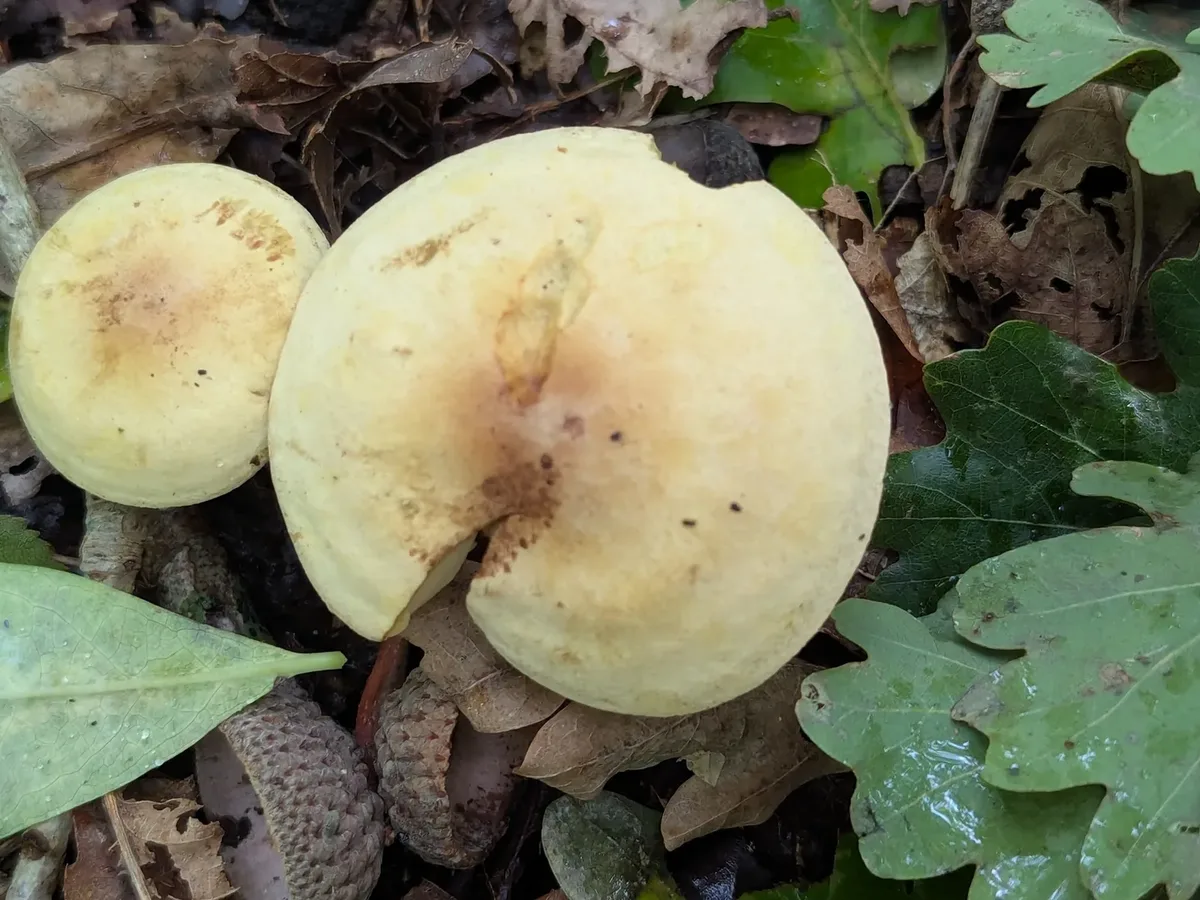 © Michel Langeveld (CC BY)© Michel Langeveld (CC BY)© Petri Roponen (CC BY-SA)
Edible only with the right preparation - or safe for some people but not others. Learn the caveats first.
How to recognise it
Tricholoma sulphureum is a medium-sized, uniformly sulphur-yellow mushroom with a smell so distinctive that it is essentially self-diagnosing.
Cap
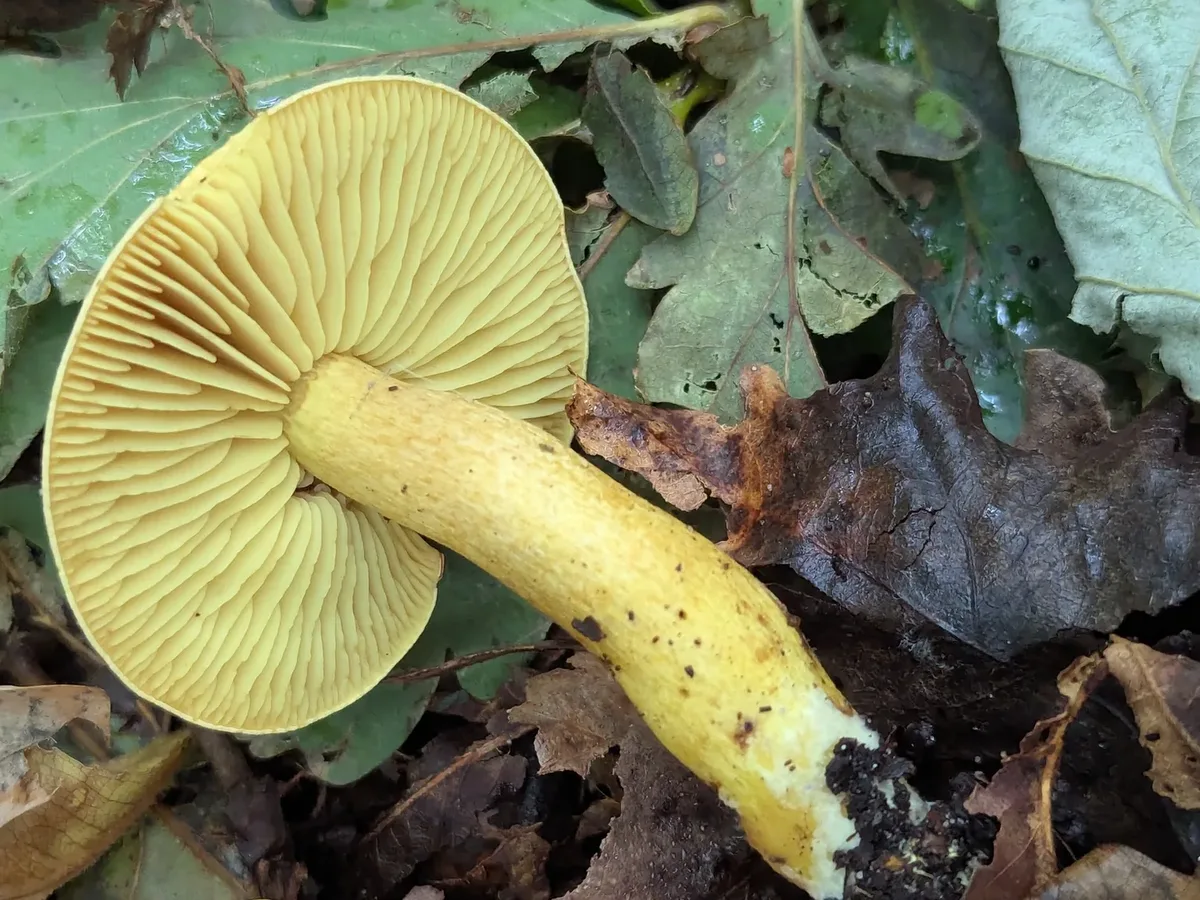
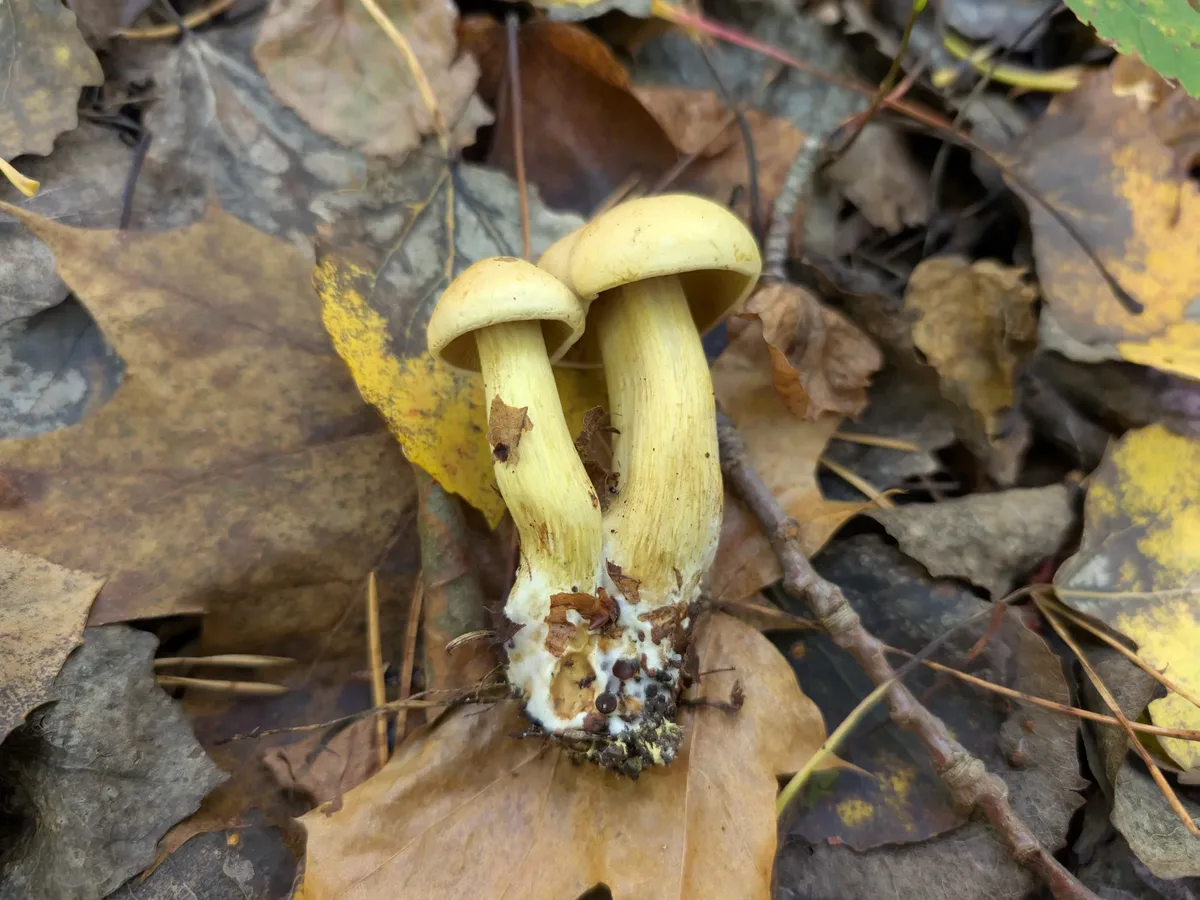
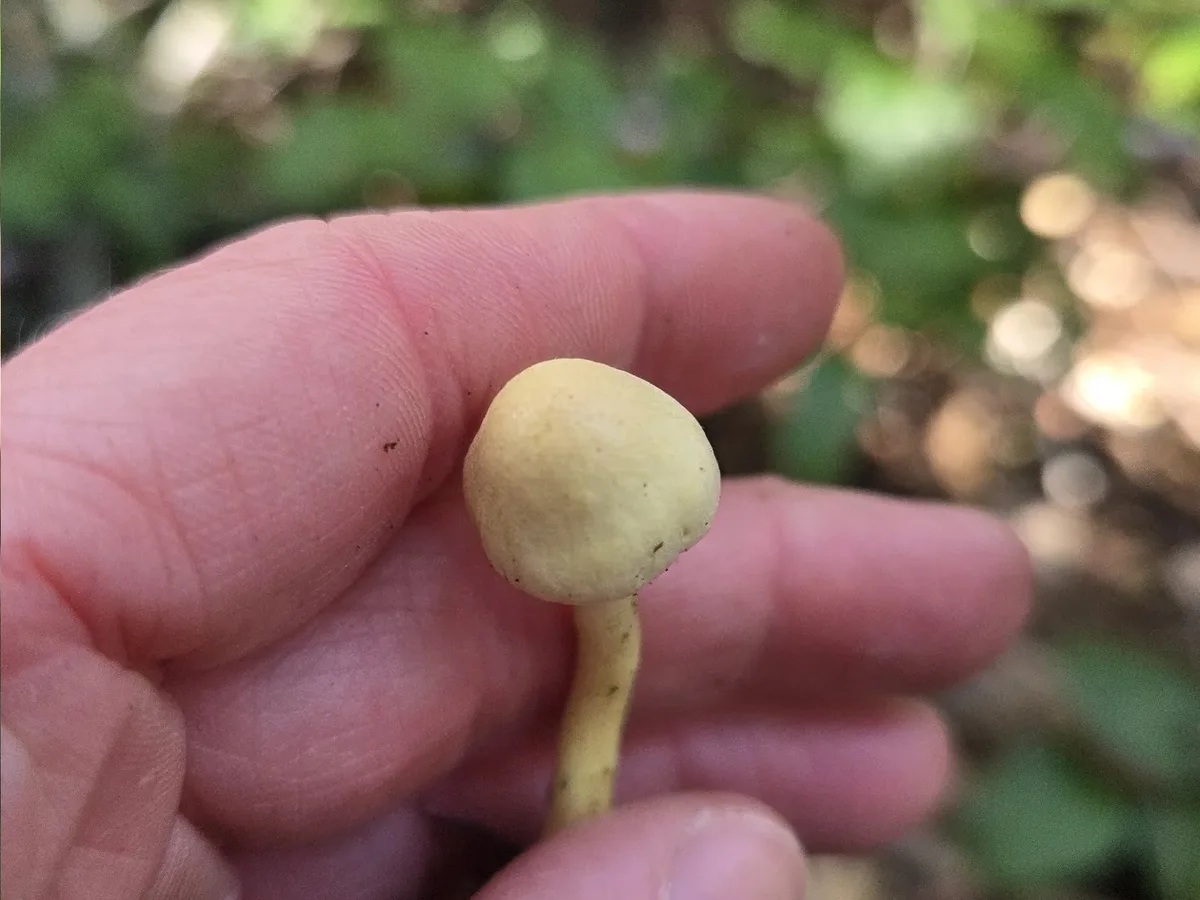
The cap measures 3-8 cm and progresses from convex through broadly umbonate to somewhat flattened. The surface is dry, smooth to finely fibrillose, and coloured a consistent sulphur-yellow to chrome-yellow.
The colour is usually even across the cap, occasionally slightly darker at the centre but without the olive-brown central disc that typifies Tricholoma equestre (the yellow knight).
The margin is inrolled when young and spreads with maturity.
Gills
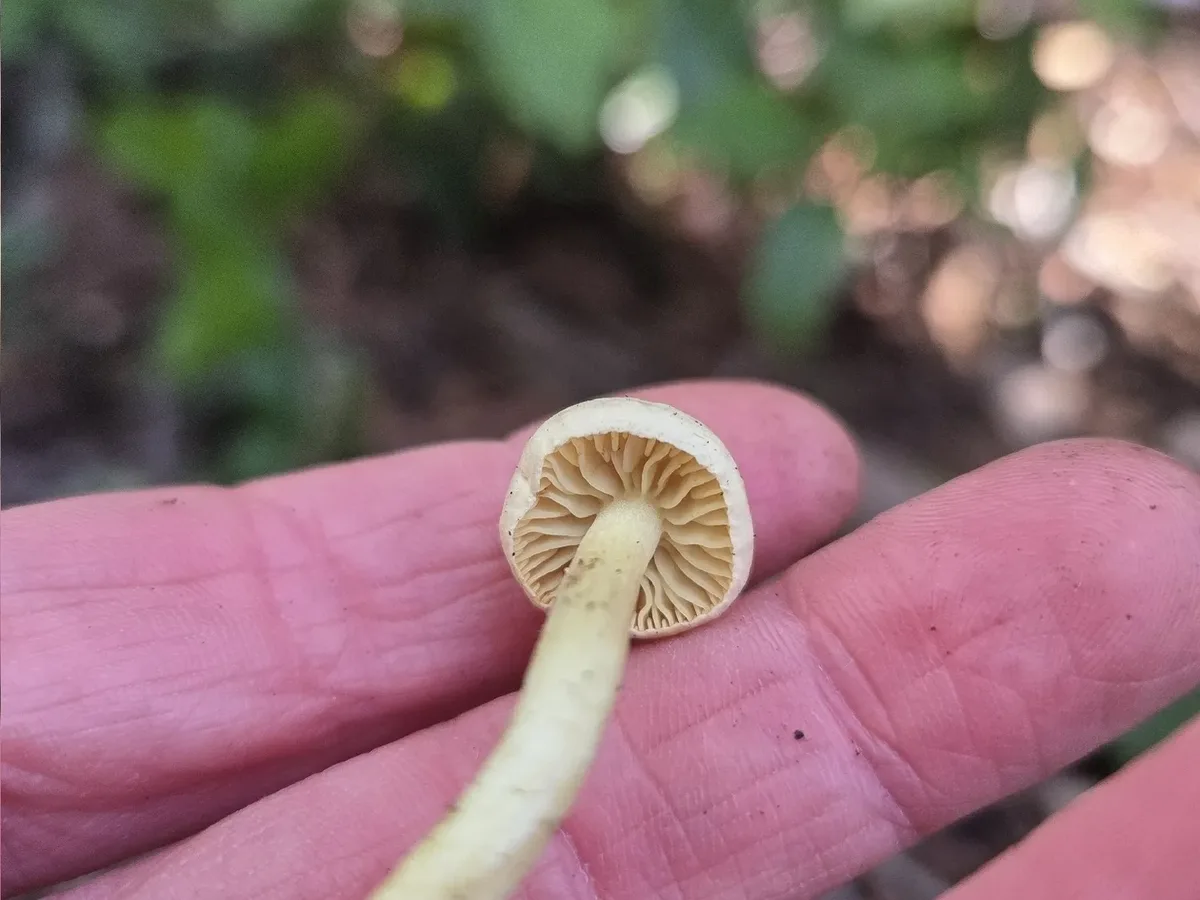
The gills are sinuate (they have the notch near the stem characteristic of Tricholoma), fairly crowded, and sulphur-yellow matching the cap. Unlike many other Tricholoma species they do not become significantly paler or more cream-coloured with age.
Stem
The stem is 4-9 cm tall, solid, cylindrical and also uniformly sulphur-yellow, surface longitudinally fibrillose or streaked, with no ring or basal cup.
Flesh
The flesh is yellow throughout - cutting the stem reveals yellow flesh, not white; this alone sets it apart from most other autumn Tricholoma. There is no ring, veil remnant, or volva.
Smell & taste
The defining character is the odour: an overwhelming, penetrating stench of coal gas, acetylene, sulfur, or rotten eggs - described in the literature as hydrogen sulfide-like, similar to old gas-tar or illuminating gas.
This smell is unique in the Tricholoma genus and is present from the earliest growth stage. It intensifies when the flesh is broken.
The smell alone is sufficient reason not to eat it and makes identification in the field straightforward once encountered.
Why it's dangerous
Not directly life-threatening in typical exposures for healthy adults.
The primary danger is confusion with edible yellow-coloured mushrooms by foragers who either:
- fail to smell the specimen carefully, or
- are collecting with others and mix baskets.
The vivid sulphur-yellow colour is attractive to beginners who may compare it to:
- chanterelles (which are orange and have false gill ridges rather than true gills), or
- the yellow knight (which smells floury, not sulfurous).
Any yellow-coloured Tricholoma from a deciduous woodland floor that smells even faintly of gas or sulfur must be discarded.
Toxin
The toxic principle has not been fully isolated but is attributed to sulfur-containing compounds - specifically volatile organosulfur molecules that produce the characteristic coal-gas or hydrogen sulfide odour.
These compounds irritate the gastrointestinal mucosa directly. There is no identified amatoxin, muscarine, orellanin, or gyromitrin component.
Cooking does not eliminate the irritants.
Symptoms
Gastrointestinal onset 30 minutes to 3 hours after ingestion.
Symptoms include:
- nausea
- repeated vomiting
- watery diarrhoea
- abdominal cramping
In healthy adults symptoms are typically self-limiting within 24 hours; supportive care (oral rehydration) is sufficient in mild cases.
Severe vomiting leading to dehydration may warrant medical evaluation and IV fluids. Children and individuals with gastrointestinal conditions are at greater risk of serious dehydration.
No specific antidote exists.
Staying safe
Tricholoma sulphureum is poisonous and classified as inedible or toxic in all standard European mycological references.
The sulfurous compounds that produce the characteristic smell are gastrointestinal irritants that cause nausea, vomiting, abdominal pain, and diarrhoea, typically within 30 minutes to 3 hours of ingestion.
Poisonings do occur, generally among inexperienced foragers attracted by the bright yellow colour, despite the repellent odour. The toxins are not neutralised by cooking.
Because the smell is overwhelming even in small quantities, accidental poisoning is far less common than with more palatable toxic species, but the illness can be severe.
Always smell a yellow-coloured Tricholoma before putting it in a basket: the smell of sulfur, gas, or rotten eggs is a hard stop.
Where & when it grows
Habitat
Tricholoma sulphureum is an ectomycorrhizal species of deciduous and mixed woodland, predominantly associated with oak (Quercus robur, Q. petraea) and beech (Fagus sylvatica), though it also occurs with hornbeam, birch, and occasionally conifers.
It strongly prefers well-drained, moderately fertile mineral soils rather than peaty or waterlogged ground.
Typical finds are solitary or in small, scattered groups on the forest floor - in leaf litter, short vegetation near tree bases, or alongside woodland paths. It does not form rings or clusters.
The species is most common across temperate western and central Europe (France, Germany, Benelux, Britain, parts of Scandinavia, Italy) and extends into the Mediterranean zone at altitude. In northern and eastern Europe it is present but less frequent.
Look for it in ancient parkland oak or mature beech-oak forest with a relatively open canopy.
When
Fruiting bodies begin to emerge from late August onward, with the main flush running through September and October - the heart of the autumn Tricholoma season.
November records are possible in mild, damp autumns, especially in western Europe and maritime climates.
Because the sulphur knight fruits alongside edible knights such as T. portentosum and T. columbetta, careful identification is essential whenever you harvest any yellow or mid-brown Tricholoma from the same woodland.
How it grows
The sulphur knight grows singly or in small, loose groups of a few fruitbodies - never in tufts or dense clusters.
Each fruitbody pushes up from soil-level, sustained by ectomycorrhizal mycelium woven around the roots of nearby trees. There is no decaying wood involved, and nothing here indicates the base of a stump or log.
The stem is robust and solid throughout, with no ring and no basal volva.
What is striking is how completely developed the sulfurous odour is from the very first stage of growth: even a tiny button, barely emerged from the leaf litter, already carries the full gas-tar smell that defines the species.
Fruiting conditions
Flushes following autumn rain events once soil temperatures drop below 15 °C. Successive flushes can occur with each significant rainfall through the autumn season. Conservative standard-mycology estimate.
Look-alikes
The extreme sulfurous smell is so characteristic that confusion with anything else is usually the result of smelling the mushroom too casually. However, several yellow or grey-yellow Tricholoma species can superficially resemble T. sulphureum in colour.
- Tricholoma equestre (yellow knight / man-on-horseback) - the closest look-alike. Similar sulphur-to-olive-yellow colouration, but the cap typically shows an olive-brown or tawny central disc and the smell is floury or mealy, never sulfurous. Considered toxic with repeated consumption (associated with rhabdomyolysis in cases involving large repeated meals) and now classified as 'do not eat' across most of Europe.
- Tricholoma flavovirens - a synonym for T. equestre in North American literature; the same separation applies.
- Tricholoma sulphuripes - a related sulfur-smelling species with similar appearance occurring in the same habitat; it can be considered the same risk category.
- Tricholoma sejunctum - a pale yellow-greenish Tricholoma with a floury-rancid smell and darker radial fibres on the cap; it is not edible.
- Hygrophoropsis aurantiaca (false chanterelle) - bright orange rather than yellow, has decurrent gills, a fruity or mealy smell, and no sulfurous odour.
None of the realistic lookalikes are deadly mushrooms, but several are toxic; the sulfurous smell reliably rules them all out.
H. aurantiaca is bright orange (not yellow), has thin, crowded, forked, decurrent gills, a fruity or faintly mealy smell, and a thinner, hollow stem. The orange colour and decurrent gills prevent confusion with any close examination; neither species is edible.
T. sejunctum has a pale greenish-yellow cap with darker radial fibres creating a streaked appearance, a floury-rancid rather than sulfurous smell, and white to cream gills. Also inedible, but the lack of sulfurous odour and the radially fibrous darker cap easily separate it.
A closely related sulfur-smelling species with a similar yellow appearance; separable microscopically and by subtle cap texture differences. Same toxicity risk as T. sulphureum; the sulfurous smell is shared between both species and immediately identifies them as inedible.
T. equestre has a similar yellow cap but the central disc is typically olive-brown or tawny, surface slightly slimy when moist, and the smell is floury or mealy - never sulfurous or gas-like. T. equestre itself is now considered toxic (associated with rhabdomyolysis after repeated large meals) and should not be eaten. The key separator is smell: meal/flour vs. coal gas.
A reference guide - never an edibility guarantee. When in doubt, leave it out.