Soapy knight
Tricholoma saponaceumsyn. Agaricus saponaceus Fr., Gyrophila saponacea (Fr.) Quél., Melanoleuca saponacea (Fr.) Murrill
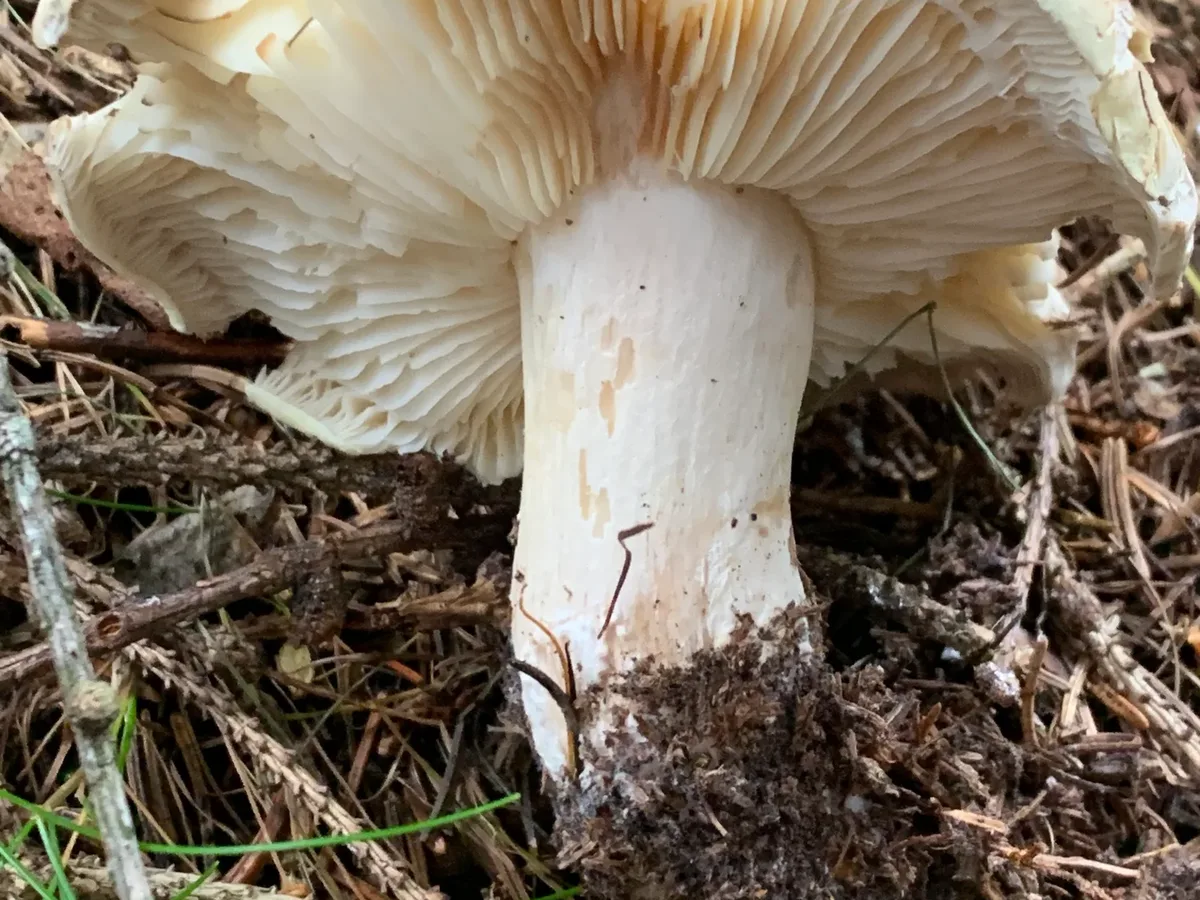 © Manuela Fiorini (CC BY)
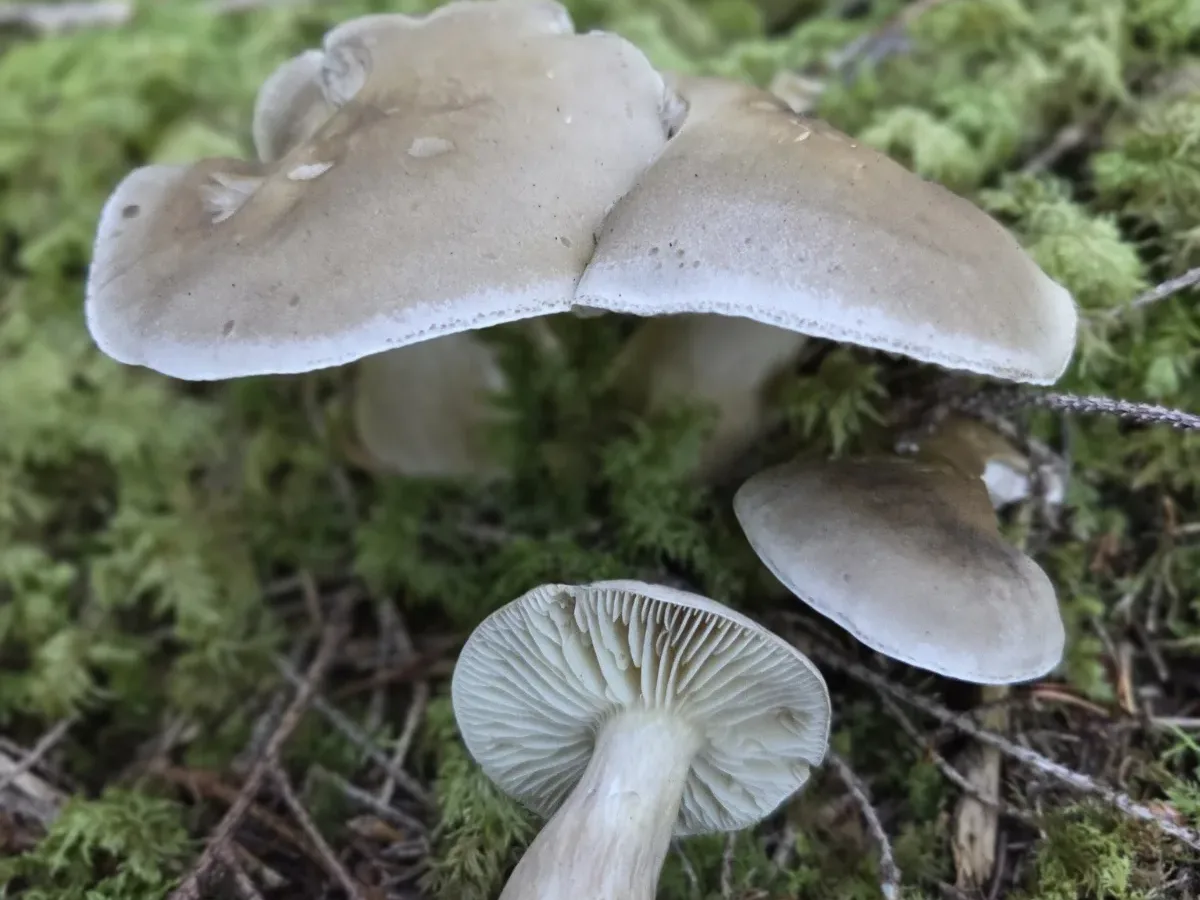 © Sigmund Ås (CC BY)
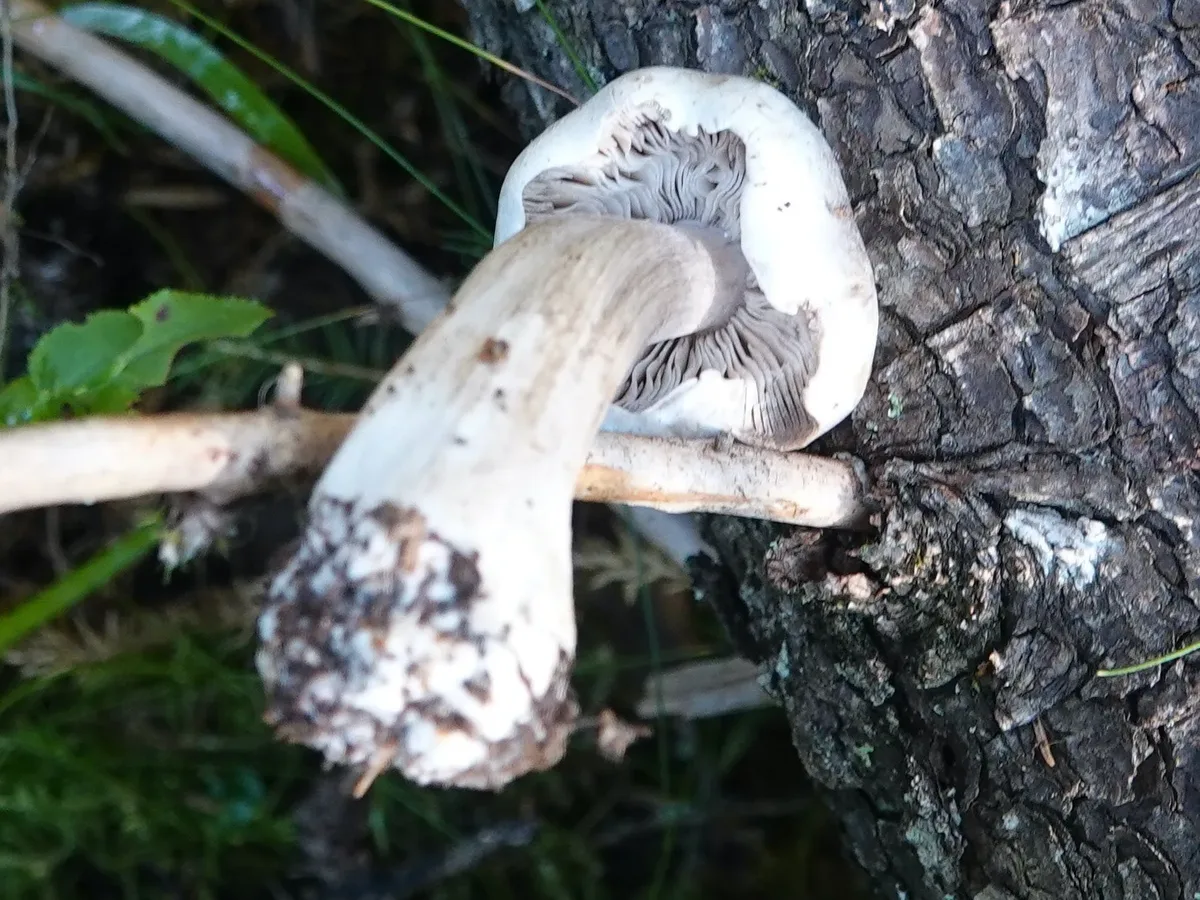 © Willow Peo Hansen (CC BY)
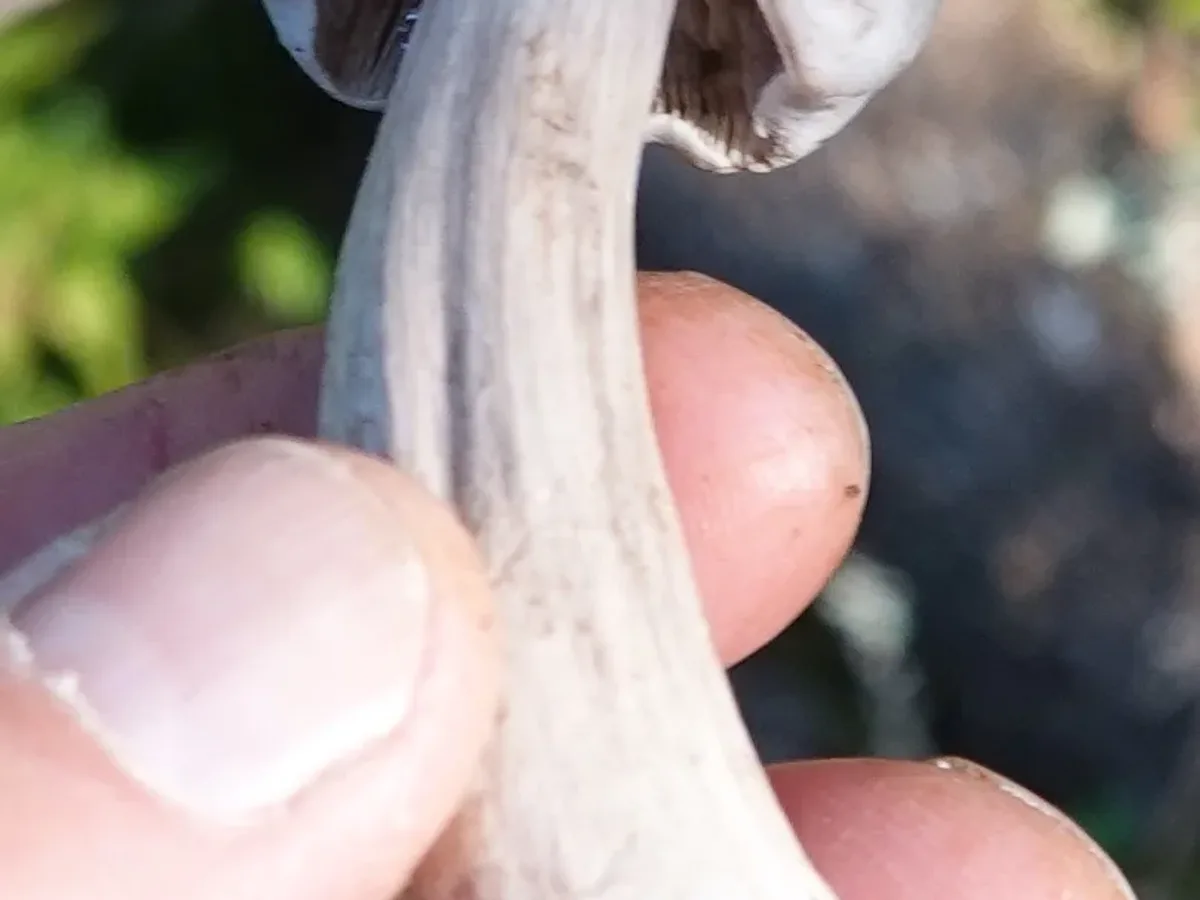 © Willow Peo Hansen (CC BY)
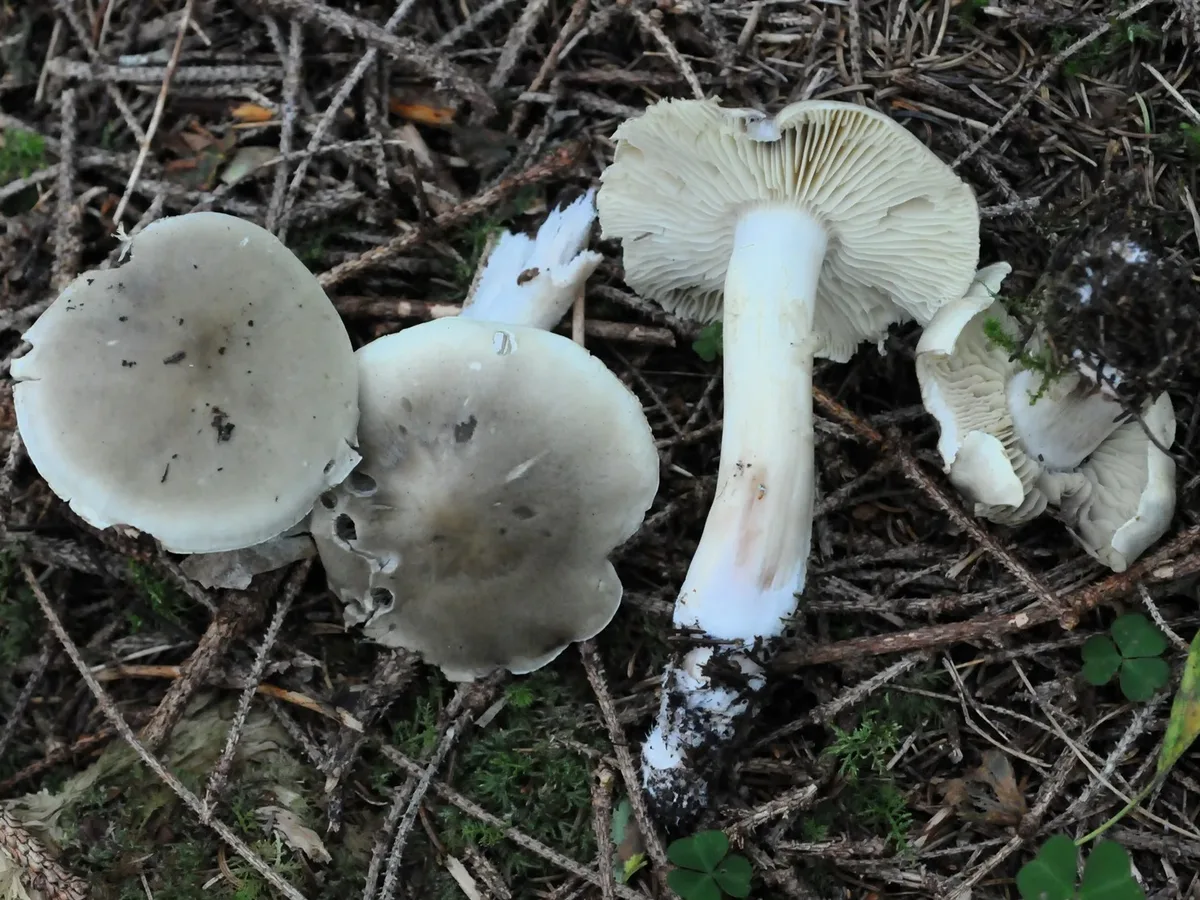 © Perry Gunnar Larsen (CC BY)
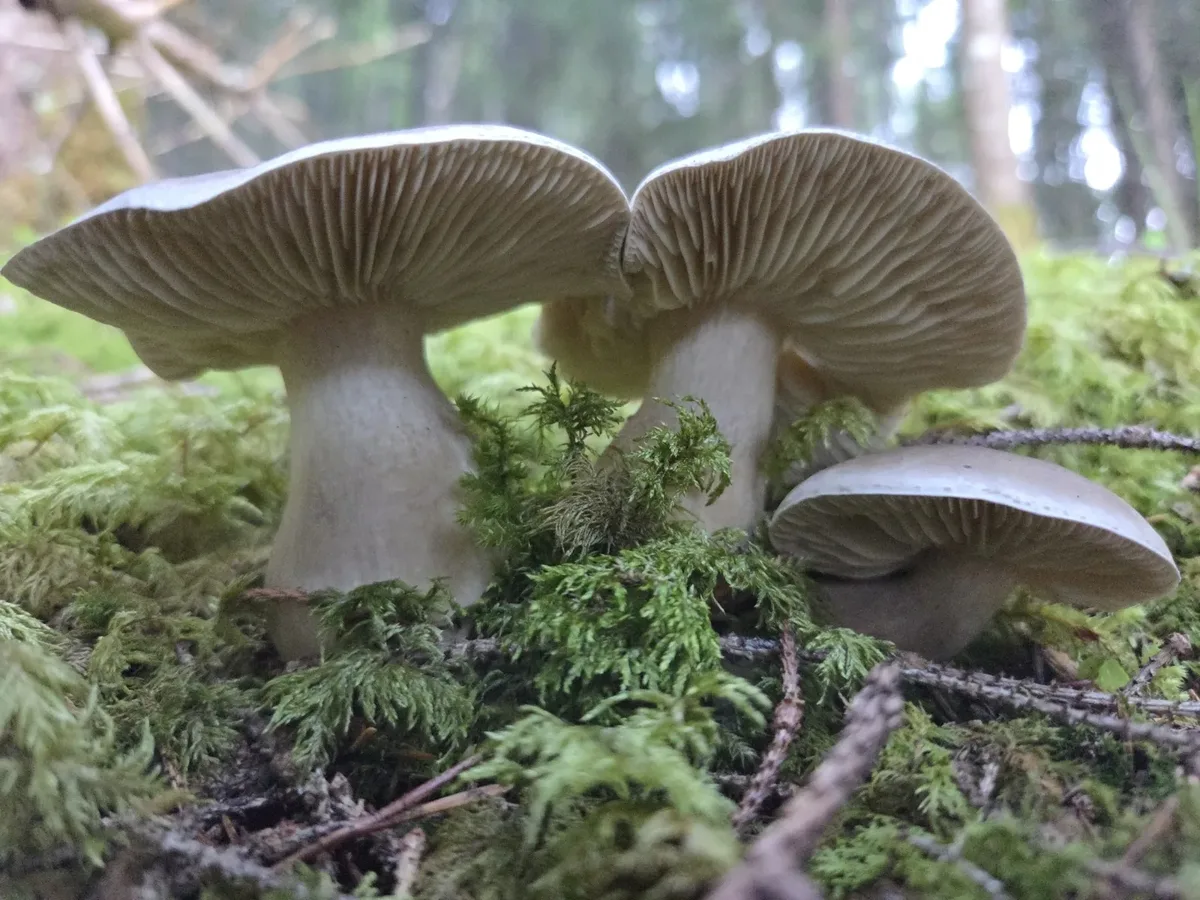 © Sigmund Ås (CC BY)
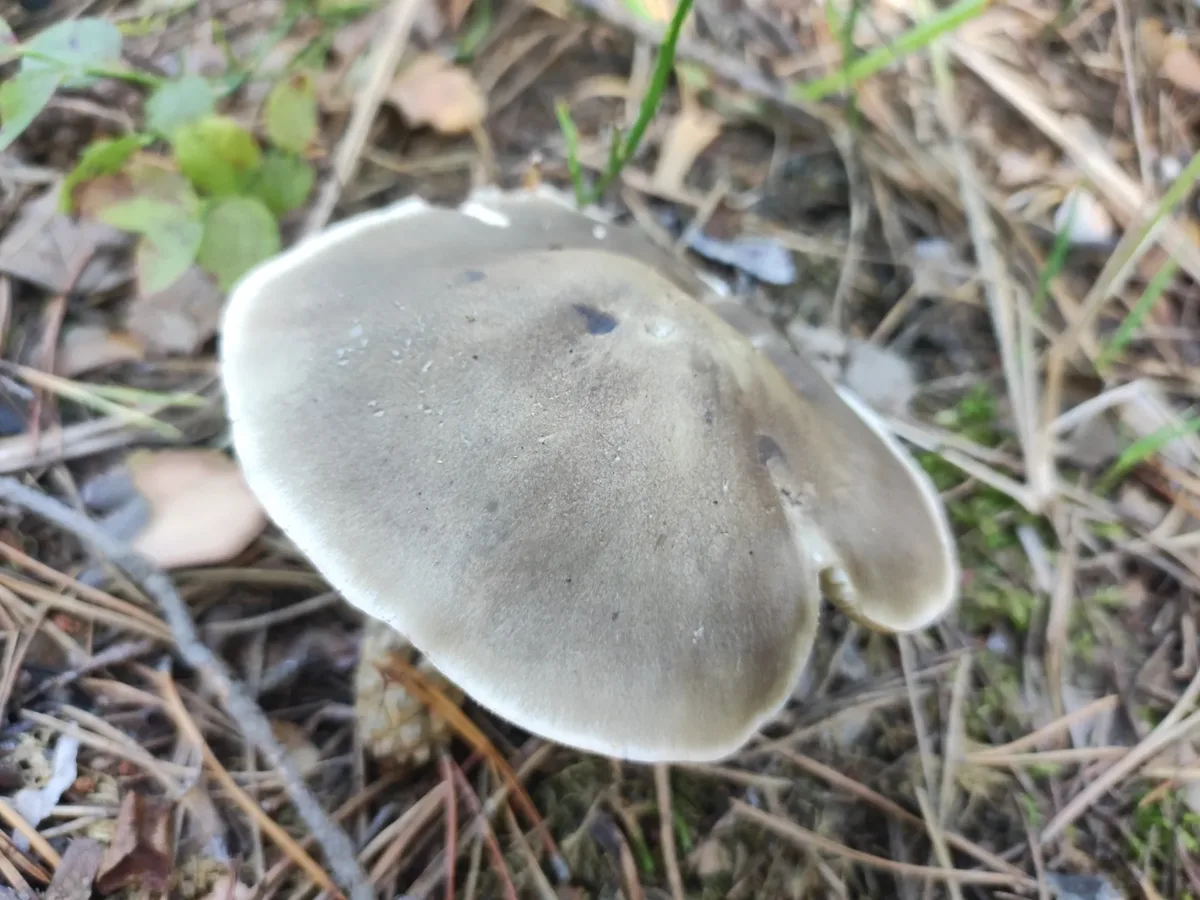 © Anastasiia Samokhvalova (CC BY)© Manuela Fiorini (CC BY)© Sigmund Ås (CC BY)
Not poisonous, but not worth eating - too tough, bitter, or bland for the pot.
How to recognise it
Tricholoma saponaceum is a medium to large woodland mushroom whose most confusing trait is its colour: it seems reluctant to commit to one.
Cap
Caps range from 4 to 12 cm and run through shades of grey-brown, olive-grey, slate, pale tan, and occasionally almost white - all on the same species.
The surface is dry or very slightly viscid in wet weather, smooth to delicately fibrillose, with a characteristically darker central disc and a pallid margin. Shape moves from convex through broadly umbonate to flattened or shallowly depressed, the margin starting strongly inrolled before sometimes turning wavy or irregular with age.
Gills
The gills are sinuate - they have a neat notch where they approach the stem - crowded, and initially white to cream, sometimes picking up pale grey or faint pinkish or greenish tints.
Stem
The stem is 4-10 cm tall and 1-2.5 cm thick, solid, white to pale grey, and often conspicuously flushed pink to reddish-pink toward the base; this pink base is arguably the single most important field mark.
Flesh
Cut the flesh - firm and white as it is - and it often blushes pink to salmon, especially in the lower stem; check this in every specimen you suspect.
Smell
But before any of that: smell it. The soapy odour is overwhelming and unlike almost anything else in the forest - cheap detergent, a bar of bathroom soap, the herb soapwort (Saponaria).
It is believed to stem from saponin-like compounds, and it identifies this species the moment you lift the cap.
Why it's dangerous
Not directly life-threatening in ordinary doses for healthy adults, but poisoning can be serious. Children and individuals with pre-existing gastrointestinal conditions are at higher risk of severe dehydration.
The main danger is misidentification. Because T. saponaceum is extremely common, widespread, and highly variable in colour, it is regularly gathered alongside edible Tricholoma species by inexperienced collectors who fail to notice or discount the soapy smell.
Toxin
The exact toxin has not been fully isolated, but saponins and/or related steroid glycosides are implicated.
These compounds disrupt cell membranes in the gastrointestinal epithelium, causing irritation and inflammation. Cooking does not reliably neutralise the irritants.
Symptoms
Onset typically 30 minutes to 3 hours post-ingestion.
Primary symptoms:
- Nausea
- Vomiting
- Watery to loose diarrhoea
- Abdominal pain and cramping
Symptoms are self-limiting in healthy adults and generally resolve within 24 hours. Severe or prolonged illness, or ingestion by vulnerable individuals, warrants medical evaluation and supportive care (hydration). No specific antidote exists.
Staying safe
Tricholoma saponaceum is poisonous and causes gastrointestinal illness. The toxins are not fully characterised but are believed to include saponin-like compounds.
Symptoms include nausea, vomiting, abdominal cramps, and diarrhoea, typically onset within 30 minutes to 3 hours of ingestion. While not fatal in ordinary circumstances, illness can be severe enough to require medical attention, especially in children, elderly, or immunocompromised individuals.
The soapy smell should be considered a red flag by any forager. Tricholoma species with pleasant-smelling, edible flesh typically smell of meal (flour), radishes, or have almost no smell; a strong soap odour is a warning signal.
Because the species mimics several edible knights and is extremely common in the same habitats, it is one of the most frequent causes of Tricholoma poisoning in Europe.
Where & when it grows
Habitat
Tricholoma saponaceum is a generalist ectomycorrhizal species, comfortable in coniferous forest (spruce, pine, fir), mixed deciduous-coniferous woods, and broadleaved stands of beech, oak, or hornbeam. It tolerates a broad pH range but tends to prefer moderately rich mineral soils.
Look for it among moss cushions under spruce, along shaded forest tracks, or at woodland margins. It fruits singly or scattered - not in rings or clusters.
Like all ectomycorrhizal fungi, the mushrooms you see represent only a brief above-ground moment; the real organism is an unseen web of mycelium threading through the soil, sustaining long-term partnerships with multiple tree species simultaneously.
The soapy knight is among the most frequently encountered Tricholoma across Europe, and virtually any forager working deciduous or mixed woodland in autumn will cross paths with it.
When
Fruiting bodies appear from late August onward, with the main flush running through September and October. November finds can occur in mild autumns, particularly in western Europe.
The species is among the most common large Tricholoma in the autumn season and is frequently collected by inexperienced foragers who mistake it for edible Tricholoma species.
How it grows
Solitary to scattered, occasionally in small loose groups. Never in dense tufts or clusters.
Growth is terrestrial, arising from the ectomycorrhizal mycelium associated with tree roots. The robust, solid stem does not arise from a volva or ring.
Young caps emerge with firmly inrolled margins, and the soapy smell is present from the earliest stages.
Fruiting conditions
Flushes following autumn rains when soil temperatures drop below 14 °C. Tolerant of cooler conditions than many autumn species and can persist well into late autumn with successive flushes after each rain event.
Look-alikes
The colour variability of T. saponaceum makes it superficially resemble numerous other Tricholoma species, but the combination of soapy smell + pink-staining flesh + pink stem base is highly distinctive.
- Tricholoma terreum (grey knight) is smaller, has a drier, grey, fibrillose to scaly cap, white non-staining flesh, a mild or mealy smell, and lacks the soapy odour entirely; it is edible with caution.
- Tricholoma portentosum (streaky knight) has a grey, radially streaked cap with a violet tinge, a mild floury or radish-like smell, and white flesh that does not stain pink; it is edible and choice.
- Tricholoma pardinum (tiger knight) is paler grey-brown with a distinctly scaly cap surface, a pronounced mealy smell, and white non-staining flesh; it is severely toxic and causes violent, prolonged gastrointestinal poisoning requiring hospitalisation. Grey morphs of T. saponaceum can be confused with it, so always confirm the soapy smell and pink-staining flesh before drawing conclusions.
- Tricholoma virgatum (acrid knight) has a pale grey to silvery cap with a prominent central umbo, white gills, and an intensely acrid taste; its flesh does not stain pink.
- Clitocybe nebularis (clouded funnel) is larger with decurrent gills, a distinctive musty or rancid smell (never soapy), and lacks the pink flesh.
- Calocybe gambosa (St George's mushroom) fruits in spring, smells strongly of meal or cucumber, and has crowded white gills with white non-staining flesh.
None of the lookalikes present a life-threatening risk, but T. saponaceum itself causes gastrointestinal illness and should never be consumed.
T. virgatum has a silvery-grey cap with a pointed central umbo, intensely acrid burning taste, white gills, and flesh that does not stain pink. Inedible due to acridity but not toxic in the same way.
Clitocybe nebularis is larger, cap pale grey-buff, gills are decurrent (running down the stem) rather than sinuate, smells distinctly musty or rancid (never soapy), flesh does not stain pink, and there is no soapy odour.
T. terreum has a dry, grey, distinctly fibrillose to scaly cap, mild or mealy (not soapy) smell, white flesh that does not stain pink, and no pink flushing at the stem base. It is edible with caution, though it should be distinguished carefully from other grey Tricholoma.
Tricholomopsis rutilans grows on dead conifer wood (not soil), has a yellow cap covered in reddish-purple scales, yellow gills, and no soapy smell.
Calocybe gambosa fruits in spring (April-May), not autumn; the cap is white to pale buff without grey tones; the strong floury or mealy smell is very different from soap; flesh does not stain pink.
T. portentosum has a grey cap with radial dark streaks and often a violet tinge at the margin, smells floury or of radishes (never soapy), and the flesh does not turn pink when cut. It is a choice edible.
T. pardinum is paler grey-brown with a cap surface broken into distinct concentric chunky scales, a pronounced mealy smell, and white flesh that does not stain pink. It causes one of the most severe gastrointestinal poisonings of any European mushroom (violent vomiting, prolonged diarrhoea, frequently requiring hospitalisation). Grey morphs of T. saponaceum may be superficially confused with it; always confirm the soapy smell and pink-staining flesh to separate them.
A reference guide - never an edibility guarantee. When in doubt, leave it out.