Spotted knight
Tricholoma pessundatumsyn. Agaricus pessundatus, Gyrophila pessundata, Tricholoma pessundatum var. pessundatum
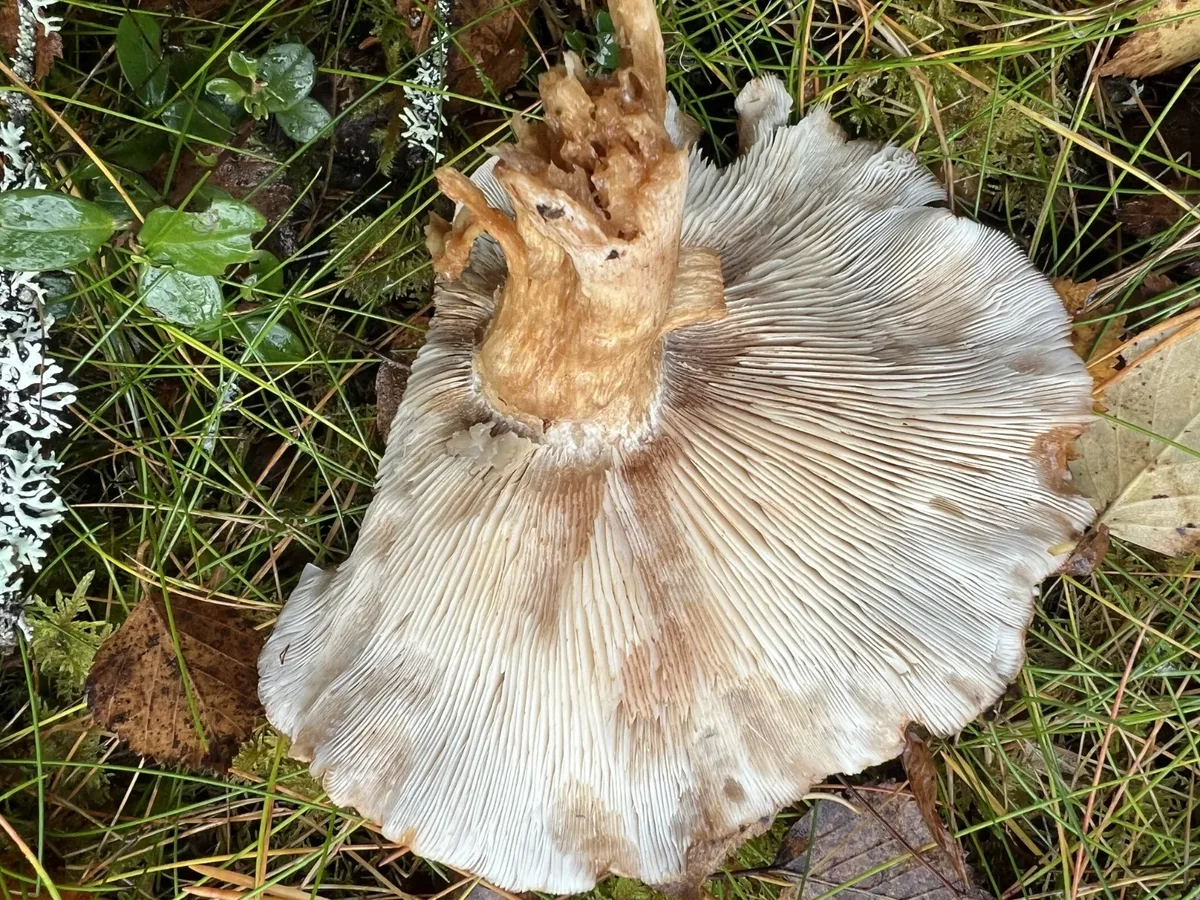 © Ingunn Moslet (CC BY)
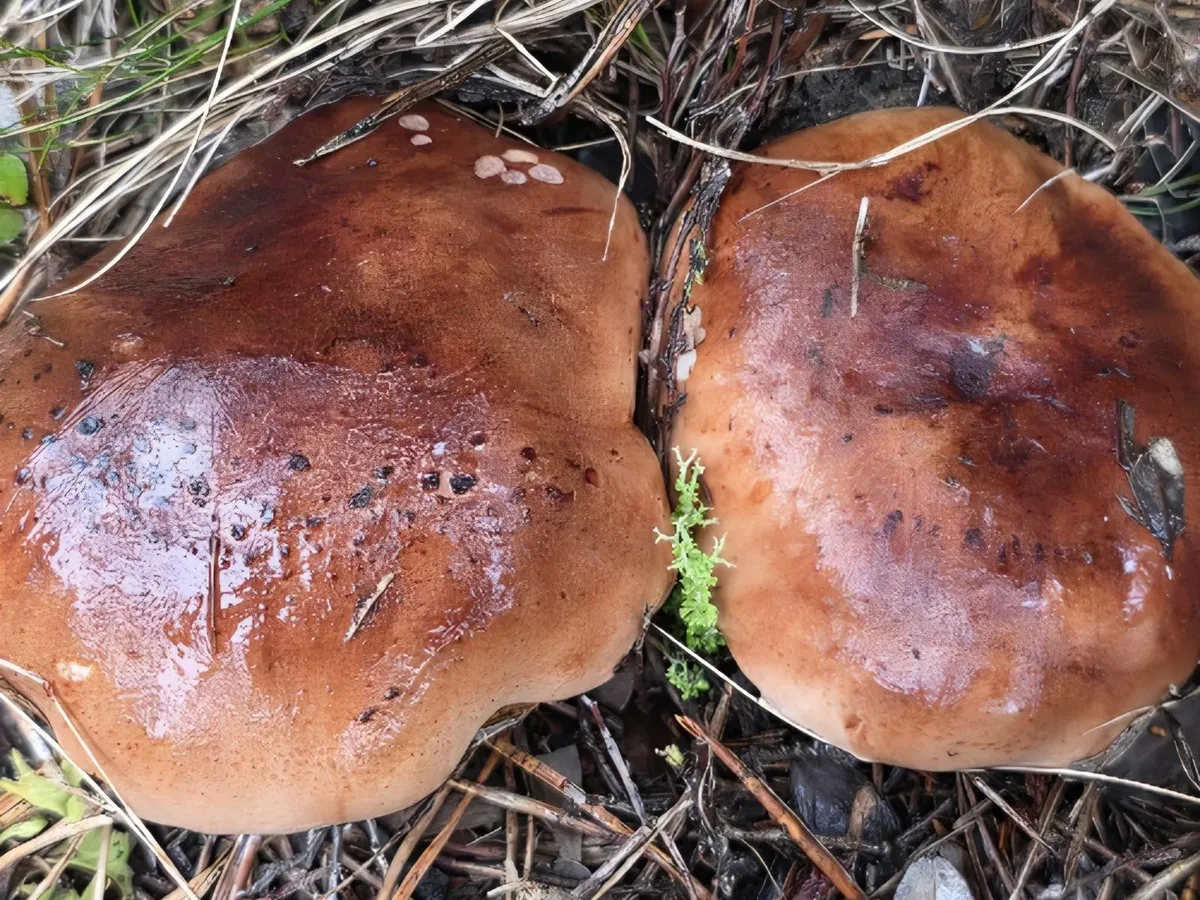 © Nils Edvard Stokke (CC BY)
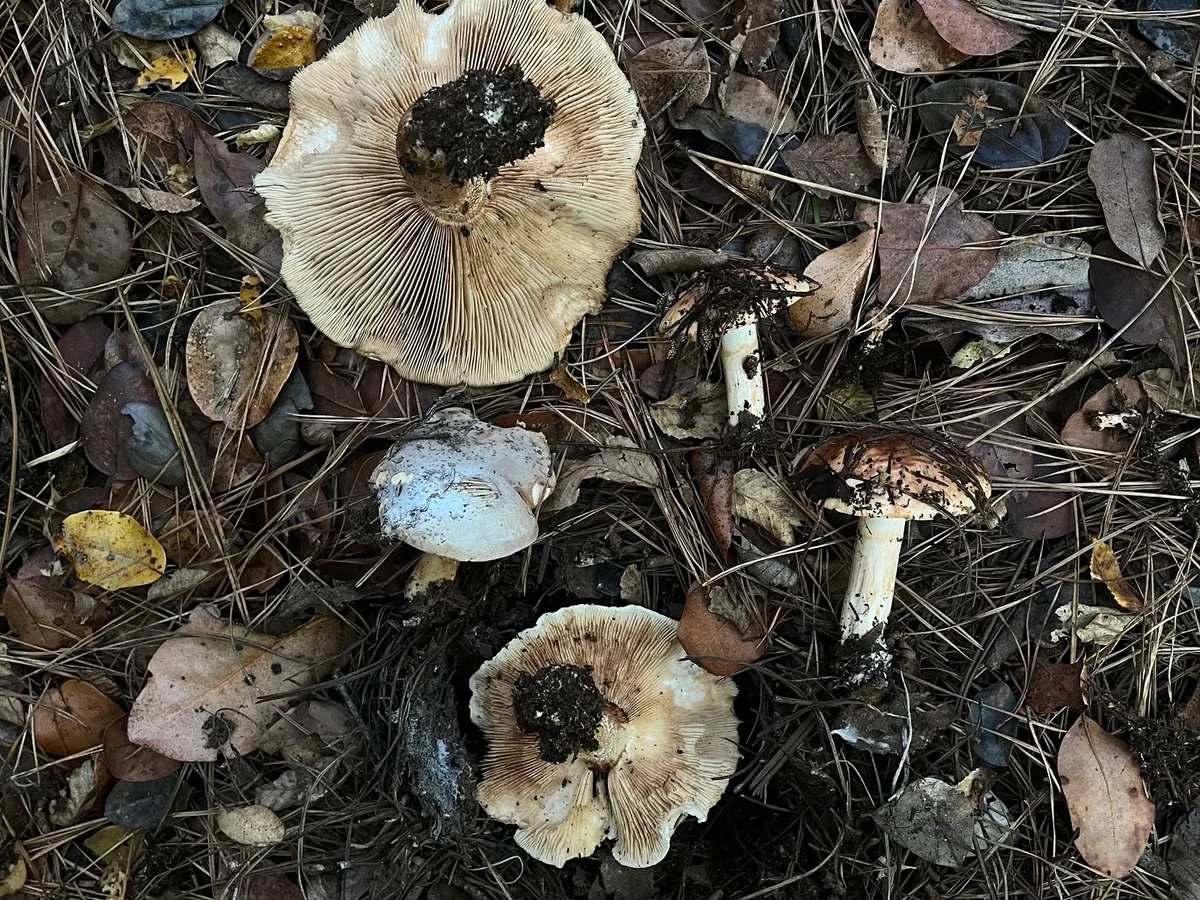 © Cristian Riquelme (CC BY)
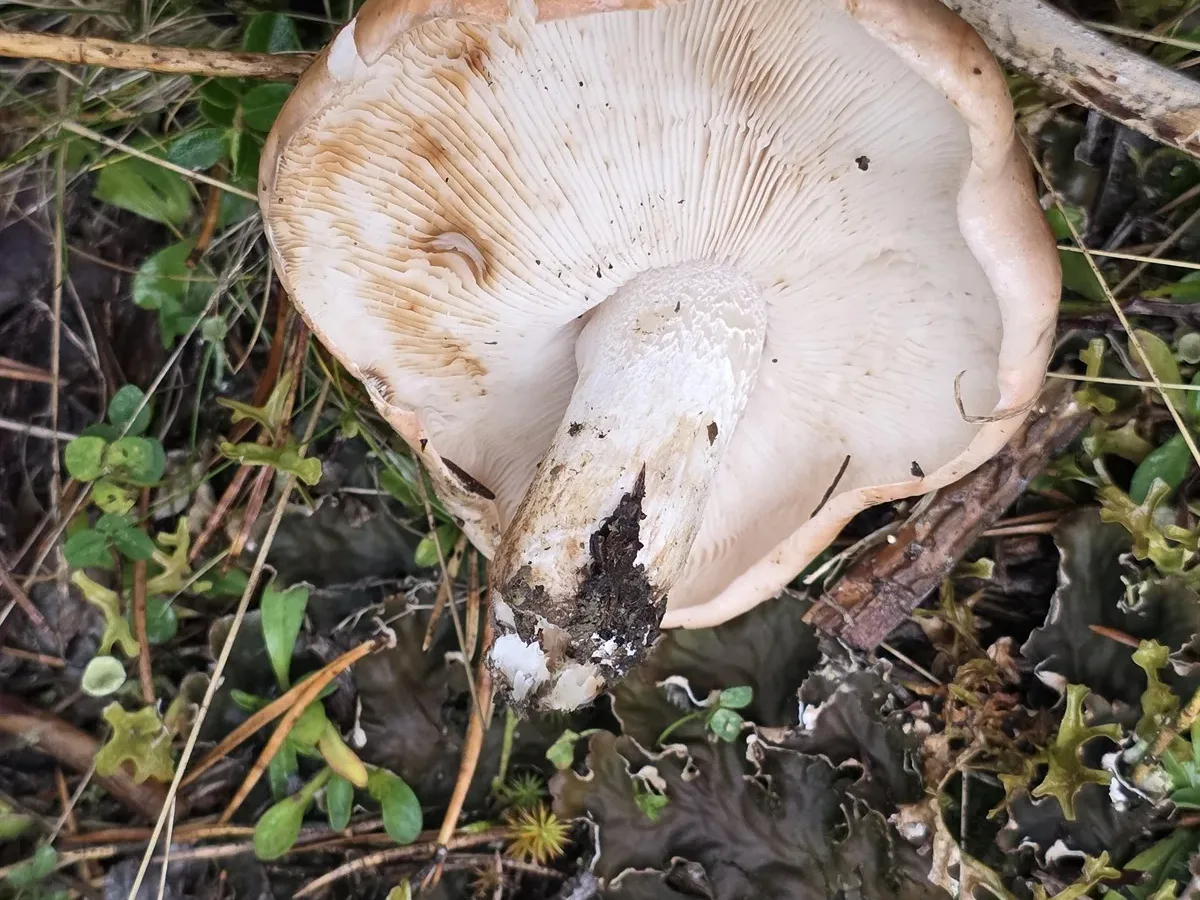 © Nils Edvard Stokke (CC BY)
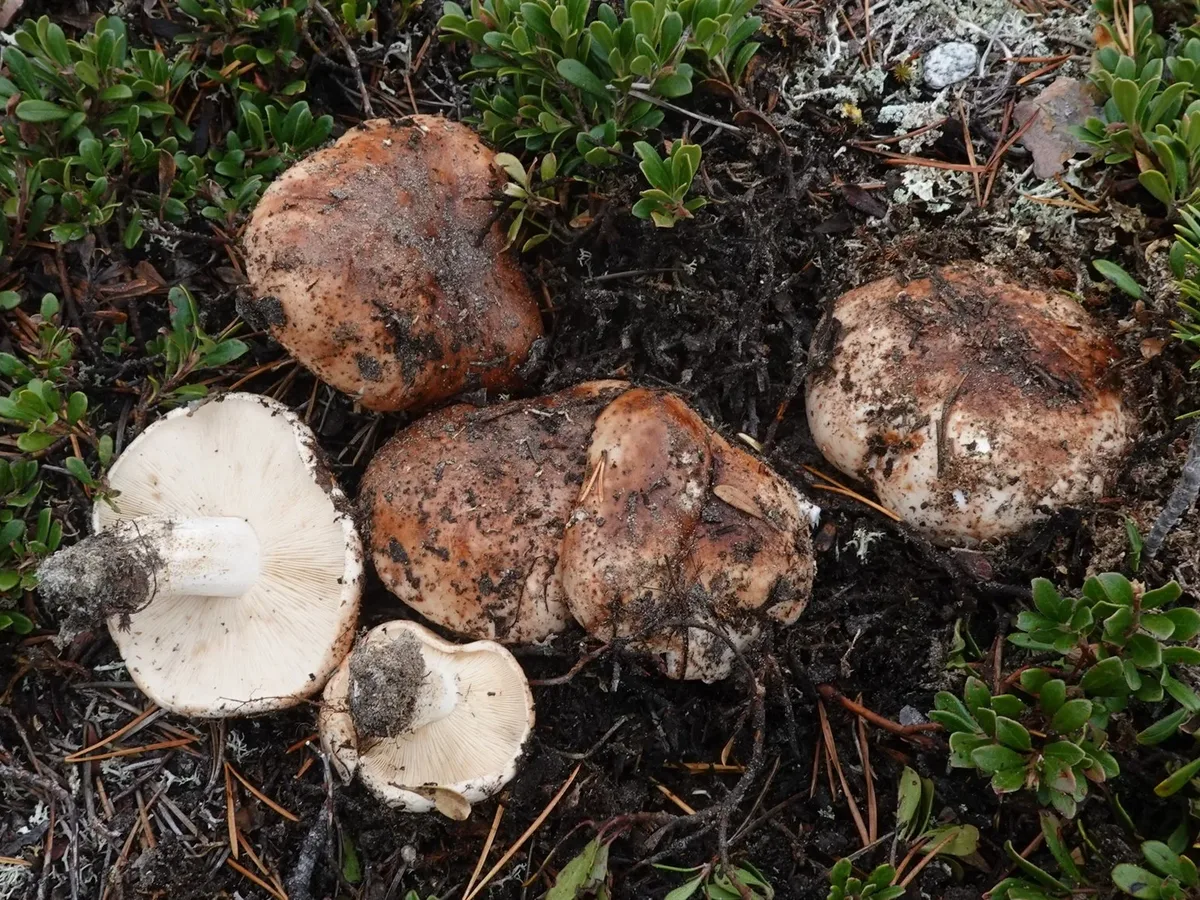 © Perry Gunnar Larsen (CC BY)
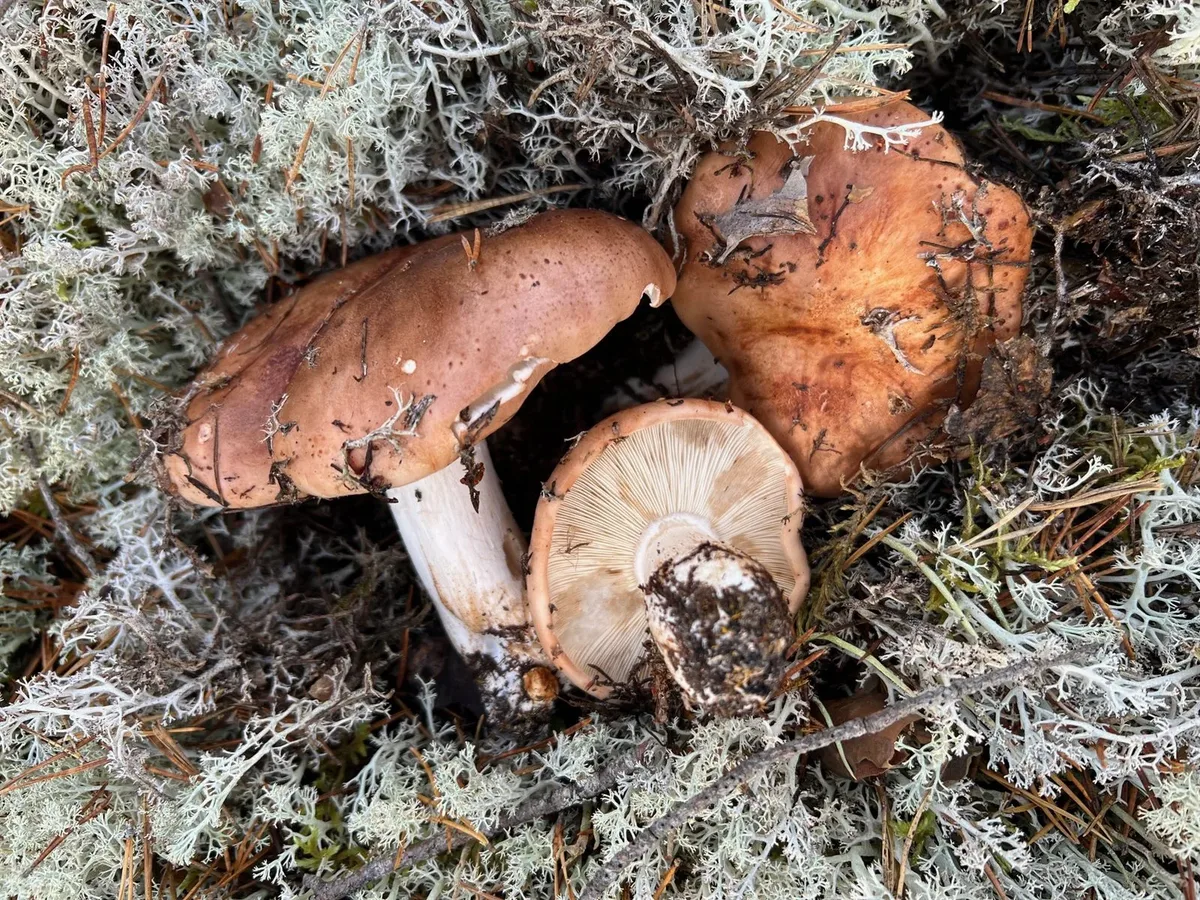 © Kirsti Anne Mandal (CC BY)
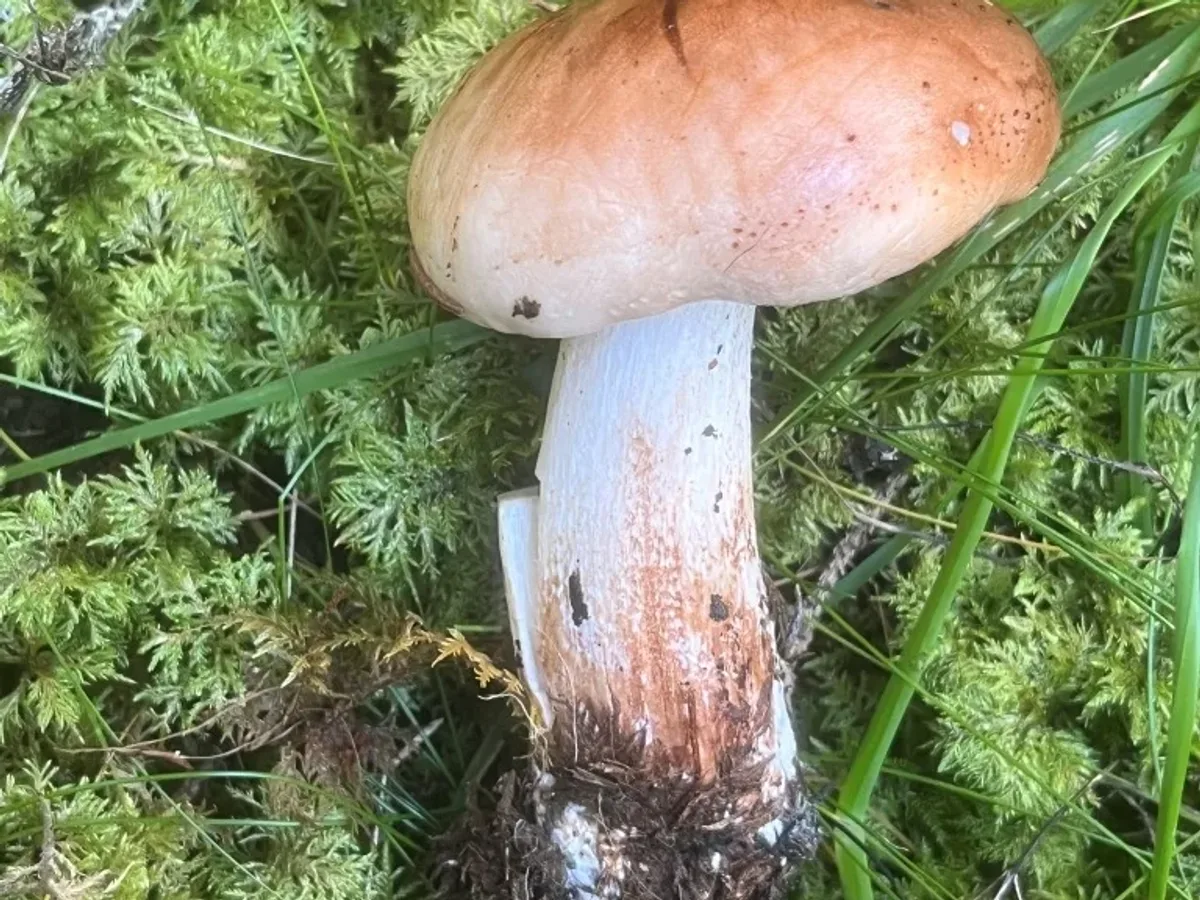 © Siv Moen (CC BY)
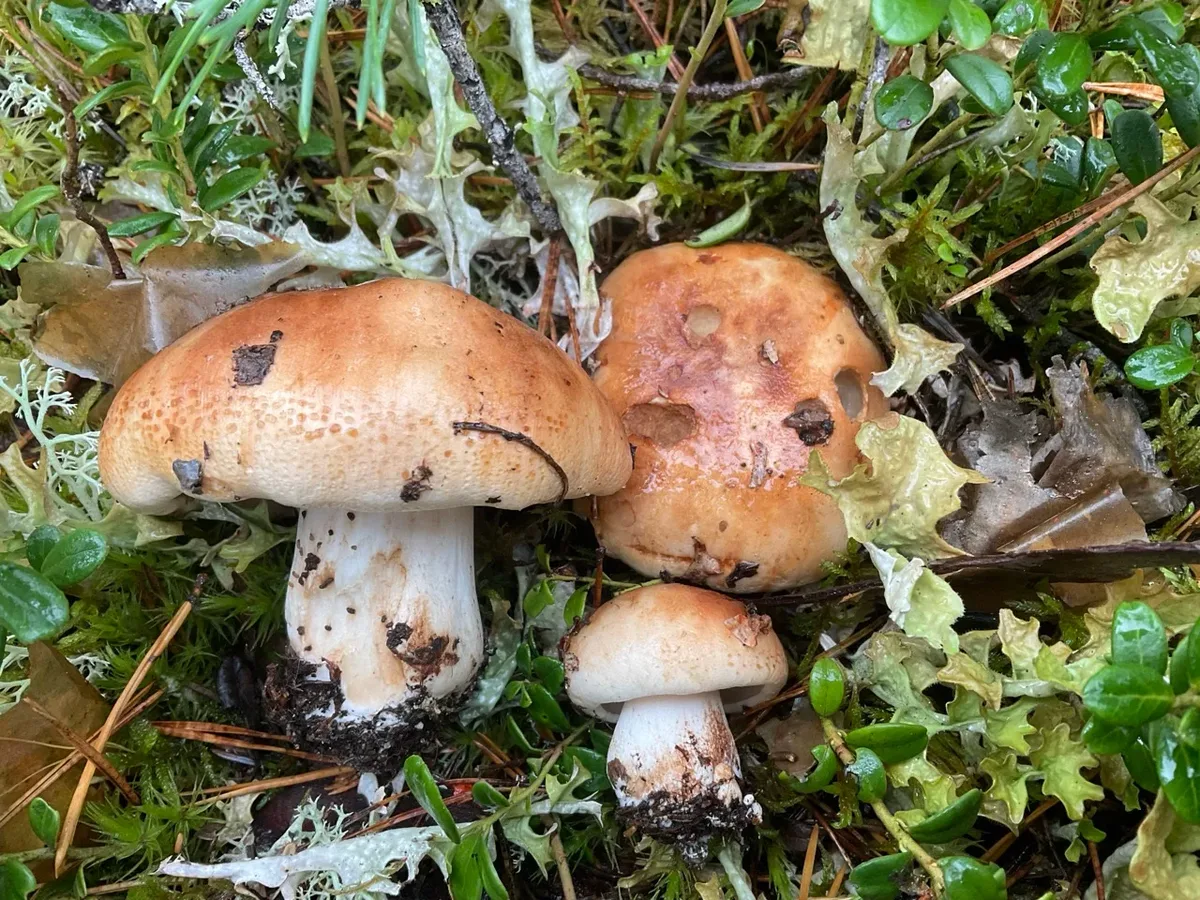 © Leila S. Berg (CC BY)
 © Ingunn Moslet (CC BY)© Ingunn Moslet (CC BY)© Nils Edvard Stokke (CC BY)
Edible only with the right preparation - or safe for some people but not others. Learn the caveats first.
Never eat a mushroom you are not 100% sure of - check the look-alikes below, and always cook wild mushrooms.
How to recognise it
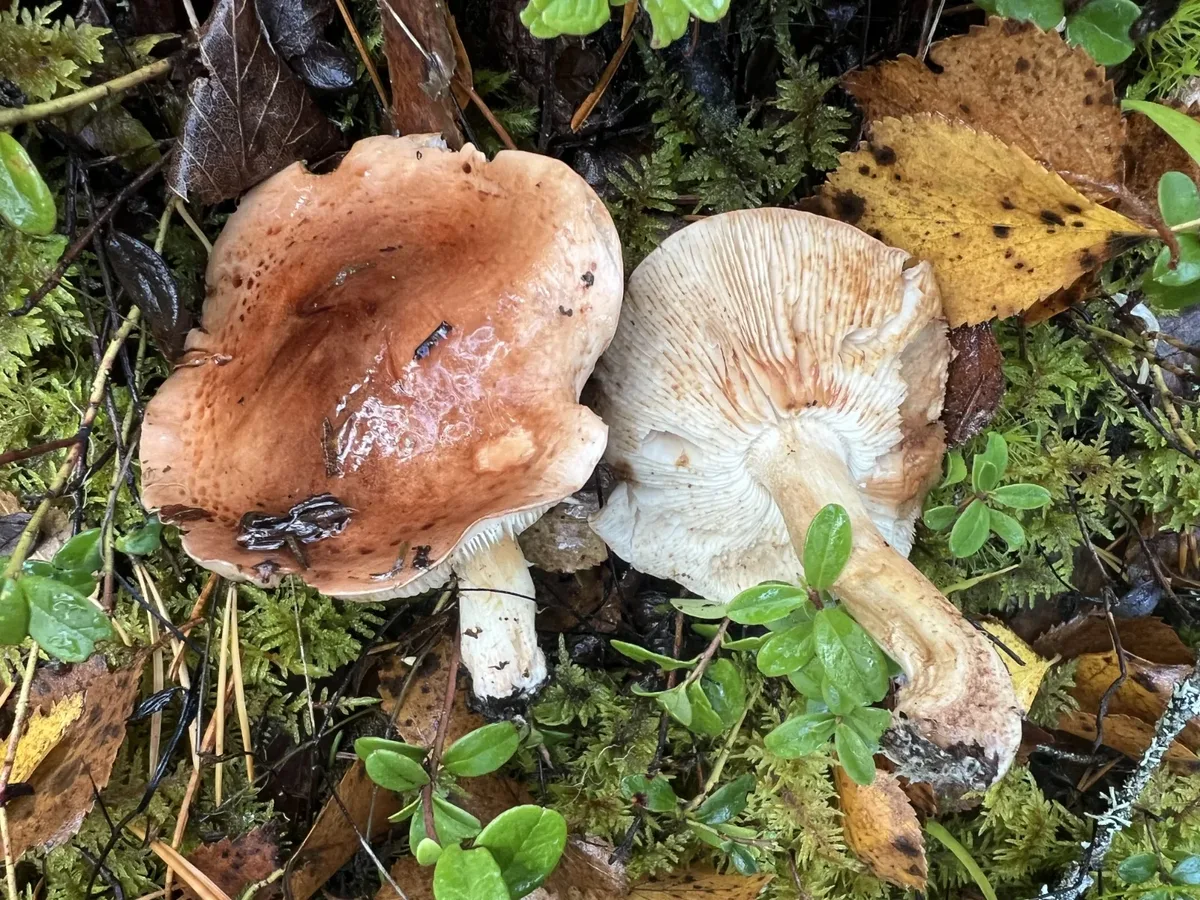
Tricholoma pessundatum is a robustly built, fleshy mushroom with a characteristic sticky, ochre-brown to reddish-chestnut cap that develops irregular brownish spots or blotches as it ages - a quirk of character that gives this species both its common name and its most useful field mark.
Cap
The cap ranges from 5 to 12 cm across, starting convex with a distinctly inrolled margin and expanding to broadly flat or gently umbonate; the margin often remains somewhat wavy and downcurved even in older specimens.
In wet weather the cap surface is visibly viscid and glossy, and pine needles or leaf fragments tend to stick to it like notes on a pinboard.
The colour is typically yellowish-ochre to date-brown or brick-red, a shade darker at the centre and graduating slightly paler toward the rim, though the exact tone varies considerably between individuals and with age.
Gills
Perhaps the most diagnostic feature is the spotting: both the gills and the stem develop characteristic brown blotches with time.
The gills are white to cream, crowded, and sinuate - notched where they meet the stem - and those brownish spots appear readily as the fruitbody ages.
Stem
The stem is stout and solid, white to pale buff with reddish-brown fibrillose streaking and spotting that tends to be most pronounced toward the base. There is no ring and no volva.
Flesh
The flesh is firm and white throughout.
Smell & taste
Pronounced mealy smell - fresh flour or raw grain - and a bitter or rancid-mealy taste.
Spore print white.
Why it's dangerous
The primary danger of Tricholoma pessundatum is twofold:
- 1its own gastrointestinal toxicity
- 2the risk of confusion with genuinely deadly look-alikes
T. pardinum (Dirty Knight) is the critical deadly species in the same ecological niche and at the same phenological window.
T. pardinum poisonings are serious - multiple hospitalised cases and at least one documented death are on record in European mycological literature, from severe gastrointestinal syndrome (not a quiet stomach upset but violent, potentially life-threatening gastroenteritis).
Because the two species share similar habitats, seasonality, cap coloration and general build, and because T. pessundatum is not itself a table species, the safest approach is to photograph, not collect, any sticky brown Tricholoma in pine forest and not to eat any member of this group.
Anyone who has eaten a mushroom they believe was T. pessundatum and develops severe vomiting or cramps should contact poison control and seek hospital evaluation.
Toxin
The gastrointestinal toxin of Tricholoma pessundatum has not been fully characterised. It is distinct from:
- amatoxins (no liver/kidney organ failure)
- orellanin (no delayed renal syndrome)
- the rhabdomyolytic toxin proposed for T. equestre
It belongs in the broad functional category of gastrointestinal irritants common to many Tricholoma species - likely thermolabile and acting on the gastrointestinal mucosa.
Cooking partially reduces but does not reliably eliminate the toxicity.
Symptoms
Onset of poisoning is relatively rapid, typically 30 minutes to 3 hours after eating.
Symptoms include:
- nausea
- repeated vomiting
- stomach cramps
- diarrhoea
The illness is usually self-limiting and resolves within 24 hours with supportive care (hydration). Severe cases, especially in vulnerable individuals (children, the elderly, those with GI conditions), may require intravenous fluids.
Unlike amatoxin or orellanin poisoning there is no delayed phase and no organ damage in typical cases.
Staying safe
Tricholoma pessundatum is toxic and must not be eaten. It causes gastrointestinal irritant poisoning - nausea, vomiting, abdominal cramping, and diarrhoea - typically beginning 30 minutes to 3 hours after ingestion.
The toxin is not identified with precision but is presumed to be an unstable gastrointestinal irritant. It is not known to cause the rhabdomyolysis seen with T. equestre nor the amatoxin-type organ failure seen with deadly species. The severity depends on dose and individual sensitivity.
Beyond its own toxicity, T. pessundatum demands careful identification because it grows in pine forest alongside several other problematic or deadly species (notably T. pardinum) that can superficially resemble it.
A beginner who mis-identifies T. pardinum as T. pessundatum (or vice versa) faces far more serious consequences than ordinary gastrointestinal upset - T. pardinum has caused hospitalisation and deaths.
Anyone experiencing symptoms after eating a spotted knight should seek medical attention and bring a sample of what was eaten.
Where & when it grows
Habitat
This is a pine-forest specialist with a notably narrow allegiance. It is essentially confined to soil beneath Scots pine (Pinus sylvestris) and closely related two-needle pines, living quietly as an ectomycorrhizal partner - its mycelium threading through the tree's root tips in an exchange that has likely run for decades in established forest.
It grows best on well-drained, acidic, often sandy or humus-poor mineral soils beneath mature pines. It is at home in:
- native boreal and sub-boreal pine forest
- Caledonian pinewood
- Baltic and Scandinavian woodland
- managed pine plantations on sandy ground
That strict pine association is one of the most reliable habitat clues: the similarly sticky-capped Tricholoma populinum, for instance, is equally strict but tied to poplar, never pine.
Look for it among accumulated pine needle litter and moss cushions, often with the cap partly obscured by debris and the spotted stem hidden until you lift the whole specimen.
When
Tricholoma pessundatum is an autumn species, fruiting mainly from late August through October and occasionally persisting into November when the weather stays mild.
The timing follows a familiar boreal rhythm: as the long days shorten and soils cool below roughly 12-14 °C after the summer dry period, autumn rain soaks into the sandy mineral soil and the mycelium beneath old pines stirs into action.
Individual flushes tend to last one to two weeks, with peak fruiting typically in September and October.
It is one of the more reliable autumn species in pine forest - patient foragers who know the right stands learn to expect it year after year.
How it grows
Because Tricholoma pessundatum is mycorrhizal, it cannot be cultivated - it is entirely dependent on the living root system of a mature pine.
Fruitbodies appear singly or in small scattered groups, occasionally in loose arcs or diffuse troops around individual trees, reflecting the spread of the underground mycelial network.
The caps often push up through needle litter and moss almost flush with the ground, so the full stature of the mushroom - and especially the spotted, fibrillose stem - may not be visible until you gently lift the whole specimen free of the duff.
Fruiting conditions
Fruiting driven by cooling autumn soils and rainfall. Pine-soil mineral substrate drains quickly so repeated or heavy rain is more effective than a single shower. Soil temperature dropping into the 5-13 °C window is the primary trigger; flush follows 1-2 weeks after sufficient precipitation.
Look-alikes
Several Tricholoma species grow in similar pine habitats and share a sticky reddish-brown cap and mealy smell, making identification genuinely demanding. The most dangerous confusion is with Tricholoma pardinum.
- Tricholoma pardinum (Dirty Knight / Leopard Knight): a deadly species causing severe gastrointestinal poisoning requiring hospitalisation. Typically larger (cap up to 15 cm), usually more grey-brown with fine dark fibrous scales arranged in a concentric zone pattern on the cap (resembling a leopard pattern), a more sour-mealy smell, and it grows primarily under beech and fir (Abies) in montane forest rather than under pine - but these distinctions require experience and cannot always be relied upon in the field.
- Tricholoma populinum (Poplar Knight): very similar in appearance, with a similarly sticky brown cap and spotting tendency, but grows exclusively under poplar (Populus) and aspen, never under pine.
- Tricholoma focale (Boot Knight, formerly in Armillaria): has a distinct ring (ring zone) on the stem and grows under pine; the persistent ring remnants are the key separator.
- Tricholoma albobrunneum (Brown Knight): also a pine specialist with a similar brown cap, but is considered inedible rather than overtly toxic and typically has a more distinctly streaked (fibrillose) rather than spotted cap surface and less pronounced gill spotting.
- Webcap species (Cortinarius spp.): in pine forest occasionally have similar brownish caps but leave a rusty-brown spore print and show remnants of a cobwebby cortina on the upper stem, unlike the white spore print and ringless, cortina-free stem of T. pessundatum.
- Deadly Amanita species (A. phalloides, A. virosa): differ critically by having a ring on the stem and a membranous volva (sac) at the base - always dig out the stem base and check.
White all over (not brown) and grows in both conifer and broadleaf forest, but included here as a reminder: any Amanita species - including yellow, brown or white ones - has a ring on the stem and a sac-like volva at the base. T. pessundatum has NO ring and NO volva. Always dig out the stem base and check.
T. pardinum typically has a larger cap (up to 15 cm) with a more distinctly grey-brown to silvery-grey colour and concentric zones of fine dark fibrous scales giving it a 'leopard' pattern, as opposed to the more uniform reddish ochre-brown sticky cap of T. pessundatum. T. pardinum grows primarily under beech and silver fir in montane forest, whereas T. pessundatum is a pine specialist. However the differences are subtle for inexperienced foragers, and both share a mealy smell and white spore print. T. pardinum is deadly - causing violent gastroenteritis requiring hospitalisation - and is the most important reason to avoid eating any sticky brown Tricholoma in European forest. When in doubt, do not eat it.
Some pine-forest Cortinarius species (notably the deadly C. rubellus / C. orellanus group) can have brown caps and occur in the same habitat. They always produce a distinctly RUSTY-BROWN spore print, have remnants of a cobwebby cortina on the upper stem (often staining rust from spores), and have rustier-brown gills that deepen in colour with age. T. pessundatum has a white spore print and no cortina. Take a spore print - a rusty-brown result means deadly webcap territory.
Also a pine-forest species with a reddish-brown sticky cap, but it has a persistent, fibrillose ring zone on the mid-to-upper stem - a feature absent in T. pessundatum. The stem of T. focale below the ring zone is typically reddish-brown and heavily fibrillose; the stem of T. pessundatum is paler with brownish spotting but no ring structure. T. focale is considered inedible but not severely toxic.
Another pine-specialist Tricholoma with a brown sticky cap, but T. albobrunneum tends to be more distinctly streaked-fibrillose on the cap surface (rather than spotted) with a reddish-brown ground colour and lacks the pronounced gill spotting seen in T. pessundatum. Considered inedible (bitter) rather than overtly toxic, but best avoided. Cap centre often slightly darker, margin paler and more distinctly ribbed-fibrillose.
Very similar appearance - same reddish-brown sticky cap, spotting on gills and stem, mealy smell, and white spore print - but grows exclusively under poplars and aspens (Populus spp.), never under pine. The habitat is the single most reliable separator: if the nearest trees are pines, it is not T. populinum. T. populinum is considered edible (but mediocre) in some European traditions, but its similarity to T. pessundatum and T. pardinum makes it a risky proposition.
A reference guide - never an edibility guarantee. When in doubt, leave it out.